All posts by Kristin

Chili Bean Burritos with Corn Salsa

I love having visitors, not least because I get to pull out all the stops and feed them well. We had some vegetarian friends over from the US for a long weekend visit last week, so I turned to some of my tried-and-true favorites: polpette di melanzane, ratatouille, lemon and pea risotto, and Moorish crunch salad with naan bread, plus roasted peaches with amaretti and Eton mess for dessert. My friend (the same friend who cracked his fridge shelf last year with a heavy pot of soup) was lamenting the fact that they’re tired of making the same old things from their small cookbook collection, so Adrian, here’s another fast and easy vegetarian recipe for you to add to your repertoire.

Chili Bean Burritos with Corn Salsa
adapted from Every Day by Bill Granger

Serves 4

When serving this to my small children, I give them a tortilla on the side (because they still like to have what the grown-ups are having) and just put the bean mixture in a bowl with some corn salsa on top, which they can easily spoon up.

for the chili bean burritos:
1 tablespoon olive oil
2 celery stalks, finely chopped
1 onion, finely chopped
1 red pepper, finely chopped
3 garlic cloves, chopped
1 red chili, deseeded and finely chopped
pinch of cayenne pepper (optional)
1 teaspoon ground coriander
1 teaspoon ground cumin
2 x 14 oz (400 g) cans of kidney beans, drained and rinsed
1 x 14 oz (400 g) can of chopped tomatoes
zest and juice of 1 lime
a small handful of fresh cilantro, roughly chopped
freshly grated cheddar or Monterey Jack cheese, to serve
tortillas, to serve
natural yogurt or sour cream, to serve

for the corn salsa:
1 tablespoon olive oil
2 cups (300 g) corn, either fresh or frozen
2 celery stalks, finely chopped
1 small red onion, finely chopped
1 red chili, deseeded and finely chopped (optional)
a small handful of fresh cilantro leaves, roughly chopped
zest and juice of 1 lime
salt and freshly ground black pepper

To make the bean burritos, heat the oil in a large, heavy-based pan over a medium-low heat. Add the celery, onion and red pepper and cook, stirring occasionally, for 7 to 10 minutes, until the vegetables have softened. Add the garlic, chili and spices and cook for 1 minute more. Add the kidney beans and tomatoes and stir well. Bring to the boil, then reduce the heat to very low and simmer, stirring occasionally, for 15 minutes, until thickened. Stir in the lime zest and juice and the cilantro.

While the bean mixture is cooking, make the salsa. In a separate large pan, heat the oil over a high heat. Add the corn and cook, stirring frequently, for 3 to 4 minutes. Tip the corn into a large bowl and stir through the celery, onion, chili, coriander, lime zest and juice. Season with salt and freshly ground black pepper. Set aside.

To serve, spoon some bean mixture down the middle of each tortilla, sprinkle with the grated cheese and wrap up firmly. Serve with the corn salsa and a spoonful of yogurt.

White Bean, Salami and Spinach Salad and Italian Chocolate Fridge Biscuits

I’m a little jealous of all the heat waves in America lately. After the best June in years here in Ireland, July is turning out to be cold and rainy a lot of the time and we’re lucky to even hit 70°F. But last month, when we had proper warm weather, I was making salads for dinner almost every night and this is one of my favorites. Served with some crusty bread, it’s a perfect main course for a hot (or even not so hot) summer’s night.

And if you’re being good and eating salad for dinner, it’s as good of an excuse as any to splurge a little with one of these biscuits. If you can rouse yourself from the heat enough to melt some butter on the stovetop, then all you have to do is press the dough into a baking dish and leave it in the fridge overnight, making this ideal for summertime baking. I made them for the Irish foodies’ cookie bake-off* at the start of the month, and while at first I was a little disappointed in them (I’d been expecting more flavor from the coffee and Crunchie bars), they grew on me. They’re a grown-up kind of cookie, the kind of thing that’s perfect with a cup of coffee after dinner (or anytime).

White Bean, Salami and Spinach Salad
adapted from The Kitchen Diaries by Nigel Slater

Serves 2 as a light main course

for the salad:
7 oz (200 g) baby spinach (or about 4 big handfuls)
1/2 lb (225 g) salami, thinly sliced
a handful of basil leaves, cut into ribbons
2 x 14 oz (400 g) cans of cannellini beans, drained and rinsed
1 cup (100 g) black olives, halved
freshly grated Parmesan shards, to serve
crusty bread, to serve

for the dressing:
5 tablespoons extra virgin olive oil
1 tablespoon red wine vinegar
1 tablespoon Dijon mustard
1 tablespoon fresh thyme leaves, chopped (or 1 teaspoon dried)
salt and freshly ground black pepper

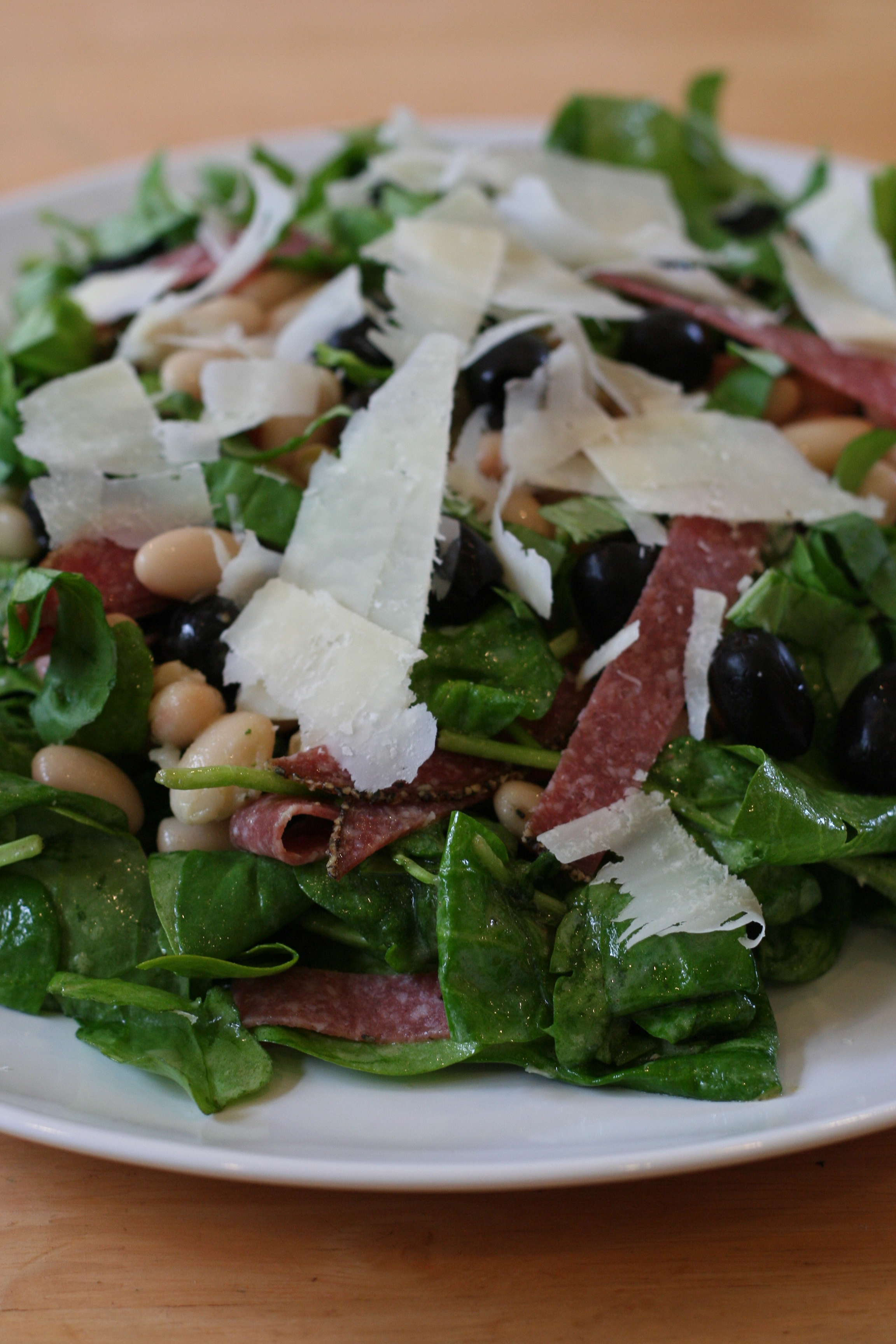
Put the spinach into a large serving dish. Cut the salami into thin strips and add to the spinach along with the basil, beans and olives.

To make the dressing, whisk the olive oil, vinegar, mustard, thyme and salt and pepper together until thick and creamy (or shake to combine in a screw-top jar). Pour the dressing over the salad and toss everything together gently. Grate over some thick shards of Parmesan cheese and serve with plenty of crusty bread.

***

Italian Chocolate Fridge Biscuits
adapted from Avoca Café Cookbook

Makes one 9 x 13 inch tray

3/4 cup (175 g) unsalted butter
1 1/4 cups (150 g) cocoa powder
1 cup (200 g) sugar
3/4 cup (75 g) ground almonds
3/4 cup (75 g) ground hazelnuts
1 tablespoon espresso or strong black coffee
1 egg and 1 egg yolk, beaten together
6 oz (175 g) Petit Beurre, high-quality butter cookies or digestive biscuits, roughly chopped
6 oz (175 g) honeycomb, such as Crunchie bars, roughly chopped
1 1/4 cups (175 g) hazelnuts, roughly chopped

Put the butter, cocoa, sugar, ground almonds and ground hazelnuts in a large pot and heat gently, stirring, until the butter has melted. Beat the coffee, egg and egg yolk into the mixture, then stir in the cookies, honeycomb and chopped hazelnuts. It will be very crumbly and rough looking at this stage.

Lightly oil a shallow 9 x 13 inch baking dish and firmly press the mixture into it (the mixture should be about 3/4 inch thick). Leave it to set in the fridge overnight, then turn out and cut into squares. Store in an airtight container in the fridge for up to 1 week.

*Looking for more cookie inspiration? Check out all these recipes from some other Irish foodies:

White Bean and Tuna Salad with Lemon Pepper Dressing

When you travel, what do you remember afterward? I remember the food. I have a better memory of eating quiche Lorraine for breakfast on a bench by the Seine in Paris than I do of seeing the Mona Lisa in the Louvre. Of course I remember the big-name sightseeing highlights, but I also remember the Nutella and banana crepe we bought from a stand near the Eiffel Tower; a brioche aux praline in Lyons that was so good we changed our return travel plans back to Paris just so we could eat it one more time; chocolate mint gelato in Florence served by a man in what looked like a crisp white lab coat and perfectly Brylcreemed 1950s hair; kriek cherry beer in Amsterdam, glögg in Copenhagen and a harsh, peaty whiskey in Edinburgh that I downed after (foolishly, in my case) taking the ghost tour of the city; conch chowder in the Bahamas; hot chocolate and a gingerbread man with my little girl in London; and a ploughman’s pub lunch in Canterbury. In Barcelona we spent more time eating tapas and drinking sangria than sightseeing. In the US, I still have clear memories of bratwurst being grilled on the Memorial Union Terrace in the summertime in Madison, Wisconsin; whole crabs in Baltimore, complete with a newspaper-covered table and hammers; lobster in Boston with flimsy plastic bibs and pitchers of beer; a post-wedding brunch at the Ritz in Washington, DC with scallops and bacon, caviar and waiters who seemed to top up my glass of mimosa after every sip; sopapilla and honey in Santa Fe; scoops of ice cream in waffle cones so freshly made on the spot in Bellingham, Washington that they were still warm; and a nondescript hot dog somewhere outside of Charlottesville, Virginia that I remember only because I couldn’t understand a single word the man behind the counter said when he rattled off all the toppings because his Southern accent was so thick, so I just said I’d have what my friend was having.

As for this salad, I had it for lunch on a rooftop café in Tuscany on my honeymoon eight years ago, looking out over rolling countryside that was hazy in the middle of the heat wave they were having at the time. Earlier during that trip, walking across the city on our way to stand in line in the hot sun for an hour to see Michelangelo’s David in Florence and wilting just at the thought of it, I turned to my husband and said, “Will seeing David really make us better people? How about we just go back to the garden at the hotel and drink beer and eat olives instead?” Which is exactly what we did.

What are some of your memories of food and travel?

White Bean and Tuna Salad with Lemon Pepper Dressing
adapted from How to Cook Book Two by Delia Smith

Serves 4 as a light main course or 6 as a starter/light lunch

for the salad:
2 x 14 oz (400 g) cans of cannellini beans
salt and freshly ground black pepper
a few handfuls of arugula (rocket), stalks removed
2 x 7 oz (200 g) cans of tuna, drained
1 red onion, peeled, sliced thinly and deflamed
crusty bread, to serve

for the dressing:
2 cloves garlic, peeled
2 teaspoons Maldon sea salt
1 heaped teaspoon mustard powder, such as Colman’s
1 teaspoon freshly ground black pepper
6 tablespoons extra virgin olive oil
zest and juice of 1 large lemon (3 tablespoons juice)

To make the dressing, first crush the garlic and salt using a pestle and mortar until the garlic is pulverized into a paste, then work in the mustard powder and pepper. If you have a large pestle and mortar, add the olive oil, lemon zest and juice directly into it and whisk everything together thoroughly. If your pestle and mortar is small (like mine), then scrape the garlic paste into a larger bowl and whisk in the olive oil, lemon zest and juice in that.

Place the beans in a bowl and pour the dressing over, stirring to make sure all the beans are coated. Season generously.

To serve the salad, arrange three-quarters of the arugula (rocket) leaves over the base of one large serving dish (or you could assemble the salad on individual plates), spoon the beans on top and add the tuna fish in chunks. Add the rest of the arugula, pushing some of the leaves and chunks of tuna right in amongst the beans. Arrange the onion slices on top and serve straight away.

Sausages, Peppers and Onions and Elderflower Syrup

You couldn’t have asked for a better day for a cross-country trip in Ireland. I made the three-hour drive from the east coast to the Midlands under a brilliant blue sky with warm sunshine beating down, passing roadsides covered with wild daises, buttercups and poppies, tractors pulling trailers of turf in the bogs of County Offaly and farmers working to harvest the first cut of silage in fields all along the way. I was heading to Oldfarm in County Tipperary, between Birr and Portumna, to meet up with a few fellow food bloggers and to see some rare-breed pigs.
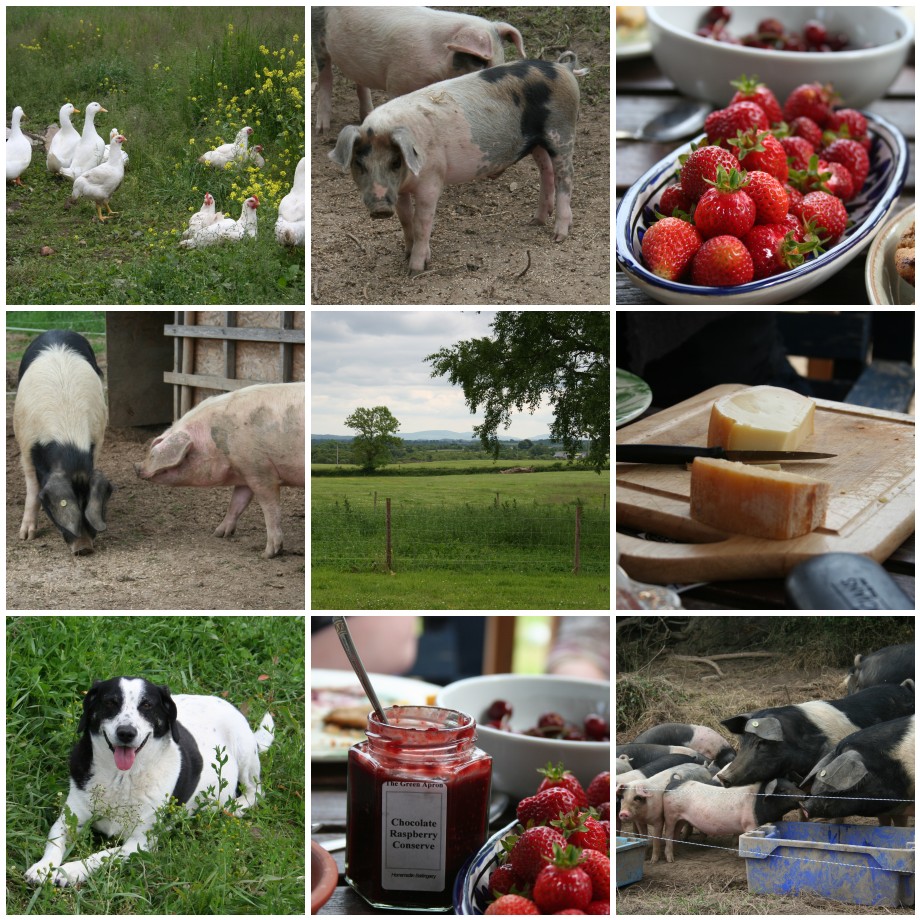
Six years ago, Margaret O’Farrell and Alfie McCaffrey traded in their city life in Dublin and their scuba diving business for life in the country and a new venture raising free-range Saddleback pigs. Last week, they invited a group of strangers to their home for an afternoon of foodie chat and to have a look around their farm. We sat on their fabulous porch (what Margaret calls her “Martha Stewart room”) with a view to the Silvermine and Slieve Bloom mountains and drank homemade elderflower cordial while they told us how the two pigs they originally bought – they only wanted one for themselves and one for Margaret’s brother – became forty-eight, and without quite meaning to, they found themselves in the pig business.

We headed out then to look at the pigs for ourselves, all happily rooting in the earth in the fresh air, taking little notice of us as we stood next to them and talked shop. Ralph Haslam from Mossfield Organic Farm stopped by later on, coming out to meet us in the fields behind the house. Margaret and Alfie feed the whey left over from his cheese-making to their pigs, as well as locally grown barley and vegetables, and this time he brought a box of his award-winning cheeses for us to try and take home.

After tramping around the farm, we returned to the porch and a table groaning with food — Ralph’s cheeses, strawberries and cherries picked that morning from Margaret’s garden, two kinds of chocolate chip cookies, muffins, a Barra cake, a strawberry sponge, a mocha tart that we’re all still talking about, and a new experiment from Theresa, a chocolate raspberry preserve that was so good we simply ate spoonfuls of it straight from the jar, and all washed down with endless pots of tea.

I was sent home with an armful of rhubarb that Alfie harvested from their garden, which I later turned into rhubarb-strawberry mousse, two kinds of Mossfield cheeses and a jar of fresh pesto from Hey Pesto. After I mentioned that I’d always wanted to try making elderflower cordial myself, Margaret and Alfie cut dozens of elderflower heads for me from their trees, and even though I was tired from the six-hour round trip, I made a batch of this elderflower syrup as soon as I got home.

And, of course, we got sausages. Oldfarm’s Saddleback sausages have a stronger flavor than conventional sausages, so they stand up well to being featured as the star of a dinner dish. Sausages, peppers and onions is one of my favorite dinners and is traditionally made with Italian sausages, but since those are hard to come by in Ireland, I make it with good-quality butcher sausages instead, and Oldfarm’s are some of the best around.

The day out at Oldfarm showcased many of the things that are so special about artisan Irish food — it’s top-class, local, and produced with pride and passion by dedicated, generous people. If you’d like to try some of it for yourself, Margaret and Alfie sell their free-range Saddleback pork and bacon in 5 kg or 10 kg box schemes at €10 per kg, delivered right to your door. You can contact them at margaret.oldfarm@gmail.com or 086 810 0125 for more information, or follow Oldfarm on Facebook, Twitter or Margaret’s blog, A Year in Redwood.

Sausages, Peppers and Onions
adapted from Giada Di Laurentiis

Serves 4 to 6

Serve this as a sandwich on fresh rolls, on top of pasta, or on its own in bowls with plenty of crusty bread on the side. If serving as a sandwich, split the rolls in half lengthwise. Hollow out the bread from the bottom side of each roll, being careful not to puncture the crust, then fill the bottom half of the roll with the sausage mixture.

2 tablespoons extra virgin olive oil
1 lb (450 g) Italian sausages or good-quality butcher sausages
2 red peppers, sliced
2 yellow peppers, sliced
2 yellow onions, sliced
1 teaspoon kosher salt
1 teaspoon freshly ground black pepper
1/2 teaspoon dried oregano
1 teaspoon dried basil
4 garlic cloves, thinly sliced
2 tablespoons tomato paste
1 cup (240 ml) red wine or water
1 x 14 oz (400 g) can of chopped tomatoes
1/4 teaspoon red pepper flakes (optional)
a few basil leaves, roughly chopped or chiffonaded, to garnish (optional)

Heat the oil in a heavy large skillet over a medium heat. Add the sausages and cook until browned on both sides, about 7 to 10 minutes. Remove from the pan and drain.

Keeping the pan over a medium heat, add the peppers, onions, salt, and pepper and cook for 10 minutes, until golden brown and softened. Add the oregano, basil, and garlic and cook for 2 more minutes.

Add the tomato paste and stir. Add the wine or water, tomatoes, and chili flakes, if using. Stir to combine, scraping the bottom of the pan with a wooden spoon to release all the browned bits. Bring to a simmer.

Cut the sausages into 1‑inch pieces. Add the sausage back to the pan and stir to combine. Cook for about 20 minutes, until the sauce has thickened. Garnish with fresh basil and serve as desired (see note above).

***

Elderflower Syrup
adapted from Darina Allen’s Ballymaloe Cookery Course by Darina Allen

Makes 2 cups (1 pint)

If you could bottle the essence of summertime, this would be it. Add this syrup to sparkling water or even a glass of champagne or Prosecco. Decant it into clean, sterilized bottles, or freeze the syrup in an ice cube tray. If you can’t find unwaxed lemons, lightly scrub them under warm water with a clean scrubbing brush before you zest them.

1 cup (200 g) superfine (caster) sugar
2 cups (1 pint) cold water
6 elderflower heads, in full bloom
zest and juice of 2 lemons, preferably organic and unwaxed

Put the sugar and water into a saucepan over a medium heat. Stir until the sugar dissolves. Add the elderflowers and bring to a boil. Boil for 5 minutes, then remove from the heat and add the lemon zest and juice. Set aside to cool, then cover and leave to infuse for 24 hours. Strain and pour into sterilized, clean bottles. Dilute as desired.

Pasta with Tuna, Tomatoes and Olives

Last Tuesday was one of those days that turned out to be warmer than predicted (not that I’m complaining!), so much so that whatever it was that I had planned to cook that night, I suddenly didn’t want to anymore. Add to that the fact that I had a plumber and a loss adjuster in my kitchen while I was trying to make dinner, talking about having to rip up and replace all the flooring throughout the house because of a mysterious water leak we have, and I wanted to cry, not cook. But this is one of those recipes that takes almost no time to cook and is made of pantry staples that I always have around, so I was able to quickly change my plans, throw this together and avoid resorting to takeout.

A well-stocked pantry can be a busy cook’s best friend, as Anita writes in her Dinner on a Deadline series. (And check out this well-stocked, well-organized pantry — it makes my Virgo heart happy just to look at it.) Some of the things you’ll rarely find me without are canned chickpeas, cannellini beans, black beans and tomatoes (whole and chopped), rice, pasta, couscous, tortillas, onions, garlic, lemons, olives, tuna and a jar of pesto in the pantry, as well as a good variety of dried herbs and spices and all the staples for baking; some fresh herbs, chorizo, eggs, Parmesan and cheddar cheese, potatoes, carrots and apples in the fridge; and frozen peas, frozen berries, chicken breasts and homemade chicken stock in the freezer. With just that short list of ingredients, I can make pasta with Marcella Hazan’s tomato sauce, pasta e ceci, roasted garlic and pea soup, red chile chicken and rice with black beans, chicken bouillabaisse, a white bean and tuna salad, a ploughman’s lunch, homemade pizza, cheese quesadillas, a potato frittata or this dinner with hardly any planning ahead.

What pantry staples do you always have on hand? What are your store cupboard stand-by dinners? Let us know in the comments or come join the discussion on our Facebook page, under the Discussions tab! 

Pasta with Tuna, Tomatoes and Olives
adapted from Apples for Jam by Tessa Kiros

Serves 4

If you don’t have fresh herbs, just use some dried basil instead. Olives can become bitter if cooked too long, so you should add them in at the end of a recipe.

14 oz (400 g) pasta, such as penne, farfalle or spaghetti
2 tablespoons olive oil
2 garlic cloves, finely chopped
1 x 14 oz (400 g) can of chopped tomatoes
salt and freshly ground black pepper
1 x 6 oz (170 g) can of tuna, drained
3 basil leaves, torn
2 tablespoons finely chopped fresh parsley
a few handfuls of black olives, halved

Cook the pasta in a large pot of boiling salted water according to the packet instructions.

Meanwhile, heat the oil in a large saucepan over a medium-low heat. Add the garlic and cook for 1 minute. Add the tomatoes and season well with salt and pepper. Simmer for 10 to 15 minutes, then add the tuna, breaking up any large chunks with a wooden spoon. Add in the basil, parsley and olives and simmer for a few minutes more, then remove from the heat.

Drain the pasta and reserve some of the cooking water. Add the pasta to the sauce. Add some of the pasta cooking water to help the sauce coat the pasta if necessary. Serve immediately.

Beef Tenderloin with Three-herb Chimichurri and Sweet Potato Wedges

Chimichurri is what all the cool kids are eating now, according to Saturday’s Irish Times. I made this three-herb chimichurri a few weeks ago, inspired by the herbs I got from Living Flavour last month, so I’m feeling very smug and ahead of the trends.

Chimichurri is usually only made with parsley, but this version, using cilantro and mint as well, is even better. And now that so many people are growing their own these days, it’s an ideal recipe for using up some of the herbs from your garden.

If you want to make this recipe even faster (and less expensive) to cook, use steaks or even chicken instead of a pricey tenderloin. I served sweet potato wedges with this, but a selection of roasted or grilled vegetables would be fantastic too.

Beef Tenderloin with Three-herb Chimichurri
adapted from Bon Appétit, July 2006

Serves 4 to 6

The original recipe calls for the beef to be grilled, but since my Weber hasn’t been used (and therefore cleaned) since about 2006, I opted to roast it instead. I also scaled down the original quantities to make this more suitable for a family dinner. Click on the link above for grilling instructions and for ingredient quantities to serve 8 to 10.

for the spice rub:
1 tablespoon dark brown sugar
1 1/2 teaspoons smoked paprika
1 1/2 teaspoons coarse kosher salt
1 teaspoon chipotle chile powder or ancho chile powder (optional)
1/2 teaspoon ground black pepper

for the chimichurri:
1/4 cup (60 ml) olive oil
1 1/2 tablespoons sherry vinegar or red wine vinegar
1 1/2 tablespoons fresh lemon juice
1 garlic clove, peeled
1 medium shallot, peeled and quartered
1/2 teaspoon fine sea salt
1/4 teaspoon freshly ground black pepper
1/4 teaspoon dried crushed red pepper (optional)
1 1/2 cups (packed) (30 g) stemmed fresh parsley
1 cup (packed) (20 g) stemmed fresh cilantro
1/2 cup (packed) (15 g) stemmed fresh mint

1 x 2 lb (900 g) beef tenderloin
olive oil

To make the spice rub, combine all the ingredients in a small bowl. Set aside.

To make the chimichurri sauce, combine the olive oil, vinegar, lemon juice, garlic, shallot, salt, pepper and crushed red pepper in a blender or food processor. Blend until almost smooth. Add one-quarter of each of the herbs and blend until incorporated. Add the remaining herbs in three more additions, pureeing until almost smooth after each addition. Add in a little more olive oil if you think it needs it — you want it to have a pesto-like consistency, not a paste.

Let the beef stand at room temperature 1 hour before roasting. Position a rack in the center of the oven and preheat it to 425°F (220°C). Pat the beef dry with paper towels, then brush with oil. Sprinkle all over with the spice rub, using all of the mixture (the coating will be thick). Heat a splash of olive oil in a large frying pan over a medium-high heat and sear the beef for 1 minute on all sides. Transfer the beef to a foil-lined baking sheet (for easier clean-up) and roast for about 30 to 40 minutes, until a meat thermometer inserted into the thickest part of the meat registers 125°F to 130°F (52°C to 54°C) for medium-rare. Transfer to a platter, cover loosely with foil and allow to rest for 15 minutes. Thinly slice the beef crosswise and serve with the chimichurri sauce.

Homemade Pizza

When you make friends in the virtual world of blogging, it turns out you can have a virtual party too — an online pizza party, in our case. A few Irish foodies were chatting on Twitter last week, a few pizza craving comments were casually tossed around and before we knew it Sarah had taken the lead in planning a #twizzaparty last Thursday, where nine of us were to all make homemade pizzas, tweet about it and blog it, with Lorraine volunteering to judge the results and even donate some prizes from her Italian deli in Limerick.

Sure, it’s easier to order take-out, and with a good pizzeria only a five-minute drive away we certainly do our fair share of that, but one of the great things about making your own pizzas is that kids love helping out with it, so it’s a fun way to get them involved in the kitchen. But if you’re not crazy about the idea of making your own dough, then you could buy ready-made pizza bases or dough at the grocery store and load them up with your own fresh toppings. I’ve included a list of all the toppings made for the twizzaparty (we would appear to like Parma ham a lot), as well as a few more from around the internet to get you going.

This dough is absolutely foolproof and is the only recipe I use now. Resting the dough overnight is a tip that’s new to me, and if nothing else I found that it made the dough easier to roll out the next day (Lorraine also passed on a tip to cover it with a damp tea towel to keep it from rising too much in the fridge). And everyone loves a secret ingredient, so I’ll let you in on the one in my tomato sauce — anchovy paste. Don’t worry, it doesn’t make the sauce taste at all fishy, it just adds a little hit of umami goodness.

Basic Pizza Dough
adapted from The River Cottage Family Cookbook by Hugh Fearnley-Whittingstall

Makes enough for 2 pizzas or 1 loaf of white bread

4 1/4 cups (500 g) strong white flour, plus extra for dusting the work surface
2 teaspoons salt
2 teaspoons (1 x 7 g sachet) easy-blend (fast-action) yeast
2 tablespoons olive oil
2 teaspoons sugar or honey
1 1/4 cup (300 ml) warm water
cornmeal/polenta, for the base of the pizza (optional)

To make the dough in a bread machine, simply follow the usual instructions for your machine, then skip to the last step.

To make the dough by hand, put the flour in a large mixing bowl, add the salt and yeast and stir with a wooden spoon until well combined. Pour the warm water into a measuring jug, then add the olive oil and sugar (or honey). Stir well. Pour the water mixture onto the flour in the bowl, a little at a time. Either with the wooden spoon or your hands, work the water into the flour and gradually bring it all together into a mass of soft, slightly stick dough. If the dough feels very sticky, add a little more flour. If it feels as if it won’t come together, then work in some more warm water — a soft dough is much easier to knead.

Flour the work surface and turn the dough out onto it. It will look rough and saggy at this stage, so it has to be kneaded until it’s smooth and bouncy. Keep kneading for at least 10 minutes (or you could use the dough hook of a stand mixer). Shape the dough into a neat ball, put it back in the mixing bowl and cover the bowl with some cling film or a damp kitchen towel to prove in a warm, draft-free place until doubled in size — this will take 90 minutes to 2 hours.

When the dough has risen, preheat the oven to 425°F (220°C). Lightly grease a pizza pan or baking sheet with olive oil, then sprinkle over some cornmeal, if using. Knock out the air and roll the dough out into a 12-inch round (or whatever size will fit your pan/sheet) and place in the prepared pan or baking sheet. Cover the dough with your toppings and bake for 15 to 20 minutes, or until golden (check after 10 minutes to make sure nothing is burning). Allow to stand for 10 minutes, then cut into slices and serve immediately.

***

Tomato Sauce with a Secret Ingredient

Makes more than enough for 2 pizzas

2 x 6 oz cans (or 1 x 300 g jar) tomato paste (a.k.a. tomato puree)
3/4 cup (175 ml) water (or more if you prefer a thinner sauce)
2 or 3 garlic cloves, finely minced
1/4 cup (25 g) finely grated Parmesan cheese
2 teaspoons anchovy paste (optional, but come on, it’s the secret ingredient!)
1/2 teaspoon dried oregano
1/2 teaspoon dried basil
1/4 teaspoon dried chili flakes (optional)
salt and freshly ground black pepper
pinch of sugar

In a small bowl, combine the tomato paste and water, stirring to combine. Add the garlic, Parmesan, anchovy paste, basil, oregano and chili flakes. Add seasoning to taste, but watch the salt if you’ve used the anchovy paste, as it’s quite salty. Mix together well and add a generous pinch of sugar (or to taste) to counteract the acidity of the tomato paste. Allow the sauce to stand for at least 30 minutes to blend the flavors (though the longer you can leave it, the better), then taste again and adjust the seasoning if needed. Spread the sauce over your pizza dough, then pile on the toppings. Use any leftovers as a pasta sauce, or freeze.

***

Topping suggestions

Here’s what we made for the twizzaparty:

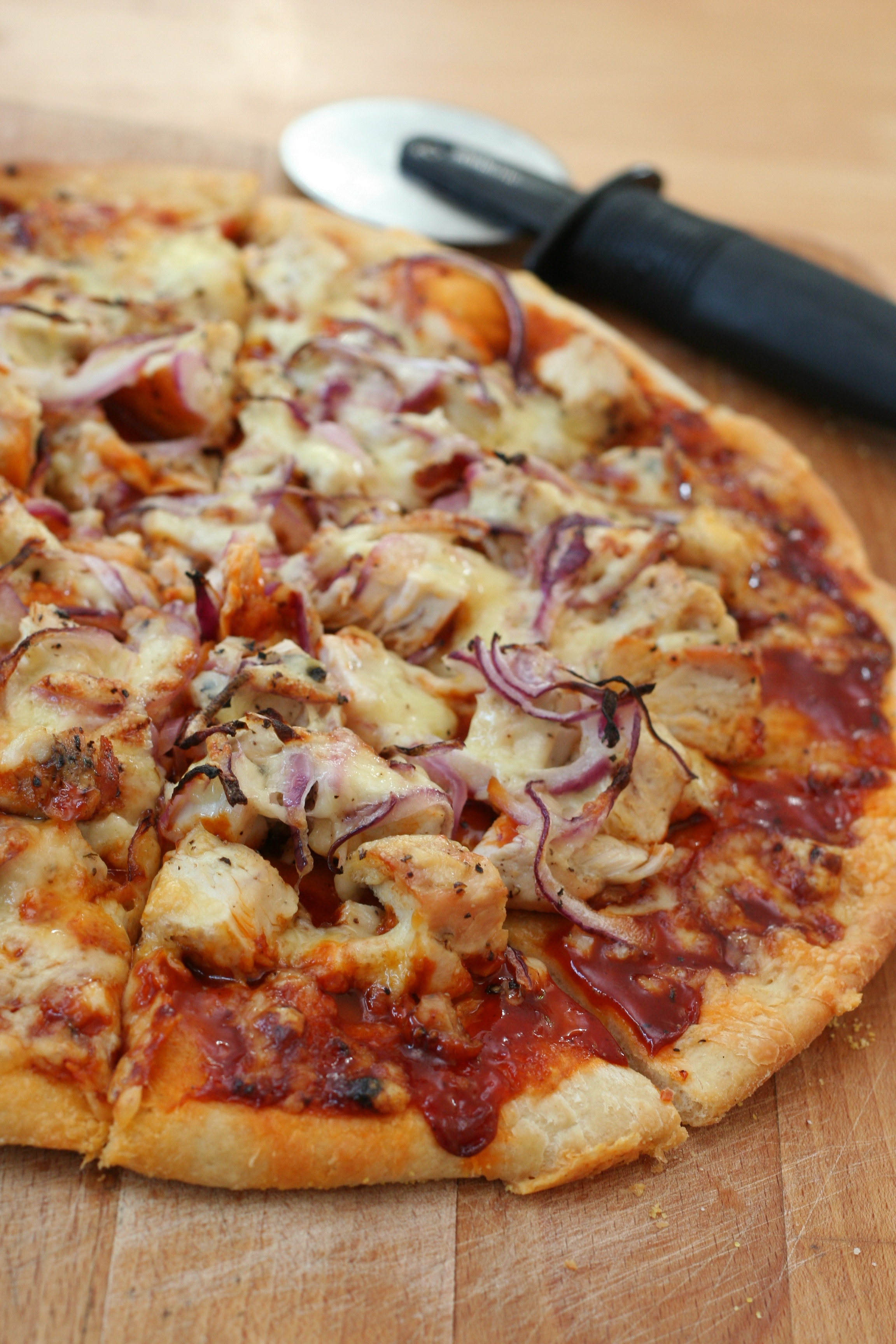
  • Hickory BBQ sauce, smoked Applewood cheese, red onions and roasted chicken (my pizza, pictured)
  • Mushroom, Manchego cheese and sage (An American in Ireland)
  • Chicken, asparagus, sweetcorn, feta, red onion, mozzarella (Babaduck Babbles)
  • Parma ham, salami, garlic mushrooms, Taleggio, mozzarella (Babaduck Babbles)
  • Pork, onion, tomato, mushroom, mozzarella, basil (Babaduck Babbles)
  • Roast asparagus, soft Knockalara sheep’s cheese and roasted hazelnuts (Bibliocook)
  • Parma ham, mozzarella, chili oil and fresh basil (Gluttony for Beginners)
  • Caramelized onions and goat’s cheese with cherry tomatoes (I Can Has Cook?)
  • Parboiled asparagus tips, Parma ham and mascarpone cheese (I Can Has Cook?)
  • Wilted spinach, cherry tomatoes and ricotta cheese (I Can Has Cook?)
  • Buffalo mozzerella, Parma ham, black olives, green olives stuffed with pimento paste, capers and sun-dried tomatoes (Like Mam Used to Bake)
  • Caramelized onion and goat’s cheese (Musings of a Med Student)
  • Mozzarella, mature cheddar, Gruyère, baked ham and Parma ham (Smörgåsblog)

And here are some more suggestions from around the internet:

Creamy Penne with Smoked Trout and Peas

When I attended the Bord Bia Irish food bloggers event last month, I first and foremost met loads of fantastic people, some of whom are bloggers I’ve been reading for awhile, and some who I happily discovered thanks to this event. I also saw a few cooking demos, including a don’t-try-this-at-home handsaw-wielding butcher; heard talks on raising your blog’s profile from Damien Mulley and how to land a book deal from Eoin Purcell; learned some tips on food styling from Erica Ryan and food photography from Jocasta Clarke; and ate pork belly and its fabled crackling for the first time.

And I got some free grub.

I left the Bord Bia offices laden down with potted thyme and sage plants from Living Flavour; a jar of chutney for cheese from Sheridans Cheesemongers; a box each of Pu-erh and South African Roobios tea from Barry’s Tea; a pack of Biltong Irish beef jerky; a pack of lentil, pea and bean shoots from Good4U; a homemade Macroom oatmeal ginger biscuit made by fellow blogger Lilly Higgins; and last but not least, two fillets of hot smoked Irish trout from Goatsbridge. (And not forgetting, of course, the 4 lb pork loin sent out by Bord Bia before the event that I brined and served with a rhubarb compote.)

We scoffed most of the lot fast enough, but I let the trout sit in the fridge for a week while I decided what to do with it. I can’t claim to be the first of the Irish bloggers to come up with the idea of pairing the trout with pasta and peas — Darren at Supper Satisfaction and Aoife at Babaduck Babbles have both posted similar versions already, and I was inspired by Gizzi Erskine’s recipe for spaghetti with smoked salmon and peas that Donal Skehan featured on his blog last month and which my kids loved when I made it. The top-quality trout did most of the work for me in this recipe, but some lemon, crème fraîche and white wine didn’t hurt either. If you can’t find smoked trout, this recipe would work just as well with smoked salmon.

But I left with more than just a bag full of free food. I came away from the event inspired to try some new recipes thanks to the producers’ generous donations, with new friends and with a sense that I’m part of a buzzing little Irish food blogging community. Now that’s what I call a good day out.

Creamy Penne with Smoked Trout and Peas

Serves 4 to 6

The folks at Goatsbridge suggested adding a pinch of dried chili flakes to this recipe for a little kick. If you can’t get crème fraîche, try taking a leaf out of Gizzi Erskine’s book and using 1/2 cup (120 ml) heavy cream and 1/2 cup (120 ml) Greek yogurt instead, in which case you might not need to add the pasta cooking water at the end.

1 lb (450 g) penne
2 cups (200 g) frozen peas
1 tablespoon (15 g) butter
4 small shallots, finely chopped
juice of 1 large lemon
1 cup (240 ml) white wine
1 cup (240 ml) crème fraîche
salt and freshly ground black pepper
7 oz (200 g) smoked trout (or smoked salmon), roughly chopped
1/4 cup (10 g) chopped fresh dill
freshly grated Parmesan, to serve

Cook the penne in a large pot of boiling salted water according to the packet instructions. Five minutes before the end of the cooking time, add the frozen peas in with the pasta.

Meanwhile, melt the butter over a medium-low heat in a large frying pan, one that’s big enough to eventually hold all the cooked pasta. Add the shallots and cook for 3 to 4 minutes, until softened. Add the lemon juice and wine and bring to the boil. Turn the heat down to low and simmer for about 10 minutes, until the lemon and wine have reduced a little. Add in the crème fraîche and stir well, then season with salt and pepper. Add in the smoked trout and continue to simmer until the trout is heated through.

Drain the pasta and peas, reserving some of the cooking water. Add a ladleful of the pasta cooking water to the sauce to thin it a little. Add the pasta and peas directly to the sauce in the frying pan, stirring well to coat the pasta evenly with the sauce. Add more cooking water if needed. Sprinkle with fresh dill and toss to combine. Serve immediately with freshly grated Parmesan cheese on top.