Category Archives: Bread

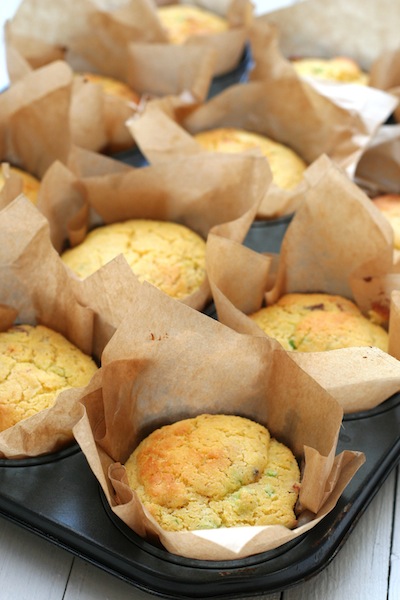
White Chicken Chili with Bacon Corn Muffins

The birth of a new child is usually heralded by the delivery of clothes, bibs, and other soft pastel things. In my experience, what most moms really need during those early weeks is a hot meal and long shower, not another outfit to wash and put away. It’s not that I didn’t love getting adorable clothes and blankets for my kids, but I wasn’t able to appreciate them for a couple months. I had to wait for life to settle back into a routine and for sleep lasting longer than two hours at a stretch. Since I can’t help out with the long shower, I try to deliver a home-cooked meal for my friends with new babies.

I especially like this menu for gifting. You can easily double the chili and split the batch of muffins — an easy way to make a meal for your family and theirs at the same time. I recommend adding a tossed salad. This week, a salad was out of the question as the meal was traveling too far (a three-hour ride to Chicago due to construction). Instead, I included a ziploc bag of fresh corn, already cooked but still on the cob. As mentioned in previous posts, the corn can be cut off the cob and used in a salad or reheated in a pan with butter and salt and pepper.
White Chicken Chili
adapted from my cousin Bridget’s recipe

Serves 4

3 boneless, skinless chicken breasts (about 1 1/2 lb/680 g), diced into 1/4‑inch cubes
1 onion, diced
2 tablespoons vegetable oil
2 cloves garlic, minced (or 1 teaspoon garlic powder)
1 x 14 oz (400 g) can great northern beans, drained and rinsed
1 x 4 oz (110 g) can diced green chilies
14 oz (400 ml) chicken broth
1 teaspoon cumin
1 teaspoon salt
1/2 teaspoon freshly ground black pepper
1/4 teaspoon cayenne
8 oz (225 g) sour cream
1/2 cup (120 ml) half and half (or whipping cream)

Brown the chicken and onion in the oil over a medium-high heat, stirring frequently. Add the garlic and cook for 1 to 2 minutes, until fragrant. Add the beans, chilies, broth, and seasonings and simmer for 30 minutes. Stir in the sour cream and half and half. Heat through, but do not boil.

***

Bacon Corn Muffins
adapted from Gourmet, January 2005

Makes 12 muffins

1 1/4 cups (300 ml) whole milk
1 large egg
6 tablespoons (90 g) unsalted butter, melted and cooled
1 cup (155 g) yellow cornmeal
3/4 cup (90 g) all-purpose flour
1 cup (75 g) chopped scallions
8 bacon slices (1/2 lb/225 g), cooked and crumbled
2 tablespoons sugar
1 tablespoon baking powder
3/4 teaspoon salt

Put the oven rack in the middle position and preheat the oven to 400°F (200°C).

Whisk together the milk, egg, and butter in a small bowl. Whisk together the remaining ingredients in a large bowl, then add the milk mixture to the dry ingredients. Stir until just combined. Divide the mixture among 12 greased (1/2 cup) muffin cups. Bake for about 20 minutes, until the muffins are golden and a tester comes out clean. Cool in the pan on a rack for 5 to 10 minutes before turning out.

Cheddar Corn Chowder with Savory Ham and Cheese Muffins

I’m a born and bred Midwesterner, so corn is practically part of my heritage. “Corn should be knee high by the fourth of July,” my dad used to say out of the blue sometimes while driving alongside the cornfields of northern Illinois, and no summer picnic or barbecue was complete without me or my brother or sister being sent out to the patio to shuck a bag full of sweetcorn picked up from the tumbledown farm stand on the corner of Route 45 and 173. When I was back in the States last month, my friend and I went grocery shopping to pick up supplies for that night’s barbecue, and I insisted we get a few ears of sweetcorn. Back home in Ireland, though, where whole ears of corn tend to only come pre-shucked in shrink-wrapped packages (and that’s in the rare instance when you can even find them), I make do with frozen corn. In this cheddar corn chowder, though, it’s so full of flavor that I don’t think you’d even know the difference.

Now that the back to school drive is in full swing, it’s worth saying that these ham and cheese muffins not only work well served alongside soup, but are also a great alternative to the usual sandwich in a school lunchbox. The 15 minutes you spend making them one day will be repaid during the week if you stash them in the freezer. You can then grab as many as you need from the freezer the night before, pop them into a reusable plastic container and stow them in the fridge – they’ll be thawed by lunchtime the next day.

Cheddar Corn Chowder
adapted from The Barefoot Contessa Cookbook by Ina Garten

Serves 6

For a gourmet touch, you could serve this soup with a dollop of Wolfgang Puck’s jalapeño crema on top instead of grated cheese. Instead of using a mix of cream and milk, you could just use 1 cup (240 ml) half and half in the US, or if you want to make it a little less fattening, just use 1 cup (240 ml) milk and no cream. Leave out the bacon and use vegetable stock to make a vegetarian version of this.

2 tablespoons olive oil
4 oz (110 g) bacon, chopped
2 large yellow onions, chopped
2 tablespoons (30 g) unsalted butter
1/4 cup (30 g) flour
1/2 teaspoon salt
1/2 teaspoon freshly ground black pepper
1/4 teaspoon ground turmeric
6 cups (1 1/2 liters) chicken stock
1 lb (450 g) baby potatoes, unpeeled and diced
1.5 lb (680 g) fresh or frozen corn kernels (about 5 ears of corn if using fresh)
1/2 cup (120 ml) cream
1/2 cup (120 ml) milk
4 oz (110 g) sharp/mature cheddar cheese, grated, plus extra to garnish
chopped chives, to garnish (optional)

Heat the olive oil in a large stockpot over a medium-high heat and cook the bacon for about 5 minutes, until crisp. Remove the bacon with a slotted spoon and set aside to drain on a paper towel-lined plate. Reduce the heat to medium, add the onions and butter to the rendered fat and cook for 10 minutes, until the onions are translucent.

Stir in the flour, salt, pepper and turmeric and cook for 3 minutes. Add the chicken stock and potatoes, bring to a boil and simmer, uncovered, for 10 to 15 minutes, until the potatoes are tender. If using fresh corn, cut the kernels off the cob and blanch them for 3 minutes in boiling salted water, then drain. (If using frozen corn, you can skip this step.) Add the corn to the soup, then add the bacon back in. Add the cream, milk and cheddar. Cook for 5 more minutes, until the cheese has melted. Season to taste with salt and pepper. Serve hot with a little grated cheddar and chopped chives sprinkled on top.

***

Savory Ham and Cheese Muffins

Makes 12 muffins

These muffins have some whole wheat flour to give them a little boost of wholegrain goodness, but you could use all plain flour (2 1/2 cups/300 g) instead. You can also adjust the seasonings to your children’s tastes, so feel free to leave out the paprika, black pepper, Worcestershire sauce, mustard or scallions, or use a mild cheddar instead of a mature one.

1 3/4 cup (200 g) plain flour
3/4 cup (100 g) whole wheat flour
2 1/2 teaspoons baking powder
1/2 teaspoon paprika
1/4 teaspoon salt
freshly ground black pepper
1 cup (240 ml) milk
6 tablespoons (90 g) unsalted butter, melted and cooled
1 egg
1 teaspoon Worcestershire sauce
1/2 teaspoon Dijon mustard
2 cups (200 g) grated mature cheddar
6 slices ham, chopped into small pieces
6 scallions, finely chopped

Preheat the oven to 375°F (190°C). Grease a muffin tin or line with silicone or paper cases.

Sift together the flours, baking powder, paprika, salt and a little black pepper in a large bowl.

In a separate bowl or measuring jug, whisk together the milk, melted butter, egg, Worcestershire and mustard. Add to the dry ingredients and stir until just combined (don’t overmix or the muffins will be tough). Stir in the grated cheese, ham and scallions, again taking care not to overmix.

Spoon the batter into the prepared muffin tin and bake for 20 to 25 minutes, until the muffins are golden and a tester inserted into the center comes out clean. Set aside on a wire rack to cool. If freezing, allow them to cool completely first.

Creamy Slow Cooker Stroganoff and Strawberry Bread

I’ll make this short for all of you who, like myself, are trying to fit 25 hours of living into a 24-hour day. First, if you don’t have a slow cooker, buy one. Don’t be afraid to leave the house with it on and don’t attempt to make anything fancy in it. The slow cooker can do a lot, but it doesn’t make pretty food. Stephanie O’Dea has a great slow cooker blog and now a companion cookbook, where I found this recipe. It’s the “working mom” version of one of my childhood favorites — my German great-grandmother’s stroganoff. It would be best served on her homemade spaetzle, but good-quality egg noodles are a fine substitute.

The strawberry bread is perfect for using up the last of the great strawberries of the season. It can be made ahead and lasts for several days, covered, at room temperature. It can also be wrapped tightly in wax paper, then plastic wrap and stored in the freezer for a few months. Like banana bread, this strawberry bread is healthy enough to eat for breakfast but tasty enough to eat as dessert.

Creamy Slow Cooker Stroganoff
adapted from Make It Fast, Cook It Slow: The Big Book of Everyday Slow Cooking by Stephanie O’Dea

Serves 6

2 lb (900 g) beef stew meat
2 tablespoons butter
1/4 cup (60 ml) milk
1 tablespoon Worcestershire sauce
1 onion, diced
8 oz (225 g) mushrooms, quartered or sliced
1/4 cup (60 ml) broth
1/2 teaspoon salt
1 teaspoon black pepper
1 teaspoon dried herbes de Provence or thyme
4 oz (110 g) cream cheese, diced
egg noodles, for serving

Put the meat into the slow cooker (frozen is fine). Add the butter, milk, Worcestershire sauce, onion, mushrooms, broth, salt, pepper, and dried herbs. Cook on low for 10 to 12 hours, or until the meat is tender. Stir in the cream cheese and cook for a few more minutes, stirring occasionally, until the cream cheese is fully incorporated into the sauce. Taste and add more salt or pepper, if necessary. Serve over cooked egg noodles.

***

Strawberry Bread

Makes 2 loaves

1 lb (450 g, or about 4 cups) sliced strawberries
1 1/2 cups (300 g) sugar
2 1/8 cups (255 g) all-purpose flour
1 cup (125 g) whole wheat flour
1 teaspoon cinnamon
1 teaspoon baking soda
1 teaspoon salt
3/4 cup (180 ml) canola or vegetable oil
1/2 cup (120 ml) applesauce
4 eggs, beaten lightly
1 teaspoon vanilla
1 1/4 cups (125 g) chopped toasted pecans

Preheat the oven to 350°F (180°C). Grease and flour two 5 x 9 inch loaf pans.

In a small bowl, combine the sugar and strawberries; set aside. In a large bowl, combine the flours, cinnamon, baking soda and salt; set aside.

In a medium bowl, combine the oil, applesauce, eggs, and vanilla. Stir in the strawberry and sugar mixture. Add the wet mixture to the dry ingredients. Stir until just combined, then fold in the pecans.

Pour the batter into the prepared pans and bake for 45 to 50 minutes, until a toothpick comes out clean. Cool the loaves on a wire rack for 10 minutes. Remove the loaves from the pans and continue cooling on rack. Serve at room temperature.

Homemade Pizza

When you make friends in the virtual world of blogging, it turns out you can have a virtual party too — an online pizza party, in our case. A few Irish foodies were chatting on Twitter last week, a few pizza craving comments were casually tossed around and before we knew it Sarah had taken the lead in planning a #twizzaparty last Thursday, where nine of us were to all make homemade pizzas, tweet about it and blog it, with Lorraine volunteering to judge the results and even donate some prizes from her Italian deli in Limerick.

Sure, it’s easier to order take-out, and with a good pizzeria only a five-minute drive away we certainly do our fair share of that, but one of the great things about making your own pizzas is that kids love helping out with it, so it’s a fun way to get them involved in the kitchen. But if you’re not crazy about the idea of making your own dough, then you could buy ready-made pizza bases or dough at the grocery store and load them up with your own fresh toppings. I’ve included a list of all the toppings made for the twizzaparty (we would appear to like Parma ham a lot), as well as a few more from around the internet to get you going.

This dough is absolutely foolproof and is the only recipe I use now. Resting the dough overnight is a tip that’s new to me, and if nothing else I found that it made the dough easier to roll out the next day (Lorraine also passed on a tip to cover it with a damp tea towel to keep it from rising too much in the fridge). And everyone loves a secret ingredient, so I’ll let you in on the one in my tomato sauce — anchovy paste. Don’t worry, it doesn’t make the sauce taste at all fishy, it just adds a little hit of umami goodness.

Basic Pizza Dough
adapted from The River Cottage Family Cookbook by Hugh Fearnley-Whittingstall

Makes enough for 2 pizzas or 1 loaf of white bread

4 1/4 cups (500 g) strong white flour, plus extra for dusting the work surface
2 teaspoons salt
2 teaspoons (1 x 7 g sachet) easy-blend (fast-action) yeast
2 tablespoons olive oil
2 teaspoons sugar or honey
1 1/4 cup (300 ml) warm water
cornmeal/polenta, for the base of the pizza (optional)

To make the dough in a bread machine, simply follow the usual instructions for your machine, then skip to the last step.

To make the dough by hand, put the flour in a large mixing bowl, add the salt and yeast and stir with a wooden spoon until well combined. Pour the warm water into a measuring jug, then add the olive oil and sugar (or honey). Stir well. Pour the water mixture onto the flour in the bowl, a little at a time. Either with the wooden spoon or your hands, work the water into the flour and gradually bring it all together into a mass of soft, slightly stick dough. If the dough feels very sticky, add a little more flour. If it feels as if it won’t come together, then work in some more warm water — a soft dough is much easier to knead.

Flour the work surface and turn the dough out onto it. It will look rough and saggy at this stage, so it has to be kneaded until it’s smooth and bouncy. Keep kneading for at least 10 minutes (or you could use the dough hook of a stand mixer). Shape the dough into a neat ball, put it back in the mixing bowl and cover the bowl with some cling film or a damp kitchen towel to prove in a warm, draft-free place until doubled in size — this will take 90 minutes to 2 hours.

When the dough has risen, preheat the oven to 425°F (220°C). Lightly grease a pizza pan or baking sheet with olive oil, then sprinkle over some cornmeal, if using. Knock out the air and roll the dough out into a 12-inch round (or whatever size will fit your pan/sheet) and place in the prepared pan or baking sheet. Cover the dough with your toppings and bake for 15 to 20 minutes, or until golden (check after 10 minutes to make sure nothing is burning). Allow to stand for 10 minutes, then cut into slices and serve immediately.

***

Tomato Sauce with a Secret Ingredient

Makes more than enough for 2 pizzas

2 x 6 oz cans (or 1 x 300 g jar) tomato paste (a.k.a. tomato puree)
3/4 cup (175 ml) water (or more if you prefer a thinner sauce)
2 or 3 garlic cloves, finely minced
1/4 cup (25 g) finely grated Parmesan cheese
2 teaspoons anchovy paste (optional, but come on, it’s the secret ingredient!)
1/2 teaspoon dried oregano
1/2 teaspoon dried basil
1/4 teaspoon dried chili flakes (optional)
salt and freshly ground black pepper
pinch of sugar

In a small bowl, combine the tomato paste and water, stirring to combine. Add the garlic, Parmesan, anchovy paste, basil, oregano and chili flakes. Add seasoning to taste, but watch the salt if you’ve used the anchovy paste, as it’s quite salty. Mix together well and add a generous pinch of sugar (or to taste) to counteract the acidity of the tomato paste. Allow the sauce to stand for at least 30 minutes to blend the flavors (though the longer you can leave it, the better), then taste again and adjust the seasoning if needed. Spread the sauce over your pizza dough, then pile on the toppings. Use any leftovers as a pasta sauce, or freeze.

***

Topping suggestions

Here’s what we made for the twizzaparty:

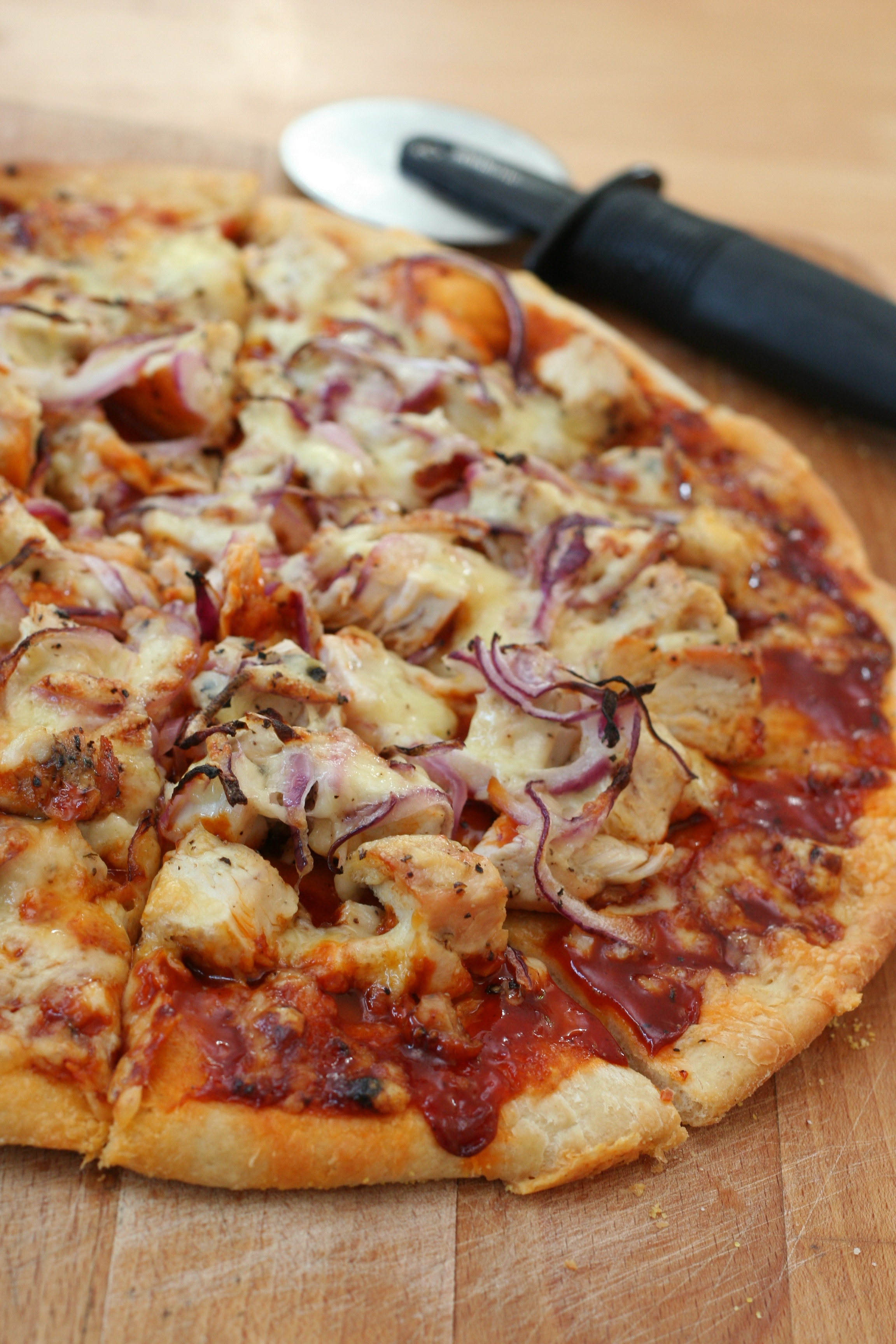
  • Hickory BBQ sauce, smoked Applewood cheese, red onions and roasted chicken (my pizza, pictured)
  • Mushroom, Manchego cheese and sage (An American in Ireland)
  • Chicken, asparagus, sweetcorn, feta, red onion, mozzarella (Babaduck Babbles)
  • Parma ham, salami, garlic mushrooms, Taleggio, mozzarella (Babaduck Babbles)
  • Pork, onion, tomato, mushroom, mozzarella, basil (Babaduck Babbles)
  • Roast asparagus, soft Knockalara sheep’s cheese and roasted hazelnuts (Bibliocook)
  • Parma ham, mozzarella, chili oil and fresh basil (Gluttony for Beginners)
  • Caramelized onions and goat’s cheese with cherry tomatoes (I Can Has Cook?)
  • Parboiled asparagus tips, Parma ham and mascarpone cheese (I Can Has Cook?)
  • Wilted spinach, cherry tomatoes and ricotta cheese (I Can Has Cook?)
  • Buffalo mozzerella, Parma ham, black olives, green olives stuffed with pimento paste, capers and sun-dried tomatoes (Like Mam Used to Bake)
  • Caramelized onion and goat’s cheese (Musings of a Med Student)
  • Mozzarella, mature cheddar, Gruyère, baked ham and Parma ham (Smörgåsblog)

And here are some more suggestions from around the internet:

Cauliflower Cheese Soup with Irish Beer Bread

I’ve always thought of cheese soup as a Midwestern, and particularly a Wisconsin, thing. There’s no reason for me to think that, other than that Wisconsin is known as the Dairy State and leads the nation in cheese production. UW-Madison, where Kelly and I both went to college, is also well known for often topping the polls for the highest student beer consumption (and in fact, the student union in Madison was the first college union in the country to sell beer), so I guess it’s no surprise that beer bread is what I thought of to serve with this soup.

The beer bread is surprisingly light and sweet (a little too sweet for my taste, actually; next time I’m going to try adding some salt to counteract it). It’s also so fast to make that your oven probably won’t even have finished preheating by the time you’ve got it all mixed up and ready to go. You’ll never buy an overpriced beer bread mix again after making this from scratch.

Cauliflower Cheese Soup
adapted from Tender: A Cook and His Vegetable Patch by Nigel Slater

Serves 4 to 6

Instead of serving this soup with a bread on the side, Nigel Slater toasts 2 slices of dark rye bread, melts a little cheese on top, cuts the slices into triangles and floats them on top of the soup.

2 tablespoons (30 g) butter
1 onion, roughly chopped
2 cloves garlic, crushed
1 head of cauliflower, broken into florets
3 1/2 cups (840 ml) water
2 bay leaves
sea salt and freshly ground black pepper
3/4 cup (200 ml) crème fraîche or sour cream
1 heaped tablespoon grain mustard
1 cup (100 g) coarsely grated Gruyère, Cantal or a strong, mature Cheddar
finely chopped fresh chives, to garnish (optional)

Melt the butter in a large pot. Add the onion and garlic and fry until soft, but don’t let them color. In a separate pot, boil the cauliflower in the water for 8 to 10 minutes, until tender. Add the bay leaves to the onion and garlic, then add the cauliflower and its cooking water. Bring to the boil and add salt and pepper. Cover and simmer for 15 minutes, until the vegetables are very soft. Remove the pan from the heat, discard the bay leaves and allow the soup to cool slightly. Puree the soup in two batches in a blender (or use a hand-held immersion blender right in the pot). Pour the mixture back into the pot and stir in the crème fraîche, grain mustard and grated cheese. Bring the soup slowly back to a simmer and stir just until the cheese has melted, then ladle into individual bowls, garnish with chopped chives, if using, and serve.

***

Irish Beer Bread

Makes 1 loaf

I called this Irish beer bread only because I used an Irish ale (Smithwick’s, which is pronounced Smittick’s), but you can use any beer. The stronger the beer you choose, the stronger the flavor of the bread.

2 1/2 cups (300 g) self-rising flour
1 tablespoon sugar
12 fl oz beer (350 ml), at room temperature
2 tablespoons (30 g) butter, melted (optional)

Preheat the oven to 375°F (190°C). Grease a 1‑lb loaf tin. Sift the flour and sugar into a bowl. Pour in the beer and mix with a wooden spoon until just combined. Pour into the greased loaf tin, pour the melted butter on top, if using, and bake for 45 minutes. Transfer to a wire rack to cool for at least 30 minutes before you slice it.

Sweet Potato, Rutabaga and Bacon Soup with Buttermilk Cheddar Biscuits

There are lots of differences between British English and American English, both big and small. There’s that whole thing about spelling things with ‑our instead of ‑or, like colour and neighbour, or using ‑re at the end of a word instead of ‑er, like centre or theatre. (Growing up in suburban Illinois, whenever we saw a strip mall calling itself a ‘shopping centre,’ we’d laugh at its pretensions.) I’ve also had to learn to say petrol instead of gas, lift instead of elevator, car park instead of parking lot and now order coffee to take away instead of to go. The differences in food names are even more pronounced: aubergine instead of eggplant, courgette instead of zucchini, mangetout instead of peas, and chips instead of fries (and crisps instead of chips). But my favorite (or should I say favourite?) is rutabaga instead of swede. I always thought the word rutabaga seemed a little ludicrous, almost like a made-up word, but it actually comes from the Swedish rotabagge, which explains why it’s also called a swede, given the word’s country of origin. Whatever you want to call it, it’s an underused vegetable, often appearing in root vegetable mashes, and it’s perfect in this cheap and cheerful soup.

Bacon corn muffins, bacon, onion and thyme bread or Irish soda bread would also work well with this soup instead of the buttermilk cheddar biscuits.

Sweet Potato, Rutabaga and Bacon Soup
adapted from Healthy 1–2‑3 by Rozanne Gold

Serves 4

I threw in a parsnip because it was looking lonely in my vegetable crisper, left over from a different dinner, and it worked perfectly well with the other flavors in the soup. A small chopped onion or a couple shallots would also be good additions.

5 slices bacon (plus extra for garnish, optional)
2 large sweet potatoes (about 1 1/2 lb/680 g)
1 large rutabaga (swede) (about 1 1/2 lb/680 g)
5 cups (1.2 litres) chicken or vegetable stock or water
salt and freshly ground black pepper

Cut the bacon into bite-sized pieces. Heat a large pot. Add the bacon and fry until cooked through. Remove with a slotted spoon and drain on paper towels. Set aside. Drain off all but 1 tablespoon of the bacon fat from the pot.

Peel the sweet potatoes and rutabaga and cut into 1/2‑inch pieces (it doesn’t have to be perfect, it will all get blended later anyway). Add to the pot and cook for 5 minutes, until lightly browned. Add the water, along with some salt and pepper to taste (not too much salt, though, because of the bacon). Add the cooked bacon. Bring to a boil, then lower the heat and cover. Cook for 45 minutes, or until the vegetables are very soft.

When the vegetables are tender, puree the soup until smooth in a blender, food processor or with a hand-held immersion blender. If the soup is too thick for your liking, simply add more stock or water until it reaches the desired consistency. Ladle the soup into bowls, then, if using, crumble the reserved cooked bacon into small pieces and scatter on top.

***

Buttermilk Cheddar Biscuits
adapted from Back to Basics by Ina Garten

Makes 8 biscuits

If you have any leftover biscuits, they’re delicious reheated for breakfast the next day with some scrambled eggs.

2 cups (240 g) all-purpose flour, plus more as needed
1 tablespoon baking powder
1 1/2 teaspoons kosher salt
1 1/2 sticks (180 g) cold unsalted butter, diced
1/2 cup (120 ml) cold buttermilk, shaken
1 cold extra-large egg
1 cup (90 g) grated extra-sharp Cheddar
1 egg, beaten with 1 tablespoon water or milk
Maldon sea salt (optional)

Preheat the oven to 425°F (220°C). Line a baking tray with parchment paper.

Place the flour, baking powder, and salt in the bowl of an electric mixer fitted with the paddle attachment. With the mixer on low, add the butter and mix until the butter is the size of peas.

Combine the buttermilk and egg in a small measuring cup and beat lightly with a fork. With the mixer still on low, quickly add the buttermilk mixture to the flour mixture and mix only until moistened. In a small bowl, mix the Cheddar with small handful of flour and, with the mixer still on low, add the cheese to the dough. Mix only until roughly combined.

Dump out onto a well-floured board or counter and knead lightly about 6 times. Roll the dough out to a rectangle 10 by 5 inches. With a sharp, floured knife, cut the dough lengthwise in half and then across in quarters, making 8 rough rectangles. Transfer to the prepared baking tray. Brush the tops with the egg wash, sprinkle with salt, if using, and bake for 20 to 25 minutes, until the tops are browned and the biscuits are cooked through. Serve hot or warm.

Roasted Garlic and Pea Soup with Bacon, Onion and Thyme Bread

Everyone has a few recipes in their repertoire that they can turn to if they want something fast or cheap. This recipe is both. The only reason the soup can’t be filed as a 30-minute meal is because the garlic takes an hour to roast, but if you do that the night before you want to make the soup, then you can have this soup on the table in about 20 minutes. This bread goes perfectly with the soup, but a good store-bought focaccia, ciabatta or garlic bread would do the trick just as nicely.

Roasted Garlic and Pea Soup
adapted from Real Food by Nigel Slater

Serves 2 to 3

1 head of garlic
1 tablespoon olive oil
3 cups (420 g) frozen peas
2 tablespoons (30 g) butter
4 tablespoons freshly grated Parmesan
1 3/4 cups (420 ml) vegetable or chicken stock, heated
1 cup (240 ml) heavy cream, or to taste

Preheat the oven to 400°F (200°C). Cut the top off the head of garlic. Cut out a square of tin foil, large enough to make a baggy parcel around the garlic. Sit the garlic in the middle of the foil and drizzle with the olive oil. Make a loose parcel around the garlic, sealing the edges of the foil. Roast for about 1 hour, until soft.

Cook the peas in boiling salted water as usual. Drain and tip into a food processor or blender, then squeeze in the soft cooked cloves of garlic. Add the butter and Parmesan and half of the stock. Process to a creamy puree. Pour the mixture into a saucepan and add the remaining stock. Check the flavor and add cream to taste. Pour back into a saucepan and reheat gently. Season to taste with salt and pepper and serve.

***

Bacon, Onion and Thyme Bread
adapted from Roly’s Café and Bakery by Paul Cartwright and Paulo Tullio

Makes 2 loaves

1 tablespoon olive oil
200 g bacon, chopped
1 large onion, finely diced
750 g strong white flour
2 tablespoons (30 g) unsalted butter, softened to room temperature
25 g sugar
1 teaspoon salt
1 tablespoon chopped fresh thyme (or 1 teaspoon dried)
1 x 7‑g sachet dried yeast
(430 ml) tepid water
4 tablespoons milk
1 egg yolk
1 egg, beaten + 4 tablespoons milk, for the egg wash
pinch of sea salt, such as Maldon, to garnish

Heat the oil in a frying pan over a medium heat. Add the chopped bacon and onion and cook for about 10 minutes, until the bacon is cooked through and the onion is soft but not browned. Remove from the heat and set aside. (If the mixture looks very oily, drain with a slotted spoon.)

Using a mixer with a dough hook, sieve the flour into the bowl on the lowest speed, adding the butter, sugar and salt. Add in the bacon and onion mixture as well as the thyme.

In another bowl, mix the yeast with the water, milk and egg yolk, making sure the yeast is fully broken down. The liquid should turn a pale gray.

Gradually add the liquid into the flour, increasing the speed of the mixer until it forms a dough. This should take about 7 to 10 minutes (double the time if mixing by hand). Turn off the mixer.

Remove the dough from the bowl and divide it in half. Shape into 2 round loaves or put into 2 lightly oiled tins and place on baking trays. Brush with the egg wash and sprinkle with sea salt. Cut straight across at an angle using a sharp knife and leave in a warm place, covered with a tea towel, for about 30 to 40 minutes, until doubled in size.

Preheat the oven to 425°F (220°C).

Place in the oven and bake for 30 minutes, adding a bowl of water to the bottom of the oven to prevent a skin from forming on the bread.

Roasted Potato Leek Soup with Irish Soda Bread

How does Ina Garten do it? She can take any recipe and somehow make it 10 times better than any other version. What’s her secret? Maybe it’s that she often roasts vegetables to bring out their natural sweetness, and she’s not afraid of butter or cream either — and lots of it. I’ve been making a potato leek soup from The New Vegetarian Epicure as my standby recipe for years, but no longer (sorry, Anna Thomas). As for the soda bread, the Avoca Café recipe here is the only one I’ve ever made. It’s so easy and foolproof — flour, baking soda, sugar, salt and buttermilk — that I doubt even the Barefoot Contessa could improve on it.

Roasted Potato Leek Soup
adapted from Barefoot Contessa Back to Basics by Ina Garten

Serves 6 to 8

Don’t worry if you can’t find any arugula (rocket), the soup would still be good without it.

2 lb (900 g) Yukon Gold potatoes, peeled and cut into 3/4‑inch chunks (or substitute any waxy or red-skinned potato)
4 leeks, white and light green parts chopped and cleaned well
1/4 cup (60 ml) good-quality olive oil
salt and freshly ground black pepper
3 cups (50 g) baby arugula, lightly packed
1/2 cup (120 ml) dry white wine, plus extra for serving
6 to 7 cups (1.4 to 1.7 liters) chicken stock (or use vegetable stock for a vegetarian version)
3/4 cup (180 ml) heavy cream
1 cup (225 g) crème fraîche
1/4 cup (25 g) freshly grated Parmesan, plus extra for garnish

Preheat the oven to 400°F (200°C).

Combine the potatoes and leeks on a sheet pan in a single layer. Add the olive oil, 1 teaspoon salt, and 1/2 teaspoon pepper and toss to coat the vegetables evenly. Roast for 40 to 45 minutes, turning them with a spatula a few times during cooking, until very tender. Add the arugula and toss to combine. Roast for 4 to 5 more minutes, until the arugula is wilted. Remove the pan from the oven and place over 2 burners. Stir in the wine and 1 cup (240 ml) of the stock and cook over a low heat, scraping up any crispy roasted bits sticking to the pan.

In batches, transfer the roasted vegetables to a food processor fitted with the steel blade, adding the pan liquid and about 5 cups (1.2 liters) of the stock to make a puree. Pour the puree into a large pot or Dutch oven. Continue to puree the vegetables in batches until they’re all done and combined in the large pot. Add enough of the remaining 1 to 2 cups (240 to 480 ml) of stock to make a thick soup. Add the cream, crème fraîche, 2 teaspoons salt, and 1 teaspoon pepper and check the seasonings.

When ready to serve, reheat the soup gently and whisk in 2 tablespoons white wine and 1/4 cup (25 g) of Parmesan. Serve hot with an extra grating of Parmesan.

***

Irish Soda Bread
adapted from Avoca Café Cookbook

Makes 1 loaf

This is the easiest bread to make, and it cooks in only half an hour. Don’t worry about its lumpy appearance — it’s meant to look that way. It’s fabulous with hearty, wintry soups, but the leftovers are equally as good for breakfast the next morning, lightly toasted and spread with jam and butter.

3 3/4 cups (450 g) plain flour
1 level teaspoon baking soda
1 teaspoon sugar
1/2 teaspoon salt
1 3/4 cups (400 ml) buttermilk

Preheat the oven to 450?F (230°C). Grease a loaf tin very well.

Mix all the dry ingredients together in a large bowl. Gradually mix in the buttermilk to make a moist dough. Place in the greased loaf tin and bake in the preheated oven for 30 minutes, until the loaf sounds hollow when turned out of the tin and tapped underneath. Place on a wire rack to cool.