Tag Archives: Italian food

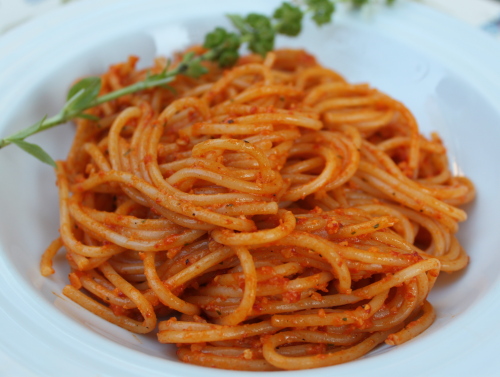
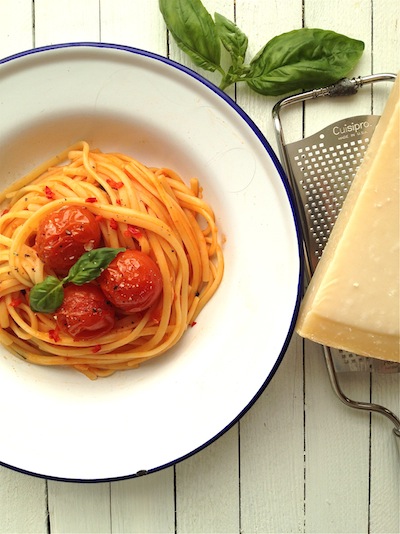
Spaghetti with Roast Cherry Tomatoes, Chili and Basil

Remember physically cutting recipes out of newspapers and magazines or writing them by hand onto recipe cards, to be filed away into boxes or binders? I was cleaning out my kitchen recently and found two big binders full of recipe clippings, shoved out of reach at the back of a cabinet, that I had completely forgotten about. I dusted them off and flipped through them to save any of the recipes that had caught my eye a decade ago that still sounded good, and it occurred to me that this would probably be the last time I ever paged through torn-out recipes. Now, if I see a recipe in print that I want to save for later, I look it up online and bookmark it or add it to my spreadsheet. This was a recipe I had cut out of a newspaper years and years ago, the original source long since forgotten, the paper already turning yellow and brittle, an old summer favorite happily rediscovered.
If you’re looking for ways to use up an abundance of garden tomatoes, try these too: Chicken Cacciatore, Tomato and Goat’s Cheese Tart, Ravioli and Tomato Salad, Oven-roasted Ratatouille, or Spaghetti with Fresh Tomato Sauce.

Spaghetti with Roast Cherry Tomatoes, Chili and Basil

Serves 4

This would look especially nice if you used a mix of yellow and red cherry tomatoes. You could also add some finely chopped sun-dried tomatoes to the sauce if you have them.

olive oil
2 garlic cloves, chopped
2 red chilies, deseeded and finely chopped
2 tablespoons tomato paste
1 lb 2 oz (500 g) cherry tomatoes, 16–20 left whole and the rest cut into quarters
1 teaspoon sugar
splash of white wine or vermouth (optional)
salt and freshly ground black pepper
small bunch of basil, leaves removed from stems and cut into thin ribbons (chiffonade)
1 lb (450 g) spaghetti
freshly grated Parmesan, to serve

Preheat the oven to 425°F (220°C).

Heat some olive oil in a large saucepan over a low heat. Add the garlic and chopped chili and cook for 1 minute, taking care not to let the garlic will burn or it will taste bitter and ruin the dish. Stir in the tomato paste and cook for 1 or 2 minutes, then add the chopped tomatoes and sugar. Turn up the heat and cook for a minute or two, then add just a splash of white wine or vermouth (or water) and season with salt and pepper. Bring to a rapid splutter, then lower the heat and let it gently bubble away until reduced to a thick-ish sauce.

Meanwhile, cook the spaghetti in a large pot of boiling salted water, reserving a cupful of the cooking water when it’s done. Scatter the remaining tomatoes onto a baking sheet, season well with salt and pepper and drizzle with olive oil. Roast in the hot oven for about 10 minutes, until the tomatoes start to split.

To serve, add the cooked, drained pasta to the chili tomato sauce, stirring well until all the pasta is coated with sauce. Add a splash of the reserved pasta water to loosen the sauce. Stir in the basil and divide the pasta between 4 plates or shallow bowls. Add the roasted tomatoes individually to the top of each dish. Finish with a few basil leaves to garnish and a grating of Parmesan.
Chicken Canzanese

After years of minimal sleep and constant hovering over infants and toddlers, I really appreciate the little things about having older kids. Things like talking with my husband over coffee in the morning (thank goodness for Saturday morning cartoons) or staying up late to watch a boring British mystery movie knowing the kids will sleep in past 7 a.m.  Now that both kids are officially out of diapers, feed themselves, and can talk (not necessarily without whining), a small amount of free (me!) time has even crept into my weekends. This Sunday, I had a chance to sit on the couch and watch a cooking show on television. I know this doesn’t seem like much of an event, but for any reader with young children, it’s momentous. Sam joined me on the couch, pretty unimpressed with the looks of the recipe until I explained that the chefs were cooking the chicken in broth. Sam immediately perked up at the mention of broth. The kid loves anything with broth in it. Weird, I know.

I had most of the ingredients in the house (and garden) to make this Italian-style braised chicken dish and what I didn’t have, I left out. My stripped down version of the recipe came out great. The chicken was tender, the skin still slightly crunchy, the sauce silky and rich, and the sage and lemon adding a nice spike of freshness. Definitely a keeper.

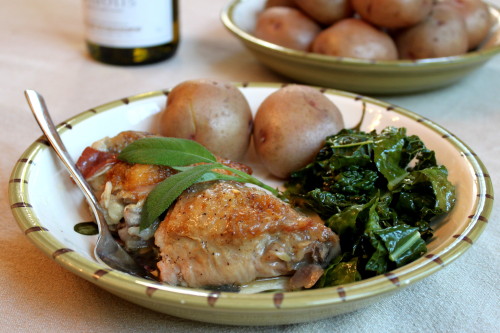
Italian Braised Chicken

Chicken Canzanese
adapted from America’s Test Kitchen

Serves 4 to 6

I served this initially with boiled red potatoes and sauteed kale. For leftovers the following night, I made polenta and peas instead. Though both meals were eaten and enjoyed, we slightly preferred the polenta and peas combination.

2 tablespoons olive oil
2 oz (60 g) prosciutto, cut into 1/4‑inch cubes or, if thinly sliced, 1/4‑inch strips
4 medium garlic cloves , sliced thin lengthwise
8 bone-in, skin-on chicken thighs (about 3 lbs/1.4 kg), trimmed of excess fat and skin
ground black pepper
2 teaspoons unbleached all-purpose flour
1 cup (240 ml) dry white wine
2 cups (475 ml) low-sodium chicken broth
1/8 teaspoon ground cloves
12 whole fresh sage leaves
2 bay leaves
1/2 teaspoon red pepper flakes
1 to 2 tablespoons fresh lemon juice
2 tablespoons unsalted butter

Adjust the oven rack to lower-middle position and heat the oven to 325°F (160°C). Heat 1 tablespoon of oil in a large heavy-bottomed ovensafe skillet over medium heat until shimmering. Add the prosciutto and cook, stirring frequently, until just starting to brown, about 3 minutes. Add the garlic slices and cook, stirring frequently, until the garlic is golden brown, 1–2 minutes. Using a slotted spoon, transfer the garlic and prosciutto to a small bowl and set aside. Do not rinse the pan.

Increase the heat to medium-high; add the remaining tablespoon of oil and heat until just smoking. Pat the chicken dry with paper towels and season it with ground black pepper. Add the chicken, skin side down, and cook it without moving until it is well browned, 5 to 8 minutes. Using tongs, turn the chicken and brown on the second side, about 5 minutes longer. Transfer the chicken to a large plate.

Remove all but 2 tablespoons of fat from the pan. Sprinkle the flour over the fat and cook, stirring constantly, for 1 minute. Slowly add the wine and broth; bring to a simmer, scraping the bottom of pan with a wooden spoon to loosen any browned bits. Cook until the liquid is slightly reduced, 3 minutes. Stir in the cloves, sage leaves, bay leaves, red pepper flakes, and reserved prosciutto and garlic. Nestle the chicken into the liquid, skin side up (skin should be above the surface of liquid so it stays crisp), and bake, uncovered, until the meat offers no resistance when poked with a fork but is not falling off bones, about 1 hour 15 minutes. Check the chicken after 15 minutes; broth should be barely bubbling. If bubbling vigorously, reduce the oven temperature to 300°F (150°C).

Using tongs, transfer the chicken to a serving platter and tent with foil. Remove and discard the sage leaves, cloves, and bay leaves. Place the skillet over high heat and bring the sauce to boil. Cook until the sauce is reduced to about 1 1/2 cups (350 ml), 2 to 5 minutes. Off the heat, stir in 1 tablespoon of the lemon juice and butter. Season to taste with salt and pepper. Taste the sauce again and add the remaining lemon juice if desired (I like a nice kick of citrus with chicken). Pour the sauce around the chicken and serve.

Classic Spaghetti and Meatballs

The first recipe I ever asked my mom for was her turkey meatballs. The first food I fed my infant daughter that wasn’t from Annabel Karmel’s baby food cookbook was those same turkey meatballs, pureed in the food processor, which she gobbled up with delight. And if you’ve come to visit me from America, chances are I made a big batch of meatballs, kept warm in the slow cooker in their sauce, so that dinner could be on the table as soon as I could boil the pasta when the jet lag finally started to get the better of you.

Over the years I chopped and changed my mom’s original recipe until I eventually hit on this, my own version, which kicks things up a notch. I kept in loads of garlic and Parmesan but swapped the turkey, which I came to find too dry, for pork and ramped up the flavor with fennel seeds and lots of herbs. It’s now my go-to classic comfort food dish. And if and when my kids ever ask for my meatball recipe when they’re older, this is the one I’ll give them, which I’m sure they’ll in turn tweak and make their own.

We love meatballs! Here are some more recipes for you to try:

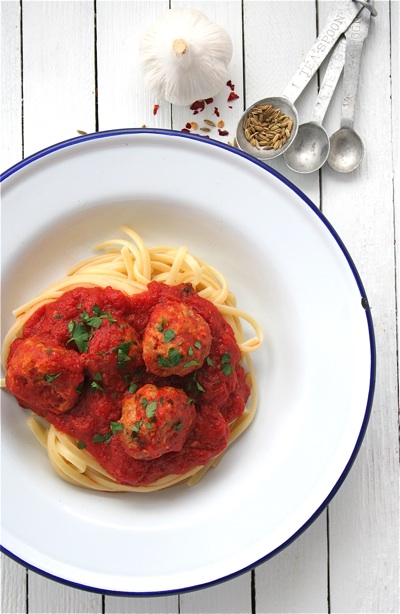
Spaghetti and Meatballs

Makes 40 to 50 small meatballs

My go-to tomato sauce is Marcella Hazan’s famous recipe, but feel free to use your own favorite recipe or even jarred sauce. To add some extra umami to the meatballs, sneak in a few finely diced anchovies as a secret ingredient. I like to make loads of meatballs so that I can get two dinners’ worth out of them, but they freeze beautifully too.

for the meatballs:
2 lb (1 kg) pork mince
3 cloves garlic, grated with a Microplane zester or very finely chopped
1 cup (50 g) fresh breadcrumbs
1/2 cup (50 g) finely grated Parmesan, plus extra to serve
1 egg, lightly beaten
1 bunch flat-leaf parsley, chopped, with some reserved for garnish
2 teaspoons fennel seeds
1 teaspoon dried basil
1 teaspoon dried oregano
1/2 teaspoon dried chili flakes (optional)
2 tablespoons milk
salt and freshly ground black pepper

for the tomato sauce:
5 tablespoons (75 g) unsalted butter
1 medium yellow onion, peeled and cut in half
1 x 28 oz can (or 2 x 14 oz/400 g cans) whole plum tomatoes, with their juices
salt and freshly ground black pepper

1 lb (450 g) spaghetti

To make the tomato sauce, melt the butter in a large pot (one that can also accommodate all the pasta later) over a medium heat, then add in onion halves and pour in the tomatoes with their juices. Season generously with salt and pepper. Bring the sauce to a simmer, mashing up the tomatoes gently with the back of a wooden spoon. Cook, uncovered, at a very slow but steady simmer, adjusting the heat as necessary, for about 45 minutes, or until droplets of fat float free from the tomato and the sauce has reduced and thickened. Stir occasionally, continuing to mash any large pieces of tomato with the wooden spoon. Taste for seasoning, then discard the onion when the sauce is ready.

While the sauce is simmering, preheat the oven to 350°F (180°C) and line a baking tray with foil or parchment paper. To make the meatballs, place all the ingredients in a large bowl. Using your hands, mix everything together until it’s just combined, trying not to overwork the mixture so that the meatballs stay tender. Shape the mixture into small meatballs the size of golf balls and place them on the lined baking tray. Bake them in the oven for 20 to 30 minutes, until they’re just cooked through. Be careful not to overcook them or they’ll dry out and become tough.

While the meatballs are cooking and the sauce is simmering, bring a large pot of salted water to the boil and cook the spaghetti according to the packet instructions. When it’s done, drain the pasta and add it directly to the sauce. Stir the pasta until it’s all coated with the sauce. Divide the pasta between the individual bowls or plates and place a few meatballs on top of each serving. Serve with plenty of freshly grated Parmesan and garnish with the reserved parsley.

Affogato al Caffe

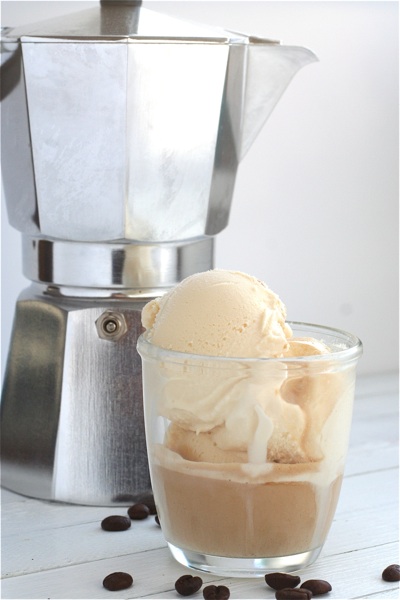
I was having dinner out with a friend awhile ago and after overdoing it with the starter and main course, none of the heavy desserts on the menu appealed to me that night. “You know what? I’m going to do something I’ve never done before. I’m going to go off menu!” I said, and asked the waitress for an affogato al caffe. They sold vanilla ice cream and they sold espresso, so it was just a matter of putting the two together in one bowl, like an ice cream sundae for grown-ups.

I was reminded of affogato al caffe (which means ‘drowned in coffee’ in Italian) when Café de Cuba sent me some of their Really Good Organic Coffee, decaf coffee and teas to try recently. This is one of those recipes where the quality of the ingredients really matters. Use the best vanilla ice cream you can find and use good, strong espresso (regular brewed coffee will not work here).

Affogato is good any time of year, but if you’ll be entertaining during the holidays, it’s an easy option for a dessert and pick-me-up after a big meal.

Affogato al Caffe

Serves 1

Put a few scoops of best-quality vanilla ice cream (though you could also use chocolate ice cream) in a bowl, sundae dish or cappuccino cup. Pour over a shot of freshly made espresso and serve immediately. You could also add a shot of amaretto or other liqueur to give it a little kick.

Spaghetti with Red Pepper-Toasted Almond Pesto

I pore over cookbooks in my 30s the way I once devoured fashion magazines in my teens. The pictures aren’t usually as interesting but the content is much more useful. Not that I don’t appreciate knowing when leopard print is in and heavy eyeliner is out, but style changes so much that it’s hard to keep up with. I prefer to spend my time thinking of something fabulous to cook than fabulous to wear. Luckily, I’m not alone. Much to my delight, I’ve noticed that most of my friends have food magazines or cookbooks stashed around the house. I found this recipe while hanging out with Leah (you may remember her rigatoni with pork and lemon ragu or tzatziki chicken with couscous and hummus). Maybe it’s because she also has a food blog, or maybe she was too nice to make fun of me, but she didn’t bat an eye when I asked her for pen and paper and transcribed this pantry staple-based recipe over a glass of beer. I guess this is adulthood.

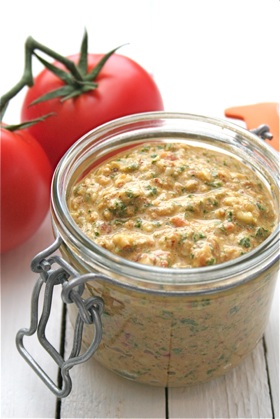
Spaghetti with Red Pepper-Toasted Almond Pesto
adapted from The Best Simple Recipes by the editors of America’s Test Kitchen
Serves 4

My fridge is never without a bag of Trader Joe’s toasted, sliced almonds. They are perfect for throwing into a bowl of oatmeal, on top of brownies, or in a pasta dish like this one. The few extra cents I pay to buy them pre-toasted saves me toasting and cooling time (not to mention the aggravation of an extra pan to wash).

1 lb (450 g) spaghetti
1 cup (150 g) drained jarred roasted red peppers, patted dry (about 2 peppers)
1/3 cup (30 g) grated Parmesan cheese
1/4 cup (25 g) sliced or slivered almonds, toasted
1/4 cup (10 g) fresh basil
1 garlic clove, skin removed and quartered
1 teaspoon lemon juice
7 tablespoons extra virgin olive oil
sea salt and freshly ground black pepper

Cook the spaghetti al dente in a large pot of boiling, salted water according to package directions.

While the pasta cooks, process the red peppers, cheese, almonds, basil, garlic, and lemon juice in a food processor until smooth. With the motor running, slowly add the olive oil until it is incorporated. Season the pesto well with salt and pepper.

Drain the spaghetti, reserving 1/2 cup (125 ml) of cooking water. Return the spaghetti to the pot. Add the pesto to the spaghetti and toss to combine, adding reserved pasta water as needed. Season with salt and pepper and serve with additional grated Parmesan, if desired.

End-of-Summer Squash Sauté with Three Bean Salad

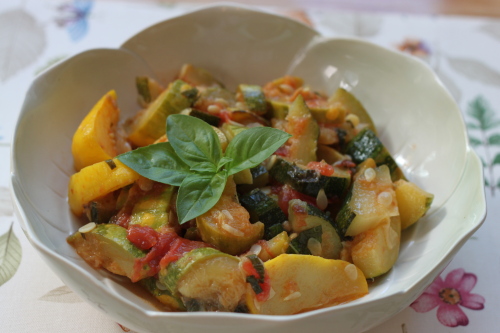
I love cooking at this time of the year. Vegetables and fruits are bountiful and at peak tastiness. It’s not too hot to use the stove top. And a week’s vacation at the end of August left me feeling (relatively) stress free at home and work. Not wanting to add any unnecessary work to my day, the dishes below provided a quick, tasty, and healthy meal and they take full advantage of the overabundant squash and beans from your or your neighbor’s backyard garden. This menu is light. If you want something more substantial for dinner or if you are cooking for guests, pick up a rotisserie chicken at the supermarket, cook up a little pasta to serve with the squash saute, or splurge on a trip to Kopp’s or your favorite ice cream store after dinner. What better way to celebrate the last few, long, warm nights of summer.

End-of-summer squash saute

End-of-Summer Squash Sauté

serves 4

2 or 3 medium summer squash (about 1 1/2 lbs / 680 g)
3 tablespoons olive oil
1 teaspoon kosher salt
1/2 teaspoon freshly ground black pepper
1/2 teaspoon garlic powder
1 large or 2 small tomatoes, peeled and coarsely chopped
3 tablespoons chopped fresh basil
freshly grated Parmesan cheese, for serving (optional)

Cut the squash in half lengthwise (or if the squash is very thick, cut it into quarters lengthwise), then dice into 1/2‑inch-thick pieces.

In a large saute pan with a lid, heat the olive oil over a medium-high heat until hot but not smoking. Add the squash and saute, stirring occasionally, for about 5 minutes, until it just begins to brown. Sprinkle the salt, pepper and garlic powder over the squash, then stir in the tomatoes. Cover and cook, stirring every few minutes, for 10 to 15 minutes longer, until the squash and tomato just begin to break down.

Remove the lid and continue to cook until your desired sauciness level. Stir in the basil and serve with grated Parmesan cheese, if desired. This dish tastes great over cooked pasta or rice or as a side dish.

***

Three Bean Salad
adapted from Molto Gusto: Easy Italian Cooking by Mario Batali

serves 6

1 tablespoon salt
1 lb (450 g) green beans [Note: smaller is better]
1 x 15 oz (425 g) can chickpeas, rinsed and drained
1 x 15 oz (425 g) white kidney beans (cannellini) or red kidney beans
1/4 cup (10 g) coarsely chopped fresh mint
1/2 cup (120 ml) Red Wine Vinaigrette (recipe below)
Maldon or other flaky sea salt and freshly ground black pepper

Bring four quarts of water to a boil in a large pot and add 1 tablespoon salt. Add the beans and blanch them until crisp-tender, about 3 minutes. Drain the beans in a colander and cool under cold running water; drain well.

Combine the green beans, chickpeas and kidney beans in a large bowl. Add the mint and toss. Add half the vinaigrette and toss gently again. Season with salt and pepper. Serve or, if possible, let stand at room temperature for 1 to 2 hours to bring out the flavors. Serve the salad with the remaining vinaigrette on the side.


Red Wine Vinaigrette

Makes 1 cup (250 ml)

1/4 cup (60 ml) good-quality red wine vinegar
1/4 cup (60 ml) sparkling water
1/2 cup (125 ml) extra virgin olive oil

Whisk the vinegar, water and olive oil together in a small bowl, or shake the ingredients together in a small, lidded jar, until well incorporated. The vinaigrette can be refrigerated for up to 5 days.

Pesto Trapanese

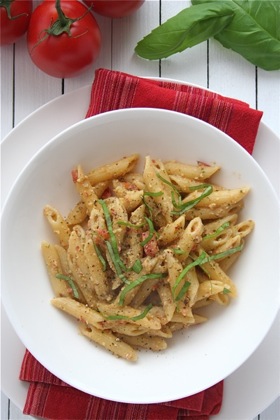
This is the fifth year we’ve had a vegetable garden at our house in the country, but I quickly learned the first year that basil doesn’t grow well (if at all) outdoors in Ireland. We have a small greenhouse this year, but all the space is taken up with tomatoes, Kirby cucumbers and peppers, so the basil plants had to make do with our kitchen windowsill, where they’re going gangbusters. I’d already made a few batches of regular pesto and was starting to get tired of it when I remembered bookmarking this recipe for pesto Trapanese last year, and it’s a new favorite, not to mention a nice change. Try it at least once this summer.


Pesto Trapanese
adapted from Catherine’s Italian Kitchen by Catherine Fulvio

Makes 2 cups (500 ml)

Use 1 cup (250 ml) of the pesto for dinner to serve 4 to 6 people and freeze the other half for another time. Alternatively, this will keep in the fridge, tightly covered, for up to 1 week with a thin layer of olive oil poured on top of the pesto to prevent the basil from turning black.

1 lb (425 g) spaghetti, linguini, penne or your favorite pasta
1 cup (125 g) whole almonds
3 large ripe tomatoes, quartered, or 10 ripe cherry tomatoes
2 garlic cloves, roughly chopped
2 oz (50 g) fresh basil leaves (about 2 large handfuls)
1/2 cup (125 ml) good-quality olive oil
salt and freshly ground black pepper

Cook the pasta in a large pot of boiling salted water according to the instructions on the packet.

To make the pesto, place the almonds in a food processor and whizz until they’re reduced to nibs (don’t overprocess them to a paste). Add in the tomatoes, garlic, basil, olive oil and a generous seasoning of salt and pepper and whizz again until everything is well combined. Add more olive oil if you want the consistency of the pesto to be thinner. Stir 1 cup (250 ml) of the pesto into the drained pasta and serve right away.

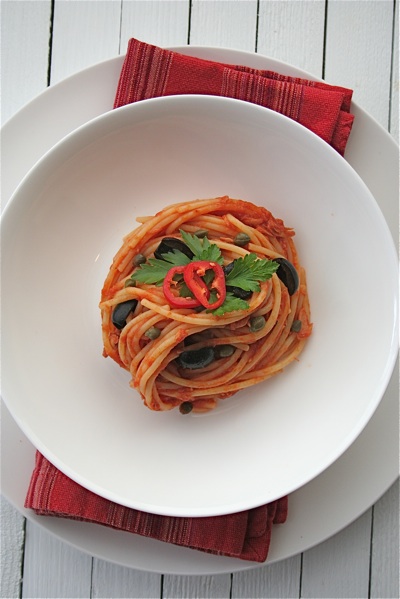
Spaghetti alla Puttanesca

Spaghetti alla puttanesca is a classic store cupboard staples recipe. Nicknamed “whore’s pasta,” Nigella Lawson writes that “the general consensus seems to be that this is the sort of dish cooked by slatterns who don’t go to market to get their ingredients fresh, but are happy to use stuff out of jars or tins.” Last week we spent five days in the west of Ireland in County Sligo, and coming home to an empty fridge after driving coast to coast (which, granted, only takes 3 hours from Sligo to Louth), I was still able to rustle this up from basics that I always have in the pantry along with a green salad from my garden. Whore’s pasta to the rescue!

Spaghetti alla Puttanesca

Serves 4 to 6

1 1b 2 oz (500 g) spaghetti
olive oil
2 or 3 garlic cloves, chopped
1 or 2 fresh red chillies, finely chopped, or 1/2 teaspoon chilli flakes
1 x 1 oz (30 g) can of anchovy fillets, drained and chopped
1 x 8 oz (225 g) can of tuna, drained
2 tablespoons capers, drained
1 x 1 1/2 lb (700 g) jar of passata or 2 x 14 oz (400 g) cans of chopped tomatoes
salt and freshly ground black pepper
juice of 1 lemon (optional)
3/4 cup (100 g) stoned black olives, halved
a small bunch of fresh flat-leaf parsley, chopped
green salad, to serve
garlic bread, to serve

Cook the spaghetti in a large pot of boiling salted water according to the instructions on the packet.

Meanwhile, heat a large saucepan (one big enough to accommodate all the cooked pasta later) over a medium-low heat. Add a splash of olive oil, then add in the garlic, chillies and anchovies and cook for 1 or 2 minutes, until the anchovies have broken down and almost melted, but taking care not to let the garlic burn. Add in the tuna and capers, then stir in the passata or canned tomatoes. Season generously with salt and pepper, raise the heat to medium and allow to simmer while the pasta cooks.

Before draining the pasta, reserve a mugful of the cooking water. Add the drained pasta directly to the sauce and add in the lemon juice, the olives and most of the chopped parsley. Stir well to coat all the pasta with the sauce, adding in some (or all) of the reserved pasta cooking water if you want to loosen the sauce a bit. Divide the pasta between individual bowls or plates and scatter the remaining parsley on top to garnish. Serve with a green salad, garlic bread and a glass of wine.