Tag Archives: Beef

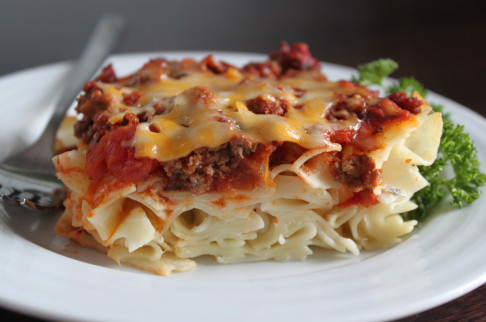
Beef Lombardi

You all know I love make ahead meals (remember this and this and this). And I have a soft spot for casseroles. Well, here’s the recipe that is now both my favorite make ahead meal and my favorite casserole. I’ve kept a batch of this on hand in my freezer continually since I discovered the recipe this fall. It hails from the new What’s for Supper cookbook from Southern Living. While not overly impressed by some of the recipes in the book (too many prepared processed foods for my taste), I knew I would try this recipe for the name alone. Green Bay Packer coach Vince Lombardi holds a special place in the hearts of most Wisconsinites and if the casserole performed even half as well as the coach, it was worth a try. Touchdown!

Beef Lombardi
adapted from Southern Living What’s for Supper

This is an easily adaptable recipe. I usually use more egg noodles than called for and then add an extra tablespoons of cream cheese. Since my daughter is currently green onion adverse, I cut back on those or use only the white parts so she doesn’t notice them as much. Feel free to experiment according to your own tastes.

Serves 8

10–12 oz (280–340 g) medium egg noodles
1 lb (450 g) lean ground beef
1½ teaspoons salt, divided
½ teaspoon dried Italian seasoning or dried oregano
1 x 6‑oz (170 g) can tomato paste
1 x 14-oz (400 g) can diced tomatoes
4 oz (110 g) cream cheese, softened
½ cup (120 ml) sour cream
4 green onions, chopped
1 cup (4 oz/110 g) shredded Italian six-cheese blend or mozzarella cheese

Preheat the oven to 350°F (180°C). Prepare the egg noodles according to package directions.

Meanwhile, sprinkle the ground beef with 1 tsp. salt and the Italian seasoning. Cook the beef in a large skillet over medium heat, stirring often, 5 to 6 minutes or until meat crumbles and is no longer pink.

Stir in the tomato paste, and cook 2 minutes; stir in the tomatoes, 1/2 cup water, and remaining 1/2 tsp. salt; reduce the heat to medium-low, and simmer 8–10 minutes until thickened a bit.

Microwave the cream cheese in a microwave-safe bowl at HIGH 20 seconds. Stir in the sour cream and green onions into the warm cream cheese, then gently stir the cream cheese mixture into the hot cooked noodles.

Spread the noodle mixture in the bottom of a lightly greased 11- x 7‑inch baking dish. Top the noodles with the beef mixture then sprinkle the shredded  cheese evenly over the mixture.

Bake the casserole at 350° for 25 minutes or until hot and bubbly.

To make ahead: Freeze the unbaked casserole, tightly covered, for up to 1 month. Thaw in the refrigerator overnight, then bake at 350°F (180°C), loosely covered in aluminum foil for 25 minutes. Remove the foil and continue baking about 15 minutes more until the cheese is melted and the casserole is hot.

Steak and Swiss Chard Tacos with Houston-style Green Salsa

Whenever people ask where I’m from, I always hesitate before answering. Although I spent my teenage years in Illinois, I lived my younger years in Tomball, Texas, a tiny town near Houston. Inevitably, I answer that I was “raised in Texas.” Growing up in Texas during your formative years definitely leaves a mark. The food, the weather, the people all have the indelible stamp of Texas on them. It took me a long time to get over my move to north. While I can appreciate the faster pace of my current hometown,  I still miss many, many things about Texas. The warm and generous people, amazing sunsets, never buying a winter coat, and jalapenos and sweet tea served with every meal.

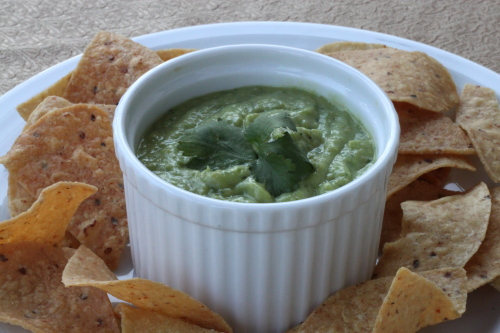
I am still, after all these years, a homesick Texan. I regularly follow Lisa Fain’s blog by the same name and was thrilled when Kristin sent me her cookbook. I spent the evening reading it–yes, reading it–with that bittersweet ache of nostalgia in my stomach. There is nothing quite like food to trigger memory. A certain conversation or taste or smell that you’ve forgotten for years can come roaring back to life with just the mention of the food that you were eating when it occurred. When I read Lisa’s green salsa recipe I knew I was going to be in for a long ride down memory lane. This salsa is one that I ate constantly growing up. It was (and probably still is) served alongside traditional red salsa at every Mexican restaurant in southeastern Texas. Alas, I never tasted it again after moving up north. Until now that is. I’ve made this salsa five times since Christmas Eve, where I served it as surprise for my Texas-born siblings. For me, that is an astounding amount of times to make the same recipe. It’s just that good. I can, and have, eaten it by the spoonfuls. It’s topped my carnitas, been served along side yellow rice and a roasted chicken, gone perfectly with tortilla chips, and accompanied tonight’s steak tacos.

Steak & Swiss Chard Tacos

Serves 6

2 steaks (preferably ribeye or flank steak, but sirloin will work in a pinch)
2 cloves garlic, minced
juice of 1 lime
1 teaspoon cumin
salt and pepper
1 bunch Swiss chard, tough stems chopped into 1/2 inch pieces and leaves roughly chopped
1 tablespoon olive oil
1 clove garlic, thinly sliced
12 corn or flour tortillas
toppings (shredded cheese, diced tomatoes, sour cream, avocado)

Spread the minced garlic evenly on top of the steaks. Sprinkle with the lime juice, cumin, and salt and pepper, to taste. Let the steaks sit for 20 minutes. If desired, steaks can sit for up to one hour in the fridge. Make the salsa while your steaks marinate.

While the steak marinates, heat the olive oil in a skillet over medium heat. Add the Swiss chard stems and sliced garlic and cook, stirring frequently for 2–3 minutes until the garlic turns golden. Add the Swiss chard leaves and continue cooking until the leaves are wilted and stems are just tender, another 5–10 minutes. Season the chard with salt and pepper to taste and set aside.

Preheat a large cast iron skillet or griddle over medium high heat. When hot, place the steaks into the pan and cook for 5–8 minutes until nicely seared on one side. Flip the steaks and continue cooking on the other side until cooked to your desired doneness. I like my beef medium rare so usually another 5 minutes will do the trick, depending on the thickness of the steak.  When done, remove the steaks from the pan and let them rest on a cutting board. After letting them rest for 5–10 minutes, thinly slice the steaks against the grain. Serve the steak with warmed tortillas, topped with the swiss chard, salsa and other accompaniments.

***

Houston-style Green Salsa
from The Homesick Texan Cookbook by Lisa Fain

Makes about 2 cups

3/4 lb (340 g) small tomatillos, husks removed or 1 x11 oz (x310 g) can of whole tomatillos, drained
1 avocado, peeled and pitted
1 or 2 serrano chiles, stems and seeds removed, roughly chopped
4 cloves garlic, chopped
1 tablespoon lime juice
1/4 cup (8 g) cilantro
salt, to taste

If using fresh tomatillos, on high heat, bring a pot of water to boiling and cook tomatillos until soft, about 5 minutes.

Add the tomatillos to a blender along with the avocado, serrano chiles, garlic, lime juice, and cilantro. Blend until smooth then add salt, to taste.

Slow Cooker Barbacoa Beef

You think you’re busy now? I sometimes find myself thinking on days when I’m feeling frazzled by the ceaseless demands of two young kids. Wait till they’re old enough to want to be doing things after school and on weekends. I imagine future weekday afternoons and Saturday mornings spent ferrying them around to sports or music or friends’ houses, when no doubt I’ll look back at this time and laugh at how easy I actually had it. We’ve taken our first steps down this road recently after my daughter started swimming lessons in the new year, which means we don’t get home till late on Tuesdays now. Landing in the door with homework still to be done and two tired, hungry kids clamoring to be fed, I’ve been keeping an eye out even more than usual for recipes that I can get on the table quickly on Tuesday nights. So far I’ve made stew the night before that I could just come home and reheat and ditto for a big pot of spaghetti Bolognese, but I’ve also been relying on my slow cooker a lot again.

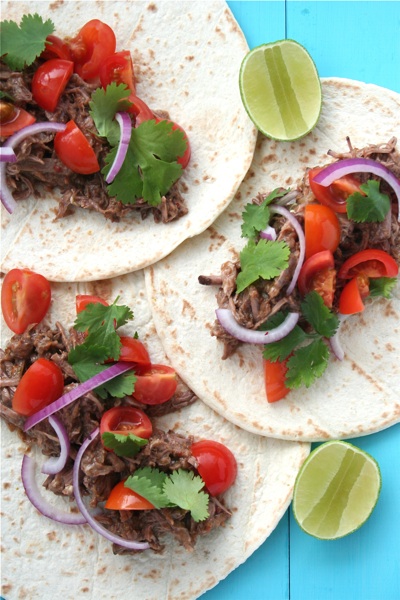
I’d never heard of barbacoa beef before spying this recipe on The Kitchn, where it was presented as Superbowl party food to feed a crowd. The tangy flavors of the lime and vinegar sounded like just to thing to perk up dulled winter taste buds, not to mention the smoky chipotles. It’s a new favorite in my repertoire of slow cooker recipes and a lifesaver on a busy day.

Slow Cooker Barbacoa Beef
adapted from The Kitchn

Makes enough for 30 tacos

Dinner doesn’t get much easier than when it’s made in a slow cooker, but this makes more than enough for two dinners if you want to have the same thing all over again as leftovers on a second night for an even easier time of it. Otherwise freeze half of it for another time. Instead of using the beef as a taco filling, you could also pile it onto nachos. In Ireland, you can get tinned chipotle chiles from my friend Lily’s online shop. I found this recipe had plenty of flavor as it is, but you could try adding oregano, cumin, ground cloves, smoked paprika or even a teaspoon of espresso powder if you want to spice it up a little more.

4 chipotle peppers (from a can), finely chopped, plus all the adobo sauce they sit in
1 red onion, roughly chopped
1 head of garlic, peeled and cloves smashed
1 bunch cilantro, chopped
5 dry bay leaves
1 tablespoon salt
4 to 6 cups (1 to 1.5 litres) beef or chicken stock
1/2 cup (125 ml) cider vinegar
juice of 4 limes
5 to 7 lb (2.2 to 3.2 kg) beef brisket or stewing beef

to serve:
flour or corn tortillas
cherry tomatoes, quartered, or salsa
1 or 2 red onions, thinly sliced, or a few thinly sliced scallions
chopped fresh cilantro
lime wedges

Place all the ingredients except for the beef directly into your slow cooker and stir them around until they’re fairly well combined. Add in the beef and put on the lid. Cook on low for 6 to 8 hours, until the meat is cooked through and can be shredded easily when pulled with a fork.

When it’s done, remove the meat from the slow cooker and place it on a rimmed baking sheet or in a large bowl, then use two forks to shred the meat. Place the shredded beef in a large serving bowl and pour over a few ladlefuls of the cooking liquid (you want the meat to be moist but not drowning in the liquid). Serve in tortillas topped with quartered cherry tomatoes or salsa, onion slices, fresh cilantro and an extra squeeze of lime juice.

Chicago Italian Beef Sandwiches

Growing up, there was always a jar of Dell’Alpe giardinera in the door of the fridge, as much of a staple in my house as ketchup and mustard and mayonnaise. But when my mom, stepdad and twin brothers moved from Illinois to Florida a few years ago, my stepdad was dismayed to realize that giardineria is apparently a regional food, popular with Chicago-area Midwesterners but impossible to find in Tampa. He now orders it in bulk online and even sent me a few jars from his stash earlier this year, cushioned in multiple layers of bubble wrap to survive the transatlantic trip. It’s good on all sorts of things, but it’s a must for Italian beef sandwiches.

When I got a review copy of Guy Fieri Food and saw this recipe for Chicago Italian beef sandwiches, I knew it would be one of those recipes that would make the book worth buying alone, and I wasn’t disappointed. But if that wasn’t enough, how could you not be tempted by recipes like Firecracker Wings, Bacon-wrapped Shrimp with Chipotle BBQ Sauce, Grilled Chicken Tortilla Soup with Tequila Crema, Grilled Romaine with Blue Cheese-Bacon Vinaigrette, Cajun Chicken Alfredo and Watermelon Pork Tacos? The flavors are as big and bold as Guy Fieri himself. What other celebrity chef has his tattoo artist do the illustrations for his cookbook or gets women’s lingerie thrown at them as if they were Tom Jones?

Guy Fieri says this should be the state sandwich of Illinois. This Illinois native agrees.

We’ve got a copy of Guy Fieri Food to give away! To enter, just leave a comment on this post. The giveaway is open to US residents only until Monday, 20 June and will close at midnight, when a winner will be randomly selected. Good luck!

Chicago Italian Beef Sandwiches
adapted from Guy Fieri Food by Guy Fieri

Serves 6 to 8

If you were to order an Italian beef sandwich in a restaurant, it would probably be served with some potato chips or french fries. For serving at home, though, I’d suggest a potato salad or coleslaw.

You could also try cooking this in the slow cooker for 6 to 8 hours on a medium heat, or until the meat shreds apart with a fork, which is how my mother always makes Italian beef. Guy Fieri suggests that if you have any leftovers, try using it on a homemade pizza with grated pepper Jack cheese and giardiniera.

For the spice mix:
3 tablespoons Italian seasoning
2 tablespoons fine sea salt
2 tablespoons freshly ground black pepper
1 tablespoon paprika
1 teaspoon cayenne pepper
1 teaspoon red chilli flakes

For the beef:
4 lb (1.8 kg) beef top round, with fat cap (I used a pot roast)
3 tablespoons canola oil
3 yellow onions, chopped
1 head of garlic, cloves peeled and chopped
1/2 cup (125 ml) red wine
3 tablespoons Worcestershire sauce
2 cups (500 ml) beef stock
2 bay leaves

To serve:
6 sourdough hero or hoagie rolls, or baguettes or ciabattas, split and toasted
giardiniera
jarred or roasted red bell peppers, sliced 1/4 inch thick

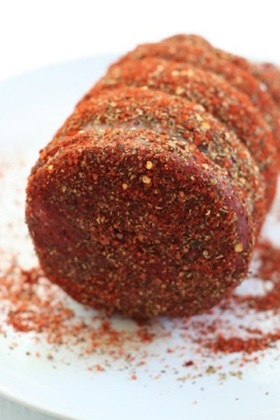
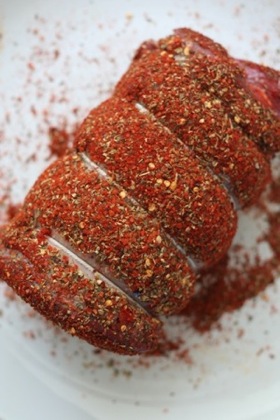
Combine all the ingredients for the spice mix. Rub the meat with the spice mix, cover tightly with cling film and refrigerate for 2 to 3 hours.

Preheat the oven to 275°F (140°C).

Place a Dutch oven or roasting pan over a high heat on the stovetop and add the oil. When it’s smoking, add the beef and cook for 15 minutes, turning the meat often, until it’s nicely browned on all sides. Add the onions and cook for 5 minutes, then add the garlic and cook for 1 minute more. Add the wine, Worcestershire, stock and bay leaves and scrape up all the brown bits on the bottom of the pan.

Transfer the pan to the oven and roast the meat for about 1 hour 30 minutes, uncovered, or until a thermometer inserted in the center of the meat reads 135°F (60°C). Remove the meat from the pan and set aside to let it cool. Cool the broth in the pan and remove the fat that rises to the top.

When the meat is cool, slice it very thin. Reheat the broth and add the meat back in.

To serve, place some meat on each roll, ladle some broth over the meat and top with the giardiniera vegetables and red peppers.

Sloppy Joes

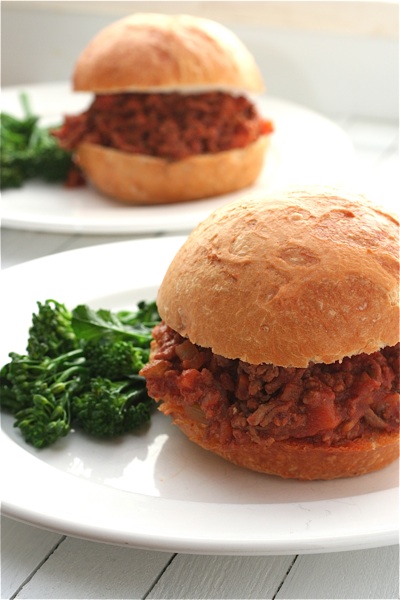
On Twitter yesterday, I asked if my Irish friends had ever heard of Sloppy Joes, suspecting (correctly) that they’re an American thing. A lot of people had heard of them but weren’t quite sure what they were. “Are they kind of like a burger?” “A messy meatball hero?” “Isn’t it just Bolognese on a bun?” The Americans, though, all had the same response — that they were an old childhood favorite. One fellow expat got a little confused and thought I’d never heard of them, saying, “What kind of tragic American upbringing did you have?!”, while another said, “Dammit, now I’m going to crave them for three days, and I haven’t eaten beef in 20 years.” Clearly, the Irish don’t know what they’re missing! The tradition continues in my house now — whenever I ask my daughter what she’d like me to make for dinner, she invariably either says Sloppy Joes (must be that kids and ketchup thing again) or this pasta with bacon, peas and cream.

When I think of what to serve with Sloppy Joes, I tend to gravitate towards summery sides like potato salad or coleslaw, or even that classic American sandwich accompaniment — potato chips — but most of the time I try to be a good mom and get more veg into my kids, so I’ll serve them with something like steamed broccoli.

Sloppy Joes
adapted from Simply Recipes

Serves 4

Finely chopping the vegetables is my way of making sure my kids actually eat them — if they’re tiny, they can’t pick them out and leave them behind on their plates. For a lighter version, try using minced turkey instead of beef, as in Tyler Florence’s recipe. In the Twitter conversation about Sloppy Joes, Theresa commented that she might try making a more grown-up version by adding some smoked cheese, which got me to thinking that a chipotle version would be damn good too, though probably not as kid friendly.

1 tablespoon olive oil
2 medium carrots, finely chopped
1 medium onion, finely chopped
1 red pepper, finely chopped
1 stalk of celery, finely chopped
2 garlic cloves, minced
1 1/4 lb (600 g) ground beef
2 cups (500 ml) tomato sauce or passata
1/2 cup (125 ml) ketchup
2 tablespoons brown sugar
1 tablespoon Worcestershire sauce (or more to taste)
1 tablespoon red wine vinegar
1/2 teaspoon dried thyme
salt and freshly ground black pepper
4 hamburger buns, Kaiser rolls or baps, toasted
grated cheddar cheese, to serve (optional)

Heat the olive oil in a large pan on a medium heat. Add the carrots, onion, red pepper and celery. Cook for 10 minutes, until the vegetables have softened (add a pinch of salt to stop the onion from browning). Add the minced garlic and cook for 1 minute more. Remove the vegetables from the pan to a medium-sized bowl and set aside.

Using the same pan (or you can cook the meat at the same time as the vegetables in a separate pan to save time), raise the heat and brown the beef. Strain off all but 1 tablespoon of the fat from the bottom of the pan.

Return the vegetables to the pan. Add the tomato sauce, ketchup, brown sugar, Worcestershire sauce, vinegar and thyme to the pan. Stir to mix well. Lower the heat to medium-low and simmer, partially covered, for at least 10 minutes or up to 30 minutes. Season to taste with salt and pepper. Spoon on top of toasted hamburger buns, Kaiser rolls or baps and sprinkle some grated cheddar cheese on top. Pass around the napkins and don’t worry about making a mess, or serve as an open face sandwich instead and dig in with a knife and fork.

Pan-grilled Steak with Béarnaise Sauce

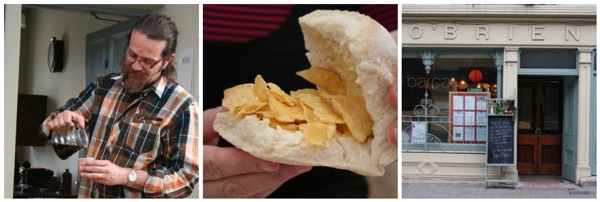
I’m turning into the kind of person who will go to great lengths for a good meal. Last month I drove 3 hours north to Inishowen just to eat at Harrys Restaurant in Co. Donegal, and 2 weeks ago I drove 3 hours south to Dungarvan to go to the Waterford Festival of Food. I was only there for 24 hours, lured down by plans for dinner at the O’Brien Chop House and a bus tour to a microbrewery and oyster farm, but I managed to fit in a lot of good food.

I arrived late to Food Camp on the Friday, but still in time to sample some of Brock’s coffee from his boutique artisan coffee roasting business, Badger & Dodo, followed by lunch, where Niamh couldn’t resist making a classic Irish sandwich — Tayto crisps on a buttered Waterford blaa (don’t knock it till you’ve tried it!). After a lively panel discussion on routes to market for artisan Irish food, a group of about 20 people made their way to nearby Lismore for dinner at the O’Brien Chop House, where the rhubarb and apple Bellini was worth the 3‑hour drive alone.

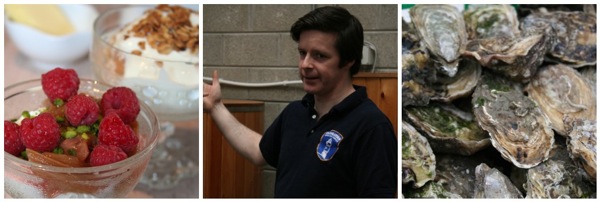
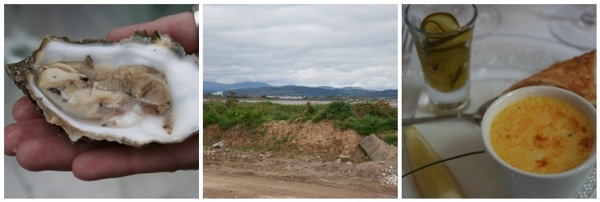
After a gourmet breakfast at Powersfield House B&B (the owner, Eunice Power, is a caterer), it was an early start after a late night the next day for a bus tour to Dungarvan Brewing Company to hear about how their microbrew beers are made and have a sample (at 10:30 in the morning? why not!). After that we went across the bay to Dungarvan Shellfish, where Jim Harty proudly told us about his thriving family-run oyster farm, with yet more samples, this time of fresh Irish oysters, brown bread and a glass of white wine at the slightly more respectable hour of 11 a.m. The last stop on the Bus Bia tour was a fish cooking demo in a parish hall in the Gaeltacht (Irish-speaking region), which finished with tea, coffee and cakes made by the local Irish Countrywomen’s Association. When we arrived back in Dungarvan, a group of 9 of us bloggers headed straight for the best restaurant in town for lunch — The Tannery — not really expecting to get a table but delighted when we did, where almost all of us ordered their signature starter, the crab creme brulée. By then I was starting to regret not staying for the second night (which I definitely did regret the next day when reading everyone’s tweets about the fantastic farmers’ market on the Sunday), but I was happy to have The Daily Spud for company this time on the long drive back, talking about food all the way.

When I go to a restaurant, I always like to order something from the menu that I don’t or can’t make at home, and when I saw that O’Brien’s hanger steak was being served with a side of bone marrow, not to mention Béarnaise sauce, which I’m a sucker for, I practically stopped reading the menu right there. Justin and Richard were fantastic hosts for our group of 20, and if you’re in County Waterford, this restaurant is not to be missed. I’m already planning on bringing the whole family to the festival next year, but in the meantime, I can recreate the meal from O’Brien’s at home with Darina Allen’s recipes.

Pan-grilled Steak
adapted from Forgotten Skills of Cooking by Darina Allen

Serves 4

Darina Allen recommends using a heavy-ridged cast iron grill pan for cooking steaks. She also says that rubbing the steaks with a clove of garlic intensifies their beefy flavor. It goes without saying to serve this with chips/wedges. For a blow-out dinner like this that’s all about the meat, I’d say a vegetable is pretty much optional. Get your five a day at breakfast and lunch instead.

4 x 6 oz (175 g) sirloin or fillet steaks
1 garlic clove
salt and freshly ground black pepper
olive oil

About 1 hour before you want to cook your steaks, remove them from the fridge. Cut the garlic clove in half and rub it on both sides of each steak. Grind over some black pepper and sprinkle with a few drops of olive oil (don’t put salt on the steaks at this point, since it will leach out moisture and make the steaks dry and tough). Turn the steaks in the oil and set aside to allow them to come to room temperature. If using sirloin steaks, score the fat at 1‑inch intervals.

Heat the grill pan, season the steaks with a little salt and put them into the hot pan. Cook to your liking (if using sirloin steak, cook the fatty side as well for 3 or 4 minutes until it’s nice and crispy). For rare, cook a sirloin for 2 minutes and a fillet for 5 minutes; for medium-rare, cook a sirloin for 3 minutes and a fillet for 6 minutes; for medium, cook a sirloin for 4 minutes and a fillet for 7 minutes; and for well done (but please don’t ruin a good steak by cooking it well done!), cook a sirloin for 5 minutes and a fillet for 8 or 9 minutes. Make sure you allow the steaks to rest before you serve them. Serve with Béarnaise sauce, oven-roast wedges and a green salad or vegetable of your choice.

***

Béarnaise Sauce
adapted from Forgotten Skills of Cooking by Darina Allen

Serves 8 to 10

If the sauce is slow to thicken, it might be because the heat is too low. When making the sauce, you should be able to put your hand on the side of the saucepan at any stage — if it’s too hot for your hand, it’s too hot for the sauce! Keep a bowl of cold water close by that you can plunge the bottom of the saucepan into if it becomes too hot.

4 tablespoons tarragon vinegar (or white wine vinegar plus extra fresh chopped tarragon)
4 tablespoons dry white wine
2 teaspoons finely chopped shallots
pinch of freshly ground black pepper
1 tablespoon cold water
2 egg yolks
1/2 cup (110 g) butter, cubed
1 tablespoon chopped fresh tarragon

Boil the vinegar, wine, shallots and a pinch of pepper in a heavy-bottomed stainless steel saucepan until completely reduced and the pan is almost dry but not browned. Immediately add the 1 tablespoon of cold water. Remove the pan from the heat and leave to cool for 1 or 2 minutes.

Whisk in the egg yolks and add the butter bit by bit over a very low heat, whisking all the time. As soon as one piece of butter melts, add the next piece and the sauce will gradually thicken. If it looks like it’s getting too thick or might scramble, remove the pan from the heat immediately and add a little cold water. Don’t leave the pan or stop whisking until the sauce is made and has reached a thick coating consistency — this isn’t the time to see what’s happening on Facebook. Finally, add the chopped fresh tarragon and taste for seasoning. You can keep the sauce warm in a heatproof bowl over a saucepan of hot (but not simmering!) water until you’re ready to serve it.


Steak, Guinness and Cheddar Pie and Chocolate Guinness Cake

I have a confession to make — I don’t like Guinness. When I first moved to Ireland, I tried to like it, I really did. At my first publishing job in Temple Bar in Dublin, the five of us who worked there would often go to the pub for lunch together, and the man from Manchester who I worked with would sometimes skip food altogether and only have a pint of plain for his lunch. My husband tells the story of how the doctor even told his Irish grandmother to drink it when she was pregnant, saying it would help keep her iron levels up — Guinness is good for you and all that. My first six months here I kept ordering pints of it in the pub in the hopes that it might be an acquired taste, but I could only ever get halfway through them. I officially gave up when I was out with the same publishing crowd at the Stag’s Head in Dublin and one of my co-workers suggested I order it with a shot of blackcurrant syrup, saying a lot of girls drank it that way. I thought it tasted even worse and could only take one sip before pushing away the glass, and it’s been ales and lagers for me ever since.

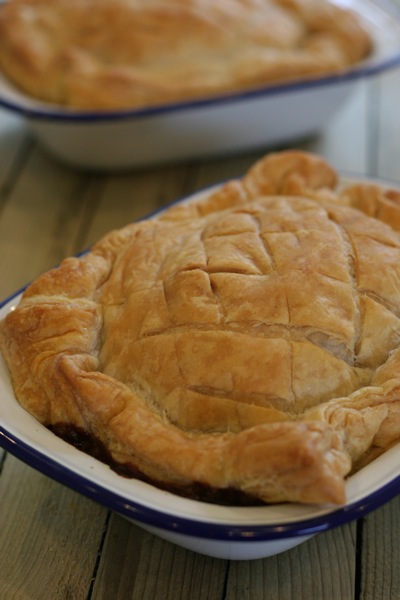
While I don’t like to drink it straight up, I do like to cook with it. Beef and Guinness go together like bread and butter, and this steak, Guinness and cheese pie from Jamie Oliver gives my favorite beef and Guinness stew a run for its money. You would probably never think of baking with beer, much less in a chocolate cake, but Nigella Lawson pulls it off. I made it for my father-in-law’s birthday back in January and it’s become one of Kelly’s favorites. So all these years later, I’ve started buying Guinness again — though in a roundabout way for the likes of stews and cakes. Sláinte!
Looking for more Irish recipes for St. Patrick’s Day? Try beef and Guinness stew with champ, Irish soda bread or Guinness gingerbread.

Steak, Guinness and Cheddar Pie
adapted from Jamie at Home by Jamie Oliver

Serves 4

Jamie Oliver’s original recipe calls for lining the bottom of the pie dish with the puff pastry as well, but I simplified it to just cover the top with a puff pastry lid. He also says to add enough water just to cover the beef — I found that I didn’t need to add any at all because the beef was covered enough using only the Guinness, which also meant the pie filling was the perfect consistency and wasn’t too runny. If you don’t have a Dutch oven or an ovenproof casserole with a lid, you can just simmer the beef on the stovetop instead over a low-medium heat.

olive oil
3 medium red onions, chopped
3 cloves of garlic, chopped
2 tablespoons (30 g) butter
2 carrots, peeled and chopped
2 sticks of celery, trimmed and chopped
4 large mushrooms, sliced (optional)
2 lb (1 kg) brisket of beef or stewing beef, cut into 1 inch cubes
a few sprigs of fresh rosemary, leaves picked and chopped (or you could substitute thyme)
salt and freshly ground black pepper
2 cups (500 ml) Guinness
2 heaped tablespoons flour
2 cups (200 g) grated Cheddar cheese
2 sheets of ready-rolled puff pastry
1 large egg, beaten
freshly cooked peas, to serve

Preheat the oven to 375ºF (190°C). In a large ovenproof pot, heat a generous splash  of olive oil on a low heat. Add the onions and fry gently for about 10 minutes with a pinch of salt so that they don’t brown too much. Turn the heat up, add the garlic, butter, carrots and celery and scatter in the mushrooms. Mix everything together before stirring in the beef, rosemary, a pinch of salt and a level teaspoon of pepper.

Fry fast for 3 or 4 minutes, then pour in the Guinness, stir in the flour and add just enough water to cover (I didn’t need to add any water at all, see note above). Bring to a simmer, cover the pot  with a lid and place in the preheated oven for about 1 1/2 hours. Remove the pot from the oven and give the stew a stir. Put it back into the oven and continue to cook it for another hour, or until the meat is very tender and the stew is rich, dark and thick. A perfect pie filling needs to be robust, so if it’s still quite liquid, place the pot on the stovetop and reduce, uncovered, until the sauce thickens. Remove from the heat and stir in half the cheese, then season carefully and leave to cool slightly. Tip the stew into a pie dish or individual dishes and even it out before sprinkling over the remaining cheese.

Cut the ready-rolled sheet of pastry to fit the top of the pie dish (or individual dishes), rolling it out a little on a lightly floured countertop with a rolling pin if you need to in order for it to cover your dish. Criss-cross the pastry lightly with a sharp knife. Place it over the top of the pie and tuck it down around the stew. Brush the top with beaten egg, then bake the pie in the oven for 45 minutes, or until the pastry is cooked, puffed and golden. Delicious served simply with peas on the side.

***

Chocolate Guinness Cake
adapted from Feast by Nigella Lawson

Serves 12

Nigella Lawson likes to ice the top of the cake so that it resembles the famously frothy head that sits on top of a pint of stout, but she says it also tastes perfectly good if you leave it uniced and plain.

for the cake:
1 cup (250 ml) Guinness
9 oz (250 g) unsalted butter, cubed or sliced
3/4 cup (75 g) unsweetened cocoa
2 cups (400 g) sugar
3/4 cup (or 1 x 142 ml pot) sour cream
2 eggs
1 tablespoon vanilla extract
2 1/4 cups (275 g) flour
2 1/2 teaspoons baking soda

for the topping:
11 oz (300 g) Philadelphia cream cheese
1 1/4 cups (150 g) confectioners’ sugar (icing sugar)
1/2 cup (125 ml) heavy cream (double or whipping cream)

Preheat the oven to 350°F (180°C) and butter and line a 9 inch (23 cm) springform tin.

Pour the Guinness into a large pot. Add the butter cubes or slices and heat until the butter melts, then whisk in the cocoa and sugar. In a separate bowl, beat the sour cream with the eggs and vanilla, then pour into the beer and butter mixture. Lastly, whisk in the flour and baking soda. Pour the cake batter into the greased and lined tin and bake for 45 minutes to 1 hour. Leave to cool completely in the tin on a cooling rack, as it’s quite a damp cake.

When the cake is completely cold, sit it on a flat platter or cake stand to ice it. Lightly whip the cream cheese until smooth, sieve over the confectioners’ (icing) sugar and then beat them both together. (Alternatively, you can do this in a food processor, putting the unsieved icing sugar in first, and blitz to remove lumps before adding the cheese.) Add the cream and beat again until it’s a spreadable consistency. Ice the top of the black cake so that it resembles the frothy top of the famous pint.
Spicy Bacon Cowboy Chili and Snowball Cookies

I think there has been more snow in the past 12 months in Ireland than in the previous 11 years I’ve been living here put together. We were hit with a record-breaking cold snap and snowfall two weeks ago that saw school canceled for six days and had us stranded in our house in the countryside on a hill. My husband, raised in Michigan, where they get buried under lake effect snow, braved our road at the start of the snow days to get us stocked up on groceries and coal and turf for the fire. A big pot of warming chili sounded like just the thing to see us through a couple nights. My friend Clare tipped me off to this recipe, and if I wasn’t sold already by the bacon in the title, the beer clinched it. Serve with honey buttermilk cornbread or bacon corn muffins, and you’ve got a filling winter meal.

Things you’ll never find me without though, snow or no snow, are flour, butter and sugar, so it seemed fitting to make snowball cookies to pass the time one afternoon with the kids. These are my favorite childhood Christmas cookie, and even if I have the tree up and all the presents bought, it only really feels like Christmas to me when I make a batch of these. For years I used my mom’s recipe, but these days I use Bon Appétit’s tip to add some ground cinnamon to the powdered sugar you roll the cookies in, and it makes all the difference. Growing up, we called these butterballs, but now I know they’re also called snowball cookies, Mexican wedding cakes and Russian tea cakes. No matter what you call them, it wouldn’t be Christmas for me without them.

Spicy Bacon Cowboy Chili
adapted from White on Rice

Serves 4 to 6

Using the leftovers on the second day, I mixed some of the chili with passata to tone down the flavors enough to pass it off as a Bolognese sauce to my kids, who gobbled it up when served with pasta. Todd and Diane suggest serving this as chili cheese fries, and I don’t know anyone who would turn up their noses at that combination.

olive oil
1 large onion, diced
1 or 2 red chilies, finely diced
salt
4 cloves garlic, finely diced
2 lb (1 kg) ground beef
6 strips (300 g) bacon, diced
1 x 14 oz (400 g) can of kidney beans, black beans or pinto beans
1 cup (250 ml) barbecue sauce
2 tablespoons paprika
2 tablespoons brown sugar
2 teaspoons cayenne pepper (optional if you don’t want it too spicy)
2 teaspoons chili powder
2 teaspoons ground cumin
1 teaspoon freshly ground black pepper
1 x 12 oz (350 ml) beer
grated cheddar cheese, sour cream, diced scallions, tortilla chips, etc., to serve

Heat a splash of olive oil in a large pot over a medium-high heat. Add the onion, chilies and a pinch of salt (to stop the onions from browning) and cook for 10 minutes, or until the onions have softened. Add the garlic and cook for 1 minute more. Add the ground beef and bacon and cook until it’s nearly cooked through and browned, stirring occasionally.

Add the remaining ingredients and stir to combine. Bring to a simmer, then lower the heat to keep at a gentle simmer. Cook for 30 minutes to 1 hour – the longer you cook it, the more the flavors will develop – adding more beer or water if the chili starts to look too dry. Serve the chili warm with toppings of your choice.

***

Snowball Cookies
adapted from Bon Appétit, May 2003

Makes about 4 dozen

These cookies can be prepared 2 days ahead. Store airtight at room temperature and reserve the remaining cinnamon sugar.

1 cup (225 g) butter, at room temperature
2 cups (240 g) powdered (icing) sugar, divided
2 teaspoons vanilla extract
2 cups (240 g) flour
1 cup (100 g) pecans or walnuts, toasted and coarsely ground
1/8 teaspoon ground cinnamon

Using an electric mixer, beat the butter in a large bowl until light and fluffy. Add 1/2 cup (60 g) of the powdered sugar and the vanilla and beat until well blended. Beat in the flour, then nuts. Divide the dough in half and form each half into ball. Wrap separately in cling film and chill until cold, about 30 minutes.

Preheat the oven to 180°C (350°F). Whisk the remaining powdered sugar and cinnamon in a shallow bowl or pie dish to blend. Set the cinnamon sugar aside.

Working with half of chilled dough, roll 1 scant tablespoon of dough between your palms into balls. Arrange the balls on a large baking sheet, spacing them 1/2 inch apart. Bake for about 18 minutes, until the cookies are golden brown on the bottom and just pale golden on top. Cool the cookies for 5 minutes on the baking sheet, then gently toss or roll the warm cookies in cinnamon sugar to coat them completely. Transfer the coated cookies to a wire rack and allow to cool completely. Repeat this procedure with the remaining half of the dough. Sift any remaining cinnamon sugar over the cookies and serve.