Category Archives: Entertaining

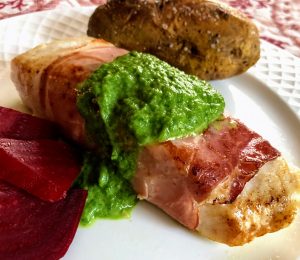
Halibut with Asparagus Sauce

Remember the first weeks of the pandemic when a trip to the grocery store required intense planning and anxiety, and shelves were eerily bare? Although I quickly gave up on finding cilantro and toilet paper, I knew our basement full of freezer and pantry items would carry us through an apocalypse scenario, at least for a few weeks. I have never felt happier to have our Sitka Salmon Shares subscription stocking our freezer. If you are a seafood lover and live in the upper Midwest, I highly recommend the program. The seafood is caught by small boat fisherman in Alaska, processed and flash frozen, then shipped directly to your doorstep. You cannot beat the quality and convenience.

Last month’s delivery included halibut. I find halibut tricky to work with since it is low in fat and can be bland. This preparation is flavorful, fast, and fancy enough for a dinner party. Make sure to season the sauce well but salt the fish minimally. The prosciutto provides plenty of saltiness.

Captain Stu’s Halibut with Asparagus

adapted from Sitka Salmon Shares

  • 4 (1/4 lb each) halibut fillets
  • 4 TB butter, divided
  • 3 green onions, roughly chopped
  • 1/2 bunch asparagus, roughly chopped
  • 3 cups baby spinach
  • 8 slices prosciutto
  • 8 small, tender sage leaves
  • Olive oil
  • Salt and pepper, to taste
  • minced chives and lemon wedges, for serving

Preheat oven to 400 degrees.

In a large skillet, melt 2 TB of butter over medium heat. Add the green onions and sauté until softened, about 1–2 minutes. Add the asparagus along with 1/2 cup of water and bring to a simmer. Cook until asparagus is tender and water has been reduced to 2 Tbsp, about 6 minutes. Remove from heat and add the spinach, lightly stirring until wilted. Let cool for a few minutes, then transfer to a blender or food processor and puree until smooth with lid vented. Season well with salt and pepper and set aside.

Arrange prosciutto slices in pairs, overlapping them slightly. Place halibut fillets in the center of each, season with salt and pepper, then top each fillet with two sage leaves. Wrap prosciutto tightly around each fillet.

In a medium pan over medium-high heat, melt the remaining butter and a drizzle of olive oil. Place each prosciutto-wrapped halibut in the pan, searing on both sides until browned, about 2–3 minutes. Transfer to a baking sheet and bake for 5 minutes or until halibut is cooked through. Halibut should be firm when pressed but try not to overcook. Remove the halibut from the oven and top each with asparagus sauce, and a sprinkling of chives. Serve lemon wedge alongside.

Flag Cake with Berries and Cream Cheese Frosting

Between this year’s COVID-19, Presidential antics, and a national (long overdue) reckoning with racism, I find myself falling back on the comfort of baking. 2020 feels like a perfect time to bake more cakes and restart the blog. I spent many hours cooking for my family during our shelter-at-home quarantine and suspect that many of you have done the same. 

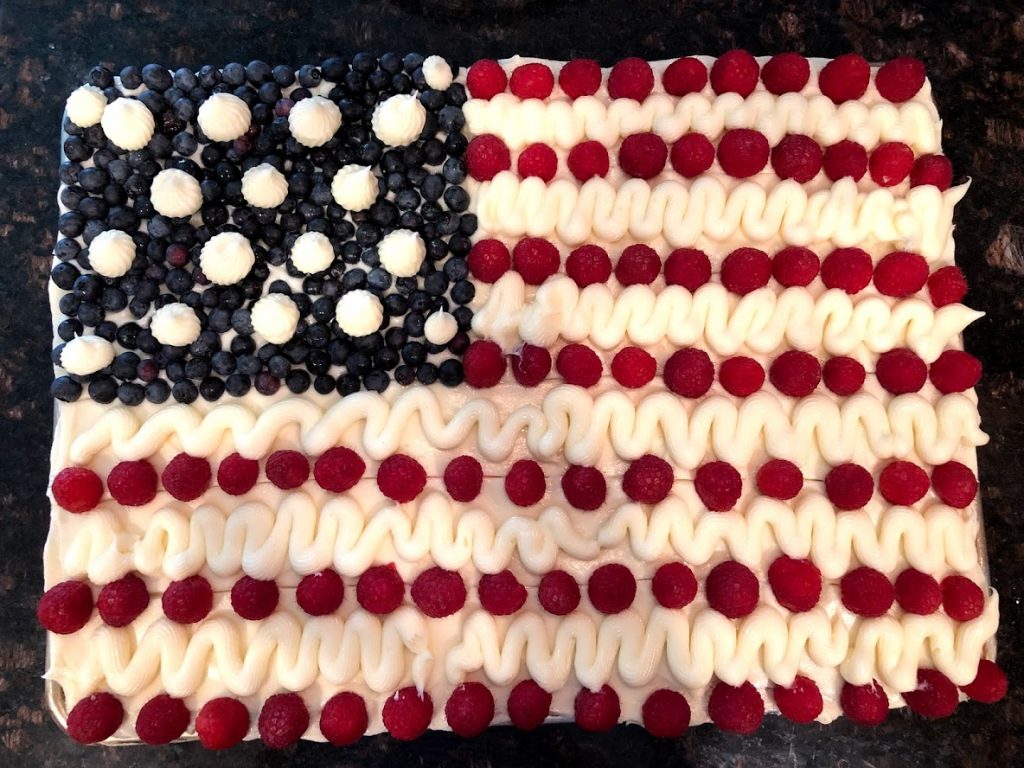
I only make this flag cake once per year although it is one of my favorites. This year I don’t really feel like celebrating the state of America so I may rearrange the berries into a less controversial pattern. Suggestions welcome.


American Flag Cake

adapted from Barefoot Contessa

  • 18 tablespoons (2–1/4 sticks) unsalted butter, at room temperature
  • 3 cups sugar
  • 6 large eggs, room temperature
  • 1 cup sour cream, room temperature
  • 1 1/2 teaspoons vanilla extract
  • 3 cups all-purpose flour
  • 1/3 cup cornstarch
  • 1 teaspoon kosher salt
  • 1 teaspoon baking soda

For the Icing:

  • 3/4 pound (3 sticks) unsalted butter, at room temperature
  • 1 pound cream cheese, at room temperature
  • 4 cups (about 3/4 pound) confectioners’ sugar, sifted
  • 1 teaspoon vanilla extract

To Assemble:

  • 1 pint blueberries
  • 2 pints raspberries

Heat the oven to 350 degrees Fahrenheit. Butter and flour an 18 x 12 x 1–1/2‑inch sheet pan (a “half sheet” pan). Alternatively, you can line the pan with parchment paper.

Cream the butter and sugar in the bowl of an electric mixer fitted with the paddle attachment for 3 minutes on medium speed, until light and fluffy. On medium-low speed, add the eggs, 2 at a time, then add the sour cream and vanilla. Scrape down the sides and stir until smooth.

Sift together the flour, cornstarch, salt, and baking soda in a bowl. With the mixer on low, add the flour mixture and mix until just combined. Stir the batter with a rubber spatula and pour into the prepared pan. Smooth the top and bake in the center of the oven for 20 to 30 minutes, until a toothpick comes out clean. Cool to room temperature.

For the icing, combine the butter, cream cheese, and vanilla in the bowl of an electric mixer fitted with the paddle attachment and mix on medium speed until very smooth. Add the confectioners’ sugar and mix on low speed. Stir with a rubber spatula to be sure the icing is well mixed.

Spread half of the icing on the cake. Using a toothpick, outline a flag on the cake. Fill in the upper left corner with blueberries. Place 2 rows of raspberries across the top of the cake like the red stripes. Put the remaining icing in a pastry bag fitted with a star tip and pipe two rows of white stripes below the raspberries. Alternately add 2 rows of raspberries and 2 rows of icing until the flag is completed. Pipe stars on top of the blueberries.

Keep refrigerated until ready to serve.

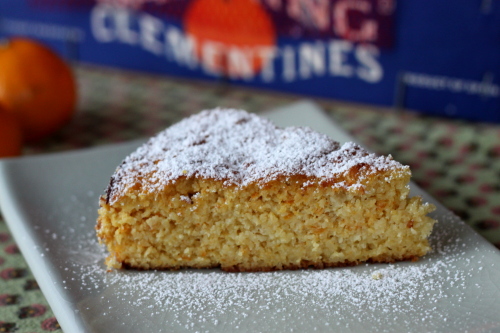
Nigella Lawson’s Clementine Cake

I wasn’t planning to post this week (birthdays, holidays, children, my excuses could go on forever), but this cake is so quick, easy, and different, I had to share. In case any of you need a holiday dessert you can make the ahead of time, this is the cake for you. It’s texture and flavor become more complex on day two, though eating it warm out of the oven might be delicious also. This cake alone might save my sanity this season. I made it last weekend for lunch with my cousin. It’s not too sweet so I’m taking another one to work for my birthday breakfast treat tomorrow. And then I’ll make it again on Friday night to serve with Christmas dinner on Saturday. Speaking of which, I’m cutting this post short  so I can get back to figuring out the logistics of seating thirteen people for dinner at a table that only holds twelve. Happy holidays everyone!

Clementine Cake
adapted from Nigella Lawson

Serves 8

Like many of Nigella Lawson’s cakes, this one seems an incredibly bad idea as you stir it together. Seriously, who would think to boil whole clementines, mash them peel and all, and throw them into a cake that doesn’t even have flour? It works though, and your whole house will smell wonderfully of citrus as it bakes.

4 to 5 clementines (about 13 oz / 370 g total weight)
6 eggs
1 cup plus 2 tablespoons (225 g) sugar
2 1/3 cups (250 g) ground almonds
1 heaping teaspoon baking powder
Powdered (confectioner’s) sugar, for dusting

Put the clementines in a pot with cold water to cover, bring to the boil, and cook for 2 hours. [Check the pan regularly to ensure it doesn’t dry out.] Drain the clementines and, when cool, cut each clementine in half and remove the seeds. Then finely chop the skins, pith, and fruit in the processor (or by hand, of course).

Preheat the oven to 375°F (190°C). Butter and line an 8‑inch springform pan with parchment paper.

Beat the eggs. Add the sugar, almonds, and baking powder. Mix well, adding the chopped clementines. I don’t like using the processor for this, and frankly, you can’t balk at a little light stirring.

Pour the cake mixture into the prepared pan and bake for 1 hour, when a skewer will come out clean; you’ll probably have to cover the cake with foil after about 40 minutes to stop the top from burning. Remove from the oven and leave to cool, in the pan on a rack. When the cake is cold, you can take it out of the pan.


Salmon with Lentils and Mustard-Herb Butter

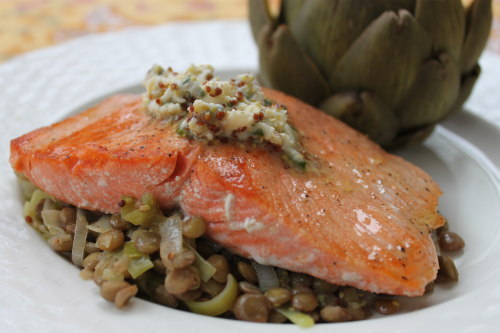
You may have noticed that Kristin and I cook salmon pretty regularly. Not only is salmon healthy, loaded with omega‑3 and other good stuff, but it’s easy to prepare and hard to mess up. Unlike some more delicate varieties of fish, salmon can take a few minutes of overcooking. It’s also less “fishy” tasting than most other seafood, so most kids won’t turn up their noses at it. This recipe is one of my family’s most recent favorites. It’s fancy enough to serve for guests, but a breeze to throw together, especially if you make the compound butter and lentils the night before. Steamed artichokes make an excellent side dish, especially if served with a bit of melted butter and lemon juice for dipping.

The picture doesn’t quite do this dish justice. I snapped the photo quickly before I called the kids to dinner. By the time everyone was seated, their sippy cups filled, and our napkins unfolded, the butter had melted beautifully, leaving the salmon with a lovely layer of herbs and mustard seeds.

Salmon with Lentils and Mustard Butter

Salmon with Lentils and Mustard-Herb Butter (Saumon aux Lentilles)
adapted from Gourmet, March 2008

For mustard-herb butter:
5 tablespoons unsalted butter, softened
1 tablespoon chopped chives
1 teaspoon chopped tarragon [I substituted 1/2 teaspoon dried tarragon]
2 teaspoons grainy mustard
2 teaspoons fresh lemon juice

For lentils:
1 cup French green lentils
4 cups water
2 medium leeks (white and pale green parts only)
1 tablespoon unsalted butter
1/2 to 1 tablespoon fresh lemon juice

For salmon:
4 (6‑ounce) pieces skinless salmon fillet
2 tablespoons unsalted butter

Make the mustard-herb butter:
Stir together all the ingredients with 1/4 teaspoon each of salt and pepper. [The mustard-herb butter can be made 1 day ahead and chilled, covered. Soften at room temperature before using (1 hour).]

Cook the lentils:
Bring the lentils, water, and 3/4 teaspoon salt to a boil in a heavy medium saucepan, then reduce heat and simmer, uncovered, until the lentils are just tender, 20 to 25 minutes. Remove from heat and let stand 5 minutes. Reserve 1/2 cup cooking liquid, then drain lentils. [The lentils can be cooked (but not drained) 1 day ahead and chilled in cooking liquid, covered (once cool).]

While the lentils cook, chop the leeks, then wash them. Cook the leeks in the butter in a heavy medium skillet over medium-low heat, stirring occasionally, until softened, 6 to 8 minutes.

Add the lentils with the reserved cooking liquid to the leeks along with 3 tablespoons mustard-herb butter and cook, stirring, until the lentils are heated through and the butter is melted. Add the lemon juice and salt and pepper to taste. Remove from heat and keep warm, covered.

Sauté the salmon while the leeks cook:
Pat the salmon dry and sprinkle with 1/2 teaspoon salt and 1/4 teaspoon pepper (total).

Heat the butter in a large nonstick skillet over medium-high heat until foam subsides, then sauté the salmon, turning once, until golden and just cooked through, 6 to 8 minutes total.

Serve the salmon, topped with the remaining mustard-herb butter, over lentils.

Fish with Edamame Pesto and Cookies-and-Cream Ice Cream Cake

In what I suspect will become a birthday tradition, Sam once again asked for “chocolate cake with whipped cream” for his birthday party this year. Although my holiday schedule wasn’t quite as hectic as Kristin’s, between December 1st, 2010 and January 1st, 2011, I had already celebrated eight days of Chanukah, my husband’s birthday, my birthday, Christmas, and New Year’s.  Exhausted from the festivities, I was tempted to remake last year’s icebox cake and spare myself the time it would take to find a new recipe to fit Sam’s party criteria. But I just couldn’t brush off the request that easily. It’s not Sam’s fault he was born the first week in January and that his birthday, like mine, tends to be sucked up and forgotten amidst the winter holiday hustle and bustle. I luckily found another great make-ahead cake covered in whipped cream, chocolate, and–as an added  bonus–sprinkles.  Despite its less than perfect appearance (to be blamed on a final layer of too warm hot fudge sauce), this cake was a real crowd-pleaser.

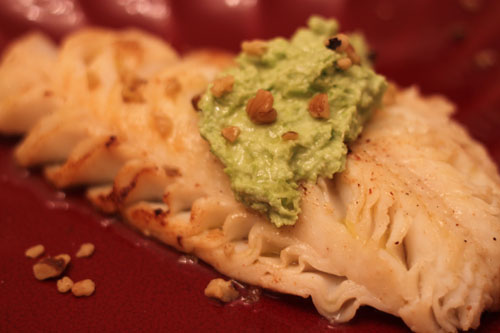
The birthday dinner itself was a lighter affair. Sam is a huge fan of Japanese food, especially edamame, so this edamame-based pesto caught my eye while I browsed cookbooks for a cake recipe. The pesto tasted amazing dolloped on a piece of sauteed cod, and nearly as good spread on a cracker later that night as a bedtime snack. I rounded out dinner with simple steamed veggies and cooked quinoa.

Fish with Edamame Pesto
adapted from Mark Bittman’s Kitchen Express: 404 inspired seasonal dishes you can make in 20 minutes or less

serves 3

1 bag frozen edamame (in pods)
olive oil
1 clove garlic, grated
juice of half a lemon
handful of grated Parmesan cheese
salt and pepper, to taste
1 lb (450 g) cod or other fish fillet(s)
2 tablespoons butter or olive oil
chopped walnuts, for garnish

Blanch the frozen edamame in boiling salted water for 3–5 minutes until tender. Drain and rinse the edamame under cold water. Shell the soybeans and place them in a blender or food processor with a few tablespoons of olive oil (or more, as needed) to get a nice puree. Add the garlic, lemon juice, and Parmesan and blend until smooth. Season the puree to taste with salt and pepper.

Season the fish fillet with salt and pepper. Cook the fillet(s) in the butter or olive oil over medium heat about 4 minutes per side or until golden and cooked through. Serve the fish with a spoonful of the pesto and garnish with chopped walnuts.

***

Cookies-and-Cream Ice Cream Cake
adapted from Bon Appetit, June 2000

serves 12

1 x 16-oz (45o‑g) pound cake, thawed if frozen
1/2 gallon (about 1 kg) cookies-and-cream ice cream, slightly softened

12 oz (340 g) hot fudge sauce (purchased or homemade)
6 oz (170 g) semisweet chocolate chips
1/4 (60 ml) cup water
10 Oreo cookies, coarsely chopped

1 cup (240 ml) chilled whipping cream
2 tablespoons sugar
candy sprinkles

Cut the cake into 1/3‑inch-thick slices. Halve each slice diagonally, forming triangles. Cover the bottom of a 9‑inch-diameter springform pan with the cake by arranging some triangles, points facing in, around the edge of pan. Fill in the center with more triangles; then cut additional pieces to fill in any spaces. Spread half of the ice cream over the cake. Freeze until firm, about 1 hour.

Stir the fudge sauce, chocolate chips and 1/4 cup water in a heavy medium saucepan over medium-low heat until melted and smooth. Cool to just barely lukewarm. Spread half of the fudge sauce over the ice cream. Sprinkle with the cookies. Top with enough remaining cake slices to cover. Spread the remaining ice cream over. Freeze 1 hour.

Stir the remaining fudge sauce over medium-low heat until barely lukewarm. Pour the sauce over the ice cream, spreading to the edge. Freeze at least 6 hours or overnight.

To serve, let cake sit in fridge about 15 minutes to slightly thaw. While the cake thaws, beat the cream and sugar in a medium bowl to stiff peaks. Run a knife around the pan sides to loosen the cake. Release the pan sides. Spread the whipped cream around the side of the cake and, if desired, pipe a border of whipped cream around the top edge of the cake. Scatter sprinkles or other small candies atop the cake.

Piri Piri Chicken with Sweet Potatoes and Almond, Honey and Orange Shortbread

From not knowing a single other food blogger at the start of the year, I now know many and count them amongst my friends. Who would have thought that the Bord Bia food blogger event back in May would have been such a launching pad for the bloggers in Ireland to start organising their own events, meet-ups, workshops and even the Irish Food Bloggers Association? Two bloggers I’ve come to know, both in the virtual and the real world, are Aoife of The Daily Spud, who in turn introduced me to Adrienne of Gastroanthropology, a fellow expat who lives in London. When I heard that Adrienne was organizing a blogger Christmas cookie exchange, I quickly signed up and wasn’t too surprised to see that from all the participants, Adrienne had arranged things so that I sent a recipe to her and received one from Aoife. Making Aoife’s shortbread was the perfect way to pass an afternoon with the kids when we were all stuck at home last week from the snow, and they were a welcome treat to have with a cup of coffee for me and hot chocolate for the kids. Given how many new people I’ve met because of blogging in 2010, I can’t wait to see who I might meet in 2011.

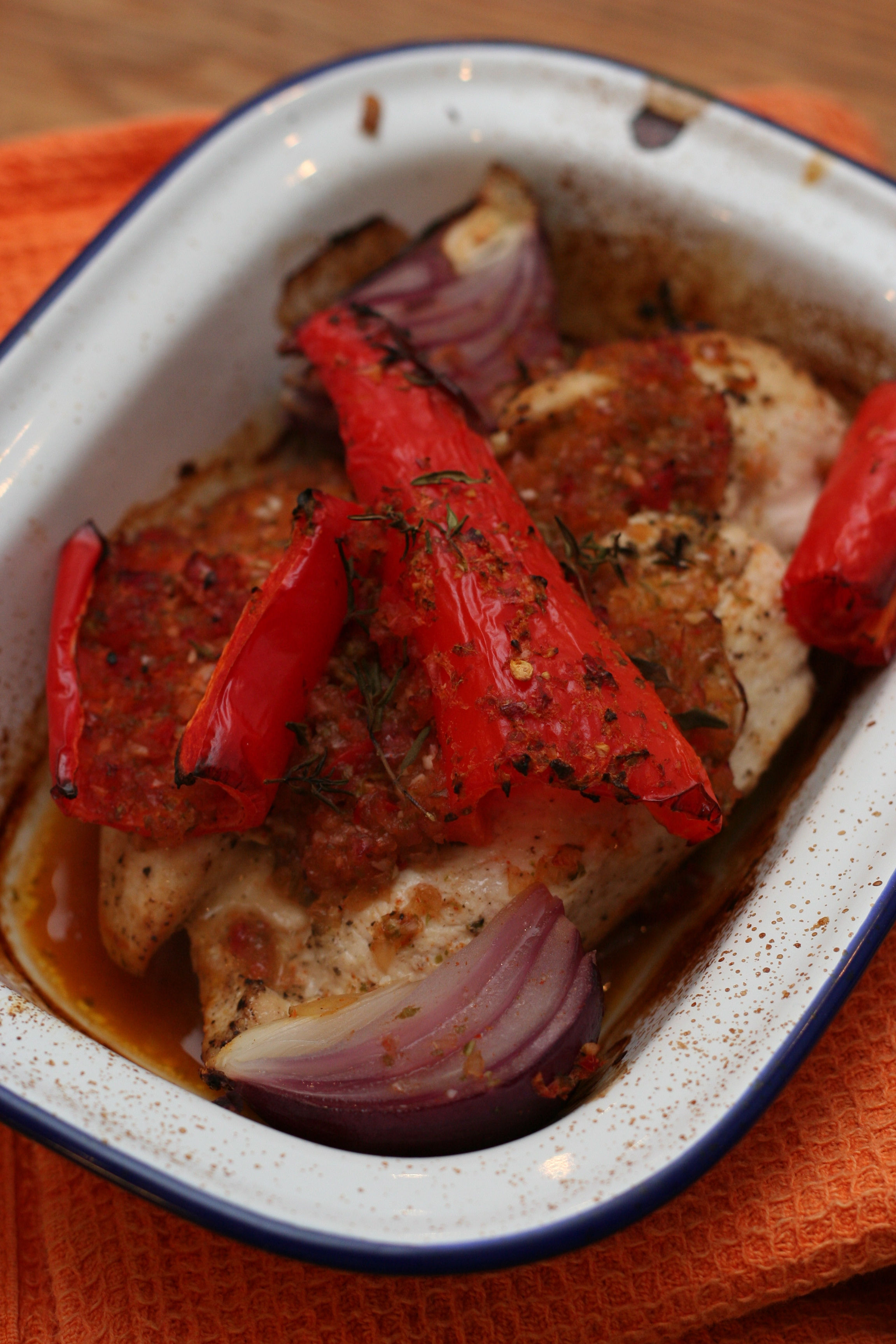
Piri Piri Chicken
adapted from 30 Minute Meals by Jamie Oliver

Serves 4

You could also use boneless, skinless thighs or breasts; if using breasts, just cook them a little longer. I’ve only made the chicken and sweet potatoes from this menu, but if you want to make the rocket (arugula) salad and Portugese tarts as well, you can see the complete menu here. If you made the whole menu, it would be a fantastic spread for entertaining — but if you can actually pull it off in 30 minutes like the title promises, I tip my hat to you.

4 to 6 large chicken thighs, skin on and bone in
1 red pepper, sliced into strips
1 yellow pepper, sliced into strips
6 sprigs of fresh thyme

for the piri piri sauce:
1 red onion, roughly chopped
4 cloves garlic, roughly chopped
1 or 2 red chillies, deseeded and roughly chopped
2 tablespoons sweet smoked paprika
4 tablespoons white wine vinegar
2 tablespoons Worcestershire sauce
2 lemons
salt and freshly ground black pepper
a large bunch of fresh basil

Preheat the oven to 400°F (200°C). Put a large griddle pan on a high heat.

Put the chicken thighs on a plastic chopping board, skin side down, and slash the meat on each one a few times. Drizzle with olive oil and season, then put on the hot griddle pan, skin side down. Cook until golden underneath, then turn over.

While the chicken is cooking, make the piri piri sauce. Add the onion, garlic, chillies, paprika, vinegar and Worcestershire sauce to a blender or food processor. Add the zest of 2 lemons and the juice of 1 lemon. Add a good pinch of salt and pepper, the large bunch of basil and a splash of water. Blend until smooth.

Add the peppers to the griddle pan. Turn the heat down to medium and keep moving the peppers around. Turn the chicken over.

Pour the piri piri sauce into a snug-fitting roasting tray. Lay the peppers on top of the sauce and push to the side. Add the chicken to the roasting tray with the sauce. Scatter over the sprigs of thyme, then put the tray into the oven. Cook for 20 to 30 minutes, or until cooked through. Sprinkle over some chopped fresh cilantro to serve.

***

Sweet Potatoes with Feta, Lemon and Chili
adapted from 30 Minute Meals by Jamie Oliver

Serves 4

1 medium potato
2 sweet potatoes
1/2 lemon
1 red chilli, finely chopped
1 bunch of fresh cilantro, finely chopped
2 oz (50 g) feta cheese, crumbled

Wash the potato and sweet potatoes and halve lengthways. Put them into a large microwave-safe bowl with half a lemon. Cover with cling film and put into the microwave on full power for 15 minutes. (If you don’t have a microwave, simply boil the potatoes on their own until tender.) Once the potatoes are cooked through, use tongs to squeeze over the cooked lemon. (Or if you haven’t used a microwave, add the juice of the half lemon to the potatoes.) Add the chiles, cilantro and feta. Season to taste with salt and freshly ground pepper, mix everything together and serve.

***

Almond, Honey and Orange Shortbread
adapted from The Daily Spud

Makes 30 to 35 cookies

With two stir crazy children helping me make these cookies when we were all stuck at home last week because of the snow, I streamlined Aoife’s recipe to just use packaged ground almonds instead of toasting whole almonds and grinding them myself. I went ahead and used the zest of an entire orange instead of just half an orange, and I also didn’t have any amaretto in the house, so I used almond extract instead. Aoife also suggests two variations by replacing the orange zest with some espresso powder and/or replace the almonds and amaretto with hazelnuts and Frangelico.

3/4 cup (100 g) plain flour
1/4 cup (25 g) rice flour or cornflour (cornstarch), or substitute additional plain flour
good pinch of salt
1 cup (100 g) ground almonds
1/2 cup (100 g) unsalted butter, softened
2 tablespoons honey
1 teaspoon almond extract or amaretto (optional)
zest of 1 orange
1/4 cup (25 g) powdered (icing) sugar, sifted, for coating (optional)
2 oz (50 g) good-quality dark chocolate, for dipping (optional)

Preheat your oven to 300°F (150°C).

Whisk the plain flour, rice flour and salt together in a medium bowl. Add the ground almonds and whisk again.

In a separate bowl, a stand mixer or a food processor, beat the butter until light and fluffy. Add the honey, almond extract and orange zest to the butter and beat well. Gradually incorporate the flour and almond mixture into the butter. When done, you should end up with a ball of dough that will be slightly crumbly and tacky to the touch.

Scoop heaped teaspoonfuls of the dough into the palm of your hand, roll into balls, then place on the baking sheet and flatten slightly, either using the palm of your hand or the base of a glass. You should end up with little discs around 1 inch wide and 1/4 to 1/2 inch high.

Bake for 20 to 25 minutes, or until the biscuits are just starting to darken at the edges. Allow to cool slightly for about 2 minutes, then toss the biscuits in the icing sugar and leave to cool fully on a wire rack. If you fancy dipping the biscuits in chocolate, then chop the chocolate finely and either melt in the microwave (zapping it until barely melted) or in a heatproof bowl set over a saucepan of hot (not simmering) water. Once melted, dip half of each biscuit in the chocolate and leave to set on a wire tray. When cool, dust with some more icing sugar and enjoy with your Christmas tea or coffee.
Brisket with Portobello Mushrooms and Dried Cranberries with Latkes

Happy Chanukah! We are in the midst of our celebrations and enjoying them even more than in years past.  Sam is old enough to help light the menorah and Anabelle can unwrap her own presents. She can also express her opinions. The matching sweater and hat set garnered a loud “no” (as she threw it off back at me) while chocolate covered raisins won an immediate smile. Chanukah is a relatively new holiday for me as I was brought up Christian.  Reuben was raised Jewish. Being the open-minded, holiday-loving couple that we are, Reuben and I celebrate both holidays. Unlike the fast and frenzied Christmas rush, I find the eight nights of Chanukah more relaxed and laid back and can’t see ever giving up the tradition.

My mother-in-law asked me to make the main course for our big Chanukah dinner this year. I decided to try out this simple braised brisket recipe, which turned out to be the best brisket I’ve ever made. The dish is perfect for entertaining, even if you aren’t celebrating Chanukah. You can spend more time with guests since you don’t need to do much with the meat once it’s braising in the oven. You can even make it the day before. If you can’t find brisket, I bet this recipe would taste amazing with short ribs or chuck roast, though the cooking time might be shorter. Along with the brisket recipe, I’m posting my mother-in-law’s latke recipe. If you’ve never had latkes, they’re like potato pancakes, only better. I have no idea why we only eat them once a year.

Brisket with Portobello Mushrooms and Dried Cranberries
adapted from Bon Appétit, December 1998

serves 8

1 cup (240 ml) dry red wine
1 cup (240 ml) broth (turkey, beef or chicken)
3/4 cup (180 ml) cranberry juice cocktail (100% juice recommended)
1/4 cup (30 g) all purpose flour
1 large onion, sliced
4 garlic cloves, chopped
1 sprig fresh rosemary
1 x 4‑lb (1.8‑kg) trimmed flat-cut brisket
12 ounces (340 g) baby portobello (crimini) mushrooms , sliced
4 oz (110 g) dried cranberries

Preheat the oven to 300°F (150°C). Whisk the wine, broth, cranberry juice and flour to blend in medium bowl; pour the mixture into a dutch oven or roasting pan large enough for the brisket to lay flat in. Mix in the onion, garlic and rosemary. Sprinkle the brisket on all sides with salt and pepper. Place the brisket, fat side up, in the pan. Spoon some of the wine mixture over it. Cover the pan with its lid or, if using a roasting pan, tightly with heavy-duty aluminum foil.

Bake the brisket until very tender, basting with pan juices every hour, about 3 1/2 hours. Let the brisket cool in the sauce for 1 hour. Discard the rosemary stem. Transfer the brisket to cutting board; cool 1 hour at room temperature. Thinly slice the brisket across the grain. Arrange the slices in the pan with the sauce, overlapping slices slightly. The brisket can be prepared 2 days ahead. Cover and refrigerate.

Preheat the oven to 350°F (180°C). Gently stir the mushrooms and cranberries into the sauce around the brisket. Cover the pan and bake until the mushrooms are tender and the brisket is heated through, about 30 minutes (40 minutes if the brisket has been refrigerated).

Transfer the sliced brisket and sauce to a platter and serve.

***

Years ago, my mother-in-law wrote this latke recipe on a piece of Queens Botanical Garden note paper and sent it to Reuben and me. She correctly assumed I had no idea how to make them. The recipe has moved with us to a least four different residences, acquiring more oil splatters each year. I’ve added more instructional detail for those who have not witnessed latke-making in person.

Latkes
from my mother-in-law

serves 6

2 lbs (900 g) potatoes
1 onion
juice of 1/2 lemon [Note: I sometimes omit this]
2 tablespoons of flour or matzo meal
1 egg, slightly beaten
salt and pepper, to taste
peanut, canola, or vegetable oil, for frying
sour cream and applesauce, to serve

Using a food processor or hand held grater, grate the potatoes and onion into a large bowl. Squeeze the lomn juice on the mixture so the potatoes don’t turn black. Let the mixture stand 30 minutes, covered, then drain the liquid out.

Mix the flour, egg, salt, and pepper into the grated potatoes and onion. Heat oil (enough to generously cover the bottom of the pan by about a centimeter) in a large cast iron skillet over medium-high heat. With a large spoon [or by hand if you have done this at least 20 years], place a pancake-size pile of the mixture into the hot oil and press lightly. Three latkes will usually fit into the pan. Fry the latkes in hot oil about 4 minutes on each side until brown and crisp. Drain the latkes on paper towels or paper grocery bags. Serve hot with sour cream and/or applesauce.

Pan-roasted Pork Chops with Cranberries and Swiss Chard

I am ashamed to admit that despite living in a state where cranberries are the state fruit and number one produce export, I’ve never cooked with fresh cranberries.  Because I’m not a fan of cranberry sauce, a Thanksgiving staple here in the United States, I generally tend to ignore the bags of cranberries piled high in the produce section each November. But this year, the tiny ruby red berries looked too attractive to bypass, so on a whim I bought a single humble bag and vowed to try out some new recipes.

After a successful batch of cranberry applesauce, I tried this pork chop recipe out on my brother, Michael, for his birthday dinner. Normally I don’t test drive new recipes on dinner guests, especially on their birthdays, but Michael, bless his heart, never leaves a morsel on his plate, can be talked into second and third helpings, and always thanks me “for the best dinner” even if it wasn’t my best, or even close. Lucky for Michael and the rest of us, the pork chop cranberry experiment was successful. The sauce is complex and savory, balanced nicely with the garlicky Swiss chard and the simply roasted chop. I served the dish with salad and quinoa pilaf but a crusty baguette and glass of red wine would be just as good.

Pan-roasted Pork Chops with Cranberries and Red Swiss Chard
adapted from Gourmet, November 2001

Serves 4

for the Swiss chard:
2 medium shallots, minced
1 tablespoon minced garlic
2 tablespoons unsalted butter
1 lb (450 g) red Swiss chard, stems and center ribs cut out and chopped together, leaves coarsely chopped separately

for the pork chops:
4 x 1 1/4‑inch-thick rib pork chops
1 1/2 tablespoons extra virgin olive oil

for the sauce:
2 medium shallots, minced
1/2 cup (120 ml) dry red wine
5 oz (150 g) fresh or thawed frozen cranberries
3/4 cup (180 ml) chicken stock or broth
3 tablespoons packed light brown sugar
1 1/2 teaspoons chopped fresh thyme or 1/2 teaspoon dried, crumbled
2 tablespoons (30 g) unsalted butter

Preheat the oven to 400°F (200°C).

To prepare the Swiss chard, cook the shallots and garlic in butter in an ovenproof 12-inch heavy skillet over a moderate heat, stirring, until golden, about 5 minutes. Add the chard stems and center ribs and cook, covered, stirring occasionally, until crisp-tender, 3 to 4 minutes. Add the chard leaves and cook, uncovered, stirring occasionally, until tender, 6 to 7 minutes. Season the chard with salt and pepper, then transfer it to a bowl, cover the bowl with a lid or foil (to keep the chard warm), and wipe out the skillet.

Pat the pork chops dry and season them with salt and pepper. Heat 1 1/2 tablespoons of oil in the skillet over a moderately high heat until hot but not smoking, then brown the chops, about 3 minutes per side. Transfer the skillet to the oven and roast the chops until an instant-read thermometer inserted horizontally 2 inches into the meat registers 155°F, 7 to 9 minutes. Transfer the chops with tongs to a platter, leaving the fat in the skillet, and cover the chops loosely with foil to keep warm.

Make the sauce by sauteing the shallots in the fat remaining in the skillet over a moderately high heat, stirring, until golden, about 5 minutes. Add the wine and deglaze by boiling over a high heat, scraping up any brown bits, until reduced by half. Add the cranberries and stock and simmer, stirring occasionally, until the cranberries begin to burst, about 2 minutes. Stir in the brown sugar and thyme and simmer, stirring, until the berries are collapsed, about 3 more minutes. Remove the sauce from the heat and stir in the butter until incorporated, then season with salt and pepper.

To assemble the dish, divide the chard among 4 plates and top with the chops, then spoon the sauce over.