All posts by Kristin

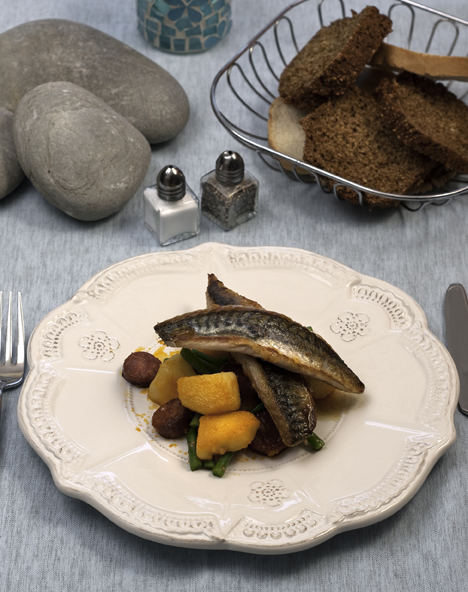
Mackerel with Warm Potato and Chorizo Salad

A few months ago, someone was on Twitter asking for recommendations for where to bring visitors for good seafood in Kinsale, County Cork. About a dozen people replied, and everyone said the same thing — Fishy Fishy. So it’s no surprise that Martin’s Fishy Fishy Cookbook has already entered its second printing just a few weeks after being released. Like the name of his TV show says, Martin Shanahan is mad about fish and he wants everyone else to love it too. My favorite episode from his first series was when he cooked mussels at the cattle mart in the land-locked Midlands and tried to get farmers who had never had a mussel in their lives to taste them (and almost all of them liked them). But even though Ireland is an island nation, we export most of our fish and notoriously eat very little of it ourselves. Martin thinks this is down to what he calls the “fear factor” when cooking fish, and his mantra has become “no skin, no bones, no fear”.

Flipping through his new cookbook and dog-earing pages of tempting recipes to try, his enthusiasm is catching. This mackerel with a warm potato and chorizo salad was outstanding, but also bookmarked are the crab crumble, warm chilli seafood salad, salmon and cucumber wraps and the Thai-style white Pollock fish cakes with Asian cabbage and a sweet and sour dipping sauce. With recipes that sound that good, he’s bound to pick up loads of new seafood-loving converts.

Photo © Kevin O’Farrell from Martin’s Fishy Fishy Cookbook

Mackerel with Warm Potato and Chorizo Salad
adapted from Martin’s Fishy Fishy Cookbook by Martin Shanahan

Serves 4

Chorizo is one of those ingredients (like bacon) that automatically makes anything better, but the dressing is what really made this recipe for me — it gave it just a little oomph and lifted the whole dish. Martin says that you can substitute some lightly cooked kale for the green beans here. Next time I make this — and there will definitely be a next time — I’m going to try using smoked mackerel fillets, warmed through, since I can get that more easily than fresh mackerel.

For the salad:
1 1/4 lb (600 g) potatoes, cooked
1 link of chorizo sausage
olive oil
7 oz (200 g) green beans, blanched and refreshed in ice water
salt and freshly ground black pepper
8 mackerel fillets

For the vinaigrette:
3 tablespoons olive oil
1 tablespoon red wine vinegar
1 teaspoon French mustard
salt and freshly ground black pepper

Cube the cooked potatoes and slice the chorizo. Heat a little oil in a pan and add the chorizo. Cook for 1 or 2 minutes to release the oil from the sausage, then add the potatoes and green beans. Make the vinaigrette by whisking together all the ingredients or shaking to combine in a screw-top jar, then toss the potato mixture in this dressing.

Heat a pan over a high heat and add a little oil. Season the mackerel fillets with salt and pepper, then cook the mackerel skin side down, pressing down on the skin to crisp it. Cook for 2 minutes, then turn and cook for a further 2 minutes on the other side.

Spoon a little of the warm potato salad into the center of each plate and top with the mackerel fillets.

Pork and Lemon Meatballs with Lemon and Basil Linguine

On a warm, sunny day, there’s no prettier place to be than Ireland. Brilliant yellow fields of rapeseed are at their peak right now, everything seems to be in bloom and the windows in the house are thrown wide open to let in the fresh air. After a long, cold winter, we’ve had a few straight weeks of sunshine on the east coast in Ireland and I’m craving bright, fresh flavors. It’s not quite warm enough yet to be fully fledged salad weather, but this lemony take on spaghetti and meatballs is just right for this time of year, when you want something a little lighter after months of stews, braises and casseroles.

If you like this recipe, you might also like Rigatoni with Pork and Lemon Ragu, Lemon Fusilli, Lemon and Pea Risotto or Gnocchi with Peas, Pancetta and Lemon Ricotta. Or for more meatball recipes, try Polpette di Melanzane (Eggplant “Meatballs”), Turkey Meatballs with Walnuts, Cilantro and Raisins with a Lemon Cumin Yogurt Sauce, Swedish Meatballs, or Spring Rolls with Pork Meatballs and Spicy Peanut Sauce.

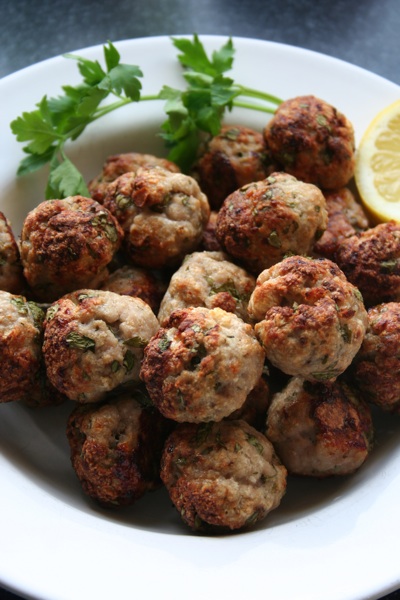
Pork and Lemon Meatballs
adapted from The Kitchen Diaries by Nigel Slater (or you can see the original recipe here)

Serves 4 to 6

Nigel Slater calls these “delectable little balls.” I just call them addictive.

1 lb 2 oz (500 g) pork mince
3/4 cup (75 g) fresh white breadcrumbs
10 anchovies, finely chopped (optional)
1 egg, beaten
zest and juice of 1 lemon
1/4 cup (25 g) grated Parmesan
a large handful of fresh parsley, finely chopped
salt and freshly ground black pepper

Preheat the oven to 375°F (180°C). Line a baking sheet with foil or parchment paper.

Put the pork, breadcrumbs, chopped anchovies, beaten egg, lemon zest and juice, Parmesan and parsley into a large mixing bowl. Season with a little salt (not too much because the anchovies and Parmesan are already salty) and a generous amount of black pepper. Mix thoroughly. Form the mixture into balls, using about 1 heaped tablespoon of the mixture for each meatball. Place them on the lined baking sheet. Cook in the oven for 20 to 30 minutes, until they’re golden brown and cooked through. Serve on top of the lemon and basil linguine.

***

Lemon and Basil Linguine
adapted from The Kitchen Diaries by Nigel Slater

Serves 4

This is a quick, simple recipe that lends itself to any number of adaptations — try adding in some garlic, chilli flakes or anchovies or using parsley instead of basil.

1 lb (450 g) linguine or spaghetti
juice of 2 large lemons
1/2 cup (125 ml) olive oil
1 1/2 cups (150 g) freshly grated Parmesan, plus extra to serve
1 or 2 large handfuls of basil leaves, roughly chopped
salt and freshly ground black pepper

Cook the pasta in a large pot of boiling salted water according to the packet instructions. Meanwhile, whisk together the lemon juice, olive oil and Parmesan in a warm jug (warmed under a running hot tap, then dried) until it’s thick and grainy. Add in the basil, season to taste and mix again.

When the pasta has finished cooking, reserve a mugful of the cooking water. Toss the drained, hot pasta in the lemon and Parmesan sauce, adding some of the reserved cooking water if you think the pasta looks too dry. Serve immediately with some extra Parmesan grated over.

Pan-grilled Steak with Béarnaise Sauce

I’m turning into the kind of person who will go to great lengths for a good meal. Last month I drove 3 hours north to Inishowen just to eat at Harrys Restaurant in Co. Donegal, and 2 weeks ago I drove 3 hours south to Dungarvan to go to the Waterford Festival of Food. I was only there for 24 hours, lured down by plans for dinner at the O’Brien Chop House and a bus tour to a microbrewery and oyster farm, but I managed to fit in a lot of good food.

I arrived late to Food Camp on the Friday, but still in time to sample some of Brock’s coffee from his boutique artisan coffee roasting business, Badger & Dodo, followed by lunch, where Niamh couldn’t resist making a classic Irish sandwich — Tayto crisps on a buttered Waterford blaa (don’t knock it till you’ve tried it!). After a lively panel discussion on routes to market for artisan Irish food, a group of about 20 people made their way to nearby Lismore for dinner at the O’Brien Chop House, where the rhubarb and apple Bellini was worth the 3‑hour drive alone.
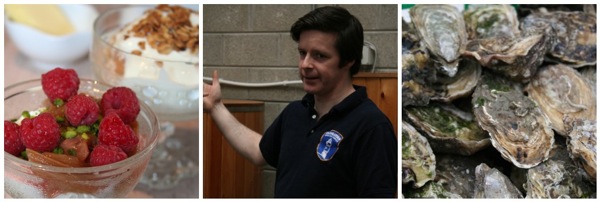
After a gourmet breakfast at Powersfield House B&B (the owner, Eunice Power, is a caterer), it was an early start after a late night the next day for a bus tour to Dungarvan Brewing Company to hear about how their microbrew beers are made and have a sample (at 10:30 in the morning? why not!). After that we went across the bay to Dungarvan Shellfish, where Jim Harty proudly told us about his thriving family-run oyster farm, with yet more samples, this time of fresh Irish oysters, brown bread and a glass of white wine at the slightly more respectable hour of 11 a.m. The last stop on the Bus Bia tour was a fish cooking demo in a parish hall in the Gaeltacht (Irish-speaking region), which finished with tea, coffee and cakes made by the local Irish Countrywomen’s Association. When we arrived back in Dungarvan, a group of 9 of us bloggers headed straight for the best restaurant in town for lunch — The Tannery — not really expecting to get a table but delighted when we did, where almost all of us ordered their signature starter, the crab creme brulée. By then I was starting to regret not staying for the second night (which I definitely did regret the next day when reading everyone’s tweets about the fantastic farmers’ market on the Sunday), but I was happy to have The Daily Spud for company this time on the long drive back, talking about food all the way.
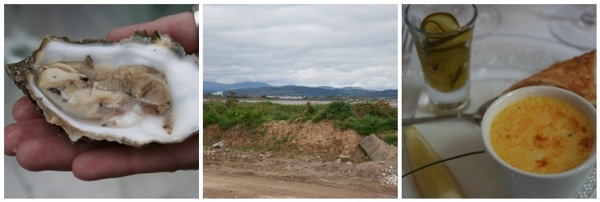
When I go to a restaurant, I always like to order something from the menu that I don’t or can’t make at home, and when I saw that O’Brien’s hanger steak was being served with a side of bone marrow, not to mention Béarnaise sauce, which I’m a sucker for, I practically stopped reading the menu right there. Justin and Richard were fantastic hosts for our group of 20, and if you’re in County Waterford, this restaurant is not to be missed. I’m already planning on bringing the whole family to the festival next year, but in the meantime, I can recreate the meal from O’Brien’s at home with Darina Allen’s recipes.

Pan-grilled Steak
adapted from Forgotten Skills of Cooking by Darina Allen

Serves 4

Darina Allen recommends using a heavy-ridged cast iron grill pan for cooking steaks. She also says that rubbing the steaks with a clove of garlic intensifies their beefy flavor. It goes without saying to serve this with chips/wedges. For a blow-out dinner like this that’s all about the meat, I’d say a vegetable is pretty much optional. Get your five a day at breakfast and lunch instead.

4 x 6 oz (175 g) sirloin or fillet steaks
1 garlic clove
salt and freshly ground black pepper
olive oil

About 1 hour before you want to cook your steaks, remove them from the fridge. Cut the garlic clove in half and rub it on both sides of each steak. Grind over some black pepper and sprinkle with a few drops of olive oil (don’t put salt on the steaks at this point, since it will leach out moisture and make the steaks dry and tough). Turn the steaks in the oil and set aside to allow them to come to room temperature. If using sirloin steaks, score the fat at 1‑inch intervals.

Heat the grill pan, season the steaks with a little salt and put them into the hot pan. Cook to your liking (if using sirloin steak, cook the fatty side as well for 3 or 4 minutes until it’s nice and crispy). For rare, cook a sirloin for 2 minutes and a fillet for 5 minutes; for medium-rare, cook a sirloin for 3 minutes and a fillet for 6 minutes; for medium, cook a sirloin for 4 minutes and a fillet for 7 minutes; and for well done (but please don’t ruin a good steak by cooking it well done!), cook a sirloin for 5 minutes and a fillet for 8 or 9 minutes. Make sure you allow the steaks to rest before you serve them. Serve with Béarnaise sauce, oven-roast wedges and a green salad or vegetable of your choice.

***

Béarnaise Sauce
adapted from Forgotten Skills of Cooking by Darina Allen

Serves 8 to 10

If the sauce is slow to thicken, it might be because the heat is too low. When making the sauce, you should be able to put your hand on the side of the saucepan at any stage — if it’s too hot for your hand, it’s too hot for the sauce! Keep a bowl of cold water close by that you can plunge the bottom of the saucepan into if it becomes too hot.

4 tablespoons tarragon vinegar (or white wine vinegar plus extra fresh chopped tarragon)
4 tablespoons dry white wine
2 teaspoons finely chopped shallots
pinch of freshly ground black pepper
1 tablespoon cold water
2 egg yolks
1/2 cup (110 g) butter, cubed
1 tablespoon chopped fresh tarragon

Boil the vinegar, wine, shallots and a pinch of pepper in a heavy-bottomed stainless steel saucepan until completely reduced and the pan is almost dry but not browned. Immediately add the 1 tablespoon of cold water. Remove the pan from the heat and leave to cool for 1 or 2 minutes.

Whisk in the egg yolks and add the butter bit by bit over a very low heat, whisking all the time. As soon as one piece of butter melts, add the next piece and the sauce will gradually thicken. If it looks like it’s getting too thick or might scramble, remove the pan from the heat immediately and add a little cold water. Don’t leave the pan or stop whisking until the sauce is made and has reached a thick coating consistency — this isn’t the time to see what’s happening on Facebook. Finally, add the chopped fresh tarragon and taste for seasoning. You can keep the sauce warm in a heatproof bowl over a saucepan of hot (but not simmering!) water until you’re ready to serve it.
 

Slow-roast Tomato, Basil and Goat’s Cheese Pasta

Donal Skehan ticks all the boxes. He’s young, hip and even had a brief stint as a pop star before turning his attention exclusively on food. He’s also one of the new generation of food blog success stories who’s just published his second book, Kitchen Hero, and his corresponding new TV show is due to air on May 16 on RTÉ in Ireland. Not only that, he’s also an accomplished food photographer (check out his website to see what I mean) and took all his own photos for the cookbook. And did I mention he’s an all-around great guy too? Despite having thousands of Twitter followers and Facebook fans, he has time for everyone. Who else would host an afternoon tea party at Dublin’s posh Westbury Hotel just for food bloggers like Donal did last week so we could sample the tea he’s designed exclusively for them, not to mention get a signed copy of his book? He’s a true star.

And he also knows his way around the kitchen. You can just about feel Donal’s energy and enthusiasm leaping off the pages of his new book. “I am a home cook and I’m here to show you how to be a kitchen hero!” he proclaims in the first line of his introduction. “I’ve come to the conclusion that if you have confidence in the kitchen, you can cook absolutely anything.” He wants to get people back in the kitchen and his focus is on cooking simple, tasty food using fresh ingredients. His recipes are do-able for even the most novice cook — like this pasta with slow-roasted tomatoes, basil and goat’s cheese. As for me, a working mom with two young kids, the ‘Meals in Minutes’ and ‘Stretch Your Meals’ chapters are already full of dog-eared pages of recipes I’ll be making in the next few weeks.

Slow-roast Tomato, Basil and Goat’s Cheese Pasta
adapted from Kitchen Hero by Donal Skehan

Serves 4

Donal’s original recipe is vegetarian, but I wouldn’t be averse to adding in some bacon or even leftover roast chicken. Or you could try adding in a few handfuls of baby spinach or arugula (rocket) and some toasted pine nuts. I stirred through the juice of half a lemon, which I thought gave this a lovely lift. The great thing about roasting tomatoes is that even if they’re not at their best in the off season, this method brings out all their flavor. If you’re pressed for time though, substitute sun-dried tomatoes for the slow-roasted ones, in which case this is the kind of dinner that you can pull together in the time it takes to boil water and cook your pasta.

3 tablespoons olive oil
1 tablespoon balsamic vinegar
1 lb 2 oz (500 g) cherry tomatoes, cut in half
salt and freshly ground black pepper
11 oz (300 g) of your favorite pasta shape
3 oz (75 g) goat’s cheese, crumbled
a handful of fresh basil leaves, shredded

Preheat the oven to 375°F (190°C).

Whisk together the olive oil and balsamic vinegar in a large bowl. Add the tomatoes and toss gently to coat them. Arrange the tomatoes cut side up on a large baking tray and season with salt and pepper. Roast in the oven for about 45 minutes, until the tomatoes have shrunk and are slightly charred.

Meanwhile, cook the pasta in a large pot according to the instructions on the packet. Drain the pasta and return it to the pot. Immediately stir through the goat’s cheese, basil and tomatoes while the pasta is still hot so that the cheese melts and coats the pasta. Season with a good pinch of salt and pepper and serve immediately.

Slow Cooker Buttered Chicken and Tomato Curry

A slow cooker isn’t the most glamorous piece of kitchen equipment, but it’s a busy cook’s best friend. Kelly has sung their praises, and I convinced my friend Emma to buy one last year when the cold weather set in after talking up all their benefits. After a few months though, she admitted that the first two recipes she’d made were flops, one of which was so bad they wound up giving it to the dogs and ordering take-out. That’s the main drawback with slow cookers, and why I’m always hesitant to buy cookbooks dedicated solely to them. When a slow cooker recipe is bad, it tends to be really bad — insipid or even, as in Emma’s case, inedible.

In the meantime though, Emma bought a copy of Antony’s Slow Cooking by Antony Worrall Thompson and tried this recipe, which she liked so much she passed it on to me. I in turn like it so much that I’ve made it twice in the past month and it’s become my new favorite slow cooker recipe. And that’s the flip side to the slow cooker – when you get a good recipe, it can be really good, like this one.

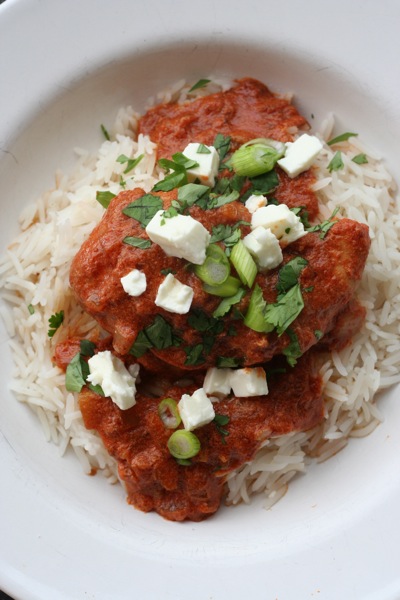
Slow Cooker Buttered Chicken and Tomato Curry
adapted from Antony’s Slow Cooking by Antony Worall-Thompson

Serves 4

Buttered chicken is a classic mild curry — it’s creamy, not spicy, so my kids loved it and practically licked their bowls clean to get every last bit of the sauce. Please don’t be put off by the long list of ingredients — it’s really just a bunch of spices that are all widely available.

The original recipes calls for heavy cream to be stirred in at the end in addition to more butter, but I found the sauce to be delicious without all those extra calories. But if you’re so inclined, add in 1/3 cup (80 ml) heavy cream at the end of the cooking time, cover and cook on high for 20 minutes. Remove the chicken to a warm serving dish, then whisk 6 tablespoons (3 oz/90 g) butter into the sauce, making sure it’s well emulsified. Check the seasoning, then pour the sauce over the chicken and garnish, as below.

2 tablespoons lemon juice (should be the juice of 1 large lemon)
1/2 teaspoon salt
1 teaspoon chili powder
2 lb (1 kg) skinless chicken thigh fillets or skinless chicken breasts
1 1/4 cup (300 ml) Greek yogurt
2 teaspoons ground ginger
2 teaspoons garam masala
2 tablespoons (30 g) unsalted butter
1 tablespoon vegetable oil
2 onions, finely chopped
1 teaspoon ground coriander
1 teaspoon sweet paprika
1/2 teaspoon ground cumin
1/2 teaspoon fennel seeds
1/2 teaspoon ground cinnamon stick
4 garlic cloves, crushed or finely chopped
14 fl oz (400 ml) passata (or blend a 14 oz/400g can of whole plum tomatoes until it’s smooth if you can’t get passata)
2 tablespoons tomato paste (puree)
5 fl oz (150 ml) chicken stock
2 tablespoons light brown sugar
salt and freshly ground pepper

to garnish:
fresh cilantro (coriander)
flaked almonds
spring onions, sliced
feta chees

to serve:
basmati or pilau rice

Whisk together the lemon juice, salt and chili powder. Place the chicken in a non-metallic bowl and pour over the lemon juice mixture. Cover and marinade for at least 30 minutes, but ideally overnight.

When you’re ready to cook, whisk together the yogurt, ginger and garam masala, pour over the marinated chicken and mix well. Spoon the chicken mix into the slow cooker.

Heat the butter with the oil in a frying pan over a medium-low heat, then cook the onion and spices for 8 to 10 minutes, until the onion has softened but hasn’t colored (adding a pinch of salt to the onions when they’re cooking helps to prevent them from browning too much). Add the garlic and cook for 1 minute more. Stir the onion mix into the chicken in the slow cooker, then stir in the passata, tomato purée, chicken stock and brown sugar. Mix to combine everything well then cover and cook on low for 5 to 6 hours, until the chicken is cooked through. Garnish with cilantro (coriander), almonds and spring onions. Just before serving, crumble the feta over the surface. Serve with basmati or pilau rice.

Pasta with Chicken, Tarragon and Cream

For years now I’ve been planning out the week’s meals in advance and shopping accordingly for all the groceries I need. You might imagine that this involves cookbooks or back issues of Gourmet casually strewn across the kitchen table while I flip through them over a pre-dinner glass of wine, the kids contentedly playing together and something chilled out on the stereo while I pick out all the fabulous new recipes I want to make.

Or at least that’s what I like to imagine.

The reality is that more often than not, instead of leisurely browsing through my cookbook collection with a glass of wine, I’ll find myself quickly scanning the blog recipe archives for something tried and tested or looking up a bookmarked recipe on a website with a half-cold cup of tea, all the while vowing to be more organized next week.

But meal planning is made much easier when you cook a whole chicken. It’s roasted on the first night, then stripped and used in a soup, stir-fry, risotto or any number of dishes the next night, with any last leftovers invariably finding their way into sandwiches or a quick quesadilla and the carcass used for stock. And when you can feed a family for two or even three nights with one chicken, paying extra for a free-range or organic bird is still good value. If you make poulet à l’Estragon (and please do – you will not be disappointed), this is a no-brainer dinner to make the next night with the leftovers, using all the same flavors. That’s two dinners for the week easily sorted then.

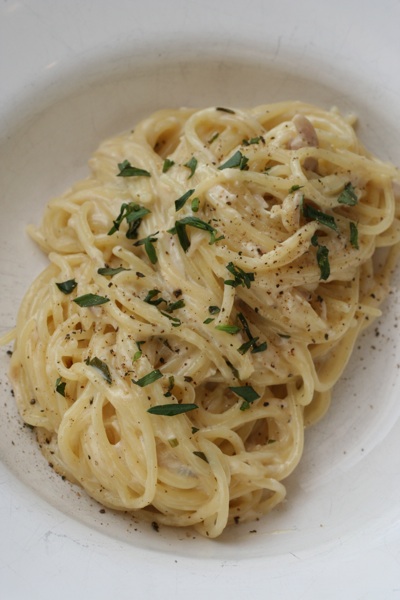
Pasta with Chicken, Tarragon and Cream
adapted from Real Food by Nigel Slater

Serves 4

If using leftover roast chicken, simply skip the step of browning the chicken and add the chicken after the cream and tarragon; you also won’t need the butter called for here either. If you’ve made poulet à l’Estragon and have any of the tarragon sauce left over from it, add that along with the cream for extra flavor and richness.

14 oz (400 g) spaghetti or linguine
8 chicken thighs (or diced leftover chicken, ideally from poulet à l’Estragon; see note above)
salt and freshly ground black pepper
4 tablespoons (60 g) butter
1/2 cup (125 ml) dry white wine or extra-dry vermouth
2 tablespoons tarragon vinegar or white wine vinegar
1 1/4 cups (300 ml) heavy cream
2 heaped tablespoons chopped tarragon leaves, plus extra to garnish
a squeeze of lemon juice

Set a large pot of water on to boil. Cook the pasta in plenty of salted water as per the packet instructions. Reserve a mugful of the pasta cooking liquid before draining.

Meanwhile, season the chicken with a little salt and pepper. Melt the butter over a medium heat in a large, shallow pan (one big enough to eventually accommodate all the cooked pasta as well), then brown the chicken on both sides until it’s golden brown, taking care not to let the butter burn. Remove the chicken and set aside.

Pour off all but 1 tablespoon or so of butter. Add the wine or vermouth and vinegar, bring to the boil and scrape up any brown bits from the bottom of the pan. Simmer for 1 to 2 minutes to reduce a bit, then add the cream and tarragon. Return the chicken and any juices to the pan. (Alternatively, if using leftover roast chicken, simply add that in now.) Simmer gently for 15 to 20 minutes, stirring now and then to make sure the cream doesn’t thicken too much. If the sauce is becoming too thick, add a little more wine or vermouth. Check that the chicken is cooked through and taste for seasoning. Add a squeeze of lemon juice and stir it through.

Add the drained pasta to the sauce in the pan and stir it well, making sure it’s all coated with the creamy sauce. If the sauce is too thick, add some of the reserved pasta cooking liquid to loosen it a bit. Sprinkle with some chopped fresh tarragon and serve right away.

Pot Roasted French Tarragon Chicken (Poulet à l’Estragon)

The Cookbook Club is one of those simple but brilliant ideas, the kind where you wonder why no one thought of it before now. The brainchild of Elaine Walsh, The Cookbook Club is a monthly event that features an Irish chef talking about his or her latest cookbook over a three-course dinner at Ely CHQ, where all the food is made from the cookbook being featured that night. It’s the best book signing you’ll ever go to.

The dinners started in September, but the first one I went to was last month, when the legendary Darina Allen of the Ballymaloe Cookery School was the featured author talking about her latest book, the award-winning Forgotten Skills of Cooking. What’s more, Elaine arranged a special pre-dinner meeting with Darina just for a few food bloggers. Never mind that it was during the same manic week as Inishfood — how could I pass up such a chance?

But on the day of the dinner, when faced with the thought of meeting the grande dame of Irish cooking with her trademark red glasses, I got nervous. What on earth would I say to someone so highly regarded? What clever question could I possibly ask? I needn’t have worried. As soon as we all sat down with a glass of wine, Darina hit the ground running, talking about everything from the early days at Ballymaloe, how she started the farmers’ market movement in Ireland, learning how to use her iPad on her recent trip to Sri Lanka to casually mentioning cooking for Bill Clinton. Meanwhile, myself and the three other bloggers (Aoife and fellow expats Sharon and Tim) just sat and listened, enthralled. Still reeling, the bloggers all sat down to dinner together, where I had salt cod croquettes, pork osso bucco and carrageen moss pudding with poached rhubarb. (You can find the recipe for the salt cod here as well as Darina’s own recount of the evening.)

While Darina’s book features lots of recipes for things like homemade pasta, preserves, dandelion wine or even instructions on how to build your own cold smoker, there are also plenty of everyday recipes, such as this French bistro classic, poulet à l’Estragon. Darina says that casserole roasting is an almost forgotten skill that releases plenty of delicious juice while the chicken cooks in the moist, steamy atmosphere of a covered casserole. It also couldn’t be easier — 10 minutes of active cooking time yields the best chicken I’ve had in a long time. The Telegraph calls poulet à l’Estragon “possibly the best chicken recipe in the world”, and after standing over the pot greedily slurping up the sauce with a spoon, I’d have to agree.

Pot Roasted French Tarragon Chicken (Poulet à l’Estragon)
adapted from Forgotten Skills of Cooking by Darina Allen

Serves 4 to 6

Because this is such a moist method of cooking, it’s a good method to use if you’re dealing with a bird you know is a little tough or past its prime. Darina also notes that some chickens yield less juice than others, so if you find that you need more sauce, just add some chicken stock to the cream. She says this is also delicious without any cream, just the chicken juices, stock and fresh herbs. Try to find French tarragon for this recipe, as opposed to the more common Russian variety.

Serve the chicken with mashed potatoes or boiled new potatoes — something, anything you can pour the amazing sauce over — and a vegetable such as sauteed carrots or green beans with lemon.

1 x 4 1/2 lb (2 kg) chicken
salt and freshly ground black pepper
2 tablespoons chopped fresh French tarragon, plus a few extra sprigs
2 tablespoons (30 g) butter, softened
1 tablespoon flour
1/2 cup (125 ml) cream
1/2 cup (125 ml) chicken stock (optional; see note above)

You will also need a casserole dish large enough to hold the chicken

Preheat the oven to 350°F (180°C).

Season the cavity of the chicken with salt and freshly ground black pepper and stuff a sprig of tarragon inside. Mix 1 tablespoon of the chopped tarragon with two-thirds of the butter and set aside. Smear the rest of the butter over the breast of the chicken. Place the chicken breast side down in a casserole (aka Dutch oven) and let it brown over a gentle heat for about 5 minutes. Turn the chicken breast side up in the casserole and smear the tarragon butter over the breast and legs. Season generously with salt and pepper. Cover the casserole and cook in the oven for 1 1/4 to 1 1/2 hours, or until the juices run clear when you pierce the flesh between the breast and thigh. Remove the chicken to a carving dish and allow it to rest for 10 to 15 minutes before carving.

Place the pot with the juices over a medium heat. Add the remaining tablespoon of chopped tarragon to the juices in the pot. Add in 1 tablespoon of flour and whisk until smooth, then add in the cream. Bring to the boil and whisk until the sauce thickens slightly. Taste and adjust the seasoning. Serve the chicken with the sauce spooned over.

Ham and Cheese Risotto

At dinner years ago with Matt’s old college friend and his wife and two-year-old daughter, I remember watching in amazement as their little girl gobbled up an appetizer of Gorgonzola-stuffed mushrooms. Coming from a family where my sister and twin brothers were classic picky eaters, I asked what their secret was in getting their daughter to eat so well. “We don’t make a big deal out of new foods,” they said. When I had kids of my own, I followed their advice and it’s matter of some pride that my kids now eat such a wide range of foods and flavors. When we were in Florida over Christmas, I picked up a tray of sushi from the grocery store and my mother couldn’t believe it when my daughter proceeded to eat most of it while my twin teenage brothers were having yet another dinner of chicken fingers and fries. But even though my kids will happily eat a dish like sole meunière or gnocchi with blue cheese and walnut sauce, I do still like to make explicitly kid-friendly things that I know are sure to appeal to them, like Parmesan chicken fingers or this risotto, which is basically a more everyday version of my favorite bacon, leek and Camembert risotto. But who am I kidding in saying this was for the children? The grown-ups liked it just as much.

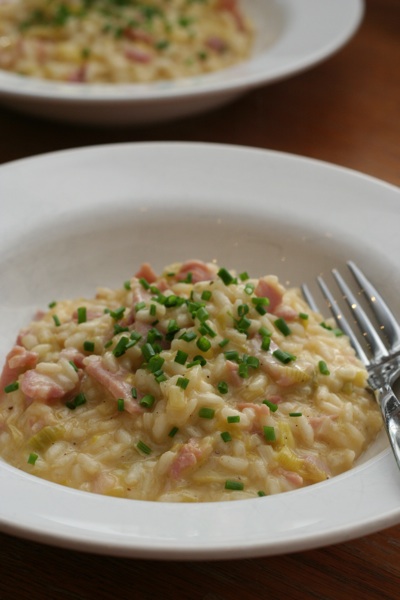
Ham and Cheese Risotto
adapted from Nigella Express by Nigella Lawson

Serves 4

The original recipe is for cheddar and leeks only, but I couldn’t resist adding in some bacon to make it a ham and cheese risotto. Leave it out for the original vegetarian version.

1 tablespoon (15 g) butter
1 tablespoon olive oil
4 slices of bacon, chopped into lardons (or you could use chopped leftover ham)
2 small leeks, cut in half lengthwise and finely sliced
2 cups (300 g) risotto rice
1/2 cup (125 ml) dry white wine or extra-dry vermouth
1/2 teaspoon Dijon mustard
2 pints (1 liter) hot vegetable stock
1 1/4 cup (125 g) grated mature cheddar
chopped fresh chives, to garnish

Melt the butter and oil in a large pan over a medium heat and cook the bacon and the leeks for about 5 minutes, until the bacon has browned and the leeks have softened. Add the risotto rice, stirring for 1 minute to make sure all the grains of rice are coated with the oil. Turn up the heat to medium-high and add the wine and mustard, stirring until the wine is absorbed. Start ladling in the hot stock, letting each ladleful become absorbed before adding the next one. Keeping stirring and adding a ladleful of stock at a time until the stock is all used up and the rice is al dente, about 20 minutes. Add the cheese, stirring it into the rice until it melts. Take the pan off the heat, still stirring as you do so, and spoon the risotto into warmed dishes, sprinkling with some of the chopped chives.