All posts by Kristin

Sweetcorn Fritters with Tomato Salsa

A few months ago, a friend asked me how I keep track of all the recipes I want to try from my ever-expanding cookbook collection. “Don’t laugh,” I said, “but I have a spreadsheet.” I have separate sheets divided into categories like quick weeknight dinners, pasta, seafood, vegetarian mains and desserts and in each sheet I have a column where I’ll list a season if it’s a recipe that lends itself to a certain time of year, so I can sort recipes that way too. You might be laughing now, but it’s how I remembered this recipe for sweetcorn fritters that I’d bookmarked sometime last year after summer had already come and gone. You’ll thank me for my nerdy organization once you try these. I’ve already made them three times this summer.

If you like the sound of these sweetcorn fritters, you might also like these zucchini fritters with feta and dill.

Sweetcorn Fritters with Tomato Salsa
adapted from Itsa Cookbook by Domini Kemp

Serves 4 for a light dinner

These lend themselves to all kinds of adaptations. Adding in some chopped cooked bacon was, unsurprisingly, the first thing I thought of, or you could try making a Mexican-influenced version by using chipotle powder instead of paprika, adding some chopped jalepeno or red chilli and serving the fritters with a dollop of sour cream and a tomatillo salsa. These would also be good served for brunch alongside bacon and eggs or packed for a picnic.

For the sweetcorn fritters:
2 cups (250 g) flour
1 x 11 oz (320 g) can of sweetcorn, drained
2 eggs, beaten
1 bunch of scallions, roughly chopped
1 small bunch of cilantro (a.k.a. coriander), roughly chopped
1/2 cup (125 ml) milk
1 teaspoon baking powder
1/2 teaspoon smoked paprika
1/4 teaspoon salt
sunflower oil, for frying

For the tomato salsa:
9 oz (250 g) cherry tomatoes, quartered
1 small red onion, very finely diced
1 small red chilli, deseeded and chopped
1 teaspoon sweet chilli sauce (optional)
1/2 teaspoon sugar
juice of 2 limes
1 small bunch of cilantro (a.k.a. coriander), finely chopped
salt and freshly ground black pepper

To make the salsa, mix all the ingredients together and leave for 30 minutes at room temperature before serving to allow all the flavors to marry together.

To make the fritters, place everything in a bowl except the sunflower oil and mix together well.

Heat the sunflower oil in a frying pan over a medium heat. Plop large spoonfuls of the mixture into the hot oil. Fry the fritters for 2 or 3 minutes on each side, until golden. Pat them down slightly while they’re cooking in the pan, since they’ll cook better if they’re a bit thinner. Set aside on a plate and repeat with the remaining batter. Serve the fritters warm with the tomato salsa.
Spaghetti alla Puttanesca

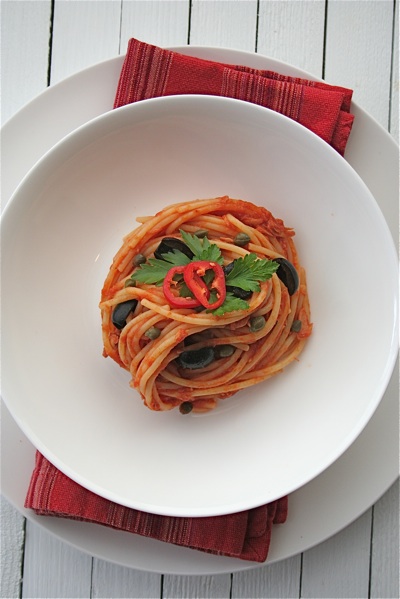
Spaghetti alla puttanesca is a classic store cupboard staples recipe. Nicknamed “whore’s pasta,” Nigella Lawson writes that “the general consensus seems to be that this is the sort of dish cooked by slatterns who don’t go to market to get their ingredients fresh, but are happy to use stuff out of jars or tins.” Last week we spent five days in the west of Ireland in County Sligo, and coming home to an empty fridge after driving coast to coast (which, granted, only takes 3 hours from Sligo to Louth), I was still able to rustle this up from basics that I always have in the pantry along with a green salad from my garden. Whore’s pasta to the rescue!

Spaghetti alla Puttanesca

Serves 4 to 6

1 1b 2 oz (500 g) spaghetti
olive oil
2 or 3 garlic cloves, chopped
1 or 2 fresh red chillies, finely chopped, or 1/2 teaspoon chilli flakes
1 x 1 oz (30 g) can of anchovy fillets, drained and chopped
1 x 8 oz (225 g) can of tuna, drained
2 tablespoons capers, drained
1 x 1 1/2 lb (700 g) jar of passata or 2 x 14 oz (400 g) cans of chopped tomatoes
salt and freshly ground black pepper
juice of 1 lemon (optional)
3/4 cup (100 g) stoned black olives, halved
a small bunch of fresh flat-leaf parsley, chopped
green salad, to serve
garlic bread, to serve

Cook the spaghetti in a large pot of boiling salted water according to the instructions on the packet.

Meanwhile, heat a large saucepan (one big enough to accommodate all the cooked pasta later) over a medium-low heat. Add a splash of olive oil, then add in the garlic, chillies and anchovies and cook for 1 or 2 minutes, until the anchovies have broken down and almost melted, but taking care not to let the garlic burn. Add in the tuna and capers, then stir in the passata or canned tomatoes. Season generously with salt and pepper, raise the heat to medium and allow to simmer while the pasta cooks.

Before draining the pasta, reserve a mugful of the cooking water. Add the drained pasta directly to the sauce and add in the lemon juice, the olives and most of the chopped parsley. Stir well to coat all the pasta with the sauce, adding in some (or all) of the reserved pasta cooking water if you want to loosen the sauce a bit. Divide the pasta between individual bowls or plates and scatter the remaining parsley on top to garnish. Serve with a green salad, garlic bread and a glass of wine.

Beer Brats and German Potato Salad

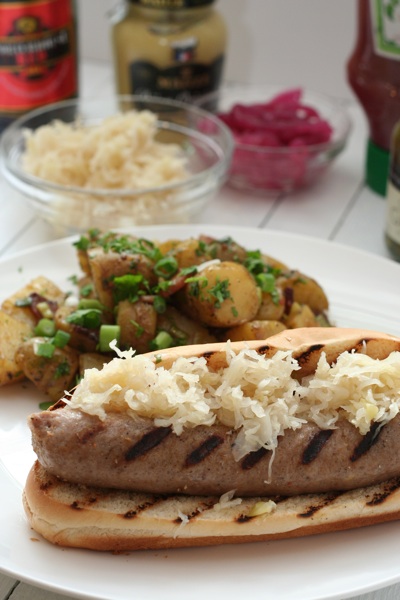
Soul food is usually associated with the South and things like okra, grits or chicken fried steak, but if Wisconsin could be said to have a soul food, it would be beer brats. A summer BBQ or tailgate party wouldn’t be complete without them and grilled bratwurst are sold at the student union at UW-Madison, where Kelly and I went to college. Living in Ireland, though, I can count the number of times I’ve had bratwurst on one hand, and each of those times they were made by the same man, the legendary Ed Hick. I’ve seen him a few times lately at the Sheridans and Bloom food festivals, so I snapped up a pack and lost no time making beer brats. And since I was already feeling nostalgic, I went ahead and made a German potato salad too, another summertime staple when I was growing up. Put the two together and add some sauerkraut, and it was enough to bring a homesick Midwesterner to tears.

Beer Brats

Serves 8 to 10

Like cooking with wine, you don’t want to use the cheapest beer here, but don’t use your nice microbrew either — just something good that you’d want to drink. The handy thing about cooking the bratwurst this way is that if you’re having a big BBQ and cooking for a crowd, you can grill the brats a bit ahead of time and put them back in the warm beer for a little while until you’re ready to serve them.

12 bratwurst (or more, depending on how many people you’re serving or how many sausages per person you want to serve)
1 large onion, peeled and halved
1 or 2 cans/bottles of beer (enough to cover the bratwurst)
toasted hot dog buns, to serve
sauerkraut, ketchup, mustard, pickle relish, fried onions, to serve

Prick each bratwurst a few times with a fork. Place them in a large pot or saucepan with the onion halves and cover with the beer. Bring to a boil, then reduce to a simmer and cook for 5 to 10 minutes, until the bratwurst are cooked through. Remove the brats from the beer and grill them on a hot BBQ for about 5 minutes, turning to make sure they’re golden brown on all sides. Serve on lightly toasted hot dog buns with toppings of your choice.

***

German Potato Salad
adapted from Martha Stewart Living

Serves 8 to 10

German potato salad is actually served warm, though any leftovers are also delicious cold.

4 lb (2 kg) baby potatoes
salt
1/2 cup (125 ml) cider vinegar
1 tablespoon sugar
1 lb (450 g) bacon, cut into 1/2‑inch pieces
1 bunch spring onions, white and light green parts only finely sliced
1 small bunch fresh flat-leaf parsley, chopped

Halve or quarter the potatoes, depending on how big they are (you want them to be in bite-sized pieces) and place in a large pot with enough water to cover them by several inches. Bring to a boil over a high heat, add a very generous pinch of salt and reduce to a gentle boil. Cook for 5 to 10 minutes, until the potatoes are tender when pierced with a knife, being careful not to overcook them (check them after 5 minutes).

While the potatoes cook, combine the vinegar, sugar and some salt in a small saucepan. Place over a medium heat, stirring occasionally, until the sugar dissolves.

Drain the potatoes into a colander, then transfer to a large mixing bowl. Drizzle with the hot vinegar mixture, gently stirring until all the potatoes are coated. Set aside.

Saute the bacon in a large skillet on a medium-low heat until browned and crispy. Remove with a slotted spoon and drain on paper towels.

Sprinkle the potatoes with the bacon, spring onions and chopped parsley. Stir to combine. Transfer to a serving bowl and serve immediately, while still warm.

Chicken in Vinegar (Poulet au Vinaigre)

I buy cookbooks for different reasons. Most of the time I buy them because I flipped through them in the store and wanted to make everything I saw, which is always a good sign. Sometimes I buy them because I’m a fan of the writer (I have a bookshelf that’s taken up solely with Nigella Lawson and Nigel Slater’s books). But other times I buy them because they’ll be a good reference book, the kind of book that you know will stand the test of time or point you in the right direction if you want the authentic version of a recipe. Larousse Gastronomique and The Silver Spoon are such books, and so is French Country Cooking by Michel and Albert Roux, which has now been reprinted.
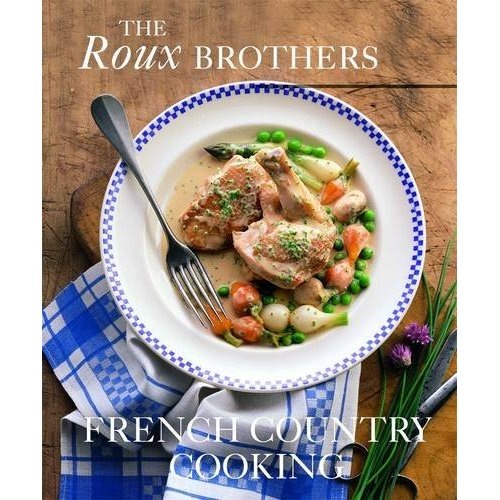
This book isn’t for the casual cook — it includes hard-core rustic dishes like Lyonnaise ox tripe, frogs’ legs and pig’s head soup and offal features prominently. Yet it also includes authentic recipes for classics like pissaladière, quiche Lorraine, salad niçoise, cassoulet and soupe au pistou as well as dishes that I hadn’t heard of but have bookmarked to try, such as fricassée of farmhouse chicken with baby vegetables or chickpeas with bacon and peppers. But this classic recipe for chicken in vinegar (poulet au vinaigre) is the one that called out the loudest to be tried first.

The book is divided into 12 regional chapters that each give an overview of the region’s culinary traditions and then presents 12 recipes from the region as well as a list of ingredients that are indigenous to the area. With the continuing interest in local foods, this kind of extra detail will appeal to those who want to know more about regional cooking and foods. As the authors say themselves in the introduction, “It is regional, homely cooking which manages to be both rustic and sophisticated at the same time.”

Chicken in Vinegar (Poulet au Vinaigre)
adapted from French Country Cooking by Michel and Albert Roux

Serves 4

In Gourmet magazine’s version of this recipe, they said the vinegary sharpness of this dish is “edgy and refreshing” — perfect for hot, sluggish summer weather when you want to wake up your taste buds. The headnote to the recipe explains that this easy, inexpensive dish originally comes from Lyon or Burgundy and that fresh pasta is the perfect accompaniment, but I like it with some good crusty bread to mop up the sauce instead and a green salad on the side.

1 x 2 lb 14 oz (1.3 kg) chicken, cut into 8 pieces (or just use chicken breasts/thighs)
4 tablespoons (60 g) butter
3 or 4 large shallots, finely sliced
1/2 cup (125 ml) red wine vinegar
1 bouquet garni (parsley, thyme, bay leaf)

For the sauce:
2 tablespoons (30 g) butter, softened
1 tablespoon flour
1/2 cup (125 ml) dry white wine
1/2 cup (125 ml) chicken stock
salt and freshly ground black pepper
1 tablespoon chopped fresh flat-leaf parsley

crusty bread, to serve
green salad, to serve

Heat the butter in a frying pan over a medium heat. Add the chicken pieces and fry on all sides for 7 to 8 minutes, until golden. Add the shallots and cook for 1 minute, then pour in the vinegar. Add in the bouquet garni, cover the pan and cook over a gentle heat for 10 minutes (or in the oven at 325°F/170°C), or until the chicken is cooked through. Remove the chicken from the pan and keep warm.

To make the sauce, mash the butter and flour together in a bowl with a fork until they’re well combined (this makes a beurre manié). Pour the white wine into the pan and reduce by one-third. Add the chicken stock and whisk in the beurre manié to bind the sauce. If it seems too thick, add a little more chicken stock. Season to taste with salt and pepper.

To serve, arrange the chicken pieces in a deep dish and pour over the hot sauce. Sprinkle with the freshly parsley and serve immediately with buttered pasta or crusty bread and a green salad.

Chicago Italian Beef Sandwiches

Growing up, there was always a jar of Dell’Alpe giardinera in the door of the fridge, as much of a staple in my house as ketchup and mustard and mayonnaise. But when my mom, stepdad and twin brothers moved from Illinois to Florida a few years ago, my stepdad was dismayed to realize that giardineria is apparently a regional food, popular with Chicago-area Midwesterners but impossible to find in Tampa. He now orders it in bulk online and even sent me a few jars from his stash earlier this year, cushioned in multiple layers of bubble wrap to survive the transatlantic trip. It’s good on all sorts of things, but it’s a must for Italian beef sandwiches.

When I got a review copy of Guy Fieri Food and saw this recipe for Chicago Italian beef sandwiches, I knew it would be one of those recipes that would make the book worth buying alone, and I wasn’t disappointed. But if that wasn’t enough, how could you not be tempted by recipes like Firecracker Wings, Bacon-wrapped Shrimp with Chipotle BBQ Sauce, Grilled Chicken Tortilla Soup with Tequila Crema, Grilled Romaine with Blue Cheese-Bacon Vinaigrette, Cajun Chicken Alfredo and Watermelon Pork Tacos? The flavors are as big and bold as Guy Fieri himself. What other celebrity chef has his tattoo artist do the illustrations for his cookbook or gets women’s lingerie thrown at them as if they were Tom Jones?
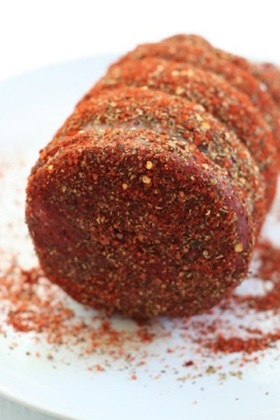
Guy Fieri says this should be the state sandwich of Illinois. This Illinois native agrees.

We’ve got a copy of Guy Fieri Food to give away! To enter, just leave a comment on this post. The giveaway is open to US residents only until Monday, 20 June and will close at midnight, when a winner will be randomly selected. Good luck!

Chicago Italian Beef Sandwiches
adapted from Guy Fieri Food by Guy Fieri

Serves 6 to 8

If you were to order an Italian beef sandwich in a restaurant, it would probably be served with some potato chips or french fries. For serving at home, though, I’d suggest a potato salad or coleslaw.

You could also try cooking this in the slow cooker for 6 to 8 hours on a medium heat, or until the meat shreds apart with a fork, which is how my mother always makes Italian beef. Guy Fieri suggests that if you have any leftovers, try using it on a homemade pizza with grated pepper Jack cheese and giardiniera.

For the spice mix:
3 tablespoons Italian seasoning
2 tablespoons fine sea salt
2 tablespoons freshly ground black pepper
1 tablespoon paprika
1 teaspoon cayenne pepper
1 teaspoon red chilli flakes

For the beef:
4 lb (1.8 kg) beef top round, with fat cap (I used a pot roast)
3 tablespoons canola oil
3 yellow onions, chopped
1 head of garlic, cloves peeled and chopped
1/2 cup (125 ml) red wine
3 tablespoons Worcestershire sauce
2 cups (500 ml) beef stock
2 bay leaves

To serve:
6 sourdough hero or hoagie rolls, or baguettes or ciabattas, split and toasted
giardiniera
jarred or roasted red bell peppers, sliced 1/4 inch thick

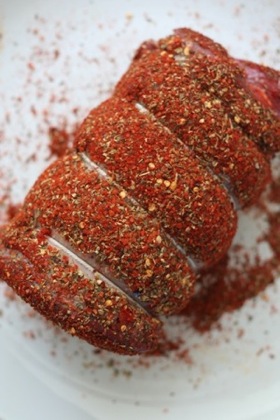
Combine all the ingredients for the spice mix. Rub the meat with the spice mix, cover tightly with cling film and refrigerate for 2 to 3 hours.

Preheat the oven to 275°F (140°C).

Place a Dutch oven or roasting pan over a high heat on the stovetop and add the oil. When it’s smoking, add the beef and cook for 15 minutes, turning the meat often, until it’s nicely browned on all sides. Add the onions and cook for 5 minutes, then add the garlic and cook for 1 minute more. Add the wine, Worcestershire, stock and bay leaves and scrape up all the brown bits on the bottom of the pan.

Transfer the pan to the oven and roast the meat for about 1 hour 30 minutes, uncovered, or until a thermometer inserted in the center of the meat reads 135°F (60°C). Remove the meat from the pan and set aside to let it cool. Cool the broth in the pan and remove the fat that rises to the top.

When the meat is cool, slice it very thin. Reheat the broth and add the meat back in.

To serve, place some meat on each roll, ladle some broth over the meat and top with the giardiniera vegetables and red peppers.

Scallop, Chorizo and Artichoke Paella

I’d like to think that if blogs had been around when Kelly and I went to high school and college together, we might have turned out like Cara Eisenpress and Phoebe Lapine, blogging our way through our first boyfriends, first jobs and first dinner parties as we learned how to cook along the way. We might have set up a blog like their popular Big Girls, Small Kitchen, landed ourselves a book deal and had the Barefoot Contessa write the foreword to it. If only, right? But failing all that, I wish someone had given me a cookbook like theirs, In the Small Kitchen, when I moved into my first apartment and started cooking for myself and my friends. It would have been a hell of a lot better than 1,001 Vegetarian Recipes.

The book is aimed at the twenty-something crowd just finding their feet in the kitchen, with chapters like ‘Cooking for One’, ‘Potlucking’, ‘Cocktail Parties’, ‘Dating and Food’ and ‘One Year Closer to Thirty’, but there’s plenty here to inspire complete beginners and more well-seasoned cooks alike. Also bookmarked to try are Provencal baked chicken, chipotle hummus, black bean dip, coconut peanut sauce, spiked lemonade and pumpkin cake with chai cream. With graduation season upon us, In the Small Kitchen would make the perfect gift for students heading off to college or moving out into their own place, or for any new cook who’s just starting to learn their way around the kitchen.

Scallop, Chorizo and Artichoke Paella
adapted from In the Small Kitchen by Cara Eisenpress and Phoebe Lapine

Serves 8

I made a special trip to the fishmonger to get scallops, only to be told that they didn’t have any because of the recent bad weather (typical!). After some quick thinking, I decided to substitute 1 lb (450 g) of prawns instead. I simply skipped the first step and added the prawns into the paella at the very end of the cooking time, letting the heat of the rice quickly cook them right before serving. This dish reminded me of one of our family favorites, oven-baked risotto with sausages and tomato, and was just as much of a hit with the kids.

2 to 3 tablespoons olive oil
1 lb (450 g) scallops
1 lb (450 g) chorizo, cut diagonally into 1 1/2‑inch pieces
1 large onion, diced
4 cloves garlic, minced
8 to 10 scallions, white and green parts chopped separately
2 cups (360 g) Arborio rice
1/2 cup (125 ml) dry white wine or vermouth
1 x 15 oz (400 g) can of crushed tomatoes
1 x 9 oz (250 g) package frozen artichoke hearts, or jarred or canned artichoke hearts (rinsed and drained if using jarred or canned)
2 teaspoons smoked paprika
1 teaspoon salt
3 to 4 cups chicken stock
lemon wedges, for garnish

In a large cast iron skillet or a Dutch oven, heat 2 tablespoons of the olive oil over a medium-high heat until the oil is shiny and just about to smoke. While the oil is heating, quickly pat the scallops dry and remove and discard the tough side muscles. Sear the scallops in batches in the hot oil until browned and crusty on both sides, about 2 minutes per side. [Check out this post from The BA Daily blog about how to perfectly sear scallops.]

Transfer the scallops to a plate. Add the chorizo to the skillet and brown it, turning on all sides, for 2 to 5 minutes. Remove the chorizo with a slotted spoon and set aside.

Reduce the heat to medium and saute the onion in the remaining oil until translucent, scraping up any drippings in the skillet. Add the garlic and the white part of the chopped scallions and cook for another 2 minutes. Add the rice and stir to coat it in the onion mixture, allowing it to get covered in the oil and begin to toast, which should take about 3 minutes. Add the wine and cook for 2 to 3 minutes, until the liquid has reduced by nearly half. Use your spoon or spatula to help deglaze the pan and lift up any caramelized bits.

Stir in the tomatoes and their juices, artichokes, paprika and salt. Return the chorizo to the skillet and add enough stock to submerge the rice mixture. Bring the liquid to a boil, then reduce the heat to medium-low and simmer for 25 to 30 minutes, until the rice is cooked through, all the liquid has been absorbed and the rice is beginning to become crusty around the edges.

Using the back of your spoon, make indents in the top of the rice and arrange the scallops in them. Pour the scallop juices over the skillet and cook until all the liquid has been absorbed. Garnish with the chopped scallion greens and lemon wedges. Serve warm, straight from the skillet.

Double Chocolate Loaf with Peanut Butter Cream Cheese Spread

Every time my husband and I play the lotto (which is hardly ever), we convince ourselves we’re going to win it. We usually only buy a ticket when the jackpot is huge after rolling over a few times, but we don’t let the decreased odds stand in the way of our daydreaming. We’ll pay off our student loans! We’ll build an extension on our house! Hell, we’ll knock down the house and just build a bigger and better one! You get the idea.

Well, I might not have won the lotto, but I did get a visit from the Fairy Hobmother after entering the contest over at Eat Like a Girl’s blog. And while I didn’t get a big ticket prize like a new food processor, I did get an Amazon gift certificate, which is always a well-received present for this professional bookworm. I promptly put it to good use on a few cookbooks from my wish list, one of which was Baked Explorations: Classic American Desserts Reinvented. I can’t wait to make Mississippi Mud Pie, New York Style Crumb Cake, Quick Skillet Snack Cake, Burnt Sugar Bundt Cake with Caramel Rum Frosting, Heartland Turtle Bars, Buckeyes … the list goes on and on (and on). But first up was this Double Chocolate Loaf with Peanut Butter Cream Cheese Spread.
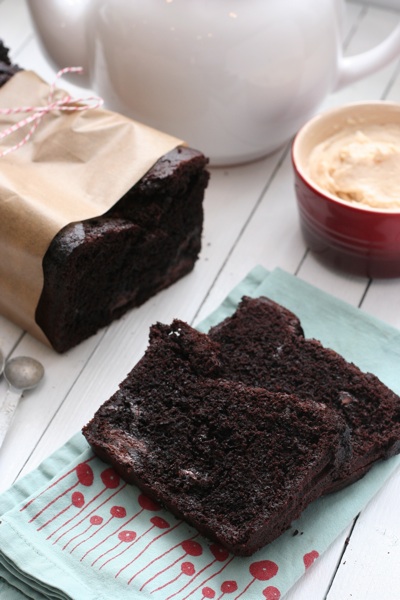
Double Chocolate Loaf with Peanut Butter Cream Cheese Spread
adapted from Baked Explorations: Classic American Desserts Reinvented by Matt Lewis and Renato Poliafito

Makes one 9 x 5‑inch loaf

The authors suggest slicing this and eating it plain, or toasting it and spreading with a bit of butter, cream cheese or, of course, this peanut butter cream cheese spread. They also say this loaf is wonderful with coffee and the morning newspaper. Chocolate cake for breakfast? I like their style.

For the loaf:
3/4 cup (120 g) firmly packed dark brown sugar
1 1/2 cups (180 g) flour
1 cup (120 g) dark unsweetened cocoa powder, sifted (I used Green & Blacks)
3/4 cup (150 g) granulated sugar
1 1/2 teaspoons baking soda
3/4 teaspoon baking powder
1 teaspoon salt
2 eggs
1 egg yolk
3/4 cup (180 ml) buttermilk
1/2 cup (125 ml) vegetable oil
1 teaspoon vanilla extract
8 oz (225 g) good-quality dark chocolate, coarsely chopped

For the peanut butter cream cheese spread:
5 oz (140 g) cream cheese, softened
2 tablespoons creamy peanut butter
1/3 cup (75 g) sugar

Preheat the oven to 350°F (180°C) and position the rack in the center of the oven. Butter a 9 x 5‑inch loaf pan, dust it with flour and knock out the excess flour.

Place the brown sugar in the bowl of a standing mixer fitted with the paddle attachment. Press out any lumps with the back of a large spoon. Add the flour, cocoa, granulated sugar, baking soda, baking powder and salt. Scrape down the sides and bottom of the bowl.

In a separate bowl, whisk the eggs and egg yolk until blended, then add the buttermilk, oil and vanilla and whisk until combined.

Turn the mixer to low and slowly pour the wet ingredients into the dry ingredients, mixing until just combined (don’t overmix!). Stir in the dark chocolate chunks by hand.

Pour the batter into the prepared loaf tin and bake for 1 hour to 1 hour 10 minutes, or until a tester inserted in the center of the loaf comes out clean. Let the cake cool in the pan for 15 minutes, then turn it out onto a wire rack to cool completely.

Meanwhile, to make the peanut butter spread, beat the cream cheese and peanut butter together in a bowl with an electric mixer until smooth. Add the sugar and beat until incorporated. If you aren’t using the spread immediately, place it in a ramekin, tightly cover it with cling film and it will keep in the fridge for up to 3 days.

Serve the loaf plain or toasted, topped with the peanut butter spread. The loaf will keep in an airtight container or wrapped tightly at room temperature for up to 3 days.

Sloppy Joes

On Twitter yesterday, I asked if my Irish friends had ever heard of Sloppy Joes, suspecting (correctly) that they’re an American thing. A lot of people had heard of them but weren’t quite sure what they were. “Are they kind of like a burger?” “A messy meatball hero?” “Isn’t it just Bolognese on a bun?” The Americans, though, all had the same response — that they were an old childhood favorite. One fellow expat got a little confused and thought I’d never heard of them, saying, “What kind of tragic American upbringing did you have?!”, while another said, “Dammit, now I’m going to crave them for three days, and I haven’t eaten beef in 20 years.” Clearly, the Irish don’t know what they’re missing! The tradition continues in my house now — whenever I ask my daughter what she’d like me to make for dinner, she invariably either says Sloppy Joes (must be that kids and ketchup thing again) or this pasta with bacon, peas and cream.

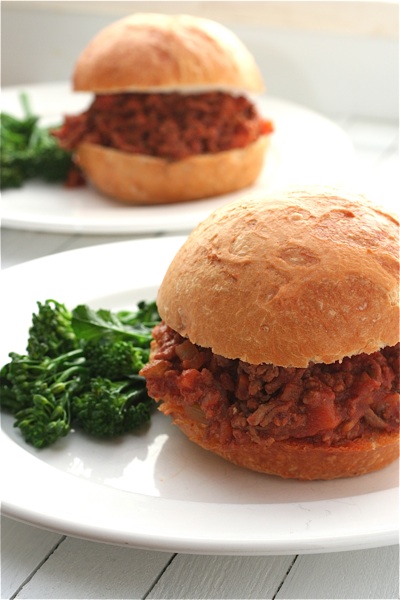
When I think of what to serve with Sloppy Joes, I tend to gravitate towards summery sides like potato salad or coleslaw, or even that classic American sandwich accompaniment — potato chips — but most of the time I try to be a good mom and get more veg into my kids, so I’ll serve them with something like steamed broccoli.

Sloppy Joes
adapted from Simply Recipes

Serves 4

Finely chopping the vegetables is my way of making sure my kids actually eat them — if they’re tiny, they can’t pick them out and leave them behind on their plates. For a lighter version, try using minced turkey instead of beef, as in Tyler Florence’s recipe. In the Twitter conversation about Sloppy Joes, Theresa commented that she might try making a more grown-up version by adding some smoked cheese, which got me to thinking that a chipotle version would be damn good too, though probably not as kid friendly.

1 tablespoon olive oil
2 medium carrots, finely chopped
1 medium onion, finely chopped
1 red pepper, finely chopped
1 stalk of celery, finely chopped
2 garlic cloves, minced
1 1/4 lb (600 g) ground beef
2 cups (500 ml) tomato sauce or passata
1/2 cup (125 ml) ketchup
2 tablespoons brown sugar
1 tablespoon Worcestershire sauce (or more to taste)
1 tablespoon red wine vinegar
1/2 teaspoon dried thyme
salt and freshly ground black pepper
4 hamburger buns, Kaiser rolls or baps, toasted
grated cheddar cheese, to serve (optional)

Heat the olive oil in a large pan on a medium heat. Add the carrots, onion, red pepper and celery. Cook for 10 minutes, until the vegetables have softened (add a pinch of salt to stop the onion from browning). Add the minced garlic and cook for 1 minute more. Remove the vegetables from the pan to a medium-sized bowl and set aside.

Using the same pan (or you can cook the meat at the same time as the vegetables in a separate pan to save time), raise the heat and brown the beef. Strain off all but 1 tablespoon of the fat from the bottom of the pan.

Return the vegetables to the pan. Add the tomato sauce, ketchup, brown sugar, Worcestershire sauce, vinegar and thyme to the pan. Stir to mix well. Lower the heat to medium-low and simmer, partially covered, for at least 10 minutes or up to 30 minutes. Season to taste with salt and pepper. Spoon on top of toasted hamburger buns, Kaiser rolls or baps and sprinkle some grated cheddar cheese on top. Pass around the napkins and don’t worry about making a mess, or serve as an open face sandwich instead and dig in with a knife and fork.