Tag Archives: Pasta and noodles

Pork and Lemon Meatballs with Lemon and Basil Linguine

On a warm, sunny day, there’s no prettier place to be than Ireland. Brilliant yellow fields of rapeseed are at their peak right now, everything seems to be in bloom and the windows in the house are thrown wide open to let in the fresh air. After a long, cold winter, we’ve had a few straight weeks of sunshine on the east coast in Ireland and I’m craving bright, fresh flavors. It’s not quite warm enough yet to be fully fledged salad weather, but this lemony take on spaghetti and meatballs is just right for this time of year, when you want something a little lighter after months of stews, braises and casseroles.
If you like this recipe, you might also like Rigatoni with Pork and Lemon Ragu, Lemon Fusilli, Lemon and Pea Risotto or Gnocchi with Peas, Pancetta and Lemon Ricotta. Or for more meatball recipes, try Polpette di Melanzane (Eggplant “Meatballs”), Turkey Meatballs with Walnuts, Cilantro and Raisins with a Lemon Cumin Yogurt Sauce, Swedish Meatballs, or Spring Rolls with Pork Meatballs and Spicy Peanut Sauce.

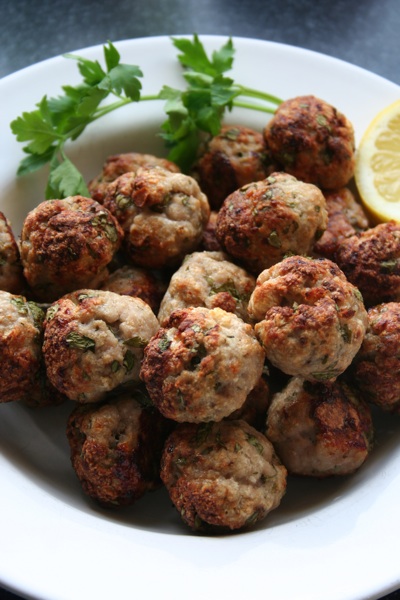
Pork and Lemon Meatballs
adapted from The Kitchen Diaries by Nigel Slater (or you can see the original recipe here)

Serves 4 to 6

Nigel Slater calls these “delectable little balls.” I just call them addictive.

1 lb 2 oz (500 g) pork mince
3/4 cup (75 g) fresh white breadcrumbs
10 anchovies, finely chopped (optional)
1 egg, beaten
zest and juice of 1 lemon
1/4 cup (25 g) grated Parmesan
a large handful of fresh parsley, finely chopped
salt and freshly ground black pepper

Preheat the oven to 375°F (180°C). Line a baking sheet with foil or parchment paper.

Put the pork, breadcrumbs, chopped anchovies, beaten egg, lemon zest and juice, Parmesan and parsley into a large mixing bowl. Season with a little salt (not too much because the anchovies and Parmesan are already salty) and a generous amount of black pepper. Mix thoroughly. Form the mixture into balls, using about 1 heaped tablespoon of the mixture for each meatball. Place them on the lined baking sheet. Cook in the oven for 20 to 30 minutes, until they’re golden brown and cooked through. Serve on top of the lemon and basil linguine.

***

Lemon and Basil Linguine
adapted from The Kitchen Diaries by Nigel Slater

Serves 4

This is a quick, simple recipe that lends itself to any number of adaptations — try adding in some garlic, chilli flakes or anchovies or using parsley instead of basil.

1 lb (450 g) linguine or spaghetti
juice of 2 large lemons
1/2 cup (125 ml) olive oil
1 1/2 cups (150 g) freshly grated Parmesan, plus extra to serve
1 or 2 large handfuls of basil leaves, roughly chopped
salt and freshly ground black pepper

Cook the pasta in a large pot of boiling salted water according to the packet instructions. Meanwhile, whisk together the lemon juice, olive oil and Parmesan in a warm jug (warmed under a running hot tap, then dried) until it’s thick and grainy. Add in the basil, season to taste and mix again.

When the pasta has finished cooking, reserve a mugful of the cooking water. Toss the drained, hot pasta in the lemon and Parmesan sauce, adding some of the reserved cooking water if you think the pasta looks too dry. Serve immediately with some extra Parmesan grated over.

Classic Spaghetti Carbonara

When I’m feeling especially nice, or especially burdened with working mom’s guilt, dinner planning tends to be child-focused. My kids are great eaters, but like most kids, they’d rather have white bread than wheat, white rice instead of brown, and regular pasta instead of whole grain. Since I knew I was going to put something white (i.e. unhealthy) on their plates, why not just do it up right with bacon, cheese and a few eggs,  à la carbonara?

I’ve been wanting to try pasta carbonara for years but never thought to search out a recipe. I ended up using a simple, straightforward version from a culinary school’s online recipe collection. Admittedly, I’ve never eaten pasta carbonara so I can’t tell you if their version is especially good. I can tell you that my kids gobbled it up, asking for more before their first helpings were even finished. My husband and I also enjoyed it, though we both agreed that extra freshly chopped parsley and cracked black pepper enhanced the dish.

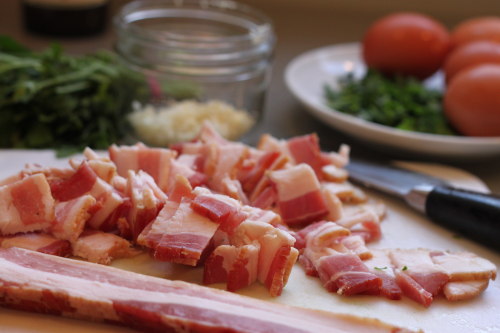
Carbonara ingredients

Classic Spaghetti Carbonara
adapted from Baltimore International College’s School of Culinary Arts

Serves 4

To make this a 30-minute meal, put on your pasta water to boil immediately. While the water comes to a boil, you can chop your ingredients. Start the bacon frying, then throw your pasta in its water. The sauce comes together in just about the same time it takes the spaghetti to cook.

1/2 lb (225 g) bacon, chopped
1 tablespoon garlic, chopped
1 lb (450 g) fresh spaghetti, cooked al dente (note: I used dry pasta)
4 large eggs, beaten
1 cup (100 g) freshly grated Parmigiano-Reggiano
1 tablespoon chopped fresh parsley (or more, to taste)
salt and freshly ground black pepper

In a large sauté pan over a medium heat, cook the bacon until crispy, about 6 minutes. Remove the bacon and drain on paper towels. Pour off all the oil except for 3 tablespoons. Add the garlic, season with black pepper and sauté for 30 seconds. Add the crispy bacon and the cooked pasta. Sauté for 1 minute.

Season the eggs with salt. Remove the pan from the heat and add the eggs, whisking quickly until the eggs thicken, but do not scramble. Add the cheese and re-season with salt and pepper. Mound into serving bowls and garnish with parsley.

Slow-roast Tomato, Basil and Goat’s Cheese Pasta

Donal Skehan ticks all the boxes. He’s young, hip and even had a brief stint as a pop star before turning his attention exclusively on food. He’s also one of the new generation of food blog success stories who’s just published his second book, Kitchen Hero, and his corresponding new TV show is due to air on May 16 on RTÉ in Ireland. Not only that, he’s also an accomplished food photographer (check out his website to see what I mean) and took all his own photos for the cookbook. And did I mention he’s an all-around great guy too? Despite having thousands of Twitter followers and Facebook fans, he has time for everyone. Who else would host an afternoon tea party at Dublin’s posh Westbury Hotel just for food bloggers like Donal did last week so we could sample the tea he’s designed exclusively for them, not to mention get a signed copy of his book? He’s a true star.

And he also knows his way around the kitchen. You can just about feel Donal’s energy and enthusiasm leaping off the pages of his new book. “I am a home cook and I’m here to show you how to be a kitchen hero!” he proclaims in the first line of his introduction. “I’ve come to the conclusion that if you have confidence in the kitchen, you can cook absolutely anything.” He wants to get people back in the kitchen and his focus is on cooking simple, tasty food using fresh ingredients. His recipes are do-able for even the most novice cook — like this pasta with slow-roasted tomatoes, basil and goat’s cheese. As for me, a working mom with two young kids, the ‘Meals in Minutes’ and ‘Stretch Your Meals’ chapters are already full of dog-eared pages of recipes I’ll be making in the next few weeks.

Slow-roast Tomato, Basil and Goat’s Cheese Pasta
adapted from Kitchen Hero by Donal Skehan

Serves 4

Donal’s original recipe is vegetarian, but I wouldn’t be averse to adding in some bacon or even leftover roast chicken. Or you could try adding in a few handfuls of baby spinach or arugula (rocket) and some toasted pine nuts. I stirred through the juice of half a lemon, which I thought gave this a lovely lift. The great thing about roasting tomatoes is that even if they’re not at their best in the off season, this method brings out all their flavor. If you’re pressed for time though, substitute sun-dried tomatoes for the slow-roasted ones, in which case this is the kind of dinner that you can pull together in the time it takes to boil water and cook your pasta.

3 tablespoons olive oil
1 tablespoon balsamic vinegar
1 lb 2 oz (500 g) cherry tomatoes, cut in half
salt and freshly ground black pepper
11 oz (300 g) of your favorite pasta shape
3 oz (75 g) goat’s cheese, crumbled
a handful of fresh basil leaves, shredded

Preheat the oven to 375°F (190°C).

Whisk together the olive oil and balsamic vinegar in a large bowl. Add the tomatoes and toss gently to coat them. Arrange the tomatoes cut side up on a large baking tray and season with salt and pepper. Roast in the oven for about 45 minutes, until the tomatoes have shrunk and are slightly charred.

Meanwhile, cook the pasta in a large pot according to the instructions on the packet. Drain the pasta and return it to the pot. Immediately stir through the goat’s cheese, basil and tomatoes while the pasta is still hot so that the cheese melts and coats the pasta. Season with a good pinch of salt and pepper and serve immediately.

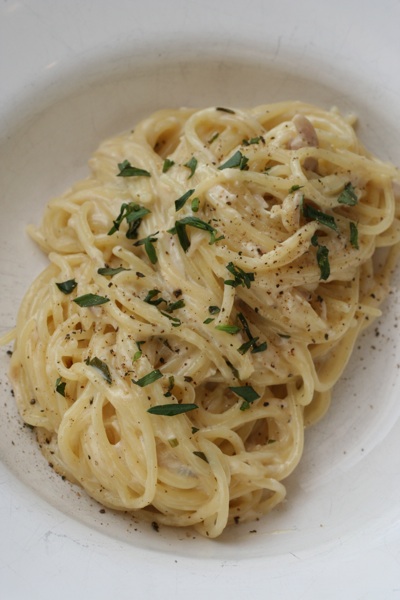
Pasta with Chicken, Tarragon and Cream

For years now I’ve been planning out the week’s meals in advance and shopping accordingly for all the groceries I need. You might imagine that this involves cookbooks or back issues of Gourmet casually strewn across the kitchen table while I flip through them over a pre-dinner glass of wine, the kids contentedly playing together and something chilled out on the stereo while I pick out all the fabulous new recipes I want to make.

Or at least that’s what I like to imagine.

The reality is that more often than not, instead of leisurely browsing through my cookbook collection with a glass of wine, I’ll find myself quickly scanning the blog recipe archives for something tried and tested or looking up a bookmarked recipe on a website with a half-cold cup of tea, all the while vowing to be more organized next week.

But meal planning is made much easier when you cook a whole chicken. It’s roasted on the first night, then stripped and used in a soup, stir-fry, risotto or any number of dishes the next night, with any last leftovers invariably finding their way into sandwiches or a quick quesadilla and the carcass used for stock. And when you can feed a family for two or even three nights with one chicken, paying extra for a free-range or organic bird is still good value. If you make poulet à l’Estragon (and please do – you will not be disappointed), this is a no-brainer dinner to make the next night with the leftovers, using all the same flavors. That’s two dinners for the week easily sorted then.

Pasta with Chicken, Tarragon and Cream
adapted from Real Food by Nigel Slater

Serves 4

If using leftover roast chicken, simply skip the step of browning the chicken and add the chicken after the cream and tarragon; you also won’t need the butter called for here either. If you’ve made poulet à l’Estragon and have any of the tarragon sauce left over from it, add that along with the cream for extra flavor and richness.

14 oz (400 g) spaghetti or linguine
8 chicken thighs (or diced leftover chicken, ideally from poulet à l’Estragon; see note above)
salt and freshly ground black pepper
4 tablespoons (60 g) butter
1/2 cup (125 ml) dry white wine or extra-dry vermouth
2 tablespoons tarragon vinegar or white wine vinegar
1 1/4 cups (300 ml) heavy cream
2 heaped tablespoons chopped tarragon leaves, plus extra to garnish
a squeeze of lemon juice

Set a large pot of water on to boil. Cook the pasta in plenty of salted water as per the packet instructions. Reserve a mugful of the pasta cooking liquid before draining.

Meanwhile, season the chicken with a little salt and pepper. Melt the butter over a medium heat in a large, shallow pan (one big enough to eventually accommodate all the cooked pasta as well), then brown the chicken on both sides until it’s golden brown, taking care not to let the butter burn. Remove the chicken and set aside.

Pour off all but 1 tablespoon or so of butter. Add the wine or vermouth and vinegar, bring to the boil and scrape up any brown bits from the bottom of the pan. Simmer for 1 to 2 minutes to reduce a bit, then add the cream and tarragon. Return the chicken and any juices to the pan. (Alternatively, if using leftover roast chicken, simply add that in now.) Simmer gently for 15 to 20 minutes, stirring now and then to make sure the cream doesn’t thicken too much. If the sauce is becoming too thick, add a little more wine or vermouth. Check that the chicken is cooked through and taste for seasoning. Add a squeeze of lemon juice and stir it through.

Add the drained pasta to the sauce in the pan and stir it well, making sure it’s all coated with the creamy sauce. If the sauce is too thick, add some of the reserved pasta cooking liquid to loosen it a bit. Sprinkle with some chopped fresh tarragon and serve right away.

Chicken and Noodles Baked in Cream Sauce

Every family has its own set of favorite meals and often its owns way of labeling them. Case in point, when my husband asks for “Thomas Jefferson’s chicken” what he really wants is gratin de volaille pavillon, a fancy name for the best chicken and noodles you’ll ever eat. We found this dish in college, pulled from The New York Times More 60-Minute Gourmet, which introduces the recipe by noting that this variation of chicken in cream sauce was “much admired by Thomas Jefferson.” Not sure how this culinary tidbit made it to modern times, but it stuck with us.
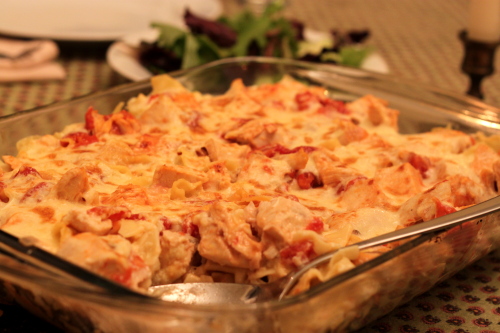
Though this preparation is not as easy as your average condensed soup-based casserole, the extra effort it requires is soon forgotten as you bite into the delicately sauced poached chicken and tender, buttery, tomato flecked noodles. It’s easy to see why it may have been a favorite of one of America’s founding fathers.

Gratin de Volaille Pavillon (Chicken and Noodles Baked in Cream Sauce)
adapted from The New York Times More 60-Minute Gourmet by Pierre Franey

Serves 6

2 cooked whole chicken breasts (see recipe for poaching chicken below, highly recommended)
12 oz (340 g) medium width egg noodles
5 tablespoons (75 g) butter, divided
3 tablespoons flour
2 cups (500 ml) chicken broth (use the broth from the poached chicken if possible)
1/2 cup (125 ml) heavy cream
salt and freshly ground black pepper
2 tablespoons shallots, finely chopped
1 ripe tomato, chopped (or 1 cup canned diced tomatoes, drained)
1 egg, lightly beaten
2 tablespoons freshly grated Parmesan cheese

Remove the chicken from the bones. Discard the skin and bones and cut the meat into 1 or 2 inch cubes. There should be about 3 cups.

Cook the noodles according to the package directions. Do not overcook. Drain the noodles. Return them to the pot and add 1 tablespoon of butter. Toss gently.

Meanwhile, melt 2 tablespoons (30 g) of butter in a saucepan and add the flour, stirring with a wire whisk. When blended, add the chicken broth, stirring rapidly. When the sauce is thickened and smooth, simmer for about 5 minutes. Add the cream and let it simmer briefly. Season to taste with salt and pepper. Set aside.

Melt 2 tablespoons (30 g) of butter in another saucepan and add the shallots. Cook briefly, stirring, then add the tomatoes and cook down for about 3 minutes. Add the chicken and salt and pepper to taste. Add 1 cup (250 ml) of the cream sauce and stir gently; set aside.

To the remaining cream sauce, add the egg. Bring to a boil stirring rapidly with a whisk. Do not overcook. Remove from the heat.

Butter a 13 x 9 inch baking pan with the remaining tablespoon (15 g) of butter. Add the noodles, and smooth them over. Spoon the chicken and sauce mixture over the noodles. Cover with the cream and egg sauce, smoothing it over. Sprinkle on the cheese. Place the dish under the broiler and cook until nicely browned and bubbling on top.

Poached Chicken

2 whole, bone-in, skin-on chicken breasts
2 cups (500 ml) water
1 cup (250 ml) dry white wine
1 small white onion, sliced
1 bay leaf
3 sprigs parsley
1 carrot, chopped
1 teaspoon salt
1/8 teaspoon pepper

Combine all the ingredients in a saucepan and bring to a boil. Cover and simmer gently for about 10 minutes. Uncover and set aside. Let the chicken cool in its own broth.

Penne alla Vodka and Ice Cream with Blonde Mocha Sauce

Did you hear about the snowstorms in Europe that were wreaking havoc on people’s Christmas travel plans? Well, that was us. Our hearts sank as the snow built up at Dublin airport on December 23, which shut the runway while we watched the plows go back and forth for hours (meanwhile, tractors were plowing the snow around the gates — an Irish solution to an Irish problem?). To make a long story of snowstorms, mechanical failures and missed connections short, it took us three days, two hotels and four airports (Dublin, Philadelphia, Charlotte, NC and Tampa) to finally reach my mother’s house in Florida at 8:30 p.m. on Christmas Day. After that ordeal, a stiff drink was in order — plus some boozy food for good measure and an easy, espresso-infused ice cream sauce to perk up weary travelers.

Penne alla Vodka
adapted from Catherine’s Italian Kitchen by Catherine Fulvio

Serves 4

For a twist on this Roman dish, Catherine Fulvio suggests adding smoked salmon or cooked prawns at the last minute and heating through, while in Nigella Lawson’s version of this recipe, she suggests adding cubed bacon. For a stronger vodka hit, I like to use Nigella’s method of adding the vodka to the drained pasta along with a knob of butter, then adding the boozy pasta to the sauce. This method has the added advantage that if you’re serving children, you can set aside a plain portion of pasta for them before adding the vodka to the rest.

1 lb (450 g) penne
1 tablespoon extra virgin olive oil
1 or 2 red chillies or 1 teaspoon dried red pepper flakes
3 tablespoons tomato paste
1/4 cup (4 tablespoons) water
1 cup (250 ml) heavy cream
1/4 cup (4 tablespoons) vodka
1 cup (100 g) freshly grated Parmesan
salt and freshly ground black pepper

Cook the pasta according to the packet instructions in plenty of boiling salted water.

Meanwhile, heat the olive oil in a large frying pan that’s big enough to also hold the cooked pasta. Add the chillies and saute over a medium heat for 1 to 2 minutes. Add the tomato paste and the water. Simmer over a low heat for 1 to 2 minutes, stirring frequently with a wooden spoon to prevent it from sticking to the pan and burning. If need be, add more water. Stir the cream into the chili and tomato mixture. Add the vodka and simmer for about 3 minutes more. (Alternatively, add the vodka to the drained pasta for a stronger sauce — see the note above.)

Drain the pasta and transfer to the pan with the sauce, then add the Parmesan cheese. Mix thoroughly, taste for seasoning and serve.

***

Blonde Mocha Sauce
adapted from Feast by Nigella Lawson

Serves 10

While I now prefer Catherine Fulvio’s vodka alla penne recipe to Nigella Lawson’s, this blonde mocha sauce is part of Nigella’s Supper alla Romana menu for easy entertaining from Feast (which is comprised of the pasta, this ricotta and pine nut salad and ice cream with this blonde mocha sauce). Nigella vows that even people who don’t like white chocolate like this sauce.

8 oz (225 g) white chocolate
2 cups (500 ml) heavy cream
3 tablespoons instant espresso powder
ice cream, to serve

Break the chocolate into chunks and put into a heavy-based saucepan on the lowest heat possible with all the other ingredients. When the chocolate has melted, take the pan off the heat and whisk vigorously to thicken the sauce. Pour the blonde mocha sauce into a pitcher or glass measuring cup, cover the surface directly with a thin skin of plastic wrap and when cool, stick it into the fridge for 4 to 6 hours to allow it to thicken and firm up. When you’re ready to pour it over the ice cream, take it out of the fridge, give it a good stir and use it straight from the pitcher.

Tortellini in Broth with Spinach

Inevitably after most holiday meals, I find myself walking to my car with a plastic grocery bag of slightly gooey, unattractive, and lukewarm bag of bones and meat scraps. Perhaps no one else wants to carry home such an odd parcel, or perhaps everyone knows of my frugality. Whatever the reason, I’m happy to turn the humble carcass into a hearty broth at home. If you browse through the recipes on this site, you’ll find that both Kristin and I use broth frequently. Although I’ve found a good store-bought brand (Swanson’s Organic Chicken Broth), nothing beats homemade.  It’s really cheap and easy to make.

For this year’s turkey broth I threw the leftover bones (with scraps attached) into a large stock pot and poured in water to cover. I roughly chopped and added one onion, one carrot, one celery stalk, and a handful of fresh parsley. For added zip, I threw in a pinch of dried thyme, a bay leaf, and about a tablespoon of salt. After bringing it to a boil, I let the liquid barely simmer for about three hours, strained it, and poured it into quart jars. After a night in the fridge, you can skim off any fat that rises to the top and pour the broth into whatever size container you wish. It will keep in the fridge for a few days and frozen for several months. I like to freeze it in muffin tins, then put the small broth-circles into larger storage bags, perfect for adding to sauces and stir-frys. I didn’t freeze all my broth this year, instead sacrificing a quart for this quick and kid-friendly meal. For extra cuteness, serve in bunny bowls as pictured below.

Tortellini in Broth with Spinach

Serves 4 as main course, 6 as first course

14 oz (400 g) dried tortellini
1 quart (1 liter) chicken or turkey broth
12 oz (340 g) fresh baby spinach
grated Parmesan cheese, to serve

Cook the tortellini according to the package directions. Drain the tortellini and set it aside.

While the pasta cooks, bring the broth to a simmer. Depending on the broth you are using, you may need to add salt or pepper to taste.

After the tortellini is cooked, add the spinach to the broth and cook for about 2 minutes, stirring gently, until the spinach is wilted. To serve, divide the broth, spinach, and tortellini between bowls. Top each bowl with grated Parmesan, if desired.

Pappardelle with Butternut Squash, Blue Cheese and Pine Nuts

The secret foodie project I’ve been working on for the past two months with fellow blogger Caroline from Bibliocook is out! When I’ve been writing these past few weeks that I’ve been slaving away with work and was practically too busy to cook, that was only part of the story — Caroline and I were also madly working behind the scenes to launch the new Irish Food Bloggers Association at the Food Camp that kicked off the Savour Kilkenny Food Festival last week (if you’d like to read more about Ireland’s first-ever Food Camp, visit some of these blogs for their recaps; they were obviously taking better notes than me!). If you’re an Irish or Irish-based blogger writing about anything to do with food, please join us! Or just check out the site to explore what we hope will become the definitive list of all the food blogs in Ireland.

This will be my last post from Nigella’s new book for awhile, I promise. The one downside to launching the IFBA on October 22 was that I only found out late that night after getting back from Kilkenny that Nigella Lawson was doing a book signing in Dublin at noon the next day, and I was just too tired and too busy to go and have her sign my already well-thumbed copy of Kitchen. Looks like I’ll have to wait until she writes her next book and try to catch her on that tour.

Pappardelle with Butternut Squash, Blue Cheese and Pine Nuts
adapted from Kitchen by Nigella Lawson

Serves 4

This is a first cousin to this risotto with roasted butternut squash, bacon and blue cheese (I wouldn’t be averse to adding some bacon to this pasta dish). Nigella notes that the sauce can be made 1 day ahead — simmer until the squash is tender, then transfer to a nonmetallic bowl to cool. Cover and refrigerate, then reheat gently in a saucepan and proceed as directed. The sauce can also be frozen in an airtight container for up to 3 months — just defrost overnight in the fridge and reheat gently.

1 large onion, finely chopped
2 tablespoons olive oil
3/4 teaspoon smoked paprika
1 large butternut squash, peeled, deseeded and cut into 1‑inch cubes
1 tablespoon unsalted butter
3 tablespoons Marsala
1/2 cup (120 ml) water
salt and freshly ground black pepper
6 fresh sage leaves, finely chopped (or 1/2 teaspoon dried sage)
18 oz (500 g) pappardelle or other robust pasta
1 cup (100 g) pine nuts
5 oz (125 g) soft blue cheese, crumbled

Fry the onion in the olive oil over a medium heat in a large, heavy-based pan that can accommodate all the pasta later. After about 10 minutes, add the paprika. Add the cubed butternut squash, then add the butter, stirring everything together well in the pan. Add the Marsala and water. Once the mixture starts to simmer, put the lid on, turn down the heat and simmer for about 20 minutes, or until the squash is tender but still holds its shape. Season to taste (keeping in mind that the cheese will be salty too), then sprinkle the sage into the squash mixture, reserving some to garnish.

Meanwhile, cook the pasta in a large pot of boiling, salted water according to the packet instructions. Toast the pine nuts in a separate hot, dry pan, tip them into a bowl and set aside.

Before you drain the pasta, reserve a mugful of the cooking water. Add the drained pasta to the squash and slowly stir to combine. Add some of the pasta cooking water to help the sauce emulsify, then add the blue cheese and half the pine nuts. Gently combine, then sprinkle the remaining pine nuts and sage on top and serve.