Tag Archives: Soups and stews

Harira (Moroccan Chick-Pea and Lentil Soup)

I love eating new foods and try to cook or bake a couple new things each week. People ask a lot about where I get all the new recipes. Usually I take a look in my pantry to see which ingredients are taking up the most shelf space, then check my fridge to see what produce is losing freshness the fastest. I can then search for recipes based on those ingredients. I use the Epicurious website and iPad app quite a bit. It allows me to pull up recipes by ingredients and gives me access to back issues of Gourmet as well as other cooking magazines like Bon Appétit. I first discovered this soup recipe when looking for a way to use up huge bags of bulk chickpeas, lentils and rice.  The saffron and fresh herbs brighten up these humble ingredients, making it one of my favorite “go to” recipes for winter.

I’m always on the lookout for new recipes. Feel free to send your favorites my way. I’d also love to know how you pick out new recipes.

harira

Harira

adapted from Gourmet, March 1994

The original Gourmet recipe is made with a whole chicken breast, which is simmered than shredded into the soup. I’ve adapted that recipe to make a vegetarian version.  Find the chicken-based recipe here.

4 cups (950 ml) broth (vegetable or chicken)
4 cups (950 ml) water
a 28-to 32-ounce (800-to 950 ml) can whole tomatoes, drained and puréed coarse
1/4 teaspoon crumbled saffron threads
2 medium onions, chopped fine
1 1/2 cups cooked dried chick-peas (recipe follows), or a 15-ounce (425 g) can, rinsed
1/2 cup (100 g) raw long-grain rice
3/4 cup (160 g) lentils
a large handful of fresh coriander (cilantro), finely chopped
a large handful of fresh parsley leaves, finely chopped

In a large heavy kettle with a lid bring the broth and water to a boil. Add to the kettle the tomatoes, saffron, onions, chickpeas, rice, and lentils and simmer, covered, 30 minutes, or until the lentils are tender. Season with salt and pepper to taste. Soup may be prepared up to 4 days ahead (cool uncovered before chilling covered). Just before serving, stir in the coriander and parsley.


To Cook Dried Chickpeas:

To make about 2 cups cooked chick-peas begin with a scant cup (180 g) dried.

In a bowl soak the chickpeas in water to cover by 2 inches overnight and then drain. In a saucepan combine the drained chickpeas and water to cover by 2 inches and simmer, covered partially, 1 to 1 1/2 hours, or until tender. Drain the chickpeas before using.

White Chicken Chili with Bacon Corn Muffins

The birth of a new child is usually heralded by the delivery of clothes, bibs, and other soft pastel things. In my experience, what most moms really need during those early weeks is a hot meal and long shower, not another outfit to wash and put away. It’s not that I didn’t love getting adorable clothes and blankets for my kids, but I wasn’t able to appreciate them for a couple months. I had to wait for life to settle back into a routine and for sleep lasting longer than two hours at a stretch. Since I can’t help out with the long shower, I try to deliver a home-cooked meal for my friends with new babies.

I especially like this menu for gifting. You can easily double the chili and split the batch of muffins — an easy way to make a meal for your family and theirs at the same time. I recommend adding a tossed salad. This week, a salad was out of the question as the meal was traveling too far (a three-hour ride to Chicago due to construction). Instead, I included a ziploc bag of fresh corn, already cooked but still on the cob. As mentioned in previous posts, the corn can be cut off the cob and used in a salad or reheated in a pan with butter and salt and pepper.

White Chicken Chili
adapted from my cousin Bridget’s recipe

Serves 4

3 boneless, skinless chicken breasts (about 1 1/2 lb/680 g), diced into 1/4‑inch cubes
1 onion, diced
2 tablespoons vegetable oil
2 cloves garlic, minced (or 1 teaspoon garlic powder)
1 x 14 oz (400 g) can great northern beans, drained and rinsed
1 x 4 oz (110 g) can diced green chilies
14 oz (400 ml) chicken broth
1 teaspoon cumin
1 teaspoon salt
1/2 teaspoon freshly ground black pepper
1/4 teaspoon cayenne
8 oz (225 g) sour cream
1/2 cup (120 ml) half and half (or whipping cream)

Brown the chicken and onion in the oil over a medium-high heat, stirring frequently. Add the garlic and cook for 1 to 2 minutes, until fragrant. Add the beans, chilies, broth, and seasonings and simmer for 30 minutes. Stir in the sour cream and half and half. Heat through, but do not boil.

***

Bacon Corn Muffins
adapted from Gourmet, January 2005

Makes 12 muffins

1 1/4 cups (300 ml) whole milk
1 large egg
6 tablespoons (90 g) unsalted butter, melted and cooled
1 cup (155 g) yellow cornmeal
3/4 cup (90 g) all-purpose flour
1 cup (75 g) chopped scallions
8 bacon slices (1/2 lb/225 g), cooked and crumbled
2 tablespoons sugar
1 tablespoon baking powder
3/4 teaspoon salt

Put the oven rack in the middle position and preheat the oven to 400°F (200°C).

Whisk together the milk, egg, and butter in a small bowl. Whisk together the remaining ingredients in a large bowl, then add the milk mixture to the dry ingredients. Stir until just combined. Divide the mixture among 12 greased (1/2 cup) muffin cups. Bake for about 20 minutes, until the muffins are golden and a tester comes out clean. Cool in the pan on a rack for 5 to 10 minutes before turning out.

Homemade Chicken Soup

It’s been a tough winter in my house, with bad colds, bad backs, the flu, food poisoning and fevers, topped off by my 3‑year-old getting chickenpox last month. It had been going around his daycare since Christmas, so I had already resigned myself to the fact that he was going to get it; the only surprise was that it took so long. I’ve lost count of the number of pots of homemade chicken soup I’ve made this season, coaxing one or another of us back to health and an appetite.

Chicken soup is one of those things everyone should know how to make. You shouldn’t be able to leave school without knowing how to at least make a roast chicken, chicken soup, an omelette and pasta (don’t laugh — I know someone who didn’t even know how to cook pasta in their early twenties). This recipe is for making stock and soup from scratch, but if you’ve roasted a chicken, you should always make stock with the carcass to extract every last bit of value and goodness from it. It will keep in the freezer for three months, ready for those times when a bowl of homemade chicken soup and a hug is the only thing that will do.

Homemade Chicken Soup

Serves 4

Most chicken noodle soups use wide egg noodles, but I like to use macaroni because it’s easier to scoop up with a spoon, especially for children. If you’re not feeling the best to begin with, you want the act of eating your soup to be as undemanding as possible.

If you’re feeling very organized, prep the soup vegetables when you make the stock and add the carrot peelings, celery leaves and onion and garlic skins to the stock pot. For a stock with an incredible golden color, use a corn-fed chicken. Using my 5 1/2 quart (5.3 liter) Le Creuset pot, I get 3 pints (1.5 liters) of stock.

for the stock:
1 large whole chicken
3 carrots, scrubbed well but unpeeled and cut in half
3 celery stalks, cut in half (leaves included)
1 onion, unpeeled and quartered through the root end
1 head of garlic, cut in half around its middle to expose all the cloves
10 peppercorns
2 bay leaves
1 bunch of parsley
1 tablespoon salt

for the soup:
olive oil
3 carrots, peeled and finely diced
2 celery stalks, cut in half lengthwise and finely chopped
1 onion, finely chopped
salt and freshly ground black pepper
2 or 3 garlic cloves, finely chopped
a few handfuls of cooked, shredded chicken
3 pints (1.5 liters) chicken stock
7 oz (200 g) macaroni (use more if you want a more substantial soup with less broth)
a handful of fresh flat-leaf parsley, chopped
crusty bread, to serve

To make the stock, place the chicken in a large stockpot, one roomy enough to hold it and all the vegetables plus plenty of water. Add in all the remaining stock ingredients, then pour over enough cold water to cover the chicken. Cover the pot and bring it to a boil, then reduce it to a steady simmer and let it bubble away, covered, for 90 minutes to ensure the chicken gets fully cooked. Partially uncover the pot and continue to let it simmer for a further 30 to 60 minutes to let the stock reduce a bit and get a more concentrated flavor. Don’t be tempted to let the stock boil for more than 3 hours max or the texture of the chicken will get too mushy.

Carefully remove the chicken from the pot onto a plate and allow it to cool enough that you can shred it. Strain the stock through a sieve into a large bowl, pressing on the vegetables with the back of a spoon to get as much liquid as possible out of them, then discard them. If you’re making the stock ahead (or only making stock and not soup), cover the bowl with cling film and put it in the fridge overnight to allow the fat to congeal on the top, then skim it off. Otherwise, don’t worry about it — in fact, it’s said that the flu-fighting properties of chicken soup are in the fat anyway.

Once the chicken is cool enough to handle, discard the skin and bones and any other unsavory bits. Dice or shred the remaining chicken. You’ll only need half of it for the soup, so save the rest for adding to pasta, stir-fries, salads, lentils, risotto, chicken salad sandwiches — you get the idea.

To make the soup, place a pot over a medium-low heat and add a tablespoon or so of olive oil. When the oil is warm, add in the carrots, celery and onion along with a pinch of salt (to keep the onion from browning) and some pepper and cook for 10 to 15 minutes, until the vegetables have softened but not colored. Add in the garlic and cook for 1 minute more. Add the chicken and stock and bring to the boil, then reduce to a lively simmer and add in the pasta. Cook for 10 or 15 minutes, until the pasta is cooked through. Add in the parsley at the last minute and ladle the soup into bowls. Pass around plenty of crusty bread to mop up every last drop of nourishing stock. Serve steaming hot and feel better soon.


Slow Cooker Cassoulet

I originally posted this on February 15 2010, but have updated the recipe to make it easier and less time consuming.

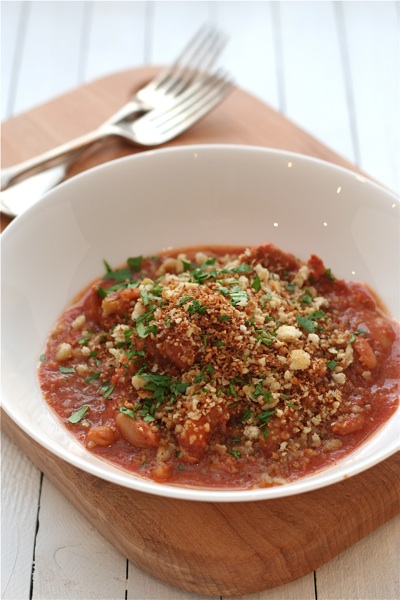
I’ve been trying to go back to cookbooks I haven’t used in awhile, so last week I pulled The River Cottage Meat Book by Hugh Fearnley-Whittingstall down off the shelf and cassoulet caught my eye. While I wound up making a different version, it ticks a lot of boxes — this one can be made in a slow cooker, it’s good value (cassoulet is a traditional French peasant dish), it’s hearty, rib-sticking food for cold nights and it makes more than enough for two meals.

If you like the idea of a cassoulet but don’t have a slow cooker or don’t have all day to let it cook, you could try Jacques Pépin’s 30-minute version or Jamie Oliver’s kinda sausage cassoulet. In his recipe, Hugh F‑W suggests serving this with an orange and watercress salad.

Slow Cooker Cassoulet

Serves 8 to 10

If you can’t get pork shoulder, pork leg or even loin would work too — just get the butcher to remove the fat for you. If you wanted to add in some veg, a few carrots, peeled and sliced on the diagonal, would work well.

olive oil
3 onions, coarsely chopped
salt and freshly ground black pepper
3 lb (1.4 kg) boneless pork shoulder, cut into 2‑inch pieces (you can ask your butcher to do this for you)
1 lb (450 g) fully cooked or smoked chorizo or garlic sausage links, sliced on the diagonal
2 x 14 oz (400 g) cans of cannellini, haricot or Great Northern beans
1 x 28 oz (or 2 x 14 oz/400 g) cans whole plum tomatoes, drained and coarsely chopped
2 cups (500 ml) chicken stock
1 cup (500 ml) dry white wine, such as Sauvignon Blanc (or use stock or water if you prefer not to use alcohol)
3 tablespoons tomato paste
1 head of garlic, halved crosswise
1 cup (100 g) breadcrumbs, plus extra to serve
a handful of chopped fresh flat-leaf parsley, plus extra for garnish
crusty bread, to serve

Put a large frying pan over a medium heat and add in a splash of olive oil. Add the onions and a pinch of salt to prevent the onions from browning and cook for about 10 minutes, until they’re translucent but now browned. Transfer the onions to the slow cooker, then stir in the pork, chorizo, beans, tomatoes, stock, wine, tomato paste and garlic along with a generous seasoning of salt and pepper.

Set the cooker to low and cook, covered, for about 8 hours, until the pork pulls apart easily with a fork (though it could be as much as 10 hours). Skim off any fat and remove and discard the garlic. Fold in the panko or breadcrumbs and the parsley. Taste and season as needed.

Let the cassoulet stand at room temperature for 10 minutes before serving. Sprinkle each serving with extra breadcrumbs and parsley and serve with warm crusty bread.

Bacon and Butterbean Chowder

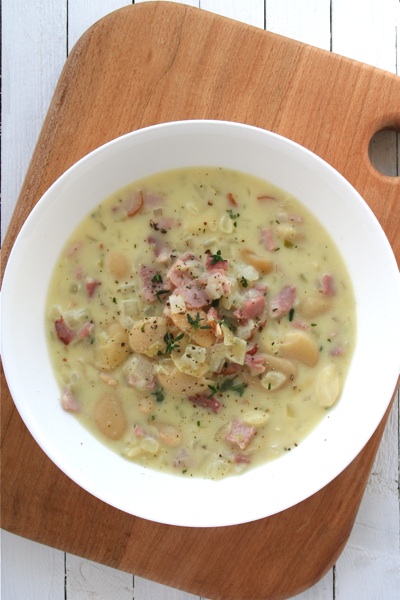
A couple weeks ago I was at The Tannery in County Waterford having lunch with a few other bloggers and food writers to celebrate the launch of the Cook with Avonmore site, which features Tannery chef Paul Flynn as their first guest chef. On the menu that day there was a choice of crab crème brûlée or this bacon and butterbean chowder as a starter. I went for the crab not only because it’s The Tannery’s signature dish, but because I knew I had the recipe for the chowder in my press pack. What I didn’t know, though, was what a fantastic recipe it is. From just a few ordinary ingredients, this soup is more than the sum of its parts.

Paul Flynn says, “A chowder for me is something that’s really rich and comforting. It’s something that you eat in front of the fire or just after a lovely long walk and you’re cold and you want something hot and heart-warming to eat.” Serve this with some good crusty bread, a nice cheese and a glass of red wine — either with or without the long walk beforehand — and I’m willing to bet it will be one of the nicest meals you’ll make this autumn.

Bacon and Butterbean Chowder
adapted from Paul Flynn via cookwithavonmore.ie

Serves 2 as a main course or 4 as a starter

Paul Flynn says that “when you use beautiful ingredients like butter and cream, you’ve got to realize that if you put just enough in, it gives you that lovely, luxurious richness that you’re looking for, and that will really comfort you on a cold night”, but you can use a little less cream if you don’t want the chowder to be quite as rich. You can also use a handful of fresh parsley instead of thyme.

knob of butter
olive oil
1 large onion, finely chopped
pinch of salt
1 garlic clove, finely chopped
6 pieces of smoked bacon or dry cure streaky bacon, finely diced
1 tablespoon flour
2 teaspoons chopped fresh thyme leaves, plus extra to garnish (or 1/2 teaspoon dried thyme)
1 teaspoon Dijon mustard
freshly ground black pepper
2 cups (500 ml) chicken stock
1 x 14 oz (400 g) can of butterbeans, rinsed
1/2 cup (125 ml) cream
crusty bread, to serve

Melt the butter in a pot over a medium heat along with a splash of olive oil so the butter doesn’t burn. Add the onion and a pinch of salt to prevent the onion from colouring. As Paul Flynn says, “The real key to this is that what you do inside this pot with the onions will provide you with the whole base flavour for the soup. If you rush this, it’s not going to be right.” So turn the heat down a little to medium-low, put the lid on and “let the magic happen”. Cook the onion for about 10 minutes, until it’s translucent. Raise the heat back to medium, add in the garlic and cook for 1 minute more, then add in the bacon and cook for about 5 minutes (though note that the bacon won’t go crispy because of the juice from the onions). Sprinkle the flour over the onions and bacon and give it all a stir, then allow it to cook for 2 minutes. Add in the thyme and mustard and a generous grinding of black pepper, then pour in the stock. Bring to the boil, then reduce the heat to a simmer and add in the butterbeans. Continue to simmer the soup for a few minutes, until the beans are warmed through, then stir through the cream. Taste the soup and adjust the seasoning if you think it needs more salt, though be careful because the bacon and stock are already salty. Ladle the soup into bowls, garnish with some of the reserved thyme leaves and serve with crusty bread.

Summer Corn Chowder

Though I’m a city dweller, I see my fair share of corn at the end of summer. A half hour drive north, south, or west of Milwaukee (Lake Michigan borders our eastern coast) will lead you into corn country. At this time of year, the fields are just turning from gold to green or are being turned under in preparation for next year’s crop. Grocery stores, farmers markets, tiny hand built produce stands, and even the backs of pick up trucks offer plenty of corn for sale. Our CSA delivered a dozen ears for the second week in a row. Though the corn was past its prime, I salvaged the slightly starchy ears in this chowder. I am not usually a fan of corn chowder, having experienced one too many mediocre, pasty bowls of the stuff but this version is vastly better than any other I’ve eaten, helped out by the addition of tomatoes and hot peppers–also abundant right now. And since I’m on the topic of corn, I may as well mention one of my favorite documentaries in recent years, King Corn. If you ever wondered how, what, and why America grows mass quantities of corn, check it out.

Summer Corn Chowder
adapted from Food52

Though I rarely follow recipes that call for peeling tomatoes, this time the effort was worth it. The diced tomatoes nearly melt into the soup, turning it an appealing shade of pink. To peel tomatoes, simply score each tomato on the bottom with a small “x” then submerge them into a pot of boiling water. After a minute or two, gently remove the tomatoes from the boiling water and place them in a bowl of ice water. After a quick soak in the ice bath, you’ll be able to easily peel of the skins.

Serves 6

8 medium ears of corn
6 strips of bacon, cut into 1/2‑inch pieces
1 onion, diced small
1 medium poblano or other hot pepper, seeded and finely chopped
1 jalapeno, seeded and finely chopped (optional, I omitted this ingredient to keep the chowder kid friendly)
1 celery rib, finely chopped
1 lb (450 g) red potatoes, peeled and cubed into 1/2 in. pieces
3 medium tomatoes, peeled, seeded and finely chopped
1 teaspoon salt
1/4 teaspoon ground allspice
1/4 teaspoon sugar
1 small bay leaf
2 cups (500 ml) light cream (half and half), at room temperature
1 cup (250 ml) milk
freshly ground black pepper, to taste
Tabasco hot sauce, to serve

Working over a bowl, cut the corn kernels from the cobs at about half their depth. Then, using the back of the knife, scrape the cobs over the bowl to release all the “milk”; set aside.

In a large dutch oven, fry the bacon over moderately high heat, stirring occasionally, until crisp, about 10 minutes. Transfer the bacon to paper towels to drain. Crumble and reserve.

Discard all but 3 tablespoons of the bacon drippings from the pan. Add the onion and cook over moderate heat until golden, 4 to 5 minutes. Add the poblano and jalepeno peppers and celery and cook until slightly softened, about 5 minutes more. Add the potatoes, tomatoes, salt, allspice, sugar, bay leaf and the reserved corn kernels with their “milk” and stir well. Cook over moderate heat until mixture begins to sizzle.

Reduce the heat to low. Cover and cook, stirring occasionally, until the potatoes are tender, about 45 minutes. Stir in the cream, milk and bacon and bring just to a boil. Remove from heat and season with black pepper to taste. Ladle the chowder into bowls and serve with a good loaf of bread and a few drops of Tabasco.

French Onion Soup and Croque Monsieur

“How easily happiness begins by / dicing onions”, writes William Matthews in his poem, “Onions”. This is never more true than when making French onion soup. And surely there can be no higher calling or better end for an onion than to be sauteed in butter, then doused in a boozy broth of brandy, sherry and wine. As an easy midweek soup-and-sandwich dinner goes, you could do worse than one that makes you wish you were sitting in a Parisian café.


French Onion Soup
adapted from The Barefoot Contessa Cookbook by Ina Garten

Serves 4 to 6

2 1/2 lb (1.1 kg) yellow onions, halved and sliced 1/4 inch thick
1/4 lb (110 g) unsalted butter
1 bay leaf
1/2 cup (125 ml) medium-dry sherry
1/2 cup (125 ml) brandy or Cognac
1 1/2 cups (375 ml) good dry white wine
8 cups (2 liters) beef stock
salt and freshly ground black pepper
freshly grated Parmesan, to serve

Melt the butter in a large stockpot on a medium heat. Saute the onions with the bay leaf and a pinch of salt (to stop the onions from browning) for 20 minutes, until the onions turn a rich golden brown color. Deglaze the pan with the sherry and brandy and simmer uncovered for 5 minutes. Add the white wine and simmer uncovered for 15 more minutes. Add the beef stock plus salt and pepper (but not too much salt because your stock is liable to be salty already). Bring to a boil, then simmer uncovered for 20 minutes. Remove the bay leaf, adjust the seasoning and serve hot with grated Parmesan on top.

***

Croque Monsieur
adapted from How to Cook: Book One by Delia Smith

Serves 1

A croque monsieur is really just a grilled ham and cheese sandwich. It originated in France as a kind of fast food snack served in cafés and bars. A croque madame is a version of this sandwich with a fried or poached egg on top. I was tempted by the Barefoot Contessa’s version of this classic, which she smothers in a béchamel sauce, but I opted to keep things simpler (and less calorific) with Delia Smith’s recipe. I did use Ina’s tip though to add some Dijon mustard to the sandwich.

2 large slices good-quality white bread, buttered
Dijon mustard (optional)
1/2 cup (50 g) Gruyère, finely grated
2 or 3 slices of cooked ham, Parma ham or wafer-thin ham
2 tablespoons (30 g) butter, melted
1 rounded tablespoon finely grated Parmesan
salt and freshly ground black pepper

On one slice of the buttered bread, add a thin smear of Dijon mustard (option). Sprinkle over half the grated Gruyère, then cover that with the slices of ham, folding them if need be to fit the size of the bread. Now sprinkle the rest of the Gruyère on top of the ham, season with salt and pepper, then press the other slice of bread on top of that and press it down firmly. Now brush the top side of the sandwich with some of the melted butter, sprinkle it with half the Parmesan and press it into the bread. Transfer the sandwich to a baking sheet and grill it in the oven for about 2 minutes, 2 inches from the heat, making sure to keep a close eye on it so that it doesn’t burn. When it’s golden brown, turn it over, brush the other side with melted butter, sprinkle the rest of the Parmesan all over and grill for another 2 minutes. Remove it from the grill, cut it into halves or quarters and eat it while it’s still warm and crunchy.

White Bean and Sausage Soup and Almond and Candied Bacon Bark

The first time I ever tried black pudding (a.k.a. blood pudding), I spit it out. I had only been living in Ireland for a few weeks and was at a fancy book launch for my new publishing job. One of the canapés being passed around was circles of pan-fried black pudding with a fancy relish on top, and not wanting to lose face in front of my new colleagues, not to mention my boyfriend, I was determined to try some. When in Rome, right? But I just couldn’t get over the fact that it was made from blood and I couldn’t even bring myself to chew it. Growing up in suburban Illinois, where an egg roll from the Chinese takeout was the most exotic thing I’d ever eaten, it was too much of a culture shock.

I was telling this story to my friend Caroline a few hours before we were due to go to the Clonakilty by Candlelight dinner last week. “Are you sure you want to go?” she asked, looking worried. “You know they’re bound to serve it there.” “Oh, I’m over it now,” I said. “I even ordered a black pudding and goat cheese tart at a restaurant last year.”

I was lucky to get a place at the free dinner on its second night, which was run as a pop-up restaurant by Clonakilty Blackpudding for only six nights. The location was kept secret until the day before, which turned out to be a Georgian house on Dublin’s north side. Caroline and I were the first to arrive (fellow food blogger Aoife was there that night as well) and we were handed a glass of Prosecco and directed towards the biggest turf fire I’ve ever seen, stacked eight briquettes deep at least. We also got a sneak peek of the room next door that we’d be eating in – along with 2,000 creepy china dolls crammed into floor-to-ceiling shelves that lined the room – and a look at the menu, which did indeed include a main course of black pudding with scallops and a carrot puree.

Because I’d won some Clonakilty black and white pudding, sausages and bacon by correctly answering the question “What is entomophagy the consumption of?” (insects), I made this white bean and sausage soup, an old cheap and cheerful stand-by. And feeling inspired by the chocolate-covered bacon, bacon praline and 12-year-old Jameson whiskey with a bacon and rosemary twist that we were served, I made this almond and candied bacon bark. This dessert seems to divide people firmly into two camps – people who have never heard of such a thing and think it sounds downright weird (they must have somehow missed the bacon mania boat), and people who think it sounds delicious and can’t wait to make it themselves. If you’re the former, then all I can say is don’t knock it till you’ve tried it – and then once you’ve tried it, try to stop yourself from eating all of it.

White Bean and Sausage Soup
adapted from The Barefoot Contessa Cookbook by Ina Garten

Serves 6

I’ve adapted the Barefoot Contessa’s original recipe to add sausages, but I make it just as often without them for a vegetarian version.

1 lb (450 g) dried white cannellini beans
olive oil
6 to 8 good-quality sausages
3 large onions, sliced
2 garlic cloves, minced
1 large branch fresh rosemary
2 quarts (2 liters) chicken or vegetable stock
1 bay leaf
salt and freshly ground black pepper

In a medium bowl, cover the beans with water by at least 1 inch and leave them in the refrigerator for 6 hours or overnight. Drain.

In a large stockpot over a low to medium heat, heat some olive oil and cook the sausages for about 10 or 15 minutes, until they’re browned on all sides and cooked through. Remove the sausages to a plate and set aside. Add the onions to the pot and saute for 10 to 15 minutes, until they are translucent. Add the garlic and cook for 1 more minute. Add the drained white beans, rosemary, chicken stock, and bay leaf. Cover, bring to a boil, and simmer for 30 to 40 minutes, until the beans are very soft. Remove the rosemary branch and the bay leaf. Pass the soup through the coarsest blade of a food mill or place in the bowl of a food processor fitted with a steel blade and pulse until coarsely pureed. Return the soup to the pot over a medium heat. Slice the sausages and add to the soup to reheat. Add salt and pepper to taste and serve hot.

***

Almond and Candied Bacon Bark
adapted from Ready for Dessert by David Lebovitz

David Lebovitz says it’s best to make the candied bacon the same day you plan to use it. If you want to play around with flavors (though this almond and candied bacon combo is insanely addictive), check out this list of top 10 chocolate bark mix-ins from the Big Girls, Small Kitchen blog for some inspiration.

1 1/4 lb (565 g) good-quality chocolate, broken into pieces
1/2 cup (50 g) flaked almonds, toasted
5 pieces of bacon, pancetta or streaky rashers
3 tablespoons brown sugar
flaky sea salt, such as Maldon (optional)

Preheat the oven to 400°F (200°C) and line a baking try with foil (shiny side down) or parchment paper. Place the strips of bacon on the tray and sprinkle each strip with about 2 teaspoons of brown sugar. Bake for 12 to 15 minutes, turning the strips over halfway through baking and dragging them through the melted sugar on the tray. They’re done when they’re mahogany colored. Cool on a wire rack until crisp, then crumble or roughly chop. Set aside.

While the bacon cools, place a piece of parchment paper on a baking tray or stretch a piece of cling film taught across a baking tray instead. Add the chocolate to a large heatproof bowl. Set the bowl over a pot of simmering water and stir often until the chocolate is almost melted.

Remove the bowl from the heat, wipe off the bottom, then continue to stir the chocolate until it’s all melted and smooth. Mix in two-thirds of the toasted almonds and two-thirds of the bacon.

Scrape the mixture onto the prepared baking tray and use a spatula to spread it to the desired thickness. Add the remaining almonds and bacon to the top of the chocolate, pressing them in lightly so they’ll adhere. Sprinkle bits of salt, if using, across the top. Refrigerate the baking sheet until the chocolate sets. Once the bark is firm, break it into pieces. Store the bark in the fridge, where it will keep for 3 days.