Salmon with Lime Butter Sauce, Summer Tomato Salad, and Quinoa and Kidney Beans

Summer’s over, but no one told my tomato plants. After a cool August and September, our tomatoes are finally ripe and in abundance. I feel like every year I struggle to use up our tomato harvest only to plant more tomato plants the following year. This year, in addition to our CSA tomatoes and backyard containers, we (and by “we” I mean my father-in-law) are working a community garden plot. Kristin’s already posted wonderful tomato recipes, but here’s another to add to the collection.

In addition to the refreshing tomato salad, I rounded off dinner with a tangy broiled salmon dish and a new recipe, which uses quinoa. I recently discovered quinoa and am still experimenting with its possibilities. It’s one of the most nutrient-rich ingredients I’ve eaten, with high protein and lots of fiber. Not a bad carbohydrate choice as I try to shed those last few pregnancy pounds.

Salmon with Lime Butter Sauce
adapted from Gourmet, July 2006

Serves 4

4 pieces center-cut salmon fillet (about 1 inch thick) with skin
1 garlic clove, chopped
1/4 cup (60 ml) fresh lime juice
1/2 teaspoon salt
1/4 teaspoon black pepper
1/4 stick (4 tablespoons/60 g) unsalted butter, melted

Prepare the broiler or grill for cooking over a medium heat. Season the salmon all over with salt and pepper, then broil or grill, skin side down, on a lightly oiled grill rack (if using a grill, keep the lid on) for 8 to 10 minutes, until just cooked through.

While the salmon cooks, puree the garlic with the lime juice, salt, and pepper in a blender until smooth. With the motor running, add the melted butter and blend until emulsified, about 30 seconds.

Remove the salmon from the rack. I usually (but not always) remove the skin before plating; the flesh should slide easily off the skin. Drizzle each fillet with 1 or 2 tablespoons of the lime butter sauce. Serve immediately.

***

Summer Tomato Salad

Summer Tomato Salad
adapted from The New Vegetarian Epicure by Anna Thomas

Serves 6 (salad servings)

3 or 4 big, juicy vine-ripened tomatoes
1/2 medium red onion
1 bunch flat-leaf parsley
2 tablespoons olive oil
a few drops of vinegar
salt and freshly ground black pepper, to taste

Wash the tomatoes and slice them thickly crosswise. Arrange them in a single layer on a large platter. Slice the onion crosswise, thinly but not paper thin. Scatter the onion rings over the tomatoes.

Wash the parsley leaves and spin them in a salad spinner. Arrange them in a wreath around the tomatoes. Drizzle the tomatoes with the olive oil and sprinkle them with a few drops of your favorite vinegar. Add salt to your taste, and grind on some black pepper. Serve within the hour. Do not refrigerate!

***

Quinoa and Kidney Beans
adapted from Feeding the Future Cookbook (American Pregnancy Association member recipes)

8 servings

1 teaspoon vegetable oil
1 onion, chopped
3 cloves garlic, minced
3/4 cup (140 g) uncooked quinoa
1 1/2 cups (360 ml) chicken or vegetable broth
1 teaspoon ground cumin
1/4 teaspoon cayenne
salt and freshly ground black pepper, to taste
kernels from 2 ears of corn
1 x 15-oz (425‑g) can kidney or black beans, rinsed and drained
1/2 cup (15 g) chopped fresh cilantro
juice of 1 lime
avocado and/or sour cream for garnish, if desired

Heat the oil in a medium saucepan over a medium heat. Stir in the onion and garlic and saute until lightly browned. Mix the quinoa into the pan and cover with the broth. Season with cumin, cayenne, salt, and pepper. Bring the mixture to a boil. Cover, reduce the heat and simmer for 20 minutes. Stir the corn into the saucepan and continue to simmer for about 5 minutes, until heated through. Mix in the beans and continue to cook over a low heat for 2 or 3 minutes more. Stir in the cilantro. Garnish with avocado and sour cream, if desired.

Unstuffed Sweet and Sour Cabbage and Cranberry Oatmeal White Chocolate Chunk Cookies

Cranberry oatmeal white chocolate cookies are one of my favorite cookies. They’re buttery, not too sweet, and stay softer than your average chocolate chip cookie. The dried cranberries in the cookies tie in nicely with the dried cranberries in this unstuffed version of stuffed cabbage. Stuffed cabbage (cabbage rolls) is one of those dishes that my mother-in-law makes better than I do and that always takes longer to put together than expected.  In other words, I usually just wait for her to make it instead of making it myself. This recipe is nearly as good as my mother-in-law’s and takes less time to prepare, perfect for when I’m craving stuffed cabbage but don’t want to invite myself over for dinner.

Unstuffed Sweet-and-Sour Cabbage
adapted from Gourmet, November 2008

Serves 4

1 medium head green cabbage, quartered lengthwise and cored
2/3 cup (160 ml) reduced-sodium chicken broth
3 garlic cloves, thinly sliced, divided
1 large onion, thinly sliced
1 tablespoon olive oil
1 lb (450 g) ground beef chuck
2 lb (900 g) plum tomatoes, peeled (or 1 x 28-oz/780‑g can whole tomatoes in juice)
1/3 cup (40 g) dried cranberries
3 tablespoons red wine vinegar
1 tablespoon packed dark brown sugar
steamed rice, to serve

Place the cabbage in a deep 12-inch heavy skillet with the broth, 1 garlic clove (sliced), and a rounded 1/4 teaspoon salt. Bring to a simmer over a medium heat, then cook, covered, turning the cabbage occasionally until it’s very tender, about 45 minutes. (Add more broth or water if necessary.)

Meanwhile, cook the onion and remaining garlic in the oil in a heavy medium pot over a medium heat, stirring occasionally, until golden, about 8 minutes. Increase the heat to medium-high and stir in the ground beef along with 1/2 teaspoon each of salt and pepper. Cook, stirring and breaking up lumps with a wooden spoon, until the beef is no longer pink, about 3 minutes.

Stir in the tomatoes, cranberries, vinegar, and brown sugar and simmer, uncovered, stirring occasionally and breaking up the tomatoes with a spoon, until slightly thickened, about 30 minutes. Season with salt.

Pour the sauce into the skillet with the cabbage and simmer, uncovered, for 5 minutes. Serve with rice.

***

Cranberry Oatmeal White Chocolate Chunk Cookies

Cranberry Oatmeal White Chocolate Chunk Cookies
adapted from a recipe on the back of a Craisins bag

Makes about 30 cookies

2/3 cup (150 g) butter or margarine, softened
2/3 cup (120 g) brown sugar
2 large eggs
1 1/2 cups (120 g) old-fashioned oats
1 1/2 cups (180 g) flour
1 teaspoon baking soda
1/2 teaspoon salt
4 oz (110 g) dried cranberries
3/4 cup (150 g) white chocolate chunks or chips
1/2 cup (50 g) toasted pecans (optional)

Preheat the oven to 375°F (190°C).

Using an electric mixer, beat the butter or margarine and sugar together in a medium mixing bowl until light and fluffy. Add the eggs, mixing well. Combine the oats, flour, baking soda and salt in a separate mixing bowl. Add to the butter mixture in several additions, mixing well after each addition. Stir in the dried cranberries, white chocolate chunks and nuts, if using.

Drop by rounded teaspoonfuls onto ungreased cookie sheets. Bake for 10 to 11 minutes, or until golden brown. Cool on a wire rack.

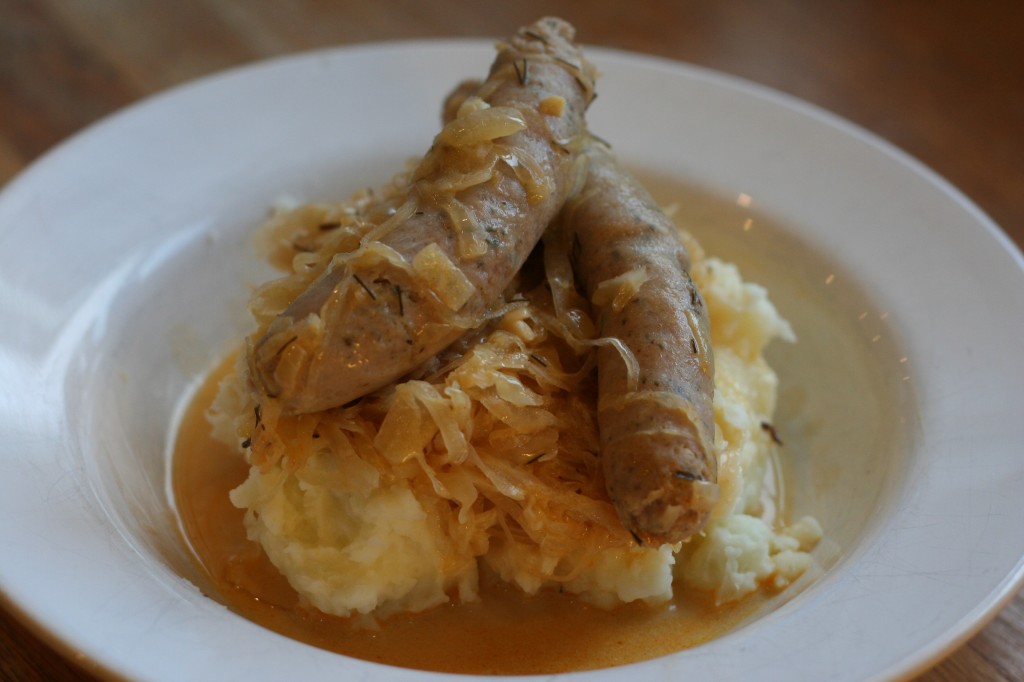
Sauerkraut and Sausage Paprikash with Mashed Potatoes

When I was in college in Madison, Wisconsin, every now and then I’d head off with some friends on a Saturday to the small town of New Glarus (a.k.a. America’s Little Switzerland, pop. 2,111), about 30 miles from Madison. Our first stop was always to the Maple Leaf Cheese and Chocolate Haus, where I’d get a couple bars of coconut Lindt chocolate, which was otherwise hard to find (though I stopped buying it after learning how bad palm oils are for you in a food science class I later took; ignorance really was bliss). We’d then have dinner at The Glarner Stube, where we’d drink New Glarus Brewing Company beer on tap and share a big pot of cheese fondue and side orders of sauerkraut made with an onion cream sauce. I don’t know what else a bunch of vegetarians like us would have eaten there — I can still remember the huge steaks that would come out from the kitchen, so big that they barely seemed to fit on the plates. After dinner, we’d head over to the tiny Swiss Lanes bowling alley and try to get in a few games before the leagues arrived and we got kicked out. I’m telling you, I was wild in my college heyday.

All these memories came flooding back when I took a bite of this dinner, made in honor of Oktoberfest, which is wrapping up this weekend. I’m a sucker for anything with sour cream or paprika in it, and Matt loves sauerkraut, but I wasn’t sure what to expect from this recipe, worrying that it might be, well, just a big pile of sausages and sauerkraut. It was fantastic, another one of these more-than-the-sum-of-its-parts type of recipes. We were practically drinking up the sauce when we had it as leftovers for our lunch on Sunday, it was so good, and Matt asked when we could make it again (meaning soon, please). This one will definitely be going into my regular dinner rotation, with the added bonus that it can be pulled together in just half an hour, making it ideal for busy weeknights. I just wish we’d had a few bottles of Spotted Cow to go with it.

sauerkraut and sausage paprikash

Sauerkraut and Sausage Paprikash
adapted from Serious Eats (which adapted it from Simply Recipes)

Serves 4
2 tablespoons (30 g) butter
2 medium onions, chopped
1 clove garlic, minced
1 teaspoon paprika
1 lb (450 g) frankfurters, kielbasa, or other sausage, cut into slices (I used my butcher’s garlic and herb sausages)
1/2 teaspoon dried dill, or 2 teaspoons fresh chopped dill
1/2 teaspoon caraway seed
1 cup (240 ml) beef or chicken broth
16 oz (450 g) sauerkraut, drained
3/4 cup (175 ml) sour cream
mashed potatoes, to serve

Melt the butter in a heavy soup pot (a dutch oven is ideal) and add the onion, garlic, and paprika. Cook over a medium heat until the onion is soft, about 5 to 7 minutes.

Add the sausages and cook for 1 minute to begin rendering their fat. Add the dill, caraway seed and broth. Bring to a boil, then simmer for 15 minutes. Add the drained sauerkraut and stir to combine well. Continue simmering, covered, for an additional 15 minutes.

Add the sour cream and simmer just until hot; avoid letting the soup boil once it’s added. Serve immediately with mashed potatoes, or failing that, some crusty bread to mop up the sauce.

Pork Chops with Maple Syrup and Balsamic Vinegar with Roasted Squash, Mashed Potatoes and Apple Cornmeal Cake

I was reading an article recently in the New York Times about signature dishes in restaurants, which was more or less lamenting the fact that popular dishes need to be made ad infinitum to keep customers happy. It reminded me of a recipe for Smokies in The Eden Cookbook, where the introduction to the recipe says, “This dish, one of my favourites, was on the first menu in Eden. When I changed the menu after three months, I took this off. It led to chaos. Two customers walked out, as they had come specifically for the Smokies, and I received numerous phone calls … I learned a valuable lesson — give your customers what they want.”

One of the recipes the article singled out was this one for pork chops, developed by Matthew Kenney (and wouldn’t you know it, chicken Marbella got a mention too). I can see why it would be a popular restaurant dish — how can you go wrong with a combination of maple syrup, balsamic vinegar, candied pecans and ginger? It sounds exotic enough that you wouldn’t necessarily think of making it yourself at home, but it’s incredibly easy and tasty enough to serve for company. I made it for my father-in-law last weekend, who happily offered to eat the extra chop that was left over.

This is a great menu for an autumn dinner party, though if you think plain mashed potatoes would be too, well, plain for company, you could gussy them up by adding in some chopped fresh parsley and a couple tablespoons of wholegrain mustard.

Pork Chops with Maple Syrup and Balsamic Vinegar
from The New York Times

Serves 4

3/4 cup (175 ml) maple syrup
1 tablespoon balsamic vinegar
1 tablespoon dark brown sugar
1/2 teaspoon ground cinnamon
1/2 cup (50 g) pecans
4 x 1 1/4‑inch-thick pork chops
salt and freshly ground black pepper
extra virgin olive oil
2 green apples, cored
1/4 cup (50 g) finely chopped candied ginger

Preheat a broiler or light a charcoal grill.

In a small nonreactive bowl, whisk together the syrup, vinegar, sugar and cinnamon.

Place a small pan over a medium heat. Add the pecans and about 2 tablespoons of the maple syrup sauce and cook for a few minutes, until the nuts are glazed and fragrant. Transfer the nuts to a plate and spread them out to cool. Transfer the cooled nuts to a cutting board, chop roughly and set aside.

Season the pork chops liberally with salt and pepper, then drizzle with olive oil. When the broiler is hot, or the coals are covered with gray ash and you can hold your hand 5 inches above them for only 1 to 2 seconds, broil or grill the meat for approximately 7 minutes per side. Brush with some of the remaining maple glaze every 2 or 3 minutes, turning them frequently to prevent the sugar from burning.

When the chops are cooked, remove from the broiler or grill and let them rest for 5 minutes before serving. Meanwhile, slice the cored apples into thick rounds, drizzle with olive oil, season lightly with salt and pepper and place on the broiler pan or grill until tender when pierced with a fork. These, too, should be brushed with the maple glaze and turned frequently.

Serve the chops with the apple slices, sprinkled with the pecans and candied ginger.

***

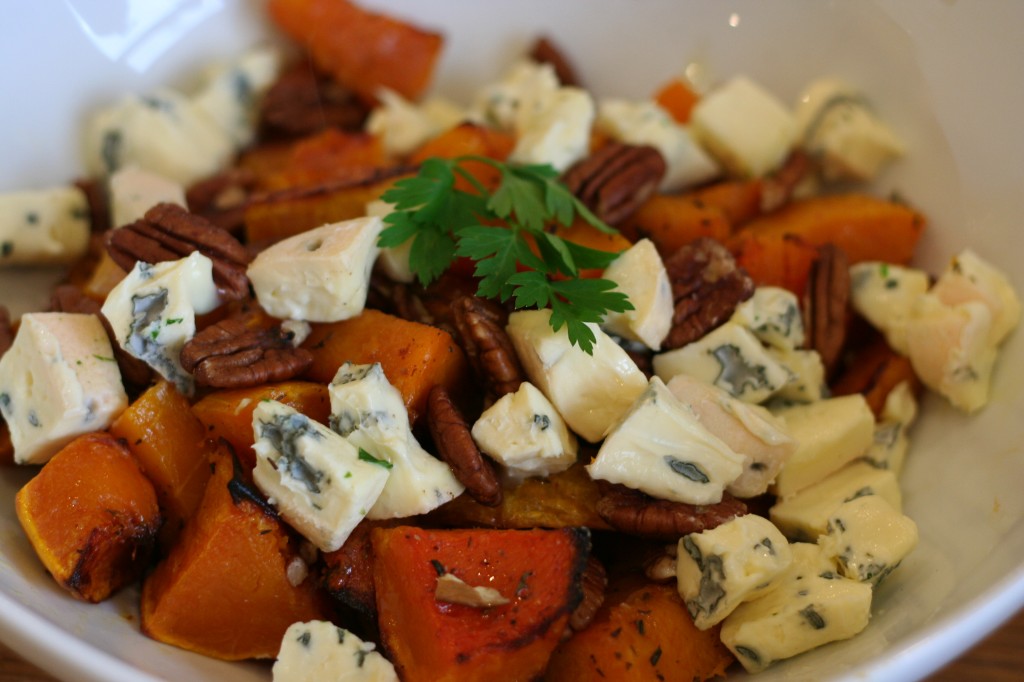
roasted squash with pecans and blue cheese

Butternut Squash with Pecans and Blue Cheese
adapted from Nigella Express by Nigella Lawson

Serves 6 to 8

4 lb 8 oz (2 kg) butternut squash
3 tablespoons olive oil
6 sprigs fresh thyme or 1/2 teaspoon dried thyme
4 oz (110g) pecans
4 oz (110 g) Roquefort, or other blue cheese, crumbled
salt and freshly ground black pepper

Preheat the oven to 425°F (220°C).

Peel and halve the squash and scoop out the seeds. Cut the squash into 1‑inch cubes (you don’t need to be precise, just keep the pieces uniformly small). Place the squash in a roasting tin or casserole dish and drizzle with the oil. Strip about 4 sprigs of thyme of their leaves (or use dried thyme) and sprinkle over the butternut squash. Roast for 30 to 45 minutes, or until tender.

Once out of the oven, transfer the squash to a serving bowl. Scatter over the pecans and crumble over the cheese, stirring everything together gently. Season to taste with salt and freshly ground black pepper. To serve, tear the remaining sprigs of thyme into small pieces and sprinkle over the top of the butternut squash mixture.

***

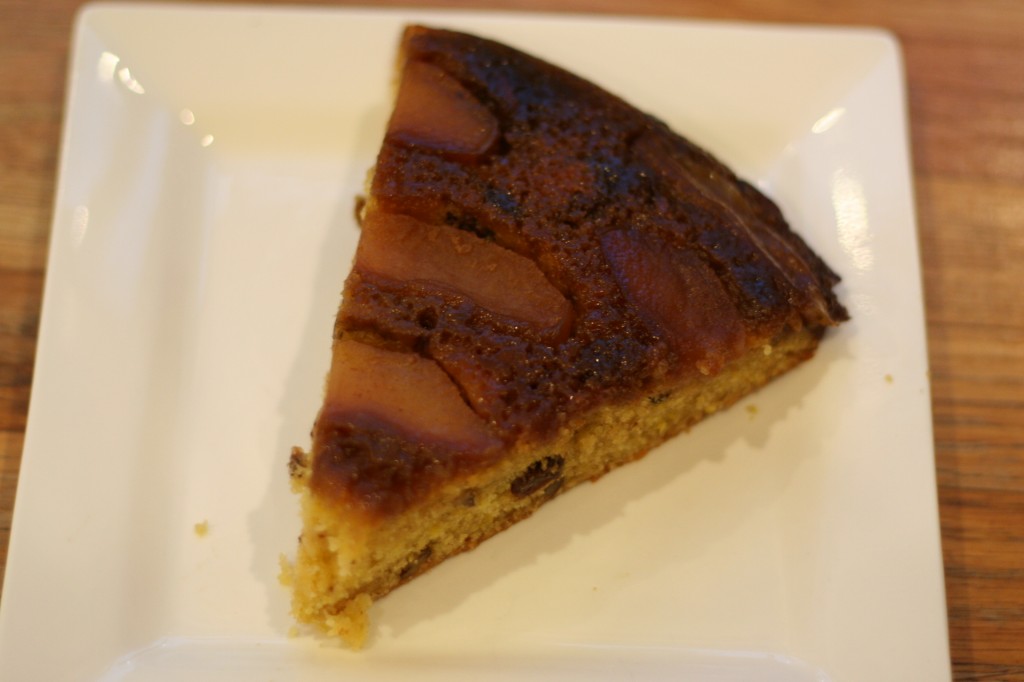
upside-down apple cornmeal cake

Upside-down Apple Cornmeal Cake

Serves 8

for the brandy-soaked raisins:
1/2 cup (80 g) raisins
1/4 cup (60 ml) brandy

for the apple topping:
2 or 3 large Gala or Golden Delicious apples, peeled, cored and quartered
4 tablespoons (60 g) unsalted butter
2/3 cup (120 g) brown sugar
1/2 teaspoon cinnamon

for the cake:
1 1/4 cups (150 g) all-purpose flour
3/4 cup (170 g) fine cornmeal
zest of 1 lemon
1 1/2 teaspoons baking powder
1/4 teaspoon baking soda
1/2 teaspoon salt
1/2 cup (110 g) unsalted butter, softened
2/3 cup (150 g) sugar
2 eggs
1 teaspoon vanilla extract
3/4 cup (175 ml) buttermilk
1/3 cup (60 g) pecans, roughly chopped

Soak the raisins in the brandy for at least 2 hours and up to 24 hours before you bake the cake.

Preheat the oven to 350°F (180°C).

To make the apple topping, cut each apple quarter lengthwise into 3 wedges. Melt the butter in a 10-inch cast iron or nonstick skillet over a medium heat. Add in the brown sugar and cinnamon and cook for 1 to 2 minutes, stirring, until the mixture is smooth. Remove from the heat and add the apples, gently stirring to coat. Using a tongs or fork, neatly arrange the apple slices in circles in the sugar mixture, starting at the outer edge and working your way to the center of the pan.  (You might not need all the apple slices.)

To make the cake, whisk the flour, cornmeal, lemon zest, baking powder, baking soda, and salt together in a bowl. Using a handheld mixer or stand mixer, cream the butter and sugar together until light and fluffy. Add the eggs one at a time, scraping down the sides of the bowl after each addition. Stir in the vanilla. Add in the flour mixture in three additions, alternating with the buttermilk in two additions (beginning and ending with the dry ingredients). Gently fold in the chopped pecans and raisins, along with any brandy still left in the bowl.

Gently pour the batter evenly on top of the fruit in the skillet, being careful not to move the apple slices too much. Bake in the middle of the oven for 40 to 45 minutes, until the center of the cake springs back lightly when touched. Allow the cake to cool for 15 minutes in the skillet before carefully inverting it onto a plate.

Chili Fried Mackerel with Spiced Chickpea Salad and Polenta

About two years ago, my husband, daughter and I went to Copenhagen for a long weekend. Our daughter was two and a half at the time, but already was a great eater. Put her in front of a selection of ice cream, and she won’t choose chocolate or vanilla — she’ll go for Turkish delight (though in all honesty, that might just be because it’s pink). Olives, radishes, salt and vinegar potato chips and Roquefort cheese are some of her favorite foods. So we might have known better than to order her a hamburger off the kids’ menu when we went to the Cap Horn restaurant one night. She wouldn’t touch it, and instead devoured almost all of the trout Matt had ordered for himself, simply pan fried in butter (poor Matt wound up eating the burger). When it comes to fish (and her tastes in general), it seems that the stronger the flavor, the more she likes it.

This past summer, I served mackerel to her for the first time, as well as my one-year-old son. They each gobbled up their entire fillet and ate most of ours to boot. We couldn’t get over it, since we thought it might be too strong-tasting for them compared to, say, white fish. The next time he was in getting fish, Matt mentioned to the fishmonger how much our kids had liked it, who wasn’t surprised. “Kids love mackerel,” he said. That’s good news to me, since it’s an oily fish and so is a good source of omegas, plus it’s cheap, about 1 euro per fillet.

Mackerel is still in season, so get some while you can and give this simple recipe a try, which only takes 5 minutes to cook. If you’re serving this to kids who don’t like spicy food, just fry their fish first and leave out the chili, then add it to the pan when you’re ready to fry the rest. Ask your fishmonger to debone the mackerel for you, especially if you’re serving it to children, because it has lots of them and some of them are pretty big.

Chili Fried Mackerel
from Fresh from the Sea by Clodagh McKenna

Serves 2

2 tablespoons (60 g) butter
1 red chili, deseeded and finely chopped
1 garlic clove, crushed
4 fresh mackerel fillets
sea salt and freshly ground black pepper
juice of 1 lemon

Heat a frying pan and drop in the butter, chili and garlic. Once the chili butter begins to foam, add the mackerel, skin side down, and fry for 2 minutes. Season with salt and pepper, turn the fish over, squeeze the lemon juice over the fish and cook for a further 2 minutes. Remove to a plate and drizzle the chili butter over the fillets.

***

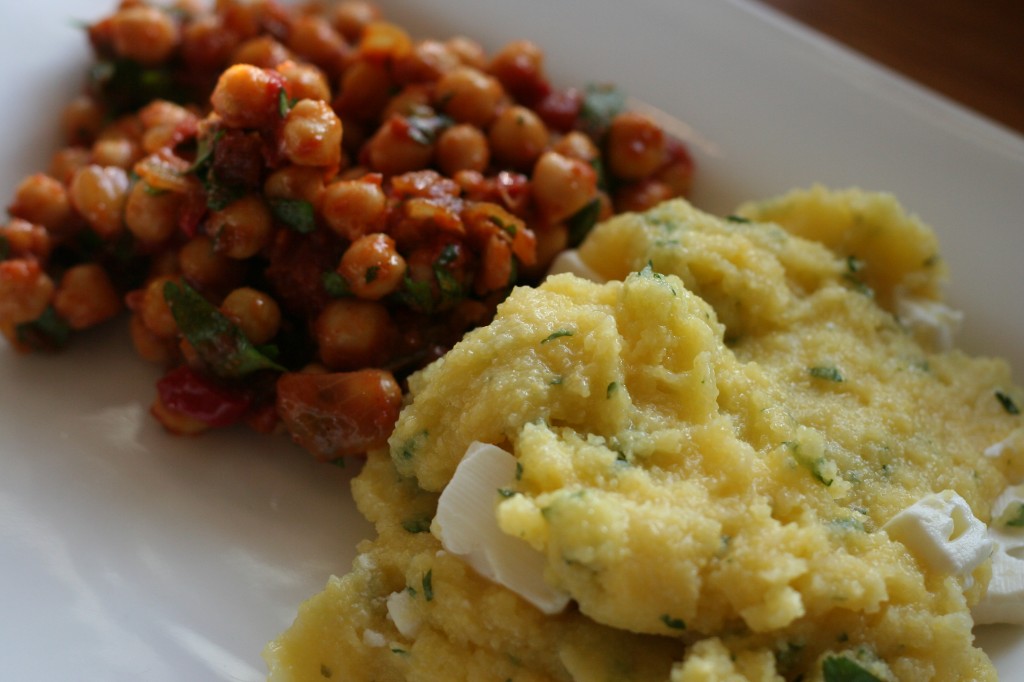
spiced chickpea salad and polenta with feta and cilantro

Spiced Chickpea Salad
adapted from Avoca Café Cookbook 2

Serves 6

1 onion, finely chopped
3 tablespoons olive oil
1‑inch piece of fresh root ginger, grated (or 1 teaspoon ground ginger)
1 red chili, deseeded and finely chopped
2 teaspoons curry powder
1 teaspoon ground cumin
1 teaspoon ground coriander
pinch of turmeric
4 garlic cloves, chopped
1 x 14-oz (400‑g) can of tomatoes
3 x 14-oz (400‑g) cans of chickpeas, rinsed and drained
1 bunch of fresh cilantro, roughly chopped
1 bunch of fresh flat-leaf parsley, roughly chopped

Gently saute the onion in the olive oil for 10 to 15 minutes without allowing it to color. Add all the spices, chili and the garlic and cook for 2 minutes. Add the tomatoes and reduce the heat to low. Continue to cook for 15 to 20 minutes, stirring occasionally, to allow it to reduce slightly. Dress the chickpeas in the tomato sauce while it’s still warm. Allow the chickpea mixture to cool slightly, then add the herbs (this stops them from discoloring). Serve warm or at room temperature. This salad is even better the next day.

***

Polenta with Feta and Cilantro
adapted from Vegetarian Cooking for Everyone by Deborah Madison

2 cups (340 g) coarse cornmeal
6 to 8 cups (about 1 1/2 to 2 liters) vegetable or chicken stock or water
2 to 6 tablespoons (30 to 90 g) butter (optional)
1 1/2 cups (250 g) feta cheese, cubed or crumbled
1 bunch fresh cilantro, chopped

Bring 6 cups (1 1/2 liters) of the stock (or water) to a boil in a large, heavy-based saucepan and add the cornmeal in a steady stream, whisking constantly to stop lumps from forming and to help prevent the maize from seizing up in the first few minutes. Lower the heat and cook, stirring almost constantly, for 30 to 45 minutes. If the polenta seizes up into a hard mass, add small amounts of the remaining 2 cups (480 ml) of stock or water while it cooks to smooth it out again. When done, season to taste with salt (you may not need any if your stock is salty). Stir in butter to taste.

Off the heat, stir in the cubed or crumbled feta cheese and chopped cilantro. Serve the soft polenta immediately or keep it warm over boiling water until ready to serve.

Linguini with Braised Kale and Parmesan Garlic Bread

Greens seem to be the outcasts of the vegetable world, like the shy kids parents have to coax their own children into playing with. Why is this? Sure, spinach is common enough, but why don’t Swiss chard or kale feature more, especially considering how pretty rainbow chard is, or even kale, with its frilly-edged leaves that always make me think of Elizabethan ruffs? I suspect it might be because of a perceived lack of good, innovative recipes that use them.

I originally got the idea for this recipe after reading Molly Wizenberg’s (a.k.a. Orangette) October column in Bon Appétit, but it sounded a bit plain to me and I wanted to kick up the flavor. Then I remembered reading a recipe for braised kale in the July/August issue of Jamie Oliver’s new magazine, which included anchovies (another much-maligned ingredient), white wine and lemon. And last week I got the idea of adding the toasted breadcrumbs from the linguini with breadcrumbs and kale recipe that won the greens contest at Food 52. When I merged all three recipes together, it made for a fabulous dish. The kale itself was so good that Matt and I went back for second helpings, pushing the pasta out of the way in the pot just to get to the greens. If you need to be cajoled into eating your greens, try this and see if you might be converted.

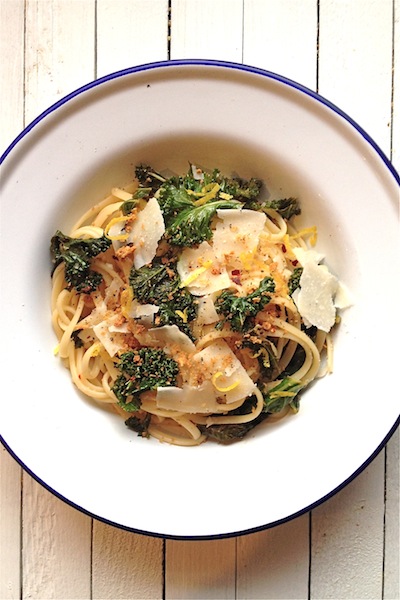
Linguini with Braised Kale

Serves 4

You could also make this with other greens, such as Swiss chard or spinach, or you could serve the braised kale on its own as a side dish instead of with pasta. You might notice that in the photo I used both breadcrumbs and pine nuts, but later decided that only one or the other is needed to add a little extra crunch and texture.

1 lb (450 g) kale (about 2 bunches), large center ribs and stems removed
4 tablespoons extra virgin olive oil
4 cloves garlic, chopped
8 anchovy fillets, chopped (optional)
1/2 red chili, finely chopped, or a pinch of red pepper flakes
1/3 cup (80 ml) dry white wine
zest and juice of 1 lemon
salt and freshly ground black pepper
1/2 lb (225 g) linguini or spaghetti
handful of toasted breadcrumbs or pine nuts
grated Parmesan cheese, to serve

Rinse the kale well, then cut crosswise into 1/2‑inch slices. Drain in a colander and set aside.

Heat the oil in a large frying pan over a medium-low heat. Saute the garlic, anchovies (if using) and the chili or red pepper flakes for 5 minutes, taking care not to let the garlic color. When the garlic has softened and the anchovies have dissolved, raise the heat and add the kale. Cook for a couple of minutes, until the kale starts to wilt and turn a vibrant green. Add in the wine, lemon zest and juice and salt and pepper to taste. (Try not to cook the kale too long so that it keeps its bright green color.)

Meanwhile, cook the pasta in a pot of boiling salted water according to package instructions, until al dente. Drain, reserving 1/4 cup (60 ml) of the cooking liquid. Add the cooked pasta to the kale mixture, stirring well to combine. Stir in the reserved cooking liquid.

Divide the pasta and kale between 4 serving bowls or plates. Sprinkle with the breadcrumbs or pine nuts and grated Parmesan cheese and serve right away.

***

Parmesan Garlic Bread
adapted from Real Food by Nigel Slater

6 tablespoons unsalted butter, at room temperature
1 cup (30 g) coarsely chopped flat-leaf parsley
1/2 cup (50 g) freshly grated Parmesan cheese
3 garlic cloves, minced
salt and freshly ground black pepper
1 ciabatta loaf or baguette

Preheat the oven to 425° (220°C). In a small bowl, using a spoon, mash the butter until creamy. Mix in the parsley, Parmesan cheese and garlic and season well with salt and pepper.

Slice the ciabatta or baguette in half horizontally and spread the butter on both halves. Put the halves back together and wrap the bread loosely in aluminum foil.

Bake in the middle of the oven for 5 minutes. Open the foil and bake for about 5 minutes longer, or until the top is golden and crisp. Serve hot.

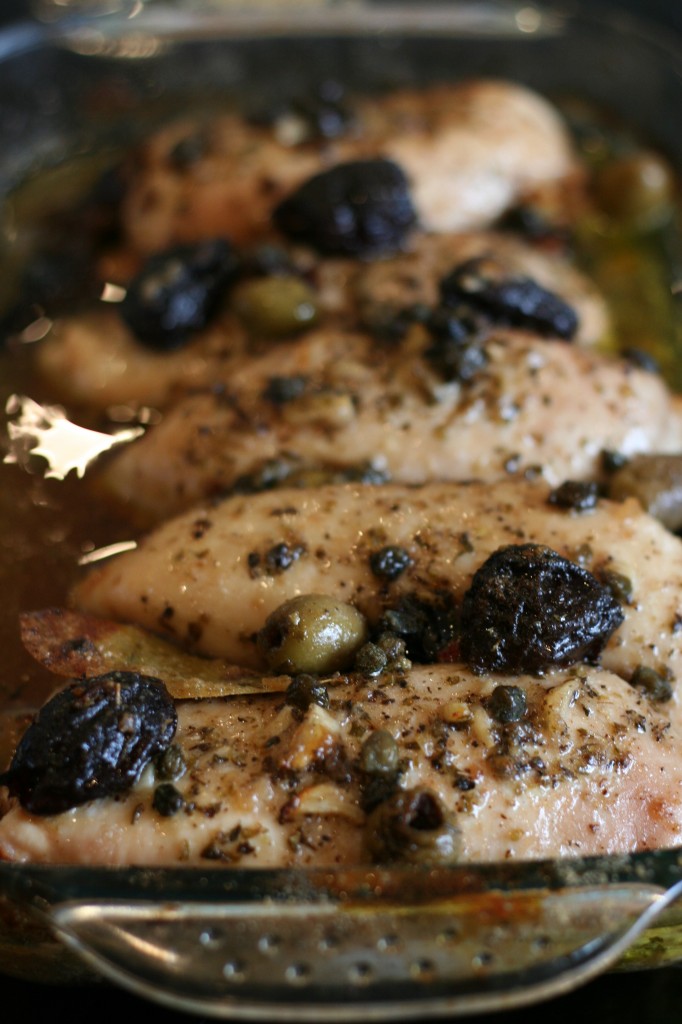
Chicken Marbella

I hadn’t heard of Shelia Lukins or her gourmet food shop, The Silver Palate, until she passed away last month. Then she was all over the news on food blogs, most of which couldn’t mention her without also mentioning Chicken Marbella, her most famous recipe. After reading all the rave reviews of it, I was curious to give it a try myself. I made the marinade on Sunday night, with Matt and my father-in-law, who had come over for dinner, looking on. “I don’t know about this. Prunes? Olives? Capers? This looks kind of weird to me,” I said, doubtfully pouring it over the chicken. But all those reviews were right — it really is a good dish, though granted, you probably need to be a fan of strong, briny flavors to enjoy it.

This is a perfect weeknight meal, since all you have to do is make the marinade the night before (which takes no more than 10 minutes), then pop it in the oven when you get home and boil up some rice to serve it with. It can be served hot or at room temperature, which means it travels well and makes great picnic food. Or you could use small drumsticks and wings to make it into an hors d’oeuvre. All in all, it’s a handy recipe to have in your repertoire.

I didn’t set out to tamper with such a classic (you can see the unadulterated version of the recipe here), but I wound up adapting this to use boneless, skinless chicken breasts rather than the whole quartered chickens called for in the original. I also misread the recipe when I made this and cooked the chicken right in the casserole dish with the marinade it had been sitting in overnight (rather than transferring the chicken to a different baking pan like the original says to), and it came out perfectly fine. Reading the reviewer comments of this recipe at Epicurious, it sounds like you’ll get a nicely caramelized crust if you use chicken pieces with the skin still on, so I’m going to stick closer to the original next time.

chicken marbella

Chicken Marbella
adapted from Silver Palate Cookbook by Julee Rosso and Shelia Lukins

Serves 6

To serve Chicken Marbella cold, cool to room temperature in the cooking juices before transferring the pieces to a serving platter. If the chicken has been covered and refrigerated, reheat it in the juices, then allow it to come to room temperature before serving. Spoon some of the reserved juice over the chicken.

6 boneless, skinless chicken breasts
1/2 head of garlic, peeled and finely puréed (I mashed the cloves in a mortar and pestle)
2 tablespoons dried oregano
coarse salt and freshly ground black pepper
1/4 cup (60 ml) red wine vinegar
1/4 cup (60 ml) olive oil
1/2 cup (100 g) pitted prunes
1/4 cup (50 g) pitted Spanish green olives
1/4 cup (70 g) capers with a bit of juice
3 bay leaves
1/2 cup (85 g) brown sugar
1/2 cup (120 ml) white wine
2 tablespoons fresh Italian parsley or cilantro, finely chopped
rice, couscous or mashed potatoes, to serve

Whisk the olive oil and vinegar together, then add the prunes, olives, capers and their juice, bay leaves, garlic, oregano and salt and pepper in a large bowl or measuring jug. Arrange the chicken in a single layer in an ovenproof casserole dish and pour the marinade over, stirring to coat. Cover and refrigerate overnight.

Preheat the oven to 350°F (180°C).

Sprinkle the chicken with the brown sugar and pour the white wine around. Bake for 50 minutes to 1 hour, basting frequently with the pan juices.

With a slotted spoon, transfer the chicken, prunes, olives, and capers to a serving platter. Moisten with a few spoonfuls of the pan juices and sprinkle generously with the parsley or cilantro. Pass the remaining pan juices in a gravy boat.

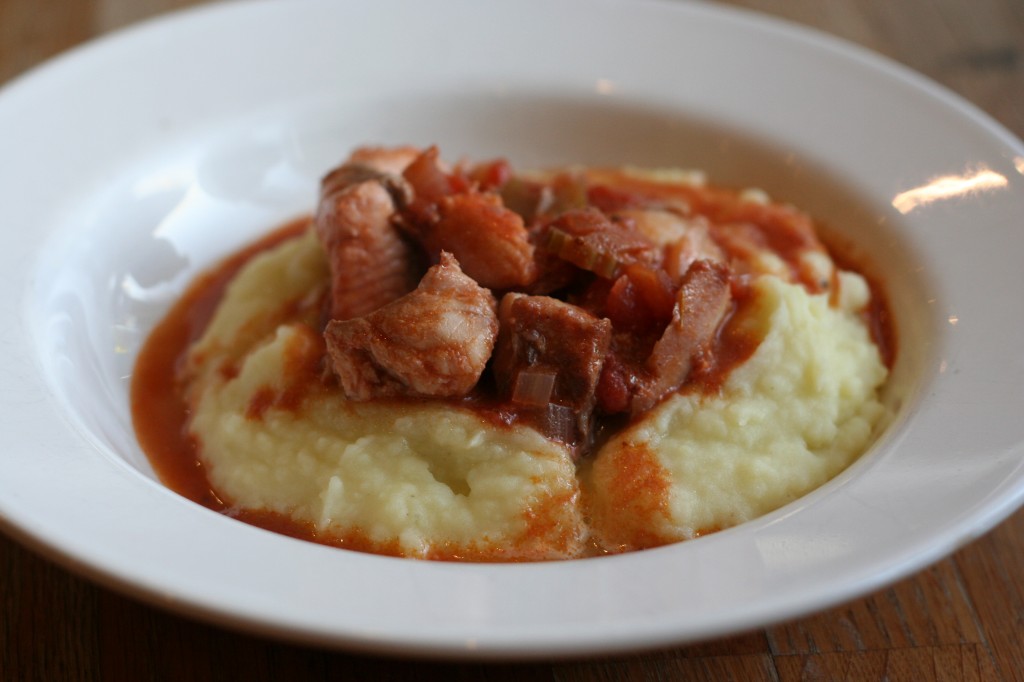
Autumn Fish Stew and Date Nut Spice Bread

If I had to pick one smell that evokes my childhood, it would be potpourri. When I was growing up, my mom was into the country style of decorating, and me and my brother and sister got dragged around to the shops that sell that kind of stuff on the weekends. Those stores invariably reeked of cinnamon potpourri, and there always seemed to be a bowl of it collecting dust on a bathroom shelf in our house. Nowadays, I imagine potpourri has been replaced by Yankee Candles, which seem to be everywhere. I always laugh at the names of the candles — some of this autumn’s new scents are “Moonlight Harvest”, “Lakeside Birch” and “Farmers Market”. So what does a moonlight harvest smell like, exactly?

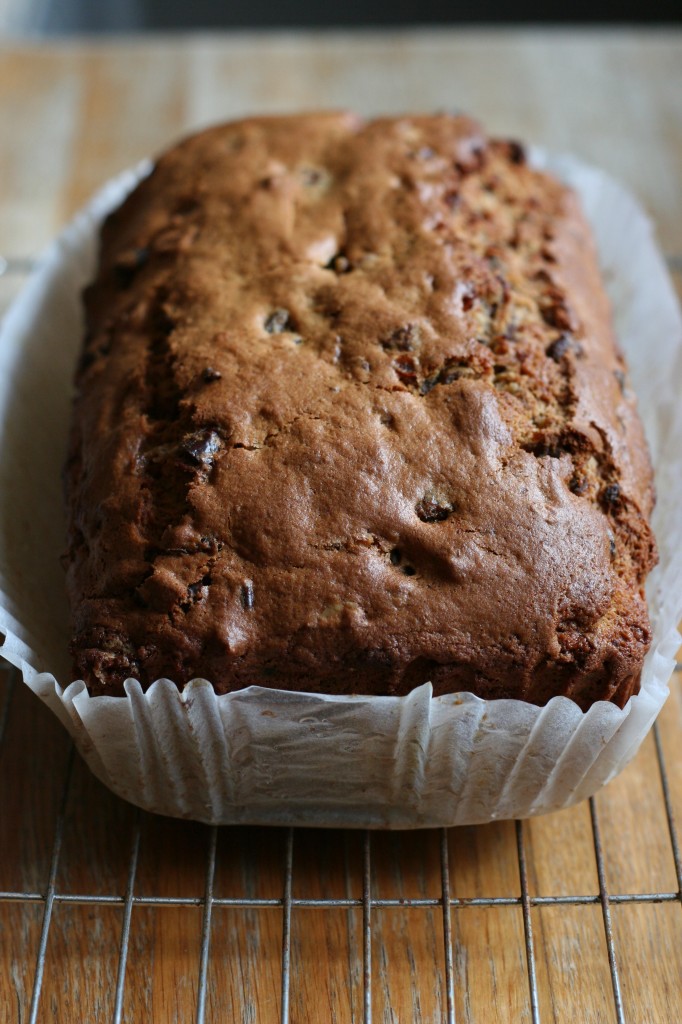
Still, when this date nut bread was baking, I couldn’t help but think that the people at Yankee Candle would do well to try to recreate how this smells, fresh out of the oven, with its heady autumnal mix of cinnamon, cloves, nutmeg and orange zest. While this lemon blueberry buckle was the best thing I baked this summer, I think this date nut bread will be hard to beat for the autumn. When I was urging a friend to make it last week, I wasn’t kidding when I said you’d almost want to bake this just to make your house smell good (and because it’s delicious, of course, and absolutely perfect for fall). But failing that, I’m sure there’s a suitable Yankee Candle out there — maybe “Autumn Fruit”?

autumn fish stew

Autumn Fish Stew
adapted from Fresh from the Sea by Clodagh McKenna

Serves 4

olive oil
1 onion, diced
2 celery stalks, thinly sliced
3 garlic cloves, crushed
1 tablespoon coriander seeds, roughly crushed in a mortar and pestle
1 teaspoon ground cumin
1/2 teaspoon smoked paprika
1 bay leaf
sprig of fresh thyme
2 x 14-oz (400‑g) cans of chopped tomatoes
1/2 cup (120 ml) red wine
1 1/4 cups (300 ml) fish or vegetable stock
sea salt and freshly ground black pepper
2 1/4 lb (1 kg) mixed fish fillets, cut into small pieces
mashed potato, polenta, couscous or rice, to serve

Place a casserole dish over a medium heat and pour in a dollop of olive oil, followed by the onion and celery. Cook for 5 minutes. Add the garlic, coriander, cumin, bay leaf and thyme. Cook for a further 2 minutes. Stir in the tomatoes and leave to reduce and thicken for about 10 minutes. Pour in the wine, bring back to the boil and cook for 1 minute, followed by the stock. Season with salt and pepper and simmer for 15 to 20 minutes.

Add all the fish to the stew and stir well. Simmer gently for about 10 minutes. Serve with creamy mashed potatoes, polenta, couscous or rice.

***

date nut spice bread

Date Nut Spice Bread
from Barefoot Contessa Back to Basics by Ina Garten

Makes 1 x 8‑inch loaf

Don’t let the “bread” in the title mislead you — this is a loaf cake, and a slice or two is perfect with a cup of tea or coffee, as a treat in a packed lunch or after-school snack, or for breakfast. Ina Garten suggests serving it with an orange zest-spiked cream cheese spread (you can find the recipe for that here), but I like this with only a bit of butter.

2 cups (280 g) pitted dates, coarsely chopped
1/3 cup (80 ml) orange liqueur (recommended: Cointreau or Triple Sec)
4 tablespoons (60 g) unsalted butter, at room temperature
3/4 cup (120 g) light brown sugar, lightly packed
1 extra-large egg
1 teaspoon pure vanilla extract
1 tablespoon grated orange zest (2 oranges)
2 cups (240 g) all-purpose flour
2 teaspoons baking powder
1/2 teaspoon baking soda
1 teaspoon ground cinnamon
1 teaspoon ground nutmeg
1/4 teaspoon ground cloves
1 teaspoon kosher salt
3/4 cup (175 ml) freshly squeezed orange juice (3 oranges)
3/4 cup (90 g) coarsely chopped pecans

Preheat the oven to 350°F (180°C). Butter the bottom of an 8 1/2 x 4 1/2 x 2 1/2‑inch loaf pan. Line the bottom with parchment paper, then butter and flour the pan.  (I just used a loaf tin liner.)

Combine the dates and orange liqueur in a small bowl and set aside for 30 minutes. Stir occasionally.

In the bowl of an electric mixer fitted with the paddle attachment or using a hand-held mixer, beat the butter and brown sugar together on medium speed for 1 minute. Scrape down the bowl. With the mixer on low, add the egg, vanilla, and orange zest.

Sift together the flour, baking powder, baking soda, cinnamon, nutmeg, cloves, and salt. With the mixer still on low, add the flour mixture alternately with the orange juice to the creamed mixture, beating only until combined. By hand, stir in the dates with their liquid, and the pecans.

Pour the batter into the prepared loaf pan and smooth the top. Bake for 50 to 60 minutes, until a toothpick comes out clean. Cool in the pan for 10 minutes, then turn out onto a wire rack and cool completely.

A Cooking Blog