All posts by Kristin

Spicy Bacon Cowboy Chili and Snowball Cookies

I think there has been more snow in the past 12 months in Ireland than in the previous 11 years I’ve been living here put together. We were hit with a record-breaking cold snap and snowfall two weeks ago that saw school canceled for six days and had us stranded in our house in the countryside on a hill. My husband, raised in Michigan, where they get buried under lake effect snow, braved our road at the start of the snow days to get us stocked up on groceries and coal and turf for the fire. A big pot of warming chili sounded like just the thing to see us through a couple nights. My friend Clare tipped me off to this recipe, and if I wasn’t sold already by the bacon in the title, the beer clinched it. Serve with honey buttermilk cornbread or bacon corn muffins, and you’ve got a filling winter meal.

Things you’ll never find me without though, snow or no snow, are flour, butter and sugar, so it seemed fitting to make snowball cookies to pass the time one afternoon with the kids. These are my favorite childhood Christmas cookie, and even if I have the tree up and all the presents bought, it only really feels like Christmas to me when I make a batch of these. For years I used my mom’s recipe, but these days I use Bon Appétit’s tip to add some ground cinnamon to the powdered sugar you roll the cookies in, and it makes all the difference. Growing up, we called these butterballs, but now I know they’re also called snowball cookies, Mexican wedding cakes and Russian tea cakes. No matter what you call them, it wouldn’t be Christmas for me without them.

Spicy Bacon Cowboy Chili
adapted from White on Rice

Serves 4 to 6

Using the leftovers on the second day, I mixed some of the chili with passata to tone down the flavors enough to pass it off as a Bolognese sauce to my kids, who gobbled it up when served with pasta. Todd and Diane suggest serving this as chili cheese fries, and I don’t know anyone who would turn up their noses at that combination.

olive oil
1 large onion, diced
1 or 2 red chilies, finely diced
salt
4 cloves garlic, finely diced
2 lb (1 kg) ground beef
6 strips (300 g) bacon, diced
1 x 14 oz (400 g) can of kidney beans, black beans or pinto beans
1 cup (250 ml) barbecue sauce
2 tablespoons paprika
2 tablespoons brown sugar
2 teaspoons cayenne pepper (optional if you don’t want it too spicy)
2 teaspoons chili powder
2 teaspoons ground cumin
1 teaspoon freshly ground black pepper
1 x 12 oz (350 ml) beer
grated cheddar cheese, sour cream, diced scallions, tortilla chips, etc., to serve

Heat a splash of olive oil in a large pot over a medium-high heat. Add the onion, chilies and a pinch of salt (to stop the onions from browning) and cook for 10 minutes, or until the onions have softened. Add the garlic and cook for 1 minute more. Add the ground beef and bacon and cook until it’s nearly cooked through and browned, stirring occasionally.

Add the remaining ingredients and stir to combine. Bring to a simmer, then lower the heat to keep at a gentle simmer. Cook for 30 minutes to 1 hour – the longer you cook it, the more the flavors will develop – adding more beer or water if the chili starts to look too dry. Serve the chili warm with toppings of your choice.

***

Snowball Cookies
adapted from Bon Appétit, May 2003

Makes about 4 dozen

These cookies can be prepared 2 days ahead. Store airtight at room temperature and reserve the remaining cinnamon sugar.

1 cup (225 g) butter, at room temperature
2 cups (240 g) powdered (icing) sugar, divided
2 teaspoons vanilla extract
2 cups (240 g) flour
1 cup (100 g) pecans or walnuts, toasted and coarsely ground
1/8 teaspoon ground cinnamon

Using an electric mixer, beat the butter in a large bowl until light and fluffy. Add 1/2 cup (60 g) of the powdered sugar and the vanilla and beat until well blended. Beat in the flour, then nuts. Divide the dough in half and form each half into ball. Wrap separately in cling film and chill until cold, about 30 minutes.

Preheat the oven to 180°C (350°F). Whisk the remaining powdered sugar and cinnamon in a shallow bowl or pie dish to blend. Set the cinnamon sugar aside.

Working with half of chilled dough, roll 1 scant tablespoon of dough between your palms into balls. Arrange the balls on a large baking sheet, spacing them 1/2 inch apart. Bake for about 18 minutes, until the cookies are golden brown on the bottom and just pale golden on top. Cool the cookies for 5 minutes on the baking sheet, then gently toss or roll the warm cookies in cinnamon sugar to coat them completely. Transfer the coated cookies to a wire rack and allow to cool completely. Repeat this procedure with the remaining half of the dough. Sift any remaining cinnamon sugar over the cookies and serve.

Piri Piri Chicken with Sweet Potatoes and Almond, Honey and Orange Shortbread

From not knowing a single other food blogger at the start of the year, I now know many and count them amongst my friends. Who would have thought that the Bord Bia food blogger event back in May would have been such a launching pad for the bloggers in Ireland to start organising their own events, meet-ups, workshops and even the Irish Food Bloggers Association? Two bloggers I’ve come to know, both in the virtual and the real world, are Aoife of The Daily Spud, who in turn introduced me to Adrienne of Gastroanthropology, a fellow expat who lives in London. When I heard that Adrienne was organizing a blogger Christmas cookie exchange, I quickly signed up and wasn’t too surprised to see that from all the participants, Adrienne had arranged things so that I sent a recipe to her and received one from Aoife. Making Aoife’s shortbread was the perfect way to pass an afternoon with the kids when we were all stuck at home last week from the snow, and they were a welcome treat to have with a cup of coffee for me and hot chocolate for the kids. Given how many new people I’ve met because of blogging in 2010, I can’t wait to see who I might meet in 2011.

Piri Piri Chicken
adapted from 30 Minute Meals by Jamie Oliver

Serves 4

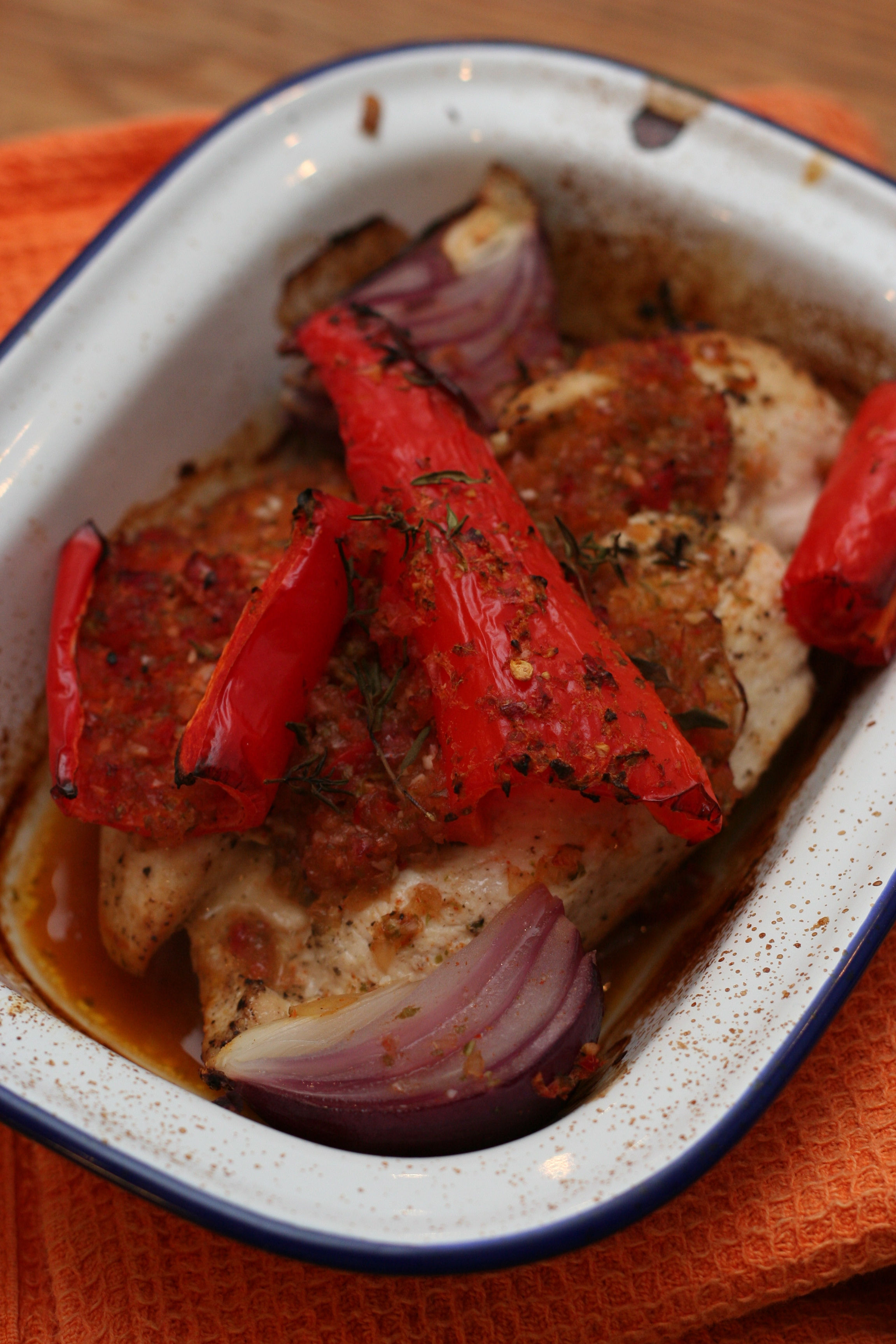
You could also use boneless, skinless thighs or breasts; if using breasts, just cook them a little longer. I’ve only made the chicken and sweet potatoes from this menu, but if you want to make the rocket (arugula) salad and Portugese tarts as well, you can see the complete menu here. If you made the whole menu, it would be a fantastic spread for entertaining — but if you can actually pull it off in 30 minutes like the title promises, I tip my hat to you.

4 to 6 large chicken thighs, skin on and bone in
1 red pepper, sliced into strips
1 yellow pepper, sliced into strips
6 sprigs of fresh thyme

for the piri piri sauce:
1 red onion, roughly chopped
4 cloves garlic, roughly chopped
1 or 2 red chillies, deseeded and roughly chopped
2 tablespoons sweet smoked paprika
4 tablespoons white wine vinegar
2 tablespoons Worcestershire sauce
2 lemons
salt and freshly ground black pepper
a large bunch of fresh basil

Preheat the oven to 400°F (200°C). Put a large griddle pan on a high heat.

Put the chicken thighs on a plastic chopping board, skin side down, and slash the meat on each one a few times. Drizzle with olive oil and season, then put on the hot griddle pan, skin side down. Cook until golden underneath, then turn over.

While the chicken is cooking, make the piri piri sauce. Add the onion, garlic, chillies, paprika, vinegar and Worcestershire sauce to a blender or food processor. Add the zest of 2 lemons and the juice of 1 lemon. Add a good pinch of salt and pepper, the large bunch of basil and a splash of water. Blend until smooth.

Add the peppers to the griddle pan. Turn the heat down to medium and keep moving the peppers around. Turn the chicken over.

Pour the piri piri sauce into a snug-fitting roasting tray. Lay the peppers on top of the sauce and push to the side. Add the chicken to the roasting tray with the sauce. Scatter over the sprigs of thyme, then put the tray into the oven. Cook for 20 to 30 minutes, or until cooked through. Sprinkle over some chopped fresh cilantro to serve.

***

Sweet Potatoes with Feta, Lemon and Chili
adapted from 30 Minute Meals by Jamie Oliver

Serves 4

1 medium potato
2 sweet potatoes
1/2 lemon
1 red chilli, finely chopped
1 bunch of fresh cilantro, finely chopped
2 oz (50 g) feta cheese, crumbled

Wash the potato and sweet potatoes and halve lengthways. Put them into a large microwave-safe bowl with half a lemon. Cover with cling film and put into the microwave on full power for 15 minutes. (If you don’t have a microwave, simply boil the potatoes on their own until tender.) Once the potatoes are cooked through, use tongs to squeeze over the cooked lemon. (Or if you haven’t used a microwave, add the juice of the half lemon to the potatoes.) Add the chiles, cilantro and feta. Season to taste with salt and freshly ground pepper, mix everything together and serve.

***

Almond, Honey and Orange Shortbread
adapted from The Daily Spud

Makes 30 to 35 cookies

With two stir crazy children helping me make these cookies when we were all stuck at home last week because of the snow, I streamlined Aoife’s recipe to just use packaged ground almonds instead of toasting whole almonds and grinding them myself. I went ahead and used the zest of an entire orange instead of just half an orange, and I also didn’t have any amaretto in the house, so I used almond extract instead. Aoife also suggests two variations by replacing the orange zest with some espresso powder and/or replace the almonds and amaretto with hazelnuts and Frangelico.

3/4 cup (100 g) plain flour
1/4 cup (25 g) rice flour or cornflour (cornstarch), or substitute additional plain flour
good pinch of salt
1 cup (100 g) ground almonds
1/2 cup (100 g) unsalted butter, softened
2 tablespoons honey
1 teaspoon almond extract or amaretto (optional)
zest of 1 orange
1/4 cup (25 g) powdered (icing) sugar, sifted, for coating (optional)
2 oz (50 g) good-quality dark chocolate, for dipping (optional)

Preheat your oven to 300°F (150°C).

Whisk the plain flour, rice flour and salt together in a medium bowl. Add the ground almonds and whisk again.

In a separate bowl, a stand mixer or a food processor, beat the butter until light and fluffy. Add the honey, almond extract and orange zest to the butter and beat well. Gradually incorporate the flour and almond mixture into the butter. When done, you should end up with a ball of dough that will be slightly crumbly and tacky to the touch.

Scoop heaped teaspoonfuls of the dough into the palm of your hand, roll into balls, then place on the baking sheet and flatten slightly, either using the palm of your hand or the base of a glass. You should end up with little discs around 1 inch wide and 1/4 to 1/2 inch high.

Bake for 20 to 25 minutes, or until the biscuits are just starting to darken at the edges. Allow to cool slightly for about 2 minutes, then toss the biscuits in the icing sugar and leave to cool fully on a wire rack. If you fancy dipping the biscuits in chocolate, then chop the chocolate finely and either melt in the microwave (zapping it until barely melted) or in a heatproof bowl set over a saucepan of hot (not simmering) water. Once melted, dip half of each biscuit in the chocolate and leave to set on a wire tray. When cool, dust with some more icing sugar and enjoy with your Christmas tea or coffee.

Gnocchi with Blue Cheese and Walnut Sauce and Guinness Gingerbread

Nigel Slater once described eating gnocchi as like eating a duvet. Sometimes that’s just what you need, whether it’s because you want something rib-sticking for a cold winter’s night or because you need to indulge in some unabashed, to-hell-with-the-calories comfort eating. With the mood in Ireland being very gloomy lately (you might have heard of the small matter of our €85 billion bailout and this week’s painful 2011 budget) and the weather being record-breaking cold, it was one of those times. Feeling low last week after another day of depressing news, I decided there was only one thing for it — baking. I turned to Nigella Lawson for some comfort food consolation, provided like only Nigella can, and settled on this Guinness gingerbread, which was perfect for this time of year. There’s nothing like some iconic Irish food — Guinness and the Cashel Blue cheese I used in the gnocchi — to lift a girl’s spirits.

Gnocchi with Blue Cheese and Walnut Sauce
adapted from A Kitchen Year by Paula McIntyre

Serves 4 to 6

Paula McIntyre’s original recipe calls for Bellingham Blue cheese, made in my neck of the woods in County Louth. Cashel Blue is an excellent substitute, but any good blue cheese will work here. If you want to give this a veggie boost, you could try adding some spinach, as in Nigel Slater’s recipe for baked gnocchi with spinach and Gorgonzola. This could stretch to feed six people if you’re serving it with something else, or just four greedy ones in need of some rib-sticking comfort food. It’s also decadent enough to serve as a vegetarian option for the holidays.

2 packs (about 2 lb/1 kg) store-bought gnocchi
2 tablespoons (30 g) butter
1 tablespoon olive oil
1 onion, finely chopped
1/4 cup (60 ml) extra dry vermouth or dry white wine
1/2 cup (120 ml) vegetable or chicken stock
1 cup (250 ml) double cream
4 0z (100 g) blue cheese
1 cup (100 g) chopped walnuts
salt and freshly ground black pepper
fresh thyme, to garnish

Get a large pot of water on to boil for the gnocchi.

Meanwhile, to make the sauce, heat the butter and oil in a saucepan and cook the onion on a medium heat until golden, about 10 minutes. Add the vermouth or wine and cook until reduced by half. Add the stock and boil until the liquid has reduced by half again. Add the cream and simmer until the sauce has the consistency of single cream. Crumble in the cheese and remove from the heat.

Heat a dry pan and toast the walnuts and cook for 1 minute, taking care not to let them burn, which can happen quickly. Add the walnuts to the sauce and season to taste.

Cook the gnocchi according to the packet instructions, drain and add to the sauce, stirring to make sure all the gnocchi is coated with the sauce. Garnish with some fresh thyme leaves and serve immediately.

***

Guinness Gingerbread
adapted from Nigella Kitchen by Nigella Lawson

Makes 24 small squares or 16 rectangles

It’s worth making this just for the smell of it baking in your oven alone. This was even better the day after I made it and was still holding up well on the third and fourth day too. Golden syrup is easily available in Ireland and the UK, but you can also order it online at Amazon.

1 1/4 sticks (150 g) butter, plus some for greasing
1 cup (300 g) golden syrup (such as Lyle’s)
1 cup (packed) plus 2 tablespoons (200 g) dark brown sugar
1 cup (250 ml) Guinness or other stout
2 teaspoons ground ginger
2 teaspoons ground cinnamon
1/4 teaspoon ground cloves
2 cups (300 g) all-purpose flour
2 teaspoons baking soda
1 1/4 cups (300 ml) sour cream
2 eggs

1 x 9 inch (23 cm) square baking tin or 1 foil tray approximately 13 x 9 x 2 inches (30 x 20 x 5 cm)

Preheat your oven to 325°F (160°C). Line your cake pan with parchment paper or greased foil, or grease your foil tray.

Put the butter, syrup, dark brown sugar, stout, ginger, cinnamon and ground cloves into a pan and melt gently over a low heat. Take off the heat and whisk in the flour and baking soda. You will need to be patient and whisk thoroughly to get rid of any lumps. Whisk the sour cream and eggs together in a measuring jug and then beat into the gingerbread mixture, whisking again to get a smooth batter.

Pour this into your cake/foil pan and bake for about 45 minutes. When it’s ready it will be risen in the middle and coming away from the pan at the sides. Let the gingerbread cool before cutting into slices or squares.

Catalina Chicken

I’d never heard of Catalina chicken before coming across this recipe for it a few years ago in the Cooks Academy Cookbook. This recipe is from the author’s grandmother, but after doing a quick online search to see if I could find out more about it, I found recipes with nothing but chicken, dried onion soup mix and a bottle of Catalina salad dressing as ingredients — the kind of “recipe” you often see on the back of food packaging or in a full-page ad for said soup mix or dressing in American women’s magazines. Given that this recipe comes from a Dublin cooking school and a country where Catalina dressing isn’t even sold, this version doesn’t take any prepackaged shortcuts — and is all the better for it. Besides, anything with hard cider in it is bound to be better than something that comes from a jar. The author says her grandmother always served this with homemade chips that she cut by hand with a crinkle cutter, but I like it with plenty of crusty bread to mop up the delicious sauce.

Catalina Chicken
adapted from Cooks Academy Cookbook by Vanessa Greenwood

Serves 4

If you don’t have a casserole pot (a.k.a. Dutch oven), then start off by cooking the food in a heavy-based frying pan instead, then transferring to an ovenproof dish with a lid or an ovenproof dish that you can cover tightly with foil. I’ve modified the original recipe to start off by browning the chicken to improve its flavor and appearance, but if you’re in a bit of a rush, you can skip this step and just add the chicken to the sauce along with the mushrooms and peppers.

olive oil
4 boneless, skinless chicken breasts
salt and freshly ground black pepper
2 tablespoons (30 g) butter
7 oz (200 g) mushrooms, quartered
1 large onion, diced
1 tablespoon plain flour
2 cups (500 ml) dry cider (hard cider)
3/4 cup (200 ml) chicken stock
1 tablespoon tomato puree
1 teaspoon white wine vinegar
1 teaspoon sugar
1 teaspoon paprika
1/2 teaspoon chili powder
2 red peppers, deseeded and cut into bite-sized pieces
chopped fresh parsley, to garnish
crusty bread, home fries, baked potatoes or mashed potatoes, to serve

Preheat the oven to 350°F (180°C).

In a heavy-based casserole pot, heat the olive oil over a medium-high heat. Season the chicken breasts and brown in the oil, then set aside.

Add the butter to the pot, then saute the mushrooms over a high heat until they turn golden on the outside. Set aside.

Lower the heat, add a little more olive oil and sweat the onions for 10 minutes with a pinch of salt (to help prevent them from browning too much) before stirring in the flour and cooking for 2 minutes more. Increase the heat, add the cider and stock and simmer for 10 minutes to reduce the liquid slightly.

Meanwhile, mix together the tomato puree, vinegar, sugar, paprika and chili powder and stir through the cider sauce. Season to taste with salt and pepper.

Add the chicken back to the pot in a single layer. Scatter over the peppers and mushrooms. Cover and cook in the oven for 1 hour, stirring halfway through. Garnish with the chopped parsley and serve.

Beef, Chorizo and Ale Stew

The Irish Independent recently ran an article about cheap casseroles coming back into fashion in these penny-pinching times. Cuts of meat that people turned their backs on during the Celtic Tiger boom are now reappearing on shopping lists and in casserole pots — cuts like lamb shanks, oxtails and beef shins. I discovered this recipe while watching Channel 4’s show Food: What Goes in Your Basket, where UK food critic Jay Rayner made it with shin of beef. I’ve modified it to use regular stewing beef, which is also much less expensive than prime cuts.

But just because a dish is economical doesn’t mean it can’t be delicious too, like this stew. In fact, I liked it so much that I made it twice in two weeks — once after watching the Food program and again because it was too perfect to pass up as an entry to November’s Irish foodies cookalong, which had a winter warmers theme. It might also have something to do with the fact that after coveting one for ages, I bought a Le Creuset casserole pot as a birthday present for myself back in September and loved the fact that I could actually cook it in the oven. But no matter which way you cook this — in the oven, on the stovetop or in a slow cooker — you’ll love it.

Beef, Chorizo and Ale Stew
adapted from Jay Rayner’s shin of beef recipe from Food: What Goes in Your Basket

Serves 8

If you don’t have a casserole pot (a.k.a. Dutch oven), you can simmer the stew on the stovetop instead. Alternatively, you could make this in a slow cooker (see below). I used O’Hara’s Irish Red Ale for this stew.

2 lb (1 kg) stewing beef, cut into cubes
salt and freshly ground black pepper
2 tablespoons flour
olive oil
1 x 7 oz to 11 oz (200 g to 300 g) chorizo ring, cut into bite-sized pieces
3 red onions, roughly chopped
3 carrots, roughly chopped
2 celery stalks, roughly chopped
3 cloves garlic, chopped
1 bottle of ale
2 cups (1 pint) beef or chicken stock
1 bouquet garni (bay leaves, thyme sprigs and parsley, tied with kitchen string), or 1 teaspoon mixed dried herbs
1 tablespoon brown sugar
chopped fresh parsley, to garnish (optional)
mashed potatoes or crusty bread, to serve

Preheat the oven to 270°F (130°C).

Season the beef with salt and pepper and toss in the flour until the beef pieces are evenly coated. Heat some olive oil in a casserole pot (Dutch oven) and brown the beef in batches, making sure not to crowd the pot, or the meat won’t brown properly. Remove from the pot and set aside. Add in the chorizo and cook for a few minutes, until it has started to release its oils. Add in the onions, carrots and celery and cook for 10 minutes, until the vegetables have softened. Add in the garlic and cook for 1 minute more.

Deglaze the pot with a small glass of the ale and simmer until it has reduced and thickened. Add the rest of the bottle and bring back to a simmer. Return the beef to the pot, and if it’s not fully covered, top up with the stock. (Add the whole pint of stock if you like a thinner stew, add less if you like a more concentrated broth.) Add the bouquet garni or dried herbs and stir in the sugar.

Cover and put in the oven for 3 to 4 hours (or simmer on the stovetop on a low heat), stirring a few times. The meat is ready when it shreds apart. As an optional extra if you want to intensify the flavor, you can strain off all the liquid into another pot and reduce the liquor by half, then return the liquid to the casserole pot. Serve with lots of chopped fresh parsley and mashed potatoes or crusty bread.

Slow cooker variation: Follow the recipe above until you’ve deglazed the pot, then transfer the stew to your slow cooker. Add the beef, stock, herbs and sugar to the slow cooker — though you should use less liquid because it won’t reduce as much as it does on the stovetop or in the oven. Cover and cook on a low heat for 8 hours, or until the meat shreds apart with a fork.

Chicken with Rice and Basil, Buttered Spinach and Little Glazed Carrots

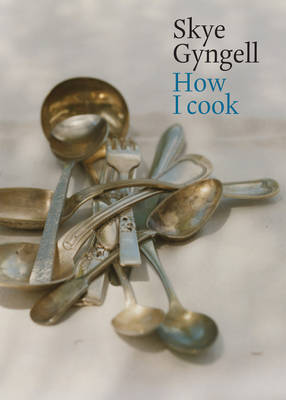
A few years ago, some friends gave me an Amazon gift certificate and I promptly bought the first cookbook on my wish list, A Year in My Kitchen by Skye Gyngell, which went on to be named Cookery Book of the Year by the Guild of Food Writers and the Best Food Book at Le Cordon Bleu World Food Media Awards in 2007. So when Quadrille Publishing offered me the opportunity to review her newest book, How I Cook, I jumped at the chance.

The focus of How I Cook is on home cooking, albeit with “a little finesse,” as Skye says, which is reflected in the book’s content. There are no 30-minute meals here, bur rather a sophisticated mix of everyday dishes and food for special occasions that is still achievable for home cooks. This book particularly appeals to me because of its format, which presents recipes as part of a complete menu (much like what we try to do on this blog). The book is divided into chapters — Breakfast, Sunday Lunch, Alfresco Eating, Afternoon Tea, Simple Weekday Dinner, Late Night Supper, Special Occasion and Time to Spare — and within those chapters are a series of ready-made menus. This makes it an ideal book for entertaining or for leisurely weekend cooking when you have more time to potter in the kitchen and want to make something a little more special for dinner than the usual hastily thrown together midweek pasta dish.

Skye is the head chef at Petersham Nurseries Café in Richmond, Surrey, and with fresh produce on her kitchen’s doorstep, it’s no surprise that her menus are strongly influenced by what’s in season. Skye brings together ingredients that are growing at the same time, since they often naturally complement each other. You can see this at work in combinations like the wintry Slow-roasted Pork menu, which is made up of slow-cooked belly of pork, a gratin of white beans, sauteed leeks and a fig tart. I’ve chosen the Peasant-style Supper menu from the Simple Weekday Dinner chapter to feature here, but other recipes I’ve already bookmarked to try this winter include slow-cooked shoulder of lamb with sweet paprika and chickpeas, oeufs en cocotte with spinach and Parma ham, spiced pears, and rice pudding with poached prunes.

In the introduction, Skye says, “The greatest pleasure I derive from food is cooking for loved ones … I cook for the same reason that you do — to bring joy to others — it pleases me to see people smile and laugh and feel content around a table, and I’m sure it is the same for you.” (I know it’s true for Kelly and me.) If that sentiment strikes a chord with you, then it’s worth picking up this book.

Chicken with Rice and Basil
adapted from How I Cook by Skye Gyngell

Serves 6

Skye points out that in a classic risotto, the warm stock is gradually added to the rice. Here, she has added only wine, cold and all in one go. This way, the rice takes on the flavor of the wine quite profoundly — which means it might not be suitable for young children; this might best be saved for a grown-up dinner. Skye suggests serving cheese or seasonal fruit as dessert to round off this menu.

1 large whole chicken (3 lb 5 oz/1.5 kg), preferably free-range and organic, jointed into 6 pieces
sea salt and freshly ground black pepper
2 tablespoons olive oil
1 red onion, peeled and finely sliced
2 garlic cloves, crushed
1 dried red chili (or dried chili flakes, to taste)
4 oz (100 g) risotto rice (Arborio or Carnaroli)
3 cups (750 ml) dry white wine
1 large bunch of basil
extra virgin olive oil, to drizzle

Season the chicken joints well all over with salt and pepper. Place a large flameproof casserole over a medium heat and add the olive oil. Once the oil is sizzling, brown the chicken pieces in batches, skin side down, without turning, until they are golden brown; this will take about 5 minutes. Set aside.

Pour off any excess fat, leaving a little in the casserole. Lower the heat, add the onion and sweat gently for about 10 minutes, until soft and translucent. Now add the garlic and crumble in the dried chili. Stir once or twice, then tip in the rice and toss it through.

Increase the heat slightly, pour in the wine and return the chicken to the pot. Put the lid on, turn the heat to low and cook for 20 minutes. By this time the chicken should be cooked through and the rice will have a gentle bite.

Tear the basil with your fingers and scatter over the chicken. Stir through, then taste and adjust the seasoning if necessary; it will almost certainly need more salt.

Serve in warm soup plates, drizzled with extra virgin olive oil, and with the buttered spinach and glazed carrots on the side.

***

Buttered Spinach
adapted from How I Cook by Skye Gyngell

Serves 6

14 oz (400 g) young spinach
3 tablespoons (45 g) unsalted butter
sea salt and freshly ground black pepper
1/2 teaspoon ground nutmeg, or to taste

Wash the spinach in several changes of cold water to remove all traces of dirt. Put the spinach into a medium saucepan with just the water clinging to the leaves after washing. Allow to wilt over a low heat, stirring from time to time. Once all the spinach has wilted, drain in a colander, pressing firmly with the back of a wooden spoon to remove excess water. Melt the butter in the pan, add the spinach and toss until it is really well coated. Season with salt, pepper and nutmeg to taste, then serve.

***

Little Glazed Carrots
adapted from How I Cook by Skye Gyngell

Serves 6

If you can’t find small whole carrots, you could make these sauteed carrots instead, which uses much the same method.

1 lb 2 oz (500 g) small carrots, peeled and trimmed
1 tablespoon (30 g) butter
2 teaspoons honey
1 small bunch of thyme
sea salt
handful of flat-leaf parsley, leaves only, finely chopped

Scrub or peel the carrots and trim them, leaving on a little of the green leafy tops. Place in a saucepan with the butter and honey. Pour on enough cold water to just cover the carrots and add the thyme and a good pinch of salt. Bring just to the boil, then turn down the heat to a summer and cook until just tender; this will take about 10 minutes. Discard the thyme. Now turn up the heat and boil rapidly until all the water has evaporated and the carrots are coated in a lovely shiny glaze. Serve warm, with a generous sprinkling of chopped parsley.

Bramley Apple, Bacon and Blue Cheese Sandwich with Sweet Potato Wedges

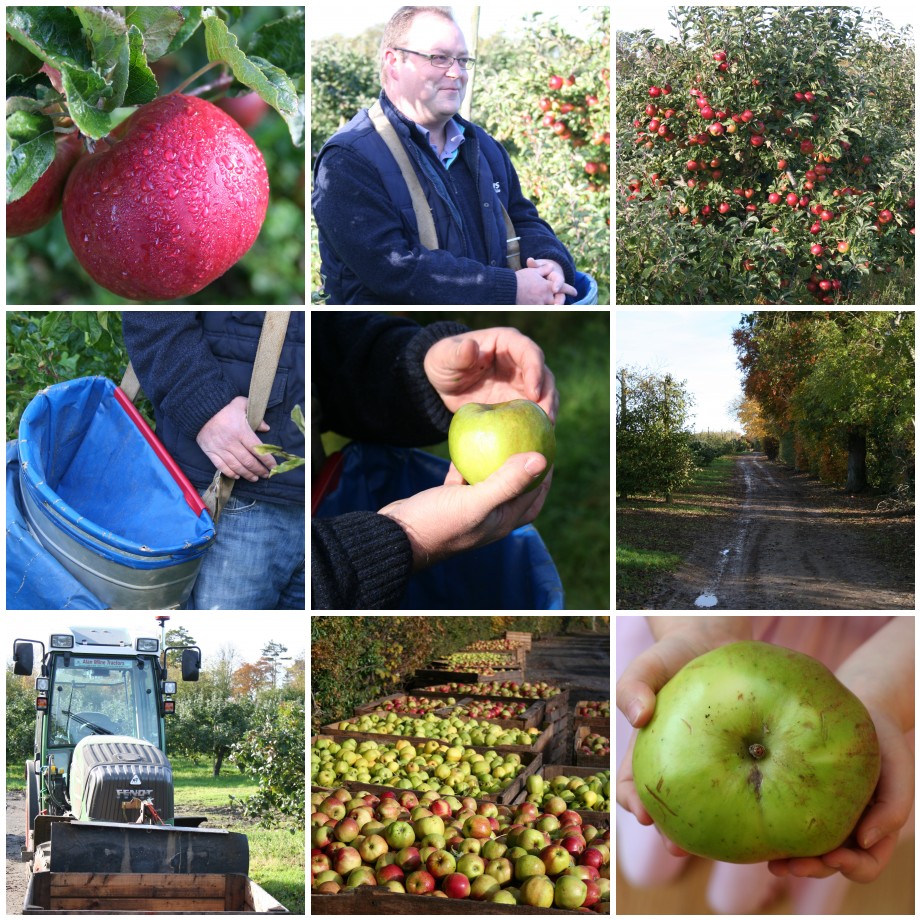
Is there a better place to be on a sunny October day than an apple orchard? I couldn’t think of one when I was at Stagrennan Farm 10 days ago as part of an orchard tour organized by Bord Bia (the Irish Food Board) to show off the often unsung Bramley apple.

When I arrived, I was promptly offered the obligatory cup of tea along with a slice of Fiona McNeece’s homemade apple cake and apple, blueberry and sloe crumble. Her brother Olan also works at the orchard, which their father bought in 1962 in Drogheda, County Louth. Fiona and Olan have apples in their blood — they are the fourth generation of their family to grow Bramleys (their great-grandfather planted a Bramley orchard as part of his small farm in County Armagh in the late 1890s, and their grandfather went on to buy his own farm in 1933, also in Armagh). Approximately one-third of the world’s supply of Bramley apples are grown in Ireland, where they have been grown for 200 years, and the McNeeces are proudly part of that tradition.

Like many people you talk to involved in growing and producing Irish food, Olan was enthusiastic about talking about apples and taking us around his farm, which even extended to showing off their new vineyard tractor, which is narrower than normal tractors so that it can fit between the rows of a vineyard or orchard. Clad in wellies and waterproof hiking boots because of the previous day’s heavy rain, we piled into the farm’s jeep and followed Olan in the tractor as he wound down a maze of lanes. Once we were standing amongst the trees, he explained that the orchard is organic in all but name — they have a weather station in the orchard to predict disease in their own micro-climate and they follow integrated pest management to allow natural predators to do away with harmful pests — so we happily ate apples straight from the tree.

But we weren’t eating Bramleys — while those are the main crop at Stagrennan Farm, they also plant a variety of other apples to aid pollination. Apples are often divided into eaters and cookers, and Bramleys are the latter. In fact, they’re the only apple available for the sole purpose of cooking. When cooked, Bramleys break down into a fluffy, frothy puree, which I found out for myself when I made a delicious apple compote using Bramleys after watching Hugh Fearnley-Whittingstall make it that way a few weeks ago on River Cottage Everyday. Just like Hugh said, the resulting compote was silky smooth, and was so good that I’ll never make applesauce with any other apple again.

Back at the office, fellow food bloggers Aisling, Deirdre, Joanna, Sarah and I were treated to a cooking demonstration using Bramleys by Tara Walker, a Cordon Bleu-trained chef who is an instructor at the Fairyhouse Cookery School, and one of the recipes she made for us was this sandwich. We left the orchard laden down with a huge box of Bramleys and eating apples, along with samples of some products Olan and Fiona are hoping to bring to market soon: apple juice, apple and Calvados sauce, apple and white port sauce, apple and ginger jelly, roasted apple marinade, spiced apple chutney and, my favorite, apple and quince jelly. When I got home with my bounty, my kids ate two apples each and helped me peel the 6 pounds worth of Bramleys to turn them into enough compote to last us for a week.

Thank you again to Olan and Fiona McNeece for so generously hosting us and to Bord Bia for organizing the tour. Olan told us we’d have to come back to the orchard again in the spring, when the trees are in bloom, and after seeing how beautiful it was with the blazing autumn colors, I think we might just take him up on that.

Bramley Apple, Bacon and Blue Cheese Sandwich
adapted from Bord Bia

This moreish sandwich is substantial enough for dinner now that we’re in the wintry soup-and-sandwich season. It’s one of the Bramley apple recipes from the Bord Bia website, which also features a one-dish pork and Bramley apple bake, ginger baked Bramleys and a Bramley apple and whiskey tart. If you can’t get Bramley apples, use another cooking apple instead, such as Golden Delicious, Granny Smith, McIntosh, Pink Lady or Royal Gala.

Serves 4

2 teaspoons vegetable oil
12 rashers back bacon (or 12 slices pancetta or American bacon)
2 Bramley apples, quartered, cored and sliced
8 thick slices of good-quality white bread (sourdough is best), lightly toasted
butter, for spreading
2 oz (60 g) soft blue cheese, such as Cashel Blue, crumbled

Heat the oil in a non-stick frying pan, add the bacon and cook over a medium heat for 6 to 7 minutes, turning once, until golden and crisp. (If using pancetta or American bacon, fry the bacon in a dry pan instead until crispy.) Transfer to a plate and keep warm. Add the Bramley apple slices to the pan and saute over a medium heat for 3 to 5 minutes, or until tender and golden. Remove from the heat. Butter the bread and top 4 slices with the bacon and apples. Crumble over the cheese and top with the remaining slices of bread. Cut in half and serve.

***

Sweet Potato Wedges
adapted from Every Day by Bill Granger

Serves 4

These sweet potato wedges are a good match for this sandwich, but Clare’s oven-baked parsnip chips would also be good, as would Michael Ruhlman’s sweet potato chips.

2 lb (900 g) sweet potatoes, skin left on and cut into wedges
2 tablespoons olive oil
2 teaspoons smoked paprika
1/4 teaspoon cayenne pepper (optional)
salt and freshly ground black pepper

Preheat the oven to 450°F (230°C).

Toss the sweet potato wedges with the olive oil, paprika, cayenne and salt and pepper. Scatter them in a single layer on a large baking sheet and bake for 30 minutes, stirring occasionally, until the wedges are golden brown.

Looking for more apple recipes? Try some of these from our recipe archive:

Pappardelle with Butternut Squash, Blue Cheese and Pine Nuts

The secret foodie project I’ve been working on for the past two months with fellow blogger Caroline from Bibliocook is out! When I’ve been writing these past few weeks that I’ve been slaving away with work and was practically too busy to cook, that was only part of the story — Caroline and I were also madly working behind the scenes to launch the new Irish Food Bloggers Association at the Food Camp that kicked off the Savour Kilkenny Food Festival last week (if you’d like to read more about Ireland’s first-ever Food Camp, visit some of these blogs for their recaps; they were obviously taking better notes than me!). If you’re an Irish or Irish-based blogger writing about anything to do with food, please join us! Or just check out the site to explore what we hope will become the definitive list of all the food blogs in Ireland.

This will be my last post from Nigella’s new book for awhile, I promise. The one downside to launching the IFBA on October 22 was that I only found out late that night after getting back from Kilkenny that Nigella Lawson was doing a book signing in Dublin at noon the next day, and I was just too tired and too busy to go and have her sign my already well-thumbed copy of Kitchen. Looks like I’ll have to wait until she writes her next book and try to catch her on that tour.

Pappardelle with Butternut Squash, Blue Cheese and Pine Nuts
adapted from Kitchen by Nigella Lawson

Serves 4

This is a first cousin to this risotto with roasted butternut squash, bacon and blue cheese (I wouldn’t be averse to adding some bacon to this pasta dish). Nigella notes that the sauce can be made 1 day ahead — simmer until the squash is tender, then transfer to a nonmetallic bowl to cool. Cover and refrigerate, then reheat gently in a saucepan and proceed as directed. The sauce can also be frozen in an airtight container for up to 3 months — just defrost overnight in the fridge and reheat gently.

1 large onion, finely chopped
2 tablespoons olive oil
3/4 teaspoon smoked paprika
1 large butternut squash, peeled, deseeded and cut into 1‑inch cubes
1 tablespoon unsalted butter
3 tablespoons Marsala
1/2 cup (120 ml) water
salt and freshly ground black pepper
6 fresh sage leaves, finely chopped (or 1/2 teaspoon dried sage)
18 oz (500 g) pappardelle or other robust pasta
1 cup (100 g) pine nuts
5 oz (125 g) soft blue cheese, crumbled

Fry the onion in the olive oil over a medium heat in a large, heavy-based pan that can accommodate all the pasta later. After about 10 minutes, add the paprika. Add the cubed butternut squash, then add the butter, stirring everything together well in the pan. Add the Marsala and water. Once the mixture starts to simmer, put the lid on, turn down the heat and simmer for about 20 minutes, or until the squash is tender but still holds its shape. Season to taste (keeping in mind that the cheese will be salty too), then sprinkle the sage into the squash mixture, reserving some to garnish.

Meanwhile, cook the pasta in a large pot of boiling, salted water according to the packet instructions. Toast the pine nuts in a separate hot, dry pan, tip them into a bowl and set aside.

Before you drain the pasta, reserve a mugful of the cooking water. Add the drained pasta to the squash and slowly stir to combine. Add some of the pasta cooking water to help the sauce emulsify, then add the blue cheese and half the pine nuts. Gently combine, then sprinkle the remaining pine nuts and sage on top and serve.