All posts by Kristin

Chard Tacos with Sweet Potato and Black Bean Salad

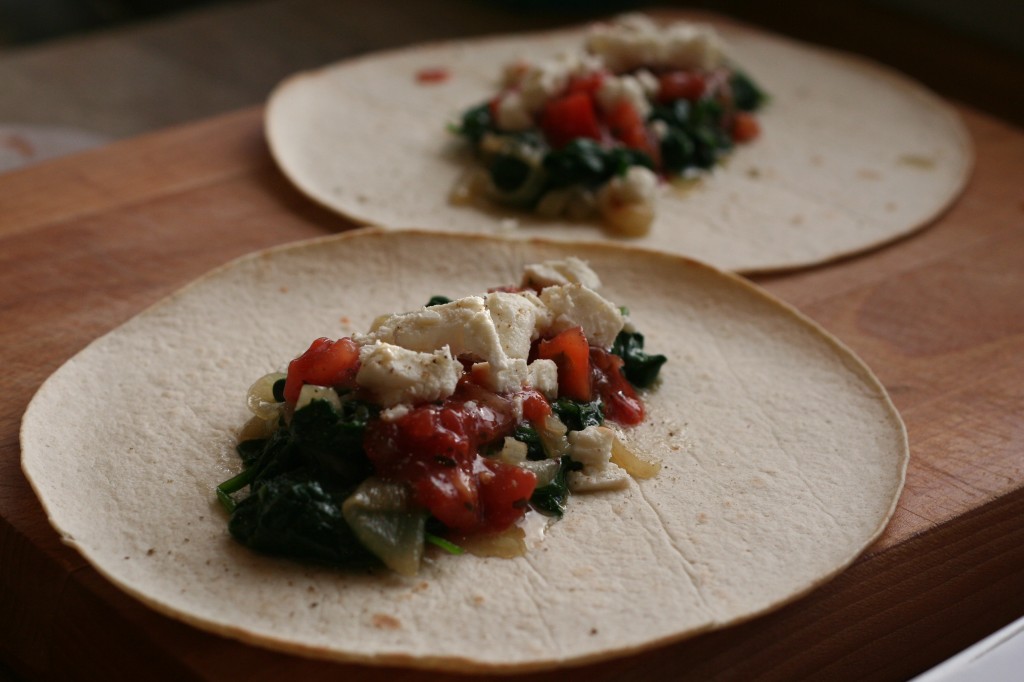
Remember how I was recently lamenting the fact that greens rarely get to be the star of the show at dinnertime? If you want to eat more greens but aren’t sure how to incorporate them, these chard tacos are another great recipe, and can use either chard or spinach. When paired with this sweet potato and black bean salad, it makes a fresh, filling dinner that still has an autumnal feel.
chard tacos

Chard Tacos
adapted from Mexican Everyday by Rick Bayless

Serves 2

Rick Bayless says that to make a heartier meal, you could add some shredded leftover chicken or steak to the greens during the final few minutes of cooking. Flaked tuna or smoked salmon is a nice add-in, but to keep it vegetarian, you could also try smoked firm tofu.

12 oz (340 g) Swiss chard, thick lower stems cut off, OR 10 oz (280 g) spinach, rinsed well
1 1/2 tablespoons vegetable oil or olive oil
1 large white or red onion, sliced 1/4‑inch thick
3 garlic cloves, finely chopped
pinch of red pepper flakes
1/2 cup (120 ml) chicken or vegetable broth or water
1/2 teaspoon salt
8 warm corn tortillas (though flour ones will also work fine, as you can see from the photo I used here; you may need fewer flour ones)
1 cup (100 g) crumbled Mexican queso fresco, feta or goat’s cheese
3/4 cup (175 ml) salsa

Cut the chard crosswise into 1/2‑inch slices (small spinach leaves can be left whole). In a large skillet, heat the oil over a medium-high heat. Add the onion and cook, stirring frequently, until golden brown but not entirely soft, about 4 to 5 minutes. Add the garlic and red pepper flakes and stir for a few seconds, then add the broth or water, salt and the greens. Reduce the heat to medium-low and cook until the greens are almost tender, anywhere from 2 minutes for baby spinach to 5 minutes for Swiss chard.

Uncover the pan, raise the heat to medium-high and cook, stirring continually, until the mixture is nearly dry. Taste and season with additional salt if you think it needs it. Serve with the warm tortillas, crumbled cheese and salsa.

***
sweet potato and black bean salad

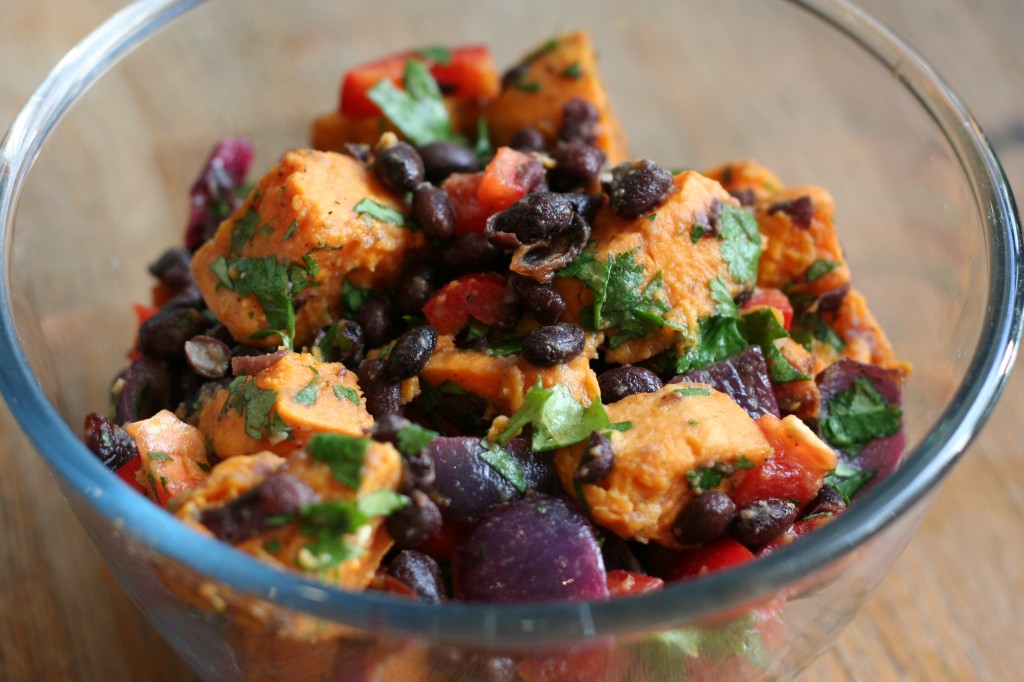
Sweet Potato and Black Bean Salad
adapted from Mark Bittman at The New York Times

Serves 4 to 6

2 large sweet potatoes, peeled and cut into bite-sized chunks
1 large red onion, cut into large chunks
olive oil
salt and freshly ground black pepper
1 x 14-oz (400‑g) can of black beans, drained and rinsed
1 red pepper, deseeded and chopped
juice and zest of 1 lime
3 tablespoons olive oil
1 bunch fresh cilantro, chopped

Preheat the oven to 400°F (200°C).

Place the sweet potatoes and red onion on a baking tray. Drizzle with some olive oil and season with salt and pepper, tossing well to make sure all the vegetables are coated with oil. Roast in the hot oven for 20 to 30 minutes, until the sweet potatoes are just tender and taking care not to let the red onion burn.

When the potatoes and onion are done, transfer them to a large bowl. Add in the black beans and chopped red pepper. Whisk the lime juice and zest and olive oil together until emulsified (or shake to combine in a screw-top jar), then pour over the salad in the bowl, stirring gently to make sure everything is coated with the dressing. Add in the chopped cilantro and stir well again. Season to taste with salt and pepper. This can be served warm or at room temperature.
Penne with Chorizo and Spinach and Dulce de Leche Brownies

I’ve been reading recipes for all manner of heavenly-sounding things made with dulce de leche for awhile now, but no matter how much I wanted to try it, I wasn’t about to make my own by boiling an unopened can of condensed milk and risk having it explode; my house had enough problems this summer without adding replastering my kitchen ceiling to the bill. But when I came across David Lebovitz’s version, which is simply (and safely!) baked in the oven for an hour, I gave it a go, and like David Lebovitz, I had to stop myself from eating it all to make the brownies.

I cut the brownies into two dozen bite-sized portions so that I could bring half of them over to a friend and so that Matt could take some more into work to share. I’ve spent the past three weekends in a row entertaining visitors, and all that wine and baking and richer-than-usual cooking means I’ve got a few pounds to lose now, so the last thing I needed was these brownies hanging around the house, because they would be impossible to stay away from. Even the jar of dulce de leche on its own was pretty irresistible. Now that I know how easy it is to make it myself, I can finally try out all those other recipes I’ve had my eye on.

penne with chorizo and spinach

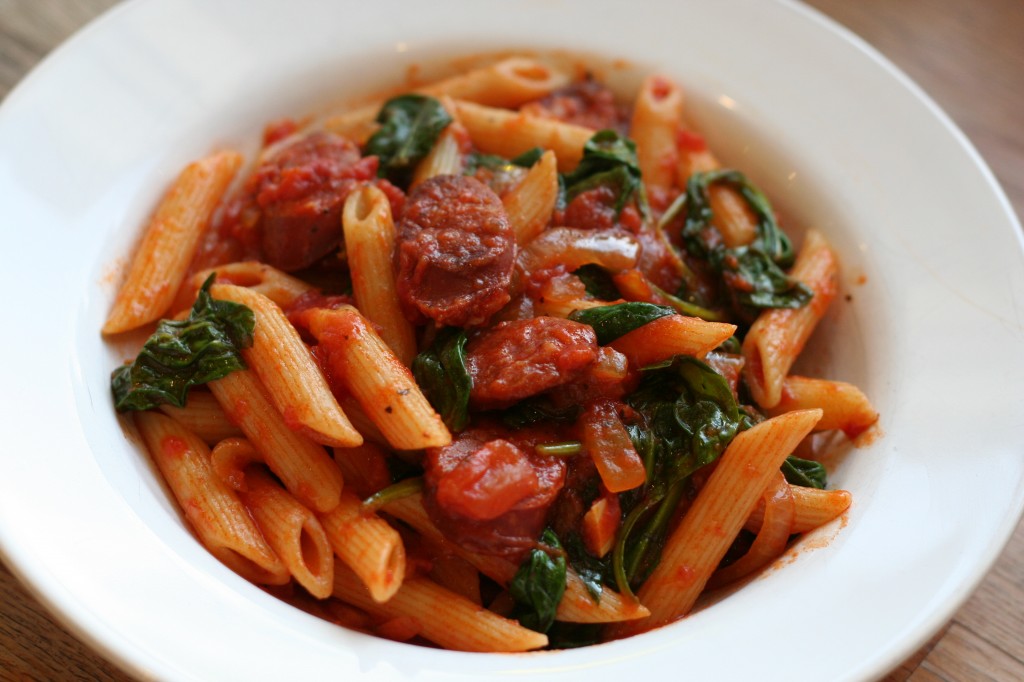
Penne with Chorizo and Spinach
adapted from Neven’s Real Food for Families by Neven Maguire

Serves 6

1 lb (450 g) chorizo sausage, cut into 1‑inch pieces on the diagonal
2 onions, thinly sliced
3 cloves garlic , crushed
1 red chili, deseeded and finely chopped, or a pinch of red pepper flakes (optional)
2 tablespoons shredded fresh basil
2 x 14-oz (400‑g) cans chopped tomatoes
1 teaspoon sugar
salt and freshly ground black pepper
1 lb (450 g) penne
8 oz (200 g) baby spinach

freshly grated Parmesan, to serve

Heat a frying pan and tip in the chorizo sausage pieces, then cook for 2 minutes, tossing the pan occasionally to ensure they cook evenly. Add the onions and garlic, then cook for another 5 minutes until the onions are golden, stirring occasionally.

Stir the chili (if using) into the chorizo and onion mixture with the basil and cook for 1 minute. Pour in the tomatoes, add the sugar and season to taste. Bring to the boil, then reduce the heat and simmer for 30 minutes, until slightly reduced and thickened, stirring occasionally.

Meanwhile, cook the pasta in a large pot of boiling salted water for about 10 minutes, or according to the packet instructions, until al dente. Drain well and return to the pot. Stir in the chorizo sauce along with the spinach and mix well to combine — the heat of the pasta and sauce should cook the spinach instantly.

To serve, divide the chorizo and spinach pasta among warmed bowls and scatter over the freshly grated Parmesan.

***

Dulce de Leche Brownies
adapted from David Lebovitz

Makes 12 large brownies or 24 bite-sized ones

1 x 14-oz (400‑g) can of sweetened condensed milk (I used Carnation brand)
sea salt
8 tablespoons (110 g) unsalted butter
6 oz (170 g) bittersweet or semisweet chocolate, finely chopped
1/4 cup (30 g) unsweetened Dutch-process cocoa powder
3 large eggs
1 cup (200 g) sugar
1 teaspoon vanilla extract
1 cup (120 g) flour
1 cup (240 ml) dulce de leche, either homemade or store bought

To make the dulce de leche, preheat the oven to 425° F (220° C).

Pour the can of sweetened condensed milk (not evaporated milk) into a glass pie plate or shallow baking dish. Stir in a few grains of sea salt. Set the pie plate within a larger pan, such as a roasting pan, and pour in hot water until it reaches halfway up the side of the pie plate. Cover the pie plate snugly with aluminum foil and bake for 1 to 1 1/4 hours. (Check on the pie plate a few times during the cooking time and add more water to the roasting pan if too much has evaporated.)

Once the dulce de leche is browned and caramelized, remove it from the oven and allow it to cool. Once cool, whisk until smooth. Store it in the refrigerator until ready to serve. Warm gently in a warm water bath or microwave before using.

To make the brownies, preheat the oven to 350°F (175°C).

Line an 8‑inch square pan with a long sheet of aluminum foil that covers the bottom and reaches up the sides. If it doesn’t reach all the way up and over all four sides, cross another sheet of foil over it, making a large cross with edges that overhang the sides. Grease the bottom and sides of the foil with a bit of butter or nonstick spray.

Melt the butter in a medium saucepan. Add the chocolate pieces and stir constantly over a very low heat until the chocolate is melted. Remove from the heat and whisk in the cocoa powder until smooth. Add in the eggs one at a time, then stir in the sugar, vanilla and then the flour.

Scrape half the batter into the prepared pan. Next, drop one-third of the dulce de leche, evenly spaced, over the brownie batter, then drag a knife through it to swirl it slightly. Spread the remaining brownie batter over, then drop spoonfuls of the remaining dulce de leche in dollops over the top of the brownie batter. Use a knife to swirl the dulce de leche very slightly.

Bake for 35 to 45 minutes. The brownies are done when the center feels slightly firm. Remove from the oven and allow the brownies to cool completely. These brownies actually become better the second day, and will keep well for up to 3 days.

Early Autumn Minestrone and Tarte Tatin

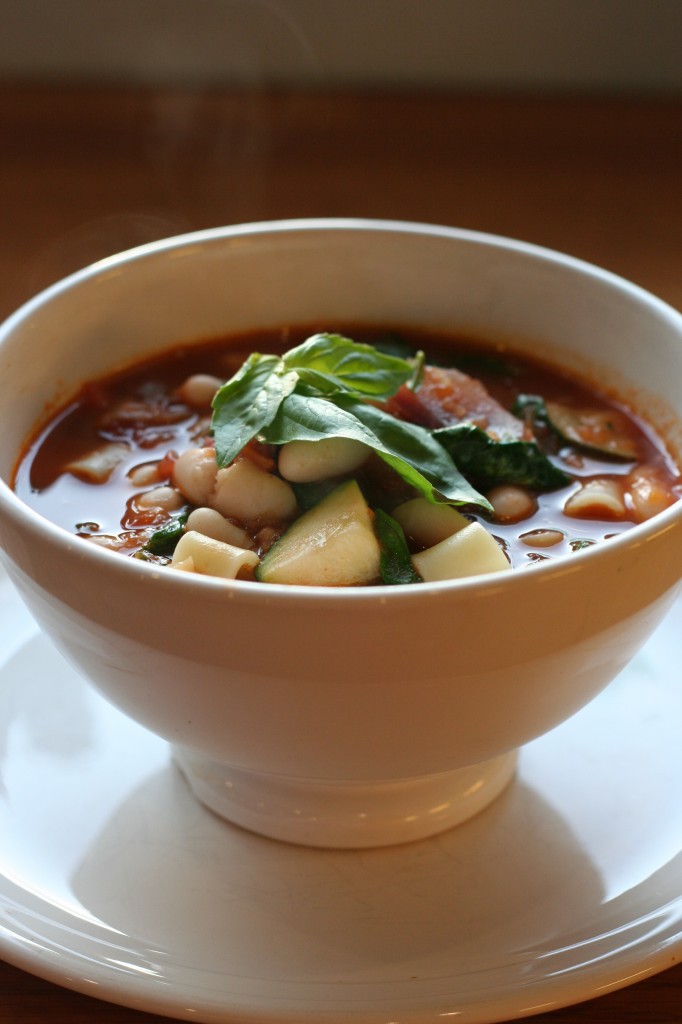
Last week, an old friend came to visit from London for a long weekend with his wife and baby daughter. As we were all eating dinner one night, he told us that he’d recently made such a big pot of soup that not only did they eat it for lunch and dinner for four days straight, but when he put it in the refrigerator, the pot was so heavy it cracked the shelf. We all laughed about it, even my friend, but the next day I asked him why he didn’t freeze some of the soup instead of eating the same thing for the better part of a week. “I’ve been really busy lately and it means dinner is one less thing I have to worry about,” he said, and I couldn’t fault him there. A big pot of soup does make for effortless leftovers — though maybe not such a big pot that it makes four days’ worth. Still, you could do worse than to eat this soup for a few days running, seeing as how it’s packed full of veggies, beans, some greens and carbs, with a glass of red wine to elevate it into something a little more sophisticated than your usual minestrone. So Adrian, this recipe is for you — the next time you need something to see you through a busy patch, try this soup (though try not to make so much it breaks the fridge shelf again).

early autumn minestrone

Early Autumn Minestrone
adapted from Jamie’s Italy by Jamie Oliver

Serves 4 to 6

To make this suitable for vegetarians, just leave out the bacon and use vegetable stock.

olive oil
4 slices of smoked pancetta or bacon
2 small red onions, finely chopped
2 carrots, chopped
2 sticks of celery, chopped
1/2 head of fennel, chopped
3 cloves garlic, finely chopped
a small bunch of fresh basil, finely sliced (set aside some to garnish at the end)
2 x 14-oz (400‑g) cans of good-quality whole plum tomatoes
a glass of red wine
2 small zucchini, quartered and sliced
7 oz (200 g) chard or spinach, washed and roughly sliced (including stalks)
1 1/4 pints (600 ml) good-quality chicken, ham or vegetable stock
1 x 14-oz (400‑g) can of cannellini or borlotti beans
2 handfuls (2 oz/60 g) elbow macaroni, or other small pasta shape
sea salt and freshly ground black pepper
freshly grated Parmesan cheese, to serve
crusty bread, to serve

Heat a good splash of olive oil in a saucepan and add the chopped pancetta or bacon, onions, carrots, celery, fennel, garlic and basil. Sweat very slowly on a low heat, with the lid just ajar, for around 15 to 20 minutes, until soft but not brown. Add the tomatoes, zucchini and red wine and simmer gently for 15 minutes, breaking up the whole tomatoes with the back of a spoon.

Now add the chard or spinach, stock, beans and pasta. Stir and continue to simmer until the pasta is cooked, about 15 minutes.

If you think the soup is looking too thick, add a little more stock or water to thin it down a bit. Season to taste with salt and pepper. Serve sprinkled with the reserved basil and freshly grated Parmesan cheese and some good crusty bread on the side.

***

Tarte Tatin
adapted from Gourmet, March 2001

Serves 8

You can also make a Tarte Tatin with 4 pears, peeled, cored and halved. The tart can cool in the skillet for up to 30 minutes. It can also stand, uncovered, for up to 5 hours, then be heated over a moderately low heat for 1 to 2 minutes to loosen the caramel. Shake the skillet gently to loosen the tart before inverting. If you need to let the tart stand for any length of time before serving it, leave it in the skillet and don’t invert it, otherwise the caramel will make the puff pastry base turn soggy.

1 frozen puff pastry sheet
1/4 cup (60 g) unsalted butter, softened
1/2 cup (100 g) sugar
7 to 9 Gala apples (3 to 4 lb/1.4 to 1.8 kg), peeled, quartered lengthwise and cored (or use any firm dessert apple, such as Golden Delicious)
whipped cream, crème fraîche or vanilla ice cream, to serve

Note: You will need a well-seasoned 10-inch cast-iron skillet or an ovensafe 10-inch skillet

Preheat the oven to 425°F (220°C).

Roll the puff pastry sheet into a 10 1/2‑inch square on a floured work surface with a floured rolling pin. Brush off the excess flour and cut out a 10-inch round with a sharp knife, using a plate as a guide. Transfer the round to a baking sheet and chill.

Spread the butter thickly on the bottom and side of the skillet and sprinkle the sugar evenly over the bottom. Arrange as many apples as will fit vertically on the sugar, packing them tightly in concentric circles. The apples will stick up above the rim of the skillet.

Cook the apples over a moderately high heat, undisturbed, until the juices are deep golden and bubbling, which will take about 18 to 25 minutes. (Don’t worry if the juices color unevenly.) It’s important not to stir the caramel while it’s cooking, otherwise it might crystallize.

Lay the pastry round over the apples and tuck it in around the edges. Put the skillet in the middle of the oven over a piece of foil to catch any drips. Bake for 20 to 30 minutes, until the pastry is browned. Transfer the skillet to a rack and cool for at least 10 minutes. Be careful when handling the skillet from here on out — don’t forget that the handle will be very hot!

Just before serving, invert a platter with a lip over the skillet and, using potholders to hold the skillet and plate tightly together, invert the tart onto the platter. Replace any apples that stick to skillet. (Don’t worry if there are black spots; they won’t affect the flavor of the tart.) Brush any excess caramel from the skillet over the apples. Serve immediately with whipped cream, crème fraîche or vanilla ice cream.

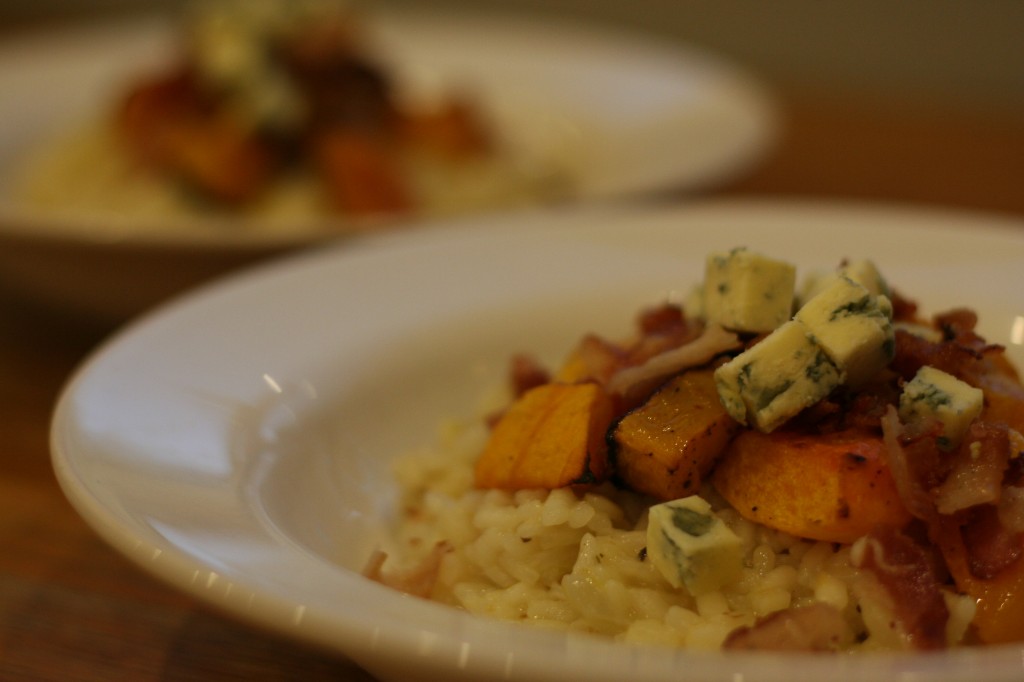
Risotto with Roasted Butternut Squash, Bacon and Blue Cheese

Risotto has an undeserved reputation for being hard work. It’s true that you do have to hang around in the kitchen to add stock and stir every five minutes or so, but it doesn’t need constant stirring and attention the way, say, polenta does, so it’s not as if you’re chained to the stove. Just put on a good CD while you cook. It took me a few tries to find a risotto recipe I liked as much as what I used to have in restaurants, and for me, the wine or vermouth (I always use vermouth) is the key ingredient — without it, I always think the dish is missing something. I always have a bottle of extra-dry Martini in the house, not only because I like to use it in place of white wine in most recipes, but mainly because I make risotto so often.

In the September 25 entry of The Kitchen Diaries*, Nigel Slater says of risotto, “I insist this warming, gooey rice dish has a season, just as porridge does,” and I agree (though I make a lemon risotto in the early Irish summer, when the days are still cool). It’s one of my go-to recipes for the colder months, plus both my kids love it — and why wouldn’t they? It’s total comfort food — creamy and savory — open to endless variations, and easy for my 17-month-old to scoop up with a spoon to feed himself. This is Matt’s favorite version, and it’s just right for autumn. You can expect plenty more risotto recipes from me in the coming months, now that the season for it is well and truly upon us.
*Amazon.com is selling The Kitchen Diaries in hardcover at a bargain price for only $16 (list price is $40). This cookbook is one of my favorites, so you might want to snap it up at this price.

risotto with roasted butternut squash, bacon and blue cheese

Risotto with Roasted Butternut Squash, Bacon and Blue Cheese

Serves 4

If you want to make a vegetarian version of this, just omit the bacon, and perhaps add some chopped toasted pecans when serving (much like this squash side dish).

1 large butternut squash
olive oil
4 tablespoons (60 g) unsalted butter
3 shallots or 1 small onion, very finely chopped
2 sticks of celery, very finely chopped
1/2 teaspoon dried sage
1 1/2 cups (300 g) risotto rice (Arborio rice)
1 cup (240 ml) dry white wine or extra-dry Martini
2 pints (1 liter) good-quality vegetable or chicken stock
6 slices of bacon or pancetta
1/2 cup (50 g) grated Parmesan cheese
1/3 cup (about 1 1/2 oz/40 g) blue cheese, crumbled
salt and freshly ground black pepper

Preheat the oven to 400°F (200°C).

Peel and halve the squash and scoop out the seeds. Cut the squash into 1‑inch cubes (you don’t need to be precise, just keep the pieces uniformly small). Place the squash in a roasting tin or casserole dish and drizzle with olive oil. Roast for 30 to 45 minutes, or until tender. Set aside and keep warm.

Heat the butter, shallots, celery and sage in a wide, deep saucepan and cook to soften, about 5 minutes. Mix in the rice, stirring to give it a good coating of the butter. Allow it to cook for a minute or two, until the grains of rice start to turn translucent. Add the white wine or Martini and let it bubble away for a few minutes. Meanwhile, heat the stock in another saucepan and keep it at simmering point.

Once all the wine or Martini has been absorbed into the rice, pour a ladleful of the stock into the rice and keep stirring until the stock is absorbed. Then add another ladleful and stir again. Continue doing this until the rice is al dente. You may not need all the stock; equally, you may need to add a bit more hot water. Don’t rush this process — allow the rice to fully absorb each ladleful of stock before adding the next one.

While the risotto is cooking, heat a separate frying pan and cook the bacon or pancetta until crisp. Drain on paper towels, then chop into bite-sized pieces. Set aside.

When you’ve added almost all the stock, test the rice — the risotto is ready when the rice is tender but still has a little bite. When the risotto is done, mix in the grated Parmesan. Divide between 4 serving bowls or plates and top with the roasted squash, bacon and blue cheese. Serve with more grated Parmesan if you wish, add seasoning to taste and serve immediately.

Sauerkraut and Sausage Paprikash with Mashed Potatoes

When I was in college in Madison, Wisconsin, every now and then I’d head off with some friends on a Saturday to the small town of New Glarus (a.k.a. America’s Little Switzerland, pop. 2,111), about 30 miles from Madison. Our first stop was always to the Maple Leaf Cheese and Chocolate Haus, where I’d get a couple bars of coconut Lindt chocolate, which was otherwise hard to find (though I stopped buying it after learning how bad palm oils are for you in a food science class I later took; ignorance really was bliss). We’d then have dinner at The Glarner Stube, where we’d drink New Glarus Brewing Company beer on tap and share a big pot of cheese fondue and side orders of sauerkraut made with an onion cream sauce. I don’t know what else a bunch of vegetarians like us would have eaten there — I can still remember the huge steaks that would come out from the kitchen, so big that they barely seemed to fit on the plates. After dinner, we’d head over to the tiny Swiss Lanes bowling alley and try to get in a few games before the leagues arrived and we got kicked out. I’m telling you, I was wild in my college heyday.

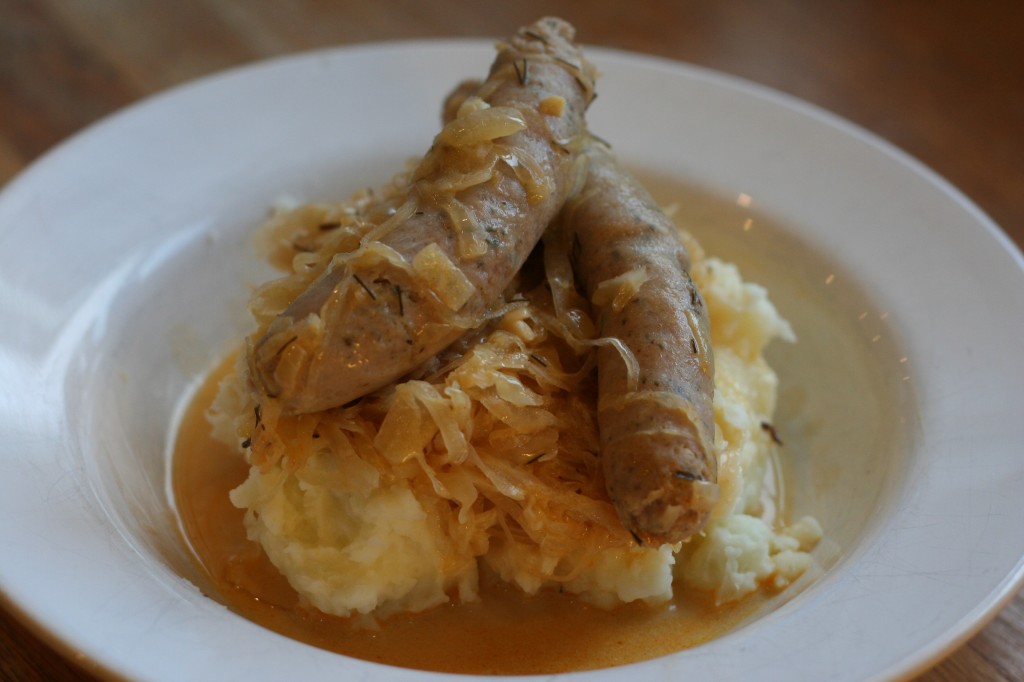
All these memories came flooding back when I took a bite of this dinner, made in honor of Oktoberfest, which is wrapping up this weekend. I’m a sucker for anything with sour cream or paprika in it, and Matt loves sauerkraut, but I wasn’t sure what to expect from this recipe, worrying that it might be, well, just a big pile of sausages and sauerkraut. It was fantastic, another one of these more-than-the-sum-of-its-parts type of recipes. We were practically drinking up the sauce when we had it as leftovers for our lunch on Sunday, it was so good, and Matt asked when we could make it again (meaning soon, please). This one will definitely be going into my regular dinner rotation, with the added bonus that it can be pulled together in just half an hour, making it ideal for busy weeknights. I just wish we’d had a few bottles of Spotted Cow to go with it.

sauerkraut and sausage paprikash

Sauerkraut and Sausage Paprikash
adapted from Serious Eats (which adapted it from Simply Recipes)

Serves 4
2 tablespoons (30 g) butter
2 medium onions, chopped
1 clove garlic, minced
1 teaspoon paprika
1 lb (450 g) frankfurters, kielbasa, or other sausage, cut into slices (I used my butcher’s garlic and herb sausages)
1/2 teaspoon dried dill, or 2 teaspoons fresh chopped dill
1/2 teaspoon caraway seed
1 cup (240 ml) beef or chicken broth
16 oz (450 g) sauerkraut, drained
3/4 cup (175 ml) sour cream
mashed potatoes, to serve

Melt the butter in a heavy soup pot (a dutch oven is ideal) and add the onion, garlic, and paprika. Cook over a medium heat until the onion is soft, about 5 to 7 minutes.

Add the sausages and cook for 1 minute to begin rendering their fat. Add the dill, caraway seed and broth. Bring to a boil, then simmer for 15 minutes. Add the drained sauerkraut and stir to combine well. Continue simmering, covered, for an additional 15 minutes.

Add the sour cream and simmer just until hot; avoid letting the soup boil once it’s added. Serve immediately with mashed potatoes, or failing that, some crusty bread to mop up the sauce.

Pork Chops with Maple Syrup and Balsamic Vinegar with Roasted Squash, Mashed Potatoes and Apple Cornmeal Cake

I was reading an article recently in the New York Times about signature dishes in restaurants, which was more or less lamenting the fact that popular dishes need to be made ad infinitum to keep customers happy. It reminded me of a recipe for Smokies in The Eden Cookbook, where the introduction to the recipe says, “This dish, one of my favourites, was on the first menu in Eden. When I changed the menu after three months, I took this off. It led to chaos. Two customers walked out, as they had come specifically for the Smokies, and I received numerous phone calls … I learned a valuable lesson — give your customers what they want.”

One of the recipes the article singled out was this one for pork chops, developed by Matthew Kenney (and wouldn’t you know it, chicken Marbella got a mention too). I can see why it would be a popular restaurant dish — how can you go wrong with a combination of maple syrup, balsamic vinegar, candied pecans and ginger? It sounds exotic enough that you wouldn’t necessarily think of making it yourself at home, but it’s incredibly easy and tasty enough to serve for company. I made it for my father-in-law last weekend, who happily offered to eat the extra chop that was left over.

This is a great menu for an autumn dinner party, though if you think plain mashed potatoes would be too, well, plain for company, you could gussy them up by adding in some chopped fresh parsley and a couple tablespoons of wholegrain mustard.

Pork Chops with Maple Syrup and Balsamic Vinegar
from The New York Times

Serves 4

3/4 cup (175 ml) maple syrup
1 tablespoon balsamic vinegar
1 tablespoon dark brown sugar
1/2 teaspoon ground cinnamon
1/2 cup (50 g) pecans
4 x 1 1/4‑inch-thick pork chops
salt and freshly ground black pepper
extra virgin olive oil
2 green apples, cored
1/4 cup (50 g) finely chopped candied ginger

Preheat a broiler or light a charcoal grill.

In a small nonreactive bowl, whisk together the syrup, vinegar, sugar and cinnamon.

Place a small pan over a medium heat. Add the pecans and about 2 tablespoons of the maple syrup sauce and cook for a few minutes, until the nuts are glazed and fragrant. Transfer the nuts to a plate and spread them out to cool. Transfer the cooled nuts to a cutting board, chop roughly and set aside.

Season the pork chops liberally with salt and pepper, then drizzle with olive oil. When the broiler is hot, or the coals are covered with gray ash and you can hold your hand 5 inches above them for only 1 to 2 seconds, broil or grill the meat for approximately 7 minutes per side. Brush with some of the remaining maple glaze every 2 or 3 minutes, turning them frequently to prevent the sugar from burning.

When the chops are cooked, remove from the broiler or grill and let them rest for 5 minutes before serving. Meanwhile, slice the cored apples into thick rounds, drizzle with olive oil, season lightly with salt and pepper and place on the broiler pan or grill until tender when pierced with a fork. These, too, should be brushed with the maple glaze and turned frequently.

Serve the chops with the apple slices, sprinkled with the pecans and candied ginger.

***

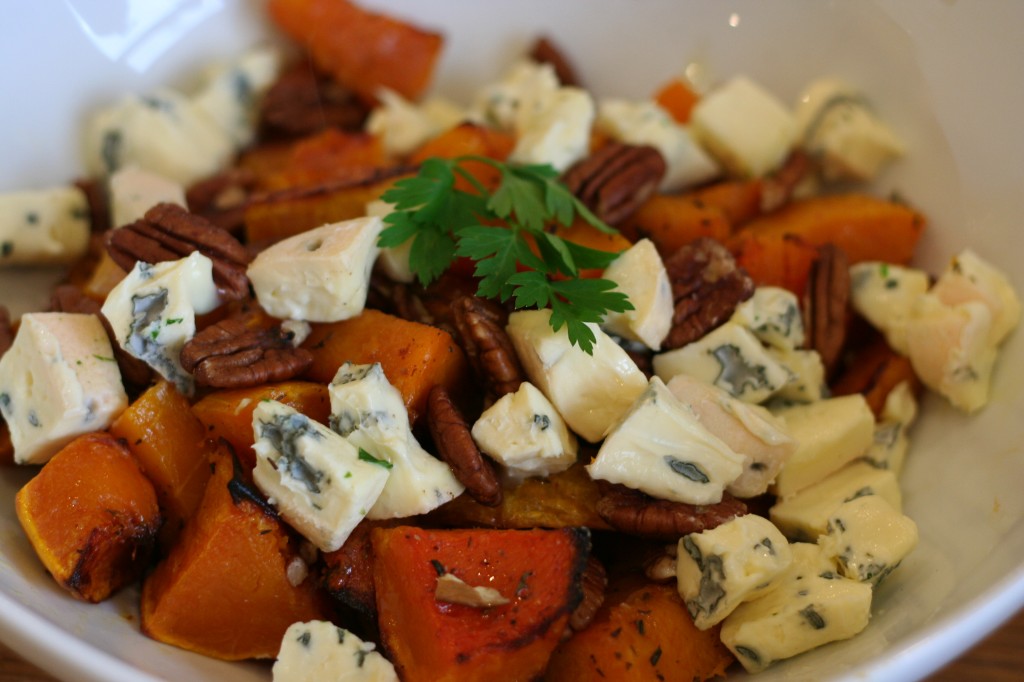
roasted squash with pecans and blue cheese

Butternut Squash with Pecans and Blue Cheese
adapted from Nigella Express by Nigella Lawson

Serves 6 to 8

4 lb 8 oz (2 kg) butternut squash
3 tablespoons olive oil
6 sprigs fresh thyme or 1/2 teaspoon dried thyme
4 oz (110g) pecans
4 oz (110 g) Roquefort, or other blue cheese, crumbled
salt and freshly ground black pepper

Preheat the oven to 425°F (220°C).

Peel and halve the squash and scoop out the seeds. Cut the squash into 1‑inch cubes (you don’t need to be precise, just keep the pieces uniformly small). Place the squash in a roasting tin or casserole dish and drizzle with the oil. Strip about 4 sprigs of thyme of their leaves (or use dried thyme) and sprinkle over the butternut squash. Roast for 30 to 45 minutes, or until tender.

Once out of the oven, transfer the squash to a serving bowl. Scatter over the pecans and crumble over the cheese, stirring everything together gently. Season to taste with salt and freshly ground black pepper. To serve, tear the remaining sprigs of thyme into small pieces and sprinkle over the top of the butternut squash mixture.

***

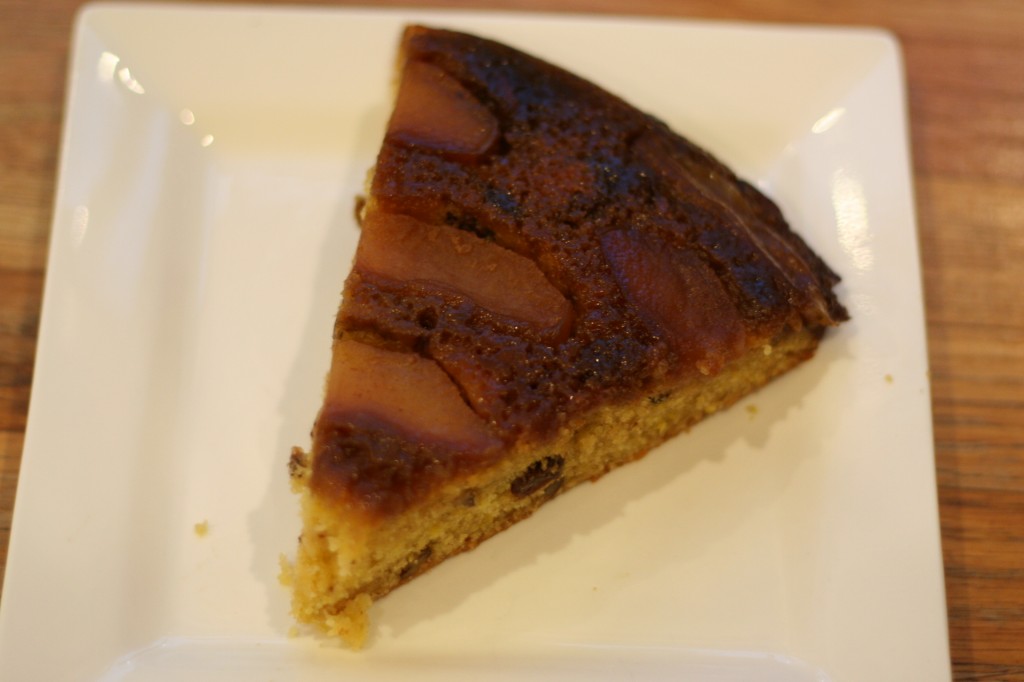
upside-down apple cornmeal cake

Upside-down Apple Cornmeal Cake

Serves 8

for the brandy-soaked raisins:
1/2 cup (80 g) raisins
1/4 cup (60 ml) brandy

for the apple topping:
2 or 3 large Gala or Golden Delicious apples, peeled, cored and quartered
4 tablespoons (60 g) unsalted butter
2/3 cup (120 g) brown sugar
1/2 teaspoon cinnamon

for the cake:
1 1/4 cups (150 g) all-purpose flour
3/4 cup (170 g) fine cornmeal
zest of 1 lemon
1 1/2 teaspoons baking powder
1/4 teaspoon baking soda
1/2 teaspoon salt
1/2 cup (110 g) unsalted butter, softened
2/3 cup (150 g) sugar
2 eggs
1 teaspoon vanilla extract
3/4 cup (175 ml) buttermilk
1/3 cup (60 g) pecans, roughly chopped

Soak the raisins in the brandy for at least 2 hours and up to 24 hours before you bake the cake.

Preheat the oven to 350°F (180°C).

To make the apple topping, cut each apple quarter lengthwise into 3 wedges. Melt the butter in a 10-inch cast iron or nonstick skillet over a medium heat. Add in the brown sugar and cinnamon and cook for 1 to 2 minutes, stirring, until the mixture is smooth. Remove from the heat and add the apples, gently stirring to coat. Using a tongs or fork, neatly arrange the apple slices in circles in the sugar mixture, starting at the outer edge and working your way to the center of the pan.  (You might not need all the apple slices.)

To make the cake, whisk the flour, cornmeal, lemon zest, baking powder, baking soda, and salt together in a bowl. Using a handheld mixer or stand mixer, cream the butter and sugar together until light and fluffy. Add the eggs one at a time, scraping down the sides of the bowl after each addition. Stir in the vanilla. Add in the flour mixture in three additions, alternating with the buttermilk in two additions (beginning and ending with the dry ingredients). Gently fold in the chopped pecans and raisins, along with any brandy still left in the bowl.

Gently pour the batter evenly on top of the fruit in the skillet, being careful not to move the apple slices too much. Bake in the middle of the oven for 40 to 45 minutes, until the center of the cake springs back lightly when touched. Allow the cake to cool for 15 minutes in the skillet before carefully inverting it onto a plate.

Chili Fried Mackerel with Spiced Chickpea Salad and Polenta

About two years ago, my husband, daughter and I went to Copenhagen for a long weekend. Our daughter was two and a half at the time, but already was a great eater. Put her in front of a selection of ice cream, and she won’t choose chocolate or vanilla — she’ll go for Turkish delight (though in all honesty, that might just be because it’s pink). Olives, radishes, salt and vinegar potato chips and Roquefort cheese are some of her favorite foods. So we might have known better than to order her a hamburger off the kids’ menu when we went to the Cap Horn restaurant one night. She wouldn’t touch it, and instead devoured almost all of the trout Matt had ordered for himself, simply pan fried in butter (poor Matt wound up eating the burger). When it comes to fish (and her tastes in general), it seems that the stronger the flavor, the more she likes it.

This past summer, I served mackerel to her for the first time, as well as my one-year-old son. They each gobbled up their entire fillet and ate most of ours to boot. We couldn’t get over it, since we thought it might be too strong-tasting for them compared to, say, white fish. The next time he was in getting fish, Matt mentioned to the fishmonger how much our kids had liked it, who wasn’t surprised. “Kids love mackerel,” he said. That’s good news to me, since it’s an oily fish and so is a good source of omegas, plus it’s cheap, about 1 euro per fillet.

Mackerel is still in season, so get some while you can and give this simple recipe a try, which only takes 5 minutes to cook. If you’re serving this to kids who don’t like spicy food, just fry their fish first and leave out the chili, then add it to the pan when you’re ready to fry the rest. Ask your fishmonger to debone the mackerel for you, especially if you’re serving it to children, because it has lots of them and some of them are pretty big.

Chili Fried Mackerel
from Fresh from the Sea by Clodagh McKenna

Serves 2

2 tablespoons (60 g) butter
1 red chili, deseeded and finely chopped
1 garlic clove, crushed
4 fresh mackerel fillets
sea salt and freshly ground black pepper
juice of 1 lemon

Heat a frying pan and drop in the butter, chili and garlic. Once the chili butter begins to foam, add the mackerel, skin side down, and fry for 2 minutes. Season with salt and pepper, turn the fish over, squeeze the lemon juice over the fish and cook for a further 2 minutes. Remove to a plate and drizzle the chili butter over the fillets.

***

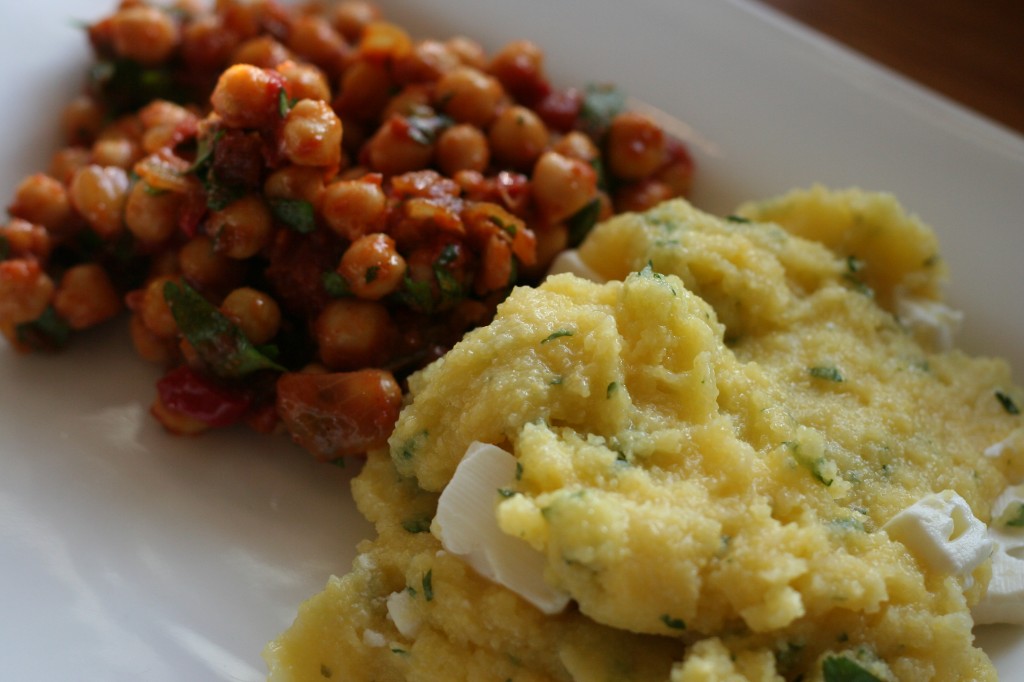
spiced chickpea salad and polenta with feta and cilantro

Spiced Chickpea Salad
adapted from Avoca Café Cookbook 2

Serves 6

1 onion, finely chopped
3 tablespoons olive oil
1‑inch piece of fresh root ginger, grated (or 1 teaspoon ground ginger)
1 red chili, deseeded and finely chopped
2 teaspoons curry powder
1 teaspoon ground cumin
1 teaspoon ground coriander
pinch of turmeric
4 garlic cloves, chopped
1 x 14-oz (400‑g) can of tomatoes
3 x 14-oz (400‑g) cans of chickpeas, rinsed and drained
1 bunch of fresh cilantro, roughly chopped
1 bunch of fresh flat-leaf parsley, roughly chopped

Gently saute the onion in the olive oil for 10 to 15 minutes without allowing it to color. Add all the spices, chili and the garlic and cook for 2 minutes. Add the tomatoes and reduce the heat to low. Continue to cook for 15 to 20 minutes, stirring occasionally, to allow it to reduce slightly. Dress the chickpeas in the tomato sauce while it’s still warm. Allow the chickpea mixture to cool slightly, then add the herbs (this stops them from discoloring). Serve warm or at room temperature. This salad is even better the next day.

***

Polenta with Feta and Cilantro
adapted from Vegetarian Cooking for Everyone by Deborah Madison

2 cups (340 g) coarse cornmeal
6 to 8 cups (about 1 1/2 to 2 liters) vegetable or chicken stock or water
2 to 6 tablespoons (30 to 90 g) butter (optional)
1 1/2 cups (250 g) feta cheese, cubed or crumbled
1 bunch fresh cilantro, chopped

Bring 6 cups (1 1/2 liters) of the stock (or water) to a boil in a large, heavy-based saucepan and add the cornmeal in a steady stream, whisking constantly to stop lumps from forming and to help prevent the maize from seizing up in the first few minutes. Lower the heat and cook, stirring almost constantly, for 30 to 45 minutes. If the polenta seizes up into a hard mass, add small amounts of the remaining 2 cups (480 ml) of stock or water while it cooks to smooth it out again. When done, season to taste with salt (you may not need any if your stock is salty). Stir in butter to taste.

Off the heat, stir in the cubed or crumbled feta cheese and chopped cilantro. Serve the soft polenta immediately or keep it warm over boiling water until ready to serve.

Linguini with Braised Kale and Parmesan Garlic Bread

Greens seem to be the outcasts of the vegetable world, like the shy kids parents have to coax their own children into playing with. Why is this? Sure, spinach is common enough, but why don’t Swiss chard or kale feature more, especially considering how pretty rainbow chard is, or even kale, with its frilly-edged leaves that always make me think of Elizabethan ruffs? I suspect it might be because of a perceived lack of good, innovative recipes that use them.

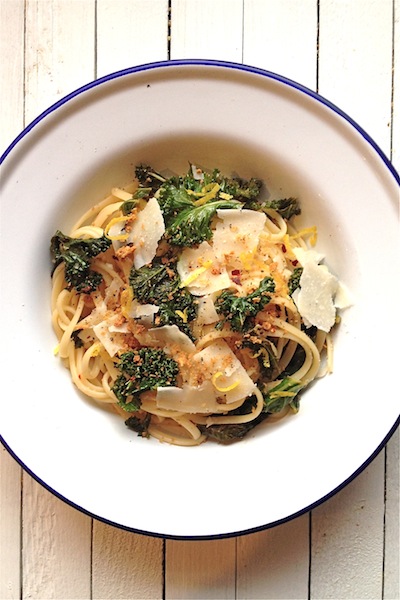
I originally got the idea for this recipe after reading Molly Wizenberg’s (a.k.a. Orangette) October column in Bon Appétit, but it sounded a bit plain to me and I wanted to kick up the flavor. Then I remembered reading a recipe for braised kale in the July/August issue of Jamie Oliver’s new magazine, which included anchovies (another much-maligned ingredient), white wine and lemon. And last week I got the idea of adding the toasted breadcrumbs from the linguini with breadcrumbs and kale recipe that won the greens contest at Food 52. When I merged all three recipes together, it made for a fabulous dish. The kale itself was so good that Matt and I went back for second helpings, pushing the pasta out of the way in the pot just to get to the greens. If you need to be cajoled into eating your greens, try this and see if you might be converted.

Linguini with Braised Kale

Serves 4

You could also make this with other greens, such as Swiss chard or spinach, or you could serve the braised kale on its own as a side dish instead of with pasta. You might notice that in the photo I used both breadcrumbs and pine nuts, but later decided that only one or the other is needed to add a little extra crunch and texture.

1 lb (450 g) kale (about 2 bunches), large center ribs and stems removed
4 tablespoons extra virgin olive oil
4 cloves garlic, chopped
8 anchovy fillets, chopped (optional)
1/2 red chili, finely chopped, or a pinch of red pepper flakes
1/3 cup (80 ml) dry white wine
zest and juice of 1 lemon
salt and freshly ground black pepper
1/2 lb (225 g) linguini or spaghetti
handful of toasted breadcrumbs or pine nuts
grated Parmesan cheese, to serve

Rinse the kale well, then cut crosswise into 1/2‑inch slices. Drain in a colander and set aside.

Heat the oil in a large frying pan over a medium-low heat. Saute the garlic, anchovies (if using) and the chili or red pepper flakes for 5 minutes, taking care not to let the garlic color. When the garlic has softened and the anchovies have dissolved, raise the heat and add the kale. Cook for a couple of minutes, until the kale starts to wilt and turn a vibrant green. Add in the wine, lemon zest and juice and salt and pepper to taste. (Try not to cook the kale too long so that it keeps its bright green color.)

Meanwhile, cook the pasta in a pot of boiling salted water according to package instructions, until al dente. Drain, reserving 1/4 cup (60 ml) of the cooking liquid. Add the cooked pasta to the kale mixture, stirring well to combine. Stir in the reserved cooking liquid.

Divide the pasta and kale between 4 serving bowls or plates. Sprinkle with the breadcrumbs or pine nuts and grated Parmesan cheese and serve right away.

***

Parmesan Garlic Bread
adapted from Real Food by Nigel Slater

6 tablespoons unsalted butter, at room temperature
1 cup (30 g) coarsely chopped flat-leaf parsley
1/2 cup (50 g) freshly grated Parmesan cheese
3 garlic cloves, minced
salt and freshly ground black pepper
1 ciabatta loaf or baguette

Preheat the oven to 425° (220°C). In a small bowl, using a spoon, mash the butter until creamy. Mix in the parsley, Parmesan cheese and garlic and season well with salt and pepper.

Slice the ciabatta or baguette in half horizontally and spread the butter on both halves. Put the halves back together and wrap the bread loosely in aluminum foil.

Bake in the middle of the oven for 5 minutes. Open the foil and bake for about 5 minutes longer, or until the top is golden and crisp. Serve hot.