All posts by Kristin

Penne with Prawns, Cream and Tomato and Blondies with Pecans and Chocolate Chips

The only culture shock of going to college in Madison, Wisconsin having grown up right on the state border in Illinois was discovering that people from northern Wisconsin really do have accents like they do in the movie Fargo, and that they say bubbler instead of drinking fountain and soda instead of pop (aka minerals or fizzy drinks in Ireland; oh, the adaptations I’ve had to make). I was genuinely shocked as a freshman, though, to discover that a new friend I’d made in the dorms who came from Maryland had never even heard of bratwurst, much less had one. You mean not all Americans had seen the commercial about Charlie Murphy cooking Johnsonville Brats? Not everyone had beer brats at every summer barbecue? I was just as surprised when my husband and I were first living together and I found out he’d never heard of or had German potato salad, which I’d thought was a staple at every grocery store deli counter. I could understand that bratwurst might be a Midwestern thing, explaining why my east coast friend hadn’t heard of them, but Matt is from Michigan. I was surprised once again when earlier this week I said I was making blondies to bring to a play date the next day, since I’d had an inexplicable craving for them for awhile, and Matt had never heard of those either. “Oh come on,” I said, “you have to know what a blondie is. Every Ruby Tuesday or Applebee’s or TGI Friday’s has a blondie sundae on their dessert menu.” But no, he insisted he had no idea what they were. Not quite a brownie and not quite a cookie, you can have it on its own or, in true over-the-top American chain restaurant style, top it with a scoop of vanilla ice cream with chocolate fudge sauce drizzled over everything. Now I’m wondering what other food is particular to the Midwest — anyone for a lemon Jello ham salad?

Penne with Prawns, Cream and Tomato
adapted from Apples for Jam by Tessa Kiros

Serves 4

2 tablespoons butter
1 x 14-oz (400‑g) can of whole plum tomatoes
salt and freshly ground black pepper
1 lb (450 g) penne
1 tablespoon olive oil
1 lb 2 oz (500 g) raw prawns, peeled and deveined (or you can use the same amount of frozen prawns)
2 cloves garlic, chopped
3 tablespoons cream
1 tablespoon chopped fresh parsley

Melt 1 tablespoon of butter in a small pan, and when it’s sizzling, add the whole tomatoes, crushing them with the back of a wooden spoon. Season with salt and pepper and cook over a medium heat for about 10 minutes, until the sauce is thick.

Meanwhile, cook the pasta in a large pot of boiling salted water, according to packet instructions. While the pasta is cooking, heat a large non-stick frying pan over a high heat. Heat the oil and the rest of the butter, then add the prawns and garlic. Over the highest heat possible, cook the prawns until they’re bright and the undersides are crusty and golden in places (you won’t achieve this with frozen prawns). It’s important that you use a non-stick pan so that the prawns fry quickly instead of boiling in their own liquid. Turn them with tongs, and once they’re cooked, sprinkle them with salt.

Drain the pasta, reserving a cup of the cooking water. Add the tomato sauce to the prawns, along with the cream and parsley. Heat until just bubbling. Add the pasta to the pan and toss everything together. If it seems like you need it, add a little of the reserved cooking water to help the sauce coat the pasta. Serve immediately with a grinding of black pepper.

***

Blondies with Pecans and Chocolate Chips 
from Bon Appétit, July 1998

Makes approx. 24 blondies

I love Smitten Kitchen’s idea of making blondies with bourbon or espresso powder, but alas, I was making these to serve to kids. These can be prepared 1 day ahead; just cover and leave out at room temperature.

2 cups (240 g) all-purpose flour
1 teaspoon baking powder
3/4 teaspoon salt
1/4 teaspoon baking soda
10 tablespoons (1 1/4 sticks) (140 g) unsalted butter
2 cups (packed) (340 g) golden brown sugar
2 large eggs
2 teaspoons vanilla extract
3/4 cup (130 g) semisweet chocolate chips
3/4 cup (90 g) chopped pecans

Preheat the oven to 350°F (180°C). Butter and flour a 13 x 9 x 2‑inch baking pan. Mix the flour, baking powder, salt and baking soda in a medium bowl. Melt the butter in a large saucepan over a low heat. Remove the saucepan from the heat, then add the sugar and whisk to blend. Whisk in the eggs and vanilla extract, then gradually stir in the flour mixture (the batter will be thick). Spread the batter in the prepared pan and sprinkle with the chocolate chips and pecans. Bake the blondies for about 25 minutes, until a tester inserted into the center comes out with moist crumbs attached. (Don’t overcook them, or they’ll turn out hard and dry.) Cool the blondies in the pan on a rack. Cut into squares and serve.

Chicken a la Veracruzana and Barm Brack

I have a friend who used to work in the famous Bewley’s Cafe on Grafton Street in Dublin. She told me once about about the letters they got around this time of year, usually from tourists who had bought a loaf of barm brack in the store to take back home with them. The people writing the letters were concerned that they’d found a ring in their bread, with one person saying they’d had it appraised, and another one joking that they were relieved they hadn’t also found the finger that came with the ring. Most people sent the ring back.

They obviously didn’t know just what they’d bought. Barm brack (or báirín breac in Irish, from báirín, a loaf, and breac, speckled, due to the raisins in it) is a traditional Halloween treat, falling somewhere in between regular bread and cake. What makes it special is the ring and coin that are usually baked into the bread, turning it into a bit of a fortune-telling game: whoever gets the coin will be rich, and whoever gets the ring will be married within the year. Who knows what chances for love those well-meaning tourists sent back?

barm brack ring

This is the ring that came in the store-bought barm brack I bought last year (oh, those chubby, dimpled little toddler hands get me every time). But after making my own this year and seeing how quick and easy it is, we’ll only be having homemade brack from now on.

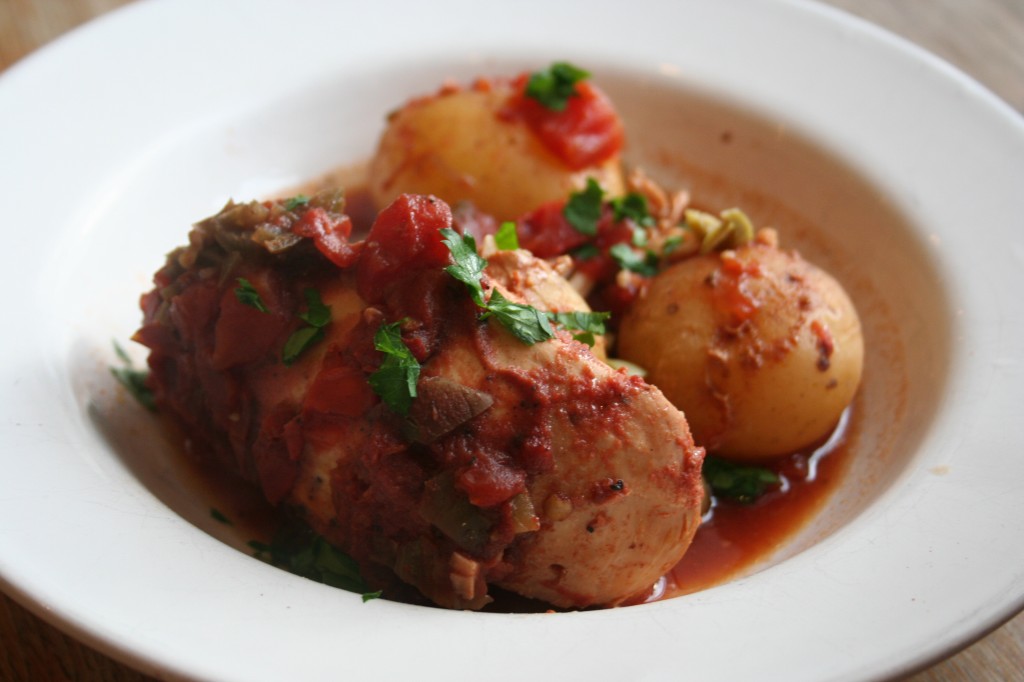
Chicken a la Veracruzana
adapted from Mexican Everyday by Rick Bayless

Serves 6

Rick Bayless suggests using 2 lb (900 g) of pork shoulder or beef chuck, cut into 1‑inch cubes, in place of the chicken. If using pork, he recommends replacing the potatoes with sweet potatoes cut into 1/2‑inch cubes. If using beef, try quartered sweet turnips, cubed carrots or peeled, cubed yuca. Chicken a la Veracruzana can also be used as a soft taco filling — just shred the chicken and stir it into the sauce with the olive and parsley and smash the potatoes into smaller pieces (this is how I served this meal to my kids, with a little grated Cheddar cheese too).

1 lb (450 g) new potatoes (or you could cut 4 medium potatoes into wedges)
6 boneless, skinless chicken breasts
1 x 28-oz (or 2 x 14-oz/400‑g) can diced tomatoes (preferably fire roasted), drained
4 to 6 canned pickled jalapeños, stemmed, deseeded and cut into strips
3 cloves garlic, finely chopped
2 tablespoons Worcestershire sauce
1/8 teaspoon dried thyme
1/8 teaspoon ground cloves
1/4 teaspoon ground cinnamon
1 teaspoon salt
1/2 cup (100 g) coarsely chopped green olives
1/4 cup (loosely packed) (10 g) roughly chopped flat-leaf parsley

Place the potatoes over the bottom of a slow cooker and put the chicken breasts over the potatoes. In a medium bowl, mix together the drained tomatoes, jalapenos, garlic, Worcestershire, thyme, cloves, cinnamon and salt. Pour the sauce evenly over the chicken. Set the lid in place and cook on high for 6 hours (the dish can hold on the slow cooker’s “keep warm” function for 4 more hours or so).

Carefully transfer a chicken breast and a portion of potatoes to each of 6 dinner plates, leaving as much sauce behind as possible. Mix the olives and parsley into the sauce, then taste and season with more salt if it needs it. Spoon the sauce over the chicken and potatoes and serve.

No slow cooker?
Put the chicken in a medium-large heavy pot, preferably a Dutch oven, and top with the potatoes. Cover with the sauce, set the lid in place and braise at 300°F (150°C) for 2 to 2 1/2 hours, until the chicken is completely tender. Complete the dish as described above.

chicken a la veracruzana

***

Barm Brack
adapted from Good Food Channel

Makes 1 loaf

If you want to include the traditional coin and/or ring, wrap them up well in greaseproof paper before adding them to the batter. You’d probably better wash the coin beforehand too. You can also make a yeasted version of barm brack, but you can’t beat this recipe if you want something quick and easy — it takes 10 minutes to make. If you want to elevate brack into a dessert, try this recipe for toffee apples on sugar-glazed barm brack.

3/4 cup (120 g) dark brown sugar
1 1/4 cups (300 ml) strong black tea
2 cups (320 g) raisins
2 tablespoons mixed candied peel
1 egg, beaten
2 cups (240 g) flour
1 heaped teaspoon baking powder
1/2 teaspoon cinnamon
1/4 teaspoon ground nutmeg

Dissolve the sugar in the tea. Add the raisins and candied peel and leave to soak overnight.

The next day, preheat the oven to 325°F (160°C). Grease an 8‑inch loaf tin or small round cake tin. Add the beaten egg to the raisins and peel as well as their soaking liquid. Sift in the flour, baking powder, cinnamon and nutmeg and stir well. Spoon the batter into the tin (add the charms now if you’re using them) and bake for 50 to 60 minutes, until a tester comes out clean. This is traditionally served toasted and buttered with a cup of tea.

Fish Pie with Sauteed Carrots and Pumpkin Seed Brittle

At the office where my husband worked for 10 years in Drogheda, there’s a fantastic fishmonger just down the street. Matt tended to stop in to buy fish there at least once a week, eventually getting to be on first-name terms with them. Since September, though, Matt has been based in the Dublin office. The move has brought lots of changes, not least of which is the fact that getting fish is now a lot harder than it used to be and we don’t eat as much of it as we used to. (I don’t suppose anyone knows a good fishmonger around Parnell Square in Dublin?) But any time we have to run errands in Drogheda instead of our own town, we make a point of stopping in to get something. I had to go tthere recently and jumped at the chance to pick up some of the fishmonger’s own fish pie mix, a combination of salmon, smoked haddock and white fish. If you’re lucky enough to have a fishmonger near you, they might do something similar. Otherwise, just use the fish called for in the recipe.

fish pie (before)

Fish Pie
adapted from Apples for Jam by Tessa Kiros

Serves 5

I sometimes add diced carrots and celery along with the mushrooms to pack in some extra veggies. You could also try adding a few chopped shallots.

for the sauce:
2 tablespoons (30 g) butter
1/4 cup (30 g) all-purpose flour
1 1/4 cup (300 ml) vegetable broth, warmed
1/2 cup (120 ml) cream

for the pie:
4 tablespoons (60 g) butter
1 clove garlic, chopped
7 oz (200 g) mushrooms, sliced
2 tablespoons white wine
1 lb 2 oz (500 g) skinless halibut, cod or snapper fillets
1 lb 2 oz (500 g) raw prawns, peeled and deveined
2 tablespoons chopped parsley
2 lb 4 oz (1 kg) potatoes, peeled and cut into chunks
3/4 cup (185 ml)  milk, warmed
lemon wedges, to serve

Preheat the oven to 400°F (200°C) and butter a large ovenproof dish (or you could do individual serving dishes).

To make the sauce, melt the butter in a small saucepan and then stir in the flour. Cook for 1 minute or so over a medium heat and then add the broth, whisking well to make a smooth sauce. Let it bubble up for a few minutes and then stir in the cream. Taste for salt and pepper (your broth will probably be seasoned already).

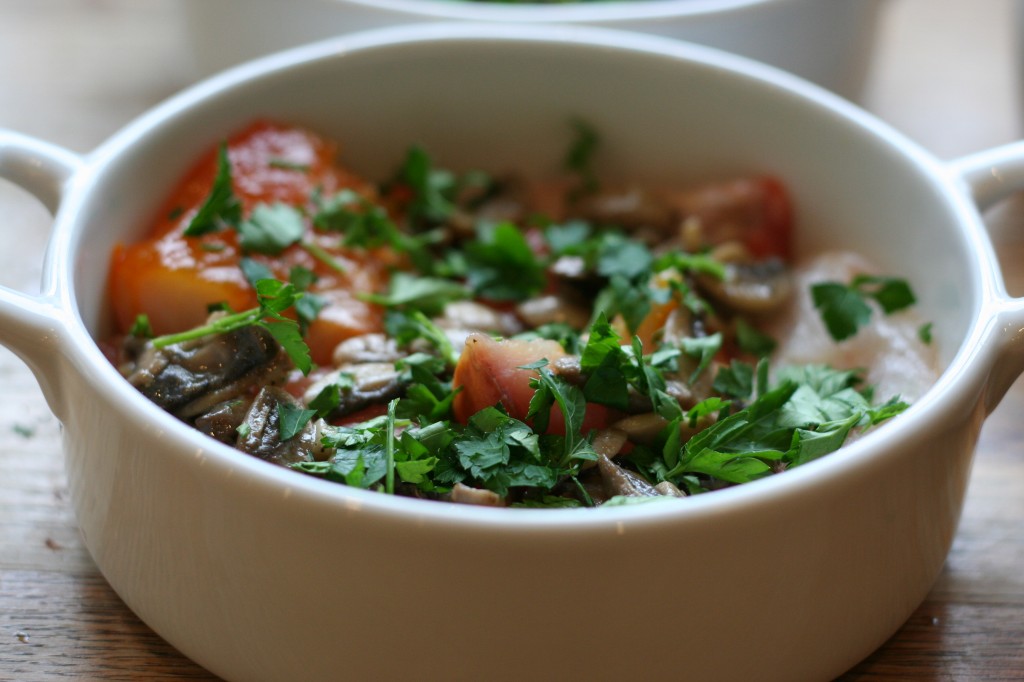
To make the pie, heat 1 tablespoon (30 g) of the butter and the garlic in a frying pan, and when it’s sizzling, add the mushrooms and a little salt. Saute over a high heat, stirring the mushrooms around with a wooden spoon until all the juices have evaporated and they turn golden. Add the wine and some pepper and cook until the wine has evaporated. Remove from the heat.

Cut the fish into large, 2‑inch chunks and put in the bottom of your dish(es). Scrape the mushrooms over the fish, then add the prawns. Scatter with the parsley and a few grinds of pepper. Pour the sauce over the top.

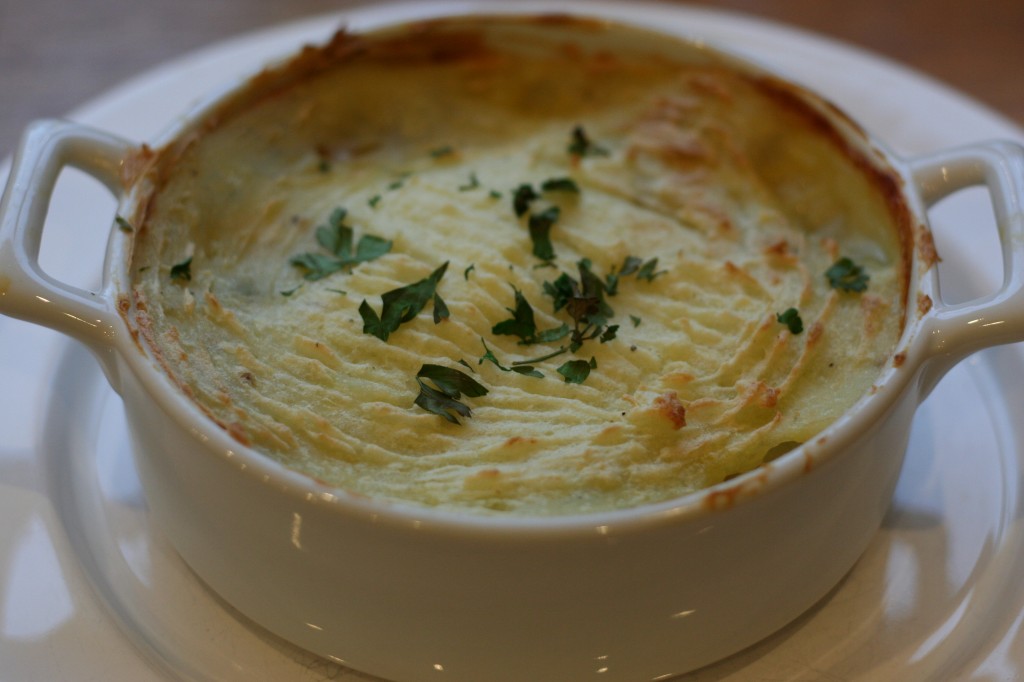
Meanwhile, boil the potatoes in salted water until soft. Heat the remaining butter in the milk. Drain the potatoes and mash them. Beat in the rest of the butter and the warm milk and season, if necessary.

Arrange the mash over the top of the fish and sauce, then bake for 30 to 45 minutes, until the mash is golden in places and the sauce is bubbling up underneath. Leave it to stand for 5 to 10 minutes before serving with lemon wedges.

fish pie (finished)

***

Sauteed Carrots
from Barefoot Contessa Family Style by Ina Garten

Serves 6

2 lb (900 g) carrots
1/3 cup (80 ml) water
1 teaspoon kosher salt
1/4 teaspoon freshly ground black pepper
2 tablespoons (30 g) unsalted butter
1 1/2 tablespoons chopped fresh dill or flat-leaf parsley

Peel the carrots and cut them diagonally in 1/4‑inch slices. Place the carrots, water, salt, and pepper in a large (10- to 12-inch) saute pan and bring to a boil. Cover the pan and cook over a medium-low heat for 7 to 8 minutes, until the carrots are just cooked through. Add the butter and saute for another minute, until the water evaporates and the carrots are coated with butter. Off the heat, toss with the dill or parsley. Sprinkle with salt and pepper and serve.

***

Pumpkin Seed Brittle
from Feast by Nigella Lawson

Serves 8

1 1/4 cups (250 g) sugar
1/2 cup (120 ml) water
1/4 teaspoon cream of tartar
1 cup (125 g) green pumpkin seeds

Cover a baking sheet with a Bake-O-Glide, Silpat or other reusable parchment, or tear off some aluminum foil and lightly oil it. Dissolve the sugar, water and cream of tartar in a saucepan over a low heat. Turn the heat up and bring the mixture to a boil but do not stir. Let the syrup bubble over a fairly high heat for about 10 minutes, until it turns a deep golden amber color. Don’t be tempted to wander away, make a phone call or leave the pan unattended, as the syrup could caramelize sooner.

Quickly tip the pumpkin seeds into the amber-colored syrup, swirl the pan so that they become evenly coated and then take off the heat. Pour the syrup immediately onto the Bake-O-Glide or oiled-foil-lined tray, trying to spread the molten liquid in a thin layer. It is possible to spread the brittle with a palette knife if it has mounded too much, but move fast: you will have only a short time to do this before it begins to set. Leave the brittle to cool and harden completely before breaking it into pieces.

Curried Parsnip and Apple Soup with Parsnip, Parmesan and Sage Bread

Smugglers Creek Inn in County Donegal is one of my favorite places to eat in Ireland. You can’t beat it in terms of location and atmosphere — dating back to 1845, this restaurant, pub and B&B is perched on a cliff overlooking Rossnowlagh beach and Donegal Bay, with the Bluestack Mountains in the distance. If you’re really lucky, you can nab one of the chairs in front of the open fire in the pub and settle in to have a pint before dinner. The restaurant specializes in seafood, but I still remember the curried parsnip and apple soup Matt ordered the first time we went there. I probably played it safe and ordered seafood chowder, thinking a parsnip and apple soup sounded odd, not to mention a curried one at that. But it was outstanding, and I’ve been making it myself at home ever since. Paired with this bread, it’s one of our favorite fall dinners, and is always one of the first soups I make once the weather turns cool.

Curried Parsnip and Apple Soup

Serves 4

4 tablespoons (60 g) butter
1 onion, chopped
1 teaspoon fresh root ginger, chopped (optional)
1 heaped teaspoon Thai green curry paste (or 1 tablespoon curry powder)
1/2 teaspoon ground cumin
1 lb (450 g) parsnips, peeled and chopped (1 or 2 parsnips, depending on size)
2 Granny Smith apples, peeled and chopped
1 medium potato, peeled and chopped
1 3/4 pints (1 liter) vegetable stock
salt and freshly ground black pepper
1/2 cup (120 ml) plain yogurt or crème fraîche, to serve

Melt the butter in a pot, then add the onion, ginger, curry paste and cumin, cooking until the onions turn yellow, about 4 minutes. Add the parsnips, apple and potato and stir over a medium heat to coat the vegetables. Add the stock and bring to the boil, then cover and simmer for 30 minutes. Puree in a blender or food processor, then return to the pot and season to taste. To serve, ladle the soup into a bowl and swirl in a spoonful of yogurt or crème fraîche.

***

Parsnip, Parmesan and Sage Bread
from Delia’s How to Cook: Book One by Delia Smith

Makes 1 loaf

If you want to serve this with the curried parsnip and apple soup and are worried the sage won’t compliment the soup, just leave it out (though I don’t mind it).

2 cups (240 g) self-raising flour
1 1/2 teaspoons salt
6 oz (170 g) parsnips (peeled weight, about 1 big parsnip)
2 oz (60 g) Parmesan, cut into 1/4‑inch cubes, plus extra shavings for the topping
1 rounded tablespoon chopped fresh sage (or 1 teaspoon dried)
2 large eggs
1 tablespoon milk
olive oil, for drizzling

Preheat the oven to 375°F (190°C). Line a baking sheet with parchment paper (or grease it very well) and set aside.

Sift the flour and salt into a large, roomy bowl, then put a grater directly in the bowl and coarsely grate the parsnips into the flour, then toss them around. After that, add the cubes of Parmesan and chopped sage and toss that in. Now lightly beat the eggs and milk together, then add this to the bowl a little at a time, mixing evenly with a wooden spoon. What you should end up with is a rough, rather loose, sticky dough, so don’t worry what it looks like at this stage. Transfer this to the baking sheet and pat it gently into a 6‑inch rough round, then make a cross on top with the blunt side of a knife. Now scatter the Parmesan shavings over the surface, followed by a sprinkling of flour. Finally, drizzle with just a little bit of olive oil.

Bake for 45 to 50 minutes, by which time it will be golden and crusty. Allow to cool on a wire rack. Serve while it’s still warm or reheat it later.

Casserole Provençale and Crunchy Chocolate Bakewell Tart

We’re excited to announce our first giveaway at Dinner du Jour! Thanks to Gill & Macmillan, I have a copy of From Brenda’s Kitchen: 100 Favourite Recipes by Brenda Costigan to give away* to a reader.

Brenda Costigan is one of Ireland’s most renowned cookery writers. A weekly food columnist for the Sunday Independent Life magazine, she has also written three other bestselling cookbooks. This book, written with busy families in mind and suitable for cooks of all abilities, features some of the most popular recipes from her column as well as many new favorites.

To be in with a chance of winning From Brenda’s Kitchen: 100 Favourite Recipes, just leave a comment in this post telling us what some of your favorite recipes are. The competition will close at 12:00 (Irish time) on Monday, November 9th and a winner will be chosen randomly from the comments.

brenda cover

Casserole Provençale
adapted from From Brenda’s Kitchen: 100 Favourite Recipes by Brenda Costigan

Serves 5 to 6

Brenda says you shouldn’t hold back on the olives, as they give a wonderful flavor to the finished dish. It’s also preferable to use fresh herbs rather than dried here.

for the marinade:
1 1/4 cups (300 ml) red wine
1/4 cup (60 ml) brandy (optional)
sprigs of fresh thyme
sprigs of fresh rosemary
2 bay leaves
2 cloves garlic, chopped
salt and freshly ground black pepper

for the casserole:
2 1/4 lb (1 kg) stewing beef, cut into generous bite-sized chunks
4 tablespoons olive oil
1 rounded tablespoon flour
7 oz (200 g) rashers or bacon, chopped (Brenda likes to use smoked rashers/bacon)
2 large onions, sliced
2 cloves garlic, chopped
6 oz (170 g) button mushrooms, halved
2 large carrots, peeled and sliced
3 to 5 oz (75 to 150 g) pitted black or green olives
1 x 14-oz (400‑g) can of chopped tomatoes
1 3/4 cups (400 ml) hot beef stock
salt and freshly ground black pepper

Put all the marinade ingredients into a bowl and stir well to combine. Add in the beef and mix well. Cover with clingfilm and allow to marinate in the fridge for a few hours. Stir once or twice if you think of it.

Preheat the oven to 325°F (160°C).

Lift the meat out of the marinade with a slotted spoon (keep the marinade). Pat the meat dry with paper towels and fry in small batches until browned in the olive oil, then transfer to a casserole or heavy saucepan. Add the flour to the browned meat and toss together. Fry the rashers until golden and add to the meat.

Lightly brown the onions in the pan. Add the garlic and then the mushrooms, then add this onion mixture to the casserole. Add the carrots, olives and tomatoes to the casserole.

Pour the marinade, including the herbs, into the pan the meat etc. was browned in and bring to the boil, making sure to scrape up all the bits on the bottom of the pan. Boil for 1 to 2 minutes to reduce the amount of liquid a bit and to intensify the flavor. Add the beef stock and simmer for a few minutes to heat it up, then pour the hot liquid directly into the casserole. The liquid should just about cover the meat and vegetables. Add very little salt, if any, because the rashers and olives are already salty. Add freshly ground black pepper and stir everything together. If necessary to make the lid fit more snugly, cover the casserole with a layer of baking parchment or tinfoil, then put on the lid (this helps to prevent evaporation).

Cook in the oven for 2 1/2 to 3 hours, or until the meat is really tender. Discard the sprigs of fresh herbs before serving. Serve with mashed potatoes or boiled potatoes and a green vegetable of your choice.

***

Crunchy Chocolate Bakewell Tart
adapted from From Brenda’s Kitchen: 100 Favourite Recipes by Brenda Costigan

Serves 8

Brenda says this tart is one of her favorites — rich and moist, it keeps for up to 2 weeks. Brenda has used a base of crushed digestives and butter instead of the more traditional pastry base. For a touch of luxury, serve the tart with the fruits of the forest sauce (or 12 oz (340 g) mixed fresh summer berries) and some whipped cream.

Note: If the baking tin sizes recommended here aren’t adhered to, the cakes may be thicker (if smaller) or thinner (if larger), which can affect the cooking times.

for the crushed biscuit base: 
7 oz (200 g) digestive biscuits, crushed (or you can substitute graham crackers)
1/2 cup (110 g) butter, melted

for the filling: 
4 to 5 tablespoons blackcurrant jam, softened (not fridge cold)
3/4 cup (170 g) butter, softened
3/4 cup (150 g) sugar
3 large eggs
1/2 teaspoon almond extract
3 1/2 oz (100 g) chopped blanched almonds
3 1/2 oz (100 g) ground almonds
5 oz (150 g) dark chocolate, melted and partly cooled
small handful of flaked almonds

for the fruits of the forest sauce:
juice of 1 large orange
12 oz (340 g) frozen fruits of the forest or summer fruits
1/4 to 1/3 cup (50 to 75 g) sugar
1 heaped teaspoon cornflour

3/4 cup (175 ml) lightly sweetened whipped cream, to serve

You will also need a springform tin 9 inches in diameter

Preheat the oven to 375°F (190°C).

To make the biscuit base, mix the crushed biscuits and melted butter together and spread in an even layer over the base of the tin, pressing the mixture down firmly. Bake in the oven for about 5 minutes, just to lightly crisp the biscuits. There will be no change in the appearance. Stand the tin on a wire tray to cool while you prepare the filling.

Reduce the oven to 325°F (170°C).

To make the filling, place the jam in a small bowl and stir briskly with a spoon in order to make it looser and more spreadable. Spread the jam carefully in a thin layer over the cooled biscuit base, leaving a 1‑inch margin all the way around. This is to ensure that the jam doesn’t ooze out at the edges and get too highly baked on the sides, spoiling the appearance of the finished cake.

Beat the butter and sugar together in a bowl until soft. Add in the eggs, one at a time, and almond extract and beat well. Mix together the chopped almonds and the ground almonds and stir into the butter/sugar mixture, then stir the melted chocolate through. Pour into the tin over the biscuit base and scatter the flaked almonds over the surface.

Bake for about 40 minutes –- start at the higher temperature and lower if halfway through if the tart is cooking too quickly. It’s ready when the almond mixture has become set on the outside but is still slightly wobbly in the center. Stand the tin on a wire tray for about 15 minutes to allow it to cool. With a sharp knife, loosen the edges, then release the spring clip sides of the tin and leave the tart to cool completely.

To make the sauce, put the orange juice and frozen berries into a saucepan. Cook gently to thaw, then add the sugar and stir to dissolve. Blend the cornflour with a dribble of water and some of the hot liquid from the saucepan. Mix well, then stir the cornflour mixture into the berries in the saucepan. Bring to the boil, stirring to thicken. If a thicker consistency is required, more cornflour can be added (in the same way). Taste for sweetness.

To serve, carefully slide the tart off the base of the tin onto a serving plate. Serve each slice topped with the fruits of the forest sauce (or fresh berries) and some whipped cream.

*In the interests of full disclosure, I was involved with the production of this book and the publishers, Gill & Macmillan, generously gave me a copy to give away here.

Pasta with Chickpeas (Pasta e Ceci) and Ginger Cookies

I always feel better knowing there’s a can of chickpeas in the pantry, since I can turn it into a quick lunch with some couscous, lemon and diced feta. Or I can turn it into one of my favorite kitchen cupboard dinners — you know the kind, the ones you pull together from whatever you have lurking in the pantry or at the back of the crisper in the fridge, usually on the night before you do your grocery shopping when there’s nothing else in the house — spaghetti with chickpeas, lemon juice, parsley and freshly grated Parmesan, a recipe I picked up from Denis Cotter’s Paradiso Seasons. Jamie Oliver calls this a cousin of pasta e fagioli, the traditional Italian peasant dish of beans and pasta, so if you like that dish, chances are good you’ll like this one too.

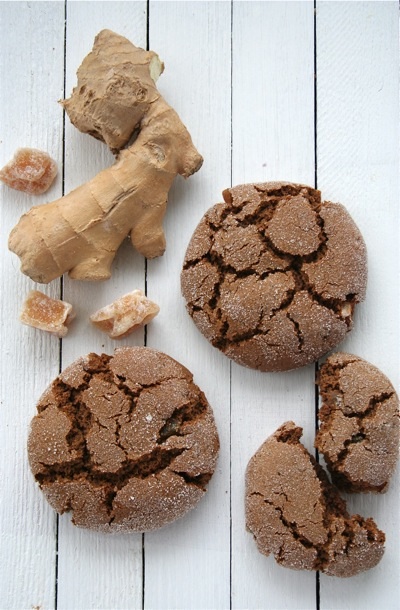
But enough about soup. Let’s talk about these cookies. Ina Garten really knows how to make perfect autumn food — first it was her date nut spice bread, and now these cookies. Both recipes use a combination of cinnamon, nutmeg and cloves that creates an atmosphere while you’re baking them that you want to wrap yourself up in. I gave one of the cookies to the woman who delivers our organic fruit and veg, and the first thing she did was hold it up to her nose to smell it and sigh appreciatively. I said before that the date nut spice bread might be the best thing I bake this autumn, but these cookies are a close contender.

Pasta with Chickpeas (Pasta e Ceci)
adapted from Jamie’s Italy by Jamie Oliver

Serves 4

1 small onion, finely chopped
1 stick of celery, finely chopped
1 garlic clove, finely chopped
extra virgin olive oil
1 sprig of fresh rosemary, leaves picked and finely chopped
2 x 14-oz (400‑g) cans of chickpeas
2 1/4 cups (540 ml) chicken or vegetable stock
3 1/2 oz (100 g) ditalini or macaroni
sea salt and freshly ground black pepper
a small handful of chopped fresh basil or parsley, to serve
freshly grated Parmesan cheese, to serve
crusty bread, to serve

Put the finely chopped onion, celery, and garlic into a saucepan with a little extra virgin olive oil and the rosemary and cook as gently as possible, with the lid on, for 15 to 20 minutes, until all the vegetables are soft, without any color.

Drain the chickpeas well and rinse them in cold water, then add them to the pan and cover with the stock. Cook gently for 30 minutes. Using a slotted spoon, remove half the chickpeas and put them to one side in a bowl.

Puree the soup in the pan using a handheld immersion blender. (If you don’t have one, you can whiz it up in a food processor instead, then pour it back into the pan.) Add the reserved whole chickpeas and the pasta, season the soup with salt and pepper, and simmer gently for about 15 minutes, until the chickpeas are tender and the pasta is cooked.

At this point, if the soup is a little thick, pour in some boiling water from the kettle to thin it down, and add more salt and pepper if needed. Serve drizzled with good-quality extra virgin olive oil and sprinkled with some basil or parsley and Parmesan cheese. Serve some warm crusty bread alongside.

***

The Barefoot Contessa’s Ultimate Ginger Cookies
adapted from The Barefoot Contessa at Home by Ina Garten

Makes 16 cookies

2 1/4 cups (270 g) all-purpose flour
1 teaspoon baking soda
2 teaspoons ground cinnamon
1 1/2 teaspoons ground cloves
1/2 teaspoon ground nutmeg
1/2 teaspoon ground ginger
1/4 teaspoon kosher salt
1 cup (170 g) dark brown sugar, lightly packed
1/4 cup (60 ml) vegetable oil
1/3 cup (80 ml) unsulfured molasses or black treacle
1 extra-large egg, at room temperature
1 1/4 cups (170 g) chopped crystallized ginger
granulated sugar, for rolling the cookies

Preheat the oven to 350°F (180°C). Line 2 sheet pans with parchment paper.

In a large bowl, sift together the flour, baking soda, cinnamon, cloves, nutmeg, ginger, and salt and then combine the mixture with your hands. In the bowl of an electric mixer fitted with the paddle attachment, beat the brown sugar, oil, and molasses on medium speed for 5 minutes. Turn the mixer to low speed, add the egg, and beat for 1 minute. Scrape the bowl with a rubber spatula and beat for 1 more minute. With the mixer still on low, slowly add the dry ingredients to the bowl and mix on medium speed for 2 minutes. Add the crystallized ginger and mix until combined.

Scoop the dough with 2 spoons or a small ice cream scoop (I used a 1/4 cup measuring cup, which is 90 g of dough). With your hands, roll each cookie into a 1 3/4‑inch ball and then flatten them lightly with your fingers. Press both sides of each cookie in granulated sugar and place them on the sheet pans. Bake for exactly 13 minutes. The cookies will be crackled on the top and soft inside. Let the cookies cool on the sheets for 1 to 2 minutes, then transfer to wire racks to cool completely.

Chicken Braised with Chicory and Crème Fraîche, Green Beans with Lemon and Olive Oil, Roast New Potatoes, and Baileys Cream Pots

In the short story ‘Simon’s Luck’ by Alice Munro, a woman, Rose, goes to the grocery store to stock up before a guest arrives:

“You must’ve brought home company,” said the woman who kept the store. She spoke with no surprise or malice or censure, just a comradely sort of envy.

“When I wasn’t expecting it.” Rose dumped more groceries on the counter.  […] “Look at that bacon. And cream.”

“I could stand a bit of it,” the woman said.

What’s this then? You mean not everyone includes bacon and cream as part of their weekly shop? I never considered them to be foods reserved only for guests, since they’re pretty much staples in my fridge. Still, when I have company, I do tend to pull out all the stops at the grocery store, like Rose, and all my recent entertaining meant there was plenty of bacon and cream to go around.

This is my go-to menu if we have company for dinner. The great thing about it is that you can prepare the chicken, then bang it into the oven to happily cook for an hour, giving you plenty of time to clean up the kitchen before your guests arrive, plus visit with them before dinner. The roast potatoes can cook in the hot oven along with the chicken and the Baileys cream pots can be made up to a day ahead, so all you have to do is prep the green beans ahead of time, then boil them when you’re just about ready to sit down to eat. I know chicken braised with chicory and crème fraîche might not sound like much on paper, but I think everyone I’ve ever served this to has asked for the recipe afterward, with some friends stopping just short of licking their plates. But don’t wait for company to come over to make this — it’s a great meal for any weekend when you have a bit of extra time to cook (and when you can lick the plate with no one watching).

Chicken Braised with Chicory and Crème Fraîche
adapted from Real Food by Nigel Slater

Serves 4

Don’t worry if you can’t get chicory, I make this without it more often than not and it’s still fantastic.

3 tablespoons groundnut oil
a thick slice of butter
4 chicken breasts
4 heads of chicory, cut in half lengthwise
1 tablespoon brown sugar
4 shallots, peeled and finely chopped
juice of 1 lemon
3/4 cup (175 ml) medium-dry white wine
1 cup (240 ml) crème fraîche
a few sprigs of parsley, chopped

Preheat the oven to 400°F (200°C).

Heat the groundnut oil with the butter in a large, deep, heavy casserole, ideally one to which you have a lid, on the stove top. When the butter starts to bubble, carefully put in the chicken (in 2 batches if you need to) and cook them until they’re golden brown on each side. Try not to move them too often, that way you’ll get a nice brown crust on the skin.

Lift the chicken out of the pan and set aside. On no account get rid of the sticky bits on the bottom of the pan, that’s where much of the flavor is. Put the chicory in the dish, then season with the sugar and some salt and pepper. Let it cook over a moderate heat until the outside leaves start to caramelize and darken and soften, about 5 minutes. (If you’re not using the chicory, add the sugar, salt and pepper along with the shallots and lemon juice in the next step.)

Add the shallots and lemon juice, then return the chicken to the pan. Pour over the wine and bring to the boil. Turn the heat down and simmer for about 10 minutes, until the wine and cooking juices have reduced a bit. Spoon in the crème fraîche, season with salt and pepper and stir as best you can so that the juices mingle with the cream. Cover with a lid (or just tightly with aluminum foil) and put in the oven for about 1 hour. Move the pieces of chicken and chicory around halfway through cooking.

After 1 hour, lift the chicken and chicory out of the sauce with a draining spoon and put on the plates. Add the parsley to the sauce in the pan, give it a bit of a stir, then pour the sauce over the chicken. (If the sauce is too thin, simmer it on the stove top for a few minutes until it thickens.)

***

Green Beans with Lemon Juice, Sea Salt and Olive Oil
adapted from Rachel’s Favourite Food by Rachel Allen

Serves 4 to 6

Not only is this good hot, served with fish or chicken, but it’s also great served at room temperature. You can also use it as a base for a fresh, light salad –- add thinly sliced red onions, some cannellini beans or chickpeas (drained from the can), canned tuna and crumbled feta cheese for a fabulous and nutritious packed lunch or summer supper (also good in a pitta bread).

1 level teaspoon salt
1 lb 2 oz (500 g) green beans
2 tablespoons extra virgin olive oil
juice of 1/2 lemon
sea salt and freshly ground black pepper

Put a large pot of salted water on to boil. Top and tail the beans and cut in half at an angle, if you wish. Add to the boiling water and put the lid back on until the water comes back to the boil. As soon as it does, take the lid off to keep the beans’ bright green color and continue to cook on a high heat until the beans are just cooked, but still have a bit of bite. Drain and immediately add the olive oil, lemon juice and sea salt and pepper to taste. You must dress the beans while hot so that they soak up the fresh citrus flavor.

***

Bailey’s Cream Pots
from Full on Irish by Kevin Dundon

Serves 4

1 1/4 cup (300 ml) cream
4 tablespoons Baileys Irish Cream
1/4 cup (60 ml) freshly brewed espresso, cooled (or very strong coffee)
9 oz (250 g) mascarpone cheese
2 tablespoons icing sugar, sifted, plus extra for dusting

to serve:
chocolate curls (optional)
cocoa powder (optional)
shortbread cookies

Whip the cream in a bowl until soft peaks have formed. Place the Baileys in a separate bowl with the coffee, mascarpone and icing sugar. Beat until well combined, then fold in the cream. Divide between four ramekins or small cups and chill for at least 2 hours, or overnight.

To serve, arrange the Baileys pots on serving plates and decorate with chocolate curls. Add the shortbread on the side and lightly dust with icing sugar and cocoa powder.

Roast Chicken with Bacon and Coffee Spice Rub, Sweet Potato Puree and Apple Cranberry Oat Crumble

I love bacon and I love coffee, so when I read about this roast chicken recipe last month, taken from Zingerman’s Guide to Better Bacon, it immediately got my attention. I usually gloss over recipes that call for highly specific, hard-to-find ingredients like this coffee rub*, but it just so happens that my in-laws live in Ann Arbor, Michigan, home of the Zingerman’s deli that sells it. It also just so happens that my father-in-law recently came over to Ireland, so I asked him if he could pop into Zingerman’s to pick up a jar of this rub for me, with the promise that I’d make this recipe for him when he came to see us if he did. He came through and got me a jar, and I held up my end of the deal and made this dinner.

For the menu planning, I took my cue from Caroline Russock at Serious Eats, who said this recipe is like a one-dish Thanksgiving dinner, and she was right (and in fact, the rub was originally developed to season Thanksgiving turkey). The layers of bread, onions and apples underneath the chicken basically turn into stuffing — but stuffing that has been flavored with the butter and lemon juice from the chicken as well as its drippings. I kept things simple by only serving a sweet potato puree alongside the chicken and stuffing, but like Caroline says, this recipe lends itself to any of your favorite Thanksgiving or holiday side dishes. If you’re starting to think about what to serve for the holidays this year, try this coffee spice rub on the turkey or even roast potatoes for a change from your usual standbys.

*US customers can buy Zingerman’s Coffee Spice Rub online. But don’t dismiss this recipe if you can’t get the rub — this is still delicious if you simply season the chicken with salt and pepper. I did just that on a quarter of the chicken because I was making this meal to serve to my two little kids as well, and I knew the coffee rub would be too strong for them (plus it does have some zip to it). When I run out of this rub, I’ll continue to make this just with salt and pepper.

Roast Chicken with Bacon and Coffee Spice Rub
adapted from Zingerman’s Guide to Better Bacon by Ari Weinzweig (recipe via Serious Eats)

3 tablespoons olive oil
2 large onions, cut in half lengthwise and sliced into thin half-circles
4 stalks celery, cut into 1/8‑inch-thick slices
1 1/4 lb (570 g) tart apples (3 medium or 4 small apples), unpeeled and chopped into 1/2‑inch dice
1 cup (160 g) dried currants (or raisins)
1 clove garlic, minced
1/2 teaspoon dried thyme or 1 tablespoon fresh thyme
1 tablespoon lemon zest
1 teaspoon coarse sea salt
1 teaspoon freshly ground black pepper
1/4 cup (10 g) parsley, chopped
2 tablespoons butter, plus extra for greasing the roasting tin
1/2 loaf leftover counrty bread, such as a good crusty white loaf, sliced 3/4‑inch
6 slices of bacon
1 roasting chicken (3 to 4 lb/1.4 to 1.8 kg), split in half and backbone removed (get your butcher to do this for you)
2 to 3 tablespoons Zingerman’s Coffee Spice Rub (or substitute coarse sea salt and freshly ground black pepper)
1/4 cup freshly squeezed lemon juice

Preheat the oven to 400°F (200°C).

Heat the olive oil in a large skillet over a low heat. Add the onion and celery. Cover and sweat, stirring occasionally, for 15 minutes, or until soft. Add the apple, currants, garlic, thyme, lemon zest, salt, and pepper. Stir to mix. Cook, covered, until the onions and celery are translucent, about 5 to 7 more minutes. Remove from the heat, stir in the parsley and set aside.

Lightly smear the bottom and sides of a 15-inch oval roasting pan (or other large ovenproof casserole dish) with butter. Arrange the bread slices to cover the entire bottom of the baking dish. (If the bread is too big to fit easily, simply cut the slices into smaller pieces so that they tile the entire bottom of the dish properly.)

Layer the onion and apple mixture on top of the bread. Place the chicken, skin side up, over the onion mixture and bread. Rub it with 2 tablespoons of butter and 2 to 3 tablespoons of the coffee rub (or just season generously with coarse sea salt and freshly ground black pepper). Pour the lemon juice over the chicken, then lay the bacon slices across the top of the chicken.

Place the entire dish in the oven and cook, uncovered, for 45 minutes. After this time, check that the bacon has crisped on top of the chicken. Once it has, pull it off the chicken and lay it directly onto the bread mixture so that the chicken can brown. Change the oven function to broil, but continue at 400°F (200°C). The chicken should be done in 15 to 20 minutes; the skin should be nicely crisped and the juices should run clear when the bird is pricked with a fork.

Remove the pan from the oven and remove the chicken to a cutting board and cut it into quarters. Draw a sharp knife through the bacon, bread, and onion mixture to break it up. Spoon some of the mixture onto each plate and place the chicken on top.

***

Sweet Potato Puree with Goat’s Cheese and Smoked Paprika*

Serves 6 to 8

*Amanda Hesser and Merrill Stubbs chose this recipe as one of their editors’ picks at Food52!

If you’re making this for the holidays (or any day) and are pressed for time or oven space, you can just boil the potatoes in a large saucepan of boiling salted water for 10 to 15 minutes, though you’ll lose that extra depth of flavor you get from roasting them.

3 lb (1.4 kg) sweet potatoes
4 oz (110 g) goat’s cheese
1/2 teaspoon smoked paprika
salt and freshly ground black pepper

Preheat the oven to 400°F (200°C).

Line a baking sheet with aluminum foil. Prick the potatoes with a fork and place them on the foil-lined baking sheet. Bake for 1 to 1 1/2 hours, until the potatoes are tender. (If using very large potatoes, make sure they are cooked all the way through.) Remove from the oven and allow to cool.

When the potatoes are cool enough to handle, peel them or scoop out the flesh with a spoon and transfer to a food processor. Add the goat’s cheese and smoked paprika and process until the mixture is smooth. Taste the puree to see if it needs more paprika. Season to taste with salt and pepper.

Gently reheat the puree either in a saucepan over a medium heat or in a microwave. Serve immediately.

***

Apple and Cranberry Oat Crumble
adapted from Rustic Fruit Desserts by Cory Schreiber and Julie Richardson

Serves 8 to 12

This crumble is best served the day it’s made, but any leftovers can be wrapped in clingfilm and kept at room temperature for 2 or 3 days. Reheat in a 300°F (150°C) oven for 10 to 15 minutes, until warm.

for the topping:
2 cups (200 g) rolled oats
1 1 /2 cups (180 g) flour
1 1 /3 cups packed (230 g) brown sugar
1/2 teaspoon salt
3/4 cup (170 g) unsalted butter, melted

for the fruit filling:
8 large apples, peeled, cored and sliced 1/4‑inch thick (3 1/2 lb/1.5 kg prepped)
2 cups (225 g) cranberries, fresh or frozen, or 1 cup (100 g) dried cranberries
1 1/3 cups (275 g) sugar
2 tablespoons cornstarch
2 teaspoons ground cinnamon

vanilla ice cream, whipped cream or custard, to serve

Preheat the oven to 375°F (190°C). Butter a 3‑quart (3‑liter) baking dish.

To make the topping, mix the oats, flour, brown sugar and salt together in a bowl. Stir in the butter, then press the topping together with your hands to form small clumps. Put the topping in the freezer while you assemble the filling.

To make the filling, toss the apples, cranberries, sugar, cornstarch and cinnamon together in a large bowl. Transfer the filling to the prepared pan and spread it out, pressing the fruit down into the corners.

Press the oat crumble evenly over the fruit, then bake for 60 to 70 minutes. Cool for 20 minutes or so to temper the heat before serving, then top with a scoop of vanilla ice cream, a small dollop of whipped cream or warm custard served on the side.