All posts by Kristin

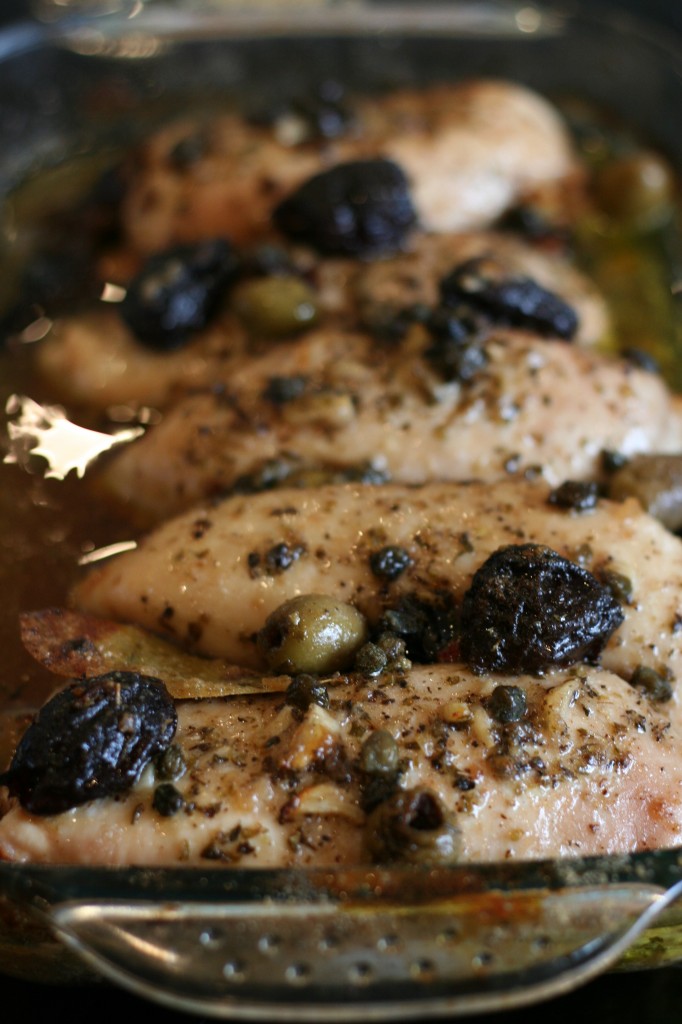
Chicken Marbella

I hadn’t heard of Shelia Lukins or her gourmet food shop, The Silver Palate, until she passed away last month. Then she was all over the news on food blogs, most of which couldn’t mention her without also mentioning Chicken Marbella, her most famous recipe. After reading all the rave reviews of it, I was curious to give it a try myself. I made the marinade on Sunday night, with Matt and my father-in-law, who had come over for dinner, looking on. “I don’t know about this. Prunes? Olives? Capers? This looks kind of weird to me,” I said, doubtfully pouring it over the chicken. But all those reviews were right — it really is a good dish, though granted, you probably need to be a fan of strong, briny flavors to enjoy it.

This is a perfect weeknight meal, since all you have to do is make the marinade the night before (which takes no more than 10 minutes), then pop it in the oven when you get home and boil up some rice to serve it with. It can be served hot or at room temperature, which means it travels well and makes great picnic food. Or you could use small drumsticks and wings to make it into an hors d’oeuvre. All in all, it’s a handy recipe to have in your repertoire.

I didn’t set out to tamper with such a classic (you can see the unadulterated version of the recipe here), but I wound up adapting this to use boneless, skinless chicken breasts rather than the whole quartered chickens called for in the original. I also misread the recipe when I made this and cooked the chicken right in the casserole dish with the marinade it had been sitting in overnight (rather than transferring the chicken to a different baking pan like the original says to), and it came out perfectly fine. Reading the reviewer comments of this recipe at Epicurious, it sounds like you’ll get a nicely caramelized crust if you use chicken pieces with the skin still on, so I’m going to stick closer to the original next time.

chicken marbella

Chicken Marbella
adapted from Silver Palate Cookbook by Julee Rosso and Shelia Lukins

Serves 6

To serve Chicken Marbella cold, cool to room temperature in the cooking juices before transferring the pieces to a serving platter. If the chicken has been covered and refrigerated, reheat it in the juices, then allow it to come to room temperature before serving. Spoon some of the reserved juice over the chicken.

6 boneless, skinless chicken breasts
1/2 head of garlic, peeled and finely puréed (I mashed the cloves in a mortar and pestle)
2 tablespoons dried oregano
coarse salt and freshly ground black pepper
1/4 cup (60 ml) red wine vinegar
1/4 cup (60 ml) olive oil
1/2 cup (100 g) pitted prunes
1/4 cup (50 g) pitted Spanish green olives
1/4 cup (70 g) capers with a bit of juice
3 bay leaves
1/2 cup (85 g) brown sugar
1/2 cup (120 ml) white wine
2 tablespoons fresh Italian parsley or cilantro, finely chopped
rice, couscous or mashed potatoes, to serve

Whisk the olive oil and vinegar together, then add the prunes, olives, capers and their juice, bay leaves, garlic, oregano and salt and pepper in a large bowl or measuring jug. Arrange the chicken in a single layer in an ovenproof casserole dish and pour the marinade over, stirring to coat. Cover and refrigerate overnight.

Preheat the oven to 350°F (180°C).

Sprinkle the chicken with the brown sugar and pour the white wine around. Bake for 50 minutes to 1 hour, basting frequently with the pan juices.

With a slotted spoon, transfer the chicken, prunes, olives, and capers to a serving platter. Moisten with a few spoonfuls of the pan juices and sprinkle generously with the parsley or cilantro. Pass the remaining pan juices in a gravy boat.

Autumn Fish Stew and Date Nut Spice Bread

If I had to pick one smell that evokes my childhood, it would be potpourri. When I was growing up, my mom was into the country style of decorating, and me and my brother and sister got dragged around to the shops that sell that kind of stuff on the weekends. Those stores invariably reeked of cinnamon potpourri, and there always seemed to be a bowl of it collecting dust on a bathroom shelf in our house. Nowadays, I imagine potpourri has been replaced by Yankee Candles, which seem to be everywhere. I always laugh at the names of the candles — some of this autumn’s new scents are “Moonlight Harvest”, “Lakeside Birch” and “Farmers Market”. So what does a moonlight harvest smell like, exactly?

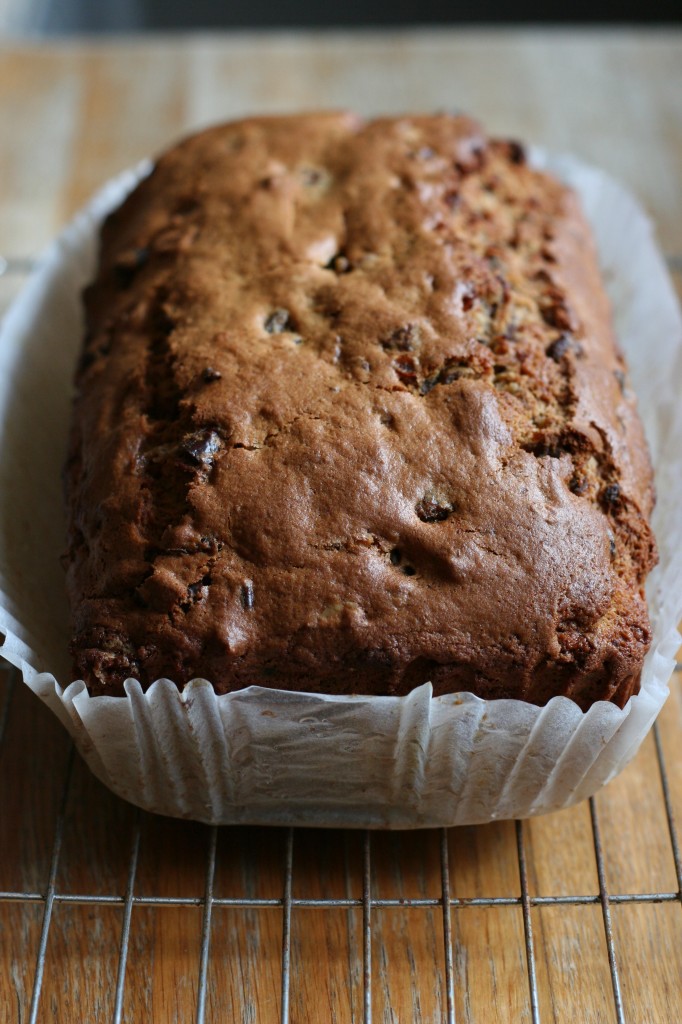
Still, when this date nut bread was baking, I couldn’t help but think that the people at Yankee Candle would do well to try to recreate how this smells, fresh out of the oven, with its heady autumnal mix of cinnamon, cloves, nutmeg and orange zest. While this lemon blueberry buckle was the best thing I baked this summer, I think this date nut bread will be hard to beat for the autumn. When I was urging a friend to make it last week, I wasn’t kidding when I said you’d almost want to bake this just to make your house smell good (and because it’s delicious, of course, and absolutely perfect for fall). But failing that, I’m sure there’s a suitable Yankee Candle out there — maybe “Autumn Fruit”?

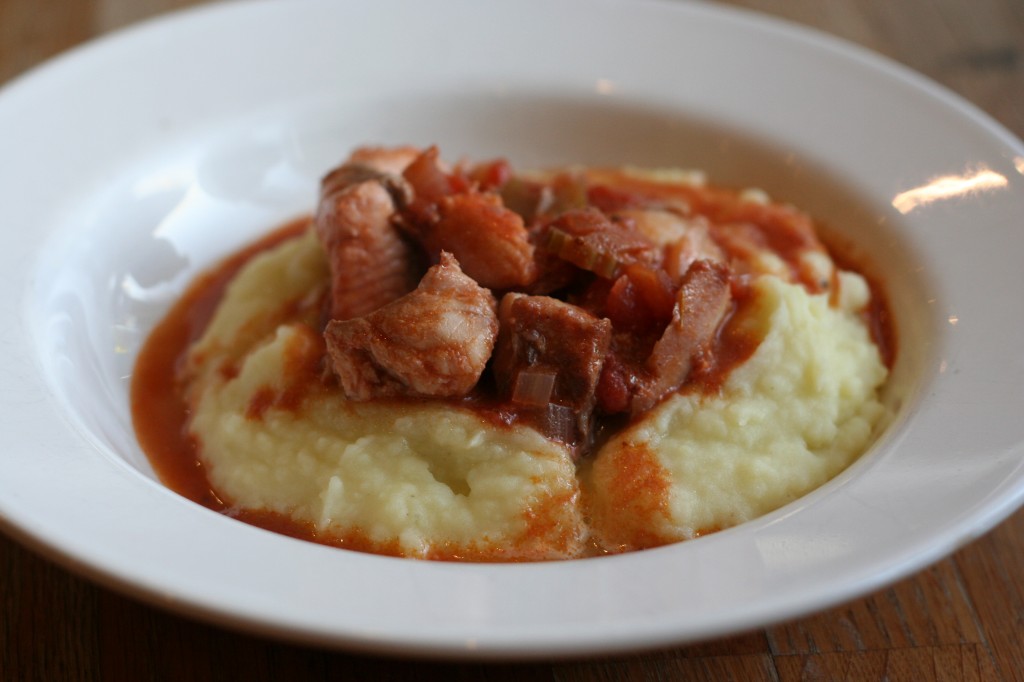
autumn fish stew

Autumn Fish Stew
adapted from Fresh from the Sea by Clodagh McKenna

Serves 4

olive oil
1 onion, diced
2 celery stalks, thinly sliced
3 garlic cloves, crushed
1 tablespoon coriander seeds, roughly crushed in a mortar and pestle
1 teaspoon ground cumin
1/2 teaspoon smoked paprika
1 bay leaf
sprig of fresh thyme
2 x 14-oz (400‑g) cans of chopped tomatoes
1/2 cup (120 ml) red wine
1 1/4 cups (300 ml) fish or vegetable stock
sea salt and freshly ground black pepper
2 1/4 lb (1 kg) mixed fish fillets, cut into small pieces
mashed potato, polenta, couscous or rice, to serve

Place a casserole dish over a medium heat and pour in a dollop of olive oil, followed by the onion and celery. Cook for 5 minutes. Add the garlic, coriander, cumin, bay leaf and thyme. Cook for a further 2 minutes. Stir in the tomatoes and leave to reduce and thicken for about 10 minutes. Pour in the wine, bring back to the boil and cook for 1 minute, followed by the stock. Season with salt and pepper and simmer for 15 to 20 minutes.

Add all the fish to the stew and stir well. Simmer gently for about 10 minutes. Serve with creamy mashed potatoes, polenta, couscous or rice.

***

date nut spice bread

Date Nut Spice Bread
from Barefoot Contessa Back to Basics by Ina Garten

Makes 1 x 8‑inch loaf

Don’t let the “bread” in the title mislead you — this is a loaf cake, and a slice or two is perfect with a cup of tea or coffee, as a treat in a packed lunch or after-school snack, or for breakfast. Ina Garten suggests serving it with an orange zest-spiked cream cheese spread (you can find the recipe for that here), but I like this with only a bit of butter.

2 cups (280 g) pitted dates, coarsely chopped
1/3 cup (80 ml) orange liqueur (recommended: Cointreau or Triple Sec)
4 tablespoons (60 g) unsalted butter, at room temperature
3/4 cup (120 g) light brown sugar, lightly packed
1 extra-large egg
1 teaspoon pure vanilla extract
1 tablespoon grated orange zest (2 oranges)
2 cups (240 g) all-purpose flour
2 teaspoons baking powder
1/2 teaspoon baking soda
1 teaspoon ground cinnamon
1 teaspoon ground nutmeg
1/4 teaspoon ground cloves
1 teaspoon kosher salt
3/4 cup (175 ml) freshly squeezed orange juice (3 oranges)
3/4 cup (90 g) coarsely chopped pecans

Preheat the oven to 350°F (180°C). Butter the bottom of an 8 1/2 x 4 1/2 x 2 1/2‑inch loaf pan. Line the bottom with parchment paper, then butter and flour the pan.  (I just used a loaf tin liner.)

Combine the dates and orange liqueur in a small bowl and set aside for 30 minutes. Stir occasionally.

In the bowl of an electric mixer fitted with the paddle attachment or using a hand-held mixer, beat the butter and brown sugar together on medium speed for 1 minute. Scrape down the bowl. With the mixer on low, add the egg, vanilla, and orange zest.

Sift together the flour, baking powder, baking soda, cinnamon, nutmeg, cloves, and salt. With the mixer still on low, add the flour mixture alternately with the orange juice to the creamed mixture, beating only until combined. By hand, stir in the dates with their liquid, and the pecans.

Pour the batter into the prepared loaf pan and smooth the top. Bake for 50 to 60 minutes, until a toothpick comes out clean. Cool in the pan for 10 minutes, then turn out onto a wire rack and cool completely.

Baked Ziti with Tossed Salad and Apple Crisp

Matt and I became unwitting Sopranos fans last summer, when our son was a newborn. Our next-door neighbors had the series on DVD and loaned it to us after we told them we’d never seen any episodes. We broke it out one night when I didn’t have the energy to do anything but collapse on the sofa and watch TV. We were quickly hooked, to the point where we would often watch two or three episodes a night. One of the scenes that sticks out from the series is when, in The Happy Wanderer episode, a gang of them lock themselves away in a motel room for the Executive Game, a marathon high-stakes poker-playing session, and keep referring to “boxes of ziti” instead of money (one box of ziti being $1,000). I remember it because even for a show that throws in some mobspeak at every opportunity, this just seemed too over the top to me — nobody would really say that, would they? William Safire wrote that the show’s dialogue is “one part Italian, a little real Mafia slang, and a smattering of lingo remembered or made up for the show by former residents of a blue-collar neighborhood in East Boston,” so who knows?

This is a slimmed-down version of traditional baked ziti, which can have up to three different cheeses and maybe even some sour cream thrown in for good measure. The pasta cooks right in the sauce, making it a quick and easy meal for weeknights, but with just enough cream and cheese to make it feel like a comfort food treat. But if you’re looking for Carmela’s recipe, there’s always The Sopranos Family Cookbook.

Baked Ziti
adapted from The Best Skillet Recipes by Cook’s Illustrated Magazine (recipe via Serious Eats)

Serves 4

If you don’t have an oven-safe skillet, just make the dinner in a regular pot or frying pan and transfer to a large ovenproof baking dish instead (which is what I did).

1 x 28-oz can (or 2 x 14-oz (400‑g) cans) whole peeled tomatoes
1 tablespoon olive oil
6 garlic cloves, minced
1/4 teaspoon red pepper flakes
salt and freshly ground black pepper
3 cups (720 ml) water
12 oz (340 g) ziti (or rigatoni or penne)
1/2 cup (120 ml) heavy cream
1 oz (30 g) freshly grated Parmesan cheese
1/4 cup (10 g) chopped fresh basil
4 oz (110 g) mozzarella, shredded

Preheat the oven to 400°F (200°C). Meanwhile, pour the whole can of tomatoes into a blender or food processor. Process until the tomatoes are roughly chopped, but not pureed.

Pour the oil into a large oven-safe skillet set over a medium-high heat. Add the garlic and red pepper flakes and cook for about 1 minute, or until fragrant. Add in the chopped tomatoes and season well with salt and pepper. Bring to a boil, then reduce the heat to medium-low and simmer for 10 minutes, stirring occasionally.

Pour in the water, stir, and then add the pasta. Turn the heat back up to medium-high. Cook until the pasta is tender, about 15 minutes.

Add the cream, Parmesan, and basil. Stir well. Season with more salt and pepper, then sprinkle the mozzarella on top. Place the skillet in the oven and cook for 10 to 15 minutes, or until the cheese has melted and slightly browned.

***

Apple Crisp with Brandy-soaked Currants
adapted from Rustic Fruit Desserts by Cory Schreiber and Julie Richardson

Serves 6 to 8

For the apples, the authors recommend using Golden Delicious, Galas, Jonagolds, or another apple variety with a high water content. This recipe calls for soaking dried currants in brandy. The longer the currants steep, the more the flavor will be enhanced, so plan accordingly. If you forget to steep the currants, then leave them out because unsoaked currants will burn while cooking (I’m speaking from experience here).

for the brandy-soaked currants:
1/2 cup (70 g) dried currants (or raisins)
1/4 cup (60 ml) apple brandy (or regular brandy)

for the crisp topping:
3/4 cup packed (120 g) brown sugar
1 1/4 cups (150 g) all-purpose flour
1/2 teaspoon salt
1 teaspoon ground cinnamon
pinch of ground nutmeg (optional)
pinch of ground cloves (optional)
1/2 cup (110 g) unsalted butter, melted

for the fruit filling:
8 large apples, peeled, cored, and sliced 1/2 inch thick (3 lb (1.4 kg) prepped)
1/4 cup (50 g) granulated sugar
2 tablespoons all-purpose flour
heavy cream, custard or vanilla ice cream, to serve

Soak the currants (or raisins) in the brandy for at least 2 hours and up to 24 hours.

Preheat the oven to 375°F (190°C). Butter a 9‑inch-square baking pan.

To make the crisp topping, mix the brown sugar, flour, salt, and spices together in a bowl. Stir in the melted butter, then press the topping together with your hands to form small clumps. Put the topping in the freezer while you make the filling.

To make the fruit filling, toss the apples, sugar and flour together in a bowl until evenly combined, then transfer to the prepared pan.

Scatter the currants and any residual brandy over the apples, then sprinkle the crips topping evenly over the fruit.

Bake for 50 minutes, or until the crisp is golden and the filling is bubbling up through the topping. Cool for 20 minutes before serving with a drizzle of heavy cream, warm custard or a scoop of ice cream.

This crisp is best served the day it’s made, but any leftovers can be wrapped in plastic wrap and kept at room temperature for 2 to 3 days.

Late-summer Roast Beef Dinner and French Apple Tart

Nigella Lawson’s How to Eat: The Pleasures and Principles of Good Food is one of the bibles of modern-day cookbooks. It’s also one of the first cookbooks I bought in Ireland, and has taught me how to make things I’d never even heard of before moving abroad, like Yorkshire pudding and trifle. It also spells out the makings of something else that was completely foreign to me: a proper Sunday lunch. Nigella Lawson writes about it for four straight pages in How to Eat, but what sums it up rather romantically is this: “Sunday lunch … is about solidity, the family, the home.”

Sunday lunch is an institution in a lot of families, but it took me a long time to come around to its charms, especially since I’m the one doing all the cooking that goes into a big Sunday lunch, not my mother. In my case, I like to have our big meal as a late lunch at the weekends now simply because my kids are in better moods at that time of day, which not only means they’re more likely to eat what I put in front of them, but makes for a more pleasant dinner for all of us. Plus now that my daughter needs a packed lunch every day for school, a roast does double duty as Sunday’s dinner and Monday’s sandwich.

Strictly speaking, this menu isn’t a traditional Sunday lunch — there’s no roast potatoes, or the vegetables like carrots, parsnips or broccoli that you’d usually expect. But one of the things I love about How to Eat is that it contains lots of ready-to-go menus, not just stand-alone recipes, and this is Nigella’s late-summer roast beef menu from the “Weekend Lunch” chapter (though I made the French apple tart instead of the Yorkshire pudding with syrup and cream she calls for, and I also prefer Bon Appétit’s one-pot version of the cannellini beans with garlic and sage for being easier and more straightforward than Nigella’s recipe). After holding out all month, it’s finally time to embrace autumn, and this dinner seemed like a good compromise.

It’s National Organic Week in Ireland! Click here for a listing of events throughout the country.

Cold Roast Fillet of Beef 
from How to Eat by Nigella Lawson

Serves 8

fillet of beef — allow about 7 oz (200 g) per person
olive oil

Allow the beef to come to room temperature before you cook it (otherwise the cooking times here won’t be correct).

Preheat the oven to 480°F (250°C). If it’s possible to switch off the fan in your oven, do so in order to reduce evaporation (75% of lean meat is water, so fan ovens can make even good cuts of meat dry and tough).

Place the fillet in an ovenproof dish or roasting tray. Rub the beef all over with olive oil. (Nigella advises using a rosemary-infused oil for this menu, but plain olive oil works just fine too.)

Cook the beef for 15 minutes at the very high heat, then reduce the oven to 350°F (180°C). Cook the beef for 15 minutes per 18 oz (500 g) for rare; 18 minutes per 18 oz (500 g) for medium; and 25 minutes per 18 oz (500 g) for well done.

After the meat has had its advised cooking time, test it: either press it (if it feels soft it’s rare, bouncy it’s medium, hard it’s well-done) or pierce it with a knife to see. Always let any meat rest out of the oven for at least 10 minutes before carving.

If you’re cooking the beef ahead of time, take it out of the fridge 2 hours before you want to eat it. It should be cold, but not chilled. Or you could cook the fillet early enough in the day to simply allow it to cool to room temperature by the time you want to eat.

***

Rosemary and Anchovy Mayonnaise

1 cup (240 ml) mayonnaise
8 anchovy fillets in oil, drained and diced
1 sprig rosemary, finely chopped
1 tablespoon lemon juice
salt and freshly ground black pepper

Combine all the ingredients, mixing well. Chill until ready to serve. Serve alongside the beef. (This is also great to make sandwiches with the beef leftovers.)

***

Cannellini Beans with Garlic and Sage 
from Bon Appétit, October 2009

Makes about 6 cups

1 lb (450 g) dried cannellini beans
8 cups (2 liters) room-temperature water
2 tablespoons olive oil
1 large head of garlic, unpeeled, top 1/2 inch cut off to expose cloves
1 large sprig of fresh sage
1/4 teaspoon whole black peppercorns
1 teaspoon coarse kosher salt
extra virgin olive oil (for drizzling)

Place the beans in a large bowl. Cover with cold water (at least 6 cups/1 1/2 liters) and soak overnight.

Drain the beans and place in a heavy, large pot. Add the 8 cups (2 liters) of room-temperature water, olive oil, garlic, sage, and black peppercorns. Bring to a simmer over a medium-high heat. Reduce the heat to medium-low and simmer, uncovered, for 1 1/2 hours, stirring occasionally. Mix in the coarse salt. Continue to simmer until the beans are tender, adding more water if needed to keep beans covered, about 30 minutes longer. Cool the beans in the cooking liquid for 1 hour.

Using a slotted spoon, transfer the beans to a serving bowl, reserving the bean cooking liquid, if desired, but discarding the garlic, sage, and peppercorns. Season the beans to taste with pepper and more coarse salt. Drizzle with extra virgin olive oil and serve.

***

Tomato Salad
from How to Eat by Nigella Lawson

For this salad, simply slice some tomatoes (the best and ripest you can find) and arrange them on a plate. Sprinkle with salt, pepper and sugar (only if you think they need it, and even so, just a pinch), as well as some finely chopped spring onions or chives, a drop or two of balsamic or red wine vinegar, and a drizzle of extra virgin olive oil.

***
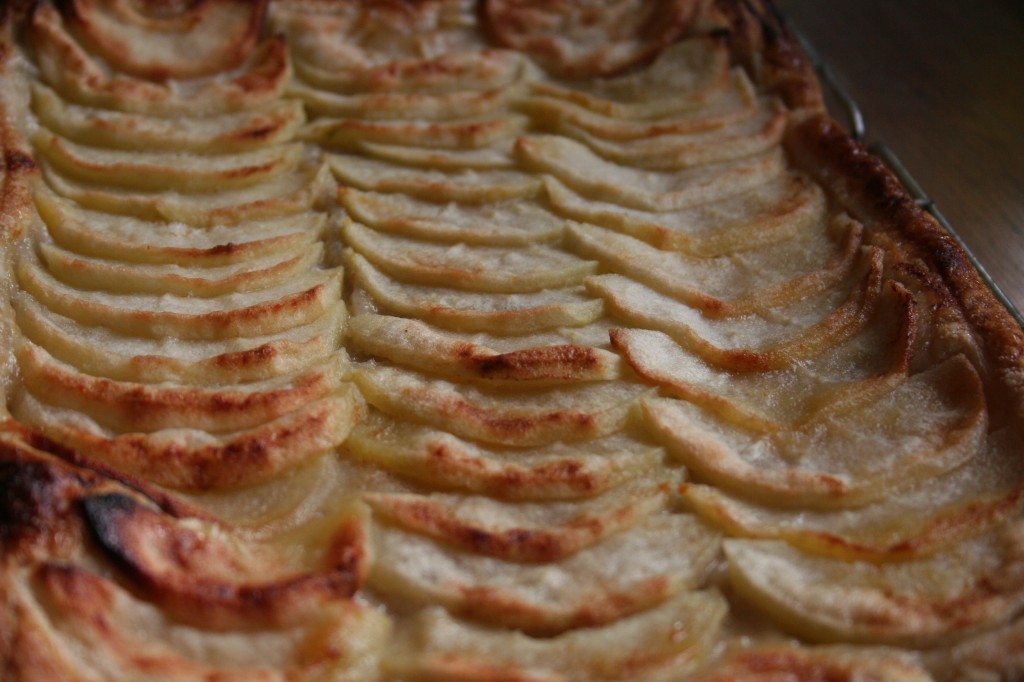
french apple tart

French Apple Tart (or Tarte Fine Aux Pommes, as Nigella Lawson calls it)
adapted from Barefoot Contessa Back to Basics by Ina Garten and Nigella Express by Nigella Lawson

Serves 4 to 6

This is mostly Nigella’s recipe, but the apricot jam and Calvados brushed on top is Ina’s touch from her version. The tart will still be delicious if you don’t add the jam mixture though. I pulled this together in 10 minutes, so it would also be a quick weeknight treat.

1 sheet shop-bought ready-rolled puff pastry, defrosted if frozen
2 large Granny Smith apples
2 tablespoons sugar
2 tablespoons (30 g) cold unsalted butter, small diced
1/4 cup (60 ml) apricot jam
2 tablespoons Calvados, rum, or water

Preheat the oven to 400°F (200°C). Line a sheet pan with parchment paper.

Lay the sheet of puff pastry on the lined baking sheet. Using the tip of a sharp knife, mark a 1/2‑inch border all the way around the edge of the rectangle. You need to score the lines on the pastry rather than cut all the way through it. This will allow a frame to rise above the apple filling. Refrigerate the dough while you prepare the apples.

Peel the apples and core them, then cut them in half. Slice the apples into 1/4‑inch-thick slices. Working from the inside edge, place the apple slices, closely overlapping, within the border of the pastry frame. Create neat lines of apple slices until the pastry is covered. Sprinkle with the sugar and dot with the butter.

Bake for 20 to 25 minutes, until the pastry is browned and the edges of the apples start to brown. Rotate the pan once during cooking. If the pastry puffs up in one area, cut a little slit with a knife to let the air out. And don’t worry if the apple juices burn in the pan, the tart will be fine. When the tart’s done, gently heat the apricot jam together with the Calvados, rum, or water and brush the apples and the pastry completely with the jam mixture. Loosen the tart with a spatula so it doesn’t stick to the paper. Allow to cool and serve warm or at room temperature, cut into squares or slices.
Bay Scallop Gratin and Buttermilk Birthday Cake with Chocolate Sour Cream Frosting

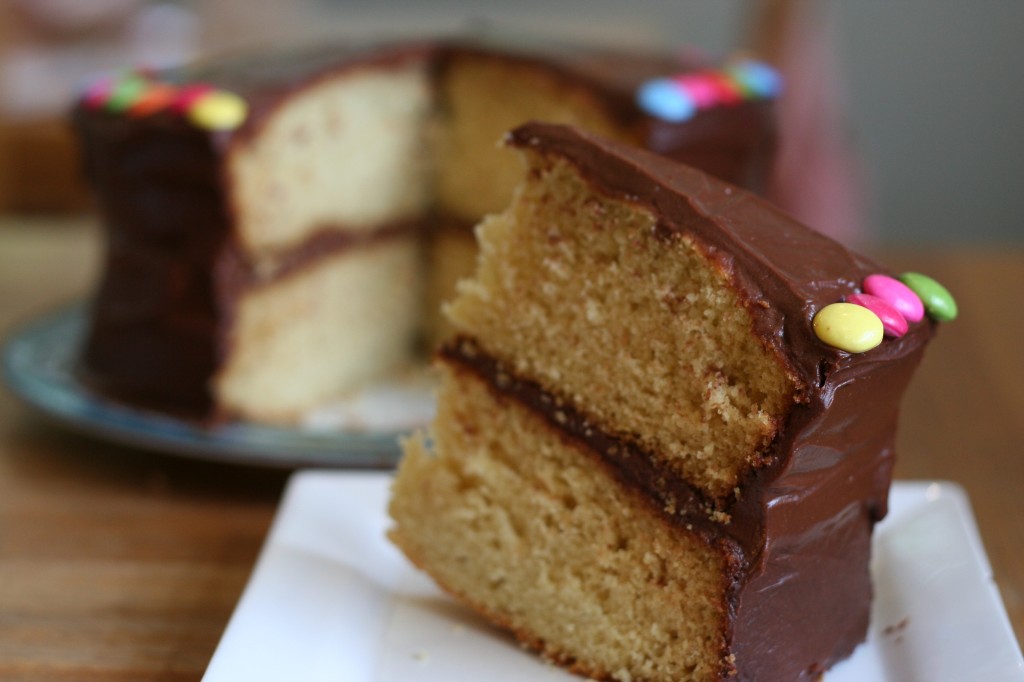
There has been no shortage of “staying in is the new going out” headlines since the recession hit last year, usually applied to statistics about fewer people going to pubs, a rise in subscriptions to online DVD rental services or a surge in sales of board games. Not surprisingly, restaurants have been particularly badly hit, with a number of high-profile cases in Ireland. But we haven’t really enjoyed going out to eat for a number of years now. Eating out in Ireland is notoriously expensive, and there’s nothing I hate more than a mediocre meal that costs nearly as much as a week’s worth of groceries and that I could make just as well or better myself. So when Matt asked me if I wanted to go out to dinner for my birthday yesterday, I said I’d rather splash out on some good-quality ingredients and make a nice dinner at home instead. And even though he kept offering to get me my favorite cake from a local patisserie or make me a birthday cake if I just gave him the recipe I wanted, I happily insisted on making it myself, since I’ve been looking forward to trying this buttermilk cake recipe since Deb at Smitten Kitchen posted it in July. I’ll definitely make it again as my go-to recipe now for a yellow cake or easy chocolate frosting, but I have to admit that it didn’t unseat Beatty’s chocolate cake as my favorite. Still, it’s good to try new things (especially cakes).

It’s National Organic Week in Ireland! Click here for a listing of events throughout the country.

Bay Scallop Gratin
adapted from Barefoot Contessa Back to Basics by Ina Garten

Serves 6

6 tablespoons (90 g) unsalted butter, at room temperature
6 large garlic cloves, minced
2 medium shallots, minced
2 oz (60 g) Parma ham or pancetta, minced
4 tablespoons minced fresh parsley, plus extra for garnish
2 tablespoons freshly squeezed lemon juice
2 tablespoons Pernod
2 teaspoons kosher salt
1 teaspoon freshly ground black pepper
6 tablespoons good olive oil
1/2 cup panko or breadcrumbs (if making your own fresh breadcrumbs, remove the crusts)
6 tablespoons dry white wine
2 lb (900 g) fresh bay scallops (or 6 scallops per person)
lemon, for garnish

Preheat the oven to 425°F (220°C). Place six 6‑inch round gratin dishes on a sheet pan.

To make the topping, place the butter in the bowl of an electric mixer fitted with the paddle attachment (you can also use a hand mixer). With the mixer on low speed, add the garlic, shallot, Parma ham or pancetta, parsley, lemon juice, Pernod, salt, and pepper and mix until combined. With the mixer still on low, add the olive oil slowly as though making mayonnaise, until combined. Fold the panko or breadcrumbs in with a rubber spatula and set aside.

Preheat the broiler, if it’s separate from your oven.

Place 1 tablespoon of the wine in the bottom of each gratin dish. With a small sharp knife, remove the white muscle and membrane from the side of each scallop and discard. Pat the scallops dry with paper towels and distribute them among the 3 dishes. Spoon the garlic butter evenly over the top of the scallops. Bake for 10 to 12 minutes, until the topping is golden and sizzling and the scallops are barely done. If you want the top crustier, place the dishes under the broiler for 2 minutes, until browned. Finish with a squeeze of fresh lemon juice and a sprinkling of chopped parsley and serve immediately with plain crusty French bread to soak up all the amazing juices.

***

slice of buttermilk birthday cake

Buttermilk Birthday Cake with Chocolate Sour Cream Frosting
adapted from Smitten Kitchen (you can watch a video of Deb from Smitten Kitchen talking about this cake and a video of the frosting being made at GoodBite.com)

Makes two 9‑inch-round, 2‑inch-tall cake layers

4 cups (480 g) plus 2 tablespoons cake flour or, failing that, plain flour
2 teaspoons baking powder
1 1/2 teaspoons baking soda
1 teaspoon salt
1 cup (225 g) unsalted butter, softened
2 cups (400 g) sugar
2 teaspoons pure vanilla extract
4 large eggs, at room temperature
2 cups (480 ml) buttermilk, well-shaken

Preheat the oven to 350°F (180°C). Butter two 9‑inch-round cake pans and line with circles of parchment paper. (Alternately, you can use a cooking spray, either with just butter or butter and flour to speed this process up.)

Sift together the flour, baking powder, baking soda, and salt in a medium bowl. Cream the butter and sugar together in a large bowl with an electric mixer at medium speed until pale and fluffy, then beat in the vanilla. Add the eggs one at a time, beating well and scraping down the bowl after each addition. At low speed, beat in the buttermilk until just combined (the mixture will look curdled, but don’t worry). Add the flour mixture in three batches, mixing until each addition is just incorporated (don’t overmix).

Spread the batter evenly in the two cake pans, then rap the pans on the counter several times to eliminate air bubbles. Bake until golden and a wooden pick inserted in center of cake comes out clean, 35 to 40 minutes. Cool in the pan on a rack for 10 minutes, then run a knife around the edge of the pan. Invert onto the rack and discard the parchment, then cool completely, about 1 hour.

Chocolate Sour Cream Frosting

Makes 5 cups of frosting, or enough to frost and fill a two-layer 9‑inch cake

15 oz (425 g) semisweet or bittersweet chocolate, chopped
1 1/4 teaspoons instant espresso (optional)
2 1/4 cups (540 ml) sour cream, at room temperature (this is important!)
1/4 to 1/2 cup (60 to 120 ml) light corn syrup (or golden syrup)
3/4 teaspoon vanilla extract

Combine the chocolate and espresso powder, if using, in the top of a double-boiler or in a heatproof bowl over simmering water. Stir until the chocolate is melted. (Alternately, you can melt the chocolate in a microwave for 30 seconds, stirring well, and then heating in 15 second increments, stirring between each, until the chocolate is melted.) Remove from the heat and let the chocolate cool until tepid.

Whisk together the sour cream, 1/4 cup (60 ml) of the corn syrup (or golden syrup) and vanilla extract until combined. Slwoly add the tepid chocolate and stir quickly until the mixture is uniform. Taste for sweetness, and if needed, add additional corn syrup (or golden syrup) in one-tablespoon increments until the desired level of sweetness is achieved.

Let the frosting cool in the refrigerator until it’s a spreadable consistency, about 30 minutes. Should the frosting become too thick or stiff, just leave it out until it softens again.

Black Bean, Eggplant and Leek Chili with Lime Sour Cream and Honey Buttermilk Cornbread

The first cookbook I remember buying was 1,000 Vegetarian Recipes. I was in college, living in a co-op at the time, and needed something to help me cook a vegetarian dinner once a week for 40 people. I probably thought the book was a bargain — with that many recipes, there would surely be loads of veggie crowd pleasers, right? Well, let’s just say it’s no longer in my cookbook collection. The New Vegetarian Epicure was the second cookbook I bought, and has been much better loved. This is the book that taught me how to cook my first proper recipes (quinoa salads and tempeh don’t really count) and I still turn to some of them as my go-to recipes, like this one for honey buttermilk cornbread. What’s your first favorite cookbook?
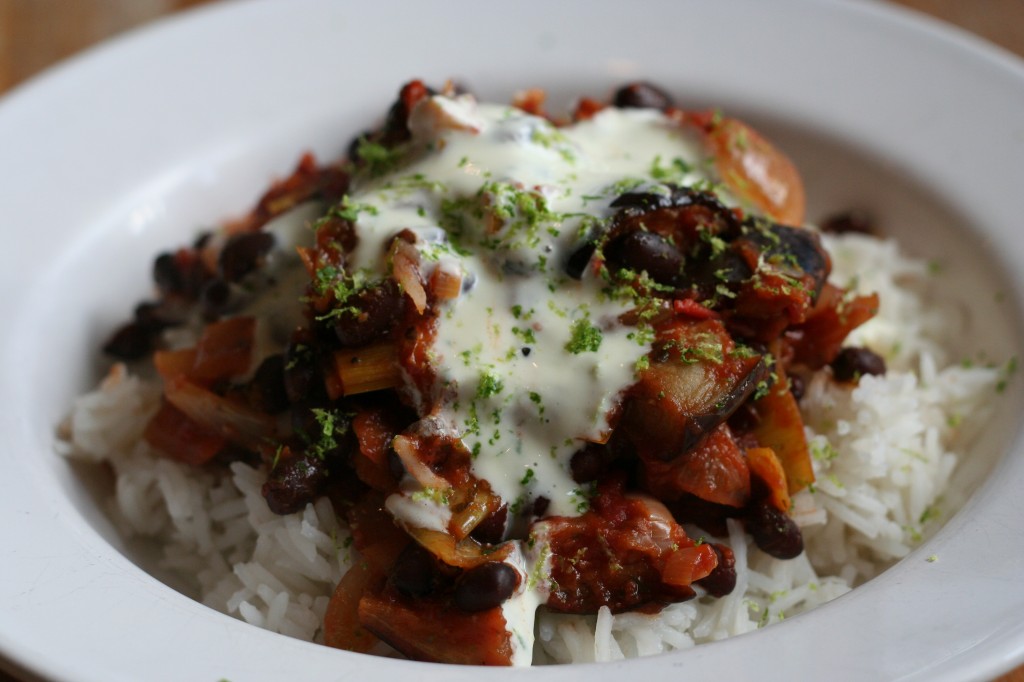
black bean, eggplant and leek chili with lime sour cream

It’s National Organic Week in Ireland. Click here for a listing of events throughout the country.

Black Bean, Eggplant and Leek Chili with Lime Sour Cream
adapted from Paradiso Seasons by Denis Cotter

Serves 4

for the chili:
7 oz (200 g) dried black beans (or 1 x 14-oz (400‑g) can of black beans)
olive oil
2 onions, finely chopped
1 large leek, chopped into chunks and washed well
3 cloves garlic, chopped
1 tablespoon ground coriander
1 tablespoon ground cumin
1 teaspoon chili powder
2 x 14-oz (400‑g) cans of chopped tomatoes
1 tablespoon tomato paste
salt and freshly ground black pepper
2 medium eggplants
1 bunch fresh cilantro (optional)
rice, to serve (optional)

for the lime sour cream:
zest and juice of 1 lime
1 cup (240 ml) sour cream or crème fraîche

Preheat the oven to 400°F (200°C).

To make the chili, soak the beans for 2 hours or overnight in cold water, then cook them in plenty of boiling water until tender (about 1 hour). Or you can skip this if you use canned beans.

Heat a little olive oil in a large pan and cook the onions and leeks for about 10 minutes, until soft. Add the garlic and spices and cook for 2 minutes before adding the tomatoes and the tomato paste. Bring the sauce to a boil, then reduce the heat and simmer for 15 minutes. Season to taste and check the spice levels —  the sauce needs to be very strongly spiced at this point, as the beans and vegetables will dilute its power.

While the sauce is cooking, chop the eggplant into large chunks, toss them in olive oil and roast them until browned and softened, about 30 minutes. Turn and toss the eggplant twice while they’re cooking.

Meanwhile, to make the lime sour cream, simply stir the lime zest and juice into the sour cream or crème fraîche.

Add the roasted eggplant and cooked beans to the sauce and simmer for 10 minutes. Stir in the fresh cilantro (if using) and check the seasoning and spicing again before serving on top of some plain boiled rice and with a dollop of the lime sour cream on top.

***

Honey Buttermilk Cornbread
from The New Vegetarian Epicure by Anna Thomas

Serves 8

1 cup (120 g) white flour
1 1/2 cups (340 g) cornmeal
1/2 teaspoon baking soda
1 teaspoon baking powder
3/4 teaspoon salt
3 large eggs
1 1/3 cups (320 ml) buttermilk
3 tablespoons honey
2 tablespoons (30 g) butter, melted

Preheat the oven to 350°F (180°C).

Sift together the flour, cornmeal, soda, baking powder and salt. In a separate bowl, whisk together the eggs, buttermilk, honey and melted butter. Combine the wet and dry ingredients, stirring gently just until the lumps are gone (don’t overmix). Pour the batter into a buttered 12 x 15-inch baking dish and bake for 30 to 35 minutes, or until a tester inserted in the center of the cornbread comes out clean. Cut into squares and serve hot or warm.

Salmon Provencal and Roast Herbed Potatoes with Balsamic Vinegar

I’ve been enjoying every minute of our Indian summer. On Tuesday, we spent the entire afternoon at the beach with some of my daughter’s new school friends, the first time we were able to play at the beach like that all summer. It was the kind of day I’ve been imagining having every summer since my daughter was one year old, but which I’ve never really been able to have because of the constant wet weather every summer since then — packing a big bag of toys and blankets and a picnic lunch, drinking tea and coffee with the other parents while the kids made a huge sand mountain, complete with a moat and driftwood for a bridge, and my baby playing happily in the sand at my feet. But as wonderful as it’s been to have an entire straight week of dry, sunny days (and with more still forecast!), the warmth has gone out of the air, I’ve started to turn on the heat in the mornings to take the chill off, and I know my summery meals — and the summer itself, such as it was — are finally coming to an end.

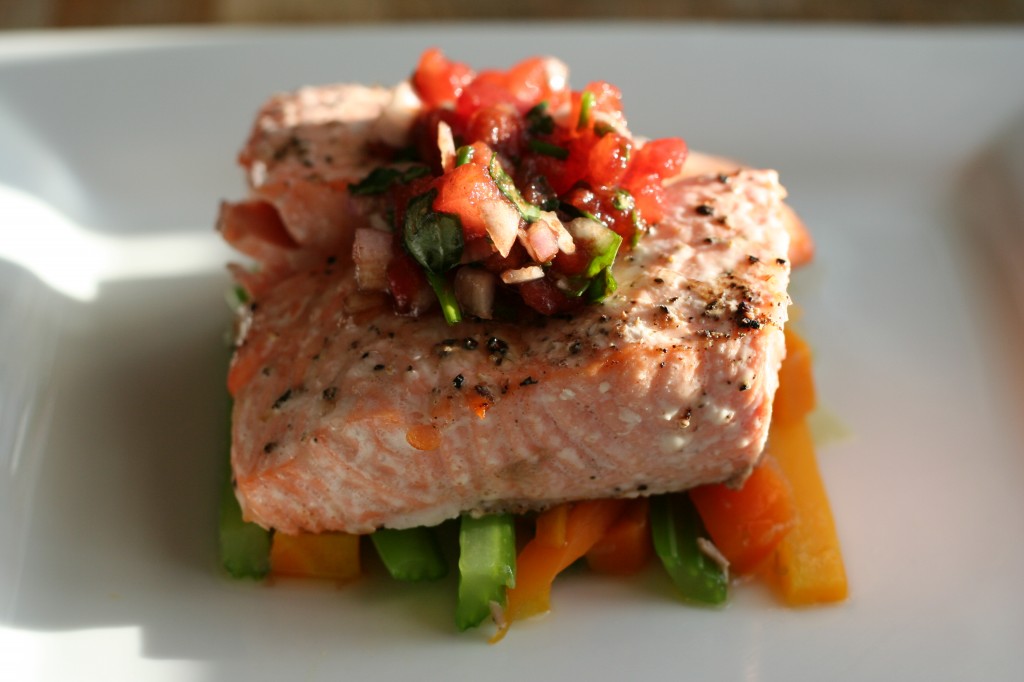
salmon provencal

It’s National Organic Week in Ireland! Click here for a listing of events throughout the country.

Salmon Provencal
adapted from Simply Recipes and Wolfgang Puck

Serves 4

4 ripe tomatoes, peeled, seeded, and chopped fine
3 shallots, minced
1 tablespoon chopped fresh tarragon
1 tablespoon chopped fresh basil
1 tablespoon chopped fresh chives
2 tablespoons olive oil
1 tablespoon balsamic vinegar or sherry vinegar
zest and juice of 1/2 lemon
salt and freshly ground black pepper
4 x 6‑oz (170‑g) salmon fillets
1 cup (240 ml) vegetable stock
2 carrots, julienned
1 leek, white part only, julienned
2 stalks celery, julienned

Preheat the oven to 400°F (200°C).

In a large bowl, combine the chopped tomatoes, shallots and fresh herbs. In another bowl, whisk together the oil, vinegar and lemon zest and juice (or shake to combine in a screw-top jar). Add to the tomato mixture and toss to coat. Season to taste with salt and pepper.

Arrange the salmon fillets on an oiled baking sheet without crowding. Drizzle with olive oil and season with salt and pepper. Bake until the salmon is barely cooked through and lightly browned on the edges, about 10 to 12 minutes.

Meanwhile, bring the vegetable stock to boil in a large saucepan. Add the julienned carrots, leek and celery and cook for 3 to 5 minutes, until tender but still crisp. Drain and set aside.

To serve, divide the julienned vegetables among 4 plates. Arrange the salmon fillets in the center of the vegetables and top each fillet with a couple tablespoons of the tomato mixture. Serve immediately.

***

Roast Herbed Potatoes with Balsamic Vinegar
adapted from Avoca Café Cookbook

Serves 6

1/4 cup (60 ml) olive oil
2 lb (900 g) new potatoes, halved (skin left on)
sea salt and freshly ground black pepper
1 head garlic, split into cloves but left unpeeled
1 tablespoon finely chopped fresh rosemary
1 tablespoon finely chopped fresh thyme
balsamic vinegar or good-quality red wine vinegar

Preheat the oven to 425°F (220°C).

Pour the olive oil into an ovenproof dish (one big enough to hold all the potatoes without overcrowding them) and put it into the oven to heat the oil. (Just don’t leave it in too long, or the oil will start to smoke. Five to 10 minutes is enough.)

Bring a pot of water to boil. Drop in the halved potatoes and parboil for 5 minutes only. Drain.

Remove the dish from the oven. Carefully add the potatoes to the hot oil, turning them to make sure they’re all coated in the oil. Season well with sea salt and freshly ground black pepper. Put into the oven to roast for 10 minutes. Add the garlic and half the herbs and continue to roast for a further 10 to 15 minutes, until the potatoes and garlic are tender. Remove from the oven. Allow to cool slightly, then sprinkle with the vinegar and remaining herbs. Check the seasoning and serve.

Grilled Lemon Chicken with Summer Corn Salad and Green Beans

Where I grew up in northern Illinois, there was a fabulous farm stand nearby at a busy intersection. My memory of it is that it always seemed to be on the verge of falling to pieces and I was always surprised when it reopened, having somehow made it through another punishing Midwestern winter. I remember getting huge watermelons there, and gallon jugs of apple cider in the autumn, but mostly my family bought all our sweet corn there in the summer. No barbecue or big family get-together was complete without someone getting sent outside to shuck all the ears of corn, piling the husks and corn silk into paper grocery bags at your feet.

Corn on the cob doesn’t feature much in Ireland. It’s actually kind of hard to find, and if you do, it tends to come in pairs, wrapped in cling film on a Styrofoam tray like you often see with exotic fruit. So when my organic fruit and veg supplier* started carrying it a few weeks ago, I bought some purely out of nostalgia, just so I could shuck a couple ears of it again. I guess you can take the girl out of the Midwest, but you can’t take the Midwest out of the girl.

*Don’t forget, it’s National Organic Week in Ireland. Click here for a listing of events throughout the country.

Grilled Lemon Chicken
adapted from The Barefoot Contessa Cookbook by Ina Garten

Serves 4

1/2 cup (120 ml) freshly squeezed lemon juice (2 or 3 large lemons)
1/2 cup (120 ml) good-quality olive oil
1 teaspoon kosher salt
1/2 teaspoon freshly ground black pepper
1 1/2 teaspoons minced fresh thyme leaves (or 1/4 teaspoon dried thyme)
4 boneless, skinless chicken breasts

Whisk together the lemon juice, olive oil, salt, pepper, and thyme. Pour over the chicken breasts in a nonreactive bowl. Cover and marinate in the refrigerator for 6 hours or overnight.

Heat a charcoal grill or griddle pan. Remove the chicken from the marinade, shaking off any excess. Grill the chicken breasts for 10 minutes on each side, until just cooked through. Cool slightly and cut diagonally in 1/2‑inch-thick slices.

***

Summer Corn Salad
adapted from Allrecipes.com

Serves 4

6 ears corn, husked and cleaned
1/2 red onion, diced
3 large tomatoes, diced
2 oz (60 g) feta, crumbled (optional)
1/4 cup (10 g) chopped fresh basil (or parsley)
1/4 cup (60 ml) olive oil
2 tablespoons white wine vinegar
salt and freshly ground black pepper

Bring a large pot of lightly salted water to a boil. Cook the corn in boiling water for 7 to 10 minutes, or until desired tenderness. Drain, cool, and cut the kernels off the cob with a sharp knife.

Deflame the onion by placing the chopped pieces into a strainer, rinsing under cold water, and shaking off the excess.

In a large bowl, toss together the corn, onion, tomatoes, feta, basil, oil and vinegar. Season to taste with salt and pepper. Chill until ready to serve.