Tag Archives: Italian food

Gnocchi with Tomato, Spinach and Ricotta and Brandied Plum Cake

One of the great things about cooking is that the more you do it, the easier and faster it gets. (Though I’ve also become my own worst enemy in that regard — I do almost all the cooking, even on weekends when I could otherwise have a break from it, because I’m so much faster at it than my husband.) When you know that you can pull together a dinner in the time it takes for water to boil and some pasta to cook, or that you can cook some fresh fish in less than 10 minutes, frozen pizzas start to lose their appeal.

But even though I love to cook, there are plenty of days too when I don’t have the energy or am pressed for time to get something on the table for two hungry little kids. And as much as I prefer to cook from fresh, unprocessed ingredients, there are certainly worse convenience foods to have in your pantry than a jar of pasta sauce and a packet of potato gnocchi. Store-bought potato gnocchi cooks in 2 or 3 minutes, making it the ultimate fast food, plus a nice change from pasta. Check out all the quick and easy recipes for gnocchi from the UK’s Olive magazine for more inspiration.

If you like the sound of brandied plums but don’t have time for the cake, just make the plums on their own, which takes only 10 minutes. Serve them with vanilla ice cream, with the syrup drizzled over — no one will complain about not having them in a cake.
IMG_9243

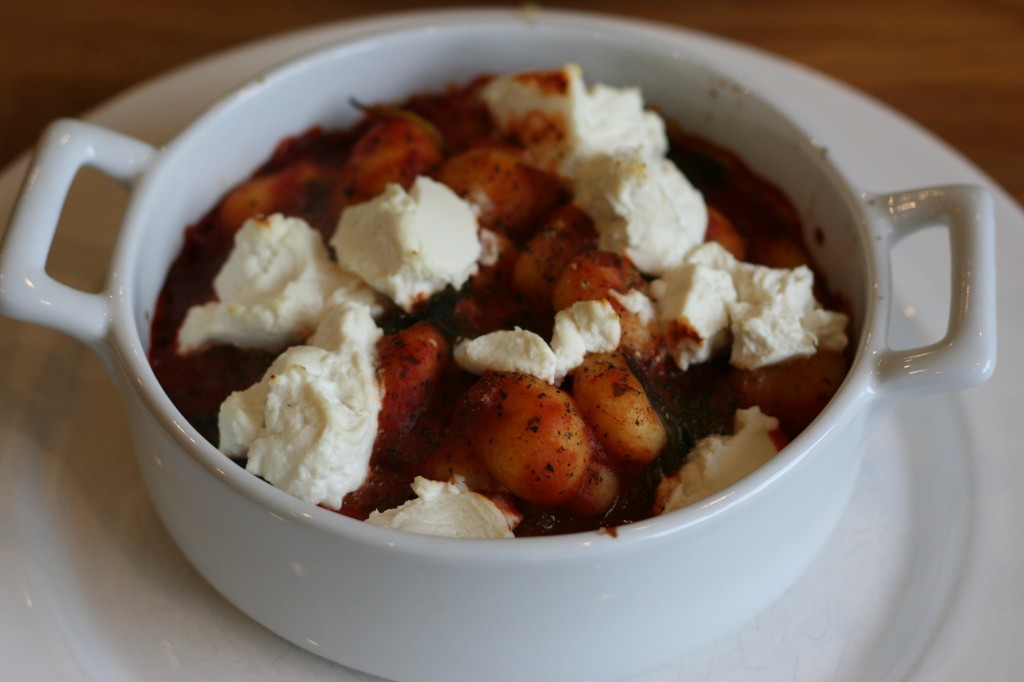
Gnocchi with Tomato, Spinach and Ricotta
adapted from Olive, November 2005

Serves 6

You could vary this recipe by using your favorite pasta shape instead of gnocchi, and stirring 1 tub of ricotta cheese directly into the sauce along with the spinach to make it nice and creamy. Do I even have to say that bacon would be good in this too?

2 x 18-oz (500‑g) packs store-bought potato gnocchi
2 x 14-oz (400‑g) good-quality jars of tomato sauce
7 oz (200 g) baby spinach, washed
2 x 9‑oz (250‑g) tubs of ricotta cheese
a handful of freshly grated Parmesan, to serve

Preheat the oven to 400°F (200°C). Cook the gnocchi according to packet instructions and drain. Meanwhile, heat the tomato sauce, add the spinach and stir until wilted. Put the gnocchi in a lightly oiled ovenproof dish, pour the sauce over and dot with blobs of ricotta. Scatter the grated Parmesan over and pop into the hot oven until bubbling and golden, about 10 minutes.

***

Brandied Plum Cake
inspired by The Kitchen Diaries by Nigel Slater

Serves 12

This cake is very moist, so it doesn’t really need the brandy syrup drizzled over it at the end, though it’s a nice touch. Instead, you might like to save it in the fridge to drizzle over vanilla ice cream another time. If you have any leftover plums that won’t fit on top of the cake, save them to have with yogurt for breakfast.

for the brandied plums:
3 tablespoons sugar
2 tablespoons brandy
1/4 teaspoon cinnamon
16 ripe plums, stoned and quartered

for the cake:
3/4 cup (160 g) butter
3/4 cup (150 g) sugar
3 large eggs
3/4 cup (90 g) all-purpose flour
1 1/2 teaspoons baking powder
1 cup (100 g) ground almonds
1/2 cup (50 g) walnuts, finely chopped

Preheat the oven to 350°F (180°C). Grease a 9‑inch springform pan and line the base with a piece of parchment paper.

To make the brandied plums, combine the sugar, brandy and cinnamon in a frying pan. Cook over a high heat, stirring often, until the sugar dissolves. Reduce the heat, add the plums and cook until they are soft but still hold their shape, about 5 minutes. Transfer the plums to a bowl with a slotted spoon and set aside. Reserve the brandy syrup left behind from the plums.

Beat the butter and sugar until pale and fluffy. Add the eggs one at a time to the butter and sugar. Sift the flour and baking powder together and fold them gently into the mixture with a spatula. Fold in the ground almonds and chopped walnuts.

Scrape the mixture into the lined springform pan. Place the quartered plums on top of the cake mixture (they will sink into the cake as it bakes). Bake for 40 to 45 minutes, until a cake tester comes out clean. If you think the top of the cake is browning too much, cover it with tin foil. Remove the cake from the oven and leave to cool in the pan for 15 minutes before releasing the sides of the pan. Serve with some of the reserved syrup spooned over the top of each slice.
Spaghetti alla Genovese and Lemon Blueberry Buckle

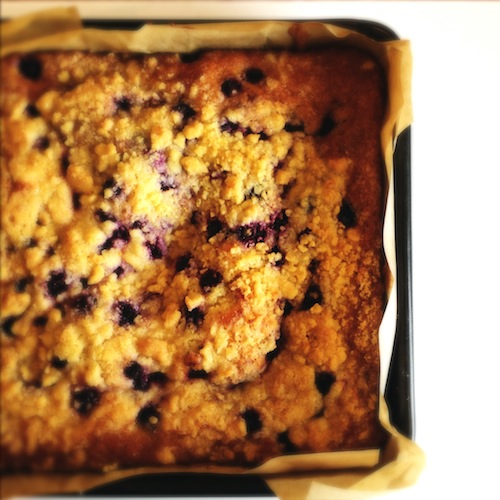
How can you resist an article with a title like “Gourmet’s Guide to Cobblers, Crisps, Crumbles, Bettys, Buckles + Pandowdies”, if only to find out what in the world a pandowdy is? (For the record, it’s sliced fruit baked with sugar and spices in a deep dish, with a thick top crust.) It’s just too bad they didn’t include grunts and slumps in the article title to really round things out. The article included a link to a recipe for lemon blueberry buckle, which sounded like something nice to make while there’s still some blueberries left. But “nice” doesn’t do this recipe justice. And don’t let its humble, coffee cake-like appearance fool you either. It wound up being the best thing I baked all summer. It was so good that as soon as I finished my first piece, I went online to see what I could find out about the book the recipe comes from, Rustic Fruit Desserts. Once I had a look at the index on Amazon, I was sold — apple cobbler with cheddar cheese biscuits, cherry almond bars, fig and honey cream galette, pear sauce bundt cake with pear brandy butter … oh my. I might even have bought it just for the brown sugar rum glaze alone. Hurry and make this buckle while you still can with in-season blueberries — then see if you aren’t tempted to buy the book too.

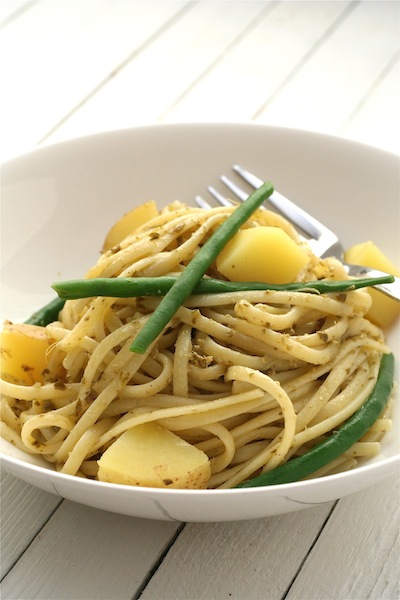
Spaghetti alla Genovese
adapted from Avoca Café Cookbook 2

Serves 4

4 small new potatoes, peeled and cut into thin slices
8 oz (225 g) green beans, ends trimmed
1 lb (450 g) spaghetti (or fettuccine or linguine)
3 or 4 tablespoons pesto (or more, to taste)
salt and freshly ground black pepper
freshly shaved Parmesan, to serve

Blanch the peeled, sliced potatoes in boiling salted water for 5 minutes, or until cooked. Refresh in cold water and set aside.

Cook the trimmed green beans in boiling salted water until tender but still al dente. Drain and set aside.

Cook the pasta in boiling salted water until al dente. Drain, reserving a cupful of the cooking water. Toss the pasta with the potatoes, green beans and pesto. Taste and adjust with more pesto if needed, and thin the sauce with some of the cooking water if you think it needs it. Season to taste with salt and pepper. Serve immediately with thick shavings of Parmesan scattered on top.

***

Lemon Blueberry Buckle
from Rustic Fruit Desserts: Crumbles, Buckles, Cobblers, Pandowdies, and More by Cory Schreiber and Julie Richardson
Serves 6 to 8

Covered in cling film, the buckle will keep at room temperature for 2 to 3 days (though in my house it was all eaten up in less than 24 hours).

for the crumb topping:
1/2 cup (60 g) all-purpose flour
1/3 cup (75 g) granulated sugar
1/8 teaspoon fine sea salt
zest of 1 lemon
1/4 cup (60 g) unsalted butter, at room temperature, cubed

for the cake:
1 1/2 cups (180 g) plus 2 tablespoons all-purpose flour
1 teaspoon baking powder
1/4 teaspoon baking soda
1/2 teaspoon fine sea salt
1/4 teaspoon freshly grated nutmeg (or a pinch of dried nutmeg)
6 tablespoons (90 g) unsalted butter, at room temperature
3/4 cup (150 g) granulated sugar
zest of 1 lemon
2 eggs
1/2 cup (120 ml) buttermilk
2 cups (320 g) blueberries, fresh or frozen

for the lemon syrup:
1/3 cup (75 g) granulated sugar
juice of 2 lemons

Preheat the oven to 350°F (180°C). Butter a 9‑inch-square baking pan.

To make the crumb topping, mix the flour, sugar, salt, and lemon zest together in a bowl, then add the butter and use a fork or your fingers to cut in the butter until the size of peas. Place the topping in the freezer until you mix the cake batter.

To make the cake, whisk the flour, baking powder, baking soda, salt, and nutmeg together in a bowl. Using a handheld mixer with beaters or a stand mixer with the paddle attachment, cream the butter, sugar, and lemon zest together on medium-high speed for 3 to 5 minutes, until light and fluffy. Add the eggs one at a time, scraping down the sides of the bowl after each addition. Sir in the flour mixture in 3 additions alternating with the buttermilk in 2 additions, beginning and ending with the dry ingredients and scraping down the sides of the bowl occasionally. Gently fold in half the blueberries, spread the batter into the prepared pan, and distribute the remaining blueberries over the cake.

Sprinkle the chilled crumb topping over the berries, then bake for 45 to 50 minutes, or until lightly golden and firm on top.

To make the glaze, combine the sugar and lemon juice in a small saucepan and whisk until blended. Cook over a medium-low heat, stirring occasionally, for 8 to 10 minutes, until syrupy. The glaze will bubble while cooking, so you may need to remove it from the heat to check that it’s thick enough.

Pour the glaze over the cake as soon as it’s removed from the oven. Reheat the syrup briefly if it has become too thick to pour.

Pasta Fagiole, Sausages with Peppers, and Assorted Antipasti

I love having people over for dinner. I love planning a menu around their tastes and dietary restrictions. I love shopping for high-end special occasion ingredients and flowers for the table. I love seeing how many place settings I can squeeze onto my dining table. I love the rush of preparing a big meal while trying to keep my kitchen intact. But mostly, I love sharing good food and good conversation with friends and family. There are few things that please me more than a home-cooked dinner and lively, loud conversation (usually after a few bottles of wine have been opened), except maybe the hush that sometimes falls over my guests if I’ve made something particularly good and they have no time to speak between mouthfuls.

This week my husband Reuben’s lovely grandmother, Ellie, visited Milwaukee. I invited her, Reuben’s parents, my grandparents, my parents, and my sister to join us for dinner. Since I had to prepare enough food for 10 adults with two small children underfoot, my menu was simple. Most items could be prepared in advance, during the kids’ nap time. Note that I doubled the soup and sausages recipes below to serve 10 adults. And in case you were worrying that I let my guests go home without dessert, I also served the blueberry crumb bars Kristin posted three weeks ago.

Pasta Fagiole
from an unknown magazine card that’s been in my recipe box for as long as I remember. My apologies to whatever source I took it from years ago.

Serves 4

2 tablespoons extra-virgin olive oil
1 garlic clove, minced
4 cups (1 liter) chicken broth (Swanson Organic Chicken Broth recommended)
1 x 14 oz (400 g) can stewed tomatoes, with Italian seasoning (note: if seasoned tomatoes aren’t available, use regular stewed tomatoes and add 1/2 teaspoon dried oregano and 1/2 teaspoon dried basil)
1 x 19 oz (540 g) can cannellini or great northern beans, rinsed well and drained
6 oz (170 g) tubetti or ditalini pasta
3 tablespoons chopped fresh basil
2 tablespoons freshly grated Parmesan

Heat 1 tablespoon of oil in a large saucepan over a moderate heat until hot but not smoking, then cook the garlic, stirring until fragrant, about 30 seconds. Stir in the broth and tomatoes with their juices and bring to a boil, breaking up the tomatoes with a fork.

Add the beans, pasta, 2 tablespoons basil, and Parmesan and boil, stirring frequently, until the pasta is al dente. Let stand for 5 minutes before serving. (Pasta will continue to absorb liquid.) Stir in the remaining basil and black pepper to taste. Drizzle with the remaining olive oil and serve immediately.

***

Sausages with Peppers

Serves 6

1 tablespoon olive oil
6 hot and/or mild Italian sausages
2 bell peppers (one green and one red, yellow, or orange), sliced into thin strips

In a large skillet, heat 1 tablespoon olive oil over a medium heat. Add the sausages and cook for 10 minutes, turning the sausages halfway through the cooking time. Add the pepper strips and cook until the peppers are soft and the sausages are fully cooked, stirring frequently, about 10 more minutes. If the sausages take on too much color early in the cooking process, lower the heat or cover the skillet with a lid for a few minutes. Serve with a crusty baguette or good Italian bread.

***

Assorted Antipasti

Antipasti refers to the traditional first course in an Italian meal. Cheeses, cured meats, marinated vegetables and salads are typical. Antipasti selections are also perfect for picnics. For my dinner, I served the following (all at room temperature):

cheeses (one soft, one semi-soft, one hard, one goat’s cheese, and fresh mozzarella balls)
olives (I love the bitter taste of black, oil-cured olives, but you can use any type)
1 jar of sun-dried tomatoes in olive oil, julienned
marinated hearts of palm and artichokes (see recipe below)
2 baguettes, one plain and one seeded, sliced

Marinated Hearts of Palm and Artichoke

Drain and rinse 1 can of hearts of palm and 1 can of quartered artichoke hearts. Mix with 1 clove garlic, grated, 1 tablespoon red wine vinegar, 3 tablespoons olive oil, and a pinch of red pepper flakes. Let sit for at least 1 hour before serving.

Zucchini Carbonara and Peach and Blueberry Sour Cream Cobbler

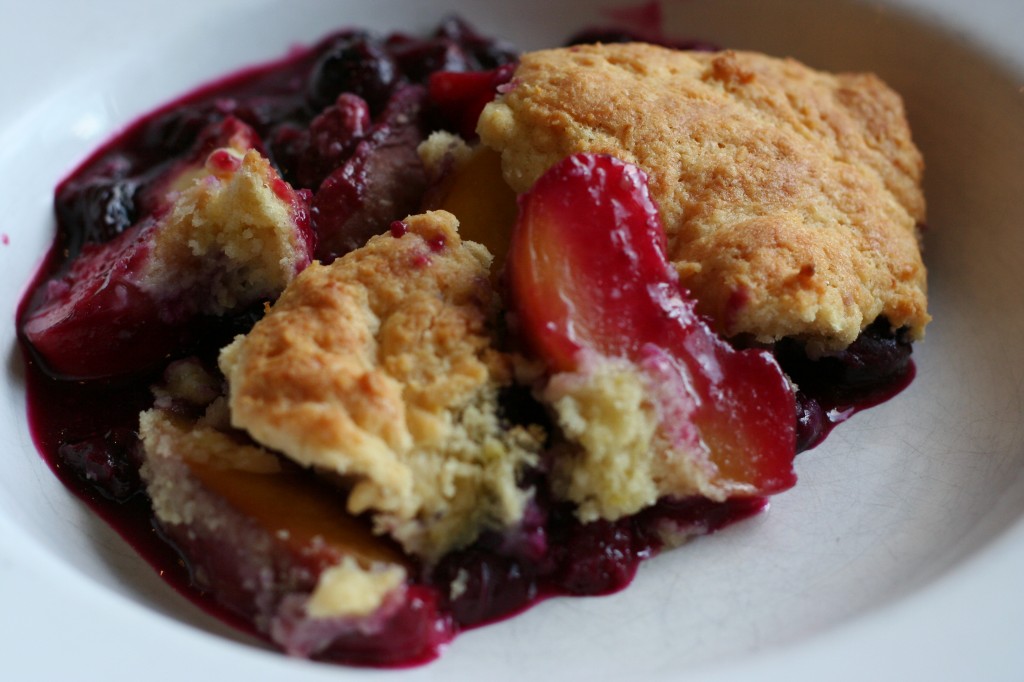
It turns out I’m not the only one around these parts with a weakness for American bacon. We’re having our house repainted at the moment, and today the painter was working inside to do the window frames. He spent 15 years living in America and only moved back about five years ago, and was chatting with us in the kitchen as I started to fry up the pancetta for this dish. “That’s not streaky bacon, is it?” he asked, streaky bacon being somewhat closer to American bacon than rashers, but still too thick cut to get as crispy as I like it to be. So he got the whole story of how much I’d missed bacon and then finding the pancetta at the grocery store. He told me how his oldest daughter prefers American bacon too, and how he’d have to get her some now that he knew about it. He was also eying up this cobbler as I made it and dropping hints about how good it looked, so he was pretty pleased when he was still around when it came out of the oven and I gave him some to have with his coffee.

It’s true that carbonara isn’t for the calorie-conscious, but even so, once you break it down per serving, there’s “only” one or two tablespoons of cream, one egg yolk, a couple tablespoons of cheese and a few slices of pancetta per serving, so for being a decadent dish, it’s not all that bad, though certainly not something you’d want to have every day. But as for the cobbler, there’s only two tablespoons of sugar in the entire dessert, making it the kind of treat I don’t at all mind giving my kids.

zucchini carbonara

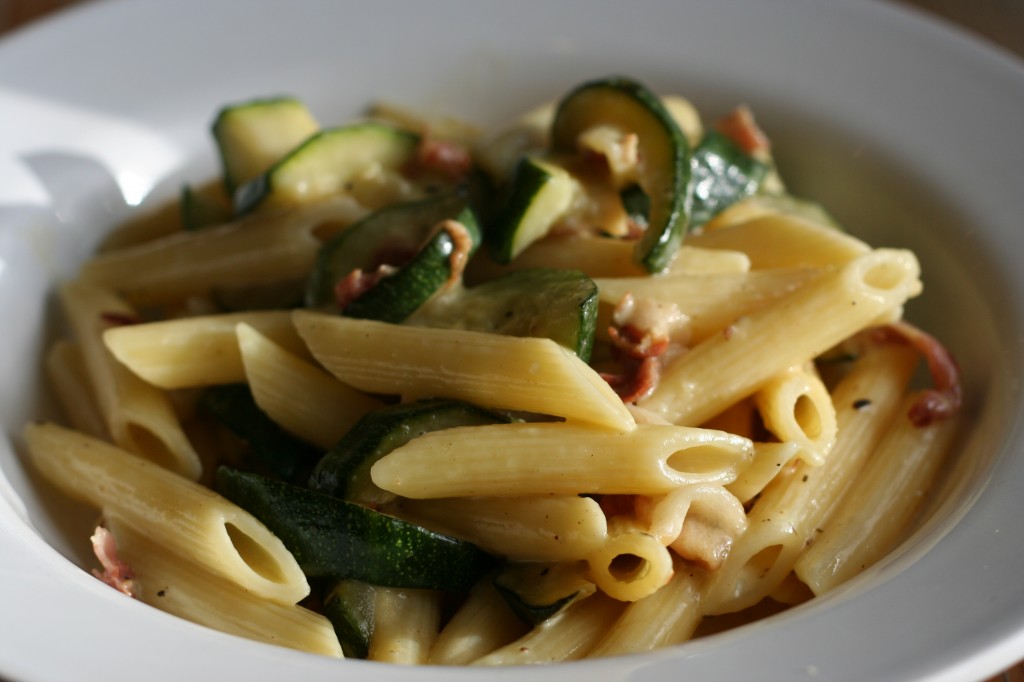
Zucchini Carbonara
adapted from Jamie at Home by Jamie Oliver

Serves 4

6 medium green and yellow courgettes
1 lb (450 g) penne
4 large free-range or organic egg yolks
1/2 cup (120 ml) heavy cream
2 good handfuls of freshly grated Parmesan cheese
salt and freshly ground black pepper
olive oil
12 thick slices of pancetta or smoked streaky bacon, cut into chunky lardoons
a small bunch of fresh thyme, leaves picked and chopped (or 1/2 teaspoon dried)

Put a large pan of salted water on to boil. Halve and then quarter any larger courgettes lengthways. Cut out and discard any fluffy middle bits, and slice the courgettes at an angle into pieces roughly the same size and shape as the penne. Smaller courgettes can simply be sliced finely. When the water boils, add the penne to the pan and cook according to the packet instructions.

To make the carbonara sauce, put the egg yolks into a bowl, add the cream and half the Parmesan, and mix together with a fork. Season lightly and put to one side.

Heat a very large frying pan (one that will be able to hold all the sauce plus the pasta later on), add a good splash of olive oil and fry the pancetta or bacon until dark brown and crisp. Remove with a slotted spoon and to a plate lined with a paper towel to drain. Drain off all but 1 tablespoon or so of the bacon fat.

Add the courgette slices and 2 big pinches of black pepper, not just to season but to give it a bit of a kick. Sprinkle in the thyme leaves, give everything a stir, so the courgettes become coated with all the lovely bacon-flavoured oil, and fry until they start to turn lightly golden and have softened slightly. Crumble or chop the bacon and add it back to the pan.

It’s very important to get this next bit right or your carbonara could end up ruined. You need to work quickly. When the pasta is cooked, drain it, reserving a ladleful or two of the cooking water. Immediately toss the pasta in the pan with the courgettes and bacon, then remove from the heat and add a ladleful of the reserved cooking water and your creamy sauce. Stir together quickly. (No more cooking now, otherwise you’ll scramble the eggs.)

While you’re tossing the pasta and sauce, sprinkle in the rest of the Parmesan and a little more of the cooking water if needed, to give you a silky, shiny sauce. Taste quickly for seasoning. Serve and eat immediately, as the sauce can become thick and stodgy if left too long.

***

peach and blueberry sour cream cobbler

Peach and Blueberry Sour Cream Cobbler
adapted from The Kitchen Diaries by Nigel Slater

Serves 4

4 ripe peaches, sliced
about 3 cups (400 g) blueberries
juice of 1 lemon
1 tablespoon sugar
1 tablespoon flour

for the crust:
1 1/3 cups (150 g) flour
pinch of salt
2 teaspoons baking powder
1 heaped tablespoon sugar, plus extra for sprinkling
zest of 1 lemon
6 tablespoons (90 g) butter
1/2 cup (140 ml) sour cream
ice cream, cream or custard, to serve

Preheat the oven to 400°F (200°C).

For the cobbler crust, put the flour, salt, baking powder, sugar, lemon zest and butter in a food processor and blitz for a few seconds, until the mixture resembles breadcrumbs. Tip into a bowl and set aside.

Put the sliced peaches and blueberries into an ovenproof dish. Toss them with the lemon juice, sugar and flour.

Mix the sour cream into the crumb mixture to make a soft dough. Break off walnut-sized pieces and flatten them lightly. Lay them on top of the fruit. Sprinkle the rounds of dough with sugar, then bake for 25 minutes, till the cobbler is golden and the fruit is bubbling. Serve with ice cream, a drizzle of cream or some warm custard.

Chicken Cacciatore and Chocolate Zucchini Cake

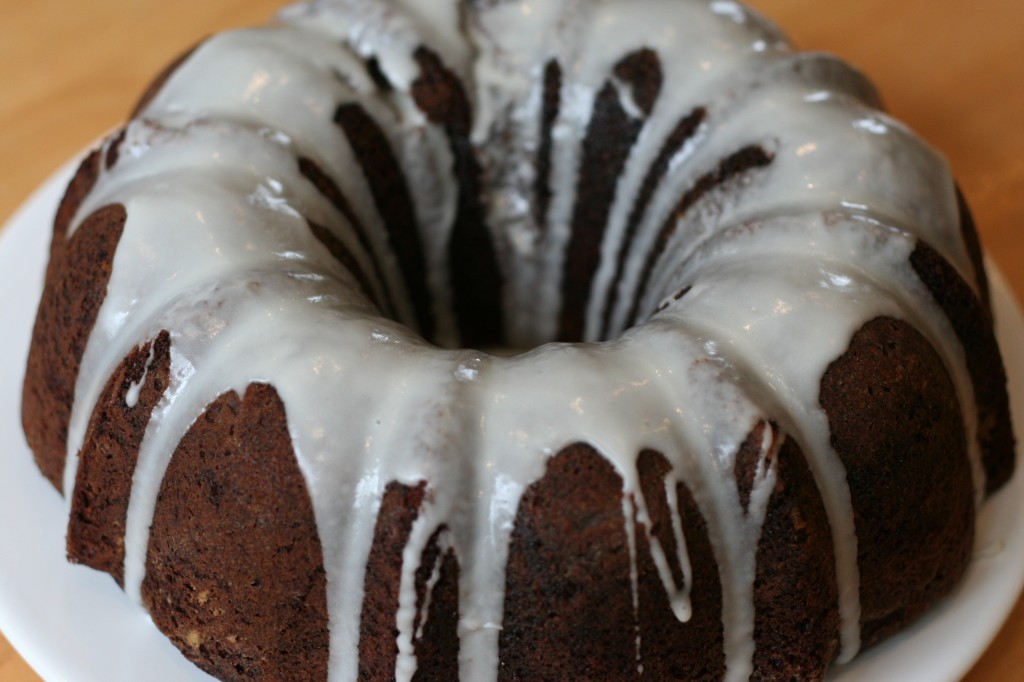
I do a lot of baking with my four-year-old daughter, so much so that by now she can tell you the basic ingredients of a cake: flour, sugar, butter, eggs, vanilla. So on Saturday, when she was helping me make this Chocolate Zucchini Cake, she couldn’t understand why I was grating two zucchini (or courgettes, as we call them here, though they will always be zucchini to me). When I told her we were putting them in the cake, she gave me a confused look before saying, “But courgettes don’t belong in a cake, Mommy.”

“Don’t worry, it’s going to be good,” I said.

She gave me another long, puzzled look before finally saying, “You’re joking me, Mommy.”

“No, really,” I said as I started grating the second zucchini, at which point she burst into tears.

“It’s going to be disgusting!” she cried, and couldn’t be convinced otherwise until I let her taste the batter, when she quickly changed her mind. But I can understand her confusion. Zucchini bread is about as American as apple pie, but the idea of using them in baking is practically unheard of in Ireland. The zucchini in this cake simply adds moisture and soaks up the cocoa. Not only can you not taste it, but you actually can’t even see it either once it’s baked. Make it and ask people to guess what the secret ingredient is. At any rate, it’s a wonderful chocolate cake to have in your repertoire, not to mention a great way to use up some zucchini if they’re starting to get the better of you in your garden. It’s definitely one of my favorites, and I even made it for my mother-in-law’s birthday a few years ago. It really is that good. My little girl will even tell you so now.

chicken cacciatore

Still looking for ways to use up tomatoes? Try Tomato and Goat’s Cheese Tart, Ravioli and Tomato Salad, Oven-roasted Ratatouille, Spaghetti with Fresh Tomato Sauce or Spaghetti with Roast Cherry Tomatoes, Chili and Basil.

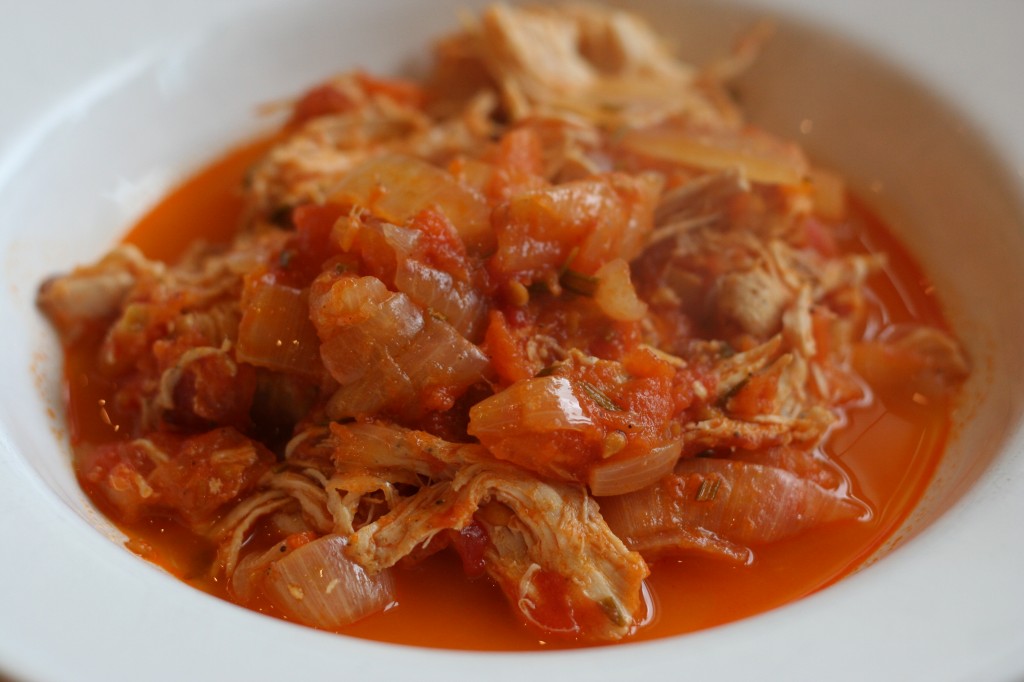
Chicken Cacciatore

Serves 6

I only make this recipe in the summer, when tomatoes are at their best. As such, it’s an ideal way to use up tomatoes from your garden if you’re overrun with them. I’ve tried making it in the winter, with those awful pale, hard, imported tomatoes that never ripen, and believe me, it’s not worth it. I’ve also tried making Nigella Lawson’s quick version of this dish, using canned tomatoes, but it was a disappointment after having had the real thing. The fresh rosemary is another key ingredient here.

Sometimes I find it hard to peel tomatoes because they’re too hot after just being in the boiled water, even after I run some cold water over them, so if I think of it, I blanch them earlier in the day, then drain them and set aside to cool in the fridge and peel them when the onions are cooking. To get 3 1/2 lb (1.5 kg) of tomatoes, I used 14 medium tomatoes, so you can use that as a guide, give or take a couple.

2 tablespoons olive oil
salt and freshly ground black pepper
6 large chicken breasts
3 large onions, peeled and thickly sliced
3 large cloves garlic, chopped
1/3 cup (80 ml) dry white wine or vermouth
3 1/2 lb (1.5 kg) vine-ripened tomatoes
2 tablespoons finely chopped fresh rosemary
2 bay leaves

Heat the oil in a large pot over a medium-high heat and season the chicken breasts liberally with salt and pepper. Add the chicken to the hot oil and brown well on all sides. Remove the chicken to a plate and set aside.

Add the onions to the pot, lower the heat to medium and cook for about 10 minutes, until the onions have softened.

Meanwhile, skin the tomatoes. To do this, cut a shallow X in the bottom of each tomato with a sharp knife, then pour boiling water over them and leave until the skin around the X starts to curl away, about 1 to 2 minutes. Drain and allow to cool, then slip off their skins. Cut into quarters or roughly chop them – it doesn’t matter too much since they’ll break up during the cooking anyway.

When the onions are done, add the garlic to the pot and cook for 1 minute. Next add the wine or vermouth to deglaze the pan. Add the tomatoes, rosemary and bay leaves. Crush the tomatoes with the back of a wooden spoon as best you can (again, don’t worry too much about this, as they’ll break down on their own.) Add salt and pepper to taste and bring to the boil. Lower the heat and let the sauce bubble and reduce without covering to about half its original volume, which will take around 20 minutes.

Add the chicken back to the pot, pushing the fillets down into the sauce so that they are mostly submerged. Cover the pot partway, leaving the lid slightly ajar, and simmer gently for at least 40 minutes (though I find 1 hour is even better). Stir the sauce now and then with a wooden spoon, crushing up the tomatoes as you do so. I like to shred the chicken in the pot with a fork, though you could also just serve them whole. Serve with pasta, rice or good crusty bread to soak up the juices.

***

chocolate zucchini cake

Chocolate Zucchini Cake
adapted from Simply Recipes

Makes 10 to 12 servings

for the cake:
2 1/2 cups (340 g) regular all-purpose flour, unsifted
1/2 cup (60 g) cocoa, sifted
2 1/2 teaspoons baking powder
1 1/2 teaspoons baking soda
1 teaspoon salt
1 teaspoon cinnamon
3/4 cup (170 g) soft butter
2 cups (400 g) sugar
3 eggs
2 teaspoons vanilla
zest of 1 large orange
1 teaspoon instant espresso powder (optional)
2 cups (250 g) coarsely shredded zucchini (about 2 small/medium zucchini)
1/2 cup (120 ml) milk
1 cup (100 g) chopped walnuts or pecans (optional)

for the glaze:
2 cups (225 g) powdered sugar
3 tablespoons milk
1 teaspoon vanilla

Preheat the oven to 350°F (180°C). Grease a 10-inch tube pan or bundt pan and dust lightly with flour.

Combine the flour, cocoa, baking powder, baking soda, salt, and cinnamon. Set aside.

With a mixer, beat together the butter and sugar until they are smoothly blended. Add the eggs to the butter and sugar mixture one at a time, beating well after each addition. With a spoon, stir in the vanilla, orange zest, espresso powder and zucchini.

Alternately stir the dry ingredients and the milk into the zucchini mixture, including the nuts with the last addition.

Pour the batter into the prepared pan. Bake in the oven for about 50 minutes (test at 45 minutes), or until a tester inserted in the center comes out clean. Cool in the pan for 15 minutes, then invert and turn out on a wire rack to cool completely.

To make the glaze, mix together the powdered sugar, milk and vanilla. Beat until smooth, then drizzle over the cake. Cut in thin slices to serve.

Spaghetti with Pinot Grigio and Seafood and Roasted Broccoli

Pasta with clam sauce is one of my favorite Italian dishes. Unfortunately, I find that most restaurants fail miserably at the dish, making it too heavy or, worse yet, tasteless. I have yet to find anything close to the spaghetti alle vongole I ate while studying in Rome. The recipe below incorporates shrimp, arugula and sun-dried tomatoes for plenty of flavor. The large amount of wine cuts out any greasiness that the oil might lend.

spaghetti with pinot grigio and seafood

Spaghetti with Pinot Grigio and Seafood
from Everyday Italian by Giada De Laurentiis

Serves 4 to 6

1 lb (450 g) spaghetti pasta
1/4 cup (60 ml) olive oil
3 shallots, chopped
3 cloves garlic, minced
3/4 cup (175 ml) chopped sun-dried tomatoes
1 1/2 cups (360 ml) Pinot Grigio (or other white wine)
1 lb (450 g) shrimp, peeled and deveined
2 lb (900 g) small clams, washed
1 teaspoon kosher salt
1 teaspoon freshly ground black pepper
2 cups (50 g) arugula

Bring a large pot of salted water to a boil over a high heat. Add the pasta and cook until al dente, stirring occasionally, about 8 to 10 minutes. Drain.

Meanwhile, heat the olive oil in a large, heavy skillet over a medium heat. Add the shallots and the garlic and cook for 3 minutes, until tender but not brown. Add the sun-dried tomatoes and cook for another minute. Add the wine, shrimp, and clams. Bring the liquid to a boil. Reduce the heat and simmer, covered, until the shrimp are pink and the clams have opened, about 7 minutes.

Add the spaghetti to the seafood mixture. Add the salt and pepper and stir to combine. Add the arugula. Stir gently and transfer to a serving platter. Serve immediately.

***

Roasted Broccoli

Serves 4

1 large head broccoli, broken into florets
olive oil
sea salt and freshly ground black pepper
freshly grated Parmesan
juice of 1/2 lemon

Preheat the oven to 400°F (200°C). Arrange the broccoli on a baking sheet, drizzle with some olive oil (a couple tablespoons or so) and season with salt and pepper to taste. Toss to coat evenly, making sure oil coats each floret. Transfer to the oven and roast for 10 to 12 minutes, until browned and just tender. Place the broccoli in a serving bowl, top with grated Parmesan and drizzle with fresh lemon juice.

Chicken Saltimbocca, Farfalle with Pesto, and Sauteed Spinach

This menu is quicker and easier to prepare than you might think. The whole dinner took about half an hour to make, start to finish. Plain pasta could certainly be served in lieu of the pesto since the chicken has a nice sauce to it. But if you are trying to use up a pound of fresh basil, pesto is a nice compliment to the buttery, salty chicken. The pesto recipe below makes a large amount of pesto; you will need less than half of the batch for a pound of pasta. I spoon my extra pesto into ice cube trays, then store them in plastic bags in the freezer. For instant pesto year round, take a few cubes out while the pasta of your choice is cooking, then toss the cubes with the hot pasta and a splash or two of the pasta water. Top with freshly grated Parmesan.

Chicken Saltimbocca

Serves 4

1/2 cup (60 g) all-purpose flour
1 teaspoon black pepper
1 1/2 lb (680 g) chicken tenders (or chicken cutlets)
1 tablespoon minced fresh sage
3 oz (90 g) thin slices of prosciutto, cut into pieces to match the chicken
2 tablespoons olive oil
1 1/2 cups (360 ml) white wine
juice of 1/2 lemon (about 1 tablespoon)
4 tablespoons (60 g) butter, cut into 4 pieces and chilled
1 tablespoon minced fresh parsley leaves

Preheat the oven to 200°F (100°C).

Combine the flour and pepper in a shallow dish. Pat the tenders dry with paper towels. Dredge the chicken in the seasoned flour, shaking off any excess. Sprinkle the tenders evenly with minced sage. Place 1 prosciutto slice on top of each cutlet, pressing lightly to adhere.

Heat the oil in a large skillet over a medium-high heat until it begins to shimmer. Add the tenders to the pan, prosciutto side down, and cook until light golden brown, 3 to 4 minutes. The prosciutto will adhere to the chicken. Flip and cook on the other side until light golden brown, about 3 minutes more. Transfer to a wire rack set on a rimmed baking sheet and keep warm in the oven. (Note: If the skillet is not large enough to hold all the tenders, cook only half of the tenders, remove from pan, then add 1 tablespoon oil and cook the other tenders as directed.) Transfer the tenders to the oven to keep warm while preparing the sauce.

Deglaze the pan with the wine, scraping up any browned bits, and simmer until reduced to about 1/2 cup, about 5 minutes. Stir in the lemon juice. Turn the heat to low and whisk in the butter, 1 tablespoon at a time. Off the heat, stir in the parsley and season to taste with salt and pepper. Remove the chicken from the oven and spoon the sauce over the tenders before serving.

***

Pesto

4 cups fresh basil
1 cup fresh parsley
2 cloves garlic, chopped
about 1 cup olive oil
3/4 cup walnuts and/or toasted pine nuts
1/2 cup freshly grated Parmesan

Pulse the basil, parsley, and garlic in a food processor until finely minced. Add the nuts and cheese. While the processor is running, pour in olive oil until the desired thickness is reached. Season with salt and pepper to taste. For use as a pasta sauce, add about 1/2 cup pesto to 12 oz (340 g) cooked pasta and garnish with freshly grated Parmesan.

***

Sauteed Spinach

Serves 4

2 tablespoons olive oil
1 to 2 garlic cloves, thinly sliced
1 lb (450 g) fresh spinach, washed and thoroughly dried
sea salt and freshly ground black pepper

To a cold skillet, add the olive oil and garlic. Sauté over a medium-low heat until the garlic just turns golden, about 5 minutes. Add the spinach and sauté over a medium-high heat, stirring frequently, until the spinach just wilts. Season to taste and serve. Optional add-ins (after cooking): splash of balsamic vinegar, grated Parmesan, lemon zest, or toasted sesame seeds.