Chicken and Noodles Baked in Cream Sauce

Every family has its own set of favorite meals and often its owns way of labeling them. Case in point, when my husband asks for “Thomas Jefferson’s chicken” what he really wants is gratin de volaille pavillon, a fancy name for the best chicken and noodles you’ll ever eat. We found this dish in college, pulled from The New York Times More 60-Minute Gourmet, which introduces the recipe by noting that this variation of chicken in cream sauce was “much admired by Thomas Jefferson.” Not sure how this culinary tidbit made it to modern times, but it stuck with us.

Though this preparation is not as easy as your average condensed soup-based casserole, the extra effort it requires is soon forgotten as you bite into the delicately sauced poached chicken and tender, buttery, tomato flecked noodles. It’s easy to see why it may have been a favorite of one of America’s founding fathers.
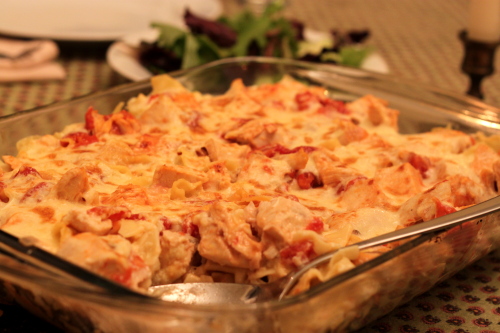
Gratin de Volaille Pavillon (Chicken and Noodles Baked in Cream Sauce)
adapted from The New York Times More 60-Minute Gourmet by Pierre Franey

Serves 6

2 cooked whole chicken breasts (see recipe for poaching chicken below, highly recommended)
12 oz (340 g) medium width egg noodles
5 tablespoons (75 g) butter, divided
3 tablespoons flour
2 cups (500 ml) chicken broth (use the broth from the poached chicken if possible)
1/2 cup (125 ml) heavy cream
salt and freshly ground black pepper
2 tablespoons shallots, finely chopped
1 ripe tomato, chopped (or 1 cup canned diced tomatoes, drained)
1 egg, lightly beaten
2 tablespoons freshly grated Parmesan cheese

Remove the chicken from the bones. Discard the skin and bones and cut the meat into 1 or 2 inch cubes. There should be about 3 cups.

Cook the noodles according to the package directions. Do not overcook. Drain the noodles. Return them to the pot and add 1 tablespoon of butter. Toss gently.

Meanwhile, melt 2 tablespoons (30 g) of butter in a saucepan and add the flour, stirring with a wire whisk. When blended, add the chicken broth, stirring rapidly. When the sauce is thickened and smooth, simmer for about 5 minutes. Add the cream and let it simmer briefly. Season to taste with salt and pepper. Set aside.

Melt 2 tablespoons (30 g) of butter in another saucepan and add the shallots. Cook briefly, stirring, then add the tomatoes and cook down for about 3 minutes. Add the chicken and salt and pepper to taste. Add 1 cup (250 ml) of the cream sauce and stir gently; set aside.

To the remaining cream sauce, add the egg. Bring to a boil stirring rapidly with a whisk. Do not overcook. Remove from the heat.

Butter a 13 x 9 inch baking pan with the remaining tablespoon (15 g) of butter. Add the noodles, and smooth them over. Spoon the chicken and sauce mixture over the noodles. Cover with the cream and egg sauce, smoothing it over. Sprinkle on the cheese. Place the dish under the broiler and cook until nicely browned and bubbling on top.

Poached Chicken

2 whole, bone-in, skin-on chicken breasts
2 cups (500 ml) water
1 cup (250 ml) dry white wine
1 small white onion, sliced
1 bay leaf
3 sprigs parsley
1 carrot, chopped
1 teaspoon salt
1/8 teaspoon pepper

Combine all the ingredients in a saucepan and bring to a boil. Cover and simmer gently for about 10 minutes. Uncover and set aside. Let the chicken cool in its own broth.

Homemade Parmesan Chicken Fingers and Rice Pudding

It was bound to happen sometime — we had our first trip to the emergency room with one of the kids last weekend after my five-year-old daughter fell off the slide at home and fractured her collarbone. She spent the week propped up on the sofa watching DVDs, and after letting her eat ice cream for dinner on the day it happened, I spent the rest of the week making all her favorite foods — spaghetti Bolognese, roast chicken, risotto, banana bread — and these Parmesan chicken fingers and a rice pudding full of milk to help that bone heal.

Homemade Parmesan Chicken Goujons
adapted from Rachel’s Favourite Food at Home by Rachel Allen

Serves 4

In most pubs or restaurants with a kids menu you’ll see chicken goujons on the menu — it took me awhile after moving to Ireland to figure out it was a fancy way of describing what we call chicken strips or chicken fingers in the US. I served the goujons with ketchup for the kids and a quick lemon mayo for the grown-ups (made by mixing in some lemon zest and juice, salt and pepper), but a sweet chili sauce would also be good for dipping. When making breaded chicken, you might find that you’ll need some extra flour, eggs and/or breadcrumbs.

4 large boneless, skinless chicken breasts
1 cup (120 g) flour
salt and freshly ground black pepper
2 large eggs, beaten
1 cup (100 g) breadcrumbs or panko
1/2 cup (50 g) finely grated Parmesan
3 tablespoons sunflower oil

Cut the chicken into strips the size of a big fingers. Place the flour in a bowl or a large shallow plate and add in some salt and pepper. Place the beaten eggs in another bowl/plate. Mix together the breadcrumbs and Parmesan in a third bowl/plate.

Toss each chicken strip first in the seasoned flour and shake off any excess. Dip into the beaten egg, letting the excess drip off, then roll in the breadcrumb mix until it’s evenly coated. Shake off the excess breadcrumbs and place the coated strips on a plate.

Heat the oil in a large frying pan over a medium to high heat. When the oil is hot, add the chicken strips in a single layer, making sure you don’t crowd the pan (cook the chicken in batches). Cook on one side for 3 or 4 minutes, until golden, then turn down the heat and flip the pieces over. Cook on the other side for a further 4 minutes, or until cooked through and golden. Place on a baking sheet and keep the finished strips warm in a low oven while you cook the remaining chicken.

***

Rice Pudding
adapted from How I Cook by Skye Gyngell

Serves 4 to 6

Skye Gyngell serves this rice pudding with stewed prunes. I made this dried fruit compote to spoon on top and the leftovers are equally as good on granola and porridge for breakfast.

1 1/2 cups (250 g) risotto rice, such as Arborio
4 cups (900 ml) whole milk
1 vanilla pod, split lengthways
zest of 1 lemon
small pinch of salt
1 1/4 cup (150 g) sugar
3/4 cup (200 ml) cream

Rinse the rice well under cold running water, then tip it into a heavy-bottomed saucepan. Add the milk, vanilla pod, lemon zest and salt and bring almost to a simmer over a medium heat. Now turn down the heat as low as possible and put the lid on, placing it slightly off center so it isn’t quite covering the pan. Cook for about 20 minutes, stirring occasionally, or until the rice is cooked but still retains a slight bite. When it’s al dente, stir in the sugar and cream and cook for a further 10 minutes. The pudding should be soft and creamy and should easily drop from a spoon. Allow to stand for 5 to 10 minutes and serve warm.

The Barefoot Contessa’s Turkey Meatloaf with Caramelized Onion Gravy

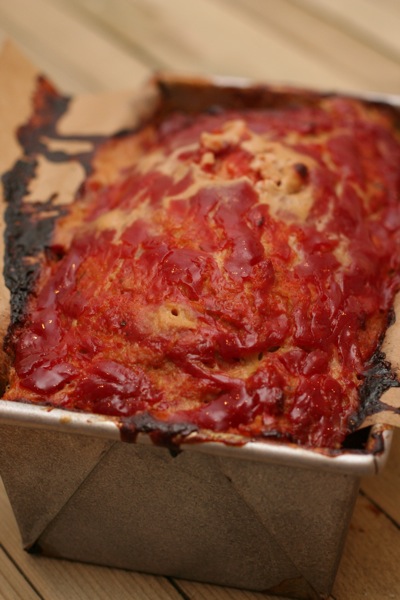
When I was growing up, my mom would cook us whatever we wanted for dinner on our birthday. The only thing I remember asking for a few years in a row when I was a kid was pineapple ham. This was in the days before it became a derided pizza topping combo, and I’m sure I thought it was something fancy and special — at any rate, I loved it. Carrying on the tradition, I now cook special requests for my family on their birthdays too, and almost every year for the past 13 years that I’ve known him, my husband has requested an even more unglamorous dinner — meatloaf. Is there an uglier dish than meatloaf? Once or twice he’s gone more upmarket and asked for steak au poivre, but the humble meatloaf with mashed potatoes and gravy will always be his favorite. Kelly has already shared Mark Bittman’s basic meatloaf recipe, but I like this one because it’s made with turkey mince instead, which makes it a little lighter than meatloaf made with beef. It might not win any beauty pageants (which doesn’t stop Nigella Lawson from waxing poetic about it), but I have to admit it’s really good and the kids love it too, so everyone wins.


Turkey Meatloaf
adapted from The Barefoot Contessa Cookbook by Ina Garten

Serves 4

I’ve modified this a bit to decrease the amount of meatloaf made. I also prefer to cook it in a loaf tin instead of free forming it on a baking sheet. Meatloaf and mashed potatoes go together like bread and butter — just add your favorite veg dish to round out the supper.

olive oil
2 onions, chopped
salt and freshly ground black pepper
1/2 teaspoon dried thyme
1/4 cup (50 ml) Worcestershire sauce
1/2 cup (125 ml) chicken stock
1 1/2 teaspoons tomato paste (or you could just use ketchup)
2 lb (1 kg) ground turkey breast
1 to 1 1/2 cups (100 to 150 g) plain dry breadcrumbs
2 large eggs, beaten
1/2 cup (125 ml) ketchup

Preheat the oven to 325° F (160°C). Line a loaf tin with parchment paper or foil so that it hangs over the sides, which will make it easy to remove the meatloaf from the tin after it’s cooked.

Heat a splash of olive oil in a medium saute pan over a medium-low heat. Cook the onions with a generous amount of salt and pepper and the thyme for about 15 minutes, until translucent but not browned. Add the Worcestershire sauce, chicken stock, and tomato paste and mix well. Allow to cool to room temperature.

Combine the ground turkey, 1 cup (100 g) bread crumbs, eggs, and onion mixture in a large bowl. Add in the extra 1/2 cup (50 g) of breadcrumbs if you think the mixture looks too wet (alternatively, if you think it looks too dry, add another splash of stock). Mix well and place into the lined loaf tin. Spread the ketchup evenly on top. Bake for 1 1/2 hours, until the internal temperature is 160°F (70°C) and the meatloaf is cooked through. (A pan of hot water in the oven under the meatloaf will keep the top from cracking.) Serve hot, at room temperature, or cold in a sandwich.

***

Caramelized Onion Gravy
adapted from How to Cook: Book One by Delia Smith

Delia’s original recipe is for a roasted onion gravy, but since I was making this at the same time as the meatloaf, which needs a low temperature, I couldn’t roast the onions and decided to caramelize them instead. You can caramelize the onions ahead of time and store them in an airtight container in the fridge for a few days.

2 teaspoons groundnut or other flavorless oil
a knob of butter (optional)
2 large onions, thinly sliced
a generous pinch of sugar (optional)
1 tablespoon Worcestershire sauce
1 level teaspoon mustard powder, such as Colman’s
15 fl oz (425 ml) vegetable stock
1 rounded tablespoon plain flour
salt and freshly ground black pepper

Coat the bottom of a wide pan with olive oil, or a mixture of olive oil and butter (about 1 teaspoon per onion). Heat the pan on medium high heat until the oil is shimmering. Add the onion slices and stir to coat the onions with the oil. Spread the onions out evenly over the pan and allow them to cook, stirring occasionally, for 10 minutes. Sprinkle some salt over the onions and add a pinch of sugar to give the carmelization process a boost (optional). Cook for around 30 minutes, stirring every few minutes. Keep an eye on the temperature — you may need to lower it if the onions look like they’re on the verge of burning, not browning — and add a little more oil if they’re sticking to the pan too much. As the onions cook down, you may find you need to scrape the pan every minute instead of every few minutes. As the sugar in the onions caramelizes, they’ll go from light tan to golden to deep brown. Don’t cook past a mahogany color, because then they might burn.

When the onions are ready, add the Worcestershire sauce and mustard powder to the stock. Add the flour to the onions, stir them together and cook for 1 minute. Gradually add the stock mixture to the pan, whisking all the time, until it’s all incorporated. Bring it up to a simmer and let it gently bubble away for 5 minutes. Taste to check the seasoning, then pour into a warmed serving jug.

White Bean and Sausage Soup and Almond and Candied Bacon Bark

The first time I ever tried black pudding (a.k.a. blood pudding), I spit it out. I had only been living in Ireland for a few weeks and was at a fancy book launch for my new publishing job. One of the canapés being passed around was circles of pan-fried black pudding with a fancy relish on top, and not wanting to lose face in front of my new colleagues, not to mention my boyfriend, I was determined to try some. When in Rome, right? But I just couldn’t get over the fact that it was made from blood and I couldn’t even bring myself to chew it. Growing up in suburban Illinois, where an egg roll from the Chinese takeout was the most exotic thing I’d ever eaten, it was too much of a culture shock.

I was telling this story to my friend Caroline a few hours before we were due to go to the Clonakilty by Candlelight dinner last week. “Are you sure you want to go?” she asked, looking worried. “You know they’re bound to serve it there.” “Oh, I’m over it now,” I said. “I even ordered a black pudding and goat cheese tart at a restaurant last year.”

I was lucky to get a place at the free dinner on its second night, which was run as a pop-up restaurant by Clonakilty Blackpudding for only six nights. The location was kept secret until the day before, which turned out to be a Georgian house on Dublin’s north side. Caroline and I were the first to arrive (fellow food blogger Aoife was there that night as well) and we were handed a glass of Prosecco and directed towards the biggest turf fire I’ve ever seen, stacked eight briquettes deep at least. We also got a sneak peek of the room next door that we’d be eating in – along with 2,000 creepy china dolls crammed into floor-to-ceiling shelves that lined the room – and a look at the menu, which did indeed include a main course of black pudding with scallops and a carrot puree.

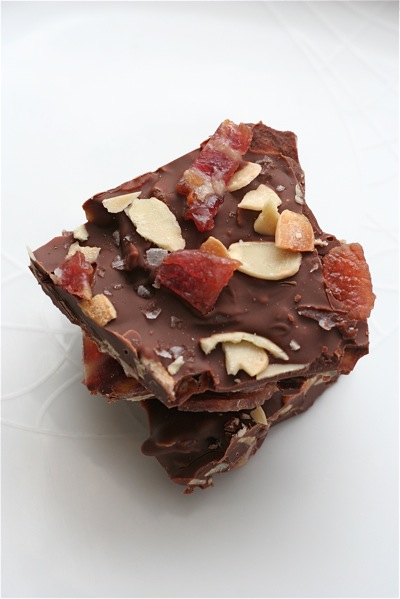
Because I’d won some Clonakilty black and white pudding, sausages and bacon by correctly answering the question “What is entomophagy the consumption of?” (insects), I made this white bean and sausage soup, an old cheap and cheerful stand-by. And feeling inspired by the chocolate-covered bacon, bacon praline and 12-year-old Jameson whiskey with a bacon and rosemary twist that we were served, I made this almond and candied bacon bark. This dessert seems to divide people firmly into two camps – people who have never heard of such a thing and think it sounds downright weird (they must have somehow missed the bacon mania boat), and people who think it sounds delicious and can’t wait to make it themselves. If you’re the former, then all I can say is don’t knock it till you’ve tried it – and then once you’ve tried it, try to stop yourself from eating all of it.

White Bean and Sausage Soup
adapted from The Barefoot Contessa Cookbook by Ina Garten

Serves 6

I’ve adapted the Barefoot Contessa’s original recipe to add sausages, but I make it just as often without them for a vegetarian version.

1 lb (450 g) dried white cannellini beans
olive oil
6 to 8 good-quality sausages
3 large onions, sliced
2 garlic cloves, minced
1 large branch fresh rosemary
2 quarts (2 liters) chicken or vegetable stock
1 bay leaf
salt and freshly ground black pepper

In a medium bowl, cover the beans with water by at least 1 inch and leave them in the refrigerator for 6 hours or overnight. Drain.

In a large stockpot over a low to medium heat, heat some olive oil and cook the sausages for about 10 or 15 minutes, until they’re browned on all sides and cooked through. Remove the sausages to a plate and set aside. Add the onions to the pot and saute for 10 to 15 minutes, until they are translucent. Add the garlic and cook for 1 more minute. Add the drained white beans, rosemary, chicken stock, and bay leaf. Cover, bring to a boil, and simmer for 30 to 40 minutes, until the beans are very soft. Remove the rosemary branch and the bay leaf. Pass the soup through the coarsest blade of a food mill or place in the bowl of a food processor fitted with a steel blade and pulse until coarsely pureed. Return the soup to the pot over a medium heat. Slice the sausages and add to the soup to reheat. Add salt and pepper to taste and serve hot.

***

Almond and Candied Bacon Bark
adapted from Ready for Dessert by David Lebovitz

David Lebovitz says it’s best to make the candied bacon the same day you plan to use it. If you want to play around with flavors (though this almond and candied bacon combo is insanely addictive), check out this list of top 10 chocolate bark mix-ins from the Big Girls, Small Kitchen blog for some inspiration.

1 1/4 lb (565 g) good-quality chocolate, broken into pieces
1/2 cup (50 g) flaked almonds, toasted
5 pieces of bacon, pancetta or streaky rashers
3 tablespoons brown sugar
flaky sea salt, such as Maldon (optional)

Preheat the oven to 400°F (200°C) and line a baking try with foil (shiny side down) or parchment paper. Place the strips of bacon on the tray and sprinkle each strip with about 2 teaspoons of brown sugar. Bake for 12 to 15 minutes, turning the strips over halfway through baking and dragging them through the melted sugar on the tray. They’re done when they’re mahogany colored. Cool on a wire rack until crisp, then crumble or roughly chop. Set aside.

While the bacon cools, place a piece of parchment paper on a baking tray or stretch a piece of cling film taught across a baking tray instead. Add the chocolate to a large heatproof bowl. Set the bowl over a pot of simmering water and stir often until the chocolate is almost melted.

Remove the bowl from the heat, wipe off the bottom, then continue to stir the chocolate until it’s all melted and smooth. Mix in two-thirds of the toasted almonds and two-thirds of the bacon.

Scrape the mixture onto the prepared baking tray and use a spatula to spread it to the desired thickness. Add the remaining almonds and bacon to the top of the chocolate, pressing them in lightly so they’ll adhere. Sprinkle bits of salt, if using, across the top. Refrigerate the baking sheet until the chocolate sets. Once the bark is firm, break it into pieces. Store the bark in the fridge, where it will keep for 3 days.

Split Pea Fritters with Indian Spiced Cauliflower and Potatoes

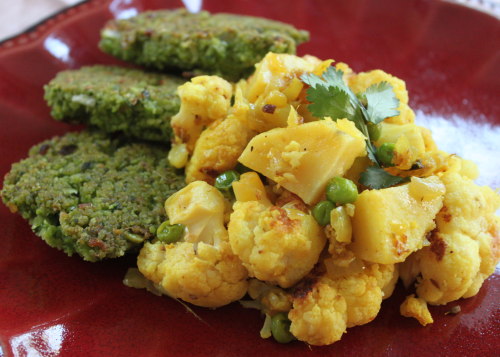
While I won’t hesitate to drop $20 on a quality chunk of dark chocolate or stinky cheese, I have a hard time passing up a good bargain. Cooking at home keeps our family’s food costs low, a fact I learned as a poor college kid developing a meal repertoire of bean burritos, fried rice, and other filling but frugal foods. Stocking up on pantry staples when they are on sale is another great cost-cutting measure. I tell you all this as way of explaining why I decided to buy 10 pounds of dried split peas during a recent shopping trip. How could I pass them up? Organic, healthy, and less than a dollar a pound. Only during the drive home did I realize that I have only used split peas in split pea soup, a soup I like but don’t particularly love. Luckily, my trusted and now worn How To Cook Everything provided an interesting alternative to split pea soup with these  fritters.

We like the split pea fritters even more than falafel, a similar but chickpea-based fritter. If you’ve ever made falafel, you know the “batter” consistency should resemble wet sand. I think they cook best in a shallow pool of hot oil. I like them served piping hot with a cool creamy sauce like lemon-cumin yogurt sauce or even a simple raita. Delicately spiced roasted cauliflower and potatoes round out the meal nicely.

Indian-Style Split Pea Fritters
adapted from How To Cook Everything: Simple Recipes for Great Food by Mark Bittman

Makes 4 to 8 appetizer servings or 2 to 4 main dish servings

1 cup (200 g) yellow or green split peas, washed and picked over
peanut or other oil as needed
1 jalapeño or other hot chile (fresh or dried), stemmed, seeded and minced, or to taste
1 1/2‑inch piece ginger, peeled and roughly chopped
1 clove garlic, minced or grated
1/2 onion, peeled and roughly chopped
1/2 cup (15 g) cilantro (some stems are OK)
1 teaspoon ground coriander
1 teaspoon ground cumin
1/2 teaspoon ground fenugreek
1/2 onion, minced
salt and freshly ground black pepper
1 to 2 tablespoons flour, if necessary
lime or lemon wedges (optional)

Soak the split peas in water to cover for at least 3 hours. Drain but leave them wet.

Place the oil, about 1/2 inch deep, in a large, deep saucepan. Instead of pan frying, you can also deep fry these in more oil (at least 3 inches deep). Heat the oil over a medium-high heat to about 365°F to 375°F.

Place the drained peas in the container of a food processor with the chile, ginger, garlic, 1/2 onion, cilantro, coriander, cumin, and fenugreek. Process until the mixture is a coarse puree — not perfectly smooth, but with no whole peas remaining. Add a couple tablespoons of water to the mixture if necessary to help the machine work. Stir in the minced onion and salt and pepper. The mixture should be fairly loose; add a little water if it is quite thick or 1 to 2 tablespoons of flour if it’s soupy. Taste and adjust the seasoning if necessary.

Drop the mixture by heaping tablespoons into the oil, but don’t crowd the pan. Cook the fritters for 2 to 3 minutes on each side or until lightly browned and crisp. Drain on paper towels. Repeat with the remaining mixture, adding (and heating) more oil to the pan if necessary. Serve the fritters hot or at room temperature with lime or lemon wedges, if desired.

***

Indian Spiced Cauliflower and Potatoes
adapted from Gourmet, February 2004

Serves 4

1 small head cauliflower, cut into 3/4‑inch-wide florets
1 lb (450 g) Yukon Gold potatoes, peeled and cut into 1/2‑inch cubes
5 tablespoons vegetable oil
1/2 teaspoon cumin seeds
3/4 teaspoon salt, divided
1 medium onion, finely chopped
2 garlic cloves, finely chopped
1 fresh jalapeño, omitting seeds for less spiciness
2 teaspoons minced peeled fresh ginger
1 teaspoon ground cumin
1/2 teaspoon ground coriander
1/2 teaspoon turmeric
1/4 teaspoon cayenne
1/2 cup (125 ml) water

Put the oven rack in the upper third of the oven and place a shallow baking pan on the rack. Preheat the oven to 475°F (240°C).

Toss the cauliflower and potatoes together in a bowl with 3 tablespoons oil, cumin seeds, and 1/4 teaspoon salt. Spread in the hot baking pan and roast, stirring occasionally, for about 20 minutes, until the cauliflower is tender and browned in spots and the potatoes are just tender.

While the vegetables are roasting, cook the onion, garlic, jalapeño, and ginger in the remaining 2 tablespoons of oil in a 12-inch heavy skillet over a moderate heat, stirring frequently, for 8 to 10 minutes, until very soft and beginning to turn golden. Add the ground cumin, coriander, turmeric, cayenne, and remaining 1/2 teaspoon salt and cook, stirring constantly, for 2 minutes. Stir in the water, scraping up any brown bits from the bottom of skillet, then stir in the roasted vegetables. Cook, covered, stirring occasionally, for 5 minutes.

Slow Cooker Smoky Pork Tacos with Avocado and Feta

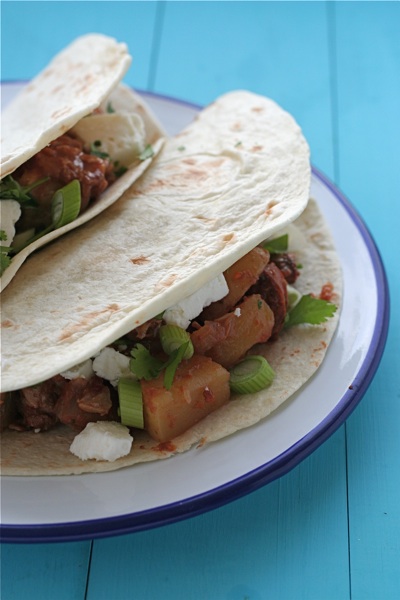
Feeling frazzled from the demands of two young children after a long month, I fired off an email to Kelly on Friday evening asking if I could hop on a plane and join her in Mexico, where she was spending the weekend for work. “I’m sitting on my balcony watching the waves crash on the beach, a little tipsy from my margarita. Wish you were here!” she wrote back. “I’m making a Rick Bayless recipe on Sunday, which is about as close as I’m likely to get to Mexico anytime soon,” I replied. As compromises go, at least it was a tasty one — I just wish I’d had the makings of a Rick Bayless margarita on hand too.

Slow Cooker Smoky Pork Tacos with Avocado and Feta
adapted from Mexican Everyday by Rick Bayless

Serves 8

Rick Bayless calls this Smoky Pork Tinga Tacos in his book and says you can vary the recipe by replacing the pork with 2 lb (1 kg) of boneless, skinless chicken thighs or cubed boneless beef chuck (stewing beef). I picked up a couple cans of chipotle chilies on my trip back to the US this summer and have been rationing them for the past 5 months, but if you can’t get them, you should still try this recipe, perhaps using 1 or 2 chopped red chilies or using more chorizo, though you won’t get the same smoky taste. You can also buy dried, crushed chipotles from Seasoned Pioneers in the UK. Or if you don’t like spicy food, you can just leave out chilies altogether.

4 medium (1 lb/450 g) boiling potatoes or Yukon Gold potatoes, cut into 1/2‑inch cubes
1 onion, cut into 1/4‑inch slices
2 lb (1 kg) boneless pork shoulder, cut into 1‑inch pieces
1 x 28 oz (or 2 x 400 g) cans of chopped tomatoes (preferably fire-roasted if you can get them)
3 or 4 canned chipotle chiles en adobo, seeded and sliced 1/4 inch thick
1 tablespoon chipotle canning sauce
1 tablespoon Worcestershire sauce
1 teaspoon dried oregano
3 garlic cloves, finely chopped
1 1/2 teaspoons salt
4 oz (100 g) chorizo, cut into small pieces (optional)
flour or corn toritllas, to serve
feta cheese, crumbled, to serve
2 large avocados, pitted and cubed, to serve
sour cream or natural yogurt, to serve
fresh cilantro, chopped, to serve

Spread the potatoes over the bottom of a slow cooker* and top with the sliced onions, then the pork. In a large bowl, mix the undrained tomatoes with the chillies, chipotle canning sauce, Worcestershire, oregano, garlic and salt. Pour the mixture evenly over the pork, onions and potatoes (don’t stir — keep everything in layers). Cover and cook on high for 6 hours or low for 8 hours.

When you’re ready to eat, fry the optional chorizo in a skillet over a medium heat for about 5 minutes. Uncover the pork tinga and spoon off any fat that might have accumulated on top. Add in the chorizo, then stir everything together, breaking the pork into small pieces that are suitable for tacos. Serve with warm corn tortillas, feta cheese, avocados, sour cream or yogurt and a sprinkling of fresh chopped cilantro to make soft tacos.

*Note: If you don’t have a slow cooker, lay the pork in a medium-large heavy pot, preferably a Dutch oven, and top with the potatoes and onions. Pour over the tomato mixture, cover with a lid and braise in a 300°F (150°C) oven for 2 to 2 1/2 hours, until the pork is completely tender.

Sausages Braised in Cider with Apples and Juniper

There’s been a lot of bad news about Ireland in the world media these past few months, but I’m determined to focus on the positives about my adopted country and there are plenty of them, including the vibrant food scene. One such Irish success story is L. Mulligan Grocer, a gastropub started by another food blogger, Seáneen of 9 Bean Row, in 2010 with her two partners. Open only since July, it’s already been named one of the top 100 restaurants in Dublin, got a great review in the Sunday Tribune and from Tom Doorley in the Daily Mail and has become the meeting place of choice for food bloggers in Dublin. Caroline and I didn’t have to think twice about where to have a dinner out to celebrate the launch of the Irish Food Bloggers Association — it was practically just assumed it would be Mulligan’s. At the IFBA launch dinner back in November, our menu — with a matching craft beer menu to complement each course — included potted crab with sourdough soldiers; bangers and mash with TJ Crowe’s free-range sausages with wholegrain mustard mash and O’Hara’s stout gravy; and toffee apple sundae with Cuinneog butterscotch, spiced apple, Kilbeggan cream and Murphy’s sea salt ice cream. In short, it’s the kind of place you wish was your local. Feeling inspired by the dinner at Mulligan’s and my orchard apple tour in October, I pulled out this recipe. Made with sausages from my local butcher, Irish cider and Irish apples, it was a perfect reminder of some of the things I love best about Ireland — good food made by good people.

Sausages Braised in Cider with Apples and Juniper
adapted from Delia’s How to Cook Book One by Delia Smith

Serves 4

Delia calls for Bramley and Cox’s apples, but if you can’t get those, use one each of any cooking apple and eating apple. And if you can’t find juniper berries, don’t worry about leaving them out, this is still worth making without them.

olive oil
8 to 10 large pork sausages, weighing about 1 lb (450 g)
2 onions, peeled and sliced into rings
8 oz (225 g) lean smoked bacon, roughly chopped
2 cloves garlic, chopped
1 Bramley apple, cored and sliced into rings (unpeeled)
1 Cox’s apple, cored and sliced into rings (unpeeled)
1 tablespoon plain flour
2 cups (500 ml) dry cider (hard cider)
1 tablespoon cider vinegar
a few springs of fresh thyme
2 bay leaves
1 tablespoon juniper berries, crushed slightly in a pestle and mortar or with the back of a spoon
salt and freshly ground black pepper
mashed potatoes, to serve

Heat a splash of olive oil in a large, heavy-based frying pan over a medium heat. As soon as it’s hot, fry the sausages until they are nicely browned on all sides, then transfer them to a plate and set aside. Add the onions and bacon to the frying pan and cook for about 10 minutes, until the onions have softened. Add the garlic and cook for 1 minute more.

Meanwhile, place a casserole pot (a.k.a. Dutch oven) or large heavy-bottomed pot onto a medium heat. Add a splash of olive oil, and when it’s hot, add the apple rings and brown them on both sides, which will take 2 to 3 minutes. Add the sausages, followed by the bacon, onion and garlic, then sprinkle the flour in to soak up the juices, stirring it gently with a wooden spoon. Next add the cider and cider vinegar a little at a time, stirring after each addition. Add the thyme, bay leaves and crushed juniper berries and season with salt and pepper, but not too much salt because of the bacon. Put the lid on and simmer very gently on the lowest possible heat for 1 hour. Serve with mashed potatoes.

Fish with Edamame Pesto and Cookies-and-Cream Ice Cream Cake

In what I suspect will become a birthday tradition, Sam once again asked for “chocolate cake with whipped cream” for his birthday party this year. Although my holiday schedule wasn’t quite as hectic as Kristin’s, between December 1st, 2010 and January 1st, 2011, I had already celebrated eight days of Chanukah, my husband’s birthday, my birthday, Christmas, and New Year’s.  Exhausted from the festivities, I was tempted to remake last year’s icebox cake and spare myself the time it would take to find a new recipe to fit Sam’s party criteria. But I just couldn’t brush off the request that easily. It’s not Sam’s fault he was born the first week in January and that his birthday, like mine, tends to be sucked up and forgotten amidst the winter holiday hustle and bustle. I luckily found another great make-ahead cake covered in whipped cream, chocolate, and–as an added  bonus–sprinkles.  Despite its less than perfect appearance (to be blamed on a final layer of too warm hot fudge sauce), this cake was a real crowd-pleaser.

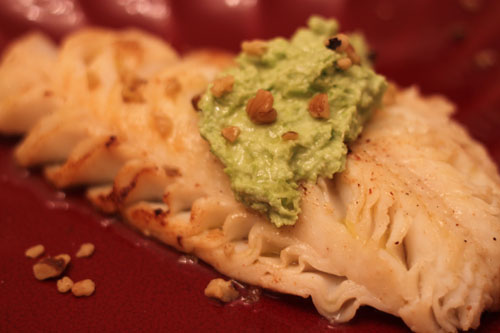
The birthday dinner itself was a lighter affair. Sam is a huge fan of Japanese food, especially edamame, so this edamame-based pesto caught my eye while I browsed cookbooks for a cake recipe. The pesto tasted amazing dolloped on a piece of sauteed cod, and nearly as good spread on a cracker later that night as a bedtime snack. I rounded out dinner with simple steamed veggies and cooked quinoa.

Fish with Edamame Pesto
adapted from Mark Bittman’s Kitchen Express: 404 inspired seasonal dishes you can make in 20 minutes or less

serves 3

1 bag frozen edamame (in pods)
olive oil
1 clove garlic, grated
juice of half a lemon
handful of grated Parmesan cheese
salt and pepper, to taste
1 lb (450 g) cod or other fish fillet(s)
2 tablespoons butter or olive oil
chopped walnuts, for garnish

Blanch the frozen edamame in boiling salted water for 3–5 minutes until tender. Drain and rinse the edamame under cold water. Shell the soybeans and place them in a blender or food processor with a few tablespoons of olive oil (or more, as needed) to get a nice puree. Add the garlic, lemon juice, and Parmesan and blend until smooth. Season the puree to taste with salt and pepper.

Season the fish fillet with salt and pepper. Cook the fillet(s) in the butter or olive oil over medium heat about 4 minutes per side or until golden and cooked through. Serve the fish with a spoonful of the pesto and garnish with chopped walnuts.

***

Cookies-and-Cream Ice Cream Cake
adapted from Bon Appetit, June 2000

serves 12

1 x 16-oz (45o‑g) pound cake, thawed if frozen
1/2 gallon (about 1 kg) cookies-and-cream ice cream, slightly softened

12 oz (340 g) hot fudge sauce (purchased or homemade)
6 oz (170 g) semisweet chocolate chips
1/4 (60 ml) cup water
10 Oreo cookies, coarsely chopped

1 cup (240 ml) chilled whipping cream
2 tablespoons sugar
candy sprinkles

Cut the cake into 1/3‑inch-thick slices. Halve each slice diagonally, forming triangles. Cover the bottom of a 9‑inch-diameter springform pan with the cake by arranging some triangles, points facing in, around the edge of pan. Fill in the center with more triangles; then cut additional pieces to fill in any spaces. Spread half of the ice cream over the cake. Freeze until firm, about 1 hour.

Stir the fudge sauce, chocolate chips and 1/4 cup water in a heavy medium saucepan over medium-low heat until melted and smooth. Cool to just barely lukewarm. Spread half of the fudge sauce over the ice cream. Sprinkle with the cookies. Top with enough remaining cake slices to cover. Spread the remaining ice cream over. Freeze 1 hour.

Stir the remaining fudge sauce over medium-low heat until barely lukewarm. Pour the sauce over the ice cream, spreading to the edge. Freeze at least 6 hours or overnight.

To serve, let cake sit in fridge about 15 minutes to slightly thaw. While the cake thaws, beat the cream and sugar in a medium bowl to stiff peaks. Run a knife around the pan sides to loosen the cake. Release the pan sides. Spread the whipped cream around the side of the cake and, if desired, pipe a border of whipped cream around the top edge of the cake. Scatter sprinkles or other small candies atop the cake.

A Cooking Blog