Slow-roast Tomato, Basil and Goat’s Cheese Pasta

Donal Skehan ticks all the boxes. He’s young, hip and even had a brief stint as a pop star before turning his attention exclusively on food. He’s also one of the new generation of food blog success stories who’s just published his second book, Kitchen Hero, and his corresponding new TV show is due to air on May 16 on RTÉ in Ireland. Not only that, he’s also an accomplished food photographer (check out his website to see what I mean) and took all his own photos for the cookbook. And did I mention he’s an all-around great guy too? Despite having thousands of Twitter followers and Facebook fans, he has time for everyone. Who else would host an afternoon tea party at Dublin’s posh Westbury Hotel just for food bloggers like Donal did last week so we could sample the tea he’s designed exclusively for them, not to mention get a signed copy of his book? He’s a true star.

And he also knows his way around the kitchen. You can just about feel Donal’s energy and enthusiasm leaping off the pages of his new book. “I am a home cook and I’m here to show you how to be a kitchen hero!” he proclaims in the first line of his introduction. “I’ve come to the conclusion that if you have confidence in the kitchen, you can cook absolutely anything.” He wants to get people back in the kitchen and his focus is on cooking simple, tasty food using fresh ingredients. His recipes are do-able for even the most novice cook — like this pasta with slow-roasted tomatoes, basil and goat’s cheese. As for me, a working mom with two young kids, the ‘Meals in Minutes’ and ‘Stretch Your Meals’ chapters are already full of dog-eared pages of recipes I’ll be making in the next few weeks.

Slow-roast Tomato, Basil and Goat’s Cheese Pasta
adapted from Kitchen Hero by Donal Skehan

Serves 4

Donal’s original recipe is vegetarian, but I wouldn’t be averse to adding in some bacon or even leftover roast chicken. Or you could try adding in a few handfuls of baby spinach or arugula (rocket) and some toasted pine nuts. I stirred through the juice of half a lemon, which I thought gave this a lovely lift. The great thing about roasting tomatoes is that even if they’re not at their best in the off season, this method brings out all their flavor. If you’re pressed for time though, substitute sun-dried tomatoes for the slow-roasted ones, in which case this is the kind of dinner that you can pull together in the time it takes to boil water and cook your pasta.

3 tablespoons olive oil
1 tablespoon balsamic vinegar
1 lb 2 oz (500 g) cherry tomatoes, cut in half
salt and freshly ground black pepper
11 oz (300 g) of your favorite pasta shape
3 oz (75 g) goat’s cheese, crumbled
a handful of fresh basil leaves, shredded

Preheat the oven to 375°F (190°C).

Whisk together the olive oil and balsamic vinegar in a large bowl. Add the tomatoes and toss gently to coat them. Arrange the tomatoes cut side up on a large baking tray and season with salt and pepper. Roast in the oven for about 45 minutes, until the tomatoes have shrunk and are slightly charred.

Meanwhile, cook the pasta in a large pot according to the instructions on the packet. Drain the pasta and return it to the pot. Immediately stir through the goat’s cheese, basil and tomatoes while the pasta is still hot so that the cheese melts and coats the pasta. Season with a good pinch of salt and pepper and serve immediately.
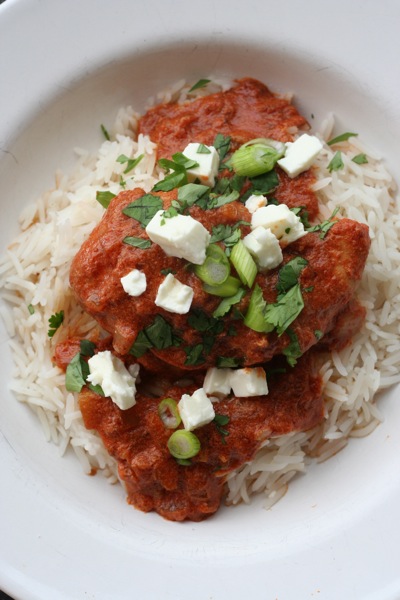
Slow Cooker Buttered Chicken and Tomato Curry

A slow cooker isn’t the most glamorous piece of kitchen equipment, but it’s a busy cook’s best friend. Kelly has sung their praises, and I convinced my friend Emma to buy one last year when the cold weather set in after talking up all their benefits. After a few months though, she admitted that the first two recipes she’d made were flops, one of which was so bad they wound up giving it to the dogs and ordering take-out. That’s the main drawback with slow cookers, and why I’m always hesitant to buy cookbooks dedicated solely to them. When a slow cooker recipe is bad, it tends to be really bad — insipid or even, as in Emma’s case, inedible.

In the meantime though, Emma bought a copy of Antony’s Slow Cooking by Antony Worrall Thompson and tried this recipe, which she liked so much she passed it on to me. I in turn like it so much that I’ve made it twice in the past month and it’s become my new favorite slow cooker recipe. And that’s the flip side to the slow cooker – when you get a good recipe, it can be really good, like this one.

Slow Cooker Buttered Chicken and Tomato Curry
adapted from Antony’s Slow Cooking by Antony Worall-Thompson

Serves 4

Buttered chicken is a classic mild curry — it’s creamy, not spicy, so my kids loved it and practically licked their bowls clean to get every last bit of the sauce. Please don’t be put off by the long list of ingredients — it’s really just a bunch of spices that are all widely available.

The original recipes calls for heavy cream to be stirred in at the end in addition to more butter, but I found the sauce to be delicious without all those extra calories. But if you’re so inclined, add in 1/3 cup (80 ml) heavy cream at the end of the cooking time, cover and cook on high for 20 minutes. Remove the chicken to a warm serving dish, then whisk 6 tablespoons (3 oz/90 g) butter into the sauce, making sure it’s well emulsified. Check the seasoning, then pour the sauce over the chicken and garnish, as below.

2 tablespoons lemon juice (should be the juice of 1 large lemon)
1/2 teaspoon salt
1 teaspoon chili powder
2 lb (1 kg) skinless chicken thigh fillets or skinless chicken breasts
1 1/4 cup (300 ml) Greek yogurt
2 teaspoons ground ginger
2 teaspoons garam masala
2 tablespoons (30 g) unsalted butter
1 tablespoon vegetable oil
2 onions, finely chopped
1 teaspoon ground coriander
1 teaspoon sweet paprika
1/2 teaspoon ground cumin
1/2 teaspoon fennel seeds
1/2 teaspoon ground cinnamon stick
4 garlic cloves, crushed or finely chopped
14 fl oz (400 ml) passata (or blend a 14 oz/400g can of whole plum tomatoes until it’s smooth if you can’t get passata)
2 tablespoons tomato paste (puree)
5 fl oz (150 ml) chicken stock
2 tablespoons light brown sugar
salt and freshly ground pepper

to garnish:
fresh cilantro (coriander)
flaked almonds
spring onions, sliced
feta chees

to serve:
basmati or pilau rice

Whisk together the lemon juice, salt and chili powder. Place the chicken in a non-metallic bowl and pour over the lemon juice mixture. Cover and marinade for at least 30 minutes, but ideally overnight.

When you’re ready to cook, whisk together the yogurt, ginger and garam masala, pour over the marinated chicken and mix well. Spoon the chicken mix into the slow cooker.

Heat the butter with the oil in a frying pan over a medium-low heat, then cook the onion and spices for 8 to 10 minutes, until the onion has softened but hasn’t colored (adding a pinch of salt to the onions when they’re cooking helps to prevent them from browning too much). Add the garlic and cook for 1 minute more. Stir the onion mix into the chicken in the slow cooker, then stir in the passata, tomato purée, chicken stock and brown sugar. Mix to combine everything well then cover and cook on low for 5 to 6 hours, until the chicken is cooked through. Garnish with cilantro (coriander), almonds and spring onions. Just before serving, crumble the feta over the surface. Serve with basmati or pilau rice.

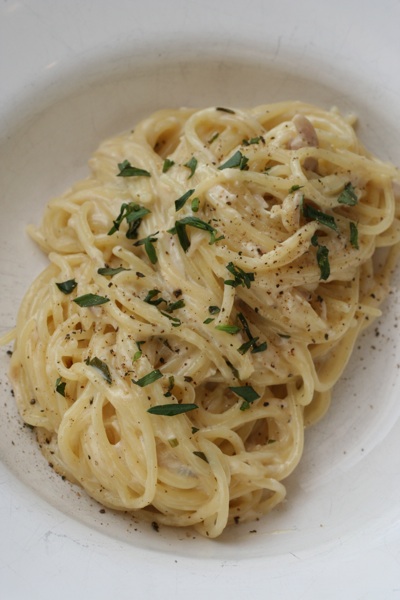
Pasta with Chicken, Tarragon and Cream

For years now I’ve been planning out the week’s meals in advance and shopping accordingly for all the groceries I need. You might imagine that this involves cookbooks or back issues of Gourmet casually strewn across the kitchen table while I flip through them over a pre-dinner glass of wine, the kids contentedly playing together and something chilled out on the stereo while I pick out all the fabulous new recipes I want to make.

Or at least that’s what I like to imagine.

The reality is that more often than not, instead of leisurely browsing through my cookbook collection with a glass of wine, I’ll find myself quickly scanning the blog recipe archives for something tried and tested or looking up a bookmarked recipe on a website with a half-cold cup of tea, all the while vowing to be more organized next week.

But meal planning is made much easier when you cook a whole chicken. It’s roasted on the first night, then stripped and used in a soup, stir-fry, risotto or any number of dishes the next night, with any last leftovers invariably finding their way into sandwiches or a quick quesadilla and the carcass used for stock. And when you can feed a family for two or even three nights with one chicken, paying extra for a free-range or organic bird is still good value. If you make poulet à l’Estragon (and please do – you will not be disappointed), this is a no-brainer dinner to make the next night with the leftovers, using all the same flavors. That’s two dinners for the week easily sorted then.

Pasta with Chicken, Tarragon and Cream
adapted from Real Food by Nigel Slater

Serves 4

If using leftover roast chicken, simply skip the step of browning the chicken and add the chicken after the cream and tarragon; you also won’t need the butter called for here either. If you’ve made poulet à l’Estragon and have any of the tarragon sauce left over from it, add that along with the cream for extra flavor and richness.

14 oz (400 g) spaghetti or linguine
8 chicken thighs (or diced leftover chicken, ideally from poulet à l’Estragon; see note above)
salt and freshly ground black pepper
4 tablespoons (60 g) butter
1/2 cup (125 ml) dry white wine or extra-dry vermouth
2 tablespoons tarragon vinegar or white wine vinegar
1 1/4 cups (300 ml) heavy cream
2 heaped tablespoons chopped tarragon leaves, plus extra to garnish
a squeeze of lemon juice

Set a large pot of water on to boil. Cook the pasta in plenty of salted water as per the packet instructions. Reserve a mugful of the pasta cooking liquid before draining.

Meanwhile, season the chicken with a little salt and pepper. Melt the butter over a medium heat in a large, shallow pan (one big enough to eventually accommodate all the cooked pasta as well), then brown the chicken on both sides until it’s golden brown, taking care not to let the butter burn. Remove the chicken and set aside.

Pour off all but 1 tablespoon or so of butter. Add the wine or vermouth and vinegar, bring to the boil and scrape up any brown bits from the bottom of the pan. Simmer for 1 to 2 minutes to reduce a bit, then add the cream and tarragon. Return the chicken and any juices to the pan. (Alternatively, if using leftover roast chicken, simply add that in now.) Simmer gently for 15 to 20 minutes, stirring now and then to make sure the cream doesn’t thicken too much. If the sauce is becoming too thick, add a little more wine or vermouth. Check that the chicken is cooked through and taste for seasoning. Add a squeeze of lemon juice and stir it through.

Add the drained pasta to the sauce in the pan and stir it well, making sure it’s all coated with the creamy sauce. If the sauce is too thick, add some of the reserved pasta cooking liquid to loosen it a bit. Sprinkle with some chopped fresh tarragon and serve right away.

Pot Roasted French Tarragon Chicken (Poulet à l’Estragon)

The Cookbook Club is one of those simple but brilliant ideas, the kind where you wonder why no one thought of it before now. The brainchild of Elaine Walsh, The Cookbook Club is a monthly event that features an Irish chef talking about his or her latest cookbook over a three-course dinner at Ely CHQ, where all the food is made from the cookbook being featured that night. It’s the best book signing you’ll ever go to.

The dinners started in September, but the first one I went to was last month, when the legendary Darina Allen of the Ballymaloe Cookery School was the featured author talking about her latest book, the award-winning Forgotten Skills of Cooking. What’s more, Elaine arranged a special pre-dinner meeting with Darina just for a few food bloggers. Never mind that it was during the same manic week as Inishfood — how could I pass up such a chance?

But on the day of the dinner, when faced with the thought of meeting the grande dame of Irish cooking with her trademark red glasses, I got nervous. What on earth would I say to someone so highly regarded? What clever question could I possibly ask? I needn’t have worried. As soon as we all sat down with a glass of wine, Darina hit the ground running, talking about everything from the early days at Ballymaloe, how she started the farmers’ market movement in Ireland, learning how to use her iPad on her recent trip to Sri Lanka to casually mentioning cooking for Bill Clinton. Meanwhile, myself and the three other bloggers (Aoife and fellow expats Sharon and Tim) just sat and listened, enthralled. Still reeling, the bloggers all sat down to dinner together, where I had salt cod croquettes, pork osso bucco and carrageen moss pudding with poached rhubarb. (You can find the recipe for the salt cod here as well as Darina’s own recount of the evening.)

While Darina’s book features lots of recipes for things like homemade pasta, preserves, dandelion wine or even instructions on how to build your own cold smoker, there are also plenty of everyday recipes, such as this French bistro classic, poulet à l’Estragon. Darina says that casserole roasting is an almost forgotten skill that releases plenty of delicious juice while the chicken cooks in the moist, steamy atmosphere of a covered casserole. It also couldn’t be easier — 10 minutes of active cooking time yields the best chicken I’ve had in a long time. The Telegraph calls poulet à l’Estragon “possibly the best chicken recipe in the world”, and after standing over the pot greedily slurping up the sauce with a spoon, I’d have to agree.

Pot Roasted French Tarragon Chicken (Poulet à l’Estragon)
adapted from Forgotten Skills of Cooking by Darina Allen

Serves 4 to 6

Because this is such a moist method of cooking, it’s a good method to use if you’re dealing with a bird you know is a little tough or past its prime. Darina also notes that some chickens yield less juice than others, so if you find that you need more sauce, just add some chicken stock to the cream. She says this is also delicious without any cream, just the chicken juices, stock and fresh herbs. Try to find French tarragon for this recipe, as opposed to the more common Russian variety.

Serve the chicken with mashed potatoes or boiled new potatoes — something, anything you can pour the amazing sauce over — and a vegetable such as sauteed carrots or green beans with lemon.

1 x 4 1/2 lb (2 kg) chicken
salt and freshly ground black pepper
2 tablespoons chopped fresh French tarragon, plus a few extra sprigs
2 tablespoons (30 g) butter, softened
1 tablespoon flour
1/2 cup (125 ml) cream
1/2 cup (125 ml) chicken stock (optional; see note above)

You will also need a casserole dish large enough to hold the chicken

Preheat the oven to 350°F (180°C).

Season the cavity of the chicken with salt and freshly ground black pepper and stuff a sprig of tarragon inside. Mix 1 tablespoon of the chopped tarragon with two-thirds of the butter and set aside. Smear the rest of the butter over the breast of the chicken. Place the chicken breast side down in a casserole (aka Dutch oven) and let it brown over a gentle heat for about 5 minutes. Turn the chicken breast side up in the casserole and smear the tarragon butter over the breast and legs. Season generously with salt and pepper. Cover the casserole and cook in the oven for 1 1/4 to 1 1/2 hours, or until the juices run clear when you pierce the flesh between the breast and thigh. Remove the chicken to a carving dish and allow it to rest for 10 to 15 minutes before carving.

Place the pot with the juices over a medium heat. Add the remaining tablespoon of chopped tarragon to the juices in the pot. Add in 1 tablespoon of flour and whisk until smooth, then add in the cream. Bring to the boil and whisk until the sauce thickens slightly. Taste and adjust the seasoning. Serve the chicken with the sauce spooned over.

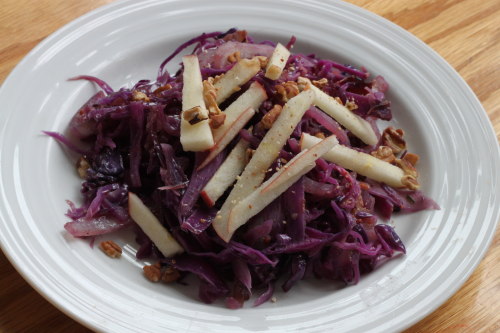
Red Cabbage Salad with Apples, Bacon, and Pecans and Baked Potato Soup

Anyone else out there having salad withdrawal? What I wouldn’t give for a plate of tender lettuces, crisp cucumbers and juicy tomatoes. But, alas, there is still snow in my yard and we are a long way from August. Though I promised myself to try more winter salads, I added only one to my repertoire this year, a hearty red cabbage and apple concoction that’s more side dish than salad. The addition of bacon made it robust enough to serve to my steak-and-potatoes-loving dad. The baked potato soup served alongside also benefits from the addition of some crumbled bacon. And honestly, if you’re going to the trouble of cooking up a few ounces of bacon for the salad, you may as well cook up the whole package. If we can’t have great produce, we may as well enjoy another excuse to eat bacon.

Red Cabbage Salad with Apples, Bacon, and Pecans
adapted from Best of the Best Vol. 9: The Best Recipes from the 25 Best Cookbooks of the Year 

Serves 6

This cookbook is actually a compilation of recipes taken from other cookbooks. I love that someone else took the trouble of figuring out which recipes are winners since I have limited cookbook space in my kitchen. This recipe is from Chef Suzanne Goin’s Sunday Suppers at Lucques. I cut prep time for the recipe by skipping the freshly toasted bread crumbs called for in the original recipe and buying pre-roasted pecans. Chef Goin serves this salad alongside pork chops or duck.
1/2 cup (50 g) pecans
1/4 lb (110 g) bacon, sliced into 1/4 in. thick lardons
1 1/2 lbs (680 g) red cabbage, cored and finely shredded
1 red onion, halved lengthwise and thinly sliced crosswise
1 1 /2 teaspoons fresh thyme or 1/2 teaspoon dried thyme
2 tablespoons red wine or sherry vinegar
salt and freshly ground pepper
1 tablespoon whole-grain mustard
1 apple (Fuji, Gala, or Braeburn) halved, cored and cut into 2‑by‑1/4‑inch matchsticks

Spread the pecans in a heavy skillet and toast over medium heat for 5–6 minutes, stirring frequently, until fragrant and golden. Transfer the pecans to a plate to cool, then coarsely chop them.

In a large, deep skillet, cook the bacon over moderately high heat, stirring occasionally, until lightly browned but still chewy, about 6 minutes. Stir in the red cabbage, onion, and thyme. Add the vinegar and cook until the cabbage is wilted but still crunchy, about 6 minutes more. Season with salt and pepper.

In a large bowl, toss the cabbage with the mustard. Add the apple and toss gently. Sprinkle the salad with the toasted pecans and serve.

***

Baked Potato Soup
adapted from Smitten Kitchen

Serves 6

1 head garlic
3 tablespoons unsalted butter
2 medium leeks, white and light green parts halved lengthwise, washed, and chopped
6 cups (1 1/2 l) low-sodium chicken broth
2 bay leaves
3/4 teaspoon salt
2 1/4 lbs (1 kg) pounds russet potatoes, peeled and cut into 1/2‑inch cubes
1/3 (80 ml) cup sour cream
ground black pepper

toppings (optional):
fresh chives or scallions, minced
bacon bits
sour cream
cheddar cheese, grated

Rinse the head of garlic to remove any outside grit or dirt. Cut the top third off the head and peel any loose papery skins off the bottom two-thirds. Pop out some of the garlic clove tips and mince them.

In a large, heavy pot or Dutch oven, melt the butter over medium heat. Add the leeks and cook them until soft (but not brown), about 5 minutes. Add the minced garlic and cook another minute. Add the larger part of the garlic head (intact, not chopped), broth, bay leaves and 3/4 teaspoon salt. Reduce heat and simmer until the garlic is very tender when pierced with tip of knife, 30 to 40 minutes. Add the potatoes and continue to simmer, partially covered, until potatoes are tender, about 15 to 20 minutes. Stir occasionally, but gently.

Discard bay leaves. Carefully remove garlic heads. Optional: If you’d like an extra garlic boost to the soup, using tongs or paper towels, squeeze garlic head at root end until cloves slip out of their skins. Using a fork, mash the garlic cloves to smooth paste and add it back to the soup.

Stir in the sour cream to soup and cook for another 2 to 3 minutes. Adjust seasonings, adding more salt and pepper to taste. Using an immersion blender, process the soup until chunky-creamy, leaving lots of potato texture intact. (Alternatively, transfer a portion of the potatoes and broth to a food processor or blender and puree until smooth.) Serve with whatever makes you happy on top, or nothing at all.

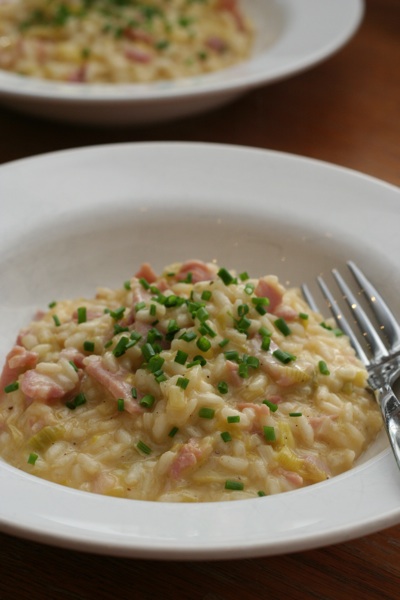
Ham and Cheese Risotto

At dinner years ago with Matt’s old college friend and his wife and two-year-old daughter, I remember watching in amazement as their little girl gobbled up an appetizer of Gorgonzola-stuffed mushrooms. Coming from a family where my sister and twin brothers were classic picky eaters, I asked what their secret was in getting their daughter to eat so well. “We don’t make a big deal out of new foods,” they said. When I had kids of my own, I followed their advice and it’s matter of some pride that my kids now eat such a wide range of foods and flavors. When we were in Florida over Christmas, I picked up a tray of sushi from the grocery store and my mother couldn’t believe it when my daughter proceeded to eat most of it while my twin teenage brothers were having yet another dinner of chicken fingers and fries. But even though my kids will happily eat a dish like sole meunière or gnocchi with blue cheese and walnut sauce, I do still like to make explicitly kid-friendly things that I know are sure to appeal to them, like Parmesan chicken fingers or this risotto, which is basically a more everyday version of my favorite bacon, leek and Camembert risotto. But who am I kidding in saying this was for the children? The grown-ups liked it just as much.

Ham and Cheese Risotto
adapted from Nigella Express by Nigella Lawson

Serves 4

The original recipe is for cheddar and leeks only, but I couldn’t resist adding in some bacon to make it a ham and cheese risotto. Leave it out for the original vegetarian version.

1 tablespoon (15 g) butter
1 tablespoon olive oil
4 slices of bacon, chopped into lardons (or you could use chopped leftover ham)
2 small leeks, cut in half lengthwise and finely sliced
2 cups (300 g) risotto rice
1/2 cup (125 ml) dry white wine or extra-dry vermouth
1/2 teaspoon Dijon mustard
2 pints (1 liter) hot vegetable stock
1 1/4 cup (125 g) grated mature cheddar
chopped fresh chives, to garnish

Melt the butter and oil in a large pan over a medium heat and cook the bacon and the leeks for about 5 minutes, until the bacon has browned and the leeks have softened. Add the risotto rice, stirring for 1 minute to make sure all the grains of rice are coated with the oil. Turn up the heat to medium-high and add the wine and mustard, stirring until the wine is absorbed. Start ladling in the hot stock, letting each ladleful become absorbed before adding the next one. Keeping stirring and adding a ladleful of stock at a time until the stock is all used up and the rice is al dente, about 20 minutes. Add the cheese, stirring it into the rice until it melts. Take the pan off the heat, still stirring as you do so, and spoon the risotto into warmed dishes, sprinkling with some of the chopped chives.

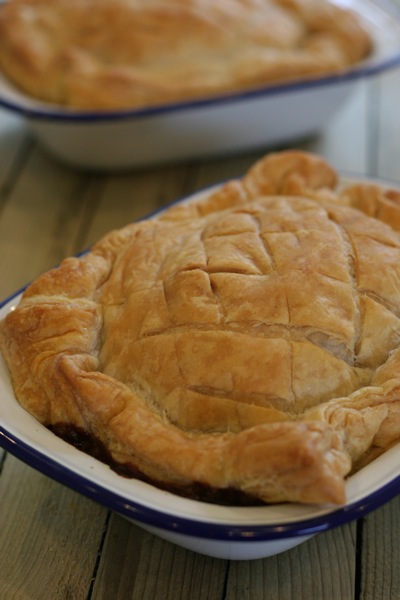
Steak, Guinness and Cheddar Pie and Chocolate Guinness Cake

I have a confession to make — I don’t like Guinness. When I first moved to Ireland, I tried to like it, I really did. At my first publishing job in Temple Bar in Dublin, the five of us who worked there would often go to the pub for lunch together, and the man from Manchester who I worked with would sometimes skip food altogether and only have a pint of plain for his lunch. My husband tells the story of how the doctor even told his Irish grandmother to drink it when she was pregnant, saying it would help keep her iron levels up — Guinness is good for you and all that. My first six months here I kept ordering pints of it in the pub in the hopes that it might be an acquired taste, but I could only ever get halfway through them. I officially gave up when I was out with the same publishing crowd at the Stag’s Head in Dublin and one of my co-workers suggested I order it with a shot of blackcurrant syrup, saying a lot of girls drank it that way. I thought it tasted even worse and could only take one sip before pushing away the glass, and it’s been ales and lagers for me ever since.

While I don’t like to drink it straight up, I do like to cook with it. Beef and Guinness go together like bread and butter, and this steak, Guinness and cheese pie from Jamie Oliver gives my favorite beef and Guinness stew a run for its money. You would probably never think of baking with beer, much less in a chocolate cake, but Nigella Lawson pulls it off. I made it for my father-in-law’s birthday back in January and it’s become one of Kelly’s favorites. So all these years later, I’ve started buying Guinness again — though in a roundabout way for the likes of stews and cakes. Sláinte!

Looking for more Irish recipes for St. Patrick’s Day? Try beef and Guinness stew with champ, Irish soda bread or Guinness gingerbread.

Steak, Guinness and Cheddar Pie
adapted from Jamie at Home by Jamie Oliver

Serves 4

Jamie Oliver’s original recipe calls for lining the bottom of the pie dish with the puff pastry as well, but I simplified it to just cover the top with a puff pastry lid. He also says to add enough water just to cover the beef — I found that I didn’t need to add any at all because the beef was covered enough using only the Guinness, which also meant the pie filling was the perfect consistency and wasn’t too runny. If you don’t have a Dutch oven or an ovenproof casserole with a lid, you can just simmer the beef on the stovetop instead over a low-medium heat.

olive oil
3 medium red onions, chopped
3 cloves of garlic, chopped
2 tablespoons (30 g) butter
2 carrots, peeled and chopped
2 sticks of celery, trimmed and chopped
4 large mushrooms, sliced (optional)
2 lb (1 kg) brisket of beef or stewing beef, cut into 1 inch cubes
a few sprigs of fresh rosemary, leaves picked and chopped (or you could substitute thyme)
salt and freshly ground black pepper
2 cups (500 ml) Guinness
2 heaped tablespoons flour
2 cups (200 g) grated Cheddar cheese
2 sheets of ready-rolled puff pastry
1 large egg, beaten
freshly cooked peas, to serve

Preheat the oven to 375ºF (190°C). In a large ovenproof pot, heat a generous splash  of olive oil on a low heat. Add the onions and fry gently for about 10 minutes with a pinch of salt so that they don’t brown too much. Turn the heat up, add the garlic, butter, carrots and celery and scatter in the mushrooms. Mix everything together before stirring in the beef, rosemary, a pinch of salt and a level teaspoon of pepper.

Fry fast for 3 or 4 minutes, then pour in the Guinness, stir in the flour and add just enough water to cover (I didn’t need to add any water at all, see note above). Bring to a simmer, cover the pot  with a lid and place in the preheated oven for about 1 1/2 hours. Remove the pot from the oven and give the stew a stir. Put it back into the oven and continue to cook it for another hour, or until the meat is very tender and the stew is rich, dark and thick. A perfect pie filling needs to be robust, so if it’s still quite liquid, place the pot on the stovetop and reduce, uncovered, until the sauce thickens. Remove from the heat and stir in half the cheese, then season carefully and leave to cool slightly. Tip the stew into a pie dish or individual dishes and even it out before sprinkling over the remaining cheese.

Cut the ready-rolled sheet of pastry to fit the top of the pie dish (or individual dishes), rolling it out a little on a lightly floured countertop with a rolling pin if you need to in order for it to cover your dish. Criss-cross the pastry lightly with a sharp knife. Place it over the top of the pie and tuck it down around the stew. Brush the top with beaten egg, then bake the pie in the oven for 45 minutes, or until the pastry is cooked, puffed and golden. Delicious served simply with peas on the side.

***

Chocolate Guinness Cake
adapted from Feast by Nigella Lawson

Serves 12

Nigella Lawson likes to ice the top of the cake so that it resembles the famously frothy head that sits on top of a pint of stout, but she says it also tastes perfectly good if you leave it uniced and plain.

for the cake:
1 cup (250 ml) Guinness
9 oz (250 g) unsalted butter, cubed or sliced
3/4 cup (75 g) unsweetened cocoa
2 cups (400 g) sugar
3/4 cup (or 1 x 142 ml pot) sour cream
2 eggs
1 tablespoon vanilla extract
2 1/4 cups (275 g) flour
2 1/2 teaspoons baking soda

for the topping:
11 oz (300 g) Philadelphia cream cheese
1 1/4 cups (150 g) confectioners’ sugar (icing sugar)
1/2 cup (125 ml) heavy cream (double or whipping cream)

Preheat the oven to 350°F (180°C) and butter and line a 9 inch (23 cm) springform tin.

Pour the Guinness into a large pot. Add the butter cubes or slices and heat until the butter melts, then whisk in the cocoa and sugar. In a separate bowl, beat the sour cream with the eggs and vanilla, then pour into the beer and butter mixture. Lastly, whisk in the flour and baking soda. Pour the cake batter into the greased and lined tin and bake for 45 minutes to 1 hour. Leave to cool completely in the tin on a cooling rack, as it’s quite a damp cake.

When the cake is completely cold, sit it on a flat platter or cake stand to ice it. Lightly whip the cream cheese until smooth, sieve over the confectioners’ (icing) sugar and then beat them both together. (Alternatively, you can do this in a food processor, putting the unsieved icing sugar in first, and blitz to remove lumps before adding the cheese.) Add the cream and beat again until it’s a spreadable consistency. Ice the top of the black cake so that it resembles the frothy top of the famous pint.

French Onion Soup and Croque Monsieur

“How easily happiness begins by / dicing onions”, writes William Matthews in his poem, “Onions”. This is never more true than when making French onion soup. And surely there can be no higher calling or better end for an onion than to be sauteed in butter, then doused in a boozy broth of brandy, sherry and wine. As an easy midweek soup-and-sandwich dinner goes, you could do worse than one that makes you wish you were sitting in a Parisian café.


French Onion Soup
adapted from The Barefoot Contessa Cookbook by Ina Garten

Serves 4 to 6

2 1/2 lb (1.1 kg) yellow onions, halved and sliced 1/4 inch thick
1/4 lb (110 g) unsalted butter
1 bay leaf
1/2 cup (125 ml) medium-dry sherry
1/2 cup (125 ml) brandy or Cognac
1 1/2 cups (375 ml) good dry white wine
8 cups (2 liters) beef stock
salt and freshly ground black pepper
freshly grated Parmesan, to serve

Melt the butter in a large stockpot on a medium heat. Saute the onions with the bay leaf and a pinch of salt (to stop the onions from browning) for 20 minutes, until the onions turn a rich golden brown color. Deglaze the pan with the sherry and brandy and simmer uncovered for 5 minutes. Add the white wine and simmer uncovered for 15 more minutes. Add the beef stock plus salt and pepper (but not too much salt because your stock is liable to be salty already). Bring to a boil, then simmer uncovered for 20 minutes. Remove the bay leaf, adjust the seasoning and serve hot with grated Parmesan on top.

***

Croque Monsieur
adapted from How to Cook: Book One by Delia Smith

Serves 1

A croque monsieur is really just a grilled ham and cheese sandwich. It originated in France as a kind of fast food snack served in cafés and bars. A croque madame is a version of this sandwich with a fried or poached egg on top. I was tempted by the Barefoot Contessa’s version of this classic, which she smothers in a béchamel sauce, but I opted to keep things simpler (and less calorific) with Delia Smith’s recipe. I did use Ina’s tip though to add some Dijon mustard to the sandwich.

2 large slices good-quality white bread, buttered
Dijon mustard (optional)
1/2 cup (50 g) Gruyère, finely grated
2 or 3 slices of cooked ham, Parma ham or wafer-thin ham
2 tablespoons (30 g) butter, melted
1 rounded tablespoon finely grated Parmesan
salt and freshly ground black pepper

On one slice of the buttered bread, add a thin smear of Dijon mustard (option). Sprinkle over half the grated Gruyère, then cover that with the slices of ham, folding them if need be to fit the size of the bread. Now sprinkle the rest of the Gruyère on top of the ham, season with salt and pepper, then press the other slice of bread on top of that and press it down firmly. Now brush the top side of the sandwich with some of the melted butter, sprinkle it with half the Parmesan and press it into the bread. Transfer the sandwich to a baking sheet and grill it in the oven for about 2 minutes, 2 inches from the heat, making sure to keep a close eye on it so that it doesn’t burn. When it’s golden brown, turn it over, brush the other side with melted butter, sprinkle the rest of the Parmesan all over and grill for another 2 minutes. Remove it from the grill, cut it into halves or quarters and eat it while it’s still warm and crunchy.

A Cooking Blog