Tag Archives: Italian food

Homemade Italian Sausage Patties with Goat’s Cheese Polenta

The first Thanksgiving I spent in Ireland, in 1999, I was very blasé about it beforehand; I still remember that I’d planned to make enchiladas that night. But at the last minute, I got a little weepy and ran out to the grocery store to see what I could find that might be more fitting, and bought some turkey escalopes and a jar of Ballymaloe cranberry sauce instead. My last Stateside Thankgsiving was in 1998, and although we’ve always cooked a traditional dinner every year, celebrating with anywhere from two to twelve friends and once even family, when my dad and stepmom came over for a visit, it’s just not the same.

So as long as I’m feeling homesick, today’s as good a day as any to talk about Italian sausages, one of the foods I still miss. There were plenty of foods I missed and craved when I first moved. I used to ask anyone who came to visit to bring me a bag of bagels, not even caring that they’d be stale by the time I got them, and Matt always requested an economy-size jar of Skippy peanut butter. Once or twice I’ve brought cans of Libby’s pumpkin puree back in my suitcase so that I could make pumpkin pie. I gradually stopped hankering after most of the foods I missed, but I’ll never stop wishing for a ready supply of Italian sausages. When we visited my mom in Florida earlier this year, she asked if there was anything in particular we wanted for dinner, and the only thing I requested was Italian sausages and peppers, one of her signature dishes. If I wasn’t feeling homesick already, just thinking of that dinner would do it. It’s one of the dishes that will always taste like home to me.

Happy Thanksgiving to all our readers, wherever you may be!

Home-made Italian sausages with Goat’s Cheese Polenta
adapted from A Kitchen Year by Paula McIntyre

Serves 4

for the sausage patties:
1 medium onion, peeled and finely chopped
2 cloves garlic, crushed
1 teaspoon fennel seeds, ground
1/2 cup (120 ml) red wine
1 3/4 lb (800 g) pork mince
1 tablespoon chopped fresh oregano leaves
1 tablespoon chopped fresh rosemary
1 teaspoon chopped fresh red chili
1 teaspoon smoked sweet paprika
1 teaspoon salt

for the sauce:
2 tablespoons olive oil
2 medium onions, peeled and finely sliced
2 cloves garlic, crushed
1/2 cup (120 ml) red wine
1 x 14-oz (400‑g) can chopped tomatoes
3/4 cup (180 ml) chicken stock
salt and freshly ground black pepper
a handful fresh chopped flat-leaf parsley

for the goat’s cheese polenta:
1 1/2 pints (700 ml) chicken or vegetable stock
1/2 lb (225 g) polenta
1/2 cup (50 g) grated Parmesan cheese
3 oz (90 g) goat’s cheese
handful fresh chopped flat-leaf parsley leaves
salt and freshly ground black pepper

To make the sausage patties, place the onion, garlic, fennel seeds and red wine in a saucepan and boil until only 1 tablespoon of liquid remains. Cool. Mix this with the pork and the remaining ingredients. Form into walnut-sized balls and press down to flatten.

To make the sauce, heat the oil in the pan over a high heat and add the sausage patties. Cook until sealed and golden on both sides, about 2 minutes. Remove from the heat and set aside. Lower the heat and add the onions and garlic, cooking until they’re golden, about 10 minutes. Add the wine and bring to the boil. After 2 minutes, add the tomatoes and stock. Cover the pan with a lid and simmer for 30 minutes. Check the seasoning and add the parsley.

To make the polenta, bring the stock to the boil. Slowly add the polenta in a steady stream into the stock, whisking all the time. When all the polenta is incorporated, lower the heat to s gentle simmer. Cook, stirring frequently, until the polenta comes away from the side of the pan. This will take 40 minutes for traditional polenta and about 5 minutes for the instant variety. Add the Parmesan and mix well. Crumble the goat’s cheese and fold into the polenta with the parsley. Season to taste.

To serve, divide the polenta between the individual serving bowls, place sausage patties on top and spoon over the sauce.

Fettuccine Alfredo with Shrimp and Peas, Tossed Salad, and Beatty’s Chocolate Cake

Last week our beloved 13-year-old cat, Miso, was hit and killed by a car. The shock of his death quickly wore off, replaced by a constant tearfulness and an intense longing to pet him just one more time. Reuben and I grew up with Miso, moving him from student apartments in Madison to slightly nicer apartments in Chicago and finally to our home in Milwaukee. He was as loyal and wise as a dog and as stately as any person I have met. It’s still hard to pull into our driveway and not expect to see him in the window or waiting on the porch for me. After a week of grieving, I’m now able to comfort myself with the understanding that he lived a good and full life. Chocolate cake helped too. I know, I know, we shouldn’t eat out of emotion. But in my defense, the deliberate measuring, mixing, baking, and frosting of the cake were just as therapeutic as sitting down and pondering Miso’s life as I polished off piece after piece of the best cake I’ve ever tasted. Comfort food is, in fact, comforting.

Fettuccine Alfredo with Shrimp and Peas

Serves 4

1 lb (450 g) fettuccine or linguine
3 tablespoons butter, divided
1 lb (450 g) raw shrimp
salt and freshly ground black pepper
1 1/2 cups (360 ml) half-and-half (or 3/4 cup (180 ml) milk + 3/4 cup (180 ml) cream)
1 cup (150 g) grated fresh Parmesan
1 cup (140 g) fresh or frozen peas, cooked

Cook the pasta in boiling, salted water according to package directions. While the pasta cooks, melt 1 tablespoon of the butter in a small saute pan. Add the shrimp to the melted butter and cook over a medium heat for 4 to 5 minutes, until just cooked through. Season with salt and pepper to taste and set aside.

Melt the remaining 2 tablespoons of butter in a large skillet over a medium heat. Add the half-and-half, cheese, and more salt and pepper, to taste. Cook for 2 to 3 minutes, stirring constantly. Do not boil. Reduce the heat and add the cooked pasta, shrimp, and peas, tossing gently to coat. Serve immediately in warm bowls.

***

chocolate cake

Beatty’s Chocolate Cake
adapted from Barefoot Contessa at Home by Ina Garten

Serves 8

butter, for greasing the pans
1 3/4 cups (210 g) all-purpose flour, plus more for pans
2 cups (400 g) sugar
3/4 cups (100 g) good-quality cocoa powder
2 teaspoons baking soda
1 teaspoon baking powder
1 teaspoon kosher salt
1 cup (240 ml) buttermilk, shaken
1/2 cup (120 ml) vegetable oil
2 extra-large eggs, at room temperature
1 teaspoon pure vanilla extract
1 cup (240 ml) freshly brewed hot coffee
chocolate buttercream (recipe follows)

Preheat the oven to 350°F (180°C). Butter 2 x 8‑inch round cake pans. Line with parchment paper, then butter and flour the pans.

Sift the flour, sugar, cocoa, baking soda, baking powder, and salt into the bowl of an electric mixer fitted with a paddle attachment and mix on low speed until combined. In another bowl, combine the buttermilk, oil, eggs, and vanilla. With the mixer on low speed, slowly add the wet ingredients to the dry. With the mixer still on low, add the coffee and stir just to combine, scraping the bottom of the bowl with a rubber spatula. Pour the batter into the prepared pans and bake for 35 to 40 minutes, until a cake tester comes out clean. Cool in the pans for 30 minutes, then turn them out onto a cooling rack and cool completely.

Place 1 layer, flat side up, on a flat plate or cake pedestal. With a knife or offset spatula, spread the top with frosting. Place the second layer on top, rounded side up, and spread the frosting evenly on the top and sides of the cake.

Chocolate Buttercream

6 oz (170 g) good-quality semisweet chocolate
1/2 lb (2 sticks/225 g) unsalted butter, at room temperature
1 extra-large egg yolk, at room temperature
1 teaspoon pure vanilla extract
1 1/4 cups (150 g) sifted confectioners’ sugar
1 tablespoon instant coffee powder

Chop the chocolate and place it in a heat-proof bowl set over a pan of simmering water. Stir until just melted and set aside until cooled to room temperature.

In the bowl of an electric mixer fitted with a paddle attachment, beat the butter on medium-high speed until light yellow and fluffy, about 3 minutes. Add the egg yolk and vanilla and continue beating for 3 minutes. Turn the mixer to low, gradually add the confectioners’ sugar, then beat at medium speed, scraping down the bowl as necessary, until smooth and creamy. Dissolve the coffee powder in 2 teaspoons of the hottest tap water. On low speed, add the chocolate and coffee to the butter mixture and mix until blended. Don’t whip! Spread immediately on the cooled cake.

Slow Cooker Stracoto with Porcini Mushrooms and Carrots with Egg Noodles

Kristin brilliantly thought to add a slow cooker category to our site. Slow cookers really can be a working mom’s best friend. This stracoto (fancy word for pot roast) is my favorite slow cooker recipe. I’ve made it in the oven as per the original recipe, but actually prefer my adaptation in the slow cooker, which results in a moister piece of meat. It’s awfully hard to dry out a piece of meat, or anything else for that matter, in a slow cooker. Reuben must have liked the dinner, since he added this programmable slow cooker to his Amazon wish list within a few hours of finishing it.
Don’t forget to enter our first cookbook giveaway contest. Entries are due tomorrow. To enter, all you have to do is leave a comment in Kristin’s October 26 post.

Slow Cooker Stracoto with Porcini Mushrooms and Carrots

adapted from Giada De Laurentiis, Food Network

Serves 6

1 x 4 lb (1.8 kg) boneless beef chuck roast or arm roast
salt and freshly ground black pepper
3 tablespoons olive oil
2 onions, sliced
6 garlic cloves, coarsely chopped
1 cup (240 ml) dry red wine
1 3/4 cups (420 ml) canned beef broth
1/2 oz (15 g) dried porcini mushrooms
1 bunch carrots, peeled and halved if large, and cut into 3‑inch pieces
egg noodles or mashed potatoes, to serve

Pat the beef dry with paper towels. Sprinkle the beef generously with salt and pepper. Heat 2 tablespoons of olive oil in a large, heavy skillet (cast iron preferred) over a medium-high heat. Add the beef and cook until brown on all sides, about 15 minutes total cooking time. Transfer the beef to the slow cooker. Add the remaining tablespoon of oil to the pan, add the onions and saute until tender, scraping up the brown bits on the bottom of the pot, about 5 minutes. Add the garlic and saute for 1 minute. Add the wine and boil for 1 minute. Stir in the broth and mushrooms. Bring the liquid to a boil. Carefully pour the liquid into the slow cooker. Add the carrots. Cook on low for 8 hours, or until the meat and carrots are tender.

Transfer the beef to a cutting board. Using a slotted spoon, transfer the carrots to a serving bowl. Tent the beef with foil and let it rest for 10 minutes. Meanwhile, spoon any excess fat off the top of the sauce in the slow cooker. Using a hand-held blender, blend the sauce, onions, and garlic into a smooth puree. (If you don’t have a hand-held blender, transfer the sauce and vegetables to a blender and puree.) Season the sauce to taste with salt and pepper.

Cut the beef across the grain into 1/2‑inch-thick slices. Arrange the sliced beef on a platter and spoon the sauce over. Serve with egg noodles or mashed potatoes, passing the remaining sauce in a sauce boat.

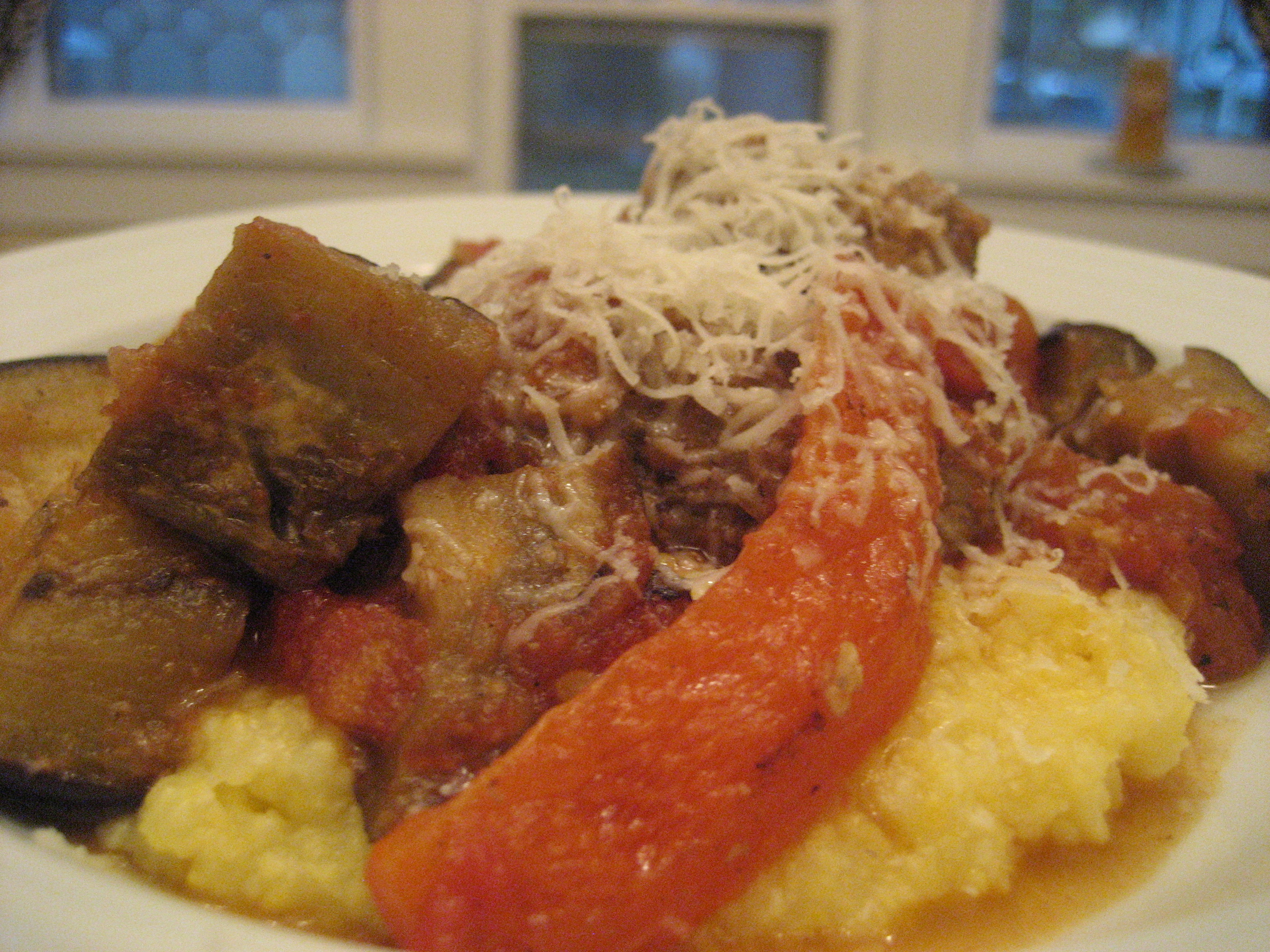
Sicilian Lamb Patties Braised with Eggplant, Peppers, and Tomatoes with Polenta

Though this blog project is a tad more work than I expected, it’s worth it for many reasons, one being the new recipes I get to try out. And I like that Kristin keeps me on my toes in the kitchen. After reading through her meals each week, I’m too embarrassed to cook/post some of my old standby recipes. After all, how many times can you type up an adaptation of the same stir-fry? So often I end up in food ruts because my old standby recipes are standby recipes for a reason — they’re good, they’re easy. But food ruts are dangerous, an easy way to forget how amazing food can taste or the thrill of finding that perfect new recipe or pulling off a multi-course dinner for a party of 10.

For those of us that love cooking, it’s not about filling our stomachs as much as creating a meal, an experience, a taste. These days I don’t have the energy to wax poetic about why I love cooking. Luckily, Jonah Lehrer has written a brilliant essay that explains the attraction quite well. All of this is a long way of saying that I’m happy this blog forces me to try new things, like making polenta for the first time. The polenta was easy to make, comforting, and the perfect base for the lovely braised lamb dish.

braised lamb paaties

Sicilian Lamb Patties Braised with Eggplant, Peppers, and Tomatoes
adapted from Bon Appétit, October 2008

Serves 6

In place of polenta, you could serve this over penne, ziti or rigatoni.

for the lamb patties:
1/2 cup (25 g) fresh breadcrumbs (from crustless French bread ground in a food processor)
1/4 cup (60 ml) water
1 1/4 lb (570 g) ground lamb
1/2 cup (30 g) finely grated Pecorino cheese
1 large egg, beaten to blend
1 tablespoon chopped fresh marjoram
1 teaspoon coarse kosher salt
1/2 teaspoon freshly ground black pepper
1/8 teaspoon ground cinnamon

for the eggplant mixture:
2 small or 1 large eggplant (about 1 1/2 lb/680 g), unpeeled, cut into 1‑inch cubes
7 tablespoons extra virgin olive oil, divided
coarse kosher salt
1 large red bell pepper, halved, seeded and cut into 1/2‑inch-wide strips
1 onion, finely chopped
1 1/3 cups (320 ml) dry white wine
3 large garlic cloves, minced
2 1/2 cups (450 g) chopped, seeded, peeled tomatoes

for the polenta:
4 cups (1 liter) water
1 teaspoon salt
1 cup (150 g) polenta (coarse cornmeal)
grated Pecorino cheese

To make the lamb patties, combine the breadcrumbs and water in a small bowl. Soak for 5 minutes, then squeeze all the water from the crumbs. Place the crumbs in a large bowl. Add the lamb and remaining ingredients and mix gently to combine. Shape into 12 oval patties, each about 2 1/2 inches long and 3/4 inch thick.

To make the eggplant mixture, preheat the oven to 350°F (180°C). Combine the cubed eggplant and 5 tablespoons of oil in a large bowl and toss to coat. Spread the eggplant out on a rimmed baking sheet and sprinkle with coarse kosher salt and pepper. Bake for 12 minutes, then turn the eggplant over and bake until soft, about 12 minutes longer.

Heat 1 tablespoon oil in a large, deep skillet over a medium-high heat. Add the lamb patties and saute until brown, about 3 minutes per side. Transfer the lamb patties to a plate. Add the bell pepper strips to the drippings in the skillet and saute until they begin to soften, about 4 minutes. Transfer the pepper to the plate with the lamb.

Reduce the heat to medium. Add the remaining 1 tablespoon olive oil and the chopped onion to the same skillet. Cover and cook until the onion is soft, stirring occasionally, about 5 minutes. Add the wine and garlic. Cook, scraping up any browned bits, until the wine is reduced to a glaze, about 7 minutes. Return the lamb and peppers to the skillet, then add the eggplant, tomatoes, and marjoram. Reduce the heat to medium-low. Cover and simmer until the lamb is cooked through and the vegetables are tender, about 12 minutes. If the sauce is thin, simmer, uncovered until it has thickened to the desired consistency. Season the sauce to taste with coarse salt and pepper.

To make the polenta, bring the water and salt to boil in a heavy, large saucepan over a medium-high heat. Gradually whisk in the polenta and reduce the heat to medium-low. Simmer until the polenta is very thick, whisking often, about 20 minutes.

Spoon the polenta into shallow bowls. Top with the lamb and vegetables, sprinkle with Pecorino cheese and serve.

Pasta with Chickpeas (Pasta e Ceci) and Ginger Cookies

I always feel better knowing there’s a can of chickpeas in the pantry, since I can turn it into a quick lunch with some couscous, lemon and diced feta. Or I can turn it into one of my favorite kitchen cupboard dinners — you know the kind, the ones you pull together from whatever you have lurking in the pantry or at the back of the crisper in the fridge, usually on the night before you do your grocery shopping when there’s nothing else in the house — spaghetti with chickpeas, lemon juice, parsley and freshly grated Parmesan, a recipe I picked up from Denis Cotter’s Paradiso Seasons. Jamie Oliver calls this a cousin of pasta e fagioli, the traditional Italian peasant dish of beans and pasta, so if you like that dish, chances are good you’ll like this one too.

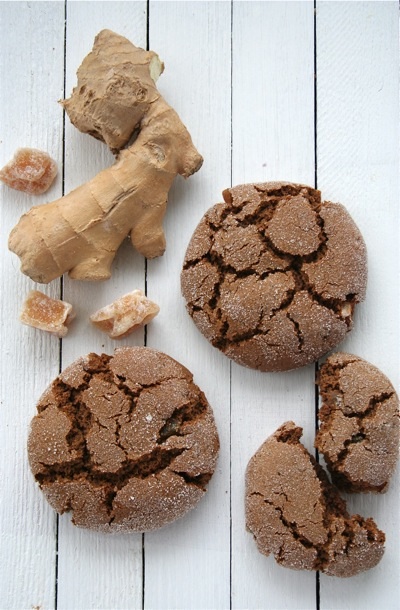
But enough about soup. Let’s talk about these cookies. Ina Garten really knows how to make perfect autumn food — first it was her date nut spice bread, and now these cookies. Both recipes use a combination of cinnamon, nutmeg and cloves that creates an atmosphere while you’re baking them that you want to wrap yourself up in. I gave one of the cookies to the woman who delivers our organic fruit and veg, and the first thing she did was hold it up to her nose to smell it and sigh appreciatively. I said before that the date nut spice bread might be the best thing I bake this autumn, but these cookies are a close contender.

Pasta with Chickpeas (Pasta e Ceci)
adapted from Jamie’s Italy by Jamie Oliver

Serves 4

1 small onion, finely chopped
1 stick of celery, finely chopped
1 garlic clove, finely chopped
extra virgin olive oil
1 sprig of fresh rosemary, leaves picked and finely chopped
2 x 14-oz (400‑g) cans of chickpeas
2 1/4 cups (540 ml) chicken or vegetable stock
3 1/2 oz (100 g) ditalini or macaroni
sea salt and freshly ground black pepper
a small handful of chopped fresh basil or parsley, to serve
freshly grated Parmesan cheese, to serve
crusty bread, to serve

Put the finely chopped onion, celery, and garlic into a saucepan with a little extra virgin olive oil and the rosemary and cook as gently as possible, with the lid on, for 15 to 20 minutes, until all the vegetables are soft, without any color.

Drain the chickpeas well and rinse them in cold water, then add them to the pan and cover with the stock. Cook gently for 30 minutes. Using a slotted spoon, remove half the chickpeas and put them to one side in a bowl.

Puree the soup in the pan using a handheld immersion blender. (If you don’t have one, you can whiz it up in a food processor instead, then pour it back into the pan.) Add the reserved whole chickpeas and the pasta, season the soup with salt and pepper, and simmer gently for about 15 minutes, until the chickpeas are tender and the pasta is cooked.

At this point, if the soup is a little thick, pour in some boiling water from the kettle to thin it down, and add more salt and pepper if needed. Serve drizzled with good-quality extra virgin olive oil and sprinkled with some basil or parsley and Parmesan cheese. Serve some warm crusty bread alongside.

***

The Barefoot Contessa’s Ultimate Ginger Cookies
adapted from The Barefoot Contessa at Home by Ina Garten

Makes 16 cookies

2 1/4 cups (270 g) all-purpose flour
1 teaspoon baking soda
2 teaspoons ground cinnamon
1 1/2 teaspoons ground cloves
1/2 teaspoon ground nutmeg
1/2 teaspoon ground ginger
1/4 teaspoon kosher salt
1 cup (170 g) dark brown sugar, lightly packed
1/4 cup (60 ml) vegetable oil
1/3 cup (80 ml) unsulfured molasses or black treacle
1 extra-large egg, at room temperature
1 1/4 cups (170 g) chopped crystallized ginger
granulated sugar, for rolling the cookies

Preheat the oven to 350°F (180°C). Line 2 sheet pans with parchment paper.

In a large bowl, sift together the flour, baking soda, cinnamon, cloves, nutmeg, ginger, and salt and then combine the mixture with your hands. In the bowl of an electric mixer fitted with the paddle attachment, beat the brown sugar, oil, and molasses on medium speed for 5 minutes. Turn the mixer to low speed, add the egg, and beat for 1 minute. Scrape the bowl with a rubber spatula and beat for 1 more minute. With the mixer still on low, slowly add the dry ingredients to the bowl and mix on medium speed for 2 minutes. Add the crystallized ginger and mix until combined.

Scoop the dough with 2 spoons or a small ice cream scoop (I used a 1/4 cup measuring cup, which is 90 g of dough). With your hands, roll each cookie into a 1 3/4‑inch ball and then flatten them lightly with your fingers. Press both sides of each cookie in granulated sugar and place them on the sheet pans. Bake for exactly 13 minutes. The cookies will be crackled on the top and soft inside. Let the cookies cool on the sheets for 1 to 2 minutes, then transfer to wire racks to cool completely.

Early Autumn Minestrone and Tarte Tatin

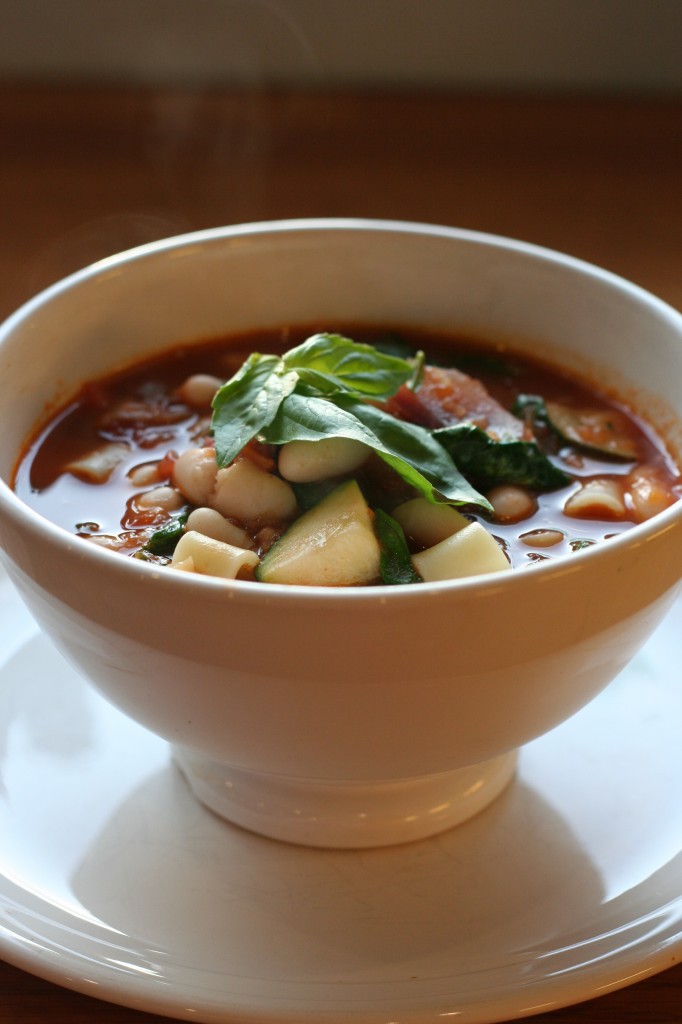
Last week, an old friend came to visit from London for a long weekend with his wife and baby daughter. As we were all eating dinner one night, he told us that he’d recently made such a big pot of soup that not only did they eat it for lunch and dinner for four days straight, but when he put it in the refrigerator, the pot was so heavy it cracked the shelf. We all laughed about it, even my friend, but the next day I asked him why he didn’t freeze some of the soup instead of eating the same thing for the better part of a week. “I’ve been really busy lately and it means dinner is one less thing I have to worry about,” he said, and I couldn’t fault him there. A big pot of soup does make for effortless leftovers — though maybe not such a big pot that it makes four days’ worth. Still, you could do worse than to eat this soup for a few days running, seeing as how it’s packed full of veggies, beans, some greens and carbs, with a glass of red wine to elevate it into something a little more sophisticated than your usual minestrone. So Adrian, this recipe is for you — the next time you need something to see you through a busy patch, try this soup (though try not to make so much it breaks the fridge shelf again).

early autumn minestrone

Early Autumn Minestrone
adapted from Jamie’s Italy by Jamie Oliver

Serves 4 to 6

To make this suitable for vegetarians, just leave out the bacon and use vegetable stock.

olive oil
4 slices of smoked pancetta or bacon
2 small red onions, finely chopped
2 carrots, chopped
2 sticks of celery, chopped
1/2 head of fennel, chopped
3 cloves garlic, finely chopped
a small bunch of fresh basil, finely sliced (set aside some to garnish at the end)
2 x 14-oz (400‑g) cans of good-quality whole plum tomatoes
a glass of red wine
2 small zucchini, quartered and sliced
7 oz (200 g) chard or spinach, washed and roughly sliced (including stalks)
1 1/4 pints (600 ml) good-quality chicken, ham or vegetable stock
1 x 14-oz (400‑g) can of cannellini or borlotti beans
2 handfuls (2 oz/60 g) elbow macaroni, or other small pasta shape
sea salt and freshly ground black pepper
freshly grated Parmesan cheese, to serve
crusty bread, to serve

Heat a good splash of olive oil in a saucepan and add the chopped pancetta or bacon, onions, carrots, celery, fennel, garlic and basil. Sweat very slowly on a low heat, with the lid just ajar, for around 15 to 20 minutes, until soft but not brown. Add the tomatoes, zucchini and red wine and simmer gently for 15 minutes, breaking up the whole tomatoes with the back of a spoon.

Now add the chard or spinach, stock, beans and pasta. Stir and continue to simmer until the pasta is cooked, about 15 minutes.

If you think the soup is looking too thick, add a little more stock or water to thin it down a bit. Season to taste with salt and pepper. Serve sprinkled with the reserved basil and freshly grated Parmesan cheese and some good crusty bread on the side.

***

Tarte Tatin
adapted from Gourmet, March 2001

Serves 8

You can also make a Tarte Tatin with 4 pears, peeled, cored and halved. The tart can cool in the skillet for up to 30 minutes. It can also stand, uncovered, for up to 5 hours, then be heated over a moderately low heat for 1 to 2 minutes to loosen the caramel. Shake the skillet gently to loosen the tart before inverting. If you need to let the tart stand for any length of time before serving it, leave it in the skillet and don’t invert it, otherwise the caramel will make the puff pastry base turn soggy.

1 frozen puff pastry sheet
1/4 cup (60 g) unsalted butter, softened
1/2 cup (100 g) sugar
7 to 9 Gala apples (3 to 4 lb/1.4 to 1.8 kg), peeled, quartered lengthwise and cored (or use any firm dessert apple, such as Golden Delicious)
whipped cream, crème fraîche or vanilla ice cream, to serve

Note: You will need a well-seasoned 10-inch cast-iron skillet or an ovensafe 10-inch skillet

Preheat the oven to 425°F (220°C).

Roll the puff pastry sheet into a 10 1/2‑inch square on a floured work surface with a floured rolling pin. Brush off the excess flour and cut out a 10-inch round with a sharp knife, using a plate as a guide. Transfer the round to a baking sheet and chill.

Spread the butter thickly on the bottom and side of the skillet and sprinkle the sugar evenly over the bottom. Arrange as many apples as will fit vertically on the sugar, packing them tightly in concentric circles. The apples will stick up above the rim of the skillet.

Cook the apples over a moderately high heat, undisturbed, until the juices are deep golden and bubbling, which will take about 18 to 25 minutes. (Don’t worry if the juices color unevenly.) It’s important not to stir the caramel while it’s cooking, otherwise it might crystallize.

Lay the pastry round over the apples and tuck it in around the edges. Put the skillet in the middle of the oven over a piece of foil to catch any drips. Bake for 20 to 30 minutes, until the pastry is browned. Transfer the skillet to a rack and cool for at least 10 minutes. Be careful when handling the skillet from here on out — don’t forget that the handle will be very hot!

Just before serving, invert a platter with a lip over the skillet and, using potholders to hold the skillet and plate tightly together, invert the tart onto the platter. Replace any apples that stick to skillet. (Don’t worry if there are black spots; they won’t affect the flavor of the tart.) Brush any excess caramel from the skillet over the apples. Serve immediately with whipped cream, crème fraîche or vanilla ice cream.

Risotto with Roasted Butternut Squash, Bacon and Blue Cheese

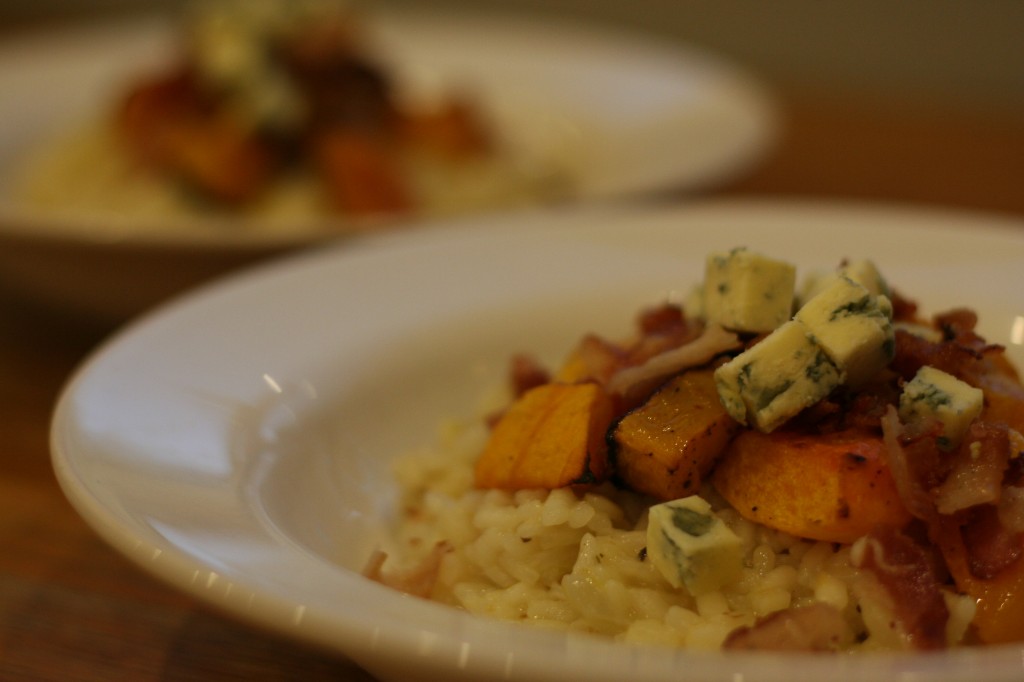
Risotto has an undeserved reputation for being hard work. It’s true that you do have to hang around in the kitchen to add stock and stir every five minutes or so, but it doesn’t need constant stirring and attention the way, say, polenta does, so it’s not as if you’re chained to the stove. Just put on a good CD while you cook. It took me a few tries to find a risotto recipe I liked as much as what I used to have in restaurants, and for me, the wine or vermouth (I always use vermouth) is the key ingredient — without it, I always think the dish is missing something. I always have a bottle of extra-dry Martini in the house, not only because I like to use it in place of white wine in most recipes, but mainly because I make risotto so often.

In the September 25 entry of The Kitchen Diaries*, Nigel Slater says of risotto, “I insist this warming, gooey rice dish has a season, just as porridge does,” and I agree (though I make a lemon risotto in the early Irish summer, when the days are still cool). It’s one of my go-to recipes for the colder months, plus both my kids love it — and why wouldn’t they? It’s total comfort food — creamy and savory — open to endless variations, and easy for my 17-month-old to scoop up with a spoon to feed himself. This is Matt’s favorite version, and it’s just right for autumn. You can expect plenty more risotto recipes from me in the coming months, now that the season for it is well and truly upon us.
*Amazon.com is selling The Kitchen Diaries in hardcover at a bargain price for only $16 (list price is $40). This cookbook is one of my favorites, so you might want to snap it up at this price.

risotto with roasted butternut squash, bacon and blue cheese

Risotto with Roasted Butternut Squash, Bacon and Blue Cheese

Serves 4

If you want to make a vegetarian version of this, just omit the bacon, and perhaps add some chopped toasted pecans when serving (much like this squash side dish).

1 large butternut squash
olive oil
4 tablespoons (60 g) unsalted butter
3 shallots or 1 small onion, very finely chopped
2 sticks of celery, very finely chopped
1/2 teaspoon dried sage
1 1/2 cups (300 g) risotto rice (Arborio rice)
1 cup (240 ml) dry white wine or extra-dry Martini
2 pints (1 liter) good-quality vegetable or chicken stock
6 slices of bacon or pancetta
1/2 cup (50 g) grated Parmesan cheese
1/3 cup (about 1 1/2 oz/40 g) blue cheese, crumbled
salt and freshly ground black pepper

Preheat the oven to 400°F (200°C).

Peel and halve the squash and scoop out the seeds. Cut the squash into 1‑inch cubes (you don’t need to be precise, just keep the pieces uniformly small). Place the squash in a roasting tin or casserole dish and drizzle with olive oil. Roast for 30 to 45 minutes, or until tender. Set aside and keep warm.

Heat the butter, shallots, celery and sage in a wide, deep saucepan and cook to soften, about 5 minutes. Mix in the rice, stirring to give it a good coating of the butter. Allow it to cook for a minute or two, until the grains of rice start to turn translucent. Add the white wine or Martini and let it bubble away for a few minutes. Meanwhile, heat the stock in another saucepan and keep it at simmering point.

Once all the wine or Martini has been absorbed into the rice, pour a ladleful of the stock into the rice and keep stirring until the stock is absorbed. Then add another ladleful and stir again. Continue doing this until the rice is al dente. You may not need all the stock; equally, you may need to add a bit more hot water. Don’t rush this process — allow the rice to fully absorb each ladleful of stock before adding the next one.

While the risotto is cooking, heat a separate frying pan and cook the bacon or pancetta until crisp. Drain on paper towels, then chop into bite-sized pieces. Set aside.

When you’ve added almost all the stock, test the rice — the risotto is ready when the rice is tender but still has a little bite. When the risotto is done, mix in the grated Parmesan. Divide between 4 serving bowls or plates and top with the roasted squash, bacon and blue cheese. Serve with more grated Parmesan if you wish, add seasoning to taste and serve immediately.

Tortellini with Spinach and Toasted Garlic and Caprese Salad

This is my go-to weeknight meal. You can prepare the whole menu in about 15 minutes, yet it’s tasty enough to serve at dinner parties. I frequently serve it alongside a broiled or grilled steak for extra protein. I made this menu for my good friend and first-time mom, Christie. Anabelle and I had the pleasure of visiting her and her darling daughter, and instead of showing up empty handed, I brought along the makings for this simple meal. Cooking is the last thing a new mom needs to worry about.

Tortellini with Spinach and Toasted Garlic

Serves 3

1 x 13-oz (370‑g) package cheese tortellini (Barilla recommended)
1/4 cup (60 ml) olive oil
3 to 4 cloves garlic, minced
7 to 12 oz (200 to 280 g) baby spinach, washed and drained
freshly grated Parmesan cheese

Cook the tortellini until it’s al dente, according to package directions. Drain the tortellini (but do not rinse) and rinse out the pan. Add the olive oil and minced garlic to the pan and heat on medium, stirring occasionally, until the garlic is golden. Watch the pan carefully, as the garlic will go from golden to burnt in a matter of seconds. If the garlic burns, start over with new olive oil and garlic. Just as the garlic turns golden, add the spinach to the pan. Saute the garlic and spinach together over a medium-high heat, stirring frequently, until the spinach is just wilted. Return the tortellini to the pan and toss with the spinach, garlic, and olive oil. Serve with grated Parmesan cheese.

***

IMG_6762

Caprese Salad

Serves 3

2 vine-ripened tomatoes (about 1 lb/450 g), sliced 1/4 inch thick
1/2 lb (225 g) fresh mozzarella, sliced 1/4 inch thick
8 to 10 large fresh basil leaves
2 tablespoons extra virgin olive oil
salt and freshly ground black pepper, to taste

Arrange the tomato, mozzarella, and basil leaves on a serving platter, overlapping them. Drizzle with olive oil. Season the salad with salt and pepper and serve immediately.