Category Archives: Italian food

White Bean and Tuna Salad with Lemon Pepper Dressing

When you travel, what do you remember afterward? I remember the food. I have a better memory of eating quiche Lorraine for breakfast on a bench by the Seine in Paris than I do of seeing the Mona Lisa in the Louvre. Of course I remember the big-name sightseeing highlights, but I also remember the Nutella and banana crepe we bought from a stand near the Eiffel Tower; a brioche aux praline in Lyons that was so good we changed our return travel plans back to Paris just so we could eat it one more time; chocolate mint gelato in Florence served by a man in what looked like a crisp white lab coat and perfectly Brylcreemed 1950s hair; kriek cherry beer in Amsterdam, glögg in Copenhagen and a harsh, peaty whiskey in Edinburgh that I downed after (foolishly, in my case) taking the ghost tour of the city; conch chowder in the Bahamas; hot chocolate and a gingerbread man with my little girl in London; and a ploughman’s pub lunch in Canterbury. In Barcelona we spent more time eating tapas and drinking sangria than sightseeing. In the US, I still have clear memories of bratwurst being grilled on the Memorial Union Terrace in the summertime in Madison, Wisconsin; whole crabs in Baltimore, complete with a newspaper-covered table and hammers; lobster in Boston with flimsy plastic bibs and pitchers of beer; a post-wedding brunch at the Ritz in Washington, DC with scallops and bacon, caviar and waiters who seemed to top up my glass of mimosa after every sip; sopapilla and honey in Santa Fe; scoops of ice cream in waffle cones so freshly made on the spot in Bellingham, Washington that they were still warm; and a nondescript hot dog somewhere outside of Charlottesville, Virginia that I remember only because I couldn’t understand a single word the man behind the counter said when he rattled off all the toppings because his Southern accent was so thick, so I just said I’d have what my friend was having.

As for this salad, I had it for lunch on a rooftop café in Tuscany on my honeymoon eight years ago, looking out over rolling countryside that was hazy in the middle of the heat wave they were having at the time. Earlier during that trip, walking across the city on our way to stand in line in the hot sun for an hour to see Michelangelo’s David in Florence and wilting just at the thought of it, I turned to my husband and said, “Will seeing David really make us better people? How about we just go back to the garden at the hotel and drink beer and eat olives instead?” Which is exactly what we did.

What are some of your memories of food and travel?

White Bean and Tuna Salad with Lemon Pepper Dressing
adapted from How to Cook Book Two by Delia Smith

Serves 4 as a light main course or 6 as a starter/light lunch

for the salad:
2 x 14 oz (400 g) cans of cannellini beans
salt and freshly ground black pepper
a few handfuls of arugula (rocket), stalks removed
2 x 7 oz (200 g) cans of tuna, drained
1 red onion, peeled, sliced thinly and deflamed
crusty bread, to serve

for the dressing:
2 cloves garlic, peeled
2 teaspoons Maldon sea salt
1 heaped teaspoon mustard powder, such as Colman’s
1 teaspoon freshly ground black pepper
6 tablespoons extra virgin olive oil
zest and juice of 1 large lemon (3 tablespoons juice)

To make the dressing, first crush the garlic and salt using a pestle and mortar until the garlic is pulverized into a paste, then work in the mustard powder and pepper. If you have a large pestle and mortar, add the olive oil, lemon zest and juice directly into it and whisk everything together thoroughly. If your pestle and mortar is small (like mine), then scrape the garlic paste into a larger bowl and whisk in the olive oil, lemon zest and juice in that.

Place the beans in a bowl and pour the dressing over, stirring to make sure all the beans are coated. Season generously.

To serve the salad, arrange three-quarters of the arugula (rocket) leaves over the base of one large serving dish (or you could assemble the salad on individual plates), spoon the beans on top and add the tuna fish in chunks. Add the rest of the arugula, pushing some of the leaves and chunks of tuna right in amongst the beans. Arrange the onion slices on top and serve straight away.
Homemade Pizza

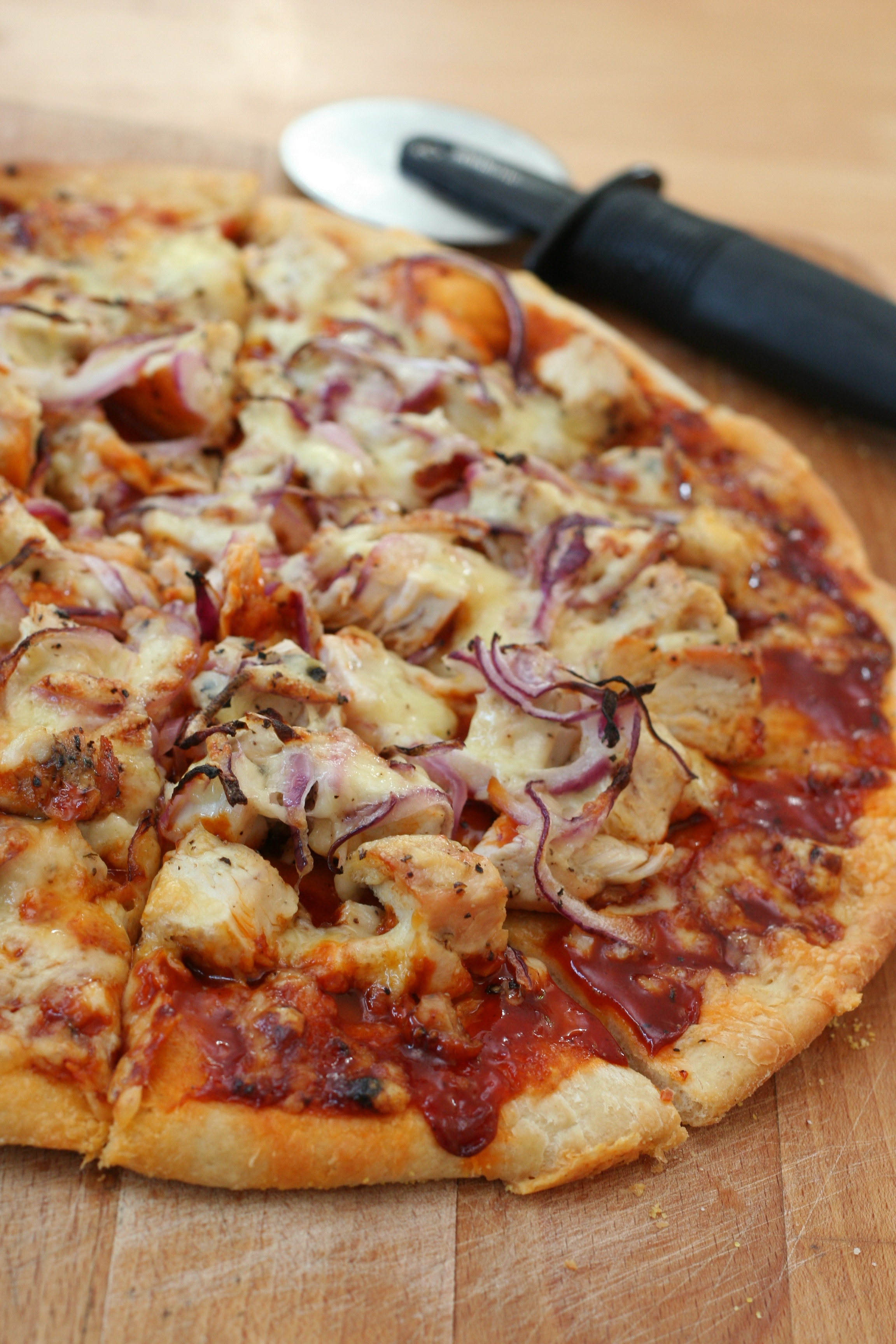
When you make friends in the virtual world of blogging, it turns out you can have a virtual party too — an online pizza party, in our case. A few Irish foodies were chatting on Twitter last week, a few pizza craving comments were casually tossed around and before we knew it Sarah had taken the lead in planning a #twizzaparty last Thursday, where nine of us were to all make homemade pizzas, tweet about it and blog it, with Lorraine volunteering to judge the results and even donate some prizes from her Italian deli in Limerick.

Sure, it’s easier to order take-out, and with a good pizzeria only a five-minute drive away we certainly do our fair share of that, but one of the great things about making your own pizzas is that kids love helping out with it, so it’s a fun way to get them involved in the kitchen. But if you’re not crazy about the idea of making your own dough, then you could buy ready-made pizza bases or dough at the grocery store and load them up with your own fresh toppings. I’ve included a list of all the toppings made for the twizzaparty (we would appear to like Parma ham a lot), as well as a few more from around the internet to get you going.

This dough is absolutely foolproof and is the only recipe I use now. Resting the dough overnight is a tip that’s new to me, and if nothing else I found that it made the dough easier to roll out the next day (Lorraine also passed on a tip to cover it with a damp tea towel to keep it from rising too much in the fridge). And everyone loves a secret ingredient, so I’ll let you in on the one in my tomato sauce — anchovy paste. Don’t worry, it doesn’t make the sauce taste at all fishy, it just adds a little hit of umami goodness.

Basic Pizza Dough
adapted from The River Cottage Family Cookbook by Hugh Fearnley-Whittingstall

Makes enough for 2 pizzas or 1 loaf of white bread

4 1/4 cups (500 g) strong white flour, plus extra for dusting the work surface
2 teaspoons salt
2 teaspoons (1 x 7 g sachet) easy-blend (fast-action) yeast
2 tablespoons olive oil
2 teaspoons sugar or honey
1 1/4 cup (300 ml) warm water
cornmeal/polenta, for the base of the pizza (optional)

To make the dough in a bread machine, simply follow the usual instructions for your machine, then skip to the last step.

To make the dough by hand, put the flour in a large mixing bowl, add the salt and yeast and stir with a wooden spoon until well combined. Pour the warm water into a measuring jug, then add the olive oil and sugar (or honey). Stir well. Pour the water mixture onto the flour in the bowl, a little at a time. Either with the wooden spoon or your hands, work the water into the flour and gradually bring it all together into a mass of soft, slightly stick dough. If the dough feels very sticky, add a little more flour. If it feels as if it won’t come together, then work in some more warm water — a soft dough is much easier to knead.

Flour the work surface and turn the dough out onto it. It will look rough and saggy at this stage, so it has to be kneaded until it’s smooth and bouncy. Keep kneading for at least 10 minutes (or you could use the dough hook of a stand mixer). Shape the dough into a neat ball, put it back in the mixing bowl and cover the bowl with some cling film or a damp kitchen towel to prove in a warm, draft-free place until doubled in size — this will take 90 minutes to 2 hours.

When the dough has risen, preheat the oven to 425°F (220°C). Lightly grease a pizza pan or baking sheet with olive oil, then sprinkle over some cornmeal, if using. Knock out the air and roll the dough out into a 12-inch round (or whatever size will fit your pan/sheet) and place in the prepared pan or baking sheet. Cover the dough with your toppings and bake for 15 to 20 minutes, or until golden (check after 10 minutes to make sure nothing is burning). Allow to stand for 10 minutes, then cut into slices and serve immediately.

***

Tomato Sauce with a Secret Ingredient

Makes more than enough for 2 pizzas

2 x 6 oz cans (or 1 x 300 g jar) tomato paste (a.k.a. tomato puree)
3/4 cup (175 ml) water (or more if you prefer a thinner sauce)
2 or 3 garlic cloves, finely minced
1/4 cup (25 g) finely grated Parmesan cheese
2 teaspoons anchovy paste (optional, but come on, it’s the secret ingredient!)
1/2 teaspoon dried oregano
1/2 teaspoon dried basil
1/4 teaspoon dried chili flakes (optional)
salt and freshly ground black pepper
pinch of sugar

In a small bowl, combine the tomato paste and water, stirring to combine. Add the garlic, Parmesan, anchovy paste, basil, oregano and chili flakes. Add seasoning to taste, but watch the salt if you’ve used the anchovy paste, as it’s quite salty. Mix together well and add a generous pinch of sugar (or to taste) to counteract the acidity of the tomato paste. Allow the sauce to stand for at least 30 minutes to blend the flavors (though the longer you can leave it, the better), then taste again and adjust the seasoning if needed. Spread the sauce over your pizza dough, then pile on the toppings. Use any leftovers as a pasta sauce, or freeze.

***

Topping suggestions

Here’s what we made for the twizzaparty:

  • Hickory BBQ sauce, smoked Applewood cheese, red onions and roasted chicken (my pizza, pictured)
  • Mushroom, Manchego cheese and sage (An American in Ireland)
  • Chicken, asparagus, sweetcorn, feta, red onion, mozzarella (Babaduck Babbles)
  • Parma ham, salami, garlic mushrooms, Taleggio, mozzarella (Babaduck Babbles)
  • Pork, onion, tomato, mushroom, mozzarella, basil (Babaduck Babbles)
  • Roast asparagus, soft Knockalara sheep’s cheese and roasted hazelnuts (Bibliocook)
  • Parma ham, mozzarella, chili oil and fresh basil (Gluttony for Beginners)
  • Caramelized onions and goat’s cheese with cherry tomatoes (I Can Has Cook?)
  • Parboiled asparagus tips, Parma ham and mascarpone cheese (I Can Has Cook?)
  • Wilted spinach, cherry tomatoes and ricotta cheese (I Can Has Cook?)
  • Buffalo mozzerella, Parma ham, black olives, green olives stuffed with pimento paste, capers and sun-dried tomatoes (Like Mam Used to Bake)
  • Caramelized onion and goat’s cheese (Musings of a Med Student)
  • Mozzarella, mature cheddar, Gruyère, baked ham and Parma ham (Smörgåsblog)

And here are some more suggestions from around the internet:

Chicken Piccata with Buttermilk Mashed Potatoes

It’s often said that there are six degrees of separation in the world, but I always say it’s much less than that in Ireland because it’s such a small country. Let me give you some examples of what I mean. I’m four degrees removed from Prince Charles (I’m friends with a woman who worked with Seamus Heaney’s wife, and Seamus Heaney once sat next to Prince Charles at a dinner — this also makes me three degrees removed from Seamus Heaney). I’m three degrees removed from Bono (I worked on a book written by Adi Roche, who founded the Chernobyl Children’s Project International charity, which has Ali Hewson as its patron, who is married to Bono). And after meeting the lovely Sharon Hearne-Smith at the Bord Bia Irish food bloggers event two weeks ago, I’m now only two degrees removed from the Barefoot Contessa herself, since Sharon is a food stylist who works on her TV show. Sure, Prince Charles, Seamus Heaney and Bono all make for a good story, but it was talking to someone who has actually worked with Ina Garten — who has been in her house and had the legend herself make her a whiskey sour! — that made me swoon in fawning admiration (and, truth be told, complete jealousy).

Which is all as good a way as any to segue into this chicken piccata recipe. You probably know by now how much I love Ina Garetn’s recipes and how many of them I cook, so it’s no small thing to say this one is one of my favorites (plus kids tend to love anything breaded). Another great thing about this recipe is that you can easily turn it into Parmesan chicken by adding 1/2 cup (50 g) grated Parmesan to the breadcrumbs and omitting the lemon sauce. I won’t kid you, the method is a little time consuming and messy, what with all the pounding and measuring and bowls to clean afterward, but the results are worth it.

You could serve just about any vegetable with this; I made these green beans dressed with lemon juice, olive oil and sea salt.

Chicken Piccata
adapted from Barefoot Contessa at Home by Ina Garten

Serves 4

As an alternative to flattening the chicken with a meat tenderizer, simply butterfly each breast, cut it in half and proceed with the rest of the recipe as written.

4 boneless, skinless chicken breasts
salt and freshly ground black pepper
1/2 cup (50 g) all-purpose flour
1 or 2 large eggs
1/2 tablespoon water
1 cup (50 g) seasoned dry breadcrumbs (I used Paxo brand here in Ireland)
good-quality olive oil
3 tablespoons (45 g) unsalted butter, at room temperature, divided
juice of 2 lemons (to yield 1/3 cup (80 ml) juice), lemon halves reserved
1/2 cup (120 ml) dry white wine
sliced lemon, to garnish
chopped fresh parsley leaves, to garnish

Preheat the oven to 400°F (200°C). Line a baking tray with parchment paper.

Place each chicken breast between 2 sheets of parchment paper or plastic wrap and pound with a meat tenderizer or rolling pin until it’s 1/4 inch thick. Sprinkle both sides with salt and pepper.

Mix the flour, 1/2 teaspoon salt and 1/4 teaspoon of pepper in a shallow plate. In a second plate, beat the egg and 1/2 tablespoon water together. Place the breadcrumbs on a third plate. Dip each chicken breast first in the flour and shake off the excess, then dip in the egg and lastly the breadcrumb mixtures.

Heat 1 tablespoon of olive oil in a large frying pan over a medium to medium-low heat. Add the breaded chicken breasts and cook for 2 to 3 minutes on each side, until browned. Place them on the lined baking tray and allow them to bake in the oven for 5 to 10 minutes while you make the sauce.

To make the sauce once you’ve cooked all the chicken, wipe out the pan with a dry paper towel. Over a medium heat, melt 1 tablespoon (15 g) of the butter, then add the lemon juice, wine, the reserved lemon halves, 1/2 teaspoon salt, and 1/4 teaspoon pepper. Boil over a high heat for about 2 minutes, until reduced by half. Off the heat, add the remaining 2 tablespoons (30 g) butter and swirl to combine. Discard the lemon halves and serve 1 chicken breast on each plate. Spoon on the sauce and serve with slices of lemon and a sprinkling of fresh parsley to garnish.

***

Buttermilk Mashed Potatoes 
from A New Way to Cook by Sally Schneider

Serves 4

You can make the potatoes up to 3 hours ahead. About 20 minutes before serving, warm them in a double boiler, stirring frequently, until hot.

1 1/4 lb (570 g) floury potatoes, such as Kerr’s Pink, Maris Piper or Yukon Gold, peeled and cut into 2‑inch chunks if large
1 1/2 teaspoons kosher salt
3/4 cup (180 ml) buttermilk, warmed (not hot)
1 tablespoon (15 g) unsalted butter
freshly ground black pepper

Place the potatoes and 1 teaspoon of the salt in a medium saucepan, add enough water to cover, and bring to a boil over a high heat. Reduce the heat to moderate and simmer until the potatoes are tender when pierced with a fork, about 45 minutes. Drain, reserving 1/4 cup (60 ml) of the cooking water.

Return the potatoes to the pan and set over a low heat, uncovered, for about 5 minutes, stirring occasionally, to let the potatoes dry out a little (too much moisture will dilute their flavor). For the smoothest potatoes, pass them through a food mill or potato ricer. For a slightly coarser puree, mash them with a potato masher or fork or use a hand mixer. Beat the buttermilk into the potatoes with a wooden spoon until thoroughly incorporated. If you prefer even creamier potatoes, add a little of the reserved cooking liquid. Beat in the butter, the remaining 1/2 teaspoon salt, and plenty of pepper. Serve at once, or keep the potatoes warm, covered, in a double boiler over hot water for up to 1 hour.

Italian Wedding Soup and Whole Wheat Spaghetti with Swiss Chard and Pecorino Cheese

Tonight I wanted to make something special for Sam after his fantastic first dance class. My four-year-old nephew and in-laws also joined us for dinner. Strangely, I’m more nervous cooking for kids than adults. Kids aren’t afraid to tell you they don’t like your food and are more than willing to go hungry if necessary to prove it. When I saw this recipe for tiny meatball-filled soup I figured the kids (even my chicken nuggets-loving nephew) would be amused enough to eat it, even if the adults weren’t as impressed. Luckily, both kids and adults enjoyed the soup. The whole wheat pasta with Swiss chard was also a hit. You can find these recipes and other kid-friendly fare at our new Family Favorites page at the top of the site.

Italian Wedding Soup
adapted from Giada’s Family Dinners by Giada De Laurentiis

Serves 6 to 8

for the meatballs:
1 small onion, grated
3 cloves garlic, minced
3 tablespoons chopped fresh flat-leaf parsley
1 egg
1 teaspoon salt
freshly ground black pepper
1/2 cup (50 g) grated Parmesan cheese
1/4 cup (25 g) plain dry breadcrumbs
1 lb (450 g) ground beef

for the soup:
8 cups (2 liters) low-sodium chicken broth
1 lb (450 g) escarole, coarsely chopped
2 eggs
1/2 cup (50 g) freshly grated Parmesan
salt and freshly ground black pepper

To make the meatballs, in a large bowl, stir together the onion, garlic, parsley, egg, salt and pepper. Using your hands, mix in the the cheese, breadcrumbs, and beef. Shape the meat mixture into 1‑inch-diameter meatballs (about 75). Place on a baking sheet or large plate.

To make the soup, bring the broth to a boil in a large pot over medium-high heat. Add the meatballs and escarole and simmer until the meatballs are cooked through and the escarole is tender, about 8 minutes. In a small bowl, whisk together the eggs and cheese. Stir the soup in a circular motion. Gradually drizzle the egg mixture into the moving broth for about 1 minute, stirring gently with a fork to form thin stands of egg. Season the soup to taste with salt and pepper. Ladle the soup into bowls and serve.

***

Whole Wheat Spaghetti with Swiss Chard and Pecorino Cheese
adapted from Giada’s Family Dinners by Giada De Laurentiis

Serves 6

3 tablespoons toasted walnuts or pine nuts
3 tablespoons olive oil
2 onions, thinly sliced
2 bunches Swiss chard, trimmed and chopped
3 garlic cloves, minced
1 x 14 oz (400 g) can diced tomatoes with juices
1/4 cup (60 ml) dry white wine
1/4 teaspoon dried crushed red pepper flakes
salt and freshly ground black pepper
12 oz (340 g) whole wheat spaghetti
1/2 cup (70 g) pitted Kalamata olives, coarsely chopped
3 tablespoons freshly grated Pecorino cheese

Preheat a small, heavy skillet over medium-low heat. Place the nuts in the hot skillet and stir them until they become golden brown and fragrant, about 5 minutes, taking care not to scorch them. Immediately place the toasted nuts in a separate bowl to cool and set aside.

Heat the oil in a large frying pan over medium-high heat. Add the onions and saute for about 8 minutes, until tender. Add the chard and saute for about 3 minutes, until it wilts. Add the garlic and saute for 1 minute, until fragrant. Stir in the tomatoes with their juices, wine, and red pepper flakes. Bring to a boil. Decrease the heat to medium-low, cover and simmer until the tomatoes begin to break down and the chard is very tender, stirring occasionally, about 5 minutes. Season the chard mixture to taste with salt and pepper.

Meanwhile, bring a large pot of salted water to a boil. Add the spaghetti and cook for about 10 minutes, stirring occasionally, until tender but still firm to the bite. Drain the spaghetti, add it to the chard mixture and toss to combine.

Transfer the pasta to a large bowl or platter. Sprinkle with the olives, cheese and nuts. Serve, passing extra cheese if desired.

Grilled Chicken with Gremolata, Slow Cooker Baked Potatoes, and Key Lime Coconut Cake

Sometimes I’ll try a new recipe and find myself shocked that it isn’t already part of my regular recipe rotation. You know the ones — quick, easy, cheap. This is one of those recipes. In the time it takes to preheat your grill, you can make a fabulously fresh-tasting paste of fresh herbs, lemon, and garlic to top the chicken. Serve the chicken with already cooked slow cooker baked potatoes (another I‑can’t-believe-how-easy-this-is preparation) and fresh steamed vegetables for a light but memorable dinner. If you have an extra half hour, you can whip up the equally quick, equally fabulous coconut cake. I knew it was a successful dessert when I noticed my usually sugar-avoiding mother-in-law sneaking slivers of it before dinner the following night.

Grilled Chicken with Gremolata
adapted from Giada’s Family Dinners by Giada De Laurentiis

Serves 4

1/4 cup (10 g) finely chopped fresh flat-leaf parsley
2 tablespoons extra virgin olive oil
1 1/2 tablespoons lemon zest
1 teaspoon finely chopped fresh oregano
1 teaspoon finely chopped fresh thyme
1 teaspoon finely chopped garlic
1 tablespoon olive oil
2 lb (900 g) skin-on, cut-up chicken (breasts, thighs, and/or legs)
salt and freshly ground black pepper

In a small bowl, combine the parsley, extra virgin olive oil, lemon zest, oregano, thyme, and garlic. Set the gremolata aside.

Preheat a charcoal or gas grill for medium heat. Rub the olive oil over both sides of the chicken. Season the chicken to taste with salt and pepper. Grill the chicken over medium heat until it’s just cooked through (10 to 15 minutes for breasts, 15 to 20 minutes for legs/thighs). Transfer the chicken to a platter. Immediately spoon the gremolata over the chicken and serve.

***

Slow Cooker Baked Potatoes

baking potatoes (as many as your slow cooker can hold)
aluminum foil

Wash the potatoes and prick them with a fork in a few places. Wrap each potato with aluminum foil. Place the wrapped potatoes in your slow cooker. Cover the slow cooker and cook the potatoes on low for 8 to 10 hours.

I gussied these up in the picture above by dicing the cooked potatoes, leaving the skins on, then topping them with melted butter, salt, pepper, and freshly chopped chives.

***

Key Lime Coconut Cake
adapted from Gourmet, March 2008

Serves 8

1 cup (90 g) sweetened flaked coconut
1/2 cup (110 g) unsalted butter, softened
1 1/4 cups (250 g) granulated sugar
1 tablespoon grated Key lime zest
2 extra-large eggs
1 3/4 cups (210 g) self-rising flour
3/4 cup (180 ml) whole milk
1/4 cup (60 ml) plus 1 tablespoon fresh Key lime juice, divided
1 1/4 cup (150 g) confectioner’s (icing) sugar
1 tablespoon rum (optional)

Preheat the oven to 350°F (180°C) with the rack in the middle. Generously butter a springform cake pan and line the bottom with a round of parchment paper.

Toast the coconut in a small baking pan in the oven, stirring once or twice, for 8 to 12 minutes, until it’s golden. Cool. Leave the oven on.

Beat together the butter, granulated sugar, and zest with an electric mixer until fluffy. Beat in the eggs 1 at a time. Stir together the flour and 1/2 cup coconut (reserve the remainder for the topping). Stir together the milk and 2 tablespoons lime juice. At low speed, mix the flour and milk mixtures into the egg mixture alternately in batches, beginning and ending with flour.

Spoon the batter into the prepared pan and smooth the top. Bake for 35 to 40 minutes, until golden and a wooden pick inserted into the center comes out clean. Cool the cake to warm, then turn out of the pan and remove the parchment paper.

Whisk together the confectioners sugar, the remaining 3 tablespoons lime juice, and rum (if using) and pour over the cake. Sprinkle with the remaining coconut.

Lemon and Pea Risotto with Parmesan Roasted Asparagus and Lemon Buttermilk Rhubarb Bundt Cake

To say my two-year-old son is a light eater is a bit of an understatement — he’s been known to go an entire weekend eating little more than a banana — but the night I made this risotto, he sat at the dinner table and practically chanted “more, more, more” in between mouthfuls and had a second helping.

As for the cake, I’d be hard pressed to think of a more perfect spring dessert than this. Light and lemony, it was still moist after three days — which is more than I can say for the overpriced “gourmet” cupcakes I bought in Dublin last week, which were so dry my children took only one bite and left the rest on the plate. My little boy might be a light eater, but he’s certainly a discerning one.

Lemon and Pea Risotto with Parmesan Roasted Asparagus
adapted from Nigella Bites by Nigella Lawson and Barefoot Contessa Family Style by Ina Garten

Serves 4

I love this lemon risotto on its own or as a springboard for adding in any number of other ingredients. Seafood is an obvious choice, and something like this roast fish wrapped in pancetta would be fantastic served alongside the risotto. I also like to serve it with grilled lemon chicken, or even leftovers from a slow roast chicken with vermouth.

These are the same flavors as in the gnocchi with peas, pancetta and lemon ricotta, so this is like a variation on that theme. If you wanted to make a little extra effort with the asparagus and aren’t concerned about the meal being vegetarian, you could omit the final sprinkle of Parmesan and wrap each stalk in a bit of Parma ham instead at the start, or perhaps simply crumble some cooked bacon or pancetta over the top of the dish for some extra flavor.

for the lemon and pea risotto:
4 tablespoons (60 g) unsalted butter
2 shallots or 1 small onion, finely chopped
1 rib celery, finely chopped
1 1/2 cups (300 g) risotto rice
1 cup (240 ml) white wine or extra-dry vermouth
approximately 1 quart (1 liter) vegetable stock
1 cup (140 g) fresh or frozen peas
zest and juice of 1/2 lemon
4 tablespoons grated Parmesan, plus extra for garnish
salt and freshly ground black pepper

for the Parmesan roasted asparagus:
1 bunch fresh asparagus
1 tablespoon good olive oil
salt and freshly ground black pepper
1/2 cup (50 g) freshly grated Parmesan

Preheat the oven to 400°F (200°C).

Heat the butter, shallots and celery in a wide, deep saucepan and cook to soften, about 5 minutes. Mix in the rice, stirring to give it a good coating of the butter. Allow it to cook for 1 or 2 minutes, until the grains of rice start to turn translucent. Add the white wine or vermouth and let it bubble away for a few minutes. Meanwhile, heat the stock in another saucepan and keep it at simmering point.

Once all the wine or vermouth has been absorbed into the rice, pour a ladleful of the stock into the rice and keep stirring until the stock is absorbed. Then add another ladleful and stir again. Continue doing this until the rice is al dente. You may not need all the stock; equally, you may need to add a bit more hot water. Don’t rush this process — allow the rice to fully absorb each ladleful of stock before adding the next one.

Meanwhile, once you’ve got the risotto going, snap off the woody ends of each asparagus stalk and discard. Lay the asparagus stalks in a single layer on a sheet pan and drizzle with olive oil, then sprinkle with salt and pepper. Roast for 15 to 20 minutes, until tender. Sprinkle with the Parmesan and return to the oven for 1 minute more, until the cheese has melted. Set aside and keep warm while you finish the risotto.

When you’ve added almost all the stock, test the rice — the risotto is ready when the rice is tender but still has a little bite. When the risotto is done, mix in the peas, lemon zest and juice and the grated Parmesan. Cook for a few more minutes, until the peas have thawed and are warmed through. Divide between 4 serving bowls or plates and top with the roasted asparagus stalks. Serve with more grated Parmesan if you wish, add seasoning to taste and serve immediately.

***

Lemon Buttermilk Rhubarb Bundt Cake
adapted from Rustic Fruit Desserts by Cory Schreiber and Julie Richardson

Serves 10 to 12

Ina Garten recommends having all your baking ingredients at room temperature, so I’ve modified the recipe slightly to add that instruction here. You really do need to have the butter softened, but if you forget to take the buttermilk and eggs out of the fridge beforehand, don’t worry about it.

for the cake: 
2 1/2 cups (300 g) plus 2 tablespoons all-purpose flour, divided
2 teaspoons baking powder
1 teaspoon salt
1 cup (225 g) unsalted butter, at room temperature
1 3/4 cups (350 g) sugar
zest of 1 lemon
3 eggs, at room temperature
1/2 teaspoon lemon extract (optional)
3/4 cup (180 ml) buttermilk, at room temperature
1 lb (450 g) rhubarb, trimmed and sliced very thin

for the lemon glaze: 
2 cups (240 g) sifted confectioners’ sugar (icing sugar), plus more if needed
juice of 1 lemon
1 tablespoon (15 g) unsalted butter, at room temperature

Preheat the oven to 350°F (180°C) and grease a 10-cup Bundt pan.

To make the cake, sift together the 2 1/2 cups (300 g) flour, baking powder and salt. Set aside. In a mixing bowl and using a hand-held mixer or a stand mixer with the paddle attachment, cream together the butter, sugar and lemon zest at medium-high speed for 3 to 5 minutes, until light and fluffy. Add the eggs one at a time, scraping down the bowl after each addition. Stir in the lemon extract, if using. Stir in the flour mixture in 3 additions, alternating with the buttermilk in 2 additions, beginning and ending with the flour mixture and scraping down the bowl occasionally. The batter will be very thick.

Toss the rhubarb with the 2 tablespoons of flour. Fold half the rhubarb into the batter and pour batter into the prepared pan. Sprinkle the remaining rhubarb on top.

Bake for 30 minutes, then rotate the pan and bake for an additional 30 minutes, or until the top of cake is firm and the center springs back when lightly touched. Cool the cake in its pan on a wire rack for 30 minutes before inverting and removing from the pan.

Meanwhile, to make the lemon glaze, whisk together the confectioners’ sugar, lemon juice and butter. The mixture should be thick. If it isn’t, add an additional 1 or 2 tablespoons confectioners’ sugar. Drizzle the glaze over the cake as soon as you remove the cake from the pan.

Covered with a cake cover or plastic wrap, the cake will keep at room temperature for 3 to 4 days.


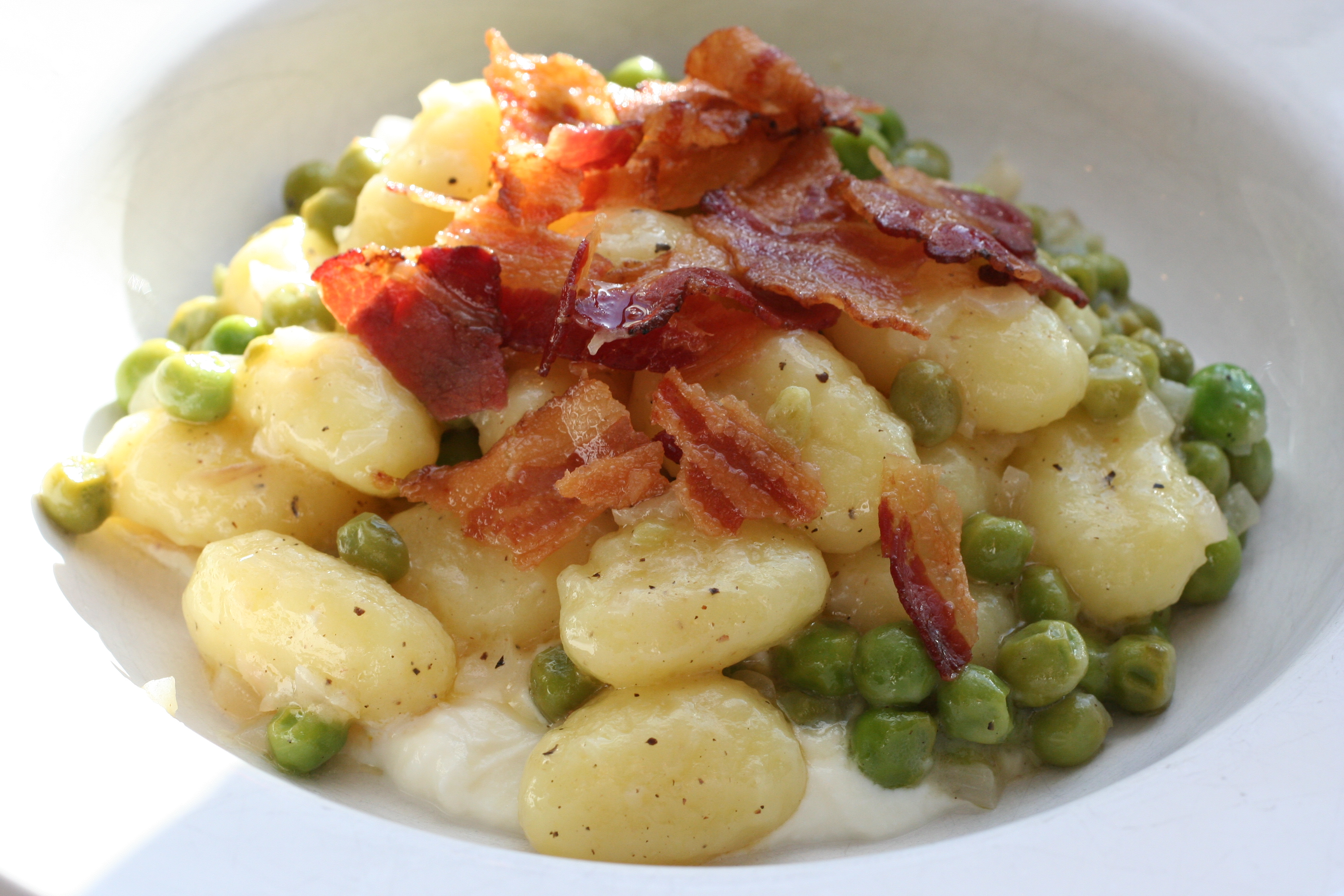
Gnocchi with Peas, Pancetta and Lemon Ricotta

I’ve been wanting to try my hand at making gnocchi for awhile now, but there’s only so far I’m only willing to go for a weeknight supper. I recently watched Tyler Florence making gnocchi on TV, and while it does look straightforward enough (not to mention something the kids would love to help with, since it looked like potato play dough), I cheated with a package of store-bought gnocchi but made the rest of his recipe, which comes together in less than half an hour.

This is an ideal dinner for this time of year. The potato gnocchi are still substantial and filling enough for spring evenings with a chill in the air, but the lemon brightens up the dish. Or if you’re having the kind of day where the last thing you want to face is cooking dinner, this requires minimal effort — the most taxing steps are chopping a shallot and zesting and juicing a lemon.

This was lovely just as it is, but I can see it being a springboard for other variations, perhaps with a cream and lemon sauce like the one in this lemon fusilli instead of the ricotta and pan sauce, with broad beans instead of the peas or with some finely chopped fresh basil or mint added in. A peppery arugula salad on the side would be perfect.

Gnocchi with Peas, Pancetta and Lemon Ricotta
adapted from Tyler Florence

Serves 4

If you quickly blanch the peas first it will help retain their green color, but honestly, could you be bothered? I’ll happily settle for dull green peas here if it makes for an easier life.

for the gnocchi:
1 lb 2 oz (500 g) store-bought gnocchi
4 oz (110 g) pancetta or prosciutto (or 6 slices bacon)
1 1/2 cups (200 g) frozen peas, thawed
1 large shallot, finely diced
2 tablespoons extra virgin olive oil
salt and freshly ground black pepper
2 tablespoons (30 g) butter
1/4 cup (25 g) freshly grated Parmesan

for the lemon ricotta:
2 cups (about 500 g, or 2 tubs) ricotta cheese
zest and juice of 1 lemon
salt

Preheat the oven to 350°F (180°C). (If using bacon instead of pancetta, preheat the oven to 400°F/200°C instead.) Bring a large pot of salted water to boil and cook the gnocchi according to the packet instructions (gnocchi usually only takes about 3 minutes to cook). Make sure you reserve about 1/2 cup (120 ml) of the cooking water for the sauce.

While the water is coming to a boil, place the strips of pancetta or bacon in 1 layer on a baking rack placed on top of a sheet pan. Cook for 8 to 10 minutes, until the pancetta is crispy. (If using bacon, this could take up to 15 or 20 minutes at the higher temperature, depending on how thick it is; cook until browned.) Drain on paper towels, then roughly chop into bite-sized pieces. Set aside.

Meanwhile, to make the lemon ricotta, place the ricotta in a mixing bowl and add the lemon zest and juice. Season with salt and set aside. (This could be done in advance and kept refrigerated.)

Heat the olive oil in a pan over a medium heat. Add the chopped shallots and gently saute for about 5 minutes, until fragrant and translucent. Add in the peas and toss gently to coat and heat through. Season with a little salt and pepper. Add the cooked gnocchi to the pan and gently toss. Add the reserved gnocchi water to the pan, then add the butter, sprinkle with the Parmesan and season again with salt and pepper.

To serve, spread a generous scoop of the lemon ricotta on the bottom of each plate. Ladle the gnocchi, peas and the pan sauce on top of the ricotta, then top with the crispy pancetta.

Polpette di Melanzane (Eggplant ‘Meatballs’) with Spaghetti and Tomato Sauce

I think most people by now have heard Michael Pollan’s famous advice: “Eat food. Not too much. Mostly plants.” One way of reaching this goal is to adopt the Meatless Monday approach. In a nutshell, it’s an international campaign to try to “reduce meat consumption 15% in order to improve personal health and the health of our planet.” Who can argue with that? I think the problem is that many people think vegetarian food is bland and boring — and let’s face it, some of it is. But if all vegetarian recipes tasted as outstanding as this one, I guarantee you wouldn’t even miss the meat in the dinner just once a week. My mom’s turkey meatball recipe is one of my all-time favorites, but I have to admit that I like this vegetarian version even better. They’re light, tender and have even more flavor than regular meatballs. And because they’re vegetarian, I didn’t feel at all guilty about sneaking a fourth polpette (I figured I’d work on that “not too much” part of the Pollan mantra some other time).

Polpette di Melanzane
adapted from Catherine Fulvio via the Good Food Channel; you can watch Catherine making these here and see just how easy it is

Serves 4 (makes 14 to 16 balls)

The original recipe calls for 2 teaspoons chopped mint and 1 teaspoon oregano, but I used basil and parsley simply because it’s what I had in my fridge. I used a modified version of Marcella Hazan’s tomato sauce here, but feel free to use your own favorite tomato sauce recipe or even a good-quality store-bought one. The polpette can be frozen, so you might even want to make a double batch. I certainly will the next time I cook this.

for the polpette:
2 large eggplants, cut in half
extra virgin olive oil
salt and freshly ground black pepper
4 large cloves garlic, finely chopped
2 cups (200 g) breadcrumbs
1 1/4 cups (125 g) freshly grated Parmesan or Pecorino cheese
2 egg yolks
1 tablespoon chopped basil
1 tablespoon chopped parsley
a pinch of grated nutmeg
1 lb (450 g) spaghetti, to serve

for the tomato sauce:
5 tablespoons (75 g) unsalted butter
3 cloves garlic, finely chopped
1 x 28 oz can (or 2 x 400 g cans) whole plum tomatoes, with their juices
1 medium yellow onion, peeled and cut in half
salt, to taste
6 basil leaves, chopped

To make the tomato sauce, melt the butter in a large saucepan. Add the garlic and sauté gently for 1 minute. Add the tomatoes along with their juices and the onion halves. Add a pinch or two of salt. Place over a medium heat and bring to a simmer, mashing up the tomatoes gently with the back of a wooden spoon. Cook, uncovered, at a very slow but steady simmer, adjusting the heat as necessary, for about 45 minutes, or until droplets of fat float free from the tomato and the sauce has reduced and thickened. Stir occasionally, continuing to mash any large pieces of tomato with the wooden spoon. Shortly before serving, stir in the chopped basil. Taste and add salt as needed. Discard the onion.

Meanwhile, to make the polpette, preheat the oven to 350°F (180°C). Rub the halved eggplants with olive oil and sprinkle with salt and pepper. Place them on a baking tray and roast for 25 to 30 minutes. Remove from the oven and leave to cool slightly.

Scoop out the flesh of the eggplants, place in a sieve and press gently to squeeze out the excess liquid. In a mixing bowl, mash the garlic and eggplant together, then stir in the breadcrumbs, Parmesan, egg yolks, basil, parsley and nutmeg. Add salt and pepper to taste.

Shape the eggplant mixture into golf ball-sized ‘meatballs’. Heat some olive oil in a pan and fry the balls in batches until golden, turning from time to time and taking care not to crowd the pan. Place on a paper towel to drain.

When the sauce is done, add the polpette and simmer gently for 10 to 15 minutes.

Meanwhile, cook the spaghetti in a large pot of boiling salted water. Drain well and serve with the polpette and tomato sauce.