Category Archives: Italian food

Tortellini in Broth with Spinach

Inevitably after most holiday meals, I find myself walking to my car with a plastic grocery bag of slightly gooey, unattractive, and lukewarm bag of bones and meat scraps. Perhaps no one else wants to carry home such an odd parcel, or perhaps everyone knows of my frugality. Whatever the reason, I’m happy to turn the humble carcass into a hearty broth at home. If you browse through the recipes on this site, you’ll find that both Kristin and I use broth frequently. Although I’ve found a good store-bought brand (Swanson’s Organic Chicken Broth), nothing beats homemade.  It’s really cheap and easy to make.

For this year’s turkey broth I threw the leftover bones (with scraps attached) into a large stock pot and poured in water to cover. I roughly chopped and added one onion, one carrot, one celery stalk, and a handful of fresh parsley. For added zip, I threw in a pinch of dried thyme, a bay leaf, and about a tablespoon of salt. After bringing it to a boil, I let the liquid barely simmer for about three hours, strained it, and poured it into quart jars. After a night in the fridge, you can skim off any fat that rises to the top and pour the broth into whatever size container you wish. It will keep in the fridge for a few days and frozen for several months. I like to freeze it in muffin tins, then put the small broth-circles into larger storage bags, perfect for adding to sauces and stir-frys. I didn’t freeze all my broth this year, instead sacrificing a quart for this quick and kid-friendly meal. For extra cuteness, serve in bunny bowls as pictured below.

Tortellini in Broth with Spinach

Serves 4 as main course, 6 as first course

14 oz (400 g) dried tortellini
1 quart (1 liter) chicken or turkey broth
12 oz (340 g) fresh baby spinach
grated Parmesan cheese, to serve

Cook the tortellini according to the package directions. Drain the tortellini and set it aside.

While the pasta cooks, bring the broth to a simmer. Depending on the broth you are using, you may need to add salt or pepper to taste.

After the tortellini is cooked, add the spinach to the broth and cook for about 2 minutes, stirring gently, until the spinach is wilted. To serve, divide the broth, spinach, and tortellini between bowls. Top each bowl with grated Parmesan, if desired.

Tuscan-style White Beans with Sausages and Peppers

My kids are crazy about beans. They’d eat them for breakfast, lunch and dinner, which is fine by me. You can’t cook many things that are healthier, easier or quicker than a can of beans. While canned beans are great, cooking dried beans is much cheaper and tastes better, too. And then there’s the BPA issue to think about. So I’m trying to use dried beans instead of canned and, in the process, finding some great recipes. This white bean recipe may be my favorite so far. Don’t be afraid by the amount of sage, it’s actually quite subtle tasting when cooked low and slow. If you have leftovers, try pureeing them with some olive oil and Parmesan cheese to make a spread perfect for crackers. I combined this batch with sausages and peppers as per Mark Bittman’s suggestion. The last-minute side of plain quinoa was a surprisingly perfect match with the beans.

A quick comment about beans, generally. I usually cook my beans in a slow cooker but the stove top works just as well. Don’t be afraid to add salt to the beans during cooking. I add a good teaspoon per pound (450 g) of beans after the beans are just tender, about halfway through cooking. Contrary to popular belief, salt doesn’t prevent the bean from cooking properly and results in a much better-tasting bean. And if you’re making a pot of beans, you may as well make a double batch. Once cooked, beans will keep in the fridge for several days or in the freezer several months, ready for pasta with chickpeas, eight-layer veggie burritos, or hummus at the drop of a hat.

Tuscan-style White Beans
adapted from How To Cook Everything: Simple Recipes for Great Food by Mark Bittman

Makes 8 servings

1 lb (450 g) dried white beans (cannellini, navy, Great Northern, etc.), washed and picked over
30 fresh sage leaves or 1 heaping tablespoon dried sage
salt and freshly ground black pepper
2 teaspoons minced or grated garlic
3 tablespoons extra virgin olive oil

Place the beans in a pot with water to cover by about 1 inch. Turn the heat to high and bring to a boil. Add the sage. Reduce the heat, cover loosely and simmer, stirring occasionally, until the beans begin to soften. Add about 1 teaspoon of salt and some pepper. Continue to cook until the beans are very tender, adding additional water if the beans dry out. Depending on the size and freshness of the bean, this will usually take 1 to 2 hours. Drain the cooking liquid if necessary, then gently stir in the garlic and olive oil. Season to taste with salt and pepper and serve hot, warm, or even cold.

***

Sausages with Peppers

Serves 6

1 tablespoon olive oil
6 hot and/or mild Italian sausages
2 bell peppers (one green and one red, yellow, or orange), sliced into thin strips

In a large skillet, heat the olive oil over a medium heat. Add the sausages and cook for 10 minutes, turning the sausages halfway through the cooking time. Add the pepper strips and cook until the peppers are soft and the sausages are fully cooked, stirring frequently, about 10 more minutes. If the sausages take on too much color early in the cooking process, lower the heat or cover the skillet with a lid for a few minutes.

Pappardelle with Butternut Squash, Blue Cheese and Pine Nuts

The secret foodie project I’ve been working on for the past two months with fellow blogger Caroline from Bibliocook is out! When I’ve been writing these past few weeks that I’ve been slaving away with work and was practically too busy to cook, that was only part of the story — Caroline and I were also madly working behind the scenes to launch the new Irish Food Bloggers Association at the Food Camp that kicked off the Savour Kilkenny Food Festival last week (if you’d like to read more about Ireland’s first-ever Food Camp, visit some of these blogs for their recaps; they were obviously taking better notes than me!). If you’re an Irish or Irish-based blogger writing about anything to do with food, please join us! Or just check out the site to explore what we hope will become the definitive list of all the food blogs in Ireland.

This will be my last post from Nigella’s new book for awhile, I promise. The one downside to launching the IFBA on October 22 was that I only found out late that night after getting back from Kilkenny that Nigella Lawson was doing a book signing in Dublin at noon the next day, and I was just too tired and too busy to go and have her sign my already well-thumbed copy of Kitchen. Looks like I’ll have to wait until she writes her next book and try to catch her on that tour.

Pappardelle with Butternut Squash, Blue Cheese and Pine Nuts
adapted from Kitchen by Nigella Lawson

Serves 4

This is a first cousin to this risotto with roasted butternut squash, bacon and blue cheese (I wouldn’t be averse to adding some bacon to this pasta dish). Nigella notes that the sauce can be made 1 day ahead — simmer until the squash is tender, then transfer to a nonmetallic bowl to cool. Cover and refrigerate, then reheat gently in a saucepan and proceed as directed. The sauce can also be frozen in an airtight container for up to 3 months — just defrost overnight in the fridge and reheat gently.

1 large onion, finely chopped
2 tablespoons olive oil
3/4 teaspoon smoked paprika
1 large butternut squash, peeled, deseeded and cut into 1‑inch cubes
1 tablespoon unsalted butter
3 tablespoons Marsala
1/2 cup (120 ml) water
salt and freshly ground black pepper
6 fresh sage leaves, finely chopped (or 1/2 teaspoon dried sage)
18 oz (500 g) pappardelle or other robust pasta
1 cup (100 g) pine nuts
5 oz (125 g) soft blue cheese, crumbled

Fry the onion in the olive oil over a medium heat in a large, heavy-based pan that can accommodate all the pasta later. After about 10 minutes, add the paprika. Add the cubed butternut squash, then add the butter, stirring everything together well in the pan. Add the Marsala and water. Once the mixture starts to simmer, put the lid on, turn down the heat and simmer for about 20 minutes, or until the squash is tender but still holds its shape. Season to taste (keeping in mind that the cheese will be salty too), then sprinkle the sage into the squash mixture, reserving some to garnish.

Meanwhile, cook the pasta in a large pot of boiling, salted water according to the packet instructions. Toast the pine nuts in a separate hot, dry pan, tip them into a bowl and set aside.

Before you drain the pasta, reserve a mugful of the cooking water. Add the drained pasta to the squash and slowly stir to combine. Add some of the pasta cooking water to help the sauce emulsify, then add the blue cheese and half the pine nuts. Gently combine, then sprinkle the remaining pine nuts and sage on top and serve.

Pasta with Pancetta, Peppers and Parsley

With over 80 cookbooks in my collection, the last thing I need is another one, but that didn’t stop me from getting Nigella Lawson’s new book, Kitchen: Recipes from the Heart of the Home, hot off the presses two weeks ago (in America, you’ll have to wait until October 12 to get your hands on a copy). A lifesaving new feature in this book is a separate index of express recipes that can be made in 30 minutes or less, and with a recent bottleneck of work deadlines requiring lots of late nights chained to my desk with little time to spare for cooking, let alone meal planning, I’ve already been turning to it a lot. This is one of the first recipes I made from the book, and I can see it being a firm favorite in my repertoire of store cupboard dinners that I can pull together when time is short and the kids are hungry.

Pasta with Pancetta, Peppers and Parsley
adapted from Kitchen by Nigella Lawson

Serves 4

1 lb (450 g) spaghetti
1 tablespoon olive oil
11 oz (300 g) pancetta cubes or streaky bacon
3 cloves garlic, chopped
1 teaspoon dried chili flakes (optional)
zest and juice of 2 lemons
1/4 cup (60 ml) cold water
about 14 oz (400 g) (drained weight) roasted peppers from a jar, chopped into bite-sized pieces
1 large bunch of parsley, chopped
salt and freshly ground black pepper

Cook the pasta in a large pot of boiling salted water according to the packet instructions.

Meanwhile, heat the oil over a medium heat in a heavy-based pan, one that’s big enough to eventually add all the cooked pasta to later. If you’re using regular bacon, chop it into bite-sized pieces first. Fry the pancetta or bacon until crisp, then add the garlic, dried chili, lemon zest and juice and the water. Cook for 1 minute, then add the peppers and half the chopped parsley.

When the pasta has finished cooking, reserve 2 cups (480 ml) of the cooking water, then drain. Add the pasta to the sauce in the pan. Toss everything together well and add some of the pasta cooking water if it needs it, then season to taste and sprinkle with the remaining parsley.

Rigatoni with Pork and Lemon Ragu and Garlic Sauteed Spinach

After more than a year of blogging, nearly all my favorite recipes have been gathered, photographed and posted. While this has forced me to try out new recipes, the new recipes don’t always turn out to be blog-worthy. Sometimes they don’t even turn out to be edible. Thankfully, friends and family will sometimes throw a tried and true recipe of their own my way. Leah, high school friend of Kristin and me, also of Tzatziki Chicken fame, sent me a bunch of her family’s favorite recipes earlier this month. This is the first of the bunch I tried and if the others are even half as tasty, we’re in for some good eating in my house. Thank you, Leah! If anyone else has a favorite recipe of their own, please send them our way.

Rigatoni with Pork and Lemon Ragu
adapted from Easy Everyday: Simple Recipes for No-fuss Food (Ryland Peters & Small))

Serves 6

2 tablespoons olive oil
1 lb (450 g) ground pork
1 onion, finely chopped
3 garlic cloves, thinly sliced
4 anchovy fillets in oil, drained
2 tablespoons fresh rosemary leaves, minced
1 lemon, zested and juiced
1 lb (450 g) rigatoni
2 cups (475 ml) whole milk
handful of good quality green olives, pitted and chopped
1/2 cup (120 ml) heavy cream
1/2 teaspoon freshly ground nutmeg
1/2 cup (50 g) Parmesan shavings, plus extra to serve
salt and black pepper, to taste

Put a large pan of salted water on to boil for the rigatoni.

Meanwhile, heat the olive oil in a large skillet over high heat and add the pork. Cook the pork 3–4 minutes until lightly browned, breaking up clumps with the back of a wooden spoon. Add the onion, garlic, anchovies, rosemary, and lemon zest and stir to combine with the pork. Reduce the heat, cover, and let the onion soften for 10 minutes, stirring occasionally.

When the salted water is boiling, add the rigatoni and cook according to the package instructions until al dent and drain.

When the onion is translucent, add the milk, lemon juice, and olives, and bring to a boil, scraping the bottom of the skillet to loosen any sticky, flavorful bits and incorporating them into the sauce. Simmer for 15 minutes or utnil about two-thirds of the liquid has evaporated and the pork is soft. Stir in the cream, then season with nutmeg, salt, and pepper.

Carefully stir in the cooked rigatoni to the pork ragu. Add the Parmesan and transfer to bowl, sprinkling extra Parmesan on top if desired.

***

Garlic Sauteed Spinach

Serves 4

2 bunches spinach, stems removed
1 tablespoon olive oil
1 tablespoon butter
2 cloves garlic, minced
1/2 teaspoon sea salt
lemon juice or rice wine vinegar, to taste

Fill your sink or a large bowl with cold water. Add the spinach to the water and let it soak for a few minutes. Any dirt on the spinach should settle to the bottom of the sink or bowl. Remove the spinach, drain the water (and any dirt) and repeat the procedure to remove any remaining dirt. Drain the spinach and dry it as much as possible in a salad spinner or on a dish towel.

Heat the olive oil and butter over medium heat in a large skillet. Add the garlic and cook 1–2 minutes until it is just starting to turn golden. Add half the spinach and stir until it begins to wilt. Add the other half of the spinach and continue to cook, stirring occasionally, for another 4–5 minutes until fully wilted but still green. Season with salt and lemon juice or vinegar, to taste.

Oven-baked Sausage and Tomato Risotto

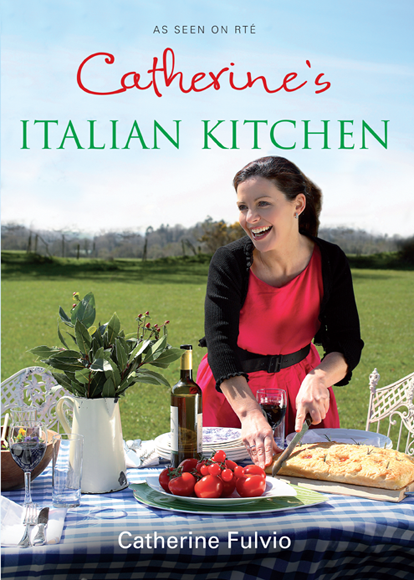
Catherine Fulvio is one busy lady these days. In addition to running Ballyknocken House and Cookery School in County Wicklow, she’s been filming her new series, Catherine’s Roman Holiday,* which premieres tomorrow in Ireland at 8:30 p.m. on RTÉ, doing cooking demos at summer festivals like Bloom and Taste of Dublin, and writing a fantastic new cookbook, Catherine’s Italian Kitchen, which was released last week.

Catherine was brought up at Ballyknocken, a traditional Irish farm that has been in her family for almost 100 years, and learned to cook from her mother by “hanging onto her apron strings.” Imbued with an appreciation of good food from an early age, the Italian twist in the tale is when she met her husband, Claudio Fulvio, who is originally from Palermo. They and their two young children now spend summers at their other home in Sicily, where Catherine is inspired by their Italian family and friends. This inspiration has translated into a cookbook full of easy and family-friendly recipes that are suitable for all levels of cook and which use ingredients that can be commonly found outside of Italy, meaning anyone can enjoy Italian flavors in their own kitchen, wherever you might be.

This oven-baked fennel sausage and tomato risotto is the first dish that jumped out at me to make, which is no surprise, seeing as how much I also like this cherry tomato and sausage bake. I particularly like this recipe since it has more vegetables than my other favorite risottos, and my kids happily devoured it. Catherine’s eggplant “meatballs” (polpette di melanzane) are already a favorite that I’ve made several times since watching her make them on her first TV series on RTÉ, and that recipe is included in her cookbook now as well. Other recipes I’ve bookmarked to try are the Leek, Gorgonzola and Walnut Pizza, Pistachio and Asparagus Penne, Braised Beef with Garlic, Lemon and Chili, and last but not least, Amaretto and Almond Truffle Tort.

We have a copy of Catherine’s Italian Kitchen to give away, so for a chance to win, just leave a comment telling us what Italian dish you’ve got a hankering for. The winner will be randomly chosen and the competition will close at midnight (US Central Time) on Friday, September 10. As Catherine would say, Buon appetito!

*You can watch sneak preview of the first show here, or even a behind-the-scenes peek at how the show was made here.

Oven-baked Sausage and Tomato Risotto
adapted from Catherine’s Italian Kitchen by Catherine Fulvio

Serves 4 to 6

The original recipe calls for Sicilian fennel sausages, but Italian sausages or good-quality butcher sausages are good substitutes. Catherine notes that this risotto won’t be creamy since there’s no constant stirring, but it’s just as delicious and is a great no-fuss weeknight option.

extra virgin olive oil
1 lb (450 g) Sicilian fennel sausages, Italian sausages or good-quality butcher sausages (I used garlic and herb)
1 onion, chopped
2 garlic cloves, finely sliced
1 3/4 cups (300 g) Arborio rice
1 carrot, finely diced
2 celery stalks, finely diced
3 tablespoons chopped fresh parsley
1 1/2 pints (750 ml) chicken stock
1 x 14 oz (400 g) can of cherry tomatoes or chopped tomatoes
1/2 cup (120 ml) dry white wine or vermouth
salt and freshly ground black pepper
Parmesan shavings, to serve

Preheat the oven to 350°F (180°C).

Heat some olive oil in a large frying pan or casserole dish over a medium heat. Cook the sausages for 15 minutes, until fully cooked. Remove from the pan and slice into bite-sized pieces. Set aside. Add the onion to the pan and saute on a low heat for 10 minutes, until lightly golden. Add the garlic and cook for 1 minute more. Add the rice, carrots, celery and parsley. Cook for 2 minutes, stirring from time to time. Return the sausages to the pan.

Meanwhile, in a separate pan, heat the chicken stock and tomatoes, then add the wine, stock and tomatoes to the casserole dish. Stir and cover with foil or a lid. Place in the oven and cook for approximately 45 minutes, until the liquid is absorbed and the rice is just tender, stirring occasionally. Sprinkle with Parmesan shavings and serve.

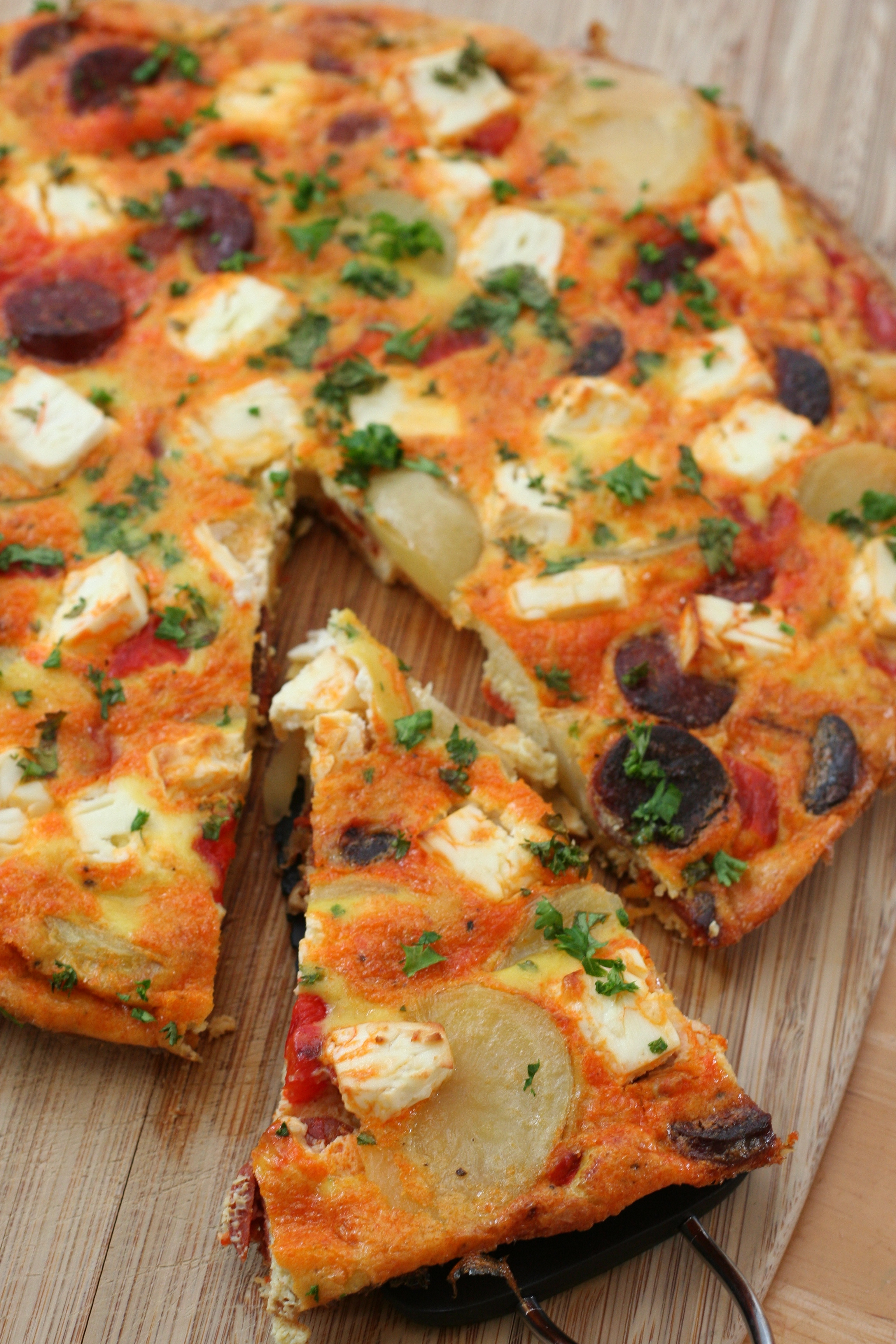
Chorizo, Red Pepper and Feta Frittata

We planted potatoes for the first time this year, joking that we were earning our Irish citizenship now. Of all the things we planted, my husband was most excited about the potatoes. The first thing he’d do when he got home from work was make a beeline to the garden to check on them, sometimes barely even stopping to say hello to the kids first. So when the diagnosis came back from our expert gardening friend that the potatoes had blight, he was pretty cut up about it. The good news is that the potatoes are still perfectly edible, but the bad news is they won’t store well. Suffice it to say we’re going to be eating a lot of potatoes over the coming weeks.

Most frittatas, which are like an Italian open-faced omelet, use potatoes, so it was one of the first things I thought of when faced with this sudden glut. Plus they’re perfect summertime food — not too heavy or filling and ideal for picnics, since they’re easy to transport and can be served at room temperature (I actually prefer them this way). It’s also a good way of using up bits and bobs of things that are hanging around in your crisper or pantry, making them open to endless variations.* This one is our new favorite, but I also like making one with baby potatoes and jarred artichoke hearts, or if provisions are very low in the house, I can usually rustle up a classic Spanish tortilla.

A word of warning here: to make a frittata, you need an ovenproof frying pan. No one wants to deal with a melted handle. And be sure to remember that the handle will be hot for quite some time after you take it out of the oven — I’ve burned my hand more times than I care to admit. Nowadays, I always leave an oven mitt or dishtowel wrapped around the handle as soon as I take it out of the oven to remind me to be careful.

Chorizo, Red Pepper and Feta Frittata

Serves 4 to 6 as a light dinner or brunch

For a vegetarian version, simply leave out the chorizo. Try to use potatoes that are roughly the same size so that they all cook in the same amount of time when you parboil them in the first step. Roasting the red peppers heightens their flavor, but if you don’t have them, simply chop them and saute them along with the onions.

1/2 lb (225 g) baby potatoes, unpeeled and left whole
olive oil
5 oz (140 g) chorizo sausage, thinly sliced
1 red onion, thinly sliced
2 cloves garlic, roughly chopped
2 red peppers, roasted, skinned and roughly chopped (or use well-drained jarred roasted peppers)
8 eggs
salt and freshly ground black pepper
5 oz (140 g) feta cheese, cubed or crumbled
green salad, to serve

Preheat the oven to 350°F (180°C).

Bring a pot of water to a boil. Place the potatoes in the pot and boil for about 5 minutes, or until just cooked and fork tender — do not overcook them or they won’t keep their shape when sliced. Drain. When they’re cool enough to handle, slice thinly and set aside.

Heat a splah of olive oil in a large ovenproof, nonstick frying pan over a medium heat. Add in the sliced chorizo and cook for about 5 minutes, until the chorizo has released its oils into the pan and has browned slightly. Scoop the chorzio out of the pan with a slotted spoon and set aside to drain on a paper towel-lined plate. If there’s an excessive amount of oil now in the pan, drain some off until only 1 or 2 tablespoons remain.

Reduce the heat to low, add the onion to the oil left behind in the pan and cook gently for 7 to 10 minutes, until softened. Add in the garlic and cook for 1 minute more, then remove from the heat. Add in the chopped roasted red peppers and set aside.

Whisk the eggs in a large bowl with a pinch of salt and some freshly ground black pepper (don’t use too much salt, since the chorizo and feta are also quite salty). Stir in the potatoes and chorizo. Using a slotted spoon, transfer the onion and peppers from the pan to the egg mixture and give everything a good stir.

Wipe out the frying pan and add 2 tablespoons of fresh olive oil (you can use less oil if you have a really good nonstick pan). Heat the oil in the pan, then pour in the egg mixture, making sure the chorizo and vegetables are evenly distributed throughout the pan. Top with the feta cheese.

Transfer the pan to the oven and cook for 25 to 35 minutes, or until set in the center. Remove from the oven and allow to cool a little before sliding it out of the pan onto a large serving platter or cutting board. Serve warm or at room temperature with a green salad on the side.

*Here are a few other frittata variations from around the web:

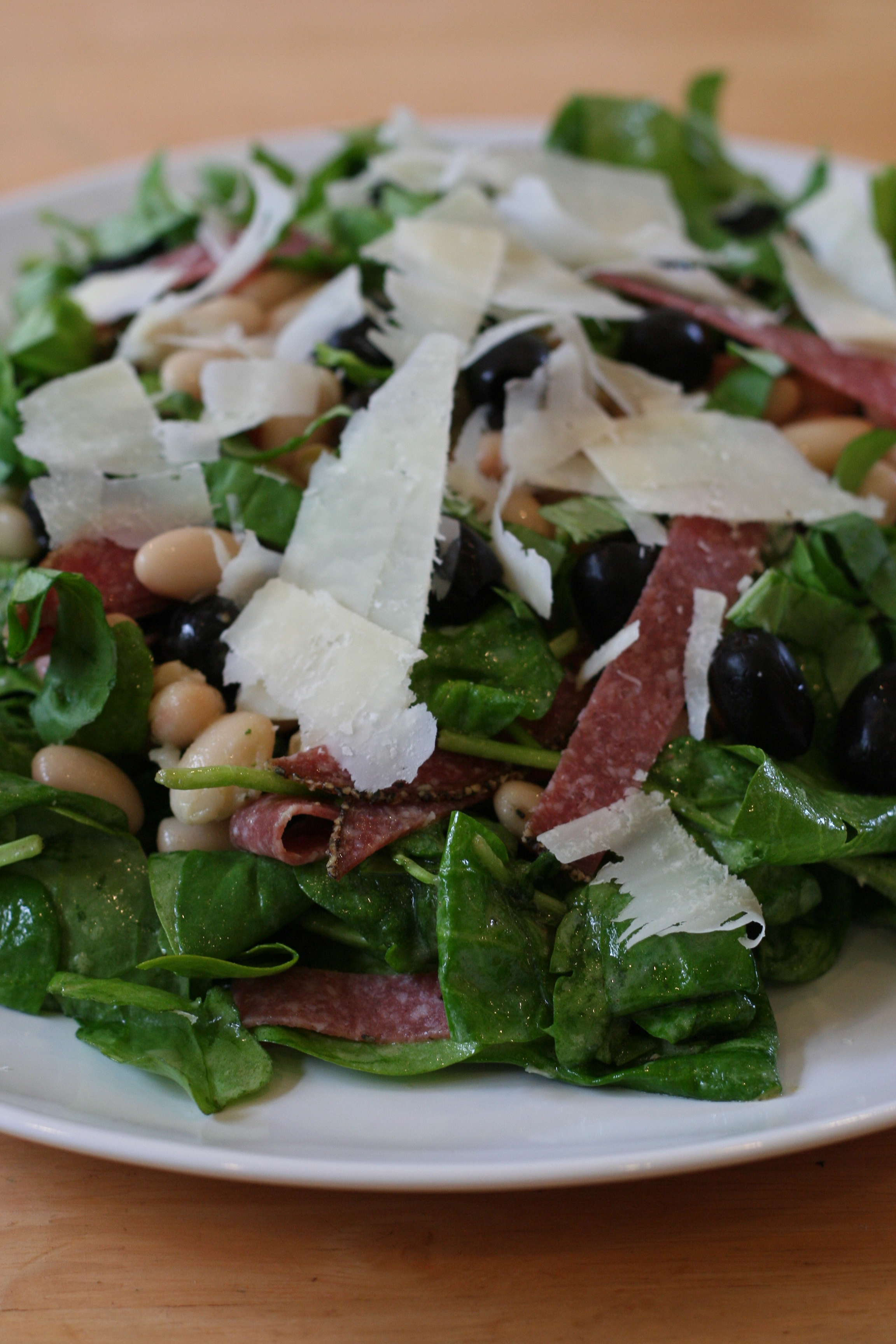
White Bean, Salami and Spinach Salad and Italian Chocolate Fridge Biscuits

I’m a little jealous of all the heat waves in America lately. After the best June in years here in Ireland, July is turning out to be cold and rainy a lot of the time and we’re lucky to even hit 70°F. But last month, when we had proper warm weather, I was making salads for dinner almost every night and this is one of my favorites. Served with some crusty bread, it’s a perfect main course for a hot (or even not so hot) summer’s night.

And if you’re being good and eating salad for dinner, it’s as good of an excuse as any to splurge a little with one of these biscuits. If you can rouse yourself from the heat enough to melt some butter on the stovetop, then all you have to do is press the dough into a baking dish and leave it in the fridge overnight, making this ideal for summertime baking. I made them for the Irish foodies’ cookie bake-off* at the start of the month, and while at first I was a little disappointed in them (I’d been expecting more flavor from the coffee and Crunchie bars), they grew on me. They’re a grown-up kind of cookie, the kind of thing that’s perfect with a cup of coffee after dinner (or anytime).

White Bean, Salami and Spinach Salad
adapted from The Kitchen Diaries by Nigel Slater

Serves 2 as a light main course

for the salad:
7 oz (200 g) baby spinach (or about 4 big handfuls)
1/2 lb (225 g) salami, thinly sliced
a handful of basil leaves, cut into ribbons
2 x 14 oz (400 g) cans of cannellini beans, drained and rinsed
1 cup (100 g) black olives, halved
freshly grated Parmesan shards, to serve
crusty bread, to serve

for the dressing:
5 tablespoons extra virgin olive oil
1 tablespoon red wine vinegar
1 tablespoon Dijon mustard
1 tablespoon fresh thyme leaves, chopped (or 1 teaspoon dried)
salt and freshly ground black pepper

Put the spinach into a large serving dish. Cut the salami into thin strips and add to the spinach along with the basil, beans and olives.

To make the dressing, whisk the olive oil, vinegar, mustard, thyme and salt and pepper together until thick and creamy (or shake to combine in a screw-top jar). Pour the dressing over the salad and toss everything together gently. Grate over some thick shards of Parmesan cheese and serve with plenty of crusty bread.

***

Italian Chocolate Fridge Biscuits
adapted from Avoca Café Cookbook

Makes one 9 x 13 inch tray

3/4 cup (175 g) unsalted butter
1 1/4 cups (150 g) cocoa powder
1 cup (200 g) sugar
3/4 cup (75 g) ground almonds
3/4 cup (75 g) ground hazelnuts
1 tablespoon espresso or strong black coffee
1 egg and 1 egg yolk, beaten together
6 oz (175 g) Petit Beurre, high-quality butter cookies or digestive biscuits, roughly chopped
6 oz (175 g) honeycomb, such as Crunchie bars, roughly chopped
1 1/4 cups (175 g) hazelnuts, roughly chopped

Put the butter, cocoa, sugar, ground almonds and ground hazelnuts in a large pot and heat gently, stirring, until the butter has melted. Beat the coffee, egg and egg yolk into the mixture, then stir in the cookies, honeycomb and chopped hazelnuts. It will be very crumbly and rough looking at this stage.

Lightly oil a shallow 9 x 13 inch baking dish and firmly press the mixture into it (the mixture should be about 3/4 inch thick). Leave it to set in the fridge overnight, then turn out and cut into squares. Store in an airtight container in the fridge for up to 1 week.

*Looking for more cookie inspiration? Check out all these recipes from some other Irish foodies: