All posts by Kristin

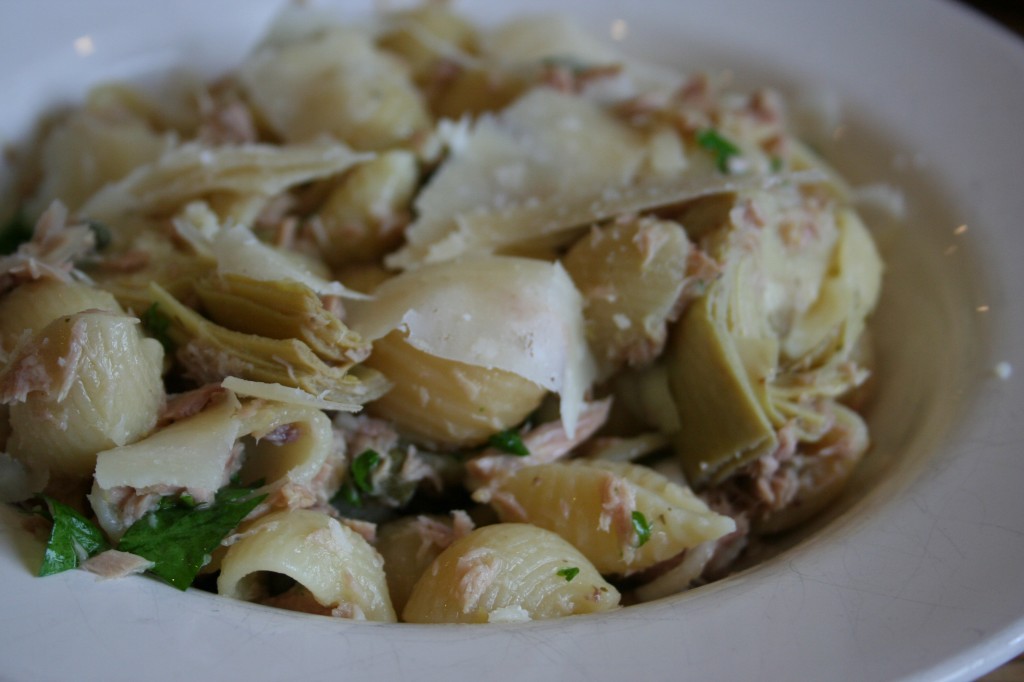
Pasta Shells with Lemon, Tuna and Artichokes

I had originally planned on making an autumn fish stew today, but with the sun splitting the stones, as they say here, for the past week, all thoughts of such wintry food went out the window. There will be plenty of time for that later. Considering that it rained almost every day of July and August, I’m going to enjoy every minute of this Indian summer for as long as it lasts, which means spending as much time playing outside with my poor pale kids as I can, instead of standing in front of the stove in the kitchen.

For anyone looking for something quick and easy to throw together after a long day at work or still easing their way into back-to-school routines, this is a no-cook dinner made up of kitchen cupboard staples that comes together in the time it takes to boil the pasta. It’s also the perfect recipe for hot days when you don’t want to turn on the oven or heat up the kitchen — or when you’re trying to hold onto the last few days of summer before making stews.

pasta shells with lemon, tuna and artichokes

Don’t forget, it’s National Organic Week in Ireland! Click here for a listing of events throughout the country.

Pasta Shells with Lemon, Tuna and Artichokes
adapted from Epicurious, August 1999

Serves 4

Looking around at other versions of this recipe, sun-dried tomatoes also seem to be a common addition.

1 lb (450 g) medium pasta shells (or other short pasta shape such as farfalle)
2 x 6‑oz (170‑g) cans tuna in olive oil, any bigger pieces broken into bite-sized chunks
1 x 6‑oz (170‑g) jar artichoke hearts, roughly chopped; reserve the oil they come in
6 green onions, finely chopped
1/2 cup pitted and chopped Kalamata olives
1/4 cup (60 ml) capers, drained
1/4 cup (60 ml) dry white wine (optional)
zest and juice of 1 lemon
1/2 cup (15 g) chopped fresh flat-leaf parsley
freshly grated Parmesan cheese, to serve

Bring a large pot of water to boil and cook the pasta according to the package instructions, until al dente. Meanwhile, mix all the other ingredients except the Parmesan in a large bowl. Add the oil that the artichoke hearts (and/or the tuna) came in to the bowl as well. (Or if you prefer, drain the tuna and artichokes and add 1/2 cup (120 ml) extra virgin olive oil instead.)

Drain the pasta, then add to the bowl and toss with the tuna mixture. Season to taste. Divide into 4 pasta bowls or plates. Grate Parmesan cheese over each bowl and serve.

Cream of Fresh Tomato Soup with Parmesan Toasts, Cape Cod Chopped Salad, and Honey Whole Wheat Pound Cake

It never fails — no sooner do I accept that summer is over and order a delivery of oil for the boiler, get the sweaters out of storage and think about swapping the summer-weight duvets for the winter ones than a spell of sunny, warm weather comes our way. I’m certainly not complaining about getting a break from the relentless rain we’ve had in Ireland for the third summer in a row, but it’s thrown me for a loop in planning out dinners for the week. I had already turned my thoughts to autumn casseroles and stews and Sunday roasts, but now I’m scrambling to make a few last salads and lighter meals while the good weather holds, or even clean off the grill to have one token barbecue this year.

This menu is the best of both worlds, perfect for this in-between time of year. If you’ve already had your fill of fresh tomato salads or pasta sauces and have canned enough to last you through the winter, this soup makes good use of the abundance of fresh tomatoes that are still available at this time of year. Keep it light but still seasonal by serving it with this salad, with its nod towards autumn in the apples and maple syrup. The honey whole wheat pound cake works perfectly to round off this late summer/early autumn dinner, especially if you dress it up with something like a cinnamon or maple ice cream.

It’s National Organic Week in Ireland! Click here for a listing of events throughout the country.

Cream of Fresh Tomato Soup with Parmesan Toasts
adapted from Barefoot Contessa Back to Basics by Ina Garten

Serves 5 to 6

3 tablespoons good olive oil
2 red onions, chopped
2 carrots, chopped
3 cloves garlic, minced
4 lb (1.8 kg) vine-ripened tomatoes, coarsely chopped
1 1/2 teaspoons sugar
1 tablespoon tomato paste
1/4 cup (10 g) packed chopped fresh basil leaves
3 cups (720 ml) chicken or vegetable stock
1 tablespoon kosher salt
2 teaspoons freshly ground black pepper
1/2 cup (120 ml) heavy cream
julienned fresh basil leaves, for garnish
Parmesan toasts, to serve (or croutons)

Heat the olive oil heat in a large, heavy-bottomed pot over a medium-low heat. Add the onions and carrots and sauté for about 10 minutes, until very tender. Add the garlic and cook for 1 minute. Add the tomatoes, sugar, tomato paste, basil, stock, salt, and pepper and stir well. Bring the soup to a boil, lower the heat and simmer, uncovered, for 30 to 40 minutes, until the tomatoes are very tender.

Add the cream to the soup and blend with a hand-held blender until smooth (or transfer to a blender or food processor and blend in batches). Reheat the soup over a low heat just until hot. Serve with julienned basil leaves scattered on top and Parmesan toasts or croutons.

Parmesan Toasts

1 French baguette
good olive oil
salt and freshly ground black pepper
freshly grated Parmesan cheese (grated on a box grater)

Preheat the oven to 400°F (200°C).

Slice the baguette diagonally into 1/4‑inch-thick slices. Make as many slices as you like to serve with the soup.

Place the slices on a sheet pan lined with parchment paper. Brush with olive oil and sprinkle with salt and pepper. Sprinkle a thick layer of grated Parmesan on the toasts and bake for 5 to 10 minutes, until the toasts are lightly browned. Allow to cool to room temperature. The toasts can be made a few hours in advance and crisped for a few minutes in a warm oven.

***

Cape Cod Chopped Salad
adapted from Barefoot Contessa Back to Basics by Ina Garten

Serves 4 as a starter or 2 as a main course with soup

for the salad:
8 oz (225 g) thick-cut bacon
8 oz (225 g) baby arugula (or spinach)
1 large Granny Smith apple, peeled and diced
1/2 cup (50 g) toasted walnut halves, coarsely chopped
1/2 cup (80 g) dried cranberries (or raisins)
6 oz (170 g) blue cheese, such as Roquefort, crumbled

for the dressing:
3 tablespoons apple cider vinegar
1 teaspoon grated orange zest
2 tablespoons freshly squeezed orange juice
2 1/2 teaspoons Dijon mustard
2 tablespoons pure maple syrup
salt and freshly ground black pepper
2/3 cup (160 ml) good-quality olive oil

Preheat the oven to 400°F (200°C).

Place a baking rack on a sheet pan and lay the bacon slices on the rack. Roast the bacon for about 20 minutes, until nicely browned. Allow to cool, then chop into bite-sized pieces.

In a large bowl, toss together the arugula, apple, walnuts, cranberries, and blue cheese. Add the chopped bacon to the salad.

For the dressing, whisk together the vinegar, orange zest and juice, mustard, maple syrup, salt and pepper in a bowl or shake to combine in a screw-top jar. Slowly whisk in the olive oil (or shake to combine in a screw-top jar).

Toss the salad with just enough dressing to moisten. Sprinkle with 1/2 teaspoon salt and toss well. Serve immediately.

***
honey whole wheat pound cake

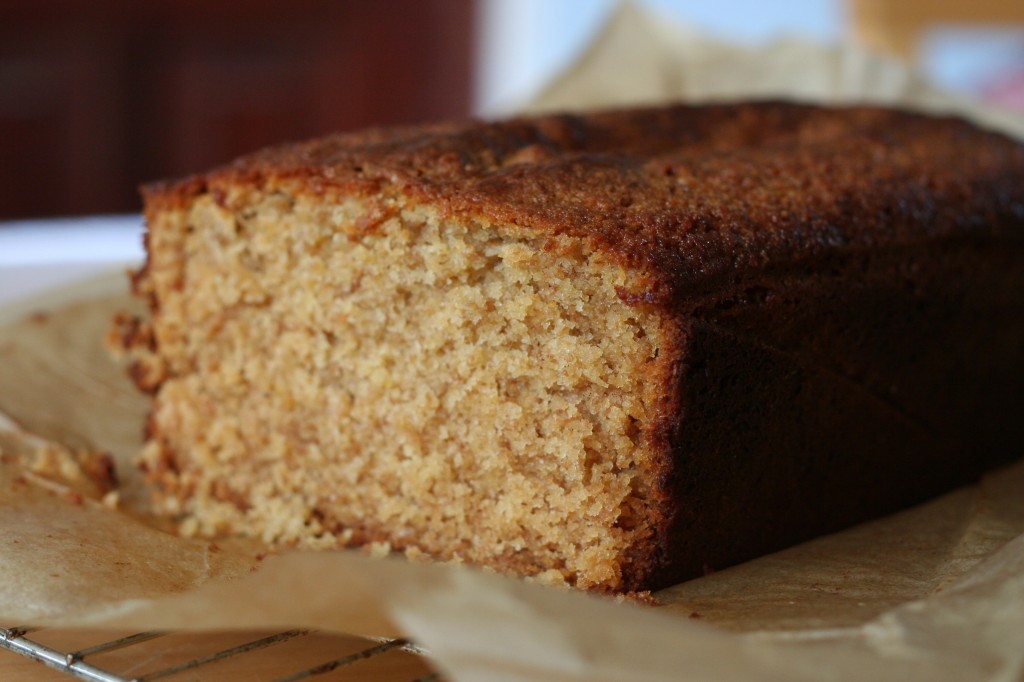
Honey Whole Wheat Pound Cake
adapted from Joy the Baker

Makes 1 loaf cake

The original recipe calls for 2 1/4 cups white whole wheat flour or whole wheat pastry flour. I can’t get either of those in my supermarket, so I used a combination of white and wholemeal flours instead. I had also just been looking at the Barefoot Contessa’s recipe for honey vanilla pound cake, which is similar to this but with lemon zest too, so I added it in here and it worked well.

1 cup (120 g) white flour
1 1/4 cup (200 g) wholemeal flour
2 teaspoons baking powder
3/4 teaspoon salt
1 1/2 sticks (170 g) butter, softened
1 cup (200 g) sugar
1/2 cup (120 ml) honey
2 teaspoons vanilla extract
zest of 1 lemon
3 large eggs
1 cup (240 ml) buttermilk (shake it well first)

Preheat the oven to 350°F (180°C). Butter and flour a 9 x 5‑inch loaf pan.

Sift the flours, baking powder and salt together in a small bowl and set aside.

Cream the butter, sugar and honey together until light and fluffy, about 3 to 4 minutes. Add the vanilla extract and lemon zest. Add the eggs one at a time, beating for about 1 minute after each addition. Scrape down the sides of the bowl as needed.

Add the dry mixture and buttermilk in three additions, beginning and ending with the dry ingredients. Scrape the bottom of the bowl with a spatula to make sure everything is evenly incorporated.

Pour the batter into the prepared loaf pan. Smooth the top and bake the cake for 50 to 60 minutes, until the cake is a lovely golden brown and a tester inserted into the center of the cake comes out clean.

Let the cake cool in the pan for 20 minutes before transferring to a wire rack to cool completely.
New York Times Chocolate Chip Cookies

We have a fellow expat friend who throws a big 4th of July barbecue every year. There’s a group of expat regulars who go most years, from Illinois, Kansas, Maine, Michigan and New Hampshire, and I always get a kick out of how we all end up in Chris’s back yard in County Meath, so far from where any of us call home. Anyway, Matt took it upon himself the first year we went to make a batch of chocolate chip cookies from his favorite childhood Betty Crocker recipe to bring with us. While I wouldn’t say that I turn to that old American stand-by for inspiration these days, it’s a perfectly good cookie recipe, good enough to earn us the nickname the Cookie Couple ever after. We bring a double batch every year and they’re always eaten up or hoarded within minutes of being set out. I’m told there were some disappointed barbecue regulars the year we couldn’t go when my daughter was born on the 4th of July.

This year, the barbecue was pushed back to Labor Day since our friends were back in the US for the 4th, and instead of dusting off Matt’s old recipe again, I decided to make the consummate chocolate chip cookie from The New York Times that was published last July. I made the dough on Thursday afternoon so that it would have 36 hours to rest before I baked the cookies on Saturday morning. Resting the dough apparently allows it to fully soak up all the liquid from the eggs, resulting in a drier, firmer dough that bakes to a better consistency, and gives the cookie “bass notes of caramel and hints of toffee” (who knew cookies had bass notes?). The real genius touch, though, is Dorie Greenspan’s addition of a sprinkle of fleur de sel on top (though I prefer the bigger flakes of Maldon sea salt). They’ve been blogged about all over the place, and I certainly won’t be saying anything new when I tell you it really is a damn good cookie. As the NYT itself says, “Doubt it? There’s only one way to find out.”

The New York Times Consummate Chocolate Chip Cookies
adapted from The New York Times

Makes about 24 cookies

I’ve only ever made these using plain flour (instead of cake flour and bread flour) and they turn out just fine. I’m sure the chocolate disks they talk about in the article are fabulous, but I just use plain old milk chocolate chips and the cookies are still good. I like to freeze some of the dough (see note below) to bake some cookies another time. Nothing makes you feel like a domestic goddess like having a stash of frozen homemade cookies in the freezer.

2 cups minus 2 tablespoons (240 g) cake flour (or all-purpose)
1 2/3 cups (240 g) bread flour (or all-purpose)
1 1/4 teaspoons baking soda
1 1/2 teaspoons baking powder
1 1/2 teaspoons coarse salt, such as kosher
2 1/2 sticks (280 g) unsalted butter, softened
1 1/4 cups (210 g) light brown sugar
1 cup plus 2 tablespoons (225 g) granulated sugar
2 large eggs
2 teaspoons natural vanilla extract
1 1/4 lb (570 g) bittersweet chocolate disks or fèves, at least 60% cacao content (or your regular brand of chocolate chips)
sea salt, such as Maldon or fleur de sel

Sift the flours, baking soda, baking powder and salt in a bowl. Set aside.

Using a mixer fitted with a paddle attachment, cream the butter and sugars together until very light, about 5 minutes. Add the eggs, one at a time, mixing well after each addition. Stir in the vanilla. Reduce the speed to low, add the dry ingredients and mix until just combined, 5 to 10 seconds, being careful not to overmix. Drop the chocolate pieces in and incorporate them without breaking them. Press plastic wrap directly against the dough and refrigerate for 24 to 36 hours. The dough may be used in batches, and can be refrigerated for up to 72 hours.

When ready to bake, preheat the oven to 350°F (180°C). Line two baking sheets with parchment paper or a nonstick baking mat. Set aside.

Scoop 4 x 3 oz (75 g) mounds of dough (the size of generous golf balls) onto each baking sheet. Sprinkle lightly with sea salt and bake until golden brown but still soft, 15 to 20 minutes (you don’t want to overcook them and make them hard). Allow the cookies to cool on the baking sheet for 10 minutes, then slip the the cookies onto a wire rack to cool a bit more. Repeat with the remaining dough, or reserve some dough, refrigerated, for baking remaining batches the next day.  (Note: I have also successfully frozen the dough by rolling it into the 3 1/2 oz (100 g) portions specified here, then tightly wrapping each ball individually in cling film and popping them into the freezer. This way you can take out as many as you’d like to bake another day. When you want to bake them, set the oven to the same temperature, but just cook them for a couple more minutes.)

Chipotle Lime Chicken Salad Wraps with Potatoes and Avocado and Mexican Red Rice

When Kelly and I decided to start this blog earlier this summer, we weren’t sure what the copyright implications of sharing recipes online might be. I’ve been reading cooking blogs for years and had always wondered about it, never for a minute believing that all the bloggers out there were writing off to Gourmet or Ina Garten’s publisher to formally ask permission to use their recipes. But when it came time to start my own blog, would I lie awake at night like the Amateur Gourmet, fretting that the Barefoot Contessa would bring the full weight of the law down on me for posting her lemon fusilli recipe?

We set our minds at rest after reading the US Copyright Office guidelines and this Washington Post article, but what about adapting a recipe to the point where you can call it your own? Where do you cross the line from having to acknowledge the source to you being the source? Take these chicken salad wraps, for example. I was looking through my Mexican Everyday cookbook and saw Rick Bayless’s recipe for Chipotle Chicken Salad Tacos with Avocado, Red-Skin Potatoes and Romaine. I liked the sound of most of it, but decided to ditch his vinaigrette with oregano for a dressing of mayo, chipotle, lime and cilantro instead. I also used flour tortillas instead of corn, turning these into wraps instead of tacos. I played around with the quantities specified in the ingredients list and pretty much wrote the instructions from scratch too. Is all that enough to call this recipe my own? Or should I stick with the guidelines issued by the International Association of Culinary Professionals and use the words “adapted from,” “based on” or “inspired by?” In the interests of sleeping soundly, “inspired by” sounds good to me.
Chipotle Lime Chicken Salad Wraps with Potatoes and Avocado
inspired by Mexican Everyday by Rick Bayless

Makes 8 wraps

for the wraps:
2 large potatoes or 6 small new potatoes
8 large flour tortilla wraps
3 handfuls sliced romaine leaves, sliced 1/4 inch across
1/2 red onion, finely chopped and deflamed (optional)
2 ripe avocados, cut into 1/4‑inch cubes

for the chipotle lime chicken salad:
1 tablespoon minced canned chipotle chillies (or 1 teaspoon dried chipotle chillies, available from Seasoned Pioneers, or a few dashes of chipotle Tabasco, to taste)
juice of 2 limes (you could add the zest too if you want an even stronger lime flavor)
1 cup (30 g) cilantro, chopped
1 cup (240 ml) mayo
4 chicken breasts, poached and coarsely shredded (or about 3 cups of any shredded chicken, such as leftover roast chicken)
salt and freshly ground black pepper

Cook the potatoes in boiling salted water until fork tender, about 7 to 10 minutes, depending on their size. Drain and allow to cool, then cut into 1/4‑inch cubes.

To make the chipotle lime chicken salad, add the chipotle chillies, lime juice (and zest, if using) and cilantro to the mayonnaise, stirring well to combine. Add the shredded chicken to the chipotle lime mayo, mixing well to make sure all the chicken is coated with mayo. Season to taste with salt and pepper.

To assemble, spread some of the chicken salad on a tortilla, then top with potatoes, lettuce, onions and avocado. Roll up tightly and cut in half on the diagonal. Repeat with the remaining wraps.

***

Mexican Red Rice
from Mexican Everyday by Rick Bayless

Serves 6 to 8

Rick Bayless also gives a few riffs on this dish: halved garlic cloves, chopped red, white or green onion and sliced mushrooms can be sautéed along with the raw rice. Cubed peeled carrots, parsnips, butternut squash, even Jerusalem artichokes or kohlrabi can go in with the salsa. Chopped snow peas or green beans can replace the peas. Or boost the flavor with a roasted poblano pepper, fresh corn kernels and a handful of chopped cilantro, arugula or watercress leaves, all added along with the peas.

1 1/2 tablespoons vegetable or olive oil
1 1/2 cups (270 g) white rice
1 cup (240 ml) good-quality tomato salsa
1 cup (240 ml) chicken or vegetable broth
1/2 teaspoon salt
1 1/2 cups (210 g) frozen peas

Preheat the oven to 350°F (180°C).

Set a medium ovenproof saucepan or casserole dish over a medium heat. Add the oil and rice. Stir frequently until the grains of rice turn from translucent to milky-white, about 5 minutes – don’t worry if some of them brown. Add the salsa, broth and salt. Stir a couple of times, then let the mixture come to a full boil.

Cover the pan and set in the middle of the oven. Bake for 20 minutes. Uncover, add the peas and re-cover. Bake for 5 minutes longer, then remove from the oven and let stand for 5 minutes. Fluff the rice, releasing the steam and mixing in the peas.

Gnocchi with Tomato, Spinach and Ricotta and Brandied Plum Cake

One of the great things about cooking is that the more you do it, the easier and faster it gets. (Though I’ve also become my own worst enemy in that regard — I do almost all the cooking, even on weekends when I could otherwise have a break from it, because I’m so much faster at it than my husband.) When you know that you can pull together a dinner in the time it takes for water to boil and some pasta to cook, or that you can cook some fresh fish in less than 10 minutes, frozen pizzas start to lose their appeal.

But even though I love to cook, there are plenty of days too when I don’t have the energy or am pressed for time to get something on the table for two hungry little kids. And as much as I prefer to cook from fresh, unprocessed ingredients, there are certainly worse convenience foods to have in your pantry than a jar of pasta sauce and a packet of potato gnocchi. Store-bought potato gnocchi cooks in 2 or 3 minutes, making it the ultimate fast food, plus a nice change from pasta. Check out all the quick and easy recipes for gnocchi from the UK’s Olive magazine for more inspiration.

If you like the sound of brandied plums but don’t have time for the cake, just make the plums on their own, which takes only 10 minutes. Serve them with vanilla ice cream, with the syrup drizzled over — no one will complain about not having them in a cake.

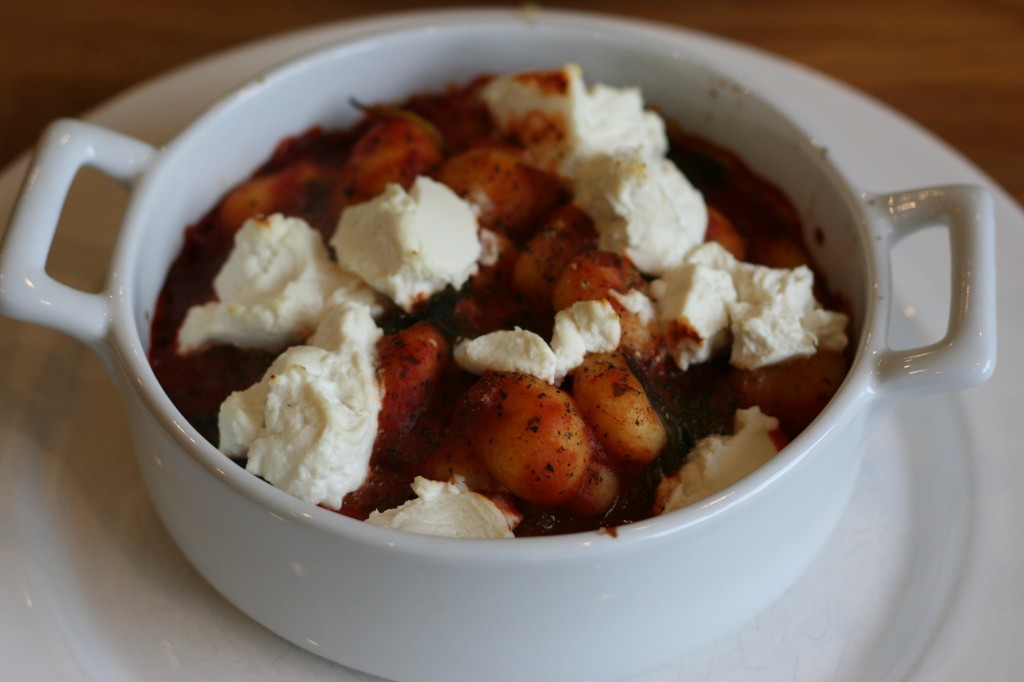
IMG_9243

Gnocchi with Tomato, Spinach and Ricotta
adapted from Olive, November 2005

Serves 6

You could vary this recipe by using your favorite pasta shape instead of gnocchi, and stirring 1 tub of ricotta cheese directly into the sauce along with the spinach to make it nice and creamy. Do I even have to say that bacon would be good in this too?

2 x 18-oz (500‑g) packs store-bought potato gnocchi
2 x 14-oz (400‑g) good-quality jars of tomato sauce
7 oz (200 g) baby spinach, washed
2 x 9‑oz (250‑g) tubs of ricotta cheese
a handful of freshly grated Parmesan, to serve

Preheat the oven to 400°F (200°C). Cook the gnocchi according to packet instructions and drain. Meanwhile, heat the tomato sauce, add the spinach and stir until wilted. Put the gnocchi in a lightly oiled ovenproof dish, pour the sauce over and dot with blobs of ricotta. Scatter the grated Parmesan over and pop into the hot oven until bubbling and golden, about 10 minutes.

***

Brandied Plum Cake
inspired by The Kitchen Diaries by Nigel Slater

Serves 12

This cake is very moist, so it doesn’t really need the brandy syrup drizzled over it at the end, though it’s a nice touch. Instead, you might like to save it in the fridge to drizzle over vanilla ice cream another time. If you have any leftover plums that won’t fit on top of the cake, save them to have with yogurt for breakfast.

for the brandied plums:
3 tablespoons sugar
2 tablespoons brandy
1/4 teaspoon cinnamon
16 ripe plums, stoned and quartered

for the cake:
3/4 cup (160 g) butter
3/4 cup (150 g) sugar
3 large eggs
3/4 cup (90 g) all-purpose flour
1 1/2 teaspoons baking powder
1 cup (100 g) ground almonds
1/2 cup (50 g) walnuts, finely chopped

Preheat the oven to 350°F (180°C). Grease a 9‑inch springform pan and line the base with a piece of parchment paper.

To make the brandied plums, combine the sugar, brandy and cinnamon in a frying pan. Cook over a high heat, stirring often, until the sugar dissolves. Reduce the heat, add the plums and cook until they are soft but still hold their shape, about 5 minutes. Transfer the plums to a bowl with a slotted spoon and set aside. Reserve the brandy syrup left behind from the plums.

Beat the butter and sugar until pale and fluffy. Add the eggs one at a time to the butter and sugar. Sift the flour and baking powder together and fold them gently into the mixture with a spatula. Fold in the ground almonds and chopped walnuts.

Scrape the mixture into the lined springform pan. Place the quartered plums on top of the cake mixture (they will sink into the cake as it bakes). Bake for 40 to 45 minutes, until a cake tester comes out clean. If you think the top of the cake is browning too much, cover it with tin foil. Remove the cake from the oven and leave to cool in the pan for 15 minutes before releasing the sides of the pan. Serve with some of the reserved syrup spooned over the top of each slice.

Spaghetti alla Genovese and Lemon Blueberry Buckle

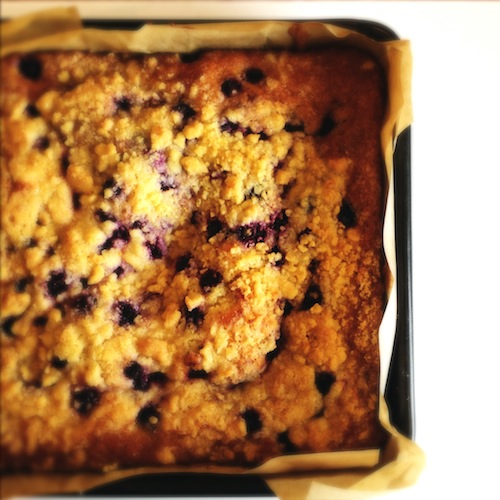
How can you resist an article with a title like “Gourmet’s Guide to Cobblers, Crisps, Crumbles, Bettys, Buckles + Pandowdies”, if only to find out what in the world a pandowdy is? (For the record, it’s sliced fruit baked with sugar and spices in a deep dish, with a thick top crust.) It’s just too bad they didn’t include grunts and slumps in the article title to really round things out. The article included a link to a recipe for lemon blueberry buckle, which sounded like something nice to make while there’s still some blueberries left. But “nice” doesn’t do this recipe justice. And don’t let its humble, coffee cake-like appearance fool you either. It wound up being the best thing I baked all summer. It was so good that as soon as I finished my first piece, I went online to see what I could find out about the book the recipe comes from, Rustic Fruit Desserts. Once I had a look at the index on Amazon, I was sold — apple cobbler with cheddar cheese biscuits, cherry almond bars, fig and honey cream galette, pear sauce bundt cake with pear brandy butter … oh my. I might even have bought it just for the brown sugar rum glaze alone. Hurry and make this buckle while you still can with in-season blueberries — then see if you aren’t tempted to buy the book too.

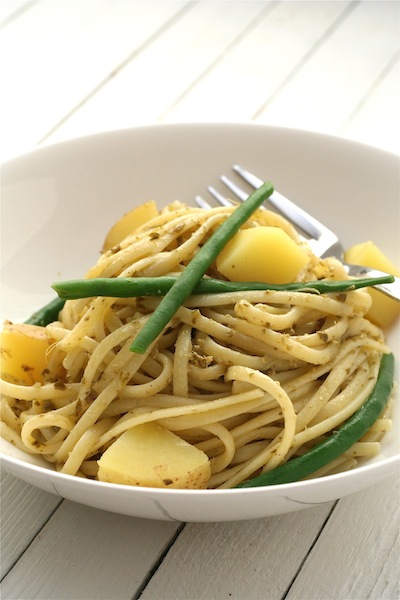
Spaghetti alla Genovese
adapted from Avoca Café Cookbook 2

Serves 4

4 small new potatoes, peeled and cut into thin slices
8 oz (225 g) green beans, ends trimmed
1 lb (450 g) spaghetti (or fettuccine or linguine)
3 or 4 tablespoons pesto (or more, to taste)
salt and freshly ground black pepper
freshly shaved Parmesan, to serve

Blanch the peeled, sliced potatoes in boiling salted water for 5 minutes, or until cooked. Refresh in cold water and set aside.

Cook the trimmed green beans in boiling salted water until tender but still al dente. Drain and set aside.

Cook the pasta in boiling salted water until al dente. Drain, reserving a cupful of the cooking water. Toss the pasta with the potatoes, green beans and pesto. Taste and adjust with more pesto if needed, and thin the sauce with some of the cooking water if you think it needs it. Season to taste with salt and pepper. Serve immediately with thick shavings of Parmesan scattered on top.

***

Lemon Blueberry Buckle
from Rustic Fruit Desserts: Crumbles, Buckles, Cobblers, Pandowdies, and More by Cory Schreiber and Julie Richardson

Serves 6 to 8

Covered in cling film, the buckle will keep at room temperature for 2 to 3 days (though in my house it was all eaten up in less than 24 hours).

for the crumb topping:
1/2 cup (60 g) all-purpose flour
1/3 cup (75 g) granulated sugar
1/8 teaspoon fine sea salt
zest of 1 lemon
1/4 cup (60 g) unsalted butter, at room temperature, cubed

for the cake:
1 1/2 cups (180 g) plus 2 tablespoons all-purpose flour
1 teaspoon baking powder
1/4 teaspoon baking soda
1/2 teaspoon fine sea salt
1/4 teaspoon freshly grated nutmeg (or a pinch of dried nutmeg)
6 tablespoons (90 g) unsalted butter, at room temperature
3/4 cup (150 g) granulated sugar
zest of 1 lemon
2 eggs
1/2 cup (120 ml) buttermilk
2 cups (320 g) blueberries, fresh or frozen

for the lemon syrup:
1/3 cup (75 g) granulated sugar
juice of 2 lemons

Preheat the oven to 350°F (180°C). Butter a 9‑inch-square baking pan.

To make the crumb topping, mix the flour, sugar, salt, and lemon zest together in a bowl, then add the butter and use a fork or your fingers to cut in the butter until the size of peas. Place the topping in the freezer until you mix the cake batter.

To make the cake, whisk the flour, baking powder, baking soda, salt, and nutmeg together in a bowl. Using a handheld mixer with beaters or a stand mixer with the paddle attachment, cream the butter, sugar, and lemon zest together on medium-high speed for 3 to 5 minutes, until light and fluffy. Add the eggs one at a time, scraping down the sides of the bowl after each addition. Sir in the flour mixture in 3 additions alternating with the buttermilk in 2 additions, beginning and ending with the dry ingredients and scraping down the sides of the bowl occasionally. Gently fold in half the blueberries, spread the batter into the prepared pan, and distribute the remaining blueberries over the cake.

Sprinkle the chilled crumb topping over the berries, then bake for 45 to 50 minutes, or until lightly golden and firm on top.

To make the glaze, combine the sugar and lemon juice in a small saucepan and whisk until blended. Cook over a medium-low heat, stirring occasionally, for 8 to 10 minutes, until syrupy. The glaze will bubble while cooking, so you may need to remove it from the heat to check that it’s thick enough.

Pour the glaze over the cake as soon as it’s removed from the oven. Reheat the syrup briefly if it has become too thick to pour.

Baked Chicken with Eggplant, Zucchini and Tomato Ragout

Gordon Ramsay is a lot like Marmite — you either love him or you hate him. When I mentioned to a friend last week that I was making some of his recipes, her first response was that she can’t abide the man. I’ll admit that Matt and I did get briefly hooked on Hell’s Kitchen last summer halfway through the series, but in general I’m with my friend — he does seem unnecessarily mean and over the top to me (though I suppose that all makes for good reality TV). I’d have to agree with Tom Doorley when he says “there is more commendable zeal in Jamie [Oliver’s] little finger than in all of Gordon’s much larger frame.” All that being said, when Matt came home one day with a surprise present of the Gordon Ramsay’s Fast Food cookbook, I wasn’t about to turn it down.
Baked Chicken with Eggplant, Zucchini and Tomato Ragout
adapted from Gordon Ramsay’s Fast Food by Gordon Ramsay

Serves 8

Chicken breasts are quickly seared, then baked on top of Mediterranean vegetables for a great one-pot dish. For convenience, you can make the ragout well in advance, but for best results, bake the chicken breasts just before serving.

5 tablespoons olive oil, plus extra to oil the casserole dish
8 large skinless chicken breasts
sea salt and freshly ground black pepper
1 large onion, roughly chopped
4 cloves garlic, chopped
2 medium eggplants, chopped
a handful of thyme sprigs (or 1 teaspoon dried)
a handful of rosemary sprigs (or 1 teaspoon dried)
4 small zucchini, chopped
1 glass of dry white wine
8 plum tomatoes, peeled, deseeded and chopped, or 1 x 14-oz (400‑g) can of chopped tomatoes
pasta, rice or crusty bread, to serve

Preheat the oven to 375°F (190°C). Heat a large heavy-based frying pan and add 3 tablespoons of the olive oil. Season the chicken with salt and pepper.

Sear the chicken breasts in batches: cook skin-side down for 3 to 4 minutes, until golden brown, then turn over and cook the other side for 2 to 3 minutes. Transfer to a plate.

Add the remaining oil to the pan and tip in the onion, garlic, eggplant and a few thyme and rosemary sprigs (or the dried herbs). Cook for 5 to 7 minutes, stirring occasionally, until the onions are soft and translucent and the eggplant are starting to soften. Season generously with salt and pepper.

Add the zucchini, then pour in the wine and simmer until it has reduced by half. In the meantime, put an oiled large roasting pan in the oven to warm up.

Stir the tomatoes through the vegetables, then tip everything into the roasting pan. Place the seared chicken breasts on top and scatter over some more herb sprigs. Bake in the oven for 5 to 10 minutes, depending on the thickness of the chicken, until firm and cooked through.

Rest for 5 minutes before serving on warm plates, either spooned on top of pasta or rice or with crusty bread on the side.

Fusilli with Zucchini, Tomatoes and Bacon and Oatmeal Chocolate Chip Cookies

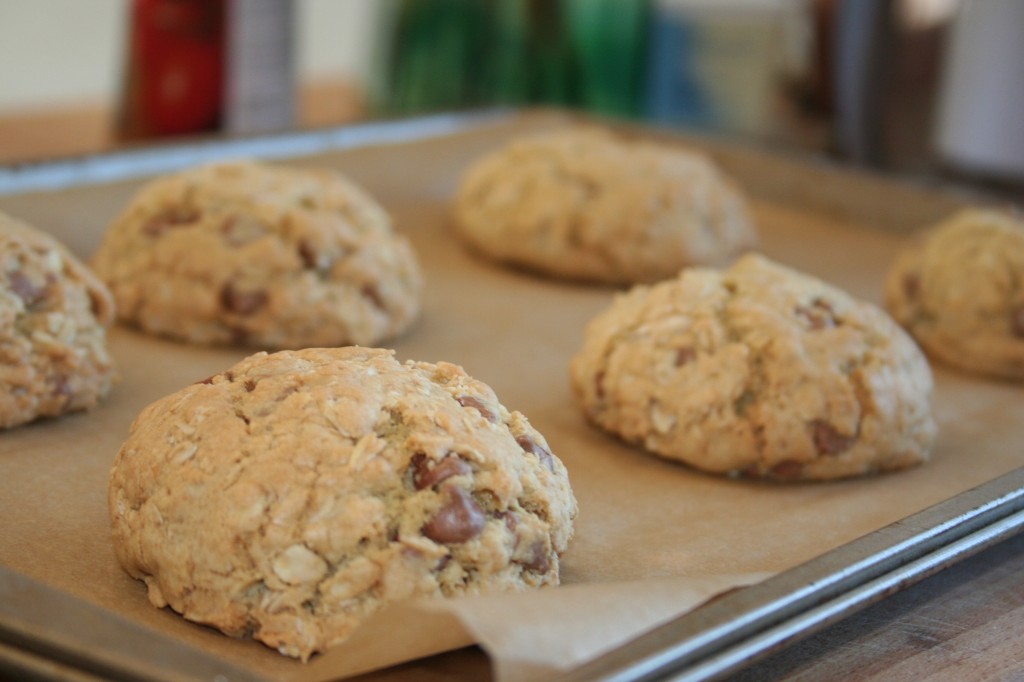
When I would come home from school growing up, the first thing that would greet me as I walked in the door was the smell of something good cooking. My own daughter starts school today, and I couldn’t let the day pass without a homemade treat. What could be better for her first day of school than milk and cookies? And a big, warm, fresh-from-the-oven oatmeal chocolate chip cookie at that. This is my absolute, hands down, all-time favorite cookie recipe. Using a 1/4 cup measuring cup to scoop out the dough is key, though — their generous size is part of what makes them so perfect. I love having one with a cup of tea or coffee, or even for breakfast (it has oatmeal in it, so it’s practically granola, right?), and I make a version of these for Christmas with white chocolate, pecans and dried cranberries too. And now I will love them even more, as I’ll always think of this now as the treat I made on such a special day for my not-so-little girl.

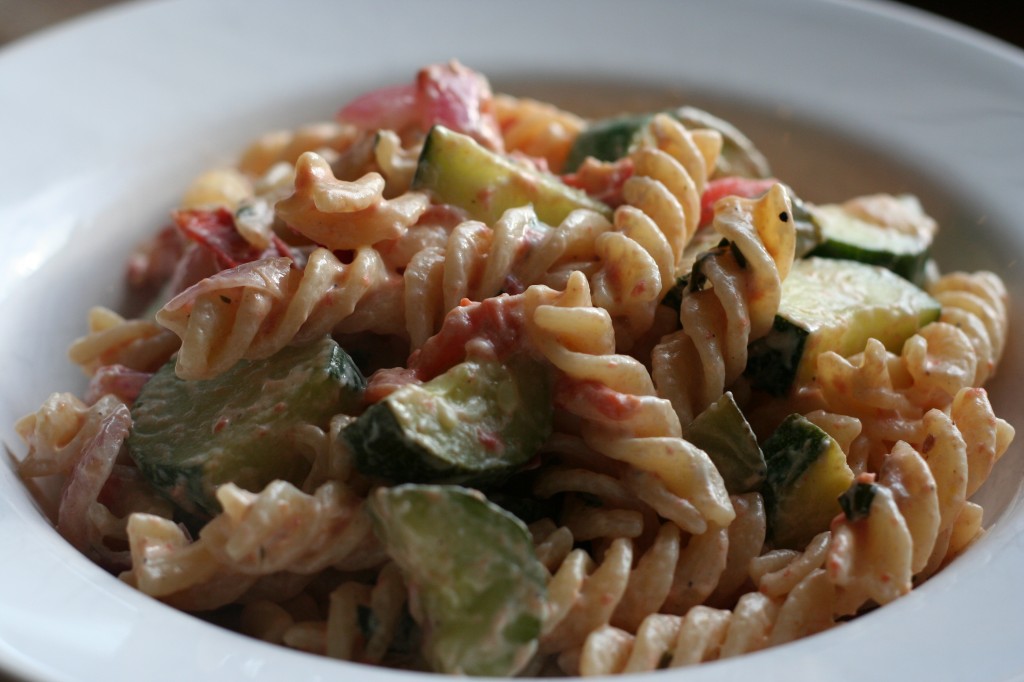
fusilli with zucchini, tomatoes and bacon

Fusilli with Zucchini, Tomatoes and Bacon 
adapted from Bon Appétit, September 2004

Serves 6

12 bacon slices, cut crosswise into 1‑inch pieces
1 large red onion, chopped
1 1/2 cups dry white wine
3 medium zucchini, halved lengthwise and sliced crosswise into 1/2‑inch-wide pieces
1 lb (450 g) fusilli (or gemelli or penne)
6 large ripe tomatoes, deseeded and coarsely chopped
1/2 cup (15 g) chopped fresh basil
1 cup (150 g) crumbled soft fresh goat’s cheese

Put a large pot of salted water on to boil. Cook the bacon in a heavy large skillet over a medium-high heat until brown and crisp. Using a slotted spoon, transfer to paper towels to drain. Pour off all but 1 tablespoon of the drippings from the skillet.

Add the onion and saute until soft, about 3 minutes. Add the wine and boil until it has reduced by one-third, about 3 minutes. Add the zucchini and saute until it’s crisp-tender, stirring occasionally, about 5 to 7 minutes.

Meanwhile, cook the pasta until al dente. Drain.

Add the chopped tomatoes and basil to the zucchini and onions and continue to saute on a medium heat while the pasta cooks, about 10 to 15 minutes.

Add the drained pasta to the zucchini and tomato mixture in the skillet (or if your skillet isn’t big enough to hold everything, put the drained pasta back in the pot you cooked it in and pour the vegetable mixture from the skillet into the larger pot). Toss over a medium-high heat until the sauce coats the pasta, about 3 minutes. Add the goat’s cheese and stir until it starts to melt, about 2 minutes more. Season to taste with salt and pepper and serve.

***

oatmeal chocolate chip cookies

Oatmeal Chocolate Chip Cookies
adapted from Orangette

Makes about 14 cookies

2 cups (240 g) unbleached all-purpose flour
1/2 teaspoon baking soda
1/2 teaspoon salt
3/4 cup (170 g) unsalted butter, melted and slightly cooled
1 cup (170 g) packed brown sugar
1/4 cup (50 g) granulated sugar
1 tablespoon vanilla extract
1 egg
1 egg yolk
1 1/2 cups (300 g) semi-sweet chocolate chips
1 1/2 cups (120 g) quick-cook oats or rolled oats

Preheat the oven to 325°F (160°C). Grease cookie sheets or line them with parchment paper or silicone baking mats.

Sift together the flour, baking soda, and salt and set aside. In a medium bowl, cream together the melted butter and brown and granulated sugars until well blended. Beat in the vanilla, egg, and egg yolk, mixing until light and creamy. Mix in the sifted ingredients, working until just blended. Stir in the chocolate chips and oats by hand, using a wooden spoon. Chill the dough in the refrigerator for 30 minutes to 1 hour. Use a table knife to scoop and press the dough into 1/4‑cup measuring scoops (0r roll 90 g of dough into a ball for one cookie), and plunk the mounds onto the prepared cookie sheets. Cookies should be 3 inches apart.

Bake the cookies for 15 to 20 minutes, or until the edges are lightly browned. Cool on baking sheets for a few minutes before transferring to wire racks to cool completely.