Tag Archives: Seafood

Salmon Provencal and Roast Herbed Potatoes with Balsamic Vinegar

I’ve been enjoying every minute of our Indian summer. On Tuesday, we spent the entire afternoon at the beach with some of my daughter’s new school friends, the first time we were able to play at the beach like that all summer. It was the kind of day I’ve been imagining having every summer since my daughter was one year old, but which I’ve never really been able to have because of the constant wet weather every summer since then — packing a big bag of toys and blankets and a picnic lunch, drinking tea and coffee with the other parents while the kids made a huge sand mountain, complete with a moat and driftwood for a bridge, and my baby playing happily in the sand at my feet. But as wonderful as it’s been to have an entire straight week of dry, sunny days (and with more still forecast!), the warmth has gone out of the air, I’ve started to turn on the heat in the mornings to take the chill off, and I know my summery meals — and the summer itself, such as it was — are finally coming to an end.
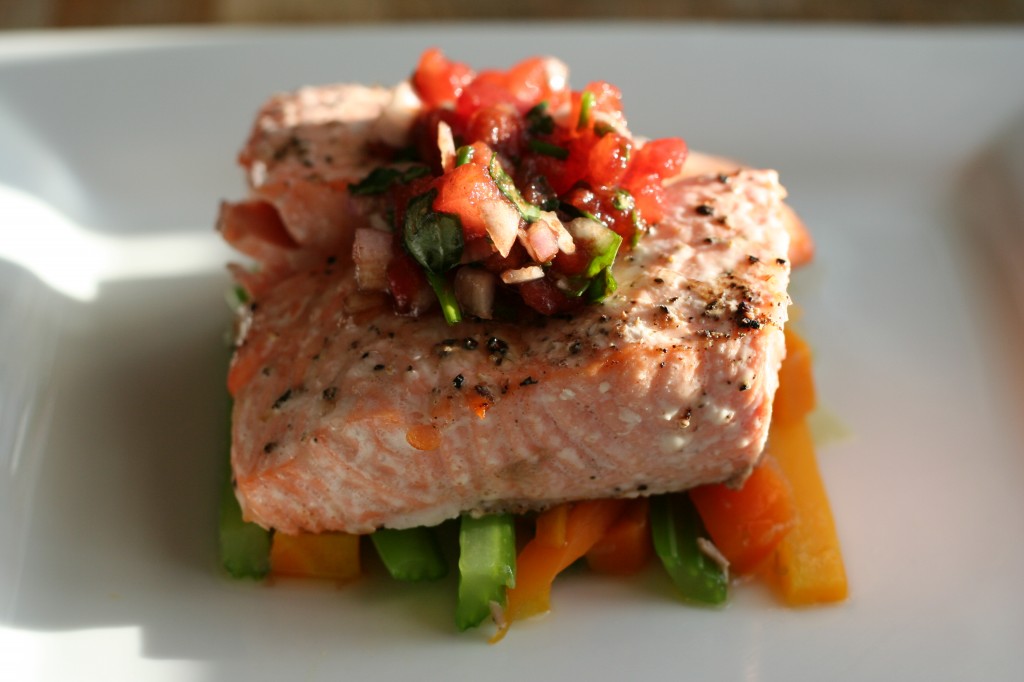
salmon provencal

It’s National Organic Week in Ireland! Click here for a listing of events throughout the country.

Salmon Provencal
adapted from Simply Recipes and Wolfgang Puck

Serves 4

4 ripe tomatoes, peeled, seeded, and chopped fine
3 shallots, minced
1 tablespoon chopped fresh tarragon
1 tablespoon chopped fresh basil
1 tablespoon chopped fresh chives
2 tablespoons olive oil
1 tablespoon balsamic vinegar or sherry vinegar
zest and juice of 1/2 lemon
salt and freshly ground black pepper
4 x 6‑oz (170‑g) salmon fillets
1 cup (240 ml) vegetable stock
2 carrots, julienned
1 leek, white part only, julienned
2 stalks celery, julienned

Preheat the oven to 400°F (200°C).

In a large bowl, combine the chopped tomatoes, shallots and fresh herbs. In another bowl, whisk together the oil, vinegar and lemon zest and juice (or shake to combine in a screw-top jar). Add to the tomato mixture and toss to coat. Season to taste with salt and pepper.

Arrange the salmon fillets on an oiled baking sheet without crowding. Drizzle with olive oil and season with salt and pepper. Bake until the salmon is barely cooked through and lightly browned on the edges, about 10 to 12 minutes.

Meanwhile, bring the vegetable stock to boil in a large saucepan. Add the julienned carrots, leek and celery and cook for 3 to 5 minutes, until tender but still crisp. Drain and set aside.

To serve, divide the julienned vegetables among 4 plates. Arrange the salmon fillets in the center of the vegetables and top each fillet with a couple tablespoons of the tomato mixture. Serve immediately.

***

Roast Herbed Potatoes with Balsamic Vinegar
adapted from Avoca Café Cookbook

Serves 6

1/4 cup (60 ml) olive oil
2 lb (900 g) new potatoes, halved (skin left on)
sea salt and freshly ground black pepper
1 head garlic, split into cloves but left unpeeled
1 tablespoon finely chopped fresh rosemary
1 tablespoon finely chopped fresh thyme
balsamic vinegar or good-quality red wine vinegar

Preheat the oven to 425°F (220°C).

Pour the olive oil into an ovenproof dish (one big enough to hold all the potatoes without overcrowding them) and put it into the oven to heat the oil. (Just don’t leave it in too long, or the oil will start to smoke. Five to 10 minutes is enough.)

Bring a pot of water to boil. Drop in the halved potatoes and parboil for 5 minutes only. Drain.

Remove the dish from the oven. Carefully add the potatoes to the hot oil, turning them to make sure they’re all coated in the oil. Season well with sea salt and freshly ground black pepper. Put into the oven to roast for 10 minutes. Add the garlic and half the herbs and continue to roast for a further 10 to 15 minutes, until the potatoes and garlic are tender. Remove from the oven. Allow to cool slightly, then sprinkle with the vinegar and remaining herbs. Check the seasoning and serve.
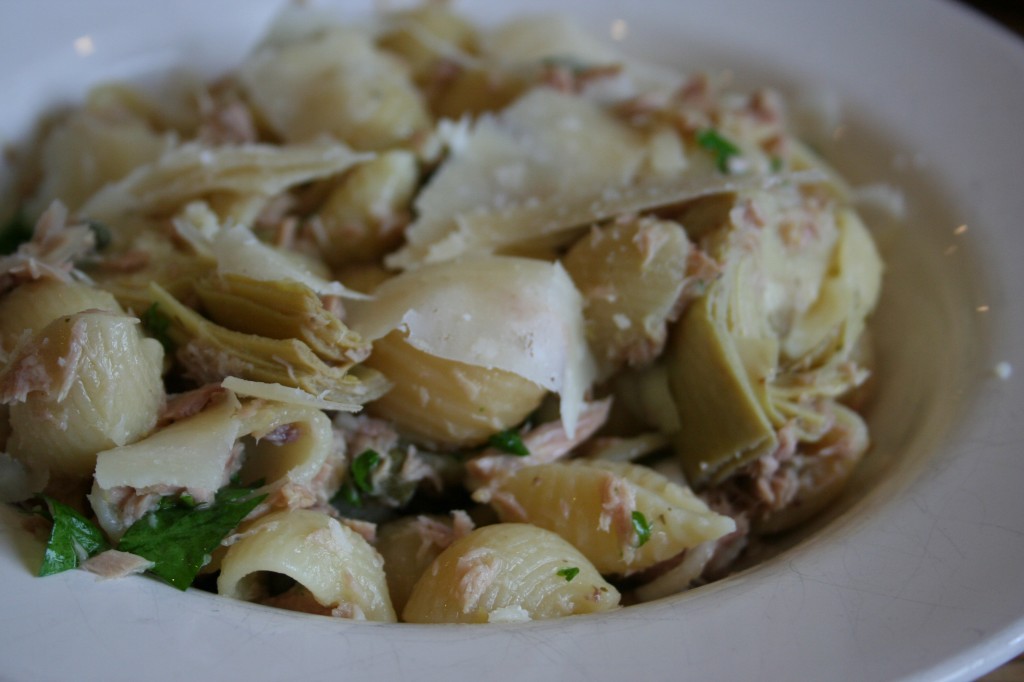
Pasta Shells with Lemon, Tuna and Artichokes

I had originally planned on making an autumn fish stew today, but with the sun splitting the stones, as they say here, for the past week, all thoughts of such wintry food went out the window. There will be plenty of time for that later. Considering that it rained almost every day of July and August, I’m going to enjoy every minute of this Indian summer for as long as it lasts, which means spending as much time playing outside with my poor pale kids as I can, instead of standing in front of the stove in the kitchen.

For anyone looking for something quick and easy to throw together after a long day at work or still easing their way into back-to-school routines, this is a no-cook dinner made up of kitchen cupboard staples that comes together in the time it takes to boil the pasta. It’s also the perfect recipe for hot days when you don’t want to turn on the oven or heat up the kitchen — or when you’re trying to hold onto the last few days of summer before making stews.

pasta shells with lemon, tuna and artichokes

Don’t forget, it’s National Organic Week in Ireland! Click here for a listing of events throughout the country.

Pasta Shells with Lemon, Tuna and Artichokes
adapted from Epicurious, August 1999

Serves 4

Looking around at other versions of this recipe, sun-dried tomatoes also seem to be a common addition.

1 lb (450 g) medium pasta shells (or other short pasta shape such as farfalle)
2 x 6‑oz (170‑g) cans tuna in olive oil, any bigger pieces broken into bite-sized chunks
1 x 6‑oz (170‑g) jar artichoke hearts, roughly chopped; reserve the oil they come in
6 green onions, finely chopped
1/2 cup pitted and chopped Kalamata olives
1/4 cup (60 ml) capers, drained
1/4 cup (60 ml) dry white wine (optional)
zest and juice of 1 lemon
1/2 cup (15 g) chopped fresh flat-leaf parsley
freshly grated Parmesan cheese, to serve

Bring a large pot of water to boil and cook the pasta according to the package instructions, until al dente. Meanwhile, mix all the other ingredients except the Parmesan in a large bowl. Add the oil that the artichoke hearts (and/or the tuna) came in to the bowl as well. (Or if you prefer, drain the tuna and artichokes and add 1/2 cup (120 ml) extra virgin olive oil instead.)

Drain the pasta, then add to the bowl and toss with the tuna mixture. Season to taste. Divide into 4 pasta bowls or plates. Grate Parmesan cheese over each bowl and serve.

Spicy Seafood Fettuccini and Mediterranean Pepper Salad

Happy Labor Day to our American readers! If you’re looking for a tasty salad to set out at today’s barbecue, I have the recipe for you. The Mediterranean Pepper Salad from today’s menu is easy to prepare and best yet, it can sit for hours or even overnight in your fridge while its flavors meld. This was a first-time recipe for me. I chose it because I had to use up three bell peppers. Three peppers is an odd amount — too many to use in a stir-fry or omelette and not enough for stuffed peppers. Smitten Kitchen came through with a perfect three-pepper preparation that I’m already craving again.

The seafood pasta recipe is from a cookbook my in-laws gave me for Hanukkah several years back. While typing up this recipe, I realized I never made any other recipe from the cookbook though there are plenty more that intrigue me. Be on the lookout for Gorgonzola Ravioli with Sweet Red Pepper Cream or Chicken Breast with Goat Cheese and Sun-dried Tomato Salsa in future posts.  Hmm, now I’ve made myself hungry.

Spicy Seafood Fettuccini
adapted from Pacifica Blue Plates by Neil Stuart

Serves 6

3 tablespoons olive oil
2 cloves garlic, minced
1/2 lb (225 g) firm fish, such as swordfish, skinned and cut into 1‑inch cubes
1/4 lb (110 g) bay scallops
18 medium to large shrimp, peeled and deveined
2 large red bell peppers, julienned
4 scallions, sliced thinly
1 teaspoon kosher salt
1/4 teaspoon cayenne pepper
1/2 teaspoon Spanish paprika
1/2 teaspoon dried thyme leaves
1/4 teaspoon freshly ground black pepper
1 large or 2 small tomatoes, diced
1/2 cup (120 ml) fish stock or water
6 tablespoons (90 g) butter
1 lb (450 g) fettuccine or other flat pasta, cooked and drained

Heat the olive oil in a skillet over moderate heat. Add the garlic and cook until fragrant, about 1 minute. Add the seafood and cook, stirring, for another minute. Add the red peppers, scallions and seasonings. Cook for 2 minutes and add the tomatoes, stock, and butter.

Increase the heat to high and cook until the sauce begins to thicken, about 3 more minutes. Serve over the fettuccine.

***

Pepper Salad

Mediterranean Pepper Salad
adapted from Smitten Kitchen

Serves 8

1/4 cup (60 ml) red wine vinegar
1/4 cup (60 ml) cold water
1 tablespoon kosher salt
2 teaspoons sugar
1/2 red onion, cut into a 1/2‑inch dice (use less if your onion is huge)
3 bell peppers, your choice of colors (I used 2 green and 1 purple)
1 cucumber, peeled, seeded and chopped
4 oz (110 g) firm feta cheese
4 oz (110 g) pitted Kalmata olives
6 to 8 oz (170 to 225 g) grape or cherry tomatoes, halved
1/4 cup (60 ml) olive oil
salt and freshly ground black pepper to taste

Swish together the red wine vinegar, water, kosher salt and sugar in a small bowl until the salt and sugar are dissolved. Add the red onion and set it aside.

Meanwhile, time to practice your knife skills. Core and seed your bell peppers and chop them into 1/2‑inch pieces. Chop the cucumber and feta into similarly sized chunks. Put your peppers, cucumber, feta, olives, and tomatoes in a large bowl.

By now, your onions will have lightly pickled, both sweetening and softening their blow. Drain them and add them to the other vegetables in the large bowl, but reserve the vinegar mixture. Pour a quarter cup of the vinegar mixture over the salad, then drizzle with olive oil. Season generously with salt and freshly ground black pepper, or to taste. Toss evenly and serve at once, or let the flavors muddle together in the fridge for a few hours.

Salmon Marinated in Lemon and Mint with Homemade Cucumber Pickle and Creamy Lemon and Herb Potato Salad

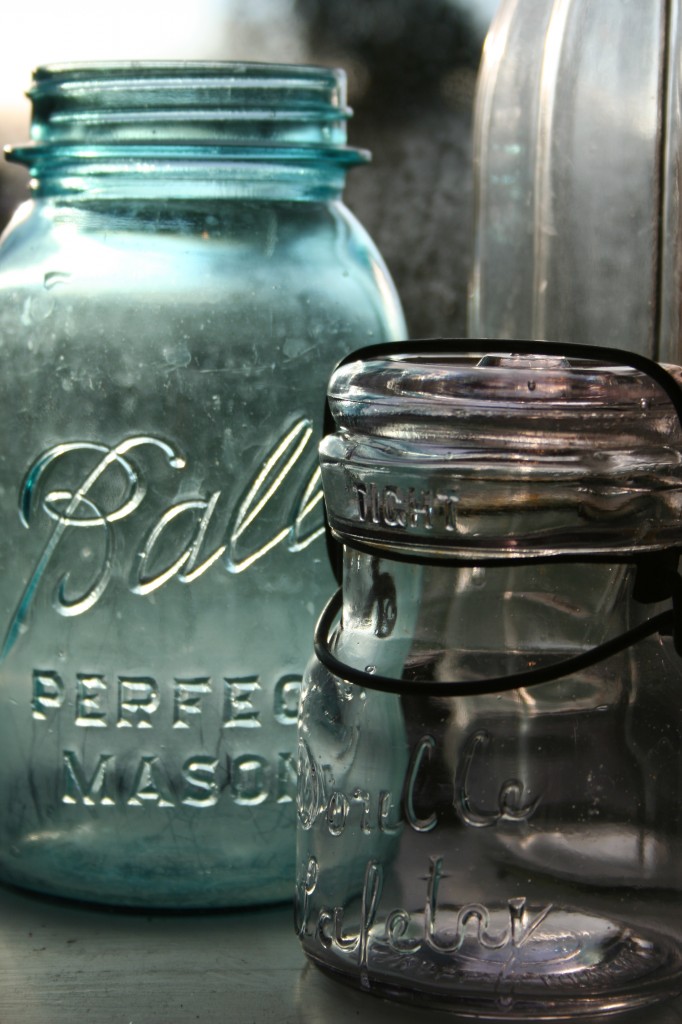
One of my best college memories is the summer I spent canning with my co-op housemate Rich. (What, you mean you didn’t spend your college summers putting up garden produce?) The house had a CSA subscription, our own small backyard garden plus a plot in a community garden, so there was a lot of produce to be had in the summer, even more than the 30 to 40 people who ate at the house every night could use up in a week. So on Sunday nights throughout that summer, armed with a battered copy of Stocking Up and Nina Simone playing on the radio, Rich and I would meet in the kitchen around 8 or 9 at night, when the heat of the day had eased a bit, and get to work, usually not finishing up till around midnight, when we would stand back and admire the finished row of jars cooling on the windowsill. These past few weeks I’ve been reading about the Canvolution in the US and remembering that summer, so when I saw that Clodagh McKenna suggested pairing a cucumber pickle with her salmon recipe, I took the opportunity to make a homemade batch. It’s not canning per se — you don’t need sterilized jars with preserving lids or hot water baths — but it’s a true pickle that will keep for weeks in the fridge. It only takes 10 minutes to make, so if you’ve never preserved food before, this is a quick and easy way to give it a try.
IMG_5398

If you’ve made jam and are giving some away as gifts or just want to dress up your own jars, check out this free download for some stylish labels you can print out.

Salmon Marinated in Lemon and Mint
adapted from Fresh from the Sea by Clodagh McKenna

Serves 4

4 x 7‑oz (200‑g) salmon fillets, skinned and deboned
juice of 2 lemons
4 mint sprigs, leaves roughly chopped
1 red chili, finely chopped (optional)
sea salt and freshly ground black pepper
2 tablespoons olive oil

Place the salmon fillets in a bowl and pour over the lemon juice, chopped mint and chili (if using) and season with salt and pepper. Mix well, cover and place in the fridge for 1 to 3 hours.

Place your griddle pan (or frying pan or barbecue) over a medium heat and add the olive oil. When the oil is hot, remove the salmon from the fridge and place it straight on the griddle. Cook for 3 to 5 minutes on each side.

***

Homemade Cucumber Pickle
from Rachel’s Favourite Food at Home by Rachel Allen

Makes about 4 x 14-oz (400‑g) jars

This is the recipe the famous Ballymaloe Cookery School in County Cork has been using for over 30 years. Make the perfect ploughman’s lunch by serving this with some brown bread, apples and a good mature Cheddar. Otherwise, this is good on burgers and all kinds of sandwiches, cold sliced meats and smoked fish, or barbecued or roasted meat and fish. If you have a food processor, using the slicing attachment will make short work of this recipe.

2 lb (900 g) unpeeled cucumber, thinly sliced (2 to 3 cucumbers)
3 small onions, peeled and thinly sliced (optional)
1 3/4 cups (350 g) sugar
1 tablespoon salt
1 cup (240 ml) cider vinegar or white wine vinegar

Mix the cucumber and onion in a large bowl. Add the sugar, salt and vinegar and mix well to combine. Make at least 1 hour ahead if possible, and store in a jar or bowl in the fridge.

***

Creamy Lemon and Herb Potato Salad 

Serves 6

Instead of potatoes, try using cooked, shredded chicken to make a tasty summertime chicken salad.

2 lb (900 g) new potatoes
zest and juice of 1 large lemon (about 3 tablespoons lemon juice)
1/2 cup (150 ml) mayonnaise or crème fraîche
4 scallions, thinly sliced
2 celery stalks, diced
a handful of fresh parsley, chopped
a handful of fresh basil, chopped
2 tablespoons chopped fresh dill
salt and freshly ground black pepper

Bring the potatoes to boil in a large pot of water. Reduce the heat to medium-low and simmer until the potatoes are tender, about 10 to 15 minutes (check after 10 minutes – you don’t want them to be too soft, as they need to hold their shape in the salad). Drain well and allow to cool slightly.

Cut the potatoes into halves or quarters, depending on how big they are (you want them to be in bite-sized pieces) and put into a large bowl. Whisk the lemon zest and juice with the mayonnaise or crème fraîche. Pour over the potatoes and toss well to coat. Add all the remaining ingredients and gently toss together. Season to taste with salt and pepper.

Fish en Papillote with Julienned Vegetables and Truffle Oil, Cauliflower Gratin, and Roasted Figs with Yogurt, Honey, and Walnuts

“So what do you do with parchment paper?” My mom asked me this last week after noting how easy the paper made removing carrot cake from its pan. I’m sure there are 1,001 uses for it, but personally, I only use it for lining pans when baking and for cooking fish. Steaming fish in parchment paper packets keeps it moist and locks in all the flavors you add to it. After a few days of thinking nonstop about fish en papillote, I decided to make it. In this version, leeks and truffle oil turn mild (a.k.a. boring) tilapia into an elegant dish.

Reuben’s grandma and mom joined us again for dinner and graciously agreed to be my guinea pigs as I experimented with roasting figs. Until this week, I had never eaten fresh figs. They looked beautiful at the grocery store so I decided to take a chance and buy a carton. I’m glad I did. The slight sourness of the yogurt in my recipe/experiment nicely balanced the sweetness of the figs and honey. As with most of my favorite desserts, the roasted figs dish is great for breakfast.

Fish with vegetables

Fish en Papillote with Julienned Vegetables and Truffle Oil
adapted from Sara Moulton Cooks at Home
by Sara Moulton

Serves 4

1 1/2 tablespoons plus 2 teaspoons unsalted butter
2 carrots, julienned
1 large leek, julienned
1 celery rib, julienned
kosher salt and freshly ground black pepper, to taste
vegetable oil, for brushing (or spray canola oil)
4 x 6‑oz (170‑g) thin fish fillets, no thicker than 1/3 inch each, such as tilapia or flounder, skin removed
4 teaspoons fresh lemon juice
4 teaspoons white truffle oil

Melt 1 1/2 tablespoons of the butter in a large heavy skillet over medium heat. Add the carrot, leek, and celery. Season with salt and pepper. Cook gently, stirring often, until softened, 5 to 7 minutes. Remove from the heat and set aside to cool.

Preheat the oven to 425°F (220°C). Cut out a parchment paper rectangle, about 10 inches by 12 inches. Fold in half, then reopen. Brush the whole rectangle lightly with some oil (or spray lightly with canola oil). Lay a fish fillet on one half of the oiled parchment, skinned side down, and season with salt and pepper. Drain the vegetables of as much liquid as possible and place 1/4 of the mixture on top of the fillet. Drizzle with 1 teaspoon lemon juice. Top the vegetable mound with 1 teaspoon butter and drizzle with 1 teaspoon of the truffle oil. Repeat with the remaining 3 fillets.

To close the parchment packages, fold the other half of the paper over the fillet and, starting with the top, make 1/4‑inch folds all around the perimeters and press to crimp and seal. Close the final crimp with a paper clip. Place the packets on baking sheets (2 packets on each sheet) and bake until puffed and lightly browned, 10 to 12 minutes. Transfer to warmed serving plates and serve at once, preferably while the packets  are still puffed. Serve with rice, mashed potatoes, or french bread to soak up the juices.

***

Cauliflower Gratin

Serves 6

1 large head cauliflower, cut into large florets
2 tablespoons unsalted butter, divided
3 tablespoons all-purpose flour
2 cups (480 ml) milk
1/2 teaspoon freshly ground black pepper
4 oz (110 g) grated cheddar, divided
2 oz (50 g) grated Parmesan

Preheat the oven to 375°F (190°C). Bring a large pot of salty water to boil. Boil the cauliflower florets for about 5 minutes, until just tender. (It’s better to undercook than to overcook the florets.) Drain the florets and pour into a greased casserole dish.

In a saucepan, melt the butter over a medium heat. Whisk the flour with the butter to make a paste. Cook the paste for about 1 minute, until it smells nutty. Take care not to let the paste brown. Slowly whisk in the milk. Bring just to a boil, the reduce the heat and simmer for 2 to 3 minutes, until the sauce thickens. Remove from the heat and stir in half the cheddar cheese.

Pour the cheese sauce over the cauliflower so that all the florets are covered. Sprinkle with the remaining cheddar and the Parmesan. Bake for 30 minutes, until lightly browned and bubbly.

***

Roasted Figs with Yogurt, Honey, and Walnuts

Serves 4

8 black or mission figs
14 oz (400 g) Greek-style yogurt
6 tablespoons honey, divided
4 oz (110 g) chopped walnuts

Preheat the oven to 425°F (220°C). Cut the figs in half lengthwise. Place the figs cut side up in a baking dish. Brush 2 tablespoons of honey over the cut side of the figs. Bake for 12 minutes, until just softened and heated through. Let cool 5 to 10 minutes.

For each serving, lay 4 fig halves on a serving plate. Spoon about 1/2 cup (90 g) yogurt on top of the figs. Drizzle 1 tablespoon of honey over the yogurt and figs. Sprinkle 1 oz (30 g) of walnuts on each serving.

Ceviche Salad with Avocado, Cilantro and Green Chile, Black Beans, and Rice

My husband and I were browsing Time’s fascinating photo essay, What the World Eats, Part 1 and Part 2 yesterday. The differences in food costs, food variety, and presence of packaged foods is remarkable. In many parts of the world, dried legumes and grains are the backbone of daily eating, yet unfortunately, here in America, these items are rarely prepared by your average middle-class family.

If you become a regular visitor to our website, you will see that I frequently serve beans and rice. Not only are these items a complete protein when eaten together, containing all necessary amino acids, but they also serve as a very economical base to a meal; rice and beans for a family of four costs about $2.00. I also love that I can put the rice and beans on to cook before I leave for work (rice in our programmable rice cooker and beans in a slow cooker). With the addition of a few fresh, chopped vegetables or other accompaniments, dinner can be on the table in a matter of minutes. This menu takes a bit longer, as the ceviche must marinate for at least 1 hour, but it is a good example of what you can do with rice and beans as a starting point.

Ceviche, rice, and beans

Ceviche Salad with Avocado, Cilantro and Green Chile
adapted from Mexican Everyday by Rick Bayless

Serves 4

3/4 lb (340 g) raw shrimp
1/2 lb (225 g) raw squid, cleaned, with tentacles separated and “body” cut into 1/4‑inch rings
1 cup (240 ml) freshly squeezed lime juice
2 garlic cloves
1 cup (about 30 g) loosely packed cilantro, roughly chopped, plus extra for garnish
1 jalapeno, minced
1 teaspoon salt
1 avocado, flesh scooped from the skin, and cut into 1/4‑inch cubes
1 cucumber, peeled, seeded and cut into medium dice
1 head Boston/butterhead lettuce or 8 large leaves red or green leaf lettuce
2 green onions, sliced diagonally

Simmer the shrimp in boiling well-salted water until just cooked, about 2 minutes. Drain, then chill. Repeat with squid, simmering 20 to 30 minutes, until tender, then draining. Peel and chop the shrimp into 1/2‑inch pieces.

Put lime juice, garlic, cilantro, jalapeno and salt into a food processor and blend till smooth. Pour over the seafood in a bowl. Leave to marinate in the fridge for 1 to 4 hours, depending on your taste. When done, pour off half the marinade. Add the avocado, cucumber and salt, if needed. Divide the lettuce among 4 plates. Scoop a portion of the ceviche into the center of each arrangement. Garnish with cilantro and green onions.

***

Slow Cooker Black Beans

1 lb (450 g) dried black beans
1 onion, diced
2 cloves garlic, minced
1 teaspoon good-quality chili powder
1/2 teaspoon dried red pepper flakes
1 teaspoon ground cumin
1 teaspoon dried epazote or oregano
6 cups (1.5 l) water
salt

Combine the first 8 ingredients in a slow cooker. Cook on low for 7 to 8 hours, until the beans are tender. Season to taste with salt (usually about 1 teaspoon).

Salmon in Luxurious Green Sesame Pipian, Brown Rice, and Kale

When I want salmon with a bit of a kick, this is the dish I cook. The salmon is poached in an easy-to-make tomatillo and sesame sauce. The sauce is especially wonderful over brown rice, which accents the nuttiness of the sesame paste. If you aren’t a fan of brown rice, try it again with this sauce. I also recommend investing in a good rice cooker. I scoffed at my husband’s Christmas request for the Zojirushi Neuro Fuzzy rice cooker, but it has turned out to be one our most-used small appliances — second only to our espresso machine. The cooker has a timer so your rice can be perfectly cooked and waiting for you when you arrive home in the evening. This is especially useful when cooking brown rice, which can take an hour or more to cook on the stove top.

Salmon, rice, kale

Salmon in Luxurious Green Sesame Pipian
adapted from Mexican Everyday by Rick Bayless

2 cups (480 ml) store-bought or homemade tomatillo salsa (Xochitol brand recommended)
1 1/2 tablespoons vegetable or olive oil
1 cup (240 ml) chicken broth
3 tablespoons tahini (sesame paste)
salt
1/4 to 1/2 teaspoon sugar
1  heaping cup (150 g) peas (fresh or frozen)
4 boneless, skinless salmon, halibut, walleye, snapper or striped bass fillets, 4 to 5 oz each, about 1/2 inch thick
1 tablespoon sesame seeds, for garnish
chopped cilantro, for garnish

In a blender or food processor, process the salsa to a smooth purée. Heat the oil in a very large (12-inch) skillet over a medium-high heat. When quite hot, add the salsa all at once. Stir until the salsa reduces to the consistency of tomato paste, about 5 minutes. Stir in the broth and tahini. Return to a boil, then reduce the heat to medium-low and simmer for 10 minutes. Taste and season with salt (if needed) and sugar to balance the tartness of the salsa.

While the sauce is simmering, steam the peas until just hot and tender. When the sauce has cooked for 10 minutes, nestle the fish fillets in it, completely submerging them. Continue simmering gently until the fish flakes when pressed firmly, usually 5 to 6 minutes. Check by lifting a fillet from the sauce on a metal spatula and pressing with your finger or the back of a spoon.

Transfer a fish fillet to each dinner plate and spoon a portion of the sauce over top. Strew with peas, sesame seeds and cilantro.

***

Boiled Kale

There are two basic ways to cook kale: sauteed or boiled. I used boiled kale for this menu, mixing it with a bit of the sesame pipian as I ate. To prepare the kale, rinse the leaves well under warm water and drain in a colander, discarding any discolored leaves. Trim away and discard any tough stem ends, making a V‑shaped cut at the stem end. Slice leaves cross-wise into 1‑inch strips. Place into a large pot filled with well-salted boiling water. Boil for 5 to 10 minutes, until the kale is tender. Drain the kale, then serve with the topping of your choice (butter, sesame seeds, soy sauce, etc.). For this menu, I kept the kale in the cooking water (off the heat) until I was ready to plate it, ensuring that it was piping hot and tender when served.

Spaghetti with Pinot Grigio and Seafood and Roasted Broccoli

Pasta with clam sauce is one of my favorite Italian dishes. Unfortunately, I find that most restaurants fail miserably at the dish, making it too heavy or, worse yet, tasteless. I have yet to find anything close to the spaghetti alle vongole I ate while studying in Rome. The recipe below incorporates shrimp, arugula and sun-dried tomatoes for plenty of flavor. The large amount of wine cuts out any greasiness that the oil might lend.

spaghetti with pinot grigio and seafood

Spaghetti with Pinot Grigio and Seafood
from Everyday Italian by Giada De Laurentiis

Serves 4 to 6

1 lb (450 g) spaghetti pasta
1/4 cup (60 ml) olive oil
3 shallots, chopped
3 cloves garlic, minced
3/4 cup (175 ml) chopped sun-dried tomatoes
1 1/2 cups (360 ml) Pinot Grigio (or other white wine)
1 lb (450 g) shrimp, peeled and deveined
2 lb (900 g) small clams, washed
1 teaspoon kosher salt
1 teaspoon freshly ground black pepper
2 cups (50 g) arugula

Bring a large pot of salted water to a boil over a high heat. Add the pasta and cook until al dente, stirring occasionally, about 8 to 10 minutes. Drain.

Meanwhile, heat the olive oil in a large, heavy skillet over a medium heat. Add the shallots and the garlic and cook for 3 minutes, until tender but not brown. Add the sun-dried tomatoes and cook for another minute. Add the wine, shrimp, and clams. Bring the liquid to a boil. Reduce the heat and simmer, covered, until the shrimp are pink and the clams have opened, about 7 minutes.

Add the spaghetti to the seafood mixture. Add the salt and pepper and stir to combine. Add the arugula. Stir gently and transfer to a serving platter. Serve immediately.

***

Roasted Broccoli

Serves 4

1 large head broccoli, broken into florets
olive oil
sea salt and freshly ground black pepper
freshly grated Parmesan
juice of 1/2 lemon

Preheat the oven to 400°F (200°C). Arrange the broccoli on a baking sheet, drizzle with some olive oil (a couple tablespoons or so) and season with salt and pepper to taste. Toss to coat evenly, making sure oil coats each floret. Transfer to the oven and roast for 10 to 12 minutes, until browned and just tender. Place the broccoli in a serving bowl, top with grated Parmesan and drizzle with fresh lemon juice.