Tag Archives: Seafood

Penne with Prawns, Cream and Tomato and Blondies with Pecans and Chocolate Chips

The only culture shock of going to college in Madison, Wisconsin having grown up right on the state border in Illinois was discovering that people from northern Wisconsin really do have accents like they do in the movie Fargo, and that they say bubbler instead of drinking fountain and soda instead of pop (aka minerals or fizzy drinks in Ireland; oh, the adaptations I’ve had to make). I was genuinely shocked as a freshman, though, to discover that a new friend I’d made in the dorms who came from Maryland had never even heard of bratwurst, much less had one. You mean not all Americans had seen the commercial about Charlie Murphy cooking Johnsonville Brats? Not everyone had beer brats at every summer barbecue? I was just as surprised when my husband and I were first living together and I found out he’d never heard of or had German potato salad, which I’d thought was a staple at every grocery store deli counter. I could understand that bratwurst might be a Midwestern thing, explaining why my east coast friend hadn’t heard of them, but Matt is from Michigan. I was surprised once again when earlier this week I said I was making blondies to bring to a play date the next day, since I’d had an inexplicable craving for them for awhile, and Matt had never heard of those either. “Oh come on,” I said, “you have to know what a blondie is. Every Ruby Tuesday or Applebee’s or TGI Friday’s has a blondie sundae on their dessert menu.” But no, he insisted he had no idea what they were. Not quite a brownie and not quite a cookie, you can have it on its own or, in true over-the-top American chain restaurant style, top it with a scoop of vanilla ice cream with chocolate fudge sauce drizzled over everything. Now I’m wondering what other food is particular to the Midwest — anyone for a lemon Jello ham salad?

Penne with Prawns, Cream and Tomato
adapted from Apples for Jam by Tessa Kiros

Serves 4

2 tablespoons butter
1 x 14-oz (400‑g) can of whole plum tomatoes
salt and freshly ground black pepper
1 lb (450 g) penne
1 tablespoon olive oil
1 lb 2 oz (500 g) raw prawns, peeled and deveined (or you can use the same amount of frozen prawns)
2 cloves garlic, chopped
3 tablespoons cream
1 tablespoon chopped fresh parsley

Melt 1 tablespoon of butter in a small pan, and when it’s sizzling, add the whole tomatoes, crushing them with the back of a wooden spoon. Season with salt and pepper and cook over a medium heat for about 10 minutes, until the sauce is thick.

Meanwhile, cook the pasta in a large pot of boiling salted water, according to packet instructions. While the pasta is cooking, heat a large non-stick frying pan over a high heat. Heat the oil and the rest of the butter, then add the prawns and garlic. Over the highest heat possible, cook the prawns until they’re bright and the undersides are crusty and golden in places (you won’t achieve this with frozen prawns). It’s important that you use a non-stick pan so that the prawns fry quickly instead of boiling in their own liquid. Turn them with tongs, and once they’re cooked, sprinkle them with salt.

Drain the pasta, reserving a cup of the cooking water. Add the tomato sauce to the prawns, along with the cream and parsley. Heat until just bubbling. Add the pasta to the pan and toss everything together. If it seems like you need it, add a little of the reserved cooking water to help the sauce coat the pasta. Serve immediately with a grinding of black pepper.

***

Blondies with Pecans and Chocolate Chips 
from Bon Appétit, July 1998

Makes approx. 24 blondies

I love Smitten Kitchen’s idea of making blondies with bourbon or espresso powder, but alas, I was making these to serve to kids. These can be prepared 1 day ahead; just cover and leave out at room temperature.

2 cups (240 g) all-purpose flour
1 teaspoon baking powder
3/4 teaspoon salt
1/4 teaspoon baking soda
10 tablespoons (1 1/4 sticks) (140 g) unsalted butter
2 cups (packed) (340 g) golden brown sugar
2 large eggs
2 teaspoons vanilla extract
3/4 cup (130 g) semisweet chocolate chips
3/4 cup (90 g) chopped pecans

Preheat the oven to 350°F (180°C). Butter and flour a 13 x 9 x 2‑inch baking pan. Mix the flour, baking powder, salt and baking soda in a medium bowl. Melt the butter in a large saucepan over a low heat. Remove the saucepan from the heat, then add the sugar and whisk to blend. Whisk in the eggs and vanilla extract, then gradually stir in the flour mixture (the batter will be thick). Spread the batter in the prepared pan and sprinkle with the chocolate chips and pecans. Bake the blondies for about 25 minutes, until a tester inserted into the center comes out with moist crumbs attached. (Don’t overcook them, or they’ll turn out hard and dry.) Cool the blondies in the pan on a rack. Cut into squares and serve.
Fish Pie with Sauteed Carrots and Pumpkin Seed Brittle

At the office where my husband worked for 10 years in Drogheda, there’s a fantastic fishmonger just down the street. Matt tended to stop in to buy fish there at least once a week, eventually getting to be on first-name terms with them. Since September, though, Matt has been based in the Dublin office. The move has brought lots of changes, not least of which is the fact that getting fish is now a lot harder than it used to be and we don’t eat as much of it as we used to. (I don’t suppose anyone knows a good fishmonger around Parnell Square in Dublin?) But any time we have to run errands in Drogheda instead of our own town, we make a point of stopping in to get something. I had to go tthere recently and jumped at the chance to pick up some of the fishmonger’s own fish pie mix, a combination of salmon, smoked haddock and white fish. If you’re lucky enough to have a fishmonger near you, they might do something similar. Otherwise, just use the fish called for in the recipe.

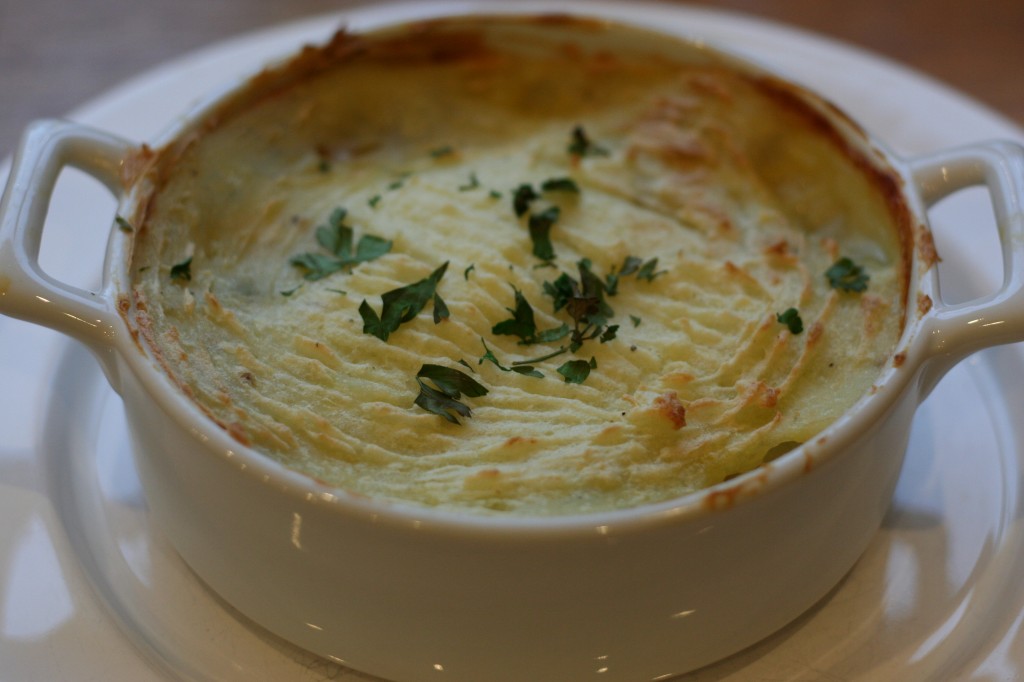
fish pie (before)

Fish Pie
adapted from Apples for Jam by Tessa Kiros

Serves 5

I sometimes add diced carrots and celery along with the mushrooms to pack in some extra veggies. You could also try adding a few chopped shallots.

for the sauce:
2 tablespoons (30 g) butter
1/4 cup (30 g) all-purpose flour
1 1/4 cup (300 ml) vegetable broth, warmed
1/2 cup (120 ml) cream

for the pie:
4 tablespoons (60 g) butter
1 clove garlic, chopped
7 oz (200 g) mushrooms, sliced
2 tablespoons white wine
1 lb 2 oz (500 g) skinless halibut, cod or snapper fillets
1 lb 2 oz (500 g) raw prawns, peeled and deveined
2 tablespoons chopped parsley
2 lb 4 oz (1 kg) potatoes, peeled and cut into chunks
3/4 cup (185 ml)  milk, warmed
lemon wedges, to serve

Preheat the oven to 400°F (200°C) and butter a large ovenproof dish (or you could do individual serving dishes).

To make the sauce, melt the butter in a small saucepan and then stir in the flour. Cook for 1 minute or so over a medium heat and then add the broth, whisking well to make a smooth sauce. Let it bubble up for a few minutes and then stir in the cream. Taste for salt and pepper (your broth will probably be seasoned already).

To make the pie, heat 1 tablespoon (30 g) of the butter and the garlic in a frying pan, and when it’s sizzling, add the mushrooms and a little salt. Saute over a high heat, stirring the mushrooms around with a wooden spoon until all the juices have evaporated and they turn golden. Add the wine and some pepper and cook until the wine has evaporated. Remove from the heat.

Cut the fish into large, 2‑inch chunks and put in the bottom of your dish(es). Scrape the mushrooms over the fish, then add the prawns. Scatter with the parsley and a few grinds of pepper. Pour the sauce over the top.

Meanwhile, boil the potatoes in salted water until soft. Heat the remaining butter in the milk. Drain the potatoes and mash them. Beat in the rest of the butter and the warm milk and season, if necessary.

Arrange the mash over the top of the fish and sauce, then bake for 30 to 45 minutes, until the mash is golden in places and the sauce is bubbling up underneath. Leave it to stand for 5 to 10 minutes before serving with lemon wedges.

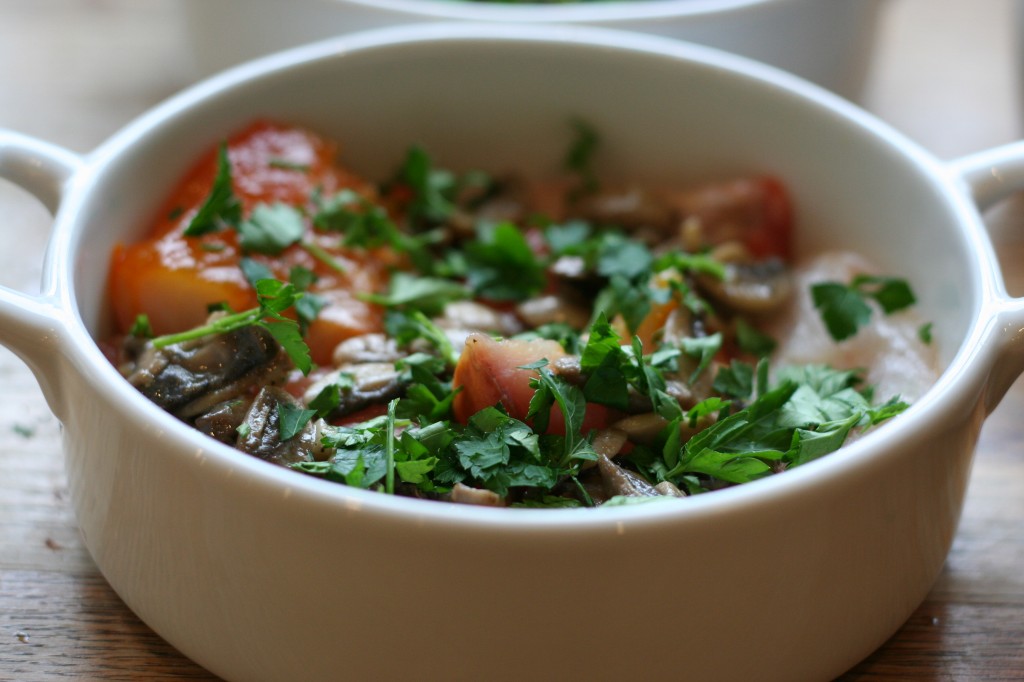
fish pie (finished)

***

Sauteed Carrots
from Barefoot Contessa Family Style by Ina Garten

Serves 6

2 lb (900 g) carrots
1/3 cup (80 ml) water
1 teaspoon kosher salt
1/4 teaspoon freshly ground black pepper
2 tablespoons (30 g) unsalted butter
1 1/2 tablespoons chopped fresh dill or flat-leaf parsley

Peel the carrots and cut them diagonally in 1/4‑inch slices. Place the carrots, water, salt, and pepper in a large (10- to 12-inch) saute pan and bring to a boil. Cover the pan and cook over a medium-low heat for 7 to 8 minutes, until the carrots are just cooked through. Add the butter and saute for another minute, until the water evaporates and the carrots are coated with butter. Off the heat, toss with the dill or parsley. Sprinkle with salt and pepper and serve.

***

Pumpkin Seed Brittle
from Feast by Nigella Lawson

Serves 8

1 1/4 cups (250 g) sugar
1/2 cup (120 ml) water
1/4 teaspoon cream of tartar
1 cup (125 g) green pumpkin seeds

Cover a baking sheet with a Bake-O-Glide, Silpat or other reusable parchment, or tear off some aluminum foil and lightly oil it. Dissolve the sugar, water and cream of tartar in a saucepan over a low heat. Turn the heat up and bring the mixture to a boil but do not stir. Let the syrup bubble over a fairly high heat for about 10 minutes, until it turns a deep golden amber color. Don’t be tempted to wander away, make a phone call or leave the pan unattended, as the syrup could caramelize sooner.

Quickly tip the pumpkin seeds into the amber-colored syrup, swirl the pan so that they become evenly coated and then take off the heat. Pour the syrup immediately onto the Bake-O-Glide or oiled-foil-lined tray, trying to spread the molten liquid in a thin layer. It is possible to spread the brittle with a palette knife if it has mounded too much, but move fast: you will have only a short time to do this before it begins to set. Leave the brittle to cool and harden completely before breaking it into pieces.

Baked Haddock with Spinach, Peppers, and Capers with Garlic Delicata

Today, another mom and I exchanged dinner menus as we picked our toddlers up from daycare. Bobby’s mom: “Bobby, we’re having noodles tonight.” Me: “Sam, we’re having baked fished tonight.” Bobby’s mom: “Oh, fish sounds a lot better to me than noodles.” Me: “Fish sounds a lot better to me, too.” In the car, I realized how rude I had been and also how odd our meals must sound to some people. So apologies to Bobby’s mom if I slighted your noodles. And thanks, Sam, for eating (most of) what I put on your plate each evening.

Baked Haddock with Spinach, Peppers, and Capers

Serves 4

4 x 6‑oz (170‑g) haddock fillets
salt and freshly ground black pepper
8 oz (225 g) baby spinach
4 tablespoons olive oil
1/2 bell pepper, julienned
1/2 onion, sliced into very thin half moons
4 teaspoons capers
4 tablespoons minced parsley
4 tablespoons butter
1 lemon, quartered

Preheat the oven to 375°F (190°C). Season the fish with salt and pepper to taste.

Divide the spinach evenly among four pieces of aluminum foil or parchment paper, each about 12 inches long. Season the spinach with salt and pepper and drizzle each pile of spinach with 1 tablespoon of olive oil. Lay 1 fish fillet on each pile of spinach. Divide the bell peppers and onions among the fillets, then top each fillet with 1 teaspoon capers, 1 tablespoon parsley, 1 tablespoon butter and the juice from a quarter wedge of lemon.

Fold or crimp the foil or parchment packets until sealed. Place the packets on a baking sheet. Bake the packets until the fish just flakes and the vegetables are tender, about 20 minutes.

***

Garlic Delicata
adapted from Allrecipes.com

Serves 6

3 delicata squash (or 1 butternut squash)
1/4 cup (60 ml) olive oil
3 cloves garlic, minced
4 tablespoons chopped fresh parsley

Preheat the oven to 375°F (190°C). Peel the squash, slice in half lengthwise and remove the seeds, then cut into 1/2‑inch thick slices. If using butternut squash, cut into 1/2‑inch cubes. Toss the squash with the olive oil, garlic, and parsley. Transfer to a 13 x 9 baking dish and bake for 30 to 35 minutes, until tender.

Shrimp Won Tons in Soup and Roasted Asparagus

I’ve probably mentioned that my son loves Asian food before, but I don’t think I mentioned how glad I am of this fact. Asian food, whether Japanese soba, Chinese stir-fry or Thai satay, is quick to prepare and relatively light. Sure beats serving mac and cheese and chicken nuggets. I also love salty sweet tastes, which are easy to find in Asian cuisines.

Though won tons aren’t exactly quick to throw together, using store-bought won ton skins and broth helps reduce the prep time. This was my first time making won tons; my husband usually takes care of it. I’ve included more pictures than usual not because they’re good pictures (they’re actually not good at all), but because I found the picture in the cookbook very helpful. I don’t want to break any copyright laws, so you’re all stuck with my amateur “how to” pictures. Kelly’s birthday wish list: better digital camera with a decent flash.

Shrimp Wontons

Shrimp Won Tons in Soup
adapted from Chinese Snacks Wei-Chuan Cooking Book by Huang Su Huei

Serves 3

for the filling:
10 medium raw, shelled shrimp (about 1/3 lb/170 g)
1/2 teaspoon rice wine
1/2 teaspoon salt
1/2 teaspoon cornstarch
1/4 cup minced bamboo shoots
1 teaspoon minced ginger
30 won ton skins

for the soup:
6 cups (1.4 liters) broth
1 teaspoon rice wine
1 1/2 teaspoon salt
1 tablespoon shredded ginger
6 oz (170 g) spinach or other green vegetable

Garnishes: black pepper, sesame oil, soy sauce, chopped green onion, mustard powder or Chinese mustard

Rinse and devein the shrimp. Drain them and cut each into 3 pieces, then mix thoroughly with the remaining filling ingredients.

Step 1Picture 1

Step 2Picture 2

To prepare each won ton, taking one won ton skin, put a teaspoon of filling in the center (picture 1). Fold over in half to form a triangle; make another fold one-quarter from the longest diagonal edge (picture 2).

Step 3Picture 3

Step 4Picture 4

Bring the two outside corners together (the one-quarter fold should be on the inside) and using a drop of water, pinch these 2 edges together to seal (pictures 3 and 4).

Put a large pot of water on to boil (this will be used to cook the won tons). While the water heats, make the soup. Heat the broth, rice wine, salt and ginger in a large saucepan until boiling. Reduce the heat and simmer for 5 to 10 minutes.

Once the won ton water is boiling, add the won tons and spinach, then cover. When the won tons rise to the surface of the water, remove them and the spinach and drain. Portion into serving bowls. and ladle some soup over them. Serve immediately with garnishes: 1/4 teaspoon black pepper, 1/2 teaspoon sesame oil, 1/2 tablespoon soy sauce, 1 tablespoon green onion, and a pinch of mustard powder are recommended for each serving.

***

Roasted Asparagus

Serves 2

1 bunch asparagus spears
good-quality olive oil
salt and freshly ground black pepper
sesame oil (optional)
sesame seeds (optional)

Preheat the oven to 425°F (220°C).

Snap the tough ends off the asparagus spears. Lay the spears in a single layer on a baking sheet. Drizzle with olive oil, salt and pepper. Roast for 5 to 10 minutes, until tender, depending on the size of spear. Drizzle with sesame oil and garnish with sesame seeds if desired.

Salmon with Lime Butter Sauce, Summer Tomato Salad, and Quinoa and Kidney Beans

Summer’s over, but no one told my tomato plants. After a cool August and September, our tomatoes are finally ripe and in abundance. I feel like every year I struggle to use up our tomato harvest only to plant more tomato plants the following year. This year, in addition to our CSA tomatoes and backyard containers, we (and by “we” I mean my father-in-law) are working a community garden plot. Kristin’s already posted wonderful tomato recipes, but here’s another to add to the collection.

In addition to the refreshing tomato salad, I rounded off dinner with a tangy broiled salmon dish and a new recipe, which uses quinoa. I recently discovered quinoa and am still experimenting with its possibilities. It’s one of the most nutrient-rich ingredients I’ve eaten, with high protein and lots of fiber. Not a bad carbohydrate choice as I try to shed those last few pregnancy pounds.

Salmon with Lime Butter Sauce
adapted from Gourmet, July 2006

Serves 4

4 pieces center-cut salmon fillet (about 1 inch thick) with skin
1 garlic clove, chopped
1/4 cup (60 ml) fresh lime juice
1/2 teaspoon salt
1/4 teaspoon black pepper
1/4 stick (4 tablespoons/60 g) unsalted butter, melted

Prepare the broiler or grill for cooking over a medium heat. Season the salmon all over with salt and pepper, then broil or grill, skin side down, on a lightly oiled grill rack (if using a grill, keep the lid on) for 8 to 10 minutes, until just cooked through.

While the salmon cooks, puree the garlic with the lime juice, salt, and pepper in a blender until smooth. With the motor running, add the melted butter and blend until emulsified, about 30 seconds.

Remove the salmon from the rack. I usually (but not always) remove the skin before plating; the flesh should slide easily off the skin. Drizzle each fillet with 1 or 2 tablespoons of the lime butter sauce. Serve immediately.

***

Summer Tomato Salad

Summer Tomato Salad
adapted from The New Vegetarian Epicure by Anna Thomas

Serves 6 (salad servings)

3 or 4 big, juicy vine-ripened tomatoes
1/2 medium red onion
1 bunch flat-leaf parsley
2 tablespoons olive oil
a few drops of vinegar
salt and freshly ground black pepper, to taste

Wash the tomatoes and slice them thickly crosswise. Arrange them in a single layer on a large platter. Slice the onion crosswise, thinly but not paper thin. Scatter the onion rings over the tomatoes.

Wash the parsley leaves and spin them in a salad spinner. Arrange them in a wreath around the tomatoes. Drizzle the tomatoes with the olive oil and sprinkle them with a few drops of your favorite vinegar. Add salt to your taste, and grind on some black pepper. Serve within the hour. Do not refrigerate!

***

Quinoa and Kidney Beans
adapted from Feeding the Future Cookbook (American Pregnancy Association member recipes)

8 servings

1 teaspoon vegetable oil
1 onion, chopped
3 cloves garlic, minced
3/4 cup (140 g) uncooked quinoa
1 1/2 cups (360 ml) chicken or vegetable broth
1 teaspoon ground cumin
1/4 teaspoon cayenne
salt and freshly ground black pepper, to taste
kernels from 2 ears of corn
1 x 15-oz (425‑g) can kidney or black beans, rinsed and drained
1/2 cup (15 g) chopped fresh cilantro
juice of 1 lime
avocado and/or sour cream for garnish, if desired

Heat the oil in a medium saucepan over a medium heat. Stir in the onion and garlic and saute until lightly browned. Mix the quinoa into the pan and cover with the broth. Season with cumin, cayenne, salt, and pepper. Bring the mixture to a boil. Cover, reduce the heat and simmer for 20 minutes. Stir the corn into the saucepan and continue to simmer for about 5 minutes, until heated through. Mix in the beans and continue to cook over a low heat for 2 or 3 minutes more. Stir in the cilantro. Garnish with avocado and sour cream, if desired.

Chili Fried Mackerel with Spiced Chickpea Salad and Polenta

About two years ago, my husband, daughter and I went to Copenhagen for a long weekend. Our daughter was two and a half at the time, but already was a great eater. Put her in front of a selection of ice cream, and she won’t choose chocolate or vanilla — she’ll go for Turkish delight (though in all honesty, that might just be because it’s pink). Olives, radishes, salt and vinegar potato chips and Roquefort cheese are some of her favorite foods. So we might have known better than to order her a hamburger off the kids’ menu when we went to the Cap Horn restaurant one night. She wouldn’t touch it, and instead devoured almost all of the trout Matt had ordered for himself, simply pan fried in butter (poor Matt wound up eating the burger). When it comes to fish (and her tastes in general), it seems that the stronger the flavor, the more she likes it.

This past summer, I served mackerel to her for the first time, as well as my one-year-old son. They each gobbled up their entire fillet and ate most of ours to boot. We couldn’t get over it, since we thought it might be too strong-tasting for them compared to, say, white fish. The next time he was in getting fish, Matt mentioned to the fishmonger how much our kids had liked it, who wasn’t surprised. “Kids love mackerel,” he said. That’s good news to me, since it’s an oily fish and so is a good source of omegas, plus it’s cheap, about 1 euro per fillet.

Mackerel is still in season, so get some while you can and give this simple recipe a try, which only takes 5 minutes to cook. If you’re serving this to kids who don’t like spicy food, just fry their fish first and leave out the chili, then add it to the pan when you’re ready to fry the rest. Ask your fishmonger to debone the mackerel for you, especially if you’re serving it to children, because it has lots of them and some of them are pretty big.

Chili Fried Mackerel
from Fresh from the Sea by Clodagh McKenna

Serves 2

2 tablespoons (60 g) butter
1 red chili, deseeded and finely chopped
1 garlic clove, crushed
4 fresh mackerel fillets
sea salt and freshly ground black pepper
juice of 1 lemon

Heat a frying pan and drop in the butter, chili and garlic. Once the chili butter begins to foam, add the mackerel, skin side down, and fry for 2 minutes. Season with salt and pepper, turn the fish over, squeeze the lemon juice over the fish and cook for a further 2 minutes. Remove to a plate and drizzle the chili butter over the fillets.

***

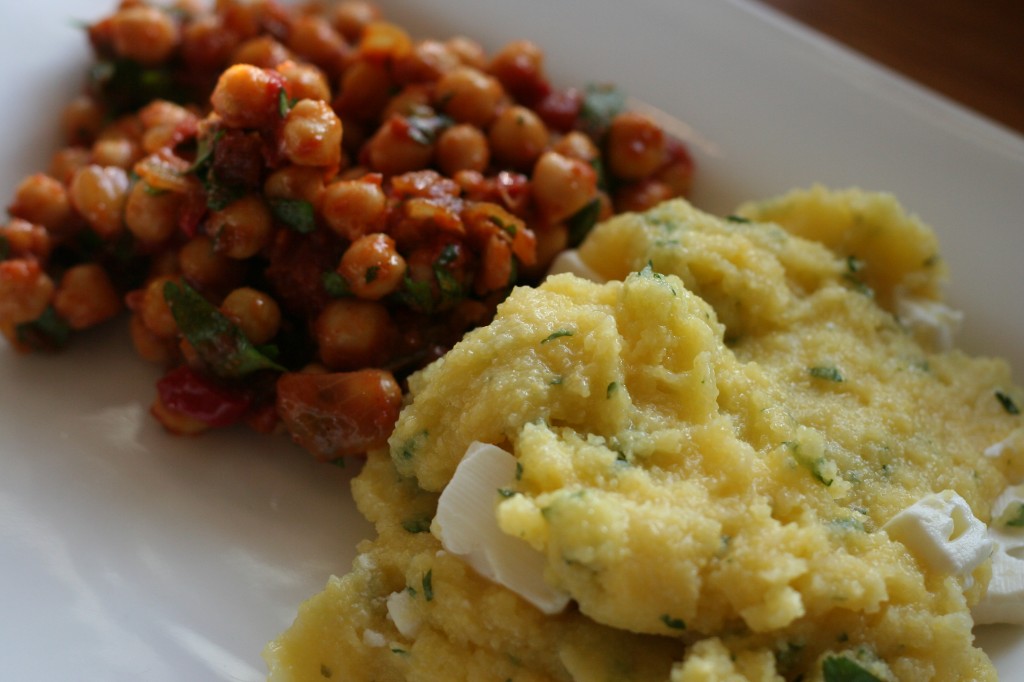
spiced chickpea salad and polenta with feta and cilantro

Spiced Chickpea Salad
adapted from Avoca Café Cookbook 2

Serves 6

1 onion, finely chopped
3 tablespoons olive oil
1‑inch piece of fresh root ginger, grated (or 1 teaspoon ground ginger)
1 red chili, deseeded and finely chopped
2 teaspoons curry powder
1 teaspoon ground cumin
1 teaspoon ground coriander
pinch of turmeric
4 garlic cloves, chopped
1 x 14-oz (400‑g) can of tomatoes
3 x 14-oz (400‑g) cans of chickpeas, rinsed and drained
1 bunch of fresh cilantro, roughly chopped
1 bunch of fresh flat-leaf parsley, roughly chopped

Gently saute the onion in the olive oil for 10 to 15 minutes without allowing it to color. Add all the spices, chili and the garlic and cook for 2 minutes. Add the tomatoes and reduce the heat to low. Continue to cook for 15 to 20 minutes, stirring occasionally, to allow it to reduce slightly. Dress the chickpeas in the tomato sauce while it’s still warm. Allow the chickpea mixture to cool slightly, then add the herbs (this stops them from discoloring). Serve warm or at room temperature. This salad is even better the next day.

***

Polenta with Feta and Cilantro
adapted from Vegetarian Cooking for Everyone by Deborah Madison

2 cups (340 g) coarse cornmeal
6 to 8 cups (about 1 1/2 to 2 liters) vegetable or chicken stock or water
2 to 6 tablespoons (30 to 90 g) butter (optional)
1 1/2 cups (250 g) feta cheese, cubed or crumbled
1 bunch fresh cilantro, chopped

Bring 6 cups (1 1/2 liters) of the stock (or water) to a boil in a large, heavy-based saucepan and add the cornmeal in a steady stream, whisking constantly to stop lumps from forming and to help prevent the maize from seizing up in the first few minutes. Lower the heat and cook, stirring almost constantly, for 30 to 45 minutes. If the polenta seizes up into a hard mass, add small amounts of the remaining 2 cups (480 ml) of stock or water while it cooks to smooth it out again. When done, season to taste with salt (you may not need any if your stock is salty). Stir in butter to taste.

Off the heat, stir in the cubed or crumbled feta cheese and chopped cilantro. Serve the soft polenta immediately or keep it warm over boiling water until ready to serve.

Autumn Fish Stew and Date Nut Spice Bread

If I had to pick one smell that evokes my childhood, it would be potpourri. When I was growing up, my mom was into the country style of decorating, and me and my brother and sister got dragged around to the shops that sell that kind of stuff on the weekends. Those stores invariably reeked of cinnamon potpourri, and there always seemed to be a bowl of it collecting dust on a bathroom shelf in our house. Nowadays, I imagine potpourri has been replaced by Yankee Candles, which seem to be everywhere. I always laugh at the names of the candles — some of this autumn’s new scents are “Moonlight Harvest”, “Lakeside Birch” and “Farmers Market”. So what does a moonlight harvest smell like, exactly?

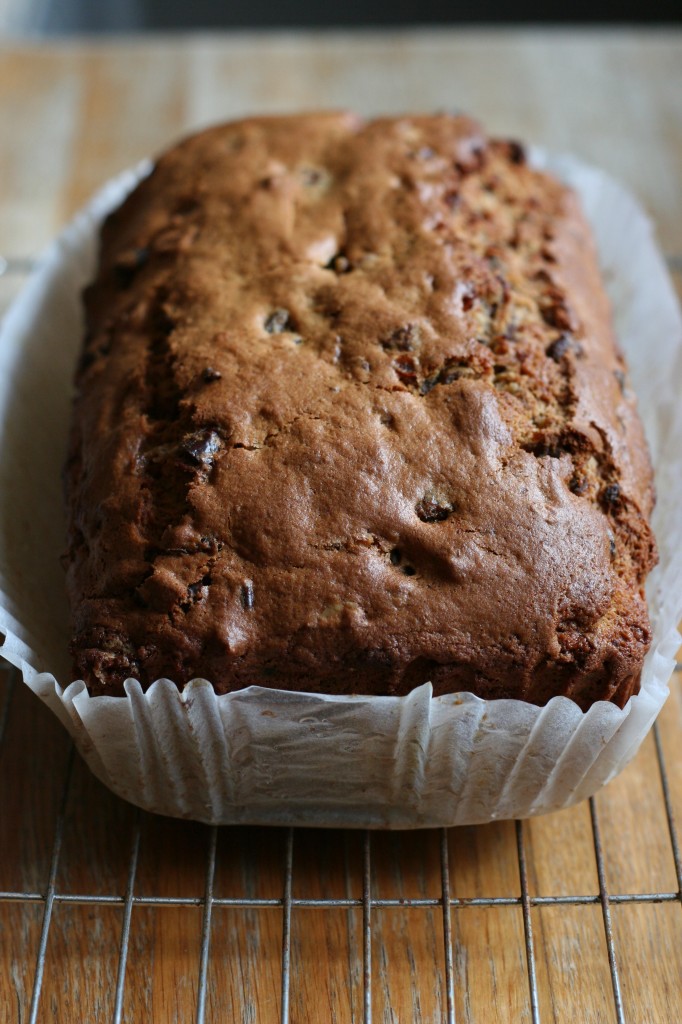
Still, when this date nut bread was baking, I couldn’t help but think that the people at Yankee Candle would do well to try to recreate how this smells, fresh out of the oven, with its heady autumnal mix of cinnamon, cloves, nutmeg and orange zest. While this lemon blueberry buckle was the best thing I baked this summer, I think this date nut bread will be hard to beat for the autumn. When I was urging a friend to make it last week, I wasn’t kidding when I said you’d almost want to bake this just to make your house smell good (and because it’s delicious, of course, and absolutely perfect for fall). But failing that, I’m sure there’s a suitable Yankee Candle out there — maybe “Autumn Fruit”?

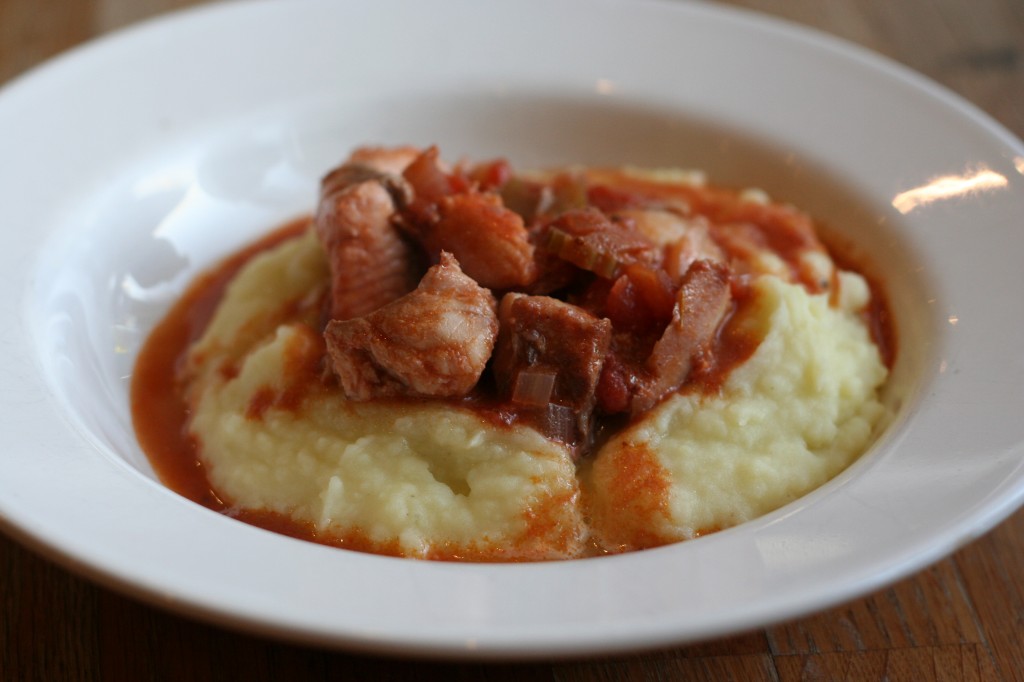
autumn fish stew

Autumn Fish Stew
adapted from Fresh from the Sea by Clodagh McKenna

Serves 4

olive oil
1 onion, diced
2 celery stalks, thinly sliced
3 garlic cloves, crushed
1 tablespoon coriander seeds, roughly crushed in a mortar and pestle
1 teaspoon ground cumin
1/2 teaspoon smoked paprika
1 bay leaf
sprig of fresh thyme
2 x 14-oz (400‑g) cans of chopped tomatoes
1/2 cup (120 ml) red wine
1 1/4 cups (300 ml) fish or vegetable stock
sea salt and freshly ground black pepper
2 1/4 lb (1 kg) mixed fish fillets, cut into small pieces
mashed potato, polenta, couscous or rice, to serve

Place a casserole dish over a medium heat and pour in a dollop of olive oil, followed by the onion and celery. Cook for 5 minutes. Add the garlic, coriander, cumin, bay leaf and thyme. Cook for a further 2 minutes. Stir in the tomatoes and leave to reduce and thicken for about 10 minutes. Pour in the wine, bring back to the boil and cook for 1 minute, followed by the stock. Season with salt and pepper and simmer for 15 to 20 minutes.

Add all the fish to the stew and stir well. Simmer gently for about 10 minutes. Serve with creamy mashed potatoes, polenta, couscous or rice.

***

date nut spice bread

Date Nut Spice Bread
from Barefoot Contessa Back to Basics by Ina Garten

Makes 1 x 8‑inch loaf

Don’t let the “bread” in the title mislead you — this is a loaf cake, and a slice or two is perfect with a cup of tea or coffee, as a treat in a packed lunch or after-school snack, or for breakfast. Ina Garten suggests serving it with an orange zest-spiked cream cheese spread (you can find the recipe for that here), but I like this with only a bit of butter.

2 cups (280 g) pitted dates, coarsely chopped
1/3 cup (80 ml) orange liqueur (recommended: Cointreau or Triple Sec)
4 tablespoons (60 g) unsalted butter, at room temperature
3/4 cup (120 g) light brown sugar, lightly packed
1 extra-large egg
1 teaspoon pure vanilla extract
1 tablespoon grated orange zest (2 oranges)
2 cups (240 g) all-purpose flour
2 teaspoons baking powder
1/2 teaspoon baking soda
1 teaspoon ground cinnamon
1 teaspoon ground nutmeg
1/4 teaspoon ground cloves
1 teaspoon kosher salt
3/4 cup (175 ml) freshly squeezed orange juice (3 oranges)
3/4 cup (90 g) coarsely chopped pecans

Preheat the oven to 350°F (180°C). Butter the bottom of an 8 1/2 x 4 1/2 x 2 1/2‑inch loaf pan. Line the bottom with parchment paper, then butter and flour the pan.  (I just used a loaf tin liner.)

Combine the dates and orange liqueur in a small bowl and set aside for 30 minutes. Stir occasionally.

In the bowl of an electric mixer fitted with the paddle attachment or using a hand-held mixer, beat the butter and brown sugar together on medium speed for 1 minute. Scrape down the bowl. With the mixer on low, add the egg, vanilla, and orange zest.

Sift together the flour, baking powder, baking soda, cinnamon, nutmeg, cloves, and salt. With the mixer still on low, add the flour mixture alternately with the orange juice to the creamed mixture, beating only until combined. By hand, stir in the dates with their liquid, and the pecans.

Pour the batter into the prepared loaf pan and smooth the top. Bake for 50 to 60 minutes, until a toothpick comes out clean. Cool in the pan for 10 minutes, then turn out onto a wire rack and cool completely.

Bay Scallop Gratin and Buttermilk Birthday Cake with Chocolate Sour Cream Frosting

There has been no shortage of “staying in is the new going out” headlines since the recession hit last year, usually applied to statistics about fewer people going to pubs, a rise in subscriptions to online DVD rental services or a surge in sales of board games. Not surprisingly, restaurants have been particularly badly hit, with a number of high-profile cases in Ireland. But we haven’t really enjoyed going out to eat for a number of years now. Eating out in Ireland is notoriously expensive, and there’s nothing I hate more than a mediocre meal that costs nearly as much as a week’s worth of groceries and that I could make just as well or better myself. So when Matt asked me if I wanted to go out to dinner for my birthday yesterday, I said I’d rather splash out on some good-quality ingredients and make a nice dinner at home instead. And even though he kept offering to get me my favorite cake from a local patisserie or make me a birthday cake if I just gave him the recipe I wanted, I happily insisted on making it myself, since I’ve been looking forward to trying this buttermilk cake recipe since Deb at Smitten Kitchen posted it in July. I’ll definitely make it again as my go-to recipe now for a yellow cake or easy chocolate frosting, but I have to admit that it didn’t unseat Beatty’s chocolate cake as my favorite. Still, it’s good to try new things (especially cakes).

It’s National Organic Week in Ireland! Click here for a listing of events throughout the country.

Bay Scallop Gratin
adapted from Barefoot Contessa Back to Basics by Ina Garten

Serves 6

6 tablespoons (90 g) unsalted butter, at room temperature
6 large garlic cloves, minced
2 medium shallots, minced
2 oz (60 g) Parma ham or pancetta, minced
4 tablespoons minced fresh parsley, plus extra for garnish
2 tablespoons freshly squeezed lemon juice
2 tablespoons Pernod
2 teaspoons kosher salt
1 teaspoon freshly ground black pepper
6 tablespoons good olive oil
1/2 cup panko or breadcrumbs (if making your own fresh breadcrumbs, remove the crusts)
6 tablespoons dry white wine
2 lb (900 g) fresh bay scallops (or 6 scallops per person)
lemon, for garnish

Preheat the oven to 425°F (220°C). Place six 6‑inch round gratin dishes on a sheet pan.

To make the topping, place the butter in the bowl of an electric mixer fitted with the paddle attachment (you can also use a hand mixer). With the mixer on low speed, add the garlic, shallot, Parma ham or pancetta, parsley, lemon juice, Pernod, salt, and pepper and mix until combined. With the mixer still on low, add the olive oil slowly as though making mayonnaise, until combined. Fold the panko or breadcrumbs in with a rubber spatula and set aside.

Preheat the broiler, if it’s separate from your oven.

Place 1 tablespoon of the wine in the bottom of each gratin dish. With a small sharp knife, remove the white muscle and membrane from the side of each scallop and discard. Pat the scallops dry with paper towels and distribute them among the 3 dishes. Spoon the garlic butter evenly over the top of the scallops. Bake for 10 to 12 minutes, until the topping is golden and sizzling and the scallops are barely done. If you want the top crustier, place the dishes under the broiler for 2 minutes, until browned. Finish with a squeeze of fresh lemon juice and a sprinkling of chopped parsley and serve immediately with plain crusty French bread to soak up all the amazing juices.

***

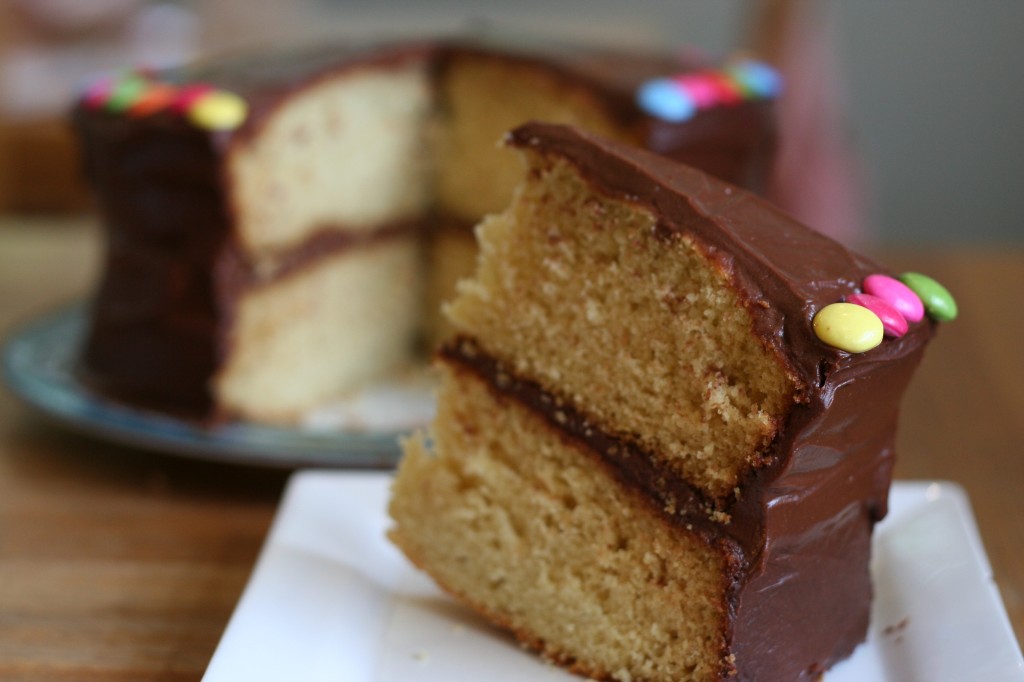
slice of buttermilk birthday cake

Buttermilk Birthday Cake with Chocolate Sour Cream Frosting
adapted from Smitten Kitchen (you can watch a video of Deb from Smitten Kitchen talking about this cake and a video of the frosting being made at GoodBite.com)

Makes two 9‑inch-round, 2‑inch-tall cake layers

4 cups (480 g) plus 2 tablespoons cake flour or, failing that, plain flour
2 teaspoons baking powder
1 1/2 teaspoons baking soda
1 teaspoon salt
1 cup (225 g) unsalted butter, softened
2 cups (400 g) sugar
2 teaspoons pure vanilla extract
4 large eggs, at room temperature
2 cups (480 ml) buttermilk, well-shaken

Preheat the oven to 350°F (180°C). Butter two 9‑inch-round cake pans and line with circles of parchment paper. (Alternately, you can use a cooking spray, either with just butter or butter and flour to speed this process up.)

Sift together the flour, baking powder, baking soda, and salt in a medium bowl. Cream the butter and sugar together in a large bowl with an electric mixer at medium speed until pale and fluffy, then beat in the vanilla. Add the eggs one at a time, beating well and scraping down the bowl after each addition. At low speed, beat in the buttermilk until just combined (the mixture will look curdled, but don’t worry). Add the flour mixture in three batches, mixing until each addition is just incorporated (don’t overmix).

Spread the batter evenly in the two cake pans, then rap the pans on the counter several times to eliminate air bubbles. Bake until golden and a wooden pick inserted in center of cake comes out clean, 35 to 40 minutes. Cool in the pan on a rack for 10 minutes, then run a knife around the edge of the pan. Invert onto the rack and discard the parchment, then cool completely, about 1 hour.

Chocolate Sour Cream Frosting

Makes 5 cups of frosting, or enough to frost and fill a two-layer 9‑inch cake

15 oz (425 g) semisweet or bittersweet chocolate, chopped
1 1/4 teaspoons instant espresso (optional)
2 1/4 cups (540 ml) sour cream, at room temperature (this is important!)
1/4 to 1/2 cup (60 to 120 ml) light corn syrup (or golden syrup)
3/4 teaspoon vanilla extract

Combine the chocolate and espresso powder, if using, in the top of a double-boiler or in a heatproof bowl over simmering water. Stir until the chocolate is melted. (Alternately, you can melt the chocolate in a microwave for 30 seconds, stirring well, and then heating in 15 second increments, stirring between each, until the chocolate is melted.) Remove from the heat and let the chocolate cool until tepid.

Whisk together the sour cream, 1/4 cup (60 ml) of the corn syrup (or golden syrup) and vanilla extract until combined. Slwoly add the tepid chocolate and stir quickly until the mixture is uniform. Taste for sweetness, and if needed, add additional corn syrup (or golden syrup) in one-tablespoon increments until the desired level of sweetness is achieved.

Let the frosting cool in the refrigerator until it’s a spreadable consistency, about 30 minutes. Should the frosting become too thick or stiff, just leave it out until it softens again.