Avoca’s Shepherd’s Pie and Brandied Cranberry, White Chocolate and Oatmeal Cookies

In the US, it’s the day after Thanksgiving today — which means it’s also now officially Christmastime! So I won’t waste any time giving you this cookie recipe, an adaptation of my favorite oatmeal chocolate chip cookies, but this time with a festive twist to them with the brandied cranberries. For any Black Friday shoppers, a couple of these cookies and a cup of coffee would keep you going through the afternoon sales. For anyone else, do you really need an excuse to eat a cookie like this? A few weeks ago, when I told a friend that I was going to make these, she said they sounded like the perfect Christmas cookie, but I said I couldn’t wait that long to make them. Any recent Thanksgiving excesses aside, you shouldn’t either.

Avoca’s Shepherd’s Pie
adapted from Avoca Café Cookbook

Serves 6

You can prepare the shepherd’s pie in advance, leave it to cool and reheat it later, although it will need more time in the oven (40 minutes instead of 20). For my family of four, I like to divide the pie into 4 individual gratin dishes and 4 ramekins for the kids’ portions, which makes enough for two dinners. This way, I can cook the second batch fresh on the day, as opposed to reheating one big casserole dish.

for the pie:
1 onion, roughly chopped
2 tablespoons vegetable oil
2 lb (900 g) minced beef (you could also use ground turkey for a leaner version)
3 tablespoons Worcestershire sauce
2 sprigs of thyme (or 1/2 teaspoon dried)
1 teaspoon tomato puree
3 carrots, diced
1 3/4 cups (400 ml) chicken stock
salt and freshly ground black pepper
chopped fresh parsley, to garnish

for the potato topping:
3 lb (1.4 kg) potatoes, peeled and cut into chunks
1 cup (240 ml) whole milk or cream
1/2 cup (110 g) butter
salt and freshly ground black pepper

Preheat the oven to 350°F (180°C).

In a large pan, gently sauté the onion in the vegetable oil for about 10 minutes, until soft but not brown. Add the mince a little at a time and cook until browned. Add the Worcestershire, thyme, tomato puree, carrots, stock and some salt and pepper. Cook on a low heat for 50 minutes, then transfer to a large casserole or pie dish or individual gratin dishes, ready for the mashed potato topping.

Meanwhile, cook the potatoes in boiling salted water until tender. Drain well, then return to the pot and add the cream, butter and salt and pepper to taste. Mash well, then taste and adjust the seasoning if necessary.

Cover the mince mixture with the mashed potato. Run the tines of a fork along the potato topping (this will help it to brown). Bake in the preheated oven for 20 minutes, or until the potato is nicely browned and the pie filling is bubbling. Garnish with chopped parsley and serve.

***

brandied cranberry, white chocolate and oatmeal cookies

Brandied Cranberry, White Chocolate, Pecan and Oatmeal Cookies

Makes about 16 cookies

You can make these cookies without the brandy if you prefer.

3/4 cup (100 g) dried cranberries
1/3 cup (80 ml) brandy
2 cups (240 g) unbleached all-purpose flour
1/2 teaspoon baking soda
1/2 teaspoon salt
3/4 cup (170 g) unsalted butter, melted and slightly cooled
1 cup (170 g) packed brown sugar
1/4 cup (50 g) granulated sugar
1 tablespoon vanilla extract
1 egg
1 egg yolk
3/4 cup (150 g) white chocolate, roughly chopped
1/2 cup (50 g) pecans, roughly chopped
1 cup (80 g) porridge oats

Put the dried cranberries in a wide, shallow bowl and add the brandy, making sure all the cranberries are covered with brandy (you may need to add a bit more). Cover and place in the fridge. Allow the cranberries to soak for at least 1 hour. Place a colander over a bowl and strain the cranberries, reserving 1 1/2 teaspoons of the brandy. Set both aside.

Preheat the oven to 325°F (160°C). Grease 2 cookie sheets or line them with parchment paper or silicone baking mats.

Sift together the flour, baking soda, and salt and set aside. In a medium bowl, cream together the melted butter and brown and granulated sugars until well blended. Beat in the reserved 1 1/2 teaspoons of brandy, the vanilla, egg, and egg yolk, mixing until light and creamy. Mix in the sifted ingredients, working until just blended. Stir in the cranberries, white chocolate, pecans and oats by hand, using a wooden spoon. Chill the dough in the refrigerator for 30 minutes to 1 hour. Use a table knife to scoop and press the dough into 1/4‑cup measuring scoops (or roll 90 g of dough into a ball for 1 cookie), and place the mounds onto the prepared cookie sheets. The cookies should be 3 inches apart.

Bake the cookies for 15 to 20 minutes, or until the edges are lightly browned. Cool on baking sheets for a few minutes before transferring to wire racks to cool completely.

Homemade Italian Sausage Patties with Goat’s Cheese Polenta

The first Thanksgiving I spent in Ireland, in 1999, I was very blasé about it beforehand; I still remember that I’d planned to make enchiladas that night. But at the last minute, I got a little weepy and ran out to the grocery store to see what I could find that might be more fitting, and bought some turkey escalopes and a jar of Ballymaloe cranberry sauce instead. My last Stateside Thankgsiving was in 1998, and although we’ve always cooked a traditional dinner every year, celebrating with anywhere from two to twelve friends and once even family, when my dad and stepmom came over for a visit, it’s just not the same.

So as long as I’m feeling homesick, today’s as good a day as any to talk about Italian sausages, one of the foods I still miss. There were plenty of foods I missed and craved when I first moved. I used to ask anyone who came to visit to bring me a bag of bagels, not even caring that they’d be stale by the time I got them, and Matt always requested an economy-size jar of Skippy peanut butter. Once or twice I’ve brought cans of Libby’s pumpkin puree back in my suitcase so that I could make pumpkin pie. I gradually stopped hankering after most of the foods I missed, but I’ll never stop wishing for a ready supply of Italian sausages. When we visited my mom in Florida earlier this year, she asked if there was anything in particular we wanted for dinner, and the only thing I requested was Italian sausages and peppers, one of her signature dishes. If I wasn’t feeling homesick already, just thinking of that dinner would do it. It’s one of the dishes that will always taste like home to me.

Happy Thanksgiving to all our readers, wherever you may be!

Home-made Italian sausages with Goat’s Cheese Polenta
adapted from A Kitchen Year by Paula McIntyre

Serves 4

for the sausage patties:
1 medium onion, peeled and finely chopped
2 cloves garlic, crushed
1 teaspoon fennel seeds, ground
1/2 cup (120 ml) red wine
1 3/4 lb (800 g) pork mince
1 tablespoon chopped fresh oregano leaves
1 tablespoon chopped fresh rosemary
1 teaspoon chopped fresh red chili
1 teaspoon smoked sweet paprika
1 teaspoon salt

for the sauce:
2 tablespoons olive oil
2 medium onions, peeled and finely sliced
2 cloves garlic, crushed
1/2 cup (120 ml) red wine
1 x 14-oz (400‑g) can chopped tomatoes
3/4 cup (180 ml) chicken stock
salt and freshly ground black pepper
a handful fresh chopped flat-leaf parsley

for the goat’s cheese polenta:
1 1/2 pints (700 ml) chicken or vegetable stock
1/2 lb (225 g) polenta
1/2 cup (50 g) grated Parmesan cheese
3 oz (90 g) goat’s cheese
handful fresh chopped flat-leaf parsley leaves
salt and freshly ground black pepper

To make the sausage patties, place the onion, garlic, fennel seeds and red wine in a saucepan and boil until only 1 tablespoon of liquid remains. Cool. Mix this with the pork and the remaining ingredients. Form into walnut-sized balls and press down to flatten.

To make the sauce, heat the oil in the pan over a high heat and add the sausage patties. Cook until sealed and golden on both sides, about 2 minutes. Remove from the heat and set aside. Lower the heat and add the onions and garlic, cooking until they’re golden, about 10 minutes. Add the wine and bring to the boil. After 2 minutes, add the tomatoes and stock. Cover the pan with a lid and simmer for 30 minutes. Check the seasoning and add the parsley.

To make the polenta, bring the stock to the boil. Slowly add the polenta in a steady stream into the stock, whisking all the time. When all the polenta is incorporated, lower the heat to s gentle simmer. Cook, stirring frequently, until the polenta comes away from the side of the pan. This will take 40 minutes for traditional polenta and about 5 minutes for the instant variety. Add the Parmesan and mix well. Crumble the goat’s cheese and fold into the polenta with the parsley. Season to taste.

To serve, divide the polenta between the individual serving bowls, place sausage patties on top and spoon over the sauce.

Fettucine with Brussels Sprouts and Pine Nuts and Christmas Rocky Road

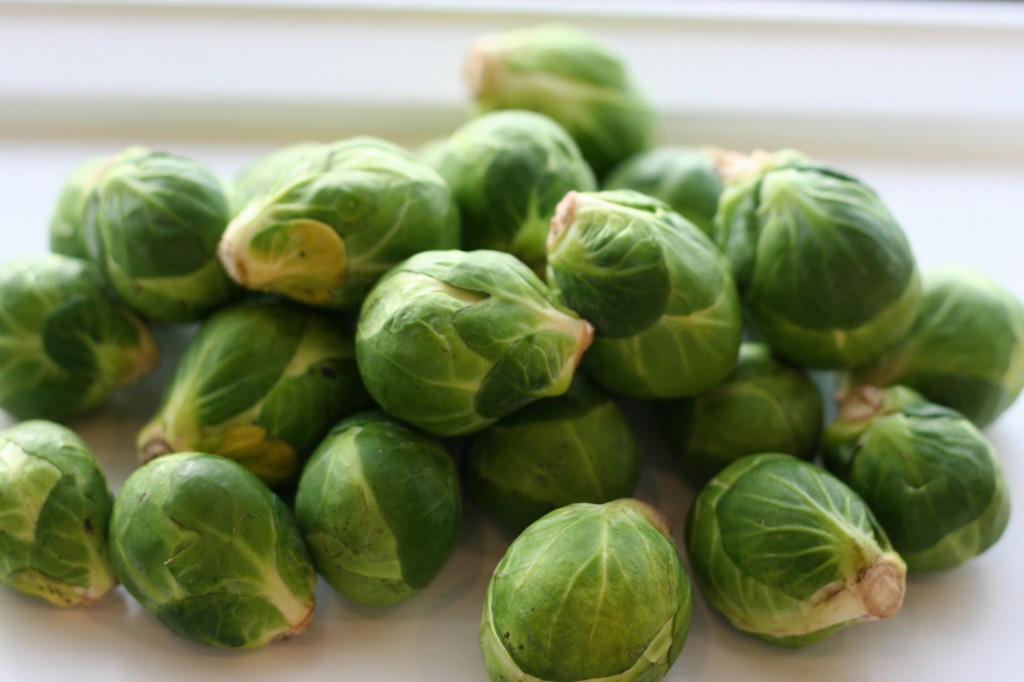
If greens are the outcasts of the vegetable world, then Brussels sprouts must be out-and-out exiles. I think they look like little alien heads, but I love how Kitchen Scraps portrays them, as Mr. B. Russell Sprout, “who lived in a red-brick townhouse on a cobblestone lane near the bank where he worked. Even the other bankers thought Mr. Sprout was an old fuddy-duddy because he always wore the same limp green tweed suit and bowler hat every day.” If they’re overcooked, they turn bitter and taste awful, which is why most people don’t like them — or just think they don’t. If cooked properly, they have a delicate nutty flavor, yet popular culture ranks them right up there with knocking back a spoonful of cod liver oil straight up. If you think you don’t like Brussels sprouts, try this recipe. And if you don’t believe me, go read some of the reviews of it here and see how many former sprouts haters were converted. I like to make this for a quick weeknight meal as soon as sprouts are in season, but especially around the holidays, on a day when you feel like you need a break from all the excess.
I have to warn you about the rocky road — you’ll find it hard to stay away from it. The first time I made it, we ate the whole pan in less than 24 hours by constantly going back for just one more little piece. As I found out the hard way last week, this isn’t the best treat to make for a play date. The kids loved it and kept sneaking pieces off the plate, but not being the daintiest eaters, their mouths and hands were quickly covered with chocolate.

IMG_0892

Fettuccine with Brussels Sprouts and Pine Nuts
adapted from Gourmet, November 2007

Serves 4

I’ve adapted this to add pancetta and a generous splash of cream. After reading the reviews on Epicurious, next time I’ll try adding some lemon zest and juice and a bit of white wine as well.

3/4 lb (340 g) Brussels sprouts, trimmed
1/2 lb (225 g) dried egg fettuccine
4 oz (110 g) pancetta or bacon (optional; omit for a vegetarian version)
2 tablespoons unsalted butter
2 tablespoons extra-virgin olive oil
3 tablespoons pine nuts
1/2 teaspoon salt
1/4 teaspoon pepper
1/4 cup (60 ml) heavy cream
plenty of freshly grated Parmesan, to serve

Slice the Brussels sprouts in a food processor fitted with the slicing disk (or else slice them very thinly by hand). Cook the fettuccine in a pasta pot of boiling salted water (3 tablespoons salt for 6 quarts water) until al dente.

Cook the pancetta or bacon until crisp. Drain on paper towels and set aside.

Heat the butter and oil in a large heavy skillet over a medium heat until the foam subsides, then cook the pine nuts, stirring, until golden, 1 to 2 minutes. Add the Brussels sprouts, salt and pepper, then saute over a medium-high heat until tender and lightly browned, about 4 minutes.

Reserve 1/2 cup (120 ml) of the pasta cooking water, then drain the pasta and add to the skillet along with the cream, tossing with enough of the reserved water to moisten. Serve with freshly grated Parmesan cheese.

***

Christmas Rocky Road
adapted from Nigella Christmas by Nigella Lawson

9 oz (250 g) dark chocolate, chopped
5 oz (150 g) milk chocolate, chopped
6 oz (175 g) butter, softened, plus extra for greasing
4 tablespoons golden syrup or light corn syrup
7 oz (200 g) amaretti biscuits, digestive biscuits or, in the States, Nilla wafers or any plain cookie
5 oz (150 g) shelled Brazil nuts
5 oz (150 g) red glacé cherries
4 oz (110 g) mini marshmallows
1 tablespoon icing sugar

Place the dark and milk chocolate pieces into a heavy-based pan. Add the butter and golden syrup and cook over a low heat to melt and combine.

Place the amaretti biscuits into a freezer bag and bash with a rolling pin to make crumbs of various sizes. (Or pulse in the food processor a few times.) Place the Brazil nuts into another freezer bag and bash in the same way.

Take the pan of melted chocolate mixture off the heat and add the crushed biscuits and nuts. Add the glacé cherries and mini marshmallows. Fold the mixture carefully to coat all of the solid ingredients with the syrupy chocolate mixture.

Pour the mixture into a 10 x 2‑inch greased and lined baking tray and smooth the surface as much as possible (although it will look bumpy). Refrigerate for 2 hours, or until firm enough to cut. Dust with icing sugar. Remove the block of rocky road from the tray and cut into 24 rectangles.

Roasted Potato Leek Soup with Irish Soda Bread

How does Ina Garten do it? She can take any recipe and somehow make it 10 times better than any other version. What’s her secret? Maybe it’s that she often roasts vegetables to bring out their natural sweetness, and she’s not afraid of butter or cream either — and lots of it. I’ve been making a potato leek soup from The New Vegetarian Epicure as my standby recipe for years, but no longer (sorry, Anna Thomas). As for the soda bread, the Avoca Café recipe here is the only one I’ve ever made. It’s so easy and foolproof — flour, baking soda, sugar, salt and buttermilk — that I doubt even the Barefoot Contessa could improve on it.

Roasted Potato Leek Soup
adapted from Barefoot Contessa Back to Basics by Ina Garten

Serves 6 to 8

Don’t worry if you can’t find any arugula (rocket), the soup would still be good without it.

2 lb (900 g) Yukon Gold potatoes, peeled and cut into 3/4‑inch chunks (or substitute any waxy or red-skinned potato)
4 leeks, white and light green parts chopped and cleaned well
1/4 cup (60 ml) good-quality olive oil
salt and freshly ground black pepper
3 cups (50 g) baby arugula, lightly packed
1/2 cup (120 ml) dry white wine, plus extra for serving
6 to 7 cups (1.4 to 1.7 liters) chicken stock (or use vegetable stock for a vegetarian version)
3/4 cup (180 ml) heavy cream
1 cup (225 g) crème fraîche
1/4 cup (25 g) freshly grated Parmesan, plus extra for garnish

Preheat the oven to 400°F (200°C).

Combine the potatoes and leeks on a sheet pan in a single layer. Add the olive oil, 1 teaspoon salt, and 1/2 teaspoon pepper and toss to coat the vegetables evenly. Roast for 40 to 45 minutes, turning them with a spatula a few times during cooking, until very tender. Add the arugula and toss to combine. Roast for 4 to 5 more minutes, until the arugula is wilted. Remove the pan from the oven and place over 2 burners. Stir in the wine and 1 cup (240 ml) of the stock and cook over a low heat, scraping up any crispy roasted bits sticking to the pan.

In batches, transfer the roasted vegetables to a food processor fitted with the steel blade, adding the pan liquid and about 5 cups (1.2 liters) of the stock to make a puree. Pour the puree into a large pot or Dutch oven. Continue to puree the vegetables in batches until they’re all done and combined in the large pot. Add enough of the remaining 1 to 2 cups (240 to 480 ml) of stock to make a thick soup. Add the cream, crème fraîche, 2 teaspoons salt, and 1 teaspoon pepper and check the seasonings.

When ready to serve, reheat the soup gently and whisk in 2 tablespoons white wine and 1/4 cup (25 g) of Parmesan. Serve hot with an extra grating of Parmesan.

***

Irish Soda Bread
adapted from Avoca Café Cookbook

Makes 1 loaf

This is the easiest bread to make, and it cooks in only half an hour. Don’t worry about its lumpy appearance — it’s meant to look that way. It’s fabulous with hearty, wintry soups, but the leftovers are equally as good for breakfast the next morning, lightly toasted and spread with jam and butter.

3 3/4 cups (450 g) plain flour
1 level teaspoon baking soda
1 teaspoon sugar
1/2 teaspoon salt
1 3/4 cups (400 ml) buttermilk

Preheat the oven to 450?F (230°C). Grease a loaf tin very well.

Mix all the dry ingredients together in a large bowl. Gradually mix in the buttermilk to make a moist dough. Place in the greased loaf tin and bake in the preheated oven for 30 minutes, until the loaf sounds hollow when turned out of the tin and tapped underneath. Place on a wire rack to cool.

Salmon with Maple Mustard Sauce, Apple, Potato and Onion Gratin, and Sauteed Carrots

I love routine. The start of a new school year every September or a new semester in college always threw me for a loop for the first couple of weeks, until I settled into a new schedule. When my daughter was born, I felt like I was going crazy by the time she was six weeks old because there was no predictable or dependable pattern to my days — she might nap for 15 minutes or three hours; I might get to have lunch and a shower, I might not. (The New Contented Little Baby Book was a lifesaver when I discovered it.) When I was in high school, I had the same lunch every day for four years — a sandwich, a carton of yogurt and an apple — and all my life, I only ever ate one kind of apple: Granny Smiths.

But earlier this autumn, I made a quick stop at the grocery store to pick up a few snacks to take on an impromptu after-school trip to the beach and grabbed a bag of Pink Lady apples. And I liked them! Since then, I’ve been branching out into other varieties — Braeburn, Cox’s Orange Pippins, Bramleys, Galas — all of them good. For someone who likes to cook and try different things, I feel more than a little silly for stubbornly sticking with the same thing for so long.

This apple, potato and onion gratin is easy enough to make for an everyday meal, especially if you use a mandolin or the slicing blade of a food processor, but good enough to be a side dish at a holiday dinner like Thanksgiving.I used Pink Lady apples in it — you know, just to shake things up a little.

Salmon with Maple Mustard Sauce 
adapted from Gourmet, January 2003

Serves 4

If you don’t have maple syrup, use honey instead, making this a honey mustard sauce that’s equally as good.

4 x 7‑oz (200‑g) pieces center-cut salmon fillet (1 1/4 inches thick), skinned
1 tablespoon vegetable oil
3 tablespoons water
2 tablespoons Dijon mustard
2 tablespoons pure maple syrup (or honey)
2 garlic cloves, finely chopped
2 teaspoons mustard seeds
1/4 cup chopped scallion greens

Pat the salmon dry and season with salt and pepper. Heat the oil in a 12-inch nonstick skillet over a moderately high heat until hot but not smoking, then saute the salmon in 2 batches, starting with the skinned sides up and turning over once, until just cooked through, 6 to 9 minutes per batch. Transfer to a platter and keep warm, covered.

Remove the skillet from the heat and cool for 1 minute. Whisk in the remaining ingredients and add salt and pepper to taste. Pour the sauce over the salmon and serve straightaway.

***

Apple, Potato, and Onion Gratin 
adapted from Bon Appétit, February 2005

Serves 8

6 tablespoons (90 g) butter, divided
2 lb (900 g) onions, sliced
2 tablespoons (packed) chopped fresh thyme
2 teaspoons fine sea salt, divided
2/3 cup (160 ml) water
2/3 cup (160 ml) dry white wine
2 teaspoons sugar
2 1/2 lb (1.1 kg) Yukon Gold or Yellow Finn potatoes, peeled and cut into 1/4‑inch-thick rounds (or use any waxy or red-skinned potato)
2 lb (900 g) tart apples (such as Granny Smith, Pippin, or Pink Lady), peeled, halved, cored and cut into 1/4‑inch-thick slices

Preheat the oven to 400°F (200°C). Butter a 13 x 9 x 2‑inch glass or ceramic baking dish. Melt half the butter in a large nonstick skillet over a medium heat. Add the onions, thyme, and 1 teaspoon salt. Saute until the onions are translucent, about 10 minutes. Increase the heat to medium-high and saute until the onions are tender and begin to color, about 8 minutes longer. Remove from the heat. Add the remaining butter and the water, wine, and sugar to the skillet, stirring and swirling the skillet to combine. Bring to the boil, then cool the onion mixture until it’s lukewarm.

Combine the potatoes, apples, remaining 1 teaspoon salt, and the onion mixture in a large bowl and toss gently to blend. Transfer to the prepared baking dish, spreading evenly. Cover the dish with parchment paper, then cover with foil, shiny side down. Bake the gratin until the potatoes are tender, about 55 minutes. Uncover and bake until the top browns and juices bubble thickly, about 15 to 20 minutes longer. (Can be made 6 hours ahead. Let stand uncovered at room temperature. Rewarm, loosely covered with foil, in 300°F (150°C) oven for 20 minutes.) Let the gratin stand for 15 minutes before serving.

***

Sauteed Carrots
from Barefoot Contessa Family Style by Ina Garten

Serves 6

2 lb (900 g) carrots
1/3 cup (80 ml) water
1 teaspoon kosher salt
1/4 teaspoon freshly ground black pepper
2 tablespoons (30 g) unsalted butter
1 1/2 tablespoons chopped fresh dill or flat-leaf parsley

Peel the carrots and cut them diagonally in 1/4‑inch slices. Place the carrots, water, salt, and pepper in a large (10– to 12-inch) saute pan and bring to a boil. Cover the pan and cook over a medium-low heat for 7 to 8 minutes, until the carrots are just cooked through. Add the butter and saute for another minute, until the water evaporates and the carrots are coated with butter. Off the heat, toss with the dill or parsley. Sprinkle with salt and pepper and serve.

Roasted Cod with Shiitakes and Soba in Miso Broth and Lettuce Dressed Asian-style

Sometimes my heart sinks when Reuben asks for “something light” for dinner. More often than not, I want to tuck into a full plate of something hearty, hot, and filling for dinner. “Light” is not appetite inducing to me, except on the hottest of summer days. But, like cooking for vegans or picky eaters, I like the challenge of cooking light. This was a first-time recipe for me, but will definitely go into my regular rotation. It’s low fat but very satisfying — the type of dish you might imagine served at an upscale spa. I certainly didn’t miss the calories. And did I mention it only take 15 minutes to prepare? You can’t go wrong with this one.

Roasted Cod with Shiitakes and Soba in Miso Broth
adapted from Gourmet, February 2008

Serves 4

4 x 6‑oz (170‑g) pieces Pacific cod or hake fillet (about 1 inch thick)
2 1/2 tablespoons vegetable oil, divided
salt and freshly ground black pepper
1/4 lb (110 g) sliced shiitake mushroom caps
10 oz (280 g) soba noodles
4 cups (1 liter) water
2 to 3 tablespoons miso paste (depending on the strength of the miso paste)
1 scallion, thinly sliced
accompaniments: toasted sesame oil, soy sauce, Sriracha hot sauce

Preheat the oven to 450°F (230°C) with rack in the middle.

Pat the fish dry in a small shallow baking pan and drizzle with 1/2 tablespoon oil, then sprinkle with 1/2 teaspoon salt and 1/4 teaspoon pepper.

Toss the mushrooms with the remaining 2 tablespoons oil and 1/4 teaspoon each of salt and pepper, then spread them in another small shallow baking pan.

Roast the fish and mushrooms, stirring the mushrooms once or twice, until the fish is just cooked through and the mushrooms are crisp, about 10 minutes.

Meanwhile, cook, drain and rinse the soba noodles according to the package directions. Bring the water to a boil, reduce to a simmer, then stir in the miso paste. Simmer the miso soup for 5 to 10 minutes, making sure the paste is thoroughly dissolved.

Divide the soup, mushrooms, soba and fish among 4 shallow bowls and top with the sliced scallion. Add toasted sesame oil, soy sauce, and/or Sriracha to taste.

***

Lettuce Dressed Asian-style

Serves 2

4 cups (110 g) mixed baby lettuce greens
2 to 3 tablespoons rice vinegar
1 to 2 tablespoons sesame oil
1 to 2 tablespoons olive oil
pinch of sea salt

Wash and thoroughly dry the greens. Place the greens in a large salad bowl and drizzle with rice vinegar, sesame oil, and olive oil. The amount of vinegar and oil can be varied, depending on your preference. Toss the greens gently to coat, then taste and season with a pinch of sea salt.

Collard Greens with Smoked Turkey and Sweet Potato Hash with Bacon

I grew up in Texas and, despite my Illinois born and bred Yankee parents, I developed a true love for Southern soul food. I crave okra, gumbo, hush puppies, and barbecue all the more because it’s hard to find these culinary gems here in Milwaukee. Of all the things I crave, however, collard greens are the dish I cook the most. Not having grown up in a household where greens were ever eaten, much less cooked, it took many years of experimentation before I found a tried and true method for cooking them. Years ago, an elderly gentleman in our local supermarket stopped me as I was examining a bunch of collard greens to ask if I was buying the greens for myself. I told him they were for me and he promptly asked if I knew how to make them. I told him my back story (Texas transplant) and admitted that I had yet to master this seemingly simple dish. He made me promise to try simmering my greens with smoked turkey and, voilà!, I finally had a collard greens recipe worth sharing.

Collard Greens with Smoked Turkey

Serves 8 as side dish, 4 as main course

1 smoked turkey leg
6 cups (1.5 liters) water
1 onion, diced
2 bunches collard greens
1/2 teaspoon red chili flakes
1 clove garlic, minced
salt and freshly ground black pepper, to taste
vinegar and hot sauce, to serve

Combine the turkey, water and onion in a large stock pot set over a medium-high heat. Bring the water to a boil, then reduce the heat and simmer for 30 to 60 minutes.

While the turkey “broth” simmers, wash the collard greens. Remove the large stems from the greens and slice each leaf crosswise into 1/2‑inch strips. To speed up this process, I stack 2 to 3 destemmed leaves together, roll them up crosswise into “cigars”, then slice each “cigar” into strips. Rewash the greens again to remove any remaining grit.

Add the greens to the turkey “broth”, pushing them down until they are completely submerged. Stir in the red chili flakes and garlic. Simmer the greens until they’re very tender, about 2 hours. Add salt and pepper to taste. I usually add about 1 teaspoon of salt. Please note that you’ll need to taste the “broth” before adding the salt. Some smoked turkey is very salty and won’t need much, if any, salt.

Before serving, remove the meat from the turkey leg and pull into bite-sized pieces. Serve the greens in bowls, topped with the turkey pieces, a splash of vinegar, and hot sauce.

***

Sweet Potato Hash with Bacon
adapted from Gourmet, October 2007

Serves 6 as side dish

1/2 lb (225 g) sliced bacon, cut into 1/4‑inch strips
2 medium onions, chopped
1 large red bell pepper, cut into thin strips
salt and freshly ground black pepper
2 lb (900 g) sweet potatoes, peeled and cut into 1/2‑inch cubes
1 teaspoon chopped fresh thyme

Cook the bacon in a 12-inch nonstick skillet over a medium heat until crisp. Transfer to paper towels to drain, reserving the fat in skillet.

Add the onions, bell pepper, 1/2 teaspoon salt, and 1/2 teaspoon pepper to the skillet and cook, stirring occasionally, until the vegetables are softened. Stir in the potatoes and another 1/2 teaspoon of salt and cook, covered, stirring occasionally, until the potatoes are tender and starting to brown, 10 to 14 minutes. Stir in the thyme, bacon, and more salt and pepper to taste.

Pork Vindaloo, Roasted Cauliflower, and Cucumber Raita

I love Indian food, but the more I research my favorite recipes, the more I realize they’re about as Indian as chop suey is Chinese. For example, Scotland lays claim to my favorite “Indian” dish, chicken tikka masala. My runner-up “Indian” favorite, pork vindaloo, is actually Portuguese in origin. I was drawn to vindaloo dishes because they’re usually listed as the most spicy dishes on Indian restaurant menus. Besides being spicy, vindaloos are quite tangy, made with a good amount of vinegar. I should warn you, the recipe calls for a large amount of oil. I use much less than the amount of oil called for in the original recipe and still find myself shocked when I pour the 2/3 cup into the pan. But trust me, it all comes together superbly.

pork vindaloo

Pork Vindaloo
adapted from epicurious.com

Serves 4 to 6

2 teaspoons whole cumin seeds
2 to 3 dried red chilies
1 teaspoon black peppercorns
1 teaspoon cardamon seeds
1 x 3‑inch stick of cinnamon
1 1/2 teaspoons whole black or brown mustard seeds
1 teaspoon fenugreek seeds
5 tablespoons white or white wine vinegar
1 1/2 to 2 teaspoons salt
2 teaspoons brown sugar
2/3 cup (160 ml) vegetable oil
2 large onions, peeled and finely sliced
2 tablespoons minced fresh ginger
10 cloves of garlic, peeled and separated
2 lb (900 g) pork, trimmed and cut into 1‑inch cubes [Note: country style ribs work well]
1 tablespoon ground coriander
1 teaspoon turmeric
1 cup (240 ml) water
cooked white or brown basmati rice, to serve

Grind the cumin seeds, red chilies, peppercorns, cardamon seeds, cinnamon, mustard seeds and fenugreek seeds in a coffee mill, spice mill or pestle and mortar. Put the ground spices in a small bowl. Stir in the vinegar, salt and brown sugar. Set aside.

Heat the oil in a wide pot over a medium heat. Put the onions in and fry, stirring frequently, until the onions turn brown and crisp. (Be careful not to over-brown or it will have a burned taste.)

Remove the onions with a slotted spoon and drain on paper towels. Place the cooked onions into an electric blender or food processor. Add 2 or 3 tablespoons of water and puree the onions. Add this puree to the ground spice mixture in the bowl. This is the vindaloo paste.

Rinse the blender or processor and add the ginger, garlic and 2 to 3 tablespoons water and blend until you have a smooth paste.

Heat the oil remaining in the pot that you cooked the onions in over a medium-high heat. Cook the pork cubes a few at a time, browning lightly on all sides. Remove each batch with a slotted spoon and keep in a bowl. Repeat until all the pork has been browned.

Now add the ginger-garlic paste into the same pot and reduce the heat to medium. Stir the paste for a few seconds. Add the coriander and turmeric. Stir for another few seconds. Add the pork cubes and any juice that has accumulated in the bowl, the vindaloo paste and 1 cup (240 ml) water. Bring to a boil, cover and simmer gently for 1 hour, or until the pork is tender. Stir occasionally. Serve over cooked basmati rice with raita.

***

Roasted Cauliflower

Serves 6

1 head cauliflower
4 to 5 tablespoons olive oil
1 teaspoon kosher salt

Preheat the oven to  425°F (220°C).

Cut the cauliflower in half lengthwise. Remove the stem and about 1 inch of the core with a paring knife. Slice each half of the cauliflower into 3 wedges (or 4 wedges if the head is large).

Place the wedges on a baking sheet. Drizzle the wedges with enough olive oil to coat each piece (about 4 tablespoons total). Using your hands, gently toss the wedges until well coated with the olive oil. Sprinkle the cauliflower with the salt.

Cover the baking sheet with aluminum foil, crimping the sides so that steam will not escape. Roast for 10 minutes covered, then remove the foil and roast for another 10 minutes uncovered. Carefully turn the wedges over and roast for another 8 to 10 minutes, until the cauliflower is tender.

***

Cucumber Raita

Serves 4

1 1/2 cups (360 ml) plain yogurt
1/4 cup (60 ml) milk
1/2 cucumber, peeled, seeded, and diced small
1/2 teaspoon salt
1/2 teaspoon freshly ground black pepper

pinch of cayenne pepper or garam masala

Beat together the yogurt and milk with a whisk until very smooth. Stir in the remaining ingredients. Sprinkle with cayenne or garam masala and chill for up to 2 hours. Serve this as a side dish to any spicy Indian dish.

A Cooking Blog