Category Archives: Vegetarian main dishes

Quinoa with Spring Vegetables and Walnut-Kale Pesto

Much of my meal planning and dinner brainstorming is done at work while I slog through what feels like mountains of e‑mail correspondence. An e‑mail from Kristin is usually the highlight of this otherwise stressful task. I love receiving a friendly message from her linking to something tasty. It sure beats the other 99% of my e‑mails, which are mostly sent from frantic clients and demanding partners. Acknowledging my recent obsession with quinoa, Kristin sent me this seasonal recipe. I was skeptical about using an entire bunch of raw kale as the main flavoring, but it was genius. The lemon and garlic brightened up the earthy kale and the olive oil and walnuts made the dish feel decadent both in taste and texture. This pretty dish was fantastic with grilled steaks but would also make a satisfying vegetarian main course.

Quinoa with Spring Vegetables and Walnut-Kale Pesto
adapted from Gluten-free Girl and the Chef

Serves 4

for the quinoa with spring vegetables:
1 tablespoon extra virgin olive oil
1 tablespoon unsalted butter
1 tablespoon diced shallots
1 1/2 cups (250 g) quinoa
2 teaspoons of salt
3 cups (720 ml) vegetable stock or water
1/2 cup (70 g) peas (defrosted if frozen, blanched if fresh)
1 bunch asparagus, woody bottoms removed and cut into 1/4‑inch pieces
2 tablespoons canola oil
2 large shallots, sliced thin
4 basil leaves, thinly sliced (chiffonade), plus extra leaves for garnish

for the walnut-kale pesto:
1/2 cup (50 g) walnuts, chopped
1 clove garlic, peeled and finely chopped
1 large bunch kale, washed and chopped, stems removed
5 basil leaves, stems removed
1 cup (240 ml) extra virgin olive oil
salt and freshly ground black pepper
juice of 1/2 lemon
3 tablespoons Parmesan cheese

Set a saucepan over a medium-high heat. Pour in the oil and butter and cook until the butter melts and begins to foam. Add the shallots and cook, stirring frequently, for about 3 minutes, until they’re soft. Add the quinoa to the pan and toast it for about 2 to 3 minutes. Add the salt and stock and bring to a boil. Reduce the heat to a simmer, cover the pan, and cook for about 15 minutes, until the liquid is absorbed. Remove from the heat and allow it to cool. (You can also cook the quinoa the day before and refrigerate it for up to 1 day.)

While the quinoa cooks, set a pot of salted water over high heat (the water should be as salty as the ocean). Have a bowl full of ice cubes waiting in the sink. Bring the salted water to a boil. Add the asparagus pieces. Cook for about 2 minutes, until they begin to rise to the surface. (You want these to still have some crunch.) Using a strainer, remove the asparagus from the boiling water and plunge the strainer into the ice bath. Allow the asparagus pieces to remain on ice for about 1 minute, until they cool. Put into a bowl with the peas and set aside.

To make the pesto, put the walnuts and garlic into a food processor. Pulse them into an almost paste. Add the kale and basil. Pulse until everything starts to get chopped up really fine. Slowly drizzle in the olive oil as the food processor is running. Season with salt and pepper to taste. Add the lemon juice and Parmesan and pulse the pesto until everything is combined. If the pesto feels thick, you can thin it out with a bit of water.

To finish the dish, set a large saute pan over high heat. Add the canola oil. When the oil runs around the pan easily, add the shallots. Cook, stirring, for about 3 minutes, until they’re soft. Add the basil leaves and cook for 1 minute, until they release their fragrance. Put all the vegetables into the saute pan and toss them around for 3 to 4 minutes, until they’re nice and toasty. Add the cooked quinoa. Toss it around until it is nice and hot, about 3 to 4 more minutes. Season with salt and pepper.

Smear some pesto on each plate. Scoop some of the quinoa and vegetables onto the pesto. Garnish with basil leaves, if desired, and serve immediately.

Polpette di Melanzane (Eggplant ‘Meatballs’) with Spaghetti and Tomato Sauce

I think most people by now have heard Michael Pollan’s famous advice: “Eat food. Not too much. Mostly plants.” One way of reaching this goal is to adopt the Meatless Monday approach. In a nutshell, it’s an international campaign to try to “reduce meat consumption 15% in order to improve personal health and the health of our planet.” Who can argue with that? I think the problem is that many people think vegetarian food is bland and boring — and let’s face it, some of it is. But if all vegetarian recipes tasted as outstanding as this one, I guarantee you wouldn’t even miss the meat in the dinner just once a week. My mom’s turkey meatball recipe is one of my all-time favorites, but I have to admit that I like this vegetarian version even better. They’re light, tender and have even more flavor than regular meatballs. And because they’re vegetarian, I didn’t feel at all guilty about sneaking a fourth polpette (I figured I’d work on that “not too much” part of the Pollan mantra some other time).

Polpette di Melanzane
adapted from Catherine Fulvio via the Good Food Channel; you can watch Catherine making these here and see just how easy it is

Serves 4 (makes 14 to 16 balls)

The original recipe calls for 2 teaspoons chopped mint and 1 teaspoon oregano, but I used basil and parsley simply because it’s what I had in my fridge. I used a modified version of Marcella Hazan’s tomato sauce here, but feel free to use your own favorite tomato sauce recipe or even a good-quality store-bought one. The polpette can be frozen, so you might even want to make a double batch. I certainly will the next time I cook this.

for the polpette:
2 large eggplants, cut in half
extra virgin olive oil
salt and freshly ground black pepper
4 large cloves garlic, finely chopped
2 cups (200 g) breadcrumbs
1 1/4 cups (125 g) freshly grated Parmesan or Pecorino cheese
2 egg yolks
1 tablespoon chopped basil
1 tablespoon chopped parsley
a pinch of grated nutmeg
1 lb (450 g) spaghetti, to serve

for the tomato sauce:
5 tablespoons (75 g) unsalted butter
3 cloves garlic, finely chopped
1 x 28 oz can (or 2 x 400 g cans) whole plum tomatoes, with their juices
1 medium yellow onion, peeled and cut in half
salt, to taste
6 basil leaves, chopped

To make the tomato sauce, melt the butter in a large saucepan. Add the garlic and sauté gently for 1 minute. Add the tomatoes along with their juices and the onion halves. Add a pinch or two of salt. Place over a medium heat and bring to a simmer, mashing up the tomatoes gently with the back of a wooden spoon. Cook, uncovered, at a very slow but steady simmer, adjusting the heat as necessary, for about 45 minutes, or until droplets of fat float free from the tomato and the sauce has reduced and thickened. Stir occasionally, continuing to mash any large pieces of tomato with the wooden spoon. Shortly before serving, stir in the chopped basil. Taste and add salt as needed. Discard the onion.

Meanwhile, to make the polpette, preheat the oven to 350°F (180°C). Rub the halved eggplants with olive oil and sprinkle with salt and pepper. Place them on a baking tray and roast for 25 to 30 minutes. Remove from the oven and leave to cool slightly.

Scoop out the flesh of the eggplants, place in a sieve and press gently to squeeze out the excess liquid. In a mixing bowl, mash the garlic and eggplant together, then stir in the breadcrumbs, Parmesan, egg yolks, basil, parsley and nutmeg. Add salt and pepper to taste.

Shape the eggplant mixture into golf ball-sized ‘meatballs’. Heat some olive oil in a pan and fry the balls in batches until golden, turning from time to time and taking care not to crowd the pan. Place on a paper towel to drain.

When the sauce is done, add the polpette and simmer gently for 10 to 15 minutes.

Meanwhile, cook the spaghetti in a large pot of boiling salted water. Drain well and serve with the polpette and tomato sauce.

Cauliflower Cheese Soup with Irish Beer Bread

I’ve always thought of cheese soup as a Midwestern, and particularly a Wisconsin, thing. There’s no reason for me to think that, other than that Wisconsin is known as the Dairy State and leads the nation in cheese production. UW-Madison, where Kelly and I both went to college, is also well known for often topping the polls for the highest student beer consumption (and in fact, the student union in Madison was the first college union in the country to sell beer), so I guess it’s no surprise that beer bread is what I thought of to serve with this soup.

The beer bread is surprisingly light and sweet (a little too sweet for my taste, actually; next time I’m going to try adding some salt to counteract it). It’s also so fast to make that your oven probably won’t even have finished preheating by the time you’ve got it all mixed up and ready to go. You’ll never buy an overpriced beer bread mix again after making this from scratch.

Cauliflower Cheese Soup
adapted from Tender: A Cook and His Vegetable Patch by Nigel Slater

Serves 4 to 6

Instead of serving this soup with a bread on the side, Nigel Slater toasts 2 slices of dark rye bread, melts a little cheese on top, cuts the slices into triangles and floats them on top of the soup.

2 tablespoons (30 g) butter
1 onion, roughly chopped
2 cloves garlic, crushed
1 head of cauliflower, broken into florets
3 1/2 cups (840 ml) water
2 bay leaves
sea salt and freshly ground black pepper
3/4 cup (200 ml) crème fraîche or sour cream
1 heaped tablespoon grain mustard
1 cup (100 g) coarsely grated Gruyère, Cantal or a strong, mature Cheddar
finely chopped fresh chives, to garnish (optional)

Melt the butter in a large pot. Add the onion and garlic and fry until soft, but don’t let them color. In a separate pot, boil the cauliflower in the water for 8 to 10 minutes, until tender. Add the bay leaves to the onion and garlic, then add the cauliflower and its cooking water. Bring to the boil and add salt and pepper. Cover and simmer for 15 minutes, until the vegetables are very soft. Remove the pan from the heat, discard the bay leaves and allow the soup to cool slightly. Puree the soup in two batches in a blender (or use a hand-held immersion blender right in the pot). Pour the mixture back into the pot and stir in the crème fraîche, grain mustard and grated cheese. Bring the soup slowly back to a simmer and stir just until the cheese has melted, then ladle into individual bowls, garnish with chopped chives, if using, and serve.

***

Irish Beer Bread

Makes 1 loaf

I called this Irish beer bread only because I used an Irish ale (Smithwick’s, which is pronounced Smittick’s), but you can use any beer. The stronger the beer you choose, the stronger the flavor of the bread.

2 1/2 cups (300 g) self-rising flour
1 tablespoon sugar
12 fl oz beer (350 ml), at room temperature
2 tablespoons (30 g) butter, melted (optional)

Preheat the oven to 375°F (190°C). Grease a 1‑lb loaf tin. Sift the flour and sugar into a bowl. Pour in the beer and mix with a wooden spoon until just combined. Pour into the greased loaf tin, pour the melted butter on top, if using, and bake for 45 minutes. Transfer to a wire rack to cool for at least 30 minutes before you slice it.

Moroccan Winter Squash and Carrot Stew with Quinoa and Coconut Cream Pie

My newest working mom trick is double Sunday dinner. I find that if I can make Monday night’s dinner while cleaning up Sunday night’s dinner mess, the week goes much better. I’ve tried a few make-ahead meals with mixed results; curried pork stew is great, butternut squash lasagna, not so much. This vegan stew is one of my favorite make-ahead meals yet. You certainly won’t miss the meat. A word of warning, though: when peeling the butternut squash, throw the peels in your compost or garbage can. Do not attempt to put them down your garbage disposal. Do not attempt to put them down your mother-in-law’s garbage disposal. The cost of the plumber fixing the sink takes away from the enjoyment of the meal. Trust me on this one.

Coconut cream pie has been on my mind for a long time. When I found James Peterson’s version in his new book, Baking, I had no choice but to make it. The book, by the way, is a nice compilation of recipes and techniques ranging from bread to pastries to cakes. I’m not sure it’s the “baking education” promised on its cover, but I’ve been salivating over its pictures and recipes for weeks. Despite my several adaptations (shortcuts, really), my first coconut cream pie turned out much better than any version I’ve had from a bakery. I wish I had tried it sooner.

Moroccan Winter Squash and Carrot Stew with Quinoa
adapted from Bon Appétit, January 2006

Serves 6

for the stew:
2 tablespoons olive oil
1 onion, chopped
3 garlic cloves, chopped
2 teaspoons Hungarian sweet paprika
1 teaspoon salt
1/2 teaspoon ground black pepper
1/2 teaspoon ground coriander
1/2 teaspoon ground cumin
1/2 teaspoon turmeric
1/2 teaspoon ground ginger
1/2 teaspoon cayenne pepper
1 cup (240 ml) water
1 x 14-oz (400‑g) can diced tomatoes, drained
1 butternut squash, peeled and cut into 1‑inch cubes
5 to 7 carrots, peeled and cut into 3/4‑inch cubes

for the quinoa:
1 cup (170 g) quinoa
1 tablespoon butter
1 tablespoon olive oil
1 small onion, finely chopped
1 medium carrot, peeled and finely chopped
2 garlic cloves, minced
1/2 teaspoon salt
1/2 teaspoon turmeric
2 cups (480 ml) water
1/2 cup (15 g) chopped fresh cilantro, divided

For stew: Heat the oil in a large saucepan over medium heat. Add the onion and sauté until soft, stirring often, about 5 minutes. Add the garlic and stir for 1 minute. Mix in the paprika and the next 7 ingredients. Add 1 cup (240 ml) water and the tomatoes. Bring to a boil. Add the squash and carrots. Cover and simmer over medium-low heat until the vegetables are tender, stirring occasionally, about 20 minutes. Season with salt and pepper. (Can be prepared 1 day ahead. Cover and chill.)

For quinoa: Rinse the quinoa and drain. Melt the butter with the oil in a large saucepan over medium heat. Add the onion and carrot. Cover and cook until the vegetables begin to brown, stirring often, about 10 minutes. Add the garlic, salt, and turmeric and sauté for 1 minute. Add the quinoa and stir 1 minute. Add 2 cups (480 ml) of water. Bring to a boil, then reduce the heat to medium-low. Cover and simmer until the liquid is absorbed and the quinoa is tender, about 15 minutes.

To serve, rewarm the stew and stir in half of the cilantro. Spoon the quinoa onto a platter, forming a well in the center. Spoon the stew into the well. Sprinkle with the remaining cilantro.

***

Coconut Cream Pie
adapted from Baking by James Peterson

Makes 1 pie

1 x 10-inch pie crust (homemade or Pillsbury refrigerated recommended)
2 cups (480 ml) unsweetened coconut milk (regular or light)
1 cup (240 ml) milk
1 teaspoon vanilla
2 eggs
2 egg yolks
1/2 cup (100 g) sugar plus 2 tablespoons
1/4 cup (25 g) plus 2 tablespoons cornstarch
1/2 cup (40 g) unsweetened dessicated coconut
2 cups (180 g) sweetened shredded coconut, divided
1 cup (240 ml) heavy cream

Use a 9- to 10-inch pie pan. Roll the dough into a round about two inches larger than the pie pan. Line the pie pan with the dough, fold under the excess dough and crimp the edges. Prebake the pie shell according to your recipes (or package instructions). I highly recommend lining the crust with aluminum foil and adding an inch or so of pie weights or dried beans during the first half of the baking time. This will keep the crust from shrinking, warping, and performing other unknown pastry tricks. Carefully remove the pie weights/beans and tinfoil during the last half of the baking time to allow the crust to fully cook.

Set the oven to 350°F (180°C). In a medium saucepan, bring the coconut milk and milk to a simmer with the vanilla. In a bowl, whisk together the eggs, egg yolks, 1/2 cup (100 g) of sugar, and the cornstarch until smooth. Slowly pour half of the milk into the egg mixture, stirring constantly. Pour the mixture back into the saucepan with the rest of the milk. Stir the mixture with a whisk over medium heat until it bubbles and thickens. Immediately remove it from the heat, stir until smooth and transfer to a bowl. Cover the bowl with plastic wrap and allow to cool to room temperature.

Fold the dessicated coconut and 1 cup (90 g) of the sweetened shredded coconut into the pudding and spread this mixture in the now cool pie shell. Chill for at least 1 hour.

While the pie chills, toast the remaining 1 cup (90 g) of shredded coconut in a heavy pan over medium heat, stirring occasionally until lightly browned. Pour the toasted coconut into a small bowl to cool.

Before serving, combine the heavy cream with the 2 tablespoons of sugar and beat it to stiff peaks. Spread the whipped cream over the pudding mixture, doming the cream in the center, and sprinkle the toasted coconut over it.

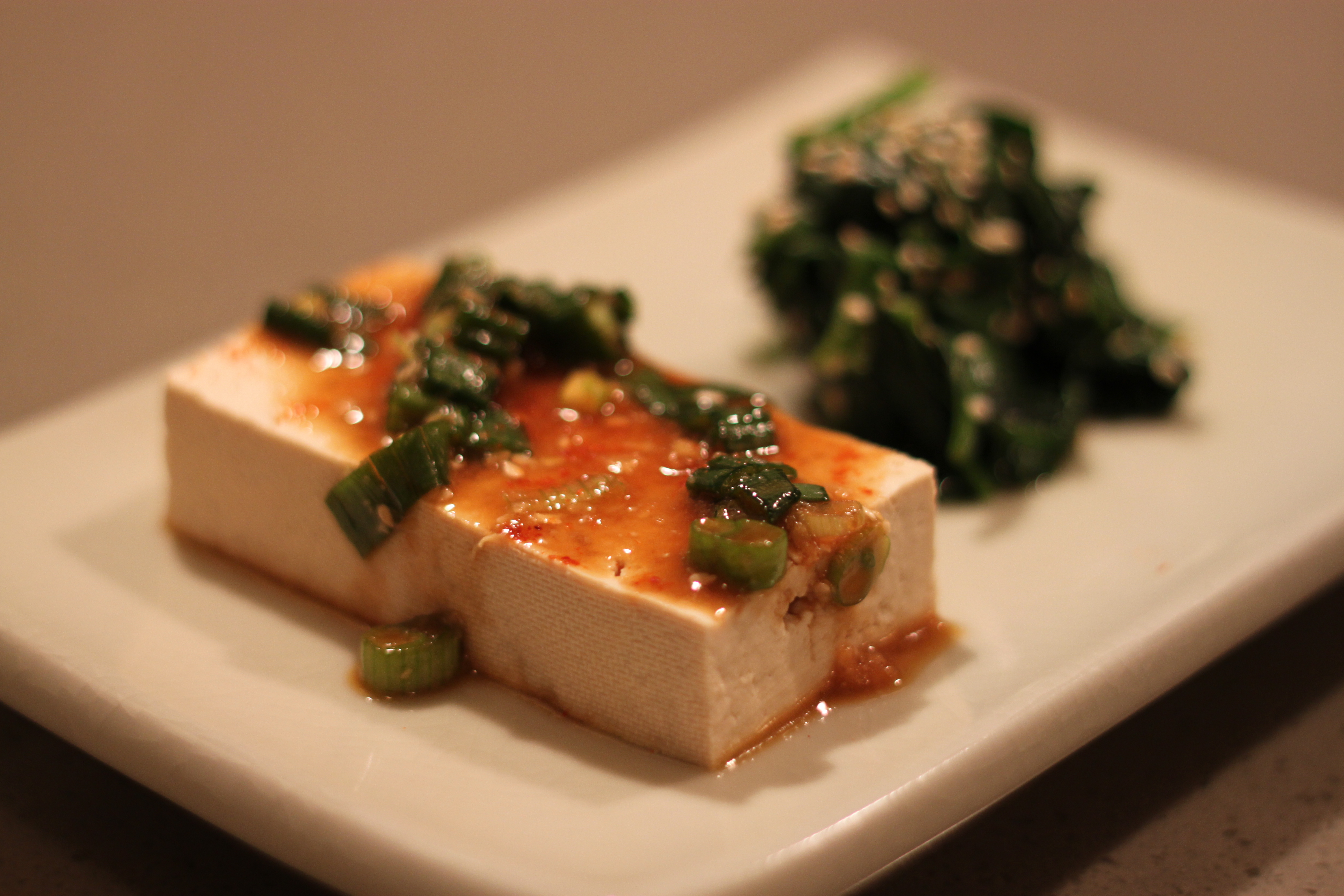
Warm Tofu with Spicy Garlic Sauce, Rice, and Steamed Spinach, Japanese Style

Like many teenage girls, I tried out vegetarianism in high school for about three months. I lost weight, my skin turned an odd(er) shade of white, and all I could think about was turkey croissants and sausage. Although my vegetarian experiment didn’t last long, I still try to eat vegetarian at least once a week. It’s healthy, of course, but also cheap. Tonight’s dinner, made with all organic ingredients, served two adults and one toddler and cost about $6, about the price of a fast-food value meal.

Warm Tofu with Spicy Garlic Sauce
adapted from Gourmet, March 2009

Serves 2 to 3

1 x 15-oz (425‑g) package soft tofu (not silken)
1 small clove garlic, chopped
4 scallions, chopped
2 teaspoons sesame seeds, toasted and crushed with the side of a heavy knife
3 tablespoons soy sauce
1 tablespoon sesame oil
1/2 teaspoon sugar
1 teaspoon coarse Korean hot red pepper flakes or other ground hot pepper

Carefully rinse the tofu, then cover with cold water in a medium saucepan. Bring the water to a simmer over medium-high heat, then keep warm, covered, over very low heat.

Meanwhile, mince and mash the garlic to a paste with a pinch of salt. Stir together the garlic paste with all remaining ingredients except the tofu and hot pepper flakes.

Just before serving, carefully lift the tofu from the saucepan with a large spatula and drain it on paper towels. Gently pat dry, then cut the tofu into 4 to 5 slices. Spoon some sauce over each tofu piece, sprinkle with pepper flakes to taste, and serve warm. Serve the remaining sauce on the side with rice.

***

Steamed Spinach, Japanese Style

Serves 3

9 oz (250 g) baby spinach
1 tablespoon soy sauce
1 tablespoon sesame seeds, toasted

Wash the spinach and drain, but do not dry thoroughly. Place the spinach in a large saucepan and cover with a tight-fitting lid. Cook the spinach over a medium heat until wilted, about 5 minutes. There should be enough water on the spinach to steam it. Toss the cooked spinach with soy sauce and garnish with sesame seeds.

Vegetarian Chili on Quinoa and Spicy Caramel Popcorn

Every year, my New Year’s resolutions are the same — be nicer and be healthier. This quick and easy menu won’t help with the “nicer” goal but sure helps with the “healthier” bit. We especially loved this dinner after a month of calorie-heavy holiday and birthday meals. Reuben’s recent discovery of the quinoa-filled menu at Protein Bar in the Chicago Loop was the inspiration for his chili and quinoa creation. For anyone else looking to lose weight or eat healthier this year, quinoa is a great dinner choice. It’s high protein, high fiber, and satisfying enough that you don’t miss the mashed potatoes or pasta that might otherwise be on your plate.

Even tonight’s dessert isn’t too decadent. Though drenched in caramel, the popcorn is relatively low in fat (only 3 tablespoons of butter!). The kicky cayenne has also been shown to increase metabolism. And, of course, it’s tasty, as in hide-it-or-I’ll-eat-the-whole-batch tasty.

Vegetarian Chili on Quinoa

2 teaspoons olive oil
1 onion, diced
1 teaspoon each of cumin, dried oregano, salt
2 stalks celery, diced
1 bell pepper, diced
4 cloves garlic, minced
1 jalapeno, minced (optional)
1 x 4‑oz (110‑g) can diced green chilies
1 x 14-oz (400‑g) can black beans, drained and rinsed
1 x 14-oz (400‑g) can kidney beans, drained and rinsed
1 x 28-oz (2 x 400‑g) can crushed tomatoes
1 tablespoon chili powder
1 cup (170 g) quinoa, rinsed and drained
1 1/2 cups (360 ml) water
2 cups (300 g) corn kernels, defrosted if frozen
garnishes: sour cream or plain yogurt, minced jalapeno, minced green onion, shredded cheddar cheese

In a Dutch oven or other large saucepan, heat the olive oil over a medium heat. Add the onion and saute for 2 minutes. Add the spices, salt, celery, bell pepper, garlic, and jalapeno and cook until the garlic becomes fragrant, about 2 minutes. Add the green chilies, beans, tomatoes and chili powder and simmer for at least 15 minutes.

Meanwhile, in a medium saucepan with a lid, combine the quinoa with the water. Bring to a boil, cover, and reduce the heat. Simmer for 15 minutes, until the quinoa is tender and the water is absorbed. Fluff the cooked quinoa with a fork and set aside (covered) until the chili is ready.

About 5 minutes before serving, mix the corn into the chili mixture. Continue cooking until the corn is heated through, about 5 minutes.

For each serving, spoon the chili over the cooked quinoa and garnish to taste with sour cream or plain yogurt, minced jalapeno, minced green onion, and cheddar cheese.

***

Spicy Caramel Popcorn
from Smitten Kitchen

Makes 4 quarts

nonstick cooking spray or vegetable oil
3 tablespoons vegetable oil
1/2 cup (100 g) popcorn kernels
2 cups (250 g) salted peanuts (optional)
1 1/2 teaspoons baking soda
1/4 teaspoon cayenne pepper
3 cups (600 g) sugar
3 tablespoons unsalted butter
1 tablespoon kosher or coarse sea salt

Lightly coat two large, heatproof rubber spatulas, a very large mixing bowl and two large baking sheets with nonstick cooking spray or a thin slick of oil.

In a large saucepan or pot with a lid, heat the oil over a medium-high heat. Add the popcorn kernels, cover and keep the saucepan moving until all of the kernels have popped, about 5 minutes. Transfer to the prepared bowl, removing any unpopped kernels. Toss with salted peanuts, if using.

In a small bowl, whisk together the baking soda and cayenne pepper.

Have the two large baking sheets ready. In a medium saucepan, combine the sugar, butter, salt and 1/2 cup (120 ml) water. Cook over a high heat, without stirring, until the mixture becomes a light golden-yellow caramel, 10 to 14 minutes. Remove from the heat and carefully whisk in the baking soda mixture (the mixture will bubble up).

Immediately pour the caramel mixture over the popcorn and don’t worry if it doesn’t all come out of the pot, you’ll have plenty. Working quickly and carefully, use the prepared spatulas to toss the caramel and popcorn together, as if you were tossing a salad, until the popcorn is well coated.

Spread the popcorn onto the baking sheets and quickly separate them into small pieces while still warm. Cool to room temperature, about 15 minutes. Once cool, store in an airtight container for up to 2 weeks.

Easy Pasta Supper with Marcella Hazan’s Tomato Sauce

I’ve eaten so much pasta in my life that my blood must be part durum wheat by now. My childhood memories of dinner are crowded with images of a big bowl of salad and a basket of garlic bread on the table and a pot of spaghetti on the stove, with a huge bucket of Kemp’s ice cream in the freezer for dessert. It’s no wonder, then, that pasta is still my go-to comfort food or the first thing I think of when I want a quick dinner. After two weeks of time-consuming holiday cooking, I’m in the mood these days for something effortless but still satisfying. This famous tomato sauce from Marcella Hazan fits the bill on both counts. The recipe couldn’t be easier — melt some butter, put a halved onion in the pan, pour in some canned tomatoes and let it all simmer for 45 minutes — but the result is an alchemical kind of magic. It’s the little black dress of pasta sauces — simple, sophisticated and versatile. You wouldn’t think it was possible for a humble can of tomatoes to be transformed into such a silky-smooth sauce so full of flavor, but don’t wait much longer to try this and see for yourself. Add in a baby leaf salad tossed with my favorite balsamic vinaigrette, a loaf of Parmesan garlic bread and a nice bottle of wine, and my favorite childhood dinner feels all grown up.

Marcella Hazan’s Tomato Sauce
adapted from Essentials of Classic Italian Cooking by Marcella Hazan

Makes enough sauce for about 1 lb (450 g) of pasta, or 4 servings

5 tablespoons (75 g) unsalted butter
1 medium yellow onion, peeled and cut in half
1 x 28 oz can (or 2 x 14 oz/400 g cans) whole plum tomatoes, with their juices
salt and freshly ground black pepper

To make the tomato sauce, melt the butter in a large pot (one that can also accommodate all the pasta later) over a medium heat, then add in onion halves and pour in the tomatoes with their juices. Season generously with salt and pepper. Bring the sauce to a simmer, mashing up the tomatoes gently with the back of a wooden spoon. Cook, uncovered, at a very slow but steady simmer, adjusting the heat as necessary, for about 45 minutes, or until droplets of fat float free from the tomato and the sauce has reduced and thickened. Stir occasionally, continuing to mash any large pieces of tomato with the wooden spoon. Taste for seasoning, then discard the onion when the sauce is ready. Add your cooked, drained pasta directly to the sauce in the pot and stir until all the pasta is coated.

***

Balsamic Vinaigrette
adapted from Epicurious, March 2003

Makes about 3/4 cup (180 ml)

3 tablespoons balsamic vinegar
1 tablespoon Dijon mustard
1 garlic clove, minced
1/2 cup (120 ml) olive oil
salt and freshly ground black pepper

In a screw-top jar, combine the vinegar, mustard, garlic and oil, shaking well to combine. Season with salt and pepper to taste.

Warm Butternut and Chickpea Salad with Tahini Dressing

I think Orangette was the first food blog I ever read. Kristin pointed me towards it years ago and I was hooked. Being the thoughtful friend that she is, Kristin sent me Molly Wizenberg’s (aka Orangette) book, A Homemade Life: Stories and Recipes from My Kitchen Table, last week for my birthday. I had already planned to make this salad, but the arrival of the book sealed the deal. It was fate. It was kismet. It was delicious.
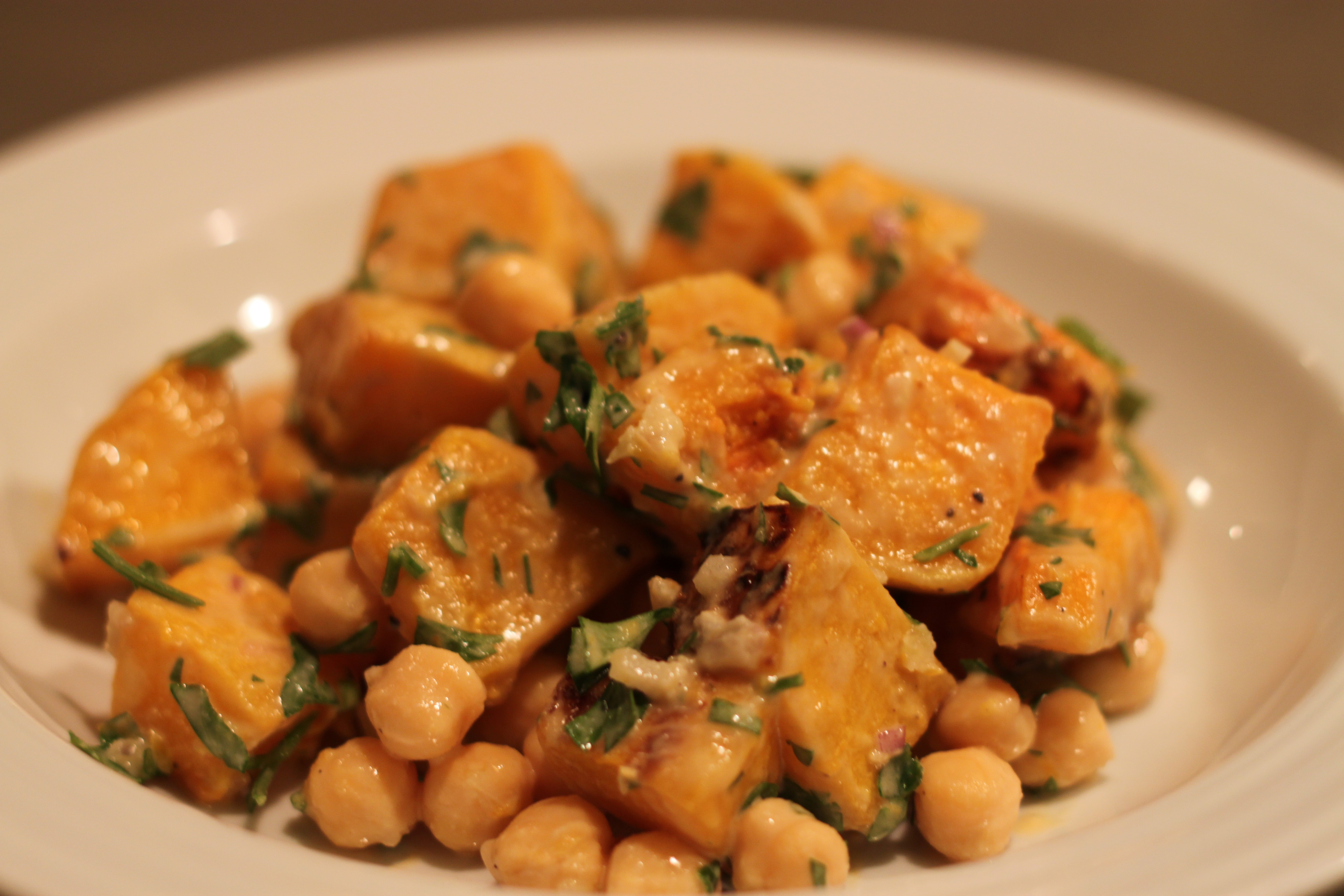
Warm butternut squash salad

Warm Butternut and Chickpea Salad with Tahini
adapted from Orangette

4 servings

For salad:
1 medium butternut squash, peeled, seeded, and cut into 1 ½‑inch pieces
1 medium garlic clove, pressed
½ teaspoon ground allspice
2 tablespoons olive oil
salt
1 x 15-oz (425 g) can chickpeas, drained and rinsed
1 or 2 shallots, finely chopped
¼ cup (10 g) coarsely chopped parsley or cilantro leaves

For tahini dressing:
1 medium garlic clove, finely minced with a pinch of salt
3 ½ tablespoons lemon juice
3 tablespoons well-stirred tahini (sesame paste)
2 tablespoons water
2 tablespoons olive oil, plus more to taste

Preheat the oven to 425°F (220°C).

In a large bowl, combine the butternut squash, garlic, allspice, olive oil, and a good pinch or two of salt. Using a large spoon or your hands, toss until the squash pieces are evenly coated. Turn them out onto a baking sheet, and bake for 15 to 25 minutes, or until soft. Remove from the oven and cool.

Meanwhile, make the tahini sauce. In a small bowl, whisk together the garlic and lemon juice. Add the tahini, and whisk to blend. Add the water and olive oil, whisk well, and taste for seasoning. The sauce should have plenty of nutty tahini flavor, but also a little kick of lemon. (I found that my tahini was a little bitter and that the lemon was a bit much, so I added additional olive oil to tame both.)

To assemble the salad, combine the squash, chickpeas, onion, and parsley in a mixing bowl. Add tahini sauce about 1/2 cup of dressing, and toss carefully. Serve, with the extra tahini dressing on the side and additional salt for sprinkling. This tastes great with a crusty piece of bread.

Note: This salad, lightly dressed, keeps beautifully in the fridge. Before serving, warm slightly with quick jolt in the microwave and serve with any extra tahini dressing.