Category Archives: Desserts

Pad Thai and Banana Walnut Muffins

I’ve been known to judge Thai restaurants by the quality of their pad thai and I don’t think I’m alone. Of all the Thai dishes we Westerners enjoy, pad thai is probably the best known (i.e., most ordered). Variations run the gamut, from peanut butter-based sauces to super spicy chili-flecked noodles. I’ve tried making pad thai in the past with disappointing results. It seemed almost too hard to wade through all the variations to find a good recipe. A few things seem to be universal (rice noodles, peanuts, lime), but the true taste of pad thai, or what I wanted pad thai to be, eluded me until Reuben found this Alton Brown version. The small quantities of some of the hard-to-find ingredients may lead you to believe you don’t really need them, but trust me, you do. Somehow a couple tablespoons of dried shrimp or a few shreds of salted cabbage really make the dish what it is. And these odd ingredients all freeze or refrigerate well for several months, so they won’t go to waste.

I’ve been making the banana walnut muffins for years. They’re moist and not too sweet, with a nearly crisp top thanks to all the butter. These freeze well too. To freeze, simply cool the muffins, then drop them into a Ziploc bag. They’ll keep for up to two months. I grab a couple frozen muffins when I wake up in the morning, then by the time the kids are dropped off at school, I can leisurely enjoy the now-defrosted muffins in the car on my way to work.

Pad Thai
adapted from Alton Brown

Serves 2

1 oz (30 g) tamarind paste
3/4 cup (180 ml) boiling water
2 tablespoons fish sauce
2 tablespoons brown sugar
1 tablespoon rice wine vinegar
4 oz (110 g) rice stick noodles
8 oz (225 g) tofu, pressed and then cut into 1/2‑inch-wide strips
2 tablespoons soy sauce
2 tablespoons peanut oil
1 bunch scallions, chopped, divided
2 teaspoons minced garlic
2 eggs, beaten
1 tablespoon salted cabbage
1 tablespoon dried shrimp
3 oz (90 g) bean sprouts, divided
1/2 cup (75 g) roasted salted peanuts, chopped, divided
freshly ground dried red chili peppers, to taste
1 lime, cut into wedges

Place the tamarind paste in the boiling water and set aside while preparing the other ingredients.

Combine the fish sauce, sugar, and rice wine vinegar in a small bowl and set aside.

Place the rice stick noodles in a mixing bowl and cover with hot water. Set aside while you prepare the remaining ingredients. Once the other ingredients are measured out into separate bowls, drain the water from the noodles and set them aside.

In a small bowl, toss the tofu with the soy sauce and let it marinate.

Press the tamarind paste through a fine mesh strainer and add to the sauce. Stir to combine.

Place a wok over a high heat. Once hot, add 1 tablespoon of the peanut oil. Heat the oil until it shimmers, then add the tofu. Cook the tofu until golden brown, moving constantly, for 1 to 2 minutes. Remove the tofu from the pan to a small bowl and set aside.

If necessary, add some more peanut oil to the pan and heat until shimmering. Add two-thirds of the scallions and then the garlic. Cook for 10 to 15 seconds. Add the eggs to the pan; once the eggs begin to set up, about 15 to 20 seconds, stir to scramble. Add the remaining ingredients in the following order and toss after each addition: noodles, sauce, cabbage, shrimp, and two-thirds of the bean sprouts and peanuts. Toss everything until heated through, but no longer than 1 to 2 minutes total. Transfer to a serving dish. Garnish with the remaining scallions, bean sprouts, and peanuts. Serve immediately with the ground chili peppers and lime wedges.

***

The Palace Cafe’s Banana Walnut Muffins
adapted from The Palace Cafe

Makes 1 dozen

1 1/2 cups (180 g) all-purpose flour
3/4 cup (150 g) sugar
3/4 cup (about 3 oz/90 g) chopped walnuts
1 1/2 teaspoon baking soda
1/4 teaspoon salt
3 ripe bananas, well mashed (about 1 1/4 cup)
1/2 cup (1 stick/110 g) unsalted butter, melted and cooled
1 egg
2 1/2 tablespoons milk

Preheat the oven to 350°F (180°C). Grease 12 (1/2 cup) muffin cups or line with paper or silicone muffin liners. Mix together the flour, sugar, chopped walnuts, baking soda and salt in a large bowl. Combine the bananas, butter, egg and milk in a medium bowl. Add the banana mixture to the dry ingredients, mixing until just combined. Divide the batter among the prepared muffin cups. Bake until a tester inserted into the center of a muffin comes out clean, about 25 minutes. Serve warm or at room temperature.

Fettucine with Brussels Sprouts and Pine Nuts and Christmas Rocky Road

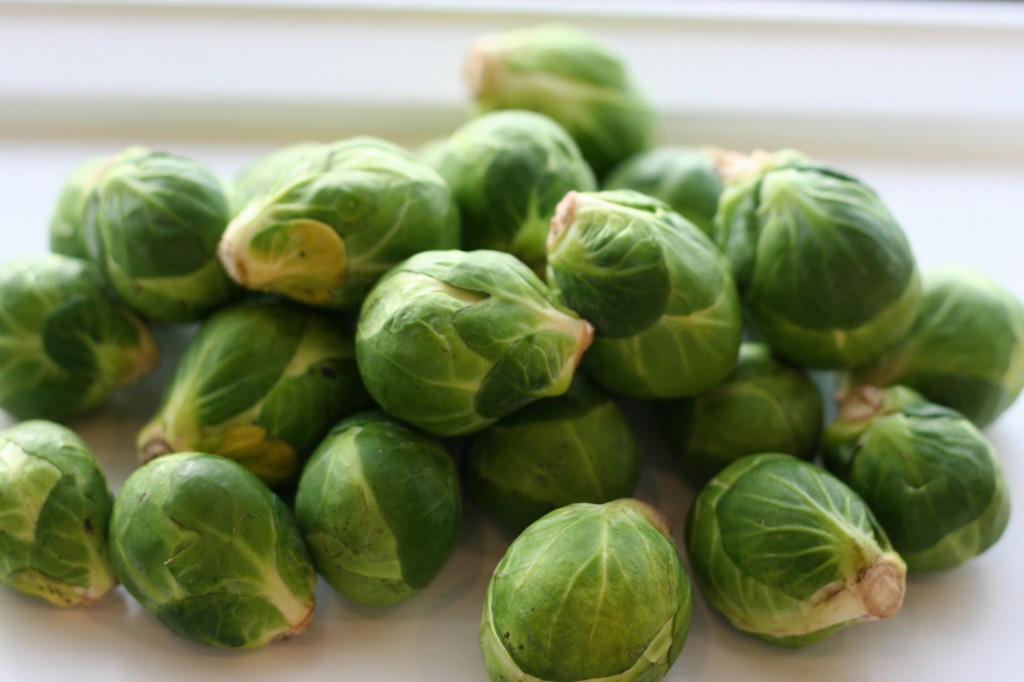
If greens are the outcasts of the vegetable world, then Brussels sprouts must be out-and-out exiles. I think they look like little alien heads, but I love how Kitchen Scraps portrays them, as Mr. B. Russell Sprout, “who lived in a red-brick townhouse on a cobblestone lane near the bank where he worked. Even the other bankers thought Mr. Sprout was an old fuddy-duddy because he always wore the same limp green tweed suit and bowler hat every day.” If they’re overcooked, they turn bitter and taste awful, which is why most people don’t like them — or just think they don’t. If cooked properly, they have a delicate nutty flavor, yet popular culture ranks them right up there with knocking back a spoonful of cod liver oil straight up. If you think you don’t like Brussels sprouts, try this recipe. And if you don’t believe me, go read some of the reviews of it here and see how many former sprouts haters were converted. I like to make this for a quick weeknight meal as soon as sprouts are in season, but especially around the holidays, on a day when you feel like you need a break from all the excess.

I have to warn you about the rocky road — you’ll find it hard to stay away from it. The first time I made it, we ate the whole pan in less than 24 hours by constantly going back for just one more little piece. As I found out the hard way last week, this isn’t the best treat to make for a play date. The kids loved it and kept sneaking pieces off the plate, but not being the daintiest eaters, their mouths and hands were quickly covered with chocolate.

IMG_0892

Fettuccine with Brussels Sprouts and Pine Nuts
adapted from Gourmet, November 2007

Serves 4

I’ve adapted this to add pancetta and a generous splash of cream. After reading the reviews on Epicurious, next time I’ll try adding some lemon zest and juice and a bit of white wine as well.

3/4 lb (340 g) Brussels sprouts, trimmed
1/2 lb (225 g) dried egg fettuccine
4 oz (110 g) pancetta or bacon (optional; omit for a vegetarian version)
2 tablespoons unsalted butter
2 tablespoons extra-virgin olive oil
3 tablespoons pine nuts
1/2 teaspoon salt
1/4 teaspoon pepper
1/4 cup (60 ml) heavy cream
plenty of freshly grated Parmesan, to serve

Slice the Brussels sprouts in a food processor fitted with the slicing disk (or else slice them very thinly by hand). Cook the fettuccine in a pasta pot of boiling salted water (3 tablespoons salt for 6 quarts water) until al dente.

Cook the pancetta or bacon until crisp. Drain on paper towels and set aside.

Heat the butter and oil in a large heavy skillet over a medium heat until the foam subsides, then cook the pine nuts, stirring, until golden, 1 to 2 minutes. Add the Brussels sprouts, salt and pepper, then saute over a medium-high heat until tender and lightly browned, about 4 minutes.

Reserve 1/2 cup (120 ml) of the pasta cooking water, then drain the pasta and add to the skillet along with the cream, tossing with enough of the reserved water to moisten. Serve with freshly grated Parmesan cheese.

***

Christmas Rocky Road
adapted from Nigella Christmas by Nigella Lawson

9 oz (250 g) dark chocolate, chopped
5 oz (150 g) milk chocolate, chopped
6 oz (175 g) butter, softened, plus extra for greasing
4 tablespoons golden syrup or light corn syrup
7 oz (200 g) amaretti biscuits, digestive biscuits or, in the States, Nilla wafers or any plain cookie
5 oz (150 g) shelled Brazil nuts
5 oz (150 g) red glacé cherries
4 oz (110 g) mini marshmallows
1 tablespoon icing sugar

Place the dark and milk chocolate pieces into a heavy-based pan. Add the butter and golden syrup and cook over a low heat to melt and combine.

Place the amaretti biscuits into a freezer bag and bash with a rolling pin to make crumbs of various sizes. (Or pulse in the food processor a few times.) Place the Brazil nuts into another freezer bag and bash in the same way.

Take the pan of melted chocolate mixture off the heat and add the crushed biscuits and nuts. Add the glacé cherries and mini marshmallows. Fold the mixture carefully to coat all of the solid ingredients with the syrupy chocolate mixture.

Pour the mixture into a 10 x 2‑inch greased and lined baking tray and smooth the surface as much as possible (although it will look bumpy). Refrigerate for 2 hours, or until firm enough to cut. Dust with icing sugar. Remove the block of rocky road from the tray and cut into 24 rectangles.

Herb-roasted Turkey with Shallot Pan Gravy, Thanksgiving Stuffing, Buttermilk Mashed Potatoes, and Honeyed Pecan Pie

This year is my first time to host Thanksgiving. In fact, except for the Christmas when I was 9+ months pregnant and didn’t dare venture away from my doctor, I’ve never hosted a major holiday, so I was really excited to spend some time researching recipes and planning our menu. Luckily, my sister-in-law and mother-in-law are also cooking dishes  so I won’t be overwhelmed with cooking. Unlike Kristin, except for the pecan pie, I haven’t made any of my Thanksgiving recipes but they sound good to me and, almost as important, they don’t seem too time consuming. Speaking of time, for those of you who are also planning your menus right now, I’ll lay out my game plan. Sunday, shop for all beverages and groceries. Monday, wash table linens and polish candlesticks. Tuesday, make herb butter (for turkey), clean house. Wednesday, bake pie and cornbread, cube cornbread and French bread (for stuffing). Thursday, put turkey in the oven, set table, prepare remaining dishes, pour glass of wine and enjoy!

Herb-roasted Turkey with Shallot Pan Gravy
from Bon Appétit, November 2000

Serves 10

3/4 cup (180 g) butter, room temperature
3 tablespoons chopped fresh parsley plus 3 whole sprigs
2 tablespoons chopped fresh sage plus 3 whole sprigs
2 tablespoons chopped fresh thyme plus 3 whole sprigs
3/4 teaspoon salt
1/2 teaspoon coarsely ground black pepper
1 x 15- to 16-lb (7‑kg) turkey, rinsed and patted dry
1 1/2 lb (680 g) shallots, peeled and halved lengthwise through root end
3 cups (720 ml) (or more) low-sodium chicken broth
1 cup (240 ml) dry white wine
2 tablespoons all-purpose flour

Mix the butter, chopped parsley, chopped sage, chopped thyme, 3/4 teaspoon salt and 1/2 teaspoon pepper in a medium bowl to blend. (This can be prepared 3 days ahead. Transfer the herb butter to a small bowl; cover and refrigerate. Bring the butter to room temperature before using.) Position a rack in the bottom third of the oven and preheat to 350°F (180°C). Sprinkle the main cavity of the turkey with salt and pepper. Place the whole parsley, sage and thyme sprigs and 4 shallot halves in the cavity. Starting at the neck end, carefully slide your hand between the skin and breast meat to loosen the skin. Spread 3 tablespoons herb butter over the breast meat under the skin. Tuck the wing tips under, then tie the legs together to hold their shape. Place the turkey on a rack set in a large roasting pan. Rub 4 tablespoons of the herb butter over the turkey. Cover only the breast area of the turkey with a sheet of heavy-duty foil. Scatter the remaining shallots in the pan around the turkey.

Roast the turkey for 30 minutes, then baste with 1/2 cup (120 ml) broth. Continue roasting the turkey for 1 1/2 hours, basting with 1/2 cup (120 ml) broth every 30 minutes. Remove the foil from over the turkey breast. Continue to roast the turkey until golden brown and a thermometer inserted into the thickest part of the thigh registers 180°F (80°C), basting with pan juices every 20 minutes, for about 1 hour longer. Transfer the turkey to a platter. Brush with 1 tablespoon of herb butter. Tent loosely with foil and let stand 20 minutes.

Using a slotted spoon, transfer the shallots from the roasting pan to a plate. Pour the pan juices into a medium bowl; spoon off the fat and discard. Add the wine and 1 cup (240 ml) of chicken broth to the roasting pan. Set the pan directly over 2 burners and bring the broth mixture to a boil, scraping up any browned bits. Continue to boil until reduced by half, about 3 minutes; pour into a large glass measuring cup. Add the degreased pan juices. Add enough broth, if necessary, to equal 3 cups (720 ml) liquid.

Blend the flour into the remaining herb butter. Pour the broth mixture into a heavy medium saucepan and bring to a boil. Gradually whisk in the herb butter mixture. Add any accumulated juices from the turkey platter. Boil until the gravy thickens enough to coat a spoon lightly, whisking occasionally, about 6 minutes. Add the shallots to the gravy and simmer for 1 minute. Season the gravy with salt and pepper. Serve the turkey with the gravy.

***

Thanksgiving Stuffing
from The Pioneer Woman 

Serves 10

1 pan of cornbread
1 loaf French bread, somewhat crusty
1 stick (110 g) butter
1 whole medium onion, diced
2 cups (250 g) celery, chopped
4 cups (1 liter) low-sodium chicken broth
1/4 cup (10 g) chopped fresh parsley
2 to 3 teaspoons fresh chopped rosemary
1/2 teaspoon dried basil
1/2 teaspoon dried thyme
salt to taste

Chop the cornbread and loaf of French bread into 1‑inch cubes. Spread them out on two baking sheets and let them dry for approximately 24 hours.

Heat a large skillet over medium heat and add the butter. When it’s melted, add the onion and celery and cook for a few minutes, until the onions are almost translucent. While the onion and celery are cooking, chop up any fresh herbs you will be using.

Add 4 cups of chicken broth and bring to a boil. Add the parsley, rosemary, basil and thyme. Stir until combined.

Place all of your dried bread cubes into a large bowl and mix them up a bit. Gradually ladle the broth mixture into the bread, tossing lightly as you go. Keep gradually adding the broth mixture, tasting as you go and adding more seasoning and herbs if needed. Add salt carefully. You don’t want to over-salt your stuffing. If the mixture isn’t quite moist enough, add a bit more chicken broth and stir.

Either stuff the bird and cook according to directions or place in a baking dish and bake at 350°F (180°C) for 20 to 25 minutes or until golden brown on top.

***

Buttermilk Mashed Potatoes 
from A New Way to Cook by Sally Schneider

Serves 4 [Note: I plan to double this recipe]

You can make the potatoes up to 3 hours ahead. About 20 minutes before serving, warm them in a double boiler, stirring frequently, until hot.

1 1/4 lb (570 g) thin-skinned potatoes, such as Yellow Finns or Yukon Golds, peeled and cut into 2‑inch chunks if large
1 1/2 teaspoons kosher salt
3/4 cup (180 ml) buttermilk, warmed (not hot)
1 tablespoon unsalted butter
freshly ground black pepper

Place the potatoes and 1 teaspoon of the salt in a medium saucepan, add enough water to cover, and bring to a boil over a high heat. Reduce the heat to moderate and simmer until the potatoes are tender when pierced with a fork, about 45 minutes. Drain, reserving 1/4 cup of the cooking water.

Return the potatoes to the pan and set over a low heat, uncovered, for about 5 minutes, stirring occasionally, to let the potatoes dry out a little (too much moisture will dilute their flavor). For the smoothest potatoes, pass them through a food mill or potato ricer. For a slightly coarser puree, mash them with a potato masher or fork or use a hand mixer. Beat the buttermilk into the potatoes with a wooden spoon until thoroughly incorporated. If you prefer even creamier potatoes, add a little of the reserved cooking liquid. Beat in the butter, the remaining 1/2 teaspoon salt, and plenty of pepper. Serve at once, or keep the potatoes warm, covered, in a double boiler over hot water for up to 1 hour.

***

Honeyed Pecan Pie

Serves 8

1 cup (170 g) brown sugar (lightly packed)
1 cup (200 g) (or a bit less) light corn syrup (or golden syrup)
1/4 cup (60 ml) honey
1/2 teaspoon salt
1/3 cup (80 g) butter, melted
3 eggs, lightly beaten
1 1/2 cups (150 g) roasted, chopped pecans
1 x 9‑inch pie crust
whipped cream (optional)

Preheat the oven to 350°F (180°C).

Combine the brown sugar, corn syrup, honey, salt, and melted butter in a large bowl. Stir in the beaten eggs and mix well. Stir in the pecans. Pour the pecan mixture into the prepared pie crust and bake at 350°F (180°C) for 1 hour. Serve the pie warm or at room temperature with a dollop of freshly whipped cream, if desired.

Cider-brined Turkey with Maple Chili Glaze, Homemade Stuffing, Bourbon Sweet Potato Puree, Roasted Winter Vegetables, and Nutmeg Maple Cream Pie

I know what you’re thinking — it’s only November 9th and she already has her entire Thanksgiving menu planned? I could try to blame it on the blog and say that I just wanted to get these recipes out there so that anyone who wanted to make any of them would have them well ahead of time so they can plan accordingly themselves … and that’s partly true. It’s also true that I’ve been making most of these recipes for years now, so I’m more or less just sticking to my tried-and-tested menu. But it’s also true that I had my children’s big Christmas presents ordered in July. I can’t help it — as a third-generation Virgo, planning ahead is just in my blood.

I should point out that this turkey recipe only uses the crown, which means you won’t get that Norman Rockwell moment of bringing a whole gloriously roasted turkey to the table. But honestly, don’t most people prefer the breast meat anyway? I find that using only the crown makes it easier and less time consuming to cook, not to mention that it takes up a lot less space in my fridge. Having said that, though, you could easily play around with this recipe to adjust it for a whole turkey. For anyone curious about the method behind the madness of brining a turkey, there are some interesting articles about it here and here. As for me, I’ve been brining turkey for years and think it’s the only way to go.

Poinsettia Cocktail
from Nigella Christmas by Nigella Lawson

Makes 8 to 9 glasses

1 x 75cl bottle of Prosecco or other fizzy dry wine, chilled
120 ml Cointreau, Grand Marnier or Triple Sec, chilled
500 ml cranberry juice, chilled

Mix all the ingredients in a large pitcher. Pour into wine glasses or champagne flutes and serve.

***

Cider-brined Turkey with Maple Chili Glaze 
adapted from A Kitchen Year by Paula McIntyre

Serves 8

1 x 11-lb (5‑kg) turkey crown
4 oz (110 g) butter, softened
salt and freshly ground black pepper

for the brine solution:
9 oz (250 g) sea salt
3 cups (510 g) Demerara sugar or light brown sugar
8 cups (2 litres) cider
8 cups (2 litres) water
2 cinnamon sticks
juice and zest of 2 oranges
1 onion, chopped
handful fresh chopped sage, rosemary and thyme

for the maple chili glaze:
1 red chili
1 tablespoon vegetable oil
1 onion, finely chopped
4 tablespoons maple syrup
2 tablespoons apple cider vinegar
3/4 cup (180 ml) cider
salt

To make the brine, bring all the brine ingredients to the boil and simmer for 10 minutes. Cool completely and add the turkey. Refrigerate for at least 24 hours. Remove from the brine and pat dry with paper towels.

To make the glaze, soak the chili in boiling water for 20 minutes. When cool enough to handle, remove the seeds and chop roughly. Heat the oil in a saucepan over a medium heat and add the onion. Cook until the onion is soft and golden, about 10 minutes. Add the chopped chili, maple syrup, vinegar and cider and simmer until the liquid has reduced by half. Blend to a smooth puree in a blender or food processor and pass through a fine-meshed sieve (if you have one; don’t worry about it if you don’t). Return to the pan and simmer until it has reached a syrupy consistency, about 10 minutes. Check the seasoning.

To cook the turkey, preheat the oven to 350°F (180°C). Place the turkey on a roasting rack and rub all over with the softened butter. Season well with salt and pepper. Cover with tin foil and place in the oven. Cook for 1 hour. Remove the foil and brush the glaze all over. Return to the oven and baste every 10 minutes. A good rule of thumb for cooking turkey is to allow 30 minutes per 2 1/4 lb (1 kg) plus an extra 15 minutes’ cooking time. A 11-lb (5‑kg) turkey breast will take just over 3 hours to cook and the internal temperature should register at least 160°F (70°C). Allow to rest at least 20 minutes before carving.

***

Homemade Stuffing
adapted from The New Vegetarian Epicure by Anna Thomas

Serves 10 (or enough for a 16 to 20-lb (7 to 9‑kg) turkey or 2 medium casseroles)

Homemade stuffing isn’t nearly as hard to make as you might think, and it tastes so much better than Stovetop. This is the recipe I use for every Thanksgiving and Christmas dinner at our house now. It’s not as fancy or elaborate as a lot of stuffing recipes, but I like it for its unfussy simplicity. If you want to make this ahead (though not more than 1 day), make it up to the point where you spoon it into the casserole, then cook it in the oven when you want to serve it (though it might need longer in the oven than the 45 minutes given here).

3/4 cup (170 g) butter
2 cups chopped onions (2 or 3 onions)
2 cups sliced or chopped celery (3 or 4 stalks of celery)
1 to 2 teaspoons salt
freshly ground black pepper, to taste
3 teaspoons dried sage
3 teaspoons poultry seasoning
1/2 cup (10 g) chopped fresh parsley
2 to 3 tablespoons apple cider vinegar
4 quarts (about 4 liters) of 1/2‑inch bread cubes
2 cups (480 ml) vegetable or chicken broth, or both

Preheat the oven to 350°F (180°C).

Melt the butter in a large pot and saute the chopped onion and celery in it until they are soft and just starting to color. Add about a teaspoon of salt, pepper to your taste, the herbs and the cider vinegar. Stir well and remove from the heat.

Put the bread cubes into the pot with the sauteed vegetables and herbs with all their butter, tossing everything together until it’s thoroughly combined. Drizzle on half the broth, toss again, and test. You’re aiming for a mixture that’s soft and moist throughout, but not soggy or soupy. Keep adding broth, a little at a time, mixing everything up well after each addition, until you have the consistency you like. The amount of broth used will vary quite a bit, depending on what kind of bread you use and how dry it is. If you’re roasting a turkey and plan to bake the stuffing separately but want the flavor of the turkey in it, you could add some drippings in place of part of the broth. In that case, however, cut down a little on the butter. If, on the other hand, you plan to stuff a turkey, leave the stuffing just a little on the dry side. When the texture feels right, taste and correct the seasoning with more salt or pepper if needed.

Spoon the stuffing into two buttered casserole dishes, or one very large one, cover well, and bake for about 45 minutes. Alternatively, spoon it into a turkey that’s been prepared for roasting.

***

Cranberry Sauce
adapted from The New Vegetarian Epicure by Anna Thomas

Serves 6 to 8

This keeps in the fridge for about 1 week, so is an ideal dish to make ahead.

12 oz (340 g) fresh cranberries
zest of 1 large orange
1 cup (240 ml) freshly squeezed orange juice
3/4 cup (150 g) sugar
1 teaspoon cinnamon
pinch of ground cloves

Wash the cranberries and discard any that are soft or spoiled. Combine the orange zest and juice in a heavy-bottomed saucepan with the sugar, cinnamon and cloves and bring to a boil, stirring to dissolve the sugar. Add the cranberries, return to a boil, and stir over a medium heat for 8 to 10 minutes. Use a long-handled wooden spoon, as the cranberries can really spit at you as they cook and pop. When most of the cranberries have popped and the liquid is somewhat thickened, the sauce is done. Pour it into a serving dish and allow it to cool, then chill.

***

Bourbon Sweet Potato Puree with Mascarpone and Caramelized Maple Pecans

Serves 6 to 8

These caramelized pecans (or you could use walnuts) would also make a wonderful accompaniment to an after-dinner cheese plate. They can also be made up to a few days in advance to save time on the day. If you like this puree, you’ll also like these bourbon-mashed sweet potatoes.

for the sweet potato puree:
3 lb (1.4 kg) sweet potatoes (2 or 3 large potatoes)
3 tablespoons bourbon
1/2 cup (120 ml) mascarpone

for the caramelized maple pecans:
1/3 cup (75 g) sugar
2 tablespoons maple syrup
1 cup (100 g) pecans

Preheat the oven to 400°F (200°C).

Line a baking sheet with aluminum foil. Prick the potatoes with a fork and place them on the baking sheet. Bake for about 1 to 1 1/2 hours, until the potatoes are tender. (If using very large potatoes, make sure they are cooked all the way through.)

Meanwhile, to make the caramelized maple pecans, place the sugar, maple syrup and pecans in a small saucepan on a medium heat. Allow the sugar and syrup to caramelize slightly, without stirring, which will take about 15 minutes. Gently swirl the pan to spread the sugar evenly, then replace the pan on the heat to allow the sugar to caramelize completely. Once all the sugar has melted and has nicely browned and caramelized, carefully pour the pecans onto parchment paper or a silicone baking mat. Allow the pecans to cool and harden, then break up the mixture to separate the nuts. Set aside.

When the potatoes are cool enough to handle, peel them and transfer to a food processor. Add the bourbon and mascarpone and process until the mixture is smooth.

Transfer the potato puree to a large gratin dish or casserole dish and smooth the top. Bake in the oven for 10 to 15 minutes, until heated through. Sprinkle the caramelized pecans evenly over the top and serve.

***

Roasted Winter Vegetables
adapted from Barefoot Contessa Family Style by Ina Garten

1 lb (450 g) carrots, peeled
1 lb (450 g) parsnips, peeled
1 large sweet potato, peeled
1 small butternut squash, peeled and seeded (about 2 lb/900 g)
3 tablespoons good-quality olive oil
1 1/2 teaspoons kosher salt
1/2 teaspoon freshly ground black pepper
2 tablespoons chopped flat-leaf parsley

Preheat the oven to 425°F (220°C).

Cut the carrots, parsnips, sweet potato, and butternut squash into 1‑inch cubes. All the vegetables will shrink while baking, so don’t cut them too small. Place all the cut vegetables in a single layer on 2 baking sheets. Drizzle them with olive oil, salt, and pepper and toss well. Bake for 25 to 35 minutes, until all the vegetables are tender, turning once with a metal spatula. Sprinkle with parsley, season to taste, and serve hot.

***

Nutmeg-maple Cream Pie
pie is adapted from The New York Times and the crust from Orangette

Serves 8

Pastry is not my forte, but I’ve had good results with this crust from Orangette. If you have your own favorite pie crust recipe, by all means use that instead, or use a store-bought pie shell. Smitten Kitchen has two helpful pie crust tutorials here and here.

for the nutmeg-maple cream pie filling:
3/4 cup (180 ml) maple syrup
2 1/4 cups (540 ml) heavy cream
4 egg yolks
1 whole egg
1/4 teaspoon salt
1 teaspoon freshly grated nutmeg
1 teaspoon vanilla extract

for the crust:
4 tablespoons ice water, plus more as needed
3/4 teaspoon apple cider vinegar
1 1/2 cups (180 g) unbleached all-purpose flour
1 tablespoon sugar
3/4 teaspoon salt
9 tablespoons (4 1/2 oz/130 g) cold unsalted butter, cut into cubes

To make the crust, combine the 4 tablespoons of  ice water and the cider vinegar in a small bowl or measuring cup.

In the bowl of a food processor, combine the flour, sugar, and salt. Pulse to blend. Add the butter, and pulse until the mixture resembles a coarse meal; there should be no pieces of butter bigger than a large pea. With the motor running, slowly add the water-vinegar mixture, processing just until moist clumps form. If you pick up a handful of the dough and squeeze it in your fist, it should hold together. If the dough seems a bit dry, add more ice water by the teaspoon, pulsing to incorporate. (Molly at Orangette sometimes finds that 1 additional teaspoon is perfect.)

Turn the dough out onto a wooden board or clean countertop, and gather it, massaging and pressing, until it just holds together. Shape it into a ball, and press it into a disk about 1 1/2 inches thick. If the disk cracks a bit at the edges, don’t worry; just pinch the cracks together as well as you can. Wrap the dough in plastic wrap and then press it a bit more, massaging away any cracks around the edges, allowing the constraint of the plastic wrap to help you form it into a smooth disk. Refrigerate the wrapped dough for at least 2 hours. (Dough can be kept in the refrigerator for up to 4 days or frozen for up to 1 month. Thaw it in the refrigerator overnight before using.) Before rolling it out, allow the dough to soften slightly at room temperature.

On a lightly floured surface, roll the dough into a circle wide enough to fit a 9‑inch removable-bottom pie dish. Transfer the dough gently into the dish and ease it into the corners and up the sides. Trim the edges to extend about 1/2 inch beyond the dish, then fold the overhang inward and press it against the side of the pan to reinforce the edge.

To par-bake the pie crust, preheat the oven to 350°F (180°C). Line the pie shell with foil or parchment paper and fill with pie weights or dried beans. Bake for 10 to 12 minutes or until it’s beginning to set. Remove the foil with weights and bake for 15 to 18 minutes longer, or until golden. If the shell puffs during baking, press it down with the back of spoon. Cool on a wire rack.

To make the pie filling, lower the oven to 300°F (150°C). In a medium saucepan over a medium-high heat, reduce the maple syrup by a quarter, 5 to 7 minutes. Stir in the cream and bring to a simmer. Remove from the heat.

In a medium bowl, whisk together the egg yolks and egg. Whisking constantly, slowly add the cream mixture to the eggs. Strain the mixture through a fine-mesh sieve into a cup or bowl with a pouring spout. Stir in the salt, nutmeg and vanilla.

To assemble, pour the filling into the crust and transfer to a rimmed baking sheet. Bake until the pie is firm to the touch but jiggles slightly when moved, about 1 hour. Let cool to room temperature before serving.

Penne with Prawns, Cream and Tomato and Blondies with Pecans and Chocolate Chips

The only culture shock of going to college in Madison, Wisconsin having grown up right on the state border in Illinois was discovering that people from northern Wisconsin really do have accents like they do in the movie Fargo, and that they say bubbler instead of drinking fountain and soda instead of pop (aka minerals or fizzy drinks in Ireland; oh, the adaptations I’ve had to make). I was genuinely shocked as a freshman, though, to discover that a new friend I’d made in the dorms who came from Maryland had never even heard of bratwurst, much less had one. You mean not all Americans had seen the commercial about Charlie Murphy cooking Johnsonville Brats? Not everyone had beer brats at every summer barbecue? I was just as surprised when my husband and I were first living together and I found out he’d never heard of or had German potato salad, which I’d thought was a staple at every grocery store deli counter. I could understand that bratwurst might be a Midwestern thing, explaining why my east coast friend hadn’t heard of them, but Matt is from Michigan. I was surprised once again when earlier this week I said I was making blondies to bring to a play date the next day, since I’d had an inexplicable craving for them for awhile, and Matt had never heard of those either. “Oh come on,” I said, “you have to know what a blondie is. Every Ruby Tuesday or Applebee’s or TGI Friday’s has a blondie sundae on their dessert menu.” But no, he insisted he had no idea what they were. Not quite a brownie and not quite a cookie, you can have it on its own or, in true over-the-top American chain restaurant style, top it with a scoop of vanilla ice cream with chocolate fudge sauce drizzled over everything. Now I’m wondering what other food is particular to the Midwest — anyone for a lemon Jello ham salad?

Penne with Prawns, Cream and Tomato
adapted from Apples for Jam by Tessa Kiros

Serves 4

2 tablespoons butter
1 x 14-oz (400‑g) can of whole plum tomatoes
salt and freshly ground black pepper
1 lb (450 g) penne
1 tablespoon olive oil
1 lb 2 oz (500 g) raw prawns, peeled and deveined (or you can use the same amount of frozen prawns)
2 cloves garlic, chopped
3 tablespoons cream
1 tablespoon chopped fresh parsley

Melt 1 tablespoon of butter in a small pan, and when it’s sizzling, add the whole tomatoes, crushing them with the back of a wooden spoon. Season with salt and pepper and cook over a medium heat for about 10 minutes, until the sauce is thick.

Meanwhile, cook the pasta in a large pot of boiling salted water, according to packet instructions. While the pasta is cooking, heat a large non-stick frying pan over a high heat. Heat the oil and the rest of the butter, then add the prawns and garlic. Over the highest heat possible, cook the prawns until they’re bright and the undersides are crusty and golden in places (you won’t achieve this with frozen prawns). It’s important that you use a non-stick pan so that the prawns fry quickly instead of boiling in their own liquid. Turn them with tongs, and once they’re cooked, sprinkle them with salt.

Drain the pasta, reserving a cup of the cooking water. Add the tomato sauce to the prawns, along with the cream and parsley. Heat until just bubbling. Add the pasta to the pan and toss everything together. If it seems like you need it, add a little of the reserved cooking water to help the sauce coat the pasta. Serve immediately with a grinding of black pepper.

***

Blondies with Pecans and Chocolate Chips 
from Bon Appétit, July 1998

Makes approx. 24 blondies

I love Smitten Kitchen’s idea of making blondies with bourbon or espresso powder, but alas, I was making these to serve to kids. These can be prepared 1 day ahead; just cover and leave out at room temperature.

2 cups (240 g) all-purpose flour
1 teaspoon baking powder
3/4 teaspoon salt
1/4 teaspoon baking soda
10 tablespoons (1 1/4 sticks) (140 g) unsalted butter
2 cups (packed) (340 g) golden brown sugar
2 large eggs
2 teaspoons vanilla extract
3/4 cup (130 g) semisweet chocolate chips
3/4 cup (90 g) chopped pecans

Preheat the oven to 350°F (180°C). Butter and flour a 13 x 9 x 2‑inch baking pan. Mix the flour, baking powder, salt and baking soda in a medium bowl. Melt the butter in a large saucepan over a low heat. Remove the saucepan from the heat, then add the sugar and whisk to blend. Whisk in the eggs and vanilla extract, then gradually stir in the flour mixture (the batter will be thick). Spread the batter in the prepared pan and sprinkle with the chocolate chips and pecans. Bake the blondies for about 25 minutes, until a tester inserted into the center comes out with moist crumbs attached. (Don’t overcook them, or they’ll turn out hard and dry.) Cool the blondies in the pan on a rack. Cut into squares and serve.

Fish Pie with Sauteed Carrots and Pumpkin Seed Brittle

At the office where my husband worked for 10 years in Drogheda, there’s a fantastic fishmonger just down the street. Matt tended to stop in to buy fish there at least once a week, eventually getting to be on first-name terms with them. Since September, though, Matt has been based in the Dublin office. The move has brought lots of changes, not least of which is the fact that getting fish is now a lot harder than it used to be and we don’t eat as much of it as we used to. (I don’t suppose anyone knows a good fishmonger around Parnell Square in Dublin?) But any time we have to run errands in Drogheda instead of our own town, we make a point of stopping in to get something. I had to go tthere recently and jumped at the chance to pick up some of the fishmonger’s own fish pie mix, a combination of salmon, smoked haddock and white fish. If you’re lucky enough to have a fishmonger near you, they might do something similar. Otherwise, just use the fish called for in the recipe.

fish pie (before)

Fish Pie
adapted from Apples for Jam by Tessa Kiros

Serves 5

I sometimes add diced carrots and celery along with the mushrooms to pack in some extra veggies. You could also try adding a few chopped shallots.

for the sauce:
2 tablespoons (30 g) butter
1/4 cup (30 g) all-purpose flour
1 1/4 cup (300 ml) vegetable broth, warmed
1/2 cup (120 ml) cream

for the pie:
4 tablespoons (60 g) butter
1 clove garlic, chopped
7 oz (200 g) mushrooms, sliced
2 tablespoons white wine
1 lb 2 oz (500 g) skinless halibut, cod or snapper fillets
1 lb 2 oz (500 g) raw prawns, peeled and deveined
2 tablespoons chopped parsley
2 lb 4 oz (1 kg) potatoes, peeled and cut into chunks
3/4 cup (185 ml)  milk, warmed
lemon wedges, to serve

Preheat the oven to 400°F (200°C) and butter a large ovenproof dish (or you could do individual serving dishes).

To make the sauce, melt the butter in a small saucepan and then stir in the flour. Cook for 1 minute or so over a medium heat and then add the broth, whisking well to make a smooth sauce. Let it bubble up for a few minutes and then stir in the cream. Taste for salt and pepper (your broth will probably be seasoned already).

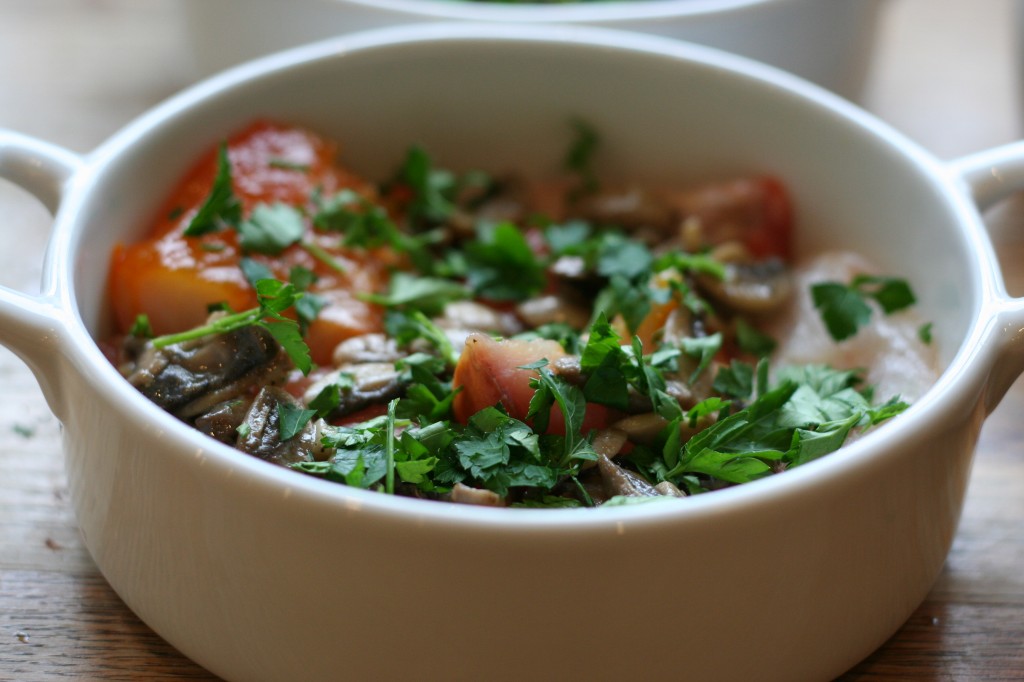
To make the pie, heat 1 tablespoon (30 g) of the butter and the garlic in a frying pan, and when it’s sizzling, add the mushrooms and a little salt. Saute over a high heat, stirring the mushrooms around with a wooden spoon until all the juices have evaporated and they turn golden. Add the wine and some pepper and cook until the wine has evaporated. Remove from the heat.

Cut the fish into large, 2‑inch chunks and put in the bottom of your dish(es). Scrape the mushrooms over the fish, then add the prawns. Scatter with the parsley and a few grinds of pepper. Pour the sauce over the top.

Meanwhile, boil the potatoes in salted water until soft. Heat the remaining butter in the milk. Drain the potatoes and mash them. Beat in the rest of the butter and the warm milk and season, if necessary.

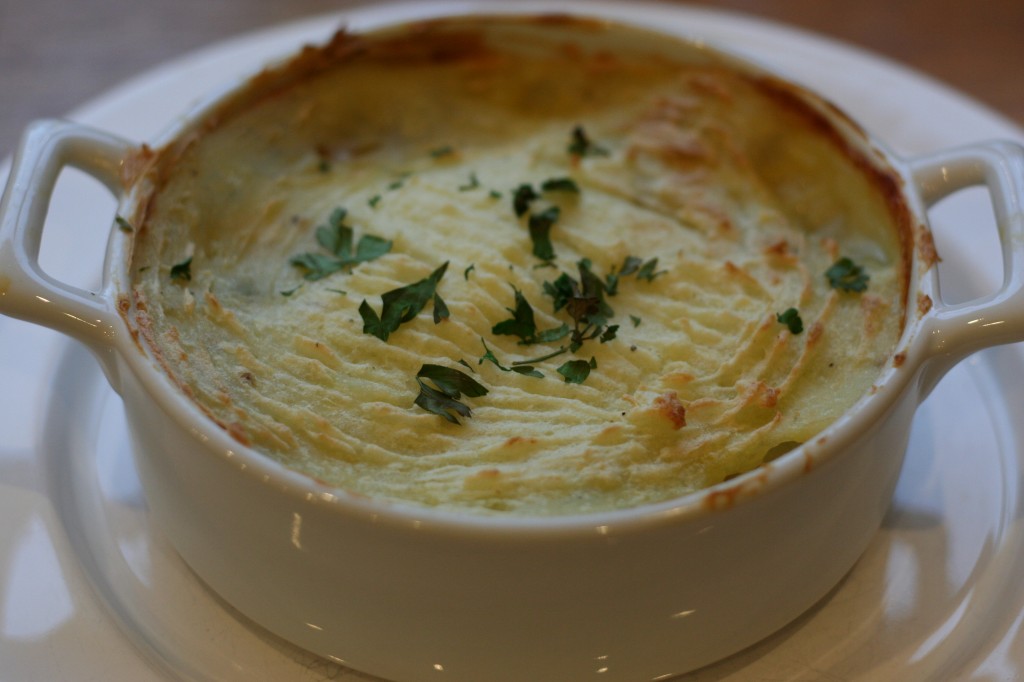
Arrange the mash over the top of the fish and sauce, then bake for 30 to 45 minutes, until the mash is golden in places and the sauce is bubbling up underneath. Leave it to stand for 5 to 10 minutes before serving with lemon wedges.

fish pie (finished)

***

Sauteed Carrots
from Barefoot Contessa Family Style by Ina Garten

Serves 6

2 lb (900 g) carrots
1/3 cup (80 ml) water
1 teaspoon kosher salt
1/4 teaspoon freshly ground black pepper
2 tablespoons (30 g) unsalted butter
1 1/2 tablespoons chopped fresh dill or flat-leaf parsley

Peel the carrots and cut them diagonally in 1/4‑inch slices. Place the carrots, water, salt, and pepper in a large (10- to 12-inch) saute pan and bring to a boil. Cover the pan and cook over a medium-low heat for 7 to 8 minutes, until the carrots are just cooked through. Add the butter and saute for another minute, until the water evaporates and the carrots are coated with butter. Off the heat, toss with the dill or parsley. Sprinkle with salt and pepper and serve.

***

Pumpkin Seed Brittle
from Feast by Nigella Lawson

Serves 8

1 1/4 cups (250 g) sugar
1/2 cup (120 ml) water
1/4 teaspoon cream of tartar
1 cup (125 g) green pumpkin seeds

Cover a baking sheet with a Bake-O-Glide, Silpat or other reusable parchment, or tear off some aluminum foil and lightly oil it. Dissolve the sugar, water and cream of tartar in a saucepan over a low heat. Turn the heat up and bring the mixture to a boil but do not stir. Let the syrup bubble over a fairly high heat for about 10 minutes, until it turns a deep golden amber color. Don’t be tempted to wander away, make a phone call or leave the pan unattended, as the syrup could caramelize sooner.

Quickly tip the pumpkin seeds into the amber-colored syrup, swirl the pan so that they become evenly coated and then take off the heat. Pour the syrup immediately onto the Bake-O-Glide or oiled-foil-lined tray, trying to spread the molten liquid in a thin layer. It is possible to spread the brittle with a palette knife if it has mounded too much, but move fast: you will have only a short time to do this before it begins to set. Leave the brittle to cool and harden completely before breaking it into pieces.

Casserole Provençale and Crunchy Chocolate Bakewell Tart

We’re excited to announce our first giveaway at Dinner du Jour! Thanks to Gill & Macmillan, I have a copy of From Brenda’s Kitchen: 100 Favourite Recipes by Brenda Costigan to give away* to a reader.

Brenda Costigan is one of Ireland’s most renowned cookery writers. A weekly food columnist for the Sunday Independent Life magazine, she has also written three other bestselling cookbooks. This book, written with busy families in mind and suitable for cooks of all abilities, features some of the most popular recipes from her column as well as many new favorites.

To be in with a chance of winning From Brenda’s Kitchen: 100 Favourite Recipes, just leave a comment in this post telling us what some of your favorite recipes are. The competition will close at 12:00 (Irish time) on Monday, November 9th and a winner will be chosen randomly from the comments.

brenda cover

Casserole Provençale
adapted from From Brenda’s Kitchen: 100 Favourite Recipes by Brenda Costigan

Serves 5 to 6

Brenda says you shouldn’t hold back on the olives, as they give a wonderful flavor to the finished dish. It’s also preferable to use fresh herbs rather than dried here.

for the marinade:
1 1/4 cups (300 ml) red wine
1/4 cup (60 ml) brandy (optional)
sprigs of fresh thyme
sprigs of fresh rosemary
2 bay leaves
2 cloves garlic, chopped
salt and freshly ground black pepper

for the casserole:
2 1/4 lb (1 kg) stewing beef, cut into generous bite-sized chunks
4 tablespoons olive oil
1 rounded tablespoon flour
7 oz (200 g) rashers or bacon, chopped (Brenda likes to use smoked rashers/bacon)
2 large onions, sliced
2 cloves garlic, chopped
6 oz (170 g) button mushrooms, halved
2 large carrots, peeled and sliced
3 to 5 oz (75 to 150 g) pitted black or green olives
1 x 14-oz (400‑g) can of chopped tomatoes
1 3/4 cups (400 ml) hot beef stock
salt and freshly ground black pepper

Put all the marinade ingredients into a bowl and stir well to combine. Add in the beef and mix well. Cover with clingfilm and allow to marinate in the fridge for a few hours. Stir once or twice if you think of it.

Preheat the oven to 325°F (160°C).

Lift the meat out of the marinade with a slotted spoon (keep the marinade). Pat the meat dry with paper towels and fry in small batches until browned in the olive oil, then transfer to a casserole or heavy saucepan. Add the flour to the browned meat and toss together. Fry the rashers until golden and add to the meat.

Lightly brown the onions in the pan. Add the garlic and then the mushrooms, then add this onion mixture to the casserole. Add the carrots, olives and tomatoes to the casserole.

Pour the marinade, including the herbs, into the pan the meat etc. was browned in and bring to the boil, making sure to scrape up all the bits on the bottom of the pan. Boil for 1 to 2 minutes to reduce the amount of liquid a bit and to intensify the flavor. Add the beef stock and simmer for a few minutes to heat it up, then pour the hot liquid directly into the casserole. The liquid should just about cover the meat and vegetables. Add very little salt, if any, because the rashers and olives are already salty. Add freshly ground black pepper and stir everything together. If necessary to make the lid fit more snugly, cover the casserole with a layer of baking parchment or tinfoil, then put on the lid (this helps to prevent evaporation).

Cook in the oven for 2 1/2 to 3 hours, or until the meat is really tender. Discard the sprigs of fresh herbs before serving. Serve with mashed potatoes or boiled potatoes and a green vegetable of your choice.

***

Crunchy Chocolate Bakewell Tart
adapted from From Brenda’s Kitchen: 100 Favourite Recipes by Brenda Costigan

Serves 8

Brenda says this tart is one of her favorites — rich and moist, it keeps for up to 2 weeks. Brenda has used a base of crushed digestives and butter instead of the more traditional pastry base. For a touch of luxury, serve the tart with the fruits of the forest sauce (or 12 oz (340 g) mixed fresh summer berries) and some whipped cream.

Note: If the baking tin sizes recommended here aren’t adhered to, the cakes may be thicker (if smaller) or thinner (if larger), which can affect the cooking times.

for the crushed biscuit base: 
7 oz (200 g) digestive biscuits, crushed (or you can substitute graham crackers)
1/2 cup (110 g) butter, melted

for the filling: 
4 to 5 tablespoons blackcurrant jam, softened (not fridge cold)
3/4 cup (170 g) butter, softened
3/4 cup (150 g) sugar
3 large eggs
1/2 teaspoon almond extract
3 1/2 oz (100 g) chopped blanched almonds
3 1/2 oz (100 g) ground almonds
5 oz (150 g) dark chocolate, melted and partly cooled
small handful of flaked almonds

for the fruits of the forest sauce:
juice of 1 large orange
12 oz (340 g) frozen fruits of the forest or summer fruits
1/4 to 1/3 cup (50 to 75 g) sugar
1 heaped teaspoon cornflour

3/4 cup (175 ml) lightly sweetened whipped cream, to serve

You will also need a springform tin 9 inches in diameter

Preheat the oven to 375°F (190°C).

To make the biscuit base, mix the crushed biscuits and melted butter together and spread in an even layer over the base of the tin, pressing the mixture down firmly. Bake in the oven for about 5 minutes, just to lightly crisp the biscuits. There will be no change in the appearance. Stand the tin on a wire tray to cool while you prepare the filling.

Reduce the oven to 325°F (170°C).

To make the filling, place the jam in a small bowl and stir briskly with a spoon in order to make it looser and more spreadable. Spread the jam carefully in a thin layer over the cooled biscuit base, leaving a 1‑inch margin all the way around. This is to ensure that the jam doesn’t ooze out at the edges and get too highly baked on the sides, spoiling the appearance of the finished cake.

Beat the butter and sugar together in a bowl until soft. Add in the eggs, one at a time, and almond extract and beat well. Mix together the chopped almonds and the ground almonds and stir into the butter/sugar mixture, then stir the melted chocolate through. Pour into the tin over the biscuit base and scatter the flaked almonds over the surface.

Bake for about 40 minutes –- start at the higher temperature and lower if halfway through if the tart is cooking too quickly. It’s ready when the almond mixture has become set on the outside but is still slightly wobbly in the center. Stand the tin on a wire tray for about 15 minutes to allow it to cool. With a sharp knife, loosen the edges, then release the spring clip sides of the tin and leave the tart to cool completely.

To make the sauce, put the orange juice and frozen berries into a saucepan. Cook gently to thaw, then add the sugar and stir to dissolve. Blend the cornflour with a dribble of water and some of the hot liquid from the saucepan. Mix well, then stir the cornflour mixture into the berries in the saucepan. Bring to the boil, stirring to thicken. If a thicker consistency is required, more cornflour can be added (in the same way). Taste for sweetness.

To serve, carefully slide the tart off the base of the tin onto a serving plate. Serve each slice topped with the fruits of the forest sauce (or fresh berries) and some whipped cream.

*In the interests of full disclosure, I was involved with the production of this book and the publishers, Gill & Macmillan, generously gave me a copy to give away here.

Pasta with Greens, Garbanzo Beans and Ricotta Salata and Caramel-dipped Apples

I love one-pot meals that cover the four basic food groups. I love them even more if they can be prepared in less than 30 minutes, like this dish.  The only trouble with this dish was the cheese. I went to three stores before finding it at one of Milwaukee’s gems, Glorioso Brothers Company, an Italian grocer and specialty food shop on now-trendy Brady Street. If you can’t find ricotta salata, try substituting feta.

I’m still eating orchard apples (our CSA delivery included a couple more pounds!), but I’m not going to complain. We would have bought more if we needed to to make caramel-coated apples, a now annual tradition for us. Although you can decorate the apples with just about anything, I especially love the caramel paired with salted, roasted nuts.

IMG_7209

Pasta with Greens, Garbanzo Beans and Ricotta Salata
adapted from Food Network’s Giada at Home

Serves 4 to 6

1 lb (450 g) medium pasta shells, orecchiette or other short pasta
1/2 cup (120 ml) olive oil
2 garlic cloves, crushed
1/2 teaspoon red pepper flakes
12 oz (340 g) Swiss chard, stemmed and roughly chopped
12 oz (340 g) baby spinach leaves
1 x 15-oz (425‑g) can garbanzo beans, rinsed and drained
2 cups (280 g) small cherry or grape tomatoes
8 oz (225 g) ricotta salata cheese, crumbled
2 teaspoons lemon zest
salt and freshly ground black pepper

Bring a large pot of salted water to a boil over high heat. Add the pasta and cook until al dente, according to package directions. Drain and reserve about 1 cup (240 ml) of the pasta water.

In a large skillet over a medium-high heat, heat the oil. Add the garlic and cook until fragrant and lightly browned, about 4 minutes. Using a slotted spoon, remove the garlic and discard. Stir in the red pepper flakes to the oil. Add the chard and cook until wilted. Add the spinach and cook until wilted, stirring. Add the beans and tomatoes and cook for 5 minutes. Turn off the heat. Add the pasta, half the cheese, and lemon zest. Toss well and thin out the sauce with a little pasta water, if needed.

Transfer to a large serving bowl and season with salt and pepper. Sprinkle with the remaining cheese and serve.

***

Caramel-coated Apples
adapted from Kraft

Makes 5 caramel apples

5 apples, washed and well dried
14 oz (400 g) caramels, unwrapped
2 tablespoons water
toppings: chopped nuts, mini chocolate chips, shredded coconut, sprinkles

Insert wooden sticks (from the bag of caramels or popsicle sticks) into the stem ends of the apples. Cover a large cutting board with waxed paper and grease the paper with butter.

Cook the caramels and water in a large saucepan on a medium-low heat until the caramels are completely melted, stirring constantly.

Dip the apples in caramel. Spoon additional caramel over the apples if necessary to evenly coat them. Let excess caramel drip off. Scrape the bottoms of the apples to remove more excess caramel. Roll the apples in your topping(s) of choice. Place the apples on the prepared plate. Refrigerate for 1 hour (if you can wait). Remove from the refrigerator 15 minutes before serving; let stand at room temperature to soften slightly. Refrigerate leftovers.