Category Archives: 30-minute meals

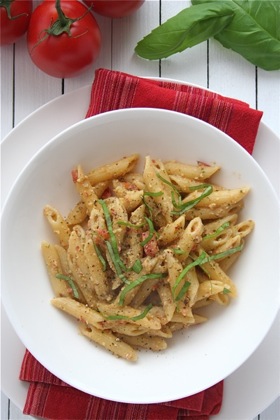
Pesto Trapanese

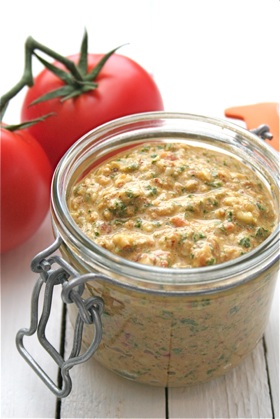
This is the fifth year we’ve had a vegetable garden at our house in the country, but I quickly learned the first year that basil doesn’t grow well (if at all) outdoors in Ireland. We have a small greenhouse this year, but all the space is taken up with tomatoes, Kirby cucumbers and peppers, so the basil plants had to make do with our kitchen windowsill, where they’re going gangbusters. I’d already made a few batches of regular pesto and was starting to get tired of it when I remembered bookmarking this recipe for pesto Trapanese last year, and it’s a new favorite, not to mention a nice change. Try it at least once this summer.


Pesto Trapanese
adapted from Catherine’s Italian Kitchen by Catherine Fulvio

Makes 2 cups (500 ml)

Use 1 cup (250 ml) of the pesto for dinner to serve 4 to 6 people and freeze the other half for another time. Alternatively, this will keep in the fridge, tightly covered, for up to 1 week with a thin layer of olive oil poured on top of the pesto to prevent the basil from turning black.

1 lb (425 g) spaghetti, linguini, penne or your favorite pasta
1 cup (125 g) whole almonds
3 large ripe tomatoes, quartered, or 10 ripe cherry tomatoes
2 garlic cloves, roughly chopped
2 oz (50 g) fresh basil leaves (about 2 large handfuls)
1/2 cup (125 ml) good-quality olive oil
salt and freshly ground black pepper

Cook the pasta in a large pot of boiling salted water according to the instructions on the packet.

To make the pesto, place the almonds in a food processor and whizz until they’re reduced to nibs (don’t overprocess them to a paste). Add in the tomatoes, garlic, basil, olive oil and a generous seasoning of salt and pepper and whizz again until everything is well combined. Add more olive oil if you want the consistency of the pesto to be thinner. Stir 1 cup (250 ml) of the pesto into the drained pasta and serve right away.

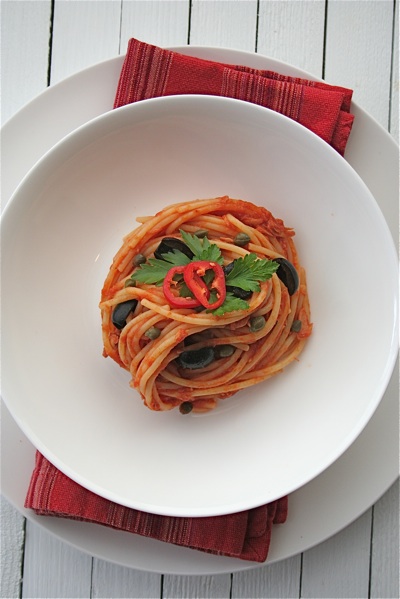
Spaghetti alla Puttanesca

Spaghetti alla puttanesca is a classic store cupboard staples recipe. Nicknamed “whore’s pasta,” Nigella Lawson writes that “the general consensus seems to be that this is the sort of dish cooked by slatterns who don’t go to market to get their ingredients fresh, but are happy to use stuff out of jars or tins.” Last week we spent five days in the west of Ireland in County Sligo, and coming home to an empty fridge after driving coast to coast (which, granted, only takes 3 hours from Sligo to Louth), I was still able to rustle this up from basics that I always have in the pantry along with a green salad from my garden. Whore’s pasta to the rescue!

Spaghetti alla Puttanesca

Serves 4 to 6

1 1b 2 oz (500 g) spaghetti
olive oil
2 or 3 garlic cloves, chopped
1 or 2 fresh red chillies, finely chopped, or 1/2 teaspoon chilli flakes
1 x 1 oz (30 g) can of anchovy fillets, drained and chopped
1 x 8 oz (225 g) can of tuna, drained
2 tablespoons capers, drained
1 x 1 1/2 lb (700 g) jar of passata or 2 x 14 oz (400 g) cans of chopped tomatoes
salt and freshly ground black pepper
juice of 1 lemon (optional)
3/4 cup (100 g) stoned black olives, halved
a small bunch of fresh flat-leaf parsley, chopped
green salad, to serve
garlic bread, to serve

Cook the spaghetti in a large pot of boiling salted water according to the instructions on the packet.

Meanwhile, heat a large saucepan (one big enough to accommodate all the cooked pasta later) over a medium-low heat. Add a splash of olive oil, then add in the garlic, chillies and anchovies and cook for 1 or 2 minutes, until the anchovies have broken down and almost melted, but taking care not to let the garlic burn. Add in the tuna and capers, then stir in the passata or canned tomatoes. Season generously with salt and pepper, raise the heat to medium and allow to simmer while the pasta cooks.

Before draining the pasta, reserve a mugful of the cooking water. Add the drained pasta directly to the sauce and add in the lemon juice, the olives and most of the chopped parsley. Stir well to coat all the pasta with the sauce, adding in some (or all) of the reserved pasta cooking water if you want to loosen the sauce a bit. Divide the pasta between individual bowls or plates and scatter the remaining parsley on top to garnish. Serve with a green salad, garlic bread and a glass of wine.

Salmon with Lentils and Mustard-Herb Butter

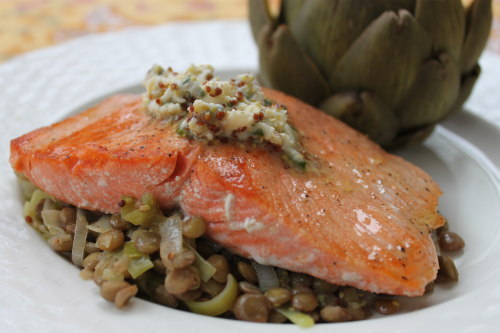
You may have noticed that Kristin and I cook salmon pretty regularly. Not only is salmon healthy, loaded with omega‑3 and other good stuff, but it’s easy to prepare and hard to mess up. Unlike some more delicate varieties of fish, salmon can take a few minutes of overcooking. It’s also less “fishy” tasting than most other seafood, so most kids won’t turn up their noses at it. This recipe is one of my family’s most recent favorites. It’s fancy enough to serve for guests, but a breeze to throw together, especially if you make the compound butter and lentils the night before. Steamed artichokes make an excellent side dish, especially if served with a bit of melted butter and lemon juice for dipping.

The picture doesn’t quite do this dish justice. I snapped the photo quickly before I called the kids to dinner. By the time everyone was seated, their sippy cups filled, and our napkins unfolded, the butter had melted beautifully, leaving the salmon with a lovely layer of herbs and mustard seeds.

Salmon with Lentils and Mustard Butter

Salmon with Lentils and Mustard-Herb Butter (Saumon aux Lentilles)
adapted from Gourmet, March 2008

For mustard-herb butter:
5 tablespoons unsalted butter, softened
1 tablespoon chopped chives
1 teaspoon chopped tarragon [I substituted 1/2 teaspoon dried tarragon]
2 teaspoons grainy mustard
2 teaspoons fresh lemon juice

For lentils:
1 cup French green lentils
4 cups water
2 medium leeks (white and pale green parts only)
1 tablespoon unsalted butter
1/2 to 1 tablespoon fresh lemon juice

For salmon:
4 (6‑ounce) pieces skinless salmon fillet
2 tablespoons unsalted butter

Make the mustard-herb butter:
Stir together all the ingredients with 1/4 teaspoon each of salt and pepper. [The mustard-herb butter can be made 1 day ahead and chilled, covered. Soften at room temperature before using (1 hour).]

Cook the lentils:
Bring the lentils, water, and 3/4 teaspoon salt to a boil in a heavy medium saucepan, then reduce heat and simmer, uncovered, until the lentils are just tender, 20 to 25 minutes. Remove from heat and let stand 5 minutes. Reserve 1/2 cup cooking liquid, then drain lentils. [The lentils can be cooked (but not drained) 1 day ahead and chilled in cooking liquid, covered (once cool).]

While the lentils cook, chop the leeks, then wash them. Cook the leeks in the butter in a heavy medium skillet over medium-low heat, stirring occasionally, until softened, 6 to 8 minutes.

Add the lentils with the reserved cooking liquid to the leeks along with 3 tablespoons mustard-herb butter and cook, stirring, until the lentils are heated through and the butter is melted. Add the lemon juice and salt and pepper to taste. Remove from heat and keep warm, covered.

Sauté the salmon while the leeks cook:
Pat the salmon dry and sprinkle with 1/2 teaspoon salt and 1/4 teaspoon pepper (total).

Heat the butter in a large nonstick skillet over medium-high heat until foam subsides, then sauté the salmon, turning once, until golden and just cooked through, 6 to 8 minutes total.

Serve the salmon, topped with the remaining mustard-herb butter, over lentils.

Egg-Topped Soba Noodles with Asparagus and Prosciutto and Double Chocolate Muffins

Things are still crazy, hectic, almost out of control in my household. We’re still managing to eat well though, thanks in part to my husband. We’ve settled into a pattern where I do the meal planning and grocery shopping and he takes care of the cooking while I pick up the kids from daycare. His most recent dinner was absolutely amazing, the type of meal where the only full sentence spoken (even from your kids) involves some variation of “this is delicious.” While the meal is quick and healthy, it does require multiple pans and you really have to be on your toes to make sure nothing is overcooked. Still, if you’re short for time but energized enough to maneuver three pots at once, this one is hard to beat.
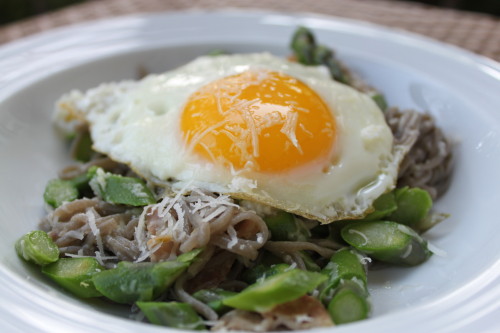
Egg-topped Soba with Asparagus and Proscuitto

Egg-Topped Soba Noodles with Asparagus and Prosciutto
adapted from Bon Appétit, February 2010

Serves 6

4 tablespoons extra-virgin olive oil, divided
5 garlic cloves, coarsely chopped
4 oz (110 g) thinly sliced prosciutto, cut crosswise into strips
6 large eggs
10 to 12 oz (280 to 340 g) thin soba noodles
1 lb (450 g) asparagus, ends trimmed, cut on sharp diagonal into 1/8‑inch-thick slices
1 cup (100 g) freshly grated Parmesan cheese

Fill a large pot with water and bring to a boil.

Meanwhile, heat 2 tablespoons extra-virgin olive oil in a large skillet over a medium-high heat. Add the garlic and stir 30 seconds. Add the prosciutto strips and cook until slightly crisp. Remove from the heat and set aside.

Heat 2 teaspoons of oil in a large nonstick skillet (or 2 small nonstick skillets) over a medium heat. Crack the eggs carefully into the skillet. Cook on 1 side until the eggs begin to set, about 2 minutes. Remove from the heat. Cover and set aside.

Cook the soba noodles in the large pot of boiling water for 5 minutes, stirring occasionally. Add the sliced asparagus to the pot. Cook until the noodles are cooked through and the asparagus is just tender, 2 to 3 minutes. Do not overcook! Drain the noodles and asparagus, reserving 1 cup (250 ml) of the cooking liquid.

Add the drained noodles and asparagus to the prosciutto mixture in the skillet. Cook over a medium heat until just heated through, tossing and adding the reserved cooking liquid by 1/4 cupfuls (50 ml) to moisten.

Remove the skillet from the heat. Add the grated Parmesan cheese and remaining 1 tablespoon plus 1 teaspoon olive oil and toss to coat. Divide among 6 plates or shallow bowls. Top each serving with 1 egg and serve immediately, breaking and stirring the egg yolk (which should still be a bit runny) into the noodles.

***

Double Chocolate Muffins

My daughter is “graduating” to a toddler room at her daycare this week. In a fit of panic after forgetting to buy her teachers a good-bye gift, I threw together these muffins with the odds and ends I had in my house. What a discovery! They are moist and chocolaty, and just healthy enough to eat for breakfast. I hope they enjoyed them. I know we did.

Makes 24 muffins

1 1/2 (180 g) cups all-purpose flour
1 cup (120 g) whole wheat flour
1 1/2 cups (300 g) sugar
1/2 cup (60 g) cocoa
1 1/2 teaspoons baking soda
1/2 teaspoon salt
3 eggs
1 cup (250 ml) plain yogurt
1/2 cup (125 ml) water
1/2 cup (125 ml) milk
1/2 cup (125 ml) vegetable oil
1 teaspoon vanilla extract
1/2 cup (80 g) grated dark chocolate
1 cup (200 g) white chocolate chips

Preheat the oven to 325°F (160°C). In a large bowl, whisk together the flours, sugar, cocoa, baking soda and salt.

In a medium bowl, whisk together the eggs, yogurt, water, milk, oil and vanilla. Stir the wet ingredients into the dry ingredients until just moistened. Do not overmix! Fold in the grated chocolate and white chocolate chips.

Fill greased or paper-lined muffin cups about 3/4 full. Bake for about 20 minutes, or until a toothpick comes out clean. Cool the muffins for 5 minutes before removing from the pans to wire racks.
Spiced Lamb and Lentils with Cucumber-Tahini Salad

Sometimes I love being on the “mommy track” but recently juggling kids and a career seems like the craziest idea I ever had. The last few months have been terribly stressful at work. I’ve barely had time or energy to cook. You might have noticed this downward culinary slide due to my lack of recent posts (sorry, Kristin). Luckily, I have a handful of make ahead recipes to help me through these rough patches. This is my newest — and favorite.

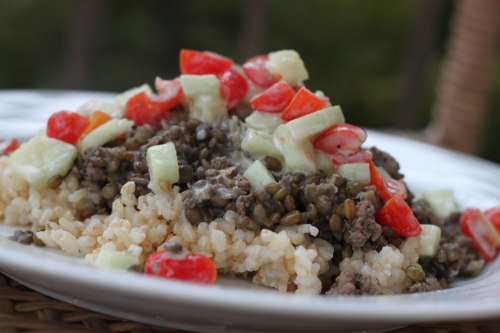
Lamb might seem pretty rich for a weeknight springtime meal, but the lentils lighten up this dish and the cucumber salad lends just the right amount of tangy freshness. I like to cook the lentil and lamb stew the night before, after I put the kids to bed and pour a generous glass of wine. You can cool and refrigerate the stew right in the pan you cooked it in. A programmable rice cooker can take care of the rice for you the next day while you work. All you have to do when you arrive home is throw together the salad and reheat the stew. And that is how I managed (at least for one night) to put a healthy, incredibly tasty dinner on the table in 10 minutes.

Spiced Lamb with Lentils

Spiced Lamb and Lentils with Cucumber-Tahini Salad
adapted from Whole Foods Market

Serves 6

3 cups (700 ml) low-sodium chicken broth, divided
1 medium yellow onion, chopped
3 cloves garlic, minced
1 lb (450 g) ground lamb
1 3/4 teaspoons dried dill, divided
1/2 teaspoon dried oregano
1/4 teaspoon ground cinnamon
1 cup (175 g) green lentils
1 tablespoon sesame tahini
1/2 teaspoon salt
1 tablespoon lemon juice
1 cucumber, peeled, seeded and diced
2 plum tomatoes, chopped
cooked brown rice, to serve

Bring 1/2 cup (125 ml) broth to a simmer in a large pot or high-sided skillet over a medium-high heat. Add the onion and garlic and cook for 5 minutes, or until tender and translucent. Add the lamb, dill, oregano and cinnamon and cook for 6 to 8 minutes or until browned, stirring to break up the lamb. Stir in the lentils and remaining 2 1/2 cups (625 ml) broth. Bring to a boil, then reduce the heat to low. Cover and simmer, stirring occasionally, until the lentils are tender, about 45 minutes. If serving the next day, cool the stew then refrigerate it.

To make the salad, in a small bowl, combine the tahini, salt and lemon juice, then stir in the cucumber and tomato. If the lamb and lentils have been chilled, rewarm over a medium heat. Spoon the warm lamb and lentils over rice and top with the cucumber tomato salad.

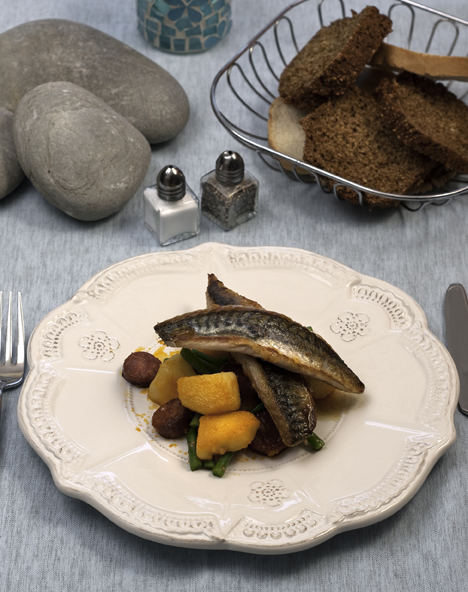
Mackerel with Warm Potato and Chorizo Salad

A few months ago, someone was on Twitter asking for recommendations for where to bring visitors for good seafood in Kinsale, County Cork. About a dozen people replied, and everyone said the same thing — Fishy Fishy. So it’s no surprise that Martin’s Fishy Fishy Cookbook has already entered its second printing just a few weeks after being released. Like the name of his TV show says, Martin Shanahan is mad about fish and he wants everyone else to love it too. My favorite episode from his first series was when he cooked mussels at the cattle mart in the land-locked Midlands and tried to get farmers who had never had a mussel in their lives to taste them (and almost all of them liked them). But even though Ireland is an island nation, we export most of our fish and notoriously eat very little of it ourselves. Martin thinks this is down to what he calls the “fear factor” when cooking fish, and his mantra has become “no skin, no bones, no fear”.

Flipping through his new cookbook and dog-earing pages of tempting recipes to try, his enthusiasm is catching. This mackerel with a warm potato and chorizo salad was outstanding, but also bookmarked are the crab crumble, warm chilli seafood salad, salmon and cucumber wraps and the Thai-style white Pollock fish cakes with Asian cabbage and a sweet and sour dipping sauce. With recipes that sound that good, he’s bound to pick up loads of new seafood-loving converts.

Photo © Kevin O’Farrell from Martin’s Fishy Fishy Cookbook

Mackerel with Warm Potato and Chorizo Salad
adapted from Martin’s Fishy Fishy Cookbook by Martin Shanahan

Serves 4

Chorizo is one of those ingredients (like bacon) that automatically makes anything better, but the dressing is what really made this recipe for me — it gave it just a little oomph and lifted the whole dish. Martin says that you can substitute some lightly cooked kale for the green beans here. Next time I make this — and there will definitely be a next time — I’m going to try using smoked mackerel fillets, warmed through, since I can get that more easily than fresh mackerel.

For the salad:
1 1/4 lb (600 g) potatoes, cooked
1 link of chorizo sausage
olive oil
7 oz (200 g) green beans, blanched and refreshed in ice water
salt and freshly ground black pepper
8 mackerel fillets

For the vinaigrette:
3 tablespoons olive oil
1 tablespoon red wine vinegar
1 teaspoon French mustard
salt and freshly ground black pepper

Cube the cooked potatoes and slice the chorizo. Heat a little oil in a pan and add the chorizo. Cook for 1 or 2 minutes to release the oil from the sausage, then add the potatoes and green beans. Make the vinaigrette by whisking together all the ingredients or shaking to combine in a screw-top jar, then toss the potato mixture in this dressing.

Heat a pan over a high heat and add a little oil. Season the mackerel fillets with salt and pepper, then cook the mackerel skin side down, pressing down on the skin to crisp it. Cook for 2 minutes, then turn and cook for a further 2 minutes on the other side.

Spoon a little of the warm potato salad into the center of each plate and top with the mackerel fillets.

Classic Spaghetti Carbonara

When I’m feeling especially nice, or especially burdened with working mom’s guilt, dinner planning tends to be child-focused. My kids are great eaters, but like most kids, they’d rather have white bread than wheat, white rice instead of brown, and regular pasta instead of whole grain. Since I knew I was going to put something white (i.e. unhealthy) on their plates, why not just do it up right with bacon, cheese and a few eggs,  à la carbonara?

I’ve been wanting to try pasta carbonara for years but never thought to search out a recipe. I ended up using a simple, straightforward version from a culinary school’s online recipe collection. Admittedly, I’ve never eaten pasta carbonara so I can’t tell you if their version is especially good. I can tell you that my kids gobbled it up, asking for more before their first helpings were even finished. My husband and I also enjoyed it, though we both agreed that extra freshly chopped parsley and cracked black pepper enhanced the dish.

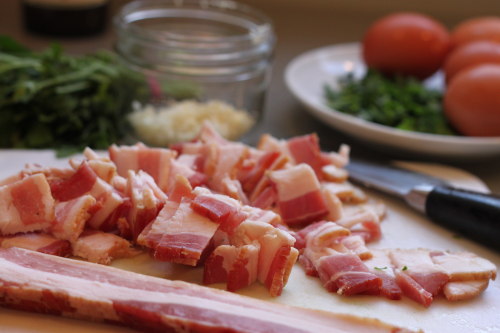
Carbonara ingredients

Classic Spaghetti Carbonara
adapted from Baltimore International College’s School of Culinary Arts

Serves 4

To make this a 30-minute meal, put on your pasta water to boil immediately. While the water comes to a boil, you can chop your ingredients. Start the bacon frying, then throw your pasta in its water. The sauce comes together in just about the same time it takes the spaghetti to cook.

1/2 lb (225 g) bacon, chopped
1 tablespoon garlic, chopped
1 lb (450 g) fresh spaghetti, cooked al dente (note: I used dry pasta)
4 large eggs, beaten
1 cup (100 g) freshly grated Parmigiano-Reggiano
1 tablespoon chopped fresh parsley (or more, to taste)
salt and freshly ground black pepper

In a large sauté pan over a medium heat, cook the bacon until crispy, about 6 minutes. Remove the bacon and drain on paper towels. Pour off all the oil except for 3 tablespoons. Add the garlic, season with black pepper and sauté for 30 seconds. Add the crispy bacon and the cooked pasta. Sauté for 1 minute.

Season the eggs with salt. Remove the pan from the heat and add the eggs, whisking quickly until the eggs thicken, but do not scramble. Add the cheese and re-season with salt and pepper. Mound into serving bowls and garnish with parsley.

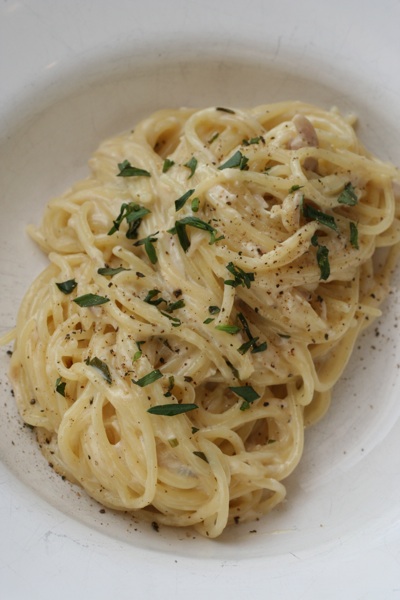
Pasta with Chicken, Tarragon and Cream

For years now I’ve been planning out the week’s meals in advance and shopping accordingly for all the groceries I need. You might imagine that this involves cookbooks or back issues of Gourmet casually strewn across the kitchen table while I flip through them over a pre-dinner glass of wine, the kids contentedly playing together and something chilled out on the stereo while I pick out all the fabulous new recipes I want to make.

Or at least that’s what I like to imagine.

The reality is that more often than not, instead of leisurely browsing through my cookbook collection with a glass of wine, I’ll find myself quickly scanning the blog recipe archives for something tried and tested or looking up a bookmarked recipe on a website with a half-cold cup of tea, all the while vowing to be more organized next week.

But meal planning is made much easier when you cook a whole chicken. It’s roasted on the first night, then stripped and used in a soup, stir-fry, risotto or any number of dishes the next night, with any last leftovers invariably finding their way into sandwiches or a quick quesadilla and the carcass used for stock. And when you can feed a family for two or even three nights with one chicken, paying extra for a free-range or organic bird is still good value. If you make poulet à l’Estragon (and please do – you will not be disappointed), this is a no-brainer dinner to make the next night with the leftovers, using all the same flavors. That’s two dinners for the week easily sorted then.

Pasta with Chicken, Tarragon and Cream
adapted from Real Food by Nigel Slater

Serves 4

If using leftover roast chicken, simply skip the step of browning the chicken and add the chicken after the cream and tarragon; you also won’t need the butter called for here either. If you’ve made poulet à l’Estragon and have any of the tarragon sauce left over from it, add that along with the cream for extra flavor and richness.

14 oz (400 g) spaghetti or linguine
8 chicken thighs (or diced leftover chicken, ideally from poulet à l’Estragon; see note above)
salt and freshly ground black pepper
4 tablespoons (60 g) butter
1/2 cup (125 ml) dry white wine or extra-dry vermouth
2 tablespoons tarragon vinegar or white wine vinegar
1 1/4 cups (300 ml) heavy cream
2 heaped tablespoons chopped tarragon leaves, plus extra to garnish
a squeeze of lemon juice

Set a large pot of water on to boil. Cook the pasta in plenty of salted water as per the packet instructions. Reserve a mugful of the pasta cooking liquid before draining.

Meanwhile, season the chicken with a little salt and pepper. Melt the butter over a medium heat in a large, shallow pan (one big enough to eventually accommodate all the cooked pasta as well), then brown the chicken on both sides until it’s golden brown, taking care not to let the butter burn. Remove the chicken and set aside.

Pour off all but 1 tablespoon or so of butter. Add the wine or vermouth and vinegar, bring to the boil and scrape up any brown bits from the bottom of the pan. Simmer for 1 to 2 minutes to reduce a bit, then add the cream and tarragon. Return the chicken and any juices to the pan. (Alternatively, if using leftover roast chicken, simply add that in now.) Simmer gently for 15 to 20 minutes, stirring now and then to make sure the cream doesn’t thicken too much. If the sauce is becoming too thick, add a little more wine or vermouth. Check that the chicken is cooked through and taste for seasoning. Add a squeeze of lemon juice and stir it through.

Add the drained pasta to the sauce in the pan and stir it well, making sure it’s all coated with the creamy sauce. If the sauce is too thick, add some of the reserved pasta cooking liquid to loosen it a bit. Sprinkle with some chopped fresh tarragon and serve right away.