All posts by Kelly

Garlic and Fennel Barbecue Roasted Chicken, Herbed Goat’s Cheese Mashed Potatoes, and Steamed Green Beans

Necessity really is the mother of invention. Today I decided to make a special roast chicken dinner for the family since my errand load was light and Sam, my two-year-old, was in day care for most of the day. I spent a good half hour prepping and stuffing the chicken. When I went to put the chicken into my preheated oven, the oven gave me a big, cold surprise — a broken ignitor and no way to bake my chicken. After scurrying around for the oven’s owner manual and briefly contemplating broiling a whole chicken (the broiler unit still worked), I quickly lit a heap of coals in our Weber, threw on the chicken a few minutes later, and hoped for the best. Fortunately, my last-minute experiment was a complete success. The chicken took on a smoky flavor that wonderfully complimented the fennel stuffed inside it. Thank goodness for cooking disasters. Modern eating might become too boring without them.

Fennel Garlic Chicken


Garlic and Fennel Barbecue Roasted Chicken

adapted from Bon Appétit, October 2003

Serves 4 to 6

1 large or two small fresh fennel bulbs, trimmed, each cut into 6 to 8 wedges
5 tablespoons olive oil
6 garlic cloves, peeled
2 tablespoons chopped fresh thyme
2 tablespoons chopped fresh rosemary
3/4 teaspoon salt
1/2 teaspoon ground black pepper
whole chicken (about 3 1/2 lb/1.5 kg)
1 lemon, halved

Cook the fennel in a large pot of boiling salted water until tender when pierced with a knife, about 8 minutes. Drain and transfer to a bowl. Mix in 2 tablespoons oil, the garlic, 1 tablespoon each thyme and rosemary, then the salt and pepper.

Preheat the grill for indirect cooking. Rinse chickens inside and out and pat dry. Rub the chickens inside and out with lemon, squeezing some of the juice into the cavities. Rub the outside of the chickens with 3 tablespoons oil, then the remaining herbs. Sprinkle the chickens generously with salt and pepper. Loosely stuff the chickens with the fresh fennel mixture. Tie the legs together and place the chicken, breast side down, in a roasting rack.

Roast the chicken on the grill using indirect heat for 1 1/2 to 2 hours, flipping the bird every 30 minutes. When ready, the chicken juices run clear when pierced with a fork in the thickest part of the thigh and the leg should move easily away from thigh. Transfer the chicken to a platter and garnish with fennel fronds.

***

Herbed Goat’s Cheese Mashed Potatoes

Serves 4

4 potatoes, any variety, peeled and cut into 1‑inch cubes (I used large russet potatoes)
2 oz (60 g) goat cheese with herbs, crumbled
1/4 cup (60 ml) half and half
1/2 cup (120 ml) milk
2 tablespoons (30 g) butter, diced
salt and pepper, to taste

Place the potatoes in a large pot of water set over a high heat. Heat to boiling, then reduce the heat and simmer until the potatoes are tender, about 10 to 15 minutes. Drain the potatoes and roughly mash them with a potato masher. Mash in the goat’s cheese, half and half, 1/4 cup of milk and the butter until well combined. Mix in additional milk until the potatoes reach the desired consistency. Season to taste with salt and pepper (I added about 1 teaspoon kosher salt and 1/2 teaspoon freshly ground pepper).

Pork Chops and Red Cabbage, Pan-roasted Patty Pan Squash, and Mom’s Apple Cake

Depending on who you ask, we have been blessed or cursed with an early fall here in Wisconsin. The air is crisp but the sky is still blue and sunny. I usually love fall, not for the leaves or cooler weather, but for the return to school when I was younger, the start of field hockey season when I played it, and the presence of hearty vegetables and fruits in the market after I learned to cook. I’m actually dreading this fall though, since I return to work after a wonderful summer of maternity leave with my new daughter, Anabelle. While I still have the chance, I’m going to spend September baking cakes, simmering soups, and slow cooking meats. October (and my return to work) will come soon enough.

Today’s menu is in honor of the cooler weather and the basketball-sized head of red cabbage in last week’s CSA delivery. In my adaptation of Bon Appétit’s version of pork chops and red cabbage, I cooked the cabbage in my Crock-Pot instead of on the stove for an hour. Not having to watch an open flame frees up your day considerably. The apple cake was made the day before and actually improved after sitting at room temperature for 24 hours. The cake was wonderful after dinner but would be just as good for breakfast with a cup of coffee or tea. The patty pan squash recipe is a repeat from last month’s Crusty Chicken Thighs with Mushroom Sauce post.

Pork Chops and Red Cabbage

Pork Chops with Red Cabbage
adapted from Bon Appétit, February 1995

for the cabbage:
1 tablespoon olive oil (only needed if making on the stove top, not in a slow cooker)
1 small head red cabbage or 1/2 large head red cabbage, thinly sliced
1 onion, thinly sliced
2 garlic cloves, thinly sliced
1/2 teaspoon kosher salt
1 teaspoon dried oregano, crumbled
2 tablespoons balsamic vinegar
salt and freshly ground black pepper

for the pork:
1 teaspoon olive oil
4 x 5‑oz (140‑g) 1/2‑inch-thick, bone-in pork chops
salt and freshly ground black pepper
1/2 teaspoon dried oregano, crumbled
1/8 teaspoon dried sage
1/3 cup (80 ml) chicken broth
1 tablespoon balsamic vinegar

For the cabbage, combine the cabbage, onion, garlic, salt and oregano in a slow cooker. Cook on high for about 4 hours, until the cabbage is tender, stirring occasionally. (If you don’t have a slow cooker, follow the original recipe: heat the oil in a heavy large skillet over a medium heat. Add the cabbage, onion, garlic, salt and oregano and cook until cabbage and onion are tender, stirring occasionally, about 50 minutes.) Stir the balsamic vinegar into the cooked cabbage and season to taste with salt and pepper. (This can be prepared up to 3 hours ahead. Cover skillet/slow cooker and let stand at room temperature. Bring to a simmer before continuing with recipe.)

For the pork, heat the oil in another heavy large skillet over a medium-high heat. Season the pork chops with salt and pepper and rub with the oregano and sage. Add the pork chops to the skillet and fry until cooked through, turning once, about 8 minutes.

Transfer the cabbage to a platter. Place the pork chops atop the cabbage. Remove the skillet from the heat. Add the chicken broth and balsamic vinegar to the skillet. Stir with a wooden spoon, scraping up any browned bits from the bottom of the skillet. Pour the sauce over the pork and serve.

***

Mom’s Apple Cake
from Smitten Kitchen

6 apples (Note: I used 7 small Early Goldens)
1 tablespoon cinnamon
5 tablespoons sugar
2 3/4 cups (330 g) flour, sifted
1 tablespoon baking powder
1 teaspoon salt
1 cup (240 ml) vegetable oil
2 cups (400 g) sugar
1/4 cup (60 ml) orange juice
2 1/2 teaspoons vanilla
4 eggs

Preheat the oven to 350°F (180°C). Grease a tube pan. Peel, core and chop the apples into chunks. Toss with the cinnamon and sugar and set aside.

Stir together the flour, baking powder and salt in a large mixing bowl. In a separate bowl, whisk together the oil, sugar, orange juice and vanilla. Mix the wet ingredients into the dry ones, then add the eggs, one at a time. Scrape down the bowl to ensure all the ingredients are incorporated.

Pour half the batter into the prepared pan. Spread half the apples over it. Pour the remaining batter over the apples and arrange the remaining apples on top. Bake for about 1 1/2 hours, or until a tester comes out clean. (Note: I baked my cake a full 1 1/2 hours and it was a bit overcooked, even though the tester still didn’t appear to be clean.)

Spicy Seafood Fettuccini and Mediterranean Pepper Salad

Happy Labor Day to our American readers! If you’re looking for a tasty salad to set out at today’s barbecue, I have the recipe for you. The Mediterranean Pepper Salad from today’s menu is easy to prepare and best yet, it can sit for hours or even overnight in your fridge while its flavors meld. This was a first-time recipe for me. I chose it because I had to use up three bell peppers. Three peppers is an odd amount — too many to use in a stir-fry or omelette and not enough for stuffed peppers. Smitten Kitchen came through with a perfect three-pepper preparation that I’m already craving again.

The seafood pasta recipe is from a cookbook my in-laws gave me for Hanukkah several years back. While typing up this recipe, I realized I never made any other recipe from the cookbook though there are plenty more that intrigue me. Be on the lookout for Gorgonzola Ravioli with Sweet Red Pepper Cream or Chicken Breast with Goat Cheese and Sun-dried Tomato Salsa in future posts.  Hmm, now I’ve made myself hungry.

Spicy Seafood Fettuccini
adapted from Pacifica Blue Plates by Neil Stuart

Serves 6

3 tablespoons olive oil
2 cloves garlic, minced
1/2 lb (225 g) firm fish, such as swordfish, skinned and cut into 1‑inch cubes
1/4 lb (110 g) bay scallops
18 medium to large shrimp, peeled and deveined
2 large red bell peppers, julienned
4 scallions, sliced thinly
1 teaspoon kosher salt
1/4 teaspoon cayenne pepper
1/2 teaspoon Spanish paprika
1/2 teaspoon dried thyme leaves
1/4 teaspoon freshly ground black pepper
1 large or 2 small tomatoes, diced
1/2 cup (120 ml) fish stock or water
6 tablespoons (90 g) butter
1 lb (450 g) fettuccine or other flat pasta, cooked and drained

Heat the olive oil in a skillet over moderate heat. Add the garlic and cook until fragrant, about 1 minute. Add the seafood and cook, stirring, for another minute. Add the red peppers, scallions and seasonings. Cook for 2 minutes and add the tomatoes, stock, and butter.

Increase the heat to high and cook until the sauce begins to thicken, about 3 more minutes. Serve over the fettuccine.

***

Pepper Salad

Mediterranean Pepper Salad
adapted from Smitten Kitchen

Serves 8

1/4 cup (60 ml) red wine vinegar
1/4 cup (60 ml) cold water
1 tablespoon kosher salt
2 teaspoons sugar
1/2 red onion, cut into a 1/2‑inch dice (use less if your onion is huge)
3 bell peppers, your choice of colors (I used 2 green and 1 purple)
1 cucumber, peeled, seeded and chopped
4 oz (110 g) firm feta cheese
4 oz (110 g) pitted Kalmata olives
6 to 8 oz (170 to 225 g) grape or cherry tomatoes, halved
1/4 cup (60 ml) olive oil
salt and freshly ground black pepper to taste

Swish together the red wine vinegar, water, kosher salt and sugar in a small bowl until the salt and sugar are dissolved. Add the red onion and set it aside.

Meanwhile, time to practice your knife skills. Core and seed your bell peppers and chop them into 1/2‑inch pieces. Chop the cucumber and feta into similarly sized chunks. Put your peppers, cucumber, feta, olives, and tomatoes in a large bowl.

By now, your onions will have lightly pickled, both sweetening and softening their blow. Drain them and add them to the other vegetables in the large bowl, but reserve the vinegar mixture. Pour a quarter cup of the vinegar mixture over the salad, then drizzle with olive oil. Season generously with salt and freshly ground black pepper, or to taste. Toss evenly and serve at once, or let the flavors muddle together in the fridge for a few hours.

Drunken Stir-fried Beef with Green Beans, Cucumber Salad, and Chocolate-covered Coconut Macaroons

I subscribed to Cooking Light for years after I graduated college. Looking back, I’m not exactly sure why I continued my subscription. I rarely remade any recipes that I tried with a couple of exceptions, one being this Drunken Stir-fried Beef with Green Beans. I make this dish often, though it’s best in August, when the green beans, tomatoes, and basil are in abundance. Besides being tasty, this dish also reminds me of my son’s first real meal. When he was about 10 months old, after months of trying to get him to eat baby food, I decided to give him a bite of the flank steak in this dish. He devoured it and from then on we stopped trying to convince him to eat baby food and served him whatever we were eating.

Enough about the stir-fried beef. The real highlight of this meal was dessert. I’ve been craving these chocolate-covered coconut macaroons all summer and finally had a chance to make them. “Wow” is all I can say. Truly, truly, a fantastic cookie. And you can freeze them, too, for future decadent nibbles.

Drunken Stir-fried Beef with Green Beans

adapted from Cooking Light

1/2 teaspoon kosher salt
5 garlic cloves, minced
1 minced Serrano chili (or 1 teaspoon sambal)
2 teaspoons grated fresh ginger
zest and juice of 1 lime
1 tablespoon canola or peanut oil
1 lb (450 g)  flank steak, trimmed and cut into 1/4‑inch strips
1 lb (450 g) 1‑inch diagonally cut green beans
1 carton halved cherry tomatoes
1 tablespoon sugar
3 tablespoons Thai fish sauce
1 teaspoon cider vinegar
1 cup Thai basil leaves

Combine the salt and minced garlic in a mortar and pestle, and pound to form a paste. Add the chili, ginger, and lime zest, one at a time, until each ingredient is incorporated into the paste.

To prepare the stir-fry, heat the oil in a wok or large nonstick skillet over a medium-high heat. Add the paste, and stir-fry for 30 seconds (fumes may cause eyes and throat to burn slightly). Add the beef and stir-fry for 2 minutes. Add the beans and stir-fry for 4 to 5 minutes, until the beans are almost tender. Add the tomatoes, sugar, fish sauce, vinegar and lime juice. Stir-fry for 1 minute or until the beef reaches your desired degree of doneness. Stir in the basil. Serve with rice.

***

Simple Cucumber Salad

Serves 4

2 tablespoons soy sauce
2 tablespoons rice wine vinegar
2 teaspoons sesame oil
pinch of sugar
pinch of red pepper flakes
2 cucumbers, peeled and thinly sliced (1/8 inch thick)

Mix the first 5 ingredients until the sugar is dissolved. Toss with the cucumber slices. Chill for up to 2 hours, mixing occasionally.

***

Macaroon II

Chocolate-covered Coconut Macaroons
from Orangette

Makes 12 to 15 cookies

3 cups (250 g) lightly packed sweetened shredded coconut
3/4 cup (150 g) granulated sugar
3/4 cup (150 ml) egg whites (about 5 large)
1 1/2 teaspoon pure vanilla extract
1/4 teaspoon almond extract
8 oz (225 g) bittersweet or semisweet chocolate, finely chopped
3/4 cup (150 ml) heavy cream

Place the coconut, sugar and egg whites in a large, heavy saucepan, and stir to combine well. Cook over a medium-low heat, stirring regularly, for about 10 to 12 minutes, until the mixture is pasty but not dry. (The uncooked mixture will look sort of granular at first, then creamy as it heats, and then it will slowly get drier and drier. You want to stop cooking when it no longer looks creamy but is still quite gluey and sticky, not dry.) Remove from the heat. Mix in the vanilla and almond extracts. Spread out the coconut mixture on a large baking sheet. Refrigerate until cold, about 30 minutes.

Preheat the oven to 300°F (150°C). Line another baking sheet with parchment paper or a Silpat baking mat. Using a ¼‑cup measuring scoop, scoop and pack the coconut mixture into domes, and place them on the baking sheet. You should wind up with about a dozen. Bake the macaroons until golden, about 30 minutes. Transfer to a rack and cool.

Set the cookies on a rack over a rimmed baking sheet. Place the chopped chocolate in a medium bowl. Heat the heavy cream in a small saucepan until it is very hot and steamy (not boiling), remove from the heat, and pour it over the chocolate. Whisk until the mixture is smooth and the chocolate is thoroughly melted. Spoon the glaze over the macaroons, covering them almost completely and allowing the chocolate to drip down the sides. (You will have leftover glaze, which can be refrigerated or frozen.) Refrigerate the macaroons until the glaze sets, at least 2 hours. Transfer the macaroons to an airtight container, and refrigerate or freeze.

Fish en Papillote with Julienned Vegetables and Truffle Oil, Cauliflower Gratin, and Roasted Figs with Yogurt, Honey, and Walnuts

“So what do you do with parchment paper?” My mom asked me this last week after noting how easy the paper made removing carrot cake from its pan. I’m sure there are 1,001 uses for it, but personally, I only use it for lining pans when baking and for cooking fish. Steaming fish in parchment paper packets keeps it moist and locks in all the flavors you add to it. After a few days of thinking nonstop about fish en papillote, I decided to make it. In this version, leeks and truffle oil turn mild (a.k.a. boring) tilapia into an elegant dish.

Reuben’s grandma and mom joined us again for dinner and graciously agreed to be my guinea pigs as I experimented with roasting figs. Until this week, I had never eaten fresh figs. They looked beautiful at the grocery store so I decided to take a chance and buy a carton. I’m glad I did. The slight sourness of the yogurt in my recipe/experiment nicely balanced the sweetness of the figs and honey. As with most of my favorite desserts, the roasted figs dish is great for breakfast.

Fish with vegetables

Fish en Papillote with Julienned Vegetables and Truffle Oil
adapted from Sara Moulton Cooks at Home
by Sara Moulton

Serves 4

1 1/2 tablespoons plus 2 teaspoons unsalted butter
2 carrots, julienned
1 large leek, julienned
1 celery rib, julienned
kosher salt and freshly ground black pepper, to taste
vegetable oil, for brushing (or spray canola oil)
4 x 6‑oz (170‑g) thin fish fillets, no thicker than 1/3 inch each, such as tilapia or flounder, skin removed
4 teaspoons fresh lemon juice
4 teaspoons white truffle oil

Melt 1 1/2 tablespoons of the butter in a large heavy skillet over medium heat. Add the carrot, leek, and celery. Season with salt and pepper. Cook gently, stirring often, until softened, 5 to 7 minutes. Remove from the heat and set aside to cool.

Preheat the oven to 425°F (220°C). Cut out a parchment paper rectangle, about 10 inches by 12 inches. Fold in half, then reopen. Brush the whole rectangle lightly with some oil (or spray lightly with canola oil). Lay a fish fillet on one half of the oiled parchment, skinned side down, and season with salt and pepper. Drain the vegetables of as much liquid as possible and place 1/4 of the mixture on top of the fillet. Drizzle with 1 teaspoon lemon juice. Top the vegetable mound with 1 teaspoon butter and drizzle with 1 teaspoon of the truffle oil. Repeat with the remaining 3 fillets.

To close the parchment packages, fold the other half of the paper over the fillet and, starting with the top, make 1/4‑inch folds all around the perimeters and press to crimp and seal. Close the final crimp with a paper clip. Place the packets on baking sheets (2 packets on each sheet) and bake until puffed and lightly browned, 10 to 12 minutes. Transfer to warmed serving plates and serve at once, preferably while the packets  are still puffed. Serve with rice, mashed potatoes, or french bread to soak up the juices.

***

Cauliflower Gratin

Serves 6

1 large head cauliflower, cut into large florets
2 tablespoons unsalted butter, divided
3 tablespoons all-purpose flour
2 cups (480 ml) milk
1/2 teaspoon freshly ground black pepper
4 oz (110 g) grated cheddar, divided
2 oz (50 g) grated Parmesan

Preheat the oven to 375°F (190°C). Bring a large pot of salty water to boil. Boil the cauliflower florets for about 5 minutes, until just tender. (It’s better to undercook than to overcook the florets.) Drain the florets and pour into a greased casserole dish.

In a saucepan, melt the butter over a medium heat. Whisk the flour with the butter to make a paste. Cook the paste for about 1 minute, until it smells nutty. Take care not to let the paste brown. Slowly whisk in the milk. Bring just to a boil, the reduce the heat and simmer for 2 to 3 minutes, until the sauce thickens. Remove from the heat and stir in half the cheddar cheese.

Pour the cheese sauce over the cauliflower so that all the florets are covered. Sprinkle with the remaining cheddar and the Parmesan. Bake for 30 minutes, until lightly browned and bubbly.

***

Roasted Figs with Yogurt, Honey, and Walnuts

Serves 4

8 black or mission figs
14 oz (400 g) Greek-style yogurt
6 tablespoons honey, divided
4 oz (110 g) chopped walnuts

Preheat the oven to 425°F (220°C). Cut the figs in half lengthwise. Place the figs cut side up in a baking dish. Brush 2 tablespoons of honey over the cut side of the figs. Bake for 12 minutes, until just softened and heated through. Let cool 5 to 10 minutes.

For each serving, lay 4 fig halves on a serving plate. Spoon about 1/2 cup (90 g) yogurt on top of the figs. Drizzle 1 tablespoon of honey over the yogurt and figs. Sprinkle 1 oz (30 g) of walnuts on each serving.

Spicy Peanut Soba with Tofu and Vegetables and Tossed Salad with Sesame Vinaigrette

I am not a vegetarian. I am not a college student. I am not a hippie. I am not Chinese, Japanese, or Korean. I don’t even live in California. Despite this, I am a proud and frequent eater of tofu. If you think you hate tofu, you probably haven’t had it prepared correctly. Tofu itself is bland and, how shall we say, texturally challenged. But if prepared well, tofu can be delicious. And, of course, it’s good for you. Tofu is low in calories, high in protein, and costs less than ground beef at your local supermarket.

The peanut sauce paired with the tofu in this menu is bold, flavorful, and spicy. Try it. I think you’ll like the combination. And if for some reason you can’t bring yourself to eat tofu, feel free to substitute chicken, pork, or shrimp in the recipe.

Spicy Soba II

Spicy Peanut Soba with Tofu and Vegetables

Serves 6

1/4 cup (60 ml) soy sauce
1/2 cup (120 ml) peanut butter
1/2 cup (15 g) chopped cilantro, plus extra for garnish
1 clove garlic, minced
1/4 cup (60 ml) hot water
1 tablespoon sambal (or 2 tablespoons chili oil or 1/2 teaspoon cayenne pepper)
2 teaspoons sherry
2 teaspoons sugar
1 package extra-firm tofu, cut into 1‑inch cubes
1 cup (240 ml) peanut or canola oil
1 x 12-oz (300‑g) buckwheat soba noodles
1 red or orange bell pepper, sliced thin
12 oz (340 g) sliced mushrooms
12 oz (340 g) snow pea pods, trimmed
1 bunch green onions, bias cut, white parts separated from green parts
1/2 lb (225 g) fresh bean sprouts

Combine the first 8 ingredients (through sugar) in a blender. Blend until smooth. The sauce should be about the consistency of ketchup.

Cook the soba noodles according to the package directions. Drain and set aside.

Heat the oil in a wok until it’s smoking. Add half the tofu to the oil, stirring constantly to prevent sticking. Continue frying for 3 to 4 minutes, until the tofu is golden. Remove the tofu with a slotted spoon and drain on a paper towel-covered paper grocery bag. Repeat with the remaining tofu until it’s all cooked and drained.

Remove all but 1 tablespoon of the oil from the wok or large frying pan. On a high heat, stir-fry the bell pepper for 2 minutes. Add the mushrooms and stir-fry for 1 minute. Add the pea pods and white parts of the green onions. Stir-fry for another 2 to 3 minutes, until all the vegetables are tender, but still crisp. Stir in the green onions (green parts) and bean sprouts. Remove the wok from the heat.

Toss the tofu in about 1/2 cup (120 ml) of the peanut sauce. In a large serving bowl, mix the cooked soba noodles, vegetables and half the peanut sauce. Add more sauce as needed to coat all the noodles and vegetables. I usually end up using all but a couple tablespoons of sauce. Garnish with cilantro.

***

Sesame Vinaigrette

Makes about 1/2 cup (120 ml)

1 teaspoon mirin
1 teaspoon soy sauce
2 tablespoons olive oil
1 tablespoon sesame oil
2 tablespoons rice wine vinegar
dash of red pepper flakes

Whisk together all the ingredients until slightly emulsified (or shake to combine in a screw-top jar). Cover and refrigerate if not using immediately.

Barbeque Chicken, Zucchini Rice Gratin, and Grilled Corn on the Cob

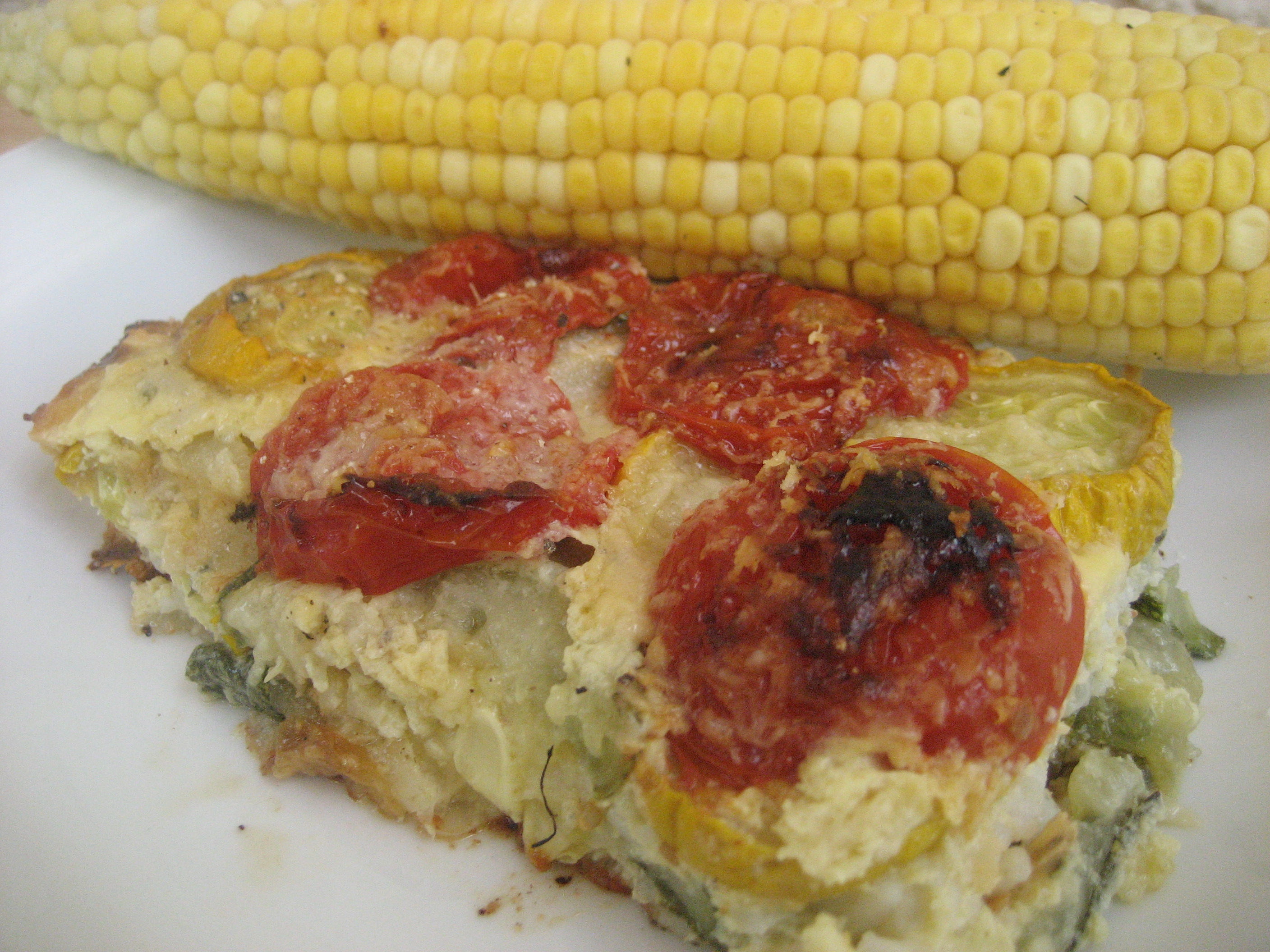
Zucchini bounty in August is a mixed blessing. The zucchini is at peak flavor, but can one really enjoy eating pounds of it week after week? Though tempted to try Kristin’s Chocolate Zucchini Cake from last week, I knew my currently dieting husband would not touch cake. In search of something less sweet, I stumbled across a well-reviewed Zucchini Rice Gratin recipe on Epicurious.com and gave it a try. Let me tell you, the reviewers were not wrong. This casserole-type dish is amazing.

I have not posted a barbeque chicken recipe since everyone seems to have their own favorite method, but I will share three tips for good chicken. One, don’t bother with chicken breasts; they dry out too fast and have minimal flavor. Two, use indirect heat to ensure even cooking without charring. Three, apply sauce only after the chicken has been cooked.

Zucchini Rice Gratin

Zucchini Rice Gratin
from Gourmet, March 2008

Serves 6 (side dish servings)

1/3 cup (60 g) long-grain white rice (or about 3/4 cup cooked rice)
1 1/2 lb (680 g) zucchini (about 3 medium), sliced crosswise 1/4 inch thick
6 1/2 tablespoons olive oil, divided
1/2 lb (225 g) plum tomatoes, sliced crosswise 1/4 inch thick
1 medium onion, halved lengthwise and thinly sliced
3 garlic cloves, finely chopped
2 large eggs, lightly beaten
1 teaspoon chopped thyme
1/2 cup (60 g) grated Parmigiano-Reggiano, divided

Preheat oven to 450°F (230°C) with racks in upper and lower thirds. Cook rice according to package instructions. (Note: I used 3/4 cup cooked, leftover rice.)

While rice cooks, toss the zucchini with 1 tablespoon oil and 1/2 teaspoon salt in a shallow baking pan. Toss the tomatoes with 1/2 tablespoon oil and 1/4 teaspoon salt in another baking pan. Roast the zucchini in the upper third of the oven and the tomatoes in the lower third, turning the vegetables once halfway through roasting, until tender and light golden, about 10 minutes for tomatoes and 20 minutes for zucchini. Leave the oven on.

Meanwhile, cook the onion and garlic with 1/2 teaspoon salt in 2 tablespoons oil in a large heavy skillet, covered, over a low heat, stirring occasionally until very tender, 15 to 20 minutes.

Stir together the onion mixture, cooked rice, eggs, thyme, 1/4 cup (30 g) cheese, 1 tablespoon oil, 1/4 teaspoon salt, and 1/2 teaspoon pepper. Spread half the rice mixture in a shallow 2‑quart baking dish, then top with half the zucchini. Spread the remaining rice mixture over the zucchini, then top with the remaining zucchini. Top with tomatoes and drizzle with the remaining 2 tablespoons oil, then sprinkle with the remaining cheese. Bake in the upper third of the oven until set and golden brown, about 20 minutes.

***

Grilled Corn on the Cob

Grilling corn is a great way to bring out its natural sweetness and to avoid heating up your kitchen on a hot day. To prepare, soak ears of corn (as fresh as possible) in a sink of cold water for 20 to 30 minutes. Drain. Cook ears on the grill over a medium heat for 10 to 15 minutes, or until tender, turning once or twice while cooking. Remove husks from corn. Serve with salt, pepper, and butter.

Pasta Fagiole, Sausages with Peppers, and Assorted Antipasti

I love having people over for dinner. I love planning a menu around their tastes and dietary restrictions. I love shopping for high-end special occasion ingredients and flowers for the table. I love seeing how many place settings I can squeeze onto my dining table. I love the rush of preparing a big meal while trying to keep my kitchen intact. But mostly, I love sharing good food and good conversation with friends and family. There are few things that please me more than a home-cooked dinner and lively, loud conversation (usually after a few bottles of wine have been opened), except maybe the hush that sometimes falls over my guests if I’ve made something particularly good and they have no time to speak between mouthfuls.

This week my husband Reuben’s lovely grandmother, Ellie, visited Milwaukee. I invited her, Reuben’s parents, my grandparents, my parents, and my sister to join us for dinner. Since I had to prepare enough food for 10 adults with two small children underfoot, my menu was simple. Most items could be prepared in advance, during the kids’ nap time. Note that I doubled the soup and sausages recipes below to serve 10 adults. And in case you were worrying that I let my guests go home without dessert, I also served the blueberry crumb bars Kristin posted three weeks ago.

Pasta Fagiole
from an unknown magazine card that’s been in my recipe box for as long as I remember. My apologies to whatever source I took it from years ago.

Serves 4

2 tablespoons extra-virgin olive oil
1 garlic clove, minced
4 cups (1 liter) chicken broth (Swanson Organic Chicken Broth recommended)
1 x 14 oz (400 g) can stewed tomatoes, with Italian seasoning (note: if seasoned tomatoes aren’t available, use regular stewed tomatoes and add 1/2 teaspoon dried oregano and 1/2 teaspoon dried basil)
1 x 19 oz (540 g) can cannellini or great northern beans, rinsed well and drained
6 oz (170 g) tubetti or ditalini pasta
3 tablespoons chopped fresh basil
2 tablespoons freshly grated Parmesan

Heat 1 tablespoon of oil in a large saucepan over a moderate heat until hot but not smoking, then cook the garlic, stirring until fragrant, about 30 seconds. Stir in the broth and tomatoes with their juices and bring to a boil, breaking up the tomatoes with a fork.

Add the beans, pasta, 2 tablespoons basil, and Parmesan and boil, stirring frequently, until the pasta is al dente. Let stand for 5 minutes before serving. (Pasta will continue to absorb liquid.) Stir in the remaining basil and black pepper to taste. Drizzle with the remaining olive oil and serve immediately.

***

Sausages with Peppers

Serves 6

1 tablespoon olive oil
6 hot and/or mild Italian sausages
2 bell peppers (one green and one red, yellow, or orange), sliced into thin strips

In a large skillet, heat 1 tablespoon olive oil over a medium heat. Add the sausages and cook for 10 minutes, turning the sausages halfway through the cooking time. Add the pepper strips and cook until the peppers are soft and the sausages are fully cooked, stirring frequently, about 10 more minutes. If the sausages take on too much color early in the cooking process, lower the heat or cover the skillet with a lid for a few minutes. Serve with a crusty baguette or good Italian bread.

***

Assorted Antipasti

Antipasti refers to the traditional first course in an Italian meal. Cheeses, cured meats, marinated vegetables and salads are typical. Antipasti selections are also perfect for picnics. For my dinner, I served the following (all at room temperature):

cheeses (one soft, one semi-soft, one hard, one goat’s cheese, and fresh mozzarella balls)
olives (I love the bitter taste of black, oil-cured olives, but you can use any type)
1 jar of sun-dried tomatoes in olive oil, julienned
marinated hearts of palm and artichokes (see recipe below)
2 baguettes, one plain and one seeded, sliced

Marinated Hearts of Palm and Artichoke

Drain and rinse 1 can of hearts of palm and 1 can of quartered artichoke hearts. Mix with 1 clove garlic, grated, 1 tablespoon red wine vinegar, 3 tablespoons olive oil, and a pinch of red pepper flakes. Let sit for at least 1 hour before serving.