Category Archives: Vegetarian main dishes

Linguini with Braised Kale and Parmesan Garlic Bread

Greens seem to be the outcasts of the vegetable world, like the shy kids parents have to coax their own children into playing with. Why is this? Sure, spinach is common enough, but why don’t Swiss chard or kale feature more, especially considering how pretty rainbow chard is, or even kale, with its frilly-edged leaves that always make me think of Elizabethan ruffs? I suspect it might be because of a perceived lack of good, innovative recipes that use them.
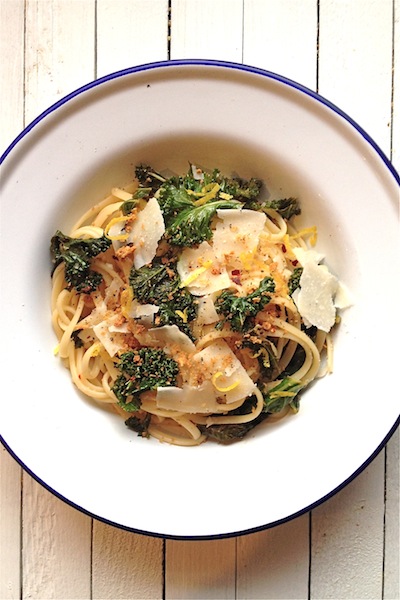
I originally got the idea for this recipe after reading Molly Wizenberg’s (a.k.a. Orangette) October column in Bon Appétit, but it sounded a bit plain to me and I wanted to kick up the flavor. Then I remembered reading a recipe for braised kale in the July/August issue of Jamie Oliver’s new magazine, which included anchovies (another much-maligned ingredient), white wine and lemon. And last week I got the idea of adding the toasted breadcrumbs from the linguini with breadcrumbs and kale recipe that won the greens contest at Food 52. When I merged all three recipes together, it made for a fabulous dish. The kale itself was so good that Matt and I went back for second helpings, pushing the pasta out of the way in the pot just to get to the greens. If you need to be cajoled into eating your greens, try this and see if you might be converted.

Linguini with Braised Kale

Serves 4

You could also make this with other greens, such as Swiss chard or spinach, or you could serve the braised kale on its own as a side dish instead of with pasta. You might notice that in the photo I used both breadcrumbs and pine nuts, but later decided that only one or the other is needed to add a little extra crunch and texture.

1 lb (450 g) kale (about 2 bunches), large center ribs and stems removed
4 tablespoons extra virgin olive oil
4 cloves garlic, chopped
8 anchovy fillets, chopped (optional)
1/2 red chili, finely chopped, or a pinch of red pepper flakes
1/3 cup (80 ml) dry white wine
zest and juice of 1 lemon
salt and freshly ground black pepper
1/2 lb (225 g) linguini or spaghetti
handful of toasted breadcrumbs or pine nuts
grated Parmesan cheese, to serve

Rinse the kale well, then cut crosswise into 1/2‑inch slices. Drain in a colander and set aside.

Heat the oil in a large frying pan over a medium-low heat. Saute the garlic, anchovies (if using) and the chili or red pepper flakes for 5 minutes, taking care not to let the garlic color. When the garlic has softened and the anchovies have dissolved, raise the heat and add the kale. Cook for a couple of minutes, until the kale starts to wilt and turn a vibrant green. Add in the wine, lemon zest and juice and salt and pepper to taste. (Try not to cook the kale too long so that it keeps its bright green color.)

Meanwhile, cook the pasta in a pot of boiling salted water according to package instructions, until al dente. Drain, reserving 1/4 cup (60 ml) of the cooking liquid. Add the cooked pasta to the kale mixture, stirring well to combine. Stir in the reserved cooking liquid.

Divide the pasta and kale between 4 serving bowls or plates. Sprinkle with the breadcrumbs or pine nuts and grated Parmesan cheese and serve right away.

***

Parmesan Garlic Bread
adapted from Real Food by Nigel Slater

6 tablespoons unsalted butter, at room temperature
1 cup (30 g) coarsely chopped flat-leaf parsley
1/2 cup (50 g) freshly grated Parmesan cheese
3 garlic cloves, minced
salt and freshly ground black pepper
1 ciabatta loaf or baguette

Preheat the oven to 425° (220°C). In a small bowl, using a spoon, mash the butter until creamy. Mix in the parsley, Parmesan cheese and garlic and season well with salt and pepper.

Slice the ciabatta or baguette in half horizontally and spread the butter on both halves. Put the halves back together and wrap the bread loosely in aluminum foil.

Bake in the middle of the oven for 5 minutes. Open the foil and bake for about 5 minutes longer, or until the top is golden and crisp. Serve hot.

Baked Ziti with Tossed Salad and Apple Crisp

Matt and I became unwitting Sopranos fans last summer, when our son was a newborn. Our next-door neighbors had the series on DVD and loaned it to us after we told them we’d never seen any episodes. We broke it out one night when I didn’t have the energy to do anything but collapse on the sofa and watch TV. We were quickly hooked, to the point where we would often watch two or three episodes a night. One of the scenes that sticks out from the series is when, in The Happy Wanderer episode, a gang of them lock themselves away in a motel room for the Executive Game, a marathon high-stakes poker-playing session, and keep referring to “boxes of ziti” instead of money (one box of ziti being $1,000). I remember it because even for a show that throws in some mobspeak at every opportunity, this just seemed too over the top to me — nobody would really say that, would they? William Safire wrote that the show’s dialogue is “one part Italian, a little real Mafia slang, and a smattering of lingo remembered or made up for the show by former residents of a blue-collar neighborhood in East Boston,” so who knows?

This is a slimmed-down version of traditional baked ziti, which can have up to three different cheeses and maybe even some sour cream thrown in for good measure. The pasta cooks right in the sauce, making it a quick and easy meal for weeknights, but with just enough cream and cheese to make it feel like a comfort food treat. But if you’re looking for Carmela’s recipe, there’s always The Sopranos Family Cookbook.

Baked Ziti
adapted from The Best Skillet Recipes by Cook’s Illustrated Magazine (recipe via Serious Eats)

Serves 4

If you don’t have an oven-safe skillet, just make the dinner in a regular pot or frying pan and transfer to a large ovenproof baking dish instead (which is what I did).

1 x 28-oz can (or 2 x 14-oz (400‑g) cans) whole peeled tomatoes
1 tablespoon olive oil
6 garlic cloves, minced
1/4 teaspoon red pepper flakes
salt and freshly ground black pepper
3 cups (720 ml) water
12 oz (340 g) ziti (or rigatoni or penne)
1/2 cup (120 ml) heavy cream
1 oz (30 g) freshly grated Parmesan cheese
1/4 cup (10 g) chopped fresh basil
4 oz (110 g) mozzarella, shredded

Preheat the oven to 400°F (200°C). Meanwhile, pour the whole can of tomatoes into a blender or food processor. Process until the tomatoes are roughly chopped, but not pureed.

Pour the oil into a large oven-safe skillet set over a medium-high heat. Add the garlic and red pepper flakes and cook for about 1 minute, or until fragrant. Add in the chopped tomatoes and season well with salt and pepper. Bring to a boil, then reduce the heat to medium-low and simmer for 10 minutes, stirring occasionally.

Pour in the water, stir, and then add the pasta. Turn the heat back up to medium-high. Cook until the pasta is tender, about 15 minutes.

Add the cream, Parmesan, and basil. Stir well. Season with more salt and pepper, then sprinkle the mozzarella on top. Place the skillet in the oven and cook for 10 to 15 minutes, or until the cheese has melted and slightly browned.

***

Apple Crisp with Brandy-soaked Currants
adapted from Rustic Fruit Desserts by Cory Schreiber and Julie Richardson

Serves 6 to 8

For the apples, the authors recommend using Golden Delicious, Galas, Jonagolds, or another apple variety with a high water content. This recipe calls for soaking dried currants in brandy. The longer the currants steep, the more the flavor will be enhanced, so plan accordingly. If you forget to steep the currants, then leave them out because unsoaked currants will burn while cooking (I’m speaking from experience here).

for the brandy-soaked currants:
1/2 cup (70 g) dried currants (or raisins)
1/4 cup (60 ml) apple brandy (or regular brandy)

for the crisp topping:
3/4 cup packed (120 g) brown sugar
1 1/4 cups (150 g) all-purpose flour
1/2 teaspoon salt
1 teaspoon ground cinnamon
pinch of ground nutmeg (optional)
pinch of ground cloves (optional)
1/2 cup (110 g) unsalted butter, melted

for the fruit filling:
8 large apples, peeled, cored, and sliced 1/2 inch thick (3 lb (1.4 kg) prepped)
1/4 cup (50 g) granulated sugar
2 tablespoons all-purpose flour
heavy cream, custard or vanilla ice cream, to serve

Soak the currants (or raisins) in the brandy for at least 2 hours and up to 24 hours.

Preheat the oven to 375°F (190°C). Butter a 9‑inch-square baking pan.

To make the crisp topping, mix the brown sugar, flour, salt, and spices together in a bowl. Stir in the melted butter, then press the topping together with your hands to form small clumps. Put the topping in the freezer while you make the filling.

To make the fruit filling, toss the apples, sugar and flour together in a bowl until evenly combined, then transfer to the prepared pan.

Scatter the currants and any residual brandy over the apples, then sprinkle the crips topping evenly over the fruit.

Bake for 50 minutes, or until the crisp is golden and the filling is bubbling up through the topping. Cool for 20 minutes before serving with a drizzle of heavy cream, warm custard or a scoop of ice cream.

This crisp is best served the day it’s made, but any leftovers can be wrapped in plastic wrap and kept at room temperature for 2 to 3 days.

Black Bean, Eggplant and Leek Chili with Lime Sour Cream and Honey Buttermilk Cornbread

The first cookbook I remember buying was 1,000 Vegetarian Recipes. I was in college, living in a co-op at the time, and needed something to help me cook a vegetarian dinner once a week for 40 people. I probably thought the book was a bargain — with that many recipes, there would surely be loads of veggie crowd pleasers, right? Well, let’s just say it’s no longer in my cookbook collection. The New Vegetarian Epicure was the second cookbook I bought, and has been much better loved. This is the book that taught me how to cook my first proper recipes (quinoa salads and tempeh don’t really count) and I still turn to some of them as my go-to recipes, like this one for honey buttermilk cornbread. What’s your first favorite cookbook?
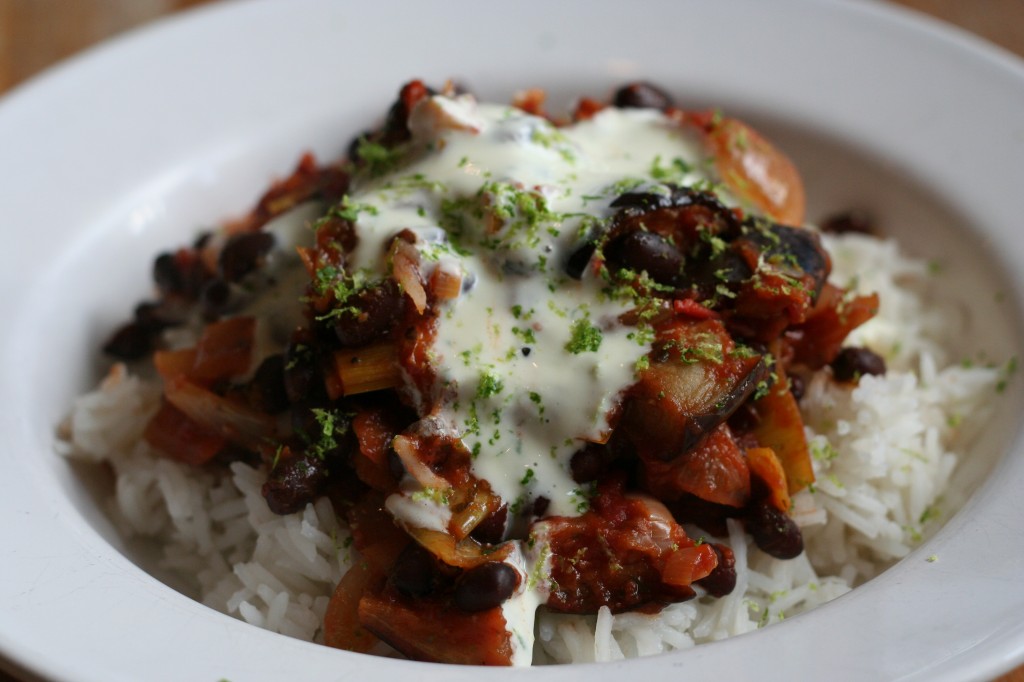
black bean, eggplant and leek chili with lime sour cream

It’s National Organic Week in Ireland. Click here for a listing of events throughout the country.

Black Bean, Eggplant and Leek Chili with Lime Sour Cream
adapted from Paradiso Seasons by Denis Cotter

Serves 4

for the chili:
7 oz (200 g) dried black beans (or 1 x 14-oz (400‑g) can of black beans)
olive oil
2 onions, finely chopped
1 large leek, chopped into chunks and washed well
3 cloves garlic, chopped
1 tablespoon ground coriander
1 tablespoon ground cumin
1 teaspoon chili powder
2 x 14-oz (400‑g) cans of chopped tomatoes
1 tablespoon tomato paste
salt and freshly ground black pepper
2 medium eggplants
1 bunch fresh cilantro (optional)
rice, to serve (optional)

for the lime sour cream:
zest and juice of 1 lime
1 cup (240 ml) sour cream or crème fraîche

Preheat the oven to 400°F (200°C).

To make the chili, soak the beans for 2 hours or overnight in cold water, then cook them in plenty of boiling water until tender (about 1 hour). Or you can skip this if you use canned beans.

Heat a little olive oil in a large pan and cook the onions and leeks for about 10 minutes, until soft. Add the garlic and spices and cook for 2 minutes before adding the tomatoes and the tomato paste. Bring the sauce to a boil, then reduce the heat and simmer for 15 minutes. Season to taste and check the spice levels —  the sauce needs to be very strongly spiced at this point, as the beans and vegetables will dilute its power.

While the sauce is cooking, chop the eggplant into large chunks, toss them in olive oil and roast them until browned and softened, about 30 minutes. Turn and toss the eggplant twice while they’re cooking.

Meanwhile, to make the lime sour cream, simply stir the lime zest and juice into the sour cream or crème fraîche.

Add the roasted eggplant and cooked beans to the sauce and simmer for 10 minutes. Stir in the fresh cilantro (if using) and check the seasoning and spicing again before serving on top of some plain boiled rice and with a dollop of the lime sour cream on top.

***

Honey Buttermilk Cornbread
from The New Vegetarian Epicure by Anna Thomas

Serves 8

1 cup (120 g) white flour
1 1/2 cups (340 g) cornmeal
1/2 teaspoon baking soda
1 teaspoon baking powder
3/4 teaspoon salt
3 large eggs
1 1/3 cups (320 ml) buttermilk
3 tablespoons honey
2 tablespoons (30 g) butter, melted

Preheat the oven to 350°F (180°C).

Sift together the flour, cornmeal, soda, baking powder and salt. In a separate bowl, whisk together the eggs, buttermilk, honey and melted butter. Combine the wet and dry ingredients, stirring gently just until the lumps are gone (don’t overmix). Pour the batter into a buttered 12 x 15-inch baking dish and bake for 30 to 35 minutes, or until a tester inserted in the center of the cornbread comes out clean. Cut into squares and serve hot or warm.

Cream of Fresh Tomato Soup with Parmesan Toasts, Cape Cod Chopped Salad, and Honey Whole Wheat Pound Cake

It never fails — no sooner do I accept that summer is over and order a delivery of oil for the boiler, get the sweaters out of storage and think about swapping the summer-weight duvets for the winter ones than a spell of sunny, warm weather comes our way. I’m certainly not complaining about getting a break from the relentless rain we’ve had in Ireland for the third summer in a row, but it’s thrown me for a loop in planning out dinners for the week. I had already turned my thoughts to autumn casseroles and stews and Sunday roasts, but now I’m scrambling to make a few last salads and lighter meals while the good weather holds, or even clean off the grill to have one token barbecue this year.

This menu is the best of both worlds, perfect for this in-between time of year. If you’ve already had your fill of fresh tomato salads or pasta sauces and have canned enough to last you through the winter, this soup makes good use of the abundance of fresh tomatoes that are still available at this time of year. Keep it light but still seasonal by serving it with this salad, with its nod towards autumn in the apples and maple syrup. The honey whole wheat pound cake works perfectly to round off this late summer/early autumn dinner, especially if you dress it up with something like a cinnamon or maple ice cream.

It’s National Organic Week in Ireland! Click here for a listing of events throughout the country.

Cream of Fresh Tomato Soup with Parmesan Toasts
adapted from Barefoot Contessa Back to Basics by Ina Garten

Serves 5 to 6

3 tablespoons good olive oil
2 red onions, chopped
2 carrots, chopped
3 cloves garlic, minced
4 lb (1.8 kg) vine-ripened tomatoes, coarsely chopped
1 1/2 teaspoons sugar
1 tablespoon tomato paste
1/4 cup (10 g) packed chopped fresh basil leaves
3 cups (720 ml) chicken or vegetable stock
1 tablespoon kosher salt
2 teaspoons freshly ground black pepper
1/2 cup (120 ml) heavy cream
julienned fresh basil leaves, for garnish
Parmesan toasts, to serve (or croutons)

Heat the olive oil heat in a large, heavy-bottomed pot over a medium-low heat. Add the onions and carrots and sauté for about 10 minutes, until very tender. Add the garlic and cook for 1 minute. Add the tomatoes, sugar, tomato paste, basil, stock, salt, and pepper and stir well. Bring the soup to a boil, lower the heat and simmer, uncovered, for 30 to 40 minutes, until the tomatoes are very tender.

Add the cream to the soup and blend with a hand-held blender until smooth (or transfer to a blender or food processor and blend in batches). Reheat the soup over a low heat just until hot. Serve with julienned basil leaves scattered on top and Parmesan toasts or croutons.

Parmesan Toasts

1 French baguette
good olive oil
salt and freshly ground black pepper
freshly grated Parmesan cheese (grated on a box grater)

Preheat the oven to 400°F (200°C).

Slice the baguette diagonally into 1/4‑inch-thick slices. Make as many slices as you like to serve with the soup.

Place the slices on a sheet pan lined with parchment paper. Brush with olive oil and sprinkle with salt and pepper. Sprinkle a thick layer of grated Parmesan on the toasts and bake for 5 to 10 minutes, until the toasts are lightly browned. Allow to cool to room temperature. The toasts can be made a few hours in advance and crisped for a few minutes in a warm oven.

***

Cape Cod Chopped Salad
adapted from Barefoot Contessa Back to Basics by Ina Garten

Serves 4 as a starter or 2 as a main course with soup

for the salad:
8 oz (225 g) thick-cut bacon
8 oz (225 g) baby arugula (or spinach)
1 large Granny Smith apple, peeled and diced
1/2 cup (50 g) toasted walnut halves, coarsely chopped
1/2 cup (80 g) dried cranberries (or raisins)
6 oz (170 g) blue cheese, such as Roquefort, crumbled

for the dressing:
3 tablespoons apple cider vinegar
1 teaspoon grated orange zest
2 tablespoons freshly squeezed orange juice
2 1/2 teaspoons Dijon mustard
2 tablespoons pure maple syrup
salt and freshly ground black pepper
2/3 cup (160 ml) good-quality olive oil

Preheat the oven to 400°F (200°C).

Place a baking rack on a sheet pan and lay the bacon slices on the rack. Roast the bacon for about 20 minutes, until nicely browned. Allow to cool, then chop into bite-sized pieces.

In a large bowl, toss together the arugula, apple, walnuts, cranberries, and blue cheese. Add the chopped bacon to the salad.

For the dressing, whisk together the vinegar, orange zest and juice, mustard, maple syrup, salt and pepper in a bowl or shake to combine in a screw-top jar. Slowly whisk in the olive oil (or shake to combine in a screw-top jar).

Toss the salad with just enough dressing to moisten. Sprinkle with 1/2 teaspoon salt and toss well. Serve immediately.

***

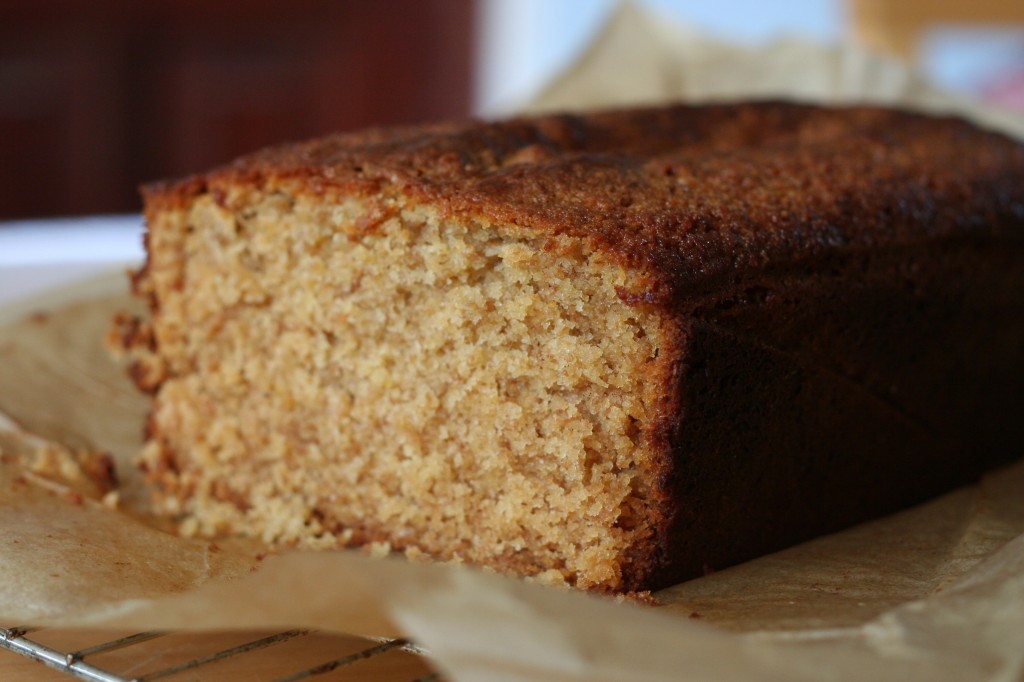
honey whole wheat pound cake

Honey Whole Wheat Pound Cake
adapted from Joy the Baker

Makes 1 loaf cake

The original recipe calls for 2 1/4 cups white whole wheat flour or whole wheat pastry flour. I can’t get either of those in my supermarket, so I used a combination of white and wholemeal flours instead. I had also just been looking at the Barefoot Contessa’s recipe for honey vanilla pound cake, which is similar to this but with lemon zest too, so I added it in here and it worked well.

1 cup (120 g) white flour
1 1/4 cup (200 g) wholemeal flour
2 teaspoons baking powder
3/4 teaspoon salt
1 1/2 sticks (170 g) butter, softened
1 cup (200 g) sugar
1/2 cup (120 ml) honey
2 teaspoons vanilla extract
zest of 1 lemon
3 large eggs
1 cup (240 ml) buttermilk (shake it well first)

Preheat the oven to 350°F (180°C). Butter and flour a 9 x 5‑inch loaf pan.

Sift the flours, baking powder and salt together in a small bowl and set aside.

Cream the butter, sugar and honey together until light and fluffy, about 3 to 4 minutes. Add the vanilla extract and lemon zest. Add the eggs one at a time, beating for about 1 minute after each addition. Scrape down the sides of the bowl as needed.

Add the dry mixture and buttermilk in three additions, beginning and ending with the dry ingredients. Scrape the bottom of the bowl with a spatula to make sure everything is evenly incorporated.

Pour the batter into the prepared loaf pan. Smooth the top and bake the cake for 50 to 60 minutes, until the cake is a lovely golden brown and a tester inserted into the center of the cake comes out clean.

Let the cake cool in the pan for 20 minutes before transferring to a wire rack to cool completely.

Ginger-glazed Kebabs of Sweet Potato, Tofu and Shallots with Coconut Satay, Grilled Wraps with Artichoke Paste, Spinach and Cheese, and Pasta Salad with Mozzarella, Sun-Dried Tomatoes and Olives

My good friends from Washington, D.C., Dave and Mary Clare, surprised us with a visit this week. Actually, they gave us plenty of notice about the visit but we usually only get to see them around Thanksgiving, so in that way it was a surprise. In honor of the visit, my husband and I put together a little barbecue party. Reuben (the husband) skillfully smoked several pounds of chuck roast and made a delicious coleslaw to accompany it, in true North Carolina style, as well as some fabulous baked beans. I’d love to post his recipes, but he never writes down what he’s throwing together.

Since Dave and Mary Clare are vegetarian, I wanted to grill something that they could eat. Kristin was sweet enough to go through her cookbooks and type up a couple recipes that sounded good to me. Both of the Paradiso Seasons recipes turned out well, though the kebabs are fairly labor intensive (and half stuck to my grill). Mary Clare suggested putting a splash of vinegar to the spinach in the wraps, which sounds like a perfect addition.

Ginger-glazed Kebabs of Sweet Potato, Tofu and Shallots with Coconut Satay
from Paradiso Seasons by Denis Cotter

Makes about 12 kebabs

for the kebabs:
3 x 7‑oz (200‑g) packs of tofu
7 fl oz (200 ml) soy sauce
1 teaspoon tomato paste
3 1/2 fl oz (100 ml) water
3 tablespoons fresh ginger, grated
1 1/4 lb (570 g) sweet potatoes
30 shallots, peeled
7 fl oz (200 ml) olive oil
1 tablespoon honey
zest and juice of 1 lime
1 teaspoon toasted sesame oil

for the satay:
juice of 1 lemon
4 oz (110 g) fresh or canned pineapple
2 teaspoons grated ginger
2 cloves garlic
2 bird’s eye chillies (Note: I used 1 jalapeno)
1 tablespoon soy sauce
5 oz (140 g) peanut butter
14 fl oz (400 ml) coconut milk

To make the kebabs, cut the tofu into cubes about 1 inch thick and put them in a shallow dish. Whisk together the soy sauce, tomato paste, water and half the grated ginger. Pour this over the tofu to marinate for at least 1 hour, preferably 3 to 4.

Peel the sweet potatoes and cut them into chunks about the same size as the tofu. Bring a pot of water to boil and cook the sweet potatoes for 5 minutes, until almost done. Remove the potato chunks to a shallow dish and cook the shallots in the water for just 2 minutes, then add them to the sweet potatoes.

Warm the olive oil gently in a small pan and whisk in the honey, lime, remaining ginger and the sesame oil, until the honey is melted, then pour this marinade over the sweet potatoes and shallots. Leave for 30 minutes.

Put a shallot on a skewer, followed by a chunk of sweet potato, then a piece of tofu, another shallot, tofu, sweet potato, and finally, a shallot. Repeat to get about 12 kebabs.

Brush some of the honey marinade onto the kebabs and cook them on a well-greased barbecue, griddle pan or under a very hot grill in the oven. Make sure the barbecue/griddle is well greased or they will stick terribly. Turn the kebabs to cook them evenly and brush a little more marinade over them if they seem dry.

To make the coconut satay, blend the lemon, pineapple, ginger, garlic, chillies and soy sauce in a food processor. Pour the puree into a pan, bring it to a boil and simmer for 2 minutes. Add the peanut butter and whisk slowly while it comes back to a boil. Cook for a few seconds only before pouring in the coconut milk, then bring it back to a boil and simmer for 1 minute more. If you want the sauce to be thicker, simmer for longer, stirring frequently.

***

Grilled Wraps with Artichoke Paste, Spinach and Cheese
from Paradiso Seasons by Denis Cotter

Makes 8 wraps

1 x 14-oz (400‑g) can of artichokes
2 cloves garlic
olive oil
salt and freshly ground black pepper
14 oz (400 g) spinach
1 red onion, halved and sliced thinly
7 oz (200 g) Gruyère or Gouda cheese
8 flour tortillas or wraps

Drain the artichokes and rinse them under cold running water. Put them in a food processor with the garlic and blend in brief spurts to get a coarse puree. Add a few tablespoons of olive oil and blend again for a few seconds. You should have a thick, slightly chunky mash. Season with salt and pepper.

Bring a large pot of water to boil, drop in the spinach and cook just for 30 seconds, then lift it out and plunge into a bowl of very cold water. Squeeze all the water from the spinach and chop it coarsely. Mix the red onion through the spinach. Slice the cheese thinly with a vegetable peeler or large grater.

Place a wrap on a work surface and spread a generous layer of artichoke paste on it, covering most of the wrap but leaving about 1 inch at the near and far ends. Place a layer of spinach about one-third of the way up and cover it with a layer of cheese shavings. Fold the near end of the wrap over the filling and roll it up quite tightly. Repeat with the rest of the wraps and filling.

Brush a little oil on the sandwiches and grill them on a barbecue or griddle pan for a few minutes, turning at least once, until lightly colored and warmed through.

***

Pasta Salad with Mozzarella, Sun-Dried Tomatoes and Olives
adapted from Bon Appétit, August 2000

Serves 8

This can be made 6 hours ahead. Cover and chill, then bring to room temperature before serving.

8 tablespoons olive oil
1/2 cup oil-packed sun-dried tomatoes, with oil
1/3 cup (80 ml) red wine vinegar
2 tablespoons drained capers
1 garlic clove, minced
1 lb (450 g) fusilli pasta
12 oz (340 g) tomatoes, coarsely chopped
12 oz (340 g) fresh mozzarella cheese, drained and cut into 1/2‑inch pieces
1 oz (30 g) fresh basil leaves, thinly sliced
1/2 cup (40 g) freshly grated Parmesan cheese
1/2 cup minced, pitted oil-cured black olives
salt and freshly ground black pepper

Blend the first 5 ingredients in a food processor until the tomatoes are coarsely chopped. Set this dressing aside.

Cook the pasta in large pot of boiling salted water until just tender but still firm to bite, stirring occasionally. Drain and transfer to a large bowl. Add the dressing to the hot pasta and toss to coat. Cool, stirring occasionally. Add the chopped fresh tomatoes, mozzarella, basil, Parmesan and olives; toss. Season to taste with salt and pepper.

Gnocchi with Tomato, Spinach and Ricotta and Brandied Plum Cake

One of the great things about cooking is that the more you do it, the easier and faster it gets. (Though I’ve also become my own worst enemy in that regard — I do almost all the cooking, even on weekends when I could otherwise have a break from it, because I’m so much faster at it than my husband.) When you know that you can pull together a dinner in the time it takes for water to boil and some pasta to cook, or that you can cook some fresh fish in less than 10 minutes, frozen pizzas start to lose their appeal.

But even though I love to cook, there are plenty of days too when I don’t have the energy or am pressed for time to get something on the table for two hungry little kids. And as much as I prefer to cook from fresh, unprocessed ingredients, there are certainly worse convenience foods to have in your pantry than a jar of pasta sauce and a packet of potato gnocchi. Store-bought potato gnocchi cooks in 2 or 3 minutes, making it the ultimate fast food, plus a nice change from pasta. Check out all the quick and easy recipes for gnocchi from the UK’s Olive magazine for more inspiration.

If you like the sound of brandied plums but don’t have time for the cake, just make the plums on their own, which takes only 10 minutes. Serve them with vanilla ice cream, with the syrup drizzled over — no one will complain about not having them in a cake.

IMG_9243

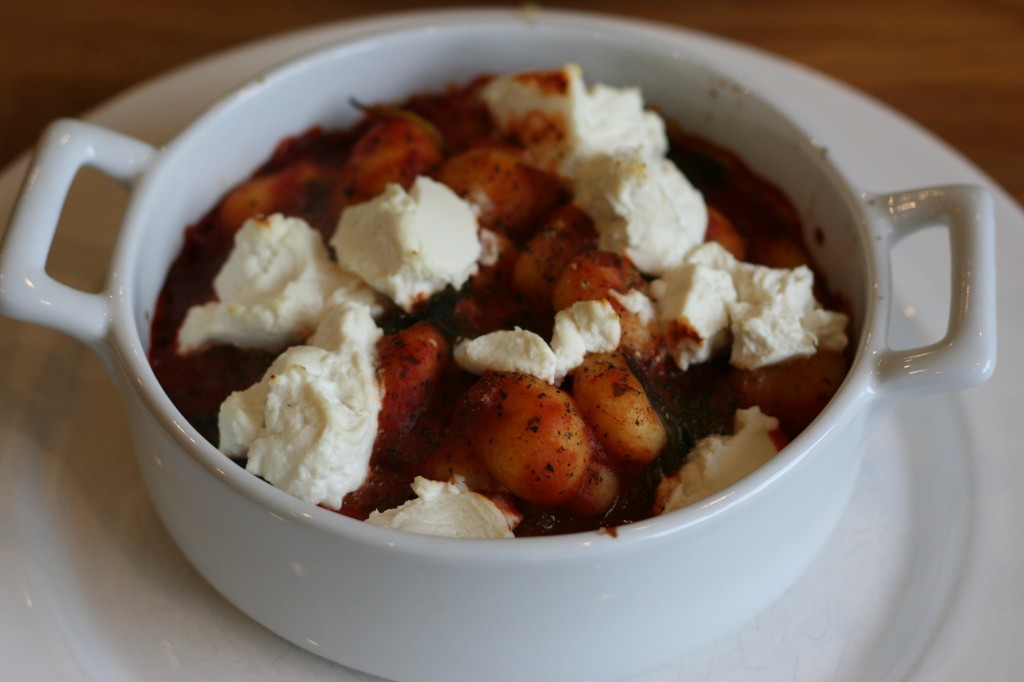
Gnocchi with Tomato, Spinach and Ricotta
adapted from Olive, November 2005

Serves 6

You could vary this recipe by using your favorite pasta shape instead of gnocchi, and stirring 1 tub of ricotta cheese directly into the sauce along with the spinach to make it nice and creamy. Do I even have to say that bacon would be good in this too?

2 x 18-oz (500‑g) packs store-bought potato gnocchi
2 x 14-oz (400‑g) good-quality jars of tomato sauce
7 oz (200 g) baby spinach, washed
2 x 9‑oz (250‑g) tubs of ricotta cheese
a handful of freshly grated Parmesan, to serve

Preheat the oven to 400°F (200°C). Cook the gnocchi according to packet instructions and drain. Meanwhile, heat the tomato sauce, add the spinach and stir until wilted. Put the gnocchi in a lightly oiled ovenproof dish, pour the sauce over and dot with blobs of ricotta. Scatter the grated Parmesan over and pop into the hot oven until bubbling and golden, about 10 minutes.

***

Brandied Plum Cake
inspired by The Kitchen Diaries by Nigel Slater

Serves 12

This cake is very moist, so it doesn’t really need the brandy syrup drizzled over it at the end, though it’s a nice touch. Instead, you might like to save it in the fridge to drizzle over vanilla ice cream another time. If you have any leftover plums that won’t fit on top of the cake, save them to have with yogurt for breakfast.

for the brandied plums:
3 tablespoons sugar
2 tablespoons brandy
1/4 teaspoon cinnamon
16 ripe plums, stoned and quartered

for the cake:
3/4 cup (160 g) butter
3/4 cup (150 g) sugar
3 large eggs
3/4 cup (90 g) all-purpose flour
1 1/2 teaspoons baking powder
1 cup (100 g) ground almonds
1/2 cup (50 g) walnuts, finely chopped

Preheat the oven to 350°F (180°C). Grease a 9‑inch springform pan and line the base with a piece of parchment paper.

To make the brandied plums, combine the sugar, brandy and cinnamon in a frying pan. Cook over a high heat, stirring often, until the sugar dissolves. Reduce the heat, add the plums and cook until they are soft but still hold their shape, about 5 minutes. Transfer the plums to a bowl with a slotted spoon and set aside. Reserve the brandy syrup left behind from the plums.

Beat the butter and sugar until pale and fluffy. Add the eggs one at a time to the butter and sugar. Sift the flour and baking powder together and fold them gently into the mixture with a spatula. Fold in the ground almonds and chopped walnuts.

Scrape the mixture into the lined springform pan. Place the quartered plums on top of the cake mixture (they will sink into the cake as it bakes). Bake for 40 to 45 minutes, until a cake tester comes out clean. If you think the top of the cake is browning too much, cover it with tin foil. Remove the cake from the oven and leave to cool in the pan for 15 minutes before releasing the sides of the pan. Serve with some of the reserved syrup spooned over the top of each slice.

Spaghetti alla Genovese and Lemon Blueberry Buckle

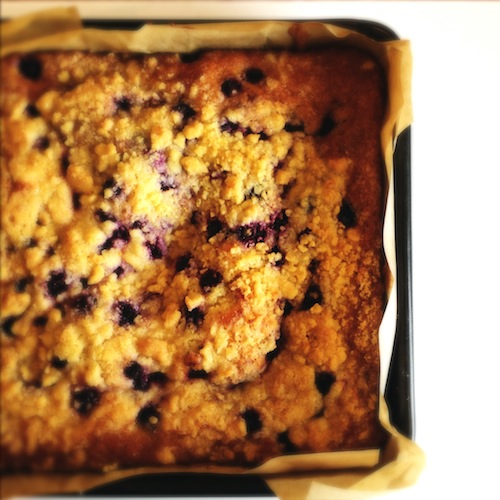
How can you resist an article with a title like “Gourmet’s Guide to Cobblers, Crisps, Crumbles, Bettys, Buckles + Pandowdies”, if only to find out what in the world a pandowdy is? (For the record, it’s sliced fruit baked with sugar and spices in a deep dish, with a thick top crust.) It’s just too bad they didn’t include grunts and slumps in the article title to really round things out. The article included a link to a recipe for lemon blueberry buckle, which sounded like something nice to make while there’s still some blueberries left. But “nice” doesn’t do this recipe justice. And don’t let its humble, coffee cake-like appearance fool you either. It wound up being the best thing I baked all summer. It was so good that as soon as I finished my first piece, I went online to see what I could find out about the book the recipe comes from, Rustic Fruit Desserts. Once I had a look at the index on Amazon, I was sold — apple cobbler with cheddar cheese biscuits, cherry almond bars, fig and honey cream galette, pear sauce bundt cake with pear brandy butter … oh my. I might even have bought it just for the brown sugar rum glaze alone. Hurry and make this buckle while you still can with in-season blueberries — then see if you aren’t tempted to buy the book too.

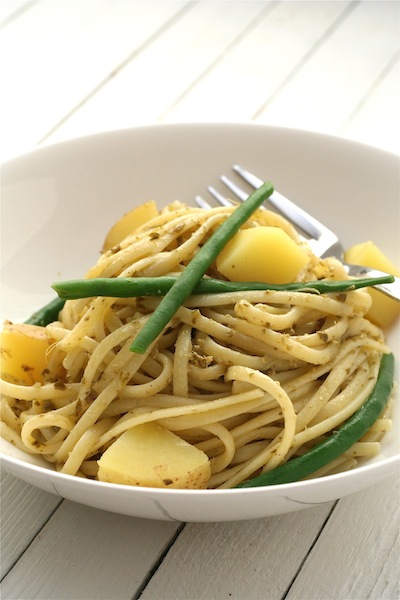
Spaghetti alla Genovese
adapted from Avoca Café Cookbook 2

Serves 4

4 small new potatoes, peeled and cut into thin slices
8 oz (225 g) green beans, ends trimmed
1 lb (450 g) spaghetti (or fettuccine or linguine)
3 or 4 tablespoons pesto (or more, to taste)
salt and freshly ground black pepper
freshly shaved Parmesan, to serve

Blanch the peeled, sliced potatoes in boiling salted water for 5 minutes, or until cooked. Refresh in cold water and set aside.

Cook the trimmed green beans in boiling salted water until tender but still al dente. Drain and set aside.

Cook the pasta in boiling salted water until al dente. Drain, reserving a cupful of the cooking water. Toss the pasta with the potatoes, green beans and pesto. Taste and adjust with more pesto if needed, and thin the sauce with some of the cooking water if you think it needs it. Season to taste with salt and pepper. Serve immediately with thick shavings of Parmesan scattered on top.

***

Lemon Blueberry Buckle
from Rustic Fruit Desserts: Crumbles, Buckles, Cobblers, Pandowdies, and More by Cory Schreiber and Julie Richardson

Serves 6 to 8

Covered in cling film, the buckle will keep at room temperature for 2 to 3 days (though in my house it was all eaten up in less than 24 hours).

for the crumb topping:
1/2 cup (60 g) all-purpose flour
1/3 cup (75 g) granulated sugar
1/8 teaspoon fine sea salt
zest of 1 lemon
1/4 cup (60 g) unsalted butter, at room temperature, cubed

for the cake:
1 1/2 cups (180 g) plus 2 tablespoons all-purpose flour
1 teaspoon baking powder
1/4 teaspoon baking soda
1/2 teaspoon fine sea salt
1/4 teaspoon freshly grated nutmeg (or a pinch of dried nutmeg)
6 tablespoons (90 g) unsalted butter, at room temperature
3/4 cup (150 g) granulated sugar
zest of 1 lemon
2 eggs
1/2 cup (120 ml) buttermilk
2 cups (320 g) blueberries, fresh or frozen

for the lemon syrup:
1/3 cup (75 g) granulated sugar
juice of 2 lemons

Preheat the oven to 350°F (180°C). Butter a 9‑inch-square baking pan.

To make the crumb topping, mix the flour, sugar, salt, and lemon zest together in a bowl, then add the butter and use a fork or your fingers to cut in the butter until the size of peas. Place the topping in the freezer until you mix the cake batter.

To make the cake, whisk the flour, baking powder, baking soda, salt, and nutmeg together in a bowl. Using a handheld mixer with beaters or a stand mixer with the paddle attachment, cream the butter, sugar, and lemon zest together on medium-high speed for 3 to 5 minutes, until light and fluffy. Add the eggs one at a time, scraping down the sides of the bowl after each addition. Sir in the flour mixture in 3 additions alternating with the buttermilk in 2 additions, beginning and ending with the dry ingredients and scraping down the sides of the bowl occasionally. Gently fold in half the blueberries, spread the batter into the prepared pan, and distribute the remaining blueberries over the cake.

Sprinkle the chilled crumb topping over the berries, then bake for 45 to 50 minutes, or until lightly golden and firm on top.

To make the glaze, combine the sugar and lemon juice in a small saucepan and whisk until blended. Cook over a medium-low heat, stirring occasionally, for 8 to 10 minutes, until syrupy. The glaze will bubble while cooking, so you may need to remove it from the heat to check that it’s thick enough.

Pour the glaze over the cake as soon as it’s removed from the oven. Reheat the syrup briefly if it has become too thick to pour.

Spicy Peanut Soba with Tofu and Vegetables and Tossed Salad with Sesame Vinaigrette

I am not a vegetarian. I am not a college student. I am not a hippie. I am not Chinese, Japanese, or Korean. I don’t even live in California. Despite this, I am a proud and frequent eater of tofu. If you think you hate tofu, you probably haven’t had it prepared correctly. Tofu itself is bland and, how shall we say, texturally challenged. But if prepared well, tofu can be delicious. And, of course, it’s good for you. Tofu is low in calories, high in protein, and costs less than ground beef at your local supermarket.

The peanut sauce paired with the tofu in this menu is bold, flavorful, and spicy. Try it. I think you’ll like the combination. And if for some reason you can’t bring yourself to eat tofu, feel free to substitute chicken, pork, or shrimp in the recipe.

Spicy Soba II

Spicy Peanut Soba with Tofu and Vegetables

Serves 6

1/4 cup (60 ml) soy sauce
1/2 cup (120 ml) peanut butter
1/2 cup (15 g) chopped cilantro, plus extra for garnish
1 clove garlic, minced
1/4 cup (60 ml) hot water
1 tablespoon sambal (or 2 tablespoons chili oil or 1/2 teaspoon cayenne pepper)
2 teaspoons sherry
2 teaspoons sugar
1 package extra-firm tofu, cut into 1‑inch cubes
1 cup (240 ml) peanut or canola oil
1 x 12-oz (300‑g) buckwheat soba noodles
1 red or orange bell pepper, sliced thin
12 oz (340 g) sliced mushrooms
12 oz (340 g) snow pea pods, trimmed
1 bunch green onions, bias cut, white parts separated from green parts
1/2 lb (225 g) fresh bean sprouts

Combine the first 8 ingredients (through sugar) in a blender. Blend until smooth. The sauce should be about the consistency of ketchup.

Cook the soba noodles according to the package directions. Drain and set aside.

Heat the oil in a wok until it’s smoking. Add half the tofu to the oil, stirring constantly to prevent sticking. Continue frying for 3 to 4 minutes, until the tofu is golden. Remove the tofu with a slotted spoon and drain on a paper towel-covered paper grocery bag. Repeat with the remaining tofu until it’s all cooked and drained.

Remove all but 1 tablespoon of the oil from the wok or large frying pan. On a high heat, stir-fry the bell pepper for 2 minutes. Add the mushrooms and stir-fry for 1 minute. Add the pea pods and white parts of the green onions. Stir-fry for another 2 to 3 minutes, until all the vegetables are tender, but still crisp. Stir in the green onions (green parts) and bean sprouts. Remove the wok from the heat.

Toss the tofu in about 1/2 cup (120 ml) of the peanut sauce. In a large serving bowl, mix the cooked soba noodles, vegetables and half the peanut sauce. Add more sauce as needed to coat all the noodles and vegetables. I usually end up using all but a couple tablespoons of sauce. Garnish with cilantro.

***

Sesame Vinaigrette

Makes about 1/2 cup (120 ml)

1 teaspoon mirin
1 teaspoon soy sauce
2 tablespoons olive oil
1 tablespoon sesame oil
2 tablespoons rice wine vinegar
dash of red pepper flakes

Whisk together all the ingredients until slightly emulsified (or shake to combine in a screw-top jar). Cover and refrigerate if not using immediately.