Category Archives: Poultry

Country Captain with Cauliflower and Peas

Last month I crammed in as much Food Network as my schedule could handle. It was my last month with cable and I was afraid of missing something important (like Jersey Shore?). We ordered cable to keep me company during my maternity leave last summer, but after Anabelle turned 9 months old and we realized we watched it only about half an hour a day, we canceled it. One of the last shows I watched was Throw Down, a Bobby Flay vehicle that is amusing mostly for its ability to knock the usually cocky Mr. Flay down a notch or two. The episode featured Mr. Flay battling the Lee brothers in a competition to see who could make the best Country Captain. Even though the show was pretty predictable (Mr. Flay usually loses), I couldn’t turn it off. I had to learn more about the silly-sounding dish.

Turns out that the dish’s anthropology is as interesting as its name. It is Indian in flavor, originated in Philadelphia in the 1800s, and is most commonly eaten in the southern United States. Some believe that a British sea captain working in the spice trade introduced it to America via the port of Savannah, Georgia. Weeks later when I saw a Country Captain recipe highlighted as Recipe of the Day on Epicurious, I had to try it out. The list of ingredients is almost as odd as its name. But never judge a recipe by its title (or ingredients list) — the dish was delicious.

Country Captain with Cauliflower and Peas
adapted from Bon Appétit, March 2010

Serves 6

1 1/2 teaspoons coriander seeds
1 teaspoon fennel seeds
1 teaspoon cumin seeds
1/2 teaspoon whole black peppercorns
3 whole cloves
1/4 teaspoon cardamom seeds
1 1/2‑inch piece of cinnamon stick
1/2 teaspoon turmeric
1/4 teaspoon (or less) cayenne pepper
5 tablespoons peanut oil or vegetable oil, divided
1 small head of cauliflower, trimmed and cut into 1‑inch florets
coarse kosher salt
2 lb (900 g) skinless, boneless chicken thighs, trimmed and cut into 1- to 2‑inch pieces
1 bunch green onions, dark green and white parts chopped separately
1 tablespoon peeled and finely grated fresh ginger
2 garlic cloves, minced
1 1/2 cups (360 ml) chicken broth
1 2/3 cups (400 ml) crushed tomatoes with added puree
1/3 cup (50 g) dried cherries, finely chopped
1 tablespoon smooth peanut butter
10 oz (280 g) frozen petite peas (do not thaw)
1/3 cup (20 g) coconut shavings, lightly toasted (optional)
cooked rice, for serving

Place the coriander seeds, fennel seeds, cumin seeds, black peppercorns, cloves, cardamom seeds, and cinnamon stick in a small, dry skillet. Stir the spices over a medium heat for 5 to 6 minutes, until fragrant and slightly darker in color. Remove the spices from the heat and allow to cool. Finely grind the spices in spice mill or in a mortar and pestle. Transfer to a small bowl and add the turmeric and cayenne.

Heat 3 tablespoons of the oil in a heavy, large, deep pot over medium-high heat. Add the cauliflower florets. Sprinkle with coarse kosher salt and saute for 6 to 7 minutes, until beginning to soften and brown in spots. Transfer to a medium bowl.

Add the remaining 2 tablespoons of oil and half the chicken to the same pot. Sprinkle with coarse kosher salt and saute for about 6 minutes, until the chicken is light brown on all sides. Transfer the chicken to a large bowl. Repeat with the remaining chicken.

Add the white parts of the green onions, the finely grated ginger, and minced garlic to the same pot. Reduce the heat to medium and saute for about 1 minute, until fragrant. Add the ground spice mixture and stir for 15 seconds. Stir in the chicken broth and bring to a boil, scraping up any browned bits. Add the crushed tomatoes, reduce the heat to medium-low, cover, and simmer for 15 minutes. Stir in the dried cherries and peanut butter. Return the chicken and any accumulated juices to the pot. Cover and simmer for 10 minutes. Add the sauteed cauliflower to the pot. Cover and simmer for about 10 minutes longer, until the chicken is cooked through and the cauliflower is tender, adding more chicken broth if the mixture is dry. Season with coarse salt and freshly ground black pepper.

DO AHEAD: Can be made 1 day ahead. Cool slightly. Chill uncovered until cold, then cover and keep refrigerated. Rewarm over medium heat before continuing.

Add the frozen peas to the stew and simmer for about 5 minutes, until heated through. Ladle the stew over rice. Sprinkle each serving with the green onion tops and toasted coconut shavings (if using).

Tandoori Chicken with Bombay Potatoes

I’ve hated ghost stories, horror movies and all things even remotely scary since I was nine years old and read a book of ghost stories from my school library, so I’m at a loss to explain why I thought it was a good idea to start swapping first- and second-hand ghost stories when I was having lunch with a friend a week ago. That was all fine and good on a sunny Saturday afternoon, sitting in her bright, cozy kitchen in the County Kildare countryside with a glass of wine, but a few nights later, up in the middle of the night with my little boy, all our stories were running through my head and I was scaring myself silly.

But I’d do it all over again just to have this lunch that she made (not to mention her warm Bakewell tart with fresh raspberries, but that’s a recipe for another day). The fact that I made it myself for my family just one week after having it for our girls’ lunch will also tell you something about how good it is. My four-year-old daughter liked it so much on Saturday that she was disappointed when I served up something else on Sunday and said she wanted this again. Lucky for her, there were leftovers that I’d been planning on having for lunch yesterday, but I let her have them for dinner last night instead. Such are the sacrifices we make for our children — including getting up in the dark to soothe them back to sleep when you’ve turned into a scaredy cat again and just want to pull the covers over your head.

Don’t let the long list of ingredients put you off, it’s just a bunch of spices, and the marinade takes all of 5 minutes to put together. As an alternative to the raita, you could make a mango salsa by combining 1 large mango, peeled and chopped, 1 red chili, deseeded and chopped, the juice of 1 lime and 1 tablespoon chopped mint.

This tandoori chicken is very similar to Kelly’s chicken tikka masala, the main difference being that this version has more spices and doesn’t have a sauce, which makes it even faster and easier to cook as a weeknight dinner. I served it with the pan-roasted curried cauliflower and peas from that menu, as well as Kelly’s cucumber raita, which I added a large handful of chopped fresh mint to. I cooked the curried cauliflower in a separate pan, but next time I’ll try increasing the amount of spices for the Bombay potatoes and just cooking all the vegetables together in one pot instead.

Tandoori Chicken with Bombay Potatoes
adapted from The Eden Cookbook by Eleanor Walsh and Michael Durkin

Serves 6

for the tandoori chicken:
1 tablespoon paprika
1/2 teaspoon garam masala
1/2 teaspoon chili powder
1/2 teaspoon ground cumin
1/2 teaspoon salt
1/2 teaspoon turmeric
2 tablespoons lemon juice
2 tablespoons sunflower oil
2 tablespoons natural yogurt
2 tablespoons cream
1 tablespoon tomato puree
3 cloves garlic, crushed
1 teaspoon fresh ginger, peeled and grated
6 boneless, skinless chicken breasts

for the Bombay potatoes:
2 1/4 lb (1 kg) potatoes, peeled and cubed
1 tablespoon sunflower oil
2 onions, finely chopped
1 tablespoon tomato puree
1 tablespoon curry powder
salt and freshly ground black pepper
3/4 cup (180 ml) vegetable or chicken stock
a few handfuls of baby spinach (about 4 oz/110 g)

cucumber raita or mango salsa (see above), to serve

Combine all the marinade ingredients (except the chicken) in a medium-sized bowl. Add in the chicken, making sure all the pieces are coated with the marinade. Cover the bowl with cling film and marinate the chicken breasts overnight in the fridge.

To cook, preheat the oven to 400°F (200°C).

Place the potatoes in a saucepan with cold water, bring to the boil and drain immediately.

Meanwhile, heat a frying pan with 2 tablespoons sunflower oil. Seal the chicken breasts for 2 or 3 minutes per side, then transfer to a baking tray or casserole dish and cook in the preheated oven for 25 minutes.

In another saucepan, heat 1 tablespoon sunflower oil over a medium heat and fry the onions for 10 minutes, until translucent. Add the tomato puree, curry powder and salt and pepper. Cook for 1 minute, stirring with a wooden spoon. Add the parboiled potatoes and stock. Cover and cook for 10 minutes, until the potatoes are tender. Add the baby spinach just before serving, stirring until the spinach just wilts.

Serve the chicken on top of the potatoes and spinach, garnished with a dollop of cucumber raita.

Chicken Bouillabaisse

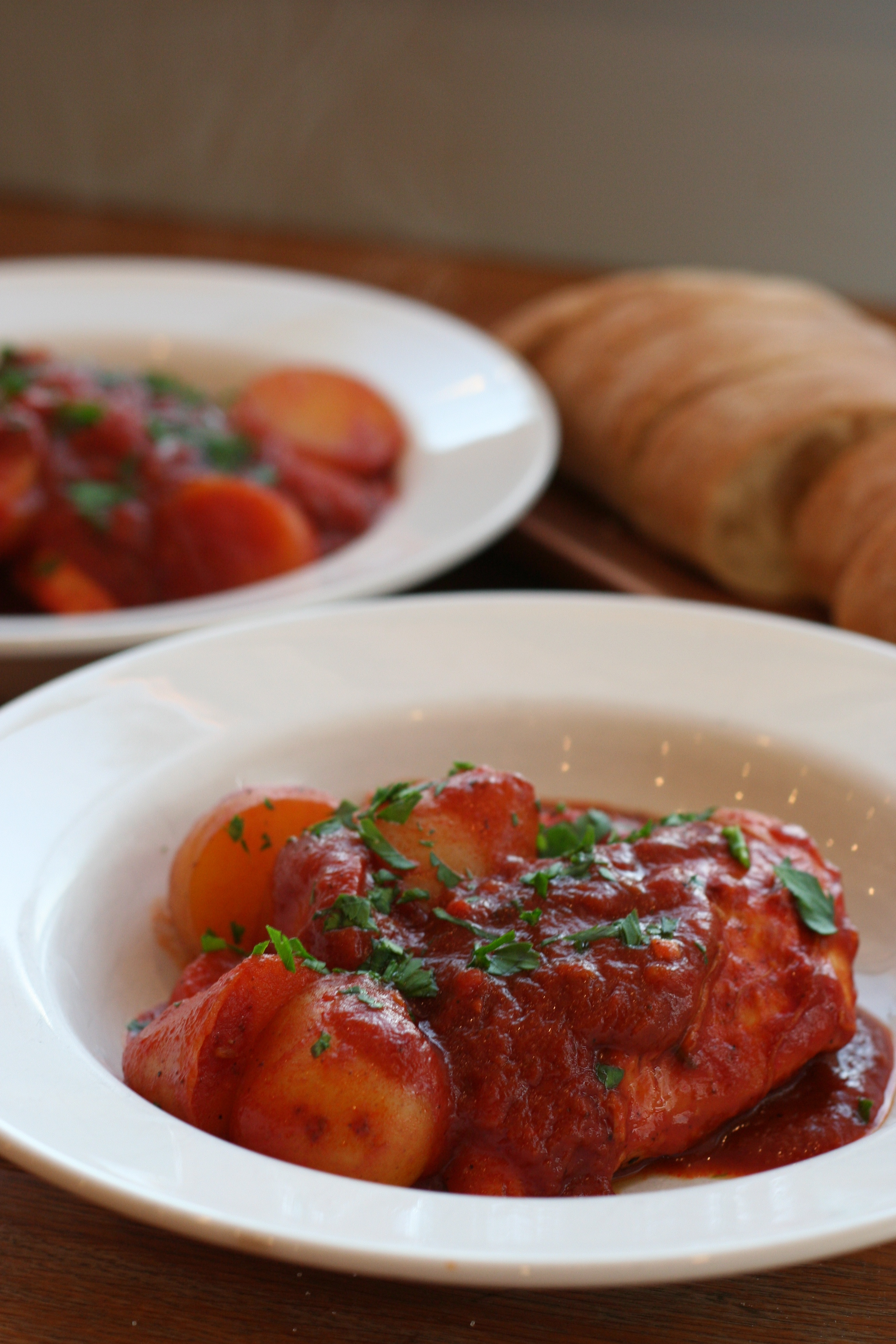
One-pot dinners are so popular that entire cookbooks are dedicated to them. The renowned Ballymaloe Cookery School in Ireland even offers a one-day course on them. Their appeal is obvious — they tend to be easy to cook, only using one pot means there’s less washing up to do, you can let them simmer away while you get on with other things, and they’re ideal for cooking for a crowd. This chicken bouillabaisse is straightforward enough to make as a weeknight meal, yet impressive enough to serve for company. The bright fennel flavors in this stew make for a nice change, especially as we’re coming into spring and cravings for heavy foods are waning. I also love the lurid red sauce, which you’ll want to mop up with plenty of crusty bread. As one-pot wonders go, this is one of my favorites (plus it’s always more fun to cook something with a French name).

Chicken Bouillabaisse
adapted from Barefoot Contessa Back to Basics by Ina Garten

Serves 4 to 6

I’ve adapted this quite a bit from the original, most notably by adding in onions, fennel and carrots and cooking it on the stovetop instead of in the oven. It’s traditional to serve bouillabaisse with a dollop of rouille and Ina Garten has a recipe for one here, though truth be told I usually skip it. You could make a cheat’s version by adding 1 tablespoon freshly squeezed lemon juice, 1/2 teaspoon saffron and 1/4 teaspoon crushed red pepper flakes to 1 cup (240 ml) good store-bought mayonnaise. I’ve listed the Pernod as optional because there’s no need to go out and buy a whole bottle just for 3 tablespoons, and the dish is perfectly delicious without it.

5 large chicken breasts (or a combination of breasts and thighs), either left whole or cut into bite-sized pieces
salt and freshly ground black pepper
1 tablespoon minced fresh rosemary leaves
2 tablespoons extra virgin olive oil
2 large onions, roughly chopped
1 fennel bulb, roughly chopped
3 or 4 carrots, cut into 1‑inch pieces on the diagonal
4 large cloves garlic, finely chopped
1 teaspoon saffron
1 teaspoon whole fennel seeds
11 oz (300 g) tomato puree
2 cups (480 ml) good-quality chicken stock
1 cup (240 ml) dry white wine
3 tablespoons Pernod (optional)
1 lb (450 g) baby potatoes, halved
handful of fresh parsley, chopped, to garnish
crusty bread, to serve

Pat the chicken dry with paper towels and season it generously with salt, pepper, and the rosemary. Heat the olive oil over a medium heat in a large pot and brown the chicken in batches (don’t crowd the pot) until nicely browned all over, about 5 to 7 minutes per batch. Transfer the browned chicken to a plate and set aside.

Lower the heat to medium-low and the onion, fennel and carrots. Saute for 10 minutes, until the onions have softened. Add the garlic and saute for 1 minute more. Add the saffron, fennel seeds, tomato puree, chicken stock, white wine, Pernod, 2 teaspoons salt, and 1 teaspoon of pepper to the pot. Stir and scrape up any browned bits on the bottom. Add the browned chicken and their juices back to the pot, along with the baby potatoes.

Cover the pot and simmer for 45 to 55 minutes, until the potatoes are tender (but not falling apart) and the chicken is done. Check the seasoning, then add a dash of Pernod or a splash of white wine at the end if you think it could use a little alcohol edge. Serve hot in shallow bowls with big dollops of rouille (if using), some chopped fresh parsley sprinkled over and plenty of crusty bread to mop up the sauce.

Chicken in Tangy Escabeche of Caramelized Onions, Carrots and Jalapenos with Rice

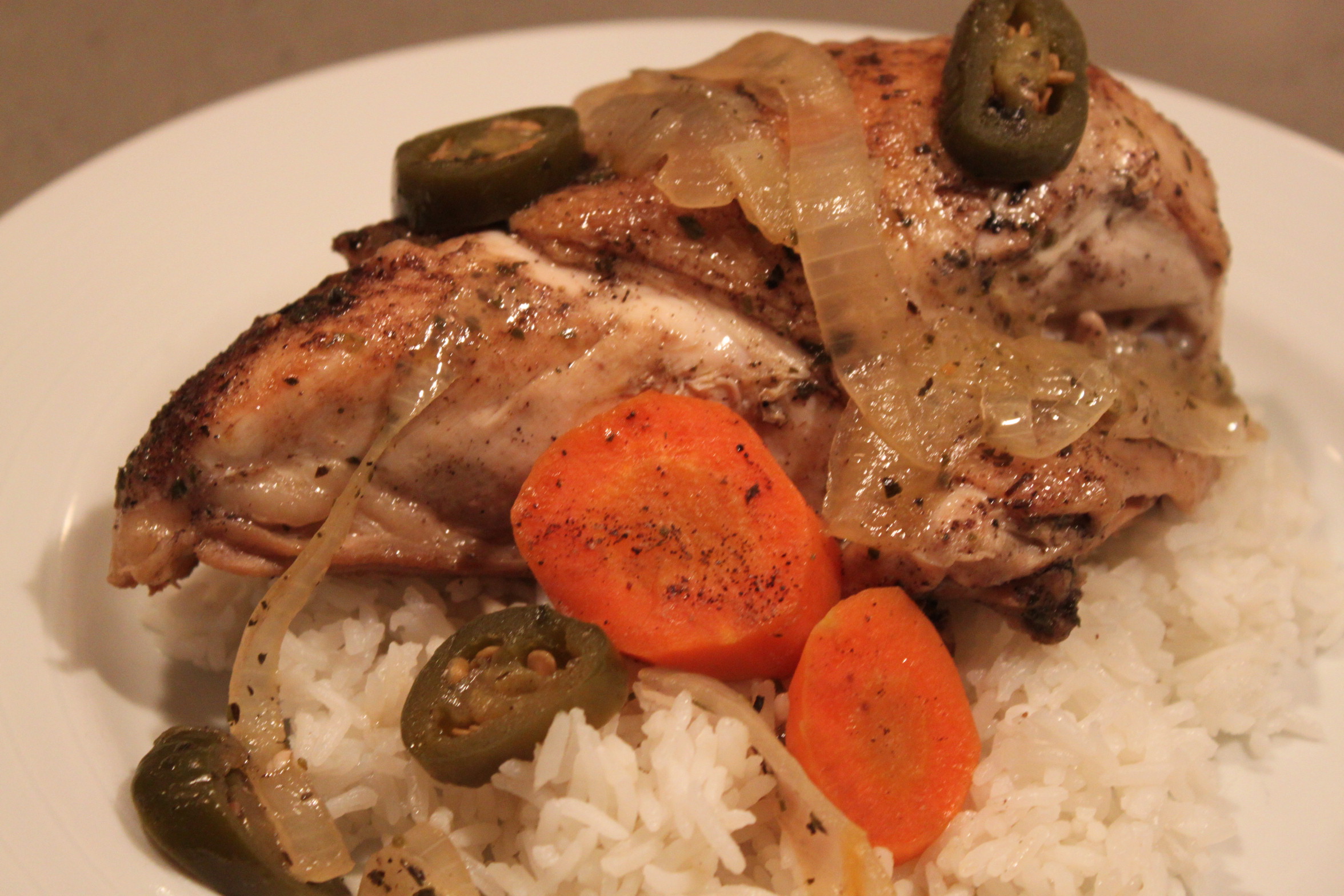
Contrary to popular (American) belief, the condiment of choice in much of Mexico isn’t salsa, but jalapenos en escabeche, which is essentially jalapenos pickled with carrots and onions. Though hesitant to abandon salsa altogether during my summer in Mexico, I grew to love the slightly tart and totally tangy bowl of escabeche vegetables served alongside every meal. A splash of the vinegar-based sauce livens up just about any cut of meat and can be used much like the sport peppers in vinegar you find on tables throughout the southern United States. The crunchy vegetables also make a great addition to dishes in need of a little texture or heat. Tonight’s Rick Bayless chicken dish draws on this classic Mexican combination, with good results. I paired the dish with white rice for a delicious dinner in less than an hour.

Chicken in Tangy Escabeche of Caramelized Onions, Carrots and Jalapenos
adapted from Mexican Everyday by Rick Bayless

Serves 4 to 6

1 teaspoon ground black pepper
1/2 teaspoon ground allspice
2 teaspoons dried oregano, preferably Mexican
1 teaspoon salt
2 lb (900 g) chicken breast halves, bones and skin intact
2 tablespoons vegetable or olive oil
1 large white onion, cut into 1/4‑inch slices
2 large carrots, peeled and sliced 1/4‑inch thick on a diagonal
4 garlic cloves, peeled and halved
1/4 cup (60 ml)  vinegar (apple cider vinegar is traditional)
2 to 4 canned pickled jalapenos, stemmed, seeded and thinly sliced [Note: I used pre-sliced pickled jalapenos]
1 cup (240 ml) chicken broth

In a small bowl, combine the black pepper, allspice, oregano and salt. Sprinkle half of this mixture over the chicken breasts.

Heat the oil in a very large (12-inch) skillet over medium heat. Lay in the chicken, skin side down, and cook for 3 to 4 minutes on each side, turning once, until richly browned. Remove the chicken to a plate, leaving behind as much oil as possible.

Add the sliced onion and carrots to the skillet and cook, stirring regularly, until the onion is browned, abut 7 minutes. Add the garlic and stir for about 1 minute, then add the remaining seasoning mixture, the vinegar, jalapenos and broth.

Nestle the chicken pieces skin side up in the onion mixture, cover the skillet (a cookie sheet works if your skillet doesn’t have a lid) and simmer gently over a medium-low heat until the chicken is just cooked through, about 15 minutes. Taste the broth and season with additional salt if you think it’s needed. Transfer a piece of chicken to each dinner plate, spooning a generous portion of the juicy vegetable mixture over the top.

Red Chile Chicken and Rice with Black Beans

It’s not for nothing that rice and beans is such a staple dish in so many parts of the world (Kelly has already written about this here). Not only is it the ultimate budget food, but when eaten together, rice and beans form a complete protein (you could argue that the inclusion of chicken in this dish is a bit of protein overkill). It’s also wide open to interpretation — just have a look at all the variations listed in this article (or see this lentil-rice salad with chorizo). Another option would be to make this smoked paprika roasted chicken from Simply Recipes for dinner one night, then use the leftover shredded chicken in this dish the next day.

Far from being a bland, stodgy bowl of starch, this recipe is full of flavor, not least because of the whopping 2 1/2 tablespoons of ancho chile powder or smoked paprika called for. I was afraid it would be too spicy or overpowering for my small children, but they loved it. We had big bowls of it on its own as a cheap and cheerful midweek meal, but a simple salad of chopped romaine with this tangy avocado dressing or some cheese quesadillas served alongside would round things out nicely.

Red Chile Chicken and Rice with Black Beans
adapted from Mexican Everyday by Rick Bayless

Serves 4

For a vegetarian version, simply omit the chicken and only use 1 1/2 tablespoons of ancho chile powder or smoked paprika; I think next time I’ll substitute some feta cheese for the chicken. Rick Bayless says he also sometimes adds a big handful of spinach along with the green onions or herbs.

2 tablespoons vegetable or olive oil
4 skinless chicken breasts
2 1/2 tablespoons ground ancho chile powder or smoked paprika (use less if omitting the chicken; see above)
1 medium white onion, cut into 1/4‑inch pieces
1 cup (180 g) rice
4 garlic cloves, finely chopped
1 1/2 cups (360 ml) chicken (or vegetable) stock
1 teaspoon salt
1 x 14-oz (400‑g) can black beans, drained and rinsed (rinsing will keep them from making the rice sticky)
a few chopped green onions or a handful of chopped cilantro
1/2 to 1 cup (120 to 240 ml) salsa, to serve (optional)

Heat the oil in a medium-large heavy pot over a medium-high heat. Sprinkle both sides of the chicken breasts first with salt, then with 1 tablespoon (yes, tablespoon!) of the ground ancho chile powder or smoked paprika. Place them in the hot oil in a single layer (do this in two batches if need be so you don’t crowd the chicken in the pot). Brown for 2 to 3 minutes per side. Remove to a plate to cool, leaving behind as much oil as possible.

Add the onion and rice to the pot. Stir for a few minutes, until the rice turns opaque. Add the garlic and the remaining 1 1/2 tablespoons (again, that’s not a typo) ancho chile powder or smoked paprika and cook for 1 minute. Add the stock and salt (use less salt if your stock is already quite salty). Stir well. When the mixture comes to a boil, reduce the heat to medium-low and cover the pot. Cook for 10 minutes.

Meanwhile, cut the chicken breasts into 1‑inch cubes. Uncover the pot and add the chicken and black beans. Re-cover and cook for 12 minutes longer. (Note: I found that my rice didn’t need this much time to cook, so just keep a close eye on it, test it and use your judgment.)

Uncover, sprinkle on the green onions or cilantro and test a grain of rice: it should have no more than a hint of chalkiness in the center; if it’s still too firm, cook for another 5 minutes or so. Otherwise, simply re-cover the pot, remove it from the heat and let it stand for 5 to 10 minutes to finish cooking the rice in its own trapped steam. Fluff the rice mixture with a fork and serve with the salsa on the side.

Chicken with Lentils

I know this dish doesn’t sound like much. In fact, on the night I had planned to make it, it suddenly sounded so boring and unappealing that I briefly debated ordering take-out instead and wondered what I’d been thinking when choosing to make this earlier in the week as part of my weekly meal planning. But I’m glad I resisted the fleeting urge to order pizza — it was surprisingly delicious, and we liked the leftovers the next day even better. This meal isn’t going to win any beauty contests either (the lack of photo today is no accident), but you’ll be so busy tucking in that you won’t care too much.

Chicken with Lentils
adapted from The New York Times, January 20, 2010

Serves 4 to 6

You could also serve this with a pan-fried salmon fillet instead of chicken (you can follow the instructions for cooking the salmon here).

1 tablespoon extra virgin olive oil
1/2 lb (225 g) bacon, diced
3 lb (1.4 kg) chicken thighs (about 6 to 8 thighs), patted dry
salt and freshly ground black pepper
1 onion, finely chopped
2 leeks, finely chopped
2 celery stalks, finely chopped
3 carrots, finely chopped
4 cloves garlic, sliced
2 teaspoons ground cumin
1/2 head radicchio, cored and finely chopped (don’t worry if you can’t find this, just leave it out)
2 tablespoons red wine vinegar
1 teaspoon fresh thyme leaves (or 1/2 teaspoon dried)
2 cups (400 g) green or Puy lentils
3 cups (720 ml) chicken stock, more if needed
crusty bread, to serve

Heat the oil in a large pot. Add the bacon and cook on a medium heat, until golden. Remove. Season the chicken with salt and pepper and add to the pot, skin side down. Sear until golden on a medium-high heat, working in two batches if necessary. Remove from the pan. Pour off all but 2 tablespoons of fat from the pan.

Add the onions, leeks, celery and carrots and cook on a medium heat for about 10 minutes, until soft and translucent. Add the garlic and cook for 1 minute, then stir in the cumin. Add the radicchio, if using, the vinegar and thyme and saute briefly. Add the lentils, stock and cooked bacon.

Return the chicken to pan, bring to a simmer and cover. Cook for 20 to 30 minutes, until the lentils are tender and most of the liquid has been absorbed, but not all. The lentils should be saucelike but not soupy. Add a little more stock if needed. Check the seasoning, adding more salt and pepper if needed, then serve with crusty bread.

Tzatziki Chicken with Couscous and Hummus

I really wanted to name this post Two Dip Dinner, but I couldn’t risk setting a clever title precedent. Regardless, that’s the unofficial title in my house for this kid-friendly fare. A special thank you to our friend Leah for this menu inspiration. Kristin and I have been lucky to be friends with Leah for nearly 20 years. She’s been kind enough to share some of her favorite recipes with us so we can share them with you.

Tzatziki Chicken with Couscous and Hummus
adapted from Leah’s recipe

Serves 4

1 1/2 lb (680 g) boneless skinless chicken thighs or breasts (thighs preferred)
1 teaspoon white vinegar
1/2 teaspoon sugar
1 package plain whole wheat or regular couscous (about 6 oz/170 g)
2 to 3 cups (475 to 700 ml) chicken broth or water (check couscous package for exact amount)
2 to 4 scallions
2 tablespoons olive oil

for the tzatziki sauce:
2 small cucumbers, peeled and grated, divided
2 teaspoons coarse salt, divided
2 cups plain whole milk yogurt, divided
2 small garlic cloves, minced, divided
2 teaspoons fresh lemon juice, divided
1 teaspoon dried dill, divided

You’ll be making two separate preparations out of the tzatziki sauce ingredients: a marinade and a dipping sauce. For the marinade, put half of all the sauce ingredients into a food processor and pulse until blended and runny. Pour the marinade over the chicken in a Ziploc bag or lidded container. Seal the bag or cover and marinate the chicken for up to 24 hours.

For the dipping sauce, after grating the cucumber, put it into a paper towel and squeeze dry. Stir the grated cucumber into the remaining half of the tzatziki sauce ingredients in a small bowl. Do not put this part in a food processor. Stir in the vinegar and sugar. Refrigerate for 15 minutes before serving (though the longer it can sit in the fridge to let the flavors develop, the better).

After the chicken has marinated, preheat an outdoor grill or stove-top grill pan. Lightly grease the grill. Remove any excess marinade from the chicken and place the chicken pieces onto the hot grill. Discard the marinade. Cook the chicken for 8 to 12 minutes on each side, depending on the thickness; thighs will need more time than breasts.

While the chicken cooks, make the couscous according to package directions, using the amount of chicken broth or water recommended. Fluff the couscous after it cooks and fold in the scallions and olive oil.

Serve the chicken with with couscous, tzatziki sauce, and hummus.

***

Hummus

1 small garlic clove, minced
3 tablespoons fresh lemon juice
2 tablespoons water
1 x 14-oz (400‑g) can chickpeas, drained and rinsed
3 tablespoons tahini
1 teaspoon salt
2 tablespoons olive oil

Put all the ingredients into a food processor and puree until smooth.

Coq au Vin and Gâteau au Chocolat Fondant de Nathalie

Don’t be intimidated by this post’s fancy name — I could have just called it chicken in wine and chocolate mousse cake, but where’s the fun in that? I had a Francophile friend over for lunch the other day, so decided it was as good a time as any to make the Barefoot Contessa version of coq au vin that I’ve been wanting to try. And after being very good for all of January and not baking a single thing, I undid all my efforts and made this cake. But oh, such a cake. It’s one of my top two favorite cakes (Beatty’s chocolate cake is the other). Fudgy, smooth and intense, it was worth every previously forsaken calorie.

This is a great menu for entertaining because you can make both dishes in advance. In fact, the cake gets even better after a day or two. It’s also incredibly easy to make — just melt the chocolate and butter together, then stir in all the rest of the ingredients in the same bowl (you can watch Trish Deseine herself making it to see just how easy it is). You often hear that you should use the best-quality ingredients you can find, but it’s particularly true for this cake. I used Green & Black’s organic chocolate, organic eggs and Lurpak butter from Denmark.

Ina Garten suggests serving the coq au vin with garlic mashed potatoes, but I wanted to make things easier on myself and so just served it with a good store-bought crusty bread instead. I also served a green salad with balsamic vinaigrette and a plate of Brie and Roquefort. There are few better ways to spend an afternoon than with a good friend, good conversation and a table full of good food.

Coq au Vin
adapted from Back to Basics by Ina Garten

If you can’t find frozen small whole onions and don’t want to bother with peeling small shallots, just use 2 yellow onions instead of the 1 called for at the start of the recipe. And if you don’t have a Dutch oven, simmer the coq au vin on the stovetop for 45 minutes to 1 hour instead.

2 tablespoons olive oil
4 oz (110 g) bacon or pancetta, diced
1 x 3 to 4‑lb (1.4 to 1.8 kg) chicken, cut into eighths (or use an equal weight of chicken breasts and thighs)
kosher salt and freshly ground black pepper
1/2 lb (225 g) carrots, cut diagonally in 1‑inch pieces
1 yellow onion, sliced
2 teaspoons salt
1 teaspoon freshly ground black pepper
1 teaspoon chopped garlic
1/4 cup (60 ml) Cognac or good brandy
1/2 bottle (375 ml) good dry red wine such as Burgundy
1 cup (240 ml) good-quality chicken stock
10 fresh thyme sprigs
2 tablespoons unsalted butter, at room temperature, divided
1 1/2 tablespoons all-purpose flour
1/2 lb (225 g) frozen small whole onions (or small peeled shallots*)
1/2 lb (225 g) cremini mushrooms (button mushrooms will also work fine), stems removed and thickly sliced

*Note: To peel shallots easily, drop them into a pot of boiling water for less than 1 minute. Drain, then slip off the skins.

Preheat the oven to 250°F (120°C).

Heat the olive oil in a large Dutch oven. Add the bacon and cook over medium heat for 8 to 10 minutes, until lightly browned. Remove the bacon to a plate with a slotted spoon.

Meanwhile, lay the chicken out on paper towels and pat dry. Liberally sprinkle the chicken on both sides with salt and pepper. When the bacon is removed, brown the chicken pieces in batches in a single layer for about 5 minutes, turning to brown evenly. Remove the chicken to the plate with the bacon and continue to brown until all the chicken is done. Set aside.

Add the carrots, onions, salt and pepper to the pan and cook over medium heat for 10 to 12 minutes, stirring occasionally, until the onions are lightly browned. Add the garlic and cook for 1 more minute. Add the Cognac and put the bacon, chicken, and any juices that collected on the plate into the pot. Add the wine, chicken stock, and thyme and bring to a simmer. Cover the pot with a tight-fitting lid and place in the oven for 30 to 40 minutes, until the chicken is just not pink (or simmer on the stovetop for 45 minutes to 1 hour). Remove from the oven and place on top of the stove.

Mash 1 tablespoon of butter and the flour together and stir it into the stew to thicken it. Add the frozen onions (if using peeled shallots, saute them along with the mushrooms in the next step before adding to the stew). In a medium saute pan, add the remaining 1 tablespoon of butter and cook the mushrooms over a medium-low heat for 5 to 10 minutes, until browned. Add to the stew. Bring the stew to a simmer and cook for another 10 minutes. Season to taste and serve hot.

***

Gâteau au Chocolat Fondant de Nathalie
adapted from Je veux du chocolat! by Trish Deseine (recipe via Orangette and RTÉ)

This cake is even better on the second day, so consider making it the day before serving. Molly Wizenberg at Orangette says this cake is also suitable for freezing, and even improves in texture and flavor after a week or two in the freezer.

7 oz (200 g) best-quality dark chocolate
1 tablespoon double-strength espresso or 1 teaspoon instant espresso powder (optional)
7 oz (200 g) best-quality unsalted butter, cut into 1/2‑inch cubes
1 1/4 cups (250 g) sugar
5 large eggs
1 tablespoon all-purpose flour
confectioners’ (icing) sugar, to dust (optional) (or you could use Trish’s chocolate glaze, recipe here)

Preheat the oven to 375°F (190°C) and butter and flour an 8‑inch round cake pan or springform tin (which is what I prefer, since you don’t have to turn it out).

Finely chop the chocolate and place it, along with the coffee, in a double boiler or in the microwave, stirring regularly (every 30 seconds if using a microwave). Once the chocolate has melted, add the butter, stirring until it too has melted. Add the sugar to the chocolate-butter mixture, mixing well, and set aside to cool for a few moments. Add the eggs one by one, beating well with a wooden spoon after each addition, then add the flour. The batter should be smooth and dark. If you can see fat still floating on the surface or if the mixture looks at all grainy, switch to a whisk and beat lightly until smooth.

Pour the batter into the prepared cake pan and bake for 20 to 25 minutes, until the center of the cake barely trembles when the pan is shaken (the cake should be very moist in the middle) and the top is a bit crackly looking. Let the cake cool completely in the tin before you turn it out, then revert it so that the crackly side is facing upward. Dust with icing sugar or spread with the chocolate glaze and serve at room temperature.