Category Archives: Poultry

Smoky Lemon Chicken Salad with Roasted Peppers and Avocado

Just a couple weeks ago, there was a day in mid July where storm clouds were rolling in from the west, I made a cup of tea just so I could wrap my hands around something warm and I briefly debated lighting the wood stove to take the chill out of the air. I’ve lived in Ireland for 12 years and I usually don’t let the weather get me down — I know full well by now how disappointing Irish summers can be, weather wise — but that day was so grey and cold and dismal that I was close to tears. It might not be much of a summer most days, but we do get a nice surprise every now and again with a day that’s sunny and over 70°F, and on one such day I made this salad — and liked it so much that on the next warm, sunny day, I made it again.
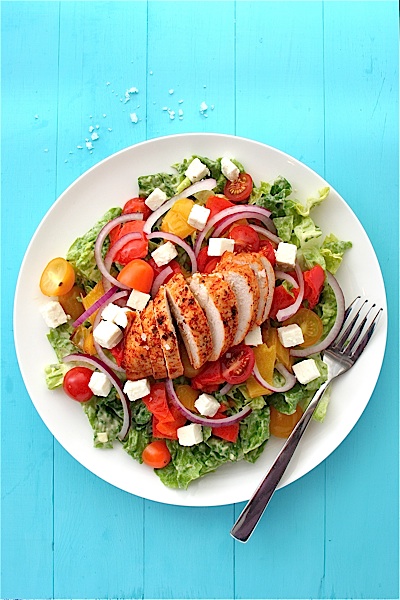
Smoky Lemon Chicken Salad with Roasted Peppers and Avocado

Serves 4 as a main meal

The chicken could be grilled on a BBQ or grill pan instead of roasted in the oven. The avocado dressing (adapted from Mexican Everyday by Rick Bayless) makes the salad more substantial and filling, but if it seems like too much work, try this lime-garlic dressing and simply slice 2 avocados and add them to the salad instead. And speaking of too much work, you could use jarred roasted peppers instead of roasting fresh ones yourself too.

for the smoky lemon chicken:
1/2 cup (125 ml) freshly squeezed lemon juice (2 or 3 large, juicy lemons)
1/2 cup (125 ml) olive oil
1 teaspoon chilli powder
1 teaspoon smoked paprika
salt and freshly ground black pepper
4 chicken breasts

for the salad:
2 heads of Romaine lettuce, shredded
2 red peppers, roasted, deseeded and cut into bite-sized pieces
2 yellow peppers, roasted, deseeded and cut into bite-sized pieces
1 lb (425 g) cherry tomatoes, halved
1/2 red onion, sliced very thinly into half moons
1 cup (200 g) cubed or crumbled feta cheese

for the avocado dressing:
2 green onions, chopped (white and green parts)
1 avocado, skin and stone removed
1 garlic clove, minced
1/2 cup (10 g) cilantro (leaves and stems), roughly chopped
1/2 cup (125 ml) mayonnaise
1/4 cup (50 ml) vegetable oil
3 tablespoons fresh lime juice
1 teaspoon Worcestershire sauce
salt and freshly ground black pepper

Whisk together the lemon juice, olive oil, chilli powder, smoked paprika and a generous pinch of salt and freshly ground black pepper. Place the chicken in a glass bowl or ceramic dish and pour the marinade over. Cover tightly and place in the fridge for at least a few hours, or ideally overnight. When you’re ready to cook, preheat the oven to 400°F (200°C) and transfer the chicken to a baking sheet, trying to keep as much of the spices on the chicken as you can once you remove it from the marinade. Sprinkle over some salt and freshly ground black pepper and roast the chicken for 25 to 30 minutes, or until cooked through.

Meanwhile, to make the dressing, add all the ingredients to a food processor or blender. Process until smooth.

Toss the shredded Romaine lettuce with some of the dressing, making sure all the lettuce is coated. Divide the lettuce between 4 plates or large salad bowls, then scatter over the roasted peppers, halved cherry tomatoes and red onion slices, finishing with the feta cheese.

When the chicken is done, slice each breast into thin strips and place on top of the salad. Spoon over some additional dressing, if desired, and serve right away.

Chicken in Vinegar (Poulet au Vinaigre)

I buy cookbooks for different reasons. Most of the time I buy them because I flipped through them in the store and wanted to make everything I saw, which is always a good sign. Sometimes I buy them because I’m a fan of the writer (I have a bookshelf that’s taken up solely with Nigella Lawson and Nigel Slater’s books). But other times I buy them because they’ll be a good reference book, the kind of book that you know will stand the test of time or point you in the right direction if you want the authentic version of a recipe. Larousse Gastronomique and The Silver Spoon are such books, and so is French Country Cooking by Michel and Albert Roux, which has now been reprinted.
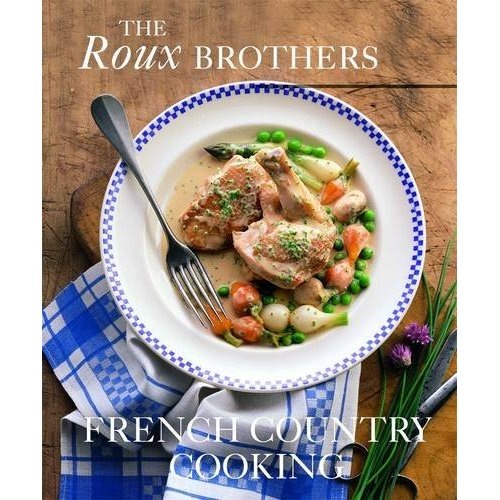
This book isn’t for the casual cook — it includes hard-core rustic dishes like Lyonnaise ox tripe, frogs’ legs and pig’s head soup and offal features prominently. Yet it also includes authentic recipes for classics like pissaladière, quiche Lorraine, salad niçoise, cassoulet and soupe au pistou as well as dishes that I hadn’t heard of but have bookmarked to try, such as fricassée of farmhouse chicken with baby vegetables or chickpeas with bacon and peppers. But this classic recipe for chicken in vinegar (poulet au vinaigre) is the one that called out the loudest to be tried first.

The book is divided into 12 regional chapters that each give an overview of the region’s culinary traditions and then presents 12 recipes from the region as well as a list of ingredients that are indigenous to the area. With the continuing interest in local foods, this kind of extra detail will appeal to those who want to know more about regional cooking and foods. As the authors say themselves in the introduction, “It is regional, homely cooking which manages to be both rustic and sophisticated at the same time.”

Chicken in Vinegar (Poulet au Vinaigre)
adapted from French Country Cooking by Michel and Albert Roux

Serves 4

In Gourmet magazine’s version of this recipe, they said the vinegary sharpness of this dish is “edgy and refreshing” — perfect for hot, sluggish summer weather when you want to wake up your taste buds. The headnote to the recipe explains that this easy, inexpensive dish originally comes from Lyon or Burgundy and that fresh pasta is the perfect accompaniment, but I like it with some good crusty bread to mop up the sauce instead and a green salad on the side.

1 x 2 lb 14 oz (1.3 kg) chicken, cut into 8 pieces (or just use chicken breasts/thighs)
4 tablespoons (60 g) butter
3 or 4 large shallots, finely sliced
1/2 cup (125 ml) red wine vinegar
1 bouquet garni (parsley, thyme, bay leaf)

For the sauce:
2 tablespoons (30 g) butter, softened
1 tablespoon flour
1/2 cup (125 ml) dry white wine
1/2 cup (125 ml) chicken stock
salt and freshly ground black pepper
1 tablespoon chopped fresh flat-leaf parsley

crusty bread, to serve
green salad, to serve

Heat the butter in a frying pan over a medium heat. Add the chicken pieces and fry on all sides for 7 to 8 minutes, until golden. Add the shallots and cook for 1 minute, then pour in the vinegar. Add in the bouquet garni, cover the pan and cook over a gentle heat for 10 minutes (or in the oven at 325°F/170°C), or until the chicken is cooked through. Remove the chicken from the pan and keep warm.

To make the sauce, mash the butter and flour together in a bowl with a fork until they’re well combined (this makes a beurre manié). Pour the white wine into the pan and reduce by one-third. Add the chicken stock and whisk in the beurre manié to bind the sauce. If it seems too thick, add a little more chicken stock. Season to taste with salt and pepper.

To serve, arrange the chicken pieces in a deep dish and pour over the hot sauce. Sprinkle with the freshly parsley and serve immediately with buttered pasta or crusty bread and a green salad.

Chicken and Bacon Pot with Oatmeal Freezer Cookies

I’m usually not a fan of boneless, skinless chicken breasts. In comparison to chicken thighs, I find chicken breasts too easy to dry out and dull in flavor, reserved only for dishes with lots of other “wow” ingredients. Maybe it’s the bacon in this dish or the top-quality chicken that I used, but this one-dish chicken recipe proved me wrong. The sauce is savory and satiny, the meat moist and tender, and it all meshes perfectly on top of basmati rice. My kids both asked for thirds and I hid the leftovers for myself. 

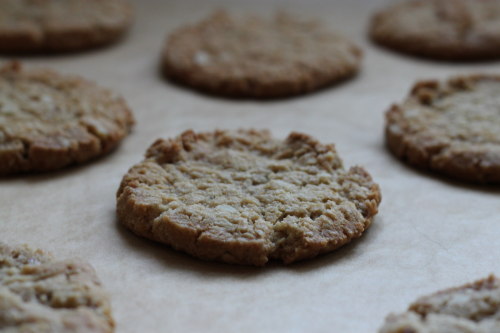
I took advantage of my already hot oven and put in a batch of oatmeal freezer cookies before we sat down to eat. Despite the fact that it’s May, it’s damp and gray here in Wisconsin — but good weather for baking cookies. Freezer cookies are ideal desserts for busy people. You can make the dough days, weeks, even months in advance, then store it in your freezer until you need it. On the day you want to bake the cookies, simply thaw the dough in the fridge, slice, and bake it. Hot cookies fresh from the oven in minutes!

Chicken and Bacon Pot
adapted from Easy Everyday: Simple Recipes for No-fuss Food

Serves 4

High-quality chicken is essential for chicken breast-based recipes like this one. I used chicken shipped to me from Springer Mountain Farms, which prides itself on their 100% natural, vegetarian-fed and humanely raised (certified by the American Humane Association) chicken.

1 tablespoon olive oil
8 oz (225 g) bacon, diced
8 oz (225 g) white, button mushrooms
4 boneless, skinless chicken breast fillets
1 garlic clove, crushed
2 shallots or 1 small onion, diced
1/3 cup (40 g) flour
2 cups (500 ml) chicken broth or stock
2/3 cup (150 ml) white wine
1 bay leaf
a handful of fresh parsley, chopped
sea salt and freshly ground black pepper
basmati rice, to serve

Preheat the oven to 350°F (180°C). Heat the olive oil in a casserole dish, add the bacon and mushrooms, and cook over medium heat until golden. Transfer the bacon and mushrooms to a plate.

Put the chicken breasts in the casserole and quickly brown on both sides. Set the chicken aside with the bacon.

Saute the garlic and shallots (or onion) over a low heat in the same pan for about 5 minutes. Add the flour and mix well. Stirring constantly, cook the flour mixture about 1 minute, until well blended and nutty smelling, being careful not to burn the flour. Remove the pan from the heat, slowly pour in the stock and wine, and stir or whisk until smooth. Return the pan to the heat and bring to a boil, stirring constantly for another 2 to 3 minutes, or until the sauce slightly thickens. Mix in the bacon and mushrooms, then add the chicken, bay leaf, and seasoning. Cover and cook in the oven for 30 minutes. Add the parsley just before serving with rice.

***

Grandma Dot’s Oatmeal Freezer Cookies
adapted from cooks.com

Makes about 2 dozen cookies

I freeze this dough in smallish logs, just enough to make about 8 cookies. By freezing smaller portions, the dough thaws more quickly. And because I only bake a few cookies at a time, they are always fresh.

1/2 cup (100 g) shortening
1/2 cup (85 g) brown sugar
1/2 cup (100 g) sugar
1 egg
1 teaspoon vanilla
3/4 cup (90 g) flour
1/2 teaspoon salt
1/2 teaspoon baking soda
1 1/2 cups (120 g) rolled oats
1/4 cup (25 g) finely chopped pecans or walnuts

Preheat the oven to 350°F (180°C). Cream the shortening and sugars. Beat in the egg and vanilla.

In a separate bowl, stir together the flour, salt, baking soda, oats and nuts. Add the flour mixture to the creamed mixture until just blended.

Shape the dough into 2‑inch rolls, like refrigerator cookie dough at the grocery store, on waxed paper. Roll up and twist the ends together. Chill until firm (at least 2 hours) or freeze for later use (place logs in a plastic bag before freezing). When ready to bake the cookies, thaw the dough (only if frozen), then cut into 3/4‑inch slices. Place on an ungreased cookie sheet with at least 1 inch separating the cookies. Bake at 350°F (180°C) for approximately 10 minutes.

Slow Cooker Buttered Chicken and Tomato Curry

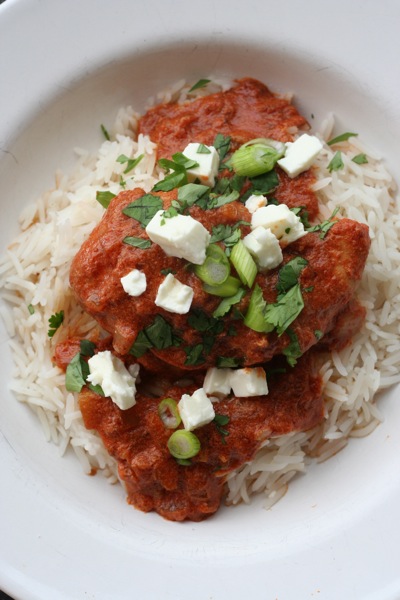
A slow cooker isn’t the most glamorous piece of kitchen equipment, but it’s a busy cook’s best friend. Kelly has sung their praises, and I convinced my friend Emma to buy one last year when the cold weather set in after talking up all their benefits. After a few months though, she admitted that the first two recipes she’d made were flops, one of which was so bad they wound up giving it to the dogs and ordering take-out. That’s the main drawback with slow cookers, and why I’m always hesitant to buy cookbooks dedicated solely to them. When a slow cooker recipe is bad, it tends to be really bad — insipid or even, as in Emma’s case, inedible.

In the meantime though, Emma bought a copy of Antony’s Slow Cooking by Antony Worrall Thompson and tried this recipe, which she liked so much she passed it on to me. I in turn like it so much that I’ve made it twice in the past month and it’s become my new favorite slow cooker recipe. And that’s the flip side to the slow cooker – when you get a good recipe, it can be really good, like this one.

Slow Cooker Buttered Chicken and Tomato Curry
adapted from Antony’s Slow Cooking by Antony Worall-Thompson

Serves 4

Buttered chicken is a classic mild curry — it’s creamy, not spicy, so my kids loved it and practically licked their bowls clean to get every last bit of the sauce. Please don’t be put off by the long list of ingredients — it’s really just a bunch of spices that are all widely available.

The original recipes calls for heavy cream to be stirred in at the end in addition to more butter, but I found the sauce to be delicious without all those extra calories. But if you’re so inclined, add in 1/3 cup (80 ml) heavy cream at the end of the cooking time, cover and cook on high for 20 minutes. Remove the chicken to a warm serving dish, then whisk 6 tablespoons (3 oz/90 g) butter into the sauce, making sure it’s well emulsified. Check the seasoning, then pour the sauce over the chicken and garnish, as below.

2 tablespoons lemon juice (should be the juice of 1 large lemon)
1/2 teaspoon salt
1 teaspoon chili powder
2 lb (1 kg) skinless chicken thigh fillets or skinless chicken breasts
1 1/4 cup (300 ml) Greek yogurt
2 teaspoons ground ginger
2 teaspoons garam masala
2 tablespoons (30 g) unsalted butter
1 tablespoon vegetable oil
2 onions, finely chopped
1 teaspoon ground coriander
1 teaspoon sweet paprika
1/2 teaspoon ground cumin
1/2 teaspoon fennel seeds
1/2 teaspoon ground cinnamon stick
4 garlic cloves, crushed or finely chopped
14 fl oz (400 ml) passata (or blend a 14 oz/400g can of whole plum tomatoes until it’s smooth if you can’t get passata)
2 tablespoons tomato paste (puree)
5 fl oz (150 ml) chicken stock
2 tablespoons light brown sugar
salt and freshly ground pepper

to garnish:
fresh cilantro (coriander)
flaked almonds
spring onions, sliced
feta chees

to serve:
basmati or pilau rice

Whisk together the lemon juice, salt and chili powder. Place the chicken in a non-metallic bowl and pour over the lemon juice mixture. Cover and marinade for at least 30 minutes, but ideally overnight.

When you’re ready to cook, whisk together the yogurt, ginger and garam masala, pour over the marinated chicken and mix well. Spoon the chicken mix into the slow cooker.

Heat the butter with the oil in a frying pan over a medium-low heat, then cook the onion and spices for 8 to 10 minutes, until the onion has softened but hasn’t colored (adding a pinch of salt to the onions when they’re cooking helps to prevent them from browning too much). Add the garlic and cook for 1 minute more. Stir the onion mix into the chicken in the slow cooker, then stir in the passata, tomato purée, chicken stock and brown sugar. Mix to combine everything well then cover and cook on low for 5 to 6 hours, until the chicken is cooked through. Garnish with cilantro (coriander), almonds and spring onions. Just before serving, crumble the feta over the surface. Serve with basmati or pilau rice.

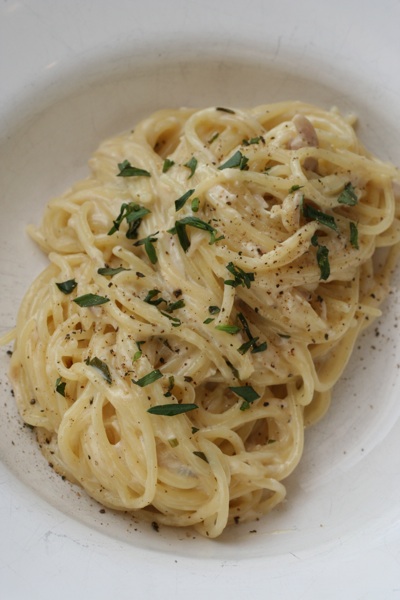
Pasta with Chicken, Tarragon and Cream

For years now I’ve been planning out the week’s meals in advance and shopping accordingly for all the groceries I need. You might imagine that this involves cookbooks or back issues of Gourmet casually strewn across the kitchen table while I flip through them over a pre-dinner glass of wine, the kids contentedly playing together and something chilled out on the stereo while I pick out all the fabulous new recipes I want to make.

Or at least that’s what I like to imagine.

The reality is that more often than not, instead of leisurely browsing through my cookbook collection with a glass of wine, I’ll find myself quickly scanning the blog recipe archives for something tried and tested or looking up a bookmarked recipe on a website with a half-cold cup of tea, all the while vowing to be more organized next week.

But meal planning is made much easier when you cook a whole chicken. It’s roasted on the first night, then stripped and used in a soup, stir-fry, risotto or any number of dishes the next night, with any last leftovers invariably finding their way into sandwiches or a quick quesadilla and the carcass used for stock. And when you can feed a family for two or even three nights with one chicken, paying extra for a free-range or organic bird is still good value. If you make poulet à l’Estragon (and please do – you will not be disappointed), this is a no-brainer dinner to make the next night with the leftovers, using all the same flavors. That’s two dinners for the week easily sorted then.

Pasta with Chicken, Tarragon and Cream
adapted from Real Food by Nigel Slater

Serves 4

If using leftover roast chicken, simply skip the step of browning the chicken and add the chicken after the cream and tarragon; you also won’t need the butter called for here either. If you’ve made poulet à l’Estragon and have any of the tarragon sauce left over from it, add that along with the cream for extra flavor and richness.

14 oz (400 g) spaghetti or linguine
8 chicken thighs (or diced leftover chicken, ideally from poulet à l’Estragon; see note above)
salt and freshly ground black pepper
4 tablespoons (60 g) butter
1/2 cup (125 ml) dry white wine or extra-dry vermouth
2 tablespoons tarragon vinegar or white wine vinegar
1 1/4 cups (300 ml) heavy cream
2 heaped tablespoons chopped tarragon leaves, plus extra to garnish
a squeeze of lemon juice

Set a large pot of water on to boil. Cook the pasta in plenty of salted water as per the packet instructions. Reserve a mugful of the pasta cooking liquid before draining.

Meanwhile, season the chicken with a little salt and pepper. Melt the butter over a medium heat in a large, shallow pan (one big enough to eventually accommodate all the cooked pasta as well), then brown the chicken on both sides until it’s golden brown, taking care not to let the butter burn. Remove the chicken and set aside.

Pour off all but 1 tablespoon or so of butter. Add the wine or vermouth and vinegar, bring to the boil and scrape up any brown bits from the bottom of the pan. Simmer for 1 to 2 minutes to reduce a bit, then add the cream and tarragon. Return the chicken and any juices to the pan. (Alternatively, if using leftover roast chicken, simply add that in now.) Simmer gently for 15 to 20 minutes, stirring now and then to make sure the cream doesn’t thicken too much. If the sauce is becoming too thick, add a little more wine or vermouth. Check that the chicken is cooked through and taste for seasoning. Add a squeeze of lemon juice and stir it through.

Add the drained pasta to the sauce in the pan and stir it well, making sure it’s all coated with the creamy sauce. If the sauce is too thick, add some of the reserved pasta cooking liquid to loosen it a bit. Sprinkle with some chopped fresh tarragon and serve right away.

Pot Roasted French Tarragon Chicken (Poulet à l’Estragon)

The Cookbook Club is one of those simple but brilliant ideas, the kind where you wonder why no one thought of it before now. The brainchild of Elaine Walsh, The Cookbook Club is a monthly event that features an Irish chef talking about his or her latest cookbook over a three-course dinner at Ely CHQ, where all the food is made from the cookbook being featured that night. It’s the best book signing you’ll ever go to.

The dinners started in September, but the first one I went to was last month, when the legendary Darina Allen of the Ballymaloe Cookery School was the featured author talking about her latest book, the award-winning Forgotten Skills of Cooking. What’s more, Elaine arranged a special pre-dinner meeting with Darina just for a few food bloggers. Never mind that it was during the same manic week as Inishfood — how could I pass up such a chance?

But on the day of the dinner, when faced with the thought of meeting the grande dame of Irish cooking with her trademark red glasses, I got nervous. What on earth would I say to someone so highly regarded? What clever question could I possibly ask? I needn’t have worried. As soon as we all sat down with a glass of wine, Darina hit the ground running, talking about everything from the early days at Ballymaloe, how she started the farmers’ market movement in Ireland, learning how to use her iPad on her recent trip to Sri Lanka to casually mentioning cooking for Bill Clinton. Meanwhile, myself and the three other bloggers (Aoife and fellow expats Sharon and Tim) just sat and listened, enthralled. Still reeling, the bloggers all sat down to dinner together, where I had salt cod croquettes, pork osso bucco and carrageen moss pudding with poached rhubarb. (You can find the recipe for the salt cod here as well as Darina’s own recount of the evening.)

While Darina’s book features lots of recipes for things like homemade pasta, preserves, dandelion wine or even instructions on how to build your own cold smoker, there are also plenty of everyday recipes, such as this French bistro classic, poulet à l’Estragon. Darina says that casserole roasting is an almost forgotten skill that releases plenty of delicious juice while the chicken cooks in the moist, steamy atmosphere of a covered casserole. It also couldn’t be easier — 10 minutes of active cooking time yields the best chicken I’ve had in a long time. The Telegraph calls poulet à l’Estragon “possibly the best chicken recipe in the world”, and after standing over the pot greedily slurping up the sauce with a spoon, I’d have to agree.

Pot Roasted French Tarragon Chicken (Poulet à l’Estragon)
adapted from Forgotten Skills of Cooking by Darina Allen

Serves 4 to 6

Because this is such a moist method of cooking, it’s a good method to use if you’re dealing with a bird you know is a little tough or past its prime. Darina also notes that some chickens yield less juice than others, so if you find that you need more sauce, just add some chicken stock to the cream. She says this is also delicious without any cream, just the chicken juices, stock and fresh herbs. Try to find French tarragon for this recipe, as opposed to the more common Russian variety.

Serve the chicken with mashed potatoes or boiled new potatoes — something, anything you can pour the amazing sauce over — and a vegetable such as sauteed carrots or green beans with lemon.

1 x 4 1/2 lb (2 kg) chicken
salt and freshly ground black pepper
2 tablespoons chopped fresh French tarragon, plus a few extra sprigs
2 tablespoons (30 g) butter, softened
1 tablespoon flour
1/2 cup (125 ml) cream
1/2 cup (125 ml) chicken stock (optional; see note above)

You will also need a casserole dish large enough to hold the chicken

Preheat the oven to 350°F (180°C).

Season the cavity of the chicken with salt and freshly ground black pepper and stuff a sprig of tarragon inside. Mix 1 tablespoon of the chopped tarragon with two-thirds of the butter and set aside. Smear the rest of the butter over the breast of the chicken. Place the chicken breast side down in a casserole (aka Dutch oven) and let it brown over a gentle heat for about 5 minutes. Turn the chicken breast side up in the casserole and smear the tarragon butter over the breast and legs. Season generously with salt and pepper. Cover the casserole and cook in the oven for 1 1/4 to 1 1/2 hours, or until the juices run clear when you pierce the flesh between the breast and thigh. Remove the chicken to a carving dish and allow it to rest for 10 to 15 minutes before carving.

Place the pot with the juices over a medium heat. Add the remaining tablespoon of chopped tarragon to the juices in the pot. Add in 1 tablespoon of flour and whisk until smooth, then add in the cream. Bring to the boil and whisk until the sauce thickens slightly. Taste and adjust the seasoning. Serve the chicken with the sauce spooned over.

Chicken and Noodles Baked in Cream Sauce

Every family has its own set of favorite meals and often its owns way of labeling them. Case in point, when my husband asks for “Thomas Jefferson’s chicken” what he really wants is gratin de volaille pavillon, a fancy name for the best chicken and noodles you’ll ever eat. We found this dish in college, pulled from The New York Times More 60-Minute Gourmet, which introduces the recipe by noting that this variation of chicken in cream sauce was “much admired by Thomas Jefferson.” Not sure how this culinary tidbit made it to modern times, but it stuck with us.
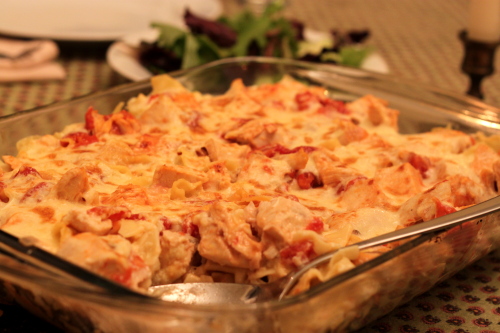
Though this preparation is not as easy as your average condensed soup-based casserole, the extra effort it requires is soon forgotten as you bite into the delicately sauced poached chicken and tender, buttery, tomato flecked noodles. It’s easy to see why it may have been a favorite of one of America’s founding fathers.

Gratin de Volaille Pavillon (Chicken and Noodles Baked in Cream Sauce)
adapted from The New York Times More 60-Minute Gourmet by Pierre Franey

Serves 6

2 cooked whole chicken breasts (see recipe for poaching chicken below, highly recommended)
12 oz (340 g) medium width egg noodles
5 tablespoons (75 g) butter, divided
3 tablespoons flour
2 cups (500 ml) chicken broth (use the broth from the poached chicken if possible)
1/2 cup (125 ml) heavy cream
salt and freshly ground black pepper
2 tablespoons shallots, finely chopped
1 ripe tomato, chopped (or 1 cup canned diced tomatoes, drained)
1 egg, lightly beaten
2 tablespoons freshly grated Parmesan cheese

Remove the chicken from the bones. Discard the skin and bones and cut the meat into 1 or 2 inch cubes. There should be about 3 cups.

Cook the noodles according to the package directions. Do not overcook. Drain the noodles. Return them to the pot and add 1 tablespoon of butter. Toss gently.

Meanwhile, melt 2 tablespoons (30 g) of butter in a saucepan and add the flour, stirring with a wire whisk. When blended, add the chicken broth, stirring rapidly. When the sauce is thickened and smooth, simmer for about 5 minutes. Add the cream and let it simmer briefly. Season to taste with salt and pepper. Set aside.

Melt 2 tablespoons (30 g) of butter in another saucepan and add the shallots. Cook briefly, stirring, then add the tomatoes and cook down for about 3 minutes. Add the chicken and salt and pepper to taste. Add 1 cup (250 ml) of the cream sauce and stir gently; set aside.

To the remaining cream sauce, add the egg. Bring to a boil stirring rapidly with a whisk. Do not overcook. Remove from the heat.

Butter a 13 x 9 inch baking pan with the remaining tablespoon (15 g) of butter. Add the noodles, and smooth them over. Spoon the chicken and sauce mixture over the noodles. Cover with the cream and egg sauce, smoothing it over. Sprinkle on the cheese. Place the dish under the broiler and cook until nicely browned and bubbling on top.

Poached Chicken

2 whole, bone-in, skin-on chicken breasts
2 cups (500 ml) water
1 cup (250 ml) dry white wine
1 small white onion, sliced
1 bay leaf
3 sprigs parsley
1 carrot, chopped
1 teaspoon salt
1/8 teaspoon pepper

Combine all the ingredients in a saucepan and bring to a boil. Cover and simmer gently for about 10 minutes. Uncover and set aside. Let the chicken cool in its own broth.

Homemade Parmesan Chicken Fingers and Rice Pudding

It was bound to happen sometime — we had our first trip to the emergency room with one of the kids last weekend after my five-year-old daughter fell off the slide at home and fractured her collarbone. She spent the week propped up on the sofa watching DVDs, and after letting her eat ice cream for dinner on the day it happened, I spent the rest of the week making all her favorite foods — spaghetti Bolognese, roast chicken, risotto, banana bread — and these Parmesan chicken fingers and a rice pudding full of milk to help that bone heal.

Homemade Parmesan Chicken Goujons
adapted from Rachel’s Favourite Food at Home by Rachel Allen

Serves 4

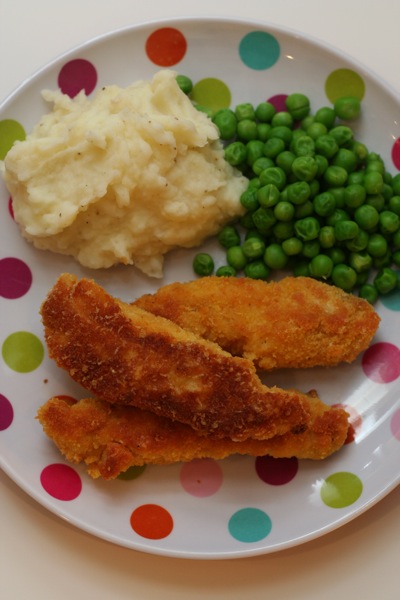
In most pubs or restaurants with a kids menu you’ll see chicken goujons on the menu — it took me awhile after moving to Ireland to figure out it was a fancy way of describing what we call chicken strips or chicken fingers in the US. I served the goujons with ketchup for the kids and a quick lemon mayo for the grown-ups (made by mixing in some lemon zest and juice, salt and pepper), but a sweet chili sauce would also be good for dipping. When making breaded chicken, you might find that you’ll need some extra flour, eggs and/or breadcrumbs.

4 large boneless, skinless chicken breasts
1 cup (120 g) flour
salt and freshly ground black pepper
2 large eggs, beaten
1 cup (100 g) breadcrumbs or panko
1/2 cup (50 g) finely grated Parmesan
3 tablespoons sunflower oil

Cut the chicken into strips the size of a big fingers. Place the flour in a bowl or a large shallow plate and add in some salt and pepper. Place the beaten eggs in another bowl/plate. Mix together the breadcrumbs and Parmesan in a third bowl/plate.

Toss each chicken strip first in the seasoned flour and shake off any excess. Dip into the beaten egg, letting the excess drip off, then roll in the breadcrumb mix until it’s evenly coated. Shake off the excess breadcrumbs and place the coated strips on a plate.

Heat the oil in a large frying pan over a medium to high heat. When the oil is hot, add the chicken strips in a single layer, making sure you don’t crowd the pan (cook the chicken in batches). Cook on one side for 3 or 4 minutes, until golden, then turn down the heat and flip the pieces over. Cook on the other side for a further 4 minutes, or until cooked through and golden. Place on a baking sheet and keep the finished strips warm in a low oven while you cook the remaining chicken.

***

Rice Pudding
adapted from How I Cook by Skye Gyngell

Serves 4 to 6

Skye Gyngell serves this rice pudding with stewed prunes. I made this dried fruit compote to spoon on top and the leftovers are equally as good on granola and porridge for breakfast.

1 1/2 cups (250 g) risotto rice, such as Arborio
4 cups (900 ml) whole milk
1 vanilla pod, split lengthways
zest of 1 lemon
small pinch of salt
1 1/4 cup (150 g) sugar
3/4 cup (200 ml) cream

Rinse the rice well under cold running water, then tip it into a heavy-bottomed saucepan. Add the milk, vanilla pod, lemon zest and salt and bring almost to a simmer over a medium heat. Now turn down the heat as low as possible and put the lid on, placing it slightly off center so it isn’t quite covering the pan. Cook for about 20 minutes, stirring occasionally, or until the rice is cooked but still retains a slight bite. When it’s al dente, stir in the sugar and cream and cook for a further 10 minutes. The pudding should be soft and creamy and should easily drop from a spoon. Allow to stand for 5 to 10 minutes and serve warm.