Tag Archives: Pork

Pistachio-crusted Pork Tenderloin, Lemon-Basil Orzotto, and Seven Layer Bars

We moved into a new house three weeks ago. Exciting to be sure, but as much as I’m relieved to be done with selling my old house and moving 8+ years of life into a new one, I feel a homelessness of sorts. The new house has the right space and modern amenities (a master bathroom!) but it also has odd paint color, lower ceilings, and some kind of smell that is not bad but definitely not good. Paint and ceilings are tough to fix so I’ve been cooking like crazy trying to get this place to feel (and smell) more like mine. And despite the house not feeling quite like home yet, at least the dining room table feels the same with my family and friends gathered around it enjoying dinners together. This was my recent favorite.
Pistachio-crusted Pork Tenderloin

Serves 4

1 cup (150 g) shelled, salted pistachios
2 pieces pork tenderloin (about 2 lbs/900 g), cut into 1/2 inch thick medallions
freshly ground black pepper
olive oil

Preheat the oven to 375°F (190°C).

Pulse the pistachios in a food processor about 10 times until coarsely ground (like bread crumbs) but not pasty. Place the ground nuts in a shallow bowl.

Season the pork medallions to taste with pepper. Dredge the peppered pork in the ground pistachios, pressing gently so the nuts adhere to the pork. Place the medallions on a plate until they are all coated.

Heat a thin layer of olive oil in a large oven safe skillet over medium-high heat. Fry the pork medallions in a single layer in the heated oil, 2–3 minutes on each side until golden. Adjust the heat if necessary so the pistachios do not burn. Place the skillet in the preheated oven, baking 5–10 minutes until the pork is fully cooked.

***

Lemon-Basil Orzotto
adapted from the Cooking Channel (Kelsey Nixon)

Serves 4

2 tablespoons extra-virgin olive oil
1 small onion, minced
1 1/2 cups (300 g) orzo or pearl barley
1/2 cup (120 ml) dry white wine
3 cups (700 ml) chicken stock or broth
1/2 cup (70 g) frozen petite green peas, thawed
1/3 cup (35 g) grated Parmesan cheese
2 tablespoons chiffonade fresh basil
1 teaspoon lemon zest
1/4 cup (60 ml) heavy cream or half and half
Juice of 1/2 lemon
Salt and freshly ground black pepper

In a heavy-bottomed medium saucepan, heat the olive oil over medium-high heat. Add the onion and saute until fragrant and translucent. Add the orzo and toast for 2 minutes, stirring occasionally. Add the wine and cook until absorbed.

Gradually add the chicken stock, stirring frequently. Bring to a simmer, lower the heat, and cover. Cook for 8 to 10 minutes, until the liquid is almost absorbed and orzo is tender. Remove from the heat.

Stir in the peas, Parmesan, fresh basil, lemon zest, heavy cream, and lemon juice. Season the orzo with salt and pepper, to taste, and serve.

***

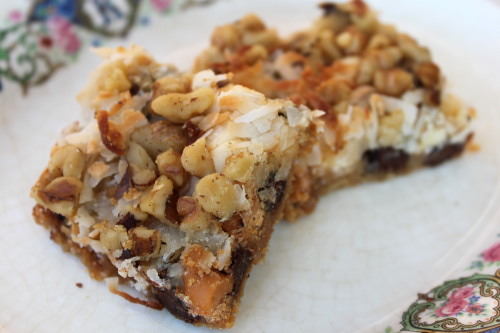
Seven Layer Bars
from allrecipes.com

I make these candy-like bars in the morning so they are cool and ready to eat after dinner. They travel well and can be cut into small pieces, making them perfect picnic, pot luck or bake sale fare.

Makes about 2 dozen bars

1/2 cup (110 g) butter
1 1/2 cups (150 g) graham cracker crumbs
1 cup (200 g) semisweet chocolate chips
1 cup (200 g) butterscotch chips
1 cup (100 g) chopped walnuts
14 oz (400 ml) sweetened condensed milk
1 1/3 cups (110 g) shredded coconut

Preheat oven to 350°F (180°C).

Place the butter in 13 x 9 inch pan and melt in the oven. Swirl to coat bottom and sides with butter.

Spread the crumbs evenly over the bottom of the butter, pressing to form a thin even crust on the bottom of the pan.

Layer the chocolate chips, butterscotch chips, and nuts over the crumbs. Pour the condensed milk over nuts. Sprinkle the coconut over the condensed milk. Press the toppings together lightly with a fork.

Bake until the edges are golden brown, about 25 minutes. Let cool and cut into small bars. Store in an air tight container.
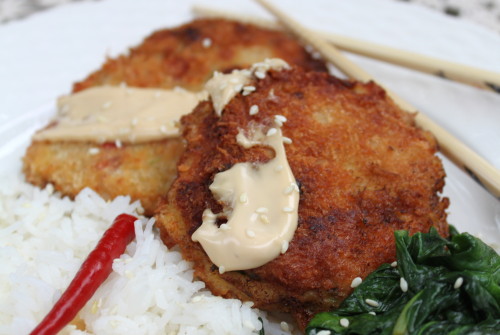
Crunchy Pork Kimchi Burgers

Last year I succumbed to a telemarketer begging me to buy a magazine subscription in support of a well-known charity. I’d like to tell you it was because I care deeply for the organization or felt pity for the poor saleswoman, but honestly, I just missed receiving a magazine with my name on it every month. After years of being a loyal subscriber to Gourmet (my idealistic college days), then Cooking Light (I put on weight working an office job in my early twenties) and, most recently, Cook’s Illustrated (the serious cooking began), I let the subscriptions expire four years ago when my first-born arrived. But no longer. My magazine days are here again. Unfortunately, I regretted last year’s selection of Food & Wine magazine. Besides this fantastic pork burger recipe and one other interesting salmon preparation, I didn’t find much inspiration in the magazine. Maybe I don’t drink enough wine to appreciate it. So, dear readers, tell me what periodical to order next. What cooking magazines do you love?

Crunchy Pork Kimchi Burgers
adapted from Food & Wine, May 2012

I used the last few precious tablespoons of my sister-in-law’s homemade kimchi for this recipe. Because the kimchi has a bit of kick to it, I made some of the burgers without the kimchi for the kids. Both versions tasted good but the kimchi really made the burger memorable.

Serves 4

1 tablespoon grated fresh ginger
1 large garlic clove, minced or grated
2 scallions, minced
1 lb (450 g) ground pork
3/4 cup (170 g) finely chopped kimchi
Kosher salt
All-purpose flour, for dusting
2 large eggs, beaten
1 1/2 cup (100 g) panko (Japanese bread crumbs), lightly crushed
Vegetable oil, for frying
12 oz (340 g) baby spinach
1/4 cup (60 ml) mayonnaise
1/2 teaspoon toasted sesame oil
1 tablespoon light soy sauce
Toasted sesame seeds, for garnish
Steamed rice

In a bowl, combine the ginger, garlic, scallions, pork and kimchi with 1 teaspoon of salt. Form the mixture into eight patties, about 1/2 inch thick. Dust the patties with flour and refrigerate for 10 minutes while you prep the other ingredients.

Put the eggs and panko in 2 shallow bowls. Dip the patties in the egg and then in the panko, pressing to help the crumbs adhere.

In a large skillet, heat 1/4 inch of vegetable oil. Depending on the size of your skillet, you will probably need to cook the patties in 2 batches. Add as many patties to the hot skillet as will fit and fry over moderate heat, turning, until golden and cooked through, 5 to 6 minutes. Drain on paper towels.

Pour off all but 1 tablespoon of the oil in the skillet. Add the spinach in batches, season with salt and cook over high heat until wilted, about 1 minute.

In a bowl, mix the mayonnaise, sesame oil and soy sauce. Mound the spinach on plates and top with the burgers. Top with the sauce and sprinkle with sesame seeds. Serve with steamed rice

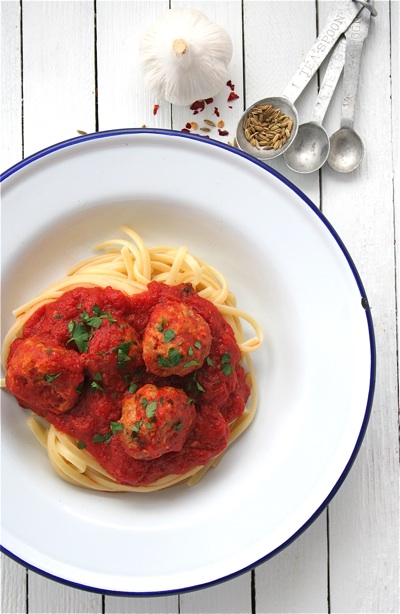
Classic Spaghetti and Meatballs

The first recipe I ever asked my mom for was her turkey meatballs. The first food I fed my infant daughter that wasn’t from Annabel Karmel’s baby food cookbook was those same turkey meatballs, pureed in the food processor, which she gobbled up with delight. And if you’ve come to visit me from America, chances are I made a big batch of meatballs, kept warm in the slow cooker in their sauce, so that dinner could be on the table as soon as I could boil the pasta when the jet lag finally started to get the better of you.

Over the years I chopped and changed my mom’s original recipe until I eventually hit on this, my own version, which kicks things up a notch. I kept in loads of garlic and Parmesan but swapped the turkey, which I came to find too dry, for pork and ramped up the flavor with fennel seeds and lots of herbs. It’s now my go-to classic comfort food dish. And if and when my kids ever ask for my meatball recipe when they’re older, this is the one I’ll give them, which I’m sure they’ll in turn tweak and make their own.

We love meatballs! Here are some more recipes for you to try:

Spaghetti and Meatballs

Makes 40 to 50 small meatballs

My go-to tomato sauce is Marcella Hazan’s famous recipe, but feel free to use your own favorite recipe or even jarred sauce. To add some extra umami to the meatballs, sneak in a few finely diced anchovies as a secret ingredient. I like to make loads of meatballs so that I can get two dinners’ worth out of them, but they freeze beautifully too.

for the meatballs:
2 lb (1 kg) pork mince
3 cloves garlic, grated with a Microplane zester or very finely chopped
1 cup (50 g) fresh breadcrumbs
1/2 cup (50 g) finely grated Parmesan, plus extra to serve
1 egg, lightly beaten
1 bunch flat-leaf parsley, chopped, with some reserved for garnish
2 teaspoons fennel seeds
1 teaspoon dried basil
1 teaspoon dried oregano
1/2 teaspoon dried chili flakes (optional)
2 tablespoons milk
salt and freshly ground black pepper

for the tomato sauce:
5 tablespoons (75 g) unsalted butter
1 medium yellow onion, peeled and cut in half
1 x 28 oz can (or 2 x 14 oz/400 g cans) whole plum tomatoes, with their juices
salt and freshly ground black pepper

1 lb (450 g) spaghetti

To make the tomato sauce, melt the butter in a large pot (one that can also accommodate all the pasta later) over a medium heat, then add in onion halves and pour in the tomatoes with their juices. Season generously with salt and pepper. Bring the sauce to a simmer, mashing up the tomatoes gently with the back of a wooden spoon. Cook, uncovered, at a very slow but steady simmer, adjusting the heat as necessary, for about 45 minutes, or until droplets of fat float free from the tomato and the sauce has reduced and thickened. Stir occasionally, continuing to mash any large pieces of tomato with the wooden spoon. Taste for seasoning, then discard the onion when the sauce is ready.

While the sauce is simmering, preheat the oven to 350°F (180°C) and line a baking tray with foil or parchment paper. To make the meatballs, place all the ingredients in a large bowl. Using your hands, mix everything together until it’s just combined, trying not to overwork the mixture so that the meatballs stay tender. Shape the mixture into small meatballs the size of golf balls and place them on the lined baking tray. Bake them in the oven for 20 to 30 minutes, until they’re just cooked through. Be careful not to overcook them or they’ll dry out and become tough.

While the meatballs are cooking and the sauce is simmering, bring a large pot of salted water to the boil and cook the spaghetti according to the packet instructions. When it’s done, drain the pasta and add it directly to the sauce. Stir the pasta until it’s all coated with the sauce. Divide the pasta between the individual bowls or plates and place a few meatballs on top of each serving. Serve with plenty of freshly grated Parmesan and garnish with the reserved parsley.

Slow Cooker Cassoulet

I originally posted this on February 15 2010, but have updated the recipe to make it easier and less time consuming.

I’ve been trying to go back to cookbooks I haven’t used in awhile, so last week I pulled The River Cottage Meat Book by Hugh Fearnley-Whittingstall down off the shelf and cassoulet caught my eye. While I wound up making a different version, it ticks a lot of boxes — this one can be made in a slow cooker, it’s good value (cassoulet is a traditional French peasant dish), it’s hearty, rib-sticking food for cold nights and it makes more than enough for two meals.
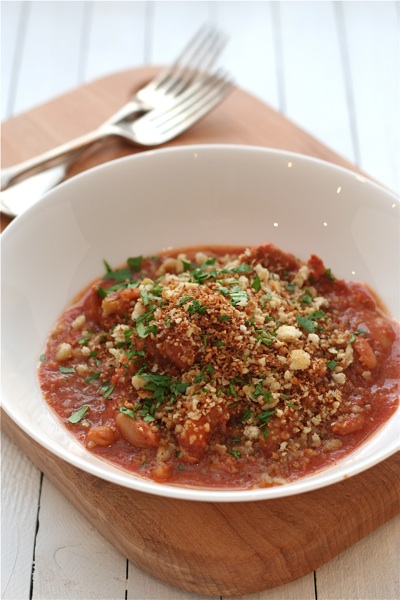
If you like the idea of a cassoulet but don’t have a slow cooker or don’t have all day to let it cook, you could try Jacques Pépin’s 30-minute version or Jamie Oliver’s kinda sausage cassoulet. In his recipe, Hugh F‑W suggests serving this with an orange and watercress salad.

Slow Cooker Cassoulet

Serves 8 to 10

If you can’t get pork shoulder, pork leg or even loin would work too — just get the butcher to remove the fat for you. If you wanted to add in some veg, a few carrots, peeled and sliced on the diagonal, would work well.

olive oil
3 onions, coarsely chopped
salt and freshly ground black pepper
3 lb (1.4 kg) boneless pork shoulder, cut into 2‑inch pieces (you can ask your butcher to do this for you)
1 lb (450 g) fully cooked or smoked chorizo or garlic sausage links, sliced on the diagonal
2 x 14 oz (400 g) cans of cannellini, haricot or Great Northern beans
1 x 28 oz (or 2 x 14 oz/400 g) cans whole plum tomatoes, drained and coarsely chopped
2 cups (500 ml) chicken stock
1 cup (500 ml) dry white wine, such as Sauvignon Blanc (or use stock or water if you prefer not to use alcohol)
3 tablespoons tomato paste
1 head of garlic, halved crosswise
1 cup (100 g) breadcrumbs, plus extra to serve
a handful of chopped fresh flat-leaf parsley, plus extra for garnish
crusty bread, to serve

Put a large frying pan over a medium heat and add in a splash of olive oil. Add the onions and a pinch of salt to prevent the onions from browning and cook for about 10 minutes, until they’re translucent but now browned. Transfer the onions to the slow cooker, then stir in the pork, chorizo, beans, tomatoes, stock, wine, tomato paste and garlic along with a generous seasoning of salt and pepper.

Set the cooker to low and cook, covered, for about 8 hours, until the pork pulls apart easily with a fork (though it could be as much as 10 hours). Skim off any fat and remove and discard the garlic. Fold in the panko or breadcrumbs and the parsley. Taste and season as needed.

Let the cassoulet stand at room temperature for 10 minutes before serving. Sprinkle each serving with extra breadcrumbs and parsley and serve with warm crusty bread.

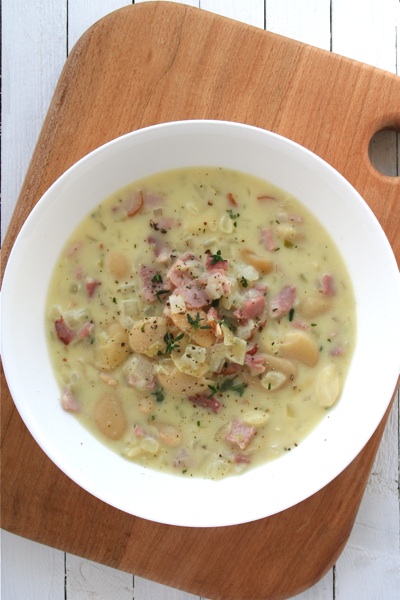
Bacon and Butterbean Chowder

A couple weeks ago I was at The Tannery in County Waterford having lunch with a few other bloggers and food writers to celebrate the launch of the Cook with Avonmore site, which features Tannery chef Paul Flynn as their first guest chef. On the menu that day there was a choice of crab crème brûlée or this bacon and butterbean chowder as a starter. I went for the crab not only because it’s The Tannery’s signature dish, but because I knew I had the recipe for the chowder in my press pack. What I didn’t know, though, was what a fantastic recipe it is. From just a few ordinary ingredients, this soup is more than the sum of its parts.

Paul Flynn says, “A chowder for me is something that’s really rich and comforting. It’s something that you eat in front of the fire or just after a lovely long walk and you’re cold and you want something hot and heart-warming to eat.” Serve this with some good crusty bread, a nice cheese and a glass of red wine — either with or without the long walk beforehand — and I’m willing to bet it will be one of the nicest meals you’ll make this autumn.

Bacon and Butterbean Chowder
adapted from Paul Flynn via cookwithavonmore.ie

Serves 2 as a main course or 4 as a starter

Paul Flynn says that “when you use beautiful ingredients like butter and cream, you’ve got to realize that if you put just enough in, it gives you that lovely, luxurious richness that you’re looking for, and that will really comfort you on a cold night”, but you can use a little less cream if you don’t want the chowder to be quite as rich. You can also use a handful of fresh parsley instead of thyme.

knob of butter
olive oil
1 large onion, finely chopped
pinch of salt
1 garlic clove, finely chopped
6 pieces of smoked bacon or dry cure streaky bacon, finely diced
1 tablespoon flour
2 teaspoons chopped fresh thyme leaves, plus extra to garnish (or 1/2 teaspoon dried thyme)
1 teaspoon Dijon mustard
freshly ground black pepper
2 cups (500 ml) chicken stock
1 x 14 oz (400 g) can of butterbeans, rinsed
1/2 cup (125 ml) cream
crusty bread, to serve

Melt the butter in a pot over a medium heat along with a splash of olive oil so the butter doesn’t burn. Add the onion and a pinch of salt to prevent the onion from colouring. As Paul Flynn says, “The real key to this is that what you do inside this pot with the onions will provide you with the whole base flavour for the soup. If you rush this, it’s not going to be right.” So turn the heat down a little to medium-low, put the lid on and “let the magic happen”. Cook the onion for about 10 minutes, until it’s translucent. Raise the heat back to medium, add in the garlic and cook for 1 minute more, then add in the bacon and cook for about 5 minutes (though note that the bacon won’t go crispy because of the juice from the onions). Sprinkle the flour over the onions and bacon and give it all a stir, then allow it to cook for 2 minutes. Add in the thyme and mustard and a generous grinding of black pepper, then pour in the stock. Bring to the boil, then reduce the heat to a simmer and add in the butterbeans. Continue to simmer the soup for a few minutes, until the beans are warmed through, then stir through the cream. Taste the soup and adjust the seasoning if you think it needs more salt, though be careful because the bacon and stock are already salty. Ladle the soup into bowls, garnish with some of the reserved thyme leaves and serve with crusty bread.

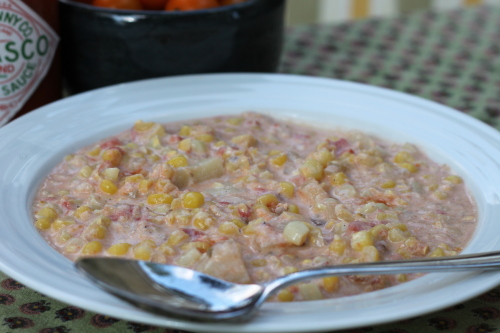
Summer Corn Chowder

Though I’m a city dweller, I see my fair share of corn at the end of summer. A half hour drive north, south, or west of Milwaukee (Lake Michigan borders our eastern coast) will lead you into corn country. At this time of year, the fields are just turning from gold to green or are being turned under in preparation for next year’s crop. Grocery stores, farmers markets, tiny hand built produce stands, and even the backs of pick up trucks offer plenty of corn for sale. Our CSA delivered a dozen ears for the second week in a row. Though the corn was past its prime, I salvaged the slightly starchy ears in this chowder. I am not usually a fan of corn chowder, having experienced one too many mediocre, pasty bowls of the stuff but this version is vastly better than any other I’ve eaten, helped out by the addition of tomatoes and hot peppers–also abundant right now. And since I’m on the topic of corn, I may as well mention one of my favorite documentaries in recent years, King Corn. If you ever wondered how, what, and why America grows mass quantities of corn, check it out.

Summer Corn Chowder
adapted from Food52

Though I rarely follow recipes that call for peeling tomatoes, this time the effort was worth it. The diced tomatoes nearly melt into the soup, turning it an appealing shade of pink. To peel tomatoes, simply score each tomato on the bottom with a small “x” then submerge them into a pot of boiling water. After a minute or two, gently remove the tomatoes from the boiling water and place them in a bowl of ice water. After a quick soak in the ice bath, you’ll be able to easily peel of the skins.

Serves 6

8 medium ears of corn
6 strips of bacon, cut into 1/2‑inch pieces
1 onion, diced small
1 medium poblano or other hot pepper, seeded and finely chopped
1 jalapeno, seeded and finely chopped (optional, I omitted this ingredient to keep the chowder kid friendly)
1 celery rib, finely chopped
1 lb (450 g) red potatoes, peeled and cubed into 1/2 in. pieces
3 medium tomatoes, peeled, seeded and finely chopped
1 teaspoon salt
1/4 teaspoon ground allspice
1/4 teaspoon sugar
1 small bay leaf
2 cups (500 ml) light cream (half and half), at room temperature
1 cup (250 ml) milk
freshly ground black pepper, to taste
Tabasco hot sauce, to serve

Working over a bowl, cut the corn kernels from the cobs at about half their depth. Then, using the back of the knife, scrape the cobs over the bowl to release all the “milk”; set aside.

In a large dutch oven, fry the bacon over moderately high heat, stirring occasionally, until crisp, about 10 minutes. Transfer the bacon to paper towels to drain. Crumble and reserve.

Discard all but 3 tablespoons of the bacon drippings from the pan. Add the onion and cook over moderate heat until golden, 4 to 5 minutes. Add the poblano and jalepeno peppers and celery and cook until slightly softened, about 5 minutes more. Add the potatoes, tomatoes, salt, allspice, sugar, bay leaf and the reserved corn kernels with their “milk” and stir well. Cook over moderate heat until mixture begins to sizzle.

Reduce the heat to low. Cover and cook, stirring occasionally, until the potatoes are tender, about 45 minutes. Stir in the cream, milk and bacon and bring just to a boil. Remove from heat and season with black pepper to taste. Ladle the chowder into bowls and serve with a good loaf of bread and a few drops of Tabasco.

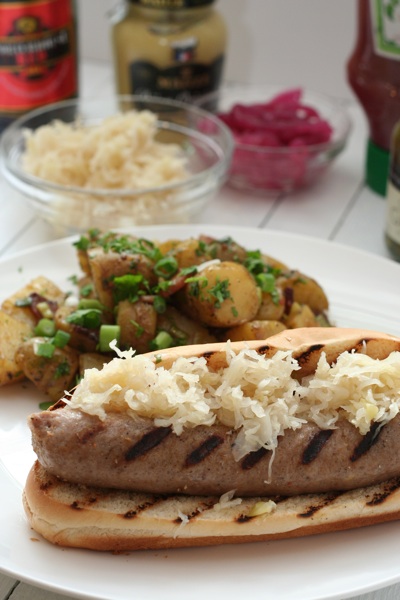
Beer Brats and German Potato Salad

Soul food is usually associated with the South and things like okra, grits or chicken fried steak, but if Wisconsin could be said to have a soul food, it would be beer brats. A summer BBQ or tailgate party wouldn’t be complete without them and grilled bratwurst are sold at the student union at UW-Madison, where Kelly and I went to college. Living in Ireland, though, I can count the number of times I’ve had bratwurst on one hand, and each of those times they were made by the same man, the legendary Ed Hick. I’ve seen him a few times lately at the Sheridans and Bloom food festivals, so I snapped up a pack and lost no time making beer brats. And since I was already feeling nostalgic, I went ahead and made a German potato salad too, another summertime staple when I was growing up. Put the two together and add some sauerkraut, and it was enough to bring a homesick Midwesterner to tears.

Beer Brats

Serves 8 to 10

Like cooking with wine, you don’t want to use the cheapest beer here, but don’t use your nice microbrew either — just something good that you’d want to drink. The handy thing about cooking the bratwurst this way is that if you’re having a big BBQ and cooking for a crowd, you can grill the brats a bit ahead of time and put them back in the warm beer for a little while until you’re ready to serve them.

12 bratwurst (or more, depending on how many people you’re serving or how many sausages per person you want to serve)
1 large onion, peeled and halved
1 or 2 cans/bottles of beer (enough to cover the bratwurst)
toasted hot dog buns, to serve
sauerkraut, ketchup, mustard, pickle relish, fried onions, to serve

Prick each bratwurst a few times with a fork. Place them in a large pot or saucepan with the onion halves and cover with the beer. Bring to a boil, then reduce to a simmer and cook for 5 to 10 minutes, until the bratwurst are cooked through. Remove the brats from the beer and grill them on a hot BBQ for about 5 minutes, turning to make sure they’re golden brown on all sides. Serve on lightly toasted hot dog buns with toppings of your choice.

***

German Potato Salad
adapted from Martha Stewart Living

Serves 8 to 10

German potato salad is actually served warm, though any leftovers are also delicious cold.

4 lb (2 kg) baby potatoes
salt
1/2 cup (125 ml) cider vinegar
1 tablespoon sugar
1 lb (450 g) bacon, cut into 1/2‑inch pieces
1 bunch spring onions, white and light green parts only finely sliced
1 small bunch fresh flat-leaf parsley, chopped

Halve or quarter the potatoes, depending on how big they are (you want them to be in bite-sized pieces) and place in a large pot with enough water to cover them by several inches. Bring to a boil over a high heat, add a very generous pinch of salt and reduce to a gentle boil. Cook for 5 to 10 minutes, until the potatoes are tender when pierced with a knife, being careful not to overcook them (check them after 5 minutes).

While the potatoes cook, combine the vinegar, sugar and some salt in a small saucepan. Place over a medium heat, stirring occasionally, until the sugar dissolves.

Drain the potatoes into a colander, then transfer to a large mixing bowl. Drizzle with the hot vinegar mixture, gently stirring until all the potatoes are coated. Set aside.

Saute the bacon in a large skillet on a medium-low heat until browned and crispy. Remove with a slotted spoon and drain on paper towels.

Sprinkle the potatoes with the bacon, spring onions and chopped parsley. Stir to combine. Transfer to a serving bowl and serve immediately, while still warm.

Scallop, Chorizo and Artichoke Paella

I’d like to think that if blogs had been around when Kelly and I went to high school and college together, we might have turned out like Cara Eisenpress and Phoebe Lapine, blogging our way through our first boyfriends, first jobs and first dinner parties as we learned how to cook along the way. We might have set up a blog like their popular Big Girls, Small Kitchen, landed ourselves a book deal and had the Barefoot Contessa write the foreword to it. If only, right? But failing all that, I wish someone had given me a cookbook like theirs, In the Small Kitchen, when I moved into my first apartment and started cooking for myself and my friends. It would have been a hell of a lot better than 1,001 Vegetarian Recipes.

The book is aimed at the twenty-something crowd just finding their feet in the kitchen, with chapters like ‘Cooking for One’, ‘Potlucking’, ‘Cocktail Parties’, ‘Dating and Food’ and ‘One Year Closer to Thirty’, but there’s plenty here to inspire complete beginners and more well-seasoned cooks alike. Also bookmarked to try are Provencal baked chicken, chipotle hummus, black bean dip, coconut peanut sauce, spiked lemonade and pumpkin cake with chai cream. With graduation season upon us, In the Small Kitchen would make the perfect gift for students heading off to college or moving out into their own place, or for any new cook who’s just starting to learn their way around the kitchen.

Scallop, Chorizo and Artichoke Paella
adapted from In the Small Kitchen by Cara Eisenpress and Phoebe Lapine

Serves 8

I made a special trip to the fishmonger to get scallops, only to be told that they didn’t have any because of the recent bad weather (typical!). After some quick thinking, I decided to substitute 1 lb (450 g) of prawns instead. I simply skipped the first step and added the prawns into the paella at the very end of the cooking time, letting the heat of the rice quickly cook them right before serving. This dish reminded me of one of our family favorites, oven-baked risotto with sausages and tomato, and was just as much of a hit with the kids.

2 to 3 tablespoons olive oil
1 lb (450 g) scallops
1 lb (450 g) chorizo, cut diagonally into 1 1/2‑inch pieces
1 large onion, diced
4 cloves garlic, minced
8 to 10 scallions, white and green parts chopped separately
2 cups (360 g) Arborio rice
1/2 cup (125 ml) dry white wine or vermouth
1 x 15 oz (400 g) can of crushed tomatoes
1 x 9 oz (250 g) package frozen artichoke hearts, or jarred or canned artichoke hearts (rinsed and drained if using jarred or canned)
2 teaspoons smoked paprika
1 teaspoon salt
3 to 4 cups chicken stock
lemon wedges, for garnish

In a large cast iron skillet or a Dutch oven, heat 2 tablespoons of the olive oil over a medium-high heat until the oil is shiny and just about to smoke. While the oil is heating, quickly pat the scallops dry and remove and discard the tough side muscles. Sear the scallops in batches in the hot oil until browned and crusty on both sides, about 2 minutes per side. [Check out this post from The BA Daily blog about how to perfectly sear scallops.]

Transfer the scallops to a plate. Add the chorizo to the skillet and brown it, turning on all sides, for 2 to 5 minutes. Remove the chorizo with a slotted spoon and set aside.

Reduce the heat to medium and saute the onion in the remaining oil until translucent, scraping up any drippings in the skillet. Add the garlic and the white part of the chopped scallions and cook for another 2 minutes. Add the rice and stir to coat it in the onion mixture, allowing it to get covered in the oil and begin to toast, which should take about 3 minutes. Add the wine and cook for 2 to 3 minutes, until the liquid has reduced by nearly half. Use your spoon or spatula to help deglaze the pan and lift up any caramelized bits.

Stir in the tomatoes and their juices, artichokes, paprika and salt. Return the chorizo to the skillet and add enough stock to submerge the rice mixture. Bring the liquid to a boil, then reduce the heat to medium-low and simmer for 25 to 30 minutes, until the rice is cooked through, all the liquid has been absorbed and the rice is beginning to become crusty around the edges.

Using the back of your spoon, make indents in the top of the rice and arrange the scallops in them. Pour the scallop juices over the skillet and cook until all the liquid has been absorbed. Garnish with the chopped scallion greens and lemon wedges. Serve warm, straight from the skillet.