Tag Archives: Cookbook reviews

Beef Lombardi

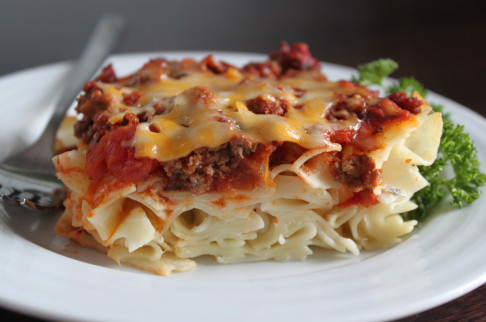
You all know I love make ahead meals (remember this and this and this). And I have a soft spot for casseroles. Well, here’s the recipe that is now both my favorite make ahead meal and my favorite casserole. I’ve kept a batch of this on hand in my freezer continually since I discovered the recipe this fall. It hails from the new What’s for Supper cookbook from Southern Living. While not overly impressed by some of the recipes in the book (too many prepared processed foods for my taste), I knew I would try this recipe for the name alone. Green Bay Packer coach Vince Lombardi holds a special place in the hearts of most Wisconsinites and if the casserole performed even half as well as the coach, it was worth a try. Touchdown!

Beef Lombardi
adapted from Southern Living What’s for Supper

This is an easily adaptable recipe. I usually use more egg noodles than called for and then add an extra tablespoons of cream cheese. Since my daughter is currently green onion adverse, I cut back on those or use only the white parts so she doesn’t notice them as much. Feel free to experiment according to your own tastes.

Serves 8

10–12 oz (280–340 g) medium egg noodles
1 lb (450 g) lean ground beef
1½ teaspoons salt, divided
½ teaspoon dried Italian seasoning or dried oregano
1 x 6‑oz (170 g) can tomato paste
1 x 14-oz (400 g) can diced tomatoes
4 oz (110 g) cream cheese, softened
½ cup (120 ml) sour cream
4 green onions, chopped
1 cup (4 oz/110 g) shredded Italian six-cheese blend or mozzarella cheese

Preheat the oven to 350°F (180°C). Prepare the egg noodles according to package directions.

Meanwhile, sprinkle the ground beef with 1 tsp. salt and the Italian seasoning. Cook the beef in a large skillet over medium heat, stirring often, 5 to 6 minutes or until meat crumbles and is no longer pink.

Stir in the tomato paste, and cook 2 minutes; stir in the tomatoes, 1/2 cup water, and remaining 1/2 tsp. salt; reduce the heat to medium-low, and simmer 8–10 minutes until thickened a bit.

Microwave the cream cheese in a microwave-safe bowl at HIGH 20 seconds. Stir in the sour cream and green onions into the warm cream cheese, then gently stir the cream cheese mixture into the hot cooked noodles.

Spread the noodle mixture in the bottom of a lightly greased 11- x 7‑inch baking dish. Top the noodles with the beef mixture then sprinkle the shredded  cheese evenly over the mixture.

Bake the casserole at 350° for 25 minutes or until hot and bubbly.

To make ahead: Freeze the unbaked casserole, tightly covered, for up to 1 month. Thaw in the refrigerator overnight, then bake at 350°F (180°C), loosely covered in aluminum foil for 25 minutes. Remove the foil and continue baking about 15 minutes more until the cheese is melted and the casserole is hot.

Chicken in Vinegar (Poulet au Vinaigre)

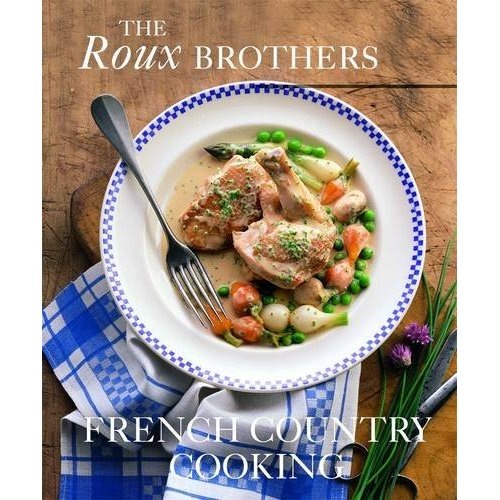
I buy cookbooks for different reasons. Most of the time I buy them because I flipped through them in the store and wanted to make everything I saw, which is always a good sign. Sometimes I buy them because I’m a fan of the writer (I have a bookshelf that’s taken up solely with Nigella Lawson and Nigel Slater’s books). But other times I buy them because they’ll be a good reference book, the kind of book that you know will stand the test of time or point you in the right direction if you want the authentic version of a recipe. Larousse Gastronomique and The Silver Spoon are such books, and so is French Country Cooking by Michel and Albert Roux, which has now been reprinted.

This book isn’t for the casual cook — it includes hard-core rustic dishes like Lyonnaise ox tripe, frogs’ legs and pig’s head soup and offal features prominently. Yet it also includes authentic recipes for classics like pissaladière, quiche Lorraine, salad niçoise, cassoulet and soupe au pistou as well as dishes that I hadn’t heard of but have bookmarked to try, such as fricassée of farmhouse chicken with baby vegetables or chickpeas with bacon and peppers. But this classic recipe for chicken in vinegar (poulet au vinaigre) is the one that called out the loudest to be tried first.

The book is divided into 12 regional chapters that each give an overview of the region’s culinary traditions and then presents 12 recipes from the region as well as a list of ingredients that are indigenous to the area. With the continuing interest in local foods, this kind of extra detail will appeal to those who want to know more about regional cooking and foods. As the authors say themselves in the introduction, “It is regional, homely cooking which manages to be both rustic and sophisticated at the same time.”

Chicken in Vinegar (Poulet au Vinaigre)
adapted from French Country Cooking by Michel and Albert Roux

Serves 4

In Gourmet magazine’s version of this recipe, they said the vinegary sharpness of this dish is “edgy and refreshing” — perfect for hot, sluggish summer weather when you want to wake up your taste buds. The headnote to the recipe explains that this easy, inexpensive dish originally comes from Lyon or Burgundy and that fresh pasta is the perfect accompaniment, but I like it with some good crusty bread to mop up the sauce instead and a green salad on the side.

1 x 2 lb 14 oz (1.3 kg) chicken, cut into 8 pieces (or just use chicken breasts/thighs)
4 tablespoons (60 g) butter
3 or 4 large shallots, finely sliced
1/2 cup (125 ml) red wine vinegar
1 bouquet garni (parsley, thyme, bay leaf)

For the sauce:
2 tablespoons (30 g) butter, softened
1 tablespoon flour
1/2 cup (125 ml) dry white wine
1/2 cup (125 ml) chicken stock
salt and freshly ground black pepper
1 tablespoon chopped fresh flat-leaf parsley

crusty bread, to serve
green salad, to serve

Heat the butter in a frying pan over a medium heat. Add the chicken pieces and fry on all sides for 7 to 8 minutes, until golden. Add the shallots and cook for 1 minute, then pour in the vinegar. Add in the bouquet garni, cover the pan and cook over a gentle heat for 10 minutes (or in the oven at 325°F/170°C), or until the chicken is cooked through. Remove the chicken from the pan and keep warm.

To make the sauce, mash the butter and flour together in a bowl with a fork until they’re well combined (this makes a beurre manié). Pour the white wine into the pan and reduce by one-third. Add the chicken stock and whisk in the beurre manié to bind the sauce. If it seems too thick, add a little more chicken stock. Season to taste with salt and pepper.

To serve, arrange the chicken pieces in a deep dish and pour over the hot sauce. Sprinkle with the freshly parsley and serve immediately with buttered pasta or crusty bread and a green salad.

Chicago Italian Beef Sandwiches

Growing up, there was always a jar of Dell’Alpe giardinera in the door of the fridge, as much of a staple in my house as ketchup and mustard and mayonnaise. But when my mom, stepdad and twin brothers moved from Illinois to Florida a few years ago, my stepdad was dismayed to realize that giardineria is apparently a regional food, popular with Chicago-area Midwesterners but impossible to find in Tampa. He now orders it in bulk online and even sent me a few jars from his stash earlier this year, cushioned in multiple layers of bubble wrap to survive the transatlantic trip. It’s good on all sorts of things, but it’s a must for Italian beef sandwiches.

When I got a review copy of Guy Fieri Food and saw this recipe for Chicago Italian beef sandwiches, I knew it would be one of those recipes that would make the book worth buying alone, and I wasn’t disappointed. But if that wasn’t enough, how could you not be tempted by recipes like Firecracker Wings, Bacon-wrapped Shrimp with Chipotle BBQ Sauce, Grilled Chicken Tortilla Soup with Tequila Crema, Grilled Romaine with Blue Cheese-Bacon Vinaigrette, Cajun Chicken Alfredo and Watermelon Pork Tacos? The flavors are as big and bold as Guy Fieri himself. What other celebrity chef has his tattoo artist do the illustrations for his cookbook or gets women’s lingerie thrown at them as if they were Tom Jones?

Guy Fieri says this should be the state sandwich of Illinois. This Illinois native agrees.

We’ve got a copy of Guy Fieri Food to give away! To enter, just leave a comment on this post. The giveaway is open to US residents only until Monday, 20 June and will close at midnight, when a winner will be randomly selected. Good luck!

Chicago Italian Beef Sandwiches
adapted from Guy Fieri Food by Guy Fieri

Serves 6 to 8

If you were to order an Italian beef sandwich in a restaurant, it would probably be served with some potato chips or french fries. For serving at home, though, I’d suggest a potato salad or coleslaw.

You could also try cooking this in the slow cooker for 6 to 8 hours on a medium heat, or until the meat shreds apart with a fork, which is how my mother always makes Italian beef. Guy Fieri suggests that if you have any leftovers, try using it on a homemade pizza with grated pepper Jack cheese and giardiniera.

For the spice mix:
3 tablespoons Italian seasoning
2 tablespoons fine sea salt
2 tablespoons freshly ground black pepper
1 tablespoon paprika
1 teaspoon cayenne pepper
1 teaspoon red chilli flakes

For the beef:
4 lb (1.8 kg) beef top round, with fat cap (I used a pot roast)
3 tablespoons canola oil
3 yellow onions, chopped
1 head of garlic, cloves peeled and chopped
1/2 cup (125 ml) red wine
3 tablespoons Worcestershire sauce
2 cups (500 ml) beef stock
2 bay leaves

To serve:
6 sourdough hero or hoagie rolls, or baguettes or ciabattas, split and toasted
giardiniera
jarred or roasted red bell peppers, sliced 1/4 inch thick

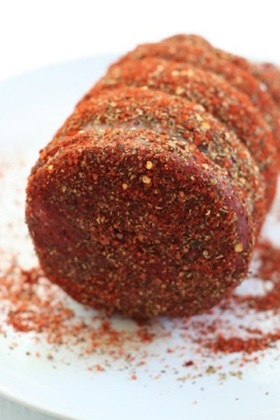
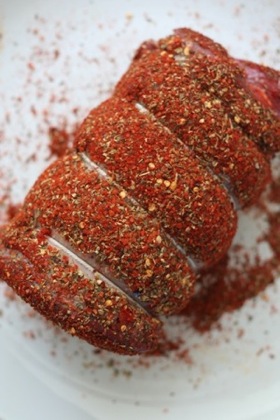
Combine all the ingredients for the spice mix. Rub the meat with the spice mix, cover tightly with cling film and refrigerate for 2 to 3 hours.

Preheat the oven to 275°F (140°C).

Place a Dutch oven or roasting pan over a high heat on the stovetop and add the oil. When it’s smoking, add the beef and cook for 15 minutes, turning the meat often, until it’s nicely browned on all sides. Add the onions and cook for 5 minutes, then add the garlic and cook for 1 minute more. Add the wine, Worcestershire, stock and bay leaves and scrape up all the brown bits on the bottom of the pan.

Transfer the pan to the oven and roast the meat for about 1 hour 30 minutes, uncovered, or until a thermometer inserted in the center of the meat reads 135°F (60°C). Remove the meat from the pan and set aside to let it cool. Cool the broth in the pan and remove the fat that rises to the top.

When the meat is cool, slice it very thin. Reheat the broth and add the meat back in.

To serve, place some meat on each roll, ladle some broth over the meat and top with the giardiniera vegetables and red peppers.

Scallop, Chorizo and Artichoke Paella

I’d like to think that if blogs had been around when Kelly and I went to high school and college together, we might have turned out like Cara Eisenpress and Phoebe Lapine, blogging our way through our first boyfriends, first jobs and first dinner parties as we learned how to cook along the way. We might have set up a blog like their popular Big Girls, Small Kitchen, landed ourselves a book deal and had the Barefoot Contessa write the foreword to it. If only, right? But failing all that, I wish someone had given me a cookbook like theirs, In the Small Kitchen, when I moved into my first apartment and started cooking for myself and my friends. It would have been a hell of a lot better than 1,001 Vegetarian Recipes.

The book is aimed at the twenty-something crowd just finding their feet in the kitchen, with chapters like ‘Cooking for One’, ‘Potlucking’, ‘Cocktail Parties’, ‘Dating and Food’ and ‘One Year Closer to Thirty’, but there’s plenty here to inspire complete beginners and more well-seasoned cooks alike. Also bookmarked to try are Provencal baked chicken, chipotle hummus, black bean dip, coconut peanut sauce, spiked lemonade and pumpkin cake with chai cream. With graduation season upon us, In the Small Kitchen would make the perfect gift for students heading off to college or moving out into their own place, or for any new cook who’s just starting to learn their way around the kitchen.

Scallop, Chorizo and Artichoke Paella
adapted from In the Small Kitchen by Cara Eisenpress and Phoebe Lapine

Serves 8

I made a special trip to the fishmonger to get scallops, only to be told that they didn’t have any because of the recent bad weather (typical!). After some quick thinking, I decided to substitute 1 lb (450 g) of prawns instead. I simply skipped the first step and added the prawns into the paella at the very end of the cooking time, letting the heat of the rice quickly cook them right before serving. This dish reminded me of one of our family favorites, oven-baked risotto with sausages and tomato, and was just as much of a hit with the kids.

2 to 3 tablespoons olive oil
1 lb (450 g) scallops
1 lb (450 g) chorizo, cut diagonally into 1 1/2‑inch pieces
1 large onion, diced
4 cloves garlic, minced
8 to 10 scallions, white and green parts chopped separately
2 cups (360 g) Arborio rice
1/2 cup (125 ml) dry white wine or vermouth
1 x 15 oz (400 g) can of crushed tomatoes
1 x 9 oz (250 g) package frozen artichoke hearts, or jarred or canned artichoke hearts (rinsed and drained if using jarred or canned)
2 teaspoons smoked paprika
1 teaspoon salt
3 to 4 cups chicken stock
lemon wedges, for garnish

In a large cast iron skillet or a Dutch oven, heat 2 tablespoons of the olive oil over a medium-high heat until the oil is shiny and just about to smoke. While the oil is heating, quickly pat the scallops dry and remove and discard the tough side muscles. Sear the scallops in batches in the hot oil until browned and crusty on both sides, about 2 minutes per side. [Check out this post from The BA Daily blog about how to perfectly sear scallops.]

Transfer the scallops to a plate. Add the chorizo to the skillet and brown it, turning on all sides, for 2 to 5 minutes. Remove the chorizo with a slotted spoon and set aside.

Reduce the heat to medium and saute the onion in the remaining oil until translucent, scraping up any drippings in the skillet. Add the garlic and the white part of the chopped scallions and cook for another 2 minutes. Add the rice and stir to coat it in the onion mixture, allowing it to get covered in the oil and begin to toast, which should take about 3 minutes. Add the wine and cook for 2 to 3 minutes, until the liquid has reduced by nearly half. Use your spoon or spatula to help deglaze the pan and lift up any caramelized bits.

Stir in the tomatoes and their juices, artichokes, paprika and salt. Return the chorizo to the skillet and add enough stock to submerge the rice mixture. Bring the liquid to a boil, then reduce the heat to medium-low and simmer for 25 to 30 minutes, until the rice is cooked through, all the liquid has been absorbed and the rice is beginning to become crusty around the edges.

Using the back of your spoon, make indents in the top of the rice and arrange the scallops in them. Pour the scallop juices over the skillet and cook until all the liquid has been absorbed. Garnish with the chopped scallion greens and lemon wedges. Serve warm, straight from the skillet.

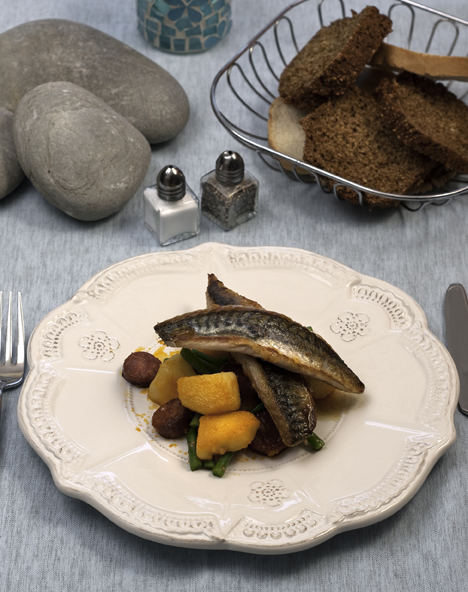
Mackerel with Warm Potato and Chorizo Salad

A few months ago, someone was on Twitter asking for recommendations for where to bring visitors for good seafood in Kinsale, County Cork. About a dozen people replied, and everyone said the same thing — Fishy Fishy. So it’s no surprise that Martin’s Fishy Fishy Cookbook has already entered its second printing just a few weeks after being released. Like the name of his TV show says, Martin Shanahan is mad about fish and he wants everyone else to love it too. My favorite episode from his first series was when he cooked mussels at the cattle mart in the land-locked Midlands and tried to get farmers who had never had a mussel in their lives to taste them (and almost all of them liked them). But even though Ireland is an island nation, we export most of our fish and notoriously eat very little of it ourselves. Martin thinks this is down to what he calls the “fear factor” when cooking fish, and his mantra has become “no skin, no bones, no fear”.

Flipping through his new cookbook and dog-earing pages of tempting recipes to try, his enthusiasm is catching. This mackerel with a warm potato and chorizo salad was outstanding, but also bookmarked are the crab crumble, warm chilli seafood salad, salmon and cucumber wraps and the Thai-style white Pollock fish cakes with Asian cabbage and a sweet and sour dipping sauce. With recipes that sound that good, he’s bound to pick up loads of new seafood-loving converts.

Photo © Kevin O’Farrell from Martin’s Fishy Fishy Cookbook

Mackerel with Warm Potato and Chorizo Salad
adapted from Martin’s Fishy Fishy Cookbook by Martin Shanahan

Serves 4

Chorizo is one of those ingredients (like bacon) that automatically makes anything better, but the dressing is what really made this recipe for me — it gave it just a little oomph and lifted the whole dish. Martin says that you can substitute some lightly cooked kale for the green beans here. Next time I make this — and there will definitely be a next time — I’m going to try using smoked mackerel fillets, warmed through, since I can get that more easily than fresh mackerel.

For the salad:
1 1/4 lb (600 g) potatoes, cooked
1 link of chorizo sausage
olive oil
7 oz (200 g) green beans, blanched and refreshed in ice water
salt and freshly ground black pepper
8 mackerel fillets

For the vinaigrette:
3 tablespoons olive oil
1 tablespoon red wine vinegar
1 teaspoon French mustard
salt and freshly ground black pepper

Cube the cooked potatoes and slice the chorizo. Heat a little oil in a pan and add the chorizo. Cook for 1 or 2 minutes to release the oil from the sausage, then add the potatoes and green beans. Make the vinaigrette by whisking together all the ingredients or shaking to combine in a screw-top jar, then toss the potato mixture in this dressing.

Heat a pan over a high heat and add a little oil. Season the mackerel fillets with salt and pepper, then cook the mackerel skin side down, pressing down on the skin to crisp it. Cook for 2 minutes, then turn and cook for a further 2 minutes on the other side.

Spoon a little of the warm potato salad into the center of each plate and top with the mackerel fillets.

Slow-roast Tomato, Basil and Goat’s Cheese Pasta

Donal Skehan ticks all the boxes. He’s young, hip and even had a brief stint as a pop star before turning his attention exclusively on food. He’s also one of the new generation of food blog success stories who’s just published his second book, Kitchen Hero, and his corresponding new TV show is due to air on May 16 on RTÉ in Ireland. Not only that, he’s also an accomplished food photographer (check out his website to see what I mean) and took all his own photos for the cookbook. And did I mention he’s an all-around great guy too? Despite having thousands of Twitter followers and Facebook fans, he has time for everyone. Who else would host an afternoon tea party at Dublin’s posh Westbury Hotel just for food bloggers like Donal did last week so we could sample the tea he’s designed exclusively for them, not to mention get a signed copy of his book? He’s a true star.

And he also knows his way around the kitchen. You can just about feel Donal’s energy and enthusiasm leaping off the pages of his new book. “I am a home cook and I’m here to show you how to be a kitchen hero!” he proclaims in the first line of his introduction. “I’ve come to the conclusion that if you have confidence in the kitchen, you can cook absolutely anything.” He wants to get people back in the kitchen and his focus is on cooking simple, tasty food using fresh ingredients. His recipes are do-able for even the most novice cook — like this pasta with slow-roasted tomatoes, basil and goat’s cheese. As for me, a working mom with two young kids, the ‘Meals in Minutes’ and ‘Stretch Your Meals’ chapters are already full of dog-eared pages of recipes I’ll be making in the next few weeks.

Slow-roast Tomato, Basil and Goat’s Cheese Pasta
adapted from Kitchen Hero by Donal Skehan

Serves 4

Donal’s original recipe is vegetarian, but I wouldn’t be averse to adding in some bacon or even leftover roast chicken. Or you could try adding in a few handfuls of baby spinach or arugula (rocket) and some toasted pine nuts. I stirred through the juice of half a lemon, which I thought gave this a lovely lift. The great thing about roasting tomatoes is that even if they’re not at their best in the off season, this method brings out all their flavor. If you’re pressed for time though, substitute sun-dried tomatoes for the slow-roasted ones, in which case this is the kind of dinner that you can pull together in the time it takes to boil water and cook your pasta.

3 tablespoons olive oil
1 tablespoon balsamic vinegar
1 lb 2 oz (500 g) cherry tomatoes, cut in half
salt and freshly ground black pepper
11 oz (300 g) of your favorite pasta shape
3 oz (75 g) goat’s cheese, crumbled
a handful of fresh basil leaves, shredded

Preheat the oven to 375°F (190°C).

Whisk together the olive oil and balsamic vinegar in a large bowl. Add the tomatoes and toss gently to coat them. Arrange the tomatoes cut side up on a large baking tray and season with salt and pepper. Roast in the oven for about 45 minutes, until the tomatoes have shrunk and are slightly charred.

Meanwhile, cook the pasta in a large pot according to the instructions on the packet. Drain the pasta and return it to the pot. Immediately stir through the goat’s cheese, basil and tomatoes while the pasta is still hot so that the cheese melts and coats the pasta. Season with a good pinch of salt and pepper and serve immediately.

Pot Roasted French Tarragon Chicken (Poulet à l’Estragon)

The Cookbook Club is one of those simple but brilliant ideas, the kind where you wonder why no one thought of it before now. The brainchild of Elaine Walsh, The Cookbook Club is a monthly event that features an Irish chef talking about his or her latest cookbook over a three-course dinner at Ely CHQ, where all the food is made from the cookbook being featured that night. It’s the best book signing you’ll ever go to.

The dinners started in September, but the first one I went to was last month, when the legendary Darina Allen of the Ballymaloe Cookery School was the featured author talking about her latest book, the award-winning Forgotten Skills of Cooking. What’s more, Elaine arranged a special pre-dinner meeting with Darina just for a few food bloggers. Never mind that it was during the same manic week as Inishfood — how could I pass up such a chance?

But on the day of the dinner, when faced with the thought of meeting the grande dame of Irish cooking with her trademark red glasses, I got nervous. What on earth would I say to someone so highly regarded? What clever question could I possibly ask? I needn’t have worried. As soon as we all sat down with a glass of wine, Darina hit the ground running, talking about everything from the early days at Ballymaloe, how she started the farmers’ market movement in Ireland, learning how to use her iPad on her recent trip to Sri Lanka to casually mentioning cooking for Bill Clinton. Meanwhile, myself and the three other bloggers (Aoife and fellow expats Sharon and Tim) just sat and listened, enthralled. Still reeling, the bloggers all sat down to dinner together, where I had salt cod croquettes, pork osso bucco and carrageen moss pudding with poached rhubarb. (You can find the recipe for the salt cod here as well as Darina’s own recount of the evening.)

While Darina’s book features lots of recipes for things like homemade pasta, preserves, dandelion wine or even instructions on how to build your own cold smoker, there are also plenty of everyday recipes, such as this French bistro classic, poulet à l’Estragon. Darina says that casserole roasting is an almost forgotten skill that releases plenty of delicious juice while the chicken cooks in the moist, steamy atmosphere of a covered casserole. It also couldn’t be easier — 10 minutes of active cooking time yields the best chicken I’ve had in a long time. The Telegraph calls poulet à l’Estragon “possibly the best chicken recipe in the world”, and after standing over the pot greedily slurping up the sauce with a spoon, I’d have to agree.

Pot Roasted French Tarragon Chicken (Poulet à l’Estragon)
adapted from Forgotten Skills of Cooking by Darina Allen

Serves 4 to 6

Because this is such a moist method of cooking, it’s a good method to use if you’re dealing with a bird you know is a little tough or past its prime. Darina also notes that some chickens yield less juice than others, so if you find that you need more sauce, just add some chicken stock to the cream. She says this is also delicious without any cream, just the chicken juices, stock and fresh herbs. Try to find French tarragon for this recipe, as opposed to the more common Russian variety.

Serve the chicken with mashed potatoes or boiled new potatoes — something, anything you can pour the amazing sauce over — and a vegetable such as sauteed carrots or green beans with lemon.

1 x 4 1/2 lb (2 kg) chicken
salt and freshly ground black pepper
2 tablespoons chopped fresh French tarragon, plus a few extra sprigs
2 tablespoons (30 g) butter, softened
1 tablespoon flour
1/2 cup (125 ml) cream
1/2 cup (125 ml) chicken stock (optional; see note above)

You will also need a casserole dish large enough to hold the chicken

Preheat the oven to 350°F (180°C).

Season the cavity of the chicken with salt and freshly ground black pepper and stuff a sprig of tarragon inside. Mix 1 tablespoon of the chopped tarragon with two-thirds of the butter and set aside. Smear the rest of the butter over the breast of the chicken. Place the chicken breast side down in a casserole (aka Dutch oven) and let it brown over a gentle heat for about 5 minutes. Turn the chicken breast side up in the casserole and smear the tarragon butter over the breast and legs. Season generously with salt and pepper. Cover the casserole and cook in the oven for 1 1/4 to 1 1/2 hours, or until the juices run clear when you pierce the flesh between the breast and thigh. Remove the chicken to a carving dish and allow it to rest for 10 to 15 minutes before carving.

Place the pot with the juices over a medium heat. Add the remaining tablespoon of chopped tarragon to the juices in the pot. Add in 1 tablespoon of flour and whisk until smooth, then add in the cream. Bring to the boil and whisk until the sauce thickens slightly. Taste and adjust the seasoning. Serve the chicken with the sauce spooned over.

Chicken with Rice and Basil, Buttered Spinach and Little Glazed Carrots

A few years ago, some friends gave me an Amazon gift certificate and I promptly bought the first cookbook on my wish list, A Year in My Kitchen by Skye Gyngell, which went on to be named Cookery Book of the Year by the Guild of Food Writers and the Best Food Book at Le Cordon Bleu World Food Media Awards in 2007. So when Quadrille Publishing offered me the opportunity to review her newest book, How I Cook, I jumped at the chance.
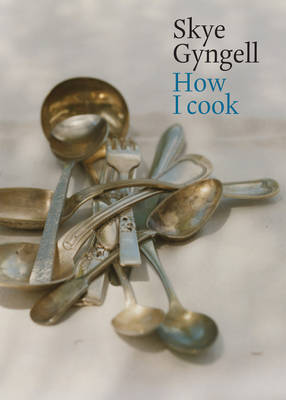
The focus of How I Cook is on home cooking, albeit with “a little finesse,” as Skye says, which is reflected in the book’s content. There are no 30-minute meals here, bur rather a sophisticated mix of everyday dishes and food for special occasions that is still achievable for home cooks. This book particularly appeals to me because of its format, which presents recipes as part of a complete menu (much like what we try to do on this blog). The book is divided into chapters — Breakfast, Sunday Lunch, Alfresco Eating, Afternoon Tea, Simple Weekday Dinner, Late Night Supper, Special Occasion and Time to Spare — and within those chapters are a series of ready-made menus. This makes it an ideal book for entertaining or for leisurely weekend cooking when you have more time to potter in the kitchen and want to make something a little more special for dinner than the usual hastily thrown together midweek pasta dish.

Skye is the head chef at Petersham Nurseries Café in Richmond, Surrey, and with fresh produce on her kitchen’s doorstep, it’s no surprise that her menus are strongly influenced by what’s in season. Skye brings together ingredients that are growing at the same time, since they often naturally complement each other. You can see this at work in combinations like the wintry Slow-roasted Pork menu, which is made up of slow-cooked belly of pork, a gratin of white beans, sauteed leeks and a fig tart. I’ve chosen the Peasant-style Supper menu from the Simple Weekday Dinner chapter to feature here, but other recipes I’ve already bookmarked to try this winter include slow-cooked shoulder of lamb with sweet paprika and chickpeas, oeufs en cocotte with spinach and Parma ham, spiced pears, and rice pudding with poached prunes.

In the introduction, Skye says, “The greatest pleasure I derive from food is cooking for loved ones … I cook for the same reason that you do — to bring joy to others — it pleases me to see people smile and laugh and feel content around a table, and I’m sure it is the same for you.” (I know it’s true for Kelly and me.) If that sentiment strikes a chord with you, then it’s worth picking up this book.

Chicken with Rice and Basil
adapted from How I Cook by Skye Gyngell

Serves 6

Skye points out that in a classic risotto, the warm stock is gradually added to the rice. Here, she has added only wine, cold and all in one go. This way, the rice takes on the flavor of the wine quite profoundly — which means it might not be suitable for young children; this might best be saved for a grown-up dinner. Skye suggests serving cheese or seasonal fruit as dessert to round off this menu.

1 large whole chicken (3 lb 5 oz/1.5 kg), preferably free-range and organic, jointed into 6 pieces
sea salt and freshly ground black pepper
2 tablespoons olive oil
1 red onion, peeled and finely sliced
2 garlic cloves, crushed
1 dried red chili (or dried chili flakes, to taste)
4 oz (100 g) risotto rice (Arborio or Carnaroli)
3 cups (750 ml) dry white wine
1 large bunch of basil
extra virgin olive oil, to drizzle

Season the chicken joints well all over with salt and pepper. Place a large flameproof casserole over a medium heat and add the olive oil. Once the oil is sizzling, brown the chicken pieces in batches, skin side down, without turning, until they are golden brown; this will take about 5 minutes. Set aside.

Pour off any excess fat, leaving a little in the casserole. Lower the heat, add the onion and sweat gently for about 10 minutes, until soft and translucent. Now add the garlic and crumble in the dried chili. Stir once or twice, then tip in the rice and toss it through.

Increase the heat slightly, pour in the wine and return the chicken to the pot. Put the lid on, turn the heat to low and cook for 20 minutes. By this time the chicken should be cooked through and the rice will have a gentle bite.

Tear the basil with your fingers and scatter over the chicken. Stir through, then taste and adjust the seasoning if necessary; it will almost certainly need more salt.

Serve in warm soup plates, drizzled with extra virgin olive oil, and with the buttered spinach and glazed carrots on the side.

***

Buttered Spinach
adapted from How I Cook by Skye Gyngell

Serves 6

14 oz (400 g) young spinach
3 tablespoons (45 g) unsalted butter
sea salt and freshly ground black pepper
1/2 teaspoon ground nutmeg, or to taste

Wash the spinach in several changes of cold water to remove all traces of dirt. Put the spinach into a medium saucepan with just the water clinging to the leaves after washing. Allow to wilt over a low heat, stirring from time to time. Once all the spinach has wilted, drain in a colander, pressing firmly with the back of a wooden spoon to remove excess water. Melt the butter in the pan, add the spinach and toss until it is really well coated. Season with salt, pepper and nutmeg to taste, then serve.

***

Little Glazed Carrots
adapted from How I Cook by Skye Gyngell

Serves 6

If you can’t find small whole carrots, you could make these sauteed carrots instead, which uses much the same method.

1 lb 2 oz (500 g) small carrots, peeled and trimmed
1 tablespoon (30 g) butter
2 teaspoons honey
1 small bunch of thyme
sea salt
handful of flat-leaf parsley, leaves only, finely chopped

Scrub or peel the carrots and trim them, leaving on a little of the green leafy tops. Place in a saucepan with the butter and honey. Pour on enough cold water to just cover the carrots and add the thyme and a good pinch of salt. Bring just to the boil, then turn down the heat to a summer and cook until just tender; this will take about 10 minutes. Discard the thyme. Now turn up the heat and boil rapidly until all the water has evaporated and the carrots are coated in a lovely shiny glaze. Serve warm, with a generous sprinkling of chopped parsley.