Category Archives: French food

Zucchini, Bacon, and Gruyère Quiche

Well, it’s been a while dear readers. I’m really, truly intending to get back to regular posting and I’m starting off with my favorite quiche recipe.

I’ve always loved quiche but didn’t begin to obsess about it until my 20s, living in Bucktown (when it still had a bit of grit to it) mere blocks away from a real French bakery, owned by a  young French couple that smoked cigarettes in the shop when customers weren’t around. Their croissants were fresh baked, glazed lightly in marmalade and the quiche–always several varieties–was indescribably delicious. Now on weekend mornings, listening to my household ruckus unfold from the safety of my bed, I sometimes pretend I’m in that tiny quiet Bucktown apartment again. I’m waiting for Reuben to return from his walk to the bakery with a still warm croissant and piece of quiche, a surprise treat that I knew to relish even then. A nice moment to be sure, but I think I  prefer my current morning ruckus and quiche warm out of my own oven.

Zucchini, Bacon, and Gruyère QuicheZucchini, Bacon, and Gruyère QuicheZucchini, Bacon, and Gruyère Quiche

adapted from Gourmet, December 2005

Since I rarely have heavy cream in the house, I usually use 1 1/3 cups (320 ml) of whole milk in lieu of the milk and cream mixture. And if you want to skip cleaning another pan, measure your milk in a glass measuring cup and and warm it for a minute or two in your microwave instead of on the stovetop.

1 (9‑inch) refrigerated pie dough round
6–8 slices bacon, coarsely chopped
2 small or 1 medium zucchini, halved lengthwise, then cut crosswise into 1/8‑inch-thick slices
1/2 teaspoon salt
3/4 cup (180 ml) heavy cream
3/4 cup (180 ml) whole milk
1/4 teaspoon black pepper
3 large eggs
2 oz (60 g) Gruyère, coarsely grated (about 1 cup)

Put oven rack in middle position and preheat oven to 450°F (230°C).

Fit the pie dough into a pie plate and lightly prick all over. Bake according to package instructions, then transfer the crust in pie plate to a rack.

Reduce oven temperature to 350°F (180°C).

While the crust bakes, cook the bacon in a 12-inch heavy skillet over moderately high heat, stirring occasionally, until just crisp, about 6 minutes. Transfer the bacon with a slotted spoon to a paper-towel-lined plate, reserving the fat in the skillet.

Add the zucchini and 1/4 teaspoon salt to the fat in skillet and sauté over moderately high heat, stirring frequently, until zucchini is tender and starting to brown, about 5 minutes, then transfer with slotted spoon to a paper-towel-lined plate.

Heat the cream, milk, pepper, and remaining 1/4 teaspoon salt in a small saucepan until mixture reaches a bare simmer, then remove from the heat.

Whisk together the eggs in a large heatproof bowl, then gradually whisk in the warm cream mixture until combined. Stir in the bacon, zucchini, and cheese and pour into the baked piecrust. Bake until the filling is just set, 25 to 30 minutes. Transfer the quiche in pan to a rack to cool slightly, about 20 minutes.

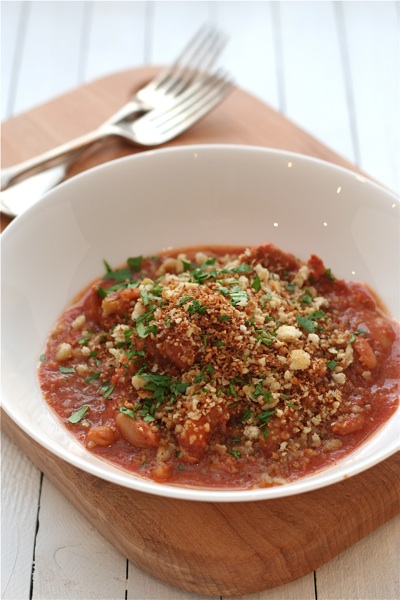
Slow Cooker Cassoulet

I originally posted this on February 15 2010, but have updated the recipe to make it easier and less time consuming.

I’ve been trying to go back to cookbooks I haven’t used in awhile, so last week I pulled The River Cottage Meat Book by Hugh Fearnley-Whittingstall down off the shelf and cassoulet caught my eye. While I wound up making a different version, it ticks a lot of boxes — this one can be made in a slow cooker, it’s good value (cassoulet is a traditional French peasant dish), it’s hearty, rib-sticking food for cold nights and it makes more than enough for two meals.

If you like the idea of a cassoulet but don’t have a slow cooker or don’t have all day to let it cook, you could try Jacques Pépin’s 30-minute version or Jamie Oliver’s kinda sausage cassoulet. In his recipe, Hugh F‑W suggests serving this with an orange and watercress salad.

Slow Cooker Cassoulet

Serves 8 to 10

If you can’t get pork shoulder, pork leg or even loin would work too — just get the butcher to remove the fat for you. If you wanted to add in some veg, a few carrots, peeled and sliced on the diagonal, would work well.

olive oil
3 onions, coarsely chopped
salt and freshly ground black pepper
3 lb (1.4 kg) boneless pork shoulder, cut into 2‑inch pieces (you can ask your butcher to do this for you)
1 lb (450 g) fully cooked or smoked chorizo or garlic sausage links, sliced on the diagonal
2 x 14 oz (400 g) cans of cannellini, haricot or Great Northern beans
1 x 28 oz (or 2 x 14 oz/400 g) cans whole plum tomatoes, drained and coarsely chopped
2 cups (500 ml) chicken stock
1 cup (500 ml) dry white wine, such as Sauvignon Blanc (or use stock or water if you prefer not to use alcohol)
3 tablespoons tomato paste
1 head of garlic, halved crosswise
1 cup (100 g) breadcrumbs, plus extra to serve
a handful of chopped fresh flat-leaf parsley, plus extra for garnish
crusty bread, to serve

Put a large frying pan over a medium heat and add in a splash of olive oil. Add the onions and a pinch of salt to prevent the onions from browning and cook for about 10 minutes, until they’re translucent but now browned. Transfer the onions to the slow cooker, then stir in the pork, chorizo, beans, tomatoes, stock, wine, tomato paste and garlic along with a generous seasoning of salt and pepper.

Set the cooker to low and cook, covered, for about 8 hours, until the pork pulls apart easily with a fork (though it could be as much as 10 hours). Skim off any fat and remove and discard the garlic. Fold in the panko or breadcrumbs and the parsley. Taste and season as needed.

Let the cassoulet stand at room temperature for 10 minutes before serving. Sprinkle each serving with extra breadcrumbs and parsley and serve with warm crusty bread.

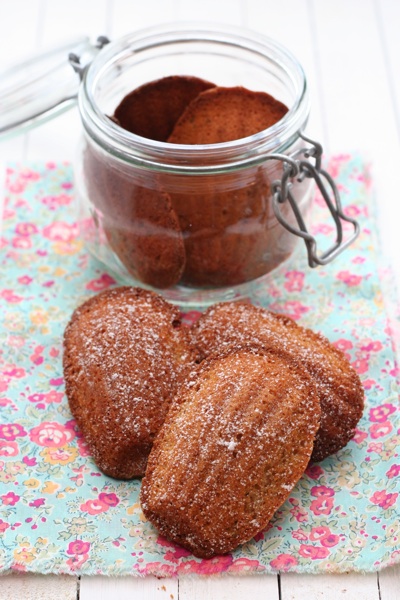
Honey Spiced Madeleines

Madeleines are my new favorite thing to bake. I don’t normally go for recipes that call for hard-to-find ingredients or specific equipment, but a madeleine pan is a little luxury and even the tiniest kitchen could surely squeeze one in. They take only minutes to pull together and 10 minutes to bake, yet people are invariably impressed by them. They’re perfect with tea or coffee and also make an excellent treat for a play date, seeing as how they don’t have that much sugar and are just the right size for little hands to hold.

They’re also open to endless variations — in my own cookbook collection, I have recipes for hazelnut lemon madeleines, rosewater madeleines and butterscotch madeleines — but I’ve fallen in love with these honey spiced ones and have made them three times in the past three weeks. There’s something about the spices, just right for autumn, and the soft, cake-like texture when they’re still warm from the oven that remind me of a doughnut, and in my book it doesn’t get better than that.

Honey Spiced Madeleines
adapted from Around My French Table by Dorie Greenspan (recipe available online here)

Makes 12 madeleines

There are all sorts of tips and tricks for how to make the perfect madeleine — letting the batter rest, putting the tin in the freezer, piping the batter into the moulds, not using baking powder — but I don’t worry about any of that and they still turn out perfectly fine and perfectly delicious.

3/4 cup (90 g) all-purpose flour
1/2 teaspoon baking powder
1/2 teaspoon ginger
1/4 teaspoon cinnamon
1/8 teaspoon ground cloves
1/8 teaspoon ground nutmeg
pinch of salt
pinch of freshly ground black pepper
1/3 cup (75 g) sugar
grated zest of 1/2 orange
2 large eggs, at room temperature
2 tablespoons honey
1 teaspoon pure vanilla extract
6 tablespoons (90 g) unsalted butter, melted and cooled
powdered sugar (icing sugar), to dust (optional)

Whisk together the flour, baking powder, spices, salt and pepper and set aside.

Working in a mixer bowl, stir the sugar and orange zest together. Fit the mixer with the whisk attachment, add the eggs to the bowl and beat for about 2 minutes, until the mixture is light, fluffy and thickened. Add in the honey, then the vanilla.  Switch to a rubber spatula and gently fold in the dry ingredients followed by the melted butter. You can use the batter now, but Dorie Greenspan says it’s better if you can give it a little rest. Press a piece of plastic wrap against the surface of the batter and chill for 3 hours or, if you have the time, overnight. Making the batter in advance also means you can have madeleines that are fresh from the oven and still warm if you’re serving them to guests, or make them in the morning and bake them after the kids get home from school for a little treat.

When you’re ready to bake them, centre a rack in the oven and preheat the oven to 400°F (200°C). Butter 12 full-size madeleine molds (or 36 mini-molds), dust the insides with flour and tap out the excess. If you have a non-stick madeleine mold, butter and flour it anyway or give it a light coating of vegetable cooking spray. (If your pan is silicone, you can leave it as is.) Place the pan on a baking sheet.

Spoon the batter into the molds, filling each one three-quarters full (if you overfill the molds, they’ll spill out over the sides a bit and won’t be quite as pretty when they’re done). Bake the large madeleines for 11 to 13 minutes and the minis for 8 to 10 minutes, or until the madeleines are golden and the tops spring back when prodded gently. Remove the pan from the oven and release the madeleines from the molds by rapping the edge of the pan against the counter. Gently pry any stuck madeleines from the pan using your fingers or a butter knife. Transfer the cookies to a rack to cool to just-warm or room temperature. Dust with powdered sugar (icing sugar) if you like.

Salmon with Lentils and Mustard-Herb Butter

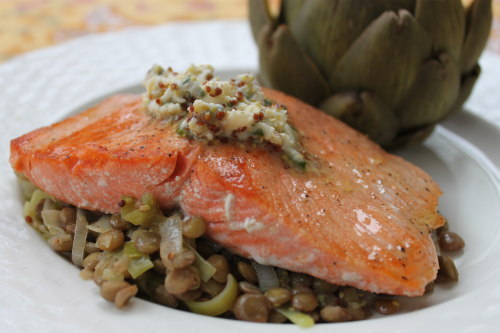
You may have noticed that Kristin and I cook salmon pretty regularly. Not only is salmon healthy, loaded with omega‑3 and other good stuff, but it’s easy to prepare and hard to mess up. Unlike some more delicate varieties of fish, salmon can take a few minutes of overcooking. It’s also less “fishy” tasting than most other seafood, so most kids won’t turn up their noses at it. This recipe is one of my family’s most recent favorites. It’s fancy enough to serve for guests, but a breeze to throw together, especially if you make the compound butter and lentils the night before. Steamed artichokes make an excellent side dish, especially if served with a bit of melted butter and lemon juice for dipping.

The picture doesn’t quite do this dish justice. I snapped the photo quickly before I called the kids to dinner. By the time everyone was seated, their sippy cups filled, and our napkins unfolded, the butter had melted beautifully, leaving the salmon with a lovely layer of herbs and mustard seeds.

Salmon with Lentils and Mustard Butter

Salmon with Lentils and Mustard-Herb Butter (Saumon aux Lentilles)
adapted from Gourmet, March 2008

For mustard-herb butter:
5 tablespoons unsalted butter, softened
1 tablespoon chopped chives
1 teaspoon chopped tarragon [I substituted 1/2 teaspoon dried tarragon]
2 teaspoons grainy mustard
2 teaspoons fresh lemon juice

For lentils:
1 cup French green lentils
4 cups water
2 medium leeks (white and pale green parts only)
1 tablespoon unsalted butter
1/2 to 1 tablespoon fresh lemon juice

For salmon:
4 (6‑ounce) pieces skinless salmon fillet
2 tablespoons unsalted butter

Make the mustard-herb butter:
Stir together all the ingredients with 1/4 teaspoon each of salt and pepper. [The mustard-herb butter can be made 1 day ahead and chilled, covered. Soften at room temperature before using (1 hour).]

Cook the lentils:
Bring the lentils, water, and 3/4 teaspoon salt to a boil in a heavy medium saucepan, then reduce heat and simmer, uncovered, until the lentils are just tender, 20 to 25 minutes. Remove from heat and let stand 5 minutes. Reserve 1/2 cup cooking liquid, then drain lentils. [The lentils can be cooked (but not drained) 1 day ahead and chilled in cooking liquid, covered (once cool).]

While the lentils cook, chop the leeks, then wash them. Cook the leeks in the butter in a heavy medium skillet over medium-low heat, stirring occasionally, until softened, 6 to 8 minutes.

Add the lentils with the reserved cooking liquid to the leeks along with 3 tablespoons mustard-herb butter and cook, stirring, until the lentils are heated through and the butter is melted. Add the lemon juice and salt and pepper to taste. Remove from heat and keep warm, covered.

Sauté the salmon while the leeks cook:
Pat the salmon dry and sprinkle with 1/2 teaspoon salt and 1/4 teaspoon pepper (total).

Heat the butter in a large nonstick skillet over medium-high heat until foam subsides, then sauté the salmon, turning once, until golden and just cooked through, 6 to 8 minutes total.

Serve the salmon, topped with the remaining mustard-herb butter, over lentils.

Chicken in Vinegar (Poulet au Vinaigre)

I buy cookbooks for different reasons. Most of the time I buy them because I flipped through them in the store and wanted to make everything I saw, which is always a good sign. Sometimes I buy them because I’m a fan of the writer (I have a bookshelf that’s taken up solely with Nigella Lawson and Nigel Slater’s books). But other times I buy them because they’ll be a good reference book, the kind of book that you know will stand the test of time or point you in the right direction if you want the authentic version of a recipe. Larousse Gastronomique and The Silver Spoon are such books, and so is French Country Cooking by Michel and Albert Roux, which has now been reprinted.

This book isn’t for the casual cook — it includes hard-core rustic dishes like Lyonnaise ox tripe, frogs’ legs and pig’s head soup and offal features prominently. Yet it also includes authentic recipes for classics like pissaladière, quiche Lorraine, salad niçoise, cassoulet and soupe au pistou as well as dishes that I hadn’t heard of but have bookmarked to try, such as fricassée of farmhouse chicken with baby vegetables or chickpeas with bacon and peppers. But this classic recipe for chicken in vinegar (poulet au vinaigre) is the one that called out the loudest to be tried first.

The book is divided into 12 regional chapters that each give an overview of the region’s culinary traditions and then presents 12 recipes from the region as well as a list of ingredients that are indigenous to the area. With the continuing interest in local foods, this kind of extra detail will appeal to those who want to know more about regional cooking and foods. As the authors say themselves in the introduction, “It is regional, homely cooking which manages to be both rustic and sophisticated at the same time.”

Chicken in Vinegar (Poulet au Vinaigre)
adapted from French Country Cooking by Michel and Albert Roux

Serves 4

In Gourmet magazine’s version of this recipe, they said the vinegary sharpness of this dish is “edgy and refreshing” — perfect for hot, sluggish summer weather when you want to wake up your taste buds. The headnote to the recipe explains that this easy, inexpensive dish originally comes from Lyon or Burgundy and that fresh pasta is the perfect accompaniment, but I like it with some good crusty bread to mop up the sauce instead and a green salad on the side.

1 x 2 lb 14 oz (1.3 kg) chicken, cut into 8 pieces (or just use chicken breasts/thighs)
4 tablespoons (60 g) butter
3 or 4 large shallots, finely sliced
1/2 cup (125 ml) red wine vinegar
1 bouquet garni (parsley, thyme, bay leaf)

For the sauce:
2 tablespoons (30 g) butter, softened
1 tablespoon flour
1/2 cup (125 ml) dry white wine
1/2 cup (125 ml) chicken stock
salt and freshly ground black pepper
1 tablespoon chopped fresh flat-leaf parsley

crusty bread, to serve
green salad, to serve

Heat the butter in a frying pan over a medium heat. Add the chicken pieces and fry on all sides for 7 to 8 minutes, until golden. Add the shallots and cook for 1 minute, then pour in the vinegar. Add in the bouquet garni, cover the pan and cook over a gentle heat for 10 minutes (or in the oven at 325°F/170°C), or until the chicken is cooked through. Remove the chicken from the pan and keep warm.

To make the sauce, mash the butter and flour together in a bowl with a fork until they’re well combined (this makes a beurre manié). Pour the white wine into the pan and reduce by one-third. Add the chicken stock and whisk in the beurre manié to bind the sauce. If it seems too thick, add a little more chicken stock. Season to taste with salt and pepper.

To serve, arrange the chicken pieces in a deep dish and pour over the hot sauce. Sprinkle with the freshly parsley and serve immediately with buttered pasta or crusty bread and a green salad.

Pan-grilled Steak with Béarnaise Sauce

I’m turning into the kind of person who will go to great lengths for a good meal. Last month I drove 3 hours north to Inishowen just to eat at Harrys Restaurant in Co. Donegal, and 2 weeks ago I drove 3 hours south to Dungarvan to go to the Waterford Festival of Food. I was only there for 24 hours, lured down by plans for dinner at the O’Brien Chop House and a bus tour to a microbrewery and oyster farm, but I managed to fit in a lot of good food.
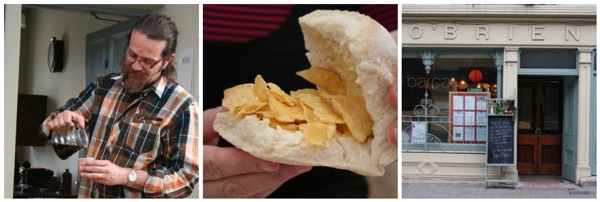
I arrived late to Food Camp on the Friday, but still in time to sample some of Brock’s coffee from his boutique artisan coffee roasting business, Badger & Dodo, followed by lunch, where Niamh couldn’t resist making a classic Irish sandwich — Tayto crisps on a buttered Waterford blaa (don’t knock it till you’ve tried it!). After a lively panel discussion on routes to market for artisan Irish food, a group of about 20 people made their way to nearby Lismore for dinner at the O’Brien Chop House, where the rhubarb and apple Bellini was worth the 3‑hour drive alone.
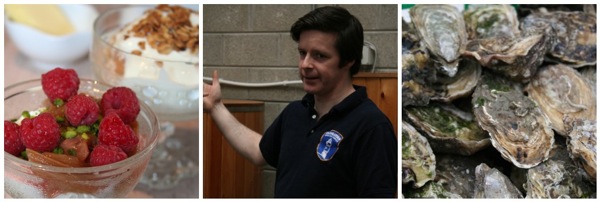
After a gourmet breakfast at Powersfield House B&B (the owner, Eunice Power, is a caterer), it was an early start after a late night the next day for a bus tour to Dungarvan Brewing Company to hear about how their microbrew beers are made and have a sample (at 10:30 in the morning? why not!). After that we went across the bay to Dungarvan Shellfish, where Jim Harty proudly told us about his thriving family-run oyster farm, with yet more samples, this time of fresh Irish oysters, brown bread and a glass of white wine at the slightly more respectable hour of 11 a.m. The last stop on the Bus Bia tour was a fish cooking demo in a parish hall in the Gaeltacht (Irish-speaking region), which finished with tea, coffee and cakes made by the local Irish Countrywomen’s Association. When we arrived back in Dungarvan, a group of 9 of us bloggers headed straight for the best restaurant in town for lunch — The Tannery — not really expecting to get a table but delighted when we did, where almost all of us ordered their signature starter, the crab creme brulée. By then I was starting to regret not staying for the second night (which I definitely did regret the next day when reading everyone’s tweets about the fantastic farmers’ market on the Sunday), but I was happy to have The Daily Spud for company this time on the long drive back, talking about food all the way.
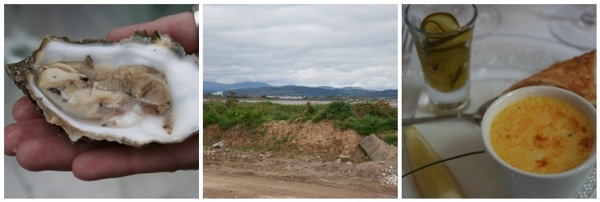
When I go to a restaurant, I always like to order something from the menu that I don’t or can’t make at home, and when I saw that O’Brien’s hanger steak was being served with a side of bone marrow, not to mention Béarnaise sauce, which I’m a sucker for, I practically stopped reading the menu right there. Justin and Richard were fantastic hosts for our group of 20, and if you’re in County Waterford, this restaurant is not to be missed. I’m already planning on bringing the whole family to the festival next year, but in the meantime, I can recreate the meal from O’Brien’s at home with Darina Allen’s recipes.

Pan-grilled Steak
adapted from Forgotten Skills of Cooking by Darina Allen

Serves 4

Darina Allen recommends using a heavy-ridged cast iron grill pan for cooking steaks. She also says that rubbing the steaks with a clove of garlic intensifies their beefy flavor. It goes without saying to serve this with chips/wedges. For a blow-out dinner like this that’s all about the meat, I’d say a vegetable is pretty much optional. Get your five a day at breakfast and lunch instead.

4 x 6 oz (175 g) sirloin or fillet steaks
1 garlic clove
salt and freshly ground black pepper
olive oil

About 1 hour before you want to cook your steaks, remove them from the fridge. Cut the garlic clove in half and rub it on both sides of each steak. Grind over some black pepper and sprinkle with a few drops of olive oil (don’t put salt on the steaks at this point, since it will leach out moisture and make the steaks dry and tough). Turn the steaks in the oil and set aside to allow them to come to room temperature. If using sirloin steaks, score the fat at 1‑inch intervals.

Heat the grill pan, season the steaks with a little salt and put them into the hot pan. Cook to your liking (if using sirloin steak, cook the fatty side as well for 3 or 4 minutes until it’s nice and crispy). For rare, cook a sirloin for 2 minutes and a fillet for 5 minutes; for medium-rare, cook a sirloin for 3 minutes and a fillet for 6 minutes; for medium, cook a sirloin for 4 minutes and a fillet for 7 minutes; and for well done (but please don’t ruin a good steak by cooking it well done!), cook a sirloin for 5 minutes and a fillet for 8 or 9 minutes. Make sure you allow the steaks to rest before you serve them. Serve with Béarnaise sauce, oven-roast wedges and a green salad or vegetable of your choice.

***

Béarnaise Sauce
adapted from Forgotten Skills of Cooking by Darina Allen

Serves 8 to 10

If the sauce is slow to thicken, it might be because the heat is too low. When making the sauce, you should be able to put your hand on the side of the saucepan at any stage — if it’s too hot for your hand, it’s too hot for the sauce! Keep a bowl of cold water close by that you can plunge the bottom of the saucepan into if it becomes too hot.

4 tablespoons tarragon vinegar (or white wine vinegar plus extra fresh chopped tarragon)
4 tablespoons dry white wine
2 teaspoons finely chopped shallots
pinch of freshly ground black pepper
1 tablespoon cold water
2 egg yolks
1/2 cup (110 g) butter, cubed
1 tablespoon chopped fresh tarragon

Boil the vinegar, wine, shallots and a pinch of pepper in a heavy-bottomed stainless steel saucepan until completely reduced and the pan is almost dry but not browned. Immediately add the 1 tablespoon of cold water. Remove the pan from the heat and leave to cool for 1 or 2 minutes.

Whisk in the egg yolks and add the butter bit by bit over a very low heat, whisking all the time. As soon as one piece of butter melts, add the next piece and the sauce will gradually thicken. If it looks like it’s getting too thick or might scramble, remove the pan from the heat immediately and add a little cold water. Don’t leave the pan or stop whisking until the sauce is made and has reached a thick coating consistency — this isn’t the time to see what’s happening on Facebook. Finally, add the chopped fresh tarragon and taste for seasoning. You can keep the sauce warm in a heatproof bowl over a saucepan of hot (but not simmering!) water until you’re ready to serve it.


Pot Roasted French Tarragon Chicken (Poulet à l’Estragon)

The Cookbook Club is one of those simple but brilliant ideas, the kind where you wonder why no one thought of it before now. The brainchild of Elaine Walsh, The Cookbook Club is a monthly event that features an Irish chef talking about his or her latest cookbook over a three-course dinner at Ely CHQ, where all the food is made from the cookbook being featured that night. It’s the best book signing you’ll ever go to.

The dinners started in September, but the first one I went to was last month, when the legendary Darina Allen of the Ballymaloe Cookery School was the featured author talking about her latest book, the award-winning Forgotten Skills of Cooking. What’s more, Elaine arranged a special pre-dinner meeting with Darina just for a few food bloggers. Never mind that it was during the same manic week as Inishfood — how could I pass up such a chance?

But on the day of the dinner, when faced with the thought of meeting the grande dame of Irish cooking with her trademark red glasses, I got nervous. What on earth would I say to someone so highly regarded? What clever question could I possibly ask? I needn’t have worried. As soon as we all sat down with a glass of wine, Darina hit the ground running, talking about everything from the early days at Ballymaloe, how she started the farmers’ market movement in Ireland, learning how to use her iPad on her recent trip to Sri Lanka to casually mentioning cooking for Bill Clinton. Meanwhile, myself and the three other bloggers (Aoife and fellow expats Sharon and Tim) just sat and listened, enthralled. Still reeling, the bloggers all sat down to dinner together, where I had salt cod croquettes, pork osso bucco and carrageen moss pudding with poached rhubarb. (You can find the recipe for the salt cod here as well as Darina’s own recount of the evening.)

While Darina’s book features lots of recipes for things like homemade pasta, preserves, dandelion wine or even instructions on how to build your own cold smoker, there are also plenty of everyday recipes, such as this French bistro classic, poulet à l’Estragon. Darina says that casserole roasting is an almost forgotten skill that releases plenty of delicious juice while the chicken cooks in the moist, steamy atmosphere of a covered casserole. It also couldn’t be easier — 10 minutes of active cooking time yields the best chicken I’ve had in a long time. The Telegraph calls poulet à l’Estragon “possibly the best chicken recipe in the world”, and after standing over the pot greedily slurping up the sauce with a spoon, I’d have to agree.

Pot Roasted French Tarragon Chicken (Poulet à l’Estragon)
adapted from Forgotten Skills of Cooking by Darina Allen

Serves 4 to 6

Because this is such a moist method of cooking, it’s a good method to use if you’re dealing with a bird you know is a little tough or past its prime. Darina also notes that some chickens yield less juice than others, so if you find that you need more sauce, just add some chicken stock to the cream. She says this is also delicious without any cream, just the chicken juices, stock and fresh herbs. Try to find French tarragon for this recipe, as opposed to the more common Russian variety.

Serve the chicken with mashed potatoes or boiled new potatoes — something, anything you can pour the amazing sauce over — and a vegetable such as sauteed carrots or green beans with lemon.

1 x 4 1/2 lb (2 kg) chicken
salt and freshly ground black pepper
2 tablespoons chopped fresh French tarragon, plus a few extra sprigs
2 tablespoons (30 g) butter, softened
1 tablespoon flour
1/2 cup (125 ml) cream
1/2 cup (125 ml) chicken stock (optional; see note above)

You will also need a casserole dish large enough to hold the chicken

Preheat the oven to 350°F (180°C).

Season the cavity of the chicken with salt and freshly ground black pepper and stuff a sprig of tarragon inside. Mix 1 tablespoon of the chopped tarragon with two-thirds of the butter and set aside. Smear the rest of the butter over the breast of the chicken. Place the chicken breast side down in a casserole (aka Dutch oven) and let it brown over a gentle heat for about 5 minutes. Turn the chicken breast side up in the casserole and smear the tarragon butter over the breast and legs. Season generously with salt and pepper. Cover the casserole and cook in the oven for 1 1/4 to 1 1/2 hours, or until the juices run clear when you pierce the flesh between the breast and thigh. Remove the chicken to a carving dish and allow it to rest for 10 to 15 minutes before carving.

Place the pot with the juices over a medium heat. Add the remaining tablespoon of chopped tarragon to the juices in the pot. Add in 1 tablespoon of flour and whisk until smooth, then add in the cream. Bring to the boil and whisk until the sauce thickens slightly. Taste and adjust the seasoning. Serve the chicken with the sauce spooned over.

French Onion Soup and Croque Monsieur

“How easily happiness begins by / dicing onions”, writes William Matthews in his poem, “Onions”. This is never more true than when making French onion soup. And surely there can be no higher calling or better end for an onion than to be sauteed in butter, then doused in a boozy broth of brandy, sherry and wine. As an easy midweek soup-and-sandwich dinner goes, you could do worse than one that makes you wish you were sitting in a Parisian café.


French Onion Soup
adapted from The Barefoot Contessa Cookbook by Ina Garten

Serves 4 to 6

2 1/2 lb (1.1 kg) yellow onions, halved and sliced 1/4 inch thick
1/4 lb (110 g) unsalted butter
1 bay leaf
1/2 cup (125 ml) medium-dry sherry
1/2 cup (125 ml) brandy or Cognac
1 1/2 cups (375 ml) good dry white wine
8 cups (2 liters) beef stock
salt and freshly ground black pepper
freshly grated Parmesan, to serve

Melt the butter in a large stockpot on a medium heat. Saute the onions with the bay leaf and a pinch of salt (to stop the onions from browning) for 20 minutes, until the onions turn a rich golden brown color. Deglaze the pan with the sherry and brandy and simmer uncovered for 5 minutes. Add the white wine and simmer uncovered for 15 more minutes. Add the beef stock plus salt and pepper (but not too much salt because your stock is liable to be salty already). Bring to a boil, then simmer uncovered for 20 minutes. Remove the bay leaf, adjust the seasoning and serve hot with grated Parmesan on top.

***

Croque Monsieur
adapted from How to Cook: Book One by Delia Smith

Serves 1

A croque monsieur is really just a grilled ham and cheese sandwich. It originated in France as a kind of fast food snack served in cafés and bars. A croque madame is a version of this sandwich with a fried or poached egg on top. I was tempted by the Barefoot Contessa’s version of this classic, which she smothers in a béchamel sauce, but I opted to keep things simpler (and less calorific) with Delia Smith’s recipe. I did use Ina’s tip though to add some Dijon mustard to the sandwich.

2 large slices good-quality white bread, buttered
Dijon mustard (optional)
1/2 cup (50 g) Gruyère, finely grated
2 or 3 slices of cooked ham, Parma ham or wafer-thin ham
2 tablespoons (30 g) butter, melted
1 rounded tablespoon finely grated Parmesan
salt and freshly ground black pepper

On one slice of the buttered bread, add a thin smear of Dijon mustard (option). Sprinkle over half the grated Gruyère, then cover that with the slices of ham, folding them if need be to fit the size of the bread. Now sprinkle the rest of the Gruyère on top of the ham, season with salt and pepper, then press the other slice of bread on top of that and press it down firmly. Now brush the top side of the sandwich with some of the melted butter, sprinkle it with half the Parmesan and press it into the bread. Transfer the sandwich to a baking sheet and grill it in the oven for about 2 minutes, 2 inches from the heat, making sure to keep a close eye on it so that it doesn’t burn. When it’s golden brown, turn it over, brush the other side with melted butter, sprinkle the rest of the Parmesan all over and grill for another 2 minutes. Remove it from the grill, cut it into halves or quarters and eat it while it’s still warm and crunchy.