Tag Archives: Salads

Filipino-style London Broil, Oven-roasted Potatoes, and Winter Greens with Shaved Parmesan

My book club’s most recent pick, Animal, Vegetable, Miracle: A Year of Food Life by Barbara Kingsolver, provided the perfect inspiration for our meeting’s dinner menu. The book centers around the author’s year of eating only local foods, including produce and animals that she raised herself. After getting past the initial defensiveness of my own food choices, I came to love the book and have been truly inspired by it. It also provided a ready theme for our book club dinner — local. Luckily, by living in Wisconsin, I have easy access to farms that offer direct-to-seller meat and produce. I had a freezer full of beef from Sulzer Beef at my disposal. I also rediscovered Outpost Natural Foods, which in recent years has made a concerted effort to carry more local products.

My friend Alex brought a wonderful rhubarb strawberry crisp made with strawberries she picked from a nearby farm and rhubarb from her garden. For the salad, I used a winter salad mix from Milwaukee’s own urban, award-winning farm, Growing Power. To serve, I splashed some balsamic vinegar and olive oil over the greens (not local, I’m afraid), then used a vegetable peeler to grate long strips of Wisconsin Parmesan over the top. We rounded out the meal with an assortment of other Wisconsin cheeses (lemon chevre, cranberry cheddar, and Gorgonzola) and a fresh baguette from our local Breadsmith bakery.  A feast that doesn’t require gallons of petroleum to transport it to the table tastes even better than one that does.

Filipino-style London Broil
adapted from Indoor! Grilling by Steven Raichlen

Serves 4 to 6

2 medium lemons
1 cup (240 ml) soy sauce [Kikkoman brand is made in Walworth, Wisconsin]
1/2 cup (120 ml) distilled white vinegar
1/2 cup (120 ml) vegetable oil
1 medium onion, finely chopped
3 cloves garlic, finely chopped
3 bay leaves, crumbled
1 tablespoon coriander seed
1 teaspoon black pepper
1 sirloin or top or bottom round steak (1 1/2 to 2 lb/680 to 900 g)

Rinse the lemons. Cut each in half and squeeze out the juice with a citrus press. Place the lemon juice in a large nonreactive mixing bowl. Cut the rind of 1 lemon into 1/4‑inch dice and add it to the juice. Add the soy sauce, vinegar, oil, onion, garlic, bay leaves, coriander seed, and pepper and whisk to mix. Set aside half of the lemon juice mixture to use as a sauce.

Spread half of the remaining lemon juice mixture in the bottom of a nonreactive baking dish just large enough to hold the meat. Place the meat on top and spread the other half of the lemon juice mixture over it. Let the steak marinate for at least 6 hours, or ideally overnight. The beef can also be marinated in a resealable plastic bag.

Place a grill pan on the stove and preheat it to medium-high over a medium heat. When the grill pan is hot, a drop of water will skitter in the pan. When ready to cook, lightly oil the ridges of the grill pan. Drain the meat, scraping off most of the marinade with a rubber spatula. Place the beef in the hot grill pan. Sirloin or round steak will be cooked to medium-rare after 5 to 8 minutes per side. To test for doneness, use the poke method: when cooked to medium-rare the meat should be gently yielding.

Transfer the meat to a cutting board and let it sit for 5 minutes. Cut the meat into broad thin slices, holding a sharp knife blade at a 45-degree angle to the top of the meat. Spoon the reserved sauce over the slices and serve at once.

***

Oven-roasted Potatoes

Serves 6

3 large baking potatoes, cut into 1‑inch cubes
1/4 cup (60 ml) olive oil
handful of flat-leaf parsley, minced [I love parsley and use about a half bunch in this recipe]
3 cloves garlic, minced
1/2 teaspoon dried basil
1 teaspoon dried oregano
1 teaspoon paprika
salt and freshly ground black pepper

Preheat the oven to 375°F (190°C).

Toss the cubed potatoes with the olive oil, parsley, garlic, basil, oregano and paprika. Spread in a single layer on a large baking sheet (or 2 smaller baking sheets). Bake for 30 to 40 minutes, turning the potatoes halfway through cooking, until golden brown and tender. Immediately season with salt and pepper to taste.

Halibut, Veracruz Style over Rice and Salad with Orange-Lime Cumin Vinaigrette

This was originally going to be tilapia, Veracruz style but Reuben was too enamored with the halibut to pass it up. I especially liked this preparation not only for the taste but also because the sauce can be made the night before. As you can see from my photo (thank you Reuben for my early birthday present), it’s even pretty enough for guests.

I try to serve seafood at least once a week, not only because it’s healthy, but also because it is quick. U.S. tilapia and wild Alaskan salmon are my fish of choice — the tilapia for its price and the wild salmon for its omega‑3. Both fish are also sustainable. I recommend Monterey Bay’s Seafood Watch Program to check whether your seafood choices have low toxin levels and minimal environmental impact.

Halibut, Veracruz style
Halibut, Veracruz Style 

adapted from Bon Appétit, May 2003

Serves 6

1 x 28-oz (780‑g) can diced tomatoes in juice, well drained, juices reserved
1/4 cup (60 ml) extra-virgin olive oil
1/2 onion, finely chopped
3 large garlic cloves, minced
2 small bay leaves
3 tablespoons chopped fresh parsley
1 teaspoon dried Mexican oregano
1/3 cup (50 g) chopped pitted green olives
2 tablespoons raisins
2 tablespoons drained capers
6 halibut, tilapia or red snapper fillets (about 1 1/2 lbs/680 g total)
pickled jalapeño chilies, sliced

Place the drained tomatoes in a medium bowl. Using a potato masher, crush the tomatoes to a coarse puree. Drain again, reserving juices.

Heat the oil in heavy large skillet over medium-high heat. Add the onion and stir 30 seconds. Add the garlic and stir 30 seconds. Add the tomato puree and cook 1 minute. Add the bay leaves, parsley, oregano, and 1/4 cup (60 ml) reserved tomato juices. Simmer until the sauce thickens, about 3 minutes. Add the olives, raisins, capers, and all the remaining reserved tomato juices. Simmer until the sauce thickens again, stirring occasionally, about 8 minutes. Season the sauce to taste with salt and pepper. (Can be made 1 day ahead. Cover and refrigerate.)

Preheat the oven to 425°F (220°C). Spread 3 tablespoons of sauce in the bottom of a 13 x 9‑inch glass baking dish. Arrange the fish on top of the sauce. Sprinkle the fish lightly with salt and pepper. Spoon the remaining sauce over the fish. Bake uncovered until the fish is just opaque in center, about 15 to 20 minutes. Using a long spatula, transfer the fish with sauce to plates. Garnish with the pickled jalapeño slices. Serve with rice.

***

Orange-Lime Cumin Vinaigrette 
adapted from Manger La Ville!

Makes about 1/2 cup (120 ml)

1 small clove garlic
kosher salt
3 tablespoons fresh lime juice
3 tablespoons fresh orange juice
2 teaspoons minced shallot
1/2  teaspoon ground cumin
1 tablespoon honey
1/4 cup (60 ml) olive oil
freshly ground pepper

Mince and mash clove of garlic with about 1/2 teaspoon salt. In a medium bowl whisk the garlic paste, lime, orange juice, shallot, cumin and honey. Slowly add the oil while whisking to emulsify the mixture. Season with salt and pepper to taste.

Warm Butternut and Chickpea Salad with Tahini Dressing

I think Orangette was the first food blog I ever read. Kristin pointed me towards it years ago and I was hooked. Being the thoughtful friend that she is, Kristin sent me Molly Wizenberg’s (aka Orangette) book, A Homemade Life: Stories and Recipes from My Kitchen Table, last week for my birthday. I had already planned to make this salad, but the arrival of the book sealed the deal. It was fate. It was kismet. It was delicious.
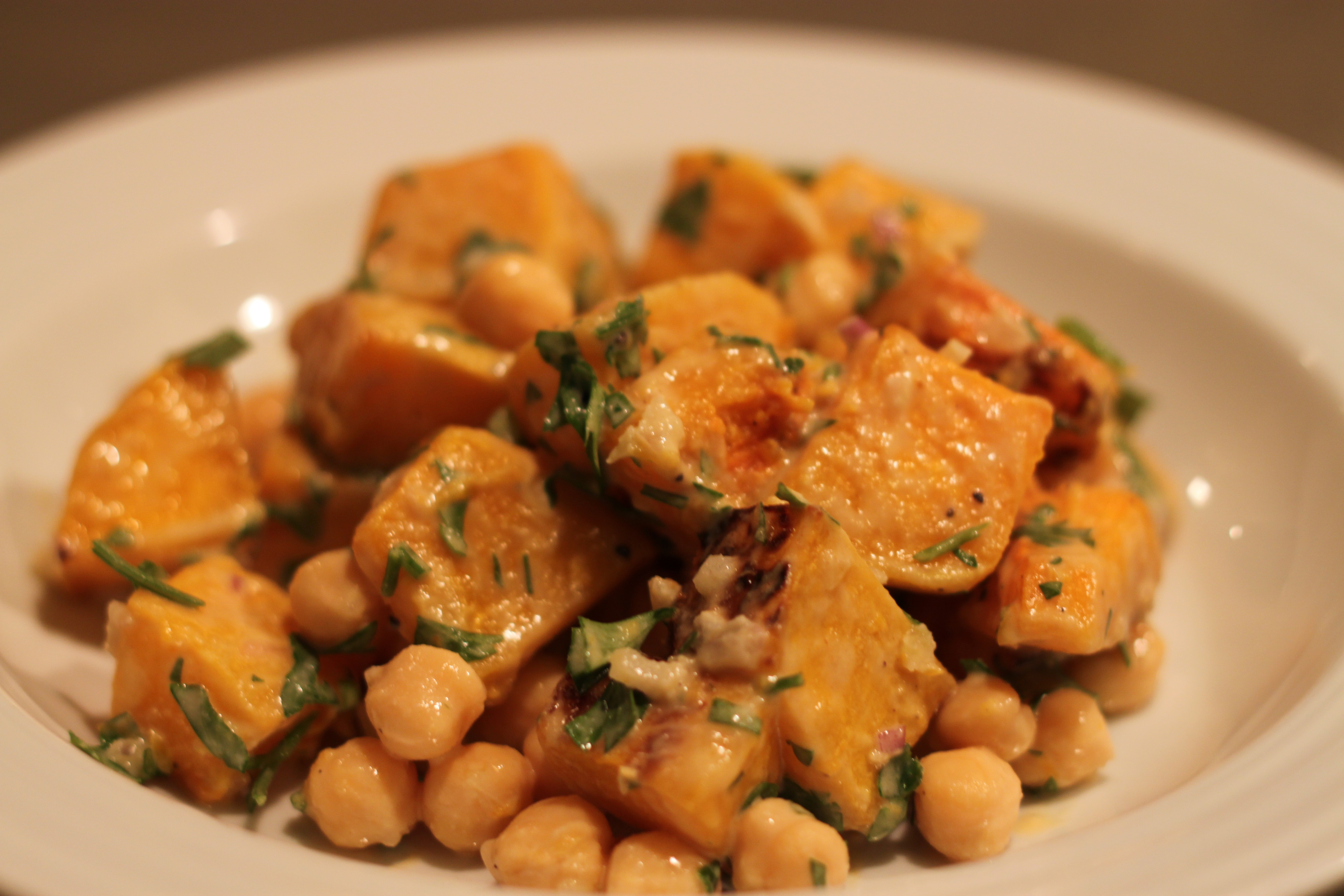
Warm butternut squash salad

Warm Butternut and Chickpea Salad with Tahini
adapted from Orangette

4 servings

For salad:
1 medium butternut squash, peeled, seeded, and cut into 1 ½‑inch pieces
1 medium garlic clove, pressed
½ teaspoon ground allspice
2 tablespoons olive oil
salt
1 x 15-oz (425 g) can chickpeas, drained and rinsed
1 or 2 shallots, finely chopped
¼ cup (10 g) coarsely chopped parsley or cilantro leaves

For tahini dressing:
1 medium garlic clove, finely minced with a pinch of salt
3 ½ tablespoons lemon juice
3 tablespoons well-stirred tahini (sesame paste)
2 tablespoons water
2 tablespoons olive oil, plus more to taste

Preheat the oven to 425°F (220°C).

In a large bowl, combine the butternut squash, garlic, allspice, olive oil, and a good pinch or two of salt. Using a large spoon or your hands, toss until the squash pieces are evenly coated. Turn them out onto a baking sheet, and bake for 15 to 25 minutes, or until soft. Remove from the oven and cool.

Meanwhile, make the tahini sauce. In a small bowl, whisk together the garlic and lemon juice. Add the tahini, and whisk to blend. Add the water and olive oil, whisk well, and taste for seasoning. The sauce should have plenty of nutty tahini flavor, but also a little kick of lemon. (I found that my tahini was a little bitter and that the lemon was a bit much, so I added additional olive oil to tame both.)

To assemble the salad, combine the squash, chickpeas, onion, and parsley in a mixing bowl. Add tahini sauce about 1/2 cup of dressing, and toss carefully. Serve, with the extra tahini dressing on the side and additional salt for sprinkling. This tastes great with a crusty piece of bread.

Note: This salad, lightly dressed, keeps beautifully in the fridge. Before serving, warm slightly with quick jolt in the microwave and serve with any extra tahini dressing.

Asian Chicken Salad with Greens and Scallion Pancakes

From Issaquah to Birmingham, towns across the globe are finding that the recession has driven consumers from the ubiquitous Borders or Barnes & Nobles back to public libraries. Libraries are especially useful for people like me who love drooling over glossy cookbook pages but are too cheap to actually buy them. The stash of cookbooks at our East Side library is so overwhelming that I’ve taken to letting Sam pick out the cookbook we bring home with us. This week, I decided to try random picks at the beginning of the alphabet. Tonight we had “B” for Bittman — Mark Bittman, the New York Times’s Minimalist with the most. I’ve made several of his recipes, clipped from the inky pages of the Times, but this was my first time browsing through one of his cookbooks. I couldn’t be happier with my choice (Mark Bittman’s Quick and Easy Recipes from the New York Times). The book is filled with quick and easy recipes, just as it promises, with lots of notes on how to adapt the recipes depending on what you have on hand.

Though I’m not normally impressed with entree salads (it takes a lot of lettuce to fill me up), this chicken salad is truly satisfying. The scallion pancakes make a nice savory accompaniment, but a good baguette would work as well.

IMG_7747

Asian Chicken Salad with Greens
adapted from Mark Bittman’s Quick and Easy Recipes from the New York Times

Serves 4

1 1/2 lb (680 g) skinless, boneless chicken thighs (recommended) or breasts
1/4 cup (60 ml) soy sauce
3 tablespoons tahini or peanut butter
1 teaspoon sesame oil
1 clove garlic, peeled
a few drops of hot sauce
salt and freshly ground pepper
1/2 teaspoon sugar
2 tablespoons rice wine vinegar or other mild vinegar
1 cucumber
6 cups (7 oz/200 g) salad greens
2  scallions, chopped
cilantro and grated carrot, to garnish

Preheat the broiler. Cut the chicken meat into 1/2- to 1‑inch chunks, then place in a 13 x 9‑inch baking dish and drizzle with 2 tablespoons of the soy sauce.

In a blender, combine the remaining soy sauce with the tahini, sesame oil, garlic, hot sauce, salt, pepper, sugar and vinegar. Turn the blender on and add 1/3 cup (80 ml) hot water, a teaspoon at a time, until the mixture is smooth and creamy. Cool the dressing in the refrigerator.

Broil the chicken, turning once or twice. Total cooking time will be 10 to 12 minutes for thighs or 6 to 8 minutes for breasts. Meanwhile, peel the cucumber (if it’s waxed), slice it in half the long way, and scoop out the seeds with a grapefruit spoon. Cut it into 1/2‑inch dice, and combine in a bowl with the dressing. When the chicken is done, let it rest and cool for a few minutes, then toss it and the cucumber with a few tablespoons of the dressing. Taste and adjust the seasoning if necessary. Serve the chicken and cucumbers on top of greens, garnished with cilantro and shredded carrot. Pass extra dressing so everyone can add dressing to his or her taste.

***

IMG_7745

Scallion Pancakes
from Mark Bittman’s Quick and Easy Recipes from the New York Times

Serves 4

salt and freshly ground black pepper
4 bunches scallions or spring onions, about 1 lb (450 g)
1 egg
1 teaspoon soy sauce
1/2 cup (60 g) flour
peanut, canola or olive oil as needed

Bring a medium pot of salted water to a boil while you trim the scallions. Roughly chop three bunches, and mince the fourth.

Add the larger portion of scallions to the water, and cook for about 5 minutes, or until tender. Drain, reserving about 1/2 cup (120 ml) of the cooking liquid. Puree the cooked scallions in a blender, adding just enough of the cooking liquid to allow the machine to do its work.

Mix the puree with the egg and soy, then gently stir in the flour until blended. Add pepper to taste, then the reserved minced scallions. Film a nonstick or well-seasoned skillet with oil, and turn the heat to medium-high. Drop the batter into the pan by the tablespoon or quarter cup, and cook about 2 minutes to a side, or until lightly browned. If necessary, the pancakes can be kept warm in a 200°F (95°C) oven for about 30 minutes.

Pork Vindaloo, Roasted Cauliflower, and Cucumber Raita

I love Indian food, but the more I research my favorite recipes, the more I realize they’re about as Indian as chop suey is Chinese. For example, Scotland lays claim to my favorite “Indian” dish, chicken tikka masala. My runner-up “Indian” favorite, pork vindaloo, is actually Portuguese in origin. I was drawn to vindaloo dishes because they’re usually listed as the most spicy dishes on Indian restaurant menus. Besides being spicy, vindaloos are quite tangy, made with a good amount of vinegar. I should warn you, the recipe calls for a large amount of oil. I use much less than the amount of oil called for in the original recipe and still find myself shocked when I pour the 2/3 cup into the pan. But trust me, it all comes together superbly.

pork vindaloo

Pork Vindaloo
adapted from epicurious.com

Serves 4 to 6

2 teaspoons whole cumin seeds
2 to 3 dried red chilies
1 teaspoon black peppercorns
1 teaspoon cardamon seeds
1 x 3‑inch stick of cinnamon
1 1/2 teaspoons whole black or brown mustard seeds
1 teaspoon fenugreek seeds
5 tablespoons white or white wine vinegar
1 1/2 to 2 teaspoons salt
2 teaspoons brown sugar
2/3 cup (160 ml) vegetable oil
2 large onions, peeled and finely sliced
2 tablespoons minced fresh ginger
10 cloves of garlic, peeled and separated
2 lb (900 g) pork, trimmed and cut into 1‑inch cubes [Note: country style ribs work well]
1 tablespoon ground coriander
1 teaspoon turmeric
1 cup (240 ml) water
cooked white or brown basmati rice, to serve

Grind the cumin seeds, red chilies, peppercorns, cardamon seeds, cinnamon, mustard seeds and fenugreek seeds in a coffee mill, spice mill or pestle and mortar. Put the ground spices in a small bowl. Stir in the vinegar, salt and brown sugar. Set aside.

Heat the oil in a wide pot over a medium heat. Put the onions in and fry, stirring frequently, until the onions turn brown and crisp. (Be careful not to over-brown or it will have a burned taste.)

Remove the onions with a slotted spoon and drain on paper towels. Place the cooked onions into an electric blender or food processor. Add 2 or 3 tablespoons of water and puree the onions. Add this puree to the ground spice mixture in the bowl. This is the vindaloo paste.

Rinse the blender or processor and add the ginger, garlic and 2 to 3 tablespoons water and blend until you have a smooth paste.

Heat the oil remaining in the pot that you cooked the onions in over a medium-high heat. Cook the pork cubes a few at a time, browning lightly on all sides. Remove each batch with a slotted spoon and keep in a bowl. Repeat until all the pork has been browned.

Now add the ginger-garlic paste into the same pot and reduce the heat to medium. Stir the paste for a few seconds. Add the coriander and turmeric. Stir for another few seconds. Add the pork cubes and any juice that has accumulated in the bowl, the vindaloo paste and 1 cup (240 ml) water. Bring to a boil, cover and simmer gently for 1 hour, or until the pork is tender. Stir occasionally. Serve over cooked basmati rice with raita.

***

Roasted Cauliflower

Serves 6

1 head cauliflower
4 to 5 tablespoons olive oil
1 teaspoon kosher salt

Preheat the oven to  425°F (220°C).

Cut the cauliflower in half lengthwise. Remove the stem and about 1 inch of the core with a paring knife. Slice each half of the cauliflower into 3 wedges (or 4 wedges if the head is large).

Place the wedges on a baking sheet. Drizzle the wedges with enough olive oil to coat each piece (about 4 tablespoons total). Using your hands, gently toss the wedges until well coated with the olive oil. Sprinkle the cauliflower with the salt.

Cover the baking sheet with aluminum foil, crimping the sides so that steam will not escape. Roast for 10 minutes covered, then remove the foil and roast for another 10 minutes uncovered. Carefully turn the wedges over and roast for another 8 to 10 minutes, until the cauliflower is tender.

***

Cucumber Raita

Serves 4

1 1/2 cups (360 ml) plain yogurt
1/4 cup (60 ml) milk
1/2 cucumber, peeled, seeded, and diced small
1/2 teaspoon salt
1/2 teaspoon freshly ground black pepper

pinch of cayenne pepper or garam masala

Beat together the yogurt and milk with a whisk until very smooth. Stir in the remaining ingredients. Sprinkle with cayenne or garam masala and chill for up to 2 hours. Serve this as a side dish to any spicy Indian dish.

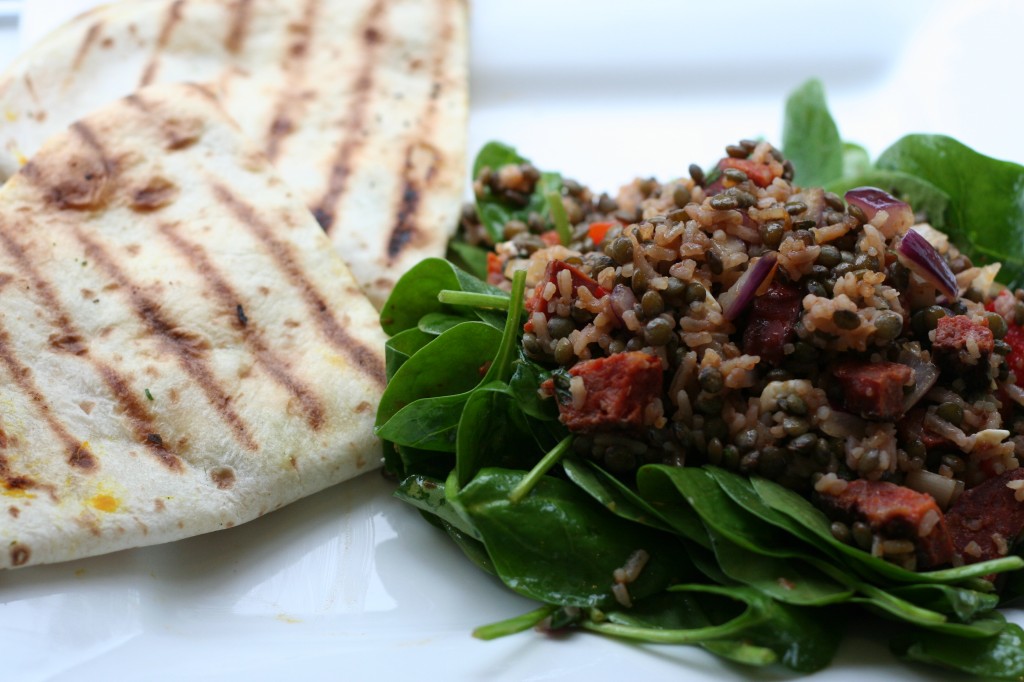
Pumpkin, Feta and Cilantro Quesadillas and Lentil-Rice Salad with Chorizo

Sitting down to think about what to say about pumpkins, the first thing that popped into my head was the time my dad took me to the record store at the mall for my sixteenth birthday and let me pick out a CD as a present. I chose Siamese Dream by The Smashing Pumpkins, which back then was a cool new album. “Smashing … Pumpkins?” he said slowly. “What the heck kind of a name for a band is that?” No doubt I answered by just rolling my eyes. Fast forward another sixteen years, and instead of buying alternative CDs, I’m buying tickets at my daughter’s school for a pumpkin they’re raffling off as a fundraiser. How times change.

pumpkin quesadillas with lentil-rice salad

Pumpkin, Feta and Cilantro Quesadillas 
adapted from Bon Appétit, October 2009

Serves 6

1 lb (450 g) peeled and deseeded sugar pumpkin or butternut squash, cut into 1 1/2‑inch cubes (about 3 cups)
1 jalapeño, deseeded and finely chopped (about 2 tablespoons)
salt and freshly ground black pepper
12 x 8‑inch-diameter flour tortillas
10 oz (280 g) feta cheese, crumbled
1 1/2 cups (45 g) coarsely chopped fresh cilantro
2 limes, each cut into 6 wedges

Cook the pumpkin or squash in a large saucepan of boiling salted water until tender but not falling apart, about 10 minutes. Drain and cool for 10 minutes. While the pumpkin is still warm, transfer to a food processor or blender and puree until smooth. Stir in the jalapeño and season with salt and pepper.

Divide the pumpkin mixture equally among 6 tortillas (about 1/4 cup (60 ml) per tortilla) and spread it evenly across the tortilla. Sprinkle feta over each tortilla. Top each with 1/4 cup (10 g) cilantro and sprinkle with black pepper. Top with the second tortilla.

Heat a heavy, large griddle or skillet over a medium-high heat. Cook the quesadillas until golden and dark char marks appear, about 1 minute per side. Serve with lime wedges.

***

Lentil-Rice Salad with Chorizo
adapted from Mexican Everyday by Rick Bayless

Serves 4

for the dressing:
2 oz (60 g) chorizo, casing removed
2 cloves garlic, finely chopped
2/3 cup (160 ml) vegetable oil, olive oil or a mixture of the two
1/4 cup (60 ml) apple cider vinegar
1 teaspoon oregano

for the salad:
2/3 cup (200 g) Puy or brown lentils (not red or yellow, as these will fall apart during cooking)
1/2 cup (90 g) rice (long-grain rice makes the fluffiest salad)
1 tablespoon salt
1 small red onion, thinly sliced
4 oz (110 g) chorizo or good-quality ham, cut into 1/4‑inch cubes
1 red bell pepper, roasted, peeled and sliced
4 oz (110 g) baby spinach

First, make the dressing. Place the chorizo in a small skillet and set over a medium heat. Cook, stirring and breaking up clumps, until the sausage is browned and cooked through, 8 to 10 minutes. Add the garlic and stir for 1 minute, then remove from the heat.

Transfer the chorizo and garlic into a screw-top jar. Add the oil, vinegar and oregano, secure the lid and shake until smooth. Taste and season with salt if you think it needs it (Rick Bayless recommends 1/2 teaspoon). Refrigerate until ready to use. Shake well immediately before dressing a salad. If you want to use this as a warm dressing (as is common for spinach salad), microwave uncovered for 15 to 20 seconds, secure the lid and shake again.

To make the salad, pour about 2 quarts (2 liters) of water into a large pot and set over a high heat. Add the salt. When the water boils, add in the lentils and rice. Reduce the heat slightly, but keep the water at a brisk boil and cook until the lentils and rice are tender (no chalkiness inside) but show no signs of falling apart, about 15 minutes. Pour into a strainer set in the sink to drain completely.

Scoop the lentil-rice mixture into a very large bowl, along with the red onion. Pour in about 1/4 cup (60 ml) of the dressing and mix well. Add the chopped chorizo or ham and red pepper to the lentils and toss to combine. Season to taste.

Scoop the spinach into a large bowl. Shake the dressing throughly to blend, then drizzle on about 3 tablespoons and toss to combine. (Save the rest of the dressing for another salad.) Divide the salad among 4 plates, roughly forming it into nests. Scoop a portion of the lentil salad into the center of each and serve.


Chard Tacos with Sweet Potato and Black Bean Salad

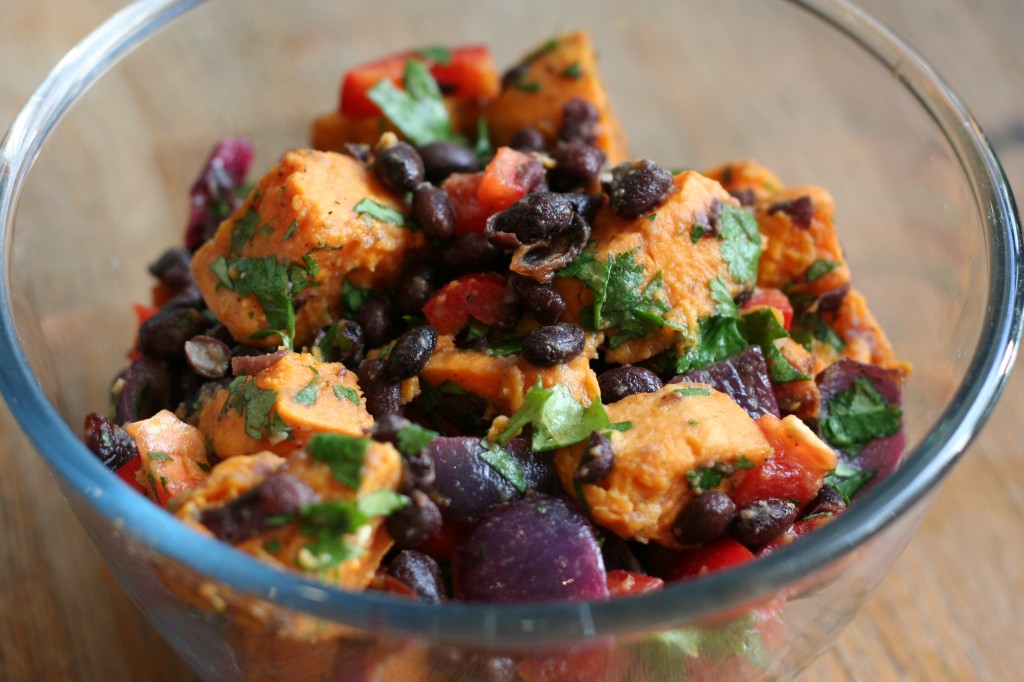
Remember how I was recently lamenting the fact that greens rarely get to be the star of the show at dinnertime? If you want to eat more greens but aren’t sure how to incorporate them, these chard tacos are another great recipe, and can use either chard or spinach. When paired with this sweet potato and black bean salad, it makes a fresh, filling dinner that still has an autumnal feel.

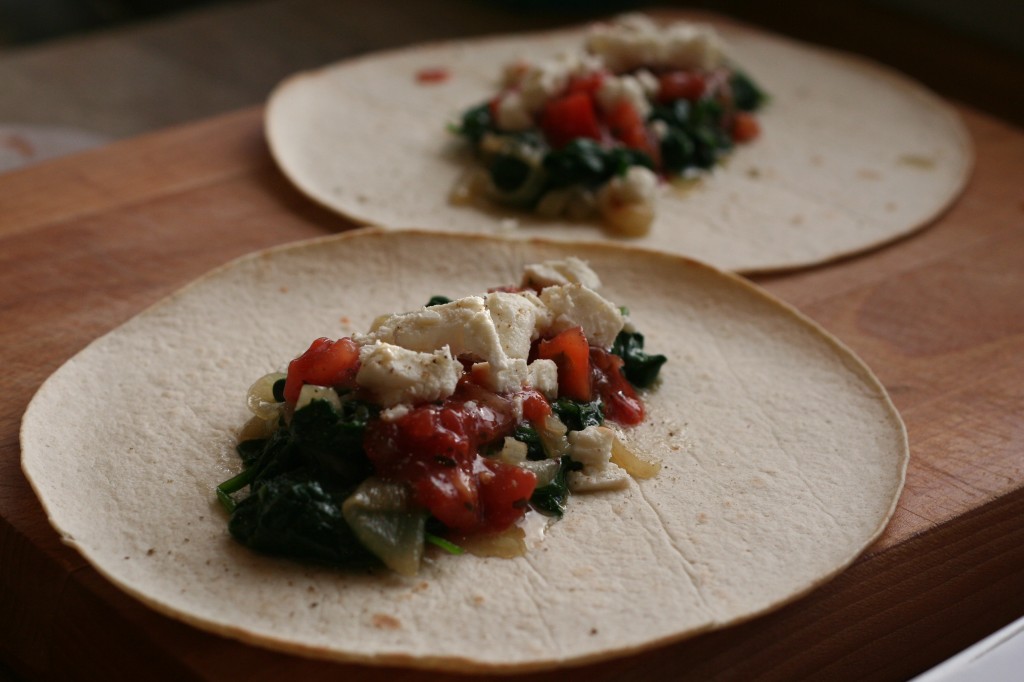
chard tacos

Chard Tacos
adapted from Mexican Everyday by Rick Bayless

Serves 2

Rick Bayless says that to make a heartier meal, you could add some shredded leftover chicken or steak to the greens during the final few minutes of cooking. Flaked tuna or smoked salmon is a nice add-in, but to keep it vegetarian, you could also try smoked firm tofu.

12 oz (340 g) Swiss chard, thick lower stems cut off, OR 10 oz (280 g) spinach, rinsed well
1 1/2 tablespoons vegetable oil or olive oil
1 large white or red onion, sliced 1/4‑inch thick
3 garlic cloves, finely chopped
pinch of red pepper flakes
1/2 cup (120 ml) chicken or vegetable broth or water
1/2 teaspoon salt
8 warm corn tortillas (though flour ones will also work fine, as you can see from the photo I used here; you may need fewer flour ones)
1 cup (100 g) crumbled Mexican queso fresco, feta or goat’s cheese
3/4 cup (175 ml) salsa

Cut the chard crosswise into 1/2‑inch slices (small spinach leaves can be left whole). In a large skillet, heat the oil over a medium-high heat. Add the onion and cook, stirring frequently, until golden brown but not entirely soft, about 4 to 5 minutes. Add the garlic and red pepper flakes and stir for a few seconds, then add the broth or water, salt and the greens. Reduce the heat to medium-low and cook until the greens are almost tender, anywhere from 2 minutes for baby spinach to 5 minutes for Swiss chard.

Uncover the pan, raise the heat to medium-high and cook, stirring continually, until the mixture is nearly dry. Taste and season with additional salt if you think it needs it. Serve with the warm tortillas, crumbled cheese and salsa.

***

sweet potato and black bean salad

Sweet Potato and Black Bean Salad
adapted from Mark Bittman at The New York Times

Serves 4 to 6

2 large sweet potatoes, peeled and cut into bite-sized chunks
1 large red onion, cut into large chunks
olive oil
salt and freshly ground black pepper
1 x 14-oz (400‑g) can of black beans, drained and rinsed
1 red pepper, deseeded and chopped
juice and zest of 1 lime
3 tablespoons olive oil
1 bunch fresh cilantro, chopped

Preheat the oven to 400°F (200°C).

Place the sweet potatoes and red onion on a baking tray. Drizzle with some olive oil and season with salt and pepper, tossing well to make sure all the vegetables are coated with oil. Roast in the hot oven for 20 to 30 minutes, until the sweet potatoes are just tender and taking care not to let the red onion burn.

When the potatoes and onion are done, transfer them to a large bowl. Add in the black beans and chopped red pepper. Whisk the lime juice and zest and olive oil together until emulsified (or shake to combine in a screw-top jar), then pour over the salad in the bowl, stirring gently to make sure everything is coated with the dressing. Add in the chopped cilantro and stir well again. Season to taste with salt and pepper. This can be served warm or at room temperature.

Salmon with Lime Butter Sauce, Summer Tomato Salad, and Quinoa and Kidney Beans

Summer’s over, but no one told my tomato plants. After a cool August and September, our tomatoes are finally ripe and in abundance. I feel like every year I struggle to use up our tomato harvest only to plant more tomato plants the following year. This year, in addition to our CSA tomatoes and backyard containers, we (and by “we” I mean my father-in-law) are working a community garden plot. Kristin’s already posted wonderful tomato recipes, but here’s another to add to the collection.

In addition to the refreshing tomato salad, I rounded off dinner with a tangy broiled salmon dish and a new recipe, which uses quinoa. I recently discovered quinoa and am still experimenting with its possibilities. It’s one of the most nutrient-rich ingredients I’ve eaten, with high protein and lots of fiber. Not a bad carbohydrate choice as I try to shed those last few pregnancy pounds.

Salmon with Lime Butter Sauce
adapted from Gourmet, July 2006

Serves 4

4 pieces center-cut salmon fillet (about 1 inch thick) with skin
1 garlic clove, chopped
1/4 cup (60 ml) fresh lime juice
1/2 teaspoon salt
1/4 teaspoon black pepper
1/4 stick (4 tablespoons/60 g) unsalted butter, melted

Prepare the broiler or grill for cooking over a medium heat. Season the salmon all over with salt and pepper, then broil or grill, skin side down, on a lightly oiled grill rack (if using a grill, keep the lid on) for 8 to 10 minutes, until just cooked through.

While the salmon cooks, puree the garlic with the lime juice, salt, and pepper in a blender until smooth. With the motor running, add the melted butter and blend until emulsified, about 30 seconds.

Remove the salmon from the rack. I usually (but not always) remove the skin before plating; the flesh should slide easily off the skin. Drizzle each fillet with 1 or 2 tablespoons of the lime butter sauce. Serve immediately.

***

Summer Tomato Salad

Summer Tomato Salad
adapted from The New Vegetarian Epicure by Anna Thomas

Serves 6 (salad servings)

3 or 4 big, juicy vine-ripened tomatoes
1/2 medium red onion
1 bunch flat-leaf parsley
2 tablespoons olive oil
a few drops of vinegar
salt and freshly ground black pepper, to taste

Wash the tomatoes and slice them thickly crosswise. Arrange them in a single layer on a large platter. Slice the onion crosswise, thinly but not paper thin. Scatter the onion rings over the tomatoes.

Wash the parsley leaves and spin them in a salad spinner. Arrange them in a wreath around the tomatoes. Drizzle the tomatoes with the olive oil and sprinkle them with a few drops of your favorite vinegar. Add salt to your taste, and grind on some black pepper. Serve within the hour. Do not refrigerate!

***

Quinoa and Kidney Beans
adapted from Feeding the Future Cookbook (American Pregnancy Association member recipes)

8 servings

1 teaspoon vegetable oil
1 onion, chopped
3 cloves garlic, minced
3/4 cup (140 g) uncooked quinoa
1 1/2 cups (360 ml) chicken or vegetable broth
1 teaspoon ground cumin
1/4 teaspoon cayenne
salt and freshly ground black pepper, to taste
kernels from 2 ears of corn
1 x 15-oz (425‑g) can kidney or black beans, rinsed and drained
1/2 cup (15 g) chopped fresh cilantro
juice of 1 lime
avocado and/or sour cream for garnish, if desired

Heat the oil in a medium saucepan over a medium heat. Stir in the onion and garlic and saute until lightly browned. Mix the quinoa into the pan and cover with the broth. Season with cumin, cayenne, salt, and pepper. Bring the mixture to a boil. Cover, reduce the heat and simmer for 20 minutes. Stir the corn into the saucepan and continue to simmer for about 5 minutes, until heated through. Mix in the beans and continue to cook over a low heat for 2 or 3 minutes more. Stir in the cilantro. Garnish with avocado and sour cream, if desired.