Tomato and Goat’s Cheese Tart with Potato, Spinach and Red Pepper Salad with Warm Bacon Vinaigrette

In all honesty, I could never be a vegetarian again simply because I like bacon too much (and sausages and chorizo rank pretty highly too). After 10 years of living abroad, I’ve stopped craving most of the foods I used to miss when I first moved to Ireland, but I’ve never stopped missing American-style bacon, the kind that gets crispy and will easily crumble once cooked. Irish bacon (or rashers) is more like what I grew up calling Canadian bacon, thick cut and something you have to eat with a knife and fork, and just isn’t the same at all. But a few weeks ago, I noticed that my local grocery store had started carrying pancetta, so I gave that a try. Who would have guessed that expensive imported Italian pancetta is such a good match to the Oscar Mayer stuff I’ve been hankering after all these years? I’m going to have to try hard not to buy some every week now to make up for lost time. This salad was a good place to start, and I happily tripled the amount of bacon called for (granted, the original recipe only calls for 1 slice).
tomato and goat's cheese tart

Still looking for ways to use up tomatoes? Try Chicken Cacciatore, Ravioli and Tomato Salad, Oven-roasted Ratatouille, Spaghetti with Fresh Tomato Sauce or Spaghetti with Roast Cherry Tomatoes, Chili and Basil.

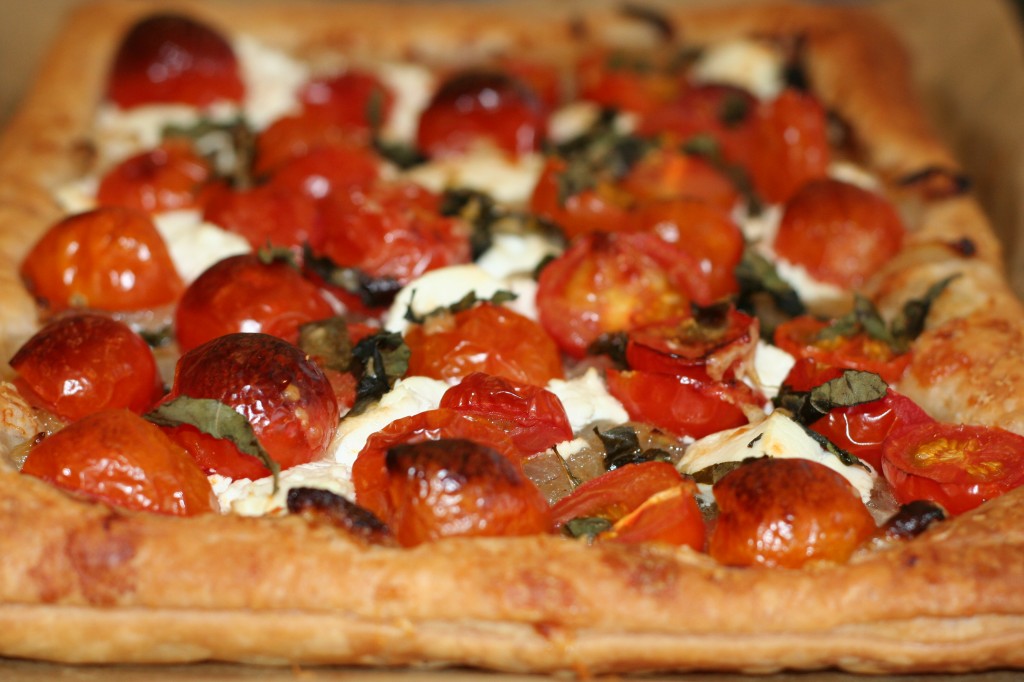
Tomato and Goat’s Cheese Tart
adapted from Barefoot Contessa Back to Basics by Ina Garten

Makes 2 large tarts or 4 individual tarts

This recipe is open to endless variations. I’ve modified the original to use cherry tomatoes, but you could just as easily use 2 or 3 large tomatoes, cut into 1/4‑inch-thick slices. A mix of yellow and red cherry tomatoes would look especially nice. The original also calls for garlic and herb goat’s cheese, though I used a plain soft goat’s cheese (as opposed to a log) dotted around the tart. If you aren’t a fan of goat’s cheese, you could try this with garlic-and-herb cream cheese or even mascarpone.

You could also use this recipe as a base to make a new potato and goat’s cheese tart: Omit the tomatoes and instead thinly slice 10 oz (280 g) of baby new potatoes. Boil the potato slices for about 5 minutes, until just tender, then neatly layer them over the Parmesan and onions on the puff pastry so that they slightly overlap, then dot the goat’s cheese over the potatoes. Use fresh chopped chives, parsley and tarragon instead of the thyme and basil and cook at 400°F (200°C) for 18 to 20 minutes.

1 package (17.3 oz/2 sheets) ready-rolled puff pastry, defrosted
3 tablespoons good-quality olive oil
2 large onions, thinly sliced yellow onions
3 large garlic cloves, cut into thin slivers
1/2 teaspoon salt
1/4 teaspoon freshly ground black pepper
3 tablespoons dry white wine
2 teaspoons minced fresh thyme leaves (or 1/4 tsp dried)
4 tablespoons freshly grated Parmesan, plus 2 oz (50 g) shaved with a vegetable peeler
4 oz (100 g) goat’s cheese
1 lb (450 g) cherry tomatoes, halved
3 tablespoons julienned basil leaves

Preheat the oven to 425°F (220°C).

Gently unroll the sheets of puff pastry and place the pastry rectangles on 2 baking sheets lined with parchment paper and refrigerate until ready to use. (Alternatively, you could make 4 individual tarts by cutting 4 circles out of the 2 sheets of puff pastry, using a 6‑inch saucer or other round object as a guide, though you might have to roll out the puff pastry a little in order to get 2 good-sized circles from each pastry sheet. Or just cut each ready-rolled rectangle in half. If you wanted to serve this as a light first course, you could cut each rectangle into quarters, and get 8 servings.)

Heat the olive oil in a large skillet over a medium to low heat and add the onions and garlic. Sauté for 15 to 20 minutes, stirring frequently, until the onions are limp and there is almost no moisture remaining in the skillet (this is important, because you don’t want the mixture to be too wet and make the pastry base soggy). Add the salt, pepper, wine and thyme and continue to cook for another 10 minutes, until the onions are lightly browned and the wine has mostly evaporated. Remove from the heat and set aside.

Using a sharp paring knife, score a 1/4‑inch-wide border around each pastry rectangle. Prick the pastry inside the score lines with the tines of a fork and sprinkle the grated Parmesan on each rectangle, staying inside the scored border.

Place half of the onion mixture on each rectangle, again staying within the scored edge. (Don’t be tempted to overload the pastry base with too much topping, or again, it will go soggy, especially if you’re making 2 large tarts.) Crumble 2 oz (50 g) of goat’s cheese on top of the onions. Scatter the halved cherry tomatoes evenly over the tart. Sprinkle with basil, salt and pepper. Finally, scatter the Parmesan shards on each tart.

Bake for 20 to 25 minutes, until the pastry is golden brown. The bottom baking sheet may need an extra few minutes in the oven. Serve hot or warm.

***

Potato, Spinach and Red Pepper Salad with Warm Bacon Vinaigrette
adapted from Bon Appétit, August 1999

Serves 4

1 lb (450 g) new potatoes, halved or quartered
1 red pepper
3 bacon or pancetta slices, chopped
4 tablespoons red wine vinegar
2 tablespoons extra-virgin olive oil
1 garlic clove, minced
1 cup (2 stalks) thinly sliced celery
2 cups (packed) baby spinach leaves (about 90 g)

Steam or boil the potatoes just until tender, about 5 to 7 minutes. Drain and transfer to a large bowl.

Roast the pepper over a flame or in the broiler until blackened on all sides. (Alternatively, line a baking tray with foil, cut the pepper in half and deseed it, then place the two halves, cut side down, on the foil and roast at 400°F (200°C) for about 30 minutes, or until the skin starts to blacken.) Enclose in a paper bag or wrap up in the tin foil you roasted it on and allow to stand for 10 minutes. Peel, seed and chop the pepper, then transfer to the bowl with the potatoes.

Sauté the chopped bacon in a small skillet over a medium heat until crisp, about 3 minutes, until cooked through. Using a slotted spoon, transfer the bacon to a paper towel and drain.

Whisk the vinegar, oil and garlic in small saucepan. Stir over a low heat just until warm, about 1 minute. Stir in the bacon.

Add the warm vinaigrette to the potato mixture. Mix in the celery and spinach and toss together well so that the dressing coats everything. Season to taste with salt and pepper and serve.
Chicken Cacciatore and Chocolate Zucchini Cake

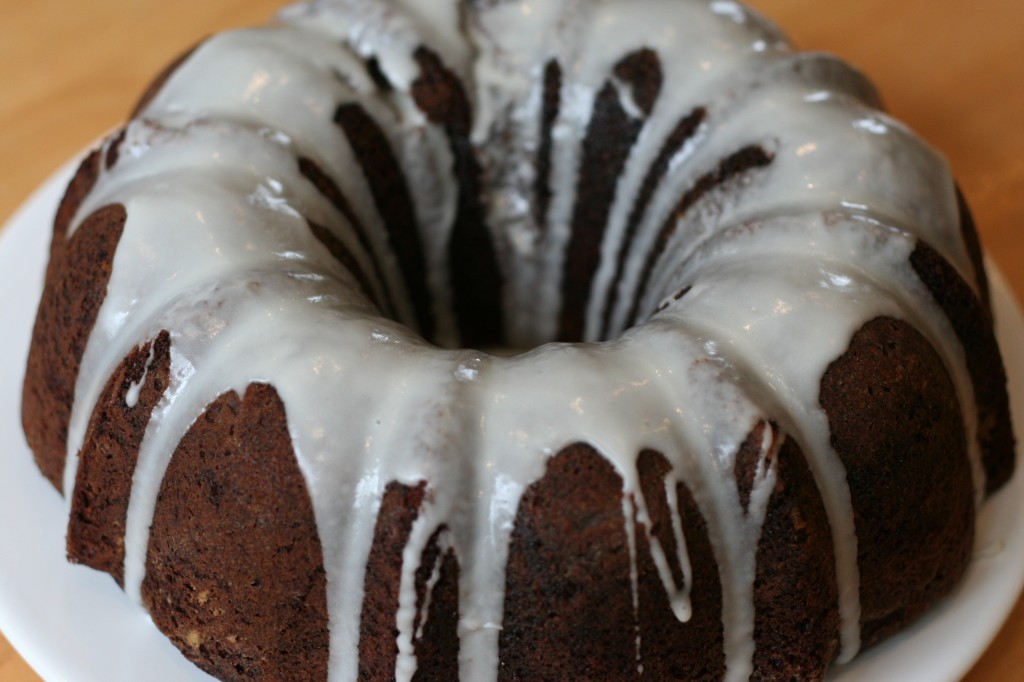
I do a lot of baking with my four-year-old daughter, so much so that by now she can tell you the basic ingredients of a cake: flour, sugar, butter, eggs, vanilla. So on Saturday, when she was helping me make this Chocolate Zucchini Cake, she couldn’t understand why I was grating two zucchini (or courgettes, as we call them here, though they will always be zucchini to me). When I told her we were putting them in the cake, she gave me a confused look before saying, “But courgettes don’t belong in a cake, Mommy.”

“Don’t worry, it’s going to be good,” I said.

She gave me another long, puzzled look before finally saying, “You’re joking me, Mommy.”

“No, really,” I said as I started grating the second zucchini, at which point she burst into tears.

“It’s going to be disgusting!” she cried, and couldn’t be convinced otherwise until I let her taste the batter, when she quickly changed her mind. But I can understand her confusion. Zucchini bread is about as American as apple pie, but the idea of using them in baking is practically unheard of in Ireland. The zucchini in this cake simply adds moisture and soaks up the cocoa. Not only can you not taste it, but you actually can’t even see it either once it’s baked. Make it and ask people to guess what the secret ingredient is. At any rate, it’s a wonderful chocolate cake to have in your repertoire, not to mention a great way to use up some zucchini if they’re starting to get the better of you in your garden. It’s definitely one of my favorites, and I even made it for my mother-in-law’s birthday a few years ago. It really is that good. My little girl will even tell you so now.

chicken cacciatore

Still looking for ways to use up tomatoes? Try Tomato and Goat’s Cheese Tart, Ravioli and Tomato Salad, Oven-roasted Ratatouille, Spaghetti with Fresh Tomato Sauce or Spaghetti with Roast Cherry Tomatoes, Chili and Basil.

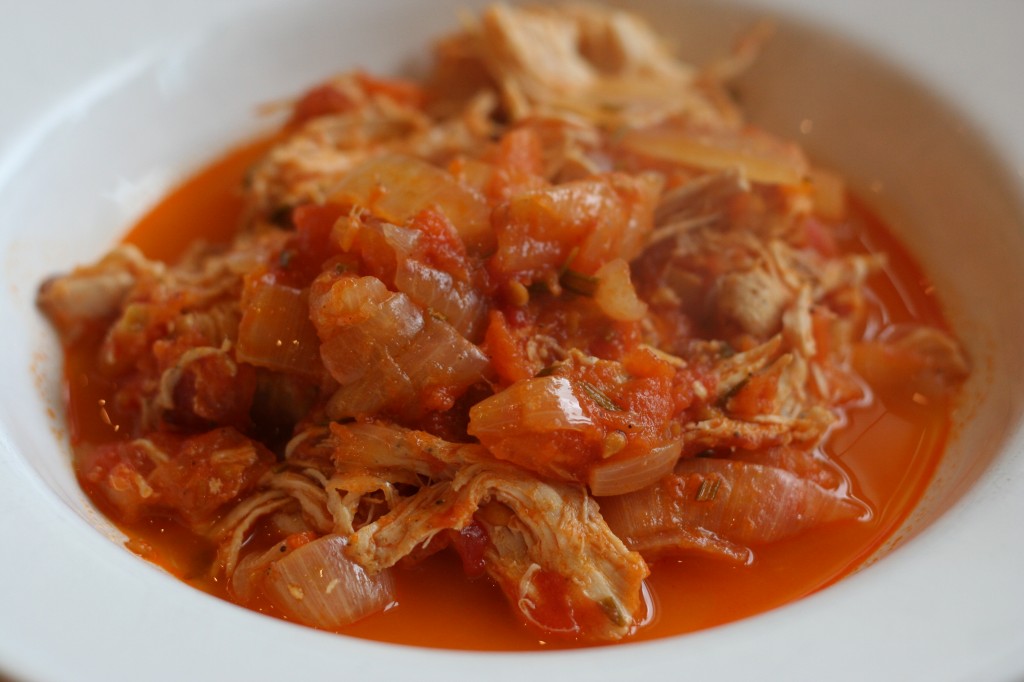
Chicken Cacciatore

Serves 6

I only make this recipe in the summer, when tomatoes are at their best. As such, it’s an ideal way to use up tomatoes from your garden if you’re overrun with them. I’ve tried making it in the winter, with those awful pale, hard, imported tomatoes that never ripen, and believe me, it’s not worth it. I’ve also tried making Nigella Lawson’s quick version of this dish, using canned tomatoes, but it was a disappointment after having had the real thing. The fresh rosemary is another key ingredient here.

Sometimes I find it hard to peel tomatoes because they’re too hot after just being in the boiled water, even after I run some cold water over them, so if I think of it, I blanch them earlier in the day, then drain them and set aside to cool in the fridge and peel them when the onions are cooking. To get 3 1/2 lb (1.5 kg) of tomatoes, I used 14 medium tomatoes, so you can use that as a guide, give or take a couple.

2 tablespoons olive oil
salt and freshly ground black pepper
6 large chicken breasts
3 large onions, peeled and thickly sliced
3 large cloves garlic, chopped
1/3 cup (80 ml) dry white wine or vermouth
3 1/2 lb (1.5 kg) vine-ripened tomatoes
2 tablespoons finely chopped fresh rosemary
2 bay leaves

Heat the oil in a large pot over a medium-high heat and season the chicken breasts liberally with salt and pepper. Add the chicken to the hot oil and brown well on all sides. Remove the chicken to a plate and set aside.

Add the onions to the pot, lower the heat to medium and cook for about 10 minutes, until the onions have softened.

Meanwhile, skin the tomatoes. To do this, cut a shallow X in the bottom of each tomato with a sharp knife, then pour boiling water over them and leave until the skin around the X starts to curl away, about 1 to 2 minutes. Drain and allow to cool, then slip off their skins. Cut into quarters or roughly chop them – it doesn’t matter too much since they’ll break up during the cooking anyway.

When the onions are done, add the garlic to the pot and cook for 1 minute. Next add the wine or vermouth to deglaze the pan. Add the tomatoes, rosemary and bay leaves. Crush the tomatoes with the back of a wooden spoon as best you can (again, don’t worry too much about this, as they’ll break down on their own.) Add salt and pepper to taste and bring to the boil. Lower the heat and let the sauce bubble and reduce without covering to about half its original volume, which will take around 20 minutes.

Add the chicken back to the pot, pushing the fillets down into the sauce so that they are mostly submerged. Cover the pot partway, leaving the lid slightly ajar, and simmer gently for at least 40 minutes (though I find 1 hour is even better). Stir the sauce now and then with a wooden spoon, crushing up the tomatoes as you do so. I like to shred the chicken in the pot with a fork, though you could also just serve them whole. Serve with pasta, rice or good crusty bread to soak up the juices.

***

chocolate zucchini cake

Chocolate Zucchini Cake
adapted from Simply Recipes

Makes 10 to 12 servings

for the cake:
2 1/2 cups (340 g) regular all-purpose flour, unsifted
1/2 cup (60 g) cocoa, sifted
2 1/2 teaspoons baking powder
1 1/2 teaspoons baking soda
1 teaspoon salt
1 teaspoon cinnamon
3/4 cup (170 g) soft butter
2 cups (400 g) sugar
3 eggs
2 teaspoons vanilla
zest of 1 large orange
1 teaspoon instant espresso powder (optional)
2 cups (250 g) coarsely shredded zucchini (about 2 small/medium zucchini)
1/2 cup (120 ml) milk
1 cup (100 g) chopped walnuts or pecans (optional)

for the glaze:
2 cups (225 g) powdered sugar
3 tablespoons milk
1 teaspoon vanilla

Preheat the oven to 350°F (180°C). Grease a 10-inch tube pan or bundt pan and dust lightly with flour.

Combine the flour, cocoa, baking powder, baking soda, salt, and cinnamon. Set aside.

With a mixer, beat together the butter and sugar until they are smoothly blended. Add the eggs to the butter and sugar mixture one at a time, beating well after each addition. With a spoon, stir in the vanilla, orange zest, espresso powder and zucchini.

Alternately stir the dry ingredients and the milk into the zucchini mixture, including the nuts with the last addition.

Pour the batter into the prepared pan. Bake in the oven for about 50 minutes (test at 45 minutes), or until a tester inserted in the center comes out clean. Cool in the pan for 15 minutes, then invert and turn out on a wire rack to cool completely.

To make the glaze, mix together the powdered sugar, milk and vanilla. Beat until smooth, then drizzle over the cake. Cut in thin slices to serve.

Stuffed Pork Tenderloin on Grape Tomatoes, Middle Eastern Couscous with Saffron, Green Beans, and Lemon Bars

Regretfully, I forgot to take a picture of this dish. Trust me, it looks as good as it tastes. The colors are amazing. Frankly, it smelled too good for me to wait even 5 minutes to snap a blog-suitable photo of it. So you get a picture of dessert instead, taken at leisure after dinner was finished.

Pork tenderloin is one of my favorite meats to cook. It cooks quickly, stays tender, and can be used in a variety of dishes. Though I try to keep a tenderloin in my freezer for quick weeknight dinners, this stuffed preparation would make an impressive dinner party offering. No one will guess how easy it is to make. For the green beans, simply boil or steam them for a few minutes until they are tender.

Stuffed Pork Tenderloin on Grape Tomatoes

adapted from More Fast Food My Way by Jacques Pepin

Serves 4

4 tablespoons good olive oil
1 small onion, chopped
1 bunch (about 12 oz/340 g) fresh spinach, washed, dried and stems removed
3/4 teaspoon salt
3/4 teaspoon freshly ground black pepper
1 large pork tenderloin (about 1 1/2 lb/680 g)
about 3/4 cup (90 g) grated cheddar cheese
1 box grape tomatoes (about 12 oz/340 g)

Heat 2 tablespoons of the olive oil in a large skillet over a high heat. Add the onion and cook for 2 minutes. Add the spinach, pushing it down into the skillet, and 1/4 teaspoon each of the salt and pepper. Cover and cook over a medium heat for about 1 1/2 minutes, until the spinach is wilted. Remove the lid and cook, uncovered, until the liquid from the spinach has evaporated. Transfer to a plate and allow to cool.

Trim the tenderloin of any fat and silver skin. To butterfly the tenderloin for stuffing, lay it flat on the cutting board so one end is close to you and the other end is near the top of the board. Holding your knife so the blade is parallel to the board, cut through the long side of the tenderloin, stopping when you are about 1/2 inch from the other side. Turn the tenderloin so the uncut side is closest to you and make another parallel cut below the first one, again stopping about 1/2 inch before you reach the other side. Open up the butterflied tenderloin and pound it a little to extend it to about 12 inches long by 7 inches wide.

Preheat the oven to 350°F (180°C). Arrange half the spinach mixture down the center of the butterflied tenderloin and top with the cheese. Add the rest of the spinach, fold in the sides, and roll the tenderloin back and forth to evenly distribute and encase the filling. Wrap 4 pieces of kitchen twine, each 6 to 7 inches long, around the tenderloin to secure the stuffing inside.

Heat the remaining 2 tablespoons oil in a large ovenproof nonstick skillet. Sprinkle the outside of the tenderloin with 1/4 teaspoon each of the salt and pepper. Place the tenderloin carefully in the skillet and brown it, turning occasionally, for about 5 minutes. Bake the tenderloin in the oven for 10 to 12 minutes, when it will be slightly pink in the center. Carefully remove the kitchen twine from the tenderloin. Transfer the tenderloin to a plate, cover, and keep warm in the oven while you prepare the tomatoes (the pork will continue to cook as it sits).

Add the tomatoes and the remaining 1/4 teaspoon each salt and pepper to the skillet in which you browned the tenderloin and sauté over high heat for 2 minutes, until just softened. Divide among 4 warm plates. Slice the tenderloin crosswise into 8 medallions and arrange 2 slices in the middle of the tomatoes on each plate. Serve.

***

Middle Eastern Couscous with Saffron
adapted from More Fast Food My Way by Jacques Pepin

Serves 4

2 tablespoons good olive oil
1 small onion, finely chopped
1/4 cup (about 20 g) pine nuts
1/2 teaspoon crushed saffron pistils
1 1/2 cups (225 g) Israeli couscous
1 3/4 cups (415 ml) chicken broth
1/4 teaspoon salt
1/4 teaspoon pepper

Heat the oil in a medium saucepan over high heat and add the onion, pine nuts, and saffron. Cook for 1 to 2 minutes, then add the couscous and mix well. Add the stock, salt, and pepper, mix well, and bring to a boil. Reduce the heat to very low, cover, and cook for 10 minutes. Uncover and cook over a medium heat, stirring occasionally, for 1 to 2 minutes longer to dry the grains and make them fluffy.

***

Lemon bar

Lemon Bars
from Gourmet, March 1999

makes 24 bars

These bar cookies will keep, covered and chilled, for 3 days.

1 1/2 sticks (3/4 cup/170 g) unsalted butter
2 cups (220 g) all-purpose flour
1/2 cup (100 g) packed light brown sugar
1/2 teaspoon salt
4 large eggs
1 1/2 cups (340 g) granulated sugar
3/4 cup (175 ml) fresh lemon juice (I used the juice from 2 lemons and 2 limes)
1/3 cup (40 g) all-purpose flour
3 tablespoons confectioners’ sugar

Preheat the oven to 350°F (180°C).

Cut the butter into 1/2‑inch pieces. In a food processor, process all ingredients until the mixture begins to form small lumps. Sprinkle the mixture into a 13 x 9 x 2‑inch baking pan and with a metal spatula press evenly onto the bottom. Bake the shortbread in the middle of the oven until golden, about 20 minutes. Set aside.

While the shortbread is baking, prepare the topping. In a bowl, whisk together the eggs and granulated sugar until combined well, then stir in the lemon juice and flour. Pour the lemon mixture over the hot shortbread. Reduce the oven temperature to 300°F (150°C) and bake in the middle of the oven until set, about 30 minutes. Cool completely in the pan and cut into 24 bars. Sift confectioners’ sugar over the bars before serving.

Salmon in Luxurious Green Sesame Pipian, Brown Rice, and Kale

When I want salmon with a bit of a kick, this is the dish I cook. The salmon is poached in an easy-to-make tomatillo and sesame sauce. The sauce is especially wonderful over brown rice, which accents the nuttiness of the sesame paste. If you aren’t a fan of brown rice, try it again with this sauce. I also recommend investing in a good rice cooker. I scoffed at my husband’s Christmas request for the Zojirushi Neuro Fuzzy rice cooker, but it has turned out to be one our most-used small appliances — second only to our espresso machine. The cooker has a timer so your rice can be perfectly cooked and waiting for you when you arrive home in the evening. This is especially useful when cooking brown rice, which can take an hour or more to cook on the stove top.

Salmon, rice, kale

Salmon in Luxurious Green Sesame Pipian
adapted from Mexican Everyday by Rick Bayless

2 cups (480 ml) store-bought or homemade tomatillo salsa (Xochitol brand recommended)
1 1/2 tablespoons vegetable or olive oil
1 cup (240 ml) chicken broth
3 tablespoons tahini (sesame paste)
salt
1/4 to 1/2 teaspoon sugar
1  heaping cup (150 g) peas (fresh or frozen)
4 boneless, skinless salmon, halibut, walleye, snapper or striped bass fillets, 4 to 5 oz each, about 1/2 inch thick
1 tablespoon sesame seeds, for garnish
chopped cilantro, for garnish

In a blender or food processor, process the salsa to a smooth purée. Heat the oil in a very large (12-inch) skillet over a medium-high heat. When quite hot, add the salsa all at once. Stir until the salsa reduces to the consistency of tomato paste, about 5 minutes. Stir in the broth and tahini. Return to a boil, then reduce the heat to medium-low and simmer for 10 minutes. Taste and season with salt (if needed) and sugar to balance the tartness of the salsa.

While the sauce is simmering, steam the peas until just hot and tender. When the sauce has cooked for 10 minutes, nestle the fish fillets in it, completely submerging them. Continue simmering gently until the fish flakes when pressed firmly, usually 5 to 6 minutes. Check by lifting a fillet from the sauce on a metal spatula and pressing with your finger or the back of a spoon.

Transfer a fish fillet to each dinner plate and spoon a portion of the sauce over top. Strew with peas, sesame seeds and cilantro.

***

Boiled Kale

There are two basic ways to cook kale: sauteed or boiled. I used boiled kale for this menu, mixing it with a bit of the sesame pipian as I ate. To prepare the kale, rinse the leaves well under warm water and drain in a colander, discarding any discolored leaves. Trim away and discard any tough stem ends, making a V‑shaped cut at the stem end. Slice leaves cross-wise into 1‑inch strips. Place into a large pot filled with well-salted boiling water. Boil for 5 to 10 minutes, until the kale is tender. Drain the kale, then serve with the topping of your choice (butter, sesame seeds, soy sauce, etc.). For this menu, I kept the kale in the cooking water (off the heat) until I was ready to plate it, ensuring that it was piping hot and tender when served.

Beef and Bean Tostadas and Tossed Salad with Tangy Avocado Dressing

The problem: It’s hot. I’m tired. I have a two year old that “needs dinna momma.” The solution: Tostadas. Fast, fresh, fun, and infinitely variable, tostadas are on regular rotation in my dinner arsenal. I usually make vegetarian tostadas (sin carne) but had a taste for something a bit richer tonight.

Beef and Bean Tostadas

Serves 4

1 lb (450 g) ground beef
1 large clove garlic, minced
1 shallot, minced
1/2 teaspoon ground cumin
1 teaspoon chilli powder
1/2 teaspoon salt
1 teaspoon tomato paste
3 tablespoons water
8 tostada shells
1 x 15 oz (425 g) can refried beans, heated
about 1 1/2 cups (110 g) shredded cheddar or Monterey Jack cheese

suggested toppings: avocado, salsa, shredded lettuce, diced tomato, sour cream or whole milk yogurt, sliced jalapenos, sliced black olives

In a large skillet, brown the beef over a medium heat. Stir in the garlic, shallot, and spices. Cook for 2 to 3 minutes, until the garlic just begins to turn golden and the spices become fragrant. Stir in the tomato paste and water. Cook for about 5 minutes, stirring occasionally.

To assemble each tostada, spread a thin layer of refried beans on a tostada shell. Top with cheese, then beef. Add whatever additional toppings you like. I personally like all of the toppings listed but rarely have them all in the house at the same time.

***

This creamy avocado dressing tastes best with heartier greens and vegetables such as chopped romaine and radishes. If serving with more delicate greens (like in the photo), thin the dressing with a few additional tablespoons of water.

Tangy Avocado Dressing

Tangy Avocado Dressing
adapted from Mexican Everyday by Rick Bayless

Serves 8

1/4 cup (60 ml) vegetable oil
1/4 (60 ml) olive oil
3 tablespoons fresh lime juice
1 clove garlic, minced
1/2 cup (120 ml) mayonnaise
1 teaspoon Worcestershire sauce
1 avocado
1/2 cup (10 g) cilantro leaves, chopped
2 green onions, chopped (white and green parts)
3/4 teaspoon salt
3 teaspoons cold water

Add all the ingredients to a food processor or blender. Process until smooth. Season with salt and pepper to taste and serve.

Beef Kofta Kabobs, Tzatziki, Tabouli Salad, and Vegetables in Foil

This menu is best suited for a weekend or other day off work as you will need to start the kofta and tabouli a few hours before serving. I love to make this on a Sunday and then have leftover tabouli salad for lunch the next day with pita. A food processor will cut down on the prep time immensely, especially for chopping the parsley. A special thanks to my aunt-in-law, Holly Fortier, for her fabulous tabouli salad recipe. It has become one of our favorite dishes.

Beef Kofta Kebabs
adapted from Food Network Kitchens Cookbook

Serves 4

4 cloves garlic
1 tablespoon kosher salt, plus a pinch
1 lb (450 g) ground beef chuck or lamb
3 tablespoons grated onion
3 tablespoons chopped fresh flat-leaf parsley
1 tablespoon ground coriander
1 teaspoon ground cumin
1/2 teaspoon ground cinnamon
1/2 teaspoon ground allspice
1/4 teaspoon cayenne pepper
1/4 teaspoon ground ginger
freshly ground black pepper
olive oil, for brushing the grill

Smash the garlic cloves, sprinkle with a generous pinch of salt, and, with the flat side of a large knife, mash and smear the mixture to a coarse paste (or crush in a mortar and pestle). Mix the paste and the remaining 1 tablespoon salt with the meat, onion, parsley, and spices.

Divide the meat mixture into 6 rough balls. Mold each piece around the pointed end of a skewer (if you use wooden ones, soak them in water for 15 minutes before threading them), making a 6‑inch oval kebab that comes to a point just covering the tip of the skewer. Lay the skewers on the pan, cover, and refrigerate for at least 30 minutes and up to 12 hours.

Heat a grill pan over a medium heat or prepare a grill. Brush the pan lightly with olive oil. Working in batches, grill the kebabs, turning occasionally, until brown all over and just cooked through, about 6 minutes. Transfer to a serving platter and serve with tzatziki and pita.

***

Tzatziki

Makes about 2 1/2 cups (600 ml)

4 cups (960 ml) plain yogurt (whole milk preferably) or 2 cups(480 ml) Greek-style yogurt
1 medium cucumber, peeled, halved, and seeded
1 clove garlic
1 tablespoon extra-virgin olive oil
1 tablespoon white vinegar
1 teaspoon sugar
1 teaspoon kosher salt
freshly ground black pepper, to taste

If using regular yogurt, line a colander with cheesecloth. Put the yogurt in it, set it over a bowl, and refrigerate for at least 1 hour. Discard the expressed liquid and put the yogurt in the bowl. This will create a Greek-style yogurt.

Grate the cucumber on the large holes of a box grater into another bowl. Using a rasp or other fine grater, grate the garlic into the cucumber. Alternatively, make a paste of the garlic by smashing the garlic, sprinkling with a generous pinch of salt, and, with the flat side of a large knife, mashing the mixture to a coarse paste (or crush in a mortar and pestle). Stir the cucumber, garlic, olive oil, vinegar, sugar, salt and pepper into the yogurt. Refrigerate for at least 1/2 hour before serving.

***

Holly’s Tabouli

Serves 8

1 cup (190 g) bulghar wheat
1 1/2 cups (360 ml) boiling water
1 1/2 teaspoon salt
1/4 cup (60 ml) fresh lemon and/or lime juice
1 teaspoon crushed, fresh garlic
1/2 cup (20 g) chopped scallions (include greens)
1/4 cup (60 ml) good olive oil
1 cup, packed (20 g) freshly chopped parsley
freshly ground black pepper
2 medium tomatoes, chopped
1 14 oz (400 g) can garbanzo beans, drained
feta cheese, crumbled, for garnish, about 1/2 cup (60 g)
Kalamata olives, for garnish, about 1/2 cup (225 g)

Combine the bulghar, boiling water, and salt in a large bowl. Cover and let stand for 20 minutes or until the bulghar is chewable and the water is mostly absorbed.

Add the lemon juice, garlic, scallions, olive oil, parsley, and black pepper and mix thoroughly. Refrigerate for 2 to 3 hours.

Just before serving, add the tomatoes and garbanzo beans. Garnish with feta and black olives.

***

Vegetables in Foil

Serves 6

We throw vegetables on the grill all summer long in foil packets. It’s quick and cleaning up is a breeze. Feel free to experiment with other vegetables. Mushrooms are an especially nice addition.

1 zucchini
1 summer squash
1 onion
1 bell pepper (red, yellow, or orange)
olive oil
sea salt
freshly ground black pepper

Preheat the outdoor grill.

Cut the zucchini and summer squash lengthwise then slice into half moons (about 1/2 centimeter thick). Peel and slice the onion into thin half moons (about 1/4 centimeter thick). Cut the bell pepper into 1/2 centimeter-wide strips. Place the vegetables onto aluminum foil (preferably heavy-duty foil). You will need enough foil to completely wrap up the vegetables, about 18 inches or so.

Drizzle the vegetables with olive oil and season with salt and pepper. Crimp together the foil over the vegetables, starting with the short sides then folding over the long sides. You will end up with a rectangular-shaped packet. The foil should be secure enough to remain closed throughout the grilling process.

Place the foil packet on the grill and cook over indirect heat for about 10 minutes (cooking time will vary depending on the size of the vegetable slices and the heat of the grill). If vegetables are not tender, reclose the foil packet and cook for a few more minutes.

Spaghetti with Pinot Grigio and Seafood and Roasted Broccoli

Pasta with clam sauce is one of my favorite Italian dishes. Unfortunately, I find that most restaurants fail miserably at the dish, making it too heavy or, worse yet, tasteless. I have yet to find anything close to the spaghetti alle vongole I ate while studying in Rome. The recipe below incorporates shrimp, arugula and sun-dried tomatoes for plenty of flavor. The large amount of wine cuts out any greasiness that the oil might lend.

spaghetti with pinot grigio and seafood

Spaghetti with Pinot Grigio and Seafood
from Everyday Italian by Giada De Laurentiis

Serves 4 to 6

1 lb (450 g) spaghetti pasta
1/4 cup (60 ml) olive oil
3 shallots, chopped
3 cloves garlic, minced
3/4 cup (175 ml) chopped sun-dried tomatoes
1 1/2 cups (360 ml) Pinot Grigio (or other white wine)
1 lb (450 g) shrimp, peeled and deveined
2 lb (900 g) small clams, washed
1 teaspoon kosher salt
1 teaspoon freshly ground black pepper
2 cups (50 g) arugula

Bring a large pot of salted water to a boil over a high heat. Add the pasta and cook until al dente, stirring occasionally, about 8 to 10 minutes. Drain.

Meanwhile, heat the olive oil in a large, heavy skillet over a medium heat. Add the shallots and the garlic and cook for 3 minutes, until tender but not brown. Add the sun-dried tomatoes and cook for another minute. Add the wine, shrimp, and clams. Bring the liquid to a boil. Reduce the heat and simmer, covered, until the shrimp are pink and the clams have opened, about 7 minutes.

Add the spaghetti to the seafood mixture. Add the salt and pepper and stir to combine. Add the arugula. Stir gently and transfer to a serving platter. Serve immediately.

***

Roasted Broccoli

Serves 4

1 large head broccoli, broken into florets
olive oil
sea salt and freshly ground black pepper
freshly grated Parmesan
juice of 1/2 lemon

Preheat the oven to 400°F (200°C). Arrange the broccoli on a baking sheet, drizzle with some olive oil (a couple tablespoons or so) and season with salt and pepper to taste. Toss to coat evenly, making sure oil coats each floret. Transfer to the oven and roast for 10 to 12 minutes, until browned and just tender. Place the broccoli in a serving bowl, top with grated Parmesan and drizzle with fresh lemon juice.

Warm Lentil Salad with Roasted Beets and Goat’s Cheese and Plum Raspberry Crumble

My two-year-old loves beets and goat’s cheese. Really. He will ask for beets if you serve him goat’s cheese and will demand goat’s cheese if you serve him beets without it. He loved this meal, as did his parents. For a vegetarian meal to remember, simply omit the bacon. The crumble is another must-try recipe. The raspberries and plums are wonderful together.

Warm Lentil Salad with Roasted Beets and Goat’s Cheese
adapted from Bobby Flay, Boy Meets Grill

3 lb (1.4 kg) fresh beets, washed and trimmed
olive oil
1 medium yellow onion, quartered
1 carrot, quartered
1 stalk celery, quartered
1 fresh or dried bay leaf
4 sprigs fresh thyme
3 cups (720 ml) chicken stock
2 cups (480 ml) water
1 1/2 cups (300 g) dried lentils
salt and freshly ground black pepper
2 tablespoons olive oil
1/4 lb (110 g) slab bacon, diced
2 cloves garlic, finely chopped
1 small carrot, finely diced
2 teaspoons finely chopped fresh thyme leaves
1 tablespoon sherry vinegar
4 cups frisée or mixed greens
2 oz (60 g) goat’s cheese

Begin by roasting the beets. Preheat the oven to 415°F (210°C). Coat the washed and trimmed beets lightly with oil. Wrap the beets in aluminum foil, place on a baking sheet, and roast in the oven for about 1 hour, until cooked through. (I usually put 2 beets on each piece of foil.) Remove from the oven, let cool for 10 minutes, then peel and slice into 1/4‑inch-thick slices.

While the beets roast, cook the lentils. Tie the onion, carrot, celery, bay leaf, and thyme sprigs together in cheesecloth. Place the chicken stock, water and cheesecloth bag in a medium saucepan and bring to a boil. Stir in the lentils, season with salt and pepper, and reduce the heat to medium-low and cook until the lentils are tender, about 20 minutes. Drain well and discard the cheesecloth bag of aromatics.

Heat the oil in a large saute pan over medium heat. Add the bacon and cook until lightly golden brown. Remove the bacon with a slotted spoon to a dish lined with paper towels. Add the garlic and carrot to the pan and cook until soft, about 5 minutes. Add the cooked lentils and bacon to the pan and stir to combine. Stir in the chopped thyme and sherry vinegar. Season to taste with salt and pepper. Keep warm.

To assemble, place the greens in a large bowl, toss with half of the vinaigrette (recipe below), and season with salt and pepper. Arrange the roasted beets around the outside of 4 dinner plates. Divide the greens among each plate in the center. Top the greens with some of the warm lentils and crumble some goat’s cheese on top. Drizzle each salad with the remaining vinaigrette. Serve with a good baguette.

Sherry Vinaigrette

1/4 cup (60 ml) sherry vinegar
2 teaspoons Dijon mustard
1 teaspoon chopped fresh thyme
1/4 teaspoon salt
1/4 teaspoon freshly ground pepper
1/2 cup (120 ml) olive oil

Whisk together the vinegar, mustard, thyme and salt and pepper in a small bowl. Slowly drizzle in the oil and whisk until emulsified.

***

plum raspberry crumble

Plum Raspberry Crumble
adapted from Barefoot in Paris by Ina Garten

Serves 8

2 lb (900 g) black plums, halved, pitted, and cut in 1‑inch wedges
2/3 cup (150 g) granulated sugar, divided
1 1/4 cups (140 g) all-purpose flour, divided
2 tablespoons orange juice
1/2 pint raspberries
1/3 cup (65 g) light brown sugar, packed
1/4 teaspoon kosher salt
8 tablespoons (110 g) cold unsalted butter, diced
1/2 cup (50 g) quick-cooking oats
1/2 cup (35 g) sliced almonds, plus extra for sprinkling
ice cream or fresh whipped cream, to serve

Preheat the oven to 350°F (180°C).

In a large bowl, combine the sliced plums, 1/3 cup (75 g) of the granulated sugar, 1/4 cup (30 g) of the flour, and the orange juice and toss well. Add the raspberries and toss lightly. Pour into a 9 x 12 x 2‑inch baking dish.

For the topping, place the remaining 1 cup (110 g) of flour, the remaining 1/3 cup (75 g) of granulated sugar, the brown sugar, and the salt in the bowl of a food processor fitted with a steel blade and pulse a few times to combine. Add the butter and pulse until the butter is the size of peas. Pour the mixture into a bowl, add the oats, and work it with your hands until it forms large crumbles. Add 1/2 cup (35 g) of the almonds and mix well.

Spread the topping evenly over the plums and raspberries, making sure the fruit is covered. Sprinkle with some extra almonds. Bake for 40 minutes, or until the fruit is tender and bubbly and the topping is golden brown. Serve warm with ice cream or fresh whipped cream.

A Cooking Blog