Tag Archives: Entertaining

Chicken with Rice and Basil, Buttered Spinach and Little Glazed Carrots

A few years ago, some friends gave me an Amazon gift certificate and I promptly bought the first cookbook on my wish list, A Year in My Kitchen by Skye Gyngell, which went on to be named Cookery Book of the Year by the Guild of Food Writers and the Best Food Book at Le Cordon Bleu World Food Media Awards in 2007. So when Quadrille Publishing offered me the opportunity to review her newest book, How I Cook, I jumped at the chance.
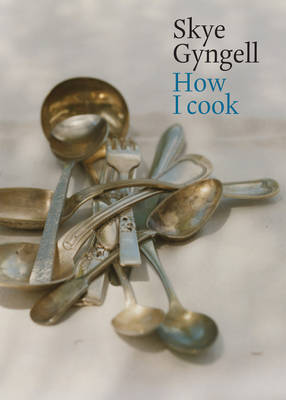
The focus of How I Cook is on home cooking, albeit with “a little finesse,” as Skye says, which is reflected in the book’s content. There are no 30-minute meals here, bur rather a sophisticated mix of everyday dishes and food for special occasions that is still achievable for home cooks. This book particularly appeals to me because of its format, which presents recipes as part of a complete menu (much like what we try to do on this blog). The book is divided into chapters — Breakfast, Sunday Lunch, Alfresco Eating, Afternoon Tea, Simple Weekday Dinner, Late Night Supper, Special Occasion and Time to Spare — and within those chapters are a series of ready-made menus. This makes it an ideal book for entertaining or for leisurely weekend cooking when you have more time to potter in the kitchen and want to make something a little more special for dinner than the usual hastily thrown together midweek pasta dish.

Skye is the head chef at Petersham Nurseries Café in Richmond, Surrey, and with fresh produce on her kitchen’s doorstep, it’s no surprise that her menus are strongly influenced by what’s in season. Skye brings together ingredients that are growing at the same time, since they often naturally complement each other. You can see this at work in combinations like the wintry Slow-roasted Pork menu, which is made up of slow-cooked belly of pork, a gratin of white beans, sauteed leeks and a fig tart. I’ve chosen the Peasant-style Supper menu from the Simple Weekday Dinner chapter to feature here, but other recipes I’ve already bookmarked to try this winter include slow-cooked shoulder of lamb with sweet paprika and chickpeas, oeufs en cocotte with spinach and Parma ham, spiced pears, and rice pudding with poached prunes.

In the introduction, Skye says, “The greatest pleasure I derive from food is cooking for loved ones … I cook for the same reason that you do — to bring joy to others — it pleases me to see people smile and laugh and feel content around a table, and I’m sure it is the same for you.” (I know it’s true for Kelly and me.) If that sentiment strikes a chord with you, then it’s worth picking up this book.

Chicken with Rice and Basil
adapted from How I Cook by Skye Gyngell

Serves 6

Skye points out that in a classic risotto, the warm stock is gradually added to the rice. Here, she has added only wine, cold and all in one go. This way, the rice takes on the flavor of the wine quite profoundly — which means it might not be suitable for young children; this might best be saved for a grown-up dinner. Skye suggests serving cheese or seasonal fruit as dessert to round off this menu.

1 large whole chicken (3 lb 5 oz/1.5 kg), preferably free-range and organic, jointed into 6 pieces
sea salt and freshly ground black pepper
2 tablespoons olive oil
1 red onion, peeled and finely sliced
2 garlic cloves, crushed
1 dried red chili (or dried chili flakes, to taste)
4 oz (100 g) risotto rice (Arborio or Carnaroli)
3 cups (750 ml) dry white wine
1 large bunch of basil
extra virgin olive oil, to drizzle

Season the chicken joints well all over with salt and pepper. Place a large flameproof casserole over a medium heat and add the olive oil. Once the oil is sizzling, brown the chicken pieces in batches, skin side down, without turning, until they are golden brown; this will take about 5 minutes. Set aside.

Pour off any excess fat, leaving a little in the casserole. Lower the heat, add the onion and sweat gently for about 10 minutes, until soft and translucent. Now add the garlic and crumble in the dried chili. Stir once or twice, then tip in the rice and toss it through.

Increase the heat slightly, pour in the wine and return the chicken to the pot. Put the lid on, turn the heat to low and cook for 20 minutes. By this time the chicken should be cooked through and the rice will have a gentle bite.

Tear the basil with your fingers and scatter over the chicken. Stir through, then taste and adjust the seasoning if necessary; it will almost certainly need more salt.

Serve in warm soup plates, drizzled with extra virgin olive oil, and with the buttered spinach and glazed carrots on the side.

***

Buttered Spinach
adapted from How I Cook by Skye Gyngell

Serves 6

14 oz (400 g) young spinach
3 tablespoons (45 g) unsalted butter
sea salt and freshly ground black pepper
1/2 teaspoon ground nutmeg, or to taste

Wash the spinach in several changes of cold water to remove all traces of dirt. Put the spinach into a medium saucepan with just the water clinging to the leaves after washing. Allow to wilt over a low heat, stirring from time to time. Once all the spinach has wilted, drain in a colander, pressing firmly with the back of a wooden spoon to remove excess water. Melt the butter in the pan, add the spinach and toss until it is really well coated. Season with salt, pepper and nutmeg to taste, then serve.

***

Little Glazed Carrots
adapted from How I Cook by Skye Gyngell

Serves 6

If you can’t find small whole carrots, you could make these sauteed carrots instead, which uses much the same method.

1 lb 2 oz (500 g) small carrots, peeled and trimmed
1 tablespoon (30 g) butter
2 teaspoons honey
1 small bunch of thyme
sea salt
handful of flat-leaf parsley, leaves only, finely chopped

Scrub or peel the carrots and trim them, leaving on a little of the green leafy tops. Place in a saucepan with the butter and honey. Pour on enough cold water to just cover the carrots and add the thyme and a good pinch of salt. Bring just to the boil, then turn down the heat to a summer and cook until just tender; this will take about 10 minutes. Discard the thyme. Now turn up the heat and boil rapidly until all the water has evaporated and the carrots are coated in a lovely shiny glaze. Serve warm, with a generous sprinkling of chopped parsley.
Balsamic Roast Chicken with Rocket, Roast Tomatoes and Parmesan

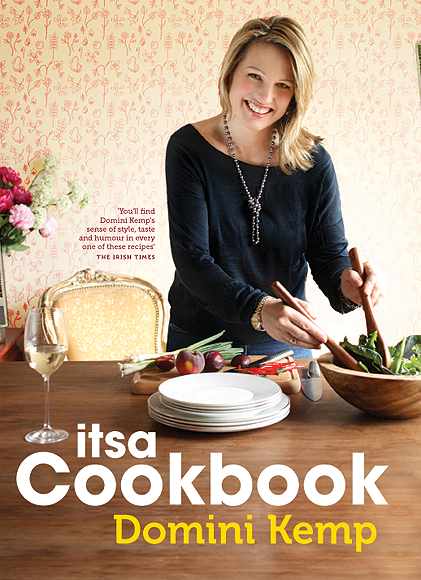
As a bit of a self-confessed cookbook addict (six new cookbooks in the last six weeks, ahem!), I know what Domini Kemp is talking about when she said in her column last Saturday, “Who needs another cookbook? I know if the amount I have on my shelves is anything to go by, then I certainly don’t. But yet, I love flicking through cookbooks any chance I get.” Her own beautifully styled new book, Itsa Cookbook, is a compilation of over 100 of the best-loved, most-cooked recipes from her weekly Irish Times column, with photographs that make you wish you could pull up a chair and tuck in. Recipes I’ve already made from Domini’s column over the years that are now included in her book are chickpea, sweet potato and chorizo stew; beans and bacon; coriander chicken with chickpea, feta and coriander salad; and salmon en croute with dill and pistachio pesto. A short list of recipes from the book I’m looking forward to trying include sweet corn fritters with tomato salsa, lemon and garlic poached chicken, baked sweet potatoes with lemon and chilli, and chocolate sorbet.

Domini is not only a food writer with a weekly column in the Saturday Irish Times Magazine, but is also a professionally trained chef and restaurateur (she and her sister, Peaches, own and run the Itsa Food Company). Yet for all that, Domini says in her introduction, “But every day I cook at home, where time, nutrition, satisfaction and taste are all key factors. I love to take a recipe, tear it apart, try to make it simpler and tastier and eliminate anything that isn’t utterly critical.” What this has resulted in is a book filled with foolproof recipes aimed at the everyday cook who still wants to eat well — and which one of us doesn’t fit that description?

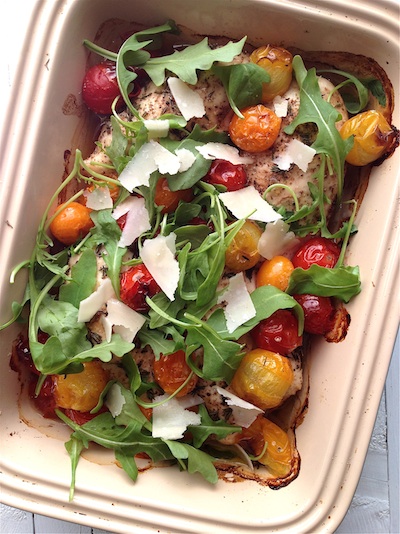
You can’t get more foolproof than this recipe for balsamic roast chicken with rocket (that’s arugula to those of you in the States), cherry tomatoes and Parmesan. It literally takes 5 minutes to put together and cooks for 30 minutes in the oven — how’s that for an effortless midweek meal? It’s a fantastic recipe to have up your sleeve.

Balsamic Roast Chicken with Rocket, Roast Tomatoes and Parmesan
adapted from Itsa Cookbook by Domini Kemp

Serves 4

This takes only minutes to pull together, but is tasty and sophisticated enough to serve for guests. The flavors are very similar to Jamie Oliver’s cherry tomato and sausage bake, not to mention the same effortless cooking method, so if you like that, you’ll love this too.

4 chicken breasts or supremes, skin on or off
a few tablespoons olive oil
a few tablespoons balsamic vinegar
a few cloves garlic, peeled
fresh thyme or rosemary if you have it
salt and freshly ground black pepper
9 oz (250 g) cherry tomatoes, sliced in half
4 handfuls rocket (arugula)
a few chunky shavings of Parmesan or Pecorino
crusty  bread, to serve

Preheat the oven to 400°F (200°C).

Place the chicken in a roasting tray or baking sheet and pour over the olive oil and balsamic vinegar. Add in some garlic, herbs and season well, then add in the cherry tomatoes. Roast for about 30 minutes, or until the chicken is fully cooked through, basting the chicken with the cooking juices once or twice.

Arrange the arugula (rocket) on 4 plates. Top with the chicken and some tomatoes and loads of cooking juices (which is like a warm and simple vinaigrette). Top with some Parmesan shavings and serve with plenty of crusty bread to mop up the juices.

Sea Bass with Tomato Confit, Red Onion and Bacon Vinaigrette and Mashed Potatoes

When I go out to eat, I love to deconstruct the menu and take away all the adjectives. Things that sound fancy are oftentimes actually pretty basic. Pan-fried and corn-fed? That’s all well and good, but it’s still just chicken. Likewise, this dish sounds impressive, but is a cinch to make. For example, the tomato confit is nothing more than a can of chopped tomatoes that’s simmered for an hour to reduce it down. The very title of the cookbook it comes from — Keeping It Simple by the L’Ecrevain chef Derry Clarke — goes to show how easy it really is. (But don’t tell that to the other food bloggers who took part in the seafood cookalong* earlier this month, which is what I made this dish for.) Served with an equally impressive-sounding French apple tart, this would make an elegant, but easy, dinner party menu.

*The Irish food bloggers and foodies have a cookalong on the first Friday of every month, with a different theme and judge/sponsor each month. Check out our Facebook group for more details if you’d like to join in!

Sea Bass with Tomato Confit and Red Onion and Bacon Vinaigrette
adapted from Keeping It Simple by Derry Clarke

Serves 4

If you want to make this for entertaining, the tomato confit and red onion and bacon vinaigrette could be made in advance and simply reheated shortly before you’re ready to serve. If you can’t get sea bass, you could also use halibut, cod or snapper.

4 x sea bass fillets, scaled and pinboned
salt and freshly ground black pepper
1 tablespoon sunflower oil
juice of 1/2 lemon
mashed potatoes, to serve
a handful of arugula or baby spinach, to serve

for the tomato confit:
2 tablespoons brown sugar
1/4 cup (60 ml) red wine vinegar
1 x 14 oz (400 g) can of chopped tomatoes
1 bay leaf
salt and freshly ground black pepper

for the red onion and bacon vinaigrette:
1 tablespoon olive oil
2 shallots, thinly sliced
1/2 lb (225 g) bacon, diced
1 tablespoon brown sugar
1 tablespoon balsamic vinegar
1/3 cup (80 ml) red wine, port or stock
1/2 red onion, finely diced
salt and freshly ground black pepper

To make the tomato confit, place all the ingredients in a saucepan and cook over a very low heat for 1 hour, or until most of the liquid has evaporated. Remove the bay leaf, season and allow to cool.

To make the vinaigrette, heat a splash of olive oil in a frying pan over a medium heat. Saute the shallot and bacon until the bacon is lightly browned. Add the sugar, vinegar and wine and cook briskly until reduced by half. Add the red onion and season to taste. Set aside.

Season the fish well with salt and pepper. Heat the sunflower oil in a clean frying pan over a medium heat. Place the fish in the pan, skin side down. Cook for about 4 minutes, or until the skin is crisp. Carefully turn the fish over and cook for a further 2 to 3 minutes, lowering the heat if necessary. Pour the lemon juice over the fish and remove from the pan.

To serve, place a dollop of mashed potatoes on a plate. Spoon over some of the tomato confit and arrange the arugula or spinach on top of the confit. Gently place the sea bass on top of the arugula/spinach. Spoon the vinaigrette over the sea bass and serve immediately.

Beef Tenderloin with Three-herb Chimichurri and Sweet Potato Wedges

Chimichurri is what all the cool kids are eating now, according to Saturday’s Irish Times. I made this three-herb chimichurri a few weeks ago, inspired by the herbs I got from Living Flavour last month, so I’m feeling very smug and ahead of the trends.

Chimichurri is usually only made with parsley, but this version, using cilantro and mint as well, is even better. And now that so many people are growing their own these days, it’s an ideal recipe for using up some of the herbs from your garden.

If you want to make this recipe even faster (and less expensive) to cook, use steaks or even chicken instead of a pricey tenderloin. I served sweet potato wedges with this, but a selection of roasted or grilled vegetables would be fantastic too.

Beef Tenderloin with Three-herb Chimichurri
adapted from Bon Appétit, July 2006

Serves 4 to 6

The original recipe calls for the beef to be grilled, but since my Weber hasn’t been used (and therefore cleaned) since about 2006, I opted to roast it instead. I also scaled down the original quantities to make this more suitable for a family dinner. Click on the link above for grilling instructions and for ingredient quantities to serve 8 to 10.

for the spice rub:
1 tablespoon dark brown sugar
1 1/2 teaspoons smoked paprika
1 1/2 teaspoons coarse kosher salt
1 teaspoon chipotle chile powder or ancho chile powder (optional)
1/2 teaspoon ground black pepper

for the chimichurri:
1/4 cup (60 ml) olive oil
1 1/2 tablespoons sherry vinegar or red wine vinegar
1 1/2 tablespoons fresh lemon juice
1 garlic clove, peeled
1 medium shallot, peeled and quartered
1/2 teaspoon fine sea salt
1/4 teaspoon freshly ground black pepper
1/4 teaspoon dried crushed red pepper (optional)
1 1/2 cups (packed) (30 g) stemmed fresh parsley
1 cup (packed) (20 g) stemmed fresh cilantro
1/2 cup (packed) (15 g) stemmed fresh mint

1 x 2 lb (900 g) beef tenderloin
olive oil

To make the spice rub, combine all the ingredients in a small bowl. Set aside.

To make the chimichurri sauce, combine the olive oil, vinegar, lemon juice, garlic, shallot, salt, pepper and crushed red pepper in a blender or food processor. Blend until almost smooth. Add one-quarter of each of the herbs and blend until incorporated. Add the remaining herbs in three more additions, pureeing until almost smooth after each addition. Add in a little more olive oil if you think it needs it — you want it to have a pesto-like consistency, not a paste.

Let the beef stand at room temperature 1 hour before roasting. Position a rack in the center of the oven and preheat it to 425°F (220°C). Pat the beef dry with paper towels, then brush with oil. Sprinkle all over with the spice rub, using all of the mixture (the coating will be thick). Heat a splash of olive oil in a large frying pan over a medium-high heat and sear the beef for 1 minute on all sides. Transfer the beef to a foil-lined baking sheet (for easier clean-up) and roast for about 30 to 40 minutes, until a meat thermometer inserted into the thickest part of the meat registers 125°F to 130°F (52°C to 54°C) for medium-rare. Transfer to a platter, cover loosely with foil and allow to rest for 15 minutes. Thinly slice the beef crosswise and serve with the chimichurri sauce.

Brined Pork Loin with Rhubarb Compote and Sauteed Fennel

The food blogging scene in Ireland has been buzzing this past week, ever since Bord Bia (the Irish Food Board) sent out dozens of free pork packs last week ahead of its food blogging event tomorrow. I wanted to do something special with this unexpected gift and was inspired by fellow food blogger Clare Kleinedler’s idea to brine it. I also had some gorgeous organic rhubarb from Denis Healy’s stand at the Drogheda farmers’ market, so I decided to pair the pork with a rhubarb compote. You might think rhubarb and pork sounds like an odd combination, but it’s not all that different from the classic combination of pork with applesauce, plus The Flavor Bible vouches for it. The Flavor Bible also lists rhubarb and fennel and rhubarb and brown sugar as being good matches, so I played on that by serving sauteed fennel bulbs alongside the pork and using brown sugar and fennel seeds in the brine.

As so many of the other Irish food bloggers have already said, the meat was already outstanding to begin with, and brining it meant it was even more moist, tender and flavorful. (The same is true of Kelly’s cider-brined pork chops, which are the best pork chops I’ve ever had.) The herb crust and rhubarb keep the flavors bright and fresh, perfect for springtime. This recipe will make more compote than you’ll need for dinner, but we happily spooned the leftovers on top of yogurt and granola the next morning. A big thank you once again to Bord Bia!

Brined Pork Loin with Rhubarb Compote
pork loin adapted from Bon Appétit, March 2002 and compote from Bon Appétit, April 2005

Serves 8

Make the rhubarb compote while you’re making the brine, and all you’ll have to do the next day is pop the pork into the oven to roast.

for the brined pork loin:
8 cups (approx. 2 liters) water
1/2 cup coarse salt (I used 60 g Maldon sea salt)
1/2 cup (packed) (85 g) golden brown sugar
1 tablespoon fennel seeds
1 tablespoon whole black peppercorns
3 bay leaves
1 x 4 lb (1.8 kg) center-cut boneless pork loin roast
1 tablespoon olive oil
2 teaspoons chopped fresh parsley
2 teaspoons chopped fresh rosemary
2 teaspoons chopped fresh thyme

for the rhubarb compote:
2 lb (900 g) rhubarb, cut into 1‑inch pieces
1 1/4 cups (250 g) sugar
1/3 cup (80 ml) water

To brine the pork, combine the water, salt, sugar, fennel seeds, peppercorns and bay leaves in a large pot. Bring to a simmer over medium heat, stirring to dissolve the salt and sugar. Remove from the heat and allow to cool to room temperature. Transfer the brine to very large bowl and add the pork, weighting the pork down with a plate to keep it submerged). Cover and refrigerate overnight. Drain the pork and return it to the bowl. Cover with fresh water and weight it down again with a plate. Soak at room temperature 2 hours.

Meanwhile, to make the rhubarb compote, combine the rhubarb, sugar and water in a large saucepan. Bring to the boil, stirring until the sugar dissolves. Reduce the heat to medium-low and simmer for about 15 minutes, until the rhubarb is very soft and beginning to fall apart, stirring occasionally. Transfer compote to a bowl and refrigerate, uncovered, until cold, about 3 hours. (Can be prepared 2 days ahead. Cover and keep chilled.)

Position a rack in the top third of the oven and preheat to 350°F (180°C). Drain the pork and pat it dry with paper towels. Transfer to a rack set in a large roasting pan. Rub the pork all over with olive oil, then sprinkle with the fresh herbs, pressing to adhere. Sprinkle generously with freshly ground black pepper. Roast for about 1 hour 40 minutes, until a meat thermometer inserted into the center of the pork registers 150°F (65.5°C). Transfer the pork to a cutting board and cover loosely with foil. Allow the pork to rest for at least 10 minutes, then cut into 1/4- to 1/2‑inch-thick slices. Serve with the compote.

***

Sauteed Fennel

Serves 4

2 fennel bulbs
2 tablespoons (30 g) butter
1 tablespoon olive oil
salt and freshly ground black pepper

Halve the fennel bulbs lengthways, then slice thinly. Heat the butter and olive oil in a pan over a medium heat. Add the fennel and saute for about 10 minutes, until softened. Season to taste with salt and pepper.

Easy Sole Meunière with Parmesan Roasted Asparagus and Herbed New Potatoes

Sole meunière had its five minutes of fame last year when the movie Julie and Julia was released, which renewed interest in Julia Child. The story did the rounds of how it was Julia’s first (and ultimately life-changing) meal in France, which she described as “a morsel of perfection.” Who am I to disagree? It’s simple and delicious, a true classic.

This is an all-Ina menu from three different cookbooks, and everything comes together to make an elegant and easy springtime dinner that’s ready in half an hour. In the “Easy French” episode of her TV show, Ina Garten suggests serving the sole with a French apple tart, which would elevate this menu into something nice enough for company.

Note that this sole recipe serves 2 while the asparagus and potatoes serve 6, so adjust the recipes according to how many people you’re serving. You could also try green beans dressed with lemon and olive oil or lemon roast potatoes instead of the roasted asparagus and herbed new potatoes.

Easy Sole Meunière
adapted from Barefoot Contessa Back to Basics by Ina Garten

Serves 2

When I make this recipe, I add a little olive oil along with the butter to stop it from burning.

1/2 cup (60 g) all-purpose flour
salt and freshly ground black pepper
4 x 4 oz (110 g) fresh sole fillets
6 tablespoons (90 g) unsalted butter
1 teaspoon grated lemon zest
6 tablespoons freshly squeezed lemon juice (3 lemons)
1 tablespoon minced fresh parsley

Preheat the oven to 200°F (100ºC). Have 2 heat-proof dinner plates ready.

Combine the flour, 2 teaspoons salt, and 1 teaspoon pepper in a large shallow plate. Pat the sole fillets dry with paper towels and sprinkle one side with salt.

Heat 3 tablespoons (45 g) of butter in a large (12-inch) saute pan over medium heat until it starts to brown (add a little olive oil as well if you’re worried about the butter burning). Dredge 2 sole fillets in the seasoned flour on both sides and place them in the hot butter. Lower the heat to medium-low and cook for 2 minutes. Turn carefully with a metal spatula and cook for 2 minutes on the other side. While the second side cooks, add 1/2 teaspoon of lemon zest and 3 tablespoons of lemon juice to the pan. Carefully put the fish fillets on the ovenproof plates and pour the sauce over them. Keep the cooked fillets warm in the oven while you repeat the process with the remaining 2 fillets. When they’re done, add the cooked fillets to the plates in the oven. Sprinkle with the parsley, salt, and pepper and serve immediately.

***

Parmesan Roasted Asparagus
adapted from Barefoot Contessa Family Style by Ina Garten

Serves 6

2 1/2 lb (1.1 kg) fresh asparagus (about 30 large spears)
2 tablespoons good-quality olive oil
1/2 teaspoon kosher salt
1/4 teaspoon freshly ground black pepper
1/2 cup (50 g) freshly grated Parmesan
2 lemons cut into wedges, for serving

Preheat the oven to 400°F (200°C).

Snap off the woody ends of the asparagus stalks and discard. Lay the stalks in a single layer on a sheet pan and drizzle with olive oil. Sprinkle with salt and pepper. Roast for 15 to 20 minutes, until tender. Sprinkle with the Parmesan and return to the oven for 1 minute more. Serve with lemon wedges.

***

Herbed New Potatoes
adapted from Barefoot in Paris by Ina Garten

Serves 6

4 tablespoons (60 g) unsalted butter
2 1/2 lb (1.1 kg) baby or new potatoes, scrubbed but not peeled
2 teaspoons kosher salt
1/2 teaspoon freshly ground black pepper
3 tablespoons chopped mixed fresh green herbs, such as parsley, chives, and dill

Melt the butter in a Dutch oven or large heavy-bottomed pot. Add the whole potatoes, salt and pepper and toss well. Cover the pot tightly and cook over a low heat for 15 to 30 minutes, until the potatoes are just tender when tested with a small knife. From time to time, shake the pot without removing the lid to prevent the bottom potatoes from burning. Turn off the heat and allow the potatoes to steam for another 5 minutes. Don’t overcook! Toss with the herbs and serve hot.

Marinated Lamb Fillets with Chive Mash and Buttered Leeks

About six years ago, my husband and I treated ourselves to a weekend away in Temple House, a fabulous Georgian mansion on a 1,000-acre estate in County Sligo on the site of a 13th-century Knights Templar castle. Dinner is served at one huge mahogany dining table, where everyone sits together. Ingredients are grown on the estate, sourced locally or from specialist producers, and where possible are organic. We had meant to leave on Sunday, but the meal we had there on the Saturday night was so good that we decided to stay an extra night and leave at the crack of dawn on Monday to make the three-hour drive back east in time for work just so we could have another dinner there.

At one of the dinners, they served a side dish of delicate, delicious leeks that I’ve been trying to recreate ever since. I’ve tried roasting them and braising them, but it was never the dish I remembered. But when I came across this recipe for buttered leeks, I had a feeling I might be on to something. Much like this sauteed cabbage or these sauteed carrots, the secret is in the recipe’s simplicity — just leeks, butter, salt and pepper and a touch of cream at the end for a little luxury. I’m kicking myself for not thinking of it sooner.

This menu is uncomplicated enough to make on a weekday — the lamb cooks in less than 10 minutes, you can saute the leeks while the lamb is resting, and mashed potatoes are never difficult — but is also impressive enough for company. These lemon roast potatoes would be perfect to serve with the lamb instead of the chive mash.

Marinated Lamb Fillets
adapted from Real Food by Nigel Slater

Serves 4

Nigel Slater’s recipe calls for lamb fillets, but the marinade works well with just about any cut, even an entire leg of lamb. The original recipe calls for 2 teaspoons dried herbes de Provence, but I like the combination of fennel and rosemary, inspired by Catherine Fulvio.

4 large cloves garlic, peeled and crushed
2 tablespoons lemon juice
4 tablespoons extra virgin olive oil
1 teaspoon fennel seeds
freshly ground black pepper
2 x 9 oz (250 g) lamb fillets
3 rosemary sprigs

Put the garlic, lemon juice, olive oil, fennel seeds and some freshly ground black pepper in a large measuring jug and whisk together well, until thick (or shake to combine in a screw-top jar). Place the lamb fillets in a casserole dish and tuck the rosemary sprigs around the lamb. Pour the marinade over the lamb, over with cling film and leave in a cool place for at least 1 hour, but preferably overnight.

To cook the lamb, get a ridged grill pan really hot (or if you don’t have one, use the oven broiler) and open the windows or turn your extractor fan on, as this will smoke a lot. Also, you might have to cook the lamb in 2 batches, depending on the size of your pan. Place the lamb on the grill pan and press it down onto the pan with a palette knife or the back of a spatula. Leave for 3 or 4 minutes, until the underneath is golden and crusted. Turn the lamb over and continue cooking for a further 3 to 4 minutes. The inside should still be pink. Remove to a plate or chopping board, cover with foil and allow to rest for 10 minutes, then cut into slices and serve.

***

Chive Mash

2 lb (900 g) floury potatoes, such as Kerr’s Pink, Maris Piper or Yukon Gold
1/2 cup (120 ml) milk
4 oz (110 g) butter
1/2 bunch chives, finely chopped
salt and freshly ground black pepper

Peel the potatoes and slice them 1/4 inch thick. Put them in a large pot of generously salted water and bring to the boil. Simmer just until the potatoes are tender, then drain. Return the potatoes to the pot off the heat, cover with a clean tea towel and allow to sit for 5 minutes (this helps to dry out the potatoes, resulting in a fluffier mash). Meanwhile, while the potatoes are cooking, place the milk and butter in a saucepan over a medium heat, until the butter has melted. Mash the potatoes, then pour in the hot milk and butter mixture and the chopped chives and beat with a wooden spoon until the mash is fluffy and light. Taste for seasoning and serve piping hot.

***

Buttered Leeks
adapted from Greatfood.ie

Serves 4 to 6

4 tablespoons (60 g) butter
5 large leeks, white and pale green parts only, washed very well and sliced thinly on the diagonal
salt and freshly ground black pepper
2 tablespoons cream

Melt the butter in a large pan. Add the leeks, stir and season generously. Cover and cook over a gentle heat for about 15 minutes, stirring once or twice, until the leeks are tender. Add the cream just before serving.

Tandoori Chicken with Bombay Potatoes

I’ve hated ghost stories, horror movies and all things even remotely scary since I was nine years old and read a book of ghost stories from my school library, so I’m at a loss to explain why I thought it was a good idea to start swapping first- and second-hand ghost stories when I was having lunch with a friend a week ago. That was all fine and good on a sunny Saturday afternoon, sitting in her bright, cozy kitchen in the County Kildare countryside with a glass of wine, but a few nights later, up in the middle of the night with my little boy, all our stories were running through my head and I was scaring myself silly.

But I’d do it all over again just to have this lunch that she made (not to mention her warm Bakewell tart with fresh raspberries, but that’s a recipe for another day). The fact that I made it myself for my family just one week after having it for our girls’ lunch will also tell you something about how good it is. My four-year-old daughter liked it so much on Saturday that she was disappointed when I served up something else on Sunday and said she wanted this again. Lucky for her, there were leftovers that I’d been planning on having for lunch yesterday, but I let her have them for dinner last night instead. Such are the sacrifices we make for our children — including getting up in the dark to soothe them back to sleep when you’ve turned into a scaredy cat again and just want to pull the covers over your head.

Don’t let the long list of ingredients put you off, it’s just a bunch of spices, and the marinade takes all of 5 minutes to put together. As an alternative to the raita, you could make a mango salsa by combining 1 large mango, peeled and chopped, 1 red chili, deseeded and chopped, the juice of 1 lime and 1 tablespoon chopped mint.

This tandoori chicken is very similar to Kelly’s chicken tikka masala, the main difference being that this version has more spices and doesn’t have a sauce, which makes it even faster and easier to cook as a weeknight dinner. I served it with the pan-roasted curried cauliflower and peas from that menu, as well as Kelly’s cucumber raita, which I added a large handful of chopped fresh mint to. I cooked the curried cauliflower in a separate pan, but next time I’ll try increasing the amount of spices for the Bombay potatoes and just cooking all the vegetables together in one pot instead.

Tandoori Chicken with Bombay Potatoes
adapted from The Eden Cookbook by Eleanor Walsh and Michael Durkin

Serves 6

for the tandoori chicken:
1 tablespoon paprika
1/2 teaspoon garam masala
1/2 teaspoon chili powder
1/2 teaspoon ground cumin
1/2 teaspoon salt
1/2 teaspoon turmeric
2 tablespoons lemon juice
2 tablespoons sunflower oil
2 tablespoons natural yogurt
2 tablespoons cream
1 tablespoon tomato puree
3 cloves garlic, crushed
1 teaspoon fresh ginger, peeled and grated
6 boneless, skinless chicken breasts

for the Bombay potatoes:
2 1/4 lb (1 kg) potatoes, peeled and cubed
1 tablespoon sunflower oil
2 onions, finely chopped
1 tablespoon tomato puree
1 tablespoon curry powder
salt and freshly ground black pepper
3/4 cup (180 ml) vegetable or chicken stock
a few handfuls of baby spinach (about 4 oz/110 g)

cucumber raita or mango salsa (see above), to serve

Combine all the marinade ingredients (except the chicken) in a medium-sized bowl. Add in the chicken, making sure all the pieces are coated with the marinade. Cover the bowl with cling film and marinate the chicken breasts overnight in the fridge.

To cook, preheat the oven to 400°F (200°C).

Place the potatoes in a saucepan with cold water, bring to the boil and drain immediately.

Meanwhile, heat a frying pan with 2 tablespoons sunflower oil. Seal the chicken breasts for 2 or 3 minutes per side, then transfer to a baking tray or casserole dish and cook in the preheated oven for 25 minutes.

In another saucepan, heat 1 tablespoon sunflower oil over a medium heat and fry the onions for 10 minutes, until translucent. Add the tomato puree, curry powder and salt and pepper. Cook for 1 minute, stirring with a wooden spoon. Add the parboiled potatoes and stock. Cover and cook for 10 minutes, until the potatoes are tender. Add the baby spinach just before serving, stirring until the spinach just wilts.

Serve the chicken on top of the potatoes and spinach, garnished with a dollop of cucumber raita.