Tag Archives: Entertaining

Coq au Vin and Gâteau au Chocolat Fondant de Nathalie

Don’t be intimidated by this post’s fancy name — I could have just called it chicken in wine and chocolate mousse cake, but where’s the fun in that? I had a Francophile friend over for lunch the other day, so decided it was as good a time as any to make the Barefoot Contessa version of coq au vin that I’ve been wanting to try. And after being very good for all of January and not baking a single thing, I undid all my efforts and made this cake. But oh, such a cake. It’s one of my top two favorite cakes (Beatty’s chocolate cake is the other). Fudgy, smooth and intense, it was worth every previously forsaken calorie.

This is a great menu for entertaining because you can make both dishes in advance. In fact, the cake gets even better after a day or two. It’s also incredibly easy to make — just melt the chocolate and butter together, then stir in all the rest of the ingredients in the same bowl (you can watch Trish Deseine herself making it to see just how easy it is). You often hear that you should use the best-quality ingredients you can find, but it’s particularly true for this cake. I used Green & Black’s organic chocolate, organic eggs and Lurpak butter from Denmark.

Ina Garten suggests serving the coq au vin with garlic mashed potatoes, but I wanted to make things easier on myself and so just served it with a good store-bought crusty bread instead. I also served a green salad with balsamic vinaigrette and a plate of Brie and Roquefort. There are few better ways to spend an afternoon than with a good friend, good conversation and a table full of good food.

Coq au Vin
adapted from Back to Basics by Ina Garten

If you can’t find frozen small whole onions and don’t want to bother with peeling small shallots, just use 2 yellow onions instead of the 1 called for at the start of the recipe. And if you don’t have a Dutch oven, simmer the coq au vin on the stovetop for 45 minutes to 1 hour instead.

2 tablespoons olive oil
4 oz (110 g) bacon or pancetta, diced
1 x 3 to 4‑lb (1.4 to 1.8 kg) chicken, cut into eighths (or use an equal weight of chicken breasts and thighs)
kosher salt and freshly ground black pepper
1/2 lb (225 g) carrots, cut diagonally in 1‑inch pieces
1 yellow onion, sliced
2 teaspoons salt
1 teaspoon freshly ground black pepper
1 teaspoon chopped garlic
1/4 cup (60 ml) Cognac or good brandy
1/2 bottle (375 ml) good dry red wine such as Burgundy
1 cup (240 ml) good-quality chicken stock
10 fresh thyme sprigs
2 tablespoons unsalted butter, at room temperature, divided
1 1/2 tablespoons all-purpose flour
1/2 lb (225 g) frozen small whole onions (or small peeled shallots*)
1/2 lb (225 g) cremini mushrooms (button mushrooms will also work fine), stems removed and thickly sliced

*Note: To peel shallots easily, drop them into a pot of boiling water for less than 1 minute. Drain, then slip off the skins.

Preheat the oven to 250°F (120°C).

Heat the olive oil in a large Dutch oven. Add the bacon and cook over medium heat for 8 to 10 minutes, until lightly browned. Remove the bacon to a plate with a slotted spoon.

Meanwhile, lay the chicken out on paper towels and pat dry. Liberally sprinkle the chicken on both sides with salt and pepper. When the bacon is removed, brown the chicken pieces in batches in a single layer for about 5 minutes, turning to brown evenly. Remove the chicken to the plate with the bacon and continue to brown until all the chicken is done. Set aside.

Add the carrots, onions, salt and pepper to the pan and cook over medium heat for 10 to 12 minutes, stirring occasionally, until the onions are lightly browned. Add the garlic and cook for 1 more minute. Add the Cognac and put the bacon, chicken, and any juices that collected on the plate into the pot. Add the wine, chicken stock, and thyme and bring to a simmer. Cover the pot with a tight-fitting lid and place in the oven for 30 to 40 minutes, until the chicken is just not pink (or simmer on the stovetop for 45 minutes to 1 hour). Remove from the oven and place on top of the stove.

Mash 1 tablespoon of butter and the flour together and stir it into the stew to thicken it. Add the frozen onions (if using peeled shallots, saute them along with the mushrooms in the next step before adding to the stew). In a medium saute pan, add the remaining 1 tablespoon of butter and cook the mushrooms over a medium-low heat for 5 to 10 minutes, until browned. Add to the stew. Bring the stew to a simmer and cook for another 10 minutes. Season to taste and serve hot.

***

Gâteau au Chocolat Fondant de Nathalie
adapted from Je veux du chocolat! by Trish Deseine (recipe via Orangette and RTÉ)

This cake is even better on the second day, so consider making it the day before serving. Molly Wizenberg at Orangette says this cake is also suitable for freezing, and even improves in texture and flavor after a week or two in the freezer.

7 oz (200 g) best-quality dark chocolate
1 tablespoon double-strength espresso or 1 teaspoon instant espresso powder (optional)
7 oz (200 g) best-quality unsalted butter, cut into 1/2‑inch cubes
1 1/4 cups (250 g) sugar
5 large eggs
1 tablespoon all-purpose flour
confectioners’ (icing) sugar, to dust (optional) (or you could use Trish’s chocolate glaze, recipe here)

Preheat the oven to 375°F (190°C) and butter and flour an 8‑inch round cake pan or springform tin (which is what I prefer, since you don’t have to turn it out).

Finely chop the chocolate and place it, along with the coffee, in a double boiler or in the microwave, stirring regularly (every 30 seconds if using a microwave). Once the chocolate has melted, add the butter, stirring until it too has melted. Add the sugar to the chocolate-butter mixture, mixing well, and set aside to cool for a few moments. Add the eggs one by one, beating well with a wooden spoon after each addition, then add the flour. The batter should be smooth and dark. If you can see fat still floating on the surface or if the mixture looks at all grainy, switch to a whisk and beat lightly until smooth.

Pour the batter into the prepared cake pan and bake for 20 to 25 minutes, until the center of the cake barely trembles when the pan is shaken (the cake should be very moist in the middle) and the top is a bit crackly looking. Let the cake cool completely in the tin before you turn it out, then revert it so that the crackly side is facing upward. Dust with icing sugar or spread with the chocolate glaze and serve at room temperature.

Beef Tenderloin with Arugula and Horseradish Sauce, Baked Brie with Mushrooms and Thyme, Rockin’ Celery, and Chocolate Chunks with Cherries and Pistachios

We’re planning to have a few friends over for New Year’s Eve. Instead of coordinating a full sit-down dinner, I’m planning a spread of bite-size delicacies. A plate of hors d’oeuvres balanced in one hand with a glass of champagne in the other is my idea of a party — even when it’s just me and Reuben. I make this beef tenderloin recipe often for parties. It’s easy, can be made in advance, and everyone seems to love it. As a word of warning, I’ve never made the other recipes listed but how could molten brie or dark chocolate be bad?

Kristin and I are taking some time off from Dinner du Jour due to the hectic nature of the month. We’ll be back in January with more recipes and photos. We hope you all have a wonderful holiday season and happy new year!

Roast Tenderloin of Beef
adapted from Gourmet

Serves 8

2 tablespoons vegetable oil
4 1/2 lb (2 kg) trimmed beef tenderloin, tied, at room temperature
2 teaspoons cracked black pepper, or to taste
1 1/2 teaspoons kosher salt, or to taste

Preheat oven to 525°F (275°C).

In a large skillet, heat the oil over high heat until smoking. Pat meat dry. Rub with pepper and salt. Sear the tenderloin on all sides until dark brown. Transfer the meat to a rack in a roasting pan. Roast meat for 10 to 20 minutes, or until a meat thermometer inserted in the thickest part of the meat registers 130°F to 140°F (55°C to 60°C) for medium-rare. Transfer meat to a cutting board and let rest, loosely covered, for 10 minutes. Carve into thin slices for serving. Serve with horseradish sauce, arugula, and rolls for making sandwiches, if desired.

Horseradish Sauce
adapted from Emeril’s New New Orleans Cooking by Emeril Lagasse

2 cups (475 ml) sour cream
1/4 cup prepared horseradish, drained
1 tablespoon minced chives
1 teaspoon Champagne or white wine vinegar
1 teaspoon salt
dash hot red pepper sauce

In a bowl, combine all the ingredients and blend well. Adjust the seasoning, to taste. Refrigerate until ready to serve.

***

Rockin’ Celery
adapted from Pilar Sanchez, Food Network

10 servings

12 celery stalks, peeled
1/2 cup (50 g) pecans
1 tablespoon honey
1 tablespoon melted butter
pinch cayenne pepper
pinch sea salt
8 oz (225 g) cream cheese, softened

Cut the celery into 4‑inch-long pieces, then slice off a thin edge at the rounded part of the stalk to help them lie flat while stuffing. Place them in a bowl of ice water and refrigerate until ready to stuff.

In a bowl, toss the pecans with the honey, butter, cayenne and salt, making sure the nuts are well coated. Spread on a baking sheet and bake until nuts are toasted, about 8 to 10 minutes. Remove from the oven and allow them to cool completely.

Chop pecans coarsely in a food processor. Add the cream cheese and process until smooth. Remove celery from the refrigerator, drain and dry well. Scrape cream cheese/nut mixture out of the food processor into a pastry bag fitted with a large star tip. Fill each celery boat with a generous amount of the mixture.

***

Baked Brie with Mushrooms and Thyme
adapted from Bon Appétit, March 2009

Makes 6 to 8 servings

1/2 oz (15 g) dried porcini mushrooms
2/3 cup (160 ml) dry red wine
2 tablespoons butter
6 oz (170 g) crimini (baby bella) mushrooms, halved or quartered if large
6 oz (170 g) shiitake mushrooms, stemmed, sliced
2 tablespoons minced shallot (about 1 large shallot)
2 teaspoons chopped fresh thyme
1 x 14-oz (400‑g) Brie (preferably in wooden box)
1 baguette, cut into 1/4‑inch-thick slices

Rinse the dried porcini to remove any grit. Place the porcini and wine in a small saucepan. Bring to a simmer over low heat; remove from the heat. Let the porcini soak until soft, about 20 minutes. Using a slotted spoon, transfer the porcini to a work surface and coarsely chop. Line a strainer with damp paper towel; strain the wine into a small bowl and reserve.

Melt the butter in a heavy large skillet over medium-high heat. Add the crimini and shiitakes. Sprinkle the mushrooms with salt and pepper and cook until brown, stirring occasionally, about 8 minutes. Add the shallot and stir until soft, about 1 minute. Add the chopped porcini and strained wine. Boil until almost dry, about 1 minute. Stir in the thyme. Season to taste with salt and pepper. Cool.

Remove the Brie from its box, discarding the lid and paper. Using a sharp knife, cut the top rind from the Brie; discard. Return the Brie to its box. (Alternatively, stack two 12-inch rounds of foil and fold up around bottom and sides of the Brie, crimping foil at edges, leaving top exposed.) Mound the mushroom mixture atop the Brie. DO AHEAD: Can be made 8 hours ahead. Cover and chill. Bring to room temperature before continuing.

Preheat the oven to 350°F (180°C). Place the Brie with the mushrooms on a rimmed baking sheet. Bake until the cheese begins to melt and the mushrooms are warmed through, about 15 minutes. Transfer the Brie in box to a plate. Serve hot with baguette slices.

***

Chocolate Chunks with Cherries and Pistachios
adapted from Katie Brown Celebrates: Simple and Spectacular Parties All Year Round by Katie Brown

6 servings

12 oz (340 g) bittersweet Baker’s chocolate, chopped
1/2 cup (120 ml) whole milk
3 tablespoons of unsalted butter
1/4 teaspoon salt
1 cup (130 g) shelled pistachios
1 cup (150 g) dried tart cherries

In a large microwaveable bowl, combine the chocolate, milk, butter, and salt. Place the bowl in a microwave and heat on high for 3 minutes, stirring every 30 seconds. Remove and whisk until combined and smooth. (If the chocolate is not completely melted after whisking, return to the microwave for 1 minute and repeat step.)

Stir in the pistachios and cherries. Line the bottom and sides of a 9 x 9‑inch pan with plastic wrap. Pour the chocolate mixture into the pan, scraping bowl, and smooth out evenly. Refrigerate until firm, about 1 hour.

Remove the pan from refrigerator and invert chocolate mixture onto a cutting board. Remove the plastic and cut chocolate with a knife into desired shape and size. Serve at room temperature.

Pork Chops with Mushroom Bourbon Cream Sauce, Roasted Butternut Squash and Mashed Potatoes

I bought a bottle of Maker’s Mark bourbon recently and am now using it wherever I can, like in these recipes for sweet potatoes (plus I can’t stop thinking about making bourbon blondies). I came across this recipe when it was posted at Simply Recipes in August and couldn’t wait to make it once the weather turned colder. We had a bit of an Indian summer in October, with temperatures staying mild, but winter seems to have blown in during the last week, along with the time change. We marked the occasion by lighting the first fires of the season and making this dish. The name says it all, really — how can you go wrong with bourbon and cream? It’s what comfort food wants to be when it grows up.

Pork Chops with Mushroom Bourbon Cream Sauce
adapted from Simply Recipes

Serves 4

I used the leftover sauce the next day to turn a humble lunch of mushrooms on toast into something decadent. This sauce would also be equally as good with some grilled chicken or used as a luxurious sauce for pasta.

2 tablespoons olive oil
1 lb (450 g) sliced button or cremini mushrooms
1/2 white onion, finely chopped
2 large garlic cloves, chopped
1/2 cup (120 ml) dry white wine (such as Sauvignon Blanc)
1 cup (240 ml) chicken stock
1/2 cup (120 ml) heavy cream
1/4 cup (60 ml) bourbon whiskey
salt and freshly ground black pepper
1 large egg
2 tablespoons water
4 x 7‑oz (200‑g) center-cut pork chops
all-purpose flour
2 cups (200 g) fresh bread crumbs
3 tablespoons olive oil or grapeseed oil

Saute the onions, garlic, and mushrooms in 2 tablespoons of olive oil in a large skillet on a medium-high heat until the mushrooms are browned, about 10 to 15 minutes. Add the wine, increase the heat to high, and boil down until the liquid is reduced to almost a glaze, about 4 minutes. Add the chicken stock and bourbon and boil until reduced by two-thirds. Add the cream and simmer for several minutes, until the sauce thickens.

Whisk the egg and 2 tablespoons of water in a shallow baking dish. Season both sides of the pork chops with salt and freshly ground black pepper. Dip the chops first into the flour, then the egg mixture and lastly the breadcrumbs, coating then completely. Heat the olive or grapeseed oil in a large nonstick skillet over a medium-high heat. Add the pork chops and cook until brown, about 4 minutes per side. Turn the chops one more time, lower the heat to low, cover, and cook for an additional 5 minutes. (Alternatively, you can put the chops in a preheated oven at 400°F (200°C) for 5 to 8 more minutes.)

When you’re almost ready to serve the pork, bring the sauce to a simmer and season to taste with salt and freshly ground black pepper.

***

Roasted Butternut Squash

Serves 4

1 large butternut squash
salt and freshly ground black pepper
olive oil

Preheat the oven to 400°F (200°C).

Peel and halve the squash and scoop out the seeds. Cut the squash into 1‑inch cubes (you don’t need to be precise, just keep the pieces uniformly small). Place the squash in a roasting tin, casserole dish or baking tray. Season well with salt and pepper and drizzle with olive oil, tossing everything together well with your hands to make sure all the squash is coated with the oil. Roast for 30 to 45 minutes, or until tender.

Chicken Braised with Chicory and Crème Fraîche, Green Beans with Lemon and Olive Oil, Roast New Potatoes, and Baileys Cream Pots

In the short story ‘Simon’s Luck’ by Alice Munro, a woman, Rose, goes to the grocery store to stock up before a guest arrives:

“You must’ve brought home company,” said the woman who kept the store. She spoke with no surprise or malice or censure, just a comradely sort of envy.

“When I wasn’t expecting it.” Rose dumped more groceries on the counter.  […] “Look at that bacon. And cream.”

“I could stand a bit of it,” the woman said.

What’s this then? You mean not everyone includes bacon and cream as part of their weekly shop? I never considered them to be foods reserved only for guests, since they’re pretty much staples in my fridge. Still, when I have company, I do tend to pull out all the stops at the grocery store, like Rose, and all my recent entertaining meant there was plenty of bacon and cream to go around.

This is my go-to menu if we have company for dinner. The great thing about it is that you can prepare the chicken, then bang it into the oven to happily cook for an hour, giving you plenty of time to clean up the kitchen before your guests arrive, plus visit with them before dinner. The roast potatoes can cook in the hot oven along with the chicken and the Baileys cream pots can be made up to a day ahead, so all you have to do is prep the green beans ahead of time, then boil them when you’re just about ready to sit down to eat. I know chicken braised with chicory and crème fraîche might not sound like much on paper, but I think everyone I’ve ever served this to has asked for the recipe afterward, with some friends stopping just short of licking their plates. But don’t wait for company to come over to make this — it’s a great meal for any weekend when you have a bit of extra time to cook (and when you can lick the plate with no one watching).

Chicken Braised with Chicory and Crème Fraîche
adapted from Real Food by Nigel Slater

Serves 4

Don’t worry if you can’t get chicory, I make this without it more often than not and it’s still fantastic.

3 tablespoons groundnut oil
a thick slice of butter
4 chicken breasts
4 heads of chicory, cut in half lengthwise
1 tablespoon brown sugar
4 shallots, peeled and finely chopped
juice of 1 lemon
3/4 cup (175 ml) medium-dry white wine
1 cup (240 ml) crème fraîche
a few sprigs of parsley, chopped

Preheat the oven to 400°F (200°C).

Heat the groundnut oil with the butter in a large, deep, heavy casserole, ideally one to which you have a lid, on the stove top. When the butter starts to bubble, carefully put in the chicken (in 2 batches if you need to) and cook them until they’re golden brown on each side. Try not to move them too often, that way you’ll get a nice brown crust on the skin.

Lift the chicken out of the pan and set aside. On no account get rid of the sticky bits on the bottom of the pan, that’s where much of the flavor is. Put the chicory in the dish, then season with the sugar and some salt and pepper. Let it cook over a moderate heat until the outside leaves start to caramelize and darken and soften, about 5 minutes. (If you’re not using the chicory, add the sugar, salt and pepper along with the shallots and lemon juice in the next step.)

Add the shallots and lemon juice, then return the chicken to the pan. Pour over the wine and bring to the boil. Turn the heat down and simmer for about 10 minutes, until the wine and cooking juices have reduced a bit. Spoon in the crème fraîche, season with salt and pepper and stir as best you can so that the juices mingle with the cream. Cover with a lid (or just tightly with aluminum foil) and put in the oven for about 1 hour. Move the pieces of chicken and chicory around halfway through cooking.

After 1 hour, lift the chicken and chicory out of the sauce with a draining spoon and put on the plates. Add the parsley to the sauce in the pan, give it a bit of a stir, then pour the sauce over the chicken. (If the sauce is too thin, simmer it on the stove top for a few minutes until it thickens.)

***

Green Beans with Lemon Juice, Sea Salt and Olive Oil
adapted from Rachel’s Favourite Food by Rachel Allen

Serves 4 to 6

Not only is this good hot, served with fish or chicken, but it’s also great served at room temperature. You can also use it as a base for a fresh, light salad –- add thinly sliced red onions, some cannellini beans or chickpeas (drained from the can), canned tuna and crumbled feta cheese for a fabulous and nutritious packed lunch or summer supper (also good in a pitta bread).

1 level teaspoon salt
1 lb 2 oz (500 g) green beans
2 tablespoons extra virgin olive oil
juice of 1/2 lemon
sea salt and freshly ground black pepper

Put a large pot of salted water on to boil. Top and tail the beans and cut in half at an angle, if you wish. Add to the boiling water and put the lid back on until the water comes back to the boil. As soon as it does, take the lid off to keep the beans’ bright green color and continue to cook on a high heat until the beans are just cooked, but still have a bit of bite. Drain and immediately add the olive oil, lemon juice and sea salt and pepper to taste. You must dress the beans while hot so that they soak up the fresh citrus flavor.

***

Bailey’s Cream Pots
from Full on Irish by Kevin Dundon

Serves 4

1 1/4 cup (300 ml) cream
4 tablespoons Baileys Irish Cream
1/4 cup (60 ml) freshly brewed espresso, cooled (or very strong coffee)
9 oz (250 g) mascarpone cheese
2 tablespoons icing sugar, sifted, plus extra for dusting

to serve:
chocolate curls (optional)
cocoa powder (optional)
shortbread cookies

Whip the cream in a bowl until soft peaks have formed. Place the Baileys in a separate bowl with the coffee, mascarpone and icing sugar. Beat until well combined, then fold in the cream. Divide between four ramekins or small cups and chill for at least 2 hours, or overnight.

To serve, arrange the Baileys pots on serving plates and decorate with chocolate curls. Add the shortbread on the side and lightly dust with icing sugar and cocoa powder.

Pork Chops with Maple Syrup and Balsamic Vinegar with Roasted Squash, Mashed Potatoes and Apple Cornmeal Cake

I was reading an article recently in the New York Times about signature dishes in restaurants, which was more or less lamenting the fact that popular dishes need to be made ad infinitum to keep customers happy. It reminded me of a recipe for Smokies in The Eden Cookbook, where the introduction to the recipe says, “This dish, one of my favourites, was on the first menu in Eden. When I changed the menu after three months, I took this off. It led to chaos. Two customers walked out, as they had come specifically for the Smokies, and I received numerous phone calls … I learned a valuable lesson — give your customers what they want.”

One of the recipes the article singled out was this one for pork chops, developed by Matthew Kenney (and wouldn’t you know it, chicken Marbella got a mention too). I can see why it would be a popular restaurant dish — how can you go wrong with a combination of maple syrup, balsamic vinegar, candied pecans and ginger? It sounds exotic enough that you wouldn’t necessarily think of making it yourself at home, but it’s incredibly easy and tasty enough to serve for company. I made it for my father-in-law last weekend, who happily offered to eat the extra chop that was left over.

This is a great menu for an autumn dinner party, though if you think plain mashed potatoes would be too, well, plain for company, you could gussy them up by adding in some chopped fresh parsley and a couple tablespoons of wholegrain mustard.

Pork Chops with Maple Syrup and Balsamic Vinegar
from The New York Times

Serves 4

3/4 cup (175 ml) maple syrup
1 tablespoon balsamic vinegar
1 tablespoon dark brown sugar
1/2 teaspoon ground cinnamon
1/2 cup (50 g) pecans
4 x 1 1/4‑inch-thick pork chops
salt and freshly ground black pepper
extra virgin olive oil
2 green apples, cored
1/4 cup (50 g) finely chopped candied ginger

Preheat a broiler or light a charcoal grill.

In a small nonreactive bowl, whisk together the syrup, vinegar, sugar and cinnamon.

Place a small pan over a medium heat. Add the pecans and about 2 tablespoons of the maple syrup sauce and cook for a few minutes, until the nuts are glazed and fragrant. Transfer the nuts to a plate and spread them out to cool. Transfer the cooled nuts to a cutting board, chop roughly and set aside.

Season the pork chops liberally with salt and pepper, then drizzle with olive oil. When the broiler is hot, or the coals are covered with gray ash and you can hold your hand 5 inches above them for only 1 to 2 seconds, broil or grill the meat for approximately 7 minutes per side. Brush with some of the remaining maple glaze every 2 or 3 minutes, turning them frequently to prevent the sugar from burning.

When the chops are cooked, remove from the broiler or grill and let them rest for 5 minutes before serving. Meanwhile, slice the cored apples into thick rounds, drizzle with olive oil, season lightly with salt and pepper and place on the broiler pan or grill until tender when pierced with a fork. These, too, should be brushed with the maple glaze and turned frequently.

Serve the chops with the apple slices, sprinkled with the pecans and candied ginger.

***

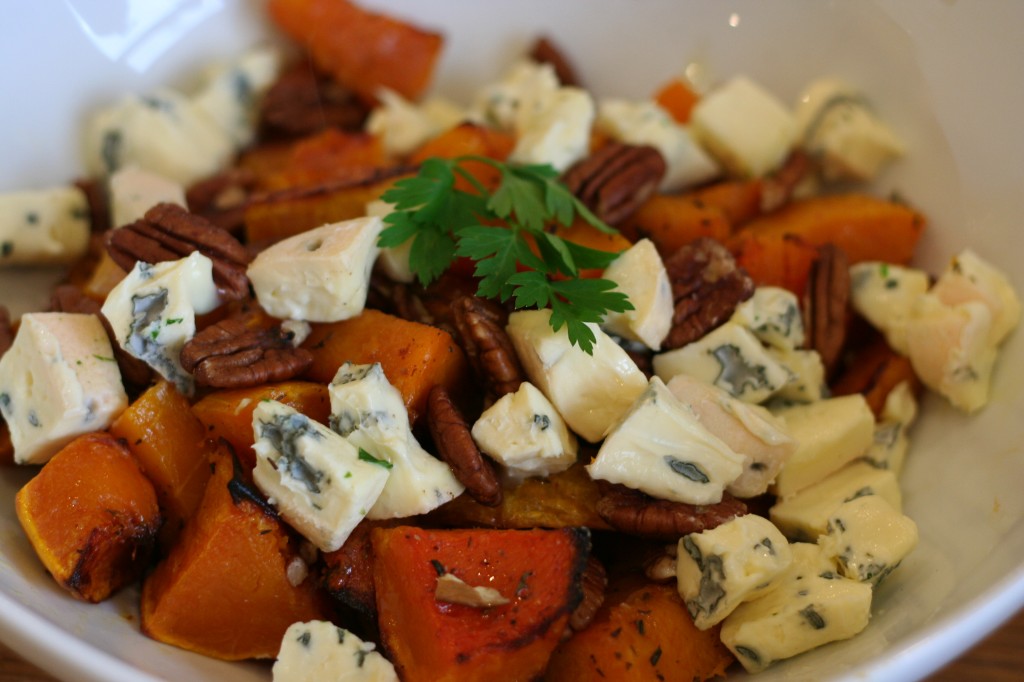
roasted squash with pecans and blue cheese

Butternut Squash with Pecans and Blue Cheese
adapted from Nigella Express by Nigella Lawson

Serves 6 to 8

4 lb 8 oz (2 kg) butternut squash
3 tablespoons olive oil
6 sprigs fresh thyme or 1/2 teaspoon dried thyme
4 oz (110g) pecans
4 oz (110 g) Roquefort, or other blue cheese, crumbled
salt and freshly ground black pepper

Preheat the oven to 425°F (220°C).

Peel and halve the squash and scoop out the seeds. Cut the squash into 1‑inch cubes (you don’t need to be precise, just keep the pieces uniformly small). Place the squash in a roasting tin or casserole dish and drizzle with the oil. Strip about 4 sprigs of thyme of their leaves (or use dried thyme) and sprinkle over the butternut squash. Roast for 30 to 45 minutes, or until tender.

Once out of the oven, transfer the squash to a serving bowl. Scatter over the pecans and crumble over the cheese, stirring everything together gently. Season to taste with salt and freshly ground black pepper. To serve, tear the remaining sprigs of thyme into small pieces and sprinkle over the top of the butternut squash mixture.

***

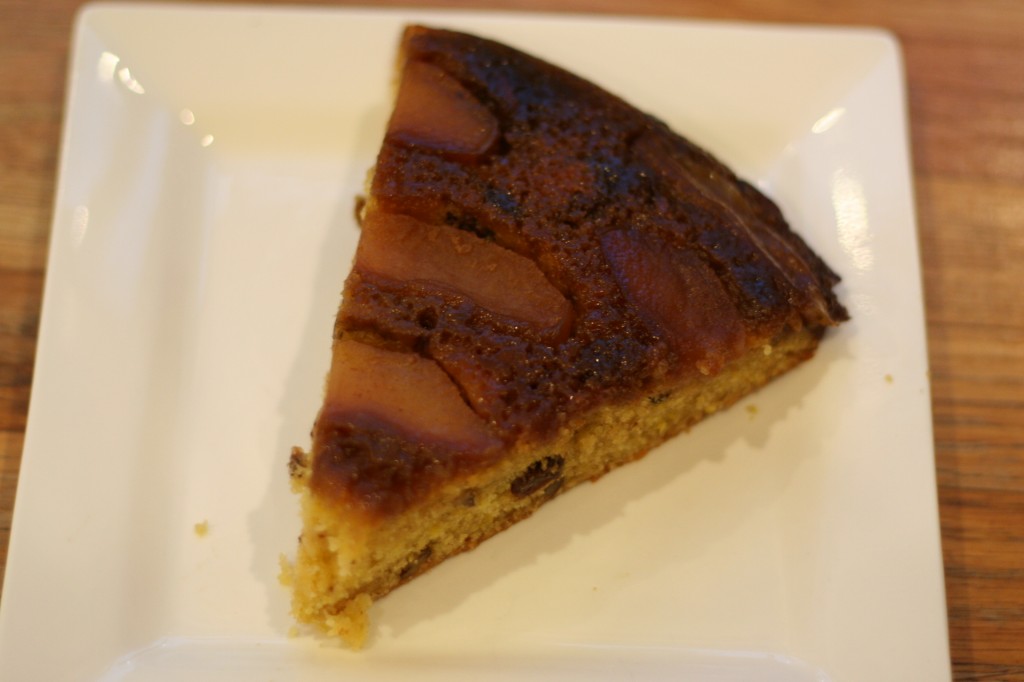
upside-down apple cornmeal cake

Upside-down Apple Cornmeal Cake

Serves 8

for the brandy-soaked raisins:
1/2 cup (80 g) raisins
1/4 cup (60 ml) brandy

for the apple topping:
2 or 3 large Gala or Golden Delicious apples, peeled, cored and quartered
4 tablespoons (60 g) unsalted butter
2/3 cup (120 g) brown sugar
1/2 teaspoon cinnamon

for the cake:
1 1/4 cups (150 g) all-purpose flour
3/4 cup (170 g) fine cornmeal
zest of 1 lemon
1 1/2 teaspoons baking powder
1/4 teaspoon baking soda
1/2 teaspoon salt
1/2 cup (110 g) unsalted butter, softened
2/3 cup (150 g) sugar
2 eggs
1 teaspoon vanilla extract
3/4 cup (175 ml) buttermilk
1/3 cup (60 g) pecans, roughly chopped

Soak the raisins in the brandy for at least 2 hours and up to 24 hours before you bake the cake.

Preheat the oven to 350°F (180°C).

To make the apple topping, cut each apple quarter lengthwise into 3 wedges. Melt the butter in a 10-inch cast iron or nonstick skillet over a medium heat. Add in the brown sugar and cinnamon and cook for 1 to 2 minutes, stirring, until the mixture is smooth. Remove from the heat and add the apples, gently stirring to coat. Using a tongs or fork, neatly arrange the apple slices in circles in the sugar mixture, starting at the outer edge and working your way to the center of the pan.  (You might not need all the apple slices.)

To make the cake, whisk the flour, cornmeal, lemon zest, baking powder, baking soda, and salt together in a bowl. Using a handheld mixer or stand mixer, cream the butter and sugar together until light and fluffy. Add the eggs one at a time, scraping down the sides of the bowl after each addition. Stir in the vanilla. Add in the flour mixture in three additions, alternating with the buttermilk in two additions (beginning and ending with the dry ingredients). Gently fold in the chopped pecans and raisins, along with any brandy still left in the bowl.

Gently pour the batter evenly on top of the fruit in the skillet, being careful not to move the apple slices too much. Bake in the middle of the oven for 40 to 45 minutes, until the center of the cake springs back lightly when touched. Allow the cake to cool for 15 minutes in the skillet before carefully inverting it onto a plate.

Late-summer Roast Beef Dinner and French Apple Tart

Nigella Lawson’s How to Eat: The Pleasures and Principles of Good Food is one of the bibles of modern-day cookbooks. It’s also one of the first cookbooks I bought in Ireland, and has taught me how to make things I’d never even heard of before moving abroad, like Yorkshire pudding and trifle. It also spells out the makings of something else that was completely foreign to me: a proper Sunday lunch. Nigella Lawson writes about it for four straight pages in How to Eat, but what sums it up rather romantically is this: “Sunday lunch … is about solidity, the family, the home.”

Sunday lunch is an institution in a lot of families, but it took me a long time to come around to its charms, especially since I’m the one doing all the cooking that goes into a big Sunday lunch, not my mother. In my case, I like to have our big meal as a late lunch at the weekends now simply because my kids are in better moods at that time of day, which not only means they’re more likely to eat what I put in front of them, but makes for a more pleasant dinner for all of us. Plus now that my daughter needs a packed lunch every day for school, a roast does double duty as Sunday’s dinner and Monday’s sandwich.

Strictly speaking, this menu isn’t a traditional Sunday lunch — there’s no roast potatoes, or the vegetables like carrots, parsnips or broccoli that you’d usually expect. But one of the things I love about How to Eat is that it contains lots of ready-to-go menus, not just stand-alone recipes, and this is Nigella’s late-summer roast beef menu from the “Weekend Lunch” chapter (though I made the French apple tart instead of the Yorkshire pudding with syrup and cream she calls for, and I also prefer Bon Appétit’s one-pot version of the cannellini beans with garlic and sage for being easier and more straightforward than Nigella’s recipe). After holding out all month, it’s finally time to embrace autumn, and this dinner seemed like a good compromise.

It’s National Organic Week in Ireland! Click here for a listing of events throughout the country.

Cold Roast Fillet of Beef 
from How to Eat by Nigella Lawson

Serves 8

fillet of beef — allow about 7 oz (200 g) per person
olive oil

Allow the beef to come to room temperature before you cook it (otherwise the cooking times here won’t be correct).

Preheat the oven to 480°F (250°C). If it’s possible to switch off the fan in your oven, do so in order to reduce evaporation (75% of lean meat is water, so fan ovens can make even good cuts of meat dry and tough).

Place the fillet in an ovenproof dish or roasting tray. Rub the beef all over with olive oil. (Nigella advises using a rosemary-infused oil for this menu, but plain olive oil works just fine too.)

Cook the beef for 15 minutes at the very high heat, then reduce the oven to 350°F (180°C). Cook the beef for 15 minutes per 18 oz (500 g) for rare; 18 minutes per 18 oz (500 g) for medium; and 25 minutes per 18 oz (500 g) for well done.

After the meat has had its advised cooking time, test it: either press it (if it feels soft it’s rare, bouncy it’s medium, hard it’s well-done) or pierce it with a knife to see. Always let any meat rest out of the oven for at least 10 minutes before carving.

If you’re cooking the beef ahead of time, take it out of the fridge 2 hours before you want to eat it. It should be cold, but not chilled. Or you could cook the fillet early enough in the day to simply allow it to cool to room temperature by the time you want to eat.

***

Rosemary and Anchovy Mayonnaise

1 cup (240 ml) mayonnaise
8 anchovy fillets in oil, drained and diced
1 sprig rosemary, finely chopped
1 tablespoon lemon juice
salt and freshly ground black pepper

Combine all the ingredients, mixing well. Chill until ready to serve. Serve alongside the beef. (This is also great to make sandwiches with the beef leftovers.)

***

Cannellini Beans with Garlic and Sage 
from Bon Appétit, October 2009

Makes about 6 cups

1 lb (450 g) dried cannellini beans
8 cups (2 liters) room-temperature water
2 tablespoons olive oil
1 large head of garlic, unpeeled, top 1/2 inch cut off to expose cloves
1 large sprig of fresh sage
1/4 teaspoon whole black peppercorns
1 teaspoon coarse kosher salt
extra virgin olive oil (for drizzling)

Place the beans in a large bowl. Cover with cold water (at least 6 cups/1 1/2 liters) and soak overnight.

Drain the beans and place in a heavy, large pot. Add the 8 cups (2 liters) of room-temperature water, olive oil, garlic, sage, and black peppercorns. Bring to a simmer over a medium-high heat. Reduce the heat to medium-low and simmer, uncovered, for 1 1/2 hours, stirring occasionally. Mix in the coarse salt. Continue to simmer until the beans are tender, adding more water if needed to keep beans covered, about 30 minutes longer. Cool the beans in the cooking liquid for 1 hour.

Using a slotted spoon, transfer the beans to a serving bowl, reserving the bean cooking liquid, if desired, but discarding the garlic, sage, and peppercorns. Season the beans to taste with pepper and more coarse salt. Drizzle with extra virgin olive oil and serve.

***

Tomato Salad
from How to Eat by Nigella Lawson

For this salad, simply slice some tomatoes (the best and ripest you can find) and arrange them on a plate. Sprinkle with salt, pepper and sugar (only if you think they need it, and even so, just a pinch), as well as some finely chopped spring onions or chives, a drop or two of balsamic or red wine vinegar, and a drizzle of extra virgin olive oil.

***

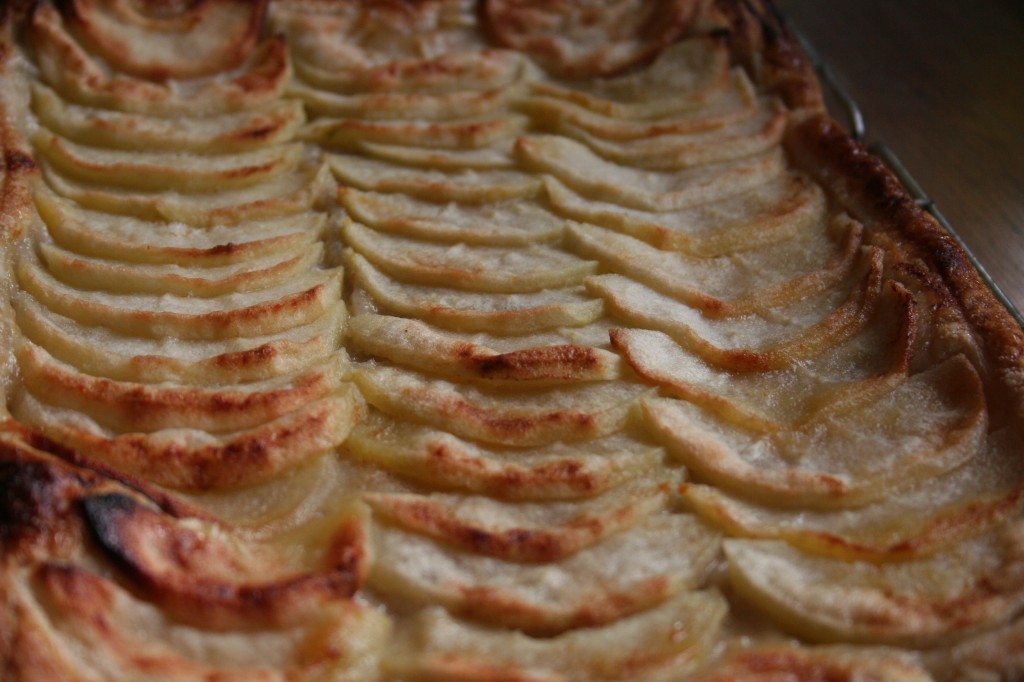
french apple tart

French Apple Tart (or Tarte Fine Aux Pommes, as Nigella Lawson calls it)
adapted from Barefoot Contessa Back to Basics by Ina Garten and Nigella Express by Nigella Lawson

Serves 4 to 6

This is mostly Nigella’s recipe, but the apricot jam and Calvados brushed on top is Ina’s touch from her version. The tart will still be delicious if you don’t add the jam mixture though. I pulled this together in 10 minutes, so it would also be a quick weeknight treat.

1 sheet shop-bought ready-rolled puff pastry, defrosted if frozen
2 large Granny Smith apples
2 tablespoons sugar
2 tablespoons (30 g) cold unsalted butter, small diced
1/4 cup (60 ml) apricot jam
2 tablespoons Calvados, rum, or water

Preheat the oven to 400°F (200°C). Line a sheet pan with parchment paper.

Lay the sheet of puff pastry on the lined baking sheet. Using the tip of a sharp knife, mark a 1/2‑inch border all the way around the edge of the rectangle. You need to score the lines on the pastry rather than cut all the way through it. This will allow a frame to rise above the apple filling. Refrigerate the dough while you prepare the apples.

Peel the apples and core them, then cut them in half. Slice the apples into 1/4‑inch-thick slices. Working from the inside edge, place the apple slices, closely overlapping, within the border of the pastry frame. Create neat lines of apple slices until the pastry is covered. Sprinkle with the sugar and dot with the butter.

Bake for 20 to 25 minutes, until the pastry is browned and the edges of the apples start to brown. Rotate the pan once during cooking. If the pastry puffs up in one area, cut a little slit with a knife to let the air out. And don’t worry if the apple juices burn in the pan, the tart will be fine. When the tart’s done, gently heat the apricot jam together with the Calvados, rum, or water and brush the apples and the pastry completely with the jam mixture. Loosen the tart with a spatula so it doesn’t stick to the paper. Allow to cool and serve warm or at room temperature, cut into squares or slices.

Chicken Tikka Masala, Pan-roasted Curried Cauliflower and Peas, Cucumber Raita, and Apricot Chutney

If you’ve ever been invited to dinner at my house, chances are this is what I served you. The dishes always turn out well. Even people who think they don’t like Indian food like this meal. The tikka masala is an adaptation from a Chicago Tribune recipe. It’s probably not even an ounce authentic, but I still love it. The accompaniments, raita and chutney, are traditionally served with Indian meals. I’d say the chutney is optional. My husband loves chutney but I’m not a fan. But don’t skip the raita, it really makes the meal come together.

Chicken Tikka Masala

If you like this menu, you might also like to try tandoori chicken with Bombay potatoes.

Chicken Tikka Masala
adapted from Chicago Tribune

Serves 4

for the marinade:
1 cup (240 ml) plain yogurt
2 tablespoons lemon juice
2 teaspoons ground cumin
2 teaspoons cayenne pepper
2 teaspoons freshly ground black pepper
1 teaspoon cinnamon
1 teaspoon salt
1 x 1‑inch piece ginger root, minced or grated
1 1/2 lb (680 g) boneless, skinless chicken breasts, cut into 1‑inch cubes

for the sauce:
2 tablespoons (30 g) unsalted butter
3 to 4 cloves garlic, minced
2 jalapeños, minced
3 teaspoons ground coriander
1 1/2 teaspoons ground cumin
1 1/2 teaspoons paprika
1 1/2 teaspoons garam masala
1/2 teaspoon salt
12 oz (340 g) tomato sauce
1 1/2 cups (350 ml) half and half (or whipping cream)
1/2 oz (15 g) chopped fresh cilantro (optional)

For the marinade, combine all the marinade ingredients (except chicken) in a medium bowl or food-safe plastic bag. Stir in the chicken and cover. Marinate in the refrigerator for 1 to 3 hours. Meanwhile, soak bamboo skewers in enough water to cover them for 30 minutes (unless using metal skewers).

For the sauce, melt the butter in a large, deep skillet over a medium heat. Add the garlic and jalapeño and cook for 1 minute. Stir in all the sauce spices and cook for 1 to 2 minutes, until fragrant. Stir in the tomato sauce (I usually use about 12 oz (340 g) of the 14 oz (400 g) can). Simmer for 15 minutes. Stir in the half and half (or cream) until the sauce has the desired color/consistency (sometimes I use up to 2 cups (480 ml), depending on how much tomato sauce I used). Simmer for 5 minutes, until the sauce thickens. Add in the chopped cilantro, if using.

Meanwhile, heat the grill (or broiler). Remove the chicken from the refrigerator. Thread the chicken onto skewers and discard the marinade. Grill or broil the chicken, turning at least 2 times, until cooked through, about 8 to 12 minutes. Remove the chicken from the skewers and add to the sauce. Simmer for 5 minutes. Serve with basmati rice  or naan bread.

***

Cauliflower with Raita

To cook this side dish, I like to use a thinner wok with a cover instead of a kadhi, which is traditionally used. The cauliflower will cook without liquid for a long time — you’ll want to use a lidded pan thick enough not to scorch the cauliflower but thin enough to allow it to “roast.”

Pan-roasted Curried Cauliflower and Peas

Serves 4

3 tablespoons vegetable oil
1/2 teaspoon mustard seeds
1 or 2 green chiles, such as jalapeño or serrano, minced
1 head cauliflower, cut into florets (white or purple, as shown above)
1 teaspoon kosher salt
1/2 teaspoon ground cumin
1/2 teaspoon ground coriander
1/2 teaspoon turmeric
1/2 teaspoon garam masala
1 cup (110 g) peas (defrosted if frozen or blanched if fresh)
1/2 oz (15 g) cilantro, chopped (optional)

Heat the oil in a large, lidded skillet, wok, or kadhai. Add the mustard seeds. Once the mustard seeds start crackling, add the chiles. After 1 minute, add the cauliflower florets and salt. Lower the flame and cover with a lid. Cook for 25 to 40 minutes, stirring frequently, until the cauliflower is caramelized in spots and almost cooked through.

Stir in the spices and peas. Cook for 3 to 5 minutes over a medium-high heat until the peas and cauliflower are cooked. Stir in the cilantro if using and serve.

***

Cucumber Raita

Serves 4

1 1/2 cups (360 ml) plain yogurt
1/4 cup (60 ml) milk
1/2 cucumber, peeled, seeded, and diced small
1/2 teaspoon salt
1/2 teaspoon freshly ground black pepper

Beat together the yogurt and milk with a whisk until very smooth. Stir in the remaining ingredients. Sprinkle with cayenne or garam masala and chill. Serve this as a side dish to any spicy Indian dish.

***

Apricot Chutney
adapted from Indianfoodforever.com

Makes about 2 cups (480 ml)

1 lb (450 g) apricots
2 cups (480 ml) water
8 long strips of ginger
1 clove garlic, chopped
4 teaspoons raisins
1 cup (240 ml) apple cider vinegar
9 oz (250 g) sugar
2 teaspoons salt
2 big cardamom seeds, crushed
1/2 level teaspoon red chili pepper

Cook the apricots in boiling water till soft, then peel and mash them. Strain the pulp and wash the apricot stones with 1 cup (240 ml) of water. Reserve this water.

Cook the apricot pulp, ginger, garlic, 1 cup (240 ml) of fresh water plus the water from the washed stones, and raisins until all the water is absorbed. Add the vinegar, sugar, salt, cardamom seeds and chili and cook until the mixture is thick and golden brown (2 to 3 hours). All to cool, then transfer to a clean jar. This can be kept in the refrigerator for 1 year.

Pasta Fagiole, Sausages with Peppers, and Assorted Antipasti

I love having people over for dinner. I love planning a menu around their tastes and dietary restrictions. I love shopping for high-end special occasion ingredients and flowers for the table. I love seeing how many place settings I can squeeze onto my dining table. I love the rush of preparing a big meal while trying to keep my kitchen intact. But mostly, I love sharing good food and good conversation with friends and family. There are few things that please me more than a home-cooked dinner and lively, loud conversation (usually after a few bottles of wine have been opened), except maybe the hush that sometimes falls over my guests if I’ve made something particularly good and they have no time to speak between mouthfuls.

This week my husband Reuben’s lovely grandmother, Ellie, visited Milwaukee. I invited her, Reuben’s parents, my grandparents, my parents, and my sister to join us for dinner. Since I had to prepare enough food for 10 adults with two small children underfoot, my menu was simple. Most items could be prepared in advance, during the kids’ nap time. Note that I doubled the soup and sausages recipes below to serve 10 adults. And in case you were worrying that I let my guests go home without dessert, I also served the blueberry crumb bars Kristin posted three weeks ago.

Pasta Fagiole
from an unknown magazine card that’s been in my recipe box for as long as I remember. My apologies to whatever source I took it from years ago.

Serves 4

2 tablespoons extra-virgin olive oil
1 garlic clove, minced
4 cups (1 liter) chicken broth (Swanson Organic Chicken Broth recommended)
1 x 14 oz (400 g) can stewed tomatoes, with Italian seasoning (note: if seasoned tomatoes aren’t available, use regular stewed tomatoes and add 1/2 teaspoon dried oregano and 1/2 teaspoon dried basil)
1 x 19 oz (540 g) can cannellini or great northern beans, rinsed well and drained
6 oz (170 g) tubetti or ditalini pasta
3 tablespoons chopped fresh basil
2 tablespoons freshly grated Parmesan

Heat 1 tablespoon of oil in a large saucepan over a moderate heat until hot but not smoking, then cook the garlic, stirring until fragrant, about 30 seconds. Stir in the broth and tomatoes with their juices and bring to a boil, breaking up the tomatoes with a fork.

Add the beans, pasta, 2 tablespoons basil, and Parmesan and boil, stirring frequently, until the pasta is al dente. Let stand for 5 minutes before serving. (Pasta will continue to absorb liquid.) Stir in the remaining basil and black pepper to taste. Drizzle with the remaining olive oil and serve immediately.

***

Sausages with Peppers

Serves 6

1 tablespoon olive oil
6 hot and/or mild Italian sausages
2 bell peppers (one green and one red, yellow, or orange), sliced into thin strips

In a large skillet, heat 1 tablespoon olive oil over a medium heat. Add the sausages and cook for 10 minutes, turning the sausages halfway through the cooking time. Add the pepper strips and cook until the peppers are soft and the sausages are fully cooked, stirring frequently, about 10 more minutes. If the sausages take on too much color early in the cooking process, lower the heat or cover the skillet with a lid for a few minutes. Serve with a crusty baguette or good Italian bread.

***

Assorted Antipasti

Antipasti refers to the traditional first course in an Italian meal. Cheeses, cured meats, marinated vegetables and salads are typical. Antipasti selections are also perfect for picnics. For my dinner, I served the following (all at room temperature):

cheeses (one soft, one semi-soft, one hard, one goat’s cheese, and fresh mozzarella balls)
olives (I love the bitter taste of black, oil-cured olives, but you can use any type)
1 jar of sun-dried tomatoes in olive oil, julienned
marinated hearts of palm and artichokes (see recipe below)
2 baguettes, one plain and one seeded, sliced

Marinated Hearts of Palm and Artichoke

Drain and rinse 1 can of hearts of palm and 1 can of quartered artichoke hearts. Mix with 1 clove garlic, grated, 1 tablespoon red wine vinegar, 3 tablespoons olive oil, and a pinch of red pepper flakes. Let sit for at least 1 hour before serving.