Tag Archives: Beef

Mark Bittman’s Basic Meatloaf with Roasted Parnsips and Raspberry Buttermilk Cake

Meatloaf reminds me of falling in love with my husband. Romantic, isn’t it? I can clearly remember the moment I sheepishly admitted to him that I love meatloaf, and could we please have it for dinner. The aged paperback cookbook containing 101 recipes for ground beef that sat on Reuben’s shelf for as long as I can remember also brings back good, and hilarious, memories of our early cooking days together. I think half of those 101 recipes were meatloaf recipes. I remember paying special attention to these recipes, thinking they would make an ideal meal for us impoverished college students — except for the odd and numerous ingredients listed in most of the recipes. Do people still put anchovies, olives, Cheese Whiz or tomato soup in their meatloaf? Eventually, Reuben and I gave up on meatloaf recipes and developed our own odd list of ingredients to make a decent one. This week, in a fit of open-mindedness, and perhaps in subconscious recognition of our 14-year dating anniversary, I decided to try out another meatloaf recipe. And as with every other recipe in Mark Bittman’s How To Cook Everything, I was thrilled with the results.

Basic Meatloaf

adapted from How To Cook Everything: Simple Recipes for Great Food by Mark Bittman

Serves 6 to 8

fresh breadcrumbs made from 1 or 2 slices of good-quality white bread
2 lb (900 g) ground beef (you can also use veal, lamb, and/or pork combined with beef)
1 egg, lightly beaten
1 clove garlic, minced
1 small onion, minced
1 small carrot, peeled and minced
1/2 cup (50 g) freshly grated Parmesan cheese
1/4 cup (10 g) minced fresh parsley
1/2 teaspoon minced fresh thyme
salt and freshly ground black pepper

Preheat the oven to 350°F (180°C).

Mix together all of the ingredients. Shape the meat into a loaf in a baking pan (free-form meatloaf baked in a larger baking pan will be less greasy than meatloaf baked in a loaf pan). Bake for 50 to 60 minutes, basting occasionally with the rendered pan juices. When done, the meatloaf will be lightly browned and firm, and an instant-read thermometer inserted into the center of the loaf will read 160°F (70°C).

***

Roasted Parsnips

Serves 4 to 6

1 1/2 lb (680 g) parsnips, peeled
4 tablespoons olive oil
1 clove garlic, minced
3 sprigs fresh thyme
salt and freshly ground black pepper

Preheat the oven to 375°F (190°C).

Cut the parsnips into 2‑inch-long pieces, halving or quartering large parts of the parsnips so that each piece is about 1/2 inch thick. Toss the parsnips with the olive oil, garlic, thyme, salt and pepper. Spread the parsnips onto a large baking sheet in a single layer. Roast for about 45 minutes, until the parsnips are tender, turning once or twice to prevent scorching. Remove the thyme sprigs before serving.

Raspberry Buttermilk Cake
adapted from Smitten Kitchen

Makes 1 x 9‑inch cake

1 cup (120 grams) all-purpose flour
1/2 teaspoon baking powder
1/2 teaspoon baking soda
1/4 teaspoon salt
1/2 stick (60 g) unsalted butter, softened
2/3 cup (150 g) plus 1 1/2 tablespoons sugar, divided
1/2 teaspoon pure vanilla extract
1/2 teaspoon finely grated lemon zest (optional)
1 large egg
1/2 cup (120 ml) well-shaken buttermilk
1 cup raspberries (about 5 oz/140 g)

Preheat the oven to 400°F (200°C) with a rack in the middle. Butter and flour a 9‑inch round cake pan.

Sift or whisk together the flour, baking powder, baking soda, and salt and set aside. In a larger bowl, beat the butter and 2/3 cup (150 g) sugar with an electric mixer at medium-high speed until pale and fluffy, about 2 minutes, then beat in the vanilla and zest, if using. Add the egg and beat well.

At low speed, mix in the flour mixture in 3 batches, alternating with the buttermilk, beginning and ending with flour. Mix until just combined. Spoon the batter into the prepared cake pan, smoothing the top. Scatter raspberries evenly over the top and sprinkle with the remaining 1 1/2 tablespoons sugar.

Bake for 20 to 25 minutes, until the cake is golden brown and a tester inserted into center comes out clean. Cool in the pan for 10 minutes, then turn out onto a rack and cool until it’s just warm, 10 to 15 minutes more. Invert onto a plate.

Beef and Guinness Stew with Champ

In Ireland, it’s easy to take the top-quality food for granted. We have butter that’s a creamy yellow, the way it should be; bread that’s baked fresh every day and delivered to the stores first thing in the morning; brown eggs that are so fresh they’re often not even refrigerated in the grocery store; lamb that’s world famous; and grass-fed beef.

I didn’t appreciate how special the beef in particular is until I read Michael Pollan’s In Defense of Food recently, in which he says that 100% grass-fed beef commands premium prices in America (and indeed, a recent article in The Village Voice said a 1‑lb grass-fed, local steak set them back $26 compared to $9.99 for a typical feedlot steak of the same weight). Yet in Ireland, famous for the lush green grass (it’s not called the Emerald Isle for nothing), it’s just the way beef is. As I type this, I can look out my window and see my neighbor’s cattle grazing in the field just across the road. When I cook in my kitchen, I look west over a patchwork quilt of fields of potatoes, wheat, more cows and sheep too. When I take a walk with my son in my rural neighborhood, we pass another neighbor’s dairy farm, and if I walk further still, we pass the lambs that eventually wind up in the local butcher. If I walk east, I can stand at the top of our hill and see the Irish Sea about ten miles away, where small, colorful fishing boats trawl the waters. Compared to the US, where the average food item in a typical meal travels 1,500 miles to reach your plate, I feel very lucky indeed to be able to stand on my front step and practically be able to see where my milk, beef, lamb and fish come from, not to mention potatoes and various grains as well.

If you want to cook something special to celebrate St. Patrick’s Day on Wednesday, this beef and Guinness stew with a traditional Irish champ (brúitín) is just the thing. The stew is robust and full of flavor, given the pint of plain that’s in it. The bite of the spring onions in the champ is the perfect accompaniment to the rich stew, but feel free to serve it with plain mashed potatoes instead. If you want to round this off with an Irish dessert, try these easy Baileys cream pots. But don’t limit yourself to only serving this stew on Paddy’s Day. It’s actually the best beef stew I’ve ever made.

Beef and Guinness Stew
adapted from Gourmet, October 2004

Serves 4

To make this into a one-pot meal, add some baby potatoes right into the stew along with the beef stock, Guinness and herbs instead of serving with the champ. And don’t be tempted to skip tossing the beef in the flour — the flour helps give the sauce its gorgeous, thick consistency later on. Like most stews, this one actually improves in flavor after a day, so the leftovers are even better.

2 lb (900 g) boneless beef chuck (stewing beef), cut into 1‑inch pieces
1/4 cup (30 g) flour
1 teaspoon salt
1/2 teaspoon black pepper
1/4 cup (60 ml) olive oil
2 onions, roughly chopped
4 to 6 carrots, cut into 1‑inch pieces on the diagonal
3 large cloves garlic, finely chopped
2 tablespoons tomato paste
4 cups (960 ml) beef stock or broth
approx. 2 cups (500 ml) Guinness (or another stout)
1 tablespoon Worcestershire sauce
1 tablespoon dried thyme
2 bay leaves
chopped fresh parsley, to garnish

Pat the beef dry. Stir together the flour, salt and pepper in a bowl. Add the beef, turning to coat all the pieces, then shake off the excess flour and transfer to a plate.

Heat the oil in a pot over a moderately high heat, until just smoking, then brown the beef in 3 batches, turning occasionally, about 5 minutes per batch (don’t crowd the pot, otherwise the beef will steam, not brown). Transfer to a bowl and set aside.

Reduce the heat to medium. Add the onions and carrots to the pot and saute for 10 minutes, scraping up any brown bits from the bottom of the pan and stirring frequently. Add the garlic and cook for 1 minute. Add the tomato paste, stir to coat the vegetables, and cook for 1 minute more. Stir in the beef along with any juices accumulated in the bowl. Add in the beef stock, Guinness, Worcestershire sauce, thyme and bay leaves. Stir to combine. Bring the stew to a boil, then reduce the heat to medium-low. Simmer, uncovered, for 1 to 1 1/2 hours, stirring occasionally, until the beef is fork-tender and the sauce has reduced and thickened.

To serve, spoon off any fat that may have risen to the top of the stew. Taste for seasoning. Spoon some champ into individual shallow bowls or plates, making a well in the center. Ladle the stew on top of the champ, garnish with the chopped parsley and serve.

***

Champ

Serves 4

If you have your own favorite recipe for mashed potatoes, just follow that and add the scallions at the end, and voilà! Now you have champ. Or you could try making colcannon, another traditional Irish potato dish and first cousin to champ.

2 lb (900 g) floury potatoes, such as Kerr’s Pink, Maris Piper or Yukon Gold
1/2 cup (120 ml) milk
4 oz (110 g) butter
6 spring onions (scallions), white and green parts finely sliced
salt and freshly ground black pepper

Peel the potatoes and slice them 1/4 inch thick. Put them in a large pot of generously salted water and bring to the boil. Simmer until the potatoes are tender, then drain. Return the potatoes to the pot off the heat, cover with a clean tea towel and allow to sit for 5 minutes (this helps to dry out the potatoes, resulting in a fluffier mash). Meanwhile, while the potatoes are cooking, place the milk, butter and spring onions in a saucepan over a medium heat, until the butter has melted. Mash the potatoes, then pour in the hot milk and spring onion mixture and beat with a wooden spoon until the mash is fluffy and light. Taste for seasoning and serve piping hot.

Filipino-style London Broil, Oven-roasted Potatoes, and Winter Greens with Shaved Parmesan

My book club’s most recent pick, Animal, Vegetable, Miracle: A Year of Food Life by Barbara Kingsolver, provided the perfect inspiration for our meeting’s dinner menu. The book centers around the author’s year of eating only local foods, including produce and animals that she raised herself. After getting past the initial defensiveness of my own food choices, I came to love the book and have been truly inspired by it. It also provided a ready theme for our book club dinner — local. Luckily, by living in Wisconsin, I have easy access to farms that offer direct-to-seller meat and produce. I had a freezer full of beef from Sulzer Beef at my disposal. I also rediscovered Outpost Natural Foods, which in recent years has made a concerted effort to carry more local products.

My friend Alex brought a wonderful rhubarb strawberry crisp made with strawberries she picked from a nearby farm and rhubarb from her garden. For the salad, I used a winter salad mix from Milwaukee’s own urban, award-winning farm, Growing Power. To serve, I splashed some balsamic vinegar and olive oil over the greens (not local, I’m afraid), then used a vegetable peeler to grate long strips of Wisconsin Parmesan over the top. We rounded out the meal with an assortment of other Wisconsin cheeses (lemon chevre, cranberry cheddar, and Gorgonzola) and a fresh baguette from our local Breadsmith bakery.  A feast that doesn’t require gallons of petroleum to transport it to the table tastes even better than one that does.

Filipino-style London Broil
adapted from Indoor! Grilling by Steven Raichlen

Serves 4 to 6

2 medium lemons
1 cup (240 ml) soy sauce [Kikkoman brand is made in Walworth, Wisconsin]
1/2 cup (120 ml) distilled white vinegar
1/2 cup (120 ml) vegetable oil
1 medium onion, finely chopped
3 cloves garlic, finely chopped
3 bay leaves, crumbled
1 tablespoon coriander seed
1 teaspoon black pepper
1 sirloin or top or bottom round steak (1 1/2 to 2 lb/680 to 900 g)

Rinse the lemons. Cut each in half and squeeze out the juice with a citrus press. Place the lemon juice in a large nonreactive mixing bowl. Cut the rind of 1 lemon into 1/4‑inch dice and add it to the juice. Add the soy sauce, vinegar, oil, onion, garlic, bay leaves, coriander seed, and pepper and whisk to mix. Set aside half of the lemon juice mixture to use as a sauce.

Spread half of the remaining lemon juice mixture in the bottom of a nonreactive baking dish just large enough to hold the meat. Place the meat on top and spread the other half of the lemon juice mixture over it. Let the steak marinate for at least 6 hours, or ideally overnight. The beef can also be marinated in a resealable plastic bag.

Place a grill pan on the stove and preheat it to medium-high over a medium heat. When the grill pan is hot, a drop of water will skitter in the pan. When ready to cook, lightly oil the ridges of the grill pan. Drain the meat, scraping off most of the marinade with a rubber spatula. Place the beef in the hot grill pan. Sirloin or round steak will be cooked to medium-rare after 5 to 8 minutes per side. To test for doneness, use the poke method: when cooked to medium-rare the meat should be gently yielding.

Transfer the meat to a cutting board and let it sit for 5 minutes. Cut the meat into broad thin slices, holding a sharp knife blade at a 45-degree angle to the top of the meat. Spoon the reserved sauce over the slices and serve at once.

***

Oven-roasted Potatoes

Serves 6

3 large baking potatoes, cut into 1‑inch cubes
1/4 cup (60 ml) olive oil
handful of flat-leaf parsley, minced [I love parsley and use about a half bunch in this recipe]
3 cloves garlic, minced
1/2 teaspoon dried basil
1 teaspoon dried oregano
1 teaspoon paprika
salt and freshly ground black pepper

Preheat the oven to 375°F (190°C).

Toss the cubed potatoes with the olive oil, parsley, garlic, basil, oregano and paprika. Spread in a single layer on a large baking sheet (or 2 smaller baking sheets). Bake for 30 to 40 minutes, turning the potatoes halfway through cooking, until golden brown and tender. Immediately season with salt and pepper to taste.

Beef Tenderloin with Arugula and Horseradish Sauce, Baked Brie with Mushrooms and Thyme, Rockin’ Celery, and Chocolate Chunks with Cherries and Pistachios

We’re planning to have a few friends over for New Year’s Eve. Instead of coordinating a full sit-down dinner, I’m planning a spread of bite-size delicacies. A plate of hors d’oeuvres balanced in one hand with a glass of champagne in the other is my idea of a party — even when it’s just me and Reuben. I make this beef tenderloin recipe often for parties. It’s easy, can be made in advance, and everyone seems to love it. As a word of warning, I’ve never made the other recipes listed but how could molten brie or dark chocolate be bad?

Kristin and I are taking some time off from Dinner du Jour due to the hectic nature of the month. We’ll be back in January with more recipes and photos. We hope you all have a wonderful holiday season and happy new year!

Roast Tenderloin of Beef
adapted from Gourmet

Serves 8

2 tablespoons vegetable oil
4 1/2 lb (2 kg) trimmed beef tenderloin, tied, at room temperature
2 teaspoons cracked black pepper, or to taste
1 1/2 teaspoons kosher salt, or to taste

Preheat oven to 525°F (275°C).

In a large skillet, heat the oil over high heat until smoking. Pat meat dry. Rub with pepper and salt. Sear the tenderloin on all sides until dark brown. Transfer the meat to a rack in a roasting pan. Roast meat for 10 to 20 minutes, or until a meat thermometer inserted in the thickest part of the meat registers 130°F to 140°F (55°C to 60°C) for medium-rare. Transfer meat to a cutting board and let rest, loosely covered, for 10 minutes. Carve into thin slices for serving. Serve with horseradish sauce, arugula, and rolls for making sandwiches, if desired.

Horseradish Sauce
adapted from Emeril’s New New Orleans Cooking by Emeril Lagasse

2 cups (475 ml) sour cream
1/4 cup prepared horseradish, drained
1 tablespoon minced chives
1 teaspoon Champagne or white wine vinegar
1 teaspoon salt
dash hot red pepper sauce

In a bowl, combine all the ingredients and blend well. Adjust the seasoning, to taste. Refrigerate until ready to serve.

***

Rockin’ Celery
adapted from Pilar Sanchez, Food Network

10 servings

12 celery stalks, peeled
1/2 cup (50 g) pecans
1 tablespoon honey
1 tablespoon melted butter
pinch cayenne pepper
pinch sea salt
8 oz (225 g) cream cheese, softened

Cut the celery into 4‑inch-long pieces, then slice off a thin edge at the rounded part of the stalk to help them lie flat while stuffing. Place them in a bowl of ice water and refrigerate until ready to stuff.

In a bowl, toss the pecans with the honey, butter, cayenne and salt, making sure the nuts are well coated. Spread on a baking sheet and bake until nuts are toasted, about 8 to 10 minutes. Remove from the oven and allow them to cool completely.

Chop pecans coarsely in a food processor. Add the cream cheese and process until smooth. Remove celery from the refrigerator, drain and dry well. Scrape cream cheese/nut mixture out of the food processor into a pastry bag fitted with a large star tip. Fill each celery boat with a generous amount of the mixture.

***

Baked Brie with Mushrooms and Thyme
adapted from Bon Appétit, March 2009

Makes 6 to 8 servings

1/2 oz (15 g) dried porcini mushrooms
2/3 cup (160 ml) dry red wine
2 tablespoons butter
6 oz (170 g) crimini (baby bella) mushrooms, halved or quartered if large
6 oz (170 g) shiitake mushrooms, stemmed, sliced
2 tablespoons minced shallot (about 1 large shallot)
2 teaspoons chopped fresh thyme
1 x 14-oz (400‑g) Brie (preferably in wooden box)
1 baguette, cut into 1/4‑inch-thick slices

Rinse the dried porcini to remove any grit. Place the porcini and wine in a small saucepan. Bring to a simmer over low heat; remove from the heat. Let the porcini soak until soft, about 20 minutes. Using a slotted spoon, transfer the porcini to a work surface and coarsely chop. Line a strainer with damp paper towel; strain the wine into a small bowl and reserve.

Melt the butter in a heavy large skillet over medium-high heat. Add the crimini and shiitakes. Sprinkle the mushrooms with salt and pepper and cook until brown, stirring occasionally, about 8 minutes. Add the shallot and stir until soft, about 1 minute. Add the chopped porcini and strained wine. Boil until almost dry, about 1 minute. Stir in the thyme. Season to taste with salt and pepper. Cool.

Remove the Brie from its box, discarding the lid and paper. Using a sharp knife, cut the top rind from the Brie; discard. Return the Brie to its box. (Alternatively, stack two 12-inch rounds of foil and fold up around bottom and sides of the Brie, crimping foil at edges, leaving top exposed.) Mound the mushroom mixture atop the Brie. DO AHEAD: Can be made 8 hours ahead. Cover and chill. Bring to room temperature before continuing.

Preheat the oven to 350°F (180°C). Place the Brie with the mushrooms on a rimmed baking sheet. Bake until the cheese begins to melt and the mushrooms are warmed through, about 15 minutes. Transfer the Brie in box to a plate. Serve hot with baguette slices.

***

Chocolate Chunks with Cherries and Pistachios
adapted from Katie Brown Celebrates: Simple and Spectacular Parties All Year Round by Katie Brown

6 servings

12 oz (340 g) bittersweet Baker’s chocolate, chopped
1/2 cup (120 ml) whole milk
3 tablespoons of unsalted butter
1/4 teaspoon salt
1 cup (130 g) shelled pistachios
1 cup (150 g) dried tart cherries

In a large microwaveable bowl, combine the chocolate, milk, butter, and salt. Place the bowl in a microwave and heat on high for 3 minutes, stirring every 30 seconds. Remove and whisk until combined and smooth. (If the chocolate is not completely melted after whisking, return to the microwave for 1 minute and repeat step.)

Stir in the pistachios and cherries. Line the bottom and sides of a 9 x 9‑inch pan with plastic wrap. Pour the chocolate mixture into the pan, scraping bowl, and smooth out evenly. Refrigerate until firm, about 1 hour.

Remove the pan from refrigerator and invert chocolate mixture onto a cutting board. Remove the plastic and cut chocolate with a knife into desired shape and size. Serve at room temperature.

Avoca’s Shepherd’s Pie and Brandied Cranberry, White Chocolate and Oatmeal Cookies

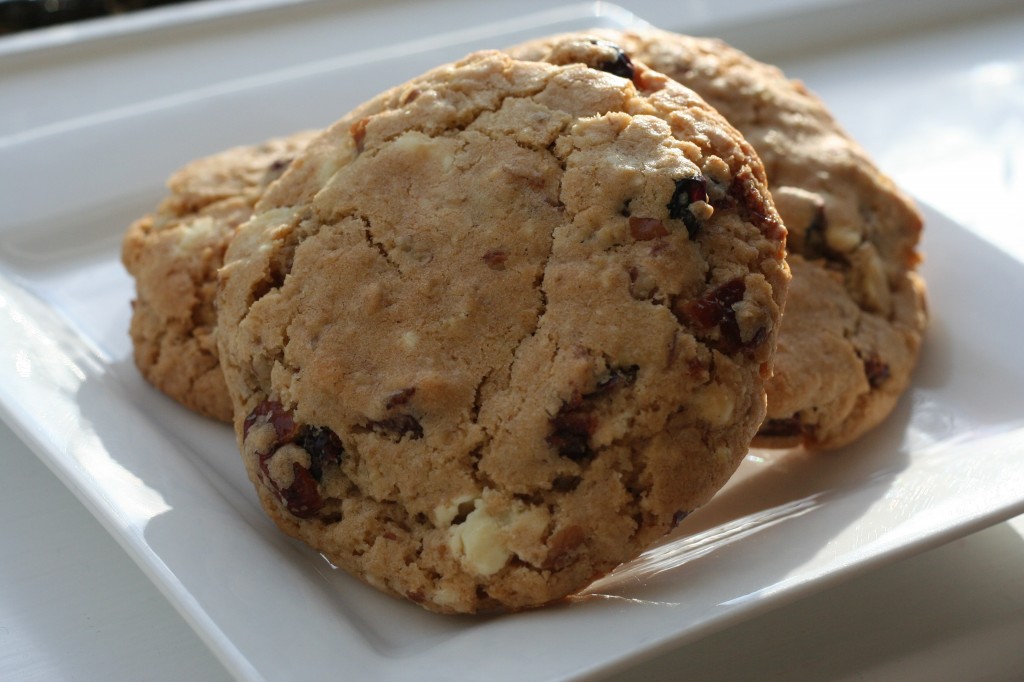
In the US, it’s the day after Thanksgiving today — which means it’s also now officially Christmastime! So I won’t waste any time giving you this cookie recipe, an adaptation of my favorite oatmeal chocolate chip cookies, but this time with a festive twist to them with the brandied cranberries. For any Black Friday shoppers, a couple of these cookies and a cup of coffee would keep you going through the afternoon sales. For anyone else, do you really need an excuse to eat a cookie like this? A few weeks ago, when I told a friend that I was going to make these, she said they sounded like the perfect Christmas cookie, but I said I couldn’t wait that long to make them. Any recent Thanksgiving excesses aside, you shouldn’t either.

Avoca’s Shepherd’s Pie
adapted from Avoca Café Cookbook

Serves 6

You can prepare the shepherd’s pie in advance, leave it to cool and reheat it later, although it will need more time in the oven (40 minutes instead of 20). For my family of four, I like to divide the pie into 4 individual gratin dishes and 4 ramekins for the kids’ portions, which makes enough for two dinners. This way, I can cook the second batch fresh on the day, as opposed to reheating one big casserole dish.

for the pie:
1 onion, roughly chopped
2 tablespoons vegetable oil
2 lb (900 g) minced beef (you could also use ground turkey for a leaner version)
3 tablespoons Worcestershire sauce
2 sprigs of thyme (or 1/2 teaspoon dried)
1 teaspoon tomato puree
3 carrots, diced
1 3/4 cups (400 ml) chicken stock
salt and freshly ground black pepper
chopped fresh parsley, to garnish

for the potato topping:
3 lb (1.4 kg) potatoes, peeled and cut into chunks
1 cup (240 ml) whole milk or cream
1/2 cup (110 g) butter
salt and freshly ground black pepper

Preheat the oven to 350°F (180°C).

In a large pan, gently sauté the onion in the vegetable oil for about 10 minutes, until soft but not brown. Add the mince a little at a time and cook until browned. Add the Worcestershire, thyme, tomato puree, carrots, stock and some salt and pepper. Cook on a low heat for 50 minutes, then transfer to a large casserole or pie dish or individual gratin dishes, ready for the mashed potato topping.

Meanwhile, cook the potatoes in boiling salted water until tender. Drain well, then return to the pot and add the cream, butter and salt and pepper to taste. Mash well, then taste and adjust the seasoning if necessary.

Cover the mince mixture with the mashed potato. Run the tines of a fork along the potato topping (this will help it to brown). Bake in the preheated oven for 20 minutes, or until the potato is nicely browned and the pie filling is bubbling. Garnish with chopped parsley and serve.

***

brandied cranberry, white chocolate and oatmeal cookies

Brandied Cranberry, White Chocolate, Pecan and Oatmeal Cookies

Makes about 16 cookies

You can make these cookies without the brandy if you prefer.

3/4 cup (100 g) dried cranberries
1/3 cup (80 ml) brandy
2 cups (240 g) unbleached all-purpose flour
1/2 teaspoon baking soda
1/2 teaspoon salt
3/4 cup (170 g) unsalted butter, melted and slightly cooled
1 cup (170 g) packed brown sugar
1/4 cup (50 g) granulated sugar
1 tablespoon vanilla extract
1 egg
1 egg yolk
3/4 cup (150 g) white chocolate, roughly chopped
1/2 cup (50 g) pecans, roughly chopped
1 cup (80 g) porridge oats

Put the dried cranberries in a wide, shallow bowl and add the brandy, making sure all the cranberries are covered with brandy (you may need to add a bit more). Cover and place in the fridge. Allow the cranberries to soak for at least 1 hour. Place a colander over a bowl and strain the cranberries, reserving 1 1/2 teaspoons of the brandy. Set both aside.

Preheat the oven to 325°F (160°C). Grease 2 cookie sheets or line them with parchment paper or silicone baking mats.

Sift together the flour, baking soda, and salt and set aside. In a medium bowl, cream together the melted butter and brown and granulated sugars until well blended. Beat in the reserved 1 1/2 teaspoons of brandy, the vanilla, egg, and egg yolk, mixing until light and creamy. Mix in the sifted ingredients, working until just blended. Stir in the cranberries, white chocolate, pecans and oats by hand, using a wooden spoon. Chill the dough in the refrigerator for 30 minutes to 1 hour. Use a table knife to scoop and press the dough into 1/4‑cup measuring scoops (or roll 90 g of dough into a ball for 1 cookie), and place the mounds onto the prepared cookie sheets. The cookies should be 3 inches apart.

Bake the cookies for 15 to 20 minutes, or until the edges are lightly browned. Cool on baking sheets for a few minutes before transferring to wire racks to cool completely.

Slow Cooker Stracoto with Porcini Mushrooms and Carrots with Egg Noodles

Kristin brilliantly thought to add a slow cooker category to our site. Slow cookers really can be a working mom’s best friend. This stracoto (fancy word for pot roast) is my favorite slow cooker recipe. I’ve made it in the oven as per the original recipe, but actually prefer my adaptation in the slow cooker, which results in a moister piece of meat. It’s awfully hard to dry out a piece of meat, or anything else for that matter, in a slow cooker. Reuben must have liked the dinner, since he added this programmable slow cooker to his Amazon wish list within a few hours of finishing it.

Don’t forget to enter our first cookbook giveaway contest. Entries are due tomorrow. To enter, all you have to do is leave a comment in Kristin’s October 26 post.

Slow Cooker Stracoto with Porcini Mushrooms and Carrots

adapted from Giada De Laurentiis, Food Network

Serves 6

1 x 4 lb (1.8 kg) boneless beef chuck roast or arm roast
salt and freshly ground black pepper
3 tablespoons olive oil
2 onions, sliced
6 garlic cloves, coarsely chopped
1 cup (240 ml) dry red wine
1 3/4 cups (420 ml) canned beef broth
1/2 oz (15 g) dried porcini mushrooms
1 bunch carrots, peeled and halved if large, and cut into 3‑inch pieces
egg noodles or mashed potatoes, to serve

Pat the beef dry with paper towels. Sprinkle the beef generously with salt and pepper. Heat 2 tablespoons of olive oil in a large, heavy skillet (cast iron preferred) over a medium-high heat. Add the beef and cook until brown on all sides, about 15 minutes total cooking time. Transfer the beef to the slow cooker. Add the remaining tablespoon of oil to the pan, add the onions and saute until tender, scraping up the brown bits on the bottom of the pot, about 5 minutes. Add the garlic and saute for 1 minute. Add the wine and boil for 1 minute. Stir in the broth and mushrooms. Bring the liquid to a boil. Carefully pour the liquid into the slow cooker. Add the carrots. Cook on low for 8 hours, or until the meat and carrots are tender.

Transfer the beef to a cutting board. Using a slotted spoon, transfer the carrots to a serving bowl. Tent the beef with foil and let it rest for 10 minutes. Meanwhile, spoon any excess fat off the top of the sauce in the slow cooker. Using a hand-held blender, blend the sauce, onions, and garlic into a smooth puree. (If you don’t have a hand-held blender, transfer the sauce and vegetables to a blender and puree.) Season the sauce to taste with salt and pepper.

Cut the beef across the grain into 1/2‑inch-thick slices. Arrange the sliced beef on a platter and spoon the sauce over. Serve with egg noodles or mashed potatoes, passing the remaining sauce in a sauce boat.

Casserole Provençale and Crunchy Chocolate Bakewell Tart

We’re excited to announce our first giveaway at Dinner du Jour! Thanks to Gill & Macmillan, I have a copy of From Brenda’s Kitchen: 100 Favourite Recipes by Brenda Costigan to give away* to a reader.

Brenda Costigan is one of Ireland’s most renowned cookery writers. A weekly food columnist for the Sunday Independent Life magazine, she has also written three other bestselling cookbooks. This book, written with busy families in mind and suitable for cooks of all abilities, features some of the most popular recipes from her column as well as many new favorites.

To be in with a chance of winning From Brenda’s Kitchen: 100 Favourite Recipes, just leave a comment in this post telling us what some of your favorite recipes are. The competition will close at 12:00 (Irish time) on Monday, November 9th and a winner will be chosen randomly from the comments.

brenda cover

Casserole Provençale
adapted from From Brenda’s Kitchen: 100 Favourite Recipes by Brenda Costigan

Serves 5 to 6

Brenda says you shouldn’t hold back on the olives, as they give a wonderful flavor to the finished dish. It’s also preferable to use fresh herbs rather than dried here.

for the marinade:
1 1/4 cups (300 ml) red wine
1/4 cup (60 ml) brandy (optional)
sprigs of fresh thyme
sprigs of fresh rosemary
2 bay leaves
2 cloves garlic, chopped
salt and freshly ground black pepper

for the casserole:
2 1/4 lb (1 kg) stewing beef, cut into generous bite-sized chunks
4 tablespoons olive oil
1 rounded tablespoon flour
7 oz (200 g) rashers or bacon, chopped (Brenda likes to use smoked rashers/bacon)
2 large onions, sliced
2 cloves garlic, chopped
6 oz (170 g) button mushrooms, halved
2 large carrots, peeled and sliced
3 to 5 oz (75 to 150 g) pitted black or green olives
1 x 14-oz (400‑g) can of chopped tomatoes
1 3/4 cups (400 ml) hot beef stock
salt and freshly ground black pepper

Put all the marinade ingredients into a bowl and stir well to combine. Add in the beef and mix well. Cover with clingfilm and allow to marinate in the fridge for a few hours. Stir once or twice if you think of it.

Preheat the oven to 325°F (160°C).

Lift the meat out of the marinade with a slotted spoon (keep the marinade). Pat the meat dry with paper towels and fry in small batches until browned in the olive oil, then transfer to a casserole or heavy saucepan. Add the flour to the browned meat and toss together. Fry the rashers until golden and add to the meat.

Lightly brown the onions in the pan. Add the garlic and then the mushrooms, then add this onion mixture to the casserole. Add the carrots, olives and tomatoes to the casserole.

Pour the marinade, including the herbs, into the pan the meat etc. was browned in and bring to the boil, making sure to scrape up all the bits on the bottom of the pan. Boil for 1 to 2 minutes to reduce the amount of liquid a bit and to intensify the flavor. Add the beef stock and simmer for a few minutes to heat it up, then pour the hot liquid directly into the casserole. The liquid should just about cover the meat and vegetables. Add very little salt, if any, because the rashers and olives are already salty. Add freshly ground black pepper and stir everything together. If necessary to make the lid fit more snugly, cover the casserole with a layer of baking parchment or tinfoil, then put on the lid (this helps to prevent evaporation).

Cook in the oven for 2 1/2 to 3 hours, or until the meat is really tender. Discard the sprigs of fresh herbs before serving. Serve with mashed potatoes or boiled potatoes and a green vegetable of your choice.

***

Crunchy Chocolate Bakewell Tart
adapted from From Brenda’s Kitchen: 100 Favourite Recipes by Brenda Costigan

Serves 8

Brenda says this tart is one of her favorites — rich and moist, it keeps for up to 2 weeks. Brenda has used a base of crushed digestives and butter instead of the more traditional pastry base. For a touch of luxury, serve the tart with the fruits of the forest sauce (or 12 oz (340 g) mixed fresh summer berries) and some whipped cream.

Note: If the baking tin sizes recommended here aren’t adhered to, the cakes may be thicker (if smaller) or thinner (if larger), which can affect the cooking times.

for the crushed biscuit base: 
7 oz (200 g) digestive biscuits, crushed (or you can substitute graham crackers)
1/2 cup (110 g) butter, melted

for the filling: 
4 to 5 tablespoons blackcurrant jam, softened (not fridge cold)
3/4 cup (170 g) butter, softened
3/4 cup (150 g) sugar
3 large eggs
1/2 teaspoon almond extract
3 1/2 oz (100 g) chopped blanched almonds
3 1/2 oz (100 g) ground almonds
5 oz (150 g) dark chocolate, melted and partly cooled
small handful of flaked almonds

for the fruits of the forest sauce:
juice of 1 large orange
12 oz (340 g) frozen fruits of the forest or summer fruits
1/4 to 1/3 cup (50 to 75 g) sugar
1 heaped teaspoon cornflour

3/4 cup (175 ml) lightly sweetened whipped cream, to serve

You will also need a springform tin 9 inches in diameter

Preheat the oven to 375°F (190°C).

To make the biscuit base, mix the crushed biscuits and melted butter together and spread in an even layer over the base of the tin, pressing the mixture down firmly. Bake in the oven for about 5 minutes, just to lightly crisp the biscuits. There will be no change in the appearance. Stand the tin on a wire tray to cool while you prepare the filling.

Reduce the oven to 325°F (170°C).

To make the filling, place the jam in a small bowl and stir briskly with a spoon in order to make it looser and more spreadable. Spread the jam carefully in a thin layer over the cooled biscuit base, leaving a 1‑inch margin all the way around. This is to ensure that the jam doesn’t ooze out at the edges and get too highly baked on the sides, spoiling the appearance of the finished cake.

Beat the butter and sugar together in a bowl until soft. Add in the eggs, one at a time, and almond extract and beat well. Mix together the chopped almonds and the ground almonds and stir into the butter/sugar mixture, then stir the melted chocolate through. Pour into the tin over the biscuit base and scatter the flaked almonds over the surface.

Bake for about 40 minutes –- start at the higher temperature and lower if halfway through if the tart is cooking too quickly. It’s ready when the almond mixture has become set on the outside but is still slightly wobbly in the center. Stand the tin on a wire tray for about 15 minutes to allow it to cool. With a sharp knife, loosen the edges, then release the spring clip sides of the tin and leave the tart to cool completely.

To make the sauce, put the orange juice and frozen berries into a saucepan. Cook gently to thaw, then add the sugar and stir to dissolve. Blend the cornflour with a dribble of water and some of the hot liquid from the saucepan. Mix well, then stir the cornflour mixture into the berries in the saucepan. Bring to the boil, stirring to thicken. If a thicker consistency is required, more cornflour can be added (in the same way). Taste for sweetness.

To serve, carefully slide the tart off the base of the tin onto a serving plate. Serve each slice topped with the fruits of the forest sauce (or fresh berries) and some whipped cream.

*In the interests of full disclosure, I was involved with the production of this book and the publishers, Gill & Macmillan, generously gave me a copy to give away here.

Braised Spareribs with Fennel, Mashed Potatoes, and Curried Split Pea Soup

After a 10-minute dig into my deep freezer, I sadly realized we had eaten the last of our Tamworth ham from Farmer Nick’s. Though momentarily disappointed that I couldn’t make the scalloped potatoes and ham I’d been craving, I was thrilled to spot a rack of spareribs hiding beneath the frost. I usually bake spareribs and sauerkraut together for an easy, hearty meal, but I’d already made cabbage once that week and, frankly, didn’t relish the idea of another cabbage-based dinner. Instead, I settled on a braised spareribs recipe. But “settled” isn’t the appropriate word for this dish. “Spectacular” is more accurate. I know I rave about recipes more often than not, but this really is a fantastic preparation, really. The meat falls off the bone and the sauce is perhaps the most savory thing I’ve tasted all year. The only leftovers from the meal were a small bowl of mashed potatoes and a few tablespoons of the sauce. I mixed the two together the next day for lunch, which made for some damn good fried mashed potato patties.

Like the spareribs recipe, the soup recipe is also new to me, sent by my friend Allison. I loved it as a starter for dinner but enjoyed it even more the next day for lunch after the curry flavor developed. Not only was this a tasty soup, but it gave me an excuse to finally buy a stick blender (very fun item, by the way). Thanks for sharing, Allison! Which reminds me — if anyone has recipes they would like us to try out, please send them our way.

Braised Spareribs with Fennel
adapted from Anne Burrell at Food Network

Serves 4

1 rack spareribs, cut into ribs
2 tablespoons olive oil
kosher salt
1 large onion, cut into large dice
1 large fennel bulb, fronds removed, cut into large dice
6 garlic cloves
1 1/2 cups (360 ml) dry white wine
2 bay leaves
1 bundle thyme
pinch crushed red pepper
2 1/2 cups (600 ml) chicken broth

Preheat the oven to 400°F (200°C).

Coat a Dutch oven with olive oil and bring to a high heat. Season the ribs with salt and brown in the hot oil. Brown ribs on both sides. Remove ribs from the pan.

While the ribs are browning, puree the onion, fennel and garlic in the food processor to a coarse paste. After the ribs are browned and removed from pan, add the pureed vegetables and saute for 5 to 6 minutes, until golden.

Return the ribs to the pan and add the white wine, bay leaves, thyme and crushed red pepper flakes. Cook over a medium-high heat for 8 to 10 minutes, until the wine is reduced to about 1 cup (240 ml). Add the chicken broth, cover and place in the preheated oven. Cook the ribs for 2 hours or until they are very soft and almost falling off the bone. Check the ribs periodically to make sure the liquid hasn’t reduced too much. Serve the ribs and sauce over mashed potatoes.

***

Curried Split Pea Soup
adapted from Alton Brown at Food Network

Serves 8

2 tablespoons unsalted butter
1 onion, chopped
kosher salt and freshly ground black pepper
1 tablespoon minced fresh garlic
5 or 6 carrots, chopped
5 or 6 stalks of celery, chopped
1 lb (450 g) dried green or yellow split peas, picked over and rinsed
8 cups (1.9 liters) chicken broth (reserve 1 cup (240 ml) to thin out soup if it’s too thick)
1 tablespoon curry powder

Place the butter into a large saucepan or stock pot over medium-low heat. Once melted, add the onion and a generous pinch of salt and sweat for 2 to 3 minutes. Add the garlic and continue to sweat for an additional 1 to 2 minutes, making certain not to allow the onions or garlic to brown.

Add the peas, carrots, celery, 7 cups (1.7 liters) of chicken broth and curry powder. Increase the heat to high and bring to a boil. Reduce the heat to low, cover and cook at a simmer until the vegetables are very tender, approximately 45 to 50 minutes. Taste and adjust seasoning as needed. Using a stick blender, puree the soup until the desired consistency. If the soup is too thick, add some of the remaining chicken broth.