Category Archives: Asian food

Hot and Sour Soup (Tom Yam)

I’m not making resolutions this year and the closest I get to a New Year’s detox is to take a break from baking for a few weeks. This soup feels like it would fall into a detox kind of category, though (and truth be told, I could use a break from all the rich eating of the past few weeks). Its flavors are light, clean and refreshing, but it also has a warming, sinuses-clearing kick from the chilies. It’s what I crave if I have a head cold, and it works for a hangover too. You can serve this on its own if you’re feeling delicate — with the added bonus that it can be prepared in no time at all — or as a first course to another Thai dish, such as Pad Thai, or maybe Kelly’s Asian chicken salad and scallion pancakes. Or if you’re craving these kinds of fresh flavors but would like something a little more substantial to see you through a cold snap like we’ve been having in Ireland, then try this pumpkin and tomato laksa.

Hot and Sour Soup (Tom Yam)
adapted from Nigella Bites by Nigella Lawson

Serves 4

a handful of fresh cilantro, leaves separated from the stems
approx. 1 1/2 quarts (1 1/2 liters) chicken stock
1 stick of lemongrass, tender inner part only, roughly chopped (or 1 stick dried lemongrass, left whole)
3 x 1/8 inch (1/4 cm) pieces of fresh ginger
juice and zest of 1 lime
4 tablespoons nam pla (Thai fish sauce)
1 green chili, deseeded and finely chopped
1 red chili, deseeded and finely chopped
140 g (5 oz) button mushrooms, halved or quartered, according to size
1 lb 2 oz (500 g) peeled raw prawns, thawed if frozen, or 2 small chicken breasts, cut into thin strips
5 small scallions, chopped

Heat the stock in a saucepan with the cilantro stalks, lemongrass, ginger, lime zest and juice, fish sauce and chilies. Bring to the boil, add the mushrooms and simmer for a few minutes, then add the prawns or chicken and spring onions and cook for a further 3 to 5 minutes, until the prawns are tender or the chicken is cooked. Remove the cilantro stems and ginger (and dried lemongrass, if used). Sprinkle with some chopped cilantro leaves and serve.

Pumpkin and Tomato Laksa

Despite my recent cravings for hearty winter food, I’ve also been craving something with brighter flavors too. This laksa is warming and filling, and the clean flavors are a welcome respite from holiday excesses. Nigel Slater calls it a recipe to “restore and comfort.”

Pumpkin and Tomato Laksa
adapted from The Kitchen Diaries by Nigel Slater

Serves 4

1 small pumpkin or 1 butternut squash (9 oz/250 g unpeeled weight)
olive oil
salt and freshly ground black pepper
1 or 2 red chillies, chopped
4 cloves garlic, chopped
a lump of ginger the size of your thumb, peeled and chopped
zest and juice of 1 lime
1 large bunch of coriander, leaves and stems
a little vegetable oil
2 stalks of dried lemongrass
2 cups (480 ml) ml vegetable or chicken stock
1 x 14-oz (400-ml) can of coconut milk
24 cherry tomatoes
2 tablespoons nam pla (Thai fish sauce)
4 oz (110 g) dried noodles, cooked according to packet instructions
a large handful of mint leaves, chopped

Preheat the oven too 400°F (200°C). Cut the pumpkin or squash into large chunks and place on a baking tray. Drizzle with olive oil and salt and pepper, then toss well to coat all the pieces in the oil and seasoning. Roast for about 30 minutes, until tender. Set aside.

Meanwhile, to make the spice paste, put the chopped chillies, garlic and ginger into the bowl of a food processor. Add the lime zest and half the coriander leaves and stems. Blitz everything to a pulp, adding a little oil if the mixture needs it to go around.

Place a fairly deep pan over a moderate heat, add half the spice paste (keep the other half in the fridge for another time) and fry it, moving it around the pan so it doesn’t scorch. Do this for 1 to 2 minutes, then add the lemongrass stalks, pour in the stock and coconut milk and bring to the boil.

Cut the tomatoes in half, and add them with the nam pla and lime juice. They will take 7 to 10 minutes to cook. Add the chunks of pumpkin or squash and continue cooking for 1 to 2 minutes. Place a swirl of cooked noodles in each of the 4 bowls, pour over the laksa and add the mint and remaining coriander leaves.

Vegetarian Udon Soup, Gingered Baby Bok Choy, and Coconut Sorbet with Pineapple

I’m always pretty glum on the last CSA pickup of the season. What is there to look forward to food-wise for the next six months, except maybe a month or two of good oranges and our pork delivery? I already miss the corn, zucchini, basil and tomato overload of September. I’m fortunate that our CSA delivers through November; I like that we can eat seasonally and locally until winter begins in full force. This week’s box was filled with winter squash, celeriac root, and broccoli. To my surprise, we also received a few bunches of beautiful baby bok choy. The bright emerald green leaves and pale tender stems were almost too pretty to eat, but we had guests for dinner so I had to sacrifice them.

Dessert was almost embarrassingly simple to make, decadent tasting, and gluten-free. The coconut sorbet tasted especially nice when paired with fresh pineapple.

Vegetarian Udon Soup

Serves 4

12 oz (340 g) udon noodles
6 cups (1 1/2 liters) broth
1 teaspoon sesame oil, plus more for serving
1 tablespoon tamari or soy sauce
1‑inch piece of fresh ginger, thinly sliced
14 oz (400 g) firm tofu, diced
1 daikon, peeled and cut into thin half moons

6 oz (170 g) pea pods
1 red bell pepper, thinly sliced
4 oz (110 g) shitake, cremini, or enoki mushrooms (or 2 oz (60 g) dried shitake mushrooms, rehydrated), sliced
8 oz (225 g) spinach leaves
1 bunch scallions, thinly sliced
3 tablespoons miso paste dissolved into 1 cup (240 ml) hot water
1 carrot, shredded
Siracha hot sauce or ground dried chiles

Cook the udon in salted boiling water until tender, according to package instructions. Drain and rinse under cold water until cool.

Meanwhile, place the broth in a large pot and bring to a boil. Add the sesame oil, tamari, ginger, tofu and daikon. Simmer for 15 minutes. Stir in the pea pods, bell pepper, and mushrooms. Cook for 2 to 3 minutes, then add the spinach and scallions. Stir in the miso paste and water.

To serve, divide the udon noodles among 4 bowls. Ladle the soup over the noodles and garnish with a bit of shredded carrot. Season with more sesame oil, tamari, and siracha or ground chiles, to taste.

***

Gingered Baby Bok Choy

Serves 4

1 lb (450 g) baby bok choy
2 tablespoons peanut or canola oil
1‑inch piece of fresh ginger, grated
3 cloves garlic, minced
8 oz (225 g) mushrooms, sliced
2 tablespoons soy sauce
1 tablespoon sesame oil

Trim the stem ends off the bok choy and discard. Cut the top leaf portion from the bok choy stalk portion and set aside. Slice the bok choy stalks lengthwise into 1/2 inch-wide pieces.

Heat the oil in a wok or large saute pan over a high heat. When the oil is hot, stir in the grated ginger and minced garlic. Cook over a high heat, stirring constantly, for about 1 minute. Do not let the garlic burn. Add the stalks of the bok choy and stir-fry for 2 minutes. Add the mushrooms and soy sauce and stir-fry for another 2 minutes. Sitr in the leaf portion of the bok choy and continue to cook over a high heat, stirring constantly until the leaves are wilted. Turn off the heat and drizzle the sesame oil over the bok choy. Serve immediately.

***

Coconut Sorbet
adapted from the Blue Ginger restaurant, Wellesley, MA

Makes 1 quart (about 1 liter)

2 x 14 ‑oz (400-ml) cans coconut milk
1 cup (80 g) dessicated coconut
3/4 cup (150 g) sugar
1 pineapple, rind removed, cored, quartered and sliced into 1/2‑inch pieces

In a medium saucepan, combine the coconut milk, coconut, and sugar and bring to a boil, stirring until the sugar is completely dissolved. Remove from the heat, cool, then refrigerate until fully chilled, about 2 hours. Freeze the mixture in an ice cream maker according to the manufacturer’s directions. Serve with fresh pineapple.

Asian Chicken Salad with Greens and Scallion Pancakes

From Issaquah to Birmingham, towns across the globe are finding that the recession has driven consumers from the ubiquitous Borders or Barnes & Nobles back to public libraries. Libraries are especially useful for people like me who love drooling over glossy cookbook pages but are too cheap to actually buy them. The stash of cookbooks at our East Side library is so overwhelming that I’ve taken to letting Sam pick out the cookbook we bring home with us. This week, I decided to try random picks at the beginning of the alphabet. Tonight we had “B” for Bittman — Mark Bittman, the New York Times’s Minimalist with the most. I’ve made several of his recipes, clipped from the inky pages of the Times, but this was my first time browsing through one of his cookbooks. I couldn’t be happier with my choice (Mark Bittman’s Quick and Easy Recipes from the New York Times). The book is filled with quick and easy recipes, just as it promises, with lots of notes on how to adapt the recipes depending on what you have on hand.

Though I’m not normally impressed with entree salads (it takes a lot of lettuce to fill me up), this chicken salad is truly satisfying. The scallion pancakes make a nice savory accompaniment, but a good baguette would work as well.

IMG_7747

Asian Chicken Salad with Greens
adapted from Mark Bittman’s Quick and Easy Recipes from the New York Times

Serves 4

1 1/2 lb (680 g) skinless, boneless chicken thighs (recommended) or breasts
1/4 cup (60 ml) soy sauce
3 tablespoons tahini or peanut butter
1 teaspoon sesame oil
1 clove garlic, peeled
a few drops of hot sauce
salt and freshly ground pepper
1/2 teaspoon sugar
2 tablespoons rice wine vinegar or other mild vinegar
1 cucumber
6 cups (7 oz/200 g) salad greens
2  scallions, chopped
cilantro and grated carrot, to garnish

Preheat the broiler. Cut the chicken meat into 1/2- to 1‑inch chunks, then place in a 13 x 9‑inch baking dish and drizzle with 2 tablespoons of the soy sauce.

In a blender, combine the remaining soy sauce with the tahini, sesame oil, garlic, hot sauce, salt, pepper, sugar and vinegar. Turn the blender on and add 1/3 cup (80 ml) hot water, a teaspoon at a time, until the mixture is smooth and creamy. Cool the dressing in the refrigerator.

Broil the chicken, turning once or twice. Total cooking time will be 10 to 12 minutes for thighs or 6 to 8 minutes for breasts. Meanwhile, peel the cucumber (if it’s waxed), slice it in half the long way, and scoop out the seeds with a grapefruit spoon. Cut it into 1/2‑inch dice, and combine in a bowl with the dressing. When the chicken is done, let it rest and cool for a few minutes, then toss it and the cucumber with a few tablespoons of the dressing. Taste and adjust the seasoning if necessary. Serve the chicken and cucumbers on top of greens, garnished with cilantro and shredded carrot. Pass extra dressing so everyone can add dressing to his or her taste.

***

IMG_7745

Scallion Pancakes
from Mark Bittman’s Quick and Easy Recipes from the New York Times

Serves 4

salt and freshly ground black pepper
4 bunches scallions or spring onions, about 1 lb (450 g)
1 egg
1 teaspoon soy sauce
1/2 cup (60 g) flour
peanut, canola or olive oil as needed

Bring a medium pot of salted water to a boil while you trim the scallions. Roughly chop three bunches, and mince the fourth.

Add the larger portion of scallions to the water, and cook for about 5 minutes, or until tender. Drain, reserving about 1/2 cup (120 ml) of the cooking liquid. Puree the cooked scallions in a blender, adding just enough of the cooking liquid to allow the machine to do its work.

Mix the puree with the egg and soy, then gently stir in the flour until blended. Add pepper to taste, then the reserved minced scallions. Film a nonstick or well-seasoned skillet with oil, and turn the heat to medium-high. Drop the batter into the pan by the tablespoon or quarter cup, and cook about 2 minutes to a side, or until lightly browned. If necessary, the pancakes can be kept warm in a 200°F (95°C) oven for about 30 minutes.

Pad Thai and Banana Walnut Muffins

I’ve been known to judge Thai restaurants by the quality of their pad thai and I don’t think I’m alone. Of all the Thai dishes we Westerners enjoy, pad thai is probably the best known (i.e., most ordered). Variations run the gamut, from peanut butter-based sauces to super spicy chili-flecked noodles. I’ve tried making pad thai in the past with disappointing results. It seemed almost too hard to wade through all the variations to find a good recipe. A few things seem to be universal (rice noodles, peanuts, lime), but the true taste of pad thai, or what I wanted pad thai to be, eluded me until Reuben found this Alton Brown version. The small quantities of some of the hard-to-find ingredients may lead you to believe you don’t really need them, but trust me, you do. Somehow a couple tablespoons of dried shrimp or a few shreds of salted cabbage really make the dish what it is. And these odd ingredients all freeze or refrigerate well for several months, so they won’t go to waste.

I’ve been making the banana walnut muffins for years. They’re moist and not too sweet, with a nearly crisp top thanks to all the butter. These freeze well too. To freeze, simply cool the muffins, then drop them into a Ziploc bag. They’ll keep for up to two months. I grab a couple frozen muffins when I wake up in the morning, then by the time the kids are dropped off at school, I can leisurely enjoy the now-defrosted muffins in the car on my way to work.

Pad Thai
adapted from Alton Brown

Serves 2

1 oz (30 g) tamarind paste
3/4 cup (180 ml) boiling water
2 tablespoons fish sauce
2 tablespoons brown sugar
1 tablespoon rice wine vinegar
4 oz (110 g) rice stick noodles
8 oz (225 g) tofu, pressed and then cut into 1/2‑inch-wide strips
2 tablespoons soy sauce
2 tablespoons peanut oil
1 bunch scallions, chopped, divided
2 teaspoons minced garlic
2 eggs, beaten
1 tablespoon salted cabbage
1 tablespoon dried shrimp
3 oz (90 g) bean sprouts, divided
1/2 cup (75 g) roasted salted peanuts, chopped, divided
freshly ground dried red chili peppers, to taste
1 lime, cut into wedges

Place the tamarind paste in the boiling water and set aside while preparing the other ingredients.

Combine the fish sauce, sugar, and rice wine vinegar in a small bowl and set aside.

Place the rice stick noodles in a mixing bowl and cover with hot water. Set aside while you prepare the remaining ingredients. Once the other ingredients are measured out into separate bowls, drain the water from the noodles and set them aside.

In a small bowl, toss the tofu with the soy sauce and let it marinate.

Press the tamarind paste through a fine mesh strainer and add to the sauce. Stir to combine.

Place a wok over a high heat. Once hot, add 1 tablespoon of the peanut oil. Heat the oil until it shimmers, then add the tofu. Cook the tofu until golden brown, moving constantly, for 1 to 2 minutes. Remove the tofu from the pan to a small bowl and set aside.

If necessary, add some more peanut oil to the pan and heat until shimmering. Add two-thirds of the scallions and then the garlic. Cook for 10 to 15 seconds. Add the eggs to the pan; once the eggs begin to set up, about 15 to 20 seconds, stir to scramble. Add the remaining ingredients in the following order and toss after each addition: noodles, sauce, cabbage, shrimp, and two-thirds of the bean sprouts and peanuts. Toss everything until heated through, but no longer than 1 to 2 minutes total. Transfer to a serving dish. Garnish with the remaining scallions, bean sprouts, and peanuts. Serve immediately with the ground chili peppers and lime wedges.

***

The Palace Cafe’s Banana Walnut Muffins
adapted from The Palace Cafe

Makes 1 dozen

1 1/2 cups (180 g) all-purpose flour
3/4 cup (150 g) sugar
3/4 cup (about 3 oz/90 g) chopped walnuts
1 1/2 teaspoon baking soda
1/4 teaspoon salt
3 ripe bananas, well mashed (about 1 1/4 cup)
1/2 cup (1 stick/110 g) unsalted butter, melted and cooled
1 egg
2 1/2 tablespoons milk

Preheat the oven to 350°F (180°C). Grease 12 (1/2 cup) muffin cups or line with paper or silicone muffin liners. Mix together the flour, sugar, chopped walnuts, baking soda and salt in a large bowl. Combine the bananas, butter, egg and milk in a medium bowl. Add the banana mixture to the dry ingredients, mixing until just combined. Divide the batter among the prepared muffin cups. Bake until a tester inserted into the center of a muffin comes out clean, about 25 minutes. Serve warm or at room temperature.

Roasted Cod with Shiitakes and Soba in Miso Broth and Lettuce Dressed Asian-style

Sometimes my heart sinks when Reuben asks for “something light” for dinner. More often than not, I want to tuck into a full plate of something hearty, hot, and filling for dinner. “Light” is not appetite inducing to me, except on the hottest of summer days. But, like cooking for vegans or picky eaters, I like the challenge of cooking light. This was a first-time recipe for me, but will definitely go into my regular rotation. It’s low fat but very satisfying — the type of dish you might imagine served at an upscale spa. I certainly didn’t miss the calories. And did I mention it only take 15 minutes to prepare? You can’t go wrong with this one.

Roasted Cod with Shiitakes and Soba in Miso Broth
adapted from Gourmet, February 2008

Serves 4

4 x 6‑oz (170‑g) pieces Pacific cod or hake fillet (about 1 inch thick)
2 1/2 tablespoons vegetable oil, divided
salt and freshly ground black pepper
1/4 lb (110 g) sliced shiitake mushroom caps
10 oz (280 g) soba noodles
4 cups (1 liter) water
2 to 3 tablespoons miso paste (depending on the strength of the miso paste)
1 scallion, thinly sliced
accompaniments: toasted sesame oil, soy sauce, Sriracha hot sauce

Preheat the oven to 450°F (230°C) with rack in the middle.

Pat the fish dry in a small shallow baking pan and drizzle with 1/2 tablespoon oil, then sprinkle with 1/2 teaspoon salt and 1/4 teaspoon pepper.

Toss the mushrooms with the remaining 2 tablespoons oil and 1/4 teaspoon each of salt and pepper, then spread them in another small shallow baking pan.

Roast the fish and mushrooms, stirring the mushrooms once or twice, until the fish is just cooked through and the mushrooms are crisp, about 10 minutes.

Meanwhile, cook, drain and rinse the soba noodles according to the package directions. Bring the water to a boil, reduce to a simmer, then stir in the miso paste. Simmer the miso soup for 5 to 10 minutes, making sure the paste is thoroughly dissolved.

Divide the soup, mushrooms, soba and fish among 4 shallow bowls and top with the sliced scallion. Add toasted sesame oil, soy sauce, and/or Sriracha to taste.

***

Lettuce Dressed Asian-style

Serves 2

4 cups (110 g) mixed baby lettuce greens
2 to 3 tablespoons rice vinegar
1 to 2 tablespoons sesame oil
1 to 2 tablespoons olive oil
pinch of sea salt

Wash and thoroughly dry the greens. Place the greens in a large salad bowl and drizzle with rice vinegar, sesame oil, and olive oil. The amount of vinegar and oil can be varied, depending on your preference. Toss the greens gently to coat, then taste and season with a pinch of sea salt.

Pork with Sweet and Sour Sauce, Jasmine Rice, and Nieman Marcus Chocolate Chip Cookies

Until this summer, I considered sweet and sour pork to be an almost inedible mess of sickly red syrup, mushy pineapple and fatty pork. This Thai version couldn’t be farther from my Chinese take-out fears. Like all good stir-fry dishes, it’s loaded with crisp vegetables and lean meat, with a light yet savory sauce. Though I was dubious of the cucumber in this dish, it’s really tasty and now I sometimes double the amount called for so I don’t have to fight Sam for it.

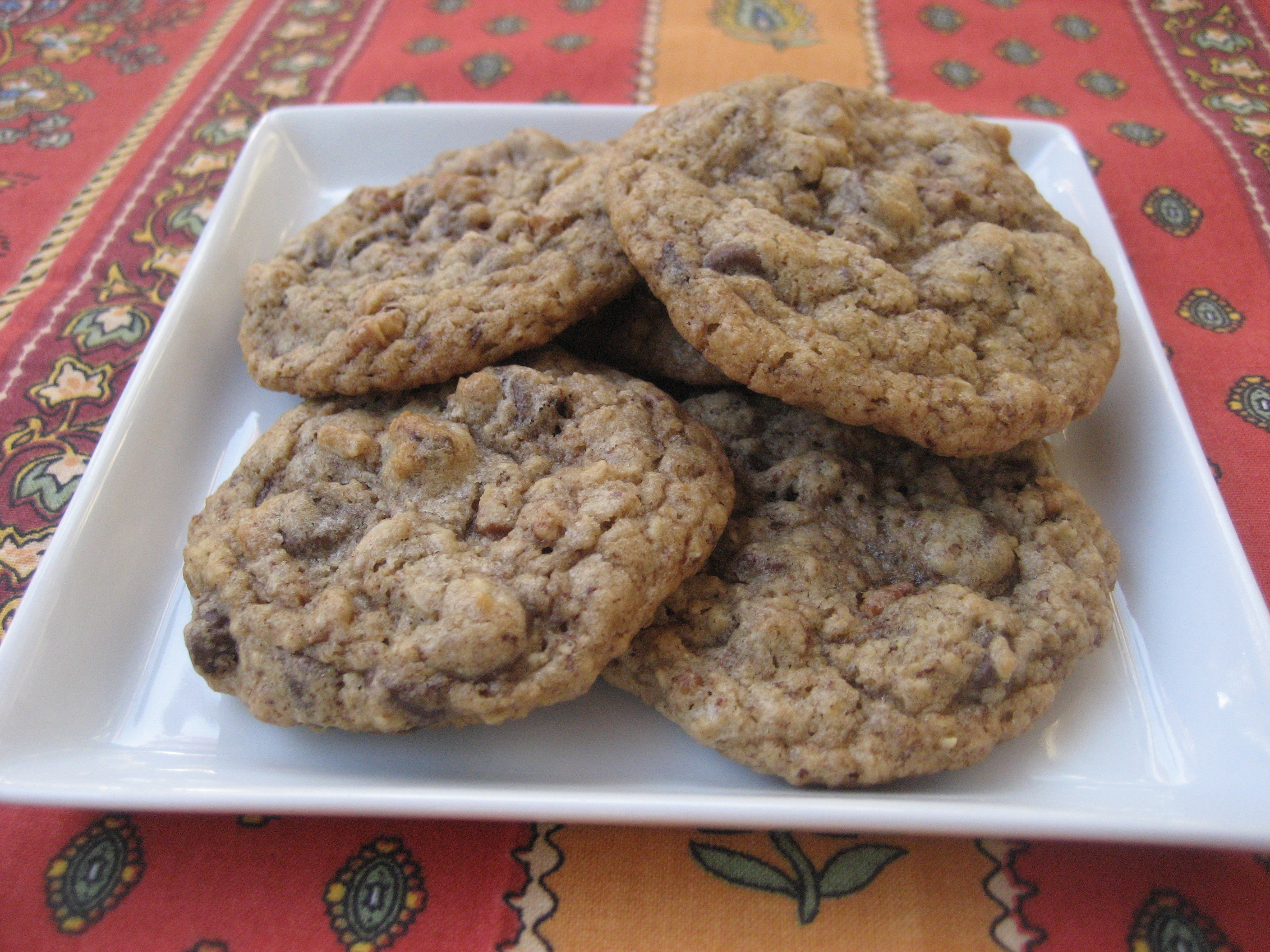
This chocolate chip cookie is the stuff of legends, or should I say urban legends. It’s commonly known as “The $250 Cookie Recipe,” since that’s the amount Neiman Marcus supposedly charged the lady that requested and received the recipe from its store while at lunch. According to Snopes.com, this amusing but false tale has been in circulation for over 50 years. Interestingly, the merchant and food item has evolved over time from a $25 fudge cake recipe “sold” by a train company in the 1940s to Waldorf-Astoria’s red velvet cake recipe in the 1960s to Mrs. Fields’ cookie recipe in the 1980s. Wherever this recipe came from, it’s my favorite chocolate chip cookie and I would gladly pay it (but thank goodness for the internet, so I don’t have to!).

Pork with Sweet and Sour Sauce
adapted from The Food of Thailand: A Journey for Food Lovers by Kay Halsey and Lulu Grimes

Serves 4

8 oz (225 g) pineapples slices in light syrup, each slice cut into 4 pieces (reserve the syrup)
1 1/2 tablespoons ketchup
2 tablespoons fish sauce
1 tablespoon sugar
2 tablespoons vegetable oil
12 oz (340 g) pork, sliced (pork tenderloin recommended)
4 garlic cloves, minced
1 carrot, sliced
1 onion, cut into 8 wedges
1/2 red capsicum (pepper) or serrano pepper, minced
1 bell pepper, cut into 1‑inch pieces
1 small cucumber, unpeeled, halved lengthwise and cut into 1/2‑inch-thick slices
1 tomato, cut into 6 wedges, or 12 baby tomatoes

Mix the pineapple syrup with the ketchup, fish sauce and sugar in small bowl until smooth.

Heat the oil in a wok or deep frying pan over a medium heat and fry the pork until nicely browned and cooked. Remove the pork with a slotted spoon and drain on paper towels.

Add the garlic to the wok and fry over medium heat for 1 minute or until lightly browned. Add the carrot, onion, and peppers and stir-fry for 3 to 4 minutes. Stir in the cucumber, tomato, pineapple and pineapple syrup mixture. Stir-fry for another minute. Taste, then adjust the seasoning, if necessary. Return the pork to the pan and gently stir. Spoon onto a serving plate and garnish with cilantro. Serve with brown or white jasmine rice.

***

NM chocolate chip cookies

Nieman Marcus Chocolate Chip Cookies

Makes about 4 dozen

1 cup (225 g) butter
1 cup (200 g) granulated sugar
1 cup (170 g) brown sugar
2 eggs
1 teaspoon vanilla
2 cups (240 g) flour
2 1/2 cups (200 g) blended oatmeal (measure oatmeal, then blend in blender to a fine powder)
1/2 teaspoon salt
1 teaspoon baking powder
1 teaspoon baking soda
12 oz (340 g) chocolate chips
4 oz (110 g) Hershey bar, grated (I used a Lindt dark chocolate bar)
1 1/2 cups (150 g) chopped nuts (your choice)

Preheat the oven to 375°F (190°C) degrees. Cream the butter and both sugars. Add the eggs and vanilla to the butter mixture. In a separate bowl, mix together the flour, oatmeal, salt, baking powder, and soda.  Add the flour mixture to the sugar/egg mixture. Add the chocolate chips, grated chocolate and nuts. Roll into balls and place 2 inches apart on a cookie sheet. Bake for 10 minutes at 375°F (190°C).

Clay Pot Pork and Coconut Cupcakes with Coconut Cream Cheese Frosting

This is a great meal to serve when dinner for six suddenly turns into dinner for nine. Cousin Alais came to visit and our casual supper turned into a casual dinner party when old friends from California came into town. The braised pork dish doubles well and rice can stretch a long way when you need it to. An Asian-inspired salad rounds out the meal well. We also ate an asparagus and bean sprout salad that my in-laws made. If I can talk my mother-in-law out of the recipe, I’ll add it later.

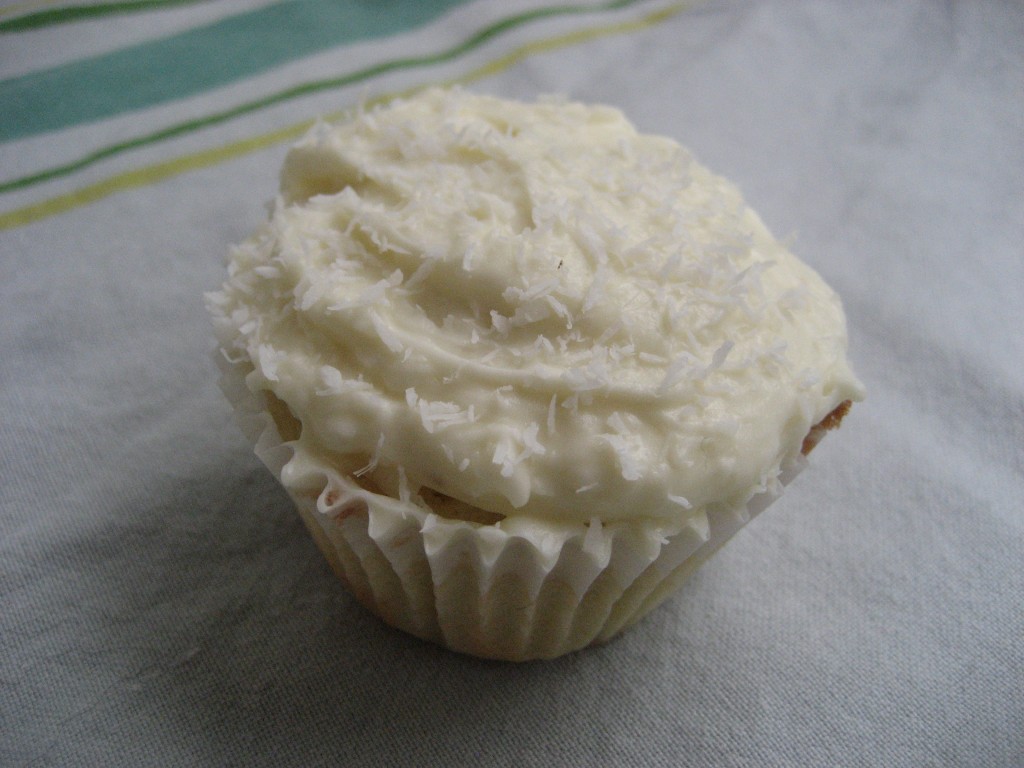
I’ve been looking for these cupcakes for a long time, maybe my entire adult life. I love coconut; I love cake. So why is it so hard to find a good coconut cake? This cupcake recipe is exactly what it should be. Delicate, not too sweet, with a strong coconut flavor and a tangy frosting. I think the coconut milk and dessicated coconut made this recipe. If you’re looking for dessicated coconut (sweetened or unsweetened work fine), check out Whole Foods or your local health food store. Also, these make precious Halloween ghost cupcakes with the addition of mini-chocolate chip eyes. Sam insisted on adding noses, which also looked cute, if not exactly scary.

Clay Pot Pork
from Gourmet, May 2008

Serves 4

1/3 cup (75 g) sugar
3/4 cup (175 ml) water
1/3 cup (80 ml) Asian fish sauce, preferably Vietnamese
3 shallots, thinly sliced
2 garlic cloves, thinly sliced
3 scallions, thinly sliced diagonally, white and green parts kept separate
1 lb (450 g) trimmed boneless pork shoulder, cut into 1‑inch cubes
1 teaspoon finely ground black pepper
cooked rice, to serve

Cook the sugar in a dry 3‑quart heavy saucepan over a moderate heat, without stirring, until it begins to melt. Continue to cook, stirring occasionally with a fork, until the sugar has melted into a deep golden caramel. Carefully add the water and fish sauce (the caramel will harden and steam vigorously) and cook, stirring, until the caramel is dissolved. Add the shallots, garlic, and white part of the scallions and cook, uncovered, stirring occasionally, for 4 minutes.

Toss the pork with the pepper in a bowl and stir into the sauce. Bring to a simmer, then cover the pan, reduce the heat to low, and braise the pork, stirring once or twice, until very tender, 1 1/4 to 1 1/2 hours. Stir in the scallion greens and serve with rice.

***
Coconut Cupcake

Coconut Cupcakes with Coconut Cream Cheese Frosting
adapted from Simplyrecipes.com

Makes 18 cupcakes

for the cupcakes:
3/4 cup (165 g) unsalted butter, room temperature
1 1/4 cup (250 g) sugar
3 eggs, room temperature
2 1/4 cups (270 g) flour
1 teaspoon salt
1 teaspoon baking powder
1 cup (240 ml) canned coconut milk (regular, not light)
1 teaspoon vanilla extract
1/2 cup (40 g) desiccated coconut

for the frosting:
1/4 cup (55 g) butter, room temperature
8 oz (225 g) cream cheese, room temperature
3/4 to 1 cup (90 to 120 g) powdered sugar
1/4 cup (20 g) desiccated coconut, plus extra for sprinkling

Preheat the oven to 350°F (180°C).

Cream the butter until light and fluffy. Add the sugar and cream until light and fluffy again, scraping down the sides halfway through to ensure even mixing.

Add the eggs one at a time, beating for 30 seconds each to ensure they are well mixed. Be sure to scrape down the sides  to ensure even mixing.

Combine the flour, salt, and baking powder in one bowl. In another, add 1 cup (240 ml) of a well-shaken can of coconut milk and the vanilla. Add one-third of the dry ingredients to the butter and sugar mixture and mix, then add half of the wet ingredients. Continue alternating with the wet and dry mixtures, ending with the dry. Stop mixing just as the ingredients become incorporated; do not overbeat. Fold in the coconut.

Scoop the cupcake batter into cupcake papers about three-quarters of the way full. Bake for 18 to 22 minutes, rotating the pan after 15 minutes to ensure even baking. Be sure to check with a toothpick to see if the cupcakes are done. If the toothpick comes out of the cupcake clean, then they’re ready. Allow the cupcakes to cool for a minute or two in the pan, then transfer to a wire rack to cool completely.

To make the frosting, cream the butter and cream cheese together for about 3 minutes. Scrape down the sides and bottom of the bowl. Slowly add the powdered sugar — taste as you go, adding more sugar until you’ve reached the desired sweetness. Fold in the coconut. Spread about 2 tablespoons onto each cooled cupcake. Sprinkle a bit of extra shredded coconut on top and serve.