Summer Corn Chowder

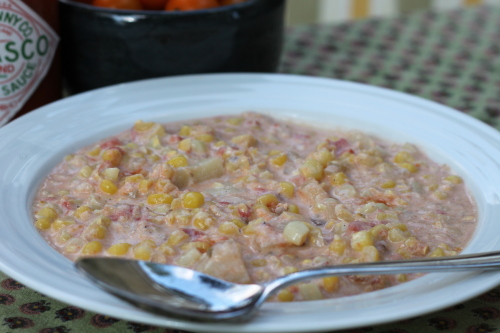
Though I’m a city dweller, I see my fair share of corn at the end of summer. A half hour drive north, south, or west of Milwaukee (Lake Michigan borders our eastern coast) will lead you into corn country. At this time of year, the fields are just turning from gold to green or are being turned under in preparation for next year’s crop. Grocery stores, farmers markets, tiny hand built produce stands, and even the backs of pick up trucks offer plenty of corn for sale. Our CSA delivered a dozen ears for the second week in a row. Though the corn was past its prime, I salvaged the slightly starchy ears in this chowder. I am not usually a fan of corn chowder, having experienced one too many mediocre, pasty bowls of the stuff but this version is vastly better than any other I’ve eaten, helped out by the addition of tomatoes and hot peppers–also abundant right now. And since I’m on the topic of corn, I may as well mention one of my favorite documentaries in recent years, King Corn. If you ever wondered how, what, and why America grows mass quantities of corn, check it out.
Summer Corn Chowder
adapted from Food52

Though I rarely follow recipes that call for peeling tomatoes, this time the effort was worth it. The diced tomatoes nearly melt into the soup, turning it an appealing shade of pink. To peel tomatoes, simply score each tomato on the bottom with a small “x” then submerge them into a pot of boiling water. After a minute or two, gently remove the tomatoes from the boiling water and place them in a bowl of ice water. After a quick soak in the ice bath, you’ll be able to easily peel of the skins.

Serves 6

8 medium ears of corn
6 strips of bacon, cut into 1/2‑inch pieces
1 onion, diced small
1 medium poblano or other hot pepper, seeded and finely chopped
1 jalapeno, seeded and finely chopped (optional, I omitted this ingredient to keep the chowder kid friendly)
1 celery rib, finely chopped
1 lb (450 g) red potatoes, peeled and cubed into 1/2 in. pieces
3 medium tomatoes, peeled, seeded and finely chopped
1 teaspoon salt
1/4 teaspoon ground allspice
1/4 teaspoon sugar
1 small bay leaf
2 cups (500 ml) light cream (half and half), at room temperature
1 cup (250 ml) milk
freshly ground black pepper, to taste
Tabasco hot sauce, to serve

Working over a bowl, cut the corn kernels from the cobs at about half their depth. Then, using the back of the knife, scrape the cobs over the bowl to release all the “milk”; set aside.

In a large dutch oven, fry the bacon over moderately high heat, stirring occasionally, until crisp, about 10 minutes. Transfer the bacon to paper towels to drain. Crumble and reserve.

Discard all but 3 tablespoons of the bacon drippings from the pan. Add the onion and cook over moderate heat until golden, 4 to 5 minutes. Add the poblano and jalepeno peppers and celery and cook until slightly softened, about 5 minutes more. Add the potatoes, tomatoes, salt, allspice, sugar, bay leaf and the reserved corn kernels with their “milk” and stir well. Cook over moderate heat until mixture begins to sizzle.

Reduce the heat to low. Cover and cook, stirring occasionally, until the potatoes are tender, about 45 minutes. Stir in the cream, milk and bacon and bring just to a boil. Remove from heat and season with black pepper to taste. Ladle the chowder into bowls and serve with a good loaf of bread and a few drops of Tabasco.
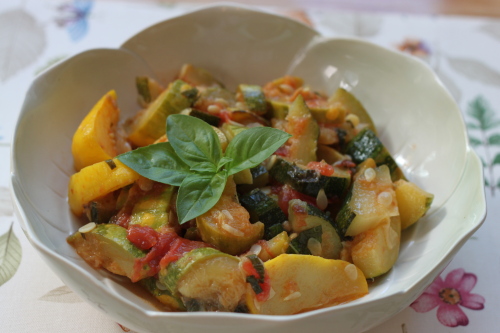
End-of-Summer Squash Sauté with Three Bean Salad

I love cooking at this time of the year. Vegetables and fruits are bountiful and at peak tastiness. It’s not too hot to use the stove top. And a week’s vacation at the end of August left me feeling (relatively) stress free at home and work. Not wanting to add any unnecessary work to my day, the dishes below provided a quick, tasty, and healthy meal and they take full advantage of the overabundant squash and beans from your or your neighbor’s backyard garden. This menu is light. If you want something more substantial for dinner or if you are cooking for guests, pick up a rotisserie chicken at the supermarket, cook up a little pasta to serve with the squash saute, or splurge on a trip to Kopp’s or your favorite ice cream store after dinner. What better way to celebrate the last few, long, warm nights of summer.

End-of-summer squash saute

End-of-Summer Squash Sauté

serves 4

2 or 3 medium summer squash (about 1 1/2 lbs / 680 g)
3 tablespoons olive oil
1 teaspoon kosher salt
1/2 teaspoon freshly ground black pepper
1/2 teaspoon garlic powder
1 large or 2 small tomatoes, peeled and coarsely chopped
3 tablespoons chopped fresh basil
freshly grated Parmesan cheese, for serving (optional)

Cut the squash in half lengthwise (or if the squash is very thick, cut it into quarters lengthwise), then dice into 1/2‑inch-thick pieces.

In a large saute pan with a lid, heat the olive oil over a medium-high heat until hot but not smoking. Add the squash and saute, stirring occasionally, for about 5 minutes, until it just begins to brown. Sprinkle the salt, pepper and garlic powder over the squash, then stir in the tomatoes. Cover and cook, stirring every few minutes, for 10 to 15 minutes longer, until the squash and tomato just begin to break down.

Remove the lid and continue to cook until your desired sauciness level. Stir in the basil and serve with grated Parmesan cheese, if desired. This dish tastes great over cooked pasta or rice or as a side dish.

***

Three Bean Salad
adapted from Molto Gusto: Easy Italian Cooking by Mario Batali

serves 6

1 tablespoon salt
1 lb (450 g) green beans [Note: smaller is better]
1 x 15 oz (425 g) can chickpeas, rinsed and drained
1 x 15 oz (425 g) white kidney beans (cannellini) or red kidney beans
1/4 cup (10 g) coarsely chopped fresh mint
1/2 cup (120 ml) Red Wine Vinaigrette (recipe below)
Maldon or other flaky sea salt and freshly ground black pepper

Bring four quarts of water to a boil in a large pot and add 1 tablespoon salt. Add the beans and blanch them until crisp-tender, about 3 minutes. Drain the beans in a colander and cool under cold running water; drain well.

Combine the green beans, chickpeas and kidney beans in a large bowl. Add the mint and toss. Add half the vinaigrette and toss gently again. Season with salt and pepper. Serve or, if possible, let stand at room temperature for 1 to 2 hours to bring out the flavors. Serve the salad with the remaining vinaigrette on the side.


Red Wine Vinaigrette

Makes 1 cup (250 ml)

1/4 cup (60 ml) good-quality red wine vinegar
1/4 cup (60 ml) sparkling water
1/2 cup (125 ml) extra virgin olive oil

Whisk the vinegar, water and olive oil together in a small bowl, or shake the ingredients together in a small, lidded jar, until well incorporated. The vinaigrette can be refrigerated for up to 5 days.

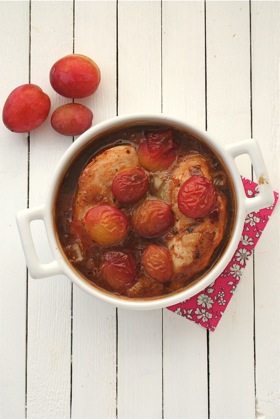
Baked Chicken with Plums, Ginger and Soy

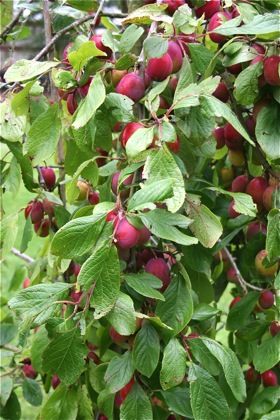
Last week I went to visit a local cheesemaker, Peter Thomas, who makes the award-winning Bellingham Blue cheese. He also has a big garden and the beginnings of a small orchard, and after admiring all the fruit, he promptly pulled up more rhubarb than I could carry and sent his daughter out to pick a big bowlful of plums and apples to send home with me. With such unexpected bounty (not to mention half of wheel of cheese!), I pulled out this old favorite for dinner. Kids like it because of the sweetness from the jam and fruit. It’s the perfect dish for this time of year, when plums are in season — especially if you’re lucky enough to get them fresh off a tree that’s so laden down with fruit that its branches are breaking from the weight.


Baked Chicken with Plums, Ginger and Soy
adapted from Avoca Café Cookbook 

Serves 6

If you can’t get plum jam or fresh plums, try using apricot jam and fresh apricots instead.

olive oil
6 chicken breasts
salt and freshly ground black pepper
a knob of butter
1 onion, chopped
3 garlic cloves, chopped
1 x 12 oz (350 g) jar of plum or damson jam
2 tablespoons brown sugar
2 tablespoons lemon juice
1 tablespoon soy sauce
1 tablespoon tomato puree
1 teaspoon ground ginger
1 teaspoon dry mustard powder
1 teaspoon Worcestershire sauce
6 to 8 fresh plums, stoned and quartered
cooked plain rice, to serve
steamed broccoli, to serve

Preheat the oven to 350°F (180°C).

Heat some olive oil in a pan over a medium-high heat. Season the chicken breasts on both sides and brown them in the pan, then set aside. Add a knob of butter to the pan and turn the heat down to medium. Saute the onion for 10 minutes, until soft but not browned (add a pinch of salt to the onions to help prevent them from browning). Add in the garlic and cook for 1 minute more. Add in all the remaining ingredients except the plums and simmer for 15 minutes.

Arrange the chicken pieces in a single layer in a large baking dish. Cover with the sauce and scatter over the quartered plums. Cook in the oven for 30 to 40 minutes, until the sauce is bubbling and the chicken is cooked through. Serve with rice and some steamed broccoli on the side.

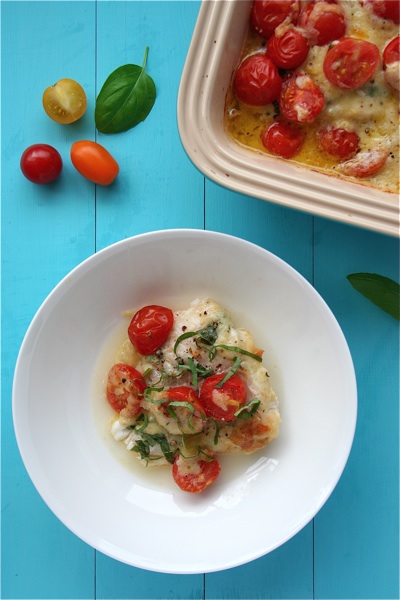
Gratin of Fish with Cheese, Tomatoes and Herbs

Back in December, a local DIY store had an unbeatable deal on greenhouses when they had them on sale for a little over €100, so we snapped one up. Granted, it’s as small and flimsy as you’d expect a €100 greenhouse to be, but it’s still standing, despite our reservations that it would all fall to pieces in the first strong wind. And it means that we’re finally able to grow tomatoes! But if I thought my husband was besotted with his potatoes last year, that was nothing compared to his love affair with the tomatoes. Any free minute he gets, he’s pottering around out in that greenhouse, checking on the cherry and San Marzano tomatoes before he leaves for work in the morning and then again as soon as he gets in the door at night to see how they’ve ripened during the day. I don’t think we’ll have a glut of them and will probably be eating them on their own with just a little salt, pepper and a drizzle of good olive oil, but if your garden is producing a lot of cherry tomatoes or if you can get them cheap at a farmers’ market, this is one of my favorite new dishes that I’ve made a few times now and is a good way to use them.

Gratin of Fish with Cheese, Tomatoes and Herbs
adapted from Rachel’s Favourite Food at Home by Rachel Allen

Serves 4

When you make this, you’ll probably start to think that the cheese and cream mixture isn’t enough to cover all the fish, but don’t worry, it will once it melts. Rachel Allen’s original recipe calls for flat fish, such as plaice or lemon sole, but I like the meatier texture of a firm white fish like hake or cod instead. If you can’t get one or the other of Gruyère or Swiss cheese (Emmental), just double the quantity of the cheese you can get. If you’re in Ireland, try using the Glebe Brethan farmhouse cheese instead of the Gruyère.

1 cup (100 g) grated Gruyère cheese
1 cup (100 g) grated Swiss cheese (Emmental cheese)
1 tablespoon Dijon mustard
5 tablespoons cream
salt and freshly ground black pepper
1 punnet (9 oz/250 g) cherry tomatoes
1 teaspoon chopped fresh thyme leaves or 2 tablespoons chopped fresh basil
1 1/2 lb (750 g) white fish fillets, such as hake or cod, skinned and deboned
green salad, to serve
boiled new potatoes, to serve

Preheat the oven to 350°F (180°C).

Place the grated cheeses, mustard and cream into a bowl and mix well. Season with salt and freshly ground black pepper and set aside.

Cut the cherry tomatoes in half and place into a bowl. Season with a little salt and add the herbs. Mix the ingredients well so that the cherry tomatoes are well seasoned.

Lay the fish in a gratin dish (or individual ovenproof dishes) in a single layer if you can. Dot the cheese mixture over the fish, then scatter the tomatoes and herbs on top. Transfer the fish to the oven and cook for 20 to 30 minutes (or 15 minutes for single portions), until the cheese is golden brown and the fish is cooked through.

To serve, place a portion of the fish on a plate and serve with a big green salad and some boiled new potatoes.

Old South Jelly Roll Cake (and my favorite canning recipes)

As odd as this is to admit, I’ve developed an addiction to canning. It all started quite innocently with a batch of strawberry lemonade concentrate a couple years ago. Then last year Kristin helped me put up a batch of garlic dill pickles. Now I’ve worked my way up to pickled peppers, spicy dilly beans, green tomato relish, and, finally this year, jam. Strawberry jam, though not the easiest thing I’ve ever cooked, may be one of the best things to come off my stove top. Even the extra emergency trip to the store to buy more Sure Jell (Anabelle had hidden mine in the microwave) didn’t bother me after tasting the final product.

But what can you do with such a treasure? Surely it could not live up to its potential merely spread on wheat toast. Leave it to Sam to come up with a solution — a jelly roll. How a four-year-old even knows about this old-fashioned dessert is beyond me, but I’m glad he does. The light sponge cake highlights the sweet, ruby red jam beautifully, a tasty and lovely looking treat, perfect for a picnic.

Old South Jelly Roll Cake
From Paula Deen, Food Network

4 eggs, separated
3/4 cup (150 g) sugar
1 tablespoon vanilla
3/4 cup (75 g) cake flour, sifted
3/4 teaspoon baking powder
1/4 teaspoon salt
1 cup (250 ml) jam, stirred well
confectioners’ sugar (a.k.a. icing sugar), for dusting, sifted
whipped cream, to serve (optional)

Preheat the oven to 400°F (200°C).

In a small bowl, beat the egg whites until stiff but not dry and set aside. In another bowl, beat the egg yolks until light. Gradually add the sugar and vanilla, and mix well. Sift together the flour, baking powder, and salt. Add the sifted flour mixture to the egg yolk mixture. Fold the egg whites into the egg mixture and pour the batter into a 15 x 10 x 1‑inch jelly roll (Swiss roll) pan lined with waxed paper. Bake for 8 to 10 minutes, or until the cake is golden.

Loosen the edges of cake and invert the cake onto a dish towel dusted with confectioners’ sugar. Gently and slowly peel the wax paper off the cake. Trim 1/4 inch of hard crust off each long side of the jelly roll cake. Begin with the narrow side and roll the cake and towel up together. Cool the cake on a rack, seam side down, for 10 to 15 minutes.

Once the cake has cooled, gently unroll and spread the cake with jam and re-roll. Sprinkle with confectioners’ sugar. Serve with whipped cream, if desired.

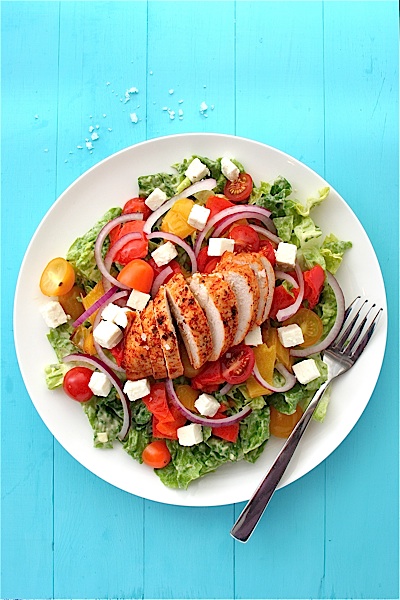
Smoky Lemon Chicken Salad with Roasted Peppers and Avocado

Just a couple weeks ago, there was a day in mid July where storm clouds were rolling in from the west, I made a cup of tea just so I could wrap my hands around something warm and I briefly debated lighting the wood stove to take the chill out of the air. I’ve lived in Ireland for 12 years and I usually don’t let the weather get me down — I know full well by now how disappointing Irish summers can be, weather wise — but that day was so grey and cold and dismal that I was close to tears. It might not be much of a summer most days, but we do get a nice surprise every now and again with a day that’s sunny and over 70°F, and on one such day I made this salad — and liked it so much that on the next warm, sunny day, I made it again.

Smoky Lemon Chicken Salad with Roasted Peppers and Avocado

Serves 4 as a main meal

The chicken could be grilled on a BBQ or grill pan instead of roasted in the oven. The avocado dressing (adapted from Mexican Everyday by Rick Bayless) makes the salad more substantial and filling, but if it seems like too much work, try this lime-garlic dressing and simply slice 2 avocados and add them to the salad instead. And speaking of too much work, you could use jarred roasted peppers instead of roasting fresh ones yourself too.

for the smoky lemon chicken:
1/2 cup (125 ml) freshly squeezed lemon juice (2 or 3 large, juicy lemons)
1/2 cup (125 ml) olive oil
1 teaspoon chilli powder
1 teaspoon smoked paprika
salt and freshly ground black pepper
4 chicken breasts

for the salad:
2 heads of Romaine lettuce, shredded
2 red peppers, roasted, deseeded and cut into bite-sized pieces
2 yellow peppers, roasted, deseeded and cut into bite-sized pieces
1 lb (425 g) cherry tomatoes, halved
1/2 red onion, sliced very thinly into half moons
1 cup (200 g) cubed or crumbled feta cheese

for the avocado dressing:
2 green onions, chopped (white and green parts)
1 avocado, skin and stone removed
1 garlic clove, minced
1/2 cup (10 g) cilantro (leaves and stems), roughly chopped
1/2 cup (125 ml) mayonnaise
1/4 cup (50 ml) vegetable oil
3 tablespoons fresh lime juice
1 teaspoon Worcestershire sauce
salt and freshly ground black pepper

Whisk together the lemon juice, olive oil, chilli powder, smoked paprika and a generous pinch of salt and freshly ground black pepper. Place the chicken in a glass bowl or ceramic dish and pour the marinade over. Cover tightly and place in the fridge for at least a few hours, or ideally overnight. When you’re ready to cook, preheat the oven to 400°F (200°C) and transfer the chicken to a baking sheet, trying to keep as much of the spices on the chicken as you can once you remove it from the marinade. Sprinkle over some salt and freshly ground black pepper and roast the chicken for 25 to 30 minutes, or until cooked through.

Meanwhile, to make the dressing, add all the ingredients to a food processor or blender. Process until smooth.

Toss the shredded Romaine lettuce with some of the dressing, making sure all the lettuce is coated. Divide the lettuce between 4 plates or large salad bowls, then scatter over the roasted peppers, halved cherry tomatoes and red onion slices, finishing with the feta cheese.

When the chicken is done, slice each breast into thin strips and place on top of the salad. Spoon over some additional dressing, if desired, and serve right away.

Pesto Trapanese

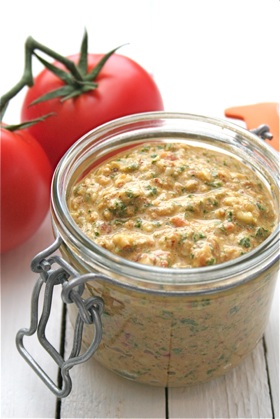
This is the fifth year we’ve had a vegetable garden at our house in the country, but I quickly learned the first year that basil doesn’t grow well (if at all) outdoors in Ireland. We have a small greenhouse this year, but all the space is taken up with tomatoes, Kirby cucumbers and peppers, so the basil plants had to make do with our kitchen windowsill, where they’re going gangbusters. I’d already made a few batches of regular pesto and was starting to get tired of it when I remembered bookmarking this recipe for pesto Trapanese last year, and it’s a new favorite, not to mention a nice change. Try it at least once this summer.


Pesto Trapanese
adapted from Catherine’s Italian Kitchen by Catherine Fulvio

Makes 2 cups (500 ml)

Use 1 cup (250 ml) of the pesto for dinner to serve 4 to 6 people and freeze the other half for another time. Alternatively, this will keep in the fridge, tightly covered, for up to 1 week with a thin layer of olive oil poured on top of the pesto to prevent the basil from turning black.

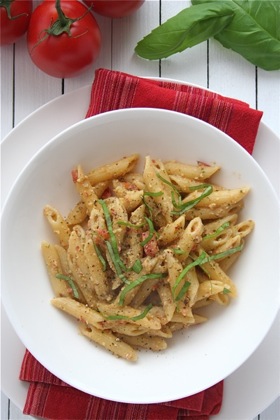
1 lb (425 g) spaghetti, linguini, penne or your favorite pasta
1 cup (125 g) whole almonds
3 large ripe tomatoes, quartered, or 10 ripe cherry tomatoes
2 garlic cloves, roughly chopped
2 oz (50 g) fresh basil leaves (about 2 large handfuls)
1/2 cup (125 ml) good-quality olive oil
salt and freshly ground black pepper

Cook the pasta in a large pot of boiling salted water according to the instructions on the packet.

To make the pesto, place the almonds in a food processor and whizz until they’re reduced to nibs (don’t overprocess them to a paste). Add in the tomatoes, garlic, basil, olive oil and a generous seasoning of salt and pepper and whizz again until everything is well combined. Add more olive oil if you want the consistency of the pesto to be thinner. Stir 1 cup (250 ml) of the pesto into the drained pasta and serve right away.

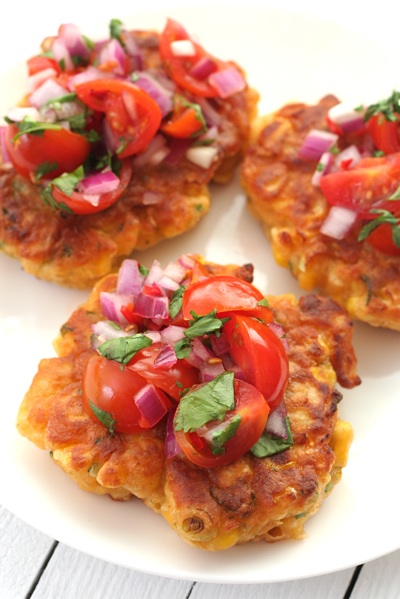
Sweetcorn Fritters with Tomato Salsa

A few months ago, a friend asked me how I keep track of all the recipes I want to try from my ever-expanding cookbook collection. “Don’t laugh,” I said, “but I have a spreadsheet.” I have separate sheets divided into categories like quick weeknight dinners, pasta, seafood, vegetarian mains and desserts and in each sheet I have a column where I’ll list a season if it’s a recipe that lends itself to a certain time of year, so I can sort recipes that way too. You might be laughing now, but it’s how I remembered this recipe for sweetcorn fritters that I’d bookmarked sometime last year after summer had already come and gone. You’ll thank me for my nerdy organization once you try these. I’ve already made them three times this summer.

If you like the sound of these sweetcorn fritters, you might also like these zucchini fritters with feta and dill.

Sweetcorn Fritters with Tomato Salsa
adapted from Itsa Cookbook by Domini Kemp

Serves 4 for a light dinner

These lend themselves to all kinds of adaptations. Adding in some chopped cooked bacon was, unsurprisingly, the first thing I thought of, or you could try making a Mexican-influenced version by using chipotle powder instead of paprika, adding some chopped jalepeno or red chilli and serving the fritters with a dollop of sour cream and a tomatillo salsa. These would also be good served for brunch alongside bacon and eggs or packed for a picnic.

For the sweetcorn fritters:
2 cups (250 g) flour
1 x 11 oz (320 g) can of sweetcorn, drained
2 eggs, beaten
1 bunch of scallions, roughly chopped
1 small bunch of cilantro (a.k.a. coriander), roughly chopped
1/2 cup (125 ml) milk
1 teaspoon baking powder
1/2 teaspoon smoked paprika
1/4 teaspoon salt
sunflower oil, for frying

For the tomato salsa:
9 oz (250 g) cherry tomatoes, quartered
1 small red onion, very finely diced
1 small red chilli, deseeded and chopped
1 teaspoon sweet chilli sauce (optional)
1/2 teaspoon sugar
juice of 2 limes
1 small bunch of cilantro (a.k.a. coriander), finely chopped
salt and freshly ground black pepper

To make the salsa, mix all the ingredients together and leave for 30 minutes at room temperature before serving to allow all the flavors to marry together.

To make the fritters, place everything in a bowl except the sunflower oil and mix together well.

Heat the sunflower oil in a frying pan over a medium heat. Plop large spoonfuls of the mixture into the hot oil. Fry the fritters for 2 or 3 minutes on each side, until golden. Pat them down slightly while they’re cooking in the pan, since they’ll cook better if they’re a bit thinner. Set aside on a plate and repeat with the remaining batter. Serve the fritters warm with the tomato salsa.

A Cooking Blog