Category Archives: Pasta and noodles

Tortellini in Broth with Spinach

Inevitably after most holiday meals, I find myself walking to my car with a plastic grocery bag of slightly gooey, unattractive, and lukewarm bag of bones and meat scraps. Perhaps no one else wants to carry home such an odd parcel, or perhaps everyone knows of my frugality. Whatever the reason, I’m happy to turn the humble carcass into a hearty broth at home. If you browse through the recipes on this site, you’ll find that both Kristin and I use broth frequently. Although I’ve found a good store-bought brand (Swanson’s Organic Chicken Broth), nothing beats homemade.  It’s really cheap and easy to make.

For this year’s turkey broth I threw the leftover bones (with scraps attached) into a large stock pot and poured in water to cover. I roughly chopped and added one onion, one carrot, one celery stalk, and a handful of fresh parsley. For added zip, I threw in a pinch of dried thyme, a bay leaf, and about a tablespoon of salt. After bringing it to a boil, I let the liquid barely simmer for about three hours, strained it, and poured it into quart jars. After a night in the fridge, you can skim off any fat that rises to the top and pour the broth into whatever size container you wish. It will keep in the fridge for a few days and frozen for several months. I like to freeze it in muffin tins, then put the small broth-circles into larger storage bags, perfect for adding to sauces and stir-frys. I didn’t freeze all my broth this year, instead sacrificing a quart for this quick and kid-friendly meal. For extra cuteness, serve in bunny bowls as pictured below.

Tortellini in Broth with Spinach

Serves 4 as main course, 6 as first course

14 oz (400 g) dried tortellini
1 quart (1 liter) chicken or turkey broth
12 oz (340 g) fresh baby spinach
grated Parmesan cheese, to serve

Cook the tortellini according to the package directions. Drain the tortellini and set it aside.

While the pasta cooks, bring the broth to a simmer. Depending on the broth you are using, you may need to add salt or pepper to taste.

After the tortellini is cooked, add the spinach to the broth and cook for about 2 minutes, stirring gently, until the spinach is wilted. To serve, divide the broth, spinach, and tortellini between bowls. Top each bowl with grated Parmesan, if desired.

Pappardelle with Butternut Squash, Blue Cheese and Pine Nuts

The secret foodie project I’ve been working on for the past two months with fellow blogger Caroline from Bibliocook is out! When I’ve been writing these past few weeks that I’ve been slaving away with work and was practically too busy to cook, that was only part of the story — Caroline and I were also madly working behind the scenes to launch the new Irish Food Bloggers Association at the Food Camp that kicked off the Savour Kilkenny Food Festival last week (if you’d like to read more about Ireland’s first-ever Food Camp, visit some of these blogs for their recaps; they were obviously taking better notes than me!). If you’re an Irish or Irish-based blogger writing about anything to do with food, please join us! Or just check out the site to explore what we hope will become the definitive list of all the food blogs in Ireland.

This will be my last post from Nigella’s new book for awhile, I promise. The one downside to launching the IFBA on October 22 was that I only found out late that night after getting back from Kilkenny that Nigella Lawson was doing a book signing in Dublin at noon the next day, and I was just too tired and too busy to go and have her sign my already well-thumbed copy of Kitchen. Looks like I’ll have to wait until she writes her next book and try to catch her on that tour.

Pappardelle with Butternut Squash, Blue Cheese and Pine Nuts
adapted from Kitchen by Nigella Lawson

Serves 4

This is a first cousin to this risotto with roasted butternut squash, bacon and blue cheese (I wouldn’t be averse to adding some bacon to this pasta dish). Nigella notes that the sauce can be made 1 day ahead — simmer until the squash is tender, then transfer to a nonmetallic bowl to cool. Cover and refrigerate, then reheat gently in a saucepan and proceed as directed. The sauce can also be frozen in an airtight container for up to 3 months — just defrost overnight in the fridge and reheat gently.

1 large onion, finely chopped
2 tablespoons olive oil
3/4 teaspoon smoked paprika
1 large butternut squash, peeled, deseeded and cut into 1‑inch cubes
1 tablespoon unsalted butter
3 tablespoons Marsala
1/2 cup (120 ml) water
salt and freshly ground black pepper
6 fresh sage leaves, finely chopped (or 1/2 teaspoon dried sage)
18 oz (500 g) pappardelle or other robust pasta
1 cup (100 g) pine nuts
5 oz (125 g) soft blue cheese, crumbled

Fry the onion in the olive oil over a medium heat in a large, heavy-based pan that can accommodate all the pasta later. After about 10 minutes, add the paprika. Add the cubed butternut squash, then add the butter, stirring everything together well in the pan. Add the Marsala and water. Once the mixture starts to simmer, put the lid on, turn down the heat and simmer for about 20 minutes, or until the squash is tender but still holds its shape. Season to taste (keeping in mind that the cheese will be salty too), then sprinkle the sage into the squash mixture, reserving some to garnish.

Meanwhile, cook the pasta in a large pot of boiling, salted water according to the packet instructions. Toast the pine nuts in a separate hot, dry pan, tip them into a bowl and set aside.

Before you drain the pasta, reserve a mugful of the cooking water. Add the drained pasta to the squash and slowly stir to combine. Add some of the pasta cooking water to help the sauce emulsify, then add the blue cheese and half the pine nuts. Gently combine, then sprinkle the remaining pine nuts and sage on top and serve.

Pasta with Feta, Spinach and Pine Nuts

Nigella Lawson’s new show, Nigella Kitchen, started two weeks ago. The only problem is that it’s on at the same time as River Cottage Everyday with Hugh Fearnley-Whittingstall. Luckily, I don’t have to choose between them since I can record River Cottage while I watch Nigella, but if I did have to choose, I think I’d go with the domestic goddess. I know her formula of snug-fitting cashmere twin sets, seductive finger-licking and her fondness for fairy lights is growing old for some people, but I still love her. I even joke that I want to be her when I grow up. This is another 30-minute meal from her new cookbook, taken from her lifesaver express index when I barely had time to think amidst my work deadlines last week, never mind plan meals, shop for them and cook them, but was still able to whip up something healthy and tasty for dinner thanks to this quick and easy recipe.

Pasta with Feta, Spinach and Pine Nuts
adapted from Kitchen by Nigella Lawson

Serves 6

Nigella says the leftovers can be made into an excellent cold pasta salad for lunch the next day by refrigerating it straightaway, then breaking it up a bit with a fork and adding some lemon juice and olive oil.

1 lb 2 oz (500 g) fusilli
1/3 cup (50 g) pine nuts
1 tablespoon olive oil
1 onion, sliced
2 cloves garlic, minced
1/4 teaspoon nutmeg or allspice
1 lb 2 0z (500 g) frozen leaf spinach
7 oz (200 g) feta cheese, crumbled
3 or 4 tablespoons freshly grated Parmesan
salt and freshly grated black pepper

Cook the pasta in a large pot of boiling salted water until al dente, or according to the packet instructions.

Toast the pine nuts in a hot, dry pan (one that’s big enough to eventually take the sauce and all the pasta) just until they’re golden, taking care not to let them burn. Transfer to a bowl or plate and set aside.

Heat the olive oil in the pan and add the onion. Cook on a low heat for 8 to 10 minutes, until soft. If they look like they’re getting too brown, sprinkle with a little salt (to help draw out the juices and slow down the browning). Add the garlic and cook for 1 minute more. Add the nutmeg or allspice, then add the frozen spinach. Keep stirring to help the frozen spinach melt consistently.

Just before you drain the pasta, scoop out a mug of the cooking water. Add about 1/4 cup (60 ml) to the spinach in the frying pan, then crumble in the feta and stir. Add in the Parmesan and stir again.

Drain the pasta and toss into the spinach and feta sauce, then season to taste. Add in more of the pasta cooking water if the sauce looks too dry. Transfer to a serving bowl, then add the toasted pine nuts and toss through before serving.

Pasta with Pancetta, Peppers and Parsley

With over 80 cookbooks in my collection, the last thing I need is another one, but that didn’t stop me from getting Nigella Lawson’s new book, Kitchen: Recipes from the Heart of the Home, hot off the presses two weeks ago (in America, you’ll have to wait until October 12 to get your hands on a copy). A lifesaving new feature in this book is a separate index of express recipes that can be made in 30 minutes or less, and with a recent bottleneck of work deadlines requiring lots of late nights chained to my desk with little time to spare for cooking, let alone meal planning, I’ve already been turning to it a lot. This is one of the first recipes I made from the book, and I can see it being a firm favorite in my repertoire of store cupboard dinners that I can pull together when time is short and the kids are hungry.

Pasta with Pancetta, Peppers and Parsley
adapted from Kitchen by Nigella Lawson

Serves 4

1 lb (450 g) spaghetti
1 tablespoon olive oil
11 oz (300 g) pancetta cubes or streaky bacon
3 cloves garlic, chopped
1 teaspoon dried chili flakes (optional)
zest and juice of 2 lemons
1/4 cup (60 ml) cold water
about 14 oz (400 g) (drained weight) roasted peppers from a jar, chopped into bite-sized pieces
1 large bunch of parsley, chopped
salt and freshly ground black pepper

Cook the pasta in a large pot of boiling salted water according to the packet instructions.

Meanwhile, heat the oil over a medium heat in a heavy-based pan, one that’s big enough to eventually add all the cooked pasta to later. If you’re using regular bacon, chop it into bite-sized pieces first. Fry the pancetta or bacon until crisp, then add the garlic, dried chili, lemon zest and juice and the water. Cook for 1 minute, then add the peppers and half the chopped parsley.

When the pasta has finished cooking, reserve 2 cups (480 ml) of the cooking water, then drain. Add the pasta to the sauce in the pan. Toss everything together well and add some of the pasta cooking water if it needs it, then season to taste and sprinkle with the remaining parsley.

Rigatoni with Pork and Lemon Ragu and Garlic Sauteed Spinach

After more than a year of blogging, nearly all my favorite recipes have been gathered, photographed and posted. While this has forced me to try out new recipes, the new recipes don’t always turn out to be blog-worthy. Sometimes they don’t even turn out to be edible. Thankfully, friends and family will sometimes throw a tried and true recipe of their own my way. Leah, high school friend of Kristin and me, also of Tzatziki Chicken fame, sent me a bunch of her family’s favorite recipes earlier this month. This is the first of the bunch I tried and if the others are even half as tasty, we’re in for some good eating in my house. Thank you, Leah! If anyone else has a favorite recipe of their own, please send them our way.

Rigatoni with Pork and Lemon Ragu
adapted from Easy Everyday: Simple Recipes for No-fuss Food (Ryland Peters & Small))

Serves 6

2 tablespoons olive oil
1 lb (450 g) ground pork
1 onion, finely chopped
3 garlic cloves, thinly sliced
4 anchovy fillets in oil, drained
2 tablespoons fresh rosemary leaves, minced
1 lemon, zested and juiced
1 lb (450 g) rigatoni
2 cups (475 ml) whole milk
handful of good quality green olives, pitted and chopped
1/2 cup (120 ml) heavy cream
1/2 teaspoon freshly ground nutmeg
1/2 cup (50 g) Parmesan shavings, plus extra to serve
salt and black pepper, to taste

Put a large pan of salted water on to boil for the rigatoni.

Meanwhile, heat the olive oil in a large skillet over high heat and add the pork. Cook the pork 3–4 minutes until lightly browned, breaking up clumps with the back of a wooden spoon. Add the onion, garlic, anchovies, rosemary, and lemon zest and stir to combine with the pork. Reduce the heat, cover, and let the onion soften for 10 minutes, stirring occasionally.

When the salted water is boiling, add the rigatoni and cook according to the package instructions until al dent and drain.

When the onion is translucent, add the milk, lemon juice, and olives, and bring to a boil, scraping the bottom of the skillet to loosen any sticky, flavorful bits and incorporating them into the sauce. Simmer for 15 minutes or utnil about two-thirds of the liquid has evaporated and the pork is soft. Stir in the cream, then season with nutmeg, salt, and pepper.

Carefully stir in the cooked rigatoni to the pork ragu. Add the Parmesan and transfer to bowl, sprinkling extra Parmesan on top if desired.

***

Garlic Sauteed Spinach

Serves 4

2 bunches spinach, stems removed
1 tablespoon olive oil
1 tablespoon butter
2 cloves garlic, minced
1/2 teaspoon sea salt
lemon juice or rice wine vinegar, to taste

Fill your sink or a large bowl with cold water. Add the spinach to the water and let it soak for a few minutes. Any dirt on the spinach should settle to the bottom of the sink or bowl. Remove the spinach, drain the water (and any dirt) and repeat the procedure to remove any remaining dirt. Drain the spinach and dry it as much as possible in a salad spinner or on a dish towel.

Heat the olive oil and butter over medium heat in a large skillet. Add the garlic and cook 1–2 minutes until it is just starting to turn golden. Add half the spinach and stir until it begins to wilt. Add the other half of the spinach and continue to cook, stirring occasionally, for another 4–5 minutes until fully wilted but still green. Season with salt and lemon juice or vinegar, to taste.

Pasta with Tuna, Tomatoes and Olives

Last Tuesday was one of those days that turned out to be warmer than predicted (not that I’m complaining!), so much so that whatever it was that I had planned to cook that night, I suddenly didn’t want to anymore. Add to that the fact that I had a plumber and a loss adjuster in my kitchen while I was trying to make dinner, talking about having to rip up and replace all the flooring throughout the house because of a mysterious water leak we have, and I wanted to cry, not cook. But this is one of those recipes that takes almost no time to cook and is made of pantry staples that I always have around, so I was able to quickly change my plans, throw this together and avoid resorting to takeout.

A well-stocked pantry can be a busy cook’s best friend, as Anita writes in her Dinner on a Deadline series. (And check out this well-stocked, well-organized pantry — it makes my Virgo heart happy just to look at it.) Some of the things you’ll rarely find me without are canned chickpeas, cannellini beans, black beans and tomatoes (whole and chopped), rice, pasta, couscous, tortillas, onions, garlic, lemons, olives, tuna and a jar of pesto in the pantry, as well as a good variety of dried herbs and spices and all the staples for baking; some fresh herbs, chorizo, eggs, Parmesan and cheddar cheese, potatoes, carrots and apples in the fridge; and frozen peas, frozen berries, chicken breasts and homemade chicken stock in the freezer. With just that short list of ingredients, I can make pasta with Marcella Hazan’s tomato sauce, pasta e ceci, roasted garlic and pea soup, red chile chicken and rice with black beans, chicken bouillabaisse, a white bean and tuna salad, a ploughman’s lunch, homemade pizza, cheese quesadillas, a potato frittata or this dinner with hardly any planning ahead.

What pantry staples do you always have on hand? What are your store cupboard stand-by dinners? Let us know in the comments or come join the discussion on our Facebook page, under the Discussions tab! 

Pasta with Tuna, Tomatoes and Olives
adapted from Apples for Jam by Tessa Kiros

Serves 4

If you don’t have fresh herbs, just use some dried basil instead. Olives can become bitter if cooked too long, so you should add them in at the end of a recipe.

14 oz (400 g) pasta, such as penne, farfalle or spaghetti
2 tablespoons olive oil
2 garlic cloves, finely chopped
1 x 14 oz (400 g) can of chopped tomatoes
salt and freshly ground black pepper
1 x 6 oz (170 g) can of tuna, drained
3 basil leaves, torn
2 tablespoons finely chopped fresh parsley
a few handfuls of black olives, halved

Cook the pasta in a large pot of boiling salted water according to the packet instructions.

Meanwhile, heat the oil in a large saucepan over a medium-low heat. Add the garlic and cook for 1 minute. Add the tomatoes and season well with salt and pepper. Simmer for 10 to 15 minutes, then add the tuna, breaking up any large chunks with a wooden spoon. Add in the basil, parsley and olives and simmer for a few minutes more, then remove from the heat.

Drain the pasta and reserve some of the cooking water. Add the pasta to the sauce. Add some of the pasta cooking water to help the sauce coat the pasta if necessary. Serve immediately.

Creamy Penne with Smoked Trout and Peas

When I attended the Bord Bia Irish food bloggers event last month, I first and foremost met loads of fantastic people, some of whom are bloggers I’ve been reading for awhile, and some who I happily discovered thanks to this event. I also saw a few cooking demos, including a don’t-try-this-at-home handsaw-wielding butcher; heard talks on raising your blog’s profile from Damien Mulley and how to land a book deal from Eoin Purcell; learned some tips on food styling from Erica Ryan and food photography from Jocasta Clarke; and ate pork belly and its fabled crackling for the first time.

And I got some free grub.

I left the Bord Bia offices laden down with potted thyme and sage plants from Living Flavour; a jar of chutney for cheese from Sheridans Cheesemongers; a box each of Pu-erh and South African Roobios tea from Barry’s Tea; a pack of Biltong Irish beef jerky; a pack of lentil, pea and bean shoots from Good4U; a homemade Macroom oatmeal ginger biscuit made by fellow blogger Lilly Higgins; and last but not least, two fillets of hot smoked Irish trout from Goatsbridge. (And not forgetting, of course, the 4 lb pork loin sent out by Bord Bia before the event that I brined and served with a rhubarb compote.)

We scoffed most of the lot fast enough, but I let the trout sit in the fridge for a week while I decided what to do with it. I can’t claim to be the first of the Irish bloggers to come up with the idea of pairing the trout with pasta and peas — Darren at Supper Satisfaction and Aoife at Babaduck Babbles have both posted similar versions already, and I was inspired by Gizzi Erskine’s recipe for spaghetti with smoked salmon and peas that Donal Skehan featured on his blog last month and which my kids loved when I made it. The top-quality trout did most of the work for me in this recipe, but some lemon, crème fraîche and white wine didn’t hurt either. If you can’t find smoked trout, this recipe would work just as well with smoked salmon.

But I left with more than just a bag full of free food. I came away from the event inspired to try some new recipes thanks to the producers’ generous donations, with new friends and with a sense that I’m part of a buzzing little Irish food blogging community. Now that’s what I call a good day out.

Creamy Penne with Smoked Trout and Peas

Serves 4 to 6

The folks at Goatsbridge suggested adding a pinch of dried chili flakes to this recipe for a little kick. If you can’t get crème fraîche, try taking a leaf out of Gizzi Erskine’s book and using 1/2 cup (120 ml) heavy cream and 1/2 cup (120 ml) Greek yogurt instead, in which case you might not need to add the pasta cooking water at the end.

1 lb (450 g) penne
2 cups (200 g) frozen peas
1 tablespoon (15 g) butter
4 small shallots, finely chopped
juice of 1 large lemon
1 cup (240 ml) white wine
1 cup (240 ml) crème fraîche
salt and freshly ground black pepper
7 oz (200 g) smoked trout (or smoked salmon), roughly chopped
1/4 cup (10 g) chopped fresh dill
freshly grated Parmesan, to serve

Cook the penne in a large pot of boiling salted water according to the packet instructions. Five minutes before the end of the cooking time, add the frozen peas in with the pasta.

Meanwhile, melt the butter over a medium-low heat in a large frying pan, one that’s big enough to eventually hold all the cooked pasta. Add the shallots and cook for 3 to 4 minutes, until softened. Add the lemon juice and wine and bring to the boil. Turn the heat down to low and simmer for about 10 minutes, until the lemon and wine have reduced a little. Add in the crème fraîche and stir well, then season with salt and pepper. Add in the smoked trout and continue to simmer until the trout is heated through.

Drain the pasta and peas, reserving some of the cooking water. Add a ladleful of the pasta cooking water to the sauce to thin it a little. Add the pasta and peas directly to the sauce in the frying pan, stirring well to coat the pasta evenly with the sauce. Add more cooking water if needed. Sprinkle with fresh dill and toss to combine. Serve immediately with freshly grated Parmesan cheese on top.

Linguine with Chili, Crab and Watercress and Eton Mess

There are two events that mark the start of summer for me — the first day I see a van on the side of the road selling Wexford strawberries or when I cook something from Nigella Lawson’s Forever Summer cookbook.

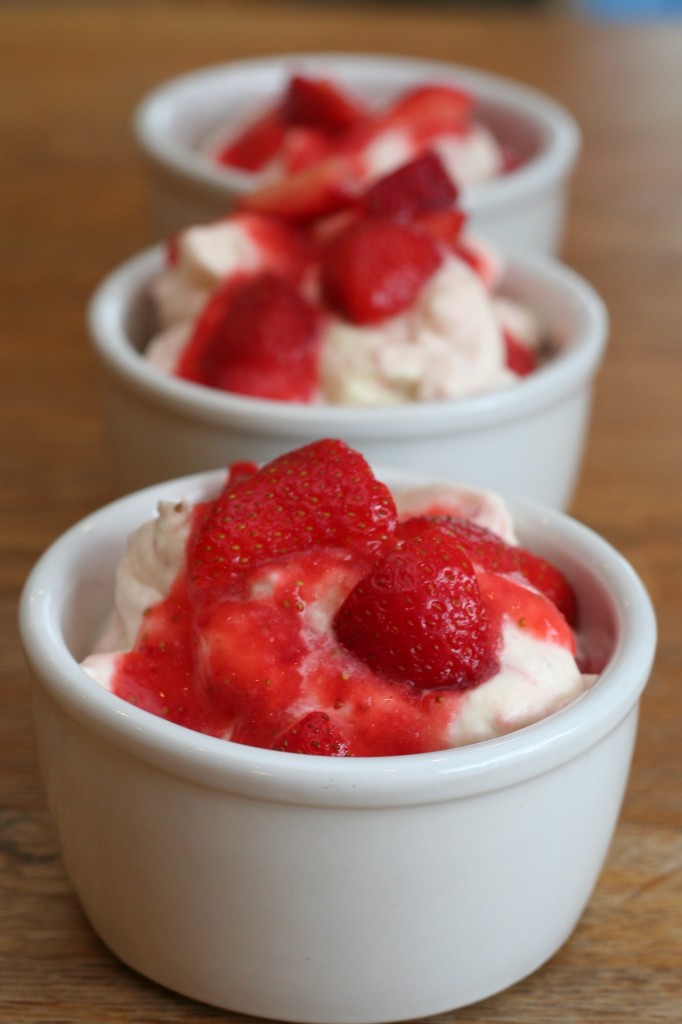
Once I dust off that cookbook, this linguine is invariably the first thing I make from it, since I’ve made it so often that the book now falls open naturally to this well-thumbed, cooking-splattered page. As for Eton mess, it was invented at Eton College in England in the 1930s and is now traditionally served there today, on June 4th, but we don’t stand on such ceremony in my family — we eat this as soon as Irish strawberries hit the shops and roadside stands, then make it more often than I care to admit all through the summer (certainly more than can be good for us). I’m lucky in that you can buy meringues in practically any grocery store in Ireland, which is what makes it so easy to whip together, but if you want to try making meringues yourself, this is the perfect recipe to have as a back-up plan. Because you crush the meringues anyway, it doesn’t matter one bit if they look pretty beforehand. And I’m willing to bet that once you try this, you’ll be getting plenty of practice honing your meringue-making skills by making this irresistible summer dessert (far too) often.
Linguine with Chili, Crab and Watercress
adapted from Forever Summer by Nigella Lawson

Serves 4

By all means use fresh crab if you can, but canned works just fine. The original recipe calls for watercress, but arugula (rocket) or even spinach would work too.

1 lb 2 oz (500 g) linguine or spaghetti
2 cloves garlic, peeled
1 scant tablespoon Maldon sea salt (or 1 teaspoon regular sea salt)
1 large red chili
about 11 oz (310 g) crab meat
1/2 cup (120 ml) extra virgin olive oil
juice and zest of 1 lemon
a handful of fresh parsley, chopped
a handful of watercress, leaves only, roughly torn

Bring a large pot of salted water to boil and cook the pasta according to the packet instructions.

Meanwhile, in a pestle and mortar, mash the peeled garlic cloves with the salt, so that it makes a smooth paste. Add the chopped and seeded chili and crush again until you have a red-tinged mixture.

Put the crab meat in a large bowl, breaking it up gently with a fork. Pour the oil, lemon zest and juice into another bowl or measuring jug and whisk together. Scoop in the garlic and salt paste, then whisk everything together. When the pasta is finished cooking, drain, then add to the crab mixture and pour the dressing over, tossing well to combine. Add in the parsley and watercress, toss again and serve.

***

Eton Mess

Serves 4

For a grown-up boozy twist, marinate the strawberries in a generous splash of orange liqueur (like Cointreau or Grand Marnier) for 30 minutes before stirring them into the whipped cream (you could also try creme de cassis, Framboise, grappa, kirsch, or even a little orange juice and vodka). If you can’t find meringues in the store or you want to make your own, try Delia Smith’s recipe, who also has a great step-by-step tutorial on how to make them here.

You can make Eton mess with strawberries, bananas or any summer fruit, though strawberries are considered to be traditional.

Pureeing the strawberries makes this dessert more attractive and heightens the strawberry flavor, but you could be lazy and skip this step (I often do) — simply chop all the strawberries and fold them in with the cream and meringues and it will still be delicious.

1 lb (450 g) fresh strawberries, hulled
1 tablespoon confectioners’ (icing) sugar
1 tablespoon granulated or caster sugar (optional)
1 1/2 cups (360 ml) cream
4 store-bought meringue nests

Cut the strawberries into halves or quarters, depending on their size (you want them to be bite sized). Place about one-third of the berries and the confectioners’ (icing) sugar in a food processor or blender and process until just pureed (or you can mash them with a potato masher or fork). Place the remaining strawberries in a bowl and sprinkle with the granulated or caster sugar only if you think the berries need a little boost to bring out their natural sweetness (or add some liqueur instead; see above). Set aside to macerate while you whip the cream.

Whip the cream just until soft peaks form. Break up the meringues into bite-sized pieces and add them to the whipped cream, along with the chopped strawberries, reserving a few for decoration. Gently fold in all but a few tablespoons of the puree, marbling it throughout the cream mixture. Spoon into individual serving dishes and drizzle with the remaining puree and reserved strawberries. Serve immediately.