Category Archives: Fruit

Bramley Apple, Bacon and Blue Cheese Sandwich with Sweet Potato Wedges

Is there a better place to be on a sunny October day than an apple orchard? I couldn’t think of one when I was at Stagrennan Farm 10 days ago as part of an orchard tour organized by Bord Bia (the Irish Food Board) to show off the often unsung Bramley apple.
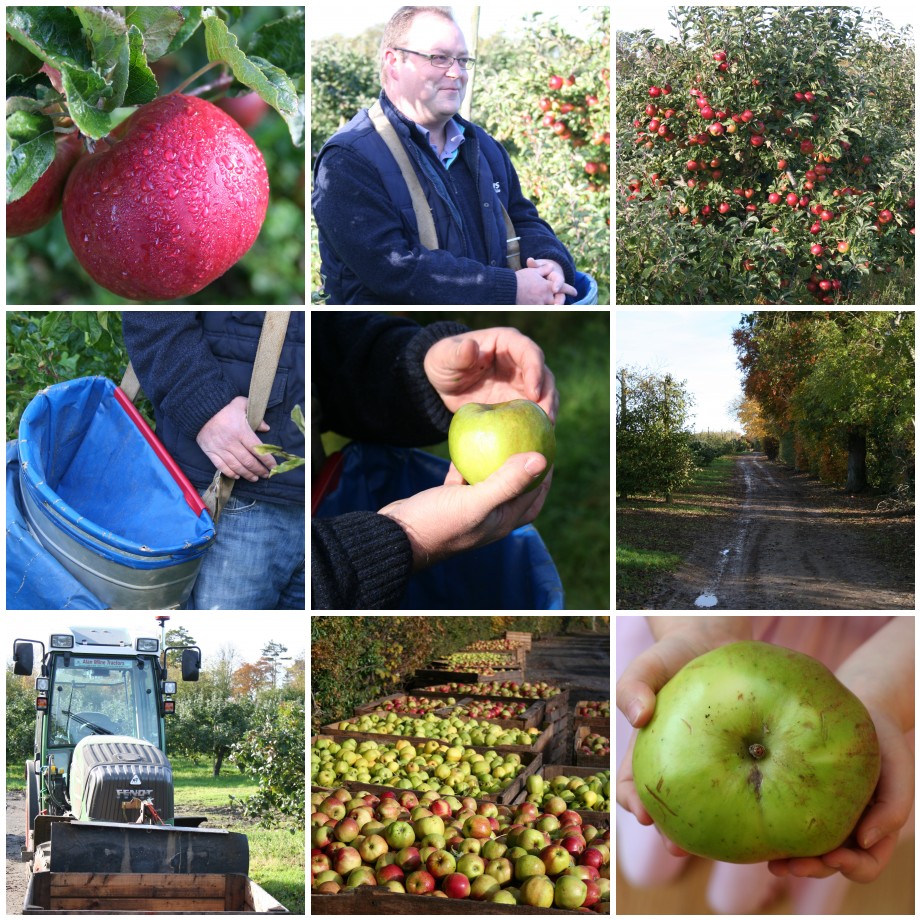
When I arrived, I was promptly offered the obligatory cup of tea along with a slice of Fiona McNeece’s homemade apple cake and apple, blueberry and sloe crumble. Her brother Olan also works at the orchard, which their father bought in 1962 in Drogheda, County Louth. Fiona and Olan have apples in their blood — they are the fourth generation of their family to grow Bramleys (their great-grandfather planted a Bramley orchard as part of his small farm in County Armagh in the late 1890s, and their grandfather went on to buy his own farm in 1933, also in Armagh). Approximately one-third of the world’s supply of Bramley apples are grown in Ireland, where they have been grown for 200 years, and the McNeeces are proudly part of that tradition.

Like many people you talk to involved in growing and producing Irish food, Olan was enthusiastic about talking about apples and taking us around his farm, which even extended to showing off their new vineyard tractor, which is narrower than normal tractors so that it can fit between the rows of a vineyard or orchard. Clad in wellies and waterproof hiking boots because of the previous day’s heavy rain, we piled into the farm’s jeep and followed Olan in the tractor as he wound down a maze of lanes. Once we were standing amongst the trees, he explained that the orchard is organic in all but name — they have a weather station in the orchard to predict disease in their own micro-climate and they follow integrated pest management to allow natural predators to do away with harmful pests — so we happily ate apples straight from the tree.

But we weren’t eating Bramleys — while those are the main crop at Stagrennan Farm, they also plant a variety of other apples to aid pollination. Apples are often divided into eaters and cookers, and Bramleys are the latter. In fact, they’re the only apple available for the sole purpose of cooking. When cooked, Bramleys break down into a fluffy, frothy puree, which I found out for myself when I made a delicious apple compote using Bramleys after watching Hugh Fearnley-Whittingstall make it that way a few weeks ago on River Cottage Everyday. Just like Hugh said, the resulting compote was silky smooth, and was so good that I’ll never make applesauce with any other apple again.

Back at the office, fellow food bloggers Aisling, Deirdre, Joanna, Sarah and I were treated to a cooking demonstration using Bramleys by Tara Walker, a Cordon Bleu-trained chef who is an instructor at the Fairyhouse Cookery School, and one of the recipes she made for us was this sandwich. We left the orchard laden down with a huge box of Bramleys and eating apples, along with samples of some products Olan and Fiona are hoping to bring to market soon: apple juice, apple and Calvados sauce, apple and white port sauce, apple and ginger jelly, roasted apple marinade, spiced apple chutney and, my favorite, apple and quince jelly. When I got home with my bounty, my kids ate two apples each and helped me peel the 6 pounds worth of Bramleys to turn them into enough compote to last us for a week.

Thank you again to Olan and Fiona McNeece for so generously hosting us and to Bord Bia for organizing the tour. Olan told us we’d have to come back to the orchard again in the spring, when the trees are in bloom, and after seeing how beautiful it was with the blazing autumn colors, I think we might just take him up on that.

Bramley Apple, Bacon and Blue Cheese Sandwich
adapted from Bord Bia

This moreish sandwich is substantial enough for dinner now that we’re in the wintry soup-and-sandwich season. It’s one of the Bramley apple recipes from the Bord Bia website, which also features a one-dish pork and Bramley apple bake, ginger baked Bramleys and a Bramley apple and whiskey tart. If you can’t get Bramley apples, use another cooking apple instead, such as Golden Delicious, Granny Smith, McIntosh, Pink Lady or Royal Gala.

Serves 4

2 teaspoons vegetable oil
12 rashers back bacon (or 12 slices pancetta or American bacon)
2 Bramley apples, quartered, cored and sliced
8 thick slices of good-quality white bread (sourdough is best), lightly toasted
butter, for spreading
2 oz (60 g) soft blue cheese, such as Cashel Blue, crumbled

Heat the oil in a non-stick frying pan, add the bacon and cook over a medium heat for 6 to 7 minutes, turning once, until golden and crisp. (If using pancetta or American bacon, fry the bacon in a dry pan instead until crispy.) Transfer to a plate and keep warm. Add the Bramley apple slices to the pan and saute over a medium heat for 3 to 5 minutes, or until tender and golden. Remove from the heat. Butter the bread and top 4 slices with the bacon and apples. Crumble over the cheese and top with the remaining slices of bread. Cut in half and serve.

***

Sweet Potato Wedges
adapted from Every Day by Bill Granger

Serves 4

These sweet potato wedges are a good match for this sandwich, but Clare’s oven-baked parsnip chips would also be good, as would Michael Ruhlman’s sweet potato chips.

2 lb (900 g) sweet potatoes, skin left on and cut into wedges
2 tablespoons olive oil
2 teaspoons smoked paprika
1/4 teaspoon cayenne pepper (optional)
salt and freshly ground black pepper

Preheat the oven to 450°F (230°C).

Toss the sweet potato wedges with the olive oil, paprika, cayenne and salt and pepper. Scatter them in a single layer on a large baking sheet and bake for 30 minutes, stirring occasionally, until the wedges are golden brown.

Looking for more apple recipes? Try some of these from our recipe archive:

Lemon Chicken with Provençal Couscous and Peach and Blackberry Pandowdy

Heading down the hill on my way home after a walk this past weekend and thinking that I was glad I’d worn my fleece, I could see smoke coiling from the chimney of a neighbor’s farmhouse. While I’m not ready to say it’s autumn just yet, I did think to myself that this meal might well be marking the end of summer.

In Ireland, blackberries grow wild in the hedgerows and the countryside is full of them at the minute. I was lucky enough to be able to get all the blackberries I needed for this dessert just by stepping out my back door and picking them from in amongst the hedges that line the perimeter of my yard. I’m not so lucky when it comes to peaches though. They’re one of my favorite summertime treats, but the peaches that you buy in Ireland don’t have the same juice-dribbling-down-your-chin lusciousness as the ones you can get in the States. When I was back there in July, I got my fill of all the summertime staples I used to take for granted but now miss: bratwurst, frozen custard, iced coffee, sweetcorn, watermelon and, yes, peaches from the farm stand. I’m not giving up hope of having an Indian summer, but I’m taking a cue from my neighbor and will be stocking up on turf and firewood again all the same.

If your pastry-making skills aren’t the best, this is the perfect dessert for you. A pandowdy (the word actually means ‘unfashionable’ or ‘without style’) is like an upside-down pie, with the filling right in the dish and the crust on top. It’s a rustic dessert and is meant to look like one, so you don’t have to worry about perfect presentation — you can even make it in a cast iron skillet. As for me, I’m no pastry expert, and in fact used to avoid any recipes that called for it because I was so bad at it, but I’ve had great success using a tip I learned watching Rachel Allen’s Bake program this spring — roll out the pastry between two sheets of cling film. It won’t stick to your counter and you won’t have to add any extra flour for dusting, meaning the pastry will stay light and flaky. Try it!

Lemon Chicken with Provençal Couscous
lemon chicken adapted from The Barefoot Contessa Cookbook by Ina Garten and couscous from The Irish Independent, July 3, 2010

Serves 4

Please don’t be put off by the long list of ingredients for the couscous, it’s only a few spices and vegetables. This is the best couscous dish I’ve ever made — I promise it will be worth the effort of a bit of measuring and chopping.

for the lemon chicken:
1/3 cup (80 ml) freshly squeezed lemon juice (2 or 3 lemons)
1/3 cup (80 ml) olive oil
2 or 3 cloves garlic, finely chopped or grated
salt and freshly ground black pepper
4 boneless, skinless chicken breasts
2 large rosemary sprigs or a few sprigs of fresh thyme (or 1/2 teaspoon dried thyme)

for the Provençal couscous:
1/2 pint (300 ml) chicken stock
1/8 teaspoon turmeric
1/8 teaspoon paprika
1/8 teaspoon ground cumin
1/8 teaspoon chili powder
juice of 1/2 orange
6 oz (175 g) couscous
1 tablespoon olive oil
1 red onion, finely diced
1 red pepper, halved, deseeded and cut into 1/2‑inch cubes
1 yellow pepper, halved, deseeded and cut into 1/2‑inch cubes
1 clove garlic, chopped
1 small zucchini, cut into 1/2‑inch cubes
salt and freshly ground black pepper

To make the chicken, whisk together the lemon juice, olive oil, garlic, salt and pepper. Pour it over the chicken breasts in a casserole dish, then tuck in the fresh herbs around the chicken. Cover and marinate in the refrigerator for at least 2 hours, but ideally overnight. The next day, preheat the oven to 400°F (200°C). Remove the chicken from the marinade, shaking off any excess, and place on a baking tray. Roast in the oven for 30 minutes, or until cooked through.

Meanwhile, to make the couscous, bring the stock, spices and orange juice to the boil and cook gently for 10 minutes. Pour the couscous into a large bowl and pour a quarter of the liquid over it. Stir, cover completely with cling film and allow to steam for 10 minutes. Break up with a fork and pour in another quarter of the stock. Cover once more and let it rest for another 10 minutes. Loosen with a fork again. Add the rest of the stock and cover once more. Once the couscous has absorbed all the liquid and fluffed up, it is cooked. If there is any excess liquid after the couscous has fluffed up, you can simply drain it off.

While the couscous is steaming, you can get on with the vegetables. Heat a large frying pan over a medium heat. Sauté the onion for 2 to 3 minutes in the olive oil, then add the peppers and garlic. Cook for 2 more minutes, then add in the zucchini. Cook for a further 3 to 5 minutes, or until the vegetables are tender but still hold their shape. Season with salt and pepper, then mix the vegetables through the couscous.

Serve the chicken on warmed plates with a portion of Provençal couscous.

***

Gingered Peach and Blackberry Pandowdy
adapted from Rustic Fruit Desserts by Cory Schreiber and Julie Richardson
Serves 8 to 10

I know this recipe looks awfully long and involved, but honestly, it’s so straightforward my five-year-old daughter helped me to make it. This is the pastry recipe from Rustic Fruit Desserts, but if you have your own tried and true pie pastry recipe, just use that.

for the pastry:
1 1/4 cups (150 g) flour
1 tablespoon sugar
1/4 teaspoon fine sea salt
1/2 cup (110 g) cold unsalted butter, cut into 1‑inch cubes
1/4 cup (60 ml) ice water, or more if needed
1 1/2 teaspoons freshly squeezed lemon juice

for the filling:
2 lb (900 g) peaches, pitted (anywhere between 4 and 8 peaches, depending on size)
1/2 cup (100 g) sugar
juice of 1 large lemon
2 tablespoons cornstarch (cornflour)
2 tablespoons (15 g) chopped candied ginger
1/2 teaspoon ground ginger
1/2 teaspoon fine sea salt
1 dry pint (2 cups/about 300 g) blackberries, either fresh or frozen
vanilla ice cream or sweetened whipped cream, to serve

To make the pastry, put the flour, sugar and salt in a bowl, stir to combine, then put the bowl in the freezer for about 10 minutes, until super cold. Add the butter cubes to the flour mixture and toss evenly to coat. Cut the butter into the flour mixtures using a pastry blender, electric mixer or your hands, until the butter is about the size of peas. Stir the water and lemon juice together, then slowly drizzle over the dry ingredients, tossing with a fork to distribute the liquid. The pastry will be shaggy but should hold together when squeezed in the palm of your hand. If it doesn’t, add a few more drops of ice water. (Alternatively, just blend the flour mixture and butter in a food processor and slowly add the liquids until the dough has reached the right consistency.)

Tip the pastry onto a lightly floured surface and press down on the dough, folding it over on itself a few times until it holds together. Try not to handle it too much, or you’ll develop the gluten too much and your pastry will be tough. Shape the pastry into a 1‑inch-thick disc, wrap in cling film and chill in the fridge for at least 30 minutes. (If wrapped well, the pastry will keep for up to 3 days in the fridge of 3 months in the freezer; defrost frozen pastry discs overnight in the fridge.)

When the pastry has rested and you’re reading to make the pandowdy, preheat the oven to 400°F (200°C). Butter a 9‑inch deep-dish pie pan.

Wash the peaches, pierce the skins all over with a fork, then slice each peach into 10 to 12 slices, depending on how big the peach is. Put the peaches in a bowl, add the sugar and lemon juice, and toss gently until the fruit is evenly coated. Set aside for 15 minutes to draw out some of the juices, then strain the juice into a small saucepan. Cook over a medium heat, stirring occasionally, until the juices have reduced by half. Rub the cornstarch, candied ginger, ground ginger, and salt together in a bowl.

Remove the pastry from the fridge. Tear off 2 large pieces of cling film and place the pastry between the pieces. Roll it out between the sheets of cling film until it’s a little larger than the diameter of your pie pan or skillet. If you want, you can place the pie pan or skillet upside-down on top of the pastry and use it to cut the pastry to size, otherwise just eyeball it.

Add the cornstarch mixture and reduced juices to the peaches. Add the blackberries and stir gently until evenly combined. Pour the fruit mixture into the prepared pie pan and top with the pastry circle. If the crust is a bit larger than the pan or skillet, just tuck it inside (remember, it’s rustic!). Place the pie on a baking sheet to collect any drips. Bake for 50 minutes, or until the crust is golden and the fruit is bubbling. If you find that the top is browning too much, cover it loosely with foil for the rest of the cooking time. Cool for 1 hour before serving with some ice cream or a dollop of sweetened whipped cream.

Potato Salad with Smoked Salmon and Horseradish Crème Fraîche and Blueberries in Gin Syrup

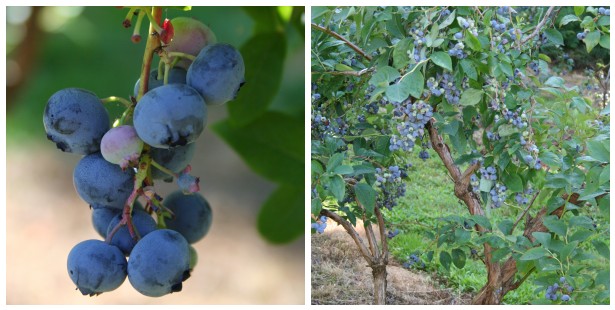
Four years ago, when our daughter was 13 months old and not walking yet, we went to the Derryvilla Blueberry Farm** in County Offaly to pick berries. I still remember her crawling on the soft, boggy ground amongst the bushes, stopping now and then to pull a fat, sweet berry from the branches and pop it into her mouth. This time we had our son, who at two years old was a good age to enjoy picking the berries himself, so ripe they practically tumbled off the bushes and into our baskets. When we paid for our haul after an hour in the fields, the owner, Nuala, scooped up a bag full of berries from a nearby crate and gave them to the kids to eat in the car, free of charge. For the first 30 minutes of the drive home, all we could hear from the back seat was the sound of their little hands rustling in the paper bags as they snacked on the berries as if they were a bag of pick ‘n’ mix candy.

When my husband was a boy growing up in Michigan, one summer he and his family picked 80 lb of blueberries. In comparison, the 9 lb we picked last weekend seems meager, but it was enough to make a dinner of salmon with a blueberry pan sauce, a batch of blueberry crumb bars and these blueberries in gin syrup.* I froze the rest to use in my kids’ favorite breakfast once the weather turns cold, blueberry and banana porridge. I’m already looking forward to remembering the sunny, hot summer day we spent picking berries every time I add them to my children’s oatmeal this winter.

*If you’re looking for more blueberry recipes, try this lemon blueberry buckle or peach and blueberry sour cream cobbler.

*Derryvilla Blueberry Farm is located roughly between Newbridge in County Kildare and Portlaoise in County Laois, not too far off the M7 motorway. Ring 057 864 2882 or 087 246 6643 for opening times and directions.

Smoked Salmon and Potato Salad with Horseradish Crème Fraîche
adapted from Jamie at Home by Jamie Oliver

Serves 4 as a light dinner or lunch

As often as not, I lazily skip the lemon, vinegar and olive oil dressing and just mix the horseradish crème fraîche into the potatoes instead of dolloping it over the salad. In that case, add the lemon zest to the crème fraîche and sprinkle the capers over the salad instead.

1 1/4 lb (570 g) new potatoes, washed
sea salt and freshly ground black pepper
zest and juice of 1 large lemon
splash of red wine vinegar
extra virgin olive oil
2 tablespoons capers, drained
14 oz (400 g) smoked salmon, roughly chopped
a small bunch of fresh dill or fennel tops, roughly chopped, or 1 tablespoon dried dill
2 or 3 tablespoons jarred horseradish sauce, or to taste
1/2 cup (120 ml) crème fraîche

Cut the potatoes into halves or quarters, depending on their size (you want them to be in bite-sized pieces). Tip into a pot of boiling salted water and boil for 10 to 15 minutes, until the potatoes are just cooked. Drain in a colander and cover with a tea towel to dry them out a bit while you make the dressing.

Put the lemon zest and half the lemon juice into a bowl and add the vinegar. Pour in three times as much olive oil as lemon juice and add the capers. Season the dressing with salt and pepper and whisk to combine. Transfer the potatoes to a large bowl and drizzle the dressing over. Toss gently until the potatoes are all well coated. Add in the smoked salmon and most of the dill and toss again. Transfer the potatoes and salmon to a serving bowl or platter or individual plates.

Mix the horseradish sauce into the crème fraîche with the remaining lemon juice and some salt and pepper. Dollop the crème fraîche over the salad and sprinkle over the rest of the dill or fennel.

Blueberries in Gin Syrup
adapted from Gourmet, August 2008

Serves 6

This recipe is open to adaptation. The original version conjures up a forest by adding a rosemary sprig and crushed juniper berries to infuse the syrup. I didn’t care for that so I’ve left it out here to make a plainer syrup. However, you could also try infusing the syrup with a cinnamon stick or a strip of lemon peel, and you could leave out the gin entirely too. These will keep for 1 or 2 days in the fridge.

1 cup (240 ml) water
3/4 cup (150 g) sugar
1 1/2 lb/2 pints (680 g) blueberries
1/4 cup (60 ml) dry gin

Boil the water and sugar in a small saucepan, stirring until the sugar has dissolved, until the syrup has reduced to about 3/4 cup (180 ml), which should take 10 to 12 minutes. Put the blueberries in a heatproof bowl and strain the syrup through a sieve over the berries. Stir in the gin. Allow the berries to macerate in the syrup for about 30 minutes, until the berries are completely cooled. Eat them on their own in a bowl, or spooned over vanilla ice cream, not forgetting to drizzle over some of the syrup too.

Creamy Slow Cooker Stroganoff and Strawberry Bread

I’ll make this short for all of you who, like myself, are trying to fit 25 hours of living into a 24-hour day. First, if you don’t have a slow cooker, buy one. Don’t be afraid to leave the house with it on and don’t attempt to make anything fancy in it. The slow cooker can do a lot, but it doesn’t make pretty food. Stephanie O’Dea has a great slow cooker blog and now a companion cookbook, where I found this recipe. It’s the “working mom” version of one of my childhood favorites — my German great-grandmother’s stroganoff. It would be best served on her homemade spaetzle, but good-quality egg noodles are a fine substitute.

The strawberry bread is perfect for using up the last of the great strawberries of the season. It can be made ahead and lasts for several days, covered, at room temperature. It can also be wrapped tightly in wax paper, then plastic wrap and stored in the freezer for a few months. Like banana bread, this strawberry bread is healthy enough to eat for breakfast but tasty enough to eat as dessert.

Creamy Slow Cooker Stroganoff
adapted from Make It Fast, Cook It Slow: The Big Book of Everyday Slow Cooking by Stephanie O’Dea

Serves 6

2 lb (900 g) beef stew meat
2 tablespoons butter
1/4 cup (60 ml) milk
1 tablespoon Worcestershire sauce
1 onion, diced
8 oz (225 g) mushrooms, quartered or sliced
1/4 cup (60 ml) broth
1/2 teaspoon salt
1 teaspoon black pepper
1 teaspoon dried herbes de Provence or thyme
4 oz (110 g) cream cheese, diced
egg noodles, for serving

Put the meat into the slow cooker (frozen is fine). Add the butter, milk, Worcestershire sauce, onion, mushrooms, broth, salt, pepper, and dried herbs. Cook on low for 10 to 12 hours, or until the meat is tender. Stir in the cream cheese and cook for a few more minutes, stirring occasionally, until the cream cheese is fully incorporated into the sauce. Taste and add more salt or pepper, if necessary. Serve over cooked egg noodles.

***

Strawberry Bread

Makes 2 loaves

1 lb (450 g, or about 4 cups) sliced strawberries
1 1/2 cups (300 g) sugar
2 1/8 cups (255 g) all-purpose flour
1 cup (125 g) whole wheat flour
1 teaspoon cinnamon
1 teaspoon baking soda
1 teaspoon salt
3/4 cup (180 ml) canola or vegetable oil
1/2 cup (120 ml) applesauce
4 eggs, beaten lightly
1 teaspoon vanilla
1 1/4 cups (125 g) chopped toasted pecans

Preheat the oven to 350°F (180°C). Grease and flour two 5 x 9 inch loaf pans.

In a small bowl, combine the sugar and strawberries; set aside. In a large bowl, combine the flours, cinnamon, baking soda and salt; set aside.

In a medium bowl, combine the oil, applesauce, eggs, and vanilla. Stir in the strawberry and sugar mixture. Add the wet mixture to the dry ingredients. Stir until just combined, then fold in the pecans.

Pour the batter into the prepared pans and bake for 45 to 50 minutes, until a toothpick comes out clean. Cool the loaves on a wire rack for 10 minutes. Remove the loaves from the pans and continue cooling on rack. Serve at room temperature.

Linguine with Chili, Crab and Watercress and Eton Mess

There are two events that mark the start of summer for me — the first day I see a van on the side of the road selling Wexford strawberries or when I cook something from Nigella Lawson’s Forever Summer cookbook.

Once I dust off that cookbook, this linguine is invariably the first thing I make from it, since I’ve made it so often that the book now falls open naturally to this well-thumbed, cooking-splattered page. As for Eton mess, it was invented at Eton College in England in the 1930s and is now traditionally served there today, on June 4th, but we don’t stand on such ceremony in my family — we eat this as soon as Irish strawberries hit the shops and roadside stands, then make it more often than I care to admit all through the summer (certainly more than can be good for us). I’m lucky in that you can buy meringues in practically any grocery store in Ireland, which is what makes it so easy to whip together, but if you want to try making meringues yourself, this is the perfect recipe to have as a back-up plan. Because you crush the meringues anyway, it doesn’t matter one bit if they look pretty beforehand. And I’m willing to bet that once you try this, you’ll be getting plenty of practice honing your meringue-making skills by making this irresistible summer dessert (far too) often.

Linguine with Chili, Crab and Watercress
adapted from Forever Summer by Nigella Lawson

Serves 4

By all means use fresh crab if you can, but canned works just fine. The original recipe calls for watercress, but arugula (rocket) or even spinach would work too.

1 lb 2 oz (500 g) linguine or spaghetti
2 cloves garlic, peeled
1 scant tablespoon Maldon sea salt (or 1 teaspoon regular sea salt)
1 large red chili
about 11 oz (310 g) crab meat
1/2 cup (120 ml) extra virgin olive oil
juice and zest of 1 lemon
a handful of fresh parsley, chopped
a handful of watercress, leaves only, roughly torn

Bring a large pot of salted water to boil and cook the pasta according to the packet instructions.

Meanwhile, in a pestle and mortar, mash the peeled garlic cloves with the salt, so that it makes a smooth paste. Add the chopped and seeded chili and crush again until you have a red-tinged mixture.

Put the crab meat in a large bowl, breaking it up gently with a fork. Pour the oil, lemon zest and juice into another bowl or measuring jug and whisk together. Scoop in the garlic and salt paste, then whisk everything together. When the pasta is finished cooking, drain, then add to the crab mixture and pour the dressing over, tossing well to combine. Add in the parsley and watercress, toss again and serve.

***

Eton Mess

Serves 4

For a grown-up boozy twist, marinate the strawberries in a generous splash of orange liqueur (like Cointreau or Grand Marnier) for 30 minutes before stirring them into the whipped cream (you could also try creme de cassis, Framboise, grappa, kirsch, or even a little orange juice and vodka). If you can’t find meringues in the store or you want to make your own, try Delia Smith’s recipe, who also has a great step-by-step tutorial on how to make them here.

You can make Eton mess with strawberries, bananas or any summer fruit, though strawberries are considered to be traditional.

Pureeing the strawberries makes this dessert more attractive and heightens the strawberry flavor, but you could be lazy and skip this step (I often do) — simply chop all the strawberries and fold them in with the cream and meringues and it will still be delicious.

1 lb (450 g) fresh strawberries, hulled
1 tablespoon confectioners’ (icing) sugar
1 tablespoon granulated or caster sugar (optional)
1 1/2 cups (360 ml) cream
4 store-bought meringue nests

Cut the strawberries into halves or quarters, depending on their size (you want them to be bite sized). Place about one-third of the berries and the confectioners’ (icing) sugar in a food processor or blender and process until just pureed (or you can mash them with a potato masher or fork). Place the remaining strawberries in a bowl and sprinkle with the granulated or caster sugar only if you think the berries need a little boost to bring out their natural sweetness (or add some liqueur instead; see above). Set aside to macerate while you whip the cream.

Whip the cream just until soft peaks form. Break up the meringues into bite-sized pieces and add them to the whipped cream, along with the chopped strawberries, reserving a few for decoration. Gently fold in all but a few tablespoons of the puree, marbling it throughout the cream mixture. Spoon into individual serving dishes and drizzle with the remaining puree and reserved strawberries. Serve immediately.

Pork Chops with Tomatillo and Green Apple Sauce and Couscous

With only a few weeks left until summer officially arrives in the US, I’ve thrown myself into spring cleaning. The kitchen is my most used, most tidied, but least organized part of my house. It’s hard to thoroughly clean out a room that always seems to have someone in it. In an attempt to use up my food odds and ends so I could wipe down shelves, I took a stab at this admittedly strange-sounding pork chop recipe. I’ll admit that I probably wouldn’t have tried the dish if I didn’t need to use up two aging green apples, a can of tomatillos bought on clearance, a frozen chipotle pepper and a package of pork chops. But necessity is the mother of invention, and in this case, genius. The sweetness of the green apple lends just the right amount of zing to the spice of the chipotle and sour of the tomatillos. It’s pretty enough to serve your mother and unique enough to make for your foodie friends.

To liven up the Israeli couscous, I cooked the couscous according to the package directions, making sure to toast it before adding the liquid. Once cooked, stir in a few tablespoons of minced fresh parsley, a generous drizzle of olive oil, and a handful of grated Parmesan cheese. Don’t forget to season to taste with salt and pepper. I used an Israeli couscous, lentil and quinoa blend, but plain Israeli couscous tastes just as good.

Pork Chops with Tomatillo and Green Apple Sauce
adapted from Gourmet, June 2004

Serves 4 to 6

for the pork chops:
2 tablespoons ground coriander
2 tablespoons ground cumin
2 tablespoons kosher salt
1 tablespoon black pepper
4 tablespoons olive oil
6 x 1‑inch-thick loin pork chops

for the tomatillo and green apple sauce:
12 oz (340 g) canned, whole tomatillos (or 1/2 lb/225 g fresh tomatillos)
2 Granny Smith apples
1/2 cup (10 g) loosely packed fresh cilantro sprigs
1 garlic clove, minced
1 teaspoon ground cumin
2 tablespoons fresh lime juice
1/4 cup (60 ml) water or apple juice
1 tablespoon mild honey
1 minced canned chipotle chile in adobo

Stir together the coriander, cumin, salt, and pepper in a small bowl, then add the oil and stir until combined well. Rub the spice mixture all over the chops. Let the chops marinate while making the sauce.

If using fresh tomatillos, remove the husks and rinse the tomatillos. Boil the tomatillos in water, uncovered, until the tomatillos are just soft, 8 to 10 minutes. Drain and cool for 15 minutes.

Peel and core the apples and cut into 1/4‑inch dice.

Purée the canned (or cooked) tomatillos with the remaining sauce ingredients except the apples in a food processor. Transfer to a bowl and stir in the apples.

Heat a heavy cast iron skillet or ridged grill pan. Lightly oil the surface of the pan, then sear the pork chops over a moderately high heat, turning over once, until well browned and cooked through, about 5 to 6 minutes on each side. Alternatively, you can grill the pork chops over medium heat until done, about 15 minutes total, depending on the thickness of the chop. Serve with the sauce spooned on top.

Brined Pork Loin with Rhubarb Compote and Sauteed Fennel

The food blogging scene in Ireland has been buzzing this past week, ever since Bord Bia (the Irish Food Board) sent out dozens of free pork packs last week ahead of its food blogging event tomorrow. I wanted to do something special with this unexpected gift and was inspired by fellow food blogger Clare Kleinedler’s idea to brine it. I also had some gorgeous organic rhubarb from Denis Healy’s stand at the Drogheda farmers’ market, so I decided to pair the pork with a rhubarb compote. You might think rhubarb and pork sounds like an odd combination, but it’s not all that different from the classic combination of pork with applesauce, plus The Flavor Bible vouches for it. The Flavor Bible also lists rhubarb and fennel and rhubarb and brown sugar as being good matches, so I played on that by serving sauteed fennel bulbs alongside the pork and using brown sugar and fennel seeds in the brine.

As so many of the other Irish food bloggers have already said, the meat was already outstanding to begin with, and brining it meant it was even more moist, tender and flavorful. (The same is true of Kelly’s cider-brined pork chops, which are the best pork chops I’ve ever had.) The herb crust and rhubarb keep the flavors bright and fresh, perfect for springtime. This recipe will make more compote than you’ll need for dinner, but we happily spooned the leftovers on top of yogurt and granola the next morning. A big thank you once again to Bord Bia!

Brined Pork Loin with Rhubarb Compote
pork loin adapted from Bon Appétit, March 2002 and compote from Bon Appétit, April 2005

Serves 8

Make the rhubarb compote while you’re making the brine, and all you’ll have to do the next day is pop the pork into the oven to roast.

for the brined pork loin:
8 cups (approx. 2 liters) water
1/2 cup coarse salt (I used 60 g Maldon sea salt)
1/2 cup (packed) (85 g) golden brown sugar
1 tablespoon fennel seeds
1 tablespoon whole black peppercorns
3 bay leaves
1 x 4 lb (1.8 kg) center-cut boneless pork loin roast
1 tablespoon olive oil
2 teaspoons chopped fresh parsley
2 teaspoons chopped fresh rosemary
2 teaspoons chopped fresh thyme

for the rhubarb compote:
2 lb (900 g) rhubarb, cut into 1‑inch pieces
1 1/4 cups (250 g) sugar
1/3 cup (80 ml) water

To brine the pork, combine the water, salt, sugar, fennel seeds, peppercorns and bay leaves in a large pot. Bring to a simmer over medium heat, stirring to dissolve the salt and sugar. Remove from the heat and allow to cool to room temperature. Transfer the brine to very large bowl and add the pork, weighting the pork down with a plate to keep it submerged). Cover and refrigerate overnight. Drain the pork and return it to the bowl. Cover with fresh water and weight it down again with a plate. Soak at room temperature 2 hours.

Meanwhile, to make the rhubarb compote, combine the rhubarb, sugar and water in a large saucepan. Bring to the boil, stirring until the sugar dissolves. Reduce the heat to medium-low and simmer for about 15 minutes, until the rhubarb is very soft and beginning to fall apart, stirring occasionally. Transfer compote to a bowl and refrigerate, uncovered, until cold, about 3 hours. (Can be prepared 2 days ahead. Cover and keep chilled.)

Position a rack in the top third of the oven and preheat to 350°F (180°C). Drain the pork and pat it dry with paper towels. Transfer to a rack set in a large roasting pan. Rub the pork all over with olive oil, then sprinkle with the fresh herbs, pressing to adhere. Sprinkle generously with freshly ground black pepper. Roast for about 1 hour 40 minutes, until a meat thermometer inserted into the center of the pork registers 150°F (65.5°C). Transfer the pork to a cutting board and cover loosely with foil. Allow the pork to rest for at least 10 minutes, then cut into 1/4- to 1/2‑inch-thick slices. Serve with the compote.

***

Sauteed Fennel

Serves 4

2 fennel bulbs
2 tablespoons (30 g) butter
1 tablespoon olive oil
salt and freshly ground black pepper

Halve the fennel bulbs lengthways, then slice thinly. Heat the butter and olive oil in a pan over a medium heat. Add the fennel and saute for about 10 minutes, until softened. Season to taste with salt and pepper.

Lemon and Pea Risotto with Parmesan Roasted Asparagus and Lemon Buttermilk Rhubarb Bundt Cake

To say my two-year-old son is a light eater is a bit of an understatement — he’s been known to go an entire weekend eating little more than a banana — but the night I made this risotto, he sat at the dinner table and practically chanted “more, more, more” in between mouthfuls and had a second helping.

As for the cake, I’d be hard pressed to think of a more perfect spring dessert than this. Light and lemony, it was still moist after three days — which is more than I can say for the overpriced “gourmet” cupcakes I bought in Dublin last week, which were so dry my children took only one bite and left the rest on the plate. My little boy might be a light eater, but he’s certainly a discerning one.

Lemon and Pea Risotto with Parmesan Roasted Asparagus
adapted from Nigella Bites by Nigella Lawson and Barefoot Contessa Family Style by Ina Garten

Serves 4

I love this lemon risotto on its own or as a springboard for adding in any number of other ingredients. Seafood is an obvious choice, and something like this roast fish wrapped in pancetta would be fantastic served alongside the risotto. I also like to serve it with grilled lemon chicken, or even leftovers from a slow roast chicken with vermouth.

These are the same flavors as in the gnocchi with peas, pancetta and lemon ricotta, so this is like a variation on that theme. If you wanted to make a little extra effort with the asparagus and aren’t concerned about the meal being vegetarian, you could omit the final sprinkle of Parmesan and wrap each stalk in a bit of Parma ham instead at the start, or perhaps simply crumble some cooked bacon or pancetta over the top of the dish for some extra flavor.

for the lemon and pea risotto:
4 tablespoons (60 g) unsalted butter
2 shallots or 1 small onion, finely chopped
1 rib celery, finely chopped
1 1/2 cups (300 g) risotto rice
1 cup (240 ml) white wine or extra-dry vermouth
approximately 1 quart (1 liter) vegetable stock
1 cup (140 g) fresh or frozen peas
zest and juice of 1/2 lemon
4 tablespoons grated Parmesan, plus extra for garnish
salt and freshly ground black pepper

for the Parmesan roasted asparagus:
1 bunch fresh asparagus
1 tablespoon good olive oil
salt and freshly ground black pepper
1/2 cup (50 g) freshly grated Parmesan

Preheat the oven to 400°F (200°C).

Heat the butter, shallots and celery in a wide, deep saucepan and cook to soften, about 5 minutes. Mix in the rice, stirring to give it a good coating of the butter. Allow it to cook for 1 or 2 minutes, until the grains of rice start to turn translucent. Add the white wine or vermouth and let it bubble away for a few minutes. Meanwhile, heat the stock in another saucepan and keep it at simmering point.

Once all the wine or vermouth has been absorbed into the rice, pour a ladleful of the stock into the rice and keep stirring until the stock is absorbed. Then add another ladleful and stir again. Continue doing this until the rice is al dente. You may not need all the stock; equally, you may need to add a bit more hot water. Don’t rush this process — allow the rice to fully absorb each ladleful of stock before adding the next one.

Meanwhile, once you’ve got the risotto going, snap off the woody ends of each asparagus stalk and discard. Lay the asparagus stalks in a single layer on a sheet pan and drizzle with olive oil, then sprinkle with salt and pepper. Roast for 15 to 20 minutes, until tender. Sprinkle with the Parmesan and return to the oven for 1 minute more, until the cheese has melted. Set aside and keep warm while you finish the risotto.

When you’ve added almost all the stock, test the rice — the risotto is ready when the rice is tender but still has a little bite. When the risotto is done, mix in the peas, lemon zest and juice and the grated Parmesan. Cook for a few more minutes, until the peas have thawed and are warmed through. Divide between 4 serving bowls or plates and top with the roasted asparagus stalks. Serve with more grated Parmesan if you wish, add seasoning to taste and serve immediately.

***

Lemon Buttermilk Rhubarb Bundt Cake
adapted from Rustic Fruit Desserts by Cory Schreiber and Julie Richardson

Serves 10 to 12

Ina Garten recommends having all your baking ingredients at room temperature, so I’ve modified the recipe slightly to add that instruction here. You really do need to have the butter softened, but if you forget to take the buttermilk and eggs out of the fridge beforehand, don’t worry about it.

for the cake: 
2 1/2 cups (300 g) plus 2 tablespoons all-purpose flour, divided
2 teaspoons baking powder
1 teaspoon salt
1 cup (225 g) unsalted butter, at room temperature
1 3/4 cups (350 g) sugar
zest of 1 lemon
3 eggs, at room temperature
1/2 teaspoon lemon extract (optional)
3/4 cup (180 ml) buttermilk, at room temperature
1 lb (450 g) rhubarb, trimmed and sliced very thin

for the lemon glaze: 
2 cups (240 g) sifted confectioners’ sugar (icing sugar), plus more if needed
juice of 1 lemon
1 tablespoon (15 g) unsalted butter, at room temperature

Preheat the oven to 350°F (180°C) and grease a 10-cup Bundt pan.

To make the cake, sift together the 2 1/2 cups (300 g) flour, baking powder and salt. Set aside. In a mixing bowl and using a hand-held mixer or a stand mixer with the paddle attachment, cream together the butter, sugar and lemon zest at medium-high speed for 3 to 5 minutes, until light and fluffy. Add the eggs one at a time, scraping down the bowl after each addition. Stir in the lemon extract, if using. Stir in the flour mixture in 3 additions, alternating with the buttermilk in 2 additions, beginning and ending with the flour mixture and scraping down the bowl occasionally. The batter will be very thick.

Toss the rhubarb with the 2 tablespoons of flour. Fold half the rhubarb into the batter and pour batter into the prepared pan. Sprinkle the remaining rhubarb on top.

Bake for 30 minutes, then rotate the pan and bake for an additional 30 minutes, or until the top of cake is firm and the center springs back when lightly touched. Cool the cake in its pan on a wire rack for 30 minutes before inverting and removing from the pan.

Meanwhile, to make the lemon glaze, whisk together the confectioners’ sugar, lemon juice and butter. The mixture should be thick. If it isn’t, add an additional 1 or 2 tablespoons confectioners’ sugar. Drizzle the glaze over the cake as soon as you remove the cake from the pan.

Covered with a cake cover or plastic wrap, the cake will keep at room temperature for 3 to 4 days.