Tag Archives: Grains and pulses

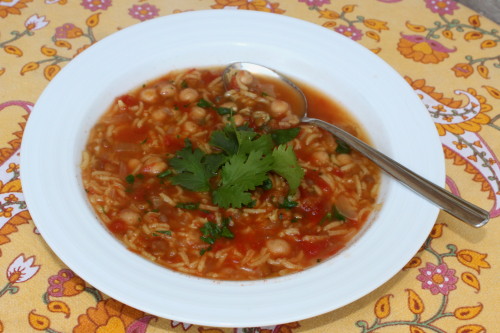
Harira (Moroccan Chick-Pea and Lentil Soup)

I love eating new foods and try to cook or bake a couple new things each week. People ask a lot about where I get all the new recipes. Usually I take a look in my pantry to see which ingredients are taking up the most shelf space, then check my fridge to see what produce is losing freshness the fastest. I can then search for recipes based on those ingredients. I use the Epicurious website and iPad app quite a bit. It allows me to pull up recipes by ingredients and gives me access to back issues of Gourmet as well as other cooking magazines like Bon Appétit. I first discovered this soup recipe when looking for a way to use up huge bags of bulk chickpeas, lentils and rice.  The saffron and fresh herbs brighten up these humble ingredients, making it one of my favorite “go to” recipes for winter.

I’m always on the lookout for new recipes. Feel free to send your favorites my way. I’d also love to know how you pick out new recipes.

harira

Harira

adapted from Gourmet, March 1994

The original Gourmet recipe is made with a whole chicken breast, which is simmered than shredded into the soup. I’ve adapted that recipe to make a vegetarian version.  Find the chicken-based recipe here.

4 cups (950 ml) broth (vegetable or chicken)
4 cups (950 ml) water
a 28-to 32-ounce (800-to 950 ml) can whole tomatoes, drained and puréed coarse
1/4 teaspoon crumbled saffron threads
2 medium onions, chopped fine
1 1/2 cups cooked dried chick-peas (recipe follows), or a 15-ounce (425 g) can, rinsed
1/2 cup (100 g) raw long-grain rice
3/4 cup (160 g) lentils
a large handful of fresh coriander (cilantro), finely chopped
a large handful of fresh parsley leaves, finely chopped

In a large heavy kettle with a lid bring the broth and water to a boil. Add to the kettle the tomatoes, saffron, onions, chickpeas, rice, and lentils and simmer, covered, 30 minutes, or until the lentils are tender. Season with salt and pepper to taste. Soup may be prepared up to 4 days ahead (cool uncovered before chilling covered). Just before serving, stir in the coriander and parsley.


To Cook Dried Chickpeas:

To make about 2 cups cooked chick-peas begin with a scant cup (180 g) dried.

In a bowl soak the chickpeas in water to cover by 2 inches overnight and then drain. In a saucepan combine the drained chickpeas and water to cover by 2 inches and simmer, covered partially, 1 to 1 1/2 hours, or until tender. Drain the chickpeas before using.

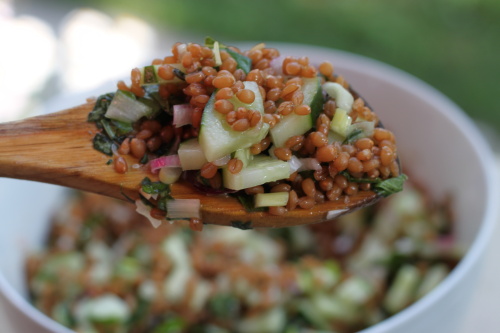
Cheddar Chicken Salad and Farro with Cucumber

There are a million ways to make chicken salad, but my mom’s recipe makes a knock-your-socks-off, can’t-go-wrong sandwich, especially when served on a buttery croissant. It’s perfect to take to baby showers, wedding showers, work lunches, picnic lunches, or any other place where you aren’t sure how picky the eaters are going to be. Everyone enjoys it. Pair it with this fresh and fabulously textured farro salad or, if you don’t feel like babysitting a pot of simmering farro or wheat berries but want an equally healthy and tasty side dish, try some roasted chickpea snacks. The Good Bean sent me a few complimentary packets of their pre-packaged version and we all loved them, especially my husband. I plan to pack them in lunches and throw them in my purse for snack emergencies.

Cheddar Chicken Salad

Makes a dozen cocktail sandwiches (or 6 full-size sandwiches)

3 cooked chicken breast halves (boneless, skinless), diced
1/2 cup (125 ml) mayonnaise or Miracle Whip
4 oz (100 g) chopped pitted black olives
1/2 cup (50 g) shredded cheddar cheese
1/2 green bell pepper, chopped fine
1/2 small onion, chopped fine
small croissants or cocktail rolls (about 1 dozen)

Gently mix all the ingredients together except the rolls (obviously). Fill the rolls and serve. If not serving immediately, chill the salad for up to 24 hours or filled rolls for up to 2 hours in the fridge, covered.

***

Farro with Cucumber
adapted from Molto Gusto: Easy Italian Cooking by Mario Batali

Serves 6

As much as I love this recipe and Molto Gusto: Easy Italian Cooking, the cookbook it came from (currently on its third renewal from my local library), it doesn’t taste great as leftovers. Try to eat it within 24 hours of preparing it unless you like seriously chewy grains.

8 oz (225 g) farro or wheat berries, picked over and rinsed
1 lb (450 g) cucumbers, cut into 1/4‑inch dice
1 medium red onion, cut into 1/4‑inch dice
1 red finger chile or serrano chile, cut into tiny dice
1/3 cup (10 g) packed fresh basil leaves, thinly sliced (chiffonade)
1/2 cup (125 ml) red wine vinaigrette (below)
Maldon or other flaky sea salt

Combine the farro and water to cover by 2 inches in a large saucepan and bring to a simmer, skimming off the foam. Reduce the heat to a bare simmer and cook until the farro is just tender, about 25 minutes if using pearled farro, about 1 1/2 hours if using wholegrain farro (or wheat berries).

Drain the farro and transfer to a large bowl. Add the cucumbers, onion, chile and basil, mixing well. Add the vinaigrette, tossing well. Season well with salt and serve, or let stand at room temperature for 1 hour to bring out the flavors.

Red Wine Vinaigrette

Makes 1 cup (250 ml)

1/2 cup (125 ml) extra virgin olive oil
1/4 cup (60 ml) good-quality red wine vinegar
1/4 cup (60 ml) sparkling water

Whisk the oil, vinegar and water together in a small bowl, or shake the ingredients together in a small, lidded jar, until well incorporated. The vinaigrette can be refrigerated for up to 5 days.

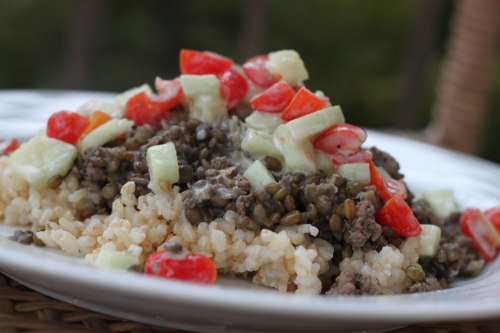
Spiced Lamb and Lentils with Cucumber-Tahini Salad

Sometimes I love being on the “mommy track” but recently juggling kids and a career seems like the craziest idea I ever had. The last few months have been terribly stressful at work. I’ve barely had time or energy to cook. You might have noticed this downward culinary slide due to my lack of recent posts (sorry, Kristin). Luckily, I have a handful of make ahead recipes to help me through these rough patches. This is my newest — and favorite.

Lamb might seem pretty rich for a weeknight springtime meal, but the lentils lighten up this dish and the cucumber salad lends just the right amount of tangy freshness. I like to cook the lentil and lamb stew the night before, after I put the kids to bed and pour a generous glass of wine. You can cool and refrigerate the stew right in the pan you cooked it in. A programmable rice cooker can take care of the rice for you the next day while you work. All you have to do when you arrive home is throw together the salad and reheat the stew. And that is how I managed (at least for one night) to put a healthy, incredibly tasty dinner on the table in 10 minutes.

Spiced Lamb with Lentils

Spiced Lamb and Lentils with Cucumber-Tahini Salad
adapted from Whole Foods Market

Serves 6

3 cups (700 ml) low-sodium chicken broth, divided
1 medium yellow onion, chopped
3 cloves garlic, minced
1 lb (450 g) ground lamb
1 3/4 teaspoons dried dill, divided
1/2 teaspoon dried oregano
1/4 teaspoon ground cinnamon
1 cup (175 g) green lentils
1 tablespoon sesame tahini
1/2 teaspoon salt
1 tablespoon lemon juice
1 cucumber, peeled, seeded and diced
2 plum tomatoes, chopped
cooked brown rice, to serve

Bring 1/2 cup (125 ml) broth to a simmer in a large pot or high-sided skillet over a medium-high heat. Add the onion and garlic and cook for 5 minutes, or until tender and translucent. Add the lamb, dill, oregano and cinnamon and cook for 6 to 8 minutes or until browned, stirring to break up the lamb. Stir in the lentils and remaining 2 1/2 cups (625 ml) broth. Bring to a boil, then reduce the heat to low. Cover and simmer, stirring occasionally, until the lentils are tender, about 45 minutes. If serving the next day, cool the stew then refrigerate it.

To make the salad, in a small bowl, combine the tahini, salt and lemon juice, then stir in the cucumber and tomato. If the lamb and lentils have been chilled, rewarm over a medium heat. Spoon the warm lamb and lentils over rice and top with the cucumber tomato salad.

Couscous Paella with Shrimp

Don’t you love finding a recipe that’s tasty, easy, quick, and healthy? Here’s one I just discovered. This recipe is also an excellent choice for anyone looking to serve the wild Gulf of Mexico shrimp that are finally back in stores (ahem, thank you BP for the forced hiatus). One word of caution — make sure you have enough dinner guests at the table for this dish. Couscous doesn’t reheat particularly well and you won’t want a bite of it to go to waste.

Couscous Paella with Shrimp
adapted from Family Circle as posted on Food Network

Serves 6

1 tablespoon olive oil
1 medium onion, chopped
3 cloves garlic, chopped
2 bell peppers (green, yellow, and/or red), cut into 1/2‑inch dice
1 teaspoon salt
1/2 teaspoon black pepper
1/2 teaspoon dried thyme
1/2 teaspoon red pepper flakes
1/2 teaspoon ground turmeric
1 can (14 oz/400 ml) chicken broth
1 cup (240 ml) water
10 oz (280 g) frozen peas, thawed
1 1/2 lb (680 g) large shrimp, shelled and cleaned
10 oz (280 g) couscous (plain or whole wheat)

Heat the oil in a large heavy-bottomed pot that has a lid. Add the onion, garlic and peppers and cook until the peppers are tender, about 8 minutes. Add the salt, black pepper, thyme, pepper flakes and turmeric and cook for 1 minute. Add the broth, water, peas and shrimp. Simmer, covered, for 2 minutes.

Remove the pan from the heat. Stir in the couscous and cover. Let stand for 5 minutes, then remove the cover, fluff the couscous with a fork, and serve immediately.

Lemon Chicken with Provençal Couscous and Peach and Blackberry Pandowdy

Heading down the hill on my way home after a walk this past weekend and thinking that I was glad I’d worn my fleece, I could see smoke coiling from the chimney of a neighbor’s farmhouse. While I’m not ready to say it’s autumn just yet, I did think to myself that this meal might well be marking the end of summer.

In Ireland, blackberries grow wild in the hedgerows and the countryside is full of them at the minute. I was lucky enough to be able to get all the blackberries I needed for this dessert just by stepping out my back door and picking them from in amongst the hedges that line the perimeter of my yard. I’m not so lucky when it comes to peaches though. They’re one of my favorite summertime treats, but the peaches that you buy in Ireland don’t have the same juice-dribbling-down-your-chin lusciousness as the ones you can get in the States. When I was back there in July, I got my fill of all the summertime staples I used to take for granted but now miss: bratwurst, frozen custard, iced coffee, sweetcorn, watermelon and, yes, peaches from the farm stand. I’m not giving up hope of having an Indian summer, but I’m taking a cue from my neighbor and will be stocking up on turf and firewood again all the same.

If your pastry-making skills aren’t the best, this is the perfect dessert for you. A pandowdy (the word actually means ‘unfashionable’ or ‘without style’) is like an upside-down pie, with the filling right in the dish and the crust on top. It’s a rustic dessert and is meant to look like one, so you don’t have to worry about perfect presentation — you can even make it in a cast iron skillet. As for me, I’m no pastry expert, and in fact used to avoid any recipes that called for it because I was so bad at it, but I’ve had great success using a tip I learned watching Rachel Allen’s Bake program this spring — roll out the pastry between two sheets of cling film. It won’t stick to your counter and you won’t have to add any extra flour for dusting, meaning the pastry will stay light and flaky. Try it!

Lemon Chicken with Provençal Couscous
lemon chicken adapted from The Barefoot Contessa Cookbook by Ina Garten and couscous from The Irish Independent, July 3, 2010

Serves 4

Please don’t be put off by the long list of ingredients for the couscous, it’s only a few spices and vegetables. This is the best couscous dish I’ve ever made — I promise it will be worth the effort of a bit of measuring and chopping.

for the lemon chicken:
1/3 cup (80 ml) freshly squeezed lemon juice (2 or 3 lemons)
1/3 cup (80 ml) olive oil
2 or 3 cloves garlic, finely chopped or grated
salt and freshly ground black pepper
4 boneless, skinless chicken breasts
2 large rosemary sprigs or a few sprigs of fresh thyme (or 1/2 teaspoon dried thyme)

for the Provençal couscous:
1/2 pint (300 ml) chicken stock
1/8 teaspoon turmeric
1/8 teaspoon paprika
1/8 teaspoon ground cumin
1/8 teaspoon chili powder
juice of 1/2 orange
6 oz (175 g) couscous
1 tablespoon olive oil
1 red onion, finely diced
1 red pepper, halved, deseeded and cut into 1/2‑inch cubes
1 yellow pepper, halved, deseeded and cut into 1/2‑inch cubes
1 clove garlic, chopped
1 small zucchini, cut into 1/2‑inch cubes
salt and freshly ground black pepper

To make the chicken, whisk together the lemon juice, olive oil, garlic, salt and pepper. Pour it over the chicken breasts in a casserole dish, then tuck in the fresh herbs around the chicken. Cover and marinate in the refrigerator for at least 2 hours, but ideally overnight. The next day, preheat the oven to 400°F (200°C). Remove the chicken from the marinade, shaking off any excess, and place on a baking tray. Roast in the oven for 30 minutes, or until cooked through.

Meanwhile, to make the couscous, bring the stock, spices and orange juice to the boil and cook gently for 10 minutes. Pour the couscous into a large bowl and pour a quarter of the liquid over it. Stir, cover completely with cling film and allow to steam for 10 minutes. Break up with a fork and pour in another quarter of the stock. Cover once more and let it rest for another 10 minutes. Loosen with a fork again. Add the rest of the stock and cover once more. Once the couscous has absorbed all the liquid and fluffed up, it is cooked. If there is any excess liquid after the couscous has fluffed up, you can simply drain it off.

While the couscous is steaming, you can get on with the vegetables. Heat a large frying pan over a medium heat. Sauté the onion for 2 to 3 minutes in the olive oil, then add the peppers and garlic. Cook for 2 more minutes, then add in the zucchini. Cook for a further 3 to 5 minutes, or until the vegetables are tender but still hold their shape. Season with salt and pepper, then mix the vegetables through the couscous.

Serve the chicken on warmed plates with a portion of Provençal couscous.

***

Gingered Peach and Blackberry Pandowdy
adapted from Rustic Fruit Desserts by Cory Schreiber and Julie Richardson

Serves 8 to 10

I know this recipe looks awfully long and involved, but honestly, it’s so straightforward my five-year-old daughter helped me to make it. This is the pastry recipe from Rustic Fruit Desserts, but if you have your own tried and true pie pastry recipe, just use that.

for the pastry:
1 1/4 cups (150 g) flour
1 tablespoon sugar
1/4 teaspoon fine sea salt
1/2 cup (110 g) cold unsalted butter, cut into 1‑inch cubes
1/4 cup (60 ml) ice water, or more if needed
1 1/2 teaspoons freshly squeezed lemon juice

for the filling:
2 lb (900 g) peaches, pitted (anywhere between 4 and 8 peaches, depending on size)
1/2 cup (100 g) sugar
juice of 1 large lemon
2 tablespoons cornstarch (cornflour)
2 tablespoons (15 g) chopped candied ginger
1/2 teaspoon ground ginger
1/2 teaspoon fine sea salt
1 dry pint (2 cups/about 300 g) blackberries, either fresh or frozen
vanilla ice cream or sweetened whipped cream, to serve

To make the pastry, put the flour, sugar and salt in a bowl, stir to combine, then put the bowl in the freezer for about 10 minutes, until super cold. Add the butter cubes to the flour mixture and toss evenly to coat. Cut the butter into the flour mixtures using a pastry blender, electric mixer or your hands, until the butter is about the size of peas. Stir the water and lemon juice together, then slowly drizzle over the dry ingredients, tossing with a fork to distribute the liquid. The pastry will be shaggy but should hold together when squeezed in the palm of your hand. If it doesn’t, add a few more drops of ice water. (Alternatively, just blend the flour mixture and butter in a food processor and slowly add the liquids until the dough has reached the right consistency.)

Tip the pastry onto a lightly floured surface and press down on the dough, folding it over on itself a few times until it holds together. Try not to handle it too much, or you’ll develop the gluten too much and your pastry will be tough. Shape the pastry into a 1‑inch-thick disc, wrap in cling film and chill in the fridge for at least 30 minutes. (If wrapped well, the pastry will keep for up to 3 days in the fridge of 3 months in the freezer; defrost frozen pastry discs overnight in the fridge.)

When the pastry has rested and you’re reading to make the pandowdy, preheat the oven to 400°F (200°C). Butter a 9‑inch deep-dish pie pan.

Wash the peaches, pierce the skins all over with a fork, then slice each peach into 10 to 12 slices, depending on how big the peach is. Put the peaches in a bowl, add the sugar and lemon juice, and toss gently until the fruit is evenly coated. Set aside for 15 minutes to draw out some of the juices, then strain the juice into a small saucepan. Cook over a medium heat, stirring occasionally, until the juices have reduced by half. Rub the cornstarch, candied ginger, ground ginger, and salt together in a bowl.

Remove the pastry from the fridge. Tear off 2 large pieces of cling film and place the pastry between the pieces. Roll it out between the sheets of cling film until it’s a little larger than the diameter of your pie pan or skillet. If you want, you can place the pie pan or skillet upside-down on top of the pastry and use it to cut the pastry to size, otherwise just eyeball it.

Add the cornstarch mixture and reduced juices to the peaches. Add the blackberries and stir gently until evenly combined. Pour the fruit mixture into the prepared pie pan and top with the pastry circle. If the crust is a bit larger than the pan or skillet, just tuck it inside (remember, it’s rustic!). Place the pie on a baking sheet to collect any drips. Bake for 50 minutes, or until the crust is golden and the fruit is bubbling. If you find that the top is browning too much, cover it loosely with foil for the rest of the cooking time. Cool for 1 hour before serving with some ice cream or a dollop of sweetened whipped cream.
Buttermilk Roast Chicken and Curried Quinoa with Coriander and Cashews

Of course I picked the warmest day of the year to roast chicken. But what could I do? The chicken had been marinating overnight and the only other dinner option involved a takeout menu. Happily, the chicken was worth the effort of hauling a fan up from the basement. I love make-ahead recipes and this is one of the best. Savory and succulent, the chicken went from fridge to plate in about 30 minutes.

The curried quinoa is one of many quinoa recipes that Kristin has kindly sent me. She jokingly labels them as my “friendly daily quinoa recipe” and occasionally questions whether I still want to be bombarded with them. And the answer is always yes! So far, they’ve all received rave reviews from my eager test subjects. Sam has become almost as big a fan of the grain as Reuben, and I can’t get enough of it either. A plate of quinoa is as satisfying as a bowl of pasta but without the usual sedating effects of processed (white) carbohydrates. I also prefer it to whole wheat pasta or brown rice, which can be a bit too hearty for my tastes. This version would work nicely with raita and naan for a light vegetarian dinner.

Buttermilk Roast Chicken
adapted from Nigella Express by Nigella Lawson

Serves 6

3 lb (1.4 kg) chicken drumsticks and/or thighs
2 cups (480 ml) buttermilk
1/4 cup (60 ml) plus 2 tablespoons vegetable oil
2 cloves garlic, crushed with the back of a large knife, skins removed
1 tablespoon kosher salt or 1 1/2 teaspoons table salt
1 teaspoon freshly ground pepper (coarse grind recommended)
1 teaspoon ground cumin
1 tablespoon maple syrup

Place the chicken in a large freezer bag and add the buttermilk and 1/4 cup (60 ml) of oil. Add the garlic cloves to the bag with the  salt and pepper. Sprinkle in the ground cumin and finally add the maple syrup. Squish around everything in the freezer bag  to mix the marinade and coat the chicken. Seal the bag, then place on top of a plate or other container (in case of leaks) in the fridge. Leave the buttermilk-marinated chicken in the fridge ideally overnight or out of the fridge for at least 30 minutes and up to 1 hour.

Preheat the oven to 425°F (220°C). Take the chicken pieces out of the bag and shake off the excess marinade. Arrange them in a roasting pan lined with aluminum foil.

Drizzle the 2 remaining tablespoons of oil over the chicken,  then roast the chicken in the oven for 30 to 40 minutes, or until brown, even scorched in parts, and juicily cooked through.

***

Naomi Rose’s Curried Quinoa with Coriander and Cashews 
adapted from The Irish Independent (by Aoife at Adventures in Veg), April 17, 2010

Serves 4 as side dish, 2 as main course

1 cup (170 g) quinoa
1 tablespoon sunflower or canola oil
1/2 red onion, chopped
1‑inch piece of fresh ginger, grated
pinch of red pepper flakes
1 teaspoon turmeric
1 teaspoon ground coriander
1/2 teaspoon salt
1 3/4 cups (420 ml) water
1 bunch fresh coriander (cilantro), chopped
3/4 cup (120 g) frozen peas
a few handfuls of cashews

Rinse the quinoa well, drain, then set aside. Heat the oil in a pan over a medium heat, then add the onion and cook for about 5 minutes, until softened. Add the ginger and spices and cook for another minute or so. Stir in the salt and quinoa.

After a few minutes, add the water and half of the fresh coriander. Bring to a boil, cover, reduce the heat, and simmer until all the water has been absorbed, about 15 minutes.

Add the peas (you might need to pour in a tiny bit more water) and cook for 3 to 5 minutes, until the peas are cooked. Add the rest of the coriander and the cashews just before serving. Season to taste with salt and pepper. If using unsalted cashews, you will likely need to add at least 1/2 teaspoon salt.

Pork Chops with Tomatillo and Green Apple Sauce and Couscous

With only a few weeks left until summer officially arrives in the US, I’ve thrown myself into spring cleaning. The kitchen is my most used, most tidied, but least organized part of my house. It’s hard to thoroughly clean out a room that always seems to have someone in it. In an attempt to use up my food odds and ends so I could wipe down shelves, I took a stab at this admittedly strange-sounding pork chop recipe. I’ll admit that I probably wouldn’t have tried the dish if I didn’t need to use up two aging green apples, a can of tomatillos bought on clearance, a frozen chipotle pepper and a package of pork chops. But necessity is the mother of invention, and in this case, genius. The sweetness of the green apple lends just the right amount of zing to the spice of the chipotle and sour of the tomatillos. It’s pretty enough to serve your mother and unique enough to make for your foodie friends.

To liven up the Israeli couscous, I cooked the couscous according to the package directions, making sure to toast it before adding the liquid. Once cooked, stir in a few tablespoons of minced fresh parsley, a generous drizzle of olive oil, and a handful of grated Parmesan cheese. Don’t forget to season to taste with salt and pepper. I used an Israeli couscous, lentil and quinoa blend, but plain Israeli couscous tastes just as good.

Pork Chops with Tomatillo and Green Apple Sauce
adapted from Gourmet, June 2004

Serves 4 to 6

for the pork chops:
2 tablespoons ground coriander
2 tablespoons ground cumin
2 tablespoons kosher salt
1 tablespoon black pepper
4 tablespoons olive oil
6 x 1‑inch-thick loin pork chops

for the tomatillo and green apple sauce:
12 oz (340 g) canned, whole tomatillos (or 1/2 lb/225 g fresh tomatillos)
2 Granny Smith apples
1/2 cup (10 g) loosely packed fresh cilantro sprigs
1 garlic clove, minced
1 teaspoon ground cumin
2 tablespoons fresh lime juice
1/4 cup (60 ml) water or apple juice
1 tablespoon mild honey
1 minced canned chipotle chile in adobo

Stir together the coriander, cumin, salt, and pepper in a small bowl, then add the oil and stir until combined well. Rub the spice mixture all over the chops. Let the chops marinate while making the sauce.

If using fresh tomatillos, remove the husks and rinse the tomatillos. Boil the tomatillos in water, uncovered, until the tomatillos are just soft, 8 to 10 minutes. Drain and cool for 15 minutes.

Peel and core the apples and cut into 1/4‑inch dice.

Purée the canned (or cooked) tomatillos with the remaining sauce ingredients except the apples in a food processor. Transfer to a bowl and stir in the apples.

Heat a heavy cast iron skillet or ridged grill pan. Lightly oil the surface of the pan, then sear the pork chops over a moderately high heat, turning over once, until well browned and cooked through, about 5 to 6 minutes on each side. Alternatively, you can grill the pork chops over medium heat until done, about 15 minutes total, depending on the thickness of the chop. Serve with the sauce spooned on top.

Quinoa with Spring Vegetables and Walnut-Kale Pesto

Much of my meal planning and dinner brainstorming is done at work while I slog through what feels like mountains of e‑mail correspondence. An e‑mail from Kristin is usually the highlight of this otherwise stressful task. I love receiving a friendly message from her linking to something tasty. It sure beats the other 99% of my e‑mails, which are mostly sent from frantic clients and demanding partners. Acknowledging my recent obsession with quinoa, Kristin sent me this seasonal recipe. I was skeptical about using an entire bunch of raw kale as the main flavoring, but it was genius. The lemon and garlic brightened up the earthy kale and the olive oil and walnuts made the dish feel decadent both in taste and texture. This pretty dish was fantastic with grilled steaks but would also make a satisfying vegetarian main course.

Quinoa with Spring Vegetables and Walnut-Kale Pesto
adapted from Gluten-free Girl and the Chef

Serves 4

for the quinoa with spring vegetables:
1 tablespoon extra virgin olive oil
1 tablespoon unsalted butter
1 tablespoon diced shallots
1 1/2 cups (250 g) quinoa
2 teaspoons of salt
3 cups (720 ml) vegetable stock or water
1/2 cup (70 g) peas (defrosted if frozen, blanched if fresh)
1 bunch asparagus, woody bottoms removed and cut into 1/4‑inch pieces
2 tablespoons canola oil
2 large shallots, sliced thin
4 basil leaves, thinly sliced (chiffonade), plus extra leaves for garnish

for the walnut-kale pesto:
1/2 cup (50 g) walnuts, chopped
1 clove garlic, peeled and finely chopped
1 large bunch kale, washed and chopped, stems removed
5 basil leaves, stems removed
1 cup (240 ml) extra virgin olive oil
salt and freshly ground black pepper
juice of 1/2 lemon
3 tablespoons Parmesan cheese

Set a saucepan over a medium-high heat. Pour in the oil and butter and cook until the butter melts and begins to foam. Add the shallots and cook, stirring frequently, for about 3 minutes, until they’re soft. Add the quinoa to the pan and toast it for about 2 to 3 minutes. Add the salt and stock and bring to a boil. Reduce the heat to a simmer, cover the pan, and cook for about 15 minutes, until the liquid is absorbed. Remove from the heat and allow it to cool. (You can also cook the quinoa the day before and refrigerate it for up to 1 day.)

While the quinoa cooks, set a pot of salted water over high heat (the water should be as salty as the ocean). Have a bowl full of ice cubes waiting in the sink. Bring the salted water to a boil. Add the asparagus pieces. Cook for about 2 minutes, until they begin to rise to the surface. (You want these to still have some crunch.) Using a strainer, remove the asparagus from the boiling water and plunge the strainer into the ice bath. Allow the asparagus pieces to remain on ice for about 1 minute, until they cool. Put into a bowl with the peas and set aside.

To make the pesto, put the walnuts and garlic into a food processor. Pulse them into an almost paste. Add the kale and basil. Pulse until everything starts to get chopped up really fine. Slowly drizzle in the olive oil as the food processor is running. Season with salt and pepper to taste. Add the lemon juice and Parmesan and pulse the pesto until everything is combined. If the pesto feels thick, you can thin it out with a bit of water.

To finish the dish, set a large saute pan over high heat. Add the canola oil. When the oil runs around the pan easily, add the shallots. Cook, stirring, for about 3 minutes, until they’re soft. Add the basil leaves and cook for 1 minute, until they release their fragrance. Put all the vegetables into the saute pan and toss them around for 3 to 4 minutes, until they’re nice and toasty. Add the cooked quinoa. Toss it around until it is nice and hot, about 3 to 4 more minutes. Season with salt and pepper.

Smear some pesto on each plate. Scoop some of the quinoa and vegetables onto the pesto. Garnish with basil leaves, if desired, and serve immediately.