Tag Archives: Potatoes

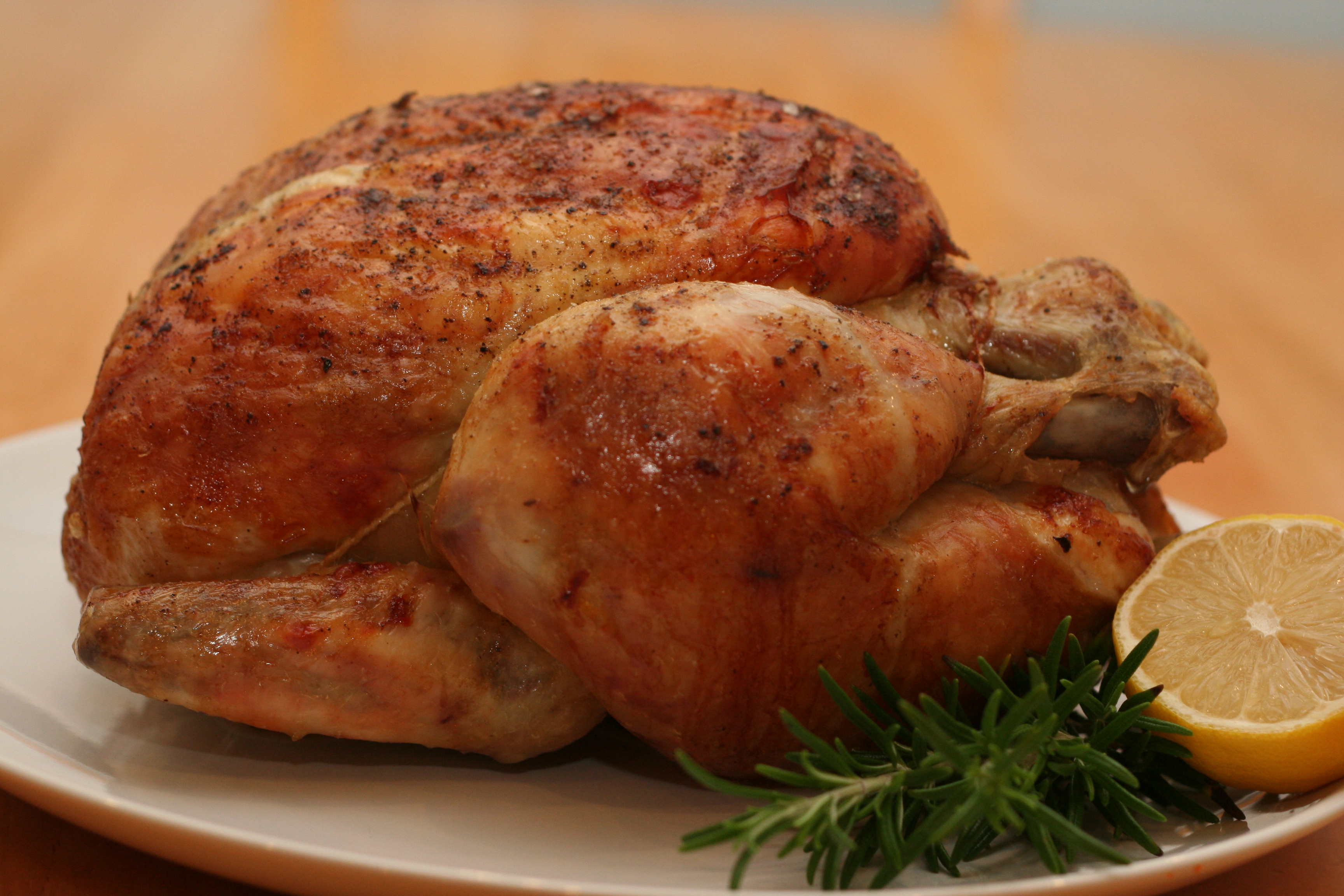
Slow Roast Chicken with Vermouth and Mashed Potatoes with Crème Fraîche

It’s often said that a cookbook is worth its purchase price even if you only make a few recipes out of it. I’ve had the River Café Two Easy book for years but have never really been excited about most of the recipes in it — except this one. This is a roast chicken worth writing home about. You roast it at a very low temperature for three hours, flipping it over once an hour, then jack up the heat for the final 30 minutes to crisp the skin to a picture-perfect golden brown. The chicken is unbelievably moist — roasting it at such a low temperature makes it almost impossible to dry out — and the flavors of the lemon, garlic and rosemary in the cavity really penetrate into the meat. If you know you’ll be home all afternoon, there is no better dinner to make, as you can bask in the amazing aromas that will drift out from your kitchen for hours. Once you make this, I’m willing to bet that, like me, you won’t want to roast a chicken any other way again.

The tang of the crème fraîche in the mashed potatoes is a good match for the lemon and vermouth in the chicken. Depending on what time of year it is, I like to also serve this with simple sauteed carrots or green beans dressed with lemon and olive oil.

Slow Roast Chicken and Vermouth
adapted from River Café Two Easy by Rose Gray and Ruth Rogers

Serves 4

1 x 4.5‑lb (2‑kg) whole chicken
1 lemon
sea salt and freshly ground black pepper
3 garlic cloves
2 sprigs of fresh rosemary
7 fl oz (200 ml) water
4 tablespoons (60 g) unsalted butter, melted
1/2 cup (120 ml) extra-dry vermouth or a dry white wine*

*Feel free to omit the alcohol altogether. It won’t really affect the flavor of the chicken, just the juices.

Preheat the oven to 175°F (80°C) and wipe the chicken clean.

Cut the lemon in half. Rub one half of the lemon all over the chicken, getting as much juice onto the skin as you can.

Season the cavity with salt and pepper. Peel the garlic, wash the rosemary and stuff it into the chicken, along with both lemon halves.

Place the chicken upside down in a roasting tin just large enough to hold it. Add the water. Cook for 1 hour, then turn right side up (I can usually just do this with my bare hands since the roasting temperature is so low). Return it to the oven and cook for another hour, then turn upside down again and cook for yet another hour.

Remove the chicken from the oven and raise the temperature to 400°F (200°C). Brush the melted butter all over the skin, season very well with sea salt and freshly ground black pepper, and add the vermouth to the pan.

Return the chicken to the oven (make sure it finishes right side up) and cook for 30 minutes, until golden brown and the juices run clear. Strain the fat and serve with the lemony, salty juices from the pan.

***

Mashed Potatoes with Crème Fraîche
adapted from Bon Appétit, January 2002

Serves 6

3 1/2 lb (1. 5 kg) russet potatoes, peeled and quartered (or any good mashing/boiling potato variety, such as Yukon Gold, Maris Piper or Kerr Pinks)
2/3 cup (160 ml) crème fraîche or sour cream
4 tablespoons (60 g) butter
salt and freshly ground black pepper

Cook the potatoes in a large pot of boiling salted water until just tender, about 25 minutes. Drain. Return the potatoes to the pot. Add the crème fraîche and butter and mash until smooth. Season with salt and pepper. (Potatoes can be made 2 hours ahead. Let stand at room temperature. Rewarm over a low heat, stirring frequently.)

Pork Chops and Roasted Potatoes with Blue Cheese Dressing

Last week I admitted to getting cable just so I could watch the Barefoot Contessa’s shows, but an unexpected bonus has been discovering Tyler Florence on the Food Network. He’s a real meat-and-potatoes kind of guy, but all taken to the next level. This dish is a case in point — what would otherwise be a forgettable pork chop and roasted potato is transformed into something tantalizing simply by adding a blue cheese dressing. So far I’ve wanted to make just about everything I’ve seen on his show, and invariably my husband comments that he wouldn’t complain if I made whatever Tyler’s cooking on TV. This is an easy weeknight dinner, requiring only a bit of chopping for the potatoes and any vegetable you want to serve, a quick stir to make the dressing and 10 minutes spent at the stove to fry the pork chops.

Since you’ll already have the oven on at a high heat for roasting the potatoes, a roasted vegetable would be a good choice to serve alongside the pork and potatoes. Roasted beets would complement the flavors in the blue cheese well, or you could try roasted winter vegetables, roasted parsnips and carrots, roasted squash, roasted broccoli or roasted Brussels sprouts.

Pork Chops and Roasted Potatoes with Blue Cheese Dressing
adapted from Tyler Florence

Serves 4

2 lb (900 g) baby potatoes, cut in half through the equator
extra virgin olive oil
salt and freshly ground black pepper
4 thick pork chops (about 3 lb/1.4 kg) total
1 bunch fresh mint, leaves only

for the blue cheese dressing:
1/2 cup (100 g) crumbled blue cheese
1/2 cup (120 ml) buttermilk
2 tablespoons olive oil
2 tablespoons fresh lemon juice
salt and freshly ground black pepper
1 bunch fresh chives, minced

Preheat the oven to 400°F (200°C). Pour enough olive oil in a roasting tin, baking sheet or casserole dish to coat the bottom, then place the tin in the oven to heat the oil.

Bring a pot of salted water to boil. Add the potatoes to the boiling water and boil for 5 minutes, then drain. Add the parboiled potatoes to the hot oil in the roasting tin, stirring well to ensure all the potatoes are coated with oil. Season well with salt and pepper, then roast in the oven for 30 minutes.

To make the dressing, put the cheese, buttermilk and olive oil in a small bowl and stir together with a fork, mashing a little to break up the cheese. Season with the lemon juice, salt, pepper, and chives.

When the potatoes have cooked for 20 minutes, season the chops with salt and pepper. Put a large saute pan over medium heat, add a splash of olive oil, and heat until it begins to smoke. Add the pork chops and saute until golden brown on the outside and just barely pink inside, 4 to 6 minutes on each side.

To serve, put a chop on each of 4 plates. Put the potatoes in a bowl and drizzle with the dressing. Add the mint and toss. Set one portion of the potatoes on top of each chop and serve.

Chicken and Chorizo Hash

Regular readers will already know that I’m a huge fan of Ina Garten, a.k.a. the Barefoot Contessa. In fact, after nearly a decade of hardly ever watching TV and happily making do with only four channels, one of which was the Irish language channel, I got cable last month just so I could watch her show. Her recipes are always outstanding, and she works her brand of magic to take something as classic or simple as, say, potato leek soup and turn it into the best version you’ve ever had.

Over the Christmas break I saw an episode where she made a chicken hash, and as I was watching it, I couldn’t help thinking that adding chorizo to the dish would make it better. I got the idea from a recipe I’ve made before, Nigella Lawson’s chicken and chorizo with cannellini beans, so I already knew it was a combination that works. I also substituted baby potatoes so that you don’t have to peel them, and even though I know chicken on the bone has more flavor than boneless, skinless chicken breasts, I adapted that too from her original to shave off a little time and eliminate a couple prep steps to make the recipe that much easier as a weeknight meal. The result was fantastic — the chorizo lent the entire dish a smoky, paprika-infused richness and transformed it from being just another ho-hum chicken dinner into something with a bit more kick.

Dare I say it, but I think I might have done the unthinkable — made a Barefoot Contessa recipe better.

Chicken and Chorizo Hash
adapted from Ina Garten

Serves 6

3 large chicken breasts
olive oil
salt and freshly ground black pepper
1/2 lb (225 g) chorizo sausage, sliced or cubed, depending on size
2 tablespoons (60 g) unsalted butter
2 lb (900 g) baby potatoes, quartered or cut into bite-sized dice, depending on size
2 red onions, chopped
2 red peppers, large diced
3 garlic cloves, minced
2 teaspoons fresh thyme leaves (or 1 teaspoon dried thyme)
1 teaspoon smoked paprika
1 tablespoon tomato paste
6 scallions, white and green parts minced
a large handful of chopped fresh parsley
sour cream and cheddar cheese, for serving

Preheat the oven to 350°F (180°C).

Place the chicken breasts on a baking sheet. With your hands, rub each piece on both sides with olive oil and sprinkle very generously with salt and pepper. Roast the chicken for 35 to 40 minutes, until the skin is lightly browned and the chicken is just cooked through. Set aside until cool enough to handle, then cut the chicken into bite-sized pieces and set aside.

Meanwhile, heat a large saute pan, then add the chorizo. Once the chorizo has started to release its oil and has become a little browned and crispy, remove the pieces from the pan with a slotted spoon and set aside. Add 1 tablespoon of the butter to the same pan, then add the potatoes and onions, 1 teaspoon salt and 1/2 teaspoon pepper and saute over a medium heat for 20 to 30 minutes, until evenly browned and cooked through.

In a separate saute pan, melt the remaining 1 tablespoon of butter. Add the red peppers, garlic, thyme, paprika, tomato paste, 1 teaspoon salt and 1/2 teaspoon pepper and saute over a medium heat for about 5 minutes, until the edges of the peppers are seared.

Add the chicken and the pepper mixture to the potatoes along with the chorizo and heat through, stirring to combine all the ingredients. Add the scallions and parsley, toss together and place on a serving platter. Serve with sour cream and cheddar cheese on top.

Christmas 2009: Fully Festive Ham, Cranberry Chutney, Spiced Whipped Sweet Potatoes, Brussels Sprouts with Chestnuts and Pancetta, and Maple Pecan Pie Squares

About seven or eight years ago, I made a Martha Stewart version of the infamous Campbell’s green bean casserole for the holidays. Instead of a can of cream of mushroom soup and a can of french-fried onions, her recipe called for Gruyère cheese, which back then I could only find in Dublin, and pan-fried shallots. I had such high hopes for the recipe, but for all the fancy ingredients, Matt and I swore it tasted just the same as the casserole of our childhoods. It had a bad work-to-glory ratio. What I love about the ham, which I’ve made every Christmas for the past five years, and these maple pecan pie squares, which I made a couple weeks ago, is that they have a high work-to-glory ratio. The gist of the theory is that the recipes are simple but absolutely delicious, as opposed to something that’s time consuming or difficult that winds up tasting not much better than what you can get out of a can. As much as I love to cook and indulge at the holidays, I’m all for basking in the glory of a house full of well-fed people at Christmas with a minimum amount of work.

***

Mulled Wine (Glühwein)
adapted from Rachel’s Favourite Food for Friends by Rachel Allen

Serves 6 to 8

1 bottle of red wine (you don’t need your best red, but something decent)
1/2 cup (100 g) sugar
1 cinnamon stick, broken in half
4 cloves
1/2 orange, cut into 4 chunks
1 lemon, cut into 4 chunks
1 cup (240 ml) brandy
halved orange slices from the remaining 1/2 orange, to serve

Put the wine, sugar, cinnamon, cloves, orange and lemon into a saucepan. Heat very gently, stirring to dissolve the sugar. Keep on a low heat, without boiling, for 5 minutes. Remove from the heat and add the brandy. Serve in glasses, each with a new orange slice in it.

***

Fully Festive Ham
adapted from Feast by Nigella Lawson

Serves 8 to 10

The only slightly tricky bit about this menu is timing the ham if you want to make the cabbage with the stock, since the ham takes about 4 hours to cook and the cabbage needs 1 hour. Just be sure to take note of that and leave yourself plenty of time.

7 1/2 to 8 lb (3.4 to 3.6 kg) ham
2 quarts (2 liters) apple juice
2 quarts (2 liters) cranberry juice
2 cinnamon sticks, halved
2 onions, halved but not peeled
1 tablespoon allspice berries (optional)

for the cranberry glaze:
4 tablespoons cranberry jelly or 6 tablespoons cranberry sauce
1 tablespoon runny honey
1 tablespoon English mustard powder
1/2 teaspoon ground cinnamon

Put the ham into a large saucepan and cover with cold water. Bring to a boil and then immediately drain and rinse the ham in a colander, which will get rid of any excess saltiness.

Rinse the saucepan and put the ham back in and add all of the above ingredients (except for the glaze). If the fruit juices don’t cover the ham, then add some water; it really depends on how snugly your ham fits into the pot. Bring the liquid to a boil and cook the ham at a fast simmer for about 3 1/2 to 4 hours. Partially cover the pot with a lid if the liquid is boiling away and the top of the ham is getting dry.

Once the ham is cooked, remove it from the hot and now salty juice, and sit it on a board (if you’re making the cabbage with the stock, don’t throw the stock away). If you want, you can cook this well ahead of schedule and let it get cold before glazing and roasting it. If that’s the case, cook it for half an hour less in the pot and then let it get cold in the cooking liquid.

But if you’re going ahead now, wait until the ham’s bearable to the touch – it’s easy to scald yourself on hot sugary fat – and then cut and peel the rind off the cooked ham, and make sure you have a thin layer of white fat off with it, or just use a knife to shave some fat off, so you’re left with a thin coating. Meanwhile, preheat the oven to 420°F, though you can make this work with whatever setting you need your oven to be.

Heat the remaining glaze ingredients together in a saucepan until the jelly or sauce melts into the honey, mustard and cinnamon to make a smooth glaze. It needs to be thick enough not to run off the ham in the oven.

Cover your roasting tin with two layers of tin foil (to make doubly sure nothing gets through) and place the ham in the tin. Pour the glaze over the ham so that all of the fat/top is covered. Put the ham into the oven and cook for 15 minutes or until the fat is coloured and burnished by the sugary glaze. If you’ve let the ham cool completely before you glaze it, it will need a good 40 minutes at 350°F and you might have to give a final blast of real heat at the end too. And this is based on its being at room temperature, not fridge cold, when it goes in.

***

Fully Festive Red Cabbage
adapted from Feast by Nigella Lawson

Serves 6

1 to 1 1/2 heads of red cabbage, shredded
cranberry and apple juice stock from the Fully Festive Ham

Bring the ham stock back to the boil and add the shredded cabbage. Cook for approx. 1 to 1 1/4 hours at a steady simmer, covering the pan if it’s losing too much liquid. Strain to serve.

***

Cranberry Chutney with Crystallized Ginger and Dried Cherries
adapted from A Homemade Life by Molly Wizenberg

Makes about 5 cups

This will keep for a week in the fridge, stored in an airtight container. Note that this chutney reaches its thick, jammy consistency only as it cools, so it will still be somewhat loose when you first remove it from the heat.

24 oz (680 g) apricot preserves
3/4 cup (180 ml) raspberry vinegar (or 3/4 cup (180 ml) white vinegar plus 1 1/2 teaspoons raspberry preserves)
pinch of salt
1/4 teaspoon ground cloves
1/4 cup (60 ml) Grand Marnier, Cointreau or Triple Sec (or orange juice for a nonalcoholic version)
24 oz (680 g) fresh cranberries, picked over
1/2 cup (70 g) finely chopped crystallized ginger
1 1/4 cups (150 g) dried cherries

In a large, heavy-bottomed saucepan, combine the apricot preserves, raspberry vinegar (or vinegar and raspberry preserves), salt, cloves and Grand Marnier. Stir to mix, then place over a medium-high heat. Bring the mixture back to a boil and cook for 10 to 15 minutes, or until it has thickened slightly. If will bubble, so stir it regularly with a long-handled wooden spoon to keep it from burning.

Reduce the heat to medium, add the cranberries and cook until they’re soft but not popped. When you hear one or two pop, it’s a good sign that the rest are getting soft. Add the ginger and cherries, stir well, and remove from the heat. Cool completely before serving. The chutney will thicken considerably as it cools.

***

Spiced Whipped Sweet Potatoes
adapted from Bon Appétit, November 2002

Serves 6 to 8

This dish can be made 1 day ahead (always a bonus for a big holiday dinner). Cover and refrigerate, then rewarm over a medium-low heat, stirring frequently. Alternatively, cover with plastic wrap and rewarm in a microwave oven on high until heated through.

6 x 8‑oz (225‑g) sweet potatoes (yams)
1/2 cup (packed) (85 g) golden brown sugar
1/4 cup (55 g) butter, room temperature
1 tablespoon fresh lemon juice
2 teaspoons orange zest
3/4 teaspoon ground cinnamon
3/4 teaspoon ground allspice
3/4 teaspoon ground nutmeg
cinnamon sticks, to garnish (optional)
orange peel strips, to garnish (optional)

Preheat the oven to 400°F (200°C) and position the rack in the center of oven. Line a baking sheet with tin foil. Pierce the sweet potatoes in several places with a fork and place on the lined sheet. Bake until tender when pierced with fork, about 1 hour. Cool slightly.

Cut the potatoes in half. Scoop out pulp into a large bowl; discard the peel. Add the brown sugar, butter, lemon juice, orange zest, ground cinnamon, allspice, and nutmeg to the sweet potato pulp. Using an electric mixer or food processor, beat until the mixture is smooth. Season to taste with salt and pepper. Mound the sweet potatoes in a serving bowl. Garnish with cinnamon sticks and orange peel strips, if desired.

***

Brussels Sprouts with Chestnuts, Pancetta and Parsley
adapted from Feast by Nigella Lawson

Serves 8 to 10

2 1/4 lb (1 kg) Brussels sprouts
9 oz (250 g) pancetta or bacon, chopped
1 tablespoon vegetable oil
2 tablespoons (30 g) butter
9 oz (250 g) vacuum-packed chestnuts
1/4 cup (60 ml) Marsala
a large bunch of flat-leaf parsley, chopped
freshly ground black pepper

Slice the bottoms off each of the Brussels sprouts, cutting a cross onto the base as you go. Place the sprouts into a large saucepan of salted boiling water. Cook the sprouts for 5 minutes, or until they’re tender but still retain a bit of bite. Remove the pan from the heat and drain the excess water from the sprouts.

Heat the oil in a large saucepan. Add the pancetta or bacon to the pan and cook until it’s crisp and golden brown in color, but not cooked to the point of having dried out. Add the butter and chestnuts to the pancetta and with a wooden spoon or spatula, press down on them to break them up into pieces. Once the chestnuts have been warmed through, turn the heat up and add the Marsala to the pan. Cook until the mixture has reduced and thickened slightly. Add the sprouts and half the parsley to the saucepan and mix well. Season the Brussels sprouts with freshly ground black pepper.

To serve, place the Brussels sprouts onto a warmed serving plate and sprinkle the remaining chopped parsley over the top.

***

Maple Pecan Pie Squares with Bourbon Whipped Cream
adapted from Ezra Pound Cake 

Makes 25 squares

Don’t be put off by the long list of ingredients and lengthy method. I made these in about 15 minutes, and with two little kids underfoot at that. These can be stored in an airtight container at room temperature for up to 3 days.

for the crust:
1 1/4 cups (150 g) all-purpose flour
1/3 cup (60 g) firmly packed golden brown sugar
1/4 teaspoon salt
1/2 cup (110 g) cold unsalted butter, cut into 3/4‑inch pieces

for the maple pecan filling:
6 tablespoons (90 g) unsalted butter
1/3 cup (80 ml) pure maple syrup
2/3 cup (120 g) firmly packed golden brown sugar
1/3 cup (80 ml) heavy cream
2 cups (8 oz/250 g) coarsely chopped pecans (don’t chop them too small)

for the bourbon whipped cream:
1 cup (240 ml) whipping cream
1 tablespoon bourbon
1 tablespoon sugar

Position a rack in the center of the oven and preheat it to 350°F (180°C). Line a 9‑inch square baking pan with aluminum foil or baking parchment paper, letting the foil or paper extend up the sides and over the edges. If using foil, butter the foil, or spray it with nonstick spray.

To make the crust, combine the flour, brown sugar and salt in a food processor (or by hand). Add the butter and pulse (or use a pastry blender) until the mixture forms pea-sized coarse crumbs. Press the crumbs into the bottom of the pan and bake until the edges are lightly browned and the top feels firm, 12 to 17 minutes. Set aside.

To make the filling, combine the butter, maple syrup and brown sugar in a small saucepan over a medium heat. Stir until the butter melts and the brown sugar dissolves. Bring to a boil and boil for 1 minute. Remove from the heat and immediately stir in the cream. Stir in the pecans. Pour the hot filling over the partially baked crust, spreading it to the edges with an offset spatula or wooden spoon.

Bake until the filling is set when you give the pan a gentle shake, 22 to 25 minutes. Transfer to a wire rack to cool until firm, about 1 1/2 hours.

Meanwhile, to make the bourbon whipped cream, whip the cream, bourbon and sugar together until soft peaks form. Taste and add more sugar if you think it needs it to balance the bourbon. Set aside in the fridge until ready to serve.

Using the ends of the foil or paper liner, carefully lift the maple-pecan square in its liner from the baking pan. Run a knife around the edges of the square to loosen it from the foil or paper. Using a large, sharp knife, cut into 25 small squares. Serve with a dollop of the bourbon whipped cream on the side.

Salmon with Maple Mustard Sauce, Apple, Potato and Onion Gratin, and Sauteed Carrots

I love routine. The start of a new school year every September or a new semester in college always threw me for a loop for the first couple of weeks, until I settled into a new schedule. When my daughter was born, I felt like I was going crazy by the time she was six weeks old because there was no predictable or dependable pattern to my days — she might nap for 15 minutes or three hours; I might get to have lunch and a shower, I might not. (The New Contented Little Baby Book was a lifesaver when I discovered it.) When I was in high school, I had the same lunch every day for four years — a sandwich, a carton of yogurt and an apple — and all my life, I only ever ate one kind of apple: Granny Smiths.

But earlier this autumn, I made a quick stop at the grocery store to pick up a few snacks to take on an impromptu after-school trip to the beach and grabbed a bag of Pink Lady apples. And I liked them! Since then, I’ve been branching out into other varieties — Braeburn, Cox’s Orange Pippins, Bramleys, Galas — all of them good. For someone who likes to cook and try different things, I feel more than a little silly for stubbornly sticking with the same thing for so long.

This apple, potato and onion gratin is easy enough to make for an everyday meal, especially if you use a mandolin or the slicing blade of a food processor, but good enough to be a side dish at a holiday dinner like Thanksgiving.I used Pink Lady apples in it — you know, just to shake things up a little.

Salmon with Maple Mustard Sauce 
adapted from Gourmet, January 2003

Serves 4

If you don’t have maple syrup, use honey instead, making this a honey mustard sauce that’s equally as good.

4 x 7‑oz (200‑g) pieces center-cut salmon fillet (1 1/4 inches thick), skinned
1 tablespoon vegetable oil
3 tablespoons water
2 tablespoons Dijon mustard
2 tablespoons pure maple syrup (or honey)
2 garlic cloves, finely chopped
2 teaspoons mustard seeds
1/4 cup chopped scallion greens

Pat the salmon dry and season with salt and pepper. Heat the oil in a 12-inch nonstick skillet over a moderately high heat until hot but not smoking, then saute the salmon in 2 batches, starting with the skinned sides up and turning over once, until just cooked through, 6 to 9 minutes per batch. Transfer to a platter and keep warm, covered.

Remove the skillet from the heat and cool for 1 minute. Whisk in the remaining ingredients and add salt and pepper to taste. Pour the sauce over the salmon and serve straightaway.

***

Apple, Potato, and Onion Gratin 
adapted from Bon Appétit, February 2005

Serves 8

6 tablespoons (90 g) butter, divided
2 lb (900 g) onions, sliced
2 tablespoons (packed) chopped fresh thyme
2 teaspoons fine sea salt, divided
2/3 cup (160 ml) water
2/3 cup (160 ml) dry white wine
2 teaspoons sugar
2 1/2 lb (1.1 kg) Yukon Gold or Yellow Finn potatoes, peeled and cut into 1/4‑inch-thick rounds (or use any waxy or red-skinned potato)
2 lb (900 g) tart apples (such as Granny Smith, Pippin, or Pink Lady), peeled, halved, cored and cut into 1/4‑inch-thick slices

Preheat the oven to 400°F (200°C). Butter a 13 x 9 x 2‑inch glass or ceramic baking dish. Melt half the butter in a large nonstick skillet over a medium heat. Add the onions, thyme, and 1 teaspoon salt. Saute until the onions are translucent, about 10 minutes. Increase the heat to medium-high and saute until the onions are tender and begin to color, about 8 minutes longer. Remove from the heat. Add the remaining butter and the water, wine, and sugar to the skillet, stirring and swirling the skillet to combine. Bring to the boil, then cool the onion mixture until it’s lukewarm.

Combine the potatoes, apples, remaining 1 teaspoon salt, and the onion mixture in a large bowl and toss gently to blend. Transfer to the prepared baking dish, spreading evenly. Cover the dish with parchment paper, then cover with foil, shiny side down. Bake the gratin until the potatoes are tender, about 55 minutes. Uncover and bake until the top browns and juices bubble thickly, about 15 to 20 minutes longer. (Can be made 6 hours ahead. Let stand uncovered at room temperature. Rewarm, loosely covered with foil, in 300°F (150°C) oven for 20 minutes.) Let the gratin stand for 15 minutes before serving.

***

Sauteed Carrots
from Barefoot Contessa Family Style by Ina Garten

Serves 6

2 lb (900 g) carrots
1/3 cup (80 ml) water
1 teaspoon kosher salt
1/4 teaspoon freshly ground black pepper
2 tablespoons (30 g) unsalted butter
1 1/2 tablespoons chopped fresh dill or flat-leaf parsley

Peel the carrots and cut them diagonally in 1/4‑inch slices. Place the carrots, water, salt, and pepper in a large (10– to 12-inch) saute pan and bring to a boil. Cover the pan and cook over a medium-low heat for 7 to 8 minutes, until the carrots are just cooked through. Add the butter and saute for another minute, until the water evaporates and the carrots are coated with butter. Off the heat, toss with the dill or parsley. Sprinkle with salt and pepper and serve.

Collard Greens with Smoked Turkey and Sweet Potato Hash with Bacon

I grew up in Texas and, despite my Illinois born and bred Yankee parents, I developed a true love for Southern soul food. I crave okra, gumbo, hush puppies, and barbecue all the more because it’s hard to find these culinary gems here in Milwaukee. Of all the things I crave, however, collard greens are the dish I cook the most. Not having grown up in a household where greens were ever eaten, much less cooked, it took many years of experimentation before I found a tried and true method for cooking them. Years ago, an elderly gentleman in our local supermarket stopped me as I was examining a bunch of collard greens to ask if I was buying the greens for myself. I told him they were for me and he promptly asked if I knew how to make them. I told him my back story (Texas transplant) and admitted that I had yet to master this seemingly simple dish. He made me promise to try simmering my greens with smoked turkey and, voilà!, I finally had a collard greens recipe worth sharing.

Collard Greens with Smoked Turkey

Serves 8 as side dish, 4 as main course

1 smoked turkey leg
6 cups (1.5 liters) water
1 onion, diced
2 bunches collard greens
1/2 teaspoon red chili flakes
1 clove garlic, minced
salt and freshly ground black pepper, to taste
vinegar and hot sauce, to serve

Combine the turkey, water and onion in a large stock pot set over a medium-high heat. Bring the water to a boil, then reduce the heat and simmer for 30 to 60 minutes.

While the turkey “broth” simmers, wash the collard greens. Remove the large stems from the greens and slice each leaf crosswise into 1/2‑inch strips. To speed up this process, I stack 2 to 3 destemmed leaves together, roll them up crosswise into “cigars”, then slice each “cigar” into strips. Rewash the greens again to remove any remaining grit.

Add the greens to the turkey “broth”, pushing them down until they are completely submerged. Stir in the red chili flakes and garlic. Simmer the greens until they’re very tender, about 2 hours. Add salt and pepper to taste. I usually add about 1 teaspoon of salt. Please note that you’ll need to taste the “broth” before adding the salt. Some smoked turkey is very salty and won’t need much, if any, salt.

Before serving, remove the meat from the turkey leg and pull into bite-sized pieces. Serve the greens in bowls, topped with the turkey pieces, a splash of vinegar, and hot sauce.

***

Sweet Potato Hash with Bacon
adapted from Gourmet, October 2007

Serves 6 as side dish

1/2 lb (225 g) sliced bacon, cut into 1/4‑inch strips
2 medium onions, chopped
1 large red bell pepper, cut into thin strips
salt and freshly ground black pepper
2 lb (900 g) sweet potatoes, peeled and cut into 1/2‑inch cubes
1 teaspoon chopped fresh thyme

Cook the bacon in a 12-inch nonstick skillet over a medium heat until crisp. Transfer to paper towels to drain, reserving the fat in skillet.

Add the onions, bell pepper, 1/2 teaspoon salt, and 1/2 teaspoon pepper to the skillet and cook, stirring occasionally, until the vegetables are softened. Stir in the potatoes and another 1/2 teaspoon of salt and cook, covered, stirring occasionally, until the potatoes are tender and starting to brown, 10 to 14 minutes. Stir in the thyme, bacon, and more salt and pepper to taste.

Herb-roasted Turkey with Shallot Pan Gravy, Thanksgiving Stuffing, Buttermilk Mashed Potatoes, and Honeyed Pecan Pie

This year is my first time to host Thanksgiving. In fact, except for the Christmas when I was 9+ months pregnant and didn’t dare venture away from my doctor, I’ve never hosted a major holiday, so I was really excited to spend some time researching recipes and planning our menu. Luckily, my sister-in-law and mother-in-law are also cooking dishes  so I won’t be overwhelmed with cooking. Unlike Kristin, except for the pecan pie, I haven’t made any of my Thanksgiving recipes but they sound good to me and, almost as important, they don’t seem too time consuming. Speaking of time, for those of you who are also planning your menus right now, I’ll lay out my game plan. Sunday, shop for all beverages and groceries. Monday, wash table linens and polish candlesticks. Tuesday, make herb butter (for turkey), clean house. Wednesday, bake pie and cornbread, cube cornbread and French bread (for stuffing). Thursday, put turkey in the oven, set table, prepare remaining dishes, pour glass of wine and enjoy!

Herb-roasted Turkey with Shallot Pan Gravy
from Bon Appétit, November 2000

Serves 10

3/4 cup (180 g) butter, room temperature
3 tablespoons chopped fresh parsley plus 3 whole sprigs
2 tablespoons chopped fresh sage plus 3 whole sprigs
2 tablespoons chopped fresh thyme plus 3 whole sprigs
3/4 teaspoon salt
1/2 teaspoon coarsely ground black pepper
1 x 15- to 16-lb (7‑kg) turkey, rinsed and patted dry
1 1/2 lb (680 g) shallots, peeled and halved lengthwise through root end
3 cups (720 ml) (or more) low-sodium chicken broth
1 cup (240 ml) dry white wine
2 tablespoons all-purpose flour

Mix the butter, chopped parsley, chopped sage, chopped thyme, 3/4 teaspoon salt and 1/2 teaspoon pepper in a medium bowl to blend. (This can be prepared 3 days ahead. Transfer the herb butter to a small bowl; cover and refrigerate. Bring the butter to room temperature before using.) Position a rack in the bottom third of the oven and preheat to 350°F (180°C). Sprinkle the main cavity of the turkey with salt and pepper. Place the whole parsley, sage and thyme sprigs and 4 shallot halves in the cavity. Starting at the neck end, carefully slide your hand between the skin and breast meat to loosen the skin. Spread 3 tablespoons herb butter over the breast meat under the skin. Tuck the wing tips under, then tie the legs together to hold their shape. Place the turkey on a rack set in a large roasting pan. Rub 4 tablespoons of the herb butter over the turkey. Cover only the breast area of the turkey with a sheet of heavy-duty foil. Scatter the remaining shallots in the pan around the turkey.

Roast the turkey for 30 minutes, then baste with 1/2 cup (120 ml) broth. Continue roasting the turkey for 1 1/2 hours, basting with 1/2 cup (120 ml) broth every 30 minutes. Remove the foil from over the turkey breast. Continue to roast the turkey until golden brown and a thermometer inserted into the thickest part of the thigh registers 180°F (80°C), basting with pan juices every 20 minutes, for about 1 hour longer. Transfer the turkey to a platter. Brush with 1 tablespoon of herb butter. Tent loosely with foil and let stand 20 minutes.

Using a slotted spoon, transfer the shallots from the roasting pan to a plate. Pour the pan juices into a medium bowl; spoon off the fat and discard. Add the wine and 1 cup (240 ml) of chicken broth to the roasting pan. Set the pan directly over 2 burners and bring the broth mixture to a boil, scraping up any browned bits. Continue to boil until reduced by half, about 3 minutes; pour into a large glass measuring cup. Add the degreased pan juices. Add enough broth, if necessary, to equal 3 cups (720 ml) liquid.

Blend the flour into the remaining herb butter. Pour the broth mixture into a heavy medium saucepan and bring to a boil. Gradually whisk in the herb butter mixture. Add any accumulated juices from the turkey platter. Boil until the gravy thickens enough to coat a spoon lightly, whisking occasionally, about 6 minutes. Add the shallots to the gravy and simmer for 1 minute. Season the gravy with salt and pepper. Serve the turkey with the gravy.

***

Thanksgiving Stuffing
from The Pioneer Woman 

Serves 10

1 pan of cornbread
1 loaf French bread, somewhat crusty
1 stick (110 g) butter
1 whole medium onion, diced
2 cups (250 g) celery, chopped
4 cups (1 liter) low-sodium chicken broth
1/4 cup (10 g) chopped fresh parsley
2 to 3 teaspoons fresh chopped rosemary
1/2 teaspoon dried basil
1/2 teaspoon dried thyme
salt to taste

Chop the cornbread and loaf of French bread into 1‑inch cubes. Spread them out on two baking sheets and let them dry for approximately 24 hours.

Heat a large skillet over medium heat and add the butter. When it’s melted, add the onion and celery and cook for a few minutes, until the onions are almost translucent. While the onion and celery are cooking, chop up any fresh herbs you will be using.

Add 4 cups of chicken broth and bring to a boil. Add the parsley, rosemary, basil and thyme. Stir until combined.

Place all of your dried bread cubes into a large bowl and mix them up a bit. Gradually ladle the broth mixture into the bread, tossing lightly as you go. Keep gradually adding the broth mixture, tasting as you go and adding more seasoning and herbs if needed. Add salt carefully. You don’t want to over-salt your stuffing. If the mixture isn’t quite moist enough, add a bit more chicken broth and stir.

Either stuff the bird and cook according to directions or place in a baking dish and bake at 350°F (180°C) for 20 to 25 minutes or until golden brown on top.

***

Buttermilk Mashed Potatoes 
from A New Way to Cook by Sally Schneider

Serves 4 [Note: I plan to double this recipe]

You can make the potatoes up to 3 hours ahead. About 20 minutes before serving, warm them in a double boiler, stirring frequently, until hot.

1 1/4 lb (570 g) thin-skinned potatoes, such as Yellow Finns or Yukon Golds, peeled and cut into 2‑inch chunks if large
1 1/2 teaspoons kosher salt
3/4 cup (180 ml) buttermilk, warmed (not hot)
1 tablespoon unsalted butter
freshly ground black pepper

Place the potatoes and 1 teaspoon of the salt in a medium saucepan, add enough water to cover, and bring to a boil over a high heat. Reduce the heat to moderate and simmer until the potatoes are tender when pierced with a fork, about 45 minutes. Drain, reserving 1/4 cup of the cooking water.

Return the potatoes to the pan and set over a low heat, uncovered, for about 5 minutes, stirring occasionally, to let the potatoes dry out a little (too much moisture will dilute their flavor). For the smoothest potatoes, pass them through a food mill or potato ricer. For a slightly coarser puree, mash them with a potato masher or fork or use a hand mixer. Beat the buttermilk into the potatoes with a wooden spoon until thoroughly incorporated. If you prefer even creamier potatoes, add a little of the reserved cooking liquid. Beat in the butter, the remaining 1/2 teaspoon salt, and plenty of pepper. Serve at once, or keep the potatoes warm, covered, in a double boiler over hot water for up to 1 hour.

***

Honeyed Pecan Pie

Serves 8

1 cup (170 g) brown sugar (lightly packed)
1 cup (200 g) (or a bit less) light corn syrup (or golden syrup)
1/4 cup (60 ml) honey
1/2 teaspoon salt
1/3 cup (80 g) butter, melted
3 eggs, lightly beaten
1 1/2 cups (150 g) roasted, chopped pecans
1 x 9‑inch pie crust
whipped cream (optional)

Preheat the oven to 350°F (180°C).

Combine the brown sugar, corn syrup, honey, salt, and melted butter in a large bowl. Stir in the beaten eggs and mix well. Stir in the pecans. Pour the pecan mixture into the prepared pie crust and bake at 350°F (180°C) for 1 hour. Serve the pie warm or at room temperature with a dollop of freshly whipped cream, if desired.

Cider-brined Turkey with Maple Chili Glaze, Homemade Stuffing, Bourbon Sweet Potato Puree, Roasted Winter Vegetables, and Nutmeg Maple Cream Pie

I know what you’re thinking — it’s only November 9th and she already has her entire Thanksgiving menu planned? I could try to blame it on the blog and say that I just wanted to get these recipes out there so that anyone who wanted to make any of them would have them well ahead of time so they can plan accordingly themselves … and that’s partly true. It’s also true that I’ve been making most of these recipes for years now, so I’m more or less just sticking to my tried-and-tested menu. But it’s also true that I had my children’s big Christmas presents ordered in July. I can’t help it — as a third-generation Virgo, planning ahead is just in my blood.

I should point out that this turkey recipe only uses the crown, which means you won’t get that Norman Rockwell moment of bringing a whole gloriously roasted turkey to the table. But honestly, don’t most people prefer the breast meat anyway? I find that using only the crown makes it easier and less time consuming to cook, not to mention that it takes up a lot less space in my fridge. Having said that, though, you could easily play around with this recipe to adjust it for a whole turkey. For anyone curious about the method behind the madness of brining a turkey, there are some interesting articles about it here and here. As for me, I’ve been brining turkey for years and think it’s the only way to go.

Poinsettia Cocktail
from Nigella Christmas by Nigella Lawson

Makes 8 to 9 glasses

1 x 75cl bottle of Prosecco or other fizzy dry wine, chilled
120 ml Cointreau, Grand Marnier or Triple Sec, chilled
500 ml cranberry juice, chilled

Mix all the ingredients in a large pitcher. Pour into wine glasses or champagne flutes and serve.

***

Cider-brined Turkey with Maple Chili Glaze 
adapted from A Kitchen Year by Paula McIntyre

Serves 8

1 x 11-lb (5‑kg) turkey crown
4 oz (110 g) butter, softened
salt and freshly ground black pepper

for the brine solution:
9 oz (250 g) sea salt
3 cups (510 g) Demerara sugar or light brown sugar
8 cups (2 litres) cider
8 cups (2 litres) water
2 cinnamon sticks
juice and zest of 2 oranges
1 onion, chopped
handful fresh chopped sage, rosemary and thyme

for the maple chili glaze:
1 red chili
1 tablespoon vegetable oil
1 onion, finely chopped
4 tablespoons maple syrup
2 tablespoons apple cider vinegar
3/4 cup (180 ml) cider
salt

To make the brine, bring all the brine ingredients to the boil and simmer for 10 minutes. Cool completely and add the turkey. Refrigerate for at least 24 hours. Remove from the brine and pat dry with paper towels.

To make the glaze, soak the chili in boiling water for 20 minutes. When cool enough to handle, remove the seeds and chop roughly. Heat the oil in a saucepan over a medium heat and add the onion. Cook until the onion is soft and golden, about 10 minutes. Add the chopped chili, maple syrup, vinegar and cider and simmer until the liquid has reduced by half. Blend to a smooth puree in a blender or food processor and pass through a fine-meshed sieve (if you have one; don’t worry about it if you don’t). Return to the pan and simmer until it has reached a syrupy consistency, about 10 minutes. Check the seasoning.

To cook the turkey, preheat the oven to 350°F (180°C). Place the turkey on a roasting rack and rub all over with the softened butter. Season well with salt and pepper. Cover with tin foil and place in the oven. Cook for 1 hour. Remove the foil and brush the glaze all over. Return to the oven and baste every 10 minutes. A good rule of thumb for cooking turkey is to allow 30 minutes per 2 1/4 lb (1 kg) plus an extra 15 minutes’ cooking time. A 11-lb (5‑kg) turkey breast will take just over 3 hours to cook and the internal temperature should register at least 160°F (70°C). Allow to rest at least 20 minutes before carving.

***

Homemade Stuffing
adapted from The New Vegetarian Epicure by Anna Thomas

Serves 10 (or enough for a 16 to 20-lb (7 to 9‑kg) turkey or 2 medium casseroles)

Homemade stuffing isn’t nearly as hard to make as you might think, and it tastes so much better than Stovetop. This is the recipe I use for every Thanksgiving and Christmas dinner at our house now. It’s not as fancy or elaborate as a lot of stuffing recipes, but I like it for its unfussy simplicity. If you want to make this ahead (though not more than 1 day), make it up to the point where you spoon it into the casserole, then cook it in the oven when you want to serve it (though it might need longer in the oven than the 45 minutes given here).

3/4 cup (170 g) butter
2 cups chopped onions (2 or 3 onions)
2 cups sliced or chopped celery (3 or 4 stalks of celery)
1 to 2 teaspoons salt
freshly ground black pepper, to taste
3 teaspoons dried sage
3 teaspoons poultry seasoning
1/2 cup (10 g) chopped fresh parsley
2 to 3 tablespoons apple cider vinegar
4 quarts (about 4 liters) of 1/2‑inch bread cubes
2 cups (480 ml) vegetable or chicken broth, or both

Preheat the oven to 350°F (180°C).

Melt the butter in a large pot and saute the chopped onion and celery in it until they are soft and just starting to color. Add about a teaspoon of salt, pepper to your taste, the herbs and the cider vinegar. Stir well and remove from the heat.

Put the bread cubes into the pot with the sauteed vegetables and herbs with all their butter, tossing everything together until it’s thoroughly combined. Drizzle on half the broth, toss again, and test. You’re aiming for a mixture that’s soft and moist throughout, but not soggy or soupy. Keep adding broth, a little at a time, mixing everything up well after each addition, until you have the consistency you like. The amount of broth used will vary quite a bit, depending on what kind of bread you use and how dry it is. If you’re roasting a turkey and plan to bake the stuffing separately but want the flavor of the turkey in it, you could add some drippings in place of part of the broth. In that case, however, cut down a little on the butter. If, on the other hand, you plan to stuff a turkey, leave the stuffing just a little on the dry side. When the texture feels right, taste and correct the seasoning with more salt or pepper if needed.

Spoon the stuffing into two buttered casserole dishes, or one very large one, cover well, and bake for about 45 minutes. Alternatively, spoon it into a turkey that’s been prepared for roasting.

***

Cranberry Sauce
adapted from The New Vegetarian Epicure by Anna Thomas

Serves 6 to 8

This keeps in the fridge for about 1 week, so is an ideal dish to make ahead.

12 oz (340 g) fresh cranberries
zest of 1 large orange
1 cup (240 ml) freshly squeezed orange juice
3/4 cup (150 g) sugar
1 teaspoon cinnamon
pinch of ground cloves

Wash the cranberries and discard any that are soft or spoiled. Combine the orange zest and juice in a heavy-bottomed saucepan with the sugar, cinnamon and cloves and bring to a boil, stirring to dissolve the sugar. Add the cranberries, return to a boil, and stir over a medium heat for 8 to 10 minutes. Use a long-handled wooden spoon, as the cranberries can really spit at you as they cook and pop. When most of the cranberries have popped and the liquid is somewhat thickened, the sauce is done. Pour it into a serving dish and allow it to cool, then chill.

***

Bourbon Sweet Potato Puree with Mascarpone and Caramelized Maple Pecans

Serves 6 to 8

These caramelized pecans (or you could use walnuts) would also make a wonderful accompaniment to an after-dinner cheese plate. They can also be made up to a few days in advance to save time on the day. If you like this puree, you’ll also like these bourbon-mashed sweet potatoes.

for the sweet potato puree:
3 lb (1.4 kg) sweet potatoes (2 or 3 large potatoes)
3 tablespoons bourbon
1/2 cup (120 ml) mascarpone

for the caramelized maple pecans:
1/3 cup (75 g) sugar
2 tablespoons maple syrup
1 cup (100 g) pecans

Preheat the oven to 400°F (200°C).

Line a baking sheet with aluminum foil. Prick the potatoes with a fork and place them on the baking sheet. Bake for about 1 to 1 1/2 hours, until the potatoes are tender. (If using very large potatoes, make sure they are cooked all the way through.)

Meanwhile, to make the caramelized maple pecans, place the sugar, maple syrup and pecans in a small saucepan on a medium heat. Allow the sugar and syrup to caramelize slightly, without stirring, which will take about 15 minutes. Gently swirl the pan to spread the sugar evenly, then replace the pan on the heat to allow the sugar to caramelize completely. Once all the sugar has melted and has nicely browned and caramelized, carefully pour the pecans onto parchment paper or a silicone baking mat. Allow the pecans to cool and harden, then break up the mixture to separate the nuts. Set aside.

When the potatoes are cool enough to handle, peel them and transfer to a food processor. Add the bourbon and mascarpone and process until the mixture is smooth.

Transfer the potato puree to a large gratin dish or casserole dish and smooth the top. Bake in the oven for 10 to 15 minutes, until heated through. Sprinkle the caramelized pecans evenly over the top and serve.

***

Roasted Winter Vegetables
adapted from Barefoot Contessa Family Style by Ina Garten

1 lb (450 g) carrots, peeled
1 lb (450 g) parsnips, peeled
1 large sweet potato, peeled
1 small butternut squash, peeled and seeded (about 2 lb/900 g)
3 tablespoons good-quality olive oil
1 1/2 teaspoons kosher salt
1/2 teaspoon freshly ground black pepper
2 tablespoons chopped flat-leaf parsley

Preheat the oven to 425°F (220°C).

Cut the carrots, parsnips, sweet potato, and butternut squash into 1‑inch cubes. All the vegetables will shrink while baking, so don’t cut them too small. Place all the cut vegetables in a single layer on 2 baking sheets. Drizzle them with olive oil, salt, and pepper and toss well. Bake for 25 to 35 minutes, until all the vegetables are tender, turning once with a metal spatula. Sprinkle with parsley, season to taste, and serve hot.

***

Nutmeg-maple Cream Pie
pie is adapted from The New York Times and the crust from Orangette

Serves 8

Pastry is not my forte, but I’ve had good results with this crust from Orangette. If you have your own favorite pie crust recipe, by all means use that instead, or use a store-bought pie shell. Smitten Kitchen has two helpful pie crust tutorials here and here.

for the nutmeg-maple cream pie filling:
3/4 cup (180 ml) maple syrup
2 1/4 cups (540 ml) heavy cream
4 egg yolks
1 whole egg
1/4 teaspoon salt
1 teaspoon freshly grated nutmeg
1 teaspoon vanilla extract

for the crust:
4 tablespoons ice water, plus more as needed
3/4 teaspoon apple cider vinegar
1 1/2 cups (180 g) unbleached all-purpose flour
1 tablespoon sugar
3/4 teaspoon salt
9 tablespoons (4 1/2 oz/130 g) cold unsalted butter, cut into cubes

To make the crust, combine the 4 tablespoons of  ice water and the cider vinegar in a small bowl or measuring cup.

In the bowl of a food processor, combine the flour, sugar, and salt. Pulse to blend. Add the butter, and pulse until the mixture resembles a coarse meal; there should be no pieces of butter bigger than a large pea. With the motor running, slowly add the water-vinegar mixture, processing just until moist clumps form. If you pick up a handful of the dough and squeeze it in your fist, it should hold together. If the dough seems a bit dry, add more ice water by the teaspoon, pulsing to incorporate. (Molly at Orangette sometimes finds that 1 additional teaspoon is perfect.)

Turn the dough out onto a wooden board or clean countertop, and gather it, massaging and pressing, until it just holds together. Shape it into a ball, and press it into a disk about 1 1/2 inches thick. If the disk cracks a bit at the edges, don’t worry; just pinch the cracks together as well as you can. Wrap the dough in plastic wrap and then press it a bit more, massaging away any cracks around the edges, allowing the constraint of the plastic wrap to help you form it into a smooth disk. Refrigerate the wrapped dough for at least 2 hours. (Dough can be kept in the refrigerator for up to 4 days or frozen for up to 1 month. Thaw it in the refrigerator overnight before using.) Before rolling it out, allow the dough to soften slightly at room temperature.

On a lightly floured surface, roll the dough into a circle wide enough to fit a 9‑inch removable-bottom pie dish. Transfer the dough gently into the dish and ease it into the corners and up the sides. Trim the edges to extend about 1/2 inch beyond the dish, then fold the overhang inward and press it against the side of the pan to reinforce the edge.

To par-bake the pie crust, preheat the oven to 350°F (180°C). Line the pie shell with foil or parchment paper and fill with pie weights or dried beans. Bake for 10 to 12 minutes or until it’s beginning to set. Remove the foil with weights and bake for 15 to 18 minutes longer, or until golden. If the shell puffs during baking, press it down with the back of spoon. Cool on a wire rack.

To make the pie filling, lower the oven to 300°F (150°C). In a medium saucepan over a medium-high heat, reduce the maple syrup by a quarter, 5 to 7 minutes. Stir in the cream and bring to a simmer. Remove from the heat.

In a medium bowl, whisk together the egg yolks and egg. Whisking constantly, slowly add the cream mixture to the eggs. Strain the mixture through a fine-mesh sieve into a cup or bowl with a pouring spout. Stir in the salt, nutmeg and vanilla.

To assemble, pour the filling into the crust and transfer to a rimmed baking sheet. Bake until the pie is firm to the touch but jiggles slightly when moved, about 1 hour. Let cool to room temperature before serving.