Best Ever Banana Cake with Cream Cheese Frosting

No really. This is the best ever banana cake. I don’t even like banana cake and I’ve made this twice in two weeks. It was so tasty, so perfectly textured, so cream cheese frosting‑y, I barely had time to snap a picture of myself eating it before it was gone. And yes, I do need a manicure but if I have a spare hour these days, I’m more likely to make a cake (this cake!) than drag myself to the salon. In addition to being one of my new favorite cakes, this recipe wins points on procedure alone. Unlike any recipe I’ve seen before, this cake bakes slow and low followed by an immediate trip to the freezer to cool. I was dubious, but the method works wonderfully.
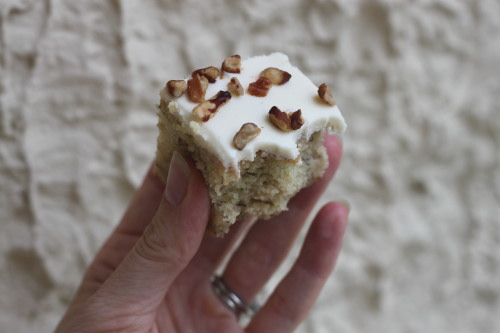
Best Ever Banana Cake with Cream Cheese Frosting
adapted from food.com

If you don’t have buttermilk on hand, you can make it by combining 1 1/2 cups of milk with 2 tablespoons of lemon juice. Stir the milk and lemon juice together and let sit 10 minutes before using.

Serves 12

Cake:
1 1/2 cups (350 ml) mashed ripe bananas (about 3 large)
2 teaspoons lemon juice
3 cups (360 g) flour
1 1/2 teaspoons baking soda
1/4 teaspoon salt
3/4 cup (170 g) butter, softened
2 cups (400 g) sugar
3 large eggs
2 teaspoons vanilla
1 1/2 cups (350 ml) buttermilk

Frosting:
1/2 cup (110 g) butter, softened
8 oz (225 g) cream cheese, softened
1 teaspoon vanilla
3 cups (360 ml) icing (confectioners) sugar
chopped toasted pecans, to garnish (optional)

Preheat oven to 275°F (140°C). Grease and flour a 9 x 13 pan.

In a small bowl, mix the mashed banana with the lemon juice; set aside.

In a medium bowl, mix the flour, baking soda and salt; set aside.

In a large bowl, cream the butter and sugar until light and fluffy. Beat in the eggs, one at a time, then stir in the vanilla.

Beat in the flour mixture alternately with the buttermilk, beginning and ending with flour. Stir in the banana mixture.

Pour the batter into the prepared pan and bake for 65–80 minutes or until toothpick inserted in the center comes out clean. You may have to check the cake a few times, as cooking times can vary greatly with this cake. Remove the cake from the oven and place it directly into the freezer for 60 minutes. This will make the cake very moist.

While the cake cools, make the frosting. Cream the butter and cream cheese until smooth. Beat in the vanilla. Add the icing sugar and beat on low speed until combined, then on high speed until the frosting is smooth. Spread the frosting on the cooled cake. Sprinkle chopped pecans over the frosting, if desired. Store in the refrigerator, covered.
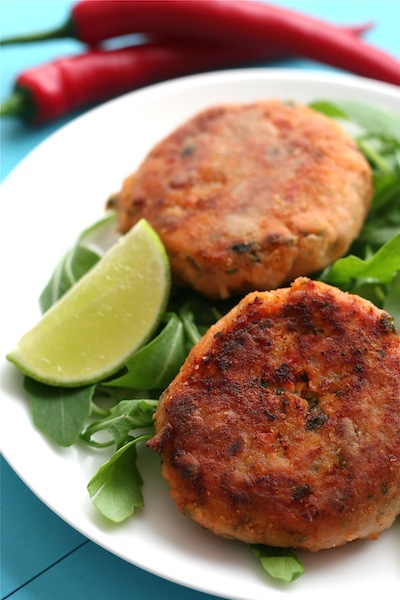
Sweet Potato and Salmon Fishcakes with Chilli and Lime

The other day, a fellow expat tweeted, “When I see a tourist in Dublin on a nice sunny day, I always feel the urge to stop them and tell them how lucky they are.” “Never mind them,” I tweeted back, “lucky us! At least they get to go back home to a proper summer somewhere.” After weeks of rain and temperatures that rarely even get above 65°F, I’ve just about given up on summer again. Even so, I still crave bright, zesty flavors in the summer, such as it is. These fishcakes make for a light supper served with a salad — or maybe soup, if that suits your climate and your woe-is-me mood better.

Sweet Potato and Salmon Fishcakes with Chilli and Lime

Serves 4 as a light supper

If you don’t want to coat the fishcakes in breadcrumbs, you can simply dredge them in the seasoned flour and pan fry them. And if you’d rather bake the cakes in the oven instead of fry them, just put them on a baking tray lined with parchment paper in an oven at 350°F (180°C) for 20 to 30 minutes.

1 lb 2 oz (500 g) sweet potatoes
2 x 7 oz (200 g) cans of salmon
1 red chilli, finely chopped
zest and juice of 1 lime
a handful of fresh cilantro (coriander), chopped
salt and freshly ground black pepper
1 cup (120 g) flour
1 egg, beaten
1 cup (100 g) dried breadcrumbs
olive, vegetable or rapeseed oil
lime wedges, to serve
green salad, to serve

Peel the sweet potatoes and cut them into large chunks or thick slices. Place in a pot with plenty of cold water and bring to the boil. Simmer for about 10 minutes, until the potatoes are tender when pierced with a sharp knife. Drain and transfer to a large bowl. Mash the potatoes until they’re smooth, then stir in the salmon, flaking apart any large pieces with a fork. Add in the chilli, lime zest and juice, the chopped cilantro and some salt and pepper and stir well to combine. Shape the sweet potato and salmon mixture into fish cakes and set aside on a plate.

Place the flour in a shallow bowl or plate and season generously with salt and pepper. Place the beaten egg in a second shallow bowl or plate and the breadcrumbs in a third bowl or plate. First dredge each fish cake in the flour, shaking off any excess. Set aside the floured cake on a plate and repeat with the remaining cakes (doing it this way helps to keep your hands cleaner). Next, dip each floured cake in the beaten egg, making sure it gets coated all over with the egg, then place in the bowl with the breadcrumbs, sprinkling the crumbs all over the cake and gently patting them in place. Set aside the breaded cake on a plate and repeat with the remaining cakes.

Heat some oil in a large frying pan over a medium heat. Add the cakes to the pan in batches, taking care not to overcrowd the pan. Cook the cakes for 5 to 8 minutes, until the breadcrumbs are golden. Flip the cakes over and cook for 5 to 8 minutes more, until the other side is golden and the cakes are cooked through. (Alternatively, you can bake the cakes in the oven; see note above.) Serve with lime wedges and a green salad for a light summer supper.

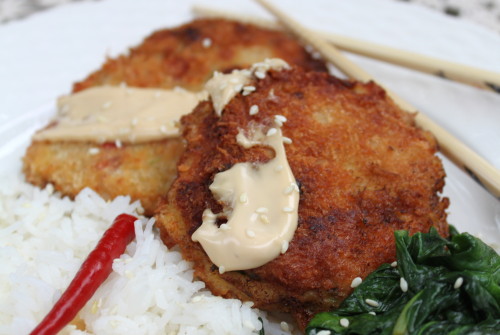
Crunchy Pork Kimchi Burgers

Last year I succumbed to a telemarketer begging me to buy a magazine subscription in support of a well-known charity. I’d like to tell you it was because I care deeply for the organization or felt pity for the poor saleswoman, but honestly, I just missed receiving a magazine with my name on it every month. After years of being a loyal subscriber to Gourmet (my idealistic college days), then Cooking Light (I put on weight working an office job in my early twenties) and, most recently, Cook’s Illustrated (the serious cooking began), I let the subscriptions expire four years ago when my first-born arrived. But no longer. My magazine days are here again. Unfortunately, I regretted last year’s selection of Food & Wine magazine. Besides this fantastic pork burger recipe and one other interesting salmon preparation, I didn’t find much inspiration in the magazine. Maybe I don’t drink enough wine to appreciate it. So, dear readers, tell me what periodical to order next. What cooking magazines do you love?

Crunchy Pork Kimchi Burgers
adapted from Food & Wine, May 2012

I used the last few precious tablespoons of my sister-in-law’s homemade kimchi for this recipe. Because the kimchi has a bit of kick to it, I made some of the burgers without the kimchi for the kids. Both versions tasted good but the kimchi really made the burger memorable.

Serves 4

1 tablespoon grated fresh ginger
1 large garlic clove, minced or grated
2 scallions, minced
1 lb (450 g) ground pork
3/4 cup (170 g) finely chopped kimchi
Kosher salt
All-purpose flour, for dusting
2 large eggs, beaten
1 1/2 cup (100 g) panko (Japanese bread crumbs), lightly crushed
Vegetable oil, for frying
12 oz (340 g) baby spinach
1/4 cup (60 ml) mayonnaise
1/2 teaspoon toasted sesame oil
1 tablespoon light soy sauce
Toasted sesame seeds, for garnish
Steamed rice

In a bowl, combine the ginger, garlic, scallions, pork and kimchi with 1 teaspoon of salt. Form the mixture into eight patties, about 1/2 inch thick. Dust the patties with flour and refrigerate for 10 minutes while you prep the other ingredients.

Put the eggs and panko in 2 shallow bowls. Dip the patties in the egg and then in the panko, pressing to help the crumbs adhere.

In a large skillet, heat 1/4 inch of vegetable oil. Depending on the size of your skillet, you will probably need to cook the patties in 2 batches. Add as many patties to the hot skillet as will fit and fry over moderate heat, turning, until golden and cooked through, 5 to 6 minutes. Drain on paper towels.

Pour off all but 1 tablespoon of the oil in the skillet. Add the spinach in batches, season with salt and cook over high heat until wilted, about 1 minute.

In a bowl, mix the mayonnaise, sesame oil and soy sauce. Mound the spinach on plates and top with the burgers. Top with the sauce and sprinkle with sesame seeds. Serve with steamed rice

Moroccan Meatballs with Couscous

The first time I met Shelia Kiely at a food blogging event in Ireland and she let it slip that she has six kids, I’m sure I had the same reaction she gets from just about everyone: “Six kids?” What’s more, that number includes not one, but two sets of twins. And as if being a mother to six children and running her own food safety management consultancy wasn’t enough, she somehow found the time to write a cookbook, Gimme the Recipe, in addition to writing her blog of the same name. So to ask the question I’m sure everyone is wondering: Shelia, where do you get the energy? Or at the very least, what brand of coffee are you drinking?

I think it’s fair to say that Shelia takes the whole working mom thing and raises it to the nth degree. Not surprisingly, her book focuses on good, wholesome, no-nonsense food. There are lots of family-friendly and comfort food classics, from soups to stews, meat pies to pasta bakes, and every working mom’s favorite, one-pot casseroles. But Shelia caters to grown-ups too with dinner party and girls’ night in suggestions as well as helpful meal planners for special occasions like birthday parties, coffee mornings and the holidays. She covers all the bases.

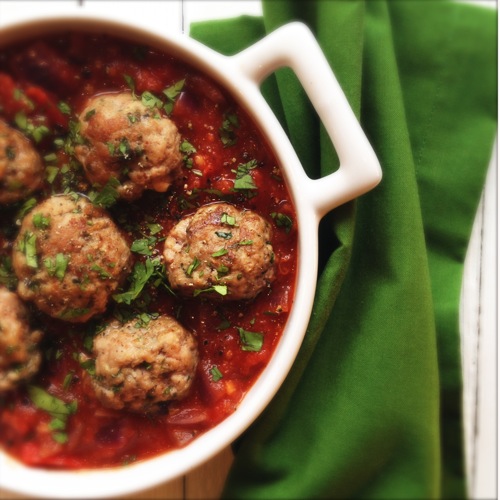
As for me, I made these easy, tasty, moreish Moroccan meatballs from her book and we all enjoyed them so much that I promptly made them again the next week. With two young kids as judges, it’s as ringing an endorsement as you can get for a family cookbook.

If you like this, you might also like Moroccan Chicken Tagine with Lemon and Mint Couscous, or see this post for a round-up of our other meatball recipes.

Moroccan Meatballs
adapted from Gimme the Recipe by Shelia Kiely

Because I was feeling lazy and didn’t fancy lugging out my food processor to make a paste, like Shelia’s original recipe calls for, I adapted it by adding the onion and garlic to the sauce instead of to the meatballs. I also used garam masala instead of the cumin and cinnamon called for (you can see the original recipe here). I serve this with couscous studded with chopped apricots, raisins, a finely chopped sliver of preserved lemon and chopped fresh coriander (aka cilantro).

Serves 4 to 6

2 lb (1 kg) minced lamb
2 tablespoons garam masala
salt and freshly ground black pepper
olive oil
1 large red onion, chopped
3 garlic cloves, chopped
1 red chilli, deseeded and finely chopped (optional)
1 x 1 inch (3 cm) thumb-width piece of ginger, peeled and finely chopped
2 x 14 oz (400 g) cans of chopped tomatoes
1 cup (250 ml) chicken stock
chopped fresh cilantro (a.k.a. coriander), to garnish
couscous (see intro above) or rice, to serve

Place the minced lamb in a large bowl along with 1 tablespoon of the garam masala and some salt and pepper, mixing well to combine. Form the mixture into small meatballs about the size of golf balls.

Heat a large frying pan over a medium heat (don’t add any oil because the lamb will throw off a lot of fat). Add the meatballs to the pan in batches (don’t overcrowd the pan) and cook for about 5 minutes, until browned all over. Remove the browned meatballs from the pan and set aside and repeat with the remaining meatballs.

Meanwhile, in a large heavy-based pot or casserole, heat the oil over a medium-low heat. Add in the onion and a pinch of salt to stop it from browning and cook for about 10 minutes, until softened but not browned. Add in the garlic, chilli (if using), ginger and the remaining 1 tablespoon garam masala and cook for 1 minute more. Stir in the chopped tomatoes and the chicken stock and season to taste. Bring to the boil, then reduce the heat and add in the browned meatballs. Partially cover the pot and simmer for 20 to 30 minutes, until the meatballs are cooked through. Serve with couscous or rice and a sprinkling of chopped fresh cilantro (coriander).


Chicken Canzanese

After years of minimal sleep and constant hovering over infants and toddlers, I really appreciate the little things about having older kids. Things like talking with my husband over coffee in the morning (thank goodness for Saturday morning cartoons) or staying up late to watch a boring British mystery movie knowing the kids will sleep in past 7 a.m.  Now that both kids are officially out of diapers, feed themselves, and can talk (not necessarily without whining), a small amount of free (me!) time has even crept into my weekends. This Sunday, I had a chance to sit on the couch and watch a cooking show on television. I know this doesn’t seem like much of an event, but for any reader with young children, it’s momentous. Sam joined me on the couch, pretty unimpressed with the looks of the recipe until I explained that the chefs were cooking the chicken in broth. Sam immediately perked up at the mention of broth. The kid loves anything with broth in it. Weird, I know.

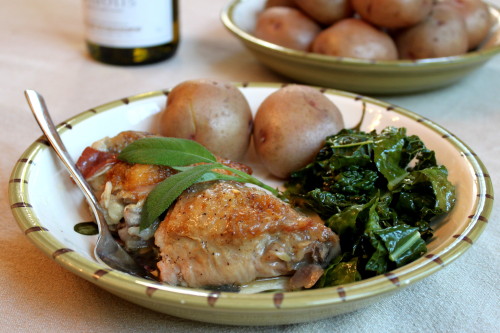
I had most of the ingredients in the house (and garden) to make this Italian-style braised chicken dish and what I didn’t have, I left out. My stripped down version of the recipe came out great. The chicken was tender, the skin still slightly crunchy, the sauce silky and rich, and the sage and lemon adding a nice spike of freshness. Definitely a keeper.

Italian Braised Chicken

Chicken Canzanese
adapted from America’s Test Kitchen

Serves 4 to 6

I served this initially with boiled red potatoes and sauteed kale. For leftovers the following night, I made polenta and peas instead. Though both meals were eaten and enjoyed, we slightly preferred the polenta and peas combination.

2 tablespoons olive oil
2 oz (60 g) prosciutto, cut into 1/4‑inch cubes or, if thinly sliced, 1/4‑inch strips
4 medium garlic cloves , sliced thin lengthwise
8 bone-in, skin-on chicken thighs (about 3 lbs/1.4 kg), trimmed of excess fat and skin
ground black pepper
2 teaspoons unbleached all-purpose flour
1 cup (240 ml) dry white wine
2 cups (475 ml) low-sodium chicken broth
1/8 teaspoon ground cloves
12 whole fresh sage leaves
2 bay leaves
1/2 teaspoon red pepper flakes
1 to 2 tablespoons fresh lemon juice
2 tablespoons unsalted butter

Adjust the oven rack to lower-middle position and heat the oven to 325°F (160°C). Heat 1 tablespoon of oil in a large heavy-bottomed ovensafe skillet over medium heat until shimmering. Add the prosciutto and cook, stirring frequently, until just starting to brown, about 3 minutes. Add the garlic slices and cook, stirring frequently, until the garlic is golden brown, 1–2 minutes. Using a slotted spoon, transfer the garlic and prosciutto to a small bowl and set aside. Do not rinse the pan.

Increase the heat to medium-high; add the remaining tablespoon of oil and heat until just smoking. Pat the chicken dry with paper towels and season it with ground black pepper. Add the chicken, skin side down, and cook it without moving until it is well browned, 5 to 8 minutes. Using tongs, turn the chicken and brown on the second side, about 5 minutes longer. Transfer the chicken to a large plate.

Remove all but 2 tablespoons of fat from the pan. Sprinkle the flour over the fat and cook, stirring constantly, for 1 minute. Slowly add the wine and broth; bring to a simmer, scraping the bottom of pan with a wooden spoon to loosen any browned bits. Cook until the liquid is slightly reduced, 3 minutes. Stir in the cloves, sage leaves, bay leaves, red pepper flakes, and reserved prosciutto and garlic. Nestle the chicken into the liquid, skin side up (skin should be above the surface of liquid so it stays crisp), and bake, uncovered, until the meat offers no resistance when poked with a fork but is not falling off bones, about 1 hour 15 minutes. Check the chicken after 15 minutes; broth should be barely bubbling. If bubbling vigorously, reduce the oven temperature to 300°F (150°C).

Using tongs, transfer the chicken to a serving platter and tent with foil. Remove and discard the sage leaves, cloves, and bay leaves. Place the skillet over high heat and bring the sauce to boil. Cook until the sauce is reduced to about 1 1/2 cups (350 ml), 2 to 5 minutes. Off the heat, stir in 1 tablespoon of the lemon juice and butter. Season to taste with salt and pepper. Taste the sauce again and add the remaining lemon juice if desired (I like a nice kick of citrus with chicken). Pour the sauce around the chicken and serve.

Baked Sweet Potatoes with West African-Style Peanut Sauce

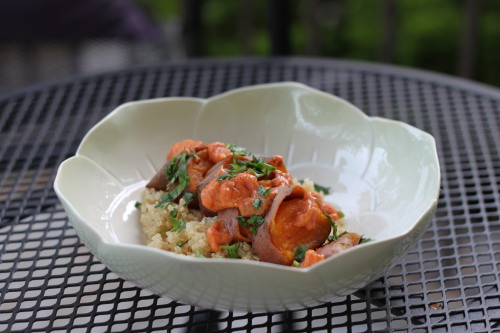
You haven’t seen it yet, but I make a pretty fabulous African influenced braised chicken dish. I adore the succulent melt-in-your pieces of chicken that are baked slow and low with a spicy, sweet peanut butter sauce and vegetables. Unfortunately, it’s so gosh darn good that I am always too hungry to take the time to photograph it properly. It is rather “rustic” with lots of shades of brown, which certainly doesn’t help its lens appeal. So tonight, instead of snapping a couple dozen more pictures of the poor peanut butter sauced chicken, I thought I’d experiment with a vegetarian spin on the dish. The bright orange sweet potatoes do look–if not exactly stunning–far better than the chicken, especially when served alongside a little cooked quinoa. It made for a lovely weeknight meal, though I couldn’t convince my almost-three year old to try the sauce, even with the promise of peanut butter inside.


Baked Sweet Potatoes with West African-Style Peanut Sauce
adapted from Cooking Light, October 2006

This recipe would make a nice light lunch. For a more robust dinner, serve alongside a piece of grilled fish or chicken with steamed vegetables or a green salad.

Serves 6 as a side dish, 3 as a main course

6 medium sweet potatoes (about 3 lbs/1.5 kg)
1 teaspoon canola oil
1/2 small onion, finely chopped
1 tablespoon grated peeled fresh ginger
2 garlic cloves, minced
1 1/2 teaspoons ground cumin
1 1/2 teaspoons ground coriander
1/8 teaspoon ground red pepper
3/4 cup (180 ml) water
8 oz (225 g) tomato sauce
1/3 cup (80 g) peanut butter
1 teaspoon sugar
1/2 teaspoon salt
chopped fresh cilantro
cooked quinoa or rice (optional)

Preheat oven to 375°F (190°C). Pierce the potatoes with a fork, and bake at 375° for 1 hour or until tender. Cool the potatoes slightly.

Heat the oil in a medium skillet over medium-low heat. Add the onion, ginger, and garlic; cook 3 minutes. Add the cumin, coriander, and pepper; cook 1 minute. Add 3/4 cup water and the next 4 ingredients (through salt), stirring until smooth; bring to a simmer. Cook 2 minutes or until thick. If the sauce becomes too thick, add a tablespoon or two of water.

If serving with quinoa or rice as a main course, gently cut the potatoes cross-wise into thick slices. Place the potatoes on the quinoa then top with the sauce and cilantro to taste. If serving the potatoes as a side dish, split the potatoes lengthwise, cutting to, but not through, the other side. Spoon about 1/4 cup sauce into each potato. Top each serving with a bit of cilantro.

Chicken and Kale Casserole

I know this casserole is not the prettiest thing you’ve ever seen on this blog, but sometimes the most homely looking food is the best-tasting food. And for goodness sake, it’s a casserole. No one expects it to be photogenic, right? Despite it’s ho hum appearance, this baked chicken and rice dish is one of my favorite concoctions. It tastes like the delicious church potluck dishes that I loved as a child but without the Velveeta cheese and frozen broccoli that I detest as an adult. Except for the handful of shredded cheese tucked gently into the rice mixture, it’s healthy — kale, chicken breast, and brown rice — and doesn’t depend on sodium-laden canned soup for its creaminess. Best of all, it makes for an easy weeknight dinner. You can make the casserole in advance, store it in the fridge overnight and simply throw it into the oven half an hour before mealtime. You don’t even have to come up with a side dish since the casserole covers your four basic food groups.

Chicken and Kale Casserole

This recipe is highly adaptable. Experiment with different types or quantities of meat, cheese, and veggies. Broccoli and cheddar in place of the kale and mozzarella is a great combination. Omit the chicken and it’s an easy vegetarian meal. You can also substitute cooked white rice or pasta for the brown rice, though the texture of the casserole will be softer.

Serves 4

1 tablespoon olive oil
1 small onion, or 1/2 large onion, diced
2 cloves garlic, minced
1 large bunch kale, tough stems removed and leaves chopped roughly
8 oz (225 g) crimini mushrooms, sliced
3 tablespoons (50 g) butter
3 tablespoons flour
1 1/2 cups (350 ml) milk
2 cups (200 g) cooked brown rice, small grain preferably
8 oz (225 g) cooked chicken breast, diced and if not already seasoned, sprinkled with salt, pepper, and paprika to taste
4 oz (100 g) mozzarella cheese, shredded
salt and freshly ground black pepper

Preheat the oven to 375°F (190°C). Grease a 2 quart casserole or a 11 in x 7 in baking dish.

Heat the olive oil in a large skillet over a medium-high heat. Add the onion and cook, stirring occasionally, for about 5 minutes, until the onion becomes translucent. Add the garlic and cook for about 1 minute, until fragrant. Stir in the kale and cook 1–2 minutes, until it starts to wilt. Stir in the mushrooms and cook 5 minutes more, until the mushrooms start to soften. Season with salt and pepper and remove the pan from the heat.

While the vegetables cook, make the cream sauce. First, melt the butter in a saucepan over a medium heat. Whisk in the flour and cook, stirring constantly. The mixture should bubble and cook for 1–2 minutes. Be careful not to burn the mixture or let it take on too much color. Slowly pour in the milk to the flour/butter mixture, whisking constantly. The mixture should thicken as it cooks. You may need to add a bit more milk if the mixture seems too thick. Add about 1/2 teaspoon of salt and freshly ground black pepper to the sauce. Let it simmer for about 1 minute. Remove the pan from the heat.

Gently stir in the rice and chicken to the vegetable mixture. Fold in the shredded cheese, then stir in the cream sauce. Taste and add more salt or pepper if needed. Pour the mixture into the greased casserole or baking dish and cover with a lid or aluminum foil. If serving the next day, cool the casserole, then refrigerate.

Bake for 20 minutes. Remove the lid and continue cooking for 10 minutes more, until bubbly and slightly golden around the edges.

Classic Spaghetti and Meatballs

The first recipe I ever asked my mom for was her turkey meatballs. The first food I fed my infant daughter that wasn’t from Annabel Karmel’s baby food cookbook was those same turkey meatballs, pureed in the food processor, which she gobbled up with delight. And if you’ve come to visit me from America, chances are I made a big batch of meatballs, kept warm in the slow cooker in their sauce, so that dinner could be on the table as soon as I could boil the pasta when the jet lag finally started to get the better of you.

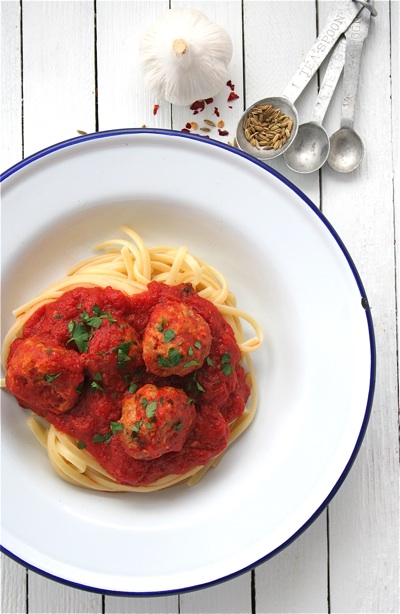
Over the years I chopped and changed my mom’s original recipe until I eventually hit on this, my own version, which kicks things up a notch. I kept in loads of garlic and Parmesan but swapped the turkey, which I came to find too dry, for pork and ramped up the flavor with fennel seeds and lots of herbs. It’s now my go-to classic comfort food dish. And if and when my kids ever ask for my meatball recipe when they’re older, this is the one I’ll give them, which I’m sure they’ll in turn tweak and make their own.

We love meatballs! Here are some more recipes for you to try:

Spaghetti and Meatballs

Makes 40 to 50 small meatballs

My go-to tomato sauce is Marcella Hazan’s famous recipe, but feel free to use your own favorite recipe or even jarred sauce. To add some extra umami to the meatballs, sneak in a few finely diced anchovies as a secret ingredient. I like to make loads of meatballs so that I can get two dinners’ worth out of them, but they freeze beautifully too.

for the meatballs:
2 lb (1 kg) pork mince
3 cloves garlic, grated with a Microplane zester or very finely chopped
1 cup (50 g) fresh breadcrumbs
1/2 cup (50 g) finely grated Parmesan, plus extra to serve
1 egg, lightly beaten
1 bunch flat-leaf parsley, chopped, with some reserved for garnish
2 teaspoons fennel seeds
1 teaspoon dried basil
1 teaspoon dried oregano
1/2 teaspoon dried chili flakes (optional)
2 tablespoons milk
salt and freshly ground black pepper

for the tomato sauce:
5 tablespoons (75 g) unsalted butter
1 medium yellow onion, peeled and cut in half
1 x 28 oz can (or 2 x 14 oz/400 g cans) whole plum tomatoes, with their juices
salt and freshly ground black pepper

1 lb (450 g) spaghetti

To make the tomato sauce, melt the butter in a large pot (one that can also accommodate all the pasta later) over a medium heat, then add in onion halves and pour in the tomatoes with their juices. Season generously with salt and pepper. Bring the sauce to a simmer, mashing up the tomatoes gently with the back of a wooden spoon. Cook, uncovered, at a very slow but steady simmer, adjusting the heat as necessary, for about 45 minutes, or until droplets of fat float free from the tomato and the sauce has reduced and thickened. Stir occasionally, continuing to mash any large pieces of tomato with the wooden spoon. Taste for seasoning, then discard the onion when the sauce is ready.

While the sauce is simmering, preheat the oven to 350°F (180°C) and line a baking tray with foil or parchment paper. To make the meatballs, place all the ingredients in a large bowl. Using your hands, mix everything together until it’s just combined, trying not to overwork the mixture so that the meatballs stay tender. Shape the mixture into small meatballs the size of golf balls and place them on the lined baking tray. Bake them in the oven for 20 to 30 minutes, until they’re just cooked through. Be careful not to overcook them or they’ll dry out and become tough.

While the meatballs are cooking and the sauce is simmering, bring a large pot of salted water to the boil and cook the spaghetti according to the packet instructions. When it’s done, drain the pasta and add it directly to the sauce. Stir the pasta until it’s all coated with the sauce. Divide the pasta between the individual bowls or plates and place a few meatballs on top of each serving. Serve with plenty of freshly grated Parmesan and garnish with the reserved parsley.

A Cooking Blog