Tag Archives: Vegetarian main dishes

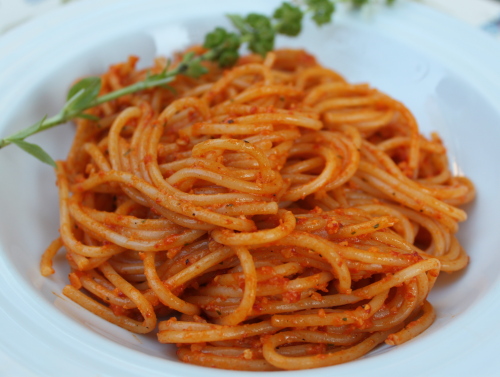
Spaghetti with Red Pepper-Toasted Almond Pesto

I pore over cookbooks in my 30s the way I once devoured fashion magazines in my teens. The pictures aren’t usually as interesting but the content is much more useful. Not that I don’t appreciate knowing when leopard print is in and heavy eyeliner is out, but style changes so much that it’s hard to keep up with. I prefer to spend my time thinking of something fabulous to cook than fabulous to wear. Luckily, I’m not alone. Much to my delight, I’ve noticed that most of my friends have food magazines or cookbooks stashed around the house. I found this recipe while hanging out with Leah (you may remember her rigatoni with pork and lemon ragu or tzatziki chicken with couscous and hummus). Maybe it’s because she also has a food blog, or maybe she was too nice to make fun of me, but she didn’t bat an eye when I asked her for pen and paper and transcribed this pantry staple-based recipe over a glass of beer. I guess this is adulthood.

Spaghetti with Red Pepper-Toasted Almond Pesto
adapted from The Best Simple Recipes by the editors of America’s Test Kitchen

Serves 4

My fridge is never without a bag of Trader Joe’s toasted, sliced almonds. They are perfect for throwing into a bowl of oatmeal, on top of brownies, or in a pasta dish like this one. The few extra cents I pay to buy them pre-toasted saves me toasting and cooling time (not to mention the aggravation of an extra pan to wash).

1 lb (450 g) spaghetti
1 cup (150 g) drained jarred roasted red peppers, patted dry (about 2 peppers)
1/3 cup (30 g) grated Parmesan cheese
1/4 cup (25 g) sliced or slivered almonds, toasted
1/4 cup (10 g) fresh basil
1 garlic clove, skin removed and quartered
1 teaspoon lemon juice
7 tablespoons extra virgin olive oil
sea salt and freshly ground black pepper

Cook the spaghetti al dente in a large pot of boiling, salted water according to package directions.

While the pasta cooks, process the red peppers, cheese, almonds, basil, garlic, and lemon juice in a food processor until smooth. With the motor running, slowly add the olive oil until it is incorporated. Season the pesto well with salt and pepper.

Drain the spaghetti, reserving 1/2 cup (125 ml) of cooking water. Return the spaghetti to the pot. Add the pesto to the spaghetti and toss to combine, adding reserved pasta water as needed. Season with salt and pepper and serve with additional grated Parmesan, if desired.

End-of-Summer Squash Sauté with Three Bean Salad

I love cooking at this time of the year. Vegetables and fruits are bountiful and at peak tastiness. It’s not too hot to use the stove top. And a week’s vacation at the end of August left me feeling (relatively) stress free at home and work. Not wanting to add any unnecessary work to my day, the dishes below provided a quick, tasty, and healthy meal and they take full advantage of the overabundant squash and beans from your or your neighbor’s backyard garden. This menu is light. If you want something more substantial for dinner or if you are cooking for guests, pick up a rotisserie chicken at the supermarket, cook up a little pasta to serve with the squash saute, or splurge on a trip to Kopp’s or your favorite ice cream store after dinner. What better way to celebrate the last few, long, warm nights of summer.

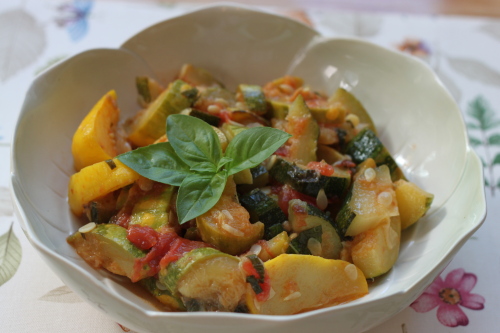
End-of-summer squash saute

End-of-Summer Squash Sauté

serves 4

2 or 3 medium summer squash (about 1 1/2 lbs / 680 g)
3 tablespoons olive oil
1 teaspoon kosher salt
1/2 teaspoon freshly ground black pepper
1/2 teaspoon garlic powder
1 large or 2 small tomatoes, peeled and coarsely chopped
3 tablespoons chopped fresh basil
freshly grated Parmesan cheese, for serving (optional)

Cut the squash in half lengthwise (or if the squash is very thick, cut it into quarters lengthwise), then dice into 1/2‑inch-thick pieces.

In a large saute pan with a lid, heat the olive oil over a medium-high heat until hot but not smoking. Add the squash and saute, stirring occasionally, for about 5 minutes, until it just begins to brown. Sprinkle the salt, pepper and garlic powder over the squash, then stir in the tomatoes. Cover and cook, stirring every few minutes, for 10 to 15 minutes longer, until the squash and tomato just begin to break down.

Remove the lid and continue to cook until your desired sauciness level. Stir in the basil and serve with grated Parmesan cheese, if desired. This dish tastes great over cooked pasta or rice or as a side dish.

***

Three Bean Salad
adapted from Molto Gusto: Easy Italian Cooking by Mario Batali

serves 6

1 tablespoon salt
1 lb (450 g) green beans [Note: smaller is better]
1 x 15 oz (425 g) can chickpeas, rinsed and drained
1 x 15 oz (425 g) white kidney beans (cannellini) or red kidney beans
1/4 cup (10 g) coarsely chopped fresh mint
1/2 cup (120 ml) Red Wine Vinaigrette (recipe below)
Maldon or other flaky sea salt and freshly ground black pepper

Bring four quarts of water to a boil in a large pot and add 1 tablespoon salt. Add the beans and blanch them until crisp-tender, about 3 minutes. Drain the beans in a colander and cool under cold running water; drain well.

Combine the green beans, chickpeas and kidney beans in a large bowl. Add the mint and toss. Add half the vinaigrette and toss gently again. Season with salt and pepper. Serve or, if possible, let stand at room temperature for 1 to 2 hours to bring out the flavors. Serve the salad with the remaining vinaigrette on the side.


Red Wine Vinaigrette

Makes 1 cup (250 ml)

1/4 cup (60 ml) good-quality red wine vinegar
1/4 cup (60 ml) sparkling water
1/2 cup (125 ml) extra virgin olive oil

Whisk the vinegar, water and olive oil together in a small bowl, or shake the ingredients together in a small, lidded jar, until well incorporated. The vinaigrette can be refrigerated for up to 5 days.

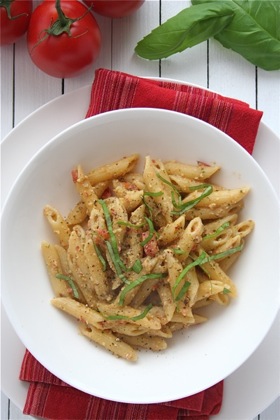
Pesto Trapanese

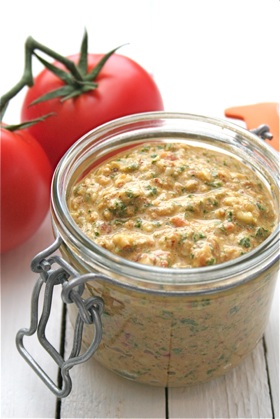
This is the fifth year we’ve had a vegetable garden at our house in the country, but I quickly learned the first year that basil doesn’t grow well (if at all) outdoors in Ireland. We have a small greenhouse this year, but all the space is taken up with tomatoes, Kirby cucumbers and peppers, so the basil plants had to make do with our kitchen windowsill, where they’re going gangbusters. I’d already made a few batches of regular pesto and was starting to get tired of it when I remembered bookmarking this recipe for pesto Trapanese last year, and it’s a new favorite, not to mention a nice change. Try it at least once this summer.


Pesto Trapanese
adapted from Catherine’s Italian Kitchen by Catherine Fulvio

Makes 2 cups (500 ml)

Use 1 cup (250 ml) of the pesto for dinner to serve 4 to 6 people and freeze the other half for another time. Alternatively, this will keep in the fridge, tightly covered, for up to 1 week with a thin layer of olive oil poured on top of the pesto to prevent the basil from turning black.

1 lb (425 g) spaghetti, linguini, penne or your favorite pasta
1 cup (125 g) whole almonds
3 large ripe tomatoes, quartered, or 10 ripe cherry tomatoes
2 garlic cloves, roughly chopped
2 oz (50 g) fresh basil leaves (about 2 large handfuls)
1/2 cup (125 ml) good-quality olive oil
salt and freshly ground black pepper

Cook the pasta in a large pot of boiling salted water according to the instructions on the packet.

To make the pesto, place the almonds in a food processor and whizz until they’re reduced to nibs (don’t overprocess them to a paste). Add in the tomatoes, garlic, basil, olive oil and a generous seasoning of salt and pepper and whizz again until everything is well combined. Add more olive oil if you want the consistency of the pesto to be thinner. Stir 1 cup (250 ml) of the pesto into the drained pasta and serve right away.

Sweetcorn Fritters with Tomato Salsa

A few months ago, a friend asked me how I keep track of all the recipes I want to try from my ever-expanding cookbook collection. “Don’t laugh,” I said, “but I have a spreadsheet.” I have separate sheets divided into categories like quick weeknight dinners, pasta, seafood, vegetarian mains and desserts and in each sheet I have a column where I’ll list a season if it’s a recipe that lends itself to a certain time of year, so I can sort recipes that way too. You might be laughing now, but it’s how I remembered this recipe for sweetcorn fritters that I’d bookmarked sometime last year after summer had already come and gone. You’ll thank me for my nerdy organization once you try these. I’ve already made them three times this summer.

If you like the sound of these sweetcorn fritters, you might also like these zucchini fritters with feta and dill.

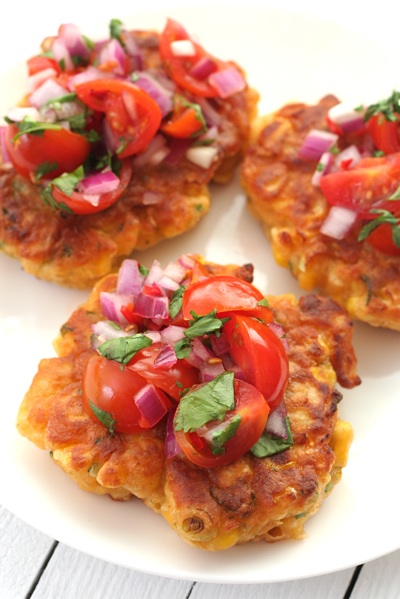
Sweetcorn Fritters with Tomato Salsa
adapted from Itsa Cookbook by Domini Kemp

Serves 4 for a light dinner

These lend themselves to all kinds of adaptations. Adding in some chopped cooked bacon was, unsurprisingly, the first thing I thought of, or you could try making a Mexican-influenced version by using chipotle powder instead of paprika, adding some chopped jalepeno or red chilli and serving the fritters with a dollop of sour cream and a tomatillo salsa. These would also be good served for brunch alongside bacon and eggs or packed for a picnic.

For the sweetcorn fritters:
2 cups (250 g) flour
1 x 11 oz (320 g) can of sweetcorn, drained
2 eggs, beaten
1 bunch of scallions, roughly chopped
1 small bunch of cilantro (a.k.a. coriander), roughly chopped
1/2 cup (125 ml) milk
1 teaspoon baking powder
1/2 teaspoon smoked paprika
1/4 teaspoon salt
sunflower oil, for frying

For the tomato salsa:
9 oz (250 g) cherry tomatoes, quartered
1 small red onion, very finely diced
1 small red chilli, deseeded and chopped
1 teaspoon sweet chilli sauce (optional)
1/2 teaspoon sugar
juice of 2 limes
1 small bunch of cilantro (a.k.a. coriander), finely chopped
salt and freshly ground black pepper

To make the salsa, mix all the ingredients together and leave for 30 minutes at room temperature before serving to allow all the flavors to marry together.

To make the fritters, place everything in a bowl except the sunflower oil and mix together well.

Heat the sunflower oil in a frying pan over a medium heat. Plop large spoonfuls of the mixture into the hot oil. Fry the fritters for 2 or 3 minutes on each side, until golden. Pat them down slightly while they’re cooking in the pan, since they’ll cook better if they’re a bit thinner. Set aside on a plate and repeat with the remaining batter. Serve the fritters warm with the tomato salsa.

Slow-roast Tomato, Basil and Goat’s Cheese Pasta

Donal Skehan ticks all the boxes. He’s young, hip and even had a brief stint as a pop star before turning his attention exclusively on food. He’s also one of the new generation of food blog success stories who’s just published his second book, Kitchen Hero, and his corresponding new TV show is due to air on May 16 on RTÉ in Ireland. Not only that, he’s also an accomplished food photographer (check out his website to see what I mean) and took all his own photos for the cookbook. And did I mention he’s an all-around great guy too? Despite having thousands of Twitter followers and Facebook fans, he has time for everyone. Who else would host an afternoon tea party at Dublin’s posh Westbury Hotel just for food bloggers like Donal did last week so we could sample the tea he’s designed exclusively for them, not to mention get a signed copy of his book? He’s a true star.

And he also knows his way around the kitchen. You can just about feel Donal’s energy and enthusiasm leaping off the pages of his new book. “I am a home cook and I’m here to show you how to be a kitchen hero!” he proclaims in the first line of his introduction. “I’ve come to the conclusion that if you have confidence in the kitchen, you can cook absolutely anything.” He wants to get people back in the kitchen and his focus is on cooking simple, tasty food using fresh ingredients. His recipes are do-able for even the most novice cook — like this pasta with slow-roasted tomatoes, basil and goat’s cheese. As for me, a working mom with two young kids, the ‘Meals in Minutes’ and ‘Stretch Your Meals’ chapters are already full of dog-eared pages of recipes I’ll be making in the next few weeks.

Slow-roast Tomato, Basil and Goat’s Cheese Pasta
adapted from Kitchen Hero by Donal Skehan

Serves 4

Donal’s original recipe is vegetarian, but I wouldn’t be averse to adding in some bacon or even leftover roast chicken. Or you could try adding in a few handfuls of baby spinach or arugula (rocket) and some toasted pine nuts. I stirred through the juice of half a lemon, which I thought gave this a lovely lift. The great thing about roasting tomatoes is that even if they’re not at their best in the off season, this method brings out all their flavor. If you’re pressed for time though, substitute sun-dried tomatoes for the slow-roasted ones, in which case this is the kind of dinner that you can pull together in the time it takes to boil water and cook your pasta.

3 tablespoons olive oil
1 tablespoon balsamic vinegar
1 lb 2 oz (500 g) cherry tomatoes, cut in half
salt and freshly ground black pepper
11 oz (300 g) of your favorite pasta shape
3 oz (75 g) goat’s cheese, crumbled
a handful of fresh basil leaves, shredded

Preheat the oven to 375°F (190°C).

Whisk together the olive oil and balsamic vinegar in a large bowl. Add the tomatoes and toss gently to coat them. Arrange the tomatoes cut side up on a large baking tray and season with salt and pepper. Roast in the oven for about 45 minutes, until the tomatoes have shrunk and are slightly charred.

Meanwhile, cook the pasta in a large pot according to the instructions on the packet. Drain the pasta and return it to the pot. Immediately stir through the goat’s cheese, basil and tomatoes while the pasta is still hot so that the cheese melts and coats the pasta. Season with a good pinch of salt and pepper and serve immediately.

Split Pea Fritters with Indian Spiced Cauliflower and Potatoes

While I won’t hesitate to drop $20 on a quality chunk of dark chocolate or stinky cheese, I have a hard time passing up a good bargain. Cooking at home keeps our family’s food costs low, a fact I learned as a poor college kid developing a meal repertoire of bean burritos, fried rice, and other filling but frugal foods. Stocking up on pantry staples when they are on sale is another great cost-cutting measure. I tell you all this as way of explaining why I decided to buy 10 pounds of dried split peas during a recent shopping trip. How could I pass them up? Organic, healthy, and less than a dollar a pound. Only during the drive home did I realize that I have only used split peas in split pea soup, a soup I like but don’t particularly love. Luckily, my trusted and now worn How To Cook Everything provided an interesting alternative to split pea soup with these  fritters.

We like the split pea fritters even more than falafel, a similar but chickpea-based fritter. If you’ve ever made falafel, you know the “batter” consistency should resemble wet sand. I think they cook best in a shallow pool of hot oil. I like them served piping hot with a cool creamy sauce like lemon-cumin yogurt sauce or even a simple raita. Delicately spiced roasted cauliflower and potatoes round out the meal nicely.
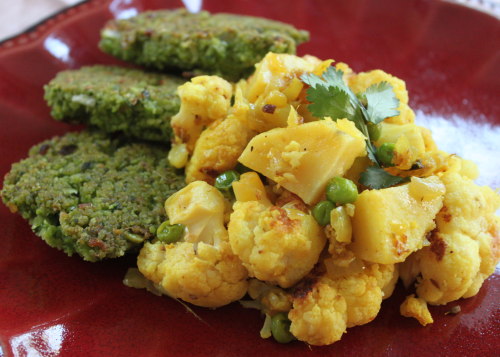
Indian-Style Split Pea Fritters
adapted from How To Cook Everything: Simple Recipes for Great Food by Mark Bittman

Makes 4 to 8 appetizer servings or 2 to 4 main dish servings

1 cup (200 g) yellow or green split peas, washed and picked over
peanut or other oil as needed
1 jalapeño or other hot chile (fresh or dried), stemmed, seeded and minced, or to taste
1 1/2‑inch piece ginger, peeled and roughly chopped
1 clove garlic, minced or grated
1/2 onion, peeled and roughly chopped
1/2 cup (15 g) cilantro (some stems are OK)
1 teaspoon ground coriander
1 teaspoon ground cumin
1/2 teaspoon ground fenugreek
1/2 onion, minced
salt and freshly ground black pepper
1 to 2 tablespoons flour, if necessary
lime or lemon wedges (optional)

Soak the split peas in water to cover for at least 3 hours. Drain but leave them wet.

Place the oil, about 1/2 inch deep, in a large, deep saucepan. Instead of pan frying, you can also deep fry these in more oil (at least 3 inches deep). Heat the oil over a medium-high heat to about 365°F to 375°F.

Place the drained peas in the container of a food processor with the chile, ginger, garlic, 1/2 onion, cilantro, coriander, cumin, and fenugreek. Process until the mixture is a coarse puree — not perfectly smooth, but with no whole peas remaining. Add a couple tablespoons of water to the mixture if necessary to help the machine work. Stir in the minced onion and salt and pepper. The mixture should be fairly loose; add a little water if it is quite thick or 1 to 2 tablespoons of flour if it’s soupy. Taste and adjust the seasoning if necessary.

Drop the mixture by heaping tablespoons into the oil, but don’t crowd the pan. Cook the fritters for 2 to 3 minutes on each side or until lightly browned and crisp. Drain on paper towels. Repeat with the remaining mixture, adding (and heating) more oil to the pan if necessary. Serve the fritters hot or at room temperature with lime or lemon wedges, if desired.

***

Indian Spiced Cauliflower and Potatoes
adapted from Gourmet, February 2004

Serves 4

1 small head cauliflower, cut into 3/4‑inch-wide florets
1 lb (450 g) Yukon Gold potatoes, peeled and cut into 1/2‑inch cubes
5 tablespoons vegetable oil
1/2 teaspoon cumin seeds
3/4 teaspoon salt, divided
1 medium onion, finely chopped
2 garlic cloves, finely chopped
1 fresh jalapeño, omitting seeds for less spiciness
2 teaspoons minced peeled fresh ginger
1 teaspoon ground cumin
1/2 teaspoon ground coriander
1/2 teaspoon turmeric
1/4 teaspoon cayenne
1/2 cup (125 ml) water

Put the oven rack in the upper third of the oven and place a shallow baking pan on the rack. Preheat the oven to 475°F (240°C).

Toss the cauliflower and potatoes together in a bowl with 3 tablespoons oil, cumin seeds, and 1/4 teaspoon salt. Spread in the hot baking pan and roast, stirring occasionally, for about 20 minutes, until the cauliflower is tender and browned in spots and the potatoes are just tender.

While the vegetables are roasting, cook the onion, garlic, jalapeño, and ginger in the remaining 2 tablespoons of oil in a 12-inch heavy skillet over a moderate heat, stirring frequently, for 8 to 10 minutes, until very soft and beginning to turn golden. Add the ground cumin, coriander, turmeric, cayenne, and remaining 1/2 teaspoon salt and cook, stirring constantly, for 2 minutes. Stir in the water, scraping up any brown bits from the bottom of skillet, then stir in the roasted vegetables. Cook, covered, stirring occasionally, for 5 minutes.
Gnocchi with Blue Cheese and Walnut Sauce and Guinness Gingerbread

Nigel Slater once described eating gnocchi as like eating a duvet. Sometimes that’s just what you need, whether it’s because you want something rib-sticking for a cold winter’s night or because you need to indulge in some unabashed, to-hell-with-the-calories comfort eating. With the mood in Ireland being very gloomy lately (you might have heard of the small matter of our €85 billion bailout and this week’s painful 2011 budget) and the weather being record-breaking cold, it was one of those times. Feeling low last week after another day of depressing news, I decided there was only one thing for it — baking. I turned to Nigella Lawson for some comfort food consolation, provided like only Nigella can, and settled on this Guinness gingerbread, which was perfect for this time of year. There’s nothing like some iconic Irish food — Guinness and the Cashel Blue cheese I used in the gnocchi — to lift a girl’s spirits.

Gnocchi with Blue Cheese and Walnut Sauce
adapted from A Kitchen Year by Paula McIntyre

Serves 4 to 6

Paula McIntyre’s original recipe calls for Bellingham Blue cheese, made in my neck of the woods in County Louth. Cashel Blue is an excellent substitute, but any good blue cheese will work here. If you want to give this a veggie boost, you could try adding some spinach, as in Nigel Slater’s recipe for baked gnocchi with spinach and Gorgonzola. This could stretch to feed six people if you’re serving it with something else, or just four greedy ones in need of some rib-sticking comfort food. It’s also decadent enough to serve as a vegetarian option for the holidays.

2 packs (about 2 lb/1 kg) store-bought gnocchi
2 tablespoons (30 g) butter
1 tablespoon olive oil
1 onion, finely chopped
1/4 cup (60 ml) extra dry vermouth or dry white wine
1/2 cup (120 ml) vegetable or chicken stock
1 cup (250 ml) double cream
4 0z (100 g) blue cheese
1 cup (100 g) chopped walnuts
salt and freshly ground black pepper
fresh thyme, to garnish

Get a large pot of water on to boil for the gnocchi.

Meanwhile, to make the sauce, heat the butter and oil in a saucepan and cook the onion on a medium heat until golden, about 10 minutes. Add the vermouth or wine and cook until reduced by half. Add the stock and boil until the liquid has reduced by half again. Add the cream and simmer until the sauce has the consistency of single cream. Crumble in the cheese and remove from the heat.

Heat a dry pan and toast the walnuts and cook for 1 minute, taking care not to let them burn, which can happen quickly. Add the walnuts to the sauce and season to taste.

Cook the gnocchi according to the packet instructions, drain and add to the sauce, stirring to make sure all the gnocchi is coated with the sauce. Garnish with some fresh thyme leaves and serve immediately.

***

Guinness Gingerbread
adapted from Nigella Kitchen by Nigella Lawson

Makes 24 small squares or 16 rectangles

It’s worth making this just for the smell of it baking in your oven alone. This was even better the day after I made it and was still holding up well on the third and fourth day too. Golden syrup is easily available in Ireland and the UK, but you can also order it online at Amazon.

1 1/4 sticks (150 g) butter, plus some for greasing
1 cup (300 g) golden syrup (such as Lyle’s)
1 cup (packed) plus 2 tablespoons (200 g) dark brown sugar
1 cup (250 ml) Guinness or other stout
2 teaspoons ground ginger
2 teaspoons ground cinnamon
1/4 teaspoon ground cloves
2 cups (300 g) all-purpose flour
2 teaspoons baking soda
1 1/4 cups (300 ml) sour cream
2 eggs

1 x 9 inch (23 cm) square baking tin or 1 foil tray approximately 13 x 9 x 2 inches (30 x 20 x 5 cm)

Preheat your oven to 325°F (160°C). Line your cake pan with parchment paper or greased foil, or grease your foil tray.

Put the butter, syrup, dark brown sugar, stout, ginger, cinnamon and ground cloves into a pan and melt gently over a low heat. Take off the heat and whisk in the flour and baking soda. You will need to be patient and whisk thoroughly to get rid of any lumps. Whisk the sour cream and eggs together in a measuring jug and then beat into the gingerbread mixture, whisking again to get a smooth batter.

Pour this into your cake/foil pan and bake for about 45 minutes. When it’s ready it will be risen in the middle and coming away from the pan at the sides. Let the gingerbread cool before cutting into slices or squares.

Pappardelle with Butternut Squash, Blue Cheese and Pine Nuts

The secret foodie project I’ve been working on for the past two months with fellow blogger Caroline from Bibliocook is out! When I’ve been writing these past few weeks that I’ve been slaving away with work and was practically too busy to cook, that was only part of the story — Caroline and I were also madly working behind the scenes to launch the new Irish Food Bloggers Association at the Food Camp that kicked off the Savour Kilkenny Food Festival last week (if you’d like to read more about Ireland’s first-ever Food Camp, visit some of these blogs for their recaps; they were obviously taking better notes than me!). If you’re an Irish or Irish-based blogger writing about anything to do with food, please join us! Or just check out the site to explore what we hope will become the definitive list of all the food blogs in Ireland.

This will be my last post from Nigella’s new book for awhile, I promise. The one downside to launching the IFBA on October 22 was that I only found out late that night after getting back from Kilkenny that Nigella Lawson was doing a book signing in Dublin at noon the next day, and I was just too tired and too busy to go and have her sign my already well-thumbed copy of Kitchen. Looks like I’ll have to wait until she writes her next book and try to catch her on that tour.

Pappardelle with Butternut Squash, Blue Cheese and Pine Nuts
adapted from Kitchen by Nigella Lawson

Serves 4

This is a first cousin to this risotto with roasted butternut squash, bacon and blue cheese (I wouldn’t be averse to adding some bacon to this pasta dish). Nigella notes that the sauce can be made 1 day ahead — simmer until the squash is tender, then transfer to a nonmetallic bowl to cool. Cover and refrigerate, then reheat gently in a saucepan and proceed as directed. The sauce can also be frozen in an airtight container for up to 3 months — just defrost overnight in the fridge and reheat gently.

1 large onion, finely chopped
2 tablespoons olive oil
3/4 teaspoon smoked paprika
1 large butternut squash, peeled, deseeded and cut into 1‑inch cubes
1 tablespoon unsalted butter
3 tablespoons Marsala
1/2 cup (120 ml) water
salt and freshly ground black pepper
6 fresh sage leaves, finely chopped (or 1/2 teaspoon dried sage)
18 oz (500 g) pappardelle or other robust pasta
1 cup (100 g) pine nuts
5 oz (125 g) soft blue cheese, crumbled

Fry the onion in the olive oil over a medium heat in a large, heavy-based pan that can accommodate all the pasta later. After about 10 minutes, add the paprika. Add the cubed butternut squash, then add the butter, stirring everything together well in the pan. Add the Marsala and water. Once the mixture starts to simmer, put the lid on, turn down the heat and simmer for about 20 minutes, or until the squash is tender but still holds its shape. Season to taste (keeping in mind that the cheese will be salty too), then sprinkle the sage into the squash mixture, reserving some to garnish.

Meanwhile, cook the pasta in a large pot of boiling, salted water according to the packet instructions. Toast the pine nuts in a separate hot, dry pan, tip them into a bowl and set aside.

Before you drain the pasta, reserve a mugful of the cooking water. Add the drained pasta to the squash and slowly stir to combine. Add some of the pasta cooking water to help the sauce emulsify, then add the blue cheese and half the pine nuts. Gently combine, then sprinkle the remaining pine nuts and sage on top and serve.