Tag Archives: Pork

Chicken and Chorizo Hash

Regular readers will already know that I’m a huge fan of Ina Garten, a.k.a. the Barefoot Contessa. In fact, after nearly a decade of hardly ever watching TV and happily making do with only four channels, one of which was the Irish language channel, I got cable last month just so I could watch her show. Her recipes are always outstanding, and she works her brand of magic to take something as classic or simple as, say, potato leek soup and turn it into the best version you’ve ever had.

Over the Christmas break I saw an episode where she made a chicken hash, and as I was watching it, I couldn’t help thinking that adding chorizo to the dish would make it better. I got the idea from a recipe I’ve made before, Nigella Lawson’s chicken and chorizo with cannellini beans, so I already knew it was a combination that works. I also substituted baby potatoes so that you don’t have to peel them, and even though I know chicken on the bone has more flavor than boneless, skinless chicken breasts, I adapted that too from her original to shave off a little time and eliminate a couple prep steps to make the recipe that much easier as a weeknight meal. The result was fantastic — the chorizo lent the entire dish a smoky, paprika-infused richness and transformed it from being just another ho-hum chicken dinner into something with a bit more kick.

Dare I say it, but I think I might have done the unthinkable — made a Barefoot Contessa recipe better.

Chicken and Chorizo Hash
adapted from Ina Garten

Serves 6

3 large chicken breasts
olive oil
salt and freshly ground black pepper
1/2 lb (225 g) chorizo sausage, sliced or cubed, depending on size
2 tablespoons (60 g) unsalted butter
2 lb (900 g) baby potatoes, quartered or cut into bite-sized dice, depending on size
2 red onions, chopped
2 red peppers, large diced
3 garlic cloves, minced
2 teaspoons fresh thyme leaves (or 1 teaspoon dried thyme)
1 teaspoon smoked paprika
1 tablespoon tomato paste
6 scallions, white and green parts minced
a large handful of chopped fresh parsley
sour cream and cheddar cheese, for serving

Preheat the oven to 350°F (180°C).

Place the chicken breasts on a baking sheet. With your hands, rub each piece on both sides with olive oil and sprinkle very generously with salt and pepper. Roast the chicken for 35 to 40 minutes, until the skin is lightly browned and the chicken is just cooked through. Set aside until cool enough to handle, then cut the chicken into bite-sized pieces and set aside.

Meanwhile, heat a large saute pan, then add the chorizo. Once the chorizo has started to release its oil and has become a little browned and crispy, remove the pieces from the pan with a slotted spoon and set aside. Add 1 tablespoon of the butter to the same pan, then add the potatoes and onions, 1 teaspoon salt and 1/2 teaspoon pepper and saute over a medium heat for 20 to 30 minutes, until evenly browned and cooked through.

In a separate saute pan, melt the remaining 1 tablespoon of butter. Add the red peppers, garlic, thyme, paprika, tomato paste, 1 teaspoon salt and 1/2 teaspoon pepper and saute over a medium heat for about 5 minutes, until the edges of the peppers are seared.

Add the chicken and the pepper mixture to the potatoes along with the chorizo and heat through, stirring to combine all the ingredients. Add the scallions and parsley, toss together and place on a serving platter. Serve with sour cream and cheddar cheese on top.

Christmas 2009: Fully Festive Ham, Cranberry Chutney, Spiced Whipped Sweet Potatoes, Brussels Sprouts with Chestnuts and Pancetta, and Maple Pecan Pie Squares

About seven or eight years ago, I made a Martha Stewart version of the infamous Campbell’s green bean casserole for the holidays. Instead of a can of cream of mushroom soup and a can of french-fried onions, her recipe called for Gruyère cheese, which back then I could only find in Dublin, and pan-fried shallots. I had such high hopes for the recipe, but for all the fancy ingredients, Matt and I swore it tasted just the same as the casserole of our childhoods. It had a bad work-to-glory ratio. What I love about the ham, which I’ve made every Christmas for the past five years, and these maple pecan pie squares, which I made a couple weeks ago, is that they have a high work-to-glory ratio. The gist of the theory is that the recipes are simple but absolutely delicious, as opposed to something that’s time consuming or difficult that winds up tasting not much better than what you can get out of a can. As much as I love to cook and indulge at the holidays, I’m all for basking in the glory of a house full of well-fed people at Christmas with a minimum amount of work.

***

Mulled Wine (Glühwein)
adapted from Rachel’s Favourite Food for Friends by Rachel Allen

Serves 6 to 8

1 bottle of red wine (you don’t need your best red, but something decent)
1/2 cup (100 g) sugar
1 cinnamon stick, broken in half
4 cloves
1/2 orange, cut into 4 chunks
1 lemon, cut into 4 chunks
1 cup (240 ml) brandy
halved orange slices from the remaining 1/2 orange, to serve

Put the wine, sugar, cinnamon, cloves, orange and lemon into a saucepan. Heat very gently, stirring to dissolve the sugar. Keep on a low heat, without boiling, for 5 minutes. Remove from the heat and add the brandy. Serve in glasses, each with a new orange slice in it.

***

Fully Festive Ham
adapted from Feast by Nigella Lawson

Serves 8 to 10

The only slightly tricky bit about this menu is timing the ham if you want to make the cabbage with the stock, since the ham takes about 4 hours to cook and the cabbage needs 1 hour. Just be sure to take note of that and leave yourself plenty of time.

7 1/2 to 8 lb (3.4 to 3.6 kg) ham
2 quarts (2 liters) apple juice
2 quarts (2 liters) cranberry juice
2 cinnamon sticks, halved
2 onions, halved but not peeled
1 tablespoon allspice berries (optional)

for the cranberry glaze:
4 tablespoons cranberry jelly or 6 tablespoons cranberry sauce
1 tablespoon runny honey
1 tablespoon English mustard powder
1/2 teaspoon ground cinnamon

Put the ham into a large saucepan and cover with cold water. Bring to a boil and then immediately drain and rinse the ham in a colander, which will get rid of any excess saltiness.

Rinse the saucepan and put the ham back in and add all of the above ingredients (except for the glaze). If the fruit juices don’t cover the ham, then add some water; it really depends on how snugly your ham fits into the pot. Bring the liquid to a boil and cook the ham at a fast simmer for about 3 1/2 to 4 hours. Partially cover the pot with a lid if the liquid is boiling away and the top of the ham is getting dry.

Once the ham is cooked, remove it from the hot and now salty juice, and sit it on a board (if you’re making the cabbage with the stock, don’t throw the stock away). If you want, you can cook this well ahead of schedule and let it get cold before glazing and roasting it. If that’s the case, cook it for half an hour less in the pot and then let it get cold in the cooking liquid.

But if you’re going ahead now, wait until the ham’s bearable to the touch – it’s easy to scald yourself on hot sugary fat – and then cut and peel the rind off the cooked ham, and make sure you have a thin layer of white fat off with it, or just use a knife to shave some fat off, so you’re left with a thin coating. Meanwhile, preheat the oven to 420°F, though you can make this work with whatever setting you need your oven to be.

Heat the remaining glaze ingredients together in a saucepan until the jelly or sauce melts into the honey, mustard and cinnamon to make a smooth glaze. It needs to be thick enough not to run off the ham in the oven.

Cover your roasting tin with two layers of tin foil (to make doubly sure nothing gets through) and place the ham in the tin. Pour the glaze over the ham so that all of the fat/top is covered. Put the ham into the oven and cook for 15 minutes or until the fat is coloured and burnished by the sugary glaze. If you’ve let the ham cool completely before you glaze it, it will need a good 40 minutes at 350°F and you might have to give a final blast of real heat at the end too. And this is based on its being at room temperature, not fridge cold, when it goes in.

***

Fully Festive Red Cabbage
adapted from Feast by Nigella Lawson

Serves 6

1 to 1 1/2 heads of red cabbage, shredded
cranberry and apple juice stock from the Fully Festive Ham

Bring the ham stock back to the boil and add the shredded cabbage. Cook for approx. 1 to 1 1/4 hours at a steady simmer, covering the pan if it’s losing too much liquid. Strain to serve.

***

Cranberry Chutney with Crystallized Ginger and Dried Cherries
adapted from A Homemade Life by Molly Wizenberg

Makes about 5 cups

This will keep for a week in the fridge, stored in an airtight container. Note that this chutney reaches its thick, jammy consistency only as it cools, so it will still be somewhat loose when you first remove it from the heat.

24 oz (680 g) apricot preserves
3/4 cup (180 ml) raspberry vinegar (or 3/4 cup (180 ml) white vinegar plus 1 1/2 teaspoons raspberry preserves)
pinch of salt
1/4 teaspoon ground cloves
1/4 cup (60 ml) Grand Marnier, Cointreau or Triple Sec (or orange juice for a nonalcoholic version)
24 oz (680 g) fresh cranberries, picked over
1/2 cup (70 g) finely chopped crystallized ginger
1 1/4 cups (150 g) dried cherries

In a large, heavy-bottomed saucepan, combine the apricot preserves, raspberry vinegar (or vinegar and raspberry preserves), salt, cloves and Grand Marnier. Stir to mix, then place over a medium-high heat. Bring the mixture back to a boil and cook for 10 to 15 minutes, or until it has thickened slightly. If will bubble, so stir it regularly with a long-handled wooden spoon to keep it from burning.

Reduce the heat to medium, add the cranberries and cook until they’re soft but not popped. When you hear one or two pop, it’s a good sign that the rest are getting soft. Add the ginger and cherries, stir well, and remove from the heat. Cool completely before serving. The chutney will thicken considerably as it cools.

***

Spiced Whipped Sweet Potatoes
adapted from Bon Appétit, November 2002

Serves 6 to 8

This dish can be made 1 day ahead (always a bonus for a big holiday dinner). Cover and refrigerate, then rewarm over a medium-low heat, stirring frequently. Alternatively, cover with plastic wrap and rewarm in a microwave oven on high until heated through.

6 x 8‑oz (225‑g) sweet potatoes (yams)
1/2 cup (packed) (85 g) golden brown sugar
1/4 cup (55 g) butter, room temperature
1 tablespoon fresh lemon juice
2 teaspoons orange zest
3/4 teaspoon ground cinnamon
3/4 teaspoon ground allspice
3/4 teaspoon ground nutmeg
cinnamon sticks, to garnish (optional)
orange peel strips, to garnish (optional)

Preheat the oven to 400°F (200°C) and position the rack in the center of oven. Line a baking sheet with tin foil. Pierce the sweet potatoes in several places with a fork and place on the lined sheet. Bake until tender when pierced with fork, about 1 hour. Cool slightly.

Cut the potatoes in half. Scoop out pulp into a large bowl; discard the peel. Add the brown sugar, butter, lemon juice, orange zest, ground cinnamon, allspice, and nutmeg to the sweet potato pulp. Using an electric mixer or food processor, beat until the mixture is smooth. Season to taste with salt and pepper. Mound the sweet potatoes in a serving bowl. Garnish with cinnamon sticks and orange peel strips, if desired.

***

Brussels Sprouts with Chestnuts, Pancetta and Parsley
adapted from Feast by Nigella Lawson

Serves 8 to 10

2 1/4 lb (1 kg) Brussels sprouts
9 oz (250 g) pancetta or bacon, chopped
1 tablespoon vegetable oil
2 tablespoons (30 g) butter
9 oz (250 g) vacuum-packed chestnuts
1/4 cup (60 ml) Marsala
a large bunch of flat-leaf parsley, chopped
freshly ground black pepper

Slice the bottoms off each of the Brussels sprouts, cutting a cross onto the base as you go. Place the sprouts into a large saucepan of salted boiling water. Cook the sprouts for 5 minutes, or until they’re tender but still retain a bit of bite. Remove the pan from the heat and drain the excess water from the sprouts.

Heat the oil in a large saucepan. Add the pancetta or bacon to the pan and cook until it’s crisp and golden brown in color, but not cooked to the point of having dried out. Add the butter and chestnuts to the pancetta and with a wooden spoon or spatula, press down on them to break them up into pieces. Once the chestnuts have been warmed through, turn the heat up and add the Marsala to the pan. Cook until the mixture has reduced and thickened slightly. Add the sprouts and half the parsley to the saucepan and mix well. Season the Brussels sprouts with freshly ground black pepper.

To serve, place the Brussels sprouts onto a warmed serving plate and sprinkle the remaining chopped parsley over the top.

***

Maple Pecan Pie Squares with Bourbon Whipped Cream
adapted from Ezra Pound Cake 

Makes 25 squares

Don’t be put off by the long list of ingredients and lengthy method. I made these in about 15 minutes, and with two little kids underfoot at that. These can be stored in an airtight container at room temperature for up to 3 days.

for the crust:
1 1/4 cups (150 g) all-purpose flour
1/3 cup (60 g) firmly packed golden brown sugar
1/4 teaspoon salt
1/2 cup (110 g) cold unsalted butter, cut into 3/4‑inch pieces

for the maple pecan filling:
6 tablespoons (90 g) unsalted butter
1/3 cup (80 ml) pure maple syrup
2/3 cup (120 g) firmly packed golden brown sugar
1/3 cup (80 ml) heavy cream
2 cups (8 oz/250 g) coarsely chopped pecans (don’t chop them too small)

for the bourbon whipped cream:
1 cup (240 ml) whipping cream
1 tablespoon bourbon
1 tablespoon sugar

Position a rack in the center of the oven and preheat it to 350°F (180°C). Line a 9‑inch square baking pan with aluminum foil or baking parchment paper, letting the foil or paper extend up the sides and over the edges. If using foil, butter the foil, or spray it with nonstick spray.

To make the crust, combine the flour, brown sugar and salt in a food processor (or by hand). Add the butter and pulse (or use a pastry blender) until the mixture forms pea-sized coarse crumbs. Press the crumbs into the bottom of the pan and bake until the edges are lightly browned and the top feels firm, 12 to 17 minutes. Set aside.

To make the filling, combine the butter, maple syrup and brown sugar in a small saucepan over a medium heat. Stir until the butter melts and the brown sugar dissolves. Bring to a boil and boil for 1 minute. Remove from the heat and immediately stir in the cream. Stir in the pecans. Pour the hot filling over the partially baked crust, spreading it to the edges with an offset spatula or wooden spoon.

Bake until the filling is set when you give the pan a gentle shake, 22 to 25 minutes. Transfer to a wire rack to cool until firm, about 1 1/2 hours.

Meanwhile, to make the bourbon whipped cream, whip the cream, bourbon and sugar together until soft peaks form. Taste and add more sugar if you think it needs it to balance the bourbon. Set aside in the fridge until ready to serve.

Using the ends of the foil or paper liner, carefully lift the maple-pecan square in its liner from the baking pan. Run a knife around the edges of the square to loosen it from the foil or paper. Using a large, sharp knife, cut into 25 small squares. Serve with a dollop of the bourbon whipped cream on the side.

Homemade Italian Sausage Patties with Goat’s Cheese Polenta

The first Thanksgiving I spent in Ireland, in 1999, I was very blasé about it beforehand; I still remember that I’d planned to make enchiladas that night. But at the last minute, I got a little weepy and ran out to the grocery store to see what I could find that might be more fitting, and bought some turkey escalopes and a jar of Ballymaloe cranberry sauce instead. My last Stateside Thankgsiving was in 1998, and although we’ve always cooked a traditional dinner every year, celebrating with anywhere from two to twelve friends and once even family, when my dad and stepmom came over for a visit, it’s just not the same.

So as long as I’m feeling homesick, today’s as good a day as any to talk about Italian sausages, one of the foods I still miss. There were plenty of foods I missed and craved when I first moved. I used to ask anyone who came to visit to bring me a bag of bagels, not even caring that they’d be stale by the time I got them, and Matt always requested an economy-size jar of Skippy peanut butter. Once or twice I’ve brought cans of Libby’s pumpkin puree back in my suitcase so that I could make pumpkin pie. I gradually stopped hankering after most of the foods I missed, but I’ll never stop wishing for a ready supply of Italian sausages. When we visited my mom in Florida earlier this year, she asked if there was anything in particular we wanted for dinner, and the only thing I requested was Italian sausages and peppers, one of her signature dishes. If I wasn’t feeling homesick already, just thinking of that dinner would do it. It’s one of the dishes that will always taste like home to me.

Happy Thanksgiving to all our readers, wherever you may be!

Home-made Italian sausages with Goat’s Cheese Polenta
adapted from A Kitchen Year by Paula McIntyre

Serves 4

for the sausage patties:
1 medium onion, peeled and finely chopped
2 cloves garlic, crushed
1 teaspoon fennel seeds, ground
1/2 cup (120 ml) red wine
1 3/4 lb (800 g) pork mince
1 tablespoon chopped fresh oregano leaves
1 tablespoon chopped fresh rosemary
1 teaspoon chopped fresh red chili
1 teaspoon smoked sweet paprika
1 teaspoon salt

for the sauce:
2 tablespoons olive oil
2 medium onions, peeled and finely sliced
2 cloves garlic, crushed
1/2 cup (120 ml) red wine
1 x 14-oz (400‑g) can chopped tomatoes
3/4 cup (180 ml) chicken stock
salt and freshly ground black pepper
a handful fresh chopped flat-leaf parsley

for the goat’s cheese polenta:
1 1/2 pints (700 ml) chicken or vegetable stock
1/2 lb (225 g) polenta
1/2 cup (50 g) grated Parmesan cheese
3 oz (90 g) goat’s cheese
handful fresh chopped flat-leaf parsley leaves
salt and freshly ground black pepper

To make the sausage patties, place the onion, garlic, fennel seeds and red wine in a saucepan and boil until only 1 tablespoon of liquid remains. Cool. Mix this with the pork and the remaining ingredients. Form into walnut-sized balls and press down to flatten.

To make the sauce, heat the oil in the pan over a high heat and add the sausage patties. Cook until sealed and golden on both sides, about 2 minutes. Remove from the heat and set aside. Lower the heat and add the onions and garlic, cooking until they’re golden, about 10 minutes. Add the wine and bring to the boil. After 2 minutes, add the tomatoes and stock. Cover the pan with a lid and simmer for 30 minutes. Check the seasoning and add the parsley.

To make the polenta, bring the stock to the boil. Slowly add the polenta in a steady stream into the stock, whisking all the time. When all the polenta is incorporated, lower the heat to s gentle simmer. Cook, stirring frequently, until the polenta comes away from the side of the pan. This will take 40 minutes for traditional polenta and about 5 minutes for the instant variety. Add the Parmesan and mix well. Crumble the goat’s cheese and fold into the polenta with the parsley. Season to taste.

To serve, divide the polenta between the individual serving bowls, place sausage patties on top and spoon over the sauce.

Pork Vindaloo, Roasted Cauliflower, and Cucumber Raita

I love Indian food, but the more I research my favorite recipes, the more I realize they’re about as Indian as chop suey is Chinese. For example, Scotland lays claim to my favorite “Indian” dish, chicken tikka masala. My runner-up “Indian” favorite, pork vindaloo, is actually Portuguese in origin. I was drawn to vindaloo dishes because they’re usually listed as the most spicy dishes on Indian restaurant menus. Besides being spicy, vindaloos are quite tangy, made with a good amount of vinegar. I should warn you, the recipe calls for a large amount of oil. I use much less than the amount of oil called for in the original recipe and still find myself shocked when I pour the 2/3 cup into the pan. But trust me, it all comes together superbly.

pork vindaloo

Pork Vindaloo
adapted from epicurious.com

Serves 4 to 6

2 teaspoons whole cumin seeds
2 to 3 dried red chilies
1 teaspoon black peppercorns
1 teaspoon cardamon seeds
1 x 3‑inch stick of cinnamon
1 1/2 teaspoons whole black or brown mustard seeds
1 teaspoon fenugreek seeds
5 tablespoons white or white wine vinegar
1 1/2 to 2 teaspoons salt
2 teaspoons brown sugar
2/3 cup (160 ml) vegetable oil
2 large onions, peeled and finely sliced
2 tablespoons minced fresh ginger
10 cloves of garlic, peeled and separated
2 lb (900 g) pork, trimmed and cut into 1‑inch cubes [Note: country style ribs work well]
1 tablespoon ground coriander
1 teaspoon turmeric
1 cup (240 ml) water
cooked white or brown basmati rice, to serve

Grind the cumin seeds, red chilies, peppercorns, cardamon seeds, cinnamon, mustard seeds and fenugreek seeds in a coffee mill, spice mill or pestle and mortar. Put the ground spices in a small bowl. Stir in the vinegar, salt and brown sugar. Set aside.

Heat the oil in a wide pot over a medium heat. Put the onions in and fry, stirring frequently, until the onions turn brown and crisp. (Be careful not to over-brown or it will have a burned taste.)

Remove the onions with a slotted spoon and drain on paper towels. Place the cooked onions into an electric blender or food processor. Add 2 or 3 tablespoons of water and puree the onions. Add this puree to the ground spice mixture in the bowl. This is the vindaloo paste.

Rinse the blender or processor and add the ginger, garlic and 2 to 3 tablespoons water and blend until you have a smooth paste.

Heat the oil remaining in the pot that you cooked the onions in over a medium-high heat. Cook the pork cubes a few at a time, browning lightly on all sides. Remove each batch with a slotted spoon and keep in a bowl. Repeat until all the pork has been browned.

Now add the ginger-garlic paste into the same pot and reduce the heat to medium. Stir the paste for a few seconds. Add the coriander and turmeric. Stir for another few seconds. Add the pork cubes and any juice that has accumulated in the bowl, the vindaloo paste and 1 cup (240 ml) water. Bring to a boil, cover and simmer gently for 1 hour, or until the pork is tender. Stir occasionally. Serve over cooked basmati rice with raita.

***

Roasted Cauliflower

Serves 6

1 head cauliflower
4 to 5 tablespoons olive oil
1 teaspoon kosher salt

Preheat the oven to  425°F (220°C).

Cut the cauliflower in half lengthwise. Remove the stem and about 1 inch of the core with a paring knife. Slice each half of the cauliflower into 3 wedges (or 4 wedges if the head is large).

Place the wedges on a baking sheet. Drizzle the wedges with enough olive oil to coat each piece (about 4 tablespoons total). Using your hands, gently toss the wedges until well coated with the olive oil. Sprinkle the cauliflower with the salt.

Cover the baking sheet with aluminum foil, crimping the sides so that steam will not escape. Roast for 10 minutes covered, then remove the foil and roast for another 10 minutes uncovered. Carefully turn the wedges over and roast for another 8 to 10 minutes, until the cauliflower is tender.

***

Cucumber Raita

Serves 4

1 1/2 cups (360 ml) plain yogurt
1/4 cup (60 ml) milk
1/2 cucumber, peeled, seeded, and diced small
1/2 teaspoon salt
1/2 teaspoon freshly ground black pepper

pinch of cayenne pepper or garam masala

Beat together the yogurt and milk with a whisk until very smooth. Stir in the remaining ingredients. Sprinkle with cayenne or garam masala and chill for up to 2 hours. Serve this as a side dish to any spicy Indian dish.

Chicken, Sausage and Apple Casserole and Berries with Maple Cream

Earlier this year, I was working on a cookbook and came to realize that there are just some things that I’m probably never going to cook — things like wood pigeon, pheasant, partridge or oxtail. I completely skip over the chapters on feathered game and furred game in the Jamie at Home cookbook. And even though I’ll now eat both white and black pudding (aka blood sausage), I won’t touch things like tripe or kidneys and I couldn’t bring myself to try haggis when I was in Edinburgh several years ago. For this Yank, raised on peanut butter and jelly sandwiches, I’m not terribly adventurous when it comes to food; pâté is the closet I get to eating offal. I’m just glad I didn’t dismiss this recipe out of hand when I first came across it last year, seeing as how it calls for rabbit. Lucky for me, Nigel Slater also explicitly said you could substitute chicken, otherwise I would never have tried what is now my favorite autumn casserole. But if you want to make it with rabbit, go right ahead. Just don’t ask me over to dinner.

Chicken, Sausage and Apple Casserole
adapted from Nigel Slater in The Observer

Serves 6

3 tablespoons olive oil
6 boneless chicken breasts (though you could use other bone-in chicken pieces if you prefer)
6 to 8 good-quality sausages
2 large onions, roughly chopped
4 dessert apples (such as Granny Smith, McIntosh, Cox’s Orange Pippin or Braeburn), peeled, cored and chopped
3 sprigs rosemary, chopped
2 tablespoons flour
2 bay leaves
salt and freshly ground black pepper
2 1/4 cups (540 ml) apple cider or juice, chicken stock or, at a push, water
1/4 cup (60 ml) brandy (optional)
2 x 14-oz (400‑g) cans of cannellini, flageolet or haricot beans
3 tablespoons double cream (optional)
1 tablespoon cider vinegar (or more to taste)
crusty bread, to serve

Heat the olive oil in a large stockpot. Add the chicken breasts and sausages and let them brown nicely on all sides.

Remove the meat to a plate and add the onions to the pan. Let them soften without coloring, about 10 minutes. Add the apple, allowing it to color on all sides, adding more oil if necessary. Stir in the chopped rosemary, flour, bay leaves, salt and pepper, then the cider/juice or stock and brandy, if using. Let the liquid bubble for a couple of minutes, stirring to dissolve any crusty bits from the bottom of the pot. Stir in the drained, cooked beans. Add the chicken and sausage back to the pot, nestling them down into the liquid as much as possible.

Bring to the boil, then reduce the heat and simmer for 45 minutes to 1 hour, covered. Check the meat is tender, then stir in the cream if you are using it and the cider vinegar. The sauce should be quite sweet, but if it’s too much so, reduce it by stirring in more cider vinegar. Check the seasoning, adding more salt, pepper, and cider vinegar as necessary. Serve in shallow bowls, with plenty of good crusty bread to mop up the sauce.

***

Berries with Maple Cream
adapted from Every Day with Rachel Ray

Serves 8

Bon Appétit has a similar version of this, using frozen maple cream. I’d still like to try the Bon Appétit recipe someday, since it doesn’t require an ice cream maker, but this version is much faster and easier if you want a quick treat.

1 cup (240 ml) heavy cream
4 tablespoons maple syrup
3 cups (1 lb) assorted fresh or frozen berries (blueberries, raspberries, blackberries)
zest of 1 lemon or orange

In a large bowl, beat the cream until soft peaks form. Add the maple syrup and beat until the cream holds stiff peaks. Set aside. In another bowl, toss the berries with the lemon zest. Divide among 8 bowls and top with the maple cream.

Pork Chops with Mushroom Bourbon Cream Sauce, Roasted Butternut Squash and Mashed Potatoes

I bought a bottle of Maker’s Mark bourbon recently and am now using it wherever I can, like in these recipes for sweet potatoes (plus I can’t stop thinking about making bourbon blondies). I came across this recipe when it was posted at Simply Recipes in August and couldn’t wait to make it once the weather turned colder. We had a bit of an Indian summer in October, with temperatures staying mild, but winter seems to have blown in during the last week, along with the time change. We marked the occasion by lighting the first fires of the season and making this dish. The name says it all, really — how can you go wrong with bourbon and cream? It’s what comfort food wants to be when it grows up.

Pork Chops with Mushroom Bourbon Cream Sauce
adapted from Simply Recipes

Serves 4

I used the leftover sauce the next day to turn a humble lunch of mushrooms on toast into something decadent. This sauce would also be equally as good with some grilled chicken or used as a luxurious sauce for pasta.

2 tablespoons olive oil
1 lb (450 g) sliced button or cremini mushrooms
1/2 white onion, finely chopped
2 large garlic cloves, chopped
1/2 cup (120 ml) dry white wine (such as Sauvignon Blanc)
1 cup (240 ml) chicken stock
1/2 cup (120 ml) heavy cream
1/4 cup (60 ml) bourbon whiskey
salt and freshly ground black pepper
1 large egg
2 tablespoons water
4 x 7‑oz (200‑g) center-cut pork chops
all-purpose flour
2 cups (200 g) fresh bread crumbs
3 tablespoons olive oil or grapeseed oil

Saute the onions, garlic, and mushrooms in 2 tablespoons of olive oil in a large skillet on a medium-high heat until the mushrooms are browned, about 10 to 15 minutes. Add the wine, increase the heat to high, and boil down until the liquid is reduced to almost a glaze, about 4 minutes. Add the chicken stock and bourbon and boil until reduced by two-thirds. Add the cream and simmer for several minutes, until the sauce thickens.

Whisk the egg and 2 tablespoons of water in a shallow baking dish. Season both sides of the pork chops with salt and freshly ground black pepper. Dip the chops first into the flour, then the egg mixture and lastly the breadcrumbs, coating then completely. Heat the olive or grapeseed oil in a large nonstick skillet over a medium-high heat. Add the pork chops and cook until brown, about 4 minutes per side. Turn the chops one more time, lower the heat to low, cover, and cook for an additional 5 minutes. (Alternatively, you can put the chops in a preheated oven at 400°F (200°C) for 5 to 8 more minutes.)

When you’re almost ready to serve the pork, bring the sauce to a simmer and season to taste with salt and freshly ground black pepper.

***

Roasted Butternut Squash

Serves 4

1 large butternut squash
salt and freshly ground black pepper
olive oil

Preheat the oven to 400°F (200°C).

Peel and halve the squash and scoop out the seeds. Cut the squash into 1‑inch cubes (you don’t need to be precise, just keep the pieces uniformly small). Place the squash in a roasting tin, casserole dish or baking tray. Season well with salt and pepper and drizzle with olive oil, tossing everything together well with your hands to make sure all the squash is coated with the oil. Roast for 30 to 45 minutes, or until tender.

Pork with Sweet and Sour Sauce, Jasmine Rice, and Nieman Marcus Chocolate Chip Cookies

Until this summer, I considered sweet and sour pork to be an almost inedible mess of sickly red syrup, mushy pineapple and fatty pork. This Thai version couldn’t be farther from my Chinese take-out fears. Like all good stir-fry dishes, it’s loaded with crisp vegetables and lean meat, with a light yet savory sauce. Though I was dubious of the cucumber in this dish, it’s really tasty and now I sometimes double the amount called for so I don’t have to fight Sam for it.

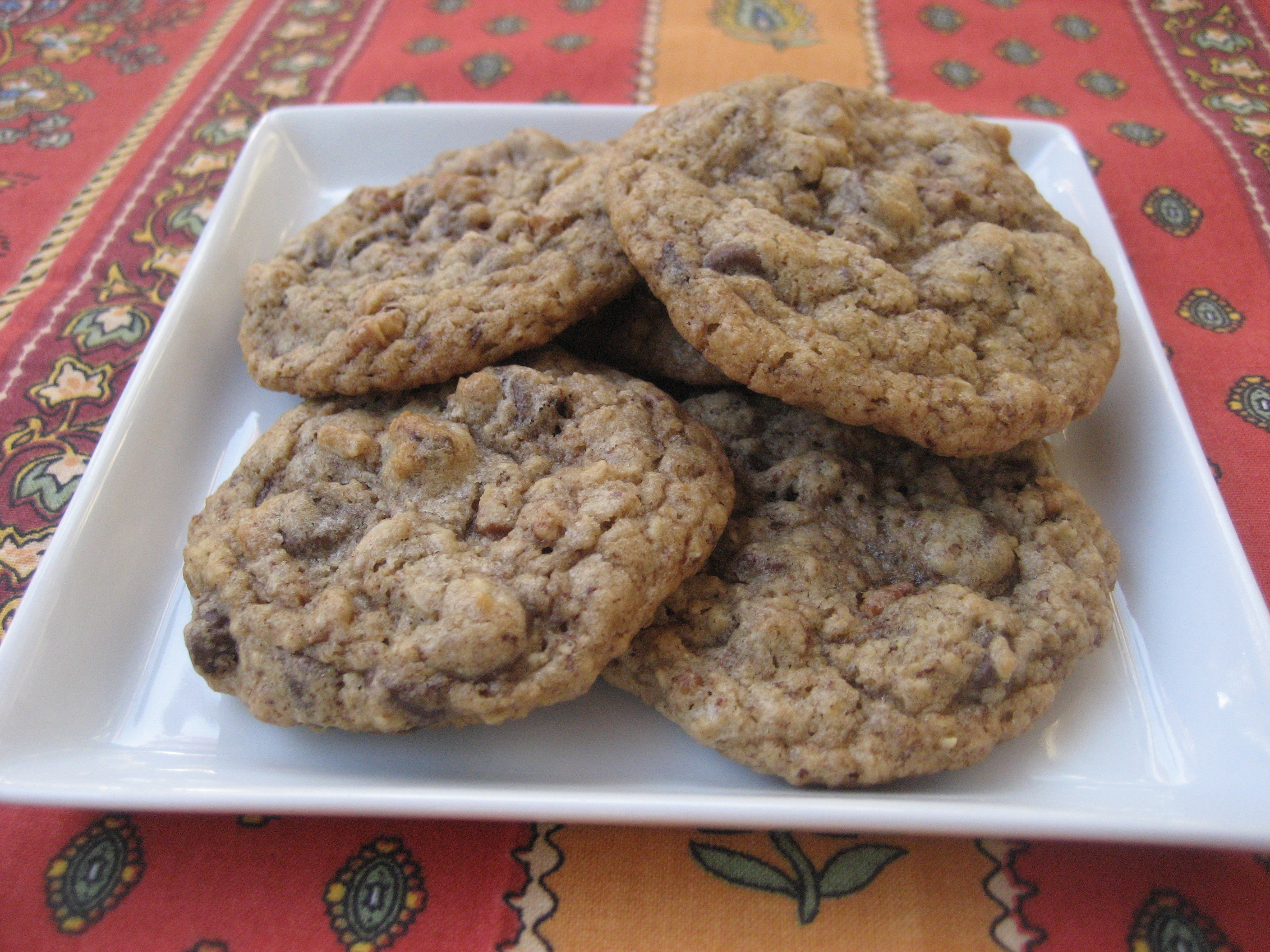
This chocolate chip cookie is the stuff of legends, or should I say urban legends. It’s commonly known as “The $250 Cookie Recipe,” since that’s the amount Neiman Marcus supposedly charged the lady that requested and received the recipe from its store while at lunch. According to Snopes.com, this amusing but false tale has been in circulation for over 50 years. Interestingly, the merchant and food item has evolved over time from a $25 fudge cake recipe “sold” by a train company in the 1940s to Waldorf-Astoria’s red velvet cake recipe in the 1960s to Mrs. Fields’ cookie recipe in the 1980s. Wherever this recipe came from, it’s my favorite chocolate chip cookie and I would gladly pay it (but thank goodness for the internet, so I don’t have to!).

Pork with Sweet and Sour Sauce
adapted from The Food of Thailand: A Journey for Food Lovers by Kay Halsey and Lulu Grimes

Serves 4

8 oz (225 g) pineapples slices in light syrup, each slice cut into 4 pieces (reserve the syrup)
1 1/2 tablespoons ketchup
2 tablespoons fish sauce
1 tablespoon sugar
2 tablespoons vegetable oil
12 oz (340 g) pork, sliced (pork tenderloin recommended)
4 garlic cloves, minced
1 carrot, sliced
1 onion, cut into 8 wedges
1/2 red capsicum (pepper) or serrano pepper, minced
1 bell pepper, cut into 1‑inch pieces
1 small cucumber, unpeeled, halved lengthwise and cut into 1/2‑inch-thick slices
1 tomato, cut into 6 wedges, or 12 baby tomatoes

Mix the pineapple syrup with the ketchup, fish sauce and sugar in small bowl until smooth.

Heat the oil in a wok or deep frying pan over a medium heat and fry the pork until nicely browned and cooked. Remove the pork with a slotted spoon and drain on paper towels.

Add the garlic to the wok and fry over medium heat for 1 minute or until lightly browned. Add the carrot, onion, and peppers and stir-fry for 3 to 4 minutes. Stir in the cucumber, tomato, pineapple and pineapple syrup mixture. Stir-fry for another minute. Taste, then adjust the seasoning, if necessary. Return the pork to the pan and gently stir. Spoon onto a serving plate and garnish with cilantro. Serve with brown or white jasmine rice.

***

NM chocolate chip cookies

Nieman Marcus Chocolate Chip Cookies

Makes about 4 dozen

1 cup (225 g) butter
1 cup (200 g) granulated sugar
1 cup (170 g) brown sugar
2 eggs
1 teaspoon vanilla
2 cups (240 g) flour
2 1/2 cups (200 g) blended oatmeal (measure oatmeal, then blend in blender to a fine powder)
1/2 teaspoon salt
1 teaspoon baking powder
1 teaspoon baking soda
12 oz (340 g) chocolate chips
4 oz (110 g) Hershey bar, grated (I used a Lindt dark chocolate bar)
1 1/2 cups (150 g) chopped nuts (your choice)

Preheat the oven to 375°F (190°C) degrees. Cream the butter and both sugars. Add the eggs and vanilla to the butter mixture. In a separate bowl, mix together the flour, oatmeal, salt, baking powder, and soda.  Add the flour mixture to the sugar/egg mixture. Add the chocolate chips, grated chocolate and nuts. Roll into balls and place 2 inches apart on a cookie sheet. Bake for 10 minutes at 375°F (190°C).

Curried Pork Stew with Potatoes

I felt especially domestic yesterday as I whipped up my butternut squash lasagna and made this curried pork stew at the same time. The stew came together in a flash. There is minimal prep time; the vegetables are roughly cut and you use a curry paste instead of mincing and measuring a long list of the usual curry ingredients. I’ve minced plenty of garlic, seeded countless chiles, and pounded enough lemongrass in my lifetime to really appreciate this shortcut. After letting the cooked stew cool, I refrigerated it in the same pan I cooked it in. Dinner tonight was as easy as reheating the stew and baking some store-bought naan.

We buy our curry paste for about $.89 a can at nearby Asian Mart. As the name suggests, this store supplies Asian and Asian-inspired ingredients and cooking tools. It’s fun to shop there because you never know what you’ll find. I’ve walked out with a wide variety of items you just can’t find anywhere else, like a 20-pound mortar and pestle, an economy pack of chopsticks, long beans, and tamarind paste, to name a few. The owners are delightful and it’s fun to see what chefs from Milwaukee’s ethnic restaurants pick up as they shop alongside you.

Curried Pork Stew with Potatoes 

adapted from Whole Foods Market

Serves 6

1 tablespoon olive oil
12 oz (340 g) boneless pork sirloin chops, cut into 1‑inch cubes
salt and freshly ground black pepper
1 red onion, roughly chopped
1 1/2 cups (360 ml) chicken broth
1 cup (240 ml) coconut milk
3 tablespoons green curry paste, or to taste (3 tablespoons makes a very spicy curry)
1 lb (450 g) red potatoes, cut into 1‑inch chunks
1 lb (450 g) carrots or parsnips, cut into 1‑inch chunks

Heat the oil in a large pot over a medium-high heat. Season the cubed pork with salt and pepper. Cook until deep golden brown. Add the onions and about 2 tablespoons water to loosen the browned bits in the bottom of the pot and cook, scraping the bottom of the pan, until the onions are just softened, about 3 minutes. Add the broth, coconut milk and curry paste and bring to a boil. Cover and simmer for 30 minutes. Add the potatoes and carrots and simmer for 10 minutes, then uncover and simmer until the vegetables are tender and the stew is thickened, about 30 minutes. Season to taste with salt and pepper and serve with naan or rice (or both).