Category Archives: Soups and stews

French Onion Soup and Croque Monsieur

“How easily happiness begins by / dicing onions”, writes William Matthews in his poem, “Onions”. This is never more true than when making French onion soup. And surely there can be no higher calling or better end for an onion than to be sauteed in butter, then doused in a boozy broth of brandy, sherry and wine. As an easy midweek soup-and-sandwich dinner goes, you could do worse than one that makes you wish you were sitting in a Parisian café.


French Onion Soup
adapted from The Barefoot Contessa Cookbook by Ina Garten

Serves 4 to 6

2 1/2 lb (1.1 kg) yellow onions, halved and sliced 1/4 inch thick
1/4 lb (110 g) unsalted butter
1 bay leaf
1/2 cup (125 ml) medium-dry sherry
1/2 cup (125 ml) brandy or Cognac
1 1/2 cups (375 ml) good dry white wine
8 cups (2 liters) beef stock
salt and freshly ground black pepper
freshly grated Parmesan, to serve

Melt the butter in a large stockpot on a medium heat. Saute the onions with the bay leaf and a pinch of salt (to stop the onions from browning) for 20 minutes, until the onions turn a rich golden brown color. Deglaze the pan with the sherry and brandy and simmer uncovered for 5 minutes. Add the white wine and simmer uncovered for 15 more minutes. Add the beef stock plus salt and pepper (but not too much salt because your stock is liable to be salty already). Bring to a boil, then simmer uncovered for 20 minutes. Remove the bay leaf, adjust the seasoning and serve hot with grated Parmesan on top.

***

Croque Monsieur
adapted from How to Cook: Book One by Delia Smith

Serves 1

A croque monsieur is really just a grilled ham and cheese sandwich. It originated in France as a kind of fast food snack served in cafés and bars. A croque madame is a version of this sandwich with a fried or poached egg on top. I was tempted by the Barefoot Contessa’s version of this classic, which she smothers in a béchamel sauce, but I opted to keep things simpler (and less calorific) with Delia Smith’s recipe. I did use Ina’s tip though to add some Dijon mustard to the sandwich.

2 large slices good-quality white bread, buttered
Dijon mustard (optional)
1/2 cup (50 g) Gruyère, finely grated
2 or 3 slices of cooked ham, Parma ham or wafer-thin ham
2 tablespoons (30 g) butter, melted
1 rounded tablespoon finely grated Parmesan
salt and freshly ground black pepper

On one slice of the buttered bread, add a thin smear of Dijon mustard (option). Sprinkle over half the grated Gruyère, then cover that with the slices of ham, folding them if need be to fit the size of the bread. Now sprinkle the rest of the Gruyère on top of the ham, season with salt and pepper, then press the other slice of bread on top of that and press it down firmly. Now brush the top side of the sandwich with some of the melted butter, sprinkle it with half the Parmesan and press it into the bread. Transfer the sandwich to a baking sheet and grill it in the oven for about 2 minutes, 2 inches from the heat, making sure to keep a close eye on it so that it doesn’t burn. When it’s golden brown, turn it over, brush the other side with melted butter, sprinkle the rest of the Parmesan all over and grill for another 2 minutes. Remove it from the grill, cut it into halves or quarters and eat it while it’s still warm and crunchy.
White Bean and Sausage Soup and Almond and Candied Bacon Bark

The first time I ever tried black pudding (a.k.a. blood pudding), I spit it out. I had only been living in Ireland for a few weeks and was at a fancy book launch for my new publishing job. One of the canapés being passed around was circles of pan-fried black pudding with a fancy relish on top, and not wanting to lose face in front of my new colleagues, not to mention my boyfriend, I was determined to try some. When in Rome, right? But I just couldn’t get over the fact that it was made from blood and I couldn’t even bring myself to chew it. Growing up in suburban Illinois, where an egg roll from the Chinese takeout was the most exotic thing I’d ever eaten, it was too much of a culture shock.

I was telling this story to my friend Caroline a few hours before we were due to go to the Clonakilty by Candlelight dinner last week. “Are you sure you want to go?” she asked, looking worried. “You know they’re bound to serve it there.” “Oh, I’m over it now,” I said. “I even ordered a black pudding and goat cheese tart at a restaurant last year.”

I was lucky to get a place at the free dinner on its second night, which was run as a pop-up restaurant by Clonakilty Blackpudding for only six nights. The location was kept secret until the day before, which turned out to be a Georgian house on Dublin’s north side. Caroline and I were the first to arrive (fellow food blogger Aoife was there that night as well) and we were handed a glass of Prosecco and directed towards the biggest turf fire I’ve ever seen, stacked eight briquettes deep at least. We also got a sneak peek of the room next door that we’d be eating in – along with 2,000 creepy china dolls crammed into floor-to-ceiling shelves that lined the room – and a look at the menu, which did indeed include a main course of black pudding with scallops and a carrot puree.

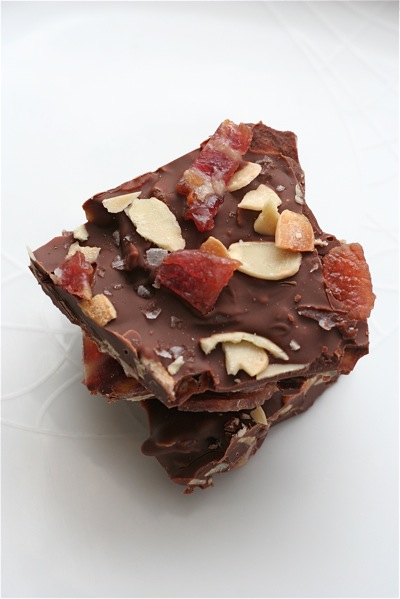
Because I’d won some Clonakilty black and white pudding, sausages and bacon by correctly answering the question “What is entomophagy the consumption of?” (insects), I made this white bean and sausage soup, an old cheap and cheerful stand-by. And feeling inspired by the chocolate-covered bacon, bacon praline and 12-year-old Jameson whiskey with a bacon and rosemary twist that we were served, I made this almond and candied bacon bark. This dessert seems to divide people firmly into two camps – people who have never heard of such a thing and think it sounds downright weird (they must have somehow missed the bacon mania boat), and people who think it sounds delicious and can’t wait to make it themselves. If you’re the former, then all I can say is don’t knock it till you’ve tried it – and then once you’ve tried it, try to stop yourself from eating all of it.

White Bean and Sausage Soup
adapted from The Barefoot Contessa Cookbook by Ina Garten

Serves 6

I’ve adapted the Barefoot Contessa’s original recipe to add sausages, but I make it just as often without them for a vegetarian version.

1 lb (450 g) dried white cannellini beans
olive oil
6 to 8 good-quality sausages
3 large onions, sliced
2 garlic cloves, minced
1 large branch fresh rosemary
2 quarts (2 liters) chicken or vegetable stock
1 bay leaf
salt and freshly ground black pepper

In a medium bowl, cover the beans with water by at least 1 inch and leave them in the refrigerator for 6 hours or overnight. Drain.

In a large stockpot over a low to medium heat, heat some olive oil and cook the sausages for about 10 or 15 minutes, until they’re browned on all sides and cooked through. Remove the sausages to a plate and set aside. Add the onions to the pot and saute for 10 to 15 minutes, until they are translucent. Add the garlic and cook for 1 more minute. Add the drained white beans, rosemary, chicken stock, and bay leaf. Cover, bring to a boil, and simmer for 30 to 40 minutes, until the beans are very soft. Remove the rosemary branch and the bay leaf. Pass the soup through the coarsest blade of a food mill or place in the bowl of a food processor fitted with a steel blade and pulse until coarsely pureed. Return the soup to the pot over a medium heat. Slice the sausages and add to the soup to reheat. Add salt and pepper to taste and serve hot.

***

Almond and Candied Bacon Bark
adapted from Ready for Dessert by David Lebovitz

David Lebovitz says it’s best to make the candied bacon the same day you plan to use it. If you want to play around with flavors (though this almond and candied bacon combo is insanely addictive), check out this list of top 10 chocolate bark mix-ins from the Big Girls, Small Kitchen blog for some inspiration.

1 1/4 lb (565 g) good-quality chocolate, broken into pieces
1/2 cup (50 g) flaked almonds, toasted
5 pieces of bacon, pancetta or streaky rashers
3 tablespoons brown sugar
flaky sea salt, such as Maldon (optional)

Preheat the oven to 400°F (200°C) and line a baking try with foil (shiny side down) or parchment paper. Place the strips of bacon on the tray and sprinkle each strip with about 2 teaspoons of brown sugar. Bake for 12 to 15 minutes, turning the strips over halfway through baking and dragging them through the melted sugar on the tray. They’re done when they’re mahogany colored. Cool on a wire rack until crisp, then crumble or roughly chop. Set aside.

While the bacon cools, place a piece of parchment paper on a baking tray or stretch a piece of cling film taught across a baking tray instead. Add the chocolate to a large heatproof bowl. Set the bowl over a pot of simmering water and stir often until the chocolate is almost melted.

Remove the bowl from the heat, wipe off the bottom, then continue to stir the chocolate until it’s all melted and smooth. Mix in two-thirds of the toasted almonds and two-thirds of the bacon.

Scrape the mixture onto the prepared baking tray and use a spatula to spread it to the desired thickness. Add the remaining almonds and bacon to the top of the chocolate, pressing them in lightly so they’ll adhere. Sprinkle bits of salt, if using, across the top. Refrigerate the baking sheet until the chocolate sets. Once the bark is firm, break it into pieces. Store the bark in the fridge, where it will keep for 3 days.

Tortellini in Broth with Spinach

Inevitably after most holiday meals, I find myself walking to my car with a plastic grocery bag of slightly gooey, unattractive, and lukewarm bag of bones and meat scraps. Perhaps no one else wants to carry home such an odd parcel, or perhaps everyone knows of my frugality. Whatever the reason, I’m happy to turn the humble carcass into a hearty broth at home. If you browse through the recipes on this site, you’ll find that both Kristin and I use broth frequently. Although I’ve found a good store-bought brand (Swanson’s Organic Chicken Broth), nothing beats homemade.  It’s really cheap and easy to make.

For this year’s turkey broth I threw the leftover bones (with scraps attached) into a large stock pot and poured in water to cover. I roughly chopped and added one onion, one carrot, one celery stalk, and a handful of fresh parsley. For added zip, I threw in a pinch of dried thyme, a bay leaf, and about a tablespoon of salt. After bringing it to a boil, I let the liquid barely simmer for about three hours, strained it, and poured it into quart jars. After a night in the fridge, you can skim off any fat that rises to the top and pour the broth into whatever size container you wish. It will keep in the fridge for a few days and frozen for several months. I like to freeze it in muffin tins, then put the small broth-circles into larger storage bags, perfect for adding to sauces and stir-frys. I didn’t freeze all my broth this year, instead sacrificing a quart for this quick and kid-friendly meal. For extra cuteness, serve in bunny bowls as pictured below.

Tortellini in Broth with Spinach

Serves 4 as main course, 6 as first course

14 oz (400 g) dried tortellini
1 quart (1 liter) chicken or turkey broth
12 oz (340 g) fresh baby spinach
grated Parmesan cheese, to serve

Cook the tortellini according to the package directions. Drain the tortellini and set it aside.

While the pasta cooks, bring the broth to a simmer. Depending on the broth you are using, you may need to add salt or pepper to taste.

After the tortellini is cooked, add the spinach to the broth and cook for about 2 minutes, stirring gently, until the spinach is wilted. To serve, divide the broth, spinach, and tortellini between bowls. Top each bowl with grated Parmesan, if desired.

Beef, Chorizo and Ale Stew

The Irish Independent recently ran an article about cheap casseroles coming back into fashion in these penny-pinching times. Cuts of meat that people turned their backs on during the Celtic Tiger boom are now reappearing on shopping lists and in casserole pots — cuts like lamb shanks, oxtails and beef shins. I discovered this recipe while watching Channel 4’s show Food: What Goes in Your Basket, where UK food critic Jay Rayner made it with shin of beef. I’ve modified it to use regular stewing beef, which is also much less expensive than prime cuts.

But just because a dish is economical doesn’t mean it can’t be delicious too, like this stew. In fact, I liked it so much that I made it twice in two weeks — once after watching the Food program and again because it was too perfect to pass up as an entry to November’s Irish foodies cookalong, which had a winter warmers theme. It might also have something to do with the fact that after coveting one for ages, I bought a Le Creuset casserole pot as a birthday present for myself back in September and loved the fact that I could actually cook it in the oven. But no matter which way you cook this — in the oven, on the stovetop or in a slow cooker — you’ll love it.

Beef, Chorizo and Ale Stew
adapted from Jay Rayner’s shin of beef recipe from Food: What Goes in Your Basket

Serves 8

If you don’t have a casserole pot (a.k.a. Dutch oven), you can simmer the stew on the stovetop instead. Alternatively, you could make this in a slow cooker (see below). I used O’Hara’s Irish Red Ale for this stew.

2 lb (1 kg) stewing beef, cut into cubes
salt and freshly ground black pepper
2 tablespoons flour
olive oil
1 x 7 oz to 11 oz (200 g to 300 g) chorizo ring, cut into bite-sized pieces
3 red onions, roughly chopped
3 carrots, roughly chopped
2 celery stalks, roughly chopped
3 cloves garlic, chopped
1 bottle of ale
2 cups (1 pint) beef or chicken stock
1 bouquet garni (bay leaves, thyme sprigs and parsley, tied with kitchen string), or 1 teaspoon mixed dried herbs
1 tablespoon brown sugar
chopped fresh parsley, to garnish (optional)
mashed potatoes or crusty bread, to serve

Preheat the oven to 270°F (130°C).

Season the beef with salt and pepper and toss in the flour until the beef pieces are evenly coated. Heat some olive oil in a casserole pot (Dutch oven) and brown the beef in batches, making sure not to crowd the pot, or the meat won’t brown properly. Remove from the pot and set aside. Add in the chorizo and cook for a few minutes, until it has started to release its oils. Add in the onions, carrots and celery and cook for 10 minutes, until the vegetables have softened. Add in the garlic and cook for 1 minute more.

Deglaze the pot with a small glass of the ale and simmer until it has reduced and thickened. Add the rest of the bottle and bring back to a simmer. Return the beef to the pot, and if it’s not fully covered, top up with the stock. (Add the whole pint of stock if you like a thinner stew, add less if you like a more concentrated broth.) Add the bouquet garni or dried herbs and stir in the sugar.

Cover and put in the oven for 3 to 4 hours (or simmer on the stovetop on a low heat), stirring a few times. The meat is ready when it shreds apart. As an optional extra if you want to intensify the flavor, you can strain off all the liquid into another pot and reduce the liquor by half, then return the liquid to the casserole pot. Serve with lots of chopped fresh parsley and mashed potatoes or crusty bread.

Slow cooker variation: Follow the recipe above until you’ve deglazed the pot, then transfer the stew to your slow cooker. Add the beef, stock, herbs and sugar to the slow cooker — though you should use less liquid because it won’t reduce as much as it does on the stovetop or in the oven. Cover and cook on a low heat for 8 hours, or until the meat shreds apart with a fork.

Cheddar Corn Chowder with Savory Ham and Cheese Muffins

I’m a born and bred Midwesterner, so corn is practically part of my heritage. “Corn should be knee high by the fourth of July,” my dad used to say out of the blue sometimes while driving alongside the cornfields of northern Illinois, and no summer picnic or barbecue was complete without me or my brother or sister being sent out to the patio to shuck a bag full of sweetcorn picked up from the tumbledown farm stand on the corner of Route 45 and 173. When I was back in the States last month, my friend and I went grocery shopping to pick up supplies for that night’s barbecue, and I insisted we get a few ears of sweetcorn. Back home in Ireland, though, where whole ears of corn tend to only come pre-shucked in shrink-wrapped packages (and that’s in the rare instance when you can even find them), I make do with frozen corn. In this cheddar corn chowder, though, it’s so full of flavor that I don’t think you’d even know the difference.

Now that the back to school drive is in full swing, it’s worth saying that these ham and cheese muffins not only work well served alongside soup, but are also a great alternative to the usual sandwich in a school lunchbox. The 15 minutes you spend making them one day will be repaid during the week if you stash them in the freezer. You can then grab as many as you need from the freezer the night before, pop them into a reusable plastic container and stow them in the fridge – they’ll be thawed by lunchtime the next day.

Cheddar Corn Chowder
adapted from The Barefoot Contessa Cookbook by Ina Garten

Serves 6

For a gourmet touch, you could serve this soup with a dollop of Wolfgang Puck’s jalapeño crema on top instead of grated cheese. Instead of using a mix of cream and milk, you could just use 1 cup (240 ml) half and half in the US, or if you want to make it a little less fattening, just use 1 cup (240 ml) milk and no cream. Leave out the bacon and use vegetable stock to make a vegetarian version of this.

2 tablespoons olive oil
4 oz (110 g) bacon, chopped
2 large yellow onions, chopped
2 tablespoons (30 g) unsalted butter
1/4 cup (30 g) flour
1/2 teaspoon salt
1/2 teaspoon freshly ground black pepper
1/4 teaspoon ground turmeric
6 cups (1 1/2 liters) chicken stock
1 lb (450 g) baby potatoes, unpeeled and diced
1.5 lb (680 g) fresh or frozen corn kernels (about 5 ears of corn if using fresh)
1/2 cup (120 ml) cream
1/2 cup (120 ml) milk
4 oz (110 g) sharp/mature cheddar cheese, grated, plus extra to garnish
chopped chives, to garnish (optional)

Heat the olive oil in a large stockpot over a medium-high heat and cook the bacon for about 5 minutes, until crisp. Remove the bacon with a slotted spoon and set aside to drain on a paper towel-lined plate. Reduce the heat to medium, add the onions and butter to the rendered fat and cook for 10 minutes, until the onions are translucent.

Stir in the flour, salt, pepper and turmeric and cook for 3 minutes. Add the chicken stock and potatoes, bring to a boil and simmer, uncovered, for 10 to 15 minutes, until the potatoes are tender. If using fresh corn, cut the kernels off the cob and blanch them for 3 minutes in boiling salted water, then drain. (If using frozen corn, you can skip this step.) Add the corn to the soup, then add the bacon back in. Add the cream, milk and cheddar. Cook for 5 more minutes, until the cheese has melted. Season to taste with salt and pepper. Serve hot with a little grated cheddar and chopped chives sprinkled on top.

***

Savory Ham and Cheese Muffins

Makes 12 muffins

These muffins have some whole wheat flour to give them a little boost of wholegrain goodness, but you could use all plain flour (2 1/2 cups/300 g) instead. You can also adjust the seasonings to your children’s tastes, so feel free to leave out the paprika, black pepper, Worcestershire sauce, mustard or scallions, or use a mild cheddar instead of a mature one.

1 3/4 cup (200 g) plain flour
3/4 cup (100 g) whole wheat flour
2 1/2 teaspoons baking powder
1/2 teaspoon paprika
1/4 teaspoon salt
freshly ground black pepper
1 cup (240 ml) milk
6 tablespoons (90 g) unsalted butter, melted and cooled
1 egg
1 teaspoon Worcestershire sauce
1/2 teaspoon Dijon mustard
2 cups (200 g) grated mature cheddar
6 slices ham, chopped into small pieces
6 scallions, finely chopped

Preheat the oven to 375°F (190°C). Grease a muffin tin or line with silicone or paper cases.

Sift together the flours, baking powder, paprika, salt and a little black pepper in a large bowl.

In a separate bowl or measuring jug, whisk together the milk, melted butter, egg, Worcestershire and mustard. Add to the dry ingredients and stir until just combined (don’t overmix or the muffins will be tough). Stir in the grated cheese, ham and scallions, again taking care not to overmix.

Spoon the batter into the prepared muffin tin and bake for 20 to 25 minutes, until the muffins are golden and a tester inserted into the center comes out clean. Set aside on a wire rack to cool. If freezing, allow them to cool completely first.

Italian Wedding Soup and Whole Wheat Spaghetti with Swiss Chard and Pecorino Cheese

Tonight I wanted to make something special for Sam after his fantastic first dance class. My four-year-old nephew and in-laws also joined us for dinner. Strangely, I’m more nervous cooking for kids than adults. Kids aren’t afraid to tell you they don’t like your food and are more than willing to go hungry if necessary to prove it. When I saw this recipe for tiny meatball-filled soup I figured the kids (even my chicken nuggets-loving nephew) would be amused enough to eat it, even if the adults weren’t as impressed. Luckily, both kids and adults enjoyed the soup. The whole wheat pasta with Swiss chard was also a hit. You can find these recipes and other kid-friendly fare at our new Family Favorites page at the top of the site.

Italian Wedding Soup
adapted from Giada’s Family Dinners by Giada De Laurentiis

Serves 6 to 8

for the meatballs:
1 small onion, grated
3 cloves garlic, minced
3 tablespoons chopped fresh flat-leaf parsley
1 egg
1 teaspoon salt
freshly ground black pepper
1/2 cup (50 g) grated Parmesan cheese
1/4 cup (25 g) plain dry breadcrumbs
1 lb (450 g) ground beef

for the soup:
8 cups (2 liters) low-sodium chicken broth
1 lb (450 g) escarole, coarsely chopped
2 eggs
1/2 cup (50 g) freshly grated Parmesan
salt and freshly ground black pepper

To make the meatballs, in a large bowl, stir together the onion, garlic, parsley, egg, salt and pepper. Using your hands, mix in the the cheese, breadcrumbs, and beef. Shape the meat mixture into 1‑inch-diameter meatballs (about 75). Place on a baking sheet or large plate.

To make the soup, bring the broth to a boil in a large pot over medium-high heat. Add the meatballs and escarole and simmer until the meatballs are cooked through and the escarole is tender, about 8 minutes. In a small bowl, whisk together the eggs and cheese. Stir the soup in a circular motion. Gradually drizzle the egg mixture into the moving broth for about 1 minute, stirring gently with a fork to form thin stands of egg. Season the soup to taste with salt and pepper. Ladle the soup into bowls and serve.

***

Whole Wheat Spaghetti with Swiss Chard and Pecorino Cheese
adapted from Giada’s Family Dinners by Giada De Laurentiis

Serves 6

3 tablespoons toasted walnuts or pine nuts
3 tablespoons olive oil
2 onions, thinly sliced
2 bunches Swiss chard, trimmed and chopped
3 garlic cloves, minced
1 x 14 oz (400 g) can diced tomatoes with juices
1/4 cup (60 ml) dry white wine
1/4 teaspoon dried crushed red pepper flakes
salt and freshly ground black pepper
12 oz (340 g) whole wheat spaghetti
1/2 cup (70 g) pitted Kalamata olives, coarsely chopped
3 tablespoons freshly grated Pecorino cheese

Preheat a small, heavy skillet over medium-low heat. Place the nuts in the hot skillet and stir them until they become golden brown and fragrant, about 5 minutes, taking care not to scorch them. Immediately place the toasted nuts in a separate bowl to cool and set aside.

Heat the oil in a large frying pan over medium-high heat. Add the onions and saute for about 8 minutes, until tender. Add the chard and saute for about 3 minutes, until it wilts. Add the garlic and saute for 1 minute, until fragrant. Stir in the tomatoes with their juices, wine, and red pepper flakes. Bring to a boil. Decrease the heat to medium-low, cover and simmer until the tomatoes begin to break down and the chard is very tender, stirring occasionally, about 5 minutes. Season the chard mixture to taste with salt and pepper.

Meanwhile, bring a large pot of salted water to a boil. Add the spaghetti and cook for about 10 minutes, stirring occasionally, until tender but still firm to the bite. Drain the spaghetti, add it to the chard mixture and toss to combine.

Transfer the pasta to a large bowl or platter. Sprinkle with the olives, cheese and nuts. Serve, passing extra cheese if desired.

Country Captain with Cauliflower and Peas

Last month I crammed in as much Food Network as my schedule could handle. It was my last month with cable and I was afraid of missing something important (like Jersey Shore?). We ordered cable to keep me company during my maternity leave last summer, but after Anabelle turned 9 months old and we realized we watched it only about half an hour a day, we canceled it. One of the last shows I watched was Throw Down, a Bobby Flay vehicle that is amusing mostly for its ability to knock the usually cocky Mr. Flay down a notch or two. The episode featured Mr. Flay battling the Lee brothers in a competition to see who could make the best Country Captain. Even though the show was pretty predictable (Mr. Flay usually loses), I couldn’t turn it off. I had to learn more about the silly-sounding dish.

Turns out that the dish’s anthropology is as interesting as its name. It is Indian in flavor, originated in Philadelphia in the 1800s, and is most commonly eaten in the southern United States. Some believe that a British sea captain working in the spice trade introduced it to America via the port of Savannah, Georgia. Weeks later when I saw a Country Captain recipe highlighted as Recipe of the Day on Epicurious, I had to try it out. The list of ingredients is almost as odd as its name. But never judge a recipe by its title (or ingredients list) — the dish was delicious.

Country Captain with Cauliflower and Peas
adapted from Bon Appétit, March 2010

Serves 6

1 1/2 teaspoons coriander seeds
1 teaspoon fennel seeds
1 teaspoon cumin seeds
1/2 teaspoon whole black peppercorns
3 whole cloves
1/4 teaspoon cardamom seeds
1 1/2‑inch piece of cinnamon stick
1/2 teaspoon turmeric
1/4 teaspoon (or less) cayenne pepper
5 tablespoons peanut oil or vegetable oil, divided
1 small head of cauliflower, trimmed and cut into 1‑inch florets
coarse kosher salt
2 lb (900 g) skinless, boneless chicken thighs, trimmed and cut into 1- to 2‑inch pieces
1 bunch green onions, dark green and white parts chopped separately
1 tablespoon peeled and finely grated fresh ginger
2 garlic cloves, minced
1 1/2 cups (360 ml) chicken broth
1 2/3 cups (400 ml) crushed tomatoes with added puree
1/3 cup (50 g) dried cherries, finely chopped
1 tablespoon smooth peanut butter
10 oz (280 g) frozen petite peas (do not thaw)
1/3 cup (20 g) coconut shavings, lightly toasted (optional)
cooked rice, for serving

Place the coriander seeds, fennel seeds, cumin seeds, black peppercorns, cloves, cardamom seeds, and cinnamon stick in a small, dry skillet. Stir the spices over a medium heat for 5 to 6 minutes, until fragrant and slightly darker in color. Remove the spices from the heat and allow to cool. Finely grind the spices in spice mill or in a mortar and pestle. Transfer to a small bowl and add the turmeric and cayenne.

Heat 3 tablespoons of the oil in a heavy, large, deep pot over medium-high heat. Add the cauliflower florets. Sprinkle with coarse kosher salt and saute for 6 to 7 minutes, until beginning to soften and brown in spots. Transfer to a medium bowl.

Add the remaining 2 tablespoons of oil and half the chicken to the same pot. Sprinkle with coarse kosher salt and saute for about 6 minutes, until the chicken is light brown on all sides. Transfer the chicken to a large bowl. Repeat with the remaining chicken.

Add the white parts of the green onions, the finely grated ginger, and minced garlic to the same pot. Reduce the heat to medium and saute for about 1 minute, until fragrant. Add the ground spice mixture and stir for 15 seconds. Stir in the chicken broth and bring to a boil, scraping up any browned bits. Add the crushed tomatoes, reduce the heat to medium-low, cover, and simmer for 15 minutes. Stir in the dried cherries and peanut butter. Return the chicken and any accumulated juices to the pot. Cover and simmer for 10 minutes. Add the sauteed cauliflower to the pot. Cover and simmer for about 10 minutes longer, until the chicken is cooked through and the cauliflower is tender, adding more chicken broth if the mixture is dry. Season with coarse salt and freshly ground black pepper.

DO AHEAD: Can be made 1 day ahead. Cool slightly. Chill uncovered until cold, then cover and keep refrigerated. Rewarm over medium heat before continuing.

Add the frozen peas to the stew and simmer for about 5 minutes, until heated through. Ladle the stew over rice. Sprinkle each serving with the green onion tops and toasted coconut shavings (if using).

Chicken Bouillabaisse

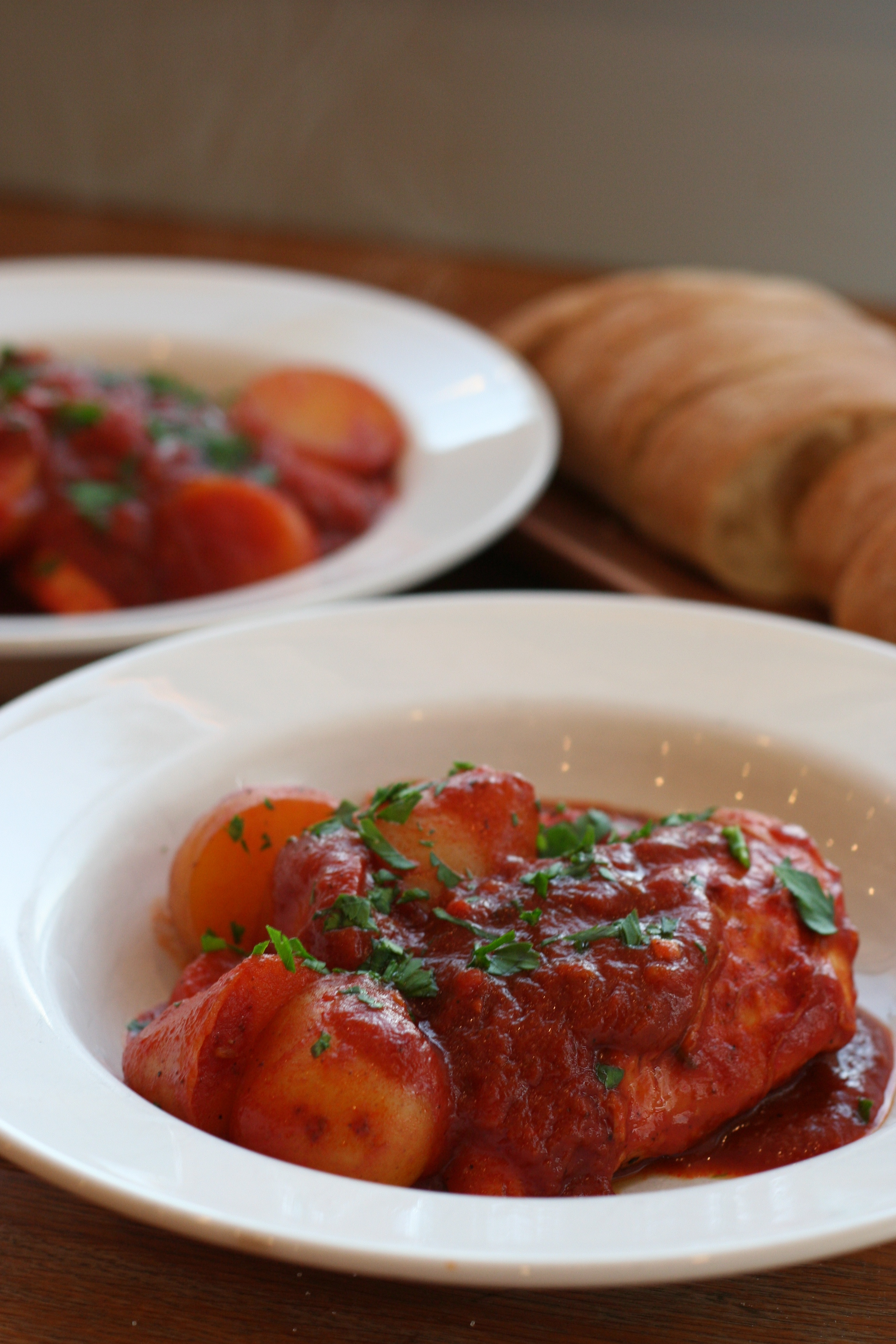
One-pot dinners are so popular that entire cookbooks are dedicated to them. The renowned Ballymaloe Cookery School in Ireland even offers a one-day course on them. Their appeal is obvious — they tend to be easy to cook, only using one pot means there’s less washing up to do, you can let them simmer away while you get on with other things, and they’re ideal for cooking for a crowd. This chicken bouillabaisse is straightforward enough to make as a weeknight meal, yet impressive enough to serve for company. The bright fennel flavors in this stew make for a nice change, especially as we’re coming into spring and cravings for heavy foods are waning. I also love the lurid red sauce, which you’ll want to mop up with plenty of crusty bread. As one-pot wonders go, this is one of my favorites (plus it’s always more fun to cook something with a French name).

Chicken Bouillabaisse
adapted from Barefoot Contessa Back to Basics by Ina Garten

Serves 4 to 6

I’ve adapted this quite a bit from the original, most notably by adding in onions, fennel and carrots and cooking it on the stovetop instead of in the oven. It’s traditional to serve bouillabaisse with a dollop of rouille and Ina Garten has a recipe for one here, though truth be told I usually skip it. You could make a cheat’s version by adding 1 tablespoon freshly squeezed lemon juice, 1/2 teaspoon saffron and 1/4 teaspoon crushed red pepper flakes to 1 cup (240 ml) good store-bought mayonnaise. I’ve listed the Pernod as optional because there’s no need to go out and buy a whole bottle just for 3 tablespoons, and the dish is perfectly delicious without it.

5 large chicken breasts (or a combination of breasts and thighs), either left whole or cut into bite-sized pieces
salt and freshly ground black pepper
1 tablespoon minced fresh rosemary leaves
2 tablespoons extra virgin olive oil
2 large onions, roughly chopped
1 fennel bulb, roughly chopped
3 or 4 carrots, cut into 1‑inch pieces on the diagonal
4 large cloves garlic, finely chopped
1 teaspoon saffron
1 teaspoon whole fennel seeds
11 oz (300 g) tomato puree
2 cups (480 ml) good-quality chicken stock
1 cup (240 ml) dry white wine
3 tablespoons Pernod (optional)
1 lb (450 g) baby potatoes, halved
handful of fresh parsley, chopped, to garnish
crusty bread, to serve

Pat the chicken dry with paper towels and season it generously with salt, pepper, and the rosemary. Heat the olive oil over a medium heat in a large pot and brown the chicken in batches (don’t crowd the pot) until nicely browned all over, about 5 to 7 minutes per batch. Transfer the browned chicken to a plate and set aside.

Lower the heat to medium-low and the onion, fennel and carrots. Saute for 10 minutes, until the onions have softened. Add the garlic and saute for 1 minute more. Add the saffron, fennel seeds, tomato puree, chicken stock, white wine, Pernod, 2 teaspoons salt, and 1 teaspoon of pepper to the pot. Stir and scrape up any browned bits on the bottom. Add the browned chicken and their juices back to the pot, along with the baby potatoes.

Cover the pot and simmer for 45 to 55 minutes, until the potatoes are tender (but not falling apart) and the chicken is done. Check the seasoning, then add a dash of Pernod or a splash of white wine at the end if you think it could use a little alcohol edge. Serve hot in shallow bowls with big dollops of rouille (if using), some chopped fresh parsley sprinkled over and plenty of crusty bread to mop up the sauce.