Category Archives: Soups and stews

Braised Spareribs with Fennel, Mashed Potatoes, and Curried Split Pea Soup

After a 10-minute dig into my deep freezer, I sadly realized we had eaten the last of our Tamworth ham from Farmer Nick’s. Though momentarily disappointed that I couldn’t make the scalloped potatoes and ham I’d been craving, I was thrilled to spot a rack of spareribs hiding beneath the frost. I usually bake spareribs and sauerkraut together for an easy, hearty meal, but I’d already made cabbage once that week and, frankly, didn’t relish the idea of another cabbage-based dinner. Instead, I settled on a braised spareribs recipe. But “settled” isn’t the appropriate word for this dish. “Spectacular” is more accurate. I know I rave about recipes more often than not, but this really is a fantastic preparation, really. The meat falls off the bone and the sauce is perhaps the most savory thing I’ve tasted all year. The only leftovers from the meal were a small bowl of mashed potatoes and a few tablespoons of the sauce. I mixed the two together the next day for lunch, which made for some damn good fried mashed potato patties.

Like the spareribs recipe, the soup recipe is also new to me, sent by my friend Allison. I loved it as a starter for dinner but enjoyed it even more the next day for lunch after the curry flavor developed. Not only was this a tasty soup, but it gave me an excuse to finally buy a stick blender (very fun item, by the way). Thanks for sharing, Allison! Which reminds me — if anyone has recipes they would like us to try out, please send them our way.

Braised Spareribs with Fennel
adapted from Anne Burrell at Food Network

Serves 4

1 rack spareribs, cut into ribs
2 tablespoons olive oil
kosher salt
1 large onion, cut into large dice
1 large fennel bulb, fronds removed, cut into large dice
6 garlic cloves
1 1/2 cups (360 ml) dry white wine
2 bay leaves
1 bundle thyme
pinch crushed red pepper
2 1/2 cups (600 ml) chicken broth

Preheat the oven to 400°F (200°C).

Coat a Dutch oven with olive oil and bring to a high heat. Season the ribs with salt and brown in the hot oil. Brown ribs on both sides. Remove ribs from the pan.

While the ribs are browning, puree the onion, fennel and garlic in the food processor to a coarse paste. After the ribs are browned and removed from pan, add the pureed vegetables and saute for 5 to 6 minutes, until golden.

Return the ribs to the pan and add the white wine, bay leaves, thyme and crushed red pepper flakes. Cook over a medium-high heat for 8 to 10 minutes, until the wine is reduced to about 1 cup (240 ml). Add the chicken broth, cover and place in the preheated oven. Cook the ribs for 2 hours or until they are very soft and almost falling off the bone. Check the ribs periodically to make sure the liquid hasn’t reduced too much. Serve the ribs and sauce over mashed potatoes.

***

Curried Split Pea Soup
adapted from Alton Brown at Food Network

Serves 8

2 tablespoons unsalted butter
1 onion, chopped
kosher salt and freshly ground black pepper
1 tablespoon minced fresh garlic
5 or 6 carrots, chopped
5 or 6 stalks of celery, chopped
1 lb (450 g) dried green or yellow split peas, picked over and rinsed
8 cups (1.9 liters) chicken broth (reserve 1 cup (240 ml) to thin out soup if it’s too thick)
1 tablespoon curry powder

Place the butter into a large saucepan or stock pot over medium-low heat. Once melted, add the onion and a generous pinch of salt and sweat for 2 to 3 minutes. Add the garlic and continue to sweat for an additional 1 to 2 minutes, making certain not to allow the onions or garlic to brown.

Add the peas, carrots, celery, 7 cups (1.7 liters) of chicken broth and curry powder. Increase the heat to high and bring to a boil. Reduce the heat to low, cover and cook at a simmer until the vegetables are very tender, approximately 45 to 50 minutes. Taste and adjust seasoning as needed. Using a stick blender, puree the soup until the desired consistency. If the soup is too thick, add some of the remaining chicken broth.

Shrimp Won Tons in Soup and Roasted Asparagus

I’ve probably mentioned that my son loves Asian food before, but I don’t think I mentioned how glad I am of this fact. Asian food, whether Japanese soba, Chinese stir-fry or Thai satay, is quick to prepare and relatively light. Sure beats serving mac and cheese and chicken nuggets. I also love salty sweet tastes, which are easy to find in Asian cuisines.

Though won tons aren’t exactly quick to throw together, using store-bought won ton skins and broth helps reduce the prep time. This was my first time making won tons; my husband usually takes care of it. I’ve included more pictures than usual not because they’re good pictures (they’re actually not good at all), but because I found the picture in the cookbook very helpful. I don’t want to break any copyright laws, so you’re all stuck with my amateur “how to” pictures. Kelly’s birthday wish list: better digital camera with a decent flash.

Shrimp Wontons

Shrimp Won Tons in Soup
adapted from Chinese Snacks Wei-Chuan Cooking Book by Huang Su Huei

Serves 3

for the filling:
10 medium raw, shelled shrimp (about 1/3 lb/170 g)
1/2 teaspoon rice wine
1/2 teaspoon salt
1/2 teaspoon cornstarch
1/4 cup minced bamboo shoots
1 teaspoon minced ginger
30 won ton skins

for the soup:
6 cups (1.4 liters) broth
1 teaspoon rice wine
1 1/2 teaspoon salt
1 tablespoon shredded ginger
6 oz (170 g) spinach or other green vegetable

Garnishes: black pepper, sesame oil, soy sauce, chopped green onion, mustard powder or Chinese mustard

Rinse and devein the shrimp. Drain them and cut each into 3 pieces, then mix thoroughly with the remaining filling ingredients.

Step 1Picture 1

Step 2Picture 2

To prepare each won ton, taking one won ton skin, put a teaspoon of filling in the center (picture 1). Fold over in half to form a triangle; make another fold one-quarter from the longest diagonal edge (picture 2).

Step 3Picture 3

Step 4Picture 4

Bring the two outside corners together (the one-quarter fold should be on the inside) and using a drop of water, pinch these 2 edges together to seal (pictures 3 and 4).

Put a large pot of water on to boil (this will be used to cook the won tons). While the water heats, make the soup. Heat the broth, rice wine, salt and ginger in a large saucepan until boiling. Reduce the heat and simmer for 5 to 10 minutes.

Once the won ton water is boiling, add the won tons and spinach, then cover. When the won tons rise to the surface of the water, remove them and the spinach and drain. Portion into serving bowls. and ladle some soup over them. Serve immediately with garnishes: 1/4 teaspoon black pepper, 1/2 teaspoon sesame oil, 1/2 tablespoon soy sauce, 1 tablespoon green onion, and a pinch of mustard powder are recommended for each serving.

***

Roasted Asparagus

Serves 2

1 bunch asparagus spears
good-quality olive oil
salt and freshly ground black pepper
sesame oil (optional)
sesame seeds (optional)

Preheat the oven to 425°F (220°C).

Snap the tough ends off the asparagus spears. Lay the spears in a single layer on a baking sheet. Drizzle with olive oil, salt and pepper. Roast for 5 to 10 minutes, until tender, depending on the size of spear. Drizzle with sesame oil and garnish with sesame seeds if desired.

Autumn Fish Stew and Date Nut Spice Bread

If I had to pick one smell that evokes my childhood, it would be potpourri. When I was growing up, my mom was into the country style of decorating, and me and my brother and sister got dragged around to the shops that sell that kind of stuff on the weekends. Those stores invariably reeked of cinnamon potpourri, and there always seemed to be a bowl of it collecting dust on a bathroom shelf in our house. Nowadays, I imagine potpourri has been replaced by Yankee Candles, which seem to be everywhere. I always laugh at the names of the candles — some of this autumn’s new scents are “Moonlight Harvest”, “Lakeside Birch” and “Farmers Market”. So what does a moonlight harvest smell like, exactly?

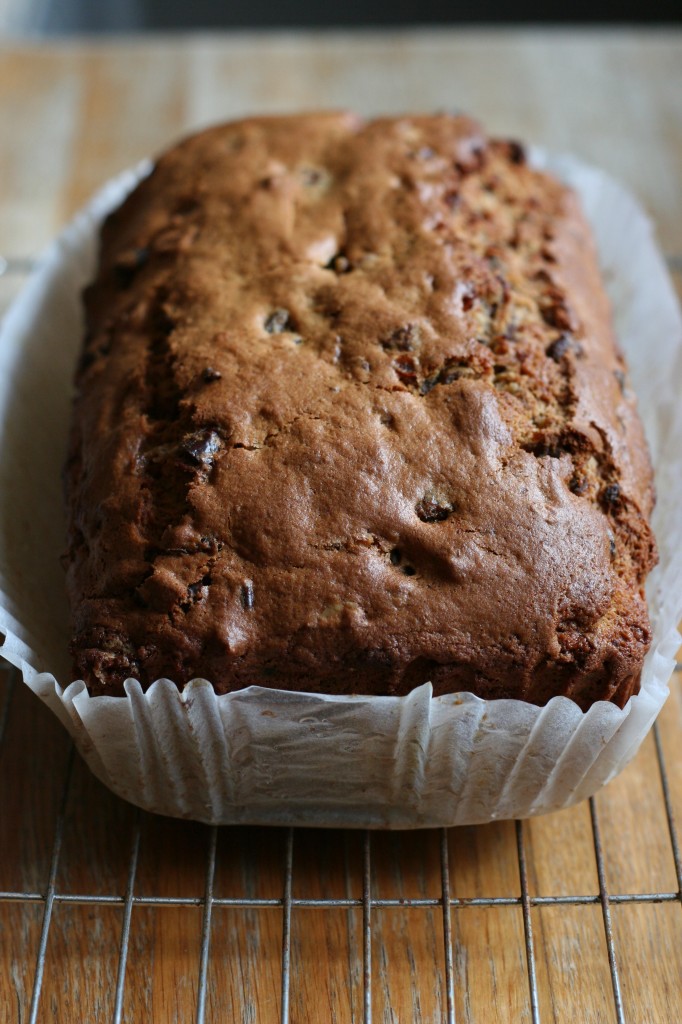
Still, when this date nut bread was baking, I couldn’t help but think that the people at Yankee Candle would do well to try to recreate how this smells, fresh out of the oven, with its heady autumnal mix of cinnamon, cloves, nutmeg and orange zest. While this lemon blueberry buckle was the best thing I baked this summer, I think this date nut bread will be hard to beat for the autumn. When I was urging a friend to make it last week, I wasn’t kidding when I said you’d almost want to bake this just to make your house smell good (and because it’s delicious, of course, and absolutely perfect for fall). But failing that, I’m sure there’s a suitable Yankee Candle out there — maybe “Autumn Fruit”?

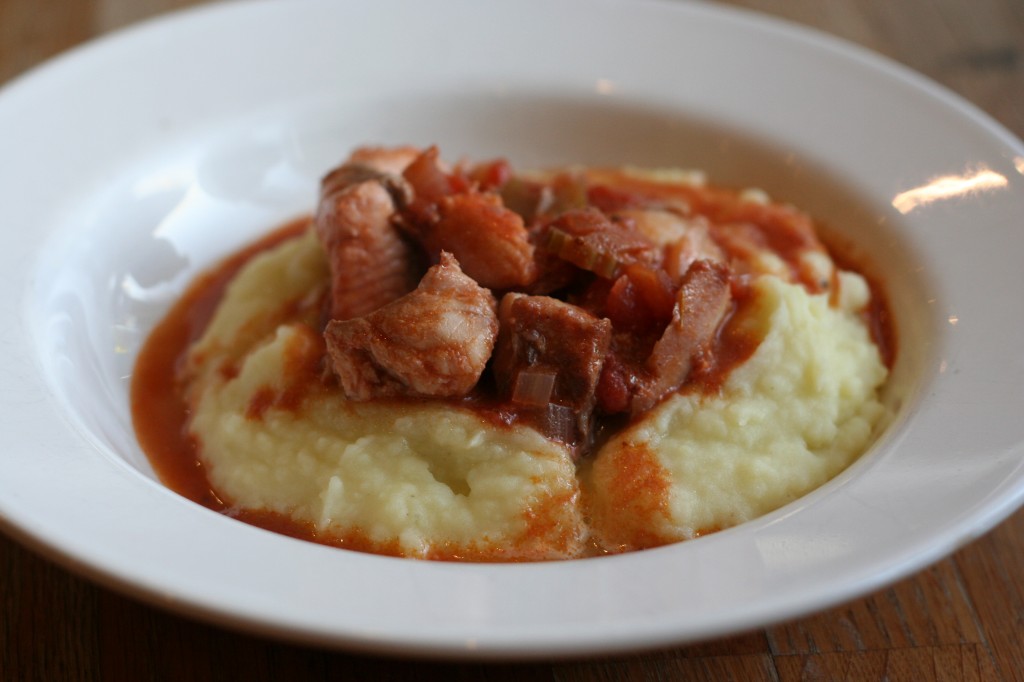
autumn fish stew

Autumn Fish Stew
adapted from Fresh from the Sea by Clodagh McKenna

Serves 4

olive oil
1 onion, diced
2 celery stalks, thinly sliced
3 garlic cloves, crushed
1 tablespoon coriander seeds, roughly crushed in a mortar and pestle
1 teaspoon ground cumin
1/2 teaspoon smoked paprika
1 bay leaf
sprig of fresh thyme
2 x 14-oz (400‑g) cans of chopped tomatoes
1/2 cup (120 ml) red wine
1 1/4 cups (300 ml) fish or vegetable stock
sea salt and freshly ground black pepper
2 1/4 lb (1 kg) mixed fish fillets, cut into small pieces
mashed potato, polenta, couscous or rice, to serve

Place a casserole dish over a medium heat and pour in a dollop of olive oil, followed by the onion and celery. Cook for 5 minutes. Add the garlic, coriander, cumin, bay leaf and thyme. Cook for a further 2 minutes. Stir in the tomatoes and leave to reduce and thicken for about 10 minutes. Pour in the wine, bring back to the boil and cook for 1 minute, followed by the stock. Season with salt and pepper and simmer for 15 to 20 minutes.

Add all the fish to the stew and stir well. Simmer gently for about 10 minutes. Serve with creamy mashed potatoes, polenta, couscous or rice.

***

date nut spice bread

Date Nut Spice Bread
from Barefoot Contessa Back to Basics by Ina Garten

Makes 1 x 8‑inch loaf

Don’t let the “bread” in the title mislead you — this is a loaf cake, and a slice or two is perfect with a cup of tea or coffee, as a treat in a packed lunch or after-school snack, or for breakfast. Ina Garten suggests serving it with an orange zest-spiked cream cheese spread (you can find the recipe for that here), but I like this with only a bit of butter.

2 cups (280 g) pitted dates, coarsely chopped
1/3 cup (80 ml) orange liqueur (recommended: Cointreau or Triple Sec)
4 tablespoons (60 g) unsalted butter, at room temperature
3/4 cup (120 g) light brown sugar, lightly packed
1 extra-large egg
1 teaspoon pure vanilla extract
1 tablespoon grated orange zest (2 oranges)
2 cups (240 g) all-purpose flour
2 teaspoons baking powder
1/2 teaspoon baking soda
1 teaspoon ground cinnamon
1 teaspoon ground nutmeg
1/4 teaspoon ground cloves
1 teaspoon kosher salt
3/4 cup (175 ml) freshly squeezed orange juice (3 oranges)
3/4 cup (90 g) coarsely chopped pecans

Preheat the oven to 350°F (180°C). Butter the bottom of an 8 1/2 x 4 1/2 x 2 1/2‑inch loaf pan. Line the bottom with parchment paper, then butter and flour the pan.  (I just used a loaf tin liner.)

Combine the dates and orange liqueur in a small bowl and set aside for 30 minutes. Stir occasionally.

In the bowl of an electric mixer fitted with the paddle attachment or using a hand-held mixer, beat the butter and brown sugar together on medium speed for 1 minute. Scrape down the bowl. With the mixer on low, add the egg, vanilla, and orange zest.

Sift together the flour, baking powder, baking soda, cinnamon, nutmeg, cloves, and salt. With the mixer still on low, add the flour mixture alternately with the orange juice to the creamed mixture, beating only until combined. By hand, stir in the dates with their liquid, and the pecans.

Pour the batter into the prepared loaf pan and smooth the top. Bake for 50 to 60 minutes, until a toothpick comes out clean. Cool in the pan for 10 minutes, then turn out onto a wire rack and cool completely.

Black Bean, Eggplant and Leek Chili with Lime Sour Cream and Honey Buttermilk Cornbread

The first cookbook I remember buying was 1,000 Vegetarian Recipes. I was in college, living in a co-op at the time, and needed something to help me cook a vegetarian dinner once a week for 40 people. I probably thought the book was a bargain — with that many recipes, there would surely be loads of veggie crowd pleasers, right? Well, let’s just say it’s no longer in my cookbook collection. The New Vegetarian Epicure was the second cookbook I bought, and has been much better loved. This is the book that taught me how to cook my first proper recipes (quinoa salads and tempeh don’t really count) and I still turn to some of them as my go-to recipes, like this one for honey buttermilk cornbread. What’s your first favorite cookbook?
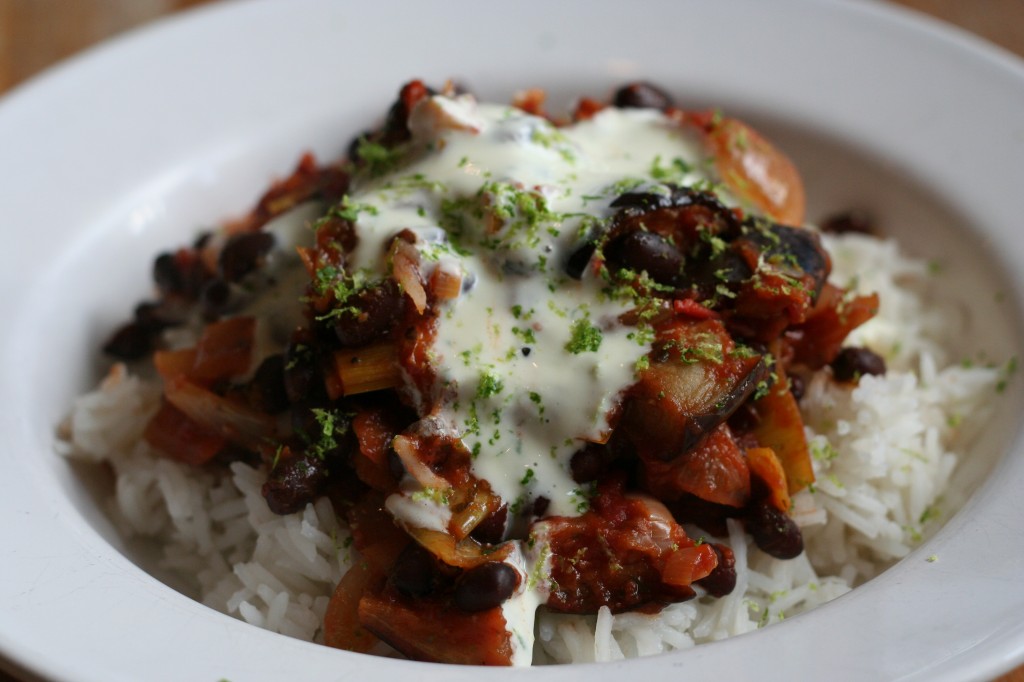
black bean, eggplant and leek chili with lime sour cream

It’s National Organic Week in Ireland. Click here for a listing of events throughout the country.

Black Bean, Eggplant and Leek Chili with Lime Sour Cream
adapted from Paradiso Seasons by Denis Cotter

Serves 4

for the chili:
7 oz (200 g) dried black beans (or 1 x 14-oz (400‑g) can of black beans)
olive oil
2 onions, finely chopped
1 large leek, chopped into chunks and washed well
3 cloves garlic, chopped
1 tablespoon ground coriander
1 tablespoon ground cumin
1 teaspoon chili powder
2 x 14-oz (400‑g) cans of chopped tomatoes
1 tablespoon tomato paste
salt and freshly ground black pepper
2 medium eggplants
1 bunch fresh cilantro (optional)
rice, to serve (optional)

for the lime sour cream:
zest and juice of 1 lime
1 cup (240 ml) sour cream or crème fraîche

Preheat the oven to 400°F (200°C).

To make the chili, soak the beans for 2 hours or overnight in cold water, then cook them in plenty of boiling water until tender (about 1 hour). Or you can skip this if you use canned beans.

Heat a little olive oil in a large pan and cook the onions and leeks for about 10 minutes, until soft. Add the garlic and spices and cook for 2 minutes before adding the tomatoes and the tomato paste. Bring the sauce to a boil, then reduce the heat and simmer for 15 minutes. Season to taste and check the spice levels —  the sauce needs to be very strongly spiced at this point, as the beans and vegetables will dilute its power.

While the sauce is cooking, chop the eggplant into large chunks, toss them in olive oil and roast them until browned and softened, about 30 minutes. Turn and toss the eggplant twice while they’re cooking.

Meanwhile, to make the lime sour cream, simply stir the lime zest and juice into the sour cream or crème fraîche.

Add the roasted eggplant and cooked beans to the sauce and simmer for 10 minutes. Stir in the fresh cilantro (if using) and check the seasoning and spicing again before serving on top of some plain boiled rice and with a dollop of the lime sour cream on top.

***

Honey Buttermilk Cornbread
from The New Vegetarian Epicure by Anna Thomas

Serves 8

1 cup (120 g) white flour
1 1/2 cups (340 g) cornmeal
1/2 teaspoon baking soda
1 teaspoon baking powder
3/4 teaspoon salt
3 large eggs
1 1/3 cups (320 ml) buttermilk
3 tablespoons honey
2 tablespoons (30 g) butter, melted

Preheat the oven to 350°F (180°C).

Sift together the flour, cornmeal, soda, baking powder and salt. In a separate bowl, whisk together the eggs, buttermilk, honey and melted butter. Combine the wet and dry ingredients, stirring gently just until the lumps are gone (don’t overmix). Pour the batter into a buttered 12 x 15-inch baking dish and bake for 30 to 35 minutes, or until a tester inserted in the center of the cornbread comes out clean. Cut into squares and serve hot or warm.

Cream of Fresh Tomato Soup with Parmesan Toasts, Cape Cod Chopped Salad, and Honey Whole Wheat Pound Cake

It never fails — no sooner do I accept that summer is over and order a delivery of oil for the boiler, get the sweaters out of storage and think about swapping the summer-weight duvets for the winter ones than a spell of sunny, warm weather comes our way. I’m certainly not complaining about getting a break from the relentless rain we’ve had in Ireland for the third summer in a row, but it’s thrown me for a loop in planning out dinners for the week. I had already turned my thoughts to autumn casseroles and stews and Sunday roasts, but now I’m scrambling to make a few last salads and lighter meals while the good weather holds, or even clean off the grill to have one token barbecue this year.

This menu is the best of both worlds, perfect for this in-between time of year. If you’ve already had your fill of fresh tomato salads or pasta sauces and have canned enough to last you through the winter, this soup makes good use of the abundance of fresh tomatoes that are still available at this time of year. Keep it light but still seasonal by serving it with this salad, with its nod towards autumn in the apples and maple syrup. The honey whole wheat pound cake works perfectly to round off this late summer/early autumn dinner, especially if you dress it up with something like a cinnamon or maple ice cream.

It’s National Organic Week in Ireland! Click here for a listing of events throughout the country.

Cream of Fresh Tomato Soup with Parmesan Toasts
adapted from Barefoot Contessa Back to Basics by Ina Garten

Serves 5 to 6

3 tablespoons good olive oil
2 red onions, chopped
2 carrots, chopped
3 cloves garlic, minced
4 lb (1.8 kg) vine-ripened tomatoes, coarsely chopped
1 1/2 teaspoons sugar
1 tablespoon tomato paste
1/4 cup (10 g) packed chopped fresh basil leaves
3 cups (720 ml) chicken or vegetable stock
1 tablespoon kosher salt
2 teaspoons freshly ground black pepper
1/2 cup (120 ml) heavy cream
julienned fresh basil leaves, for garnish
Parmesan toasts, to serve (or croutons)

Heat the olive oil heat in a large, heavy-bottomed pot over a medium-low heat. Add the onions and carrots and sauté for about 10 minutes, until very tender. Add the garlic and cook for 1 minute. Add the tomatoes, sugar, tomato paste, basil, stock, salt, and pepper and stir well. Bring the soup to a boil, lower the heat and simmer, uncovered, for 30 to 40 minutes, until the tomatoes are very tender.

Add the cream to the soup and blend with a hand-held blender until smooth (or transfer to a blender or food processor and blend in batches). Reheat the soup over a low heat just until hot. Serve with julienned basil leaves scattered on top and Parmesan toasts or croutons.

Parmesan Toasts

1 French baguette
good olive oil
salt and freshly ground black pepper
freshly grated Parmesan cheese (grated on a box grater)

Preheat the oven to 400°F (200°C).

Slice the baguette diagonally into 1/4‑inch-thick slices. Make as many slices as you like to serve with the soup.

Place the slices on a sheet pan lined with parchment paper. Brush with olive oil and sprinkle with salt and pepper. Sprinkle a thick layer of grated Parmesan on the toasts and bake for 5 to 10 minutes, until the toasts are lightly browned. Allow to cool to room temperature. The toasts can be made a few hours in advance and crisped for a few minutes in a warm oven.

***

Cape Cod Chopped Salad
adapted from Barefoot Contessa Back to Basics by Ina Garten

Serves 4 as a starter or 2 as a main course with soup

for the salad:
8 oz (225 g) thick-cut bacon
8 oz (225 g) baby arugula (or spinach)
1 large Granny Smith apple, peeled and diced
1/2 cup (50 g) toasted walnut halves, coarsely chopped
1/2 cup (80 g) dried cranberries (or raisins)
6 oz (170 g) blue cheese, such as Roquefort, crumbled

for the dressing:
3 tablespoons apple cider vinegar
1 teaspoon grated orange zest
2 tablespoons freshly squeezed orange juice
2 1/2 teaspoons Dijon mustard
2 tablespoons pure maple syrup
salt and freshly ground black pepper
2/3 cup (160 ml) good-quality olive oil

Preheat the oven to 400°F (200°C).

Place a baking rack on a sheet pan and lay the bacon slices on the rack. Roast the bacon for about 20 minutes, until nicely browned. Allow to cool, then chop into bite-sized pieces.

In a large bowl, toss together the arugula, apple, walnuts, cranberries, and blue cheese. Add the chopped bacon to the salad.

For the dressing, whisk together the vinegar, orange zest and juice, mustard, maple syrup, salt and pepper in a bowl or shake to combine in a screw-top jar. Slowly whisk in the olive oil (or shake to combine in a screw-top jar).

Toss the salad with just enough dressing to moisten. Sprinkle with 1/2 teaspoon salt and toss well. Serve immediately.

***

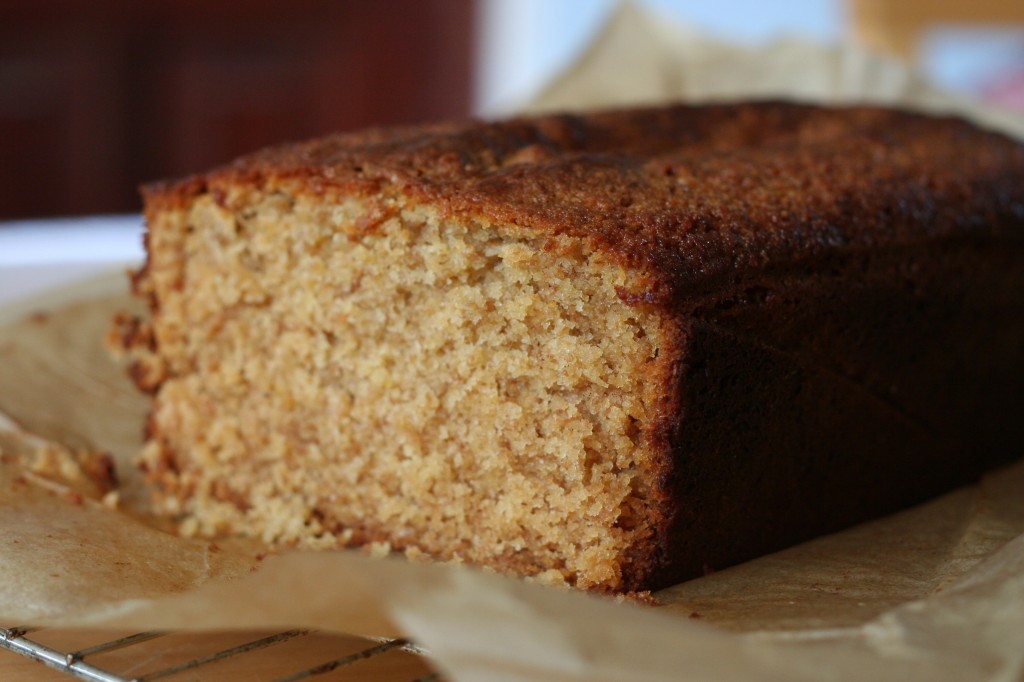
honey whole wheat pound cake

Honey Whole Wheat Pound Cake
adapted from Joy the Baker

Makes 1 loaf cake

The original recipe calls for 2 1/4 cups white whole wheat flour or whole wheat pastry flour. I can’t get either of those in my supermarket, so I used a combination of white and wholemeal flours instead. I had also just been looking at the Barefoot Contessa’s recipe for honey vanilla pound cake, which is similar to this but with lemon zest too, so I added it in here and it worked well.

1 cup (120 g) white flour
1 1/4 cup (200 g) wholemeal flour
2 teaspoons baking powder
3/4 teaspoon salt
1 1/2 sticks (170 g) butter, softened
1 cup (200 g) sugar
1/2 cup (120 ml) honey
2 teaspoons vanilla extract
zest of 1 lemon
3 large eggs
1 cup (240 ml) buttermilk (shake it well first)

Preheat the oven to 350°F (180°C). Butter and flour a 9 x 5‑inch loaf pan.

Sift the flours, baking powder and salt together in a small bowl and set aside.

Cream the butter, sugar and honey together until light and fluffy, about 3 to 4 minutes. Add the vanilla extract and lemon zest. Add the eggs one at a time, beating for about 1 minute after each addition. Scrape down the sides of the bowl as needed.

Add the dry mixture and buttermilk in three additions, beginning and ending with the dry ingredients. Scrape the bottom of the bowl with a spatula to make sure everything is evenly incorporated.

Pour the batter into the prepared loaf pan. Smooth the top and bake the cake for 50 to 60 minutes, until the cake is a lovely golden brown and a tester inserted into the center of the cake comes out clean.

Let the cake cool in the pan for 20 minutes before transferring to a wire rack to cool completely.

Pasta Fagiole, Sausages with Peppers, and Assorted Antipasti

I love having people over for dinner. I love planning a menu around their tastes and dietary restrictions. I love shopping for high-end special occasion ingredients and flowers for the table. I love seeing how many place settings I can squeeze onto my dining table. I love the rush of preparing a big meal while trying to keep my kitchen intact. But mostly, I love sharing good food and good conversation with friends and family. There are few things that please me more than a home-cooked dinner and lively, loud conversation (usually after a few bottles of wine have been opened), except maybe the hush that sometimes falls over my guests if I’ve made something particularly good and they have no time to speak between mouthfuls.

This week my husband Reuben’s lovely grandmother, Ellie, visited Milwaukee. I invited her, Reuben’s parents, my grandparents, my parents, and my sister to join us for dinner. Since I had to prepare enough food for 10 adults with two small children underfoot, my menu was simple. Most items could be prepared in advance, during the kids’ nap time. Note that I doubled the soup and sausages recipes below to serve 10 adults. And in case you were worrying that I let my guests go home without dessert, I also served the blueberry crumb bars Kristin posted three weeks ago.

Pasta Fagiole
from an unknown magazine card that’s been in my recipe box for as long as I remember. My apologies to whatever source I took it from years ago.

Serves 4

2 tablespoons extra-virgin olive oil
1 garlic clove, minced
4 cups (1 liter) chicken broth (Swanson Organic Chicken Broth recommended)
1 x 14 oz (400 g) can stewed tomatoes, with Italian seasoning (note: if seasoned tomatoes aren’t available, use regular stewed tomatoes and add 1/2 teaspoon dried oregano and 1/2 teaspoon dried basil)
1 x 19 oz (540 g) can cannellini or great northern beans, rinsed well and drained
6 oz (170 g) tubetti or ditalini pasta
3 tablespoons chopped fresh basil
2 tablespoons freshly grated Parmesan

Heat 1 tablespoon of oil in a large saucepan over a moderate heat until hot but not smoking, then cook the garlic, stirring until fragrant, about 30 seconds. Stir in the broth and tomatoes with their juices and bring to a boil, breaking up the tomatoes with a fork.

Add the beans, pasta, 2 tablespoons basil, and Parmesan and boil, stirring frequently, until the pasta is al dente. Let stand for 5 minutes before serving. (Pasta will continue to absorb liquid.) Stir in the remaining basil and black pepper to taste. Drizzle with the remaining olive oil and serve immediately.

***

Sausages with Peppers

Serves 6

1 tablespoon olive oil
6 hot and/or mild Italian sausages
2 bell peppers (one green and one red, yellow, or orange), sliced into thin strips

In a large skillet, heat 1 tablespoon olive oil over a medium heat. Add the sausages and cook for 10 minutes, turning the sausages halfway through the cooking time. Add the pepper strips and cook until the peppers are soft and the sausages are fully cooked, stirring frequently, about 10 more minutes. If the sausages take on too much color early in the cooking process, lower the heat or cover the skillet with a lid for a few minutes. Serve with a crusty baguette or good Italian bread.

***

Assorted Antipasti

Antipasti refers to the traditional first course in an Italian meal. Cheeses, cured meats, marinated vegetables and salads are typical. Antipasti selections are also perfect for picnics. For my dinner, I served the following (all at room temperature):

cheeses (one soft, one semi-soft, one hard, one goat’s cheese, and fresh mozzarella balls)
olives (I love the bitter taste of black, oil-cured olives, but you can use any type)
1 jar of sun-dried tomatoes in olive oil, julienned
marinated hearts of palm and artichokes (see recipe below)
2 baguettes, one plain and one seeded, sliced

Marinated Hearts of Palm and Artichoke

Drain and rinse 1 can of hearts of palm and 1 can of quartered artichoke hearts. Mix with 1 clove garlic, grated, 1 tablespoon red wine vinegar, 3 tablespoons olive oil, and a pinch of red pepper flakes. Let sit for at least 1 hour before serving.